

Small fish can create colorful, active aquariums without requiring giant displays, but a small body does not automatically mean a tiny tank or easy care. This guide profiles 40 types of small fish that are popular in freshwater and lightly brackish aquariums. It compares adult size category, schooling needs, habitat, feeding style, temperament, water preferences, and the practical details that help beginners avoid overcrowding.
What Are the Main Types of Small Fish?
Popular small fish include rasboras, tetras, danios, livebearers, ricefish, dwarf Corydoras, pencilfish, hatchetfish, small gouramis, gobies, killifish, loaches, and blue-eye rainbowfish. Many grow only a few centimeters long, yet active species still need long tanks and social species need proper group sizes. Tank maturity, water stability, diet, and compatibility matter more than body length alone.
Quick Comparison of 40 Small Fish
| Fish | Scientific Name | Group | Relative Size | Typical Habitat |
|---|---|---|---|---|
| Chili Rasbora | Boraras brigittae | nano cyprinid | tiny | peat swamps and blackwater streams |
| Phoenix Rasbora | Boraras merah | nano cyprinid | tiny | blackwater swamps |
| Exclamation Point Rasbora | Boraras urophthalmoides | nano cyprinid | tiny | shallow marshes and slow waters |
| Mosquito Rasbora | Boraras micros | nano cyprinid | tiny | shallow wetlands |
| Neon Tetra | Paracheirodon innesi | small tetra | small | soft forest streams |
| Green Neon Tetra | Paracheirodon simulans | small tetra | tiny | blackwater tributaries |
| Ember Tetra | Hyphessobrycon amandae | small tetra | tiny | slow, vegetated tributaries |
| Cardinal Tetra | Paracheirodon axelrodi | small tetra | small | blackwater creeks |
| Ruby Tetra | Axelrodia riesei | nano tetra | tiny | soft blackwater tributaries |
| Glowlight Tetra | Hemigrammus erythrozonus | small tetra | small | forest streams |
| Black Neon Tetra | Hyphessobrycon herbertaxelrodi | small tetra | small | clear and blackwater streams |
| Celestial Pearl Danio | Danio margaritatus | small danio | tiny | shallow vegetated ponds |
| Zebra Danio | Danio rerio | small danio | small | streams, canals, and rice-field habitats |
| White Cloud Mountain Minnow | Tanichthys albonubes | small minnow | small | cool streams |
| Endler’s Livebearer | Poecilia wingei | small livebearer | tiny | lagoons and slow waters |
| Guppy | Poecilia reticulata | small livebearer | small | streams, ponds, and canals |
| Least Killifish | Heterandria formosa | tiny livebearer | tiny | vegetated ponds and slow streams |
| Clown Killifish | Epiplatys annulatus | small killifish | tiny | shallow forest streams |
| Norman’s Lampeye | Poropanchax normani | small killifish | small | streams and floodplains |
| Japanese Ricefish | Oryzias latipes | small ricefish | small | ponds, rice fields, and slow streams |
| Pygmy Corydoras | Corydoras pygmaeus | dwarf catfish | tiny | slow tributaries |
| Dwarf Corydoras | Corydoras hastatus | dwarf catfish | tiny | floodplains and quiet waters |
| Salt and Pepper Corydoras | Corydoras habrosus | dwarf catfish | small | shallow seasonal waters |
| Otocinclus Catfish | Otocinclus macrospilus | small armored catfish | small | vegetated streams |
| Dwarf Pencilfish | Nannostomus marginatus | small pencilfish | tiny | quiet forest tributaries |
| Beckford’s Pencilfish | Nannostomus beckfordi | small pencilfish | small | slow forest waters |
| Marbled Hatchetfish | Carnegiella strigata | small hatchetfish | small | forest streams |
| Pygmy Hatchetfish | Carnegiella myersi | nano hatchetfish | tiny | quiet blackwater |
| Sparkling Gourami | Trichopsis pumila | small labyrinth fish | small | shallow, plant-filled waters |
| Scarlet Badis | Dario dario | small badid | tiny | clear, plant-rich streams |
| Pea Puffer | Carinotetraodon travancoricus | dwarf pufferfish | tiny | slow rivers and wetlands |
| Bumblebee Goby | Brachygobius doriae | small goby | tiny | estuaries and slow coastal waters |
| Emerald Dwarf Rasbora | Danio erythromicron | small danio | tiny | shallow lake margins |
| Green Kubotai Rasbora | Microdevario kubotai | small cyprinid | tiny | clear flowing streams |
| Harlequin Rasbora | Trigonostigma heteromorpha | small rasbora | small | forest streams and peat swamps |
| Lambchop Rasbora | Trigonostigma espei | small rasbora | small | slow streams and wetlands |
| Rosy Loach | Petruichthys sp. ‘rosy’ | small loach | tiny | shallow vegetated waters |
| Dwarf Chain Loach | Ambastaia sidthimunki | small loach | small | flowing rivers |
| Blue-Eye Rainbowfish | Pseudomugil gertrudae | small rainbowfish | small | swamps and slow streams |
| Forktail Blue-Eye | Pseudomugil furcatus | small rainbowfish | small | clear rainforest streams |
1. Chili Rasbora
Scientific name: Boraras brigittae. Chili Rasbora is a tiny nano cyprinid associated with peat swamps and blackwater streams in Borneo. Its clearest identification feature is a red body with a dark side stripe. That combination of color, body shape, habitat, and behavior is more reliable than color alone when comparing similar fish.

In the wild, it feeds mainly on microinvertebrates and fine foods. For readers interested in fishing, wildlife observation, food fish, or aquariums, it matters because it is best in a quiet planted school. Always check adult size, water conditions, legal harvest rules, and conservation guidance before collecting, keeping, or targeting this species.
2. Phoenix Rasbora
Scientific name: Boraras merah. Phoenix Rasbora is a tiny nano cyprinid associated with blackwater swamps in Borneo. Its clearest identification feature is red-orange color with a broken dark flank mark. That combination of color, body shape, habitat, and behavior is more reliable than color alone when comparing similar fish.
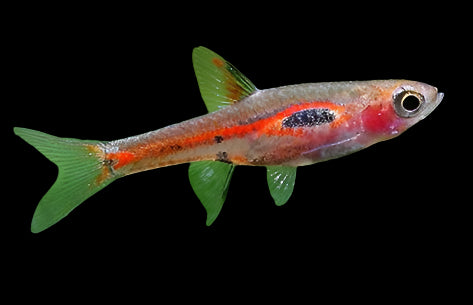
In the wild, it feeds mainly on microcrustaceans and insect larvae. For readers interested in fishing, wildlife observation, food fish, or aquariums, it matters because it is suited to mature nano aquariums. Always check adult size, water conditions, legal harvest rules, and conservation guidance before collecting, keeping, or targeting this species.
3. Exclamation Point Rasbora
Scientific name: Boraras urophthalmoides. Exclamation Point Rasbora is a tiny nano cyprinid associated with shallow marshes and slow waters in mainland Southeast Asia. Its clearest identification feature is a dark dash and tail spot resembling an exclamation mark. That combination of color, body shape, habitat, and behavior is more reliable than color alone when comparing similar fish.
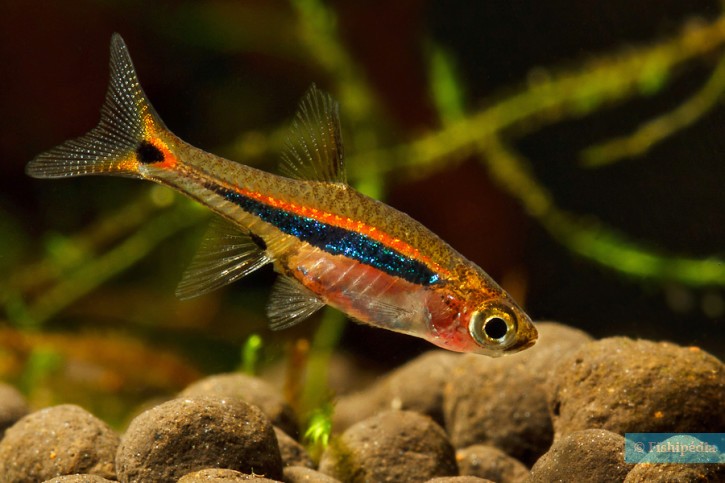
In the wild, it feeds mainly on microinvertebrates. For readers interested in fishing, wildlife observation, food fish, or aquariums, it matters because it is peaceful and easily intimidated by large fish. Always check adult size, water conditions, legal harvest rules, and conservation guidance before collecting, keeping, or targeting this species.
4. Mosquito Rasbora
Scientific name: Boraras micros. Mosquito Rasbora is a tiny nano cyprinid associated with shallow wetlands in Thailand. Its clearest identification feature is a compact body with dark lateral markings. That combination of color, body shape, habitat, and behavior is more reliable than color alone when comparing similar fish.
In the wild, it feeds mainly on zooplankton and tiny insects. For readers interested in fishing, wildlife observation, food fish, or aquariums, it matters because it is a specialist choice for gentle nano communities. Always check adult size, water conditions, legal harvest rules, and conservation guidance before collecting, keeping, or targeting this species.
5. Neon Tetra
Scientific name: Paracheirodon innesi. Neon Tetra is a small small tetra associated with soft forest streams in upper Amazon basin. Its clearest identification feature is blue and red reflective stripes. That combination of color, body shape, habitat, and behavior is more reliable than color alone when comparing similar fish.
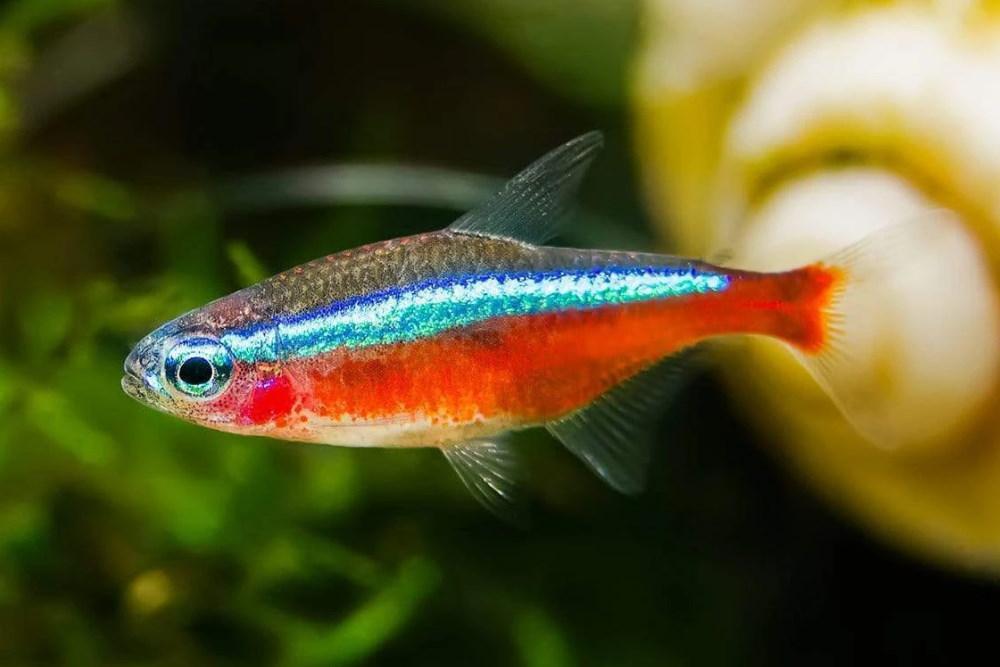
In the wild, it feeds mainly on tiny invertebrates and prepared foods. For readers interested in fishing, wildlife observation, food fish, or aquariums, it matters because it is a classic schooling fish. Always check adult size, water conditions, legal harvest rules, and conservation guidance before collecting, keeping, or targeting this species.
6. Green Neon Tetra
Scientific name: Paracheirodon simulans. Green Neon Tetra is a tiny small tetra associated with blackwater tributaries in Rio Negro and Orinoco basins. Its clearest identification feature is a long blue-green stripe with limited red. That combination of color, body shape, habitat, and behavior is more reliable than color alone when comparing similar fish.
In the wild, it feeds mainly on microinvertebrates. For readers interested in fishing, wildlife observation, food fish, or aquariums, it matters because it is excellent for warm soft-water aquascapes. Always check adult size, water conditions, legal harvest rules, and conservation guidance before collecting, keeping, or targeting this species.
7. Ember Tetra
Scientific name: Hyphessobrycon amandae. Ember Tetra is a tiny small tetra associated with slow, vegetated tributaries in Brazil. Its clearest identification feature is warm amber-orange coloration. That combination of color, body shape, habitat, and behavior is more reliable than color alone when comparing similar fish.

In the wild, it feeds mainly on microinvertebrates and fine foods. For readers interested in fishing, wildlife observation, food fish, or aquariums, it matters because it is gentle and attractive in larger schools. Always check adult size, water conditions, legal harvest rules, and conservation guidance before collecting, keeping, or targeting this species.
8. Cardinal Tetra
Scientific name: Paracheirodon axelrodi. Cardinal Tetra is a small small tetra associated with blackwater creeks in northern South America. Its clearest identification feature is full-length red lower stripe beneath blue. That combination of color, body shape, habitat, and behavior is more reliable than color alone when comparing similar fish.
In the wild, it feeds mainly on small invertebrates. For readers interested in fishing, wildlife observation, food fish, or aquariums, it matters because it is needs stable warm water. Always check adult size, water conditions, legal harvest rules, and conservation guidance before collecting, keeping, or targeting this species.
9. Ruby Tetra
Scientific name: Axelrodia riesei. Ruby Tetra is a tiny nano tetra associated with soft blackwater tributaries in Colombia. Its clearest identification feature is a ruby-red body and translucent fins. That combination of color, body shape, habitat, and behavior is more reliable than color alone when comparing similar fish.
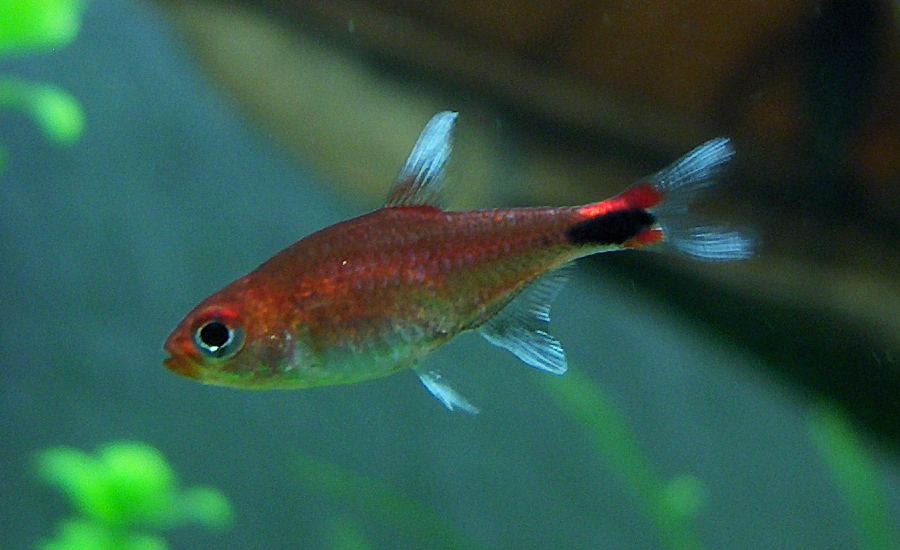
In the wild, it feeds mainly on microinvertebrates. For readers interested in fishing, wildlife observation, food fish, or aquariums, it matters because it is best in dim, planted tanks. Always check adult size, water conditions, legal harvest rules, and conservation guidance before collecting, keeping, or targeting this species.
10. Glowlight Tetra
Scientific name: Hemigrammus erythrozonus. Glowlight Tetra is a small small tetra associated with forest streams in Guyana. Its clearest identification feature is a glowing orange lateral stripe. That combination of color, body shape, habitat, and behavior is more reliable than color alone when comparing similar fish.
In the wild, it feeds mainly on small invertebrates and plant matter. For readers interested in fishing, wildlife observation, food fish, or aquariums, it matters because it is peaceful and beginner-friendly. Always check adult size, water conditions, legal harvest rules, and conservation guidance before collecting, keeping, or targeting this species.
11. Black Neon Tetra
Scientific name: Hyphessobrycon herbertaxelrodi. Black Neon Tetra is a small small tetra associated with clear and blackwater streams in Brazil. Its clearest identification feature is black and pale horizontal stripes. That combination of color, body shape, habitat, and behavior is more reliable than color alone when comparing similar fish.
In the wild, it feeds mainly on small invertebrates and prepared foods. For readers interested in fishing, wildlife observation, food fish, or aquariums, it matters because it is hardy in stable community tanks. Always check adult size, water conditions, legal harvest rules, and conservation guidance before collecting, keeping, or targeting this species.
12. Celestial Pearl Danio
Scientific name: Danio margaritatus. Celestial Pearl Danio is a tiny small danio associated with shallow vegetated ponds in Myanmar and Thailand. Its clearest identification feature is pearl-like spots and red-striped fins. That combination of color, body shape, habitat, and behavior is more reliable than color alone when comparing similar fish.
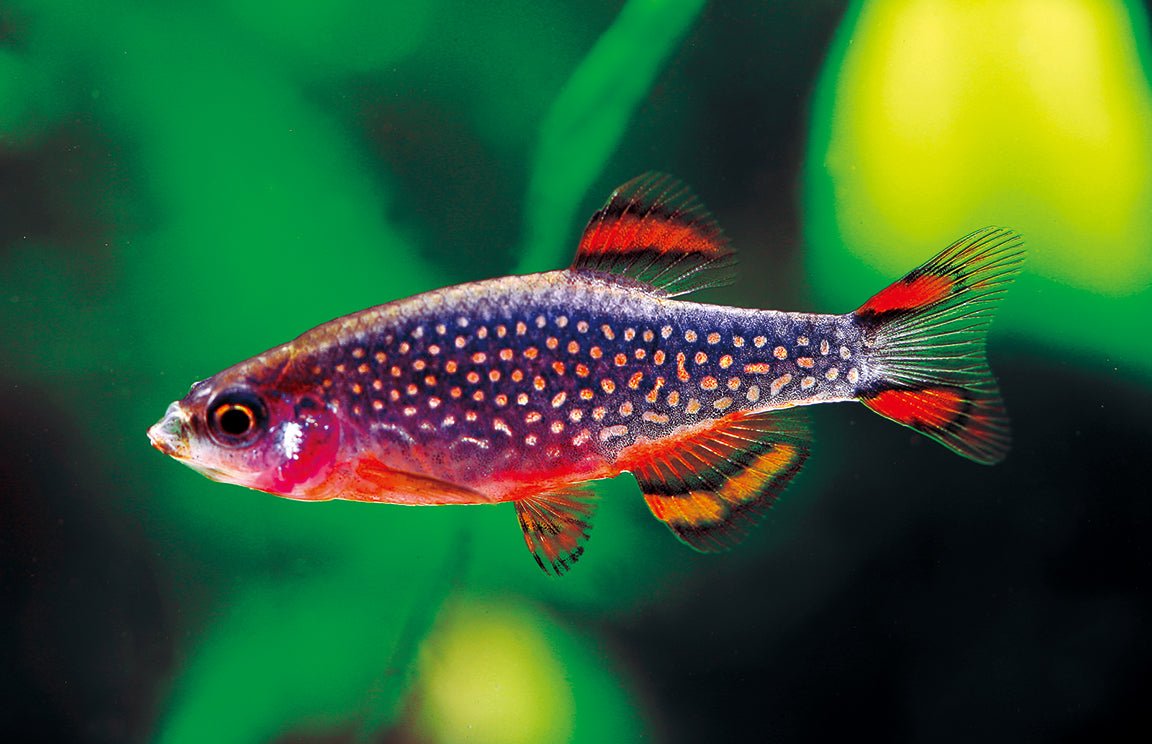
In the wild, it feeds mainly on microcrustaceans and insect larvae. For readers interested in fishing, wildlife observation, food fish, or aquariums, it matters because it is colorful but somewhat shy. Always check adult size, water conditions, legal harvest rules, and conservation guidance before collecting, keeping, or targeting this species.
13. Zebra Danio
Scientific name: Danio rerio. Zebra Danio is a small small danio associated with streams, canals, and rice-field habitats in South Asia. Its clearest identification feature is horizontal blue stripes and constant movement. That combination of color, body shape, habitat, and behavior is more reliable than color alone when comparing similar fish.
In the wild, it feeds mainly on insects, zooplankton, and prepared foods. For readers interested in fishing, wildlife observation, food fish, or aquariums, it matters because it is hardy but needs swimming length. Always check adult size, water conditions, legal harvest rules, and conservation guidance before collecting, keeping, or targeting this species.
14. White Cloud Mountain Minnow
Scientific name: Tanichthys albonubes. White Cloud Mountain Minnow is a small small minnow associated with cool streams in southern China. Its clearest identification feature is silver-green sides with red fins. That combination of color, body shape, habitat, and behavior is more reliable than color alone when comparing similar fish.
In the wild, it feeds mainly on insects, plankton, and prepared foods. For readers interested in fishing, wildlife observation, food fish, or aquariums, it matters because it is prefers cooler water than many tropical fish. Always check adult size, water conditions, legal harvest rules, and conservation guidance before collecting, keeping, or targeting this species.
15. Endler’s Livebearer
Scientific name: Poecilia wingei. Endler’s Livebearer is a tiny small livebearer associated with lagoons and slow waters in northeastern Venezuela. Its clearest identification feature is males show bright mosaic patterns. That combination of color, body shape, habitat, and behavior is more reliable than color alone when comparing similar fish.

In the wild, it feeds mainly on algae, small invertebrates, and prepared foods. For readers interested in fishing, wildlife observation, food fish, or aquariums, it matters because it is active and prolific. Always check adult size, water conditions, legal harvest rules, and conservation guidance before collecting, keeping, or targeting this species.
16. Guppy
Scientific name: Poecilia reticulata. Guppy is a small small livebearer associated with streams, ponds, and canals in northern South America and Caribbean; widely introduced. Its clearest identification feature is extremely variable colors and tail shapes. That combination of color, body shape, habitat, and behavior is more reliable than color alone when comparing similar fish.
In the wild, it feeds mainly on algae, insects, and prepared foods. For readers interested in fishing, wildlife observation, food fish, or aquariums, it matters because it is adaptable but should not be crowded. Always check adult size, water conditions, legal harvest rules, and conservation guidance before collecting, keeping, or targeting this species.
17. Least Killifish
Scientific name: Heterandria formosa. Least Killifish is a tiny tiny livebearer associated with vegetated ponds and slow streams in southeastern United States. Its clearest identification feature is slender body with a dark side stripe. That combination of color, body shape, habitat, and behavior is more reliable than color alone when comparing similar fish.
In the wild, it feeds mainly on microinvertebrates and algae. For readers interested in fishing, wildlife observation, food fish, or aquariums, it matters because it is one of the smallest livebearing fishes. Always check adult size, water conditions, legal harvest rules, and conservation guidance before collecting, keeping, or targeting this species.
18. Clown Killifish
Scientific name: Epiplatys annulatus. Clown Killifish is a tiny small killifish associated with shallow forest streams in West Africa. Its clearest identification feature is vertical black bars and a colorful flaglike tail. That combination of color, body shape, habitat, and behavior is more reliable than color alone when comparing similar fish.
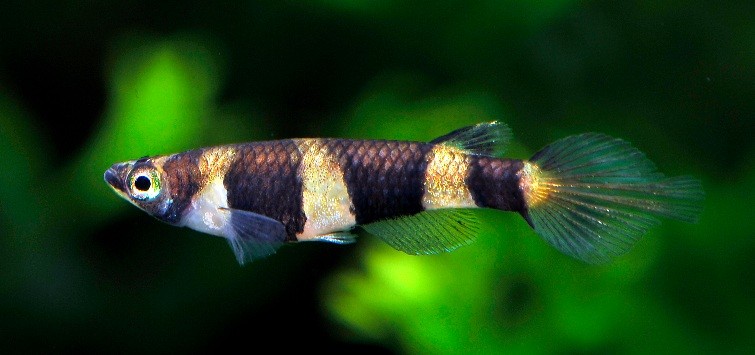
In the wild, it feeds mainly on surface insects and microfoods. For readers interested in fishing, wildlife observation, food fish, or aquariums, it matters because it is needs a tight lid. Always check adult size, water conditions, legal harvest rules, and conservation guidance before collecting, keeping, or targeting this species.
19. Norman’s Lampeye
Scientific name: Poropanchax normani. Norman’s Lampeye is a small small killifish associated with streams and floodplains in West and Central Africa. Its clearest identification feature is bright reflective blue eyes. That combination of color, body shape, habitat, and behavior is more reliable than color alone when comparing similar fish.
In the wild, it feeds mainly on small insects and crustaceans. For readers interested in fishing, wildlife observation, food fish, or aquariums, it matters because it is best in a calm school. Always check adult size, water conditions, legal harvest rules, and conservation guidance before collecting, keeping, or targeting this species.
20. Japanese Ricefish
Scientific name: Oryzias latipes. Japanese Ricefish is a small small ricefish associated with ponds, rice fields, and slow streams in East Asia. Its clearest identification feature is slender body and many domesticated color forms. That combination of color, body shape, habitat, and behavior is more reliable than color alone when comparing similar fish.
In the wild, it feeds mainly on zooplankton, insects, and prepared foods. For readers interested in fishing, wildlife observation, food fish, or aquariums, it matters because it is tolerates a broad temperature range. Always check adult size, water conditions, legal harvest rules, and conservation guidance before collecting, keeping, or targeting this species.
21. Pygmy Corydoras
Scientific name: Corydoras pygmaeus. Pygmy Corydoras is a tiny dwarf catfish associated with slow tributaries in Brazil. Its clearest identification feature is small spotted body and midwater schooling. That combination of color, body shape, habitat, and behavior is more reliable than color alone when comparing similar fish.

In the wild, it feeds mainly on worms, microcrustaceans, and sinking foods. For readers interested in fishing, wildlife observation, food fish, or aquariums, it matters because it is must be kept in groups. Always check adult size, water conditions, legal harvest rules, and conservation guidance before collecting, keeping, or targeting this species.
22. Dwarf Corydoras
Scientific name: Corydoras hastatus. Dwarf Corydoras is a tiny dwarf catfish associated with floodplains and quiet waters in South America. Its clearest identification feature is a dark tail-base spot and hovering behavior. That combination of color, body shape, habitat, and behavior is more reliable than color alone when comparing similar fish.
In the wild, it feeds mainly on small benthic invertebrates. For readers interested in fishing, wildlife observation, food fish, or aquariums, it matters because it is a social bottom and midwater fish. Always check adult size, water conditions, legal harvest rules, and conservation guidance before collecting, keeping, or targeting this species.
23. Salt and Pepper Corydoras
Scientific name: Corydoras habrosus. Salt and Pepper Corydoras is a small dwarf catfish associated with shallow seasonal waters in Orinoco basin. Its clearest identification feature is mottled body and bottom-oriented behavior. That combination of color, body shape, habitat, and behavior is more reliable than color alone when comparing similar fish.
In the wild, it feeds mainly on worms and microcrustaceans. For readers interested in fishing, wildlife observation, food fish, or aquariums, it matters because it is needs soft substrate. Always check adult size, water conditions, legal harvest rules, and conservation guidance before collecting, keeping, or targeting this species.
24. Otocinclus Catfish
Scientific name: Otocinclus macrospilus. Otocinclus Catfish is a small small armored catfish associated with vegetated streams in South America. Its clearest identification feature is a dark side stripe and sucker mouth. That combination of color, body shape, habitat, and behavior is more reliable than color alone when comparing similar fish.
In the wild, it feeds mainly on algae and biofilm. For readers interested in fishing, wildlife observation, food fish, or aquariums, it matters because it is should enter only mature aquariums with natural grazing. Always check adult size, water conditions, legal harvest rules, and conservation guidance before collecting, keeping, or targeting this species.
25. Dwarf Pencilfish
Scientific name: Nannostomus marginatus. Dwarf Pencilfish is a tiny small pencilfish associated with quiet forest tributaries in northern South America. Its clearest identification feature is three horizontal stripes and red fin details. That combination of color, body shape, habitat, and behavior is more reliable than color alone when comparing similar fish.
In the wild, it feeds mainly on microinvertebrates. For readers interested in fishing, wildlife observation, food fish, or aquariums, it matters because it is calm and surface-oriented. Always check adult size, water conditions, legal harvest rules, and conservation guidance before collecting, keeping, or targeting this species.
26. Beckford’s Pencilfish
Scientific name: Nannostomus beckfordi. Beckford’s Pencilfish is a small small pencilfish associated with slow forest waters in Guianas and Amazon basin. Its clearest identification feature is golden side stripe and red fin highlights. That combination of color, body shape, habitat, and behavior is more reliable than color alone when comparing similar fish.
In the wild, it feeds mainly on small insects and crustaceans. For readers interested in fishing, wildlife observation, food fish, or aquariums, it matters because it is active males display to one another. Always check adult size, water conditions, legal harvest rules, and conservation guidance before collecting, keeping, or targeting this species.
27. Marbled Hatchetfish
Scientific name: Carnegiella strigata. Marbled Hatchetfish is a small small hatchetfish associated with forest streams in Amazon basin. Its clearest identification feature is deep chest and marbled pattern. That combination of color, body shape, habitat, and behavior is more reliable than color alone when comparing similar fish.

In the wild, it feeds mainly on surface insects. For readers interested in fishing, wildlife observation, food fish, or aquariums, it matters because it is a strong jumper that needs a covered tank. Always check adult size, water conditions, legal harvest rules, and conservation guidance before collecting, keeping, or targeting this species.
28. Pygmy Hatchetfish
Scientific name: Carnegiella myersi. Pygmy Hatchetfish is a tiny nano hatchetfish associated with quiet blackwater in Peru and Brazil. Its clearest identification feature is tiny hatchet-shaped body. That combination of color, body shape, habitat, and behavior is more reliable than color alone when comparing similar fish.
In the wild, it feeds mainly on surface insects. For readers interested in fishing, wildlife observation, food fish, or aquariums, it matters because it is delicate and best for experienced keepers. Always check adult size, water conditions, legal harvest rules, and conservation guidance before collecting, keeping, or targeting this species.
29. Sparkling Gourami
Scientific name: Trichopsis pumila. Sparkling Gourami is a small small labyrinth fish associated with shallow, plant-filled waters in Southeast Asia. Its clearest identification feature is iridescent spots and audible croaking sounds. That combination of color, body shape, habitat, and behavior is more reliable than color alone when comparing similar fish.
In the wild, it feeds mainly on insects and tiny crustaceans. For readers interested in fishing, wildlife observation, food fish, or aquariums, it matters because it is likes dense cover and gentle flow. Always check adult size, water conditions, legal harvest rules, and conservation guidance before collecting, keeping, or targeting this species.
30. Scarlet Badis
Scientific name: Dario dario. Scarlet Badis is a tiny small badid associated with clear, plant-rich streams in India. Its clearest identification feature is males show red vertical bars. That combination of color, body shape, habitat, and behavior is more reliable than color alone when comparing similar fish.
:strip_icc()/GettyImages-1098057884-42aa029bea974e068204be9d7aee4215.jpg)
In the wild, it feeds mainly on live and frozen microfoods. For readers interested in fishing, wildlife observation, food fish, or aquariums, it matters because it is often refuses large dry foods. Always check adult size, water conditions, legal harvest rules, and conservation guidance before collecting, keeping, or targeting this species.
31. Pea Puffer
Scientific name: Carinotetraodon travancoricus. Pea Puffer is a tiny dwarf pufferfish associated with slow rivers and wetlands in Western Ghats of India. Its clearest identification feature is round body, mobile eyes, and bold behavior. That combination of color, body shape, habitat, and behavior is more reliable than color alone when comparing similar fish.
In the wild, it feeds mainly on snails, worms, and crustaceans. For readers interested in fishing, wildlife observation, food fish, or aquariums, it matters because it is requires species-focused planning. Always check adult size, water conditions, legal harvest rules, and conservation guidance before collecting, keeping, or targeting this species.
32. Bumblebee Goby
Scientific name: Brachygobius doriae. Bumblebee Goby is a tiny small goby associated with estuaries and slow coastal waters in Southeast Asia. Its clearest identification feature is yellow-and-black bands. That combination of color, body shape, habitat, and behavior is more reliable than color alone when comparing similar fish.
In the wild, it feeds mainly on small worms and crustaceans. For readers interested in fishing, wildlife observation, food fish, or aquariums, it matters because it is some populations prefer mildly brackish conditions. Always check adult size, water conditions, legal harvest rules, and conservation guidance before collecting, keeping, or targeting this species.
33. Emerald Dwarf Rasbora
Scientific name: Danio erythromicron. Emerald Dwarf Rasbora is a tiny small danio associated with shallow lake margins in Inle Lake, Myanmar. Its clearest identification feature is emerald bars and orange fins. That combination of color, body shape, habitat, and behavior is more reliable than color alone when comparing similar fish.
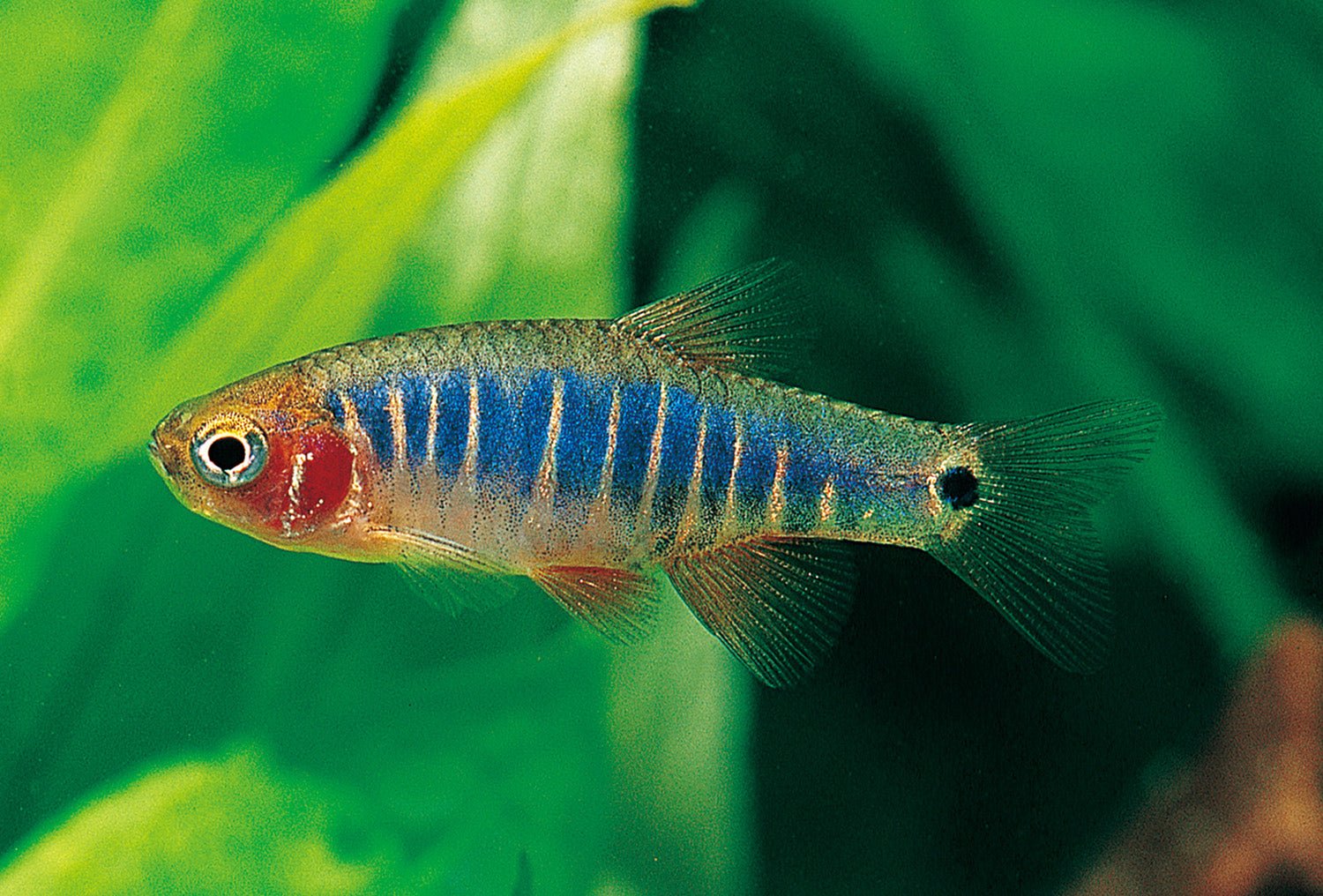
In the wild, it feeds mainly on microinvertebrates. For readers interested in fishing, wildlife observation, food fish, or aquariums, it matters because it is does best in calm planted groups. Always check adult size, water conditions, legal harvest rules, and conservation guidance before collecting, keeping, or targeting this species.
34. Green Kubotai Rasbora
Scientific name: Microdevario kubotai. Green Kubotai Rasbora is a tiny small cyprinid associated with clear flowing streams in Thailand and Myanmar. Its clearest identification feature is luminous yellow-green color. That combination of color, body shape, habitat, and behavior is more reliable than color alone when comparing similar fish.
In the wild, it feeds mainly on small insects and plankton. For readers interested in fishing, wildlife observation, food fish, or aquariums, it matters because it is active and best in a school. Always check adult size, water conditions, legal harvest rules, and conservation guidance before collecting, keeping, or targeting this species.
35. Harlequin Rasbora
Scientific name: Trigonostigma heteromorpha. Harlequin Rasbora is a small small rasbora associated with forest streams and peat swamps in Southeast Asia. Its clearest identification feature is a copper body with a black wedge. That combination of color, body shape, habitat, and behavior is more reliable than color alone when comparing similar fish.
In the wild, it feeds mainly on small invertebrates and plant matter. For readers interested in fishing, wildlife observation, food fish, or aquariums, it matters because it is a dependable community species. Always check adult size, water conditions, legal harvest rules, and conservation guidance before collecting, keeping, or targeting this species.
36. Lambchop Rasbora
Scientific name: Trigonostigma espei. Lambchop Rasbora is a small small rasbora associated with slow streams and wetlands in Thailand and Cambodia. Its clearest identification feature is orange body with a narrow lambchop-shaped patch. That combination of color, body shape, habitat, and behavior is more reliable than color alone when comparing similar fish.
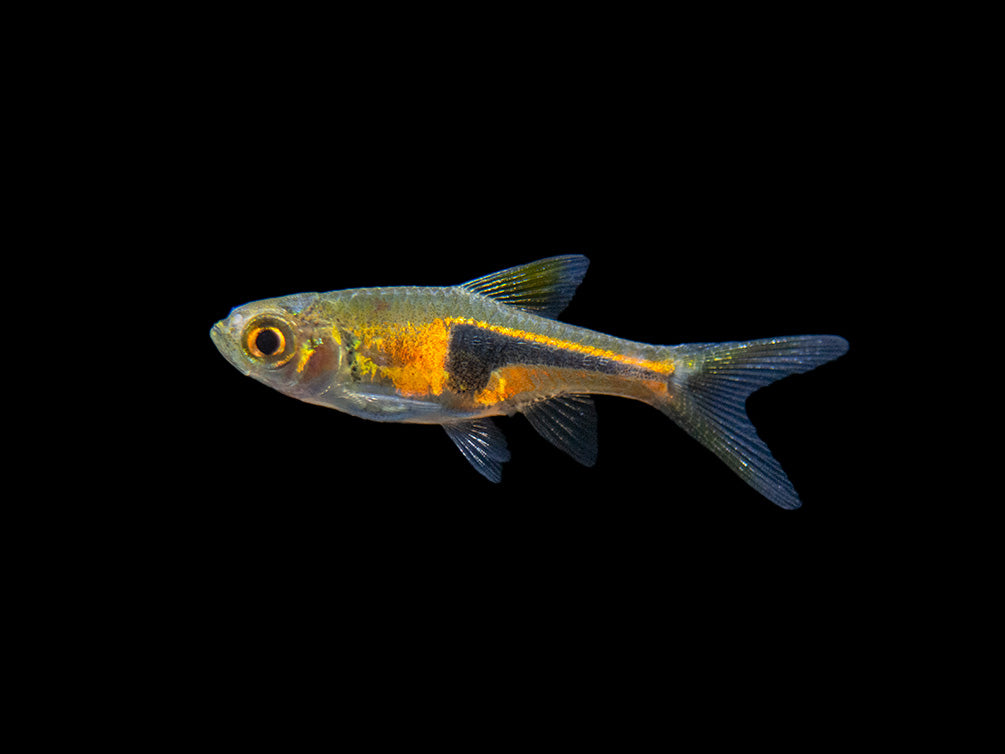
In the wild, it feeds mainly on small insects and zooplankton. For readers interested in fishing, wildlife observation, food fish, or aquariums, it matters because it is more slender than the harlequin rasbora. Always check adult size, water conditions, legal harvest rules, and conservation guidance before collecting, keeping, or targeting this species.
37. Rosy Loach
Scientific name: Petruichthys sp. ‘rosy’. Rosy Loach is a tiny small loach associated with shallow vegetated waters in Myanmar. Its clearest identification feature is pinkish body and active bottom behavior. That combination of color, body shape, habitat, and behavior is more reliable than color alone when comparing similar fish.
In the wild, it feeds mainly on microinvertebrates and biofilm. For readers interested in fishing, wildlife observation, food fish, or aquariums, it matters because it is needs groups and gentle tank mates. Always check adult size, water conditions, legal harvest rules, and conservation guidance before collecting, keeping, or targeting this species.
38. Dwarf Chain Loach
Scientific name: Ambastaia sidthimunki. Dwarf Chain Loach is a small small loach associated with flowing rivers in Thailand. Its clearest identification feature is chainlike black pattern. That combination of color, body shape, habitat, and behavior is more reliable than color alone when comparing similar fish.
In the wild, it feeds mainly on snails, worms, and invertebrates. For readers interested in fishing, wildlife observation, food fish, or aquariums, it matters because it is social and active but needs more room than a nano tank. Always check adult size, water conditions, legal harvest rules, and conservation guidance before collecting, keeping, or targeting this species.
39. Blue-Eye Rainbowfish
Scientific name: Pseudomugil gertrudae. Blue-Eye Rainbowfish is a small small rainbowfish associated with swamps and slow streams in northern Australia and New Guinea. Its clearest identification feature is bright blue eyes and spotted fins. That combination of color, body shape, habitat, and behavior is more reliable than color alone when comparing similar fish.

In the wild, it feeds mainly on zooplankton and insects. For readers interested in fishing, wildlife observation, food fish, or aquariums, it matters because it is males display best in groups. Always check adult size, water conditions, legal harvest rules, and conservation guidance before collecting, keeping, or targeting this species.
40. Forktail Blue-Eye
Scientific name: Pseudomugil furcatus. Forktail Blue-Eye is a small small rainbowfish associated with clear rainforest streams in Papua New Guinea. Its clearest identification feature is yellow forked fins and blue eyes. That combination of color, body shape, habitat, and behavior is more reliable than color alone when comparing similar fish.
In the wild, it feeds mainly on small insects and crustaceans. For readers interested in fishing, wildlife observation, food fish, or aquariums, it matters because it is active and oxygen-loving. Always check adult size, water conditions, legal harvest rules, and conservation guidance before collecting, keeping, or targeting this species.
How Are These Types of Fish Classified?
Most fish in this list are small freshwater ray-finned fishes from the cyprinid, tetra, livebearer, killifish, catfish, gourami, goby, loach, and rainbowfish groups. They are not one taxonomic category. Aquarists group them by adult size and suitability for compact community aquariums, but their water chemistry, behavior, and feeding needs differ.
Where Do Small Aquarium Fish Come From?
These species originate from blackwater creeks, rainforest streams, floodplains, peat swamps, rice fields, cool mountain streams, lake margins, estuaries, and vegetated ponds across Asia, Africa, Australia, and the Americas. Recreating flow, temperature, cover, substrate, and group structure is more important than copying decorative color alone.
How to Identify Different Types of Small Fish
- Adult length: Use verified adult size, not the size of juveniles in a store.
- Swimming zone: Hatchetfish use the surface, tetras and rasboras occupy midwater, and Corydoras and loaches stay near the bottom.
- Social behavior: Many small species need groups; solitary stocking can cause stress.
- Mouth size: Tiny mouths require suitably small foods.
- Water preference: Some prefer soft warm water, others cooler streams, and bumblebee gobies may need mildly brackish conditions.
- Activity level: Fast danios require more swimming length than their body size suggests.
Small Aquarium Care Notes
- Cycle the aquarium fully before adding fish and test ammonia, nitrite, and nitrate.
- Choose tank dimensions based on activity and group size, not only the fish’s length.
- Cover the aquarium for hatchetfish, killifish, danios, and other jumpers.
- Feed fine foods in small portions and make sure shy fish receive enough.
- Use plants, wood, leaf litter, and open swimming areas according to the species’ natural behavior.
Safety, Sustainability, and Conservation Notes
- Buy captive-bred fish when practical and ask for the exact scientific name.
- Never release aquarium fish, plants, water, or snails outdoors.
- Avoid wild-caught species from threatened or highly restricted habitats unless trade is verified as responsible.
- Quarantine new fish to reduce disease spread.
- Do not keep social fish in undersized groups simply to fit a small tank.
Fun Facts About Small Fish
- Some of the smallest aquarium fish are still energetic schoolers.
- Least killifish is a livebearer despite its common name.
- Pygmy Corydoras often swim in midwater more than larger Corydoras.
- Hatchetfish can jump through very small openings.
- Sparkling gouramis can produce audible croaking sounds.
- Pea puffers are tiny but predatory and territorial.
- Otocinclus depend heavily on mature biofilm and algae.
- White cloud mountain minnows prefer cooler water than many tropical species.
- Ricefish have been kept in East Asia for generations.
- Small fish often look more natural and confident in well-sized groups.
Final Thoughts on types of small fish
The best types of small fish are not simply the shortest species. A successful choice matches adult size with swimming behavior, group needs, diet, water conditions, and tank maturity. Plan the full community before buying, prioritize stable water and adequate space, and choose fish that can be cared for responsibly throughout their lives.
Frequently Asked Questions
1. What does the term “types of small fish” mean?
It usually means aquarium species with a small adult body size, often selected for nano or compact freshwater setups. The phrase is practical rather than taxonomic.
2. How many types of small fish are covered in this guide?
This guide profiles 40 carefully selected examples. The number is a practical editorial list, not a claim that only 40 such fish exist worldwide.
3. Are all types of small fish closely related?
No. Small aquarium fish belong to many unrelated families, including tetras, rasboras, livebearers, catfish, gobies, killifish, and gouramis.
4. Which is the easiest types of small fish to identify?
Chili Rasbora is a useful starting point because a red body with a dark side stripe. However, identification should also consider body shape, fin placement, range, and habitat.
5. Which types of small fish is the largest in this list?
Dwarf chain loaches, forktail blue-eyes, zebra danios, and some rasboras are among the larger small fish listed, but they remain modest compared with common cichlids and large catfish.
6. Which types of small fish is the smallest in this list?
Boraras rasboras, least killifish, ruby tetras, and pygmy hatchetfish are among the tiniest.
7. Where do types of small fish live?
They come from streams, swamps, ponds, floodplains, rice fields, lake margins, blackwater creeks, and a few estuarine habitats.
8. What do types of small fish eat?
Most eat tiny insects, crustaceans, zooplankton, algae, biofilm, or fine prepared foods. Pea puffers and some specialist fish need more specific prey.
9. Can types of small fish live in freshwater?
Most species in this guide are freshwater fish.
10. Can types of small fish live in saltwater?
These 40 are primarily freshwater or lightly brackish species, not marine reef fish.
11. Are any types of small fish suitable for home aquariums?
Yes. The list is focused on aquarium species, but suitability depends on group size, tank dimensions, water chemistry, diet, and experience.
12. Do types of small fish need to be kept in groups?
Most rasboras, tetras, danios, Corydoras, ricefish, pencilfish, hatchetfish, and blue-eyes should be kept in suitable groups.
13. How can beginners identify types of small fish?
Begin with body shape, fin arrangement, mouth position, color pattern, adult size, and habitat. Photograph the fish from the side when possible and compare it with a regional field guide rather than relying on a single color.
14. Can fish color change with age or season?
Yes. Many fish change color as they mature, breed, migrate, become stressed, or move between habitats. Lighting and water clarity also affect how color appears.
15. Why are scientific names useful?
Common names vary between countries and fisheries. A scientific name points to one recognized species and helps prevent confusion between unrelated fish that share a similar nickname.
16. Are any types of small fish dangerous to handle?
They are generally not dangerous to people. Pea puffers can bite tank mates, and all fish can carry pathogens, so wash hands after aquarium work.
17. Can people eat types of small fish?
These species are kept mainly as ornamental fish rather than food fish.
18. How should edible fish be stored?
Keep fresh fish cold immediately after capture or purchase, use clean food-safe containers, and follow local food-safety guidance. Refrigerate promptly and freeze portions that will not be used soon.
19. How can anglers fish responsibly for these species?
Follow current seasons, size limits, bag limits, protected-area rules, and gear restrictions. Use appropriate tackle, minimize handling, release unwanted fish quickly, and never transport live fish between waters.
20. Why should fish never be released from an aquarium?
Released aquarium fish can become invasive, spread disease, or die from unsuitable conditions. Rehome unwanted fish through a responsible aquarium store, club, rescue, or experienced keeper.
21. How does habitat loss affect these fish?
Dams, polluted runoff, sedimentation, wetland loss, reef damage, and coastal development can remove feeding, nursery, and spawning habitat. Species with small ranges are often especially vulnerable.
22. Are color-based fish names always accurate?
No. Names based on red, silver, black, or blue may describe only one life stage, sex, regional form, or market appearance. Taxonomy and location provide a more dependable identification.
23. What equipment helps with fish identification?
A camera, polarized sunglasses, regional field guide, ruler or measuring board, and notes about depth, water type, substrate, and location are useful. Handle wild fish only when legal and necessary.
24. Should I use an identification app?
An app can narrow the possibilities, but it should not be the only source for legal harvest or conservation decisions. Confirm important identifications with an authoritative regional guide or fisheries agency.
25. What is the most common identification mistake?
The most common mistake is choosing a species from color alone. Similar species may differ in fin rays, tail shape, mouth size, body proportions, spots, stripes, or geographic range.
26. Do juvenile fish look like adults?
Not always. Juveniles may have bars, spots, or colors that disappear with age, and some move from sheltered nursery areas to deeper adult habitats.
27. Are wild populations stable?
Many are common in captivity, but some wild populations have restricted ranges or face habitat pressure. Responsible sourcing matters.
28. Can climate change affect their distribution?
Yes. Warming water, altered river flow, ocean acidification, oxygen loss, and changing food webs can shift suitable habitat. Effects vary by species and region.
29. What should I check before buying one as a pet?
Confirm the exact species, adult size, social behavior, diet, water chemistry, temperature, tank length, filtration, and legal status. Avoid buying fish that cannot be housed responsibly for their full lifespan.
30. What is the best way to learn more about types of small fish?
Use regional fish guides, museum and university resources, fisheries agencies, responsible aquarium organizations, and direct observation. Keep notes and compare several identification features at once.
Read more:
7 Types of Salmon Fish: Species, Flavor, and Facts