

Best Hunting Scope for 270 Win: 22 Options Compared
Choosing the best hunting scope for 270 win is less about chasing maximum magnification and more about matching the optic to real hunting distances, light, and carry weight. A scope that is too bulky can make a balanced .270 Winchester awkward in the field, while one with poor low-light performance, limited eye relief, or a confusing reticle can complicate a careful shot when conditions change.
The central trade-off is practical versatility versus precision. Moderate magnification and a forgiving field of view often serve deer and elk hunters better than an oversized long-range setup, but more demanding terrain may justify finer adjustments, a first-focal-plane reticle, or greater elevation range. Mounts, rings, throw levers, and bubble levels also affect how reliably the system performs.
This guide compares scopes and supporting accessories across several price and performance levels, helping you decide how much optic your .270 actually needs. Start with the Quick Picks to narrow the field before examining the specifications and individual reviews.
This guide compares the supplied products, including complete riflescopes and compatible accessories. Some entries are specialized long-range optics, while others are mounts, rings, levels, or throw levers rather than standalone scopes. Verify the exact model, tube diameter, reticle, mounting height, and current availability before ordering.
As an Amazon Associate I earn from qualifying purchases.
Quick Picks
- Best Overall Hunting Match: Leupold VX-5HD 3-15x44mm Side Focus Riflescope — A practical magnification range for varied hunting distances.
- Best Long-Range Precision Option: Vortex Optics Razor HD Gen II First Focal Plane Riflescopes — Designed around more demanding precision applications.
- Best Low-Light-Oriented Option: ZEISS Conquest V4 6-24×50 Riflescope with ZMOAi-1 Illuminated Reticle #93 — A large objective and illuminated reticle may suit legal low-light conditions.
- Best Value-Oriented Precision Alternative: Athlon Optics Argos BTR GEN2 6-24X50 First Focal Plane Riflescopes with Sunshade Included — Offers a feature-heavy long-range format.
- Best Scope-Mounting Support: Vortex Precision Extended Cantilever Riflescope Mounts — Intended for compatible rifles and tube sizes requiring an extended mount.
Comparison Table: Scopes and Accessories for a .270 Winchester

| Product | Category | Magnification or Fit | Best Use | Important Compatibility Note | Check Price |
|---|---|---|---|---|---|
| Vortex Optics Razor HD Gen II First Focal Plane Riflescopes | Riflescope | Model-specific | Precision-oriented hunting | Verify exact model and tube size | Check Price On Amazon |
| Vortex Optics Riflescope Switchview Throw Levers | Accessory | Model-specific | Faster magnification changes | Must match scope compatibility | Check Price On Amazon |
| Seekins Precision 34mm Tube 1.0″ High 4 Cap Screw Scope Ring | Scope rings | 34mm tube | Secure optic mounting | Confirm rifle rail and objective clearance | Check Price On Amazon |
| Vortex Precision Extended Cantilever Riflescope Mounts | Mount | Model-specific | Extended mounting position | Verify tube diameter and rail interface | Check Price On Amazon |
| Leupold VX-5HD 3-15x44mm Side Focus Riflescope | Riflescope | 3-15x | General hunting | Check reticle and mounting requirements | Check Price On Amazon |
| Tangent Theta Professional 5-25x56mm Premium Riflescope | Riflescope | 5-25x | Long-range precision | Large objective requires careful mounting | Check Price On Amazon |
| Schmidt & Bender 5-25×56 PM II Rifle Scope | Riflescope | 5-25x | Advanced precision use | Verify 34mm rings and exact reticle | Check Price On Amazon |
| MK Machining PRO Series Throw Levers Compatible with Schmidt & Bender Optics | Accessory | Model-specific | Magnification adjustment | Compatibility must be confirmed | Check Price On Amazon |
| Vortex Precision Matched Riflescope Rings | Scope rings | Model-specific | Matched optic installation | Confirm diameter and height | Check Price On Amazon |
| Vortex Riflescope Bubble Levels | Accessory | Tube-specific | Checking rifle cant | Must match scope tube | Check Price On Amazon |
| ZEISS Conquest V4 6-24×50 Riflescope with ZMOAi-1 Illuminated Reticle #93 | Riflescope | 6-24x | Open-country and low-light use | Large objective and reticle details require verification | Check Price On Amazon |
| Athlon Optics Argos BTR GEN2 6-24X50 First Focal Plane Riflescopes with Sunshade Included | Riflescope | 6-24x | Long-range practice and hunting | Confirm exact reticle and tube specification | Check Price On Amazon |
| Leupold VX-5HD Gen 2 3-15×44 | Riflescope | 3-15x | General hunting | Verify exact Amazon variation | Check Price On Amazon |
| Sig Sauer TANGO-SPR 4-16×44 | Riflescope | 4-16x | Mixed-distance hunting | Confirm reticle and mounting details | Check Price On Amazon |
| Bushnell R5 3-9×50 | Riflescope | 3-9x | Traditional hunting ranges | Verify current listing specifications | Check Price On Amazon |
| Vortex Crossfire HD 4-12×44 | Riflescope | 4-12x | General-purpose hunting | Confirm reticle and eye-relief details | Check Price On Amazon |
| Burris Eliminator 6 4-20×52 | Riflescope | 4-20x | Technology-assisted aiming | Review local rules and setup requirements | Check Price On Amazon |
| Education and Ethics | Book | Not applicable | Responsible hunting education | Not a scope or mounting accessory | Check Price On Amazon |
| Hawke Endurance 30 FD 3-18×44 | Riflescope | 3-18x | Flexible hunting distances | Verify reticle and current variation | Check Price On Amazon |
| Swarovski Z5i+ 3.5-18×50 | Riflescope | 3.5-18x | Premium hunting optics | Confirm illuminated-reticle variation | Check Price On Amazon |
| Sig Sauer WHISKEY6 3-18×44 FFP | Riflescope | 3-18x | Variable-distance hunting | Confirm exact reticle and tube size | Check Price On Amazon |
| Trijicon Huron 4-16×50 | Riflescope | 4-16x | Open-country hunting | Verify objective clearance and reticle | Check Price On Amazon |
How Much Scope Does a .270 Winchester Need?
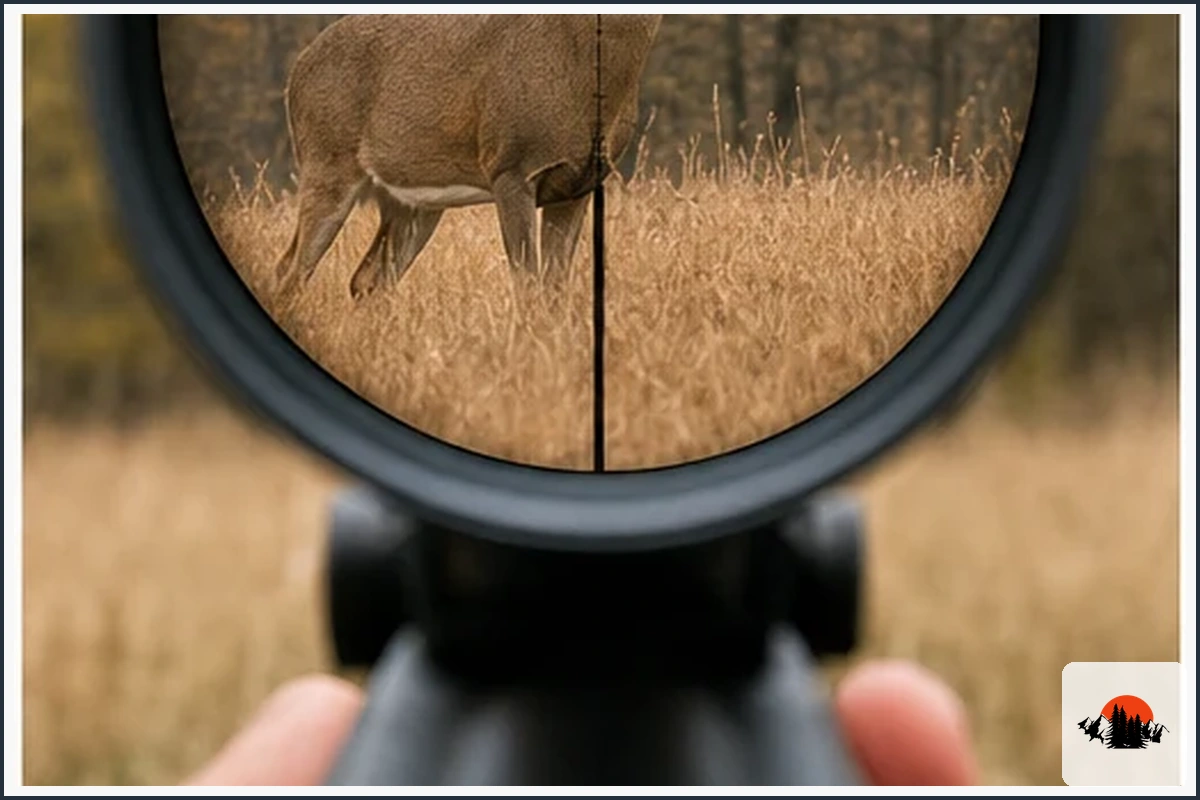
For ordinary deer and similar big-game hunting, 3-9x, 3-12x, or 3-15x is usually a sensible range. Lower magnification preserves field of view for closer shots, while the upper end supports careful aiming across open terrain.
Scopes reaching 18x, 20x, or 25x are more specialized. They can be useful for range practice and deliberate shots across open country, but they are typically heavier and less convenient in timber. A .270 Winchester’s capability does not require maximum magnification for every hunt.
Mounting and Reticle Priorities
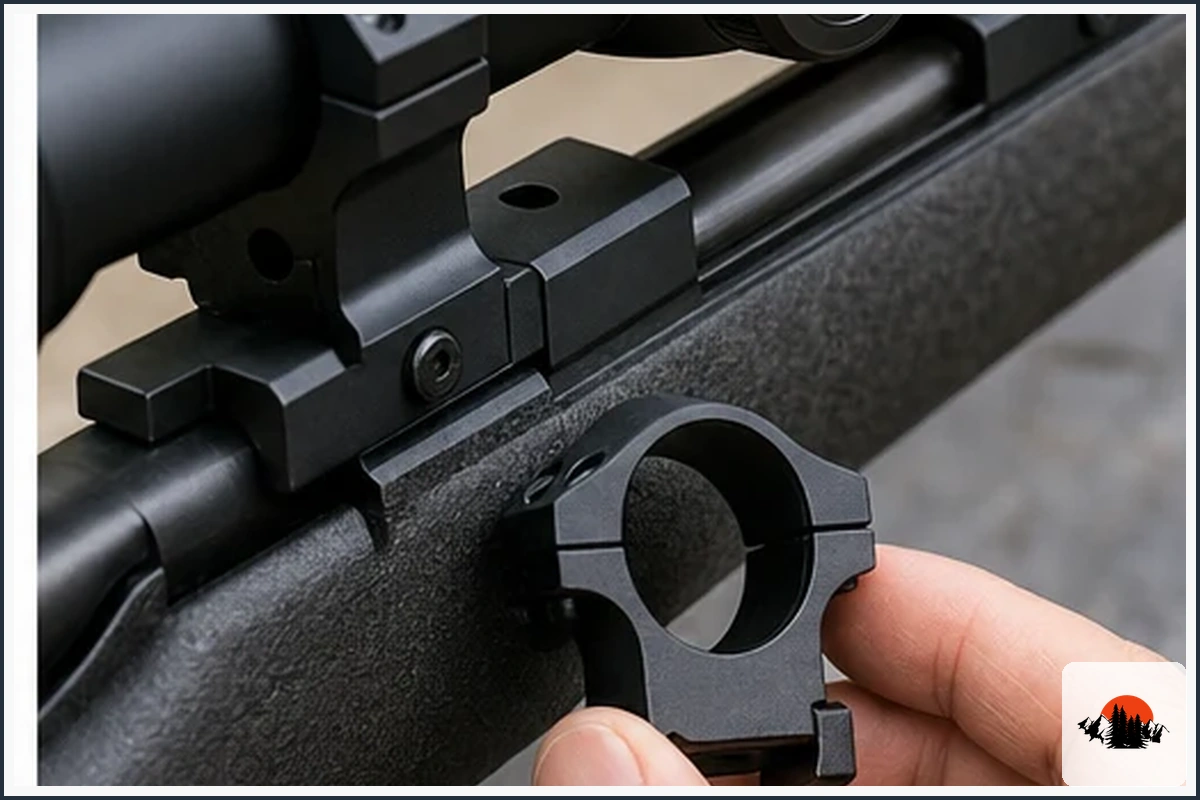
Choose rings or mounts based on the scope’s actual tube diameter, not the objective diameter. A 34mm scope requires compatible 34mm rings or a compatible mount. Objective size affects clearance, while ring height also influences cheek weld and bolt clearance.
First focal plane reticles maintain their relationship to magnification, while second focal plane reticles appear the same size as magnification changes. Neither is automatically better for every hunter. Select a reticle that can be read quickly and legally supports your intended use.
Individual Scope and Accessory Reviews
1. Vortex Optics Razor HD Gen II First Focal Plane Riflescopes

This Razor HD Gen II listing is aimed at hunters and shooters who want a precision-oriented first focal plane riflescope. The supplied product information does not identify the exact magnification variation, so verify the selected configuration before ordering.
For a .270 Winchester, this type of optic may suit open-country hunting and range work where repeatable adjustments and reticle references matter. It is less naturally suited to carrying through dense timber if the chosen variation is large or heavy.
Key Features
- First focal plane configuration is identified in the supplied product name.
- Razor HD Gen II series is positioned for precision-oriented use.
- Exact magnification, reticle, tube diameter, and dimensions should be confirmed on the current listing.
Pros
- Precision-focused format for deliberate shooting practice.
- First focal plane design can keep reticle references proportional through magnification changes.
- Potentially useful for open terrain where higher magnification is practical.
Cons
- Exact variation is not clear from the supplied entry.
- Large precision scopes can add weight to a hunting rifle.
- May provide less field of view than a lower-power hunting scope at close range.
Who It’s Best For
Best for experienced hunters who verify the exact configuration and expect to combine hunting with structured range practice.
Use rings and mounts that match the selected tube diameter. Confirm eye relief, clearance, and torque requirements using the manufacturer’s instructions.
2. Vortex Optics Riflescope Switchview Throw Levers

This is an accessory rather than a riflescope. A throw lever can make magnification changes more accessible, which may be useful when shifting between a broad field of view and a more deliberate sight picture.
Its usefulness depends entirely on compatibility with the scope’s magnification ring. Verify the exact Switchview model and do not force it onto a mismatched optic.
Key Features
- Designed as a riflescope magnification adjustment accessory.
- Exact compatible scope models should be checked before purchase.
- Small accessory format adds less bulk than changing the entire optic.
Pros
- Can make magnification adjustments easier to reach.
- May help hunters change power without shifting their grip substantially.
- Useful accessory for compatible variable scopes.
Cons
- Does not improve optical quality or zero retention.
- Compatibility must be confirmed carefully.
- Can add snag points around the magnification ring.
Who It’s Best For
Best for a hunter who already owns a compatible Vortex scope and wants easier magnification control.
Inspect the lever after installation and confirm that it does not interfere with the rifle, bolt, safe operation, or carrying position.
3. Seekins Precision 34mm Tube 1.0″ High 4 Cap Screw Scope Ring

This product is a single scope ring intended for a 34mm scope tube and listed at a 1.0-inch height. It is not a complete riflescope and should be considered only when the rifle, rail, and optic require this specific interface.
For a .270 Winchester, the ring height must provide adequate clearance while keeping the scope low enough for a comfortable cheek position. Confirm whether one ring or a matched set is required before ordering.
Key Features
- 34mm tube compatibility is stated in the product name.
- 1.0-inch height is stated in the product name.
- Four cap screws are identified in the listing title.
Pros
- Clear tube-diameter specification helps narrow compatibility.
- Low-height format may support a more natural cheek weld when clearance allows.
- Four-screw cap design is identified in the supplied name.
Cons
- A single ring may not complete a mounting system.
- Will not fit scopes with other tube diameters.
- Exact rail compatibility and torque guidance must be verified.
Who It’s Best For
Best for a buyer who has confirmed a 34mm optic, compatible rail, and the need for a 1.0-inch ring height.
Use manufacturer torque specifications and have a qualified gunsmith check installation if you are uncertain about alignment or clearance.
4. Vortex Precision Extended Cantilever Riflescope Mounts
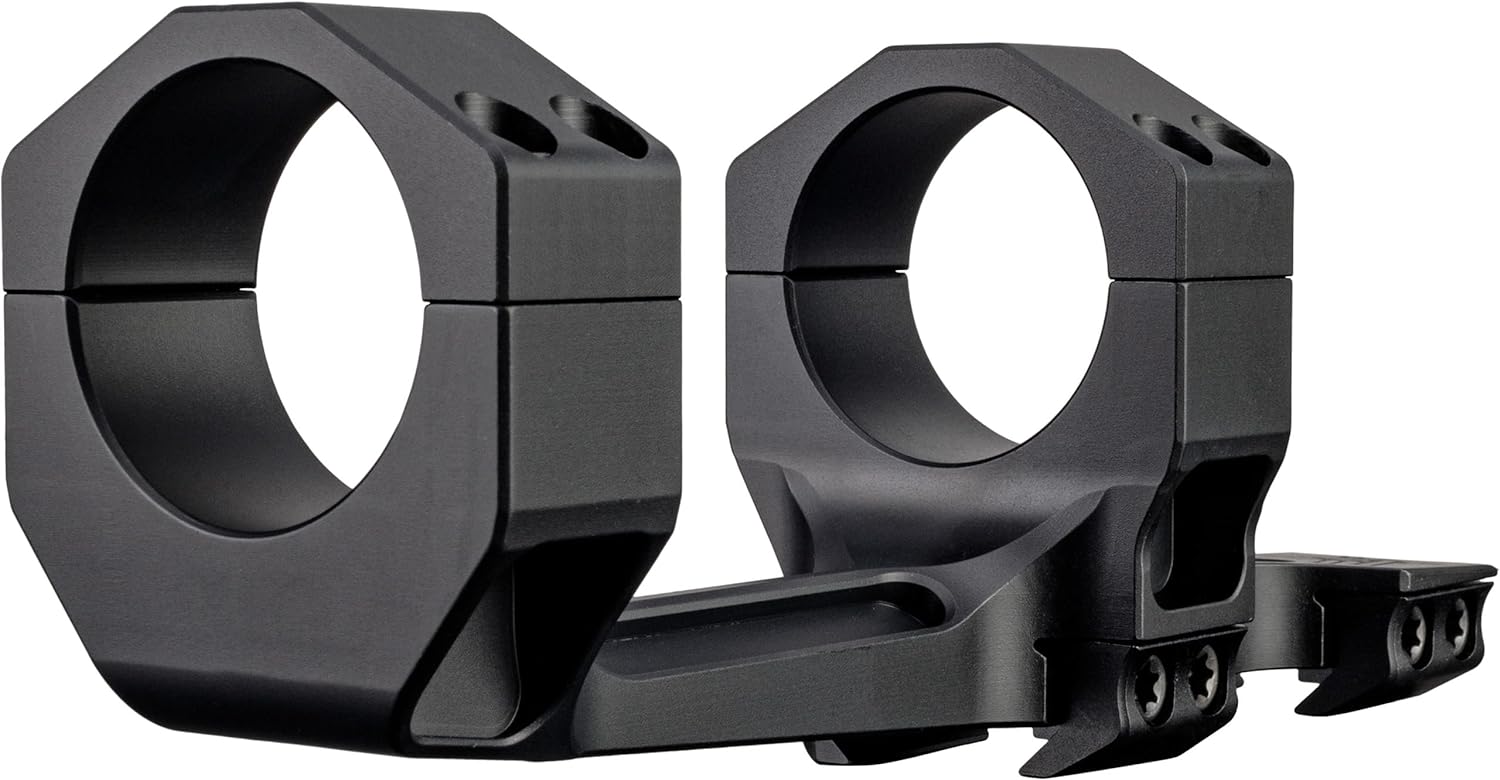
This is an extended cantilever mount rather than a scope. Its purpose is to position a compatible optic farther forward on a suitable rail. That can help achieve correct eye relief on some rifle configurations, but it is not automatically appropriate for every .270 Winchester.
Check tube diameter, rail standard, mount height, eye relief, and receiver layout before purchase. An extended mount should not be selected simply because the scope looks large.
Key Features
- Extended cantilever mounting format is identified in the product name.
- Designed for compatible riflescope and rail combinations.
- Exact tube diameter and height must be verified.
Pros
- May help position an optic for correct eye relief.
- Useful for compatible modern rail-and-scope configurations.
- Can simplify positioning when standard rings do not provide enough adjustment.
Cons
- Incorrect rail or tube selection can make it unusable.
- May add height and weight compared with simple rings.
- Requires careful alignment and torque during installation.
Who It’s Best For
Best for a hunter whose rifle and scope combination specifically requires an extended cantilever position.
Unload and secure the rifle before installation. Confirm the optic’s eye relief in a normal shooting position before final tightening.
5. Best Overall: Leupold VX-5HD 3-15x44mm Side Focus Riflescope

The Leupold VX-5HD 3-15x44mm is the strongest overall match in this supplied group for many .270 Winchester hunting applications. Its 3x low end is more practical for timber and quick field views than scopes that begin at 5x or 6x, while 15x offers useful reach across open terrain.
The 44mm objective is a balanced size for hunting. It may provide useful light-gathering potential without the mounting height and bulk commonly associated with 50mm or 56mm objectives. Side focus can help refine parallax settings at appropriate distances.
Key Features
- 3-15x magnification range is identified in the product name.
- 44mm objective diameter is identified in the product name.
- Side-focus design is identified in the listing title.
Pros
- Versatile magnification range for timber edges and open-country hunting.
- Moderate objective size may simplify mounting compared with larger objectives.
- Strong fit for hunters who want one scope for varied terrain.
- 15x top end supports deliberate observation and range practice.
Cons
- Exact reticle and illumination variation must be confirmed.
- Higher magnification is not a substitute for range practice or sound field judgment.
- Side-focus adjustment adds another control to learn.
Who It’s Best For
Best for the typical .270 Winchester hunter who wants a versatile hunting scope without moving into an especially large precision optic.
Mount it low enough for a consistent cheek weld while maintaining objective clearance. Confirm zero after installation and again after transport or significant temperature changes.
6. Tangent Theta Professional 5-25x56mm Premium Riflescope

The Tangent Theta Professional 5-25x56mm is a specialized precision optic. Its magnification range and large objective are better aligned with deliberate long-range observation and range work than with lightweight mountain hunting.
A .270 Winchester can be used across open terrain, but this scope may be more optic than many hunters need. Weight, mounting height, eye relief, and field of view at 5x should be considered before choosing it for a general hunting rifle.
Key Features
- 5-25x magnification range is identified in the product name.
- 56mm objective diameter is identified in the product name.
- Professional premium riflescope format is identified in the listing.
Pros
- Very broad upper magnification range for precision-oriented use.
- Large objective may suit carefully planned low-light observation when properly mounted.
- Appropriate format for hunters who also spend substantial time practicing at distance.
Cons
- Begins at 5x, which may feel restrictive in close timber.
- Large objective generally requires careful ring-height planning.
- Likely heavier and less convenient for long mountain carries.
Who It’s Best For
Best for experienced users prioritizing precision practice and open-country shooting over minimum rifle weight.
Use a stable rest and verify local hunting rules before applying any long-range setup in the field. Ethical range limits remain the hunter’s responsibility.
7. Schmidt & Bender 5-25×56 PM II Rifle Scope, 34 mm Tube, First Focal Plane, MSR2

This Schmidt & Bender PM II is a highly specialized first focal plane riflescope with a 34mm tube, 5-25x range, and 56mm objective as stated in the supplied name. It is oriented toward precision users rather than hunters seeking the lightest .270 Winchester setup.
The supplied reticle designation is MSR2. Verify the exact reticle, adjustment system, mounting position, and intended use before ordering. A 34mm optic requires compatible rings or a mount.
Key Features
- 5-25x magnification range is identified.
- 56mm objective and 34mm tube are identified.
- First focal plane and MSR2 reticle designation are supplied.
Pros
- First focal plane format supports reticle references across magnification changes.
- Broad magnification range for deliberate observation.
- Clear tube specification assists ring selection.
Cons
- Large and specialized for ordinary hunting carry.
- 5x minimum power may be limiting in dense cover.
- Requires careful 34mm mounting compatibility checks.
Who It’s Best For
Best for advanced users who understand precision optics and need a large, feature-rich scope for open-country practice or hunting.
Have the rifle and optic mounted according to manufacturer instructions. Confirm that the resulting setup remains practical to carry and operate safely.
8. MK Machining PRO Series Throw Levers Compatible with Schmidt & Bender Optics

This MK Machining product is a throw lever for compatible Schmidt & Bender optics. It is not a standalone sighting system and should only be considered after confirming the exact scope model and adjustment-ring fit.
On a hunting rifle, a throw lever may speed magnification changes, but it can also snag on clothing or gear. Keep the accessory unobtrusive and verify that it does not interfere with safe rifle handling.
Key Features
- PRO Series throw-lever format is identified.
- Compatibility with Schmidt & Bender optics is identified.
- Exact optic model fit should be confirmed before ordering.
Pros
- May improve access to the magnification ring.
- Useful for compatible scopes that require frequent power changes.
- Small accessory compared with replacing an optic.
Cons
- Has no independent optical function.
- Compatibility is limited to suitable optic models.
- May create a snag point in thick brush.
Who It’s Best For
Best for a Schmidt & Bender owner who has verified compatibility and wants more tactile magnification control.
Inspect the installed lever regularly and remove it if it interferes with transport, storage, or normal operation.
9. Vortex Precision Matched Riflescope Rings

These Vortex Precision Matched Riflescope Rings are mounting components, not a scope. Their relevance to a .270 Winchester depends on the exact tube diameter, height, and rifle interface selected.
Matched rings can be useful when a hunter wants a consistent mounting system, but no ring should be purchased without checking objective clearance, bolt movement, rail compatibility, and cheek weld.
Key Features
- Precision matched riflescope ring format is identified.
- Exact diameter and height are not clear from the supplied entry.
- Designed for compatible rifle and optic combinations.
Pros
- Matched-ring format may simplify selecting a consistent pair.
- Useful for replacing or upgrading a compatible mounting system.
- Can support a stable optic installation when correctly sized.
Cons
- Tube diameter and height must be verified.
- Cannot be evaluated independently of the rifle and scope.
- Incorrect installation can affect alignment and zero.
Who It’s Best For
Best for a buyer who has already selected a compatible scope and confirmed the required ring size.
Use proper torque and alignment procedures. A qualified gunsmith can help when the receiver, rail, or ring fit is uncertain.
10. Vortex Riflescope Bubble Levels

A bubble level is an alignment accessory intended to help the shooter identify rifle cant. Cant can matter when using trajectory-compensating reticles or making longer-range adjustments, but a level cannot replace practice and a properly zeroed rifle.
Confirm the level’s fit with the scope tube and installation location. It should remain visible without obstructing normal handling or creating a snag hazard.
Key Features
- Riflescope bubble-level format is identified.
- Exact tube compatibility is not stated in the supplied entry.
- Designed to help monitor rifle cant.
Pros
- Can provide a visual reference for keeping the rifle upright.
- Useful during structured range practice.
- Small accessory compared with changing scopes or mounts.
Cons
- Does not improve scope quality or rifle accuracy by itself.
- Tube compatibility must be confirmed.
- May be less useful for hurried close-range shots.
Who It’s Best For
Best for hunters who practice at varied distances and want a consistent way to monitor rifle cant.
Install it where it can be checked without compromising safe handling. Confirm its position after transport and inspect it for damage.
11. ZEISS Conquest V4 6-24×50 Riflescope with ZMOAi-1 Illuminated Reticle #93

The ZEISS Conquest V4 in this listing has a 6-24x range, 50mm objective, and ZMOAi-1 illuminated reticle designation. It is a strong fit for open-country observation and deliberate range work, but the 6x minimum may feel too narrow for dense woods.
The large objective and higher magnification require careful mounting. Verify the reticle, illumination controls, eye relief, and local regulations before selecting it for hunting.
Key Features
- 6-24x magnification range is identified.
- 50mm objective diameter is identified.
- ZMOAi-1 illuminated reticle #93 is identified.
Pros
- High upper magnification supports detailed observation.
- Illuminated reticle may improve reticle visibility in suitable conditions.
- 50mm objective suits hunters prioritizing light-gathering potential.
Cons
- 6x minimum power is less versatile in thick cover.
- 50mm objective can require higher rings.
- Large format may be excessive for lightweight mountain hunts.
Who It’s Best For
Best for open-country .270 Winchester hunters who value magnification and a detailed reticle over minimum weight.
Illumination does not make an unsafe shot ethical or legal. Follow light restrictions, identify the target and background, and use only the power needed for a clear sight picture.
12. Athlon Optics Argos BTR GEN2 6-24X50 First Focal Plane Riflescopes with Sunshade Included
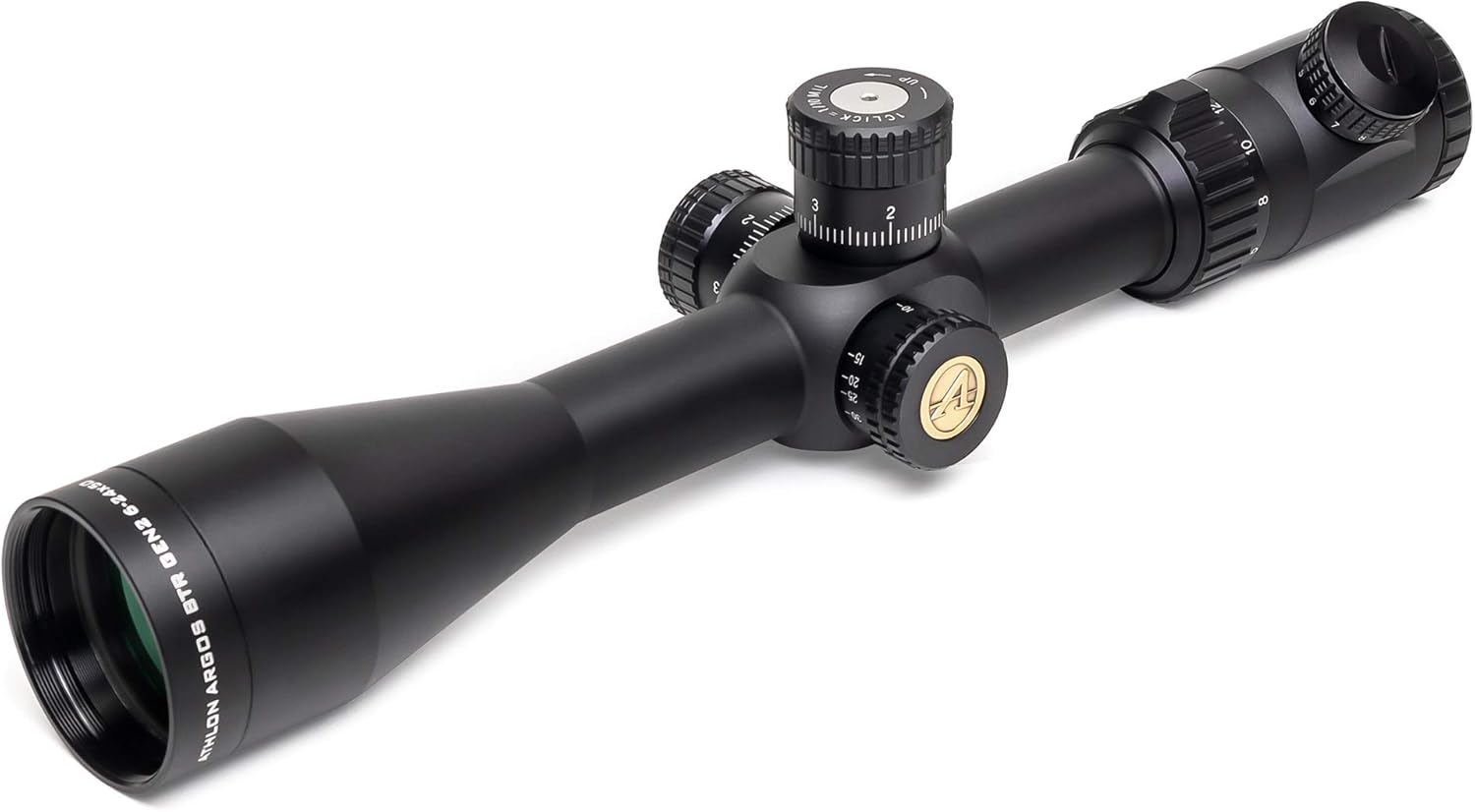
The Athlon Argos BTR GEN2 is a first focal plane 6-24×50 riflescope with a sunshade listed in the supplied product name. It presents a precision-oriented format for hunters who spend time in open country and at the range.
For ordinary deer hunting with a .270 Winchester, its 6x minimum and larger body may be more than necessary. Verify the exact reticle, tube size, adjustment system, and mounting height before purchase.
Key Features
- 6-24x magnification range is identified.
- 50mm objective is identified.
- First focal plane design and included sunshade are identified.
Pros
- Broad magnification range for observation and practice.
- First focal plane format supports consistent reticle scaling.
- Included sunshade may help manage glare in bright conditions.
Cons
- 6x minimum power is not ideal for close timber.
- Large objective and high magnification increase bulk.
- Exact variation details should be confirmed.
Who It’s Best For
Best for a hunter seeking a precision-style optic for open terrain and range practice rather than a minimalist carry setup.
Mount the scope securely and verify that the sunshade does not interfere with covers, storage, or field transport.
13. Leupold VX-5HD Gen 2 3-15×44
The Leupold VX-5HD Gen 2 3-15×44 is a promising general-purpose match for a .270 Winchester because its listed range begins at 3x and reaches 15x. However, the supplied Amazon entry does not provide a verifiable current image or variation details.
Confirm the exact reticle, illumination, tube diameter, side-focus configuration, and availability on the product page before ordering. Its basic magnification profile is well suited to mixed terrain.
Key Features
- 3-15x magnification is identified in the product name.
- 44mm objective is identified.
- Gen 2 designation is identified.
Pros
- Versatile power range for common hunting distances.
- Moderate objective size supports practical mounting.
- Strong fit for hunters moving between timber and open ground.
Cons
- Exact variation details are not supplied.
- Reticle and illumination must be verified.
- Higher power is unnecessary for some close-range hunts.
Who It’s Best For
Best for a hunter who wants the VX-5HD Gen 2 format but is willing to verify the exact listing and configuration first.
Compare the selected variation with the rifle’s intended use and confirm the manufacturer’s mounting and zeroing guidance.
14. Sig Sauer TANGO-SPR 4-16×44
The Sig Sauer TANGO-SPR 4-16×44 offers a middle-ground magnification profile. Starting at 4x, it is more open-country oriented than a 3x hunting scope, while 16x provides extra flexibility for range practice and carefully judged longer shots.
The 44mm objective is a practical size for many hunting rifles, but verify the exact reticle, adjustment style, eye relief, and tube diameter from the current listing.
Key Features
- 4-16x magnification range is identified.
- 44mm objective is identified.
- TANGO-SPR model designation is identified.
Pros
- Useful middle-range magnification for mixed terrain.
- 44mm objective may simplify mounting compared with larger designs.
- 16x top end supports deliberate observation.
Cons
- 4x minimum may be restrictive in very close cover.
- Exact reticle and tube specifications are not supplied.
- Higher power still requires realistic field judgment and practice.
Who It’s Best For
Best for a hunter who spends more time in open or semi-open terrain than dense timber.
Zero the scope at a distance appropriate to the ammunition and hunting plan, and confirm the rifle remains comfortable to carry.
15. Bushnell R5 3-9×50
The Bushnell R5 3-9×50 follows a traditional hunting-scope format. A 3x low end is useful for general woods and field hunting, while 9x is adequate for many ordinary deer-hunting distances.
The 50mm objective may help hunters prioritize low-light viewing potential, but it can require taller rings than a smaller objective. Verify the exact reticle, eye relief, tube diameter, and current availability.
Key Features
- 3-9x magnification range is identified.
- 50mm objective is identified.
- R5 model designation is identified.
Pros
- Traditional magnification range suits many general hunting situations.
- 3x low end preserves more field of view than high-starting scopes.
- 50mm objective may appeal to hunters focused on legal low-light viewing.
Cons
- 50mm objective may require higher mounting rings.
- Exact specifications are not supplied in the entry.
- 9x top end is less flexible for extended open-country observation.
Who It’s Best For
Best for a traditional deer hunter who values straightforward magnification and does not need extreme long-range capability.
Check objective clearance and cheek weld carefully. Follow local legal shooting-light rules rather than assuming a larger objective extends legal hunting time.
16. Vortex Crossfire HD 4-12×44
The Vortex Crossfire HD 4-12×44 is a practical middle-power option for hunters who want more reach than a traditional 3-9x scope without moving to a large precision optic.
Its 4x low end is better suited to field and open-cover hunting than very close timber. Confirm the exact reticle, tube size, eye relief, and mounting requirements before purchase.
Key Features
- 4-12x magnification is identified.
- 44mm objective is identified.
- Crossfire HD model designation is identified.
Pros
- Balanced magnification range for mixed hunting terrain.
- 44mm objective supports practical mounting dimensions.
- 12x top end is useful for observation and range confirmation.
Cons
- 4x minimum may be narrow for close shots in thick cover.
- Exact reticle and specifications are not supplied.
- Higher power can encourage unnecessary magnification in the field.
Who It’s Best For
Best for a hunter wanting a moderate, multipurpose scope for a .270 Winchester.
Practice changing magnification before hunting so adjustments remain deliberate and do not disturb the rifle’s position.
17. Burris Eliminator 6 4-20×52
The Burris Eliminator 6 4-20×52 is a technology-oriented riflescope format with a broad magnification range and large objective. It may appeal to hunters who want integrated aiming assistance, but the exact capabilities and legal suitability must be confirmed from the current manufacturer documentation.
This is not the lightest choice for a .270 Winchester. Its 4x minimum and 52mm objective point toward open terrain and deliberate shooting rather than fast timber hunting.
Key Features
- 4-20x magnification range is identified.
- 52mm objective is identified.
- Eliminator 6 model designation is identified.
Pros
- Broad magnification range for observation and practice.
- Large objective may suit hunters prioritizing low-light viewing potential.
- Technology-focused format may reduce the need for separate aiming calculations in some applications.
Cons
- Exact electronic and reticle features require verification.
- May be heavy and bulky on a hunting rifle.
- Technology-assisted features may be restricted in some hunting jurisdictions.
Who It’s Best For
Best for experienced hunters who verify local regulations and want a technology-focused optic for open-country use.
Check batteries and operation before every trip. Never rely on electronics as a substitute for identifying the target, backstop, weather, and ethical range.
18. Education and Ethics

“Education and Ethics” is not a riflescope or mounting accessory. It appears unrelated to the target keyword, so it should not be treated as a scope recommendation. It may nevertheless be relevant to responsible hunting education and decision-making.
Readers should use appropriate hunter education, local wildlife-agency guidance, and qualified instruction when learning firearm safety, identification, shot selection, and field ethics.
Key Features
- Product name identifies an education and ethics resource.
- It is not an optical sighting product.
- It may support responsible hunting knowledge rather than scope selection.
Pros
- Potentially relevant to ethical hunting preparation.
- May complement equipment decisions with responsible-use education.
- Does not encourage reliance on equipment alone.
Cons
- Does not compare magnification, reticles, or optical performance.
- Not a substitute for hands-on safety training.
- Its relevance to choosing a .270 Winchester scope is indirect.
Who It’s Best For
Best for beginners or hunters seeking educational material alongside equipment research.
Pair reading with recognized hunter education and local regulations. For firearm questions, seek qualified instruction rather than relying on a book alone.
19. Hawke Endurance 30 FD 3-18×44
The Hawke Endurance 30 FD 3-18×44 offers a broad hunting-oriented range beginning at 3x and reaching 18x. That profile can work across timber edges, fields, and range practice, provided the rifle remains comfortable to carry.
The supplied entry does not verify the exact reticle or tube specifications. Confirm those details, along with eye relief and adjustment style, before selecting rings.
Key Features
- 3-18x magnification range is identified.
- 44mm objective is identified.
- Endurance 30 FD model designation is identified.
Pros
- 3x low end remains practical for varied terrain.
- 18x top end adds flexibility for open-country observation.
- 44mm objective may simplify mounting compared with larger designs.
Cons
- Exact reticle details are not supplied.
- 18x magnification may add bulk beyond what many hunters need.
- Current variation and compatibility require verification.
Who It’s Best For
Best for hunters wanting one broad-range optic for mixed terrain and regular range practice.
Use the lowest magnification that provides a clear, stable sight picture in the field. Inspect the scope and mounts after rough transport.
20. Swarovski Z5i+ 3.5-18×50
The Swarovski Z5i+ 3.5-18×50 is a premium hunting-optic format with a useful low end and substantial upper magnification. Its 3.5x setting is more flexible than scopes beginning at 5x or 6x, while 18x supports observation across open country.
The 50mm objective and illuminated designation suggested by the model name require careful verification. Confirm reticle, tube size, mounting height, and illumination controls before ordering.
Key Features
- 3.5-18x magnification range is identified.
- 50mm objective is identified.
- Z5i+ model designation is identified.
Pros
- Low starting power remains useful for general hunting.
- 18x upper range supports open-country observation.
- 50mm objective may appeal to hunters prioritizing low-light viewing potential.
Cons
- 50mm objective may require taller rings.
- Large magnification range can add weight and complexity.
- Exact illuminated-reticle variation must be confirmed.
Who It’s Best For
Best for hunters who want a premium, flexible optic and accept the added mounting and carry considerations of a 50mm objective.
Follow the manufacturer’s illumination and battery guidance. Legal shooting-light limits still apply regardless of optical performance.
21. Sig Sauer WHISKEY6 3-18×44 FFP
The Sig Sauer WHISKEY6 3-18×44 FFP offers a versatile magnification range with a first focal plane format identified in the product name. Starting at 3x makes it more suitable for mixed terrain than many high-magnification precision scopes.
The 18x upper end may be useful for range practice and open-country observation, although it adds capability many hunters may not use frequently. Confirm the reticle, tube size, and adjustment details.
Key Features
- 3-18x magnification range is identified.
- 44mm objective is identified.
- First focal plane design is identified.
Pros
- 3x low end supports varied hunting terrain.
- First focal plane format keeps reticle scaling consistent through magnification changes.
- 18x top end provides flexibility for observation and practice.
Cons
- Exact reticle and tube specifications are not supplied.
- Higher-power format may weigh more than a traditional hunting scope.
- First focal plane reticles can appear small at low magnification depending on design.
Who It’s Best For
Best for hunters who want a versatile first focal plane optic without starting at an especially high minimum power.
Practice the reticle at each magnification setting before hunting. Do not make field adjustments without maintaining safe muzzle direction and trigger discipline.
22. Trijicon Huron 4-16×50
The Trijicon Huron 4-16×50 is aimed at hunters who want more magnification than a traditional 3-9x design. Its 4x minimum remains workable for many field situations, while 16x provides extra reach for open terrain and range practice.
The 50mm objective can support a low-light-oriented setup but may require taller rings and more attention to cheek weld. Verify the exact reticle, eye relief, tube diameter, and current listing details.
Key Features
- 4-16x magnification range is identified.
- 50mm objective is identified.
- Huron model designation is identified.
Pros
- Useful middle-to-high magnification range for field hunting.
- 50mm objective may appeal to hunters concerned with low-light viewing potential.
- 16x top end supports observation and range confirmation.
Cons
- 50mm objective can require taller rings.
- 4x minimum is less flexible in dense cover than a 3x scope.
- Exact reticle and mounting specifications require verification.
Who It’s Best For
Best for open-country .270 Winchester hunters who want moderate-to-high magnification without moving to a 20x or 25x optic.
Confirm objective clearance and maintain a consistent cheek weld. Verify local hunting-light rules and identify the target and background before any shot.
Buying Guide: Choosing a Scope for the .270 Winchester
- Start with hunting terrain. Timber and brush favor a wider field of view and lower minimum power. Open country allows more magnification, assuming the rifle remains portable.
- Set a practical magnification ceiling. Most hunters do not need 24x or 25x for ordinary deer hunting. Higher power is most useful when paired with regular range practice.
- Check objective clearance. A 50mm or 56mm objective may need taller rings. Taller rings can affect cheek weld and overall handling.
- Match tube diameter. Ring and mount diameter must match the scope tube. Do not confuse tube diameter with objective diameter.
- Choose the reticle deliberately. A simple reticle may be faster for ordinary hunting. More detailed reticles require practice before field use.
- Consider first versus second focal plane. First focal plane reticles change apparent size with magnification; second focal plane reticles remain visually similar. Select the system you understand.
- Prioritize eye relief and comfort. A clear sight picture should be repeatable from a natural shooting position without crowding the eye.
- Confirm the complete rifle setup. Scope, rings, mount, rifle, ammunition, stock dimensions, and cheek position must work together.
Safety, Compatibility, and Responsible Use
A scope does not make a shot safe or ethical. Follow the four basic firearm-safety rules, keep the muzzle pointed in a safe direction, keep the trigger finger outside the guard until ready to fire, and treat every firearm as loaded until personally verified otherwise.
Use qualified instruction for mounting, zeroing, and field practice when needed. Follow range rules and manufacturer torque specifications. Transport and store the rifle securely, and follow local laws regarding licenses, seasons, tags, equipment, shooting hours, and permissible optics or electronic features.
Before hunting, identify the target and what lies beyond it. Weather, wind, distance, visibility, shooting position, and animal presentation all affect an ethical decision. A .270 Winchester and a high-magnification optic do not remove those responsibilities.
Maintenance and Pre-Hunt Checks
- Clean lenses with appropriate optical-cleaning materials rather than clothing or abrasive fabric.
- Keep scope caps and protective covers available during transport.
- Inspect rings, mounts, screws, levels, and throw levers for movement or damage.
- Confirm zero after mounting, significant transport, or an impact.
- Replace or check illumination batteries according to manufacturer guidance.
- Store the rifle and optic dry, secured, and protected from unnecessary temperature extremes.
- Verify that accessories do not interfere with bolt operation, safety controls, or safe handling.
Common Buying Mistakes
- Choosing maximum magnification when a wider field of view would be more useful.
- Buying rings before confirming the scope’s tube diameter.
- Using tall rings without checking cheek weld and objective clearance.
- Assuming an illuminated reticle extends legal hunting hours.
- Failing to practice with the selected reticle at realistic magnification settings.
- Ignoring rifle weight during a long mountain hunt.
- Assuming a scope remains zeroed after rough transport without checking it.
- Using a technology-assisted optic without reviewing local regulations.
Troubleshooting Scope Problems
- Blurry image: Check focus, parallax, lens cleanliness, and eye position. Follow the scope manual.
- Scope appears too high: Recheck ring height and objective clearance, then consult a qualified gunsmith if a lower setup is needed.
- Zero changes: Inspect mounting screws, rings, rail interfaces, ammunition, and rifle condition. Stop using damaged equipment.
- Reticle is difficult to see: Confirm illumination settings, battery condition, and ambient light. Do not assume the optic is suitable for every legal hunting condition.
- Throw lever binds: Verify compatibility and remove the accessory if it interferes with the magnification ring.
Frequently Asked Questions
1. What is the best hunting scope for 270 Win?
For many hunters, the Leupold VX-5HD 3-15x44mm is the strongest supplied overall match because it combines a practical low end with useful upper magnification.
2. Is 3-15x enough for a .270 Winchester?
Yes. A 3-15x scope covers many timber-edge, field, and open-country hunting situations when the hunter practices and sets realistic limits.
3. Is 25x magnification excessive for deer hunting?
It can be more than necessary for ordinary deer hunting. It may be useful for range practice or carefully planned open-country observation, but it adds size and weight.
4. Is a 50mm objective better than a 44mm objective?
Not automatically. A 50mm objective may appeal to low-light-oriented users, but it can require taller rings and add bulk.
5. What magnification is best for timber hunting?
Lower settings around 2.5x to 4x generally provide a wider field of view than high starting powers.
6. What magnification is best for open-country hunting?
Scopes reaching roughly 12x to 18x can provide useful flexibility, but the appropriate setting depends on distance, visibility, stability, and ethical judgment.
7. Should I choose first focal plane for hunting?
Choose first focal plane if you understand how the reticle behaves through the magnification range and find the reticle visible at lower power.
8. Is second focal plane better for a beginner?
It may feel simpler because the reticle remains visually similar, but the hunter must understand which magnification makes any ballistic references accurate.
9. Does a .270 Winchester need a long-range scope?
No. The rifle can be paired with a conventional hunting scope. The correct choice depends on terrain, hunting distances, and the shooter’s training.
10. What tube diameter should I use?
Use rings or mounts that match the scope’s stated tube diameter. Verify the exact model rather than assuming 30mm or 34mm.
11. Can I use 34mm rings on a 30mm scope?
No, not without a properly designed and compatible solution. Ring diameter must match the scope tube.
12. What ring height should I choose?
Choose the lowest height that provides objective, bolt, and receiver clearance while maintaining a comfortable cheek weld.
13. Do larger objectives improve accuracy?
Objective size does not automatically improve accuracy. It may affect light-gathering potential, mounting height, and overall weight.
14. Is side focus important for hunting?
It can help refine parallax at appropriate distances, but it adds another adjustment that should be practiced before hunting.
15. Is an illuminated reticle necessary?
No. It can improve reticle visibility in suitable conditions, but it does not identify targets or extend legal shooting hours.
16. Are illuminated scopes legal everywhere?
No single answer applies everywhere. Check current state or provincial hunting regulations for illuminated reticles and electronic aiming features.
17. Is the ZEISS Conquest V4 suitable for a .270?
Its 6-24×50 format can suit open-country and range-oriented use, but its minimum power and larger size may be less convenient in timber.
18. Is the Athlon Argos BTR GEN2 suitable for hunting?
It may suit hunters who want a first focal plane precision-style optic, particularly for open terrain, but verify weight, reticle, and local equipment rules.
19. Is the VX-5HD better than a 3-9x scope?
It offers more upper magnification and flexibility, while a 3-9x scope may be simpler, lighter, and sufficient for ordinary hunting distances.
20. Is a 3-9x scope enough for deer?
For many deer hunts, yes. Its suitability depends on terrain, distance, visibility, and the hunter’s ability to place an ethical shot.
21. Should I buy a scope with a sunshade?
A sunshade can help reduce glare in bright conditions, but it adds length and should not interfere with covers or transport.
22. Do scope levels help hunting accuracy?
A bubble level can help monitor rifle cant, particularly during longer-range practice, but it does not replace a stable position or proper zero.
23. What is a throw lever used for?
A throw lever makes a compatible variable scope’s magnification ring easier to turn. Confirm exact compatibility before installation.
24. Can a throw lever snag in brush?
It can. Inspect the accessory’s profile and remove it if it interferes with carrying or handling.
25. Should a scope be mounted by a gunsmith?
A qualified gunsmith is a good choice when rail fit, torque, alignment, or clearance is uncertain.
26. How often should I check zero?
Check zero after mounting, transport, a significant impact, unusual performance, or a major change in ammunition or conditions.
27. Can cold weather affect a scope?
Temperature changes can affect equipment and batteries. Protect the optic from condensation and verify operation before hunting.
28. How should I clean scope lenses?
Remove loose particles first and use appropriate lens-cleaning tools and solutions recommended by the manufacturer.
29. How much does scope weight matter?
It matters greatly on mountain or mobile hunts. A heavier optic may provide features you rarely use while increasing fatigue.
30. Is a 56mm scope practical for mountain hunting?
It can be, but the added size, weight, and mounting height may be poor trade-offs for hunters carrying equipment over steep terrain.
31. What is the best scope for low-light hunting?
A quality optic with an appropriate objective, clear reticle, and suitable performance may help, but legal shooting hours and target identification remain decisive.
32. Does magnification improve low-light performance?
Higher magnification does not automatically improve low-light performance. It can narrow the exit pupil and reduce practical brightness at high settings.
33. Should I use maximum magnification for every shot?
No. Use only enough magnification for a clear sight picture. Lower power often provides a wider field of view and easier tracking.
34. What reticle is best for a .270 Winchester?
The best reticle is one the hunter can see, understand, and use consistently under field conditions. Verify ballistic references rather than assuming them.
35. Can I use a precision scope for ordinary hunting?
Yes, but consider whether the additional weight, size, and complexity provide meaningful benefits for your terrain and distances.
36. Is a premium scope always better?
Not for every hunter. A premium optic may offer useful features, but a simpler, lighter scope can be the better field choice.
37. What should I practice before hunting?
Practice safe handling, mounting position, magnification changes, reticle visibility, stable positions, target identification, and realistic distances.
38. Should I use ballistic data from the internet?
Use verified ammunition and rifle data, then confirm it at the range. Internet estimates should not replace measured results.
39. Can a scope compensate for poor ammunition?
No. Consistent ammunition, rifle condition, mounting, and practice all influence practical accuracy.
40. What should I do if the scope fogs?
Move carefully between temperature environments, keep lenses protected, and follow manufacturer guidance. Do not wipe condensation with abrasive material.
41. Does a large scope make a rifle front-heavy?
It can. Balance matters when carrying, shouldering, and holding the rifle steadily.
42. Are electronic scope features legal for hunting?
Rules vary. Check the current regulations for the jurisdiction and species before relying on electronic aiming or rangefinding features.
43. What is the best scope for beginner .270 hunters?
A moderate-power scope with a clear, understandable reticle and manageable weight is often easier to learn than a complex high-magnification optic.
44. Should I buy the same scope used by another hunter?
Only if it suits your rifle, terrain, eyesight, hunting distances, budget, and carrying needs.
45. What should I inspect before a hunt?
Inspect lenses, caps, rings, mounts, screws, reticle illumination, batteries, zero, and any accessory that could interfere with safe operation.
46. Can I mount a scope myself?
Some experienced owners can, but follow the manufacturer’s procedures and use professional help if alignment or torque is uncertain.
47. Why does my scope look blurry at high power?
Check focus, parallax, eye position, atmospheric conditions, and lens cleanliness. High magnification also reveals movement more clearly.
48. Does a scope guarantee an ethical hit?
No. Ethical results depend on identification, practice, distance, conditions, shot placement, and judgment.
49. What should I carry with a scoped hunting rifle?
Carry navigation, communication, lighting, first aid, weather protection, water, and any legally required hunting documents.
50. When should I ask for professional help?
Ask a gunsmith, qualified instructor, manufacturer, or wildlife agency when mounting, firearm safety, product compatibility, or regulations are unclear.
Conclusion
After comparing the supplied options, Leupold VX-5HD 3-15x44mm Side Focus Riflescope is the strongest overall choice for many hunters seeking the best hunting scope for 270 Win. Its 3-15x range is more versatile than the high-starting precision scopes, while the 44mm objective keeps the format practical. Its main trade-off is that the exact reticle and variation must be verified.
Hunters focused on precision practice may prefer Vortex Optics Razor HD Gen II First Focal Plane Riflescopes, while open-country users may consider the ZEISS, Athlon, or other higher-magnification options. Accessories such as compatible rings, mounts, levels, and throw levers should be selected only after confirming exact fit.
Amazon availability, sizes, variations, and specifications can change. Verify the current listing and follow all firearm-safety rules, hunting regulations, and manufacturer instructions before use.