

Best Hunting Scope for the Money: 17 Practical Choices Compared
A hunting scope can look impressive in a product listing yet disappoint when low light, recoil, or a fast shot at changing distance exposes its weaknesses. Finding the best hunting scope for the money means balancing optical clarity, magnification, reticle design, durability, mounting hardware, and weight—not simply choosing the most expensive optic.
The wrong choice can add unnecessary bulk to a rifle, make aiming slower, or leave you struggling to identify a legal target in fading light. This comparison examines 17 scopes and optic accessories across different budgets and hunting styles, highlighting where each makes sense and where its compromises matter. Whether you prioritize a lightweight setup, long-range precision, a versatile LPVO, or dependable value, the guide will help narrow the field.
Start with the quick picks to see which options best match your rifle and hunting priorities.
The strongest value depends on your application. Hunters should verify the exact reticle, focal-plane configuration, tube diameter, mounting height, eye relief, rifle compatibility, current availability, and local hunting regulations before ordering or mounting any optic.
As an Amazon Associate I earn from qualifying purchases.
Quick Picks
- Best Overall Premium Value: Maven RS.6-1-10X28mm FFP LPVO Rifle Scope — Broad magnification range for hunters who move between close and moderate-distance shots.
- Best Hunting-Focused Midrange Option: Maven CRS.1 3-12×40 SFP Rifle Scope — A compact magnification range suited to general hunting use.
- Best Long-Range Option: Nightforce NXS 5.5-22x56mm F2 Long Range Precision Shooting Riflescope — Built around higher magnification and precision-oriented use.
- Best LPVO Alternative: Burris Optics LPVO RT-6 1-6x24mm Tactical Riflescope — Useful when true 1x viewing and fast magnification changes matter.
- Best Installation Accessory: Wheeler Engineering Professional Reticle Leveling System — Helps support a careful, repeatable mounting process.
How to Judge the Best Hunting Scope for the Money
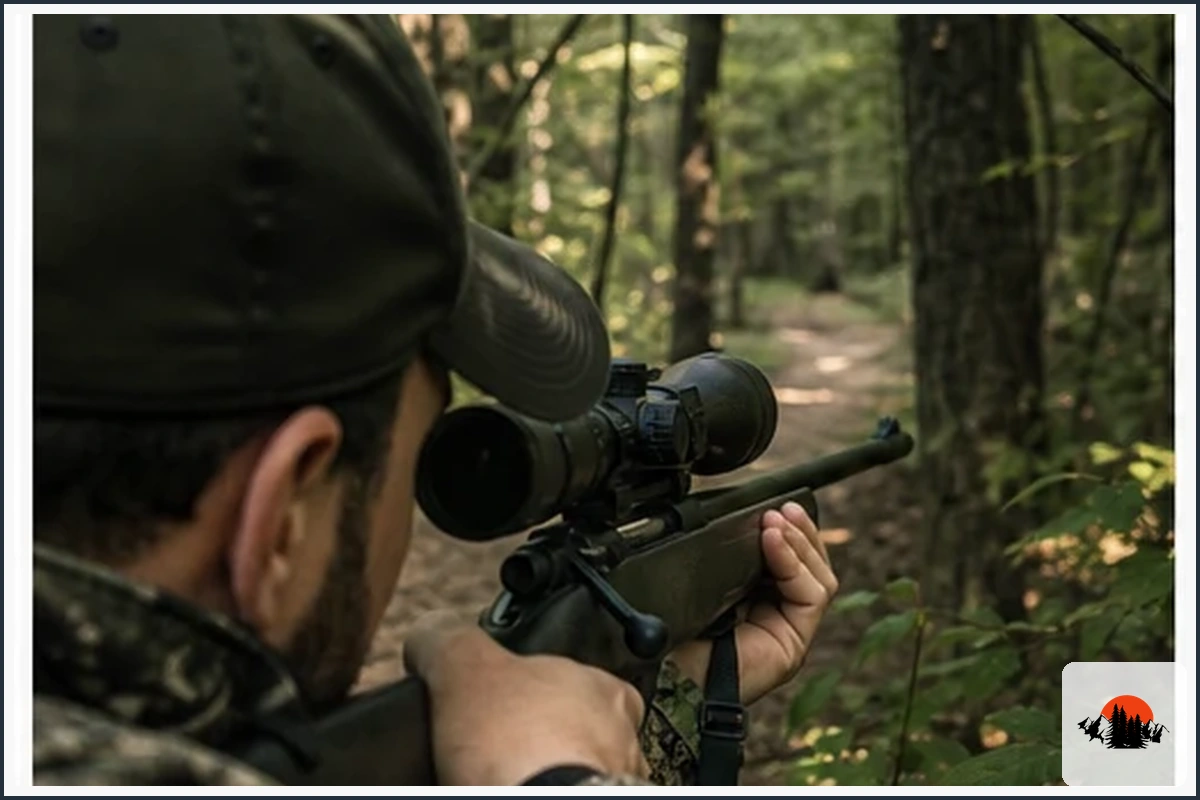
Start with your normal hunting distance rather than maximum magnification. Thick woods often favor a wide field of view and modest magnification, while open-country hunting may benefit from more magnification and precise adjustment references. A large objective lens can help light transmission, but it may also add weight and require higher rings.
Also separate scope performance from mounting quality. Tube diameter, ring height, receiver compatibility, eye relief, reticle style, turret design, and rifle recoil all affect the finished setup. Magnification alone does not make an optic better.
Comparison Table
| Product | Product Type | Magnification or Format | Best Use | Important Consideration | Check Price |
|---|---|---|---|---|---|
| Swarovski OPTIK Z3 | Hunting riflescope | 3.5-18×44 | Lightweight premium hunting | Verify reticle and mounting details | Check Price On Amazon |
| Nightforce NXS | Precision riflescope | 5.5-22×56 | Open-country precision | Large objective and higher weight | Check Price On Amazon |
| Maven RS.6 | FFP LPVO | 1-10×28 | Flexible close-to-midrange use | Confirm reticle and illumination configuration | Check Price On Amazon |
| Nightforce SHV | Hunting/precision riflescope | 5-20×56 | Long-range hunting | Bulk and mounting height | Check Price On Amazon |
| Maven RS.1 | FFP hunting scope | 2.5-15×44 | General hunting and varied terrain | Verify exact reticle | Check Price On Amazon |
| Leupold VX-6HD | Premium hunting riflescope | 4-24×52 | Versatile open-country hunting | Objective size and ring clearance | Check Price On Amazon |
| Vortex Razor HD Gen III | FFP riflescope | Verify selected variation | Advanced precision applications | Confirm exact model configuration | Check Price On Amazon |
| Zeiss Victory | Premium riflescope | Verify selected variation | High-quality hunting optics | Verify exact model and reticle | Check Price On Amazon |
| Swarovski X5 | Precision hunting scope | 3.5-18×50 | Open-country hunting | Large objective and weight | Check Price On Amazon |
| Leupold VX-3HD | Hunting riflescope | 3.5-10×40 | General deer and big-game hunting | Verify selected reticle | Check Price On Amazon |
| Wheeler Reticle Leveling System | Mounting tool | Universal format | Scope installation | Not a riflescope | Check Price On Amazon |
| Maven CRS.1 | SFP hunting scope | 3-12×40 | General hunting value | Verify reticle and tube details | Check Price On Amazon |
| Leupold PRW2 Rings | Scope rings | 1-inch tube | Compatible Weaver-style mounting | Confirm receiver and tube compatibility | Check Price On Amazon |
| SIG SAUER WHISKEY4 | FFP riflescope | 5-20×50 | Long-range hunting | Verify reticle and 30mm rings | Check Price On Amazon |
| Burris RT-6 | LPVO | 1-6×24 | Close-to-midrange hunting | 30mm tube and mounting height | Check Price On Amazon |
| American Defense AD-RECON 30 | Optic mount | 30mm format | Compatible optic mounting | Confirm receiver and scope fit | Check Price On Amazon |
| Vortex Diamondback | Hunting riflescope | Verify selected variation | Entry-level hunting | Confirm exact magnification | Check Price On Amazon |
1. Swarovski OPTIK Z3 3.5-18×44 1 inch riflescope BT-4W Reticle

The Swarovski Z3 offers a broad 3.5-18x magnification range in a 1-inch riflescope format. That range can serve hunters who want a relatively flexible optic without moving to an especially large tube.
The 44mm objective balances light-gathering potential with a more manageable mounting height than many 50mm or 56mm scopes. The BT-4W reticle should be confirmed against the exact listing variation before purchase.
Key Features
- 3.5-18x magnification range.
- 44mm objective lens.
- 1-inch tube format.
- BT-4W reticle configuration listed.
Pros
- Wide magnification range for mixed terrain.
- Moderate objective size compared with larger precision scopes.
- Premium hunting-optic positioning.
Cons
- Premium pricing may not suit a value-focused setup.
- High magnification can narrow field of view and make aiming technique more demanding.
- Exact reticle and adjustment details should be verified before ordering.
Who It’s Best For
This scope suits hunters who want a premium, versatile optic for open country and varied distances. It may be more scope than necessary for short-range woodland hunting.
Use rings compatible with its 1-inch tube, confirm eye relief, and mount it low enough for comfortable cheek weld without contacting the barrel or rifle hardware.
Care and Compatibility
Clean lenses with a blower and suitable lens cloth rather than clothing or paper products. Verify the exact reticle, tube diameter, base pattern, and rifle clearance before installation.
2. Nightforce NXS 5.5-22x56mm F2 Long Range Precision Shooting Riflescope

The Nightforce NXS 5.5-22×56 is oriented toward precision shooting and longer-range observation. Its high magnification and 56mm objective make it better suited to stable, open-country setups than lightweight mountain rifles.
That configuration can help hunters identify and assess distant targets when conditions permit, but it also creates practical demands. The scope needs appropriate ring height, a steady shooting position, and disciplined range estimation.
Key Features
- 5.5-22x magnification.
- 56mm objective lens.
- F2 configuration listed.
- Long-range precision orientation.
Pros
- High magnification for distant target assessment.
- Large objective supports a precision-oriented configuration.
- Suitable for hunters who prioritize deliberate, stable shooting positions.
Cons
- Large objective may require taller rings.
- Likely less convenient for dense timber or mobile hunts.
- High magnification can make finding a moving or nearby target slower.
Who It’s Best For
This scope is best for experienced hunters using stable positions in open terrain where longer shots are legal, ethical, and properly practiced. It is not an automatic solution for wind, distance estimation, or field judgment.
Check rifle clearance, mount height, eye relief, and total rifle weight. Practice from realistic field positions and follow local equipment and hunting regulations.
Care and Compatibility
Keep lens caps fitted during transport and inspect the mounting screws before each trip. Use a qualified gunsmith or trained instructor if you are uncertain about installation or zero confirmation.
3. Maven RS.6-1-10X28mm FFP LPVO Rifle Scope

The Maven RS.6 combines a 1-10x range with a first focal plane configuration. This is one of the most flexible formats in the list for hunters who may move between close cover, rolling terrain, and moderate open-country distances.
A 28mm objective helps keep the optic’s front end more compact than many high-magnification scopes. The trade-off is that the shooter must understand how the reticle behaves across magnification and verify the exact illumination and reticle configuration.
Key Features
- 1-10x magnification range.
- 28mm objective lens.
- First focal plane configuration listed.
- LPVO format for close-to-midrange flexibility.
Pros
- True low-end magnification supports a broad field of view.
- 10x upper range adds flexibility for open terrain.
- FFP design can keep reticle references proportional across magnification.
Cons
- Higher magnification may require more careful shooting technique.
- LPVOs can be less specialized than dedicated low-power or long-range scopes.
- Exact reticle and illumination details must be confirmed.
Who It’s Best For
This is the strongest overall match for hunters who want one optic to cover varied terrain and changing distances. It is especially practical for mobile hunting where a wide low-power view matters.
Confirm the rifle’s mounting system and select rings that provide proper eye relief without unnecessarily raising the optic. Practice changing magnification before hunting.
Care and Compatibility
Store the optic protected from impacts and clean the lenses carefully. Check battery requirements if the selected version includes illumination, and carry a spare battery in a dry container when appropriate.
4. Nightforce SHV 5-20x56mm Long Range Hunting & Precision Riflescope

The Nightforce SHV 5-20×56 is designed around high magnification and a large objective. That makes it a candidate for open-country hunting, deliberate glassing, and precision-oriented shooting from supported positions.
Its size should be treated as part of the decision. A 56mm objective often requires higher rings and can add bulk to a rifle carried through steep terrain or dense brush.
Key Features
- 5-20x magnification.
- 56mm objective lens.
- Hunting and precision orientation.
- Large-objective configuration.
Pros
- High magnification range for distant observation.
- Large objective suits a stable open-country setup.
- Useful for hunters who prioritize precision over compactness.
Cons
- Large and potentially heavy for extended carries.
- May need taller rings and careful clearance checks.
- Less convenient at very close range.
Who It’s Best For
Choose this format when long-range observation is central to the hunt and the rifle will usually be supported. It is less suitable for fast-moving timber hunts or lightweight mountain kits.
High magnification does not replace ethical shot selection. Confirm local rules, know your effective practice range, and avoid taking shots beyond your verified ability.
Care and Compatibility
Protect the large objective during transport and inspect the mount after hard travel. A qualified professional should handle installation if ring height, alignment, or torque is uncertain.
5. Maven RS.1-2.5-15X44 mm FFP Hunting Rifle Scope

The Maven RS.1 provides a 2.5-15x range with a first focal plane configuration. It occupies a practical middle ground between a low-power hunting scope and a high-magnification precision optic.
The 44mm objective is a reasonable size for hunters who want useful magnification without the bulk of a 56mm design. Verify the exact reticle and adjustment system because those details affect how well the scope matches your shooting style.
Key Features
- 2.5-15x magnification.
- 44mm objective lens.
- First focal plane design listed.
- Hunting-oriented configuration.
Pros
- Versatile range for mixed hunting distances.
- 44mm objective can simplify ring-height selection.
- FFP design supports consistent reticle references.
Cons
- 2.5x is not as wide as a true 1x optic.
- 15x may be unnecessary for thick-cover hunting.
- Exact reticle details should be confirmed.
Who It’s Best For
This scope fits hunters who split time between timber edges, fields, and open slopes. It is a particularly sensible format when one rifle must handle several hunting environments.
Consider total rifle balance, eye relief, and the height needed for a 44mm objective. Confirm the scope’s tube dimensions before selecting rings.
Care and Compatibility
Use a soft lens brush or blower before wiping. Check turret caps, mounting screws, and lens seals after wet or dusty trips.
6. Leupold VX-6HD 4-24x52mm Riflescope

The VX-6HD 4-24×52 is a versatile premium scope with a broad magnification range. It is aimed at hunters who want substantial upper-end magnification while retaining a useful lower setting for many field situations.
The 52mm objective can support a light-gathering-focused setup, but it may require taller rings than a 40mm optic. The scope is best evaluated as part of a complete rifle system rather than by magnification alone.
Key Features
- 4-24x magnification range.
- 52mm objective lens.
- Premium hunting riflescope format.
- Broad range for varied terrain.
Pros
- Wide magnification range for different distances.
- Useful option for open-country hunting.
- Large objective supports a higher-magnification configuration.
Cons
- 4x is less suitable for very close shots than an LPVO.
- 52mm objective can increase mounting height.
- Exact reticle and feature package require verification.
Who It’s Best For
This scope suits hunters who want one premium optic for fields, ridgelines, and longer sightlines. It may be excessive for short-range woodland hunting.
Confirm that the rifle stock provides a comfortable cheek weld at the required ring height. Practice at several magnification settings rather than leaving the scope at maximum power.
Care and Compatibility
Keep the optical surfaces covered when not in use and inspect the mounting system before travel. Follow the manufacturer’s torque and care guidance.
7. Vortex Razor HD Gen III First Focal Plane Riflescope
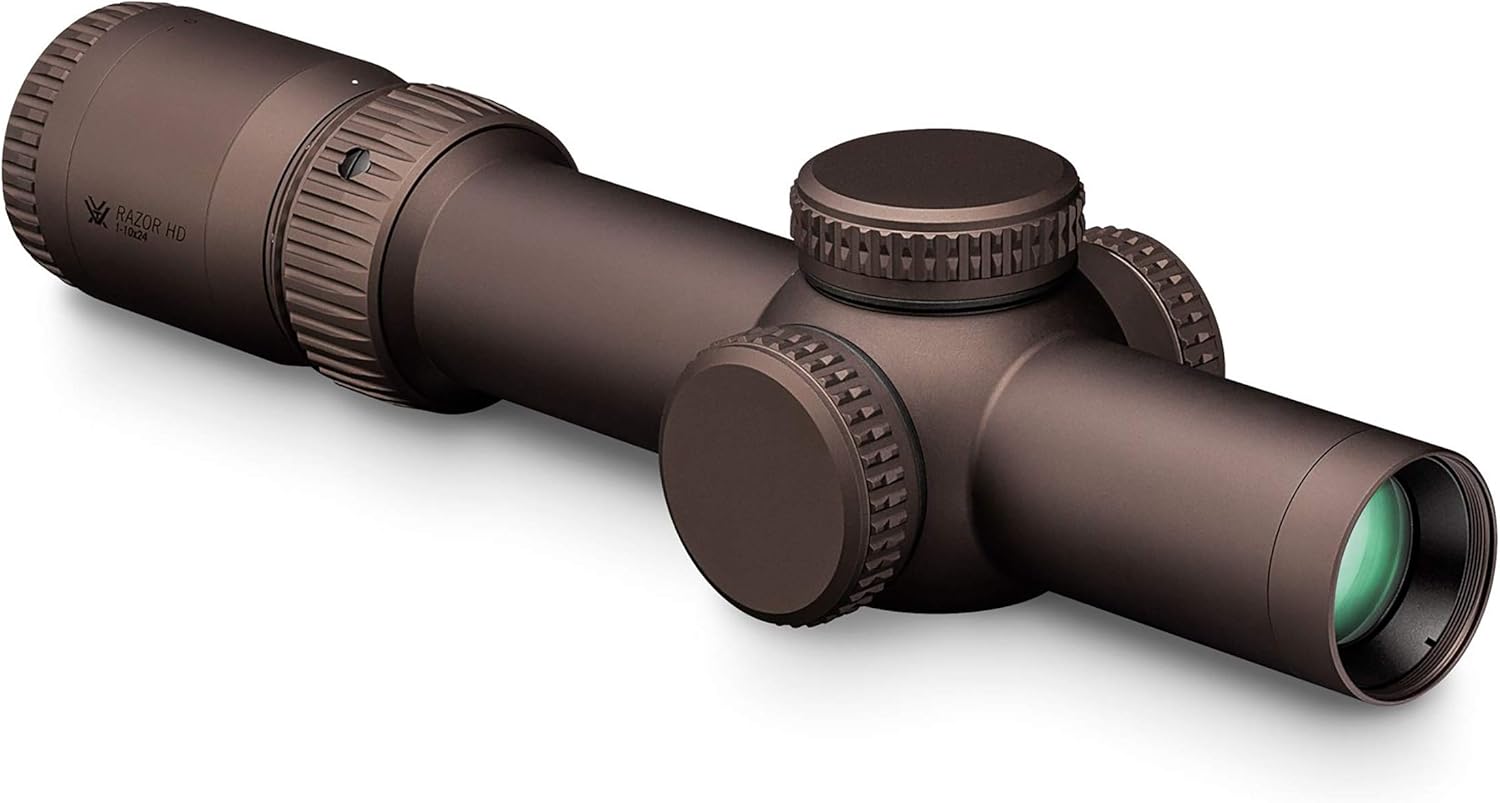
The Vortex Razor HD Gen III listing represents a first focal plane riflescope family, but the exact magnification and reticle should be verified before purchase. That matters because the supplied listing title does not identify every configuration detail.
FFP optics can be useful for hunters who use reticle references across magnification settings. They also require practice, especially when the reticle becomes more prominent at higher power and less visible at lower power.
Key Features
- First focal plane configuration listed.
- Razor HD Gen III series designation.
- Exact variation should be confirmed.
- Precision-oriented riflescope format.
Pros
- FFP design can support consistent reticle use.
- Premium series positioning for demanding users.
- Suitable for hunters who understand reticle-based aiming references.
Cons
- Exact magnification is not clear from the supplied title.
- FFP reticles may require practice at low power.
- Model variation must be verified carefully.
Who It’s Best For
This is best for experienced users who can confirm the exact configuration and want a precision-oriented FFP optic. Beginners should not choose it solely because of the product family name.
Verify tube size, reticle, eye relief, adjustment units, and objective diameter before ordering. Seek qualified help if mounting or zero confirmation is unfamiliar.
Care and Compatibility
Use only appropriate lens-cleaning materials and store the scope in a protective case. Check the exact manufacturer manual for battery, turret, and maintenance information.
8. Zeiss Victory

Zeiss Victory is a premium riflescope family, but the supplied product title does not specify the exact magnification, reticle, or objective. Buyers should treat this as a variation-verification purchase rather than assuming every Victory model has the same field characteristics.
Once the exact version is confirmed, compare its magnification and objective to your normal hunting distances. A premium optical name does not remove the need for correct mounting, practice, and ethical shot selection.
Key Features
- Zeiss Victory series designation.
- Exact model configuration requires verification.
- Premium hunting-optic category.
- Reticle and objective details should be checked.
Pros
- Premium series suited to serious optics buyers.
- Potentially strong fit for demanding hunting applications.
- Exact configuration can be selected to match terrain after verification.
Cons
- Insufficient supplied detail to identify the precise variation.
- Premium positioning may exceed many practical hunting needs.
- Mounting compatibility cannot be assumed from the series name.
Who It’s Best For
This product is best for buyers willing to verify the exact listing and manufacturer specifications before committing. It is not ideal for shoppers who need a clearly identified entry-level scope.
Confirm tube diameter, objective size, reticle, adjustment units, and eye relief. If the listing remains ambiguous, contact the manufacturer or seller before purchase.
Care and Compatibility
Protect the optic from dust and impact, and follow the exact model’s care instructions. Do not select rings until the verified tube diameter is known.
9. Swarovski X5 3.5-18×50 BRM Scope 79011

The Swarovski X5 listed here uses a 3.5-18x range and a 50mm objective. It is aimed at hunters who want broad magnification with a precision-oriented scope format.
The 50mm objective may help support a larger optical system, but it also affects ring height and overall rifle balance. Hunters carrying a rifle over long distances should compare the complete setup rather than focusing only on optical capability.
Key Features
- 3.5-18x magnification.
- 50mm objective lens.
- BRM configuration listed.
- Scope model 79011 listed.
Pros
- Broad range for mixed open-country distances.
- 50mm objective suits a larger premium optic configuration.
- Useful for hunters who value fine adjustment capability.
Cons
- May require higher rings than a compact hunting scope.
- Potentially heavy for steep backcountry hunts.
- 3.5x is not a close-range 1x setting.
Who It’s Best For
This scope fits open-country hunters who use stable positions and want flexibility between moderate and longer distances. It is less convenient for dense timber or fast-moving shots.
Verify ring height, cheek weld, eye relief, and rifle clearance. Practice dialing or using the reticle only within your trained and legal hunting limits.
Care and Compatibility
Keep the objective protected during transport and inspect the scope after exposure to dust or rain. Follow the manufacturer’s instructions for adjustments and cleaning.
10. Leupold VX-3HD 3.5-10x40mm Riflescope
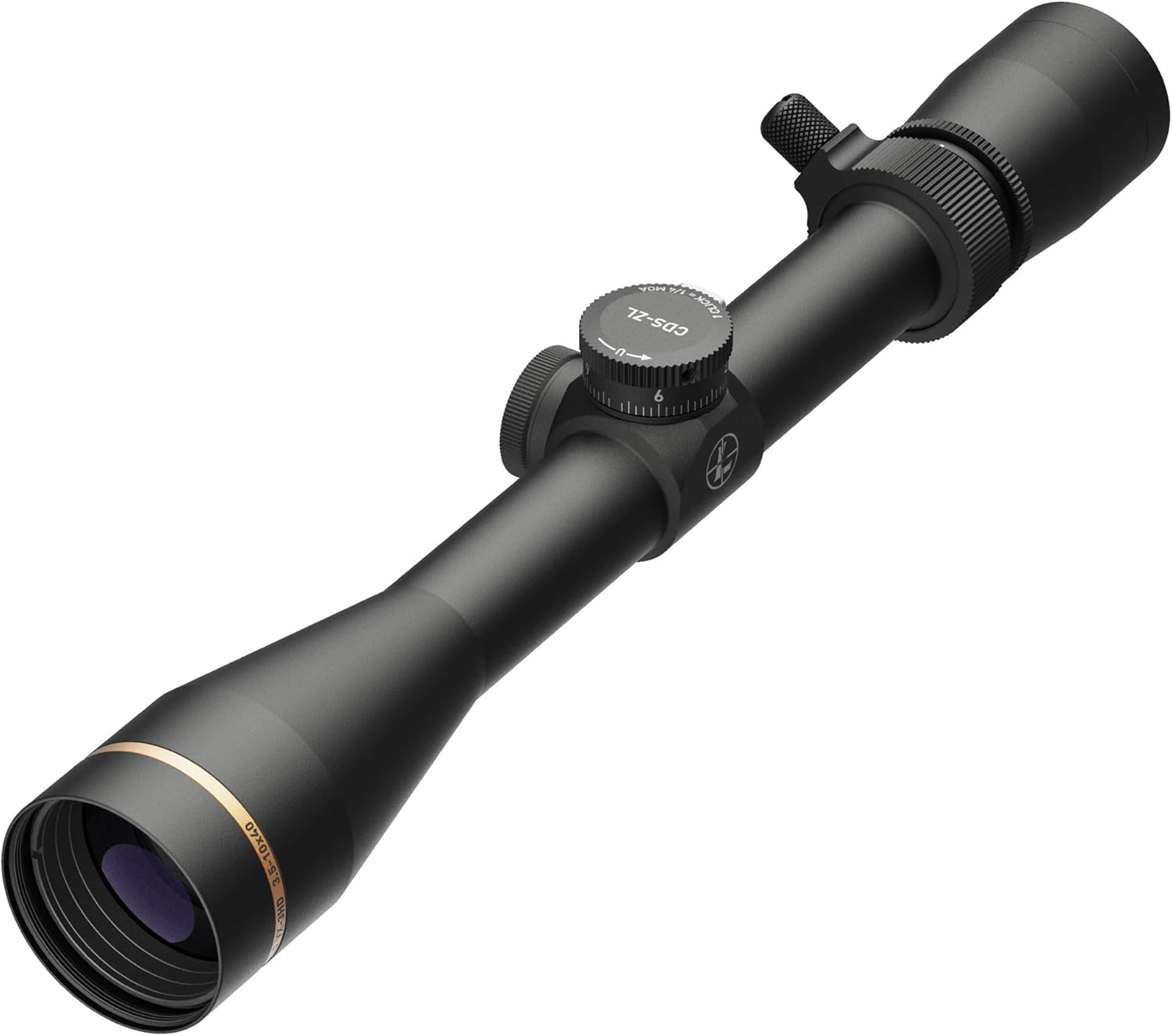
The Leupold VX-3HD 3.5-10×40 is one of the most practical formats in this comparison for general hunting. Its magnification range is broad enough for fields and edges while remaining more compact than many long-range scopes.
A 40mm objective often makes ring-height selection simpler, although the correct height still depends on the rifle, base, bolt clearance, and shooter’s cheek weld. Verify the exact reticle and variation before ordering.
Key Features
- 3.5-10x magnification range.
- 40mm objective lens.
- Compact general-hunting configuration.
- Exact reticle should be confirmed.
Pros
- Useful magnification range for common hunting distances.
- 40mm objective supports a relatively manageable setup.
- Good fit for hunters who do not need extreme magnification.
Cons
- Less capable for very distant observation than higher-power options.
- Not as wide at the low end as an LPVO.
- Exact reticle and adjustment package require verification.
Who It’s Best For
This is a strong choice for general deer and big-game hunting across mixed terrain. It suits beginners who want a conventional scope format without unnecessary magnification.
Spend time confirming eye relief and zero at the magnification you normally use. Keep shots within your practiced ability and applicable regulations.
Care and Compatibility
Clean the lenses gently, inspect the rings and base, and store the scope dry. Use the correct ring size and follow manufacturer torque instructions.
11. Wheeler Engineering Professional Reticle Leveling System
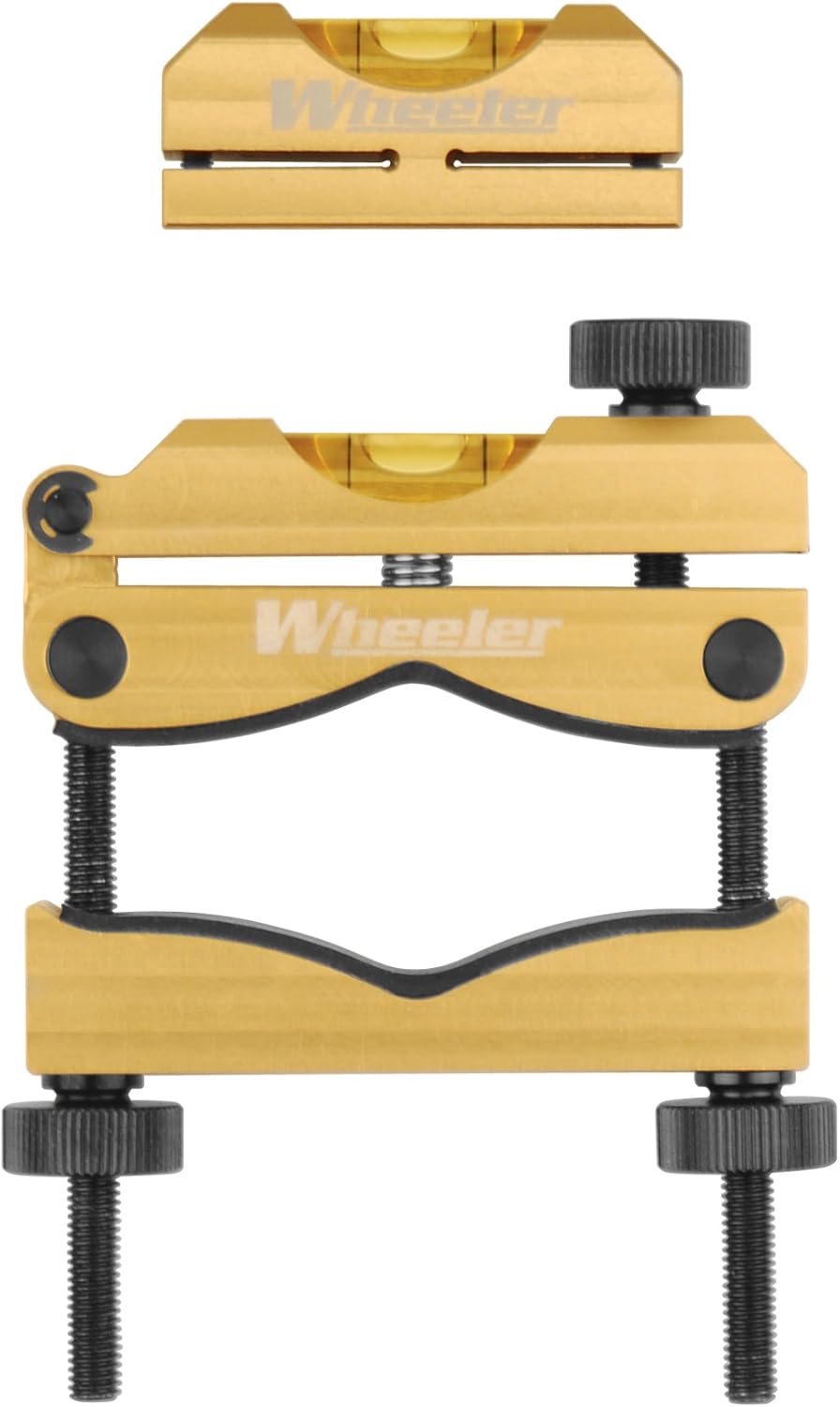
The Wheeler Professional Reticle Leveling System is not a riflescope. It is a gunsmithing and maintenance accessory intended to help align a scope’s reticle during installation.
That makes it relevant to the best hunting scope for the money because even an excellent optic can be poorly aligned. A leveling tool may support a more repeatable setup, but it does not replace correct torque, compatible rings, a stable work area, or professional assistance when needed.
Key Features
- Reticle leveling system format.
- Heavy-duty construction listed.
- Universal design listed.
- Storage case included according to the supplied title.
Pros
- Supports careful reticle alignment.
- Useful across compatible scope installations.
- Relevant for maintaining a repeatable mounting process.
Cons
- Does not replace a compatible base, rings, or torque procedure.
- Not a shooting optic or hunting accessory by itself.
- Users must understand the tool’s instructions and alignment method.
Who It’s Best For
This tool suits hunters who install or maintain their own optics and want additional alignment support. Beginners should use the instructions carefully or ask a qualified gunsmith for help.
Unload and secure the firearm according to safe handling procedures before installation. Work in a controlled area and confirm the firearm is clear before beginning.
Care and Compatibility
Keep the leveling components clean and stored in the supplied case. Inspect for damage before use and follow Wheeler’s instructions rather than improvising.
12. Maven CRS.1 3-12×40 SFP Rifle Scope

The Maven CRS.1 is a 3-12×40 second focal plane hunting scope. That is a familiar and useful format for hunters who want moderate magnification, a manageable objective, and a conventional hunting setup.
Its 3x low end is better suited to fields and mixed terrain than very close brush. Because it is SFP, reticle subtensions may be designed around a specific magnification, so the exact reticle instructions should be read before relying on hold references.
Key Features
- 3-12x magnification range.
- 40mm objective lens.
- Second focal plane configuration.
- CSHR-W reticle listed.
Pros
- Practical range for general hunting.
- 40mm objective can simplify mounting.
- Moderate size suits many standard hunting rifles.
Cons
- 3x may be narrow for very close-range encounters.
- SFP reticle references depend on the intended magnification.
- Not designed for the highest magnification needs.
Who It’s Best For
This is the best match for many beginners and general-purpose hunters who want a straightforward optic for deer, antelope, and similar applications where local rules permit scoped rifles.
Confirm the reticle’s calibrated magnification, eye relief, and tube diameter. Practice at realistic distances rather than relying on specifications alone.
Care and Compatibility
Keep the lenses capped while walking and wipe them only with proper optical materials. Inspect the mounting screws and base after transport.
13. Leupold 1″ PRW2 Permanent Weaver-Style Rings

The Leupold PRW2 rings are mounting hardware rather than an optic. They are listed as 1-inch, permanent Weaver-style rings, so compatibility is the first buying question.
They may suit a compatible 1-inch scope and Weaver-style base, but they are not appropriate for every tube diameter or receiver pattern. Ring height also affects bolt clearance, objective clearance, and cheek weld.
Key Features
- 1-inch scope tube format.
- Weaver-style mounting listed.
- Permanent ring design.
- Matte black finish listed.
Pros
- Supports compatible 1-inch hunting scopes.
- Useful for a straightforward fixed mounting setup.
- Relevant to keeping an optic securely positioned when correctly installed.
Cons
- Not compatible with 30mm or larger scope tubes.
- Weaver-style compatibility must be confirmed with the rifle base.
- Permanent rings offer less flexibility than quick-detach systems.
Who It’s Best For
These rings suit hunters who have a compatible 1-inch scope and Weaver-style base and do not need quick removal. They are not a universal solution.
Measure the scope tube, base pattern, objective clearance, and required height before purchase. Use proper torque and alignment procedures during installation.
Care and Compatibility
Inspect ring screws and contact surfaces after travel. Avoid forcing mismatched hardware, and consult a gunsmith if the scope does not align naturally with the bore and stock.
14. SIG SAUER WHISKEY4 5-20X50mm 30mm Tube FFP/F1 Riflescope

The SIG SAUER WHISKEY4 listed here uses a 5-20x range, 50mm objective, 30mm tube, and FFP/F1 designation. It is oriented toward longer-range hunting and precision-style use rather than close timber work.
The 30mm tube requires matching rings or mount hardware, while the 50mm objective can affect ring height. Hunters should confirm the exact reticle and adjustment units before learning a dope system or selecting a mount.
Key Features
- 5-20x magnification.
- 50mm objective lens.
- 30mm tube.
- FFP/F1 configuration listed.
Pros
- High magnification for open-country observation.
- FFP format can support reticle use across magnification.
- 30mm tube offers broad mount compatibility with suitable hardware.
Cons
- Requires 30mm rings or mount.
- Large objective may increase overall rifle height and weight.
- 5x low end is not ideal for very close shots.
Who It’s Best For
This scope is best for experienced hunters using supported positions and legal, practiced distances in open terrain. It is less suited to fast shots in thick vegetation.
Confirm mount height, eye relief, reticle, and clearance. High magnification should be used to improve observation, not to encourage shots beyond your ability or local rules.
Care and Compatibility
Keep the objective protected, inspect the 30mm mount, and use the manufacturer’s torque guidance. A professional should handle installation if alignment is uncertain.
15. Burris Optics LPVO RT-6 1-6x24mm Tactical Riflescope

The Burris RT-6 is a 1-6x24mm LPVO with a 30mm tube, illuminated ballistic reticle, true 1x magnification, and rear focal plane configuration listed. It is a practical format for close-to-midrange hunting where a wide view and fast magnification changes are valuable.
The 24mm objective keeps the optic relatively compact, but this scope is not intended to replace a high-magnification optic for distant open-country shooting. The reticle’s illumination and battery requirements should be verified before use.
Key Features
- 1-6x magnification.
- 24mm objective lens.
- 30mm tube.
- Illuminated ballistic reticle listed.
- Rear focal plane configuration listed.
Pros
- True 1x setting supports a broad field of view.
- 6x provides useful reach for moderate distances.
- Compact objective suits mobile hunting setups.
Cons
- Less suitable for long-range observation than 15x or 20x scopes.
- Requires compatible 30mm mounting hardware.
- Illumination depends on battery care and correct operation.
Who It’s Best For
This is best for hunters in mixed cover, wooded terrain, and moderate ranges who value speed and a forgiving sight picture. It is also a reasonable choice for a lightweight, mobile rifle.
Practice at 1x and 6x before hunting, and confirm the reticle’s intended calibration. Keep shots within your practiced range and follow local hunting laws.
Care and Compatibility
Carry a suitable spare battery, protect the lenses, and inspect the 30mm rings after travel. Use the manufacturer’s instructions for illumination and cleaning.
16. American Defense AD-RECON 30 STD Riflescope Optic Mount
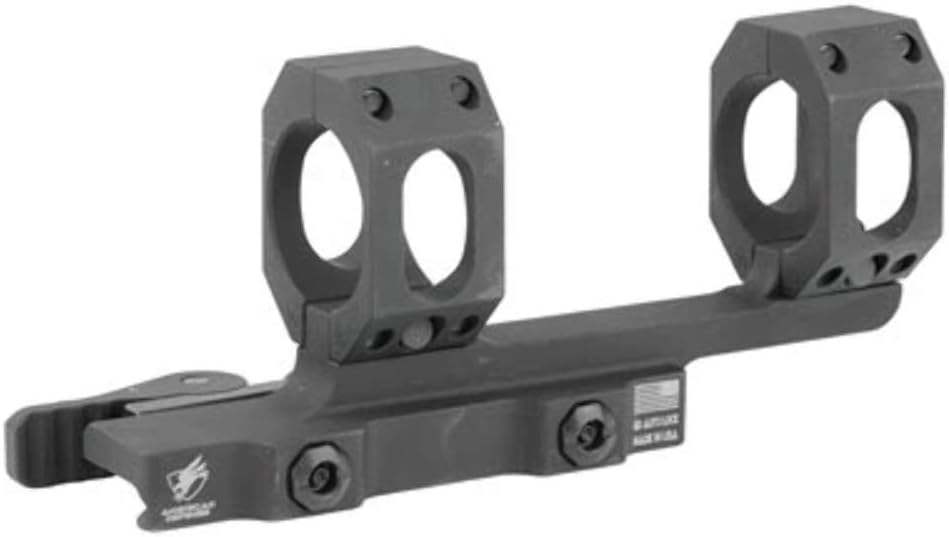
The American Defense AD-RECON 30 STD is an optic mount for compatible 30mm riflescopes, not a scope itself. It belongs in this comparison because the mount can determine whether a selected optic sits securely and at a usable height.
Compatibility must be checked at several points: scope tube diameter, rifle receiver interface, eye relief, objective clearance, and the shooter’s preferred stock position. A mount should never be forced onto an incompatible base or receiver.
Key Features
- 30mm optic format.
- Standard-height configuration listed.
- Riflescope optic mount design.
- Black finish listed.
Pros
- Supports compatible 30mm scopes.
- Useful for a streamlined mounting solution.
- Relevant to LPVO and 30mm hunting-scope setups.
Cons
- Not compatible with 1-inch scope tubes.
- Receiver interface must be confirmed.
- Standard height may not suit every rifle or objective size.
Who It’s Best For
This mount is best for hunters who have confirmed a compatible 30mm scope and receiver system. It suits experienced buyers who understand mounting dimensions or are working with a qualified gunsmith.
Unload and secure the firearm before installation. Confirm eye relief and clearance without relying on appearance alone, then follow the manufacturer’s torque guidance.
Care and Compatibility
Inspect the mount and fasteners after recoil and transport. Do not substitute screws or alter the mount without qualified professional advice.
17. Vortex Diamondback Second Focal Plane Riflescopes

The Vortex Diamondback listing represents a second focal plane riflescope family, but the supplied title does not identify the exact magnification variation. Buyers should verify the selected model before comparing it with the higher-power optics in this list.
Diamondback scopes are generally positioned for practical hunting setups, and an SFP design can be straightforward when the hunter understands the reticle’s calibrated magnification. The correct model may be a sensible fit for common deer-hunting distances.
Key Features
- Second focal plane configuration listed.
- Diamondback riflescope family.
- Exact magnification requires verification.
- Hunting-oriented optic category.
Pros
- Practical series for general hunting applications.
- SFP format can be simple for conventional aiming.
- Likely easier to match to standard hunting rifles than large precision optics, depending on variation.
Cons
- Exact magnification is unclear from the supplied title.
- Not necessarily suitable for long-range hunting without confirming the model.
- Reticle calibration depends on the selected variation.
Who It’s Best For
This is best for beginners and general hunters who verify the exact model and want a conventional SFP scope. It may be a better fit for ordinary hunting distances than the large high-power optics listed above.
Confirm magnification, objective diameter, tube size, eye relief, and reticle before ordering. Practice at the calibrated magnification and follow local laws.
Care and Compatibility
Keep lenses capped, clean them with proper optical materials, and inspect the rings and base before each season. Follow Vortex care instructions for the specific model.
Buying Guidance for Hunting Scopes
- Define your normal distance: Choose a scope around the ranges you can consistently practice, not the maximum printed magnification.
- Match the low end to terrain: Thick timber favors a wider field of view, while open country can justify more upper-end magnification.
- Choose focal plane deliberately: FFP reticles change apparent size with magnification; SFP reticles remain visually consistent but may use references calibrated at a particular power.
- Check tube diameter: One-inch and 30mm scopes require different rings or mounts.
- Measure objective clearance: Larger objectives may need taller rings and can affect cheek weld.
- Confirm eye relief: Set the scope for a clear sight picture from your actual shooting position.
- Consider rifle weight: Large precision scopes can be tiring on steep or long backcountry hunts.
- Verify the reticle: Reticle names and ballistic references vary. Read the manufacturer’s manual before relying on them.
- Plan installation: Use compatible bases, rings, correct torque, and careful leveling. Seek professional help if uncertain.
- Practice realistically: Confirm zero and practice from supported and field positions before hunting.
Safety and Responsible Use
A riflescope is an aiming aid, not a substitute for hunter education, firearm training, safe handling, target identification, or knowledge of local regulations. Follow the four basic firearm-safety rules, keep the muzzle pointed safely, keep your finger outside the trigger guard until ready to fire, and positively identify the target and what lies beyond it.
Unload the firearm before mounting or adjusting an optic. Use a safe work area, follow manufacturer instructions, and consult a qualified gunsmith when ring compatibility, torque, alignment, or receiver fit is uncertain. Hunters must follow current seasons, licenses, tags, bag limits, land-access rules, blaze-orange requirements, and equipment restrictions.
Carry navigation, water, first aid, communication, and weather protection. Tell someone your route and expected return time. Never let a high-magnification scope encourage a shot beyond your practiced ability or beyond a responsible, legal opportunity.
Maintenance and Troubleshooting
- Fogging: Move the optic gradually between temperature extremes and keep it protected. Persistent internal fogging requires manufacturer service.
- Blurry image: Check eye position, focus settings, lens cleanliness, and magnification before assuming the optic is defective.
- Scope movement: Stop using the rifle and inspect the rings, base, and fasteners. Seek professional help if movement continues.
- Reticle appears misaligned: Confirm rifle and scope leveling with an appropriate tool or gunsmith.
- Illumination failure: Check the correct battery and contacts. Carry a spare, and follow the manual.
- Lens scratches or damage: Do not polish aggressively. Contact the manufacturer for service options.
Common Buying Mistakes
- Choosing maximum magnification instead of a useful low-power field of view.
- Buying rings before confirming tube diameter and base compatibility.
- Ignoring objective clearance and ending up with an uncomfortable cheek weld.
- Assuming every FFP or SFP reticle uses the same calibration.
- Mounting an optic without checking eye relief from the real shooting position.
- Failing to confirm the exact variation in a broad product-family listing.
- Testing a new scope for the first time on opening morning.
- Assuming premium glass compensates for poor range estimation or unsafe judgment.
Frequently Asked Questions
1. What is the best hunting scope for the money?
For varied terrain, the Maven RS.6 offers a particularly flexible 1-10x format. Hunters focused on conventional general-purpose use may prefer a 3-12x or 3.5-10x scope.
2. Is higher magnification always better for hunting?
No. Higher magnification can narrow the field of view, add weight, and make close targets harder to locate. Choose based on terrain and normal distance.
3. What magnification is best for deer hunting?
A moderate range such as 3-9x, 3-10x, or 3-12x suits many deer-hunting situations, but terrain and local hunting conditions determine the best fit.
4. Is a 1-10x scope good for hunting?
It can be useful when the hunt includes close cover and open terrain. Practice at both ends of the range before relying on it.
5. Is a 3-12x scope suitable for beginners?
Yes, provided the reticle, eye relief, tube size, and mounting system are understood. It is a practical conventional format for many hunters.
6. What is the difference between FFP and SFP?
In an FFP scope, the reticle changes apparent size with magnification. In an SFP scope, it generally remains the same apparent size, while hold references may be calibrated at a specific power.
7. Are FFP scopes better for hunting?
Not automatically. FFP can help users who rely on reticle references at different powers, while SFP may appear simpler for conventional hunting.
8. What objective size should a hunting scope have?
Common sizes range from compact objectives around 40mm to larger 50mm or 56mm designs. Larger objectives may add weight and require taller rings.
9. Do larger objectives always gather more usable light?
Not by themselves. Optical quality, exit pupil, magnification, coatings, pupil size, and viewing conditions all matter.
10. What is a good scope for thick timber?
A scope with a useful low-power setting and a wide field of view is usually more practical than a high-power optic designed for distant open-country shooting.
11. What is a good scope for open-country hunting?
A moderate-to-high magnification scope can help with observation when paired with stable positions, practiced range judgment, and legal, ethical shot selection.
12. Is a 5-20x scope too powerful for deer hunting?
It may be unnecessarily large for close or mixed-cover hunting, but it can suit open terrain if the added weight and high-power format are acceptable.
13. What tube diameter do hunting scopes use?
One-inch and 30mm tubes are common, with other sizes also available. Always match the rings or mount to the exact scope.
14. Can one-inch rings fit a 30mm scope?
No. The rings must match the tube diameter. Do not force a mismatched scope into rings.
15. How high should scope rings be?
Use the lowest height that clears the barrel, objective, bolt, and rifle hardware while providing a comfortable cheek weld and full sight picture.
16. Should I use quick-detach mounts?
Only if their removal and return-to-zero characteristics fit your needs. Confirm receiver and optic compatibility before purchase.
17. Does a scope need to be perfectly level?
Proper leveling helps keep the reticle and rifle aligned, especially when using elevation or windage references. Use a suitable leveling method.
18. Can I mount a scope myself?
Many experienced owners do, but incorrect torque, alignment, or compatibility can cause problems. A qualified gunsmith is the safer choice when uncertain.
19. What tools help with scope mounting?
A torque driver, suitable leveling tool, compatible bits, and manufacturer instructions are useful. The Wheeler leveling system in this list may support reticle alignment.
20. Why does my scope move after shooting?
Possible causes include incorrect torque, incompatible rings, poor base fit, damaged hardware, or improper installation. Stop and inspect the system before continuing.
21. Why is my scope blurry?
Check lens cleanliness, eye position, focus settings, and parallax if applicable. Persistent problems should be evaluated by the manufacturer or an optics professional.
22. What causes scope fogging?
Rapid temperature changes can create external fogging, while internal fogging may indicate a seal or service issue. Protect the optic and seek service for persistent internal fogging.
23. How do I clean a hunting scope?
Use a blower first, then appropriate lens-cleaning materials. Avoid abrasive cloth, paper towels, clothing, and household chemicals.
24. Should I leave lens caps on while hunting?
Flip-up or removable caps can protect lenses during travel and movement. Remove or open them before the shot and practice doing so quietly.
25. Does illumination help in hunting?
Illumination may improve reticle visibility in some backgrounds and lighting conditions, but it does not make unsafe visibility conditions safe or replace target identification.
26. What should I do if the illumination battery fails?
Carry the correct spare battery and follow the manual. A non-illuminated reticle should still be usable if the scope is designed that way, but verify before hunting.
27. Is a large scope suitable for mountain hunting?
It can be, but weight and balance matter. Compare the complete rifle system and the distance you must carry it.
28. What is the best scope for a lightweight rifle?
A compact 3-9x, 3-10x, or similar optic may balance better than a large 5-20x or 5-22x model, depending on the hunt.
29. Is the Maven CRS.1 good for general hunting?
Its 3-12×40 SFP format is well suited to many general hunting situations, provided the exact reticle and mounting details match your rifle.
30. Is the Burris RT-6 good for hunting?
Its 1-6x range suits close-to-midrange hunting and mixed cover. It is less suitable when high magnification is central to the hunt.
31. Is the Nightforce NXS suitable for hunting?
It can suit open-country precision-oriented hunting, but its large objective and high magnification may be cumbersome in dense cover or long carries.
32. Are premium scopes worth the money?
They may offer optical, mechanical, or feature advantages, but value depends on whether those benefits matter for your terrain, distance, and shooting practice.
33. What matters more, glass or magnification?
Both matter, but useful field of view, optical clarity, reticle usability, eye relief, and appropriate magnification are usually more important than maximum power alone.
34. Can a scope improve accuracy?
A suitable scope can support aiming and target observation, but accuracy also depends on rifle condition, ammunition, shooter skill, zero, and safe field technique.
35. Should I buy a scope with a ballistic reticle?
Only if you understand its calibration and intend to verify it with your rifle and ammunition. Never assume a reticle matches a ballistic chart without confirmation.
36. How often should I check scope mounts?
Inspect them before each season, after significant travel, and whenever the rifle receives an impact or unusual handling.
37. Can I use hunting scope rings on any rifle?
No. Rings must match the scope tube and the rifle’s base or receiver interface. Height and clearance must also be checked.
38. What are Weaver-style rings?
They are designed for compatible Weaver-style bases or slots. Confirm the exact base and ring interface before ordering.
39. What is the American Defense AD-RECON 30 used for?
It is a 30mm optic mount. It requires a compatible scope tube and receiver interface.
40. What are Leupold PRW2 rings used for?
They are listed as 1-inch permanent Weaver-style rings for compatible scopes and bases.
41. Should a scope sit as low as possible?
Usually, but not if the objective, bolt, barrel, or stock interferes. Comfort and clearance take priority over minimum height.
42. How do I choose eye relief?
Use the manufacturer’s stated range as a starting point, then position the scope for a full sight picture from your actual shooting stance.
43. What should I practice before hunting with a new scope?
Practice safe handling, magnification changes, target identification, supported and field positions, zero confirmation, and realistic distance judgment.
44. Is maximum magnification useful at dawn or dusk?
Higher magnification can reduce exit pupil and make the image appear dimmer. Use the lowest useful power for the conditions and follow legal shooting-hour rules.
45. Can weather damage a hunting scope?
Rain, dust, condensation, and impacts can cause problems. Use caps, dry storage, careful cleaning, and manufacturer-approved maintenance.
46. What should I carry with a hunting scope?
Carry lens protection, a suitable cleaning cloth, spare illumination batteries when applicable, navigation, communication, first aid, water, and weather protection.
47. Is a scope enough for safe hunting?
No. Safe hunting requires training, target identification, firearm safety, legal knowledge, terrain awareness, and responsible judgment.
48. Should beginners buy a high-end scope?
Not necessarily. A moderate, clearly specified scope that fits the rifle and allows extensive practice may be more useful than a premium optic with unnecessary features.
49. How can I compare scope value?
Compare optical clarity, useful magnification, reticle usability, weight, durability claims, mounting requirements, warranty support, and fit for your actual hunting environment.
50. When should I ask for professional help?
Ask a qualified gunsmith or optics professional when mounting compatibility, torque, leveling, eye relief, receiver fit, or persistent zero problems are uncertain.
Conclusion
After comparing the supplied products, Maven RS.6-1-10X28mm FFP LPVO Rifle Scope is the strongest overall choice for hunters who need one flexible optic for close cover and moderate open-country distances. Its main trade-off is that an LPVO is not as specialized for extreme long-range observation as the larger 5-20x and 5.5-22x scopes.
For conventional general hunting, Maven CRS.1 3-12×40 SFP Rifle Scope is a straightforward alternative, while the Burris RT-6 is better suited to close-to-midrange use. Hunters prioritizing distant, supported shooting may prefer the Nightforce NXS, Nightforce SHV, or SIG SAUER WHISKEY4, accepting their greater size and mounting demands.
Verify current specifications, availability, reticle, variation, compatibility, size, and price before ordering. Follow safe firearm-handling practices and all applicable hunting laws.