

The name types of acara fish covers a broad collection of South and Central American cichlids rather than one single genus. Blue acaras, green terrors, saddle acaras, dwarf acaras, and many regional species differ in adult size, aggression, water chemistry, breeding behavior, and availability. This guide introduces 25 scientifically grounded examples and clarifies several confusing aquarium trade names.
What Are the Main Types of Acara Fish?
The best-known types are blue acara, electric blue acara, green terror, true green terror, blue-spot acara, port acara, saddle acara, yellow acara, royal acara, and dwarf Laetacara species. Common names overlap, so scientific names are essential. Most are substrate-oriented cichlids that form territories and provide parental care.
Popular Acara Fish at a Glance
| Acara | Scientific name | Identification clue | Care note |
|---|---|---|---|
| Blue Acara | Andinoacara pulcher | is a medium-sized blue-green cichlid with dark bars and metallic spotting | it is generally more manageable than many large cichlids but still becomes territorial when breeding |
| Electric Blue Acara | Andinoacara pulcher | is a selectively bred bright-blue aquarium form of the blue acara | it should be treated as a color strain, not advertised as a separate species |
| Green Terror | Andinoacara rivulatus | has iridescent patterning and a bold light fin margin | it can become highly territorial and needs substantial space |
| True Green Terror | Andinoacara stalsbergi | resembles the green terror but differs in scale pattern and fin edging | scientific naming is essential because the trade often mixes it with A. rivulatus |
| Blue-Spot Acara | Andinoacara coeruleopunctatus | has blue spotting and regional pattern variation | it needs robust tankmates and a carefully structured territory |
| Port Acara | Andinoacara portalegrensis | is a relatively modest brown-blue cichlid with dark markings | it can suit experienced community-cichlid keepers with adequate floor space |
| Biseriatus Acara | Andinoacara biseriatus | has paired or double-row pattern features reflected in its name | it is uncommon in trade and should be sourced with locality information |
| Blomberg’s Acara | Andinoacara blombergi | is a localized Andean-region acara | rarity makes accurate labeling and responsible sourcing important |
| Choco Acara | Andinoacara sapayensis | is a regional acara with blue-green markings | it is less commonly available than blue acara and should not be sold under a generic name |
| Platinum Acara | Andinoacara latifrons | has a broad-bodied acara form with metallic coloration | it needs a spacious territory and should not be confused with domestic platinum color morphs |
| Saddle Acara | Aequidens tetramerus | has a dark side blotch and bars typical of the widespread species complex | regional populations can differ and taxonomy has historically been complex |
| Yellow Acara | Aequidens metae | has yellow-gold tones and a dark lateral marking | it requires warm clean water and thoughtful cichlid compatibility |
How Are Acara Fish Classified?
Acara is a traditional common name used across several cichlid genera. Modern taxonomy places familiar blue and green-terror types in Andinoacara, many classic acaras in Aequidens, and dwarf acaras in Laetacara. Other genera may retain acara in regional or trade names. This history explains why older books and stores often disagree.
1. Blue Acara
The Blue Acara (Andinoacara pulcher) is a medium-sized blue-green cichlid with dark bars and metallic spotting. It is most closely associated with slow rivers, streams, and floodplain waters of northern South America. Identification should combine body shape, fin placement, markings, and geographic origin rather than relying on color alone.
For readers interested in South American cichlid aquarium keeping, the most useful practical point is that it is generally more manageable than many large cichlids but still becomes territorial when breeding. A responsible decision starts with the scientific name, adult size, natural behavior, and any legal or welfare considerations.
2. Electric Blue Acara
Electric Blue Acara, scientifically known as Andinoacara pulcher, is a selectively bred bright-blue aquarium form of the blue acara. In the wild it is linked with captive aquarium populations rather than a separate wild range, although local conditions and life stage may influence where it is observed.
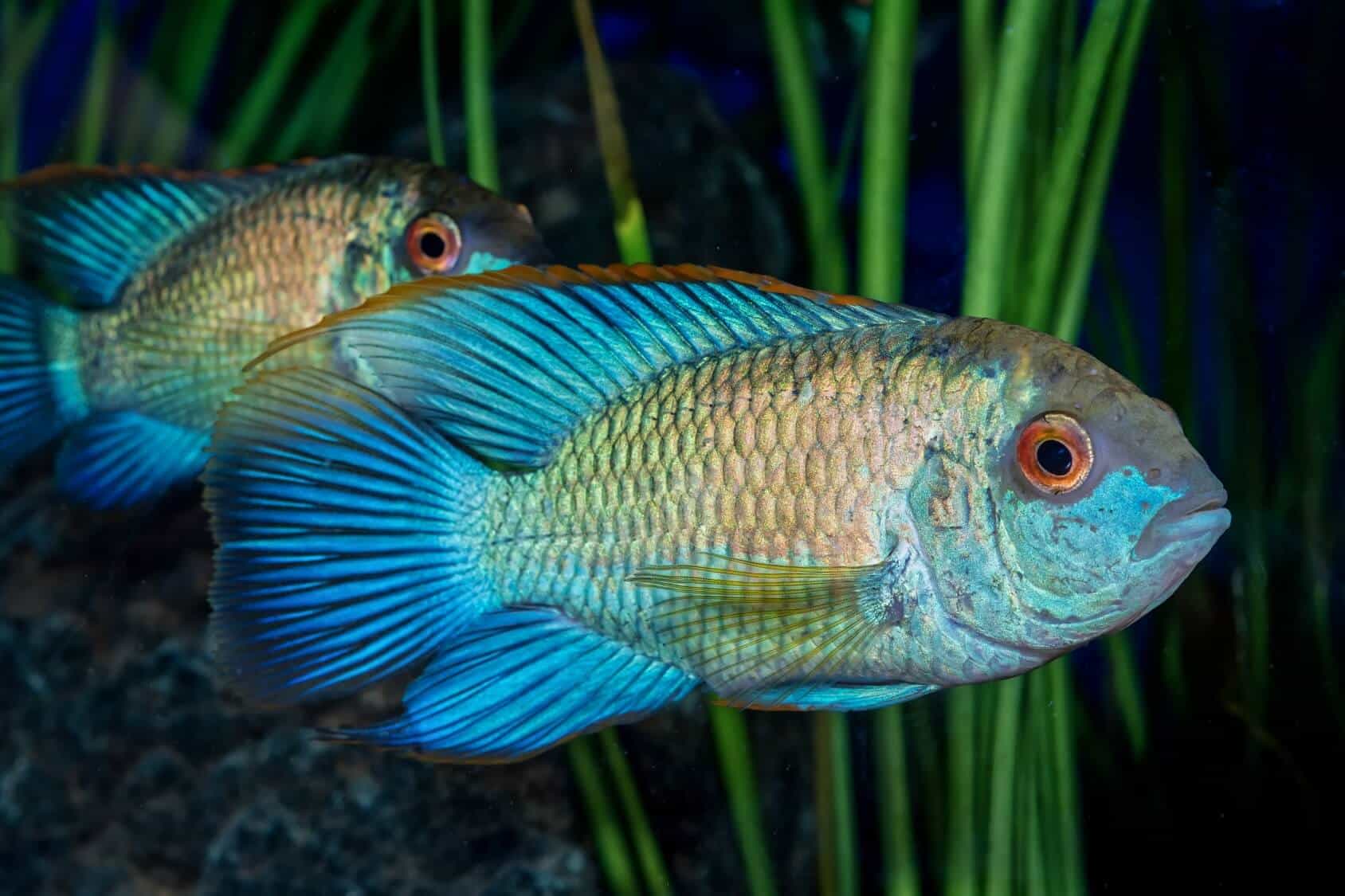
This fish matters to South American cichlid aquarium keeping because it should be treated as a color strain, not advertised as a separate species. When comparing similar species, look for repeatable features such as stripe direction, spot arrangement, tail shape, mouth position, and the proportions of the dorsal and anal fins.
3. Green Terror
The common name Green Terror refers here to Andinoacara rivulatus. It has iridescent patterning and a bold light fin margin. Its typical setting includes Pacific-slope drainages of Ecuador and Peru, where food availability, current, cover, temperature, and predators shape its behavior.
A practical note for South American cichlid aquarium keeping is that it can become highly territorial and needs substantial space. Avoid assuming that two fish with similar trade names have identical care, harvest rules, or conservation status.
4. True Green Terror
True Green Terror (Andinoacara stalsbergi) is notable because it resembles the green terror but differs in scale pattern and fin edging. Most observations come from Pacific drainages of Peru. Juveniles, breeding adults, and stressed individuals may show different colors or patterns.
In South American cichlid aquarium keeping, remember that scientific naming is essential because the trade often mixes it with A. rivulatus. Good identification photographs should show the full side profile, head, tail, and fins, with the location and approximate size recorded.
5. Blue-Spot Acara
The Blue-Spot Acara (Andinoacara coeruleopunctatus) has blue spotting and regional pattern variation. It is most closely associated with Central American Pacific-slope freshwater habitats. Identification should combine body shape, fin placement, markings, and geographic origin rather than relying on color alone.
For readers interested in South American cichlid aquarium keeping, the most useful practical point is that it needs robust tankmates and a carefully structured territory. A responsible decision starts with the scientific name, adult size, natural behavior, and any legal or welfare considerations.
6. Port Acara
Port Acara, scientifically known as Andinoacara portalegrensis, is a relatively modest brown-blue cichlid with dark markings. In the wild it is linked with southern South American freshwater habitats, although local conditions and life stage may influence where it is observed.
This fish matters to South American cichlid aquarium keeping because it can suit experienced community-cichlid keepers with adequate floor space. When comparing similar species, look for repeatable features such as stripe direction, spot arrangement, tail shape, mouth position, and the proportions of the dorsal and anal fins.
7. Biseriatus Acara
The common name Biseriatus Acara refers here to Andinoacara biseriatus. It has paired or double-row pattern features reflected in its name. Its typical setting includes freshwater habitats of Colombia, where food availability, current, cover, temperature, and predators shape its behavior.
A practical note for South American cichlid aquarium keeping is that it is uncommon in trade and should be sourced with locality information. Avoid assuming that two fish with similar trade names have identical care, harvest rules, or conservation status.
8. Blomberg’s Acara
Blomberg’s Acara (Andinoacara blombergi) is notable because it is a localized Andean-region acara. Most observations come from freshwater habitats of Ecuador. Juveniles, breeding adults, and stressed individuals may show different colors or patterns.

In South American cichlid aquarium keeping, remember that rarity makes accurate labeling and responsible sourcing important. Good identification photographs should show the full side profile, head, tail, and fins, with the location and approximate size recorded.
9. Choco Acara
The Choco Acara (Andinoacara sapayensis) is a regional acara with blue-green markings. It is most closely associated with western Colombian and Ecuadorian drainages. Identification should combine body shape, fin placement, markings, and geographic origin rather than relying on color alone.
For readers interested in South American cichlid aquarium keeping, the most useful practical point is that it is less commonly available than blue acara and should not be sold under a generic name. A responsible decision starts with the scientific name, adult size, natural behavior, and any legal or welfare considerations.
10. Platinum Acara
Platinum Acara, scientifically known as Andinoacara latifrons, has a broad-bodied acara form with metallic coloration. In the wild it is linked with Colombian freshwater systems, although local conditions and life stage may influence where it is observed.
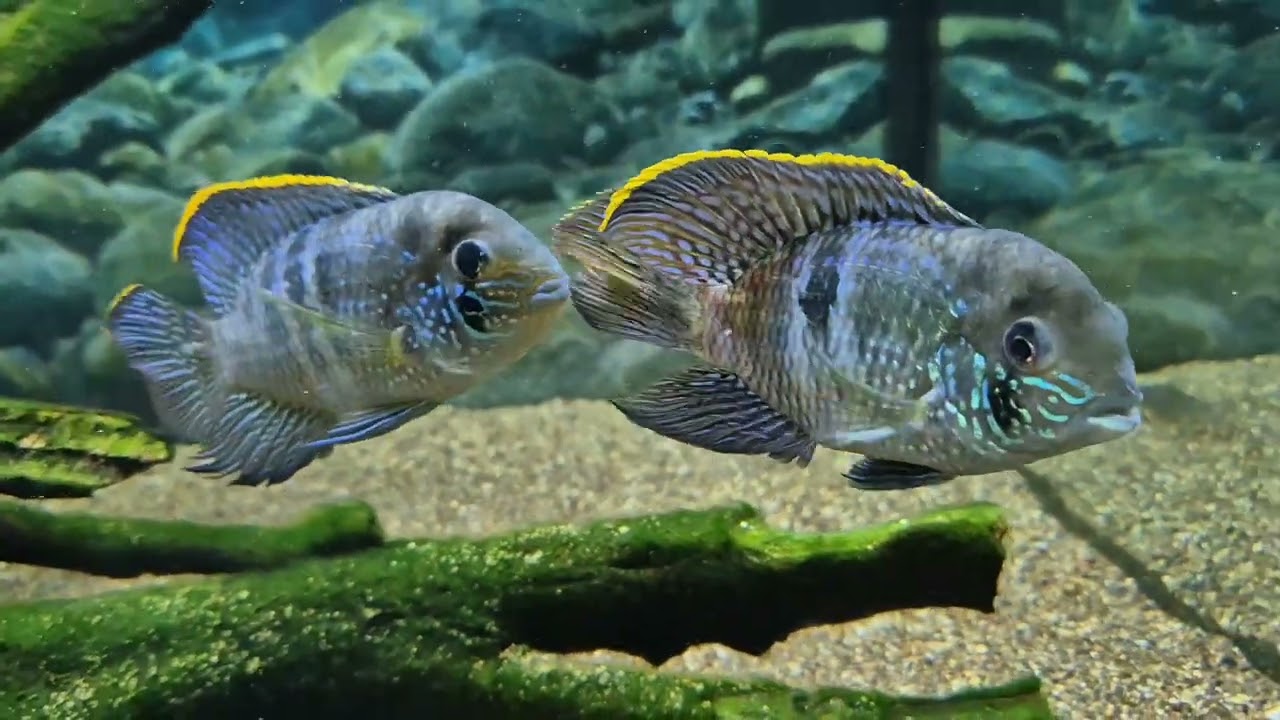
This fish matters to South American cichlid aquarium keeping because it needs a spacious territory and should not be confused with domestic platinum color morphs. When comparing similar species, look for repeatable features such as stripe direction, spot arrangement, tail shape, mouth position, and the proportions of the dorsal and anal fins.
11. Saddle Acara
The common name Saddle Acara refers here to Aequidens tetramerus. It has a dark side blotch and bars typical of the widespread species complex. Its typical setting includes Amazonian and Guianan freshwater habitats, where food availability, current, cover, temperature, and predators shape its behavior.
A practical note for South American cichlid aquarium keeping is that regional populations can differ and taxonomy has historically been complex. Avoid assuming that two fish with similar trade names have identical care, harvest rules, or conservation status.
12. Yellow Acara
Yellow Acara (Aequidens metae) is notable because it has yellow-gold tones and a dark lateral marking. Most observations come from Orinoco basin waters of Colombia and Venezuela. Juveniles, breeding adults, and stressed individuals may show different colors or patterns.

In South American cichlid aquarium keeping, remember that it requires warm clean water and thoughtful cichlid compatibility. Good identification photographs should show the full side profile, head, tail, and fins, with the location and approximate size recorded.
13. Patrick’s Acara
The Patrick’s Acara (Aequidens patricki) is a localized Aequidens species with subtle flank markings. It is most closely associated with Peruvian Amazon freshwater habitats. Identification should combine body shape, fin placement, markings, and geographic origin rather than relying on color alone.
For readers interested in South American cichlid aquarium keeping, the most useful practical point is that it is a specialist fish rather than a common beginner cichlid. A responsible decision starts with the scientific name, adult size, natural behavior, and any legal or welfare considerations.
14. Two-Band Acara
Two-Band Acara, scientifically known as Aequidens plagiozonatus, shows strong dark band or blotch patterning. In the wild it is linked with Paraguay and Paraná basin habitats, although local conditions and life stage may influence where it is observed.
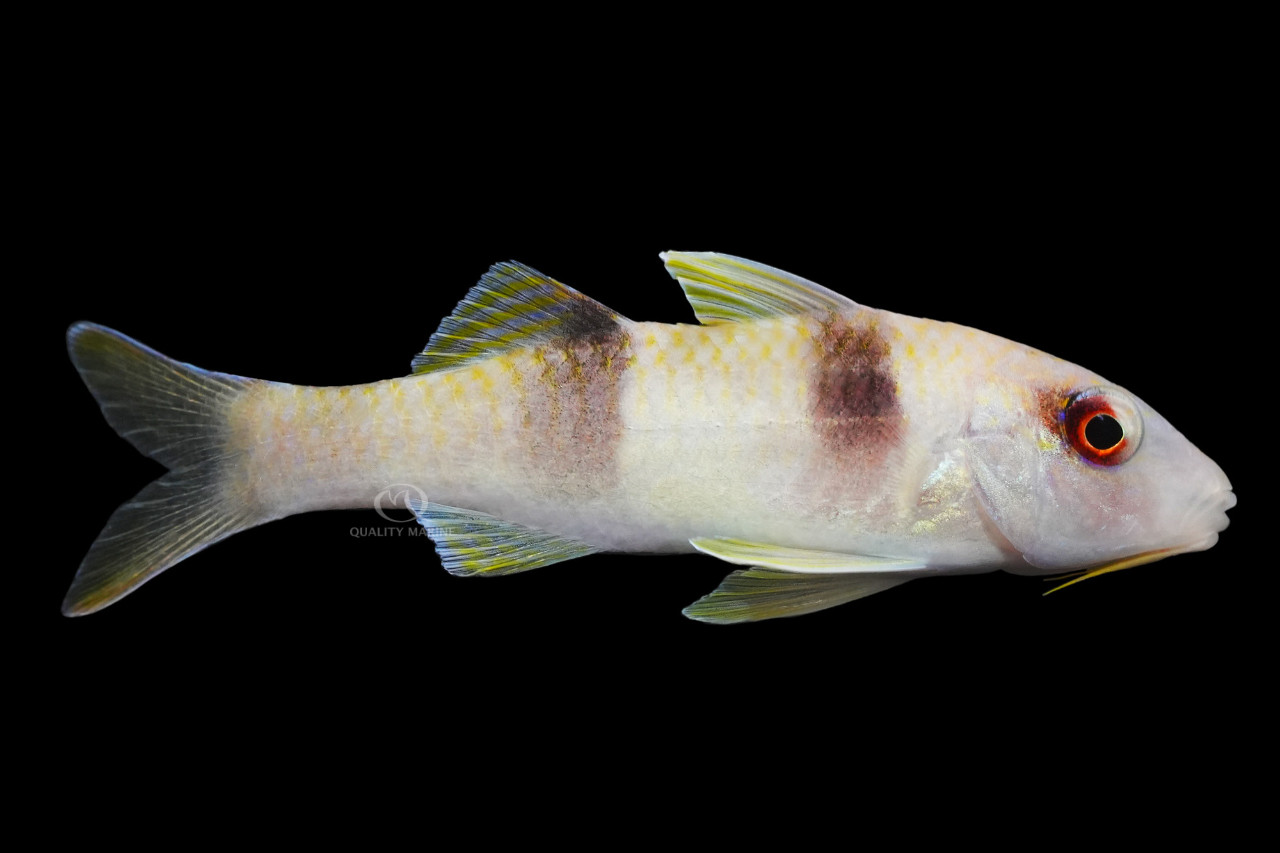
This fish matters to South American cichlid aquarium keeping because it can be territorial around spawning sites. When comparing similar species, look for repeatable features such as stripe direction, spot arrangement, tail shape, mouth position, and the proportions of the dorsal and anal fins.
15. Rondon Acara
The common name Rondon Acara refers here to Aequidens rondoni. It is a regional Amazonian acara with a deep body and side spot. Its typical setting includes Brazilian freshwater systems, where food availability, current, cover, temperature, and predators shape its behavior.
A practical note for South American cichlid aquarium keeping is that verified scientific identity matters because common names are inconsistent. Avoid assuming that two fish with similar trade names have identical care, harvest rules, or conservation status.
16. Trumpet Acara
Trumpet Acara (Aequidens tubicen) is notable because it has an elongated head profile compared with some congeners. Most observations come from South American river systems. Juveniles, breeding adults, and stressed individuals may show different colors or patterns.
In South American cichlid aquarium keeping, remember that it needs careful species-level research before purchase. Good identification photographs should show the full side profile, head, tail, and fins, with the location and approximate size recorded.
17. Epae Acara
The Epae Acara (Aequidens epae) is a relatively small regional Aequidens species. It is most closely associated with clear and blackwater habitats in northern South America. Identification should combine body shape, fin placement, markings, and geographic origin rather than relying on color alone.
For readers interested in South American cichlid aquarium keeping, the most useful practical point is that soft-water conditions may be more important than for common captive blue acaras. A responsible decision starts with the scientific name, adult size, natural behavior, and any legal or welfare considerations.
18. Royal Acara
Royal Acara, scientifically known as Aequidens diadema, has blue facial lines and a prominent side blotch. In the wild it is linked with Amazon and Orinoco-associated freshwater habitats, although local conditions and life stage may influence where it is observed.
This fish matters to South American cichlid aquarium keeping because it appreciates structure and can defend breeding territory. When comparing similar species, look for repeatable features such as stripe direction, spot arrangement, tail shape, mouth position, and the proportions of the dorsal and anal fins.
19. Chimanta Acara
The common name Chimanta Acara refers here to Aequidens chimantanus. It is a localized highland-region cichlid. Its typical setting includes freshwater habitats of the Guiana Shield, where food availability, current, cover, temperature, and predators shape its behavior.
A practical note for South American cichlid aquarium keeping is that narrow range and rarity require conservation-minded sourcing. Avoid assuming that two fish with similar trade names have identical care, harvest rules, or conservation status.
20. Paloemeu Acara
Paloemeu Acara (Aequidens paloemeuensis) is notable because it is a Guianan-region acara with a classic lateral spot. Most observations come from freshwater systems of Suriname and nearby areas. Juveniles, breeding adults, and stressed individuals may show different colors or patterns.

In South American cichlid aquarium keeping, remember that it should be kept only when its environmental needs are well documented. Good identification photographs should show the full side profile, head, tail, and fins, with the location and approximate size recorded.
21. Potaro Acara
The Potaro Acara (Aequidens potaroensis) is named for the Potaro drainage and has regional markings. It is most closely associated with Guiana Shield river habitats. Identification should combine body shape, fin placement, markings, and geographic origin rather than relying on color alone.
For readers interested in South American cichlid aquarium keeping, the most useful practical point is that locality-based care and accurate identification are useful. A responsible decision starts with the scientific name, adult size, natural behavior, and any legal or welfare considerations.
22. Dwarf Flag Acara
Dwarf Flag Acara, scientifically known as Laetacara curviceps, is a small peaceful cichlid with a curved head profile. In the wild it is linked with slow Amazonian and Guianan waters, although local conditions and life stage may influence where it is observed.
This fish matters to South American cichlid aquarium keeping because it works in calm planted communities but becomes protective while spawning. When comparing similar species, look for repeatable features such as stripe direction, spot arrangement, tail shape, mouth position, and the proportions of the dorsal and anal fins.
23. Red-Breast Acara
The common name Red-Breast Acara refers here to Laetacara dorsigera. It develops red coloration on the lower body during display. Its typical setting includes slow waters of the Paraguay and Paraná systems, where food availability, current, cover, temperature, and predators shape its behavior.
A practical note for South American cichlid aquarium keeping is that small size does not remove the need for territories and clean water. Avoid assuming that two fish with similar trade names have identical care, harvest rules, or conservation status.
24. Buckelkopf Acara
Buckelkopf Acara (Laetacara araguaiae) is notable because it is a small regional Laetacara with subtle blue and dark markings. Most observations come from Araguaia basin habitats. Juveniles, breeding adults, and stressed individuals may show different colors or patterns.
In South American cichlid aquarium keeping, remember that it is best with gentle tankmates and cover. Good identification photographs should show the full side profile, head, tail, and fins, with the location and approximate size recorded.
25. Xingu Acara
The Xingu Acara (Krobia xinguensis) is a patterned cichlid associated with the Xingu region. It is most closely associated with clearwater tributaries of Brazil. Identification should combine body shape, fin placement, markings, and geographic origin rather than relying on color alone.
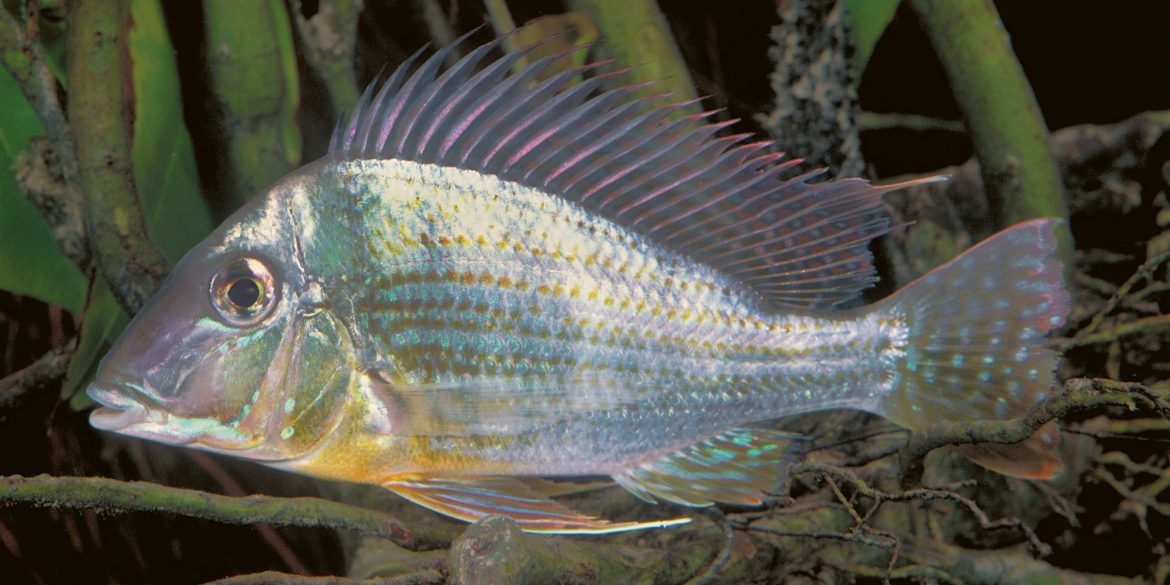
For readers interested in South American cichlid aquarium keeping, the most useful practical point is that river development and restricted habitat make responsible sourcing important. A responsible decision starts with the scientific name, adult size, natural behavior, and any legal or welfare considerations.
Where Do Acara Fish Live?
Acara cichlids occupy rivers, streams, floodplains, lagoons, forest creeks, clearwater, blackwater, and turbid systems across tropical South America and parts of Central America. Substrate, leaf litter, wood, rocks, vegetation, current, and seasonal flooding shape local behavior.
How to Identify Different Types of Acara Fish
- Use the scientific name and capture locality.
- Compare fin-edge color and scale-center pattern.
- Look at the side blotch and vertical bars.
- Check adult body depth and head profile.
- Separate domestic color strains from wild species.
- Use breeding dress cautiously because colors intensify.
Aquarium Care Notes
- Provide a cycled tank with strong filtration.
- Use sand and visual barriers.
- Plan for territorial breeding behavior.
- Choose robust, size-compatible tankmates.
- Feed a balanced cichlid diet.
- Keep nitrate controlled with water changes.
- Use a lid and secure heaters.
- Maintain a divider or backup tank for aggression.
Safety, Sustainability, and Conservation Notes
Rare acaras may come from small drainage systems affected by dams, mining, agriculture, and collection. Buy accurately labeled, legally sourced fish and prevent hybridization. Never release cichlids, because they can become invasive and disrupt native communities.
Fun Facts About Acara Fish
- Acara is a common name, not one genus.
- Electric blue acara is a domestic color form.
- Many pairs clean a flat spawning surface.
- Both parents often guard fry.
- Color can change rapidly during breeding.
- Dwarf acaras belong to Laetacara.
- Green terror trade names are frequently confused.
- Some species are limited to one drainage.
- They communicate with posture and color.
- Territory design can reduce aquarium conflict.
Final Thoughts on Types of Acara Fish
The 25 types of acara fish illustrate why scientific names matter in cichlid keeping. Choose a species only after checking adult size, aggression, water preference, pair behavior, and origin. A spacious, structured aquarium is safer than relying on a reputation such as “peaceful cichlid.”
Frequently Asked Questions
1. What is an acara fish?
Acara is a common name applied to several South and Central American cichlids, especially species in Andinoacara, Aequidens, and Laetacara.
2. Are all acara fish closely related?
They are cichlids, but the common name spans multiple genera and does not define one precise taxonomic group.
3. What is the most popular acara?
The blue acara and its electric blue domestic strain are the most familiar aquarium forms.
4. Is electric blue acara a separate species?
No. It is a selectively bred color form associated with Andinoacara pulcher.
5. How large do blue acaras grow?
They become medium-sized cichlids and require much more room than their juvenile size suggests.
6. Are acaras aggressive?
Aggression ranges from relatively mild to highly territorial, especially during pair formation and spawning.
7. Can acaras live in community tanks?
Some can live with sturdy compatible fish in spacious aquariums, but dwarf or timid tankmates may be stressed or eaten.
8. What tank size do acaras need?
It depends on species, pair status, and tankmates. Floor area and territory structure are more important than one universal number.
9. Do acaras need to be kept in pairs?
No. An incompatible forced pair can fight. Natural pair formation and backup separation plans are safer.
10. What do acara fish eat?
Most are omnivorous predators that accept quality cichlid pellets plus suitable frozen, live, and plant-based foods.
11. Do acaras eat small fish?
They may eat fish small enough to swallow, especially as they mature.
12. Do acaras dig plants?
Many rearrange substrate and may uproot plants, particularly while preparing a spawning site.
13. What water conditions do acaras need?
Needs vary from adaptable captive blue acaras to soft-water specialists. Stability and low nitrogen waste are essential.
14. Are acaras beginner fish?
Blue acaras can suit prepared beginners, but many rarer species and aggressive green terrors are better for experienced keepers.
15. What is the difference between blue acara and green terror?
Green terrors generally grow more forceful and territorial, while blue acaras are usually more manageable.
16. What is the difference between A. rivulatus and A. stalsbergi?
They differ in scale pattern, fin edging, distribution, and diagnostic details; trade names frequently confuse them.
17. Can two male acaras live together?
This can be risky unless the aquarium is very large and structured, with a separation plan.
18. Do acaras form breeding pairs?
Many form pair bonds and jointly guard eggs or fry.
19. Where do acaras lay eggs?
They often clean a flat rock, wood surface, leaf, or other open substrate.
20. Do both parents guard fry?
In many species both adults defend eggs and free-swimming young.
21. Can acaras hybridize?
Closely related aquarium cichlids may hybridize. Responsible breeders keep species and locality lines accurately labeled.
22. How can I sex acara fish?
Mature males may be larger with longer fins, but reliable sexing varies and vent examination or breeding behavior may be needed.
23. Are acaras compatible with angelfish?
Sometimes, but breeding aggression, feeding competition, and tank size can make the combination unstable.
24. Can acaras live with plecos?
Some combinations work, but cave competition, egg predation, waste load, and nighttime conflict must be considered.
25. Do acaras need caves?
They appreciate structure and visual barriers, though many are open-substrate spawners rather than cave spawners.
26. What substrate is best?
Fine sand or smooth small gravel allows digging without mouth injury.
27. Why is my acara changing color?
Mood, dominance, breeding, stress, background, and health can all alter color intensity.
28. Why is my acara hiding?
New surroundings, bullying, poor water, excessive light, illness, or lack of cover are possible causes.
29. How long do acaras live?
Many can live for several years with stable water, suitable diet, and enough space.
30. Are acaras South American cichlids?
Most fishes called acaras are from South America, while some Andinoacara extend into Central America.
31. What is a dwarf acara?
The term often refers to small Laetacara species such as the dwarf flag acara.
32. Are rare acaras wild caught?
Some are. Buyers should ask about legal origin and prefer transparent captive-breeding sources.
33. Should different acara species be mixed?
Mixing increases aggression, identification confusion, and hybridization risk, so it requires expert planning.
34. How do I identify an acara species?
Use scientific name, range, scale pattern, side blotch, fin margins, head markings, and verified locality.
35. What is the biggest mistake with acara fish?
Buying an attractive juvenile without planning for adult territory, aggression, pair behavior, and tankmate safety.
SEO Title
Meta Description
Suggested URL Slug
types-of-acara-fish