

The phrase types of danio tropical fish includes far more than the familiar zebra danio. Modern taxonomy recognizes a diverse genus of small South and Southeast Asian freshwater fishes with stripes, spots, bars, iridescent colors, and highly active schooling behavior. This guide covers 27 recognized Danio species, explains how they differ from Devario and other danionins, and provides practical aquarium guidance for identification, stocking, feeding, breeding, and responsible sourcing.
What Are the Main Types of Danio Tropical Fish?
The main aquarium types include zebra, pearl, glowlight, blue, rosy, spotted, celestial pearl, emerald dwarf, and gold ring danios. All are active freshwater fishes, but they differ in adult size, temperature preference, confidence, current tolerance, and availability. Most need a school, a covered aquarium, clean oxygenated water, and open horizontal swimming space.
Popular Danio Species at a Glance
| Danio | Scientific name | Pattern | Aquarium note |
|---|---|---|---|
| Black-Barred Danio | Danio absconditus | has dark vertical bars | it is uncommon in ordinary shops |
| Panther Danio | Danio aesculapii | shows a spotted or broken-bar pattern instead of classic zebra striping | a planted, covered aquarium |
| Pearl Danio | Danio albolineatus | has an iridescent pearl-blue body with warm orange or pink highlights | it is active, peaceful, |
| Ring Danio | Danio annulosus | is distinguished by ring-like flank markings | its limited aquarium availability makes accurate sourcing especially important |
| Assam Danio | Danio assamila | is a regional danio with subtle bars | keepers should avoid confusing it with larger Devario species sold under similar common names |
| Chain Danio | Danio catenatus | has linked chain-like flank patterning | stable water |
| Glowlight Danio | Danio choprae | combines orange-red bands with blue-green iridescence | it benefits from a school, vegetation at the edges, |
| Concatenated Danio | Danio concatenatus | shows a connected series of dark side markings | it is a specialist species rather than a routine beginner-store fish |
| Moustached Danio | Danio dangila | is a larger danio with conspicuous barbels | it needs a longer aquarium |
| Two-Colored Danio | Danio dichromatus | has a two-tone pattern recognized as a distinct species in recent taxonomy | newer taxonomic names may not yet appear consistently in aquarium stores |
| Emerald Dwarf Danio | Danio erythromicron | has vertical bars | it prefers gentle tankmates, dense cover, |
| Yoma Danio | Danio feegradei | is a robust patterned danio with a larger adult build | a roomy, tightly covered aquarium is necessary for its speed |
How Are Danio Tropical Fish Classified?
True danios belong to the genus Danio in the family Danionidae. Older aquarium books may use Brachydanio, now treated as a junior synonym, or may call larger Devario species danios. Common names therefore do not always reflect current taxonomy. The scientific name is the best starting point for comparing adult size, locality, temperature, and behavior.
1. Black-Barred Danio
The Black-Barred Danio (Danio absconditus) has dark vertical bars and a compact danio profile. It is most closely associated with clear freshwater streams of Myanmar. Identification should combine body shape, fin placement, markings, and geographic origin rather than relying on color alone.
For readers interested in freshwater aquarium keeping, the most useful practical point is that it is uncommon in ordinary shops and should be purchased only with confirmed identification. A responsible decision starts with the scientific name, adult size, natural behavior, and any legal or welfare considerations.
2. Panther Danio
Panther Danio, scientifically known as Danio aesculapii, shows a spotted or broken-bar pattern instead of classic zebra striping. In the wild it is linked with forest streams in Myanmar, although local conditions and life stage may influence where it is observed.

This fish matters to freshwater aquarium keeping because a planted, covered aquarium and a proper school help it display natural behavior. When comparing similar species, look for repeatable features such as stripe direction, spot arrangement, tail shape, mouth position, and the proportions of the dorsal and anal fins.
3. Pearl Danio
The common name Pearl Danio refers here to Danio albolineatus. It has an iridescent pearl-blue body with warm orange or pink highlights. Its typical setting includes streams and river systems of mainland Southeast Asia, where food availability, current, cover, temperature, and predators shape its behavior.
A practical note for freshwater aquarium keeping is that it is active, peaceful, and best kept in a group with open swimming space. Avoid assuming that two fish with similar trade names have identical care, harvest rules, or conservation status.
4. Ring Danio
Ring Danio (Danio annulosus) is notable because it is distinguished by ring-like flank markings. Most observations come from freshwater habitats in Myanmar. Juveniles, breeding adults, and stressed individuals may show different colors or patterns.
In freshwater aquarium keeping, remember that its limited aquarium availability makes accurate sourcing especially important. Good identification photographs should show the full side profile, head, tail, and fins, with the location and approximate size recorded.
5. Assam Danio
The Assam Danio (Danio assamila) is a regional danio with subtle bars and markings. It is most closely associated with freshwater habitats of northeastern India. Identification should combine body shape, fin placement, markings, and geographic origin rather than relying on color alone.
For readers interested in freshwater aquarium keeping, the most useful practical point is that keepers should avoid confusing it with larger Devario species sold under similar common names. A responsible decision starts with the scientific name, adult size, natural behavior, and any legal or welfare considerations.
6. Chain Danio
Chain Danio, scientifically known as Danio catenatus, has linked chain-like flank patterning. In the wild it is linked with streams of Myanmar, although local conditions and life stage may influence where it is observed.
This fish matters to freshwater aquarium keeping because stable water and a secure lid are more important than chasing one exact pH number. When comparing similar species, look for repeatable features such as stripe direction, spot arrangement, tail shape, mouth position, and the proportions of the dorsal and anal fins.
7. Glowlight Danio
The common name Glowlight Danio refers here to Danio choprae. It combines orange-red bands with blue-green iridescence. Its typical setting includes small streams in northern Myanmar, where food availability, current, cover, temperature, and predators shape its behavior.
A practical note for freshwater aquarium keeping is that it benefits from a school, vegetation at the edges, and a clear central swimming lane. Avoid assuming that two fish with similar trade names have identical care, harvest rules, or conservation status.
8. Concatenated Danio
Concatenated Danio (Danio concatenatus) is notable because it shows a connected series of dark side markings. Most observations come from freshwater streams of Myanmar. Juveniles, breeding adults, and stressed individuals may show different colors or patterns.
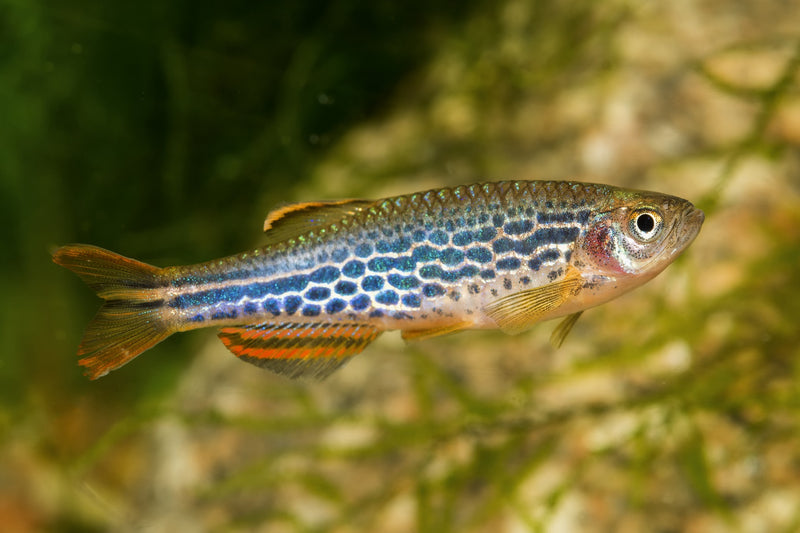
In freshwater aquarium keeping, remember that it is a specialist species rather than a routine beginner-store fish. Good identification photographs should show the full side profile, head, tail, and fins, with the location and approximate size recorded.
9. Moustached Danio
The Moustached Danio (Danio dangila) is a larger danio with conspicuous barbels and a patterned body. It is most closely associated with rivers and streams across parts of South Asia. Identification should combine body shape, fin placement, markings, and geographic origin rather than relying on color alone.
For readers interested in freshwater aquarium keeping, the most useful practical point is that it needs a longer aquarium and should not be treated like a tiny zebra danio. A responsible decision starts with the scientific name, adult size, natural behavior, and any legal or welfare considerations.
10. Two-Colored Danio
Two-Colored Danio, scientifically known as Danio dichromatus, has a two-tone pattern recognized as a distinct species in recent taxonomy. In the wild it is linked with freshwater habitats in South Asia, although local conditions and life stage may influence where it is observed.
This fish matters to freshwater aquarium keeping because newer taxonomic names may not yet appear consistently in aquarium stores. When comparing similar species, look for repeatable features such as stripe direction, spot arrangement, tail shape, mouth position, and the proportions of the dorsal and anal fins.
11. Emerald Dwarf Danio
The common name Emerald Dwarf Danio refers here to Danio erythromicron. It has vertical bars and a small body rather than long horizontal stripes. Its typical setting includes shallow, plant-rich waters around Inle Lake, where food availability, current, cover, temperature, and predators shape its behavior.
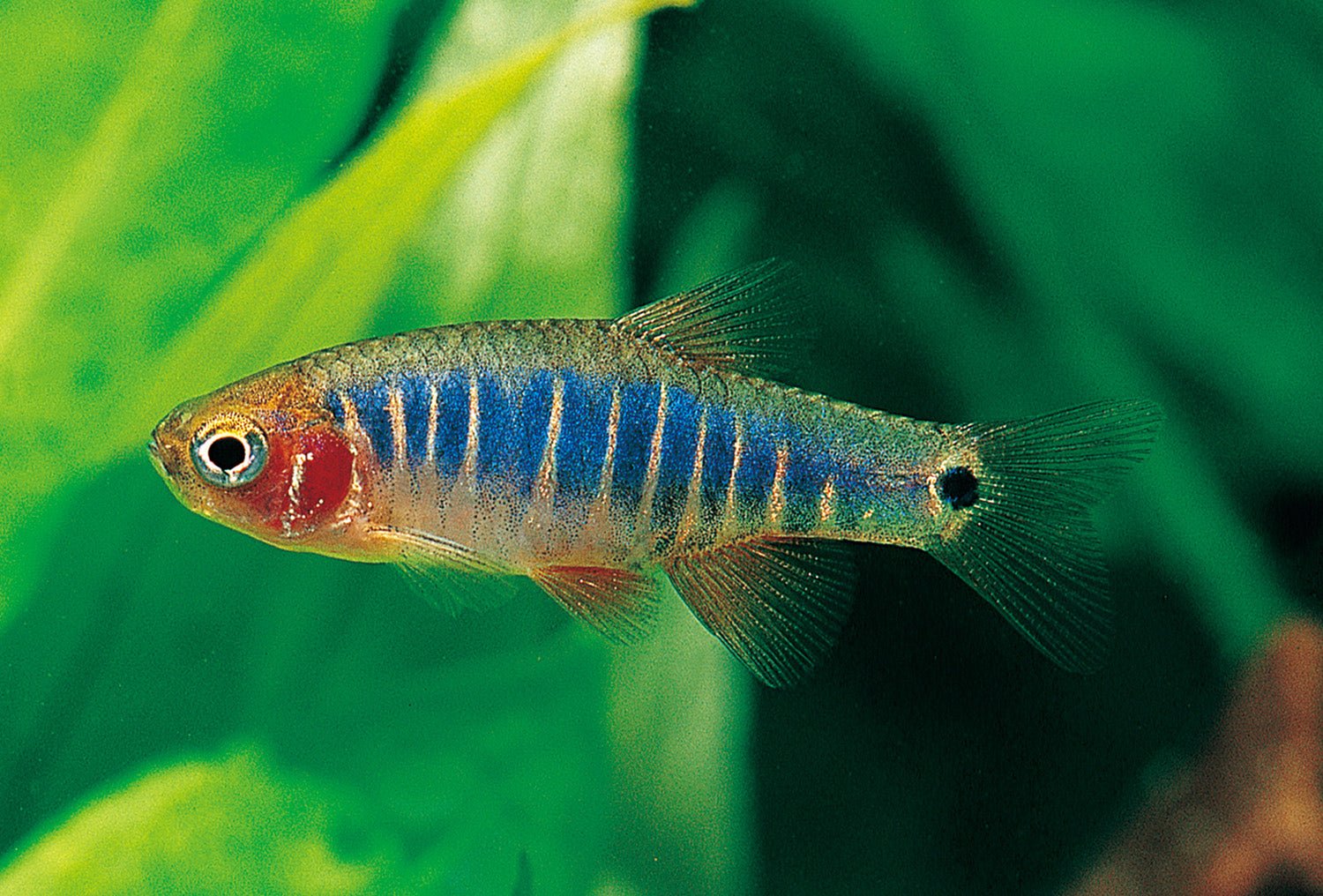
A practical note for freshwater aquarium keeping is that it prefers gentle tankmates, dense cover, and a calm feeding environment. Avoid assuming that two fish with similar trade names have identical care, harvest rules, or conservation status.
12. Yoma Danio
Yoma Danio (Danio feegradei) is notable because it is a robust patterned danio with a larger adult build. Most observations come from streams of western Myanmar. Juveniles, breeding adults, and stressed individuals may show different colors or patterns.
In freshwater aquarium keeping, remember that a roomy, tightly covered aquarium is necessary for its speed and jumping ability. Good identification photographs should show the full side profile, head, tail, and fins, with the location and approximate size recorded.
13. Northern Glowlight Danio
The Northern Glowlight Danio (Danio flagrans) resembles related glowlight danios but has diagnostic pattern details. It is most closely associated with small streams in northern Myanmar. Identification should combine body shape, fin placement, markings, and geographic origin rather than relying on color alone.
For readers interested in freshwater aquarium keeping, the most useful practical point is that the scientific name prevents confusion with Danio choprae. A responsible decision starts with the scientific name, adult size, natural behavior, and any legal or welfare considerations.
14. Htamanti Danio
Htamanti Danio, scientifically known as Danio htamanthinus, is a localized species with dark bars and danio-like proportions. In the wild it is linked with freshwater habitats around Htamanthi in Myanmar, although local conditions and life stage may influence where it is observed.
This fish matters to freshwater aquarium keeping because limited distribution makes responsible, traceable sourcing important. When comparing similar species, look for repeatable features such as stripe direction, spot arrangement, tail shape, mouth position, and the proportions of the dorsal and anal fins.
15. Jaintia Danio
The common name Jaintia Danio refers here to Danio jaintianensis. It is a regional South Asian danio with a slender body. Its typical setting includes hill streams of northeastern India, where food availability, current, cover, temperature, and predators shape its behavior.
A practical note for freshwater aquarium keeping is that cool, clean, oxygen-rich water and swimming length are valuable. Avoid assuming that two fish with similar trade names have identical care, harvest rules, or conservation status.
16. Blue Danio
Blue Danio (Danio kerri) is notable because it has a blue-violet sheen and fine warm-colored side lines. Most observations come from streams and island waters of southern Thailand. Juveniles, breeding adults, and stressed individuals may show different colors or patterns.
In freshwater aquarium keeping, remember that it is peaceful but active and should be kept with similarly energetic fish. Good identification photographs should show the full side profile, head, tail, and fins, with the location and approximate size recorded.
17. Orange-Finned Danio
The Orange-Finned Danio (Danio kyathit) occurs in striped and spotted forms with orange fin color. It is most closely associated with streams in northern Myanmar. Identification should combine body shape, fin placement, markings, and geographic origin rather than relying on color alone.
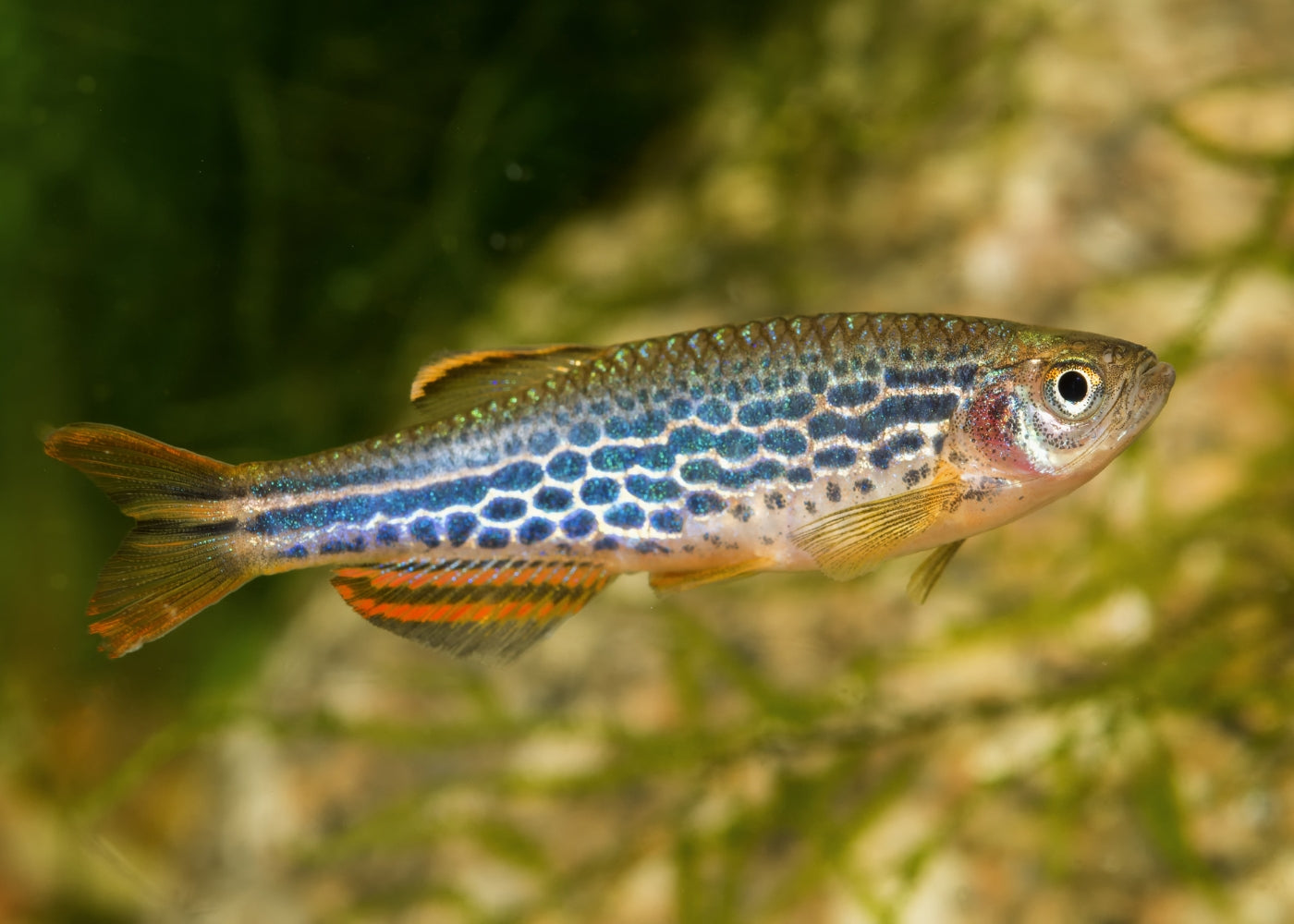
For readers interested in freshwater aquarium keeping, the most useful practical point is that different pattern forms are the same species and should not be marketed as invented species. A responsible decision starts with the scientific name, adult size, natural behavior, and any legal or welfare considerations.
18. Celestial Pearl Danio
Celestial Pearl Danio, scientifically known as Danio margaritatus, has pearl-like spots, red fins, and a compact body. In the wild it is linked with shallow vegetated pools in Myanmar, although local conditions and life stage may influence where it is observed.
This fish matters to freshwater aquarium keeping because it needs a group, plant cover, small foods, and protection from boisterous tankmates. When comparing similar species, look for repeatable features such as stripe direction, spot arrangement, tail shape, mouth position, and the proportions of the dorsal and anal fins.
19. Meghalaya Danio
The common name Meghalaya Danio refers here to Danio meghalayensis. It is a regional danio named for Meghalaya. Its typical setting includes freshwater streams of northeastern India, where food availability, current, cover, temperature, and predators shape its behavior.
A practical note for freshwater aquarium keeping is that it is rarely encountered and should not be substituted casually with lookalikes. Avoid assuming that two fish with similar trade names have identical care, harvest rules, or conservation status.
20. Dwarf Spotted Danio
Dwarf Spotted Danio (Danio nigrofasciatus) is notable because it has small dark spots and a relatively small adult size. Most observations come from slow and moderate-flow waters in Myanmar. Juveniles, breeding adults, and stressed individuals may show different colors or patterns.
In freshwater aquarium keeping, remember that a planted community with small peaceful tankmates suits it better than a hectic tank. Good identification photographs should show the full side profile, head, tail, and fins, with the location and approximate size recorded.
21. Beautiful Danio
The Beautiful Danio (Danio pulcher) has a bright blue body with contrasting horizontal patterning. It is most closely associated with freshwater streams of Southeast Asia. Identification should combine body shape, fin placement, markings, and geographic origin rather than relying on color alone.
For readers interested in freshwater aquarium keeping, the most useful practical point is that a school and a long swimming area help reduce nervous pacing. A responsible decision starts with the scientific name, adult size, natural behavior, and any legal or welfare considerations.
22. Quagga Danio
Quagga Danio, scientifically known as Danio quagga, has bold broken striping reminiscent of a quagga pattern. In the wild it is linked with streams in Myanmar, although local conditions and life stage may influence where it is observed.
This fish matters to freshwater aquarium keeping because it requires correct identification because striped danios are easily mixed in trade. When comparing similar species, look for repeatable features such as stripe direction, spot arrangement, tail shape, mouth position, and the proportions of the dorsal and anal fins.
23. Zebra Danio
The common name Zebra Danio refers here to Danio rerio. It has several horizontal blue and silver stripes and a torpedo-shaped body. Its typical setting includes streams, canals, pools, and rice-field environments in South Asia, where food availability, current, cover, temperature, and predators shape its behavior.
A practical note for freshwater aquarium keeping is that it is hardy but still needs a cycled tank, a school, and a secure lid. Avoid assuming that two fish with similar trade names have identical care, harvest rules, or conservation status.
24. Rosy Danio
Rosy Danio (Danio roseus) is notable because it develops soft rose, blue, and silver coloration. Most observations come from streams in Thailand, Laos, and Myanmar. Juveniles, breeding adults, and stressed individuals may show different colors or patterns.
In freshwater aquarium keeping, remember that it suits peaceful communities that offer current and open swimming room. Good identification photographs should show the full side profile, head, tail, and fins, with the location and approximate size recorded.
25. Thick-Banded Danio
The Thick-Banded Danio (Danio sysphigmatus) has a distinctive thick bar or band pattern. It is most closely associated with freshwater habitats in Myanmar. Identification should combine body shape, fin placement, markings, and geographic origin rather than relying on color alone.

For readers interested in freshwater aquarium keeping, the most useful practical point is that it is a niche species whose care should be based on verified locality information. A responsible decision starts with the scientific name, adult size, natural behavior, and any legal or welfare considerations.
26. Gold Ring Danio
Gold Ring Danio, scientifically known as Danio tinwini, has leopard-like spots arranged in ringed rows. In the wild it is linked with clear streams of Myanmar, although local conditions and life stage may influence where it is observed.
This fish matters to freshwater aquarium keeping because it stays small but remains active and should be kept in a meaningful school. When comparing similar species, look for repeatable features such as stripe direction, spot arrangement, tail shape, mouth position, and the proportions of the dorsal and anal fins.
27. Kedah Danio
The common name Kedah Danio refers here to Danio tweediei. It has fine lateral striping and a streamlined form. Its typical setting includes freshwater habitats of the Malay Peninsula, where food availability, current, cover, temperature, and predators shape its behavior.
A practical note for freshwater aquarium keeping is that warm-room temperatures, clean water, and active companions are more suitable than slow long-finned fish. Avoid assuming that two fish with similar trade names have identical care, harvest rules, or conservation status.
Where Do Danio Fish Live?
Wild danios occur across South and Southeast Asia in streams, small rivers, pools, wetlands, rice-field landscapes, and vegetated margins. Some live in clear flowing water, while others occupy quieter seasonal habitats. Aquarium care should imitate the important functions of the habitat—oxygen, cover, swimming room, stable temperature, and suitable food—rather than copying one photograph.
How to Identify Different Types of Danio Fish
- Compare horizontal stripes, vertical bars, rings, and spots.
- Check whether barbels are visible and how long they are.
- Use adult size and body depth to separate similar species.
- Note orange, red, blue, or black fin margins.
- Confirm whether the fish is a true Danio or a related Devario.
- Record locality because many rare species have narrow ranges.
Aquarium Care Notes
- Cycle the aquarium before adding fish.
- Keep danios in a proper school rather than singly or in pairs.
- Choose a long tank with a secure lid.
- Provide edge planting and open swimming space.
- Match tankmates to the danios’ speed and temperature.
- Feed varied small foods without overfeeding.
- Maintain oxygen and regular water changes.
- Quarantine new fish before mixing groups.
Safety, Sustainability, and Conservation Notes
Most common store danios are captive bred, but rare locality species may be collected from restricted habitats. Ask about origin, avoid unverified names, and never release aquarium fish. Maintaining pure, accurately labeled breeding lines is especially useful for uncommon species.
Fun Facts About Danios
- Zebrafish are major research organisms in developmental biology.
- Many danios scatter adhesive or semi-adhesive eggs.
- Their stripes and spots can break up the outline in moving water.
- Several species were reclassified as taxonomy improved.
- Danios often display stronger color in social groups.
- A secure lid is essential because they are skilled jumpers.
- The celestial pearl danio was initially sold under a rasbora name.
- Some species tolerate cooler water than typical tropical fish.
- Males are often slimmer and more intensely colored.
- Schooling reduces nervous behavior and improves display.
Final Thoughts on Types of Danio Tropical Fish
The 27 types of danio tropical fish show how diverse this familiar aquarium group really is. Choose by scientific name, adult size, temperature, schooling behavior, and swimming needs—not color alone. A long, covered, well-cycled tank with a meaningful group is the foundation for healthy danios.
Frequently Asked Questions
1. Are danios tropical fish?
Most danios are tropical or subtropical freshwater fish, but several prefer cooler conditions than classic warm-water community species.
2. How many species are in the genus Danio?
Modern references recognize roughly the high twenties, although taxonomy changes as new species are described or reclassified.
3. What is the most common danio?
The zebra danio, Danio rerio, is the most familiar aquarium species.
4. Do danios need to live in groups?
Yes. Most are social schooling or shoaling fish and should be kept in an appropriately sized group.
5. How many danios should be kept together?
Six is a practical starting point for many species, while larger groups often produce more natural behavior when the tank is spacious.
6. Are danios good beginner fish?
Zebra, pearl, and several other common danios can suit beginners who use a cycled aquarium and meet their social needs.
7. Do danios need a heater?
It depends on species and room temperature. Some thrive in stable unheated rooms, while others need warmer conditions.
8. Why do danios jump?
They are fast surface-oriented fish that may leap when startled, chasing, feeding, or exploring, so a secure lid is important.
9. What size tank do danios need?
Swimming length matters more than height. Small species may fit modest tanks, while larger danios need substantially longer aquariums.
10. Can danios live with bettas?
Sometimes, but active danios may stress or nip slow, long-finned bettas. Individual temperament and tank size matter.
11. Can danios live with goldfish?
This is generally a poor match because of size, feeding, temperature, and predation concerns.
12. What do danios eat?
They are generally omnivorous and accept quality prepared foods plus small frozen or live invertebrates.
13. Do danios eat their eggs?
Many do, so breeders use spawning mops, marbles, mesh, or a separate breeding aquarium.
14. Are leopard danios a separate species?
The common leopard danio is usually a spotted domestic form of Danio rerio, not a separate species.
15. Are fluorescent danios natural?
Commercial fluorescent zebrafish lines are genetically modified strains of Danio rerio, not naturally occurring wild colors.
16. What is the smallest danio?
Several dwarf species remain small, including celestial pearl, emerald dwarf, and dwarf spotted danios.
17. What is the largest danio?
Some fishes historically called danios are now placed in Devario and grow much larger than typical Danio species.
18. Are giant danios true Danio species?
The giant danio is currently placed in the genus Devario, despite retaining “danio” in its common name.
19. Do danios need strong current?
Many enjoy moderate flow and high oxygen, but tiny or shy species should not be blasted by excessive current.
20. What water parameters do danios need?
Requirements vary, but stable, clean, oxygenated water is more important than repeatedly adjusting to one exact number.
21. How long do danios live?
Many commonly kept species live several years with good care, though lifespan varies by species and conditions.
22. Why are my danios chasing each other?
Chasing can be normal social and breeding behavior, but cramped space, small group size, or an uneven sex ratio can intensify it.
23. Can danios live in planted tanks?
Yes. Edge planting with open central swimming space works especially well.
24. Are danios fin nippers?
Some may nip slow or long-finned fish when under-grouped, crowded, or kept with unsuitable tankmates.
25. How can I identify a danio species?
Compare stripe direction, spots, bars, fin colors, barbels, adult size, and geographic origin.
26. Are white cloud minnows danios?
No. They are in the genus Tanichthys, despite older common names such as Canton danio.
27. Is celestial pearl danio really a danio?
Yes. It is currently classified as Danio margaritatus.
28. Do danios prefer long or tall tanks?
Long tanks are generally better because danios are active horizontal swimmers.
29. Can danios breed in a community tank?
They may spawn, but most eggs and fry are eaten unless dense cover or a separate breeding setup is provided.
30. What is the best substrate for danios?
Most are flexible, although dark fine substrate often improves appearance and planted-tank aesthetics.
31. Do danios need live food?
No, but small live or frozen foods can enrich diet and help condition adults for breeding.
32. Why is scientific naming important for danios?
Trade names overlap, and many former danios have moved to other genera, so the scientific name prevents care mistakes.
33. Are wild danios threatened?
Status differs by species. Habitat loss and narrow ranges can make localized species more vulnerable than common captive-bred zebrafish.
34. Should rare danios be wild collected?
Buy only legally and responsibly sourced fish, ideally from transparent captive-breeding programs.
35. What is the best danio for a peaceful community?
Pearl, zebra, rosy, and several small danios can work when tankmates match their speed and temperature needs.