

Hummingbirds are among the smallest and most energetic birds in the world, famous for their rapid wing beats, hovering ability, and dazzling colors. Despite their tiny size, they have extremely high metabolic demands and must eat constantly throughout the day to survive.
Understanding what hummingbirds eat is essential for appreciating how they live, migrate, and reproduce. Their diet is a carefully balanced combination of high-energy sugary foods and protein-rich insects. This dual feeding strategy allows them to maintain energy for flight while supporting muscle growth, feather development, and reproduction.
In the wild, hummingbirds act as important pollinators, feeding on nectar from flowers while transferring pollen between plants. They also control insect populations by consuming small arthropods. Their diet is far more complex than just “nectar drinking.”
Below are the first foods in the complete list of 30 items hummingbirds rely on for survival.
What Do Hummingbirds Eat in the Wild?
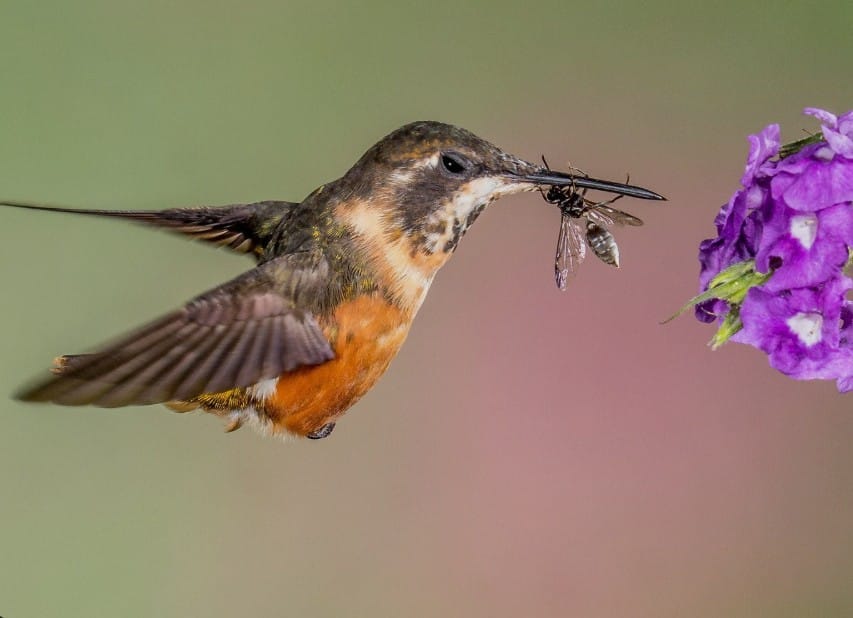
1. Nectar (from flowers)
Nectar is the primary energy source for hummingbirds and the foundation of their diet. It is a naturally sugary liquid produced by flowering plants to attract pollinators. Hummingbirds are perfectly adapted to feed on nectar using their long, specialized bills and extendable tongues.
From a nutritional perspective, nectar is rich in simple sugars such as sucrose, glucose, and fructose, which provide immediate energy. This is essential because hummingbirds have one of the fastest metabolisms in the animal kingdom. They must consume large amounts of nectar daily just to maintain basic bodily functions and continuous flight.
Hummingbirds are highly selective feeders when it comes to nectar sources. They prefer brightly colored tubular flowers such as trumpet vine, bee balm, salvia, and honeysuckle. These flowers are structurally adapted to match the bird’s feeding style, ensuring efficient nectar extraction while promoting pollination.
However, nectar alone does not provide protein, amino acids, or essential nutrients. This is why hummingbirds must supplement their diet with insects. Without nectar, they would quickly lose energy; without insects, they could not survive long-term growth or reproduction.
2. Sugar water (artificial nectar)
Sugar water is a human-provided substitute for natural flower nectar, commonly offered in backyard feeders. It is typically made from refined white sugar mixed with water in a ratio that mimics natural nectar concentration.
This artificial nectar provides a quick and easily accessible energy source, especially during migration periods or times when natural flowers are scarce. Hummingbirds rely heavily on such feeders in urban or suburban environments where natural habitats are reduced.
While sugar water supports short-term energy needs, it lacks essential nutrients found in natural ecosystems. It does not contain proteins, minerals, or micronutrients, meaning hummingbirds must still hunt insects to maintain balanced nutrition.
Proper maintenance of feeders is also important. Dirty or improperly prepared sugar water can harm hummingbirds, so natural nectar remains the healthiest and most complete energy source.
3. Small insects
Small insects form a critical part of the hummingbird diet and provide essential protein that nectar cannot supply. Without insects, hummingbirds would be unable to grow, reproduce, or maintain healthy feathers.
These insects include a wide range of tiny arthropods such as gnats, fruit flies, and mosquitoes. Hummingbirds catch them mid-flight or pick them off plants while feeding on nectar-rich flowers.
Protein from insects is especially important during nesting season when female hummingbirds need extra nutrients to produce eggs and feed chicks. Nestlings require a high-protein diet to support rapid growth.
Insects also provide fats, amino acids, and trace minerals that are essential for metabolic health. This makes them just as important as nectar, even though they are consumed in smaller quantities.
4. Gnats
Gnats are one of the most frequently consumed insects in a hummingbird’s diet. These tiny flying insects are abundant in many natural habitats, especially around moist environments, flowers, and decomposing plant material. Because of their small size and slow flight patterns, gnats are easy targets for hummingbirds, which are highly agile aerial hunters.
From a nutritional perspective, gnats provide essential protein and small amounts of fat, both of which are critical for muscle maintenance and feather development. While nectar provides immediate energy, protein from gnats supports long-term biological functions such as growth and reproduction. This balance is what allows hummingbirds to maintain their extremely high metabolic rate.
Hummingbirds often catch gnats while hovering near flowers or during short aerial hunting bursts. Their excellent vision allows them to detect movement quickly, even in cluttered environments like forest edges or gardens. Gnats are especially important during breeding season when adult hummingbirds must feed chicks high-protein diets for rapid growth.
Overall, gnats represent a small but essential component of the hummingbird diet, contributing significantly to protein intake despite their tiny size.
5. Fruit flies
Fruit flies are another common food source for hummingbirds, especially in areas where ripe or decaying fruit is present. These insects are highly abundant and gather in large numbers, making them an efficient and reliable prey item.
Fruit flies provide a combination of protein, fat, and energy-rich compounds that complement the sugar-heavy nectar diet. Their availability near fruiting plants also makes them easy for hummingbirds to locate while feeding on nectar-producing flowers in the same habitat.
Hummingbirds typically capture fruit flies mid-air or snatch them from around fruit clusters. Their rapid wing movement and precise hovering ability allow them to exploit even the smallest insect swarms.
During migration or nesting periods, fruit flies become especially valuable due to their abundance and accessibility. They help sustain energy balance when nectar sources fluctuate seasonally.
6. Mosquitoes
Mosquitoes are an important protein source for hummingbirds and are actively hunted despite their small size. These insects are commonly found near water sources, wetlands, and shaded vegetation, all of which overlap with hummingbird feeding territories.
Hummingbirds catch mosquitoes in mid-air using rapid, precise flight maneuvers. This behavior demonstrates their exceptional aerial control and ability to target fast-moving prey.
Mosquitoes provide essential nutrients such as protein and amino acids, which are critical for muscle maintenance and reproduction. They are especially important during nesting seasons when adult hummingbirds must feed chicks frequently.
In addition to nutrition, mosquito consumption also contributes to natural pest control in ecosystems where hummingbirds are present.
7. Aphids
Aphids are small, soft-bodied insects commonly found on plant stems and leaves. Hummingbirds often feed on them while visiting flowers, as aphids tend to cluster in areas rich in nectar-producing plants.
These insects are an excellent source of protein and are easy to digest due to their soft bodies. Hummingbirds may pick aphids directly from plants or consume them incidentally while feeding on nectar.
Aphids are particularly important in agricultural and garden environments where they are abundant. Their presence provides hummingbirds with a convenient and steady protein source.
Although small in size, aphids play a meaningful role in supporting the nutritional balance of hummingbirds, especially in regions with high plant density.
8. Spiders
Spiders are a valuable part of the hummingbird diet, not only as prey but also as a resource for nesting materials. Hummingbirds consume small spiders for their protein content and also collect spider silk to build their nests.
From a nutritional standpoint, spiders provide high-quality protein and fats that support muscle development and energy storage. They are especially important during breeding seasons when energy demands increase significantly.
Hummingbirds often hunt small spiders directly or take insects trapped in spider webs. This dual interaction highlights the ecological relationship between hummingbirds and spiders.
Spider silk is also incredibly important for nest construction, allowing hummingbird nests to expand as chicks grow while maintaining structural flexibility.
9. Tree sap
Tree sap is an alternative sugar source that hummingbirds use when flower nectar is limited. Sap flows from trees, often through natural cracks or holes made by other animals such as woodpeckers or sapsuckers.
This sap contains natural sugars that provide quick energy, similar to nectar. In some cases, sap also traps small insects, giving hummingbirds both energy and protein in a single feeding source.
Hummingbirds may repeatedly visit sap wells, especially in early spring when flower availability is low. This behavior demonstrates their adaptability in finding energy sources beyond traditional nectar plants.
Tree sap is especially important in temperate regions where seasonal changes affect flower availability.
10. Caterpillars
Caterpillars are one of the most important protein-rich foods for hummingbirds, especially during nesting and chick-rearing periods. These soft-bodied larvae are easy to digest and highly nutritious.
Female hummingbirds often collect caterpillars and feed them directly to their chicks. This ensures rapid growth and development due to the high protein and fat content.
Caterpillars are typically found on leaves, branches, and flowering plants, making them accessible in the same habitats where hummingbirds forage for nectar.
Because of their nutritional density, caterpillars play a critical role in reproductive success and population survival.
11. Ants
Ants are occasionally consumed by hummingbirds when they are abundant on plants, flowers, or tree bark. While ants are not a primary food source, they provide a useful supplement of protein and minerals that support the bird’s high-energy lifestyle.
Hummingbirds typically pick ants off vegetation while feeding on nectar-rich flowers. This opportunistic feeding behavior allows them to maximize nutrient intake without dedicating extra energy to hunting. Ants are especially common in tropical and subtropical habitats where hummingbirds thrive.
Although ants have defensive chemicals and can bite, hummingbirds usually target smaller or less aggressive individuals. Their quick feeding technique allows them to consume ants efficiently before the insects can react.
Overall, ants contribute a minor but meaningful protein boost in the hummingbird diet, particularly in insect-rich environments.
12. Beetles (small species)
Small beetles are another important insect group in the hummingbird diet. These insects are widely distributed across flowering plants, tree bark, and leaf surfaces, making them easily accessible.
Beetles provide protein, fats, and micronutrients that help hummingbirds maintain muscle strength and metabolic function. While larger beetles are avoided, small soft-bodied species are readily consumed.
Hummingbirds often catch beetles while hovering near vegetation or during short aerial hunts. Their fast reflexes allow them to capture even quick-moving insects with precision.
Beetles are particularly valuable during breeding seasons when protein demand increases for egg production and chick feeding.
13. Leafhoppers
Leafhoppers are small, jumping insects commonly found on leaves and plant stems. They are an efficient food source for hummingbirds due to their abundance and predictable behavior.
These insects provide a good balance of protein and energy, supporting hummingbird muscle activity and overall health. Leafhoppers are especially common in gardens, forests, and agricultural areas.
Hummingbirds catch leafhoppers either directly from plant surfaces or in mid-air when the insects attempt to escape. Their agility makes them well-suited for capturing such fast-moving prey.
Leafhoppers serve as a reliable supplementary food source throughout the year.
14. Thrips
Thrips are extremely small insects often found inside flowers, where they feed on plant tissues. Because hummingbirds frequently visit flowers for nectar, they naturally encounter thrips during feeding.
Thrips provide a minor but useful source of protein and nutrients. Although individually tiny, they can be consumed in large numbers during a single feeding session.
Hummingbirds may accidentally or intentionally consume thrips while probing flowers for nectar. This makes thrips an incidental but regular part of their insect intake.
Despite their size, thrips contribute to the overall nutritional diversity of the hummingbird diet.
15. Small wasps
Small wasps are occasionally eaten by hummingbirds, although they are more challenging prey due to their defensive capabilities. Hummingbirds typically target weaker or smaller individuals.
Wasps provide high-quality protein and fats, which are valuable for energy metabolism and reproduction. However, due to their stingers and aggression, hummingbirds consume them cautiously.
These insects are usually captured in mid-air or while resting on vegetation. The hummingbird’s speed and precision allow it to avoid stings during feeding.
Small wasps are not a primary food source but offer important nutritional benefits when available.
16. Small bees
Small bees may occasionally be consumed by hummingbirds, though this behavior is relatively rare. Bees are typically avoided unless they are weakened, slow, or small enough to handle safely.
Bees offer protein and fats that support energy needs, but their stingers make them a risky prey item. Hummingbirds rely on quick strikes to capture them without injury.
In many cases, hummingbirds and bees compete for nectar resources, leading to frequent interactions around flowers.
While not a major dietary component, small bees contribute occasional nutritional variety.
17. Flies
Flies are one of the most commonly consumed insect groups in a hummingbird’s diet. Their abundance and slow flight patterns make them easy targets.
Flies provide protein, fats, and essential nutrients that complement nectar-based energy intake. Hummingbirds often catch flies mid-air with precise hovering and rapid directional changes.
Because flies are widespread in nearly all habitats, they represent a reliable and consistent food source year-round.
Their role in the hummingbird diet is significant due to their availability and ease of capture.
18. Insect eggs
Insect eggs are a highly nutritious but often overlooked part of the hummingbird diet. They are typically found on leaves, stems, or bark surfaces.
These eggs are rich in protein and fats, making them especially valuable during breeding seasons. Their soft structure makes them easy to consume and digest.
Hummingbirds may consume insect eggs incidentally while foraging for nectar or deliberately pick them off vegetation.
Although small in size, insect eggs provide concentrated nutrition that supports growth and reproduction.
19. Insect larvae
Insect larvae are one of the most important protein sources for hummingbirds. These soft-bodied organisms are highly nutritious and easy to digest.
They are especially important during chick-rearing periods, as adult hummingbirds collect larvae to feed their young. This ensures rapid development and healthy growth.
Larvae are commonly found on leaves, stems, and flowers, making them easily accessible during nectar feeding.
Their high protein content makes them a cornerstone of hummingbird reproductive success.
20. Small spiders in webs
Small spiders in webs are frequently consumed indirectly when hummingbirds raid spider webs for trapped insects. This provides both insect prey and occasional spider consumption.
These trapped insects offer a mix of protein and fats, while spiders themselves provide additional nutrients. This feeding behavior is opportunistic and highly efficient.
Hummingbirds often visit spider webs near flowers, taking advantage of insects attracted to nectar-rich environments.
This interaction highlights the interconnected nature of hummingbird feeding ecology.
21. Flower pollen (accidental intake)
Flower pollen is not a primary food source for hummingbirds, but it is frequently ingested accidentally while feeding on nectar. As hummingbirds insert their bills into flowers, pollen grains stick to their beaks, tongues, and feathers and are swallowed during grooming or feeding.
Nutritionally, pollen contains proteins, amino acids, and trace minerals. Although hummingbirds do not actively seek pollen as a food source, these nutrients can still provide small dietary benefits, especially during periods of high energy demand such as breeding or migration.
More importantly, pollen plays a key ecological role in plant reproduction. As hummingbirds move from flower to flower, they transfer pollen, making them essential pollinators in many ecosystems. This relationship benefits both birds and flowering plants.
Overall, pollen contributes only indirectly to nutrition but is an important part of the hummingbird’s ecological interactions.
22. Overripe fruit juice
Overripe fruit juice is occasionally consumed by hummingbirds when they encounter damaged or fermenting fruits in their environment. These juices are rich in natural sugars, providing a quick energy boost similar to nectar.
Hummingbirds are not specialized fruit eaters, but they will opportunistically sip juices from fruits such as bananas, berries, or fallen tropical fruits when available.
This food source becomes more important in habitats where flowering plants are limited or during migration when energy demands are extremely high.
However, overripe fruit juice lacks protein and essential nutrients, so it cannot replace insect consumption in the hummingbird diet.
23. Berries (juice or pulp)
Berries provide another occasional carbohydrate-rich food source for hummingbirds. They typically consume the juice or soft pulp rather than whole fruit flesh, as their digestive system is adapted for liquid feeding.
Wild berries such as blackberries, raspberries, and small tropical fruits may be accessed when they are overripe or damaged. These fruits provide natural sugars that help sustain energy levels.
Hummingbirds may also feed on berries that have been opened by other animals or insects, making them opportunistic feeders rather than active fruit foragers.
Although useful for quick energy, berries are a minor part of the overall diet compared to nectar and insects.
24. Tree exudates (resins and sap blends)
Tree exudates are mixtures of sap, resin, and sometimes fermented plant fluids that seep from damaged trees. These exudates can attract insects, creating a micro-feeding site for hummingbirds.
Hummingbirds may drink these sugary fluids directly or feed on insects trapped within them. This makes tree exudates both a carbohydrate and protein source.
Such feeding behavior is especially common in forested habitats where sap-producing trees are abundant. It demonstrates the hummingbird’s adaptability in exploiting non-floral sugar sources.
While not as efficient as nectar, tree exudates provide a valuable backup energy source.
25. Flying ants
Flying ants become an abundant seasonal food source during reproductive swarms. Hummingbirds take advantage of this temporary abundance by catching them in mid-air.
These insects provide significant protein and fat, making them highly valuable during breeding and migration periods when energy demands are high.
Hummingbirds can consume large numbers of flying ants in short periods due to their swarm behavior, making them an efficient food source.
This seasonal feeding opportunity demonstrates the hummingbird’s ability to exploit temporary ecological events.
26. Mites
Mites are extremely small arthropods that are occasionally consumed by hummingbirds while feeding on flowers or vegetation. Although tiny, they can be ingested in large numbers.
Mites provide small amounts of protein and micronutrients, contributing to dietary diversity. They are usually consumed incidentally rather than actively hunted.
Their presence in flowers makes them a consistent but minor part of the hummingbird’s insect intake.
Despite their size, mites contribute to overall nutritional balance when combined with other insect sources.
27. Tiny moths
Tiny moths are active during dawn and dusk, times when some hummingbird species are still feeding. These insects are slow enough to be caught mid-flight.
Moths provide protein, fats, and energy, making them a valuable prey item. Their soft bodies make them easy to digest and nutritionally efficient.
Hummingbirds often capture moths near flowers or light sources where insects tend to gather.
Although not a major food source, moths contribute seasonal variety to the diet.
28. Scale insects
Scale insects are small, plant-sucking insects that attach themselves to stems and leaves. Hummingbirds may consume them incidentally while feeding on nectar or insects in the same area.
These insects provide protein and fats, though they are not highly mobile and are typically eaten opportunistically.
Scale insects are often found in dense vegetation, which overlaps with hummingbird foraging zones.
Their contribution to the diet is minor but consistent in insect-rich environments.
29. Winged termites
Winged termites appear in large swarms during specific environmental conditions, creating a temporary but abundant food source for hummingbirds.
These insects are rich in protein and fats, making them highly valuable during swarming events. Hummingbirds can feed extensively during these short-lived opportunities.
Their swarm behavior allows hummingbirds to capture multiple individuals quickly with minimal energy expenditure.
Winged termites represent a seasonal nutritional boost rather than a regular dietary component.
30. Small arthropods (general)
Small arthropods include a wide range of tiny invertebrates such as micro-spiders, springtails, larvae, and other minute insects. These organisms are frequently consumed while hummingbirds forage in flowers and vegetation.
Although individually small, they collectively provide a meaningful source of protein, fats, and micronutrients. Their abundance in natural habitats ensures a steady supplemental food supply.
Hummingbirds do not actively target all arthropods but consume them opportunistically during nectar feeding and insect hunting.
This broad category highlights the ecological flexibility of hummingbirds and their ability to utilize diverse food resources beyond nectar.
Conclusion: What Do Hummingbirds Eat?
Hummingbirds have one of the most specialized yet flexible diets in the bird world. At the core of their nutrition is nectar from flowers, which supplies the fast-burning sugars they need to power constant flight. However, nectar alone is not enough to sustain their extreme metabolism.
To balance their diet, hummingbirds actively hunt a wide range of small insects and arthropods, including gnats, fruit flies, mosquitoes, spiders, aphids, and caterpillars. These protein-rich foods are essential for muscle maintenance, feather growth, and especially reproduction, when energy demands increase dramatically.
They also show impressive dietary flexibility, occasionally consuming tree sap, overripe fruit juices, pollen, and other natural sugar sources when flowers are scarce. This adaptability helps them survive seasonal changes and long migrations.
Overall, hummingbirds are not just nectar feeders—they are highly efficient opportunistic foragers that depend on both plant-based sugars and animal-based protein. This balanced diet allows them to maintain their rapid metabolism, sustain hovering flight, and thrive in a wide range of environments across the Americas.
Protecting flowering habitats and insect-rich ecosystems is essential for hummingbird survival, as both components of their diet are equally important for their long-term health and population stability.
50+ FAQs About What Hummingbirds Eat
1. What do hummingbirds eat every day?
Hummingbirds eat a combination of flower nectar and small insects every day. Nectar provides quick energy through natural sugars, while insects supply essential protein, fats, and nutrients needed for growth and survival.
2. Is nectar enough for hummingbirds to survive?
No. Nectar alone is not sufficient because it lacks protein and essential nutrients. Hummingbirds must also eat insects such as gnats, flies, and spiders to stay healthy and reproduce successfully.
3. Why do hummingbirds need so much sugar?
Hummingbirds have extremely fast metabolisms and burn energy rapidly due to their rapid wing beats. Sugar from nectar provides instant fuel to keep their bodies functioning and support continuous flight.
4. Do hummingbirds eat insects?
Yes, insects are a critical part of their diet. They eat small insects like mosquitoes, fruit flies, aphids, and spiders to gain protein and essential nutrients.
5. What insects do hummingbirds eat most?
They commonly eat gnats, fruit flies, mosquitoes, small beetles, and tiny spiders. These insects are easy to catch and provide high nutritional value.
6. Do hummingbirds eat bees?
Yes, but rarely. They may consume small or weakened bees, but bees are not a major food source due to their defensive stingers.
7. Do hummingbirds eat ants?
Yes. Hummingbirds occasionally eat ants when they are available on plants or flowers, though ants are not a primary food source.
8. What is hummingbirds’ favorite food?
Their favorite food is flower nectar because it provides the quick energy they need for hovering flight and daily activity.
9. Do hummingbirds eat fruit?
Yes, but only in limited amounts. They consume overripe fruit juices or soft pulp when nectar sources are scarce.
10. Do hummingbirds eat sugar water?
Yes, hummingbirds will drink sugar water from feeders, which mimics natural nectar. However, it should not replace natural food sources.
11. Can hummingbirds survive on feeders alone?
No. Feeders provide energy but not protein. Hummingbirds still need insects for survival, especially during breeding.
12. Do hummingbirds eat at night?
No, hummingbirds typically feed during daylight hours and enter a state of torpor at night to conserve energy.
13. How often do hummingbirds eat?
They eat every 10 to 15 minutes during the day due to their extremely high metabolism.
14. Do hummingbirds eat spiders?
Yes. They eat small spiders for protein and also use spider silk to build their nests.
15. Why do hummingbirds need insects?
Insects provide protein, amino acids, and nutrients that are missing in nectar, supporting growth and reproduction.
16. Do hummingbirds drink tree sap?
Yes, they drink tree sap when flower nectar is not available, especially from sap wells created by woodpeckers.
17. What flowers attract hummingbirds?
Tubular, brightly colored flowers such as trumpet vine, bee balm, salvia, and honeysuckle attract hummingbirds.
18. Do hummingbirds eat mosquitoes?
Yes, mosquitoes are an important insect food source and provide protein.
19. Do hummingbirds eat pollen?
They do not eat pollen intentionally, but they often ingest it accidentally while feeding on nectar.
20. Do hummingbirds eat caterpillars?
Yes, caterpillars are an important protein source, especially for feeding chicks.
21. Why do hummingbirds eat so frequently?
Their metabolism is extremely fast, requiring constant energy intake to sustain flight and body temperature.
22. Do hummingbirds eat during migration?
Yes, they increase feeding intensity before and during migration to store energy for long flights.
23. Do hummingbirds eat beetles?
Yes, small beetles are occasionally consumed for protein.
24. What is the most important food for hummingbirds?
Nectar is the most important energy source, while insects are essential for survival and reproduction.
25. Do hummingbirds eat fruit flies?
Yes, fruit flies are a common and easy-to-catch insect food.
26. Do hummingbirds eat tree insects?
Yes, they consume aphids, scale insects, and other small insects found on trees.
27. Can hummingbirds eat honey?
No, honey is not suitable and can be harmful if offered in feeders.
28. Do hummingbirds eat in winter?
In colder climates, most hummingbirds migrate. Those remaining may rely on feeders and insects.
29. Do hummingbirds eat flying ants?
Yes, flying ants are consumed during swarming seasons when they are abundant.
30. Do hummingbirds eat scale insects?
Yes, they occasionally eat scale insects found on plant stems and leaves.
31. Do hummingbirds eat moths?
Yes, small moths are eaten when available, especially at dawn or dusk.
32. How do hummingbirds catch insects?
They catch insects in mid-air or pick them off leaves and flowers using precise hovering flight.
33. Do hummingbirds eat larvae?
Yes, insect larvae are an important protein source, especially for chicks.
34. Do hummingbirds eat in groups?
They usually feed alone and are territorial around food sources.
35. Do hummingbirds eat during rain?
They may reduce activity during heavy rain but still feed when possible.
36. Do hummingbirds prefer certain nectar types?
Yes, they prefer high-sugar nectar from tubular, brightly colored flowers.
37. Do hummingbirds eat spiders on purpose?
Yes, small spiders are actively hunted for protein.
38. Do hummingbirds eat insects while hovering?
Yes, they often catch insects while hovering near flowers.
39. Do hummingbirds eat more insects during breeding?
Yes, protein demand increases during breeding, so insect consumption rises significantly.
40. Do hummingbirds rely more on insects or nectar?
They rely on nectar for energy but insects for survival and reproduction.
41. Do hummingbirds eat in urban areas?
Yes, they adapt well and use feeders and garden insects in cities.
42. Do hummingbirds eat mold or fungi?
No, fungi and mold are not part of their diet.
43. Do hummingbirds eat dead insects?
They primarily eat live insects, not dead ones.
44. How do hummingbirds find food?
They use vision to locate bright flowers and movement to detect insects.
45. Do hummingbirds compete with bees?
Yes, they often compete with bees for nectar sources.
46. Do hummingbirds eat in all seasons?
Yes, but their food sources vary seasonally based on migration and flower availability.
47. Can hummingbirds eat bananas?
They may drink juice from overripe bananas but do not eat solid fruit.
48. Do hummingbirds eat algae or plants?
No, they do not consume algae or plant material directly.
49. What helps hummingbirds survive best?
A combination of nectar-rich flowers and insect-rich habitats ensures their survival.
50. Why are hummingbirds important in nature?
They are key pollinators and help control insect populations, making them vital to ecosystem balance.
51. What is the biggest threat to hummingbird food supply?
Habitat loss and reduction of flowering plants and insect populations are the biggest threats.