

Cichlid fish are one of the most diverse and fascinating groups of freshwater fish in the world. With over 1,650 species identified, they inhabit lakes, rivers, and streams across Africa, Central and South America, and parts of Asia. From the vibrantly colored Peacock Cichlids of Lake Malawi to the hardy Oscars found in South American rivers, cichlids display remarkable variation in size, behavior, and appearance. Understanding Types of Cichlid Fish helps hobbyists, conservationists, and wildlife enthusiasts alike appreciate their ecological importance, unique care requirements, and vibrant patterns. In this article, we explore 50 of the most notable cichlids, their identification, habitats, and intriguing behaviors.
50 Types of Cichlid Fish
1. Oscar (Astronotus ocellatus)
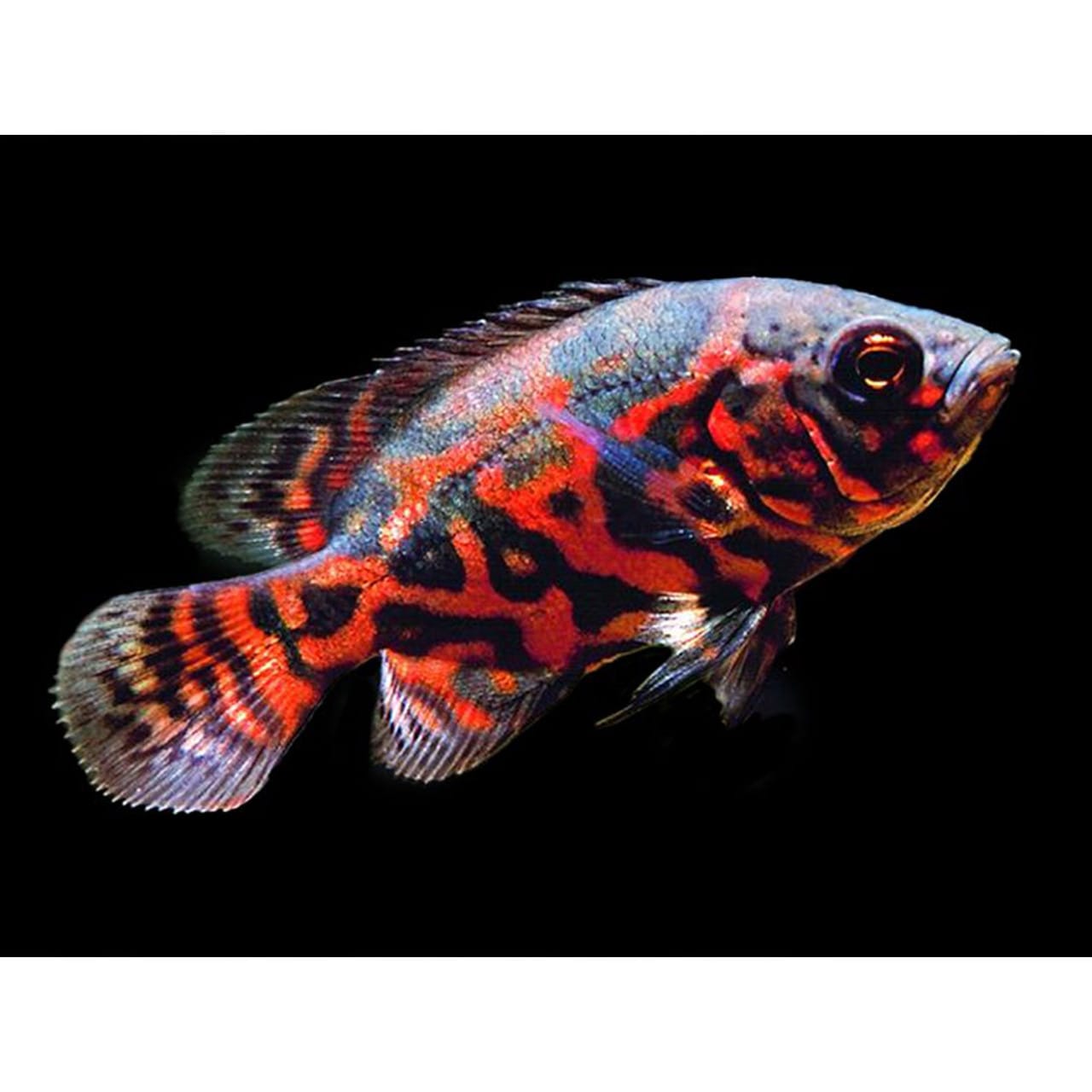
Oscars are one of the most popular cichlid fish in the aquarium hobby due to their intelligence, interactive behavior, and striking appearance. Native to South America, they typically grow to 12–16 inches in captivity and can live over a decade with proper care. Their coloration ranges from dark brown to orange or red patterns on their fins and body, often with eye-like spots near the tail.
Oscars are carnivorous, feeding on smaller fish, insects, and crustaceans in the wild. In aquariums, they thrive on high-protein diets, including pellets, live food, and occasional vegetables. These cichlids are territorial and may become aggressive if housed with smaller fish, so they are best kept with similar-sized or robust tank mates. Oscars are also known for recognizing their owners and displaying playful behaviors, such as following fingers along the tank glass. Their intelligence, adaptability, and vibrant colors make them a standout member of Types of Cichlid Fish.
2. Jack Dempsey (Rocio octofasciata)
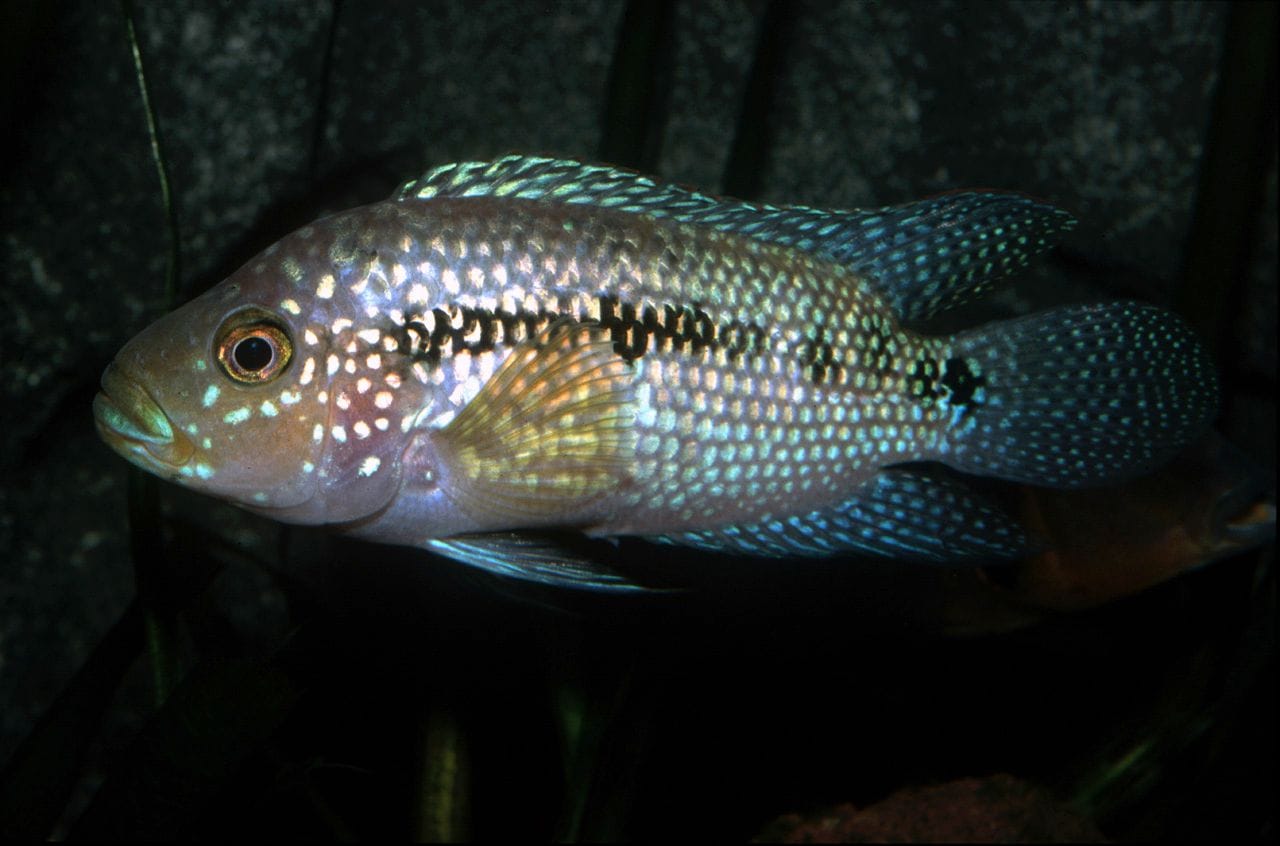
Named after the famous boxer for their fighting spirit, Jack Dempsey cichlids are native to freshwater rivers in Central America. They are medium-to-large cichlids, reaching up to 10–15 inches in length. Their body is covered in iridescent blue and green scales with darker vertical bands, creating a striking pattern.
Jack Dempseys are known for their territorial and aggressive behavior, especially during breeding. They are omnivorous, feeding on insects, crustaceans, small fish, and plant matter. In aquariums, they need large, well-decorated tanks with hiding spaces to reduce stress and aggression. They are attentive parents, guarding their eggs and fry diligently. Their vibrant coloration and bold personality make Jack Dempsey a favorite among enthusiasts, securing their position in Types of Cichlid Fish.
3. Convict Cichlid (Amatitlania nigrofasciata)
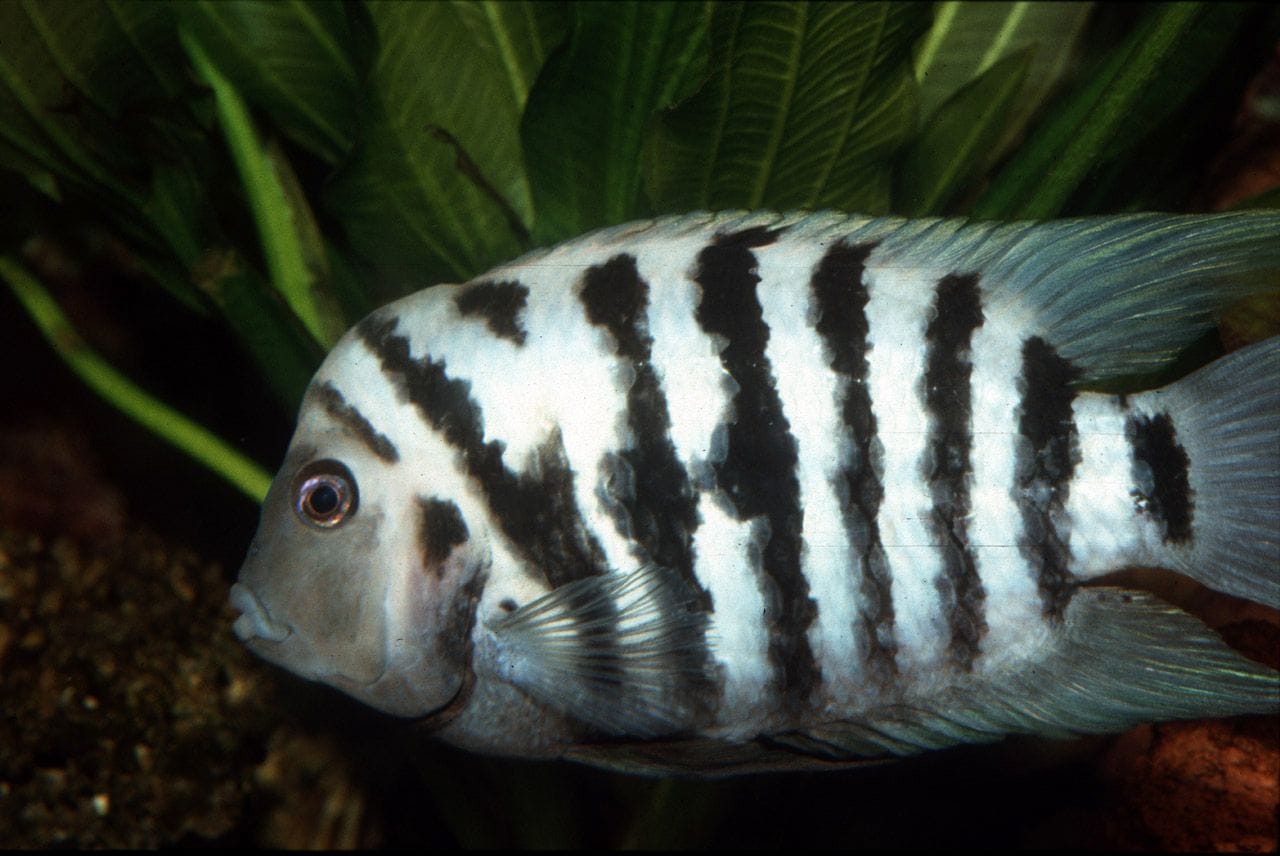
Convict Cichlids are small but feisty fish native to Central America. They reach about 4–6 inches in length and are easily recognized by their black vertical stripes on a gray or silver body. Despite their modest size, they exhibit strong territorial instincts and are excellent parents.
These cichlids are omnivorous, feeding on insects, small crustaceans, and plant matter. In aquariums, they are hardy and adapt well to a variety of conditions, making them ideal for beginner aquarists. Their breeding behavior is fascinating; pairs form monogamous bonds, guard their fry, and teach them survival skills. Convict Cichlids’ bold personality and ease of care make them an iconic and educational example in the study of Types of Cichlid Fish.
4. Peacock Cichlid (Aulonocara spp.)
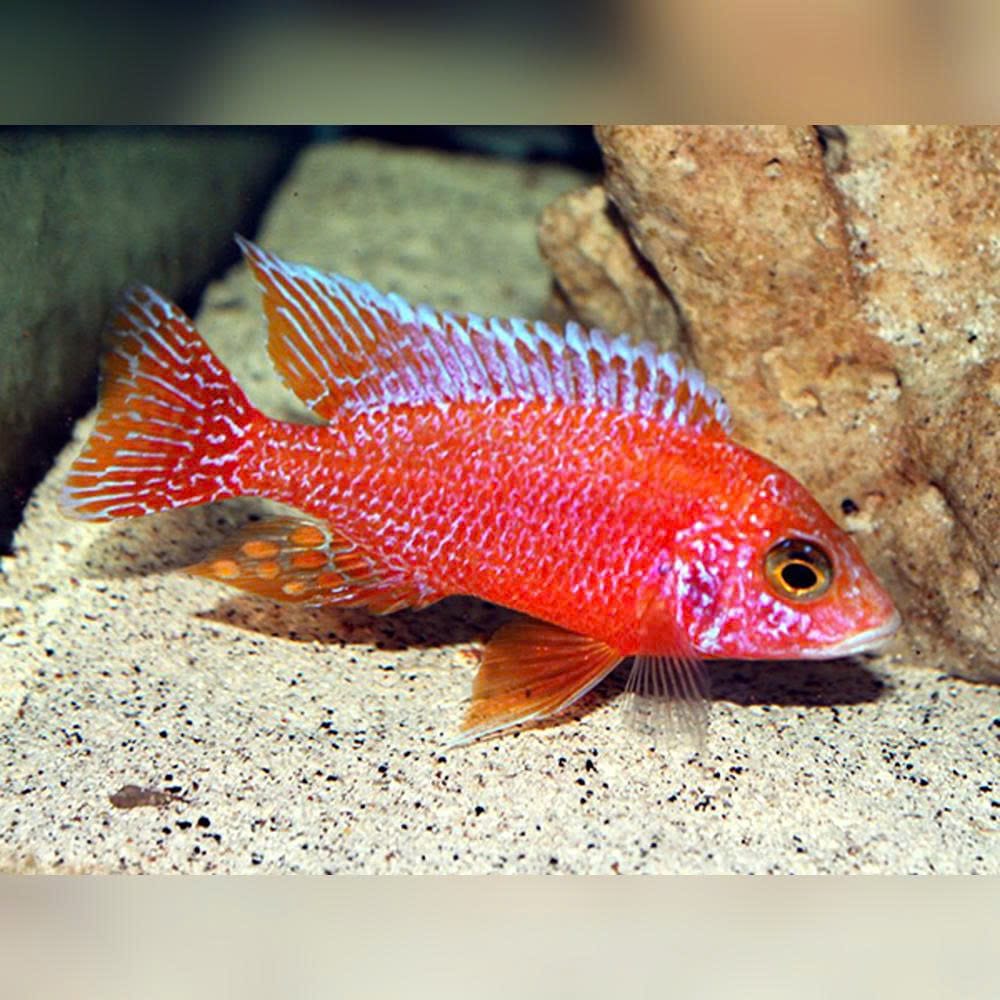
Peacock Cichlids are a group of colorful species endemic to Lake Malawi in Africa. Known for their dazzling hues of blue, yellow, red, and orange, these cichlids are highly prized in the aquarium hobby. They typically reach 4–6 inches in length and display elongated bodies with vibrant dorsal fins.
Peacock Cichlids are primarily insectivorous, feeding on small invertebrates found in sandy lake bottoms. In aquariums, they require stable water parameters, rocky shelters, and sandy substrates to mimic their natural habitat. Males are often more vividly colored than females, and during breeding, males establish territories and display courtship behaviors to attract females. Peacock Cichlids’ striking appearance, peaceful temperament compared to other African cichlids, and social behaviors make them a must-see in Types of Cichlid Fish.
5. Electric Blue Acara (Andinoacara pulcher)
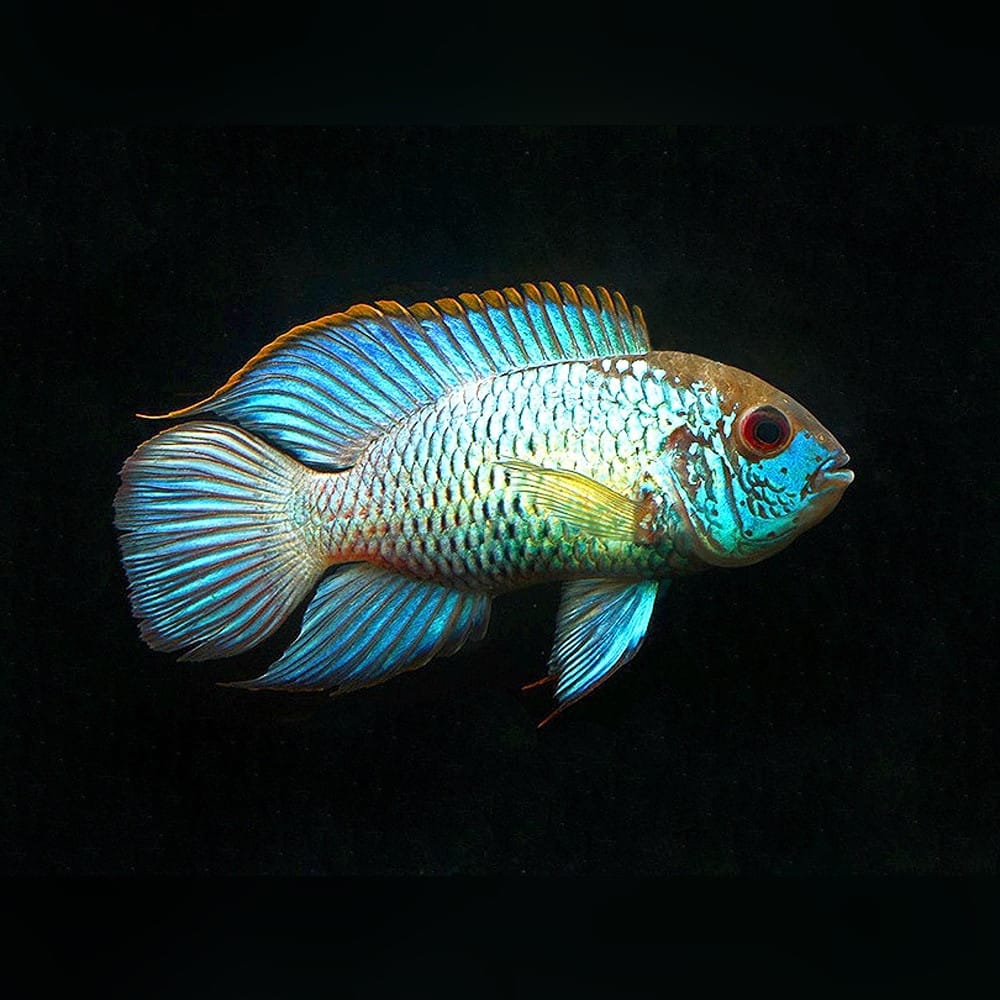
Electric Blue Acara is a South American cichlid celebrated for its metallic blue coloration and calm personality. They grow to about 6 inches and adapt well to community aquariums with compatible tank mates. Their shimmering scales and deep blue fins make them visually appealing and popular among hobbyists.
They are omnivorous, consuming insects, crustaceans, and plant-based foods. Electric Blue Acaras are moderately territorial but less aggressive than larger cichlids like Oscars or Jack Dempseys. Breeding pairs form monogamous bonds, guarding their eggs and fry diligently. Their combination of stunning color, manageable size, and peaceful temperament makes Electric Blue Acara an accessible and attractive member of Types of Cichlid Fish.
6. German Blue Ram (Mikrogeophagus ramirezi)
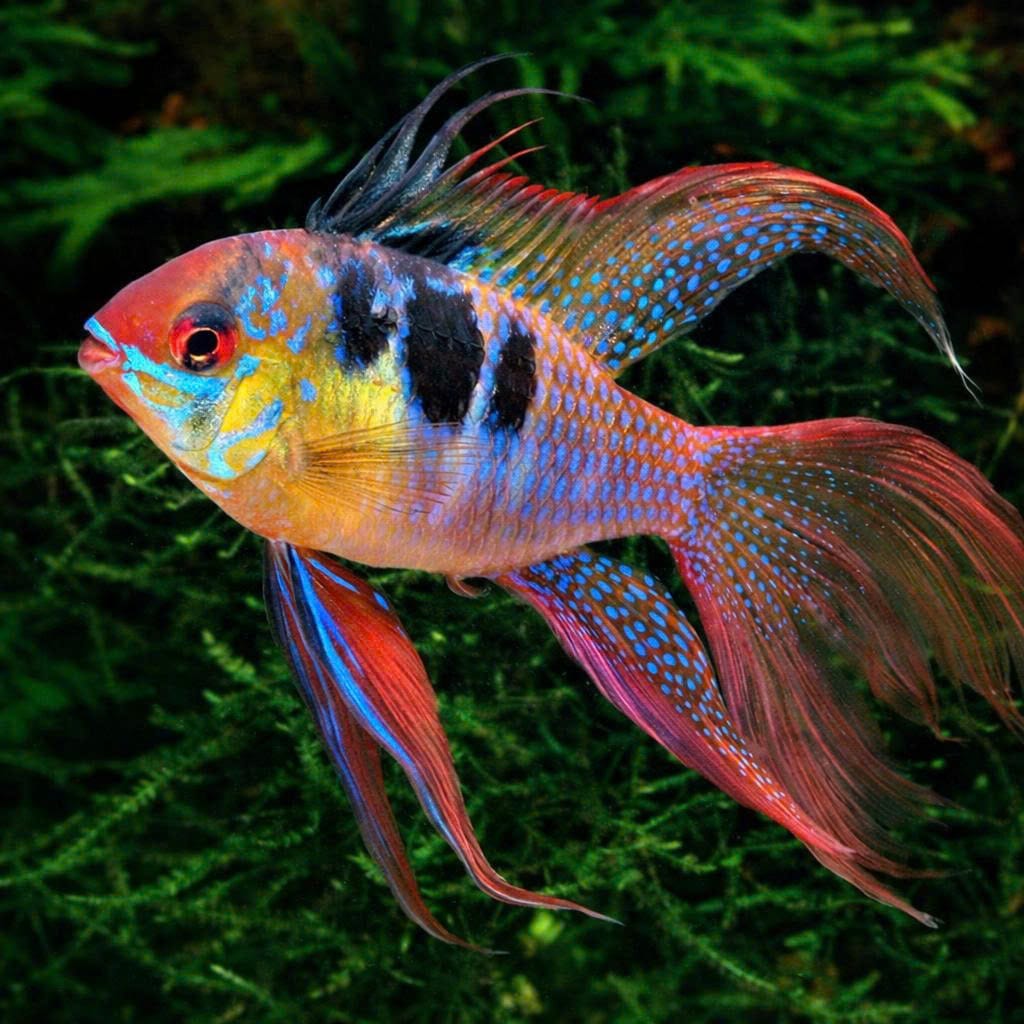
The German Blue Ram is a small, vibrantly colored cichlid from the Orinoco River basin in South America. Measuring just 2–3 inches in length, it’s renowned for its electric blue body, red eyes, and golden-yellow highlights. Despite its diminutive size, it exhibits the characteristic intelligence and social behavior of cichlids, making it a favorite among freshwater aquarists.
These cichlids are peaceful but territorial during breeding, often forming monogamous pairs that guard eggs and fry. Their diet in the wild includes microinvertebrates, insect larvae, and small crustaceans. In captivity, they thrive on high-quality flakes, pellets, and live or frozen foods. German Blue Rams are delicate, requiring stable water parameters and a well-planted tank to flourish. Their vibrant coloration, intricate behavior, and manageable size make them a standout example among Types of Cichlid Fish.
7. Bolivian Ram (Mikrogeophagus altispinosus)
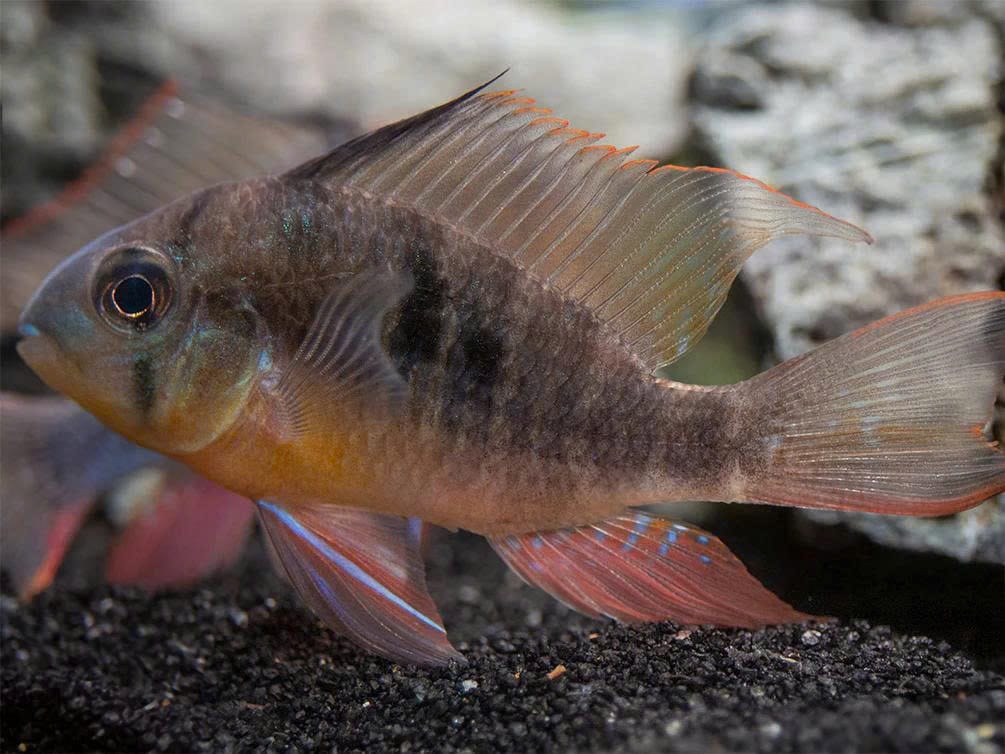
Bolivian Rams are slightly larger than German Blue Rams, reaching up to 3 inches, and are known for their soft coloration and adaptability. Native to the slow-moving rivers and streams of Bolivia, they display subtle shades of gold, blue, and red, with distinctive black markings along the lateral line.
Bolivian Rams are peaceful community fish and omnivorous, feeding on small invertebrates, worms, and plant matter. During breeding, they show parental care by cleaning a flat surface for eggs and fanning them to ensure proper oxygenation. Hardy and less sensitive than German Blue Rams, they are suitable for beginners seeking a beautiful, interactive cichlid. Their elegance, adaptability, and caring behavior make Bolivian Rams a key member of Types of Cichlid Fish.
8. Kribensis (Pelvicachromis pulcher)
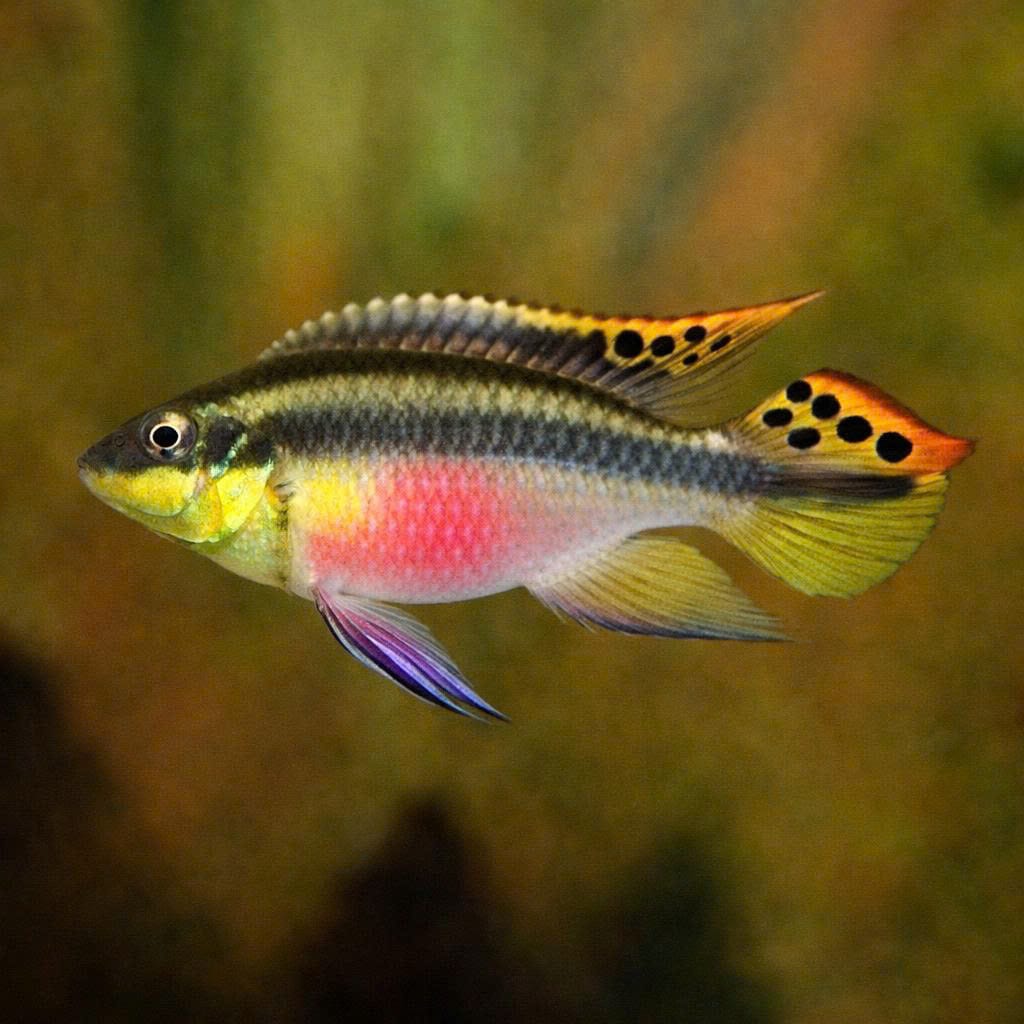
Kribensis, also called Kribs, are small African cichlids from Nigeria and Cameroon. They reach about 3–4 inches and exhibit beautiful hues of yellow, red, and purple, especially on the belly of females. Kribs are known for their fascinating reproductive behavior, including complex courtship displays and attentive parental care.
They are omnivorous, eating insects, crustaceans, and plant matter in the wild. In aquariums, they thrive on a mix of flakes, pellets, and frozen foods. Pairs form strong bonds, with both parents guarding eggs and fry. Their small size, vibrant colors, and engaging behavior make Kribensis an ideal cichlid for beginners and experienced hobbyists alike, placing them prominently in Types of Cichlid Fish.
9. Blue Discus (Symphysodon aequifasciatus)
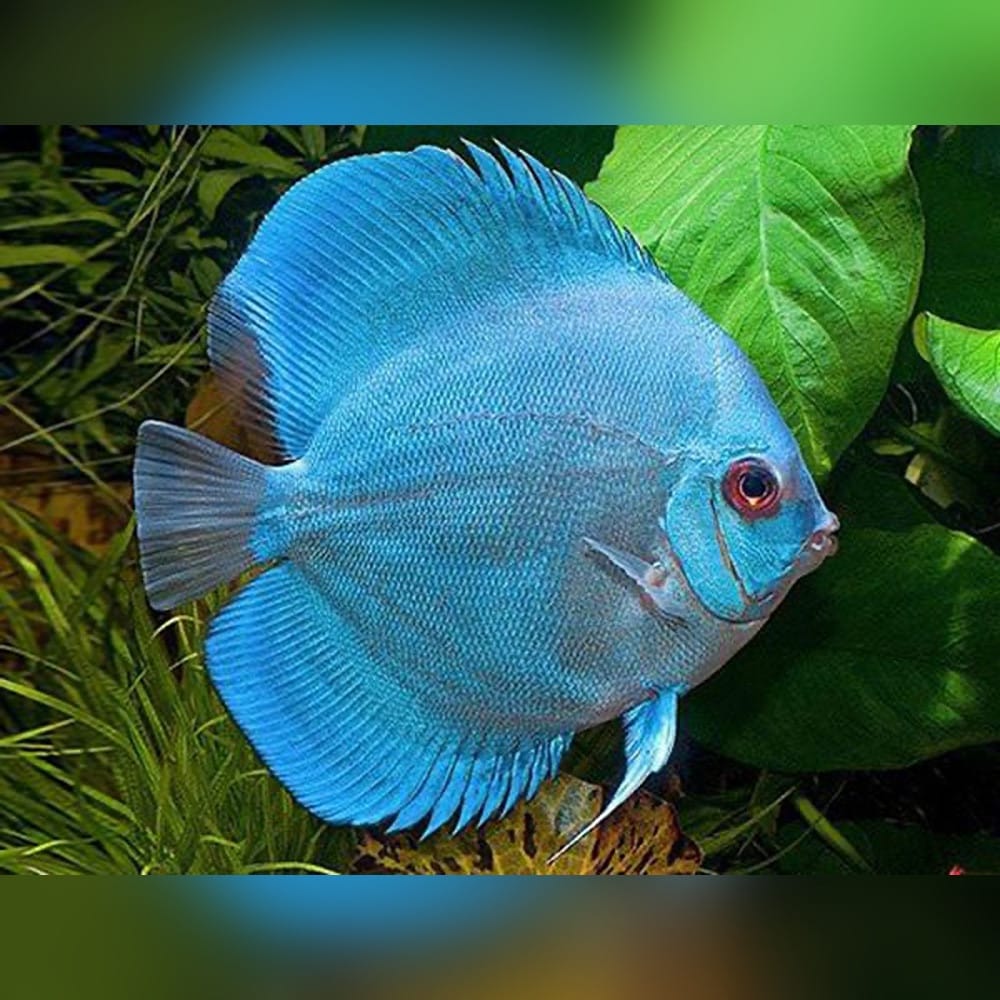
Blue Discus is one of the most iconic South American cichlids, hailing from the Amazon River Basin. These fish are known for their disc-shaped bodies, striking electric blue coloration, and graceful movements. Adults can reach 6–8 inches and require pristine water conditions to thrive.
Blue Discus are omnivorous, consuming small invertebrates, larvae, and plant matter. They are sensitive, preferring peaceful tank mates and stable water parameters. Discus are slow breeders, with parents carefully tending to eggs and fry. Their vibrant appearance, calm demeanor, and social behavior make them highly sought after in aquaculture. They exemplify the beauty and sophistication of Types of Cichlid Fish.
10. Blue Frontosa (Cyphotilapia frontosa)
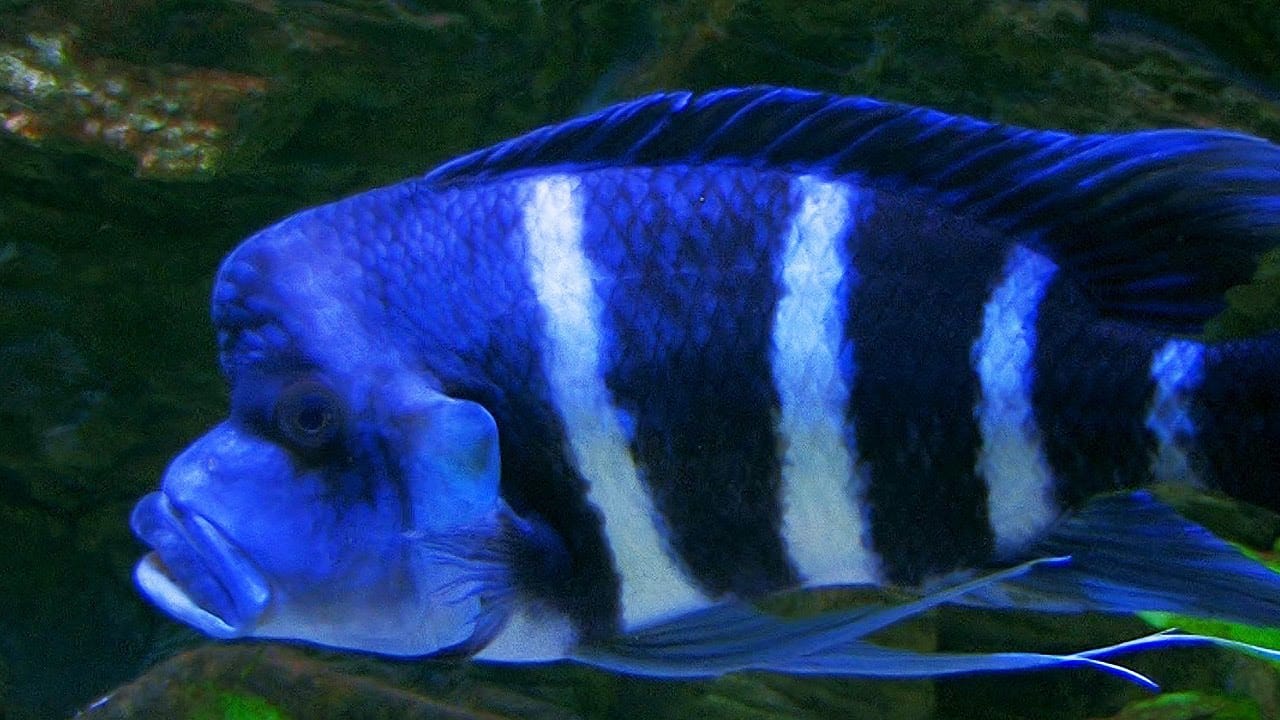
Blue Frontosa is a large, elegant African cichlid native to Lake Tanganyika. Adults can grow up to 12–14 inches and are distinguished by their blue body, vertical black stripes, and prominent forehead hump. Known for their slow movements and calm temperament, Frontosas are a favorite among large aquarium enthusiasts.
They are carnivorous, feeding on small fish and invertebrates in the wild. In captivity, a protein-rich diet of pellets, frozen, and live foods is recommended. Frontosas are social, often forming hierarchical groups, and require spacious tanks with rocky shelters to mimic their natural habitat. Their imposing size, serene behavior, and striking patterns make Blue Frontosas a cornerstone species within Types of Cichlid Fish.
11. Blue Mbuna (Electric Blue Johannii) (Melanochromis johannii)
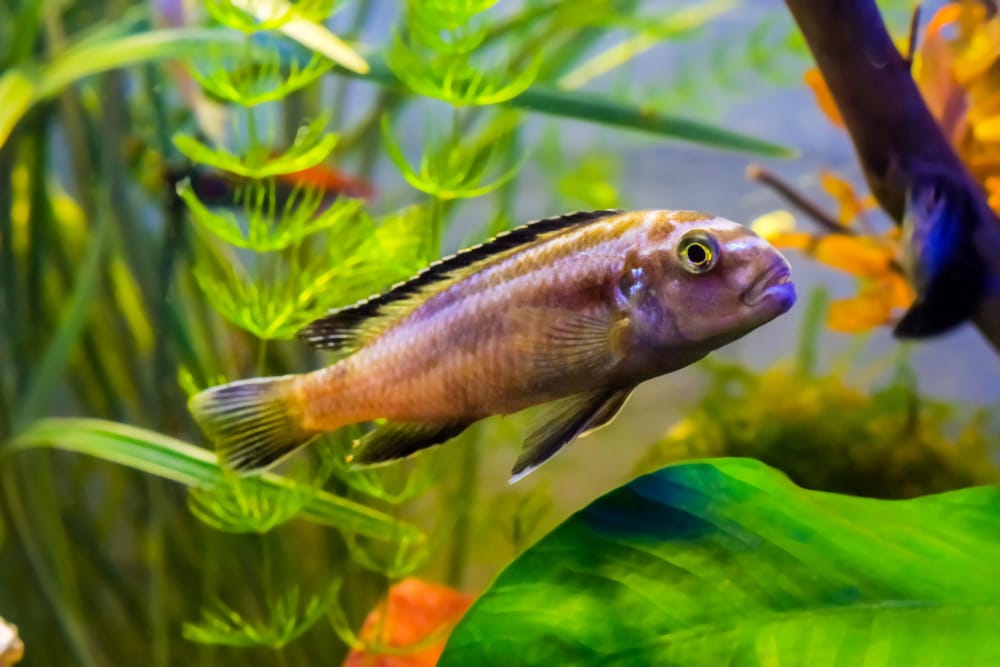
The Electric Blue Johannii is a striking Mbuna cichlid from Lake Malawi, Africa, celebrated for its vibrant electric blue coloration. Males are particularly brilliant, displaying deep blue with dark vertical stripes, while females are usually less colorful but share similar patterns. They grow to about 4–5 inches and are known for their active and territorial behavior, making them a favorite for dedicated Malawi cichlid enthusiasts.
Electric Blue Johannii are omnivorous, feeding on algae, small invertebrates, and plant matter in the wild. In aquariums, their diet should include high-quality cichlid pellets, spirulina, and occasional protein-rich treats. Due to their territorial nature, they require plenty of rock formations and hiding spaces. Breeding pairs form strong bonds, and males aggressively defend their territory to attract females. Their dazzling color, bold personality, and social dynamics make Blue Mbuna a standout in Types of Cichlid Fish.
12. Blue Mbuna (Fuelleborn’s Cichlid) (Melanochromis cyaneorhabdos)
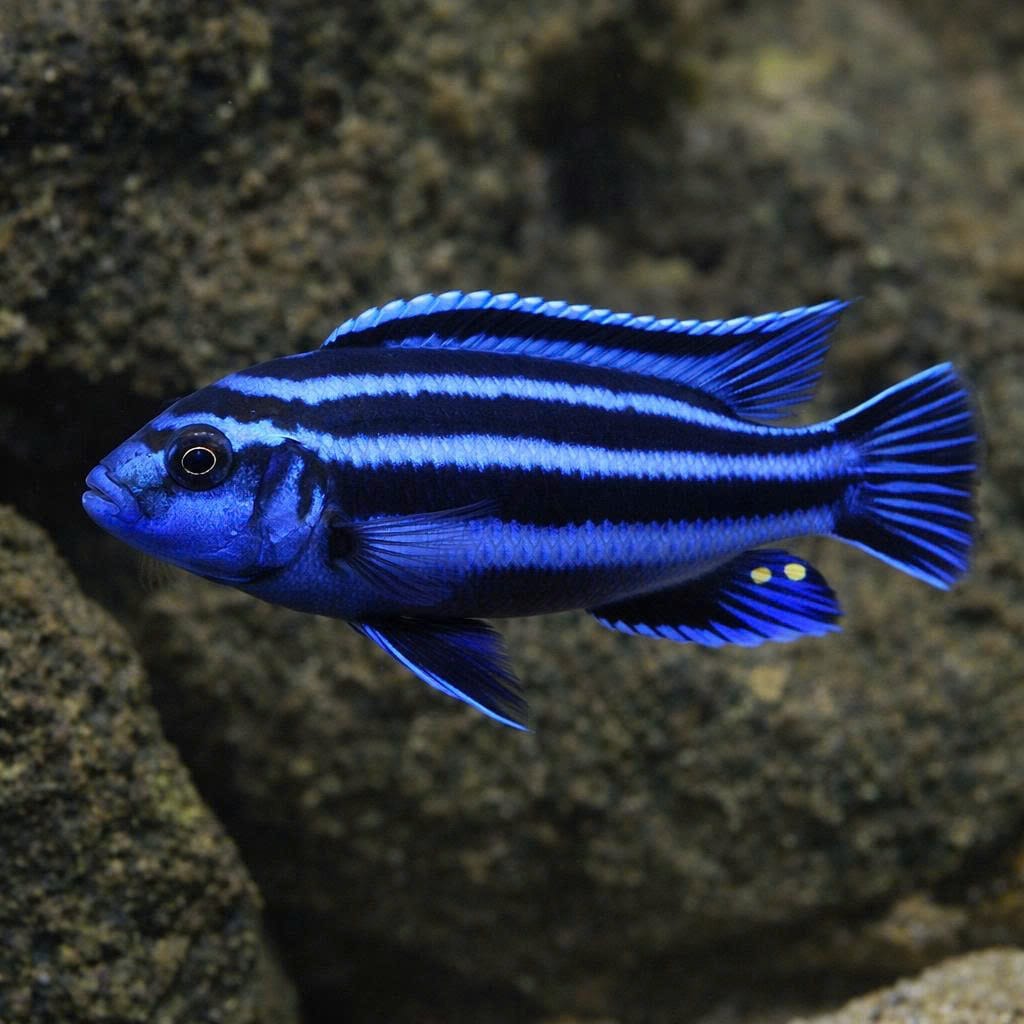
Fuelleborn’s Cichlid is another stunning Mbuna species from Lake Malawi, characterized by its deep blue body with prominent horizontal stripes. They reach approximately 4–5 inches in length and are known for their dynamic and sometimes aggressive behavior, typical of many Mbuna cichlids.
These fish are primarily herbivorous, grazing on algae and biofilm, though they will accept high-quality cichlid foods in captivity. A tank with rocky caves and ample hiding spots is essential to reduce territorial disputes. Breeding pairs are attentive, with females mouthbrooding eggs for protection. Fuelleborn’s Cichlid is highly sought after for its vivid coloration and interactive behavior, making it an essential species in any discussion of Types of Cichlid Fish.
13. Blue Zebra (Maylandia callainos)
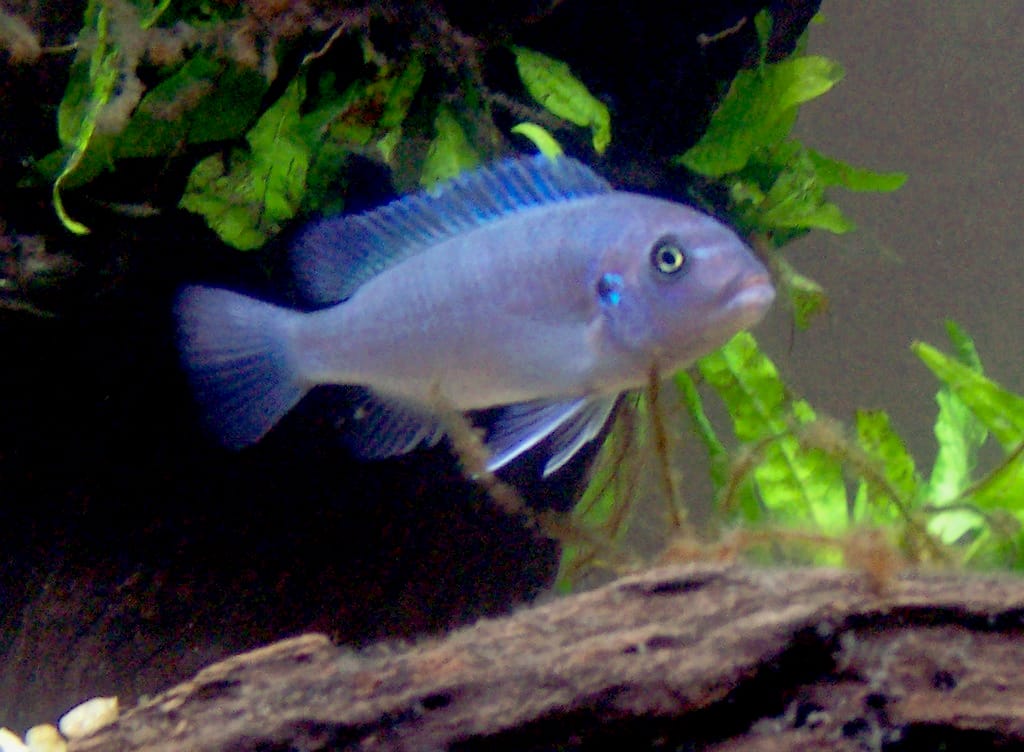
Blue Zebra, native to Lake Malawi, is a medium-sized Mbuna cichlid, growing up to 4 inches. Males are bright electric blue, while females are typically lighter blue or grayish. Known for their territoriality, these cichlids are lively and display fascinating behaviors, often engaging in rock hopping and chasing rivals.
Blue Zebra cichlids feed mainly on algae and small invertebrates. In aquariums, a combination of spirulina-based foods and occasional protein supplements works best. Their social structure is hierarchical, with dominant males establishing territories and competing for females. These cichlids are hardy and relatively easy to maintain, making them popular for both beginner and experienced hobbyists. Their vibrant coloration, adaptability, and dynamic personality make Blue Zebra a key member of Types of Cichlid Fish.
14. Bumblebee Cichlid (Pseudotropheus crabro)
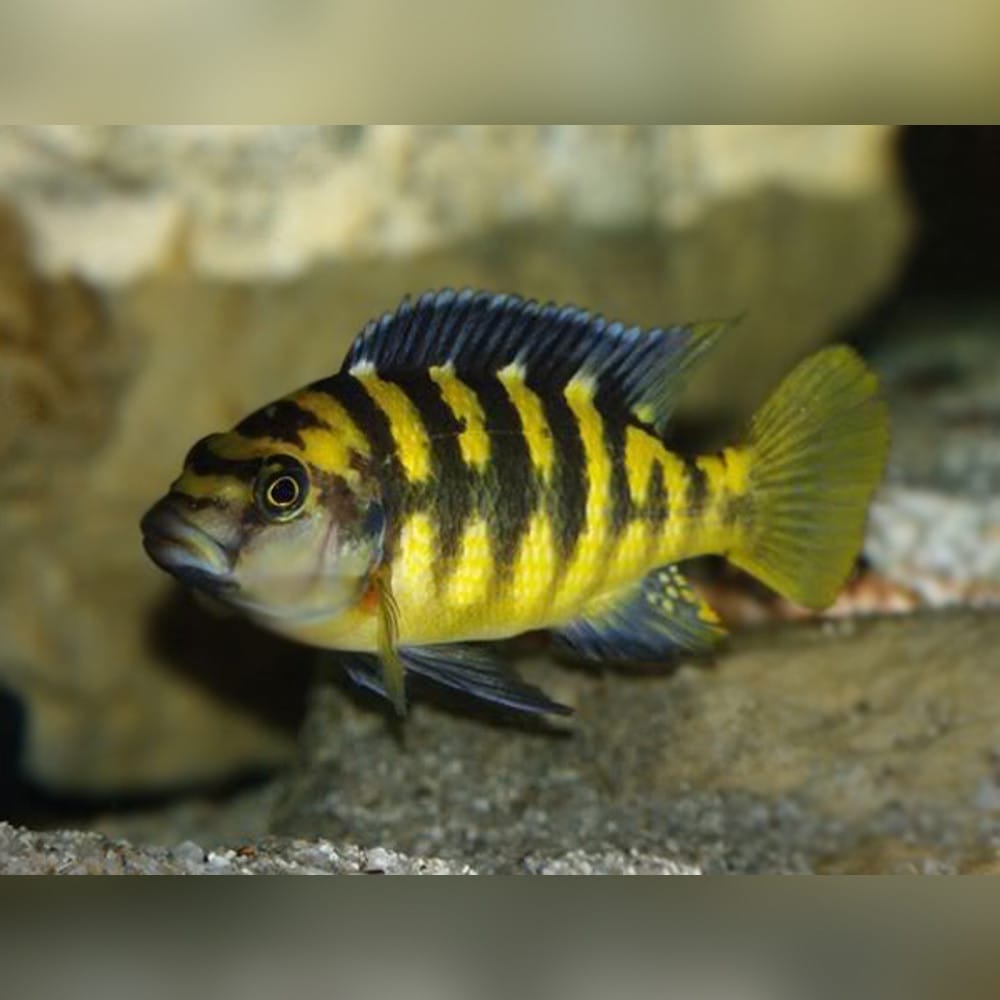
The Bumblebee Cichlid, another Lake Malawi Mbuna, is recognized for its striking yellow and black striped pattern, resembling a bumblebee. They grow up to 4 inches and are famous for their aggressive, territorial nature, especially among males. Despite their small size, they exhibit complex social behaviors and are fascinating to observe in aquariums.
These cichlids are primarily herbivores, grazing on algae and plant matter, but they will also accept high-quality cichlid pellets. Aquariums should be equipped with rocky caves and hiding spots to manage aggression. Breeding involves the female mouthbrooding eggs for protection, a common trait in African cichlids. The Bumblebee Cichlid’s bold colors, energetic behavior, and interesting breeding habits make it a standout in the diverse world of Types of Cichlid Fish.
15. Butterfly Cichlid (Anomalochromis thomasi)
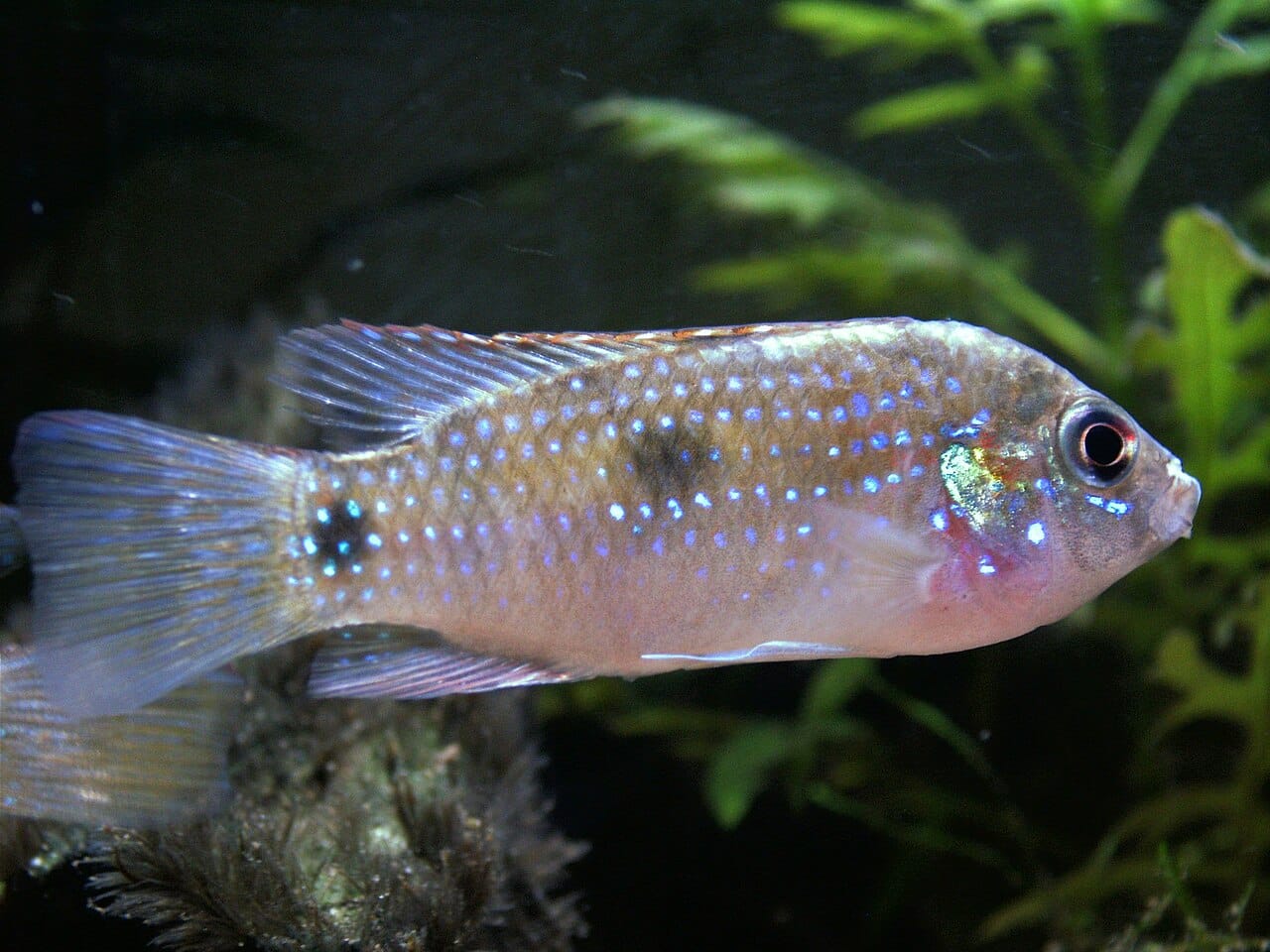
The Butterfly Cichlid is a small, peaceful cichlid native to West African rivers. Males display a delicate pattern of black stripes on a silver or golden body, while females are slightly duller. They grow to about 3 inches and are known for their gentle temperament, making them ideal for community tanks.
Butterfly Cichlids are omnivorous, feeding on insects, small crustaceans, and plant material. They thrive in aquariums with calm waters, soft substrates, and plenty of hiding spots. Breeding pairs are attentive, with the female guarding the eggs while the male protects the territory. Their serene demeanor, striking patterns, and ease of care make the Butterfly Cichlid a beautiful and educational example of Types of Cichlid Fish.
16. Chocolate Cichlid (Hypselecara temporalis)
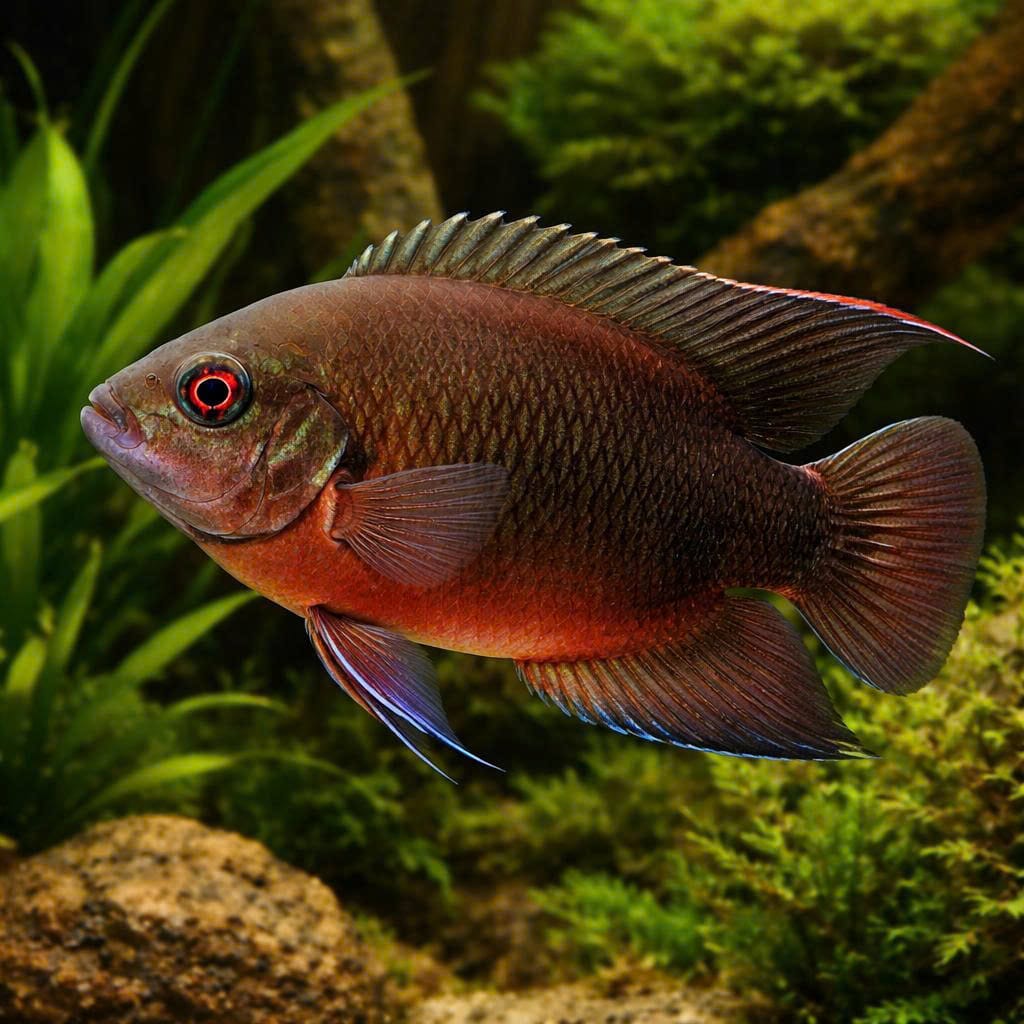
The Chocolate Cichlid is a medium-sized South American cichlid known for its warm brown coloration and subtle iridescence. Native to slow-moving rivers and flooded forest areas in the Amazon, these cichlids reach around 6–8 inches in captivity. Despite their muted colors compared to other cichlids, they are admired for their calm demeanor and graceful swimming patterns.
Chocolate Cichlids are omnivorous, feeding on small invertebrates, plant matter, and detritus. In aquariums, they adapt well to a variety of foods, including high-quality pellets, live insects, and vegetables. They are moderately territorial but generally peaceful, making them suitable for community tanks with other non-aggressive species. Chocolate Cichlids are attentive parents, guarding eggs and fry carefully. Their elegant movements and peaceful behavior make them an accessible and engaging member of Types of Cichlid Fish.
17. Cockatoo Cichlid (Acarichthys heckelii)
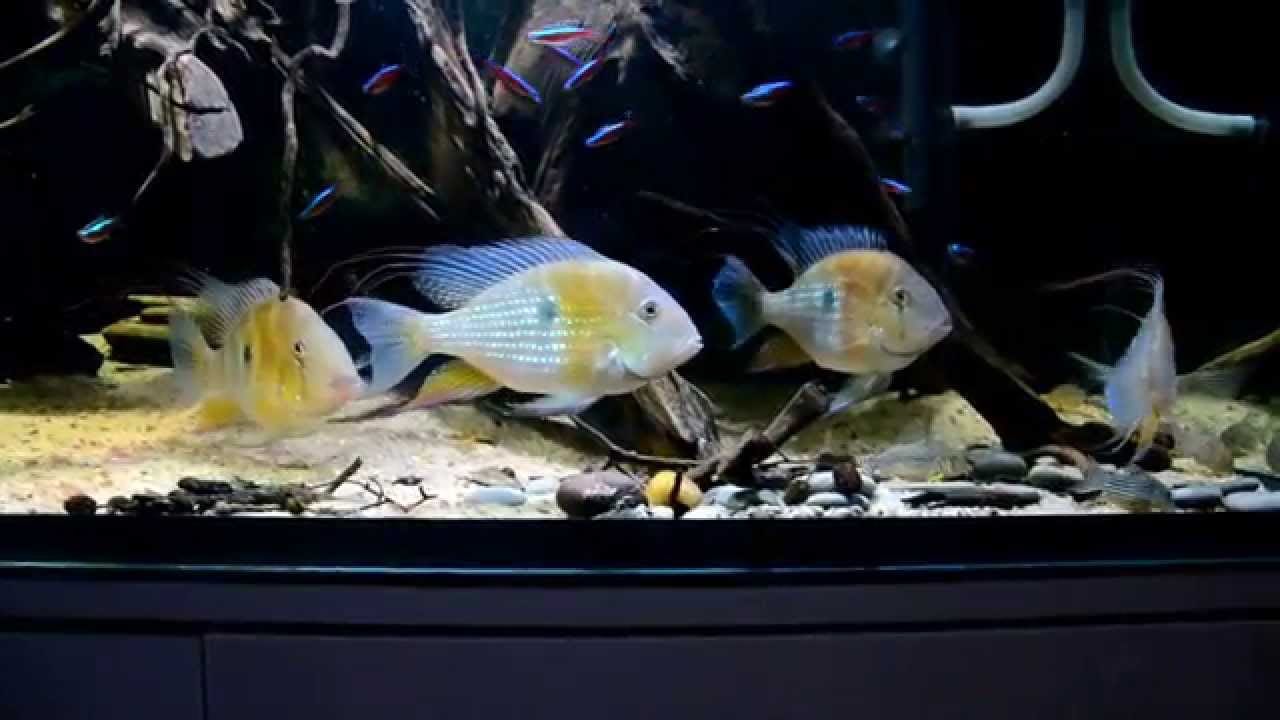
Cockatoo Cichlids are South American cichlids named for their prominent dorsal fin that resembles a cockatoo’s crest. They grow up to 10 inches and display a creamy body with red and orange highlights on their fins, creating a striking appearance. These fish are known for their playful and social behavior in aquariums.
They are omnivorous, consuming insects, small crustaceans, and plant material. Cockatoo Cichlids thrive in spacious tanks with soft substrates and rocky hiding spots to explore. Breeding pairs exhibit strong parental care, with both male and female guarding eggs and fry attentively. Their unique fin shape, interactive nature, and vibrant coloration make Cockatoo Cichlids a captivating member of Types of Cichlid Fish.
18. Common Angelfish (Pterophyllum scalare)
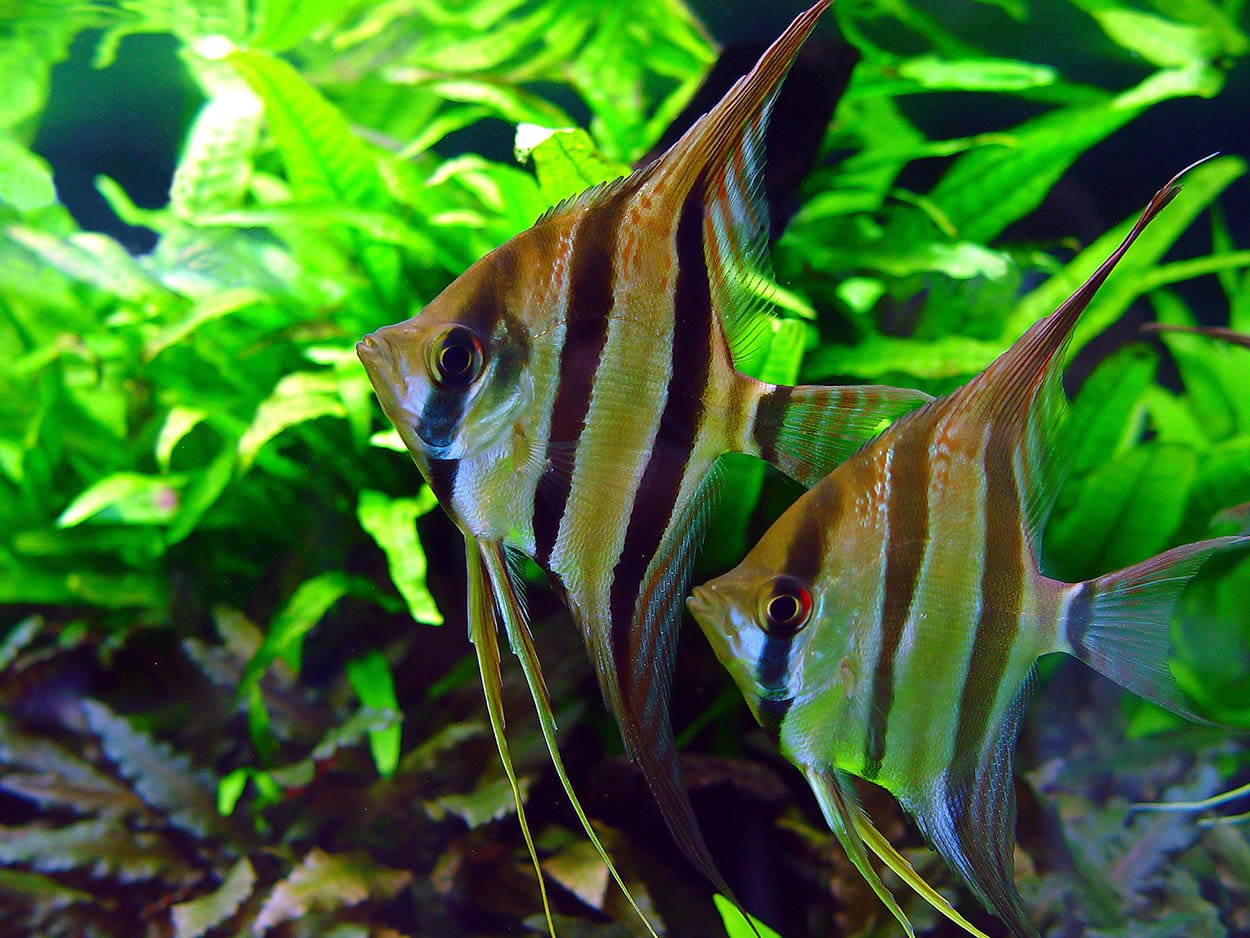
The Common Angelfish is one of the most recognizable cichlids, native to the Amazon Basin. With its triangular body, elongated fins, and elegant swimming style, it can reach up to 6 inches in length. Its coloration ranges from silver with black stripes to variations with marble and gold patterns.
Angelfish are omnivorous, feeding on small invertebrates, insect larvae, and plant material. In aquariums, they do well in planted tanks with vertical structures and calm water. They form monogamous pairs and are attentive parents, guarding and fanning their eggs diligently. Their graceful movements, variety of patterns, and accessible care make Common Angelfish a cornerstone of Types of Cichlid Fish for both beginners and enthusiasts.
19. Cuban Cichlid (Parachromis dovii)
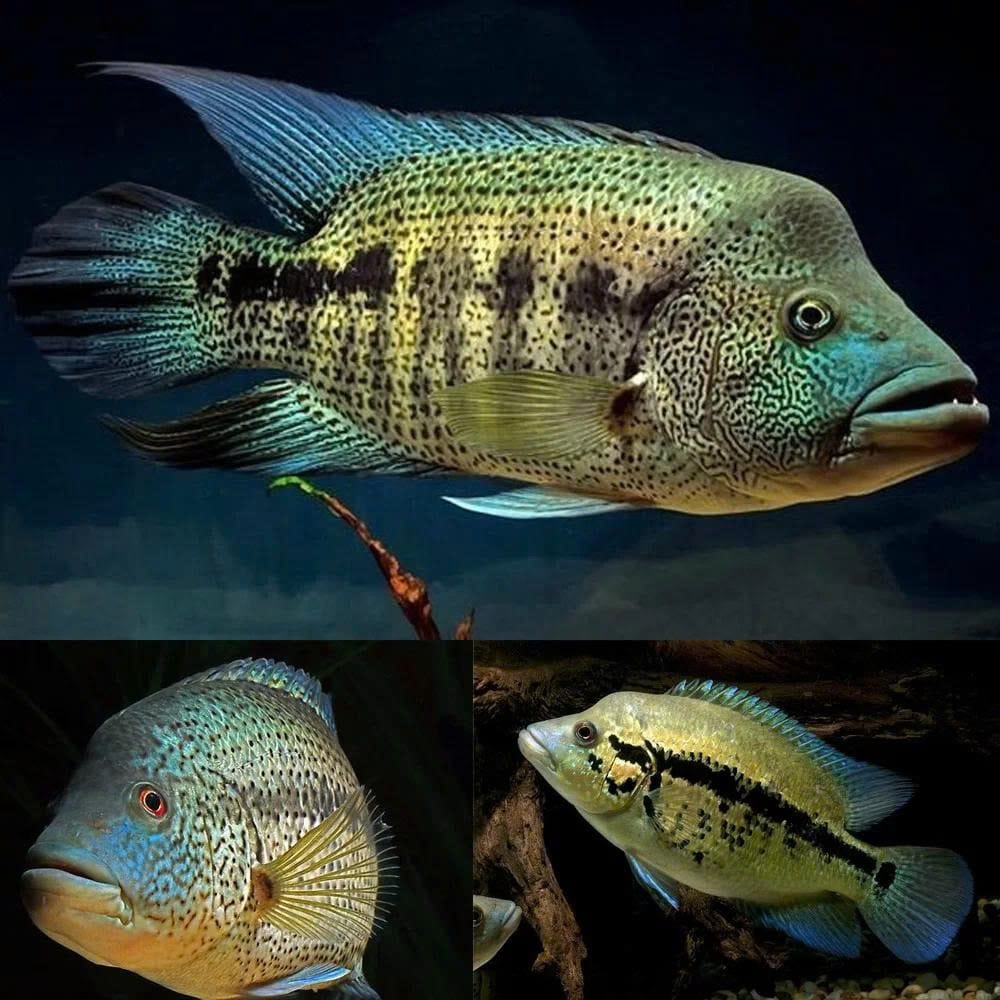
Cuban Cichlids, also called Guapote or Wolf Cichlids, are large, predatory fish from Central America. They can grow up to 18 inches in captivity and are known for their aggressive and territorial behavior. Their coloration includes greenish-gold bodies with red eyes and dark blotches, creating a formidable appearance.
These cichlids are carnivorous, feeding on smaller fish, insects, and crustaceans. In aquariums, they require very large tanks with strong filtration and ample swimming space. Breeding pairs are extremely protective, guarding their territory and fry aggressively. Their size, predatory behavior, and bold personality make Cuban Cichlids one of the more challenging yet fascinating species in Types of Cichlid Fish.
20. Demasoni (Pseudotropheus demasoni)
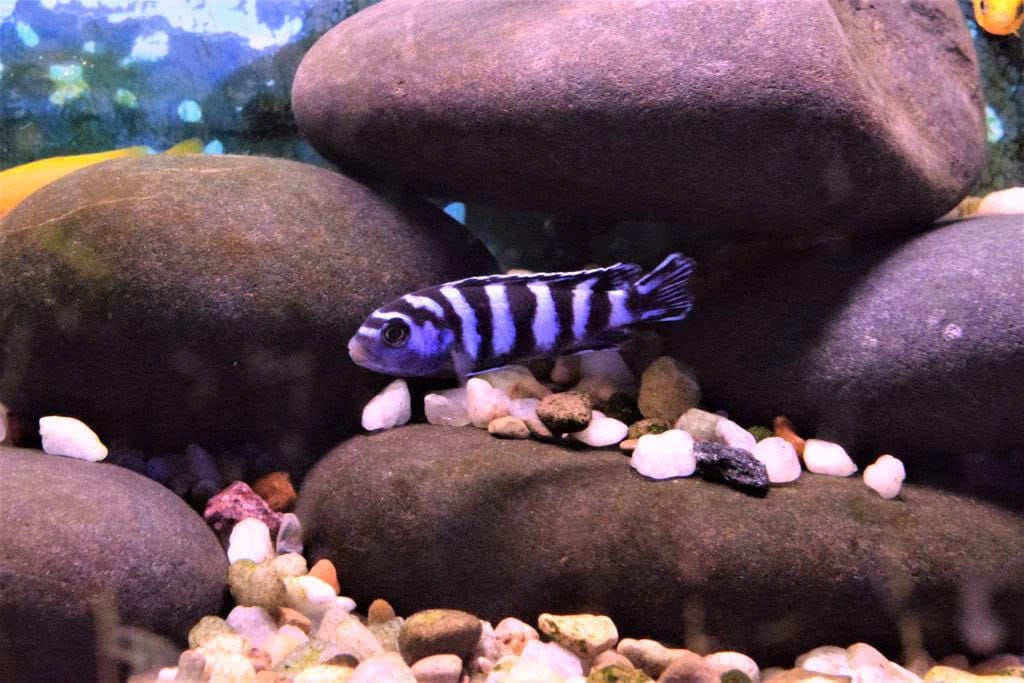
Demasoni Cichlids are small but striking African cichlids from Lake Malawi. They reach only about 3 inches but are renowned for their vivid blue and black horizontal stripes and energetic behavior. These fish are extremely territorial, making them a challenging species for aquariums.
Demasoni Cichlids are primarily herbivorous, grazing on algae and plant matter in their natural habitat. In captivity, they thrive on high-quality cichlid pellets and vegetable-based foods. Due to their aggression, they require plenty of rock formations and a species-specific tank or large groups to diffuse territorial disputes. Their brilliant coloration, high energy, and social complexity make Demasoni a standout example in Types of Cichlid Fish.
21. Firemouth Cichlid (Thorichthys meeki)
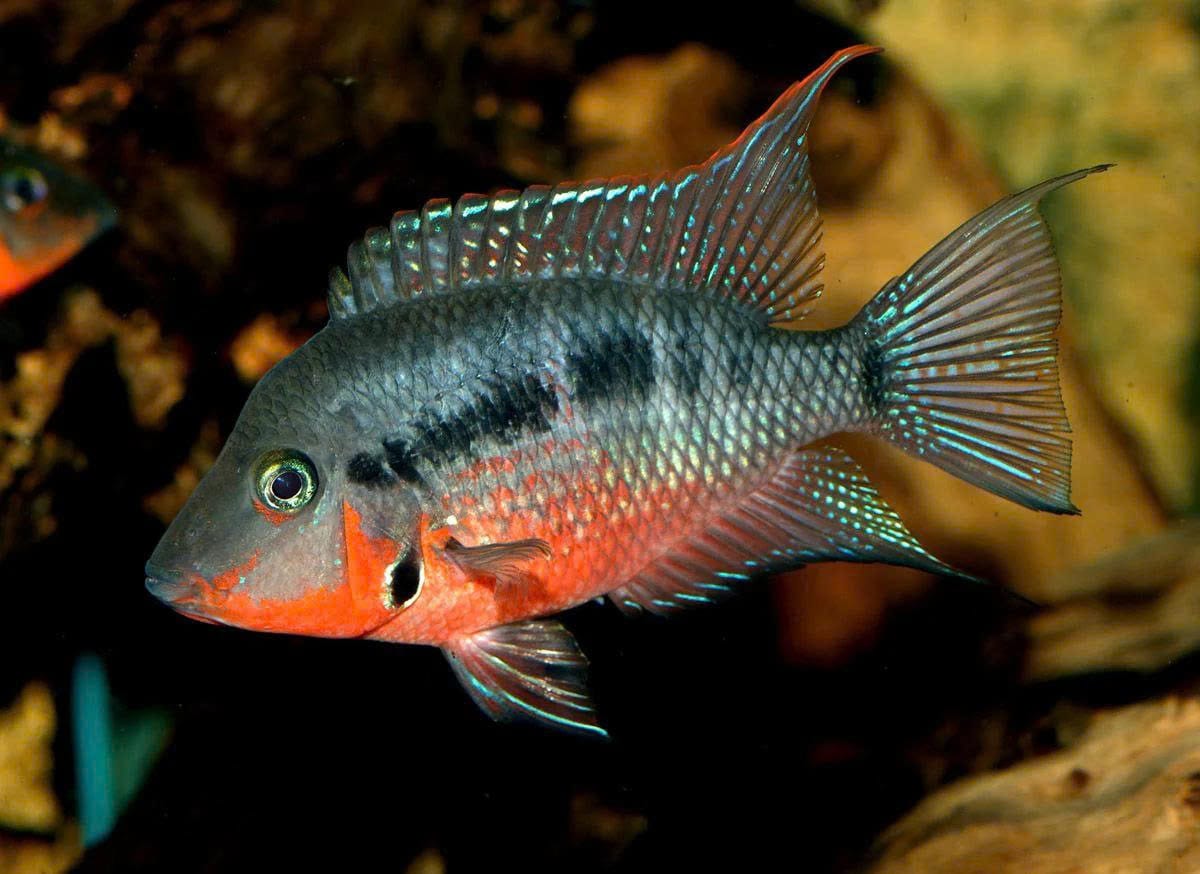
The Firemouth Cichlid is a Central American species notable for its bright red throat and chest, which becomes even more vibrant during displays of aggression or courtship. Adults reach approximately 6 inches and have a silver to olive body with contrasting blue-green scales along the sides. These fish are moderately aggressive but can thrive in community tanks with careful selection of tank mates.
Firemouths are omnivorous, feeding on insects, small crustaceans, and plant matter. They require sandy substrates and hiding spots to establish territories, particularly during breeding when males flare their vibrant red throat to attract females. Both parents guard the eggs and fry diligently, exhibiting classic cichlid care behaviors. Their striking coloration, interesting social behavior, and adaptability make them a prominent member of Types of Cichlid Fish.
22. Flowerhorn (Hybrid: Flowerhorn Cichlid)
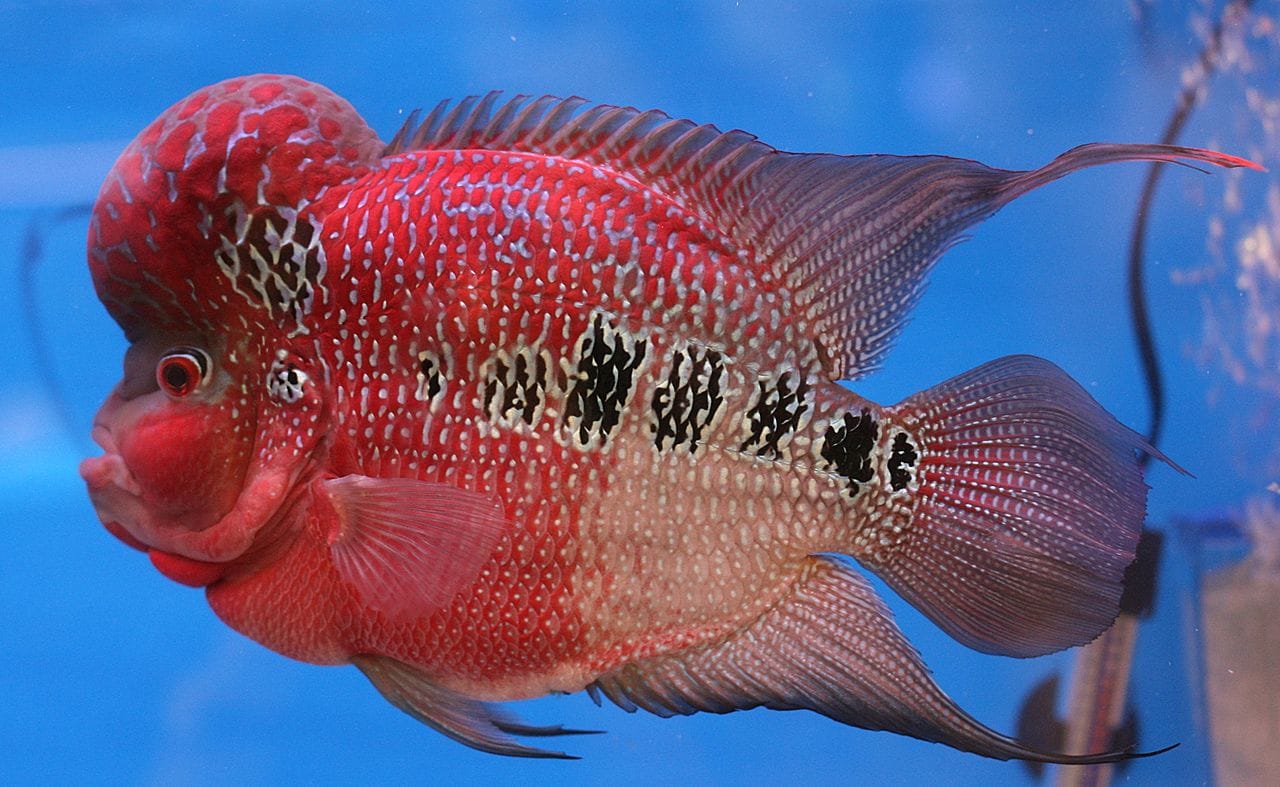
Flowerhorn cichlids are man-made hybrids developed in Asia, prized for their large head humps (nuchal humps) and vivid colors ranging from red, pink, orange, to metallic blue. They can reach 12–16 inches and are highly interactive and intelligent, recognizing owners and responding to feeding routines.
These cichlids are omnivorous but thrive on high-protein diets including pellets, live foods, and occasional vegetables. Flowerhorns are territorial and aggressive, so they are best kept in species-only tanks. Breeding is possible in captivity, although careful pairing is required. Their bold colors, dynamic behavior, and striking morphology make Flowerhorns a showpiece in Types of Cichlid Fish collections.
23. Green Terror (Aequidens rivulatus)
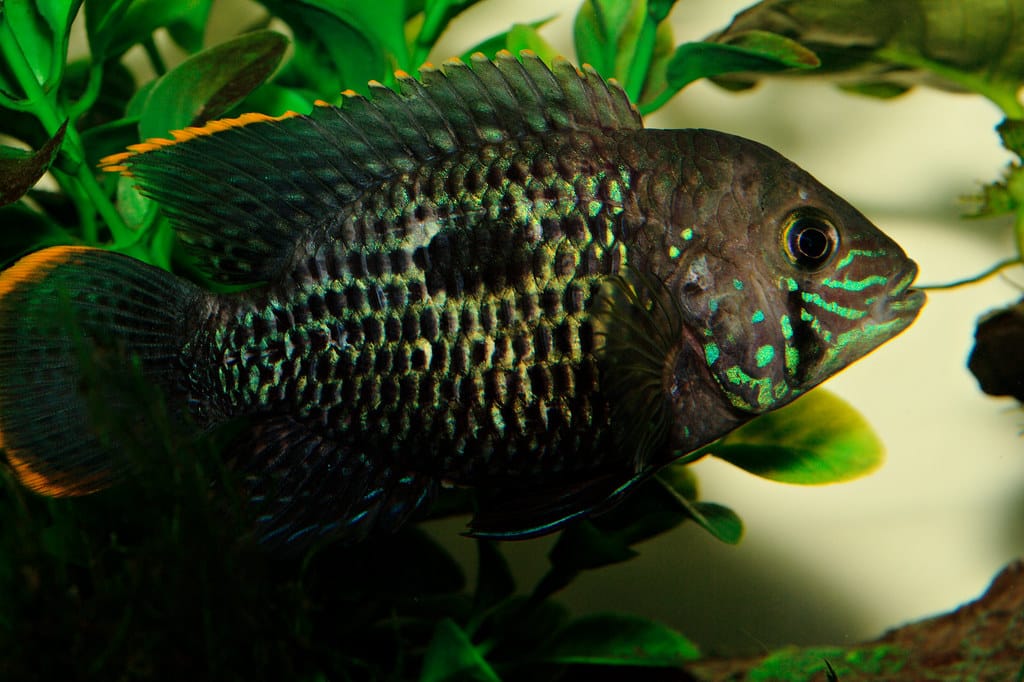
Green Terror is a South American cichlid recognized for its vivid green-blue scales, elongated fins with red highlights, and aggressive temperament. They grow to around 10–12 inches and are known for their territorial behavior, making them best suited for large tanks with robust companions.
Green Terrors are carnivorous, feeding on small fish, insects, and crustaceans in the wild. In aquariums, they require a varied diet of high-protein pellets, live foods, and occasional vegetables. Breeding pairs are highly protective of eggs and fry, showcasing classic cichlid parental care. Their stunning coloration, dynamic presence, and social interactions make Green Terror cichlids a standout in Types of Cichlid Fish.
24. Heckel Discus (Symphysodon discus heckelii)
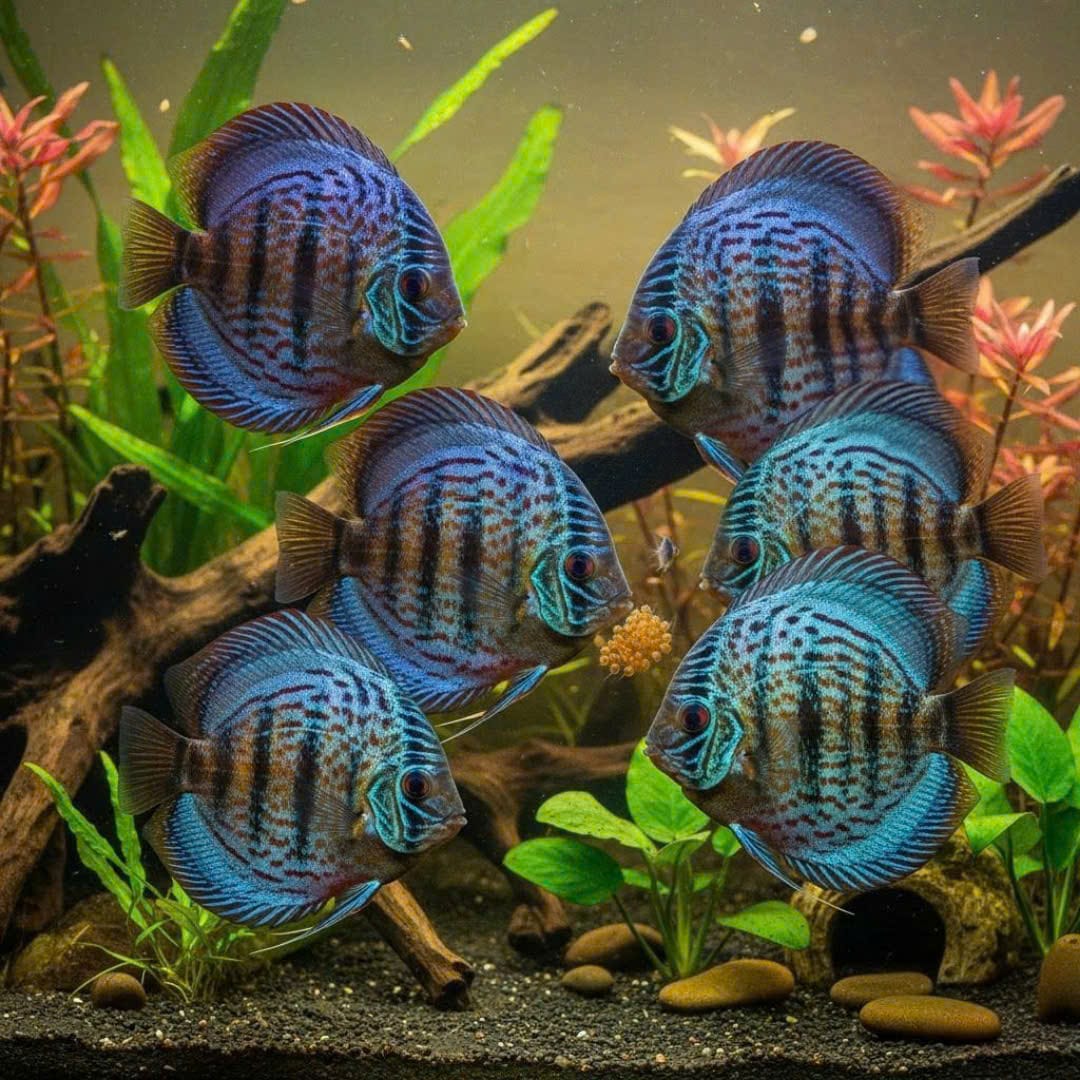
Heckel Discus is a South American cichlid native to the Rio Negro and its tributaries. They are admired for their deep body shape, elegant swimming style, and intricate coloration patterns with red, blue, and green stripes. Adults grow to about 6–8 inches and are sensitive to water quality, requiring stable and pristine conditions.
They are omnivorous, feeding on insect larvae, crustaceans, and plant matter. Discus cichlids are social, preferring groups of six or more, and form monogamous pairs during breeding. Parents meticulously guard eggs and fry. Their combination of beauty, grace, and complex social behavior makes Heckel Discus a premium example in Types of Cichlid Fish.
25. Jaguar Cichlid (Parachromis managuensis)
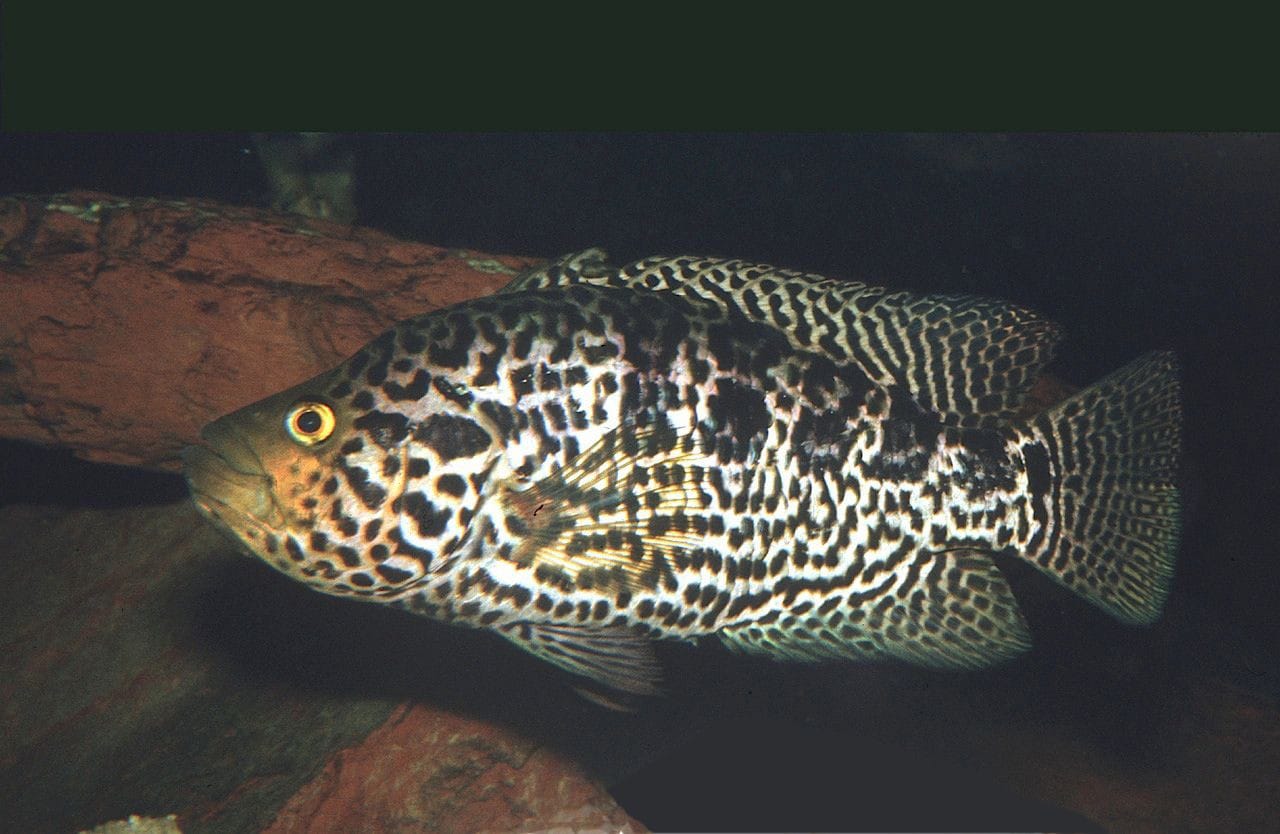
The Jaguar Cichlid is a large predatory fish from Central America, reaching 12–18 inches in captivity. It has a golden-yellow body adorned with black spots, reminiscent of a jaguar, giving it its name. Known for its aggressive and territorial behavior, this cichlid commands attention in any aquarium.
Jaguar Cichlids are carnivorous, feeding on smaller fish, crustaceans, and insects. They require very large tanks with robust filtration and hiding spaces. Breeding pairs are extremely protective of eggs and fry, exhibiting intense parental care. Their imposing size, predatory behavior, and striking pattern make Jaguar Cichlids one of the most formidable and captivating species in Types of Cichlid Fish.
26. Jewelfish (Hemichromis bimaculatus)
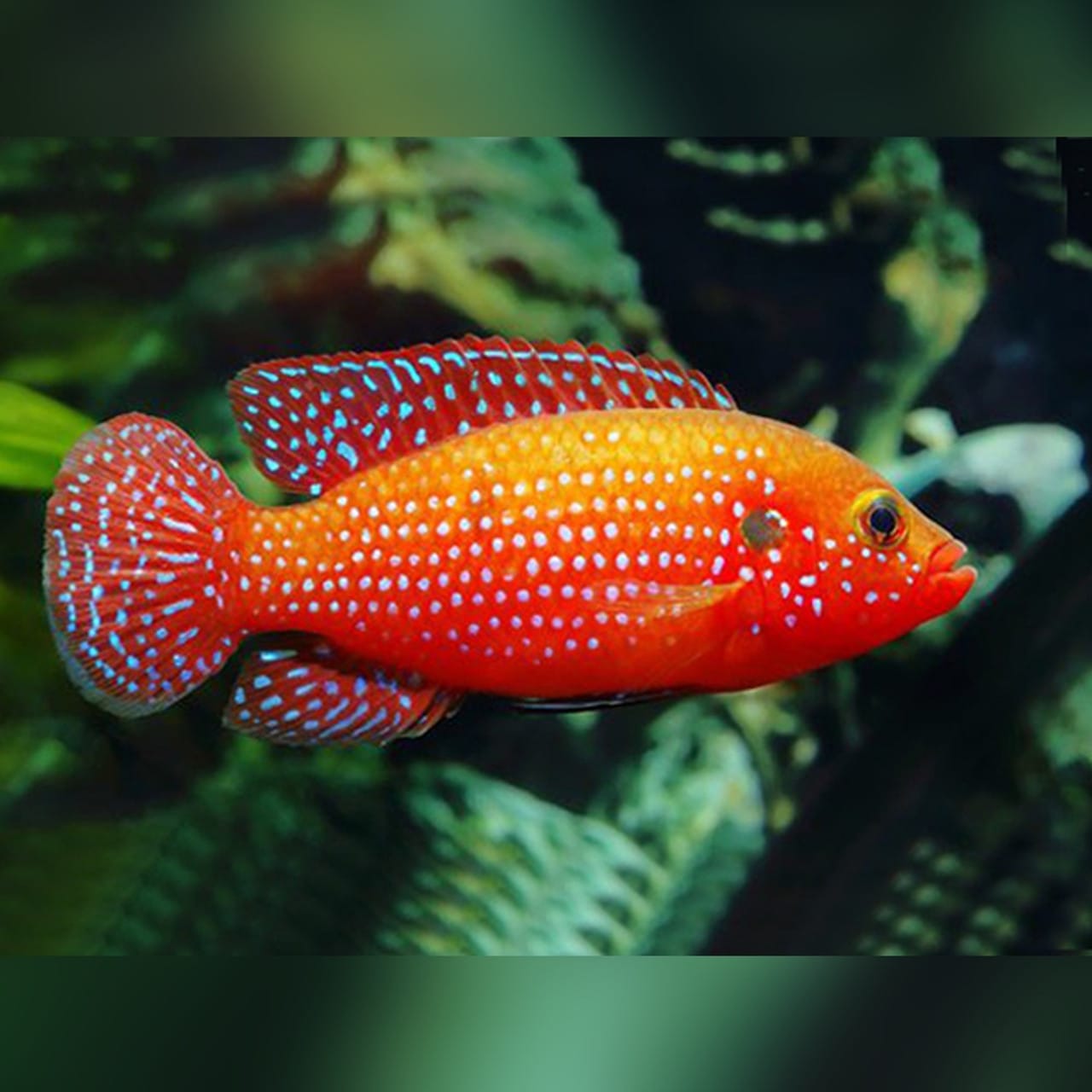
Jewelfish, native to West Africa, are small but vividly colored cichlids, growing to about 4 inches. They are named for the sparkling red or orange spots scattered across their metallic blue-green body, giving them a jewel-like appearance. Despite their beauty, Jewelfish are territorial and can be aggressive, particularly during breeding.
They are omnivorous, feeding on small invertebrates, crustaceans, and plant matter. In aquariums, Jewelfish thrive on high-quality cichlid pellets, live foods, and frozen treats. Breeding pairs exhibit strong parental care, with both male and female guarding eggs and fry meticulously. Their brilliance, feisty temperament, and active behavior make Jewelfish a striking example in Types of Cichlid Fish.
27. Lemon Cichlid (Neolamprologus leleupi)
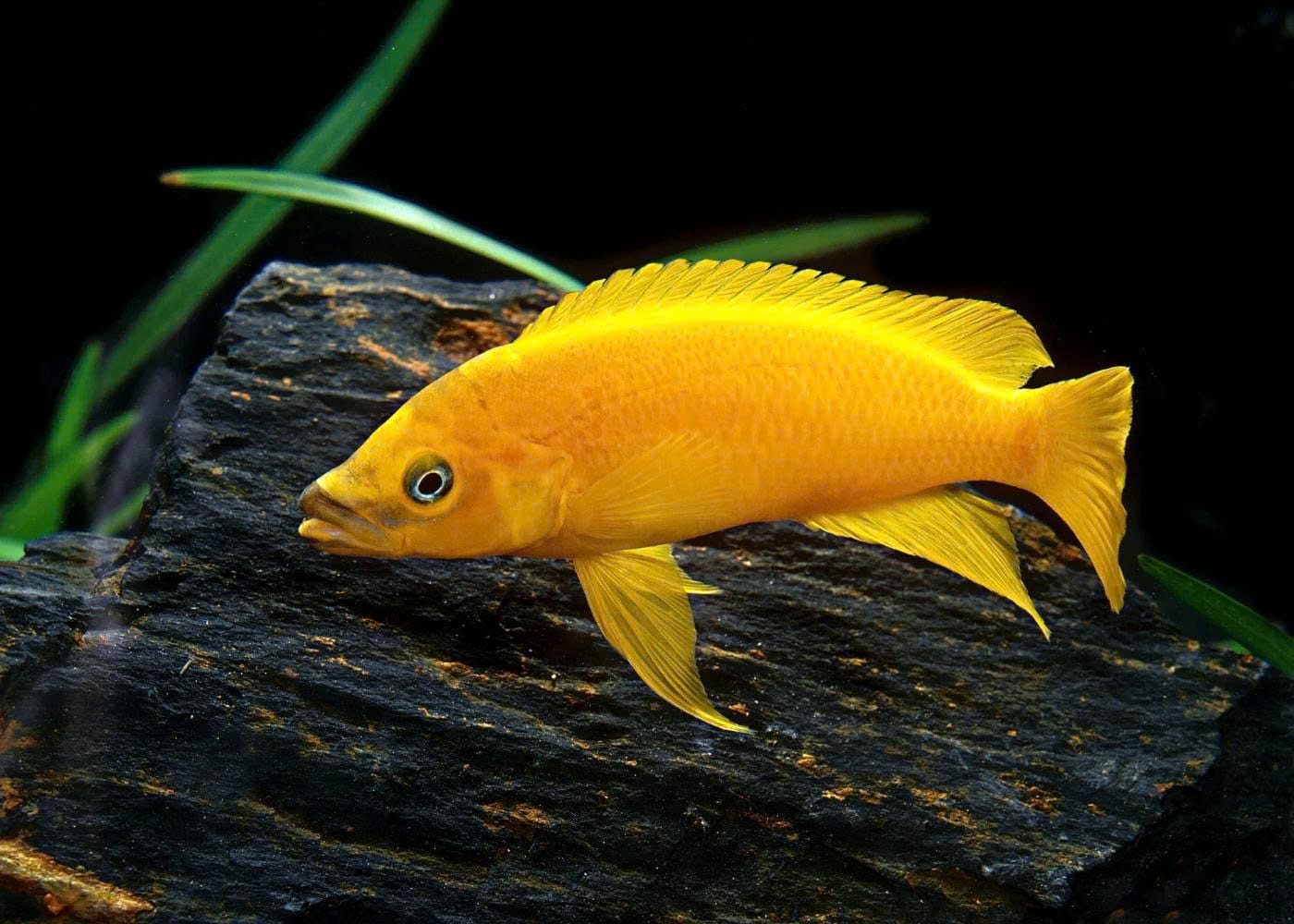
The Lemon Cichlid is a small African cichlid from Lake Tanganyika, celebrated for its vivid yellow coloration and elongated body. Adults reach about 4 inches and are moderately territorial. Their bright color and energetic movements make them a visually appealing addition to aquariums.
These cichlids are carnivorous, feeding on small invertebrates and crustaceans in the wild. In captivity, they accept a diet of high-quality pellets and frozen or live foods. Lemon Cichlids thrive in rocky aquariums with plenty of hiding spots to manage territorial disputes. Their vibrant hue, interesting social behavior, and active swimming patterns make them an important member of Types of Cichlid Fish.
28. Maingano (Melanochromis cyaneorhabdos)
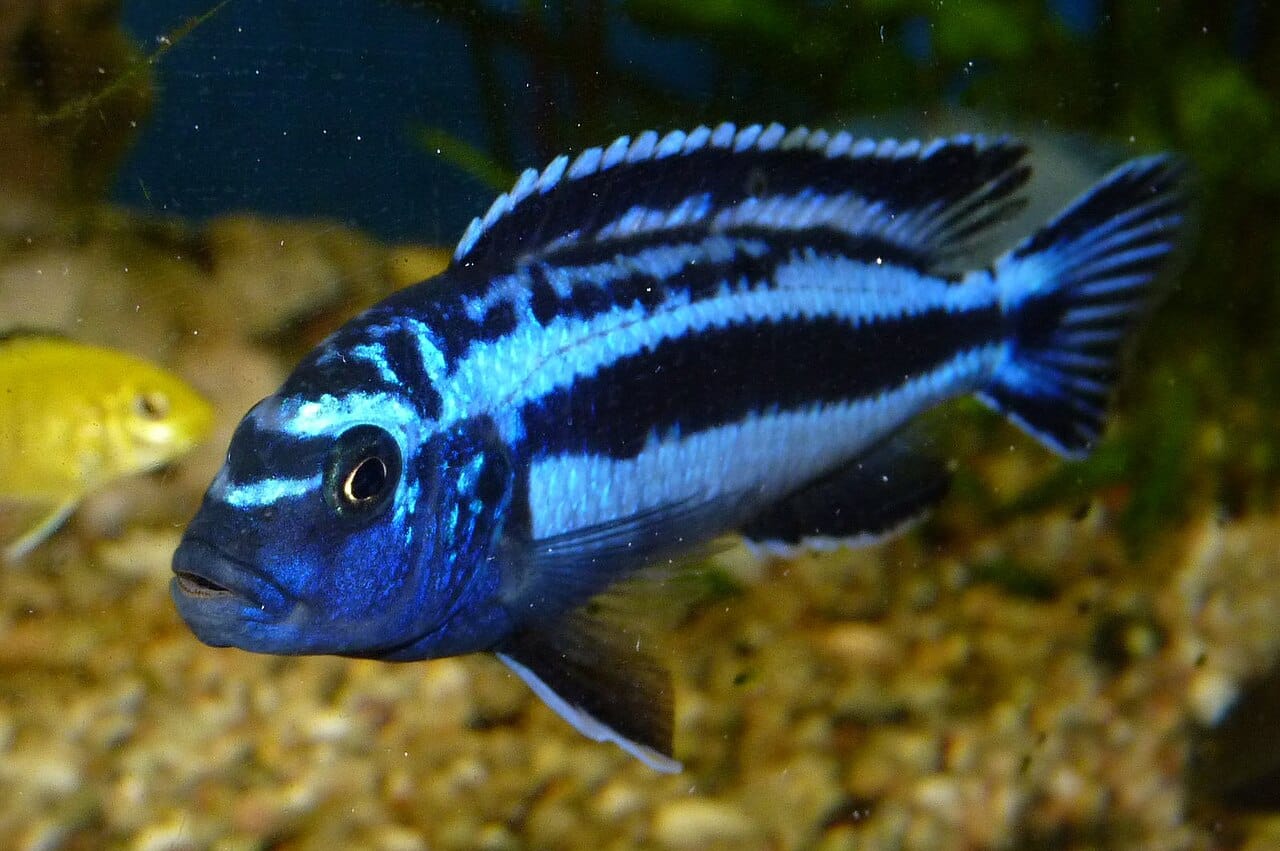
Maingano is a Lake Malawi Mbuna cichlid famous for its deep, solid black body and iridescent blue highlights along the fins. They reach about 4 inches and are highly territorial, requiring plenty of rock formations to establish territories in aquariums. Males are intensely black and more aggressive, while females are slightly lighter.
These herbivorous fish primarily graze on algae and biofilm in their natural habitat. In aquariums, they should be fed a diet rich in vegetable matter and high-quality spirulina pellets. Maingano cichlids exhibit classic Mbuna behavior, including rock hopping and chasing rivals. Their dramatic coloration, active behavior, and social complexity make them a prominent example in Types of Cichlid Fish.
29. Malawi Eyebiter (Dimidiochromis compressiceps)
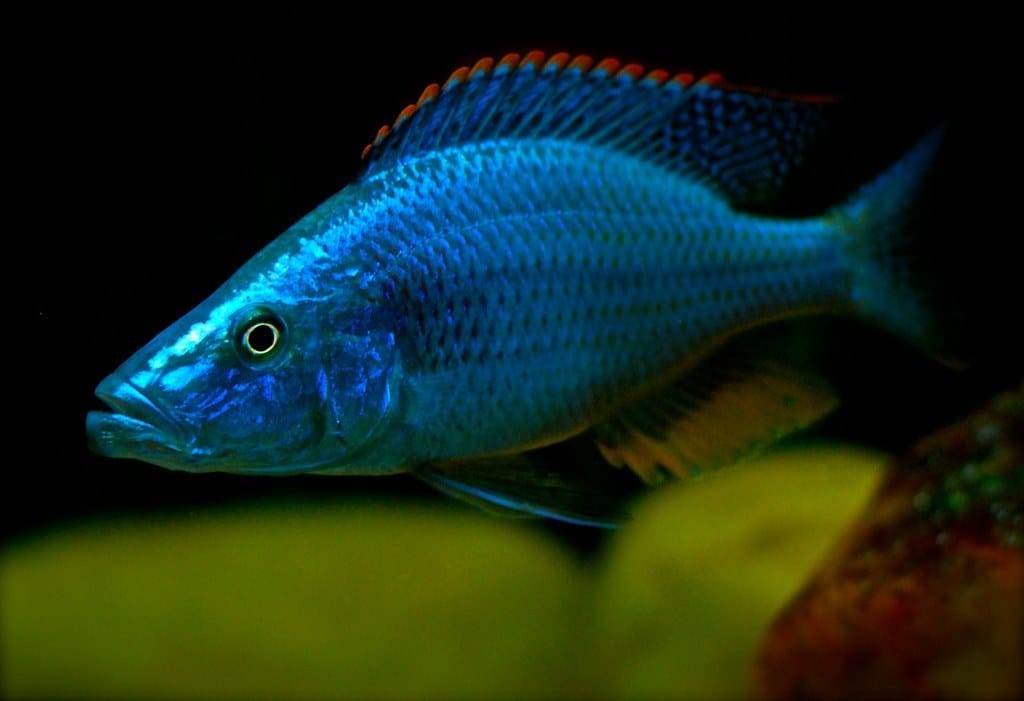
The Malawi Eyebiter is a predatory cichlid from Lake Malawi, known for its slender body and specialized hunting behavior. Adults can grow up to 10–12 inches and exhibit a streamlined silver or golden body with a sharp head, adapted for ambushing smaller fish. Their name derives from their ability to nip at the eyes of prey in the wild.
These carnivorous cichlids require a diet of live fish or high-protein foods in aquariums. They are territorial and should be housed in large tanks with sufficient hiding spaces. Breeding behavior involves mouthbrooding, with females carrying eggs and fry in their mouths for protection. Their unique hunting adaptations, predatory behavior, and impressive size make the Malawi Eyebiter a fascinating member of Types of Cichlid Fish.
30. Masked Julie (Julidochromis transcriptus)
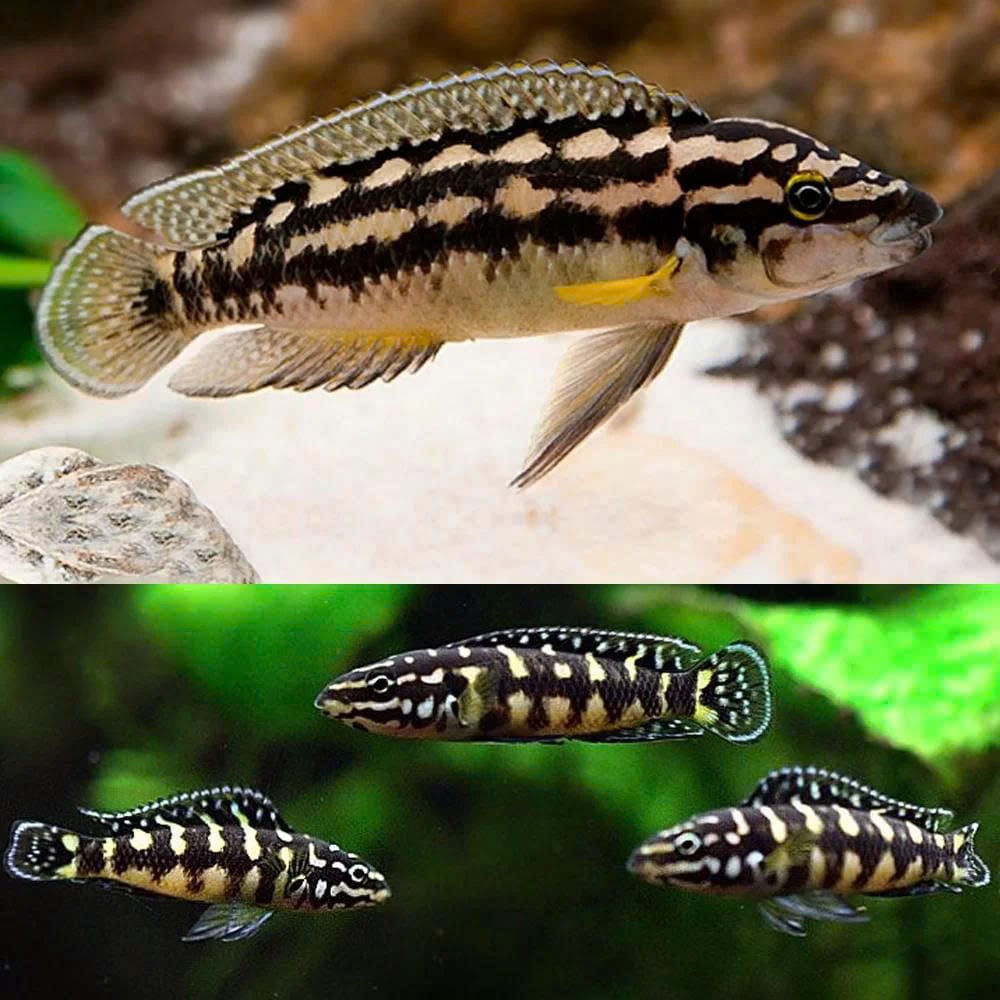
Masked Julie is a small, elegant cichlid from Lake Tanganyika, Africa, growing up to 4 inches. They are easily identified by their slender bodies and distinctive horizontal black stripes on a yellow or golden base, resembling a “masked” pattern. Masked Julies are social fish that thrive in pairs or small groups.
These fish are omnivorous, feeding on small invertebrates, algae, and plant matter. In aquariums, they prefer rocky setups with caves for hiding and breeding. Breeding pairs exhibit classic cichlid parental care, often guarding eggs and fry meticulously. Their striking pattern, small size, and active behavior make Masked Julie a charming and educational example in Types of Cichlid Fish.
31. Orange Chromide (Etroplus maculatus)
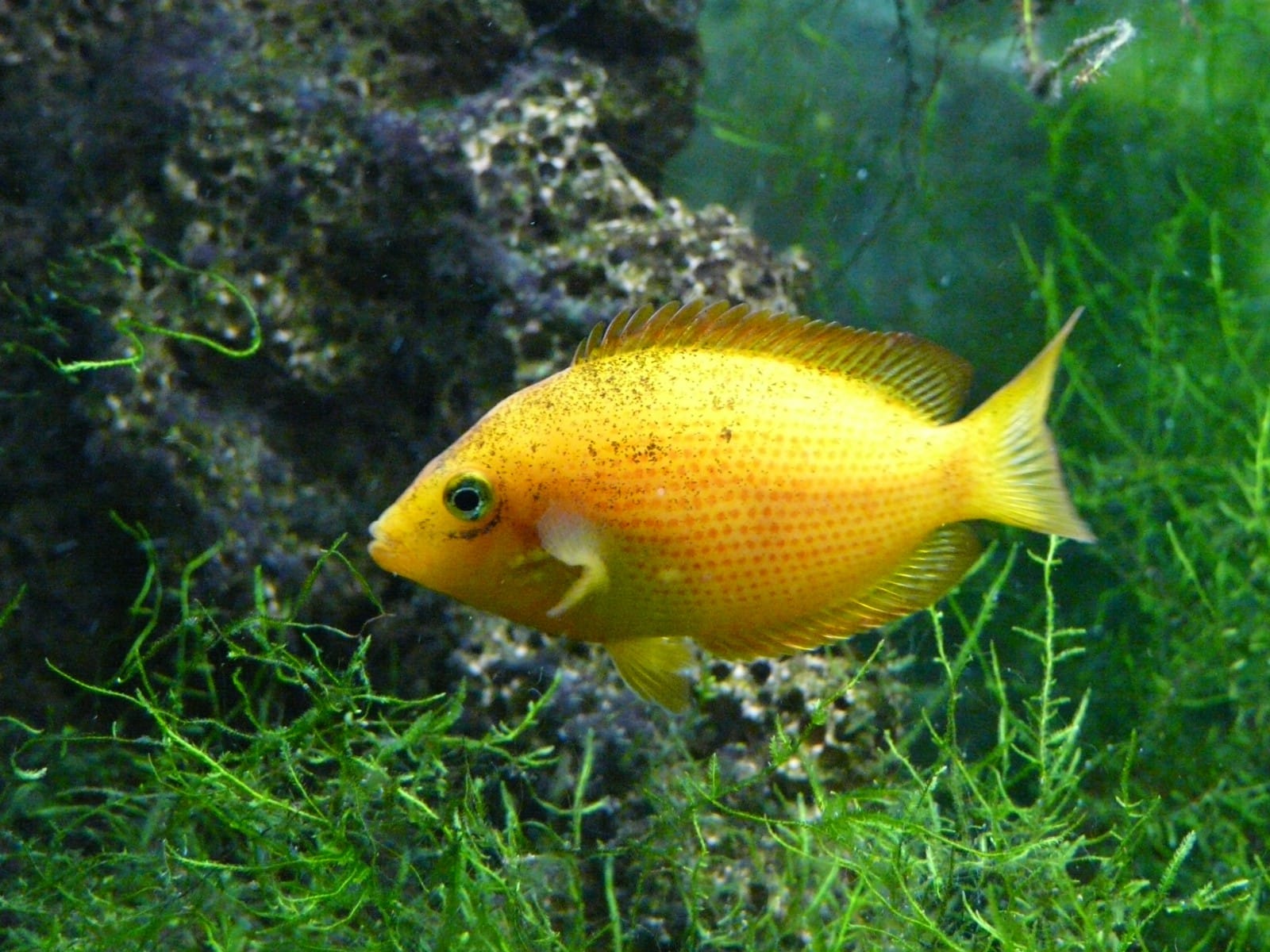
The Orange Chromide is a small, vibrant cichlid native to brackish waters of India and Sri Lanka. Adults grow to about 3–4 inches and are easily recognized by their bright orange bodies with subtle green or yellow highlights. Known for their social nature, these fish thrive in small groups and display fascinating schooling behavior.
Orange Chromides are omnivorous, feeding on algae, small invertebrates, and plant matter. In aquariums, they are adaptable and can be fed a varied diet of flakes, pellets, and live foods. They form monogamous pairs and exhibit attentive parental care, often guarding eggs and fry actively. Their bright coloration, social behavior, and adaptability make Orange Chromide a charming and educational example in Types of Cichlid Fish.
32. Pearl Cichlid (Geophagus brasiliensis)
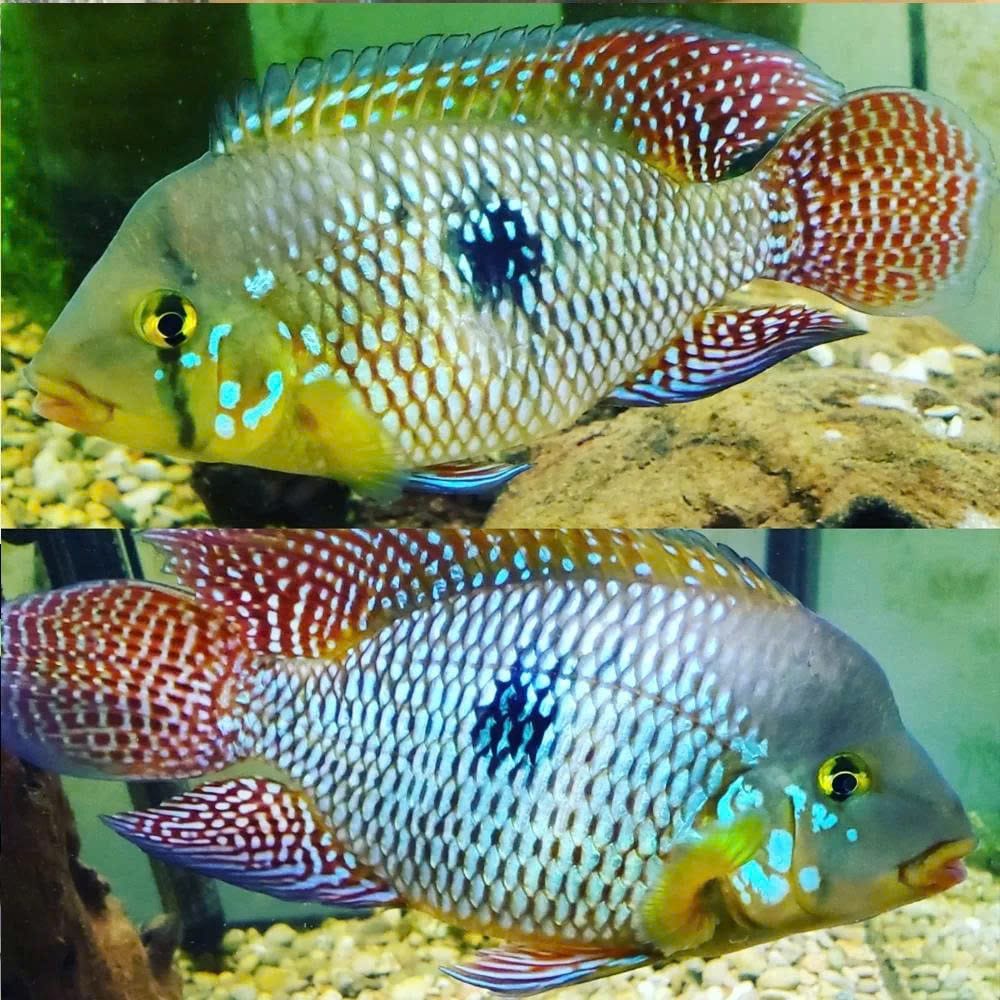
Pearl Cichlids are medium-sized South American cichlids reaching 6–8 inches. Their silvery-gold bodies are adorned with iridescent pearl-like spots and red fins, creating a striking and elegant appearance. These cichlids are relatively peaceful but can be territorial during breeding.
They are omnivorous, sifting through substrate to find invertebrates, plant material, and detritus. In aquariums, they require sandy or fine substrates and plenty of hiding places. Breeding pairs are attentive, with both parents caring for eggs and fry. Their beauty, active behavior, and subtle intelligence make Pearl Cichlids a standout among Types of Cichlid Fish.
33. Red Devil (Amphilophus labiatus)
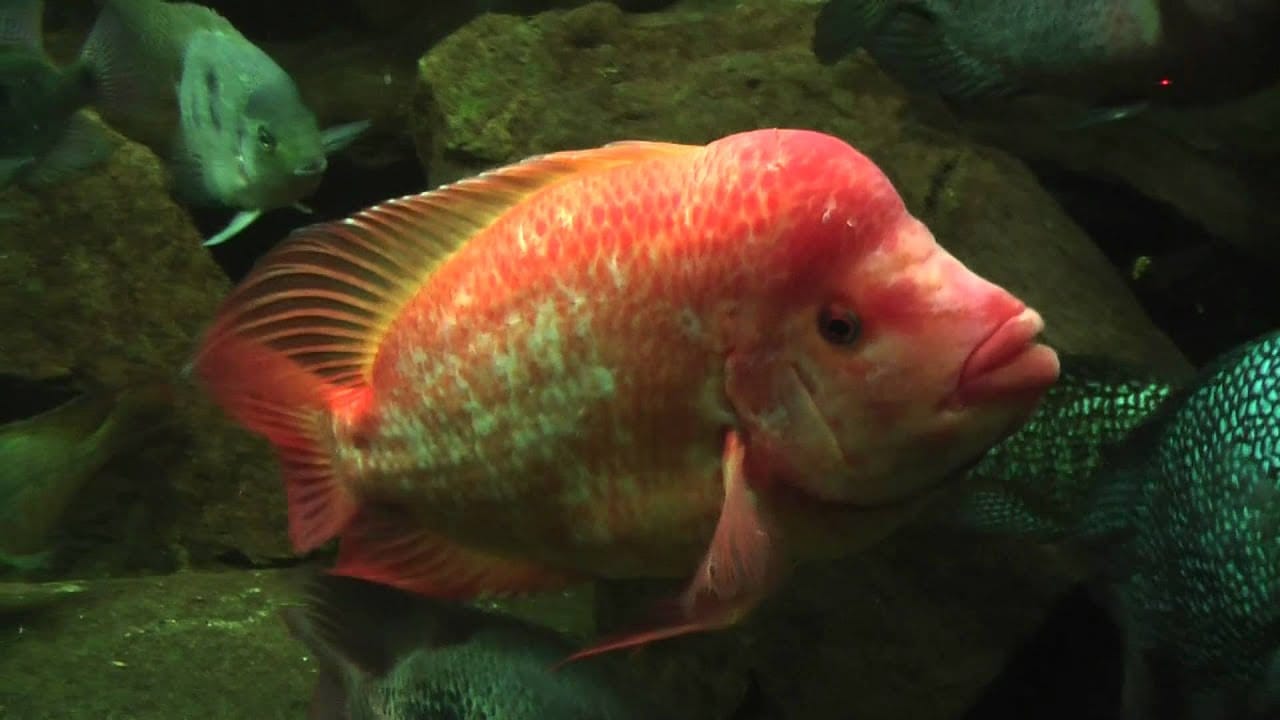
Red Devil Cichlids are large, aggressive fish from Central America, known for their vivid red or orange coloration and prominent facial features. Adults can reach 12–16 inches and are highly territorial, requiring spacious tanks with strong filtration and robust hiding spots.
These carnivorous cichlids feed on smaller fish, insects, and crustaceans. Breeding pairs are fiercely protective, guarding eggs and fry aggressively. Red Devils are interactive, intelligent, and can recognize their owners, making them challenging but rewarding aquarium fish. Their bold colors, predatory behavior, and dynamic personality place them prominently in Types of Cichlid Fish.
34. Red Empress (Protomelas taeniolatus)
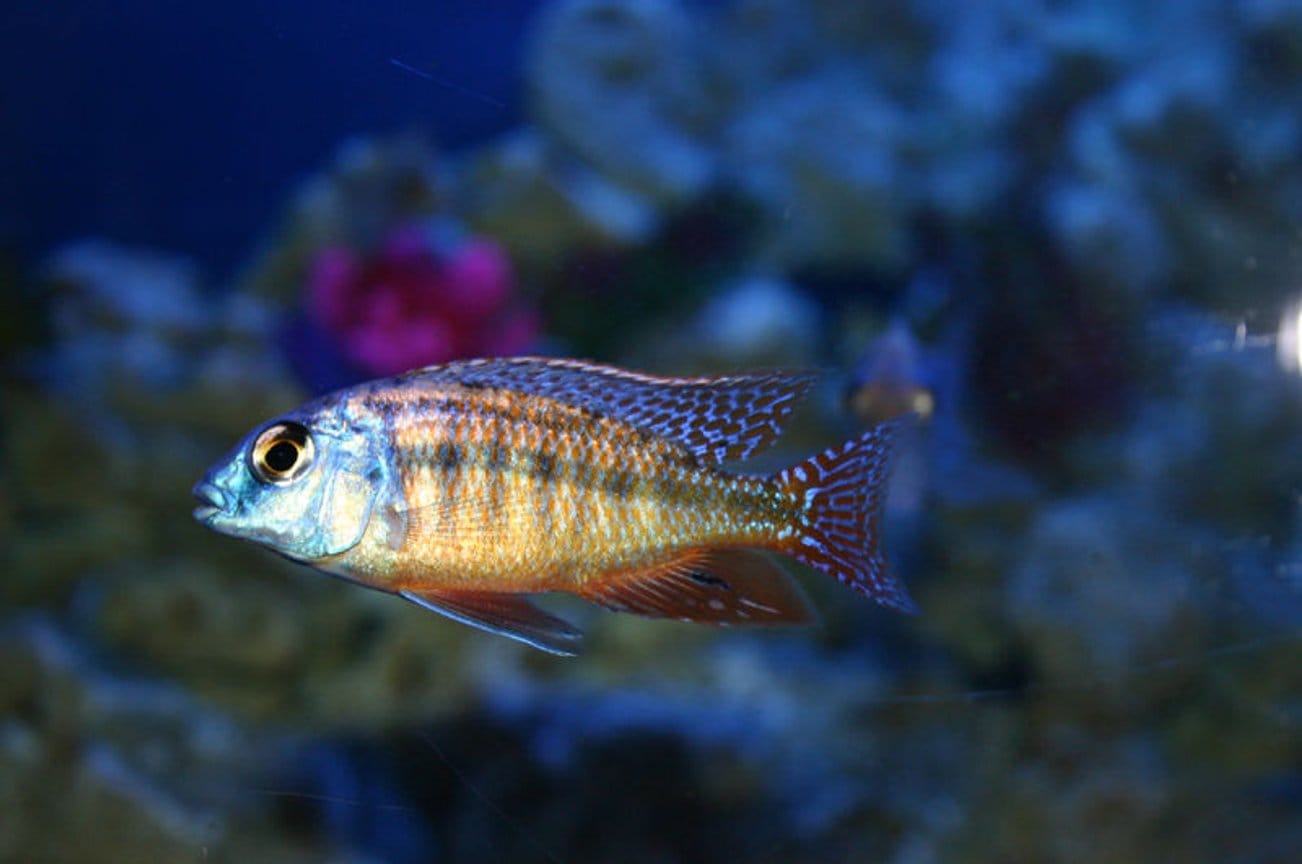
Red Empress Cichlids are Lake Malawi cichlids celebrated for their vibrant red and blue coloration. Males are particularly striking, with deep blue bodies and fiery red fins, while females are more subdued. They grow to about 6 inches and are moderately aggressive, especially during breeding.
They are primarily herbivorous, grazing on algae and plant matter, though they also accept high-quality cichlid pellets. Tanks should include rocks and caves to establish territories and reduce conflicts. Breeding males establish territories and display colorful courtship to attract females. Red Empress Cichlids’ vivid hues, social dynamics, and adaptability make them a popular species in Types of Cichlid Fish.
35. Red Zebra (Maylandia estherae)
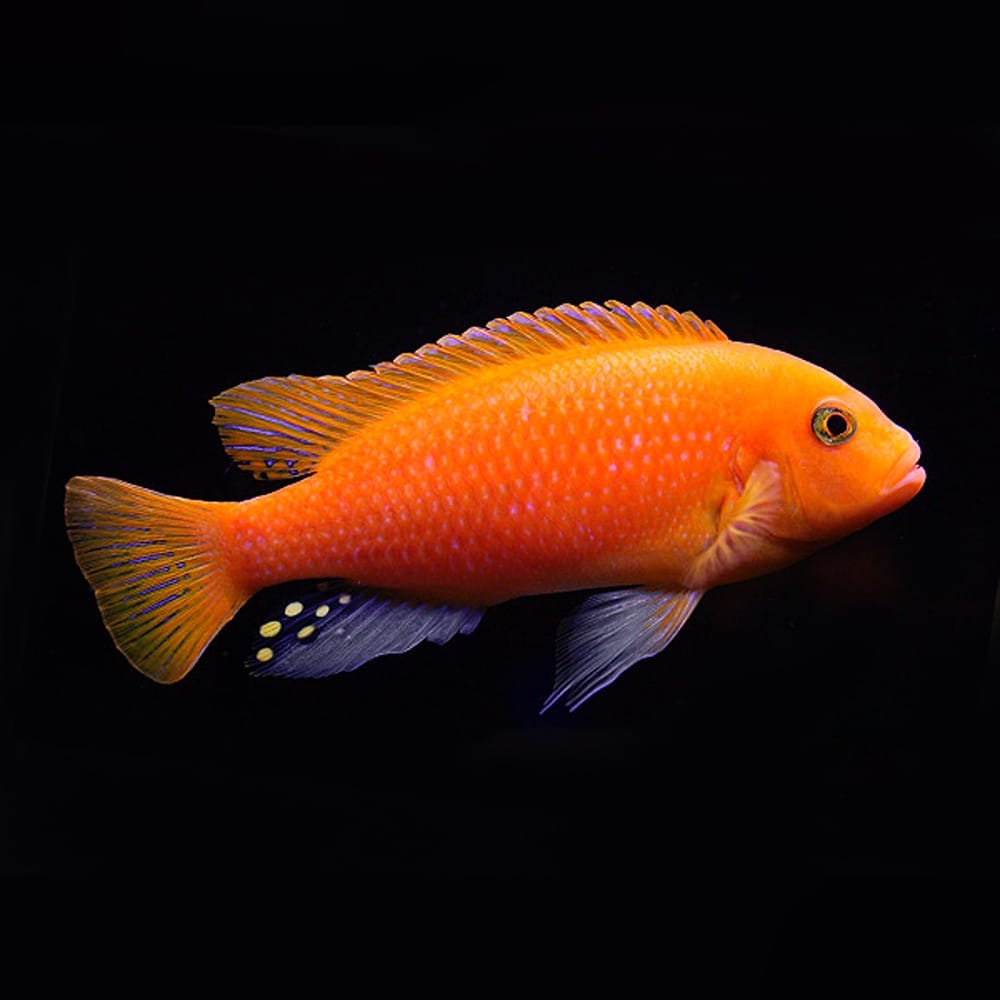
Red Zebra is a small African cichlid from Lake Malawi, known for its brilliant red-orange body and contrasting blue markings in some variants. They reach about 3–4 inches and are active, territorial fish suitable for species-specific or carefully planned community tanks.
Red Zebras are herbivorous, grazing on algae in their natural habitat. In aquariums, they accept spirulina-based pellets, vegetable matter, and occasional protein foods. Breeding pairs exhibit strong parental care, often with females mouthbrooding the eggs. Their vivid coloration, energetic behavior, and fascinating social interactions make Red Zebra a final highlight in our comprehensive list of Types of Cichlid Fish.
36. Rock Kribensis (Pelvicachromis taeniatus)
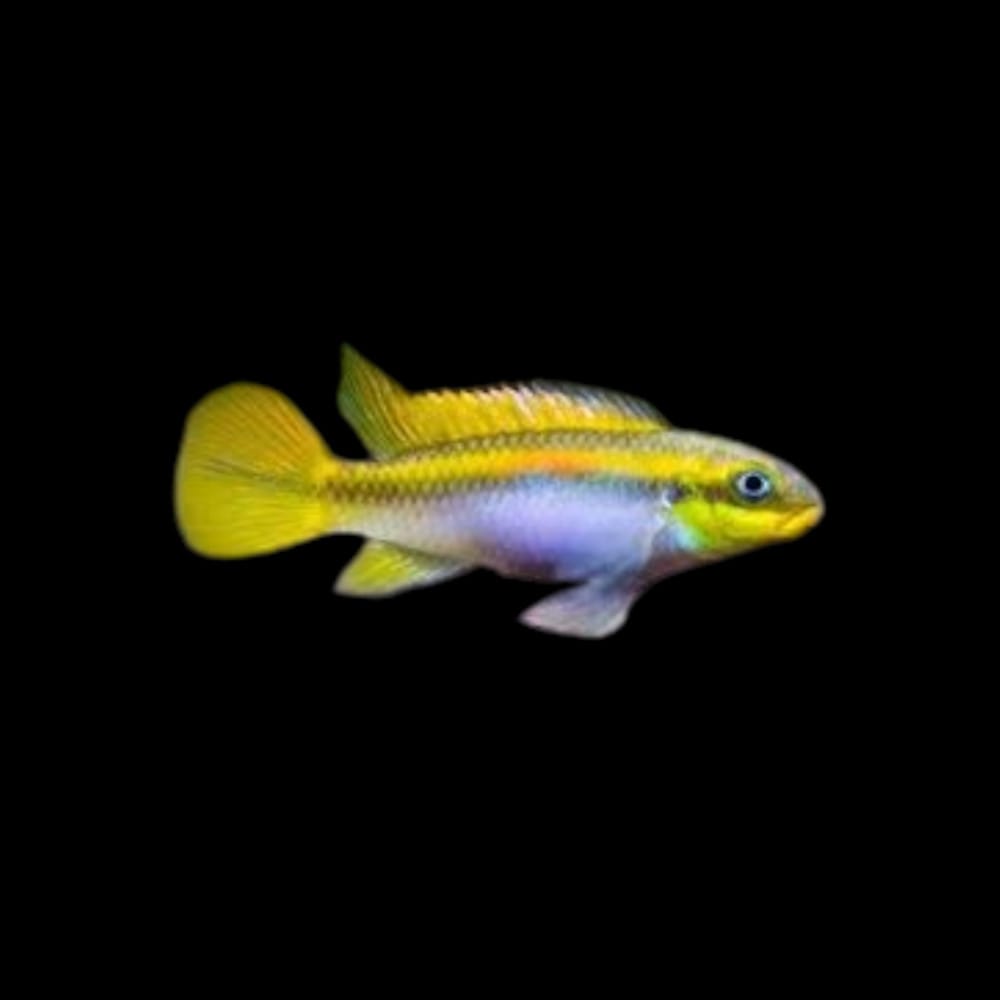
Rock Kribensis are small African cichlids from rivers and streams in Nigeria and Cameroon, growing to about 3–4 inches. They are renowned for their vibrant coloration, including red or orange bellies, iridescent green or blue bodies, and dark lateral stripes. Their striking patterns make them highly sought-after in aquariums.
These cichlids are omnivorous, feeding on insects, small crustaceans, and plant matter. In aquariums, they thrive with high-quality pellets, frozen foods, and live treats. Rock Kribensis are peaceful compared to other African cichlids but can be territorial during breeding. Parents exhibit excellent care, guarding eggs and fry attentively. Their vivid colors, intricate patterns, and engaging behavior make them an important member of Types of Cichlid Fish.
37. Severum (Heros efasciatus)
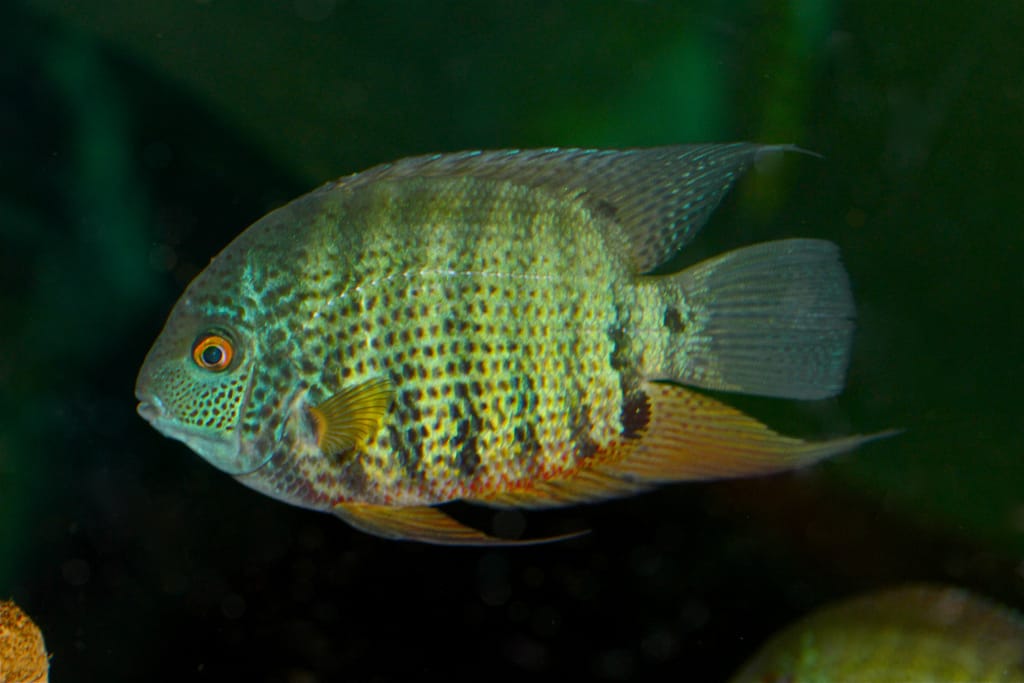
Severum Cichlids are large South American fish, reaching 8–10 inches in captivity. They are known for their round, laterally compressed bodies, golden-green coloration, and red eyes. Severums are peaceful but territorial, especially when breeding.
They are omnivorous, feeding on insects, small crustaceans, and plant matter. Aquarium care involves a spacious tank with soft substrates and plenty of hiding spaces. Breeding pairs are attentive, tending to eggs and fry carefully. Their elegant swimming style, gentle temperament, and striking coloration make Severums a standout in Types of Cichlid Fish.
38. Snow White Cichlid (Labidochromis caeruleus “Snow White”)
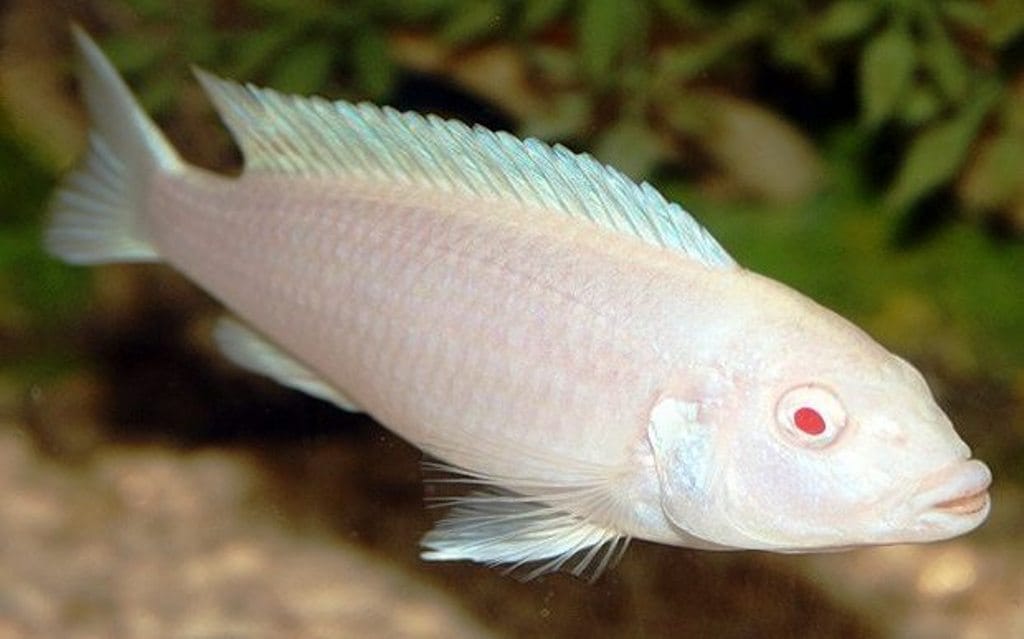
Snow White Cichlids are a beautiful variant of the Malawi cichlids, characterized by their bright white bodies and contrasting black dorsal and tail fins. They grow up to 3–4 inches and are moderately aggressive, typical of Mbuna cichlids.
These herbivorous fish feed mainly on algae and plant matter but accept high-quality cichlid pellets in aquariums. They require rocky tanks with hiding spots to reduce territorial disputes. Breeding involves maternal mouthbrooding, with females carrying and protecting eggs. Their striking color contrast, energetic behavior, and social interactions make Snow White Cichlids a fascinating addition to Types of Cichlid Fish.
39. Strawberry Peacock (Aulonocara sp. “Strawberry”)
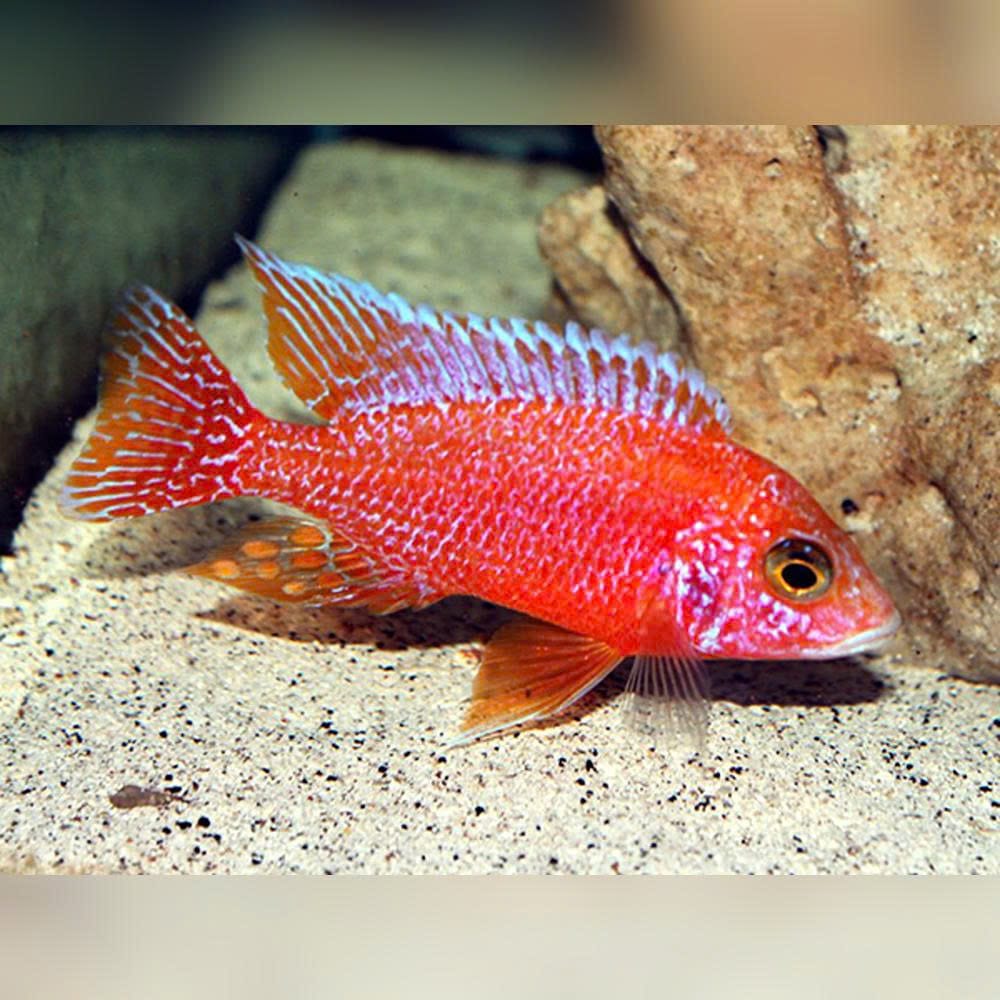
Strawberry Peacock Cichlids are Lake Malawi peacocks known for their reddish-pink hues on the head and body, complemented by blue and purple highlights on the fins. Adults reach 4–5 inches and display peaceful but territorial behavior.
These carnivorous cichlids feed on small invertebrates and high-quality protein-rich pellets in captivity. They thrive in tanks with sandy substrates and rocky formations for territories. Breeding males establish small territories to attract females, and females mouthbrood eggs for several weeks. Their vivid color, interactive nature, and social dynamics make Strawberry Peacock a key member of Types of Cichlid Fish.
40. Sunshine Peacock (Aulonocara sp. “Sunshine”)
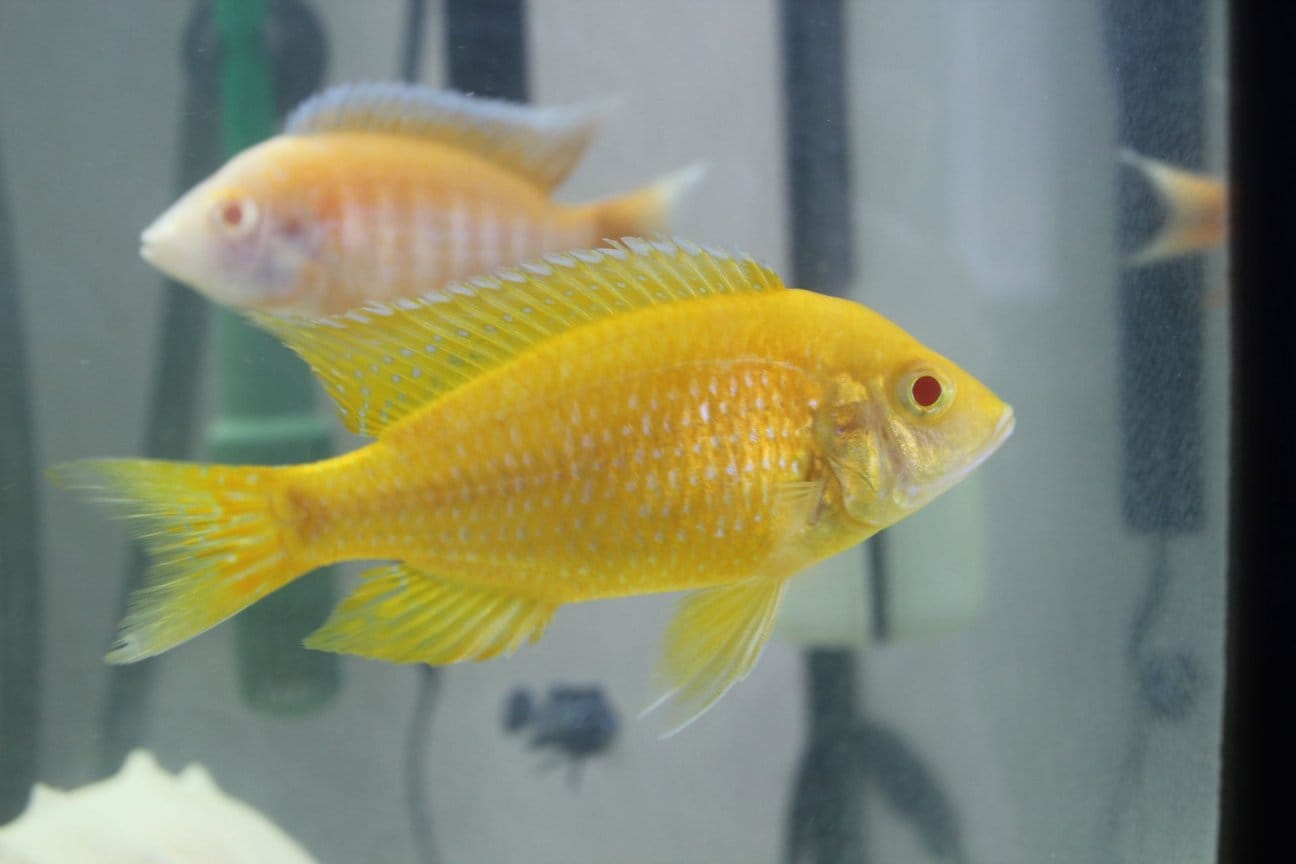
Sunshine Peacock Cichlids are a bright, sunny variant from Lake Malawi, featuring yellow-gold bodies with subtle blue accents on the fins. Adults reach 4–5 inches and are generally peaceful compared to other peacocks, though males remain territorial.
They are carnivorous, feeding on small invertebrates and high-protein diets. Aquariums should provide sandy substrates and rocks to establish territories. Breeding involves maternal mouthbrooding, with females carrying and protecting eggs and fry diligently. Their cheerful coloration, gentle temperament, and interactive behavior make Sunshine Peacock an attractive and educational example of Types of Cichlid Fish.
41. T-Bar Cichlid (Haplochromis sp. “T-Bar”)
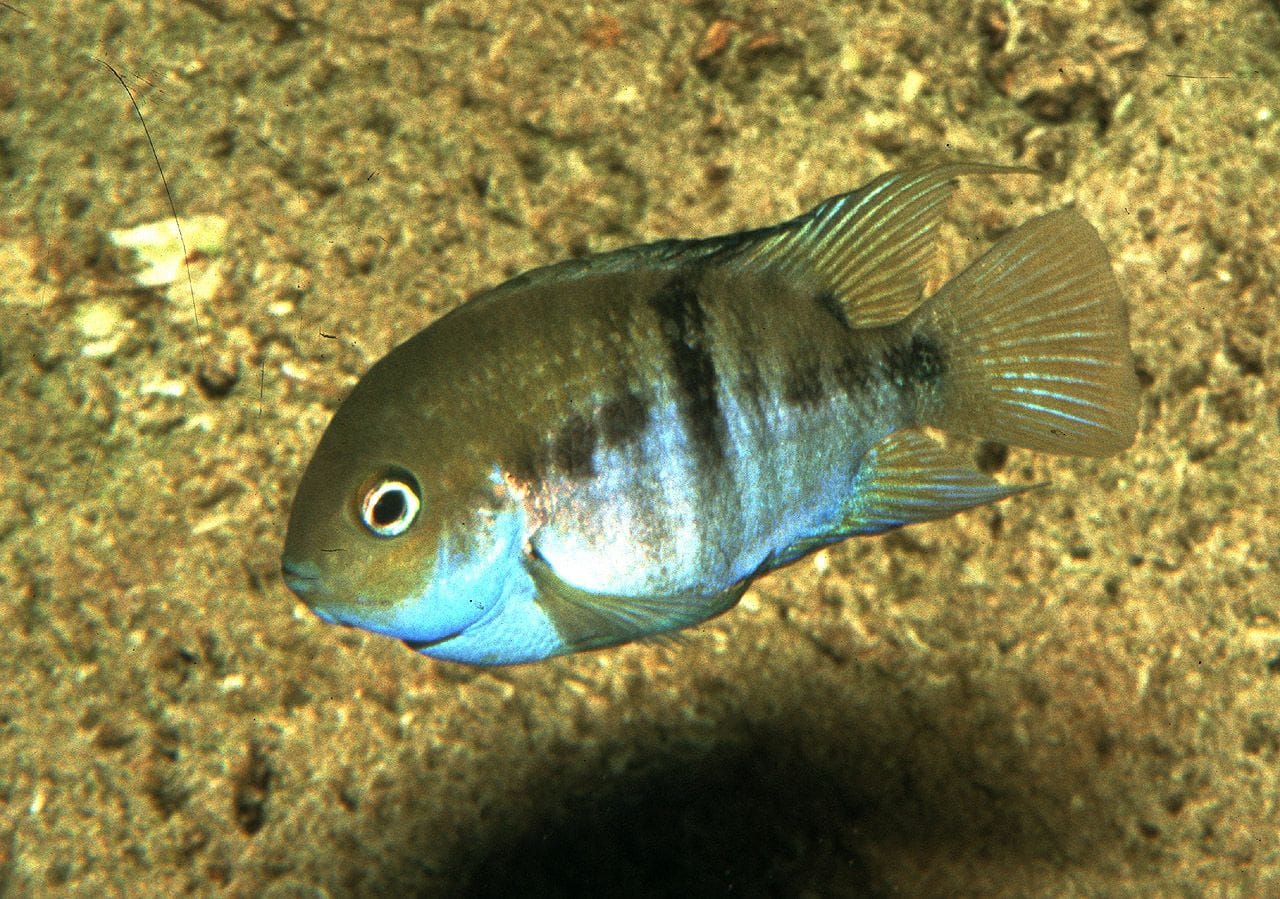
The T-Bar Cichlid is a Lake Malawi Mbuna cichlid, recognized for its striking black horizontal “T” marking on a blue or gray body. Adults reach about 4–5 inches and are highly territorial, displaying classic Mbuna behaviors such as rock hopping and chasing rivals.
These herbivorous cichlids primarily graze on algae but will accept high-quality spirulina pellets in aquariums. Tanks should include numerous rocky caves and crevices to reduce aggression. Breeding involves maternal mouthbrooding, with females carefully carrying and protecting eggs. Their unique markings, energetic behavior, and social interactions make T-Bar Cichlids a fascinating example in Types of Cichlid Fish.
42. Uaru Cichlid (Uaru amphiacanthoides)
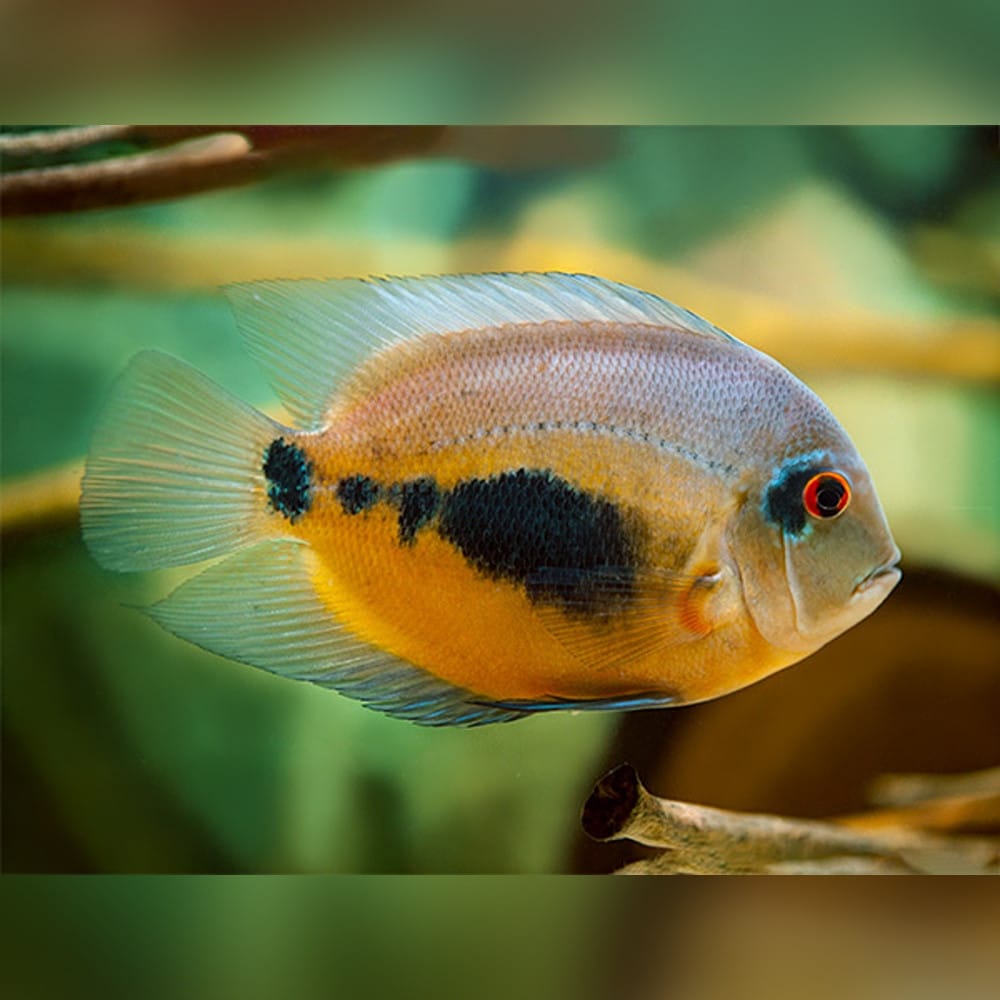
Uaru Cichlids are large, peaceful South American cichlids, growing up to 10 inches. They have a round body, silver coloration with black vertical stripes, and are renowned for their calm temperament and graceful swimming. Uarus prefer planted tanks with soft water conditions.
They are omnivorous, feeding on plant matter, algae, and small invertebrates. Aquarium care includes providing spacious tanks, soft substrates, and dense vegetation. Breeding pairs are attentive, often forming strong bonds and guarding eggs diligently. Their elegance, size, and serene behavior make Uaru Cichlids a beautiful addition to Types of Cichlid Fish.
43. Venustus (Aulonocara sp. “Venustus”)
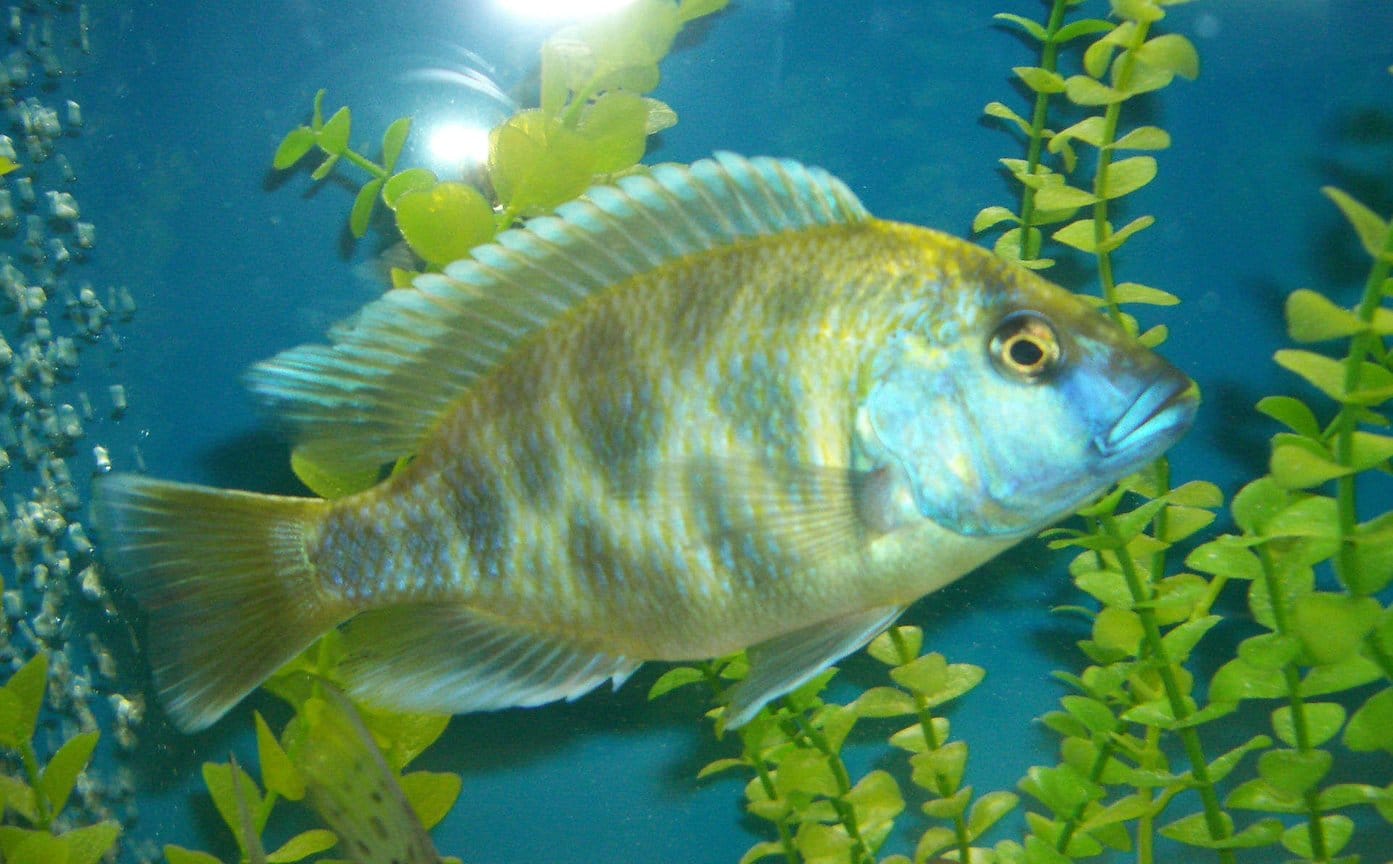
Venustus, or “Venustus Peacock,” is a Lake Malawi cichlid prized for its vivid blue body with yellow accents on the fins. Adults reach 4–5 inches and are moderately peaceful, though males defend territories during breeding. Their bright coloration makes them visually striking in aquariums.
These carnivorous cichlids feed on small invertebrates and high-protein foods in captivity. Tanks should feature sandy substrates with rocky areas for territory establishment. Breeding involves maternal mouthbrooding, with females guarding eggs and fry closely. Their vivid color, active swimming, and social dynamics make Venustus a standout species in Types of Cichlid Fish.
44. White Spot Cichlid (Amatitlania sajica)
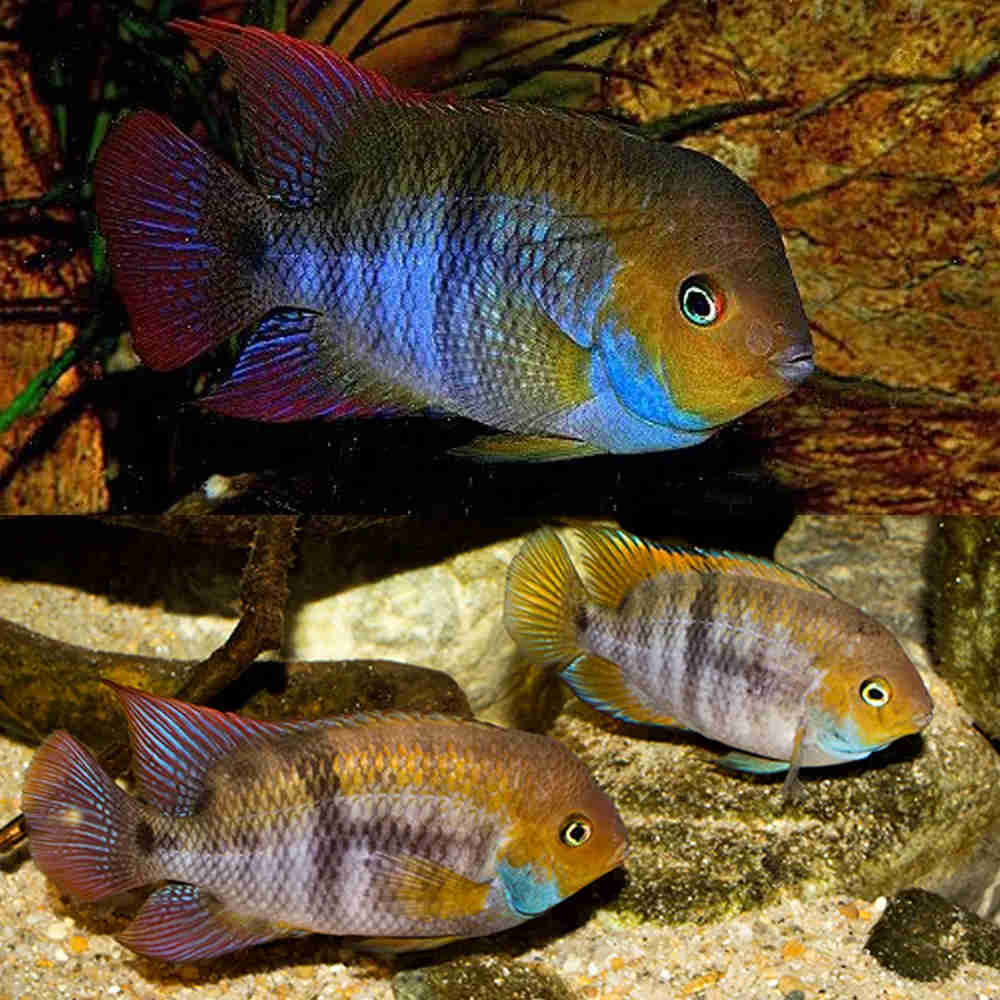
White Spot Cichlids are small Central American fish, growing to about 3–4 inches. They are characterized by silver-gray bodies with small white spots and subtle red fin coloration. These cichlids are moderately aggressive and display strong territorial behavior during breeding.
They are omnivorous, feeding on insects, small crustaceans, and plant matter. Aquarium care includes providing hiding spots, sandy substrates, and moderate tank vegetation. Breeding pairs are attentive, often guarding eggs and fry diligently. White Spot Cichlids’ attractive patterning, energetic behavior, and parental instincts make them a fascinating example in Types of Cichlid Fish.
45. Yellowtail Acei (Pseudotropheus acei)
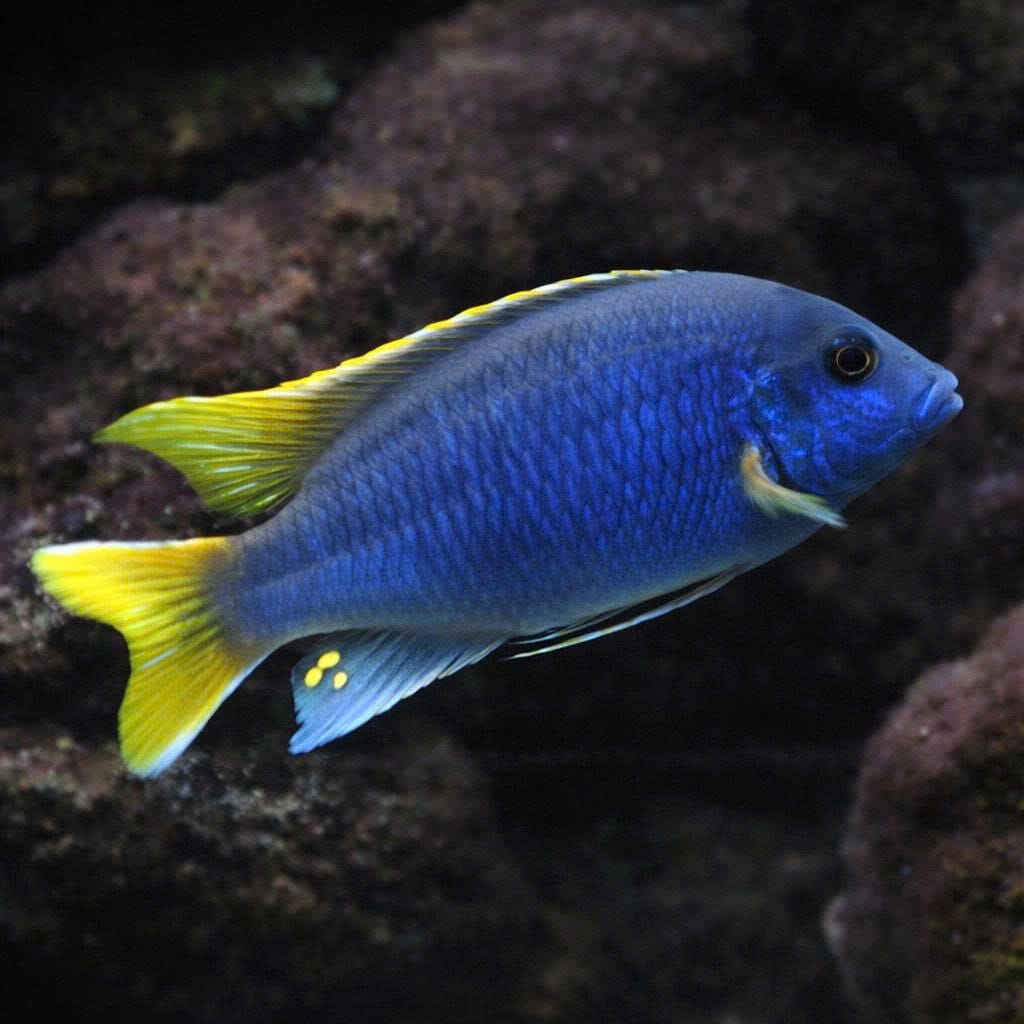
Yellowtail Acei is a Lake Malawi Mbuna cichlid, easily identified by its vibrant blue body and bright yellow tail. Adults reach 4–5 inches and are moderately aggressive, typical of Mbuna cichlids. They are active swimmers and highly social, thriving in groups.
These herbivorous fish feed primarily on algae and plant matter, supplemented with spirulina pellets in captivity. A rocky tank setup with caves and hiding spots is essential to reduce aggression. Breeding involves maternal mouthbrooding, with females carrying eggs for protection. Yellowtail Acei’s striking coloration, lively behavior, and social dynamics make them a prominent species in Types of Cichlid Fish.
46. Yellow Dwarf Cichlid (Apistogramma borellii)
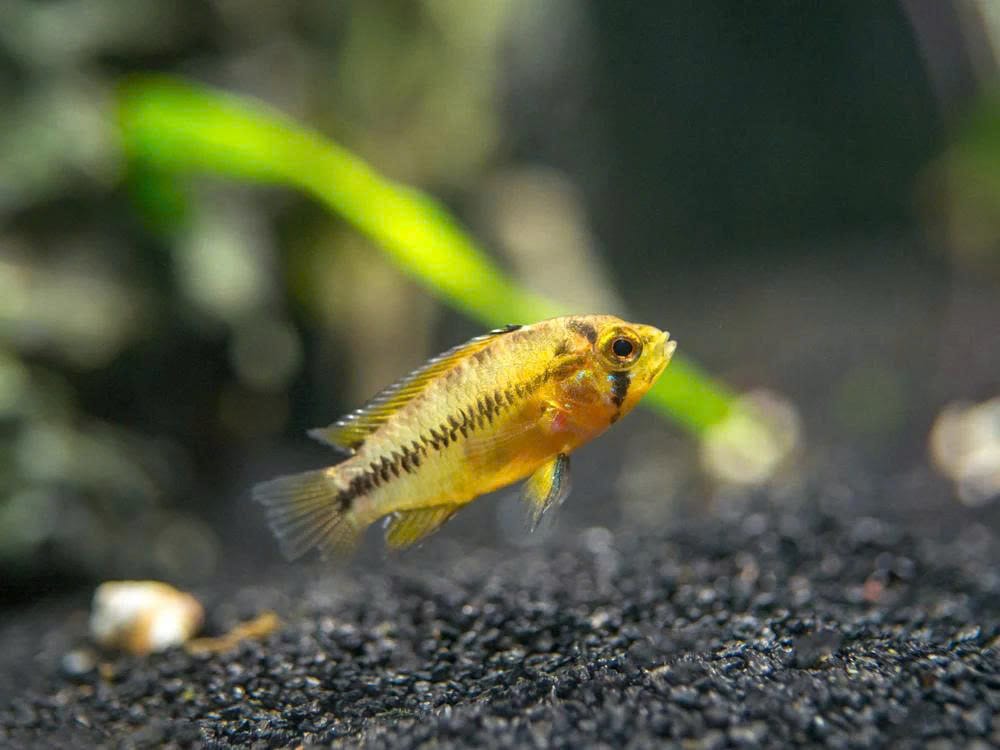
Yellow Dwarf Cichlids are small South American cichlids, growing to only about 2–3 inches. They are known for their vibrant yellow bodies with subtle blue and red highlights, making them a colorful addition to smaller aquariums. Despite their size, they display typical cichlid behaviors, including territoriality and active foraging.
These cichlids are omnivorous, feeding on small insects, larvae, and plant matter. In captivity, they thrive on high-quality flakes, pellets, and occasional live foods. Yellow Dwarf Cichlids prefer well-planted tanks with caves and hiding spots for breeding. During breeding, males display bright colors while females mouthbrood eggs, ensuring the survival of fry. Their small size, vivid color, and engaging behavior make them a charming example in Types of Cichlid Fish.
47. Aulonocara Jacobfreibergi (Freiberg’s Peacock)
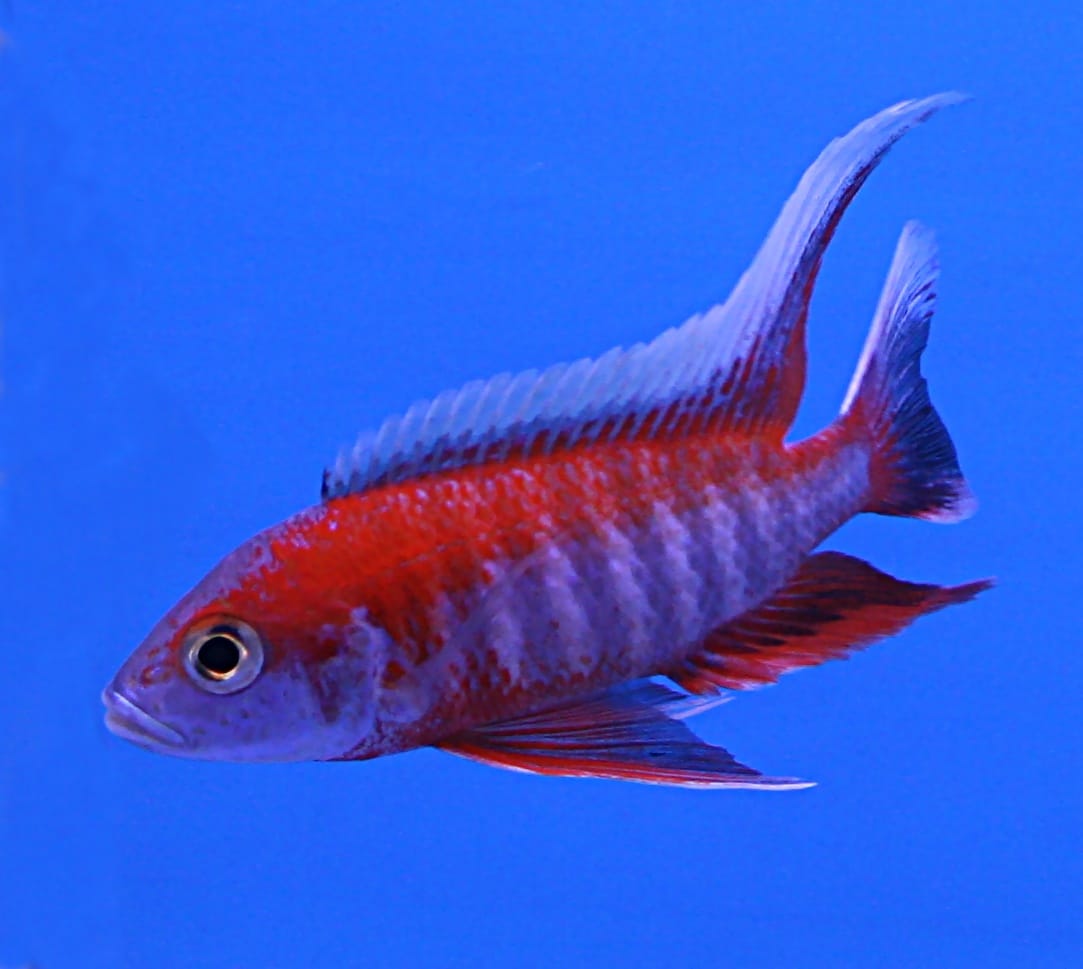
Freiberg’s Peacock is a Lake Malawi cichlid admired for its bright blue body with golden-yellow highlights along the fins. Adults reach 4–5 inches and are moderately aggressive, typical of peacock cichlids. Males display their colors prominently to establish territories and attract females.
These carnivorous fish feed on small invertebrates, protein-rich pellets, and occasional live foods. Tanks should feature sandy substrates with rocks for territorial boundaries. Breeding involves maternal mouthbrooding, with females carrying eggs and fry until they are ready to fend for themselves. Their striking coloration, interactive behavior, and dynamic presence make Freiberg’s Peacock a highlight in Types of Cichlid Fish.
48. Cyrtocara Moorii (Blue Dolphin Cichlid)
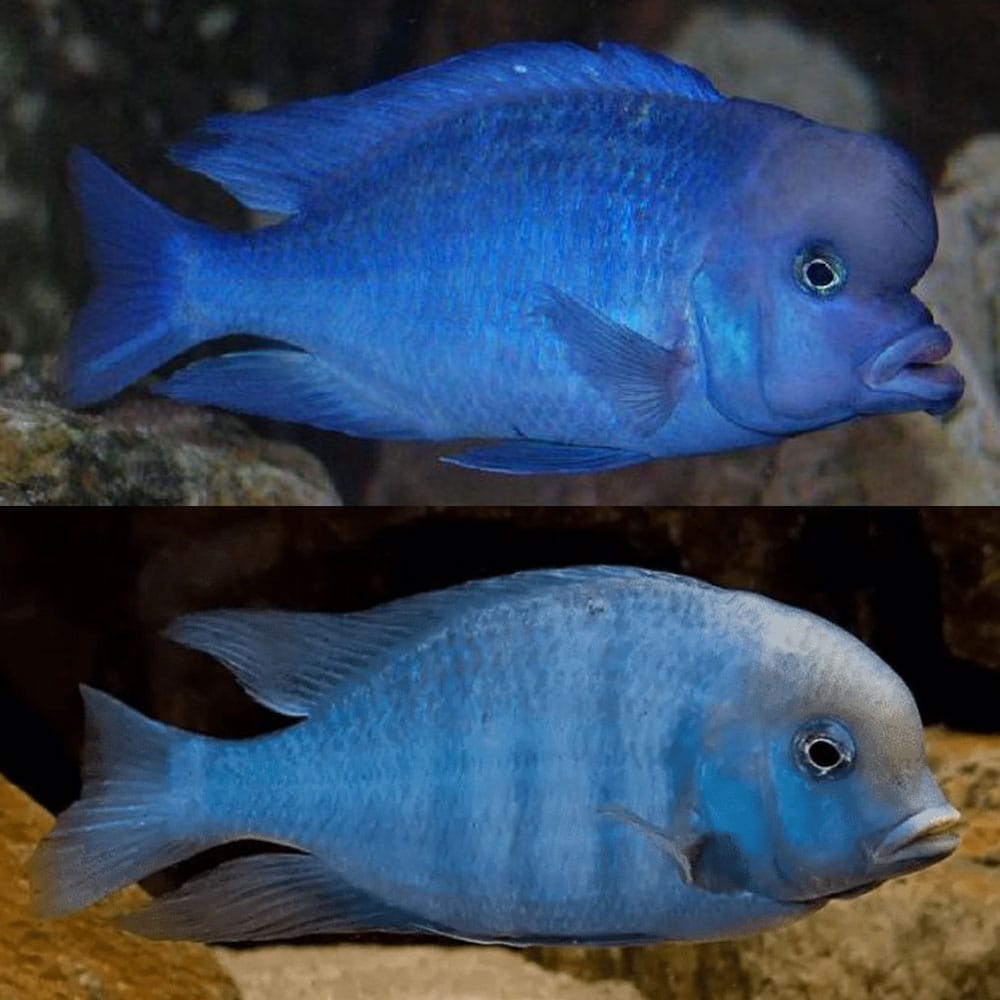
The Blue Dolphin Cichlid, native to Lake Malawi, is easily recognized by its elongated forehead “dolphin” hump, silvery-blue body, and peaceful temperament. Adults grow up to 8–10 inches and are best kept in large, calm aquariums with plenty of swimming space.
These omnivorous cichlids feed on a mix of high-quality pellets, live foods, and plant matter. Breeding pairs are attentive, with females performing mouthbrooding to protect eggs and fry. Their unusual head shape, gentle personality, and elegant swimming style make the Blue Dolphin Cichlid a standout species in Types of Cichlid Fish.
49. Julidochromis Marlieri
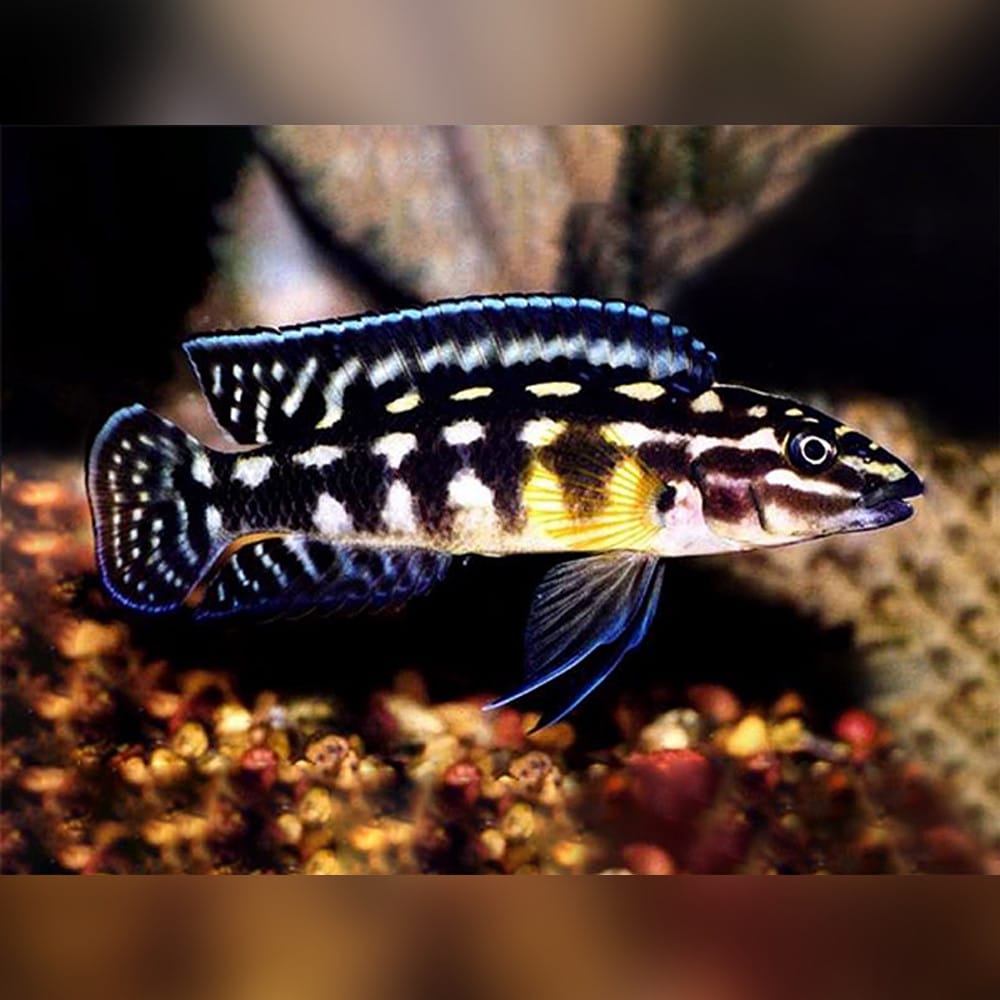
Julidochromis Marlieri, or Marlier’s Julie, is a small Lake Tanganyika cichlid, reaching 3–4 inches. It is characterized by a slender body with dark vertical stripes on a golden-yellow base, giving it a “masked” appearance. These fish are territorial and form monogamous pairs in the wild.
They are carnivorous, feeding on small invertebrates and protein-rich foods in captivity. Tanks should include rocky caves and tight crevices to allow natural territorial behavior. Breeding pairs are excellent caregivers, with females mouthbrooding eggs for several weeks. Their beautiful patterning, active behavior, and social complexity make Julidochromis Marlieri a fascinating example in Types of Cichlid Fish.
50. Tropheus Duboisi
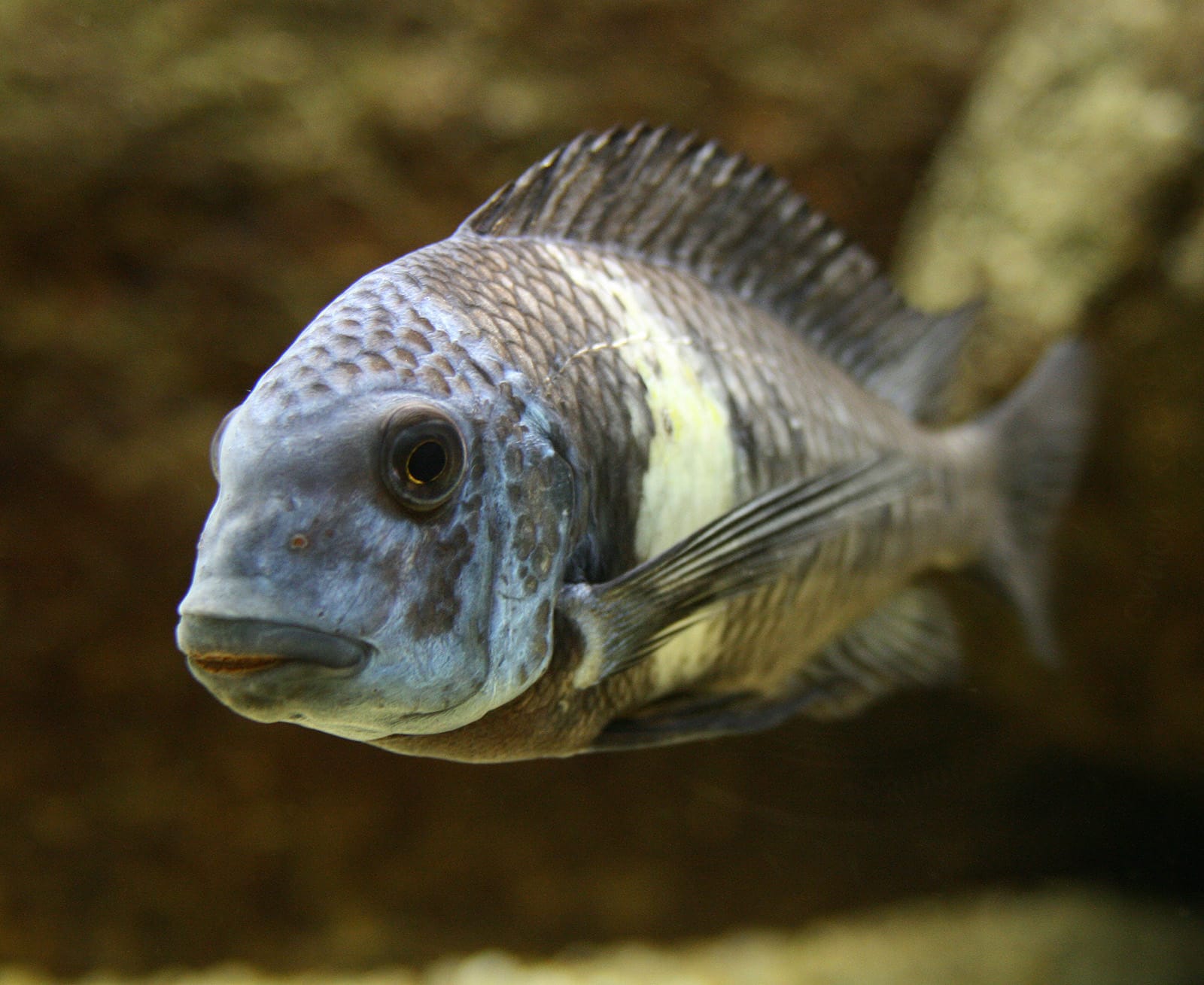
Tropheus Duboisi is a Lake Tanganyika cichlid prized for its dark, almost black body with subtle red or orange fin highlights. Adults grow to 4–5 inches and are highly social but territorial, especially within species groups. They thrive in groups of 10 or more to maintain stable social hierarchies.
These herbivorous fish feed mainly on algae, which should be supplemented with spirulina-based pellets in aquariums. Tanks should include rocky environments with abundant hiding spots. Breeding involves maternal mouthbrooding, and the fry are cared for meticulously. Tropheus Duboisi’s dramatic coloration, complex social behavior, and energetic activity make it a crowning example in Types of Cichlid Fish.
Conclusion
Cichlid fish are among the most diverse and captivating freshwater species in the world, with over 50 unique types reviewed in this guide. From the small and colorful Yellow Dwarf Cichlid to the large and majestic Red Devil or Blue Dolphin Cichlid, each species offers a fascinating combination of beauty, behavior, and adaptability. These fish are not only visually striking but also exhibit complex social behaviors, strong parental care, and fascinating interactions with their environment, making them ideal for both beginner and experienced aquarists.
Whether you are drawn to the vibrant peacocks of Lake Malawi, the patterned Julies of Lake Tanganyika, or the hardy Central and South American cichlids like Severum and Rock Kribensis, understanding the needs, temperament, and care of each species is essential for creating a healthy and thriving aquarium. By exploring the rich variety of Types of Cichlid Fish, hobbyists can enjoy both the aesthetic appeal and the educational value of these remarkable freshwater creatures.
Ultimately, cichlids provide a unique window into the fascinating world of freshwater ecosystems. Their vivid colors, intricate behaviors, and adaptability make them more than just aquarium fish—they are living examples of nature’s diversity and complexity. This comprehensive guide to Types of Cichlid Fish serves as a resource for identification, care tips, and appreciation of one of the most beloved groups of freshwater fish in the world.
Frequently Asked Questions (FAQs) About Types of Cichlid Fish
1. What are cichlid fish?
Cichlid fish are a diverse group of freshwater fish known for their vibrant colors, complex social behavior, and unique breeding habits. They are popular in aquariums and belong to the family Cichlidae.
2. How many types of cichlid fish exist?
There are hundreds of cichlid species worldwide, but this guide reviews 50 of the most popular and distinct Types of Cichlid Fish for aquarists.
3. Where do cichlid fish come from?
Cichlids originate primarily from Africa, Central and South America, and parts of Asia. Many species are endemic to the African Great Lakes such as Malawi, Tanganyika, and Victoria.
4. Are cichlid fish easy to care for?
Care difficulty varies by species. Some cichlids, like Severums and Rock Kribensis, are beginner-friendly, while species like Tropheus Duboisi and Uaru require advanced care and stable water conditions.
5. What do cichlid fish eat?
Depending on the species, cichlids can be herbivorous, carnivorous, or omnivorous. Most accept high-quality pellets, live or frozen foods, and vegetable matter.
6. How big do cichlid fish get?
Cichlid sizes range from small species like Yellow Dwarf Cichlid (2–3 inches) to large species like Red Devil or Blue Dolphin Cichlid (up to 12–16 inches).
7. Can different types of cichlid fish live together?
Compatibility depends on temperament, size, and tank setup. Peaceful species can live together, but aggressive or territorial types require careful selection of tank mates.
8. How do cichlid fish breed?
Many cichlids exhibit parental care, such as mouthbrooding or egg guarding. Breeding behavior is species-specific and often involves color displays, territory defense, and pair bonding.
9. What is mouthbrooding in cichlid fish?
Mouthbrooding is when the female or sometimes male carries eggs and fry in their mouth for protection. This is common among African cichlids like Tropheus and Mbuna species.
10. How often should I feed cichlid fish?
Most cichlids should be fed 1–2 times per day in small portions to avoid overfeeding and maintain water quality.
11. What tank size is suitable for cichlid fish?
Tank size depends on species. Small cichlids like Julidochromis need 20–30 gallons, while larger species like Red Devil require 100+ gallons.
12. Can cichlid fish recognize their owners?
Yes! Many cichlid species, such as Flowerhorns and Red Devils, are intelligent and can recognize their owners, responding to feeding routines.
13. Are cichlid fish aggressive?
Aggression varies by species. African Mbuna cichlids tend to be territorial, while South American Severums are relatively peaceful.
14. How long do cichlid fish live?
Most cichlids live 5–10 years, but with proper care, species like Discus and Flowerhorn can live 12–15 years.
15. What water conditions do cichlid fish need?
Cichlids require stable water conditions. African species prefer hard, alkaline water, while South American species thrive in softer, slightly acidic water.
16. Do cichlid fish need hiding spots?
Yes! Rocks, caves, and plants provide shelter, reduce stress, and allow territorial species to establish boundaries.
17. Can I mix freshwater and saltwater cichlids?
No. Cichlid fish are freshwater species and cannot survive in saltwater tanks.
18. How do I prevent aggression among cichlid fish?
Provide plenty of hiding spots, keep compatible species together, and avoid overcrowding. Monitoring behavior during introductions is key.
19. What is the best diet for herbivorous cichlids?
Feed herbivorous cichlids spirulina-based pellets, algae wafers, and fresh vegetables like spinach or zucchini.
20. Can cichlid fish live in cold water?
Most cichlids are tropical and require water temperatures between 75–82°F (24–28°C). Cooler temperatures can stress or kill them.
21. What are the most colorful types of cichlid fish?
Species like Peacock Cichlids, Red Empress, Flowerhorn, and Jewelfish are known for their vibrant and eye-catching colors.
22. Are cichlid fish schooling fish?
Some species, like Tropheus and Mbuna, exhibit social behavior in groups, but many are territorial and do not school.
23. How can I tell male and female cichlid fish apart?
Sexual dimorphism varies by species. Males are usually more colorful, larger, and display extended fins, while females are smaller and duller in color.
24. Do cichlid fish change color?
Yes. Color changes can indicate mood, health, stress, breeding readiness, or aggression.
25. Can cichlid fish live in community tanks?
Only with compatible species and sufficient space. Peaceful cichlids like Severum can live with other calm species, while aggressive Mbuna may require species-only setups.
26. How do I care for a Red Devil Cichlid?
Provide a large tank (100+ gallons), high-protein diet, and hiding places. Monitor aggression and maintain water quality consistently.
27. What is a Peacock Cichlid?
Peacock Cichlids are African cichlids from Lake Malawi, known for vivid coloration and peaceful-to-moderate temperament. Popular examples include Strawberry Peacock and Sunshine Peacock.
28. Are Flowerhorn cichlids hybrids?
Yes. Flowerhorns are man-made hybrid cichlids, valued for their nuchal hump, bright colors, and interactive personality.
29. How do I breed African cichlids?
Provide proper water conditions, territories, and suitable tank mates. Most African cichlids are maternal mouthbrooders, with females carrying and protecting eggs and fry.
30. Can cichlid fish live with other fish species?
Yes, if temperaments match. Avoid pairing aggressive cichlids with small or docile fish to prevent injury or stress.
31. What is the lifespan of Flowerhorn cichlids?
With proper care, Flowerhorns can live up to 10–12 years, making them long-term aquarium companions.
32. How often should I clean a cichlid tank?
Regular maintenance is crucial. Partial water changes of 20–30% weekly help maintain water quality and reduce stress for cichlid fish.
33. What is a Tropheus cichlid?
Tropheus cichlids are herbivorous African species from Lake Tanganyika, known for complex social hierarchies and unique feeding behavior on algae.
34. Do cichlids need a heater?
Yes, tropical cichlids require stable water temperatures between 75–82°F (24–28°C), maintained with a reliable aquarium heater.
35. How can I prevent diseases in cichlid fish?
Maintain clean water, avoid overfeeding, quarantine new fish, and monitor for early signs of illness.
36. What are Mbuna cichlids?
Mbuna cichlids are rock-dwelling species from Lake Malawi, known for territorial behavior, vibrant colors, and active social interactions.
37. Can cichlid fish be kept in small tanks?
Small species like Julidochromis or Dwarf Cichlids can thrive in 20–30 gallon tanks, but larger cichlids require much more space.
38. Do cichlid fish need filtration?
Yes, cichlids produce significant waste, and a strong filtration system is essential to maintain water quality.
39. How do I care for Peacock Cichlids?
Provide a tank with rocks, moderate water flow, a varied diet, and proper spacing to reduce territorial disputes.
40. Can cichlid fish live alone?
Yes, some species can live alone, but many are social and thrive in groups or pairs depending on temperament.
41. How do I identify different types of cichlid fish?
Identification is based on body shape, coloration, patterns, fin morphology, and behavior. Each species has unique markings and characteristics.
42. Are cichlids freshwater fish?
Yes, all cichlids are freshwater species, native to rivers, lakes, and streams in Africa, South America, and parts of Asia.
43. How aggressive are African cichlids?
African cichlids vary in aggression; Mbuna species are highly territorial, while Peacock cichlids tend to be moderately aggressive.
44. Can cichlid fish change sex?
Some species exhibit sequential hermaphroditism under certain conditions, but most cichlids maintain distinct male and female sexes.
45. Do cichlids need water softeners?
African cichlids prefer hard, alkaline water, while South American species prefer soft, slightly acidic water. Water parameters must match their natural habitat.
46. What is a Julidochromis cichlid?
Julidochromis are small Tanganyika cichlids, recognizable by their slender bodies and striped patterns. They are territorial and form monogamous pairs.
47. How do I feed herbivorous cichlids?
Provide algae-based pellets, blanched vegetables, and occasional protein supplements to maintain proper nutrition.
48. Are cichlids compatible with other cichlids?
Compatibility depends on size, temperament, and habitat. Avoid mixing highly aggressive species with small or passive cichlids.
49. What is a Mouthbrooder cichlid?
Mouthbrooder cichlids carry their eggs and fry in their mouths for protection. This behavior is common in African cichlids like Tropheus and Mbuna.
50. Why are cichlid fish popular in aquariums?
Cichlid fish are popular for their vibrant colors, complex behaviors, social interactions, and variety, making them an engaging and educational aquarium species.