

If you are searching for types of Desert Animals, you are exploring one of the most extreme and fascinating wildlife environments on Earth. Deserts are not empty places—they are home to highly adapted animals that survive intense heat, limited water, and dramatic temperature changes between day and night. From fast-moving mammals like foxes and gazelles to tough reptiles such as snakes and lizards, desert wildlife has developed incredible survival strategies. In this guide, we explore 70 Desert Animals in detail. Each species shows how life adapts to dry climates through hunting skills, water conservation, camouflage, and heat resistance. This article is designed for wildlife lovers who want a clear, beginner-friendly understanding of desert ecosystems and the amazing creatures that live there.
70 Types of Desert Animals
1. Fennec Fox
The Fennec Fox is one of the most iconic desert animals, easily recognized by its extremely large ears. These ears are not just for hearing—they help release heat, keeping the fox cool in extreme desert temperatures. It lives in the Sahara Desert and other sandy regions of North Africa.
This small fox is nocturnal, meaning it hunts at night when temperatures drop. Its diet includes insects, small rodents, and plants. The Fennec Fox also survives without drinking water directly, getting moisture from food instead. Its sandy-colored fur acts as natural camouflage, blending perfectly with desert dunes and protecting it from predators.
2. Camel
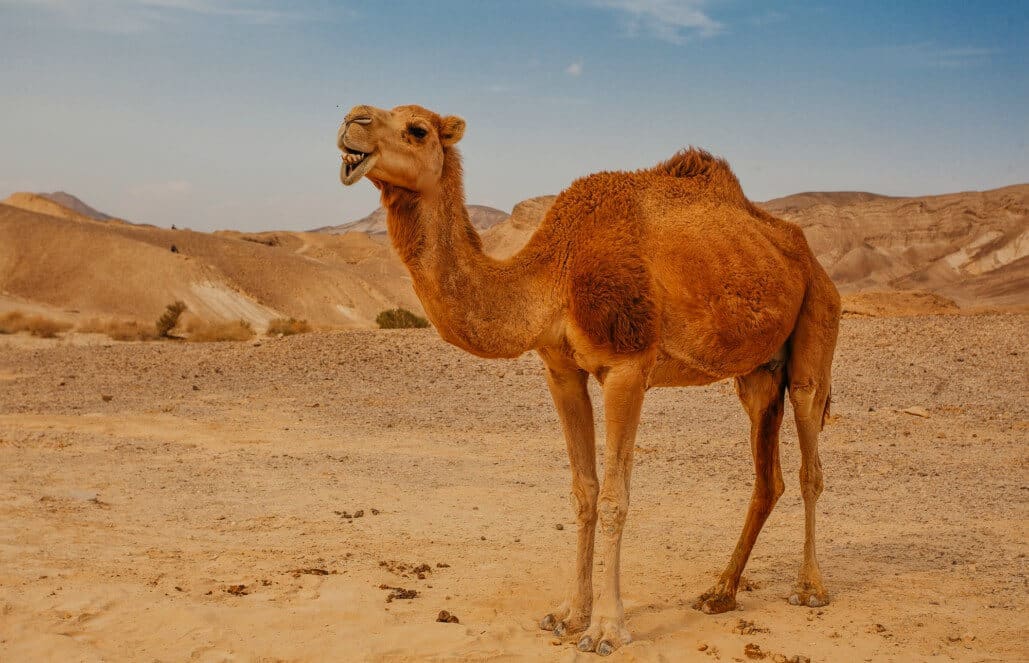
The Camel is one of the most famous desert animals and a symbol of survival in harsh environments. There are two main types: the Dromedary (one hump) and Bactrian (two humps). These humps store fat, which can be converted into energy and water when needed.
Camels are built for long desert journeys. They can survive extreme heat, go days without water, and withstand sandstorms thanks to their long eyelashes and closable nostrils. They play a crucial role in human desert life, used for transport, milk, and meat.
3. Sand Cat
The Sand Cat is a small wild feline perfectly adapted to desert life. It has thick fur on its paws, which protects it from hot sand. This species is found in the deserts of North Africa, the Middle East, and Central Asia.
Sand Cats are excellent hunters, feeding on rodents, insects, and small reptiles. They are extremely silent and cautious, making them difficult to observe in the wild. Their sandy coat provides excellent camouflage in desert environments.
4. Caracal
The Caracal is a medium-sized wild cat known for its long black ear tufts and powerful jumping ability. It lives in dry savannas and desert edges across Africa and parts of Asia.
Caracals are skilled hunters that can leap high into the air to catch birds in flight. They are solitary animals and rely heavily on stealth and speed. Their strong bodies and sharp senses make them one of the most efficient predators in desert ecosystems.
5. Coyote
The Coyote is a highly adaptable predator found in North American deserts. It is known for its intelligence and ability to survive in changing environments, including deserts, forests, and urban areas.
Coyotes are omnivores, eating small animals, fruits, insects, and carrion. In deserts, they are mostly nocturnal to avoid extreme heat. Their adaptability makes them one of the most successful wild canines in North America.
6. Jackal
Jackals are medium-sized wild canines found in African and Asian deserts. They are closely related to wolves and foxes and are known for their opportunistic feeding habits.
They hunt small animals but also scavenge when necessary. Jackals are highly social and often communicate through howls and calls. Their ability to adapt to dry environments makes them common in desert ecosystems.
7. Bat-eared Fox
The Bat-eared Fox is named for its unusually large ears, which help regulate body temperature and detect insects underground. It is native to African savannas and semi-desert regions.
Unlike many predators, this fox mainly feeds on insects, especially termites. It plays an important ecological role by controlling insect populations in desert environments.
8. Rüppell’s Fox
Rüppell’s Fox is a small desert fox found in North Africa and the Middle East. It has thick fur on its feet to protect it from hot sand and extreme temperatures.
This species is highly adapted to desert life, surviving without direct water intake. It is nocturnal and feeds on insects, rodents, and plants.
9. Pale Fox
The Pale Fox is a light-colored desert fox found in the Sahel region of Africa. Its pale coat reflects sunlight, helping it stay cool during the day.
It is a shy and elusive species that lives in sandy and semi-arid environments. Its diet includes insects, small mammals, and fruits.
10. Meerkat
The Meerkat is a small, social mammal that lives in groups called mobs or clans. It is found in the Kalahari Desert of southern Africa.
Meerkats are famous for standing upright to watch for predators while others forage. They eat insects, small reptiles, and plants. Their social behavior is key to survival in harsh desert conditions.
11. Rüppell’s Fox
Rüppell’s Fox is one of the most highly adapted desert canines and a key example among types of Desert Animals that thrive in extreme arid environments. It is native to North Africa, the Arabian Peninsula, and parts of the Middle East, where temperatures can swing dramatically between scorching days and cold nights. This fox is small, agile, and extremely cautious, which helps it survive in open desert landscapes with very few hiding places.
One of its most important survival traits is its ability to regulate body temperature efficiently. It has thick fur on its feet, which protects it from burning sand, and a light-colored coat that reflects sunlight. Like many desert species, Rüppell’s Fox is nocturnal, meaning it becomes active at night when temperatures are cooler and prey is easier to hunt.
Its diet is highly flexible and includes insects, small rodents, birds, reptiles, and even plant material when food is scarce. This adaptability is crucial for survival in deserts where food availability changes constantly. It also has an incredible ability to survive with minimal water intake, obtaining moisture from its prey.
Ecologically, Rüppell’s Fox plays an important role in controlling insect and rodent populations, helping maintain balance in fragile desert ecosystems. Its shy nature makes it difficult to observe, but it is considered a vital predator in arid environments.
12. Pale Fox
The Pale Fox is a light-colored desert canid found primarily in the Sahel region of Africa, where sandy deserts transition into semi-arid grasslands. Its pale coat is not just beautiful but also highly functional, reflecting sunlight and helping the animal stay cool in extreme heat conditions.
This species is smaller than many other foxes and is extremely elusive, often avoiding human contact. It lives in underground burrows or sandy dens that provide protection from both heat and predators. These burrows are essential for survival in environments where surface temperatures can become deadly during the day.
The Pale Fox is an omnivorous opportunist. Its diet includes insects, small mammals, birds, eggs, and occasionally fruits or plant matter. This flexible feeding strategy allows it to survive in unpredictable desert conditions where food availability fluctuates seasonally.
From an ecological perspective, the Pale Fox helps regulate insect populations and contributes to seed dispersal through its varied diet. Although not as well-studied as other desert predators, it plays a subtle but important role in maintaining ecosystem balance in dry African regions.
13. Desert Fox (General Fennec-type Foxes)
The term “Desert Fox” is often used to describe small fox species adapted to arid environments, particularly those similar to the Fennec Fox. These foxes are among the most iconic types of Desert Animals due to their unique physical and behavioral adaptations to extreme heat.
Desert Foxes typically have large ears that serve as cooling systems, helping them dissipate body heat efficiently. Their fur is usually light-colored, allowing them to blend into sandy environments and avoid overheating. These adaptations make them highly efficient survivors in some of the harshest climates on Earth.
They are primarily nocturnal hunters, relying on stealth and speed to catch insects, rodents, and small reptiles. During the day, they retreat into underground burrows to avoid heat stress. These burrows also provide protection from predators and sandstorms.
Ecologically, Desert Foxes play a key role in controlling small animal populations and maintaining balance in desert food chains. Their ability to survive with minimal water intake makes them one of the most efficient desert-adapted carnivores.
14. Meerkat
The Meerkat is a highly social mammal that lives in organized groups known as mobs or clans. It is found primarily in the Kalahari Desert of southern Africa and is one of the most well-studied types of Desert Animals due to its complex social behavior.
Meerkats live in underground burrow systems that can be extensive and shared by multiple generations. These burrows provide protection from predators and extreme temperatures. One of the most famous behaviors of meerkats is their “sentinel” system, where one individual stands guard while others forage.
Their diet consists mainly of insects, larvae, small reptiles, and occasionally plants. They are highly cooperative hunters and rely on teamwork to survive in harsh desert conditions. Each member of the group has a role, contributing to the survival of the entire colony.
Ecologically, meerkats help control insect populations and serve as prey for larger desert predators. Their social structure and cooperative behavior make them one of the most fascinating mammals in arid ecosystems.
15. Aardvark
The Aardvark is a nocturnal, burrowing mammal native to sub-Saharan Africa. It is one of the most unique types of Desert Animals due to its specialized diet and digging abilities. Despite its pig-like appearance, it is not closely related to pigs but belongs to its own distinct order.
Aardvarks are expert diggers with strong claws that allow them to break into termite mounds. Their diet consists almost entirely of ants and termites, which they consume using their long, sticky tongue. This specialized feeding behavior makes them highly important in controlling insect populations.
They live in underground burrows that provide protection from predators and extreme heat. These burrows can be extensive and are often reused by other animals after abandonment.
Ecologically, Aardvarks contribute to soil aeration through their digging activities and help regulate termite populations, making them essential for maintaining healthy desert ecosystems.
16. Aardwolf
The Aardwolf is a small, insect-eating mammal closely related to hyenas. It is found in eastern and southern Africa and is highly specialized for feeding on termites, making it one of the most unusual types of Desert Animals.
Unlike its hyena relatives, the Aardwolf does not hunt large prey. Instead, it uses its sticky tongue to feed on termites at night. It can consume thousands of termites in a single feeding session without destroying entire colonies, which allows for sustainable feeding.
It is a solitary animal that marks its territory using scent glands. During the day, it rests in burrows or dense vegetation to avoid heat and predators.
Ecologically, the Aardwolf helps regulate termite populations and contributes to insect balance in desert and savanna ecosystems.
17. African Elephant
The African Elephant is the largest land mammal on Earth and can also inhabit dry savanna and desert-edge environments. It is one of the most powerful and intelligent types of Desert Animals in Africa.
These elephants have large ears that help regulate body temperature, and they use their trunks to find water sources buried underground. In desert regions, they are known for traveling long distances in search of water and food.
They are herbivores, feeding on grasses, shrubs, and tree bark. Their movement through desert landscapes can create pathways used by other animals.
Ecologically, African Elephants play a major role in shaping vegetation patterns and maintaining water access points in dry ecosystems.
18. Desert Elephant
The Desert Elephant is a specialized population of African elephants adapted to extremely dry environments, particularly in Namibia and Mali. It is one of the rarest types of Desert Animals.
These elephants are smaller than typical African elephants and have longer legs adapted for traveling across sandy terrain. They can survive longer without water and often travel vast distances between water sources.
They dig for underground water using their trunks and feet, creating water access points for other animals in the ecosystem.
Ecologically, Desert Elephants are crucial for maintaining desert biodiversity and water distribution in arid regions.
19. Oryx
The Oryx is a large antelope species adapted to hot desert environments. It is one of the most resilient types of Desert Animals, capable of surviving extreme heat and long periods without water.
Oryx regulate their body temperature efficiently, allowing them to withstand desert heat without overheating. They primarily feed on grasses, shrubs, and desert vegetation.
They are social animals that live in herds, which helps protect them from predators such as lions and hyenas.
Ecologically, Oryx play a role in controlling vegetation growth and supporting predator populations in desert ecosystems.
20. Arabian Oryx
The Arabian Oryx is a striking white antelope native to the Arabian Peninsula. It is one of the most iconic desert conservation success stories among types of Desert Animals, as it was once extinct in the wild but has been reintroduced through conservation efforts.
Its white coat reflects sunlight, helping it stay cool in extreme desert heat. It can survive long periods without drinking water, obtaining moisture from plants it consumes.
Arabian Oryx are highly adapted to desert life, with specialized kidneys that conserve water efficiently. They travel in herds and are well adapted to arid plains and sandy deserts.
Ecologically, they help maintain vegetation balance and support predator-prey dynamics in desert ecosystems.
21. Addax
The Addax is one of the most critically endangered antelopes in the world and a classic example of highly specialized types of Desert Animals. It is native to the Sahara Desert, where it survives in some of the harshest and driest environments on Earth. The Addax is well known for its pale, almost white coat, which helps reflect sunlight and keep its body temperature lower during extreme daytime heat.
One of the Addax’s most important adaptations is its ability to survive without direct drinking water for long periods. Instead, it obtains moisture from desert plants such as grasses, herbs, and shrubs. Its broad, flat hooves are specially designed to walk on soft sand without sinking, allowing it to travel long distances in search of sparse vegetation.
Addax are slow-moving but highly resilient animals. They often form small herds that help protect individuals from predators such as lions and hyenas. Their ability to endure dehydration and extreme heat makes them one of the most efficient desert survivors.
Ecologically, Addax play a role in shaping desert vegetation patterns by grazing selectively on plants. However, due to hunting and habitat loss, their population has drastically declined, making conservation efforts extremely important.
22. Gazelle
Gazelles are graceful, fast-running antelopes widely found across African and Asian deserts and savannas. They are among the most iconic types of Desert Animals due to their speed, agility, and ability to survive in arid landscapes.
Their slender bodies and long legs allow them to run at high speeds to escape predators such as cheetahs and lions. Gazelles are also known for their unique “stotting” behavior, where they leap high into the air to signal strength and confuse predators.
They feed on grasses, leaves, and desert shrubs, often obtaining moisture from their food instead of drinking water directly. Many gazelle species are adapted to migrate or move seasonally in search of better grazing areas.
Ecologically, gazelles are important prey species that support large predator populations and help maintain balance in desert food chains.
23. Dorcas Gazelle
The Dorcas Gazelle is one of the smallest and most heat-tolerant gazelle species. It is widely distributed across North Africa and the Middle East, making it a key member of desert ecosystems.
This species is extremely well adapted to arid conditions. It can survive with very little water and often obtains moisture from succulent plants. Its light-colored coat helps reflect sunlight and reduce heat absorption.
Dorcas Gazelles are highly alert and fast, capable of quick bursts of speed to escape predators. They are also known for their ability to live in extremely sparse vegetation zones where other herbivores struggle to survive.
Ecologically, they play a role in controlling plant growth and supporting predator species such as cheetahs and desert foxes.
24. Springbok
The Springbok is a medium-sized antelope native to southern Africa’s dry regions. It is one of the most visually distinctive types of Desert Animals due to its elegant jumping behavior and unique markings.
Springboks are famous for “pronking,” a behavior where they leap high into the air with stiff legs. This may serve as a warning signal to predators or a display of fitness. They are highly adapted to drought conditions and can survive long periods without water.
Their diet includes grasses, shrubs, and succulents, allowing them to adapt to seasonal changes in food availability. During dry seasons, they may migrate in large herds in search of greener areas.
Ecologically, Springboks play a major role in grazing dynamics and serve as a key prey species in desert and savanna ecosystems.
25. Steenbok
The Steenbok is a small, solitary antelope found in dry savannas and semi-desert regions of Africa. It is one of the more secretive types of Desert Animals, often hiding in dense vegetation during the day.
Steenboks are highly adaptable and can survive in areas with limited water sources. They feed on grasses, leaves, and fruits, and are known to obtain most of their moisture from food.
Unlike herd-forming antelopes, Steenboks are solitary and highly territorial. They rely on stealth and camouflage to avoid predators rather than speed or group defense.
Ecologically, Steenboks help control vegetation growth and serve as prey for small and medium-sized predators in desert ecosystems.
26. Kudu
The Kudu is a large, elegant antelope known for its long spiral horns and striped body pattern. It is found in dry woodlands and savanna-desert transition zones.
Kudus are highly adaptable browsers that feed on leaves, shrubs, and vines. They are capable of reaching high vegetation using their long necks, giving them access to food sources unavailable to many other herbivores.
Despite their size, Kudus are very agile and can jump over high obstacles to escape predators. They rely on camouflage and alertness rather than speed alone.
Ecologically, Kudus play a role in shaping vegetation structure and supporting predator populations in arid ecosystems.
27. Gemsbok
The Gemsbok is one of the most iconic desert antelopes, native to the Kalahari and Namib Deserts. It is well adapted to extreme heat and water scarcity.
Gemsboks have striking black-and-white facial markings and long, straight horns used for defense. They can survive long periods without drinking water by extracting moisture from desert plants.
They are highly resilient animals capable of tolerating high body temperatures, which helps them survive in harsh desert climates where few large mammals can thrive.
Ecologically, Gemsboks play an important role in grazing dry vegetation and supporting predator populations such as lions and hyenas.
28. Bighorn Sheep
Bighorn Sheep are mountain-dwelling herbivores found in rocky desert regions of North America. They are one of the most physically impressive types of Desert Animals due to their large curled horns.
They are excellent climbers, able to navigate steep cliffs and rocky terrain where predators struggle to follow. Their agility provides strong protection against predators like mountain lions.
Bighorn Sheep feed on grasses, shrubs, and desert plants, often moving between elevations depending on food and water availability.
Ecologically, they play a role in grazing vegetation and supporting predator species in mountainous desert ecosystems.
29. Mountain Goat
The Mountain Goat is a hardy climber found in rugged, high-altitude environments that often overlap with cold desert conditions. It is one of the most agile types of Desert Animals in rocky landscapes.
Its thick white coat provides insulation against cold temperatures, while its specialized hooves give it exceptional grip on steep cliffs.
Mountain Goats are herbivores that feed on grasses, mosses, and alpine vegetation. They are highly adapted to harsh environments with limited food availability.
Ecologically, they help shape alpine vegetation patterns and serve as prey for large predators such as wolves and bears in mountainous regions.
30. Jerboa
The Jerboa is a small desert rodent known for its long hind legs and kangaroo-like hopping movement. It is one of the most unique types of Desert Animals due to its extraordinary locomotion style.
Jerboas are nocturnal animals that live in burrows during the day to escape extreme heat. At night, they emerge to forage for seeds, plants, and insects.
Their long legs allow them to move quickly across sand, reducing contact with hot surfaces. This adaptation also helps them escape predators efficiently.
Ecologically, Jerboas play an important role in seed dispersal and insect control in desert ecosystems.
31. Kangaroo Rat
The Kangaroo Rat is one of the most extraordinary types of Desert Animals due to its incredible ability to survive without drinking water. Found mainly in North American deserts, this small rodent has evolved highly efficient kidneys that conserve almost every drop of moisture from its food. It survives on dry seeds and plant material, extracting all the water it needs metabolically.
One of its most remarkable features is its jumping ability. With powerful hind legs similar to a kangaroo, it can leap long distances across hot sand. This helps it escape predators like snakes and owls while minimizing contact with the scorching desert ground. Its long tail also aids in balance during rapid movement.
Kangaroo Rats are nocturnal, spending daylight hours in deep burrows where temperatures remain cool and stable. These burrows also store food and provide protection from predators and extreme heat.
Ecologically, they play a vital role in seed dispersal and soil aeration. By burying seeds for later use, they unintentionally contribute to plant regeneration in desert ecosystems.
32. Desert Mouse
The Desert Mouse is a small rodent adapted to arid environments across Africa, Asia, and North America. It is one of the most widespread types of Desert Animals, known for its resilience in dry and resource-scarce habitats.
It survives by feeding on seeds, insects, and dry vegetation, often obtaining moisture from food rather than drinking water directly. Its kidneys are highly efficient at conserving water, allowing it to thrive in harsh desert conditions.
Desert Mice are nocturnal and highly cautious, using burrows or vegetation cover to avoid predators. Their light coloration helps them blend into sandy environments.
Ecologically, they are important prey species for snakes, owls, and foxes, helping maintain balance in desert food webs.
33. Pocket Mouse
The Pocket Mouse is a tiny desert rodent named for its external cheek pouches used for storing food. It is one of the most specialized types of Desert Animals in North American deserts.
It feeds mainly on seeds, which it collects at night and stores in underground burrows. This behavior allows it to survive long dry periods when food is scarce.
Like the Kangaroo Rat, it does not need to drink water, instead relying entirely on metabolic water derived from food. Its fur-covered feet help protect it from hot sand.
Ecologically, Pocket Mice help with seed dispersal and plant regeneration in desert ecosystems.
34. Ground Squirrel
Ground Squirrels are burrowing rodents found in deserts and dry grasslands. They are active during cooler parts of the day and are highly social in some species.
They live in complex burrow systems that protect them from heat and predators. These burrows also serve as food storage areas and breeding sites.
Ground Squirrels feed on seeds, plants, insects, and occasionally small animals. They are important for soil mixing and aeration due to their digging behavior.
Ecologically, they support desert food chains as prey for birds of prey, snakes, and carnivorous mammals.
35. Jackrabbit
The Jackrabbit is a large desert hare known for its extremely long ears and powerful hind legs. It is one of the fastest types of Desert Animals in North American deserts.
Its long ears help regulate body temperature by releasing heat, while its strong legs allow it to reach high speeds to escape predators.
Jackrabbits feed on grasses, shrubs, and desert vegetation, often adapting their diet based on seasonal availability.
Ecologically, they are important herbivores and prey species that help support desert predator populations.
36. Cottontail Rabbit
The Cottontail Rabbit is a medium-sized rabbit found in desert edges and scrublands. It is named for its fluffy white tail that resembles a cotton ball.
It is highly adaptable and can survive in both arid and semi-arid environments. It feeds on grasses, leaves, and bark, obtaining most of its moisture from vegetation.
Cottontail Rabbits are fast runners and rely on zigzag movements to escape predators such as coyotes and hawks.
Ecologically, they play a key role in herbivory and serve as prey for many desert carnivores.
37. Desert Tortoise
The Desert Tortoise is a long-living reptile native to the Mojave and Sonoran deserts. It is one of the most iconic types of Desert Animals due to its slow movement and remarkable survival strategies.
It spends most of its life in underground burrows, which protect it from extreme heat and cold. It can survive for long periods without food or water by storing moisture in its bladder.
The Desert Tortoise feeds on grasses, wildflowers, and desert plants. It plays a role in seed dispersal and vegetation management.
Ecologically, it is a keystone species, meaning its presence supports many other desert organisms.
38. Tortoise (General Desert Species)
Desert tortoises in general refer to several species adapted to arid environments across different continents. They are slow-moving reptiles with highly efficient water conservation systems.
They dig burrows to escape heat and regulate body temperature. These burrows are often reused by other desert animals, making them ecosystem engineers.
Their diet consists mainly of plants, flowers, and dry vegetation, allowing them to survive in nutrient-poor environments.
Ecologically, tortoises help maintain plant balance and provide shelter for other species in desert habitats.
39. Desert Iguana
The Desert Iguana is a heat-tolerant lizard found in the southwestern United States and northern Mexico. It is one of the most resilient reptilian types of Desert Animals.
It is active during high temperatures when many predators are inactive. Its light-colored body reflects sunlight and helps regulate body heat.
The Desert Iguana feeds primarily on plants, flowers, and occasionally insects. It is especially dependent on creosote bush habitats.
Ecologically, it helps with seed dispersal and plant population control in desert ecosystems.
40. Gila Monster
The Gila Monster is one of the few venomous lizards in the world and a unique member of desert ecosystems. It is found in the southwestern United States and northern Mexico.
Unlike fast predators, it is slow-moving and relies on a strong bite and venom to subdue prey such as eggs, small mammals, and reptiles.
It spends much of its time in burrows or shaded areas to avoid extreme heat, emerging mainly during cooler periods.
Ecologically, the Gila Monster helps control small animal populations and plays a specialized role in desert food webs.
41. Horned Lizard
The Horned Lizard is one of the most fascinating reptiles among types of Desert Animals, instantly recognizable by the crown-like horns around its head and its flattened, spiky body. Found mainly in North American deserts such as the Mojave, Sonoran, and Chihuahuan deserts, this lizard has evolved an impressive set of adaptations to survive in extreme heat and dry conditions.
One of its most remarkable defense mechanisms is its ability to “squirt” blood from its eyes when threatened. This unusual adaptation can confuse or deter predators such as coyotes and birds of prey. Although it sounds dramatic, this behavior is a highly effective survival strategy in the wild.
Horned Lizards are also masters of camouflage. Their sandy-colored skin blends perfectly with desert soil, making them nearly invisible when they remain still. They are slow movers and rely heavily on stealth rather than speed.
Their diet consists mainly of ants, especially harvester ants. They can consume thousands of ants in a single day, playing a key role in controlling insect populations. However, they are highly specialized feeders, which makes them vulnerable to environmental changes.
Ecologically, Horned Lizards help regulate ant populations and contribute to the balance of desert insect ecosystems. Their presence is also an indicator of healthy desert habitats.
42. Chameleon
Chameleons are highly specialized reptiles known for their color-changing abilities, making them one of the most unique types of Desert Animals in arid and semi-arid regions, particularly in parts of Africa and the Middle East.
Their ability to change color is not only for camouflage but also for communication and temperature regulation. In hot desert environments, they may adopt lighter colors to reflect heat, while darker tones help absorb warmth in cooler conditions.
Chameleons have independently moving eyes, allowing them to scan their surroundings without moving their heads. This gives them a wide field of vision to detect both predators and prey.
They feed primarily on insects, using their extremely fast, sticky tongues to capture prey from a distance. This hunting strategy allows them to remain motionless, conserving energy in harsh environments.
Ecologically, chameleons help regulate insect populations and contribute to the balance of desert food webs.
43. Gecko
Geckos are small, agile lizards found in deserts around the world. They are among the most widespread types of Desert Animals, known for their ability to climb vertical surfaces and even walk on ceilings.
Their specialized toe pads allow them to grip surfaces using microscopic hair-like structures. This adaptation helps them escape predators and navigate rocky desert terrain efficiently.
Geckos are mostly nocturnal, emerging at night to hunt insects such as moths, beetles, and spiders. This behavior helps them avoid extreme daytime heat.
Many desert gecko species have translucent skin and pale coloration, which helps them blend into sandy or rocky environments.
Ecologically, geckos play an important role in controlling insect populations and serve as prey for snakes, birds, and larger reptiles.
44. Desert Monitor Lizard
The Desert Monitor Lizard is a large, powerful reptile found in African and Asian deserts. It is one of the most dominant reptilian types of Desert Animals, capable of surviving in extreme heat and dry conditions.
This species is a carnivorous predator, feeding on insects, small mammals, birds, eggs, and other reptiles. It uses its strong claws and muscular body to dig and hunt effectively.
Desert Monitor Lizards are highly alert and fast-moving compared to many reptiles. They rely on both speed and intelligence to capture prey and avoid threats.
They are also excellent swimmers, which allows them to survive in desert regions near seasonal water sources.
Ecologically, they help control populations of smaller animals and maintain balance in desert food chains.
45. Monitor Lizard (General Species Group)
Monitor Lizards are a group of large reptiles found across Africa, Asia, and Australia, with several species adapted to desert environments. They are among the most intelligent types of Desert Animals in the reptile world.
They have strong limbs, sharp claws, and long tails used for balance and defense. Their hunting strategy is highly adaptable, allowing them to consume a wide range of prey including insects, small mammals, and carrion.
Monitor Lizards are known for their excellent sense of smell, which they use to locate food over long distances in arid landscapes.
Ecologically, they act as both predators and scavengers, helping maintain cleanliness and balance in desert ecosystems.
46. Rattlesnake
The Rattlesnake is one of the most famous venomous reptiles in North American deserts. It is easily recognized by the rattle at the end of its tail, which it uses as a warning signal. It is one of the most well-known types of Desert Animals.
Rattlesnakes are ambush predators that rely on camouflage and patience. They wait for prey such as rodents, birds, and lizards to pass by before striking quickly with venom.
Their venom is primarily used for immobilizing prey rather than defense. They are generally not aggressive unless threatened.
Ecologically, rattlesnakes help control rodent populations, which is important for maintaining desert ecosystem balance.
47. Sidewinder Snake
The Sidewinder Snake is a specialized desert rattlesnake known for its unique sideways movement. It is one of the most adapted types of Desert Animals for sandy environments.
Its “sidewinding” motion reduces contact with hot sand, allowing it to move efficiently across dunes without overheating. This adaptation is crucial for survival in extreme desert heat.
Sidewinders are venomous and primarily hunt small rodents and lizards. They are nocturnal or crepuscular, avoiding peak daytime temperatures.
Ecologically, they play a key role in controlling small mammal populations in desert ecosystems.
48. Horned Viper
The Horned Viper is a venomous snake found in North African and Middle Eastern deserts. It is named for the horn-like structures above its eyes, making it one of the most visually distinctive types of Desert Animals.
It is a highly effective ambush predator that buries itself in sand and waits for prey to approach. Its camouflage allows it to remain almost invisible in desert environments.
The venom of the Horned Viper is used to immobilize small mammals and birds. It strikes quickly when prey comes within range.
Ecologically, it helps regulate populations of small desert animals and contributes to maintaining balance in food chains.
49. Coral Snake
The Coral Snake is a brightly colored venomous snake found in parts of the Americas and Asia, including desert-edge habitats. It is one of the most visually striking types of Desert Animals.
Its red, yellow, and black banded pattern serves as a warning signal to predators. Despite its small size, it possesses potent neurotoxic venom.
Coral Snakes are generally secretive and spend much of their time hidden underground or beneath debris.
They feed on small reptiles, amphibians, and other snakes, playing an important role in controlling small predator populations.
50. Cobra
Cobras are iconic venomous snakes found in Africa, the Middle East, and parts of Asia, including arid desert regions. They are among the most well-known types of Desert Animals due to their defensive hood display.
When threatened, cobras raise their upper bodies and spread their neck ribs to form a hood, making them appear larger and more intimidating.
They are highly skilled hunters, feeding on rodents, birds, and other reptiles. Their venom is used to immobilize prey efficiently.
Ecologically, cobras help control rodent populations and maintain balance in desert ecosystems.
51. Scorpion
Scorpions are among the most ancient and resilient arthropods in the world, making them a fascinating group within types of Desert Animals. They have existed for over 400 million years, surviving mass extinctions and adapting to nearly every desert ecosystem on Earth. Their tough exoskeleton, nocturnal lifestyle, and efficient water conservation systems allow them to thrive in extreme heat and dry conditions where many other animals cannot survive.
A scorpion’s body is divided into two main parts: the cephalothorax and the segmented tail ending in a venomous stinger. This stinger is used to immobilize prey such as insects, spiders, and small vertebrates. Most desert scorpions rely heavily on ambush tactics, waiting patiently under rocks, sand, or debris before striking with precision.
One of the most important adaptations of scorpions is their ability to survive long periods without food and water. They have extremely slow metabolisms and can extract moisture from their prey. Some species can even survive months of starvation, making them perfect desert survivors.
Ecologically, scorpions play a critical role in controlling insect populations. They are also prey for birds, reptiles, and mammals, making them an essential link in desert food chains.
52. Deathstalker Scorpion
The Deathstalker Scorpion is one of the most dangerous and well-known scorpions in the world, found in deserts of North Africa and the Middle East. It is a key example of highly specialized types of Desert Animals adapted to extreme arid environments.
This species is small but extremely aggressive when threatened. Its venom contains powerful neurotoxins used to immobilize prey such as insects, spiders, and small lizards. Despite its reputation, the Deathstalker does not actively hunt humans and only stings in self-defense.
It prefers sandy, rocky, and dry habitats where it can easily hide during the day. At night, it becomes active, hunting and foraging under the cover of darkness to avoid high desert temperatures.
Ecologically, it helps regulate insect populations and serves as prey for specialized predators like owls and desert reptiles.
53. Giant Desert Scorpion
The Giant Desert Scorpion is one of the largest scorpion species in the world and is found in African desert regions. It is a powerful predator within types of Desert Animals due to its size and strength.
Unlike smaller scorpions, this species can hunt larger prey, including insects, small reptiles, and even other scorpions. It uses its strong pincers to crush and immobilize prey before delivering venom.
It lives in burrows or under rocks where it remains hidden during the heat of the day. Its nocturnal behavior helps it avoid dehydration and overheating.
Ecologically, the Giant Desert Scorpion plays an important role in balancing predator-prey relationships in desert ecosystems.
54. Tarantula
Tarantulas are large, hairy spiders found in deserts and dry regions around the world. They are one of the most recognizable types of Desert Animals due to their size and intimidating appearance.
Despite their fearsome look, tarantulas are generally not dangerous to humans. They rely on venom to subdue insects, small reptiles, and rodents, but their venom is not medically significant to humans.
Tarantulas are mostly nocturnal and spend the day in burrows or under rocks. They are ambush predators, waiting for prey to come within striking distance.
Ecologically, they help control insect and small animal populations, playing an important role in desert ecosystems.
55. Wolf Spider
Wolf Spiders are fast-moving, ground-dwelling spiders found in deserts worldwide. They are active hunters rather than web-builders, making them unique among types of Desert Animals.
They have excellent vision and rely on speed and agility to catch prey such as insects and smaller spiders. Their camouflage helps them blend into sandy and rocky environments.
Female wolf spiders are known for carrying their egg sacs and even their young on their backs, offering protection from predators and harsh conditions.
Ecologically, they help regulate insect populations and serve as prey for birds, reptiles, and mammals.
56. Black Widow Spider
The Black Widow Spider is a venomous spider found in dry, desert-edge environments across North America. It is one of the most famous types of Desert Animals due to its potent venom and distinctive appearance.
Females are easily recognized by the red hourglass marking on their abdomen. They build irregular webs in dark, sheltered areas such as rocks, burrows, and debris.
They feed on insects caught in their webs, injecting venom to immobilize prey before consumption. Despite their reputation, bites on humans are rare and usually not fatal.
Ecologically, Black Widows help control insect populations and contribute to desert ecosystem balance.
57. Desert Centipede
The Desert Centipede is a fast-moving predatory arthropod found in arid regions worldwide. It is one of the most aggressive types of Desert Animals in the invertebrate world.
It has a long, segmented body with one pair of legs per segment and uses venomous claws called forcipules to capture prey. Its diet includes insects, spiders, and small reptiles.
Desert Centipedes are nocturnal and prefer to stay hidden under rocks or in burrows during the day to avoid extreme heat.
Ecologically, they help control insect populations and serve as food for birds and small mammals.
58. Desert Ant
Desert Ants are highly adapted insects that live in some of the hottest environments on Earth. They are among the most resilient types of Desert Animals, capable of surviving extreme surface temperatures.
Some species can withstand temperatures above 50°C while foraging. They use efficient navigation systems to return quickly to their nests after collecting food.
Desert Ants feed on seeds, insects, and organic debris. Their colonies are highly organized, with complex social structures.
Ecologically, they play a major role in seed dispersal and nutrient cycling in desert soils.
59. Saharan Silver Ant
The Saharan Silver Ant is one of the most heat-tolerant animals on Earth, living in the Sahara Desert. It is a remarkable example among types of Desert Animals due to its extreme thermal adaptations.
Its body reflects sunlight with a silvery sheen caused by specialized hairs, helping it stay cool under intense heat. It can forage for only a few minutes per day during peak heat conditions.
This ant feeds mainly on dead insects and organic material. It moves incredibly fast to reduce exposure to extreme temperatures.
Ecologically, it plays a role in scavenging and nutrient recycling in desert ecosystems.
60. Locust
Locusts are grasshopper species capable of forming massive swarms that travel across deserts and dry regions. They are one of the most impactful types of Desert Animals due to their population behavior.
In their solitary phase, locusts behave like typical grasshoppers, but environmental conditions can trigger a transformation into a swarming phase. These swarms can travel long distances and consume vast amounts of vegetation.
Locusts feed on grasses, crops, and desert plants, sometimes causing significant agricultural damage during outbreaks.
Ecologically, they play a role in nutrient cycling, though their swarming behavior can dramatically alter desert vegetation dynamics.
61. Desert Beetle
The Desert Beetle is a general term used for several beetle species adapted to arid environments, making it an important group within types of Desert Animals. These beetles are found across Africa, Asia, and North America, where they survive extreme heat, limited water, and scarce food resources.
One of their key survival traits is a tough exoskeleton that reduces water loss and protects them from harsh environmental conditions. Many desert beetles are nocturnal, emerging at night to avoid daytime heat and predators. Their diet usually consists of decaying organic matter, plant material, or small insects depending on the species.
Desert beetles also play an important ecological role in breaking down organic material and recycling nutrients back into the soil. This helps maintain soil fertility in ecosystems that are often nutrient-poor.
Because of their adaptability, desert beetles are considered key indicators of ecosystem health in dry environments.
62. Namib Desert Beetle
The Namib Desert Beetle is one of the most famous types of Desert Animals due to its extraordinary water-harvesting ability. Found in the Namib Desert of Africa, this beetle survives in one of the driest places on Earth.
Its back is covered with microscopic bumps that collect moisture from fog. Water droplets form on its body and roll down into its mouth, allowing it to drink in environments where liquid water is almost nonexistent.
This beetle is a powerful example of biomimicry in science, inspiring modern water collection technologies. It is mostly active during cooler periods and avoids the extreme daytime heat by staying buried in sand.
Ecologically, it contributes to nutrient cycling and serves as prey for reptiles and birds in desert ecosystems.
63. Dung Beetle
The Dung Beetle is one of the most important ecological insects in deserts and dry savannas. It belongs to the essential group of types of Desert Animals that recycle nutrients efficiently.
As its name suggests, it feeds on animal feces, which it rolls into balls for food storage or reproduction. This behavior helps clean the environment and return nutrients to the soil.
Dung Beetles are incredibly strong for their size, capable of rolling objects many times heavier than themselves. Some species even use the Milky Way for navigation at night.
Ecologically, they improve soil quality, reduce waste buildup, and help control parasite populations in desert ecosystems.
64. Vulture
Vultures are large scavenging birds that play a vital role in desert ecosystems. They are important members of types of Desert Animals because they help clean up carrion and prevent the spread of disease.
They have excellent eyesight and can spot dead animals from high in the sky. Vultures often soar for hours, using thermal air currents to conserve energy while searching for food.
Their bald heads are an adaptation that helps maintain hygiene while feeding on carcasses. They feed almost exclusively on dead animals, making them essential for ecosystem sanitation.
Ecologically, vultures prevent disease outbreaks and support nutrient recycling in desert food chains.
65. Eagle
Eagles are powerful birds of prey found in many desert regions worldwide. They are among the most dominant aerial types of Desert Animals.
With exceptional eyesight, eagles can spot prey from great distances. They hunt small mammals, reptiles, and birds, often using high-speed dives to capture prey.
Eagles build large nests on cliffs or tall structures, which provide safety from predators and a wide view of their surroundings.
Ecologically, they help control populations of small animals and maintain balance in desert food webs.
66. Golden Eagle
The Golden Eagle is one of the most powerful birds of prey in desert and mountainous regions. It is a top predator among types of Desert Animals.
It has strong talons and a sharp beak designed for hunting mammals such as rabbits, foxes, and small deer. Its incredible speed and agility make it a highly effective hunter.
Golden Eagles are known for their territorial behavior and can cover large hunting ranges across desert landscapes.
Ecologically, they regulate prey populations and maintain balance in desert ecosystems.
67. Roadrunner
The Roadrunner is a fast-running bird found in North American deserts. It is one of the most recognizable ground-dwelling types of Desert Animals.
It is capable of running at high speeds to catch prey such as insects, lizards, and small snakes. Despite its ability to fly, it prefers running as its main mode of movement.
Roadrunners are highly adaptable and can survive in dry environments with limited water. They obtain moisture from their food and are often seen hunting actively during the day.
Ecologically, they help control insect and reptile populations in desert ecosystems.
68. Ostrich
The Ostrich is the largest living bird and is found in African desert and savanna regions. It is one of the most powerful types of Desert Animals due to its size and speed.
Ostriches cannot fly, but they are extremely fast runners, capable of reaching high speeds to escape predators. Their long legs are also used for powerful defensive kicks.
They are omnivores, feeding on plants, seeds, and insects. Ostriches are well adapted to hot climates and can survive long periods without direct water intake.
Ecologically, they help disperse seeds and support predator-prey dynamics in desert ecosystems.
69. Quail
Quails are small ground-dwelling birds found in desert and semi-arid regions. They are shy and fast-moving members of types of Desert Animals.
They prefer to stay hidden in vegetation and only fly short distances when threatened. Their diet includes seeds, insects, and small plants.
Quails are highly adapted to dry environments and can survive with minimal water by extracting moisture from food.
Ecologically, they serve as prey for predators such as snakes, foxes, and birds of prey.
70. Desert Owl
The Desert Owl is a nocturnal bird of prey adapted to arid environments. It is the final entry in this list of types of Desert Animals.
It hunts at night, feeding on rodents, insects, and small reptiles. Its silent flight allows it to approach prey without being detected.
Desert Owls rest in shaded areas or burrows during the day to avoid extreme heat. Their excellent hearing helps them locate prey even in complete darkness.
Ecologically, they play a key role in controlling rodent populations and maintaining balance in desert ecosystems.
Conclusion
The study of types of Desert Animals reveals one of the most impressive examples of adaptation in the natural world. Deserts may appear empty at first glance, but they are actually home to a rich variety of species that have evolved extraordinary ways to survive extreme heat, water scarcity, and unpredictable food availability. From microscopic insects to large mammals and powerful birds of prey, every animal in this ecosystem plays a vital role in maintaining balance.
What makes desert wildlife so remarkable is the diversity of survival strategies. Some animals, like kangaroo rats and desert mice, conserve water so efficiently that they rarely need to drink. Others, such as camels and oryx, store or extract water from food and endure long periods of drought. Reptiles like snakes and lizards rely on camouflage, burrowing, and heat tolerance, while birds such as vultures and eagles dominate the skies as scavengers and hunters.
Insects and arachnids add another layer of complexity, acting as decomposers, predators, and food sources for larger animals. Even the smallest creatures, like ants and beetles, contribute significantly to nutrient recycling and soil health in these fragile ecosystems.
Overall, desert animals demonstrate how life can thrive under the most extreme conditions through adaptation, resilience, and balance. Protecting these species is essential not only for biodiversity but also for maintaining the stability of desert ecosystems worldwide. Without them, these vast landscapes would lose their ecological function and natural harmony.
As we continue to study and understand desert wildlife, we gain deeper insight into nature’s ability to innovate and survive. How many more hidden survival secrets might still be waiting to be discovered in the world’s deserts?
50+ Frequently Asked Questions (FAQ) About Desert Animals
1. What are desert animals?
Desert animals are species that have adapted to survive in hot, dry environments with limited water and extreme temperature changes.
2. What are some common types of Desert Animals?
Common examples include camels, fennec foxes, scorpions, snakes, lizards, and desert ants.
3. How do desert animals survive without water?
Many desert animals get moisture from food, store water in their bodies, or have highly efficient kidneys that reduce water loss.
4. Why do desert animals come out at night?
Most are nocturnal to avoid extreme daytime heat and conserve water.
5. What is the most famous desert animal?
The camel is one of the most well-known desert animals due to its ability to survive long periods without water.
6. Are all desert animals small?
No, deserts are home to both small insects and large animals like camels and elephants.
7. How do camels survive in deserts?
Camels store fat in their humps, conserve water efficiently, and tolerate high temperatures.
8. Do desert animals drink water often?
Many species rarely drink water and rely on food moisture instead.
9. What do desert carnivores eat?
They eat small mammals, insects, reptiles, birds, and sometimes carrion.
10. Are snakes common in deserts?
Yes, many snake species like rattlesnakes and sidewinders live in deserts.
11. What is a sidewinder snake?
A sidewinder is a desert snake that moves in a unique sideways motion across sand.
12. Why do desert animals have light colors?
Light colors reflect sunlight and help regulate body temperature.
13. What insects live in deserts?
Scorpions, ants, beetles, locusts, and centipedes are common desert insects.
14. Are scorpions dangerous?
Some scorpions have venom, but only a few species are dangerous to humans.
15. What is the role of desert ants?
They help recycle nutrients and disperse seeds in desert ecosystems.
16. How do desert foxes stay cool?
They use large ears to release heat and stay active at night.
17. Do desert animals migrate?
Some species move seasonally to find food and water.
18. What is the fastest desert animal?
Animals like the springbok and roadrunner are among the fastest in deserts.
19. Why do desert animals burrow?
Burrowing helps them escape heat and predators.
20. What is a desert ecosystem?
It is a biological system where plants and animals are adapted to dry conditions.
21. Are deserts lifeless?
No, deserts are full of diverse and specialized wildlife.
22. What eats kangaroo rats?
Snakes, owls, and foxes are common predators.
23. Do desert animals sleep during the day?
Many rest or hide during the day to avoid heat.
24. What is camouflage in desert animals?
It is the ability to blend into sandy or rocky environments to avoid predators.
25. Why are reptiles common in deserts?
They can regulate body temperature and survive with less water.
26. Do desert birds migrate?
Some desert birds migrate to find better food and water sources.
27. What is a desert tortoise?
A slow-moving reptile that stores water and lives in underground burrows.
28. Are desert animals endangered?
Some species are threatened due to habitat loss and climate change.
29. How do desert beetles get water?
Some collect moisture from fog or obtain it from food.
30. What is a desert predator?
A predator is an animal that hunts other animals for food in desert ecosystems.
31. Do desert animals have thick fur?
Some do for insulation, but many have thin coats to reduce heat retention.
32. What is a desert herbivore?
An herbivore is an animal that eats plants in desert environments.
33. Why are desert animals active at night?
Night activity helps them avoid extreme heat and dehydration.
34. Do desert animals live in groups?
Some species like meerkats live in groups, while others are solitary.
35. What is a desert food chain?
It is the relationship between predators, prey, and plants in desert ecosystems.
36. How do desert animals avoid heat?
They use burrows, shade, nocturnal behavior, and body adaptations.
37. What is a desert scavenger?
A scavenger eats dead animals, such as vultures in deserts.
38. Are desert animals fast?
Many are fast to escape predators in open landscapes.
39. What is desert biodiversity?
It refers to the variety of living organisms in desert ecosystems.
40. Do desert animals have predators?
Yes, they are hunted by birds, reptiles, and mammals.
41. How do desert animals find food?
They rely on smell, sight, and tracking movement or underground food sources.
42. What is a nocturnal desert animal?
An animal active during the night in desert environments.
43. Do desert animals use camouflage?
Yes, many use sand-colored skin or fur to blend in.
44. What is a desert scavenger bird?
Vultures are common scavenger birds in deserts.
45. Why do desert animals have large ears?
Large ears help release body heat more efficiently.
46. Are deserts cold at night?
Yes, desert temperatures can drop sharply after sunset.
47. What is a desert adaptation?
It is a physical or behavioral trait that helps survival in dry climates.
48. Do desert animals store food?
Yes, some species store seeds or food in burrows.
49. What is the biggest desert animal?
The camel is one of the largest animals in desert ecosystems.
50. Why are desert animals important?
They maintain ecological balance and support desert biodiversity.
51. Can humans survive in deserts like animals?
Humans need technology and water supply, unlike adapted desert wildlife.
52. What happens if desert animals disappear?
It would disrupt food chains and damage ecosystem balance.
53. Do desert animals face climate change threats?
Yes, rising temperatures and habitat loss threaten many species.
54. What is the role of predators in deserts?
They control prey populations and maintain ecological balance.
55. How many types of Desert Animals exist?
There are thousands of species including mammals, reptiles, birds, and insects.
Read more: