

The types of Barnacle represent one of the most unusual groups of marine animals living in oceans worldwide. Although they look like simple shells stuck to rocks or ship hulls, barnacles are actually highly specialized crustaceans related to crabs and shrimp. Once they attach to a surface, they remain permanently fixed for life, filtering food directly from seawater using feather-like legs called cirri.
Barnacles are found in almost every marine environment, from shallow tidal zones to deep ocean waters. Some species live on rocks, others on whales, turtles, and even drifting debris. In this guide, we explore 30 types of Barnacle in detail, starting with the most common and ecologically important species.
1. Acorn Barnacle (Balanus glandula)
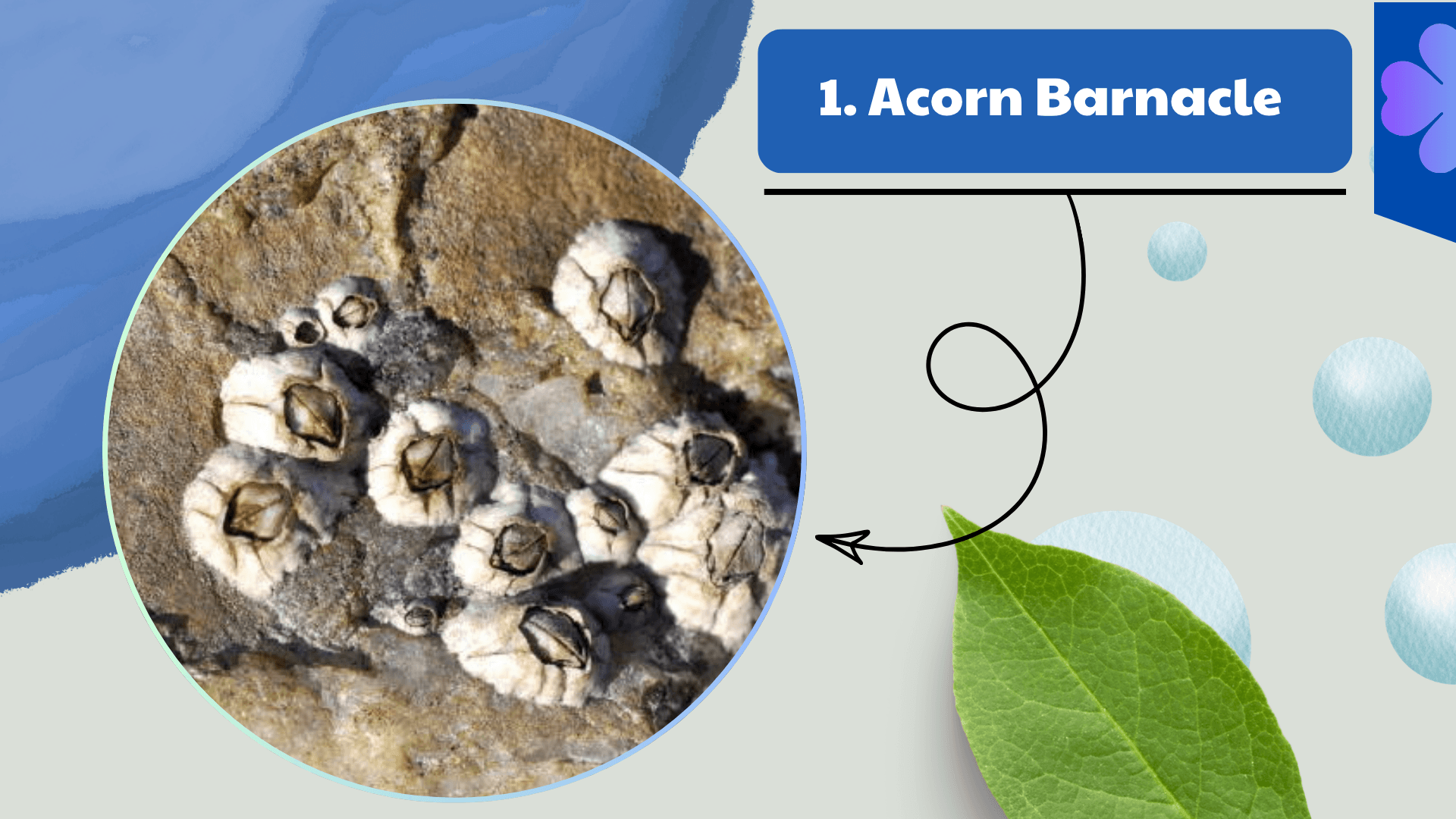
The Acorn Barnacle is one of the most widespread and well-known types of Barnacle found along rocky coastlines, especially in temperate regions of the Pacific Ocean. It is named for its rounded, cone-shaped shell that resembles an acorn tightly glued to rocks. This species dominates intertidal zones where waves crash strongly against coastal surfaces.
One of the most interesting features of the Acorn Barnacle is its ability to survive extreme environmental changes. During high tide, it opens its shell and extends feathery cirri to capture plankton and microscopic particles floating in seawater. During low tide, it seals itself tightly to prevent water loss and avoid drying out under the sun.
Ecologically, this species plays a key role in coastal food chains. Large colonies of Acorn Barnacles create rough surfaces on rocks that provide shelter for small marine organisms such as snails, algae, and tiny crustaceans. They also serve as a food source for sea stars, fish, and birds.
Their ability to withstand strong wave action, temperature fluctuations, and long exposure to air makes them one of the most resilient marine organisms in the intertidal ecosystem. Scientists often study this species to understand adhesion mechanisms, as barnacles produce one of the strongest natural glues in the world.
2. Goose Barnacle (Lepas anatifera)
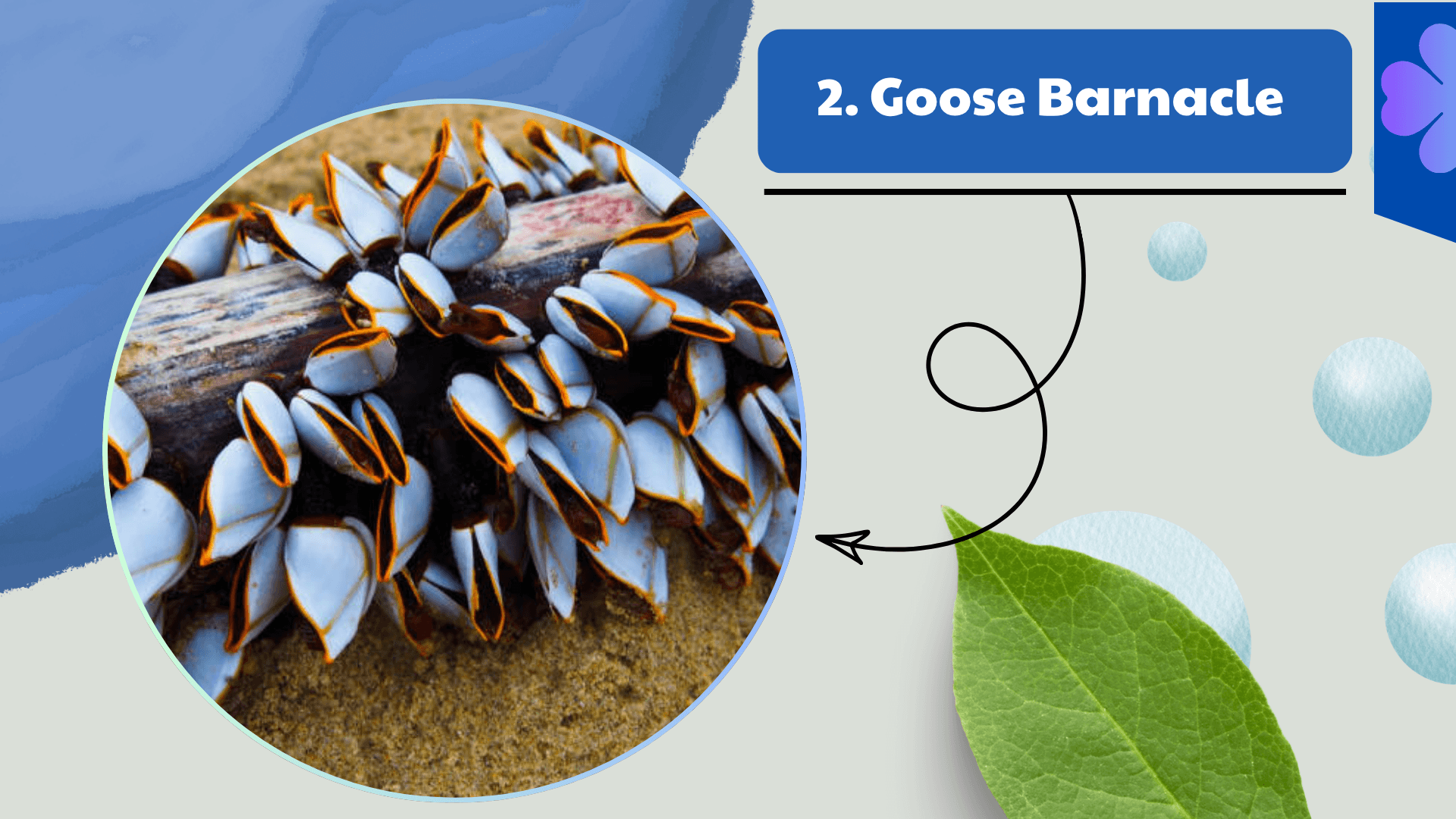
The Goose Barnacle is one of the most unique types of Barnacle because it does not attach to rocks like most barnacles. Instead, it lives on floating objects such as driftwood, seaweed, shipwrecks, and plastic debris. It has a long, flexible stalk that anchors it to moving surfaces in the open ocean.
Historically, Goose Barnacles were surrounded by myths. In medieval Europe, people believed they were related to geese because of their unusual shape and attachment to floating wood. This misconception led to the belief that geese could spontaneously emerge from barnacles.
In reality, Goose Barnacles are filter feeders that extend their cirri into the water to capture plankton and organic particles carried by ocean currents. They depend heavily on floating debris, which makes them important indicators of ocean drift patterns and marine pollution.
These barnacles are commonly found in warm and temperate oceans worldwide. They often travel long distances attached to drifting objects, making them one of the most mobile barnacle species in the ocean despite being permanently attached to a substrate.
3. Giant Acorn Barnacle (Balanus nubilis)

The Giant Acorn Barnacle is one of the largest types of Barnacle found in the Pacific Ocean, particularly along the coasts of North America. Unlike smaller barnacles, this species can grow significantly larger and often forms thick clusters on submerged rocks, piers, and marine structures.
Its large, robust shell is adapted to withstand strong currents and wave impact in exposed coastal environments. The interior structure is designed to protect the soft feeding appendages while allowing efficient filter feeding during high tide cycles.
Giant Acorn Barnacles play an important ecological role in marine ecosystems. Their large colonies provide shelter for small fish, crabs, and other invertebrates. They also contribute to the formation of complex intertidal habitats by adding structural complexity to rocky surfaces.
This species is also of interest to scientists studying biofouling, as it can attach strongly to ship hulls and underwater infrastructure. Understanding its adhesive properties helps in developing anti-fouling technologies for marine industries.
4. Common Acorn Barnacle (Semibalanus balanoides)

The Common Acorn Barnacle is one of the most widely studied types of Barnacle in the North Atlantic and European coastal waters. It dominates rocky shorelines where tidal movement is strong and environmental conditions change rapidly between high and low tide. This species is often used as a model organism in marine biology because of its predictable life cycle and ecological importance.
This barnacle forms dense colonies that tightly cover rocks, piers, and seawalls. Each individual has a hard, cone-shaped shell made of calcium plates that protect its soft internal body. When submerged, it opens its shell and extends feathery appendages called cirri into the water. These cirri act like nets, capturing plankton and organic particles floating in the ocean.
One of the most remarkable features of this species is its ability to tolerate extreme environmental stress. During low tide, it must endure exposure to air, sunlight, and temperature fluctuations. It seals its shell tightly to prevent water loss, allowing it to survive in habitats where many other marine organisms cannot.
Ecologically, the Common Acorn Barnacle plays a vital role in intertidal ecosystems. It provides habitat for small marine organisms, contributes to food webs, and helps stabilize rocky shore communities. It is also an important food source for sea stars, whelks, and seabirds. Because of its abundance and ecological role, it is considered a foundation species in coastal environments.
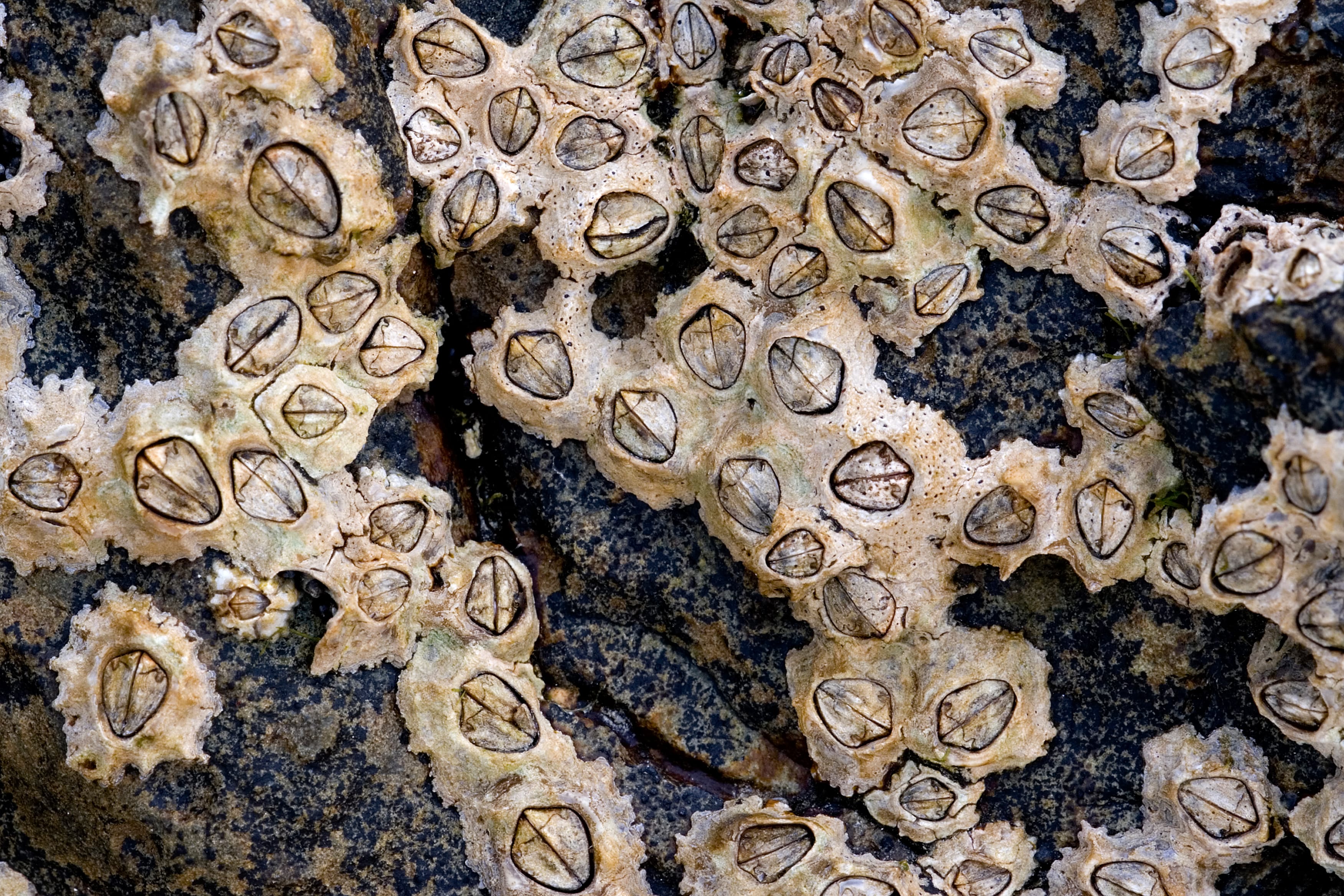
5. Rock Barnacle (Chthamalus stellatus group)
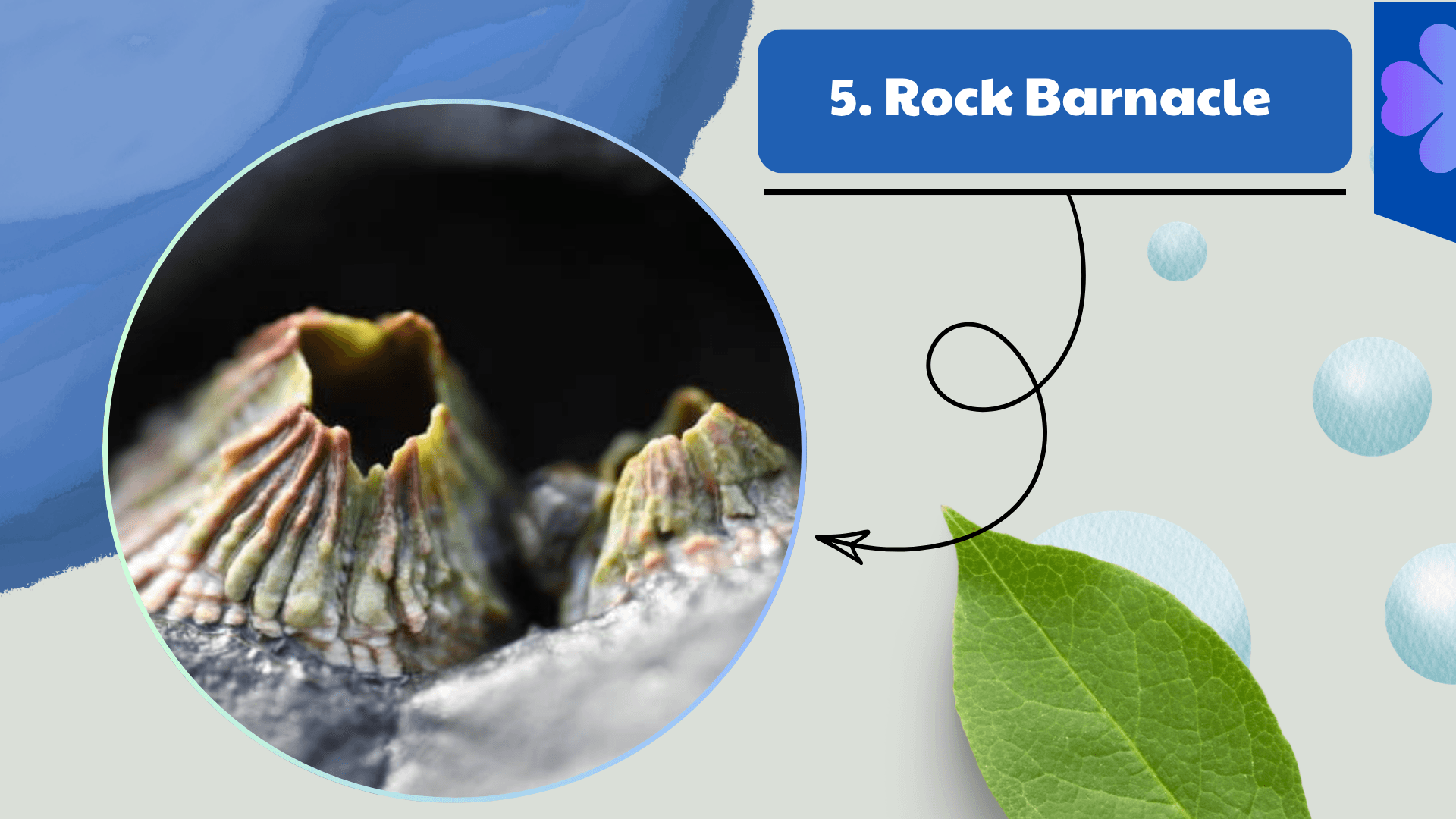
The Rock Barnacle is another important member of the types of Barnacle, commonly found in the upper intertidal zones of rocky coastlines in the Atlantic and Mediterranean regions. Unlike many other barnacles, it is highly adapted to survive long periods of exposure to air and intense sunlight.
This species typically occupies the highest zones of the shoreline, where waves splash but full submersion is less frequent. Its small size and strong shell structure help it minimize water loss and withstand harsh environmental conditions. The ability to survive in such extreme zones reduces competition with other barnacle species.
Rock Barnacles feed during short periods when the tide covers them. They extend their cirri to filter microscopic plankton and organic particles from seawater. Despite their small size, they can form dense colonies that create visible white or gray patches on coastal rocks.
These barnacles are ecologically important because they help define the upper limits of marine life in intertidal zones. Their presence influences the distribution of other organisms such as algae, limpets, and snails. They also serve as a key indicator of environmental conditions in coastal ecosystems.
6. Pacific Acorn Barnacle (Balanus aquila)

The Pacific Acorn Barnacle is one of the dominant types of Barnacle along the eastern Pacific coastline, particularly in North and South America. It thrives in nutrient-rich, cold to temperate waters where wave action is strong and consistent.
This species is highly competitive and often forms thick layers on rocks, piers, and underwater structures. Its robust shell protects it from predators and environmental stress, while its feeding mechanism allows it to efficiently capture plankton from fast-moving currents.
The Pacific Acorn Barnacle plays a significant role in shaping coastal ecosystems. By forming dense colonies, it creates microhabitats for small invertebrates and contributes to the structural complexity of intertidal zones. It is also an important prey species for fish, sea stars, and shorebirds.
In marine industries, this barnacle is known as a major contributor to biofouling, as it frequently attaches to ship hulls and underwater equipment. This has made it a subject of scientific research focused on preventing marine organism attachment.
7. Atlantic Barnacle (Semibalanus balanoides variant)
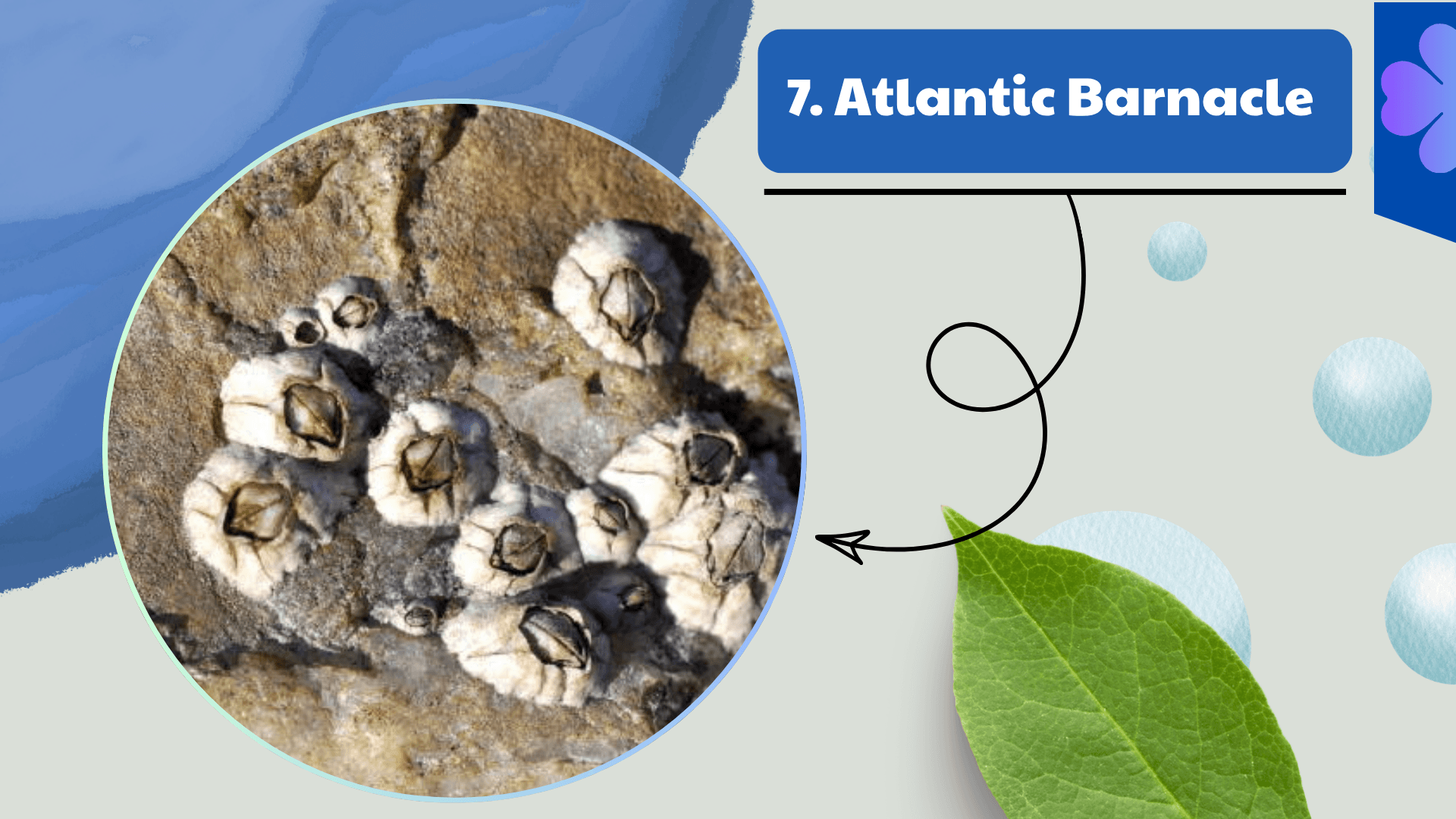
The Atlantic Barnacle is a widely distributed species among the types of Barnacle found along the cold and temperate waters of the North Atlantic Ocean. It is especially common in Europe and North America, where it forms large colonies on rocky shorelines.
This species is well adapted to seasonal changes in temperature and food availability. During warmer months, it actively feeds by extending its cirri to capture plankton. In colder months, its metabolic activity slows significantly, allowing it to conserve energy.
The Atlantic Barnacle is a key species in intertidal ecology. It helps regulate space competition on rocky surfaces and provides food for many marine predators. Its presence is often used by scientists to study environmental changes in coastal ecosystems.
It also plays an important role in marine biodiversity by creating habitats for algae, small crustaceans, and mollusks that live among barnacle colonies.
8. Deep Sea Barnacle (Bathyal barnacle group)
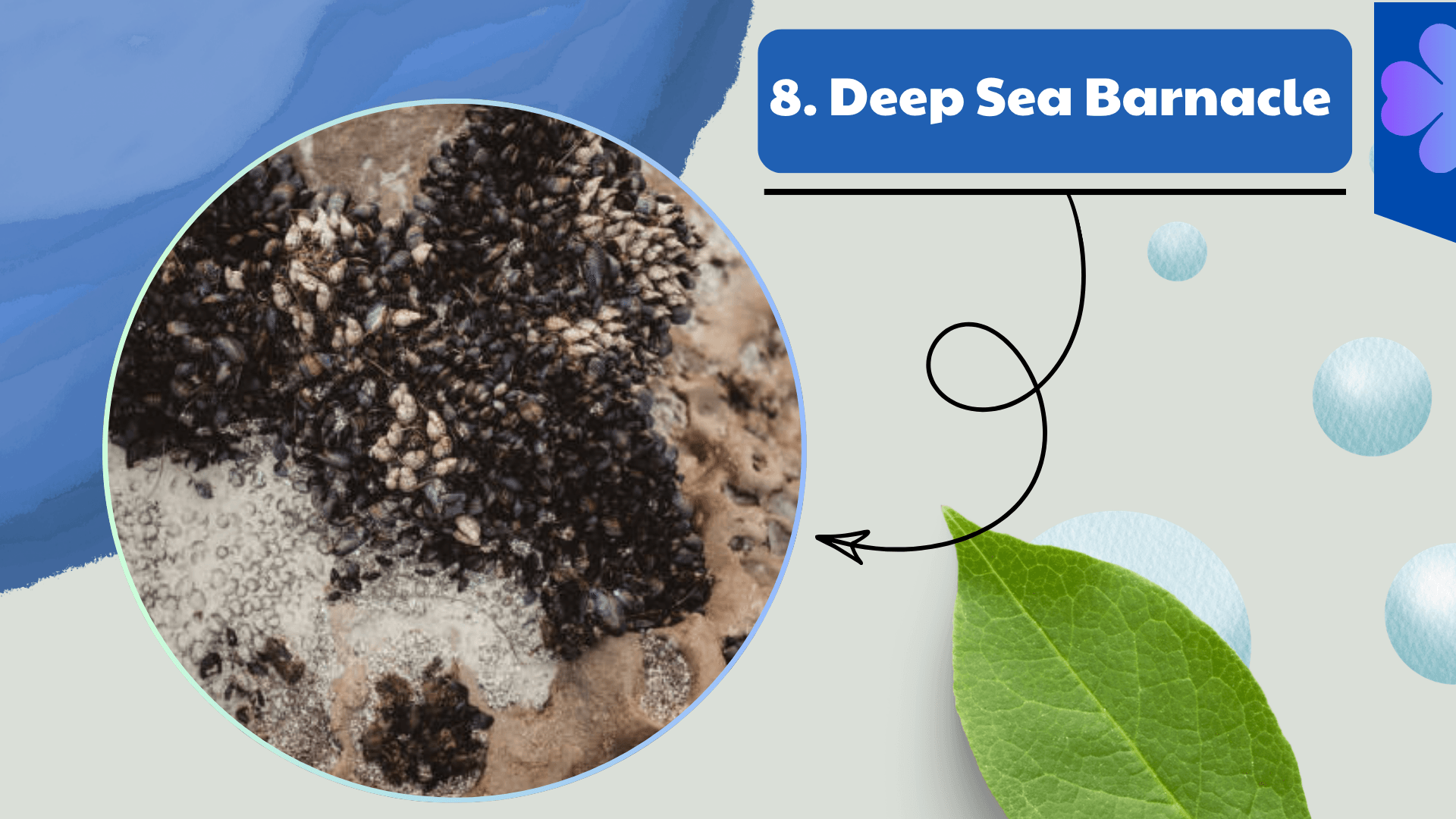
The Deep Sea Barnacle is one of the most mysterious types of Barnacle, living far below the ocean surface in bathyal and abyssal zones where sunlight never reaches. These extreme depths can exceed 1,000 meters, where pressure is intense and food is scarce.
Unlike intertidal barnacles, deep-sea species often attach to hard surfaces such as rocks, whale bones, and even deep-water corals. Their bodies are adapted for energy efficiency, allowing them to survive in environments with very limited food supply.
Instead of relying on wave-driven plankton flow, Deep Sea Barnacles feed on “marine snow” — tiny organic particles that slowly drift down from upper ocean layers. Their feeding appendages are highly sensitive to detect even minimal food availability.
These barnacles are important for deep-sea ecosystems because they help recycle organic matter in one of the least explored habitats on Earth. Their presence also provides clues about deep ocean currents and nutrient flow.
9. Surf Barnacle (High-energy coastal group)
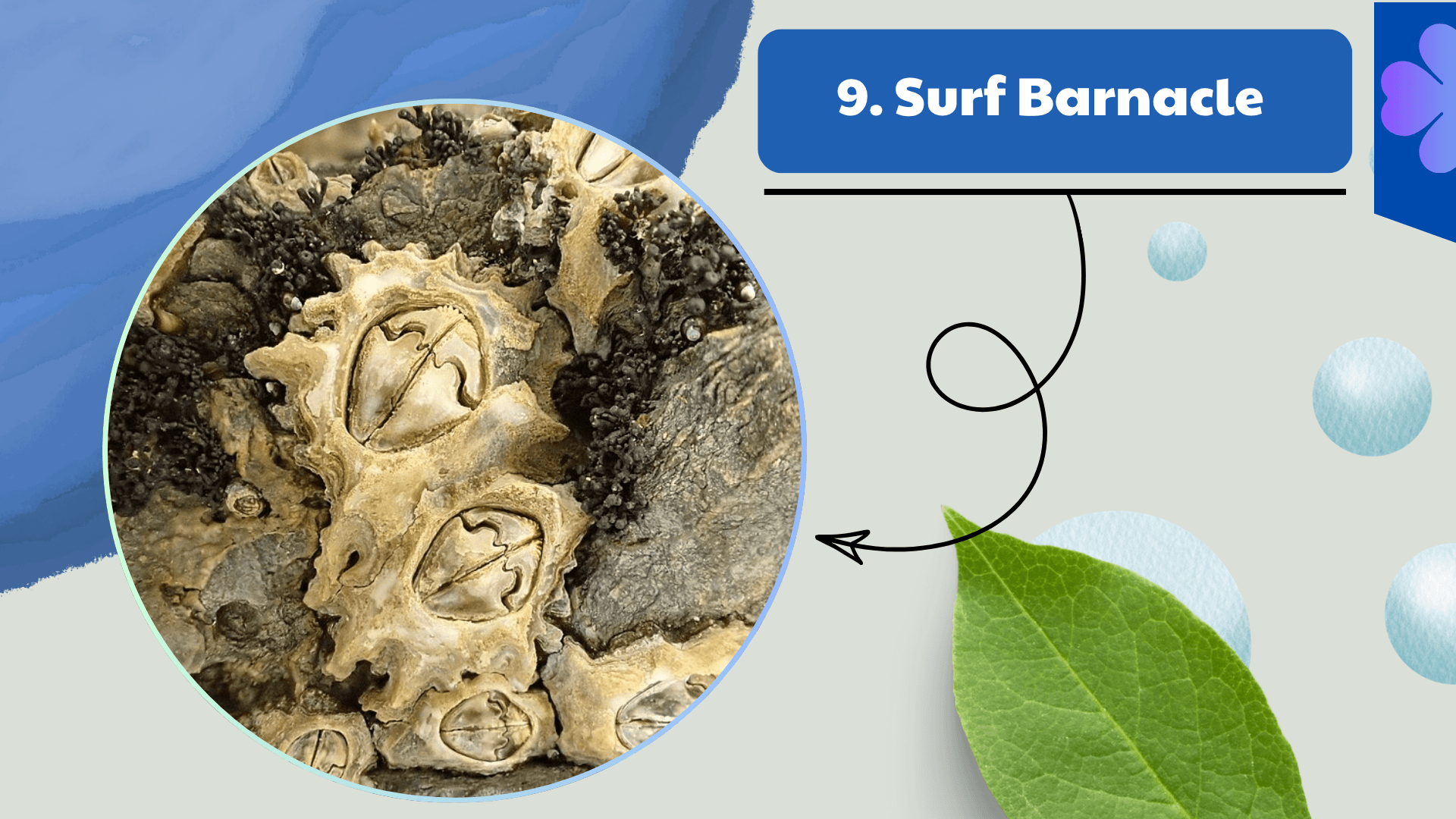
The Surf Barnacle is a hardy member of the types of Barnacle found in areas exposed to strong wave energy, such as rocky surf zones and coastal cliffs. These environments are constantly battered by crashing waves, making survival challenging.
This species has a tightly sealed shell structure that allows it to withstand repeated impact from waves. It is often found in dense clusters that help reduce individual exposure to physical stress.
Surf Barnacles feed during brief periods when seawater covers their habitat. They extend their cirri quickly to capture plankton before retreating into their protective shells.
Their ecological role includes stabilizing rocky shore surfaces and providing food for marine predators adapted to high-energy environments, such as shorebirds and grazing fish.
10. Blue Barnacle (Color-adapted coastal group)
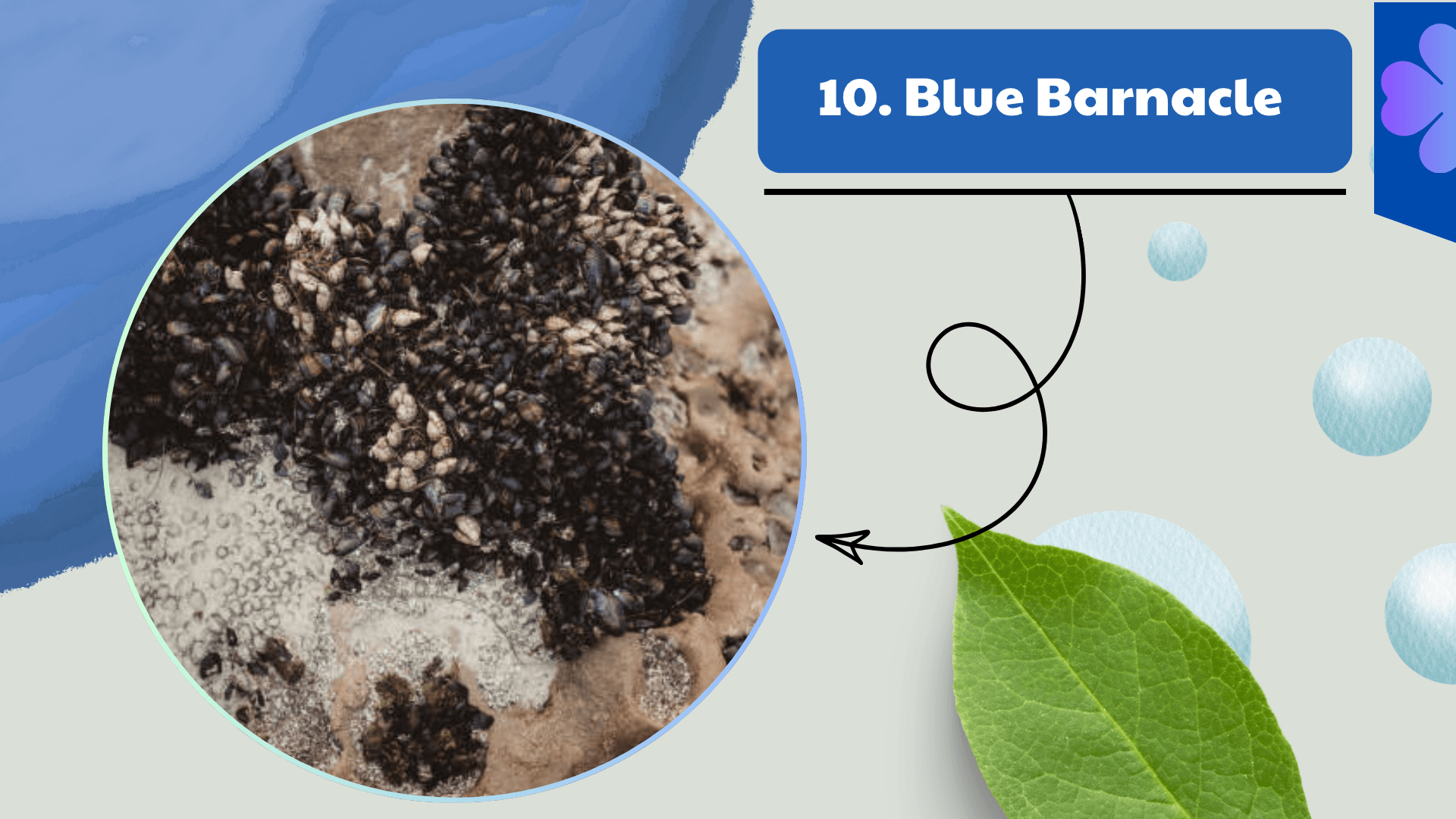
The Blue Barnacle is a visually distinctive member of the types of Barnacle, often found in temperate and subtropical coastal waters. Its bluish-gray coloration helps it blend into shaded rocks and deeper intertidal zones.
This species prefers areas with moderate wave action and tends to grow in mixed colonies with other barnacle species. Its coloration can vary depending on environmental conditions such as light exposure and algae presence.
Like other barnacles, it feeds by filtering plankton using its cirri. It is especially active during high tide when water flow increases food availability.
Blue Barnacles contribute to coastal biodiversity by creating textured surfaces that support algae growth and small marine invertebrates.
11. Yellow Barnacle (Tropical adaptation group)
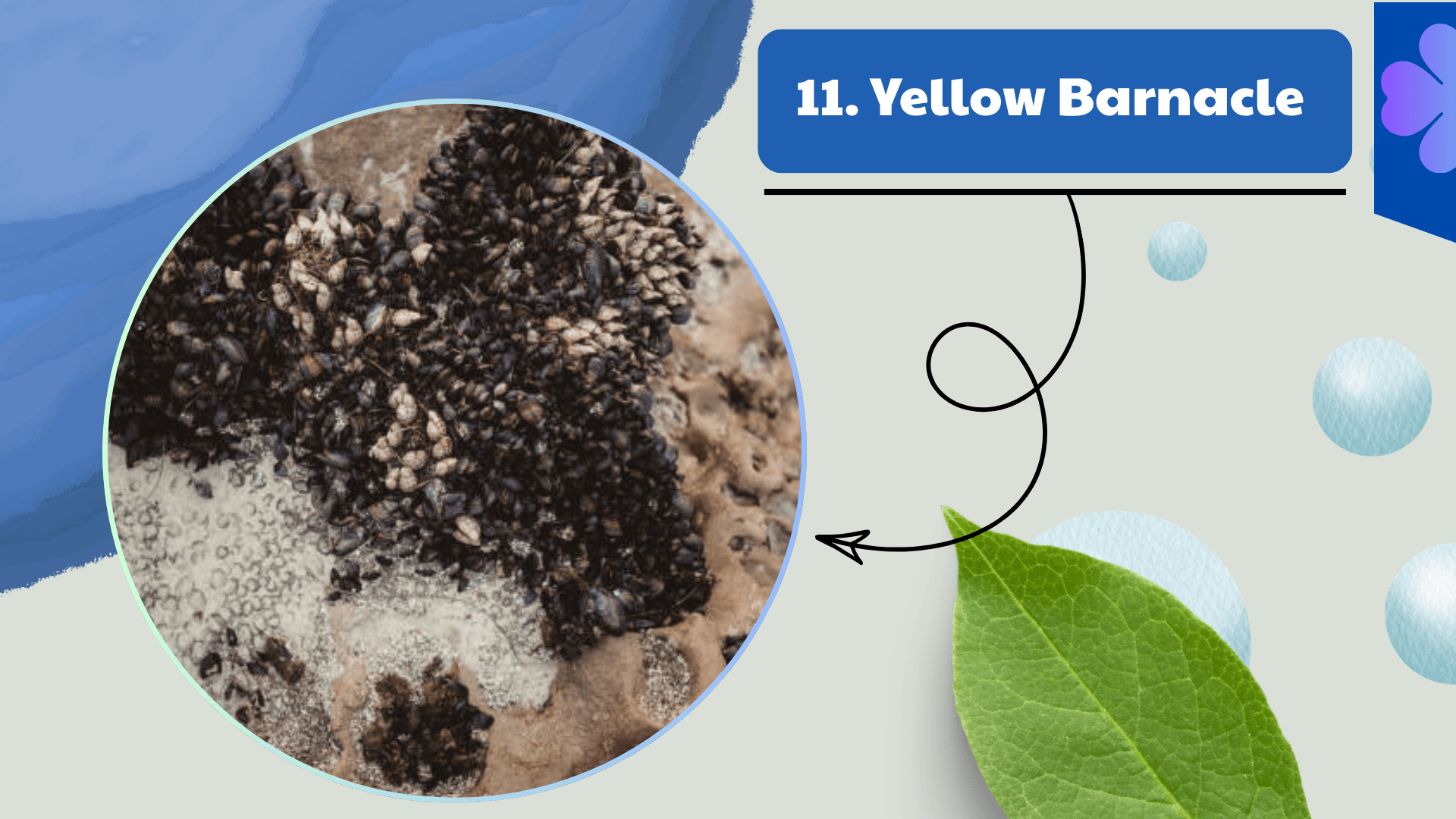
The Yellow Barnacle is a tropical member of the types of Barnacle found in warm coastal waters, including coral reef environments and shallow lagoons. Its yellowish coloration helps it blend into sunlit reef surfaces and sandy substrates.
This species thrives in warm water conditions and often grows on coral structures, rocks, and even man-made coastal installations. It is well adapted to stable tropical marine environments.
Yellow Barnacles feed on plankton and organic particles suspended in warm currents. Their feeding efficiency is enhanced in nutrient-rich reef systems.
They play a supporting role in reef ecosystems by contributing to biofouling communities that increase habitat complexity for small marine organisms.
12. Orange Barnacle (Warm-water variant group)
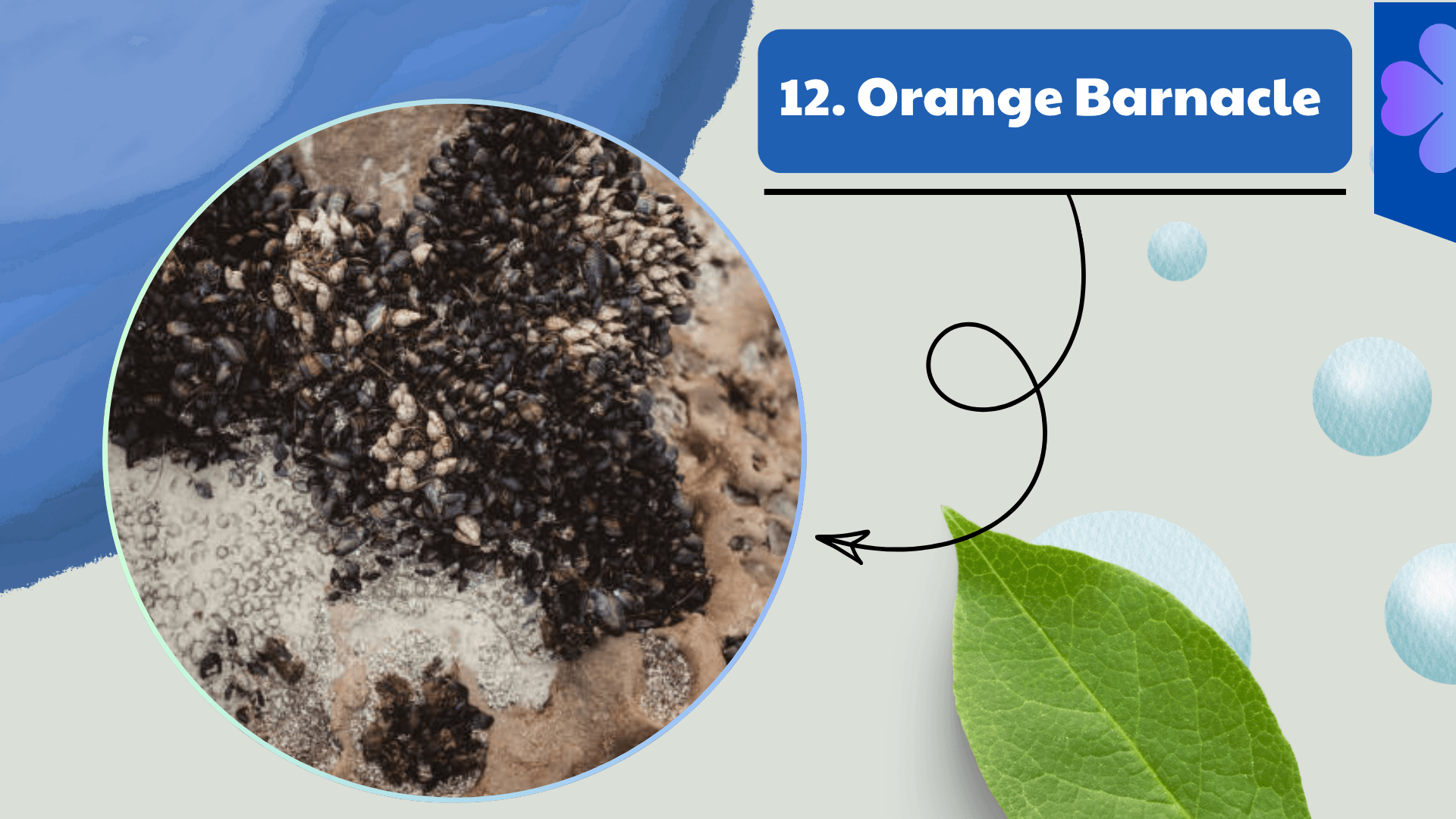
The Orange Barnacle is another colorful member of the types of Barnacle, commonly found in tropical and subtropical oceans. Its orange coloration may vary in intensity depending on habitat depth and environmental conditions.
This species is often associated with coral reefs, rocky outcrops, and shipwrecks in warm waters. It attaches firmly to hard surfaces and forms small to medium colonies.
Orange Barnacles are filter feeders that rely on steady water flow to capture plankton and microscopic organic matter. They are most active during periods of strong tidal movement.
Their presence contributes to reef ecosystem complexity and supports small marine life that use barnacle colonies as shelter.
13. Whaleshield Barnacle (Coronula diadema)

The Whaleshield Barnacle is one of the most fascinating types of Barnacle because it lives directly on the skin of large whales. Unlike rock or ship barnacles, this species has evolved a unique lifestyle attached to moving marine mammals in open oceans.
Its shell is thick, dome-shaped, and strongly anchored to the whale’s skin, forming a natural “shield-like” structure. This adaptation allows it to survive the constant movement of its host as whales migrate across vast ocean distances.
Whaleshield Barnacles feed by filtering plankton and organic particles from surrounding seawater while the whale swims. The faster the whale moves, the more food currents pass through the barnacle’s feeding structures.
Although they do not usually harm whales significantly, heavy infestations can create skin irritation. Ecologically, they represent a rare example of symbiotic attachment in marine ecosystems.
14. Turtle Barnacle (Chelonibia testudinaria)
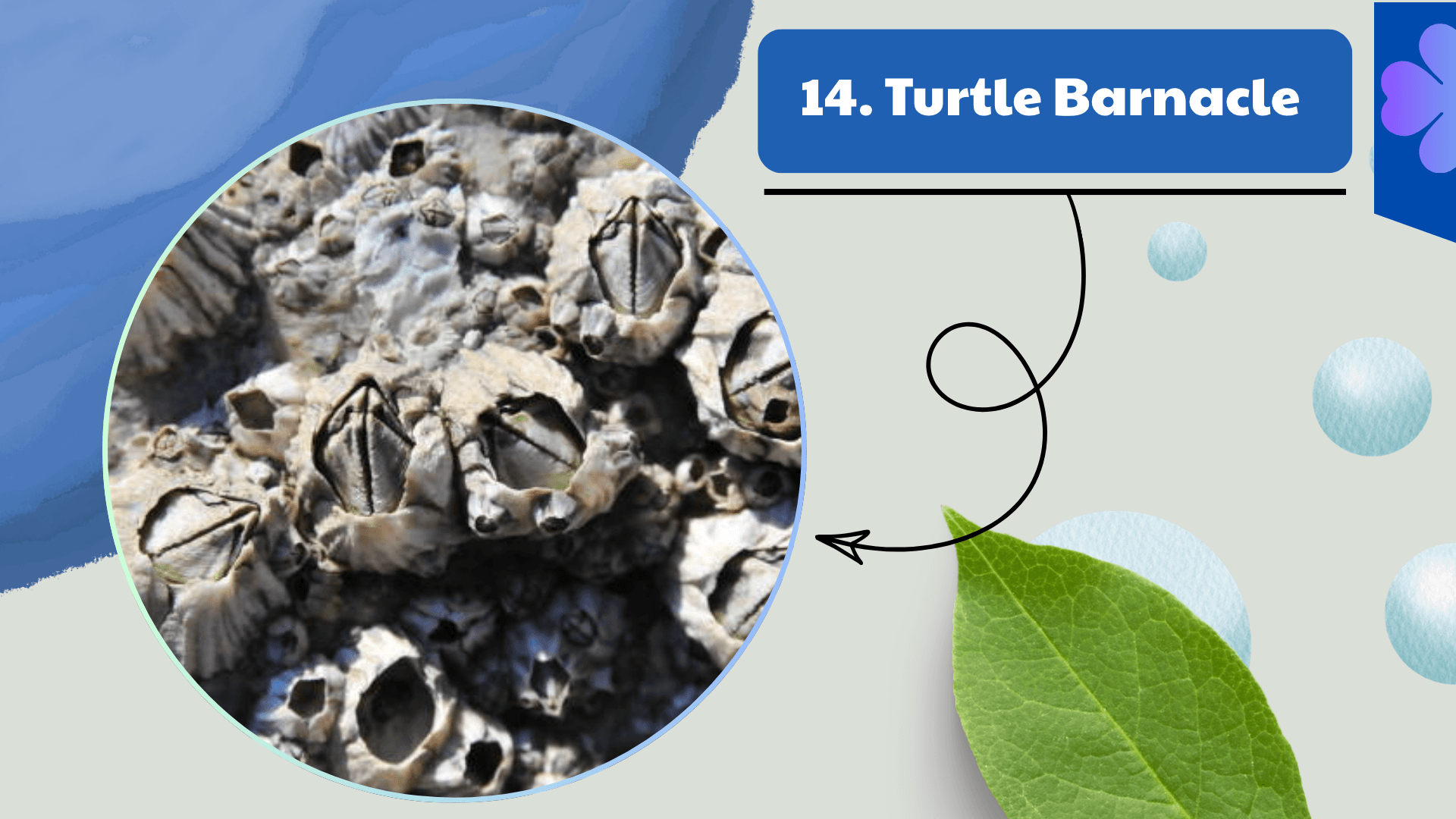
The Turtle Barnacle is another remarkable member of the types of Barnacle that attaches to sea turtles, especially on their shells and flippers. This species is widely distributed in tropical and subtropical oceans.
Its flat, circular shell helps it conform closely to the curved surfaces of turtles. Like other barnacles, it is a filter feeder, relying on ocean currents created by the turtle’s movement to capture plankton.
While not typically harmful, heavy colonization may slightly increase drag for turtles, affecting swimming efficiency. However, in most cases, the relationship is considered commensal rather than parasitic.
Turtle Barnacles are often used by scientists to study migration patterns of sea turtles, as barnacle growth can indicate time spent in specific ocean regions.
15. Ship Barnacle (Biofouling barnacle group)
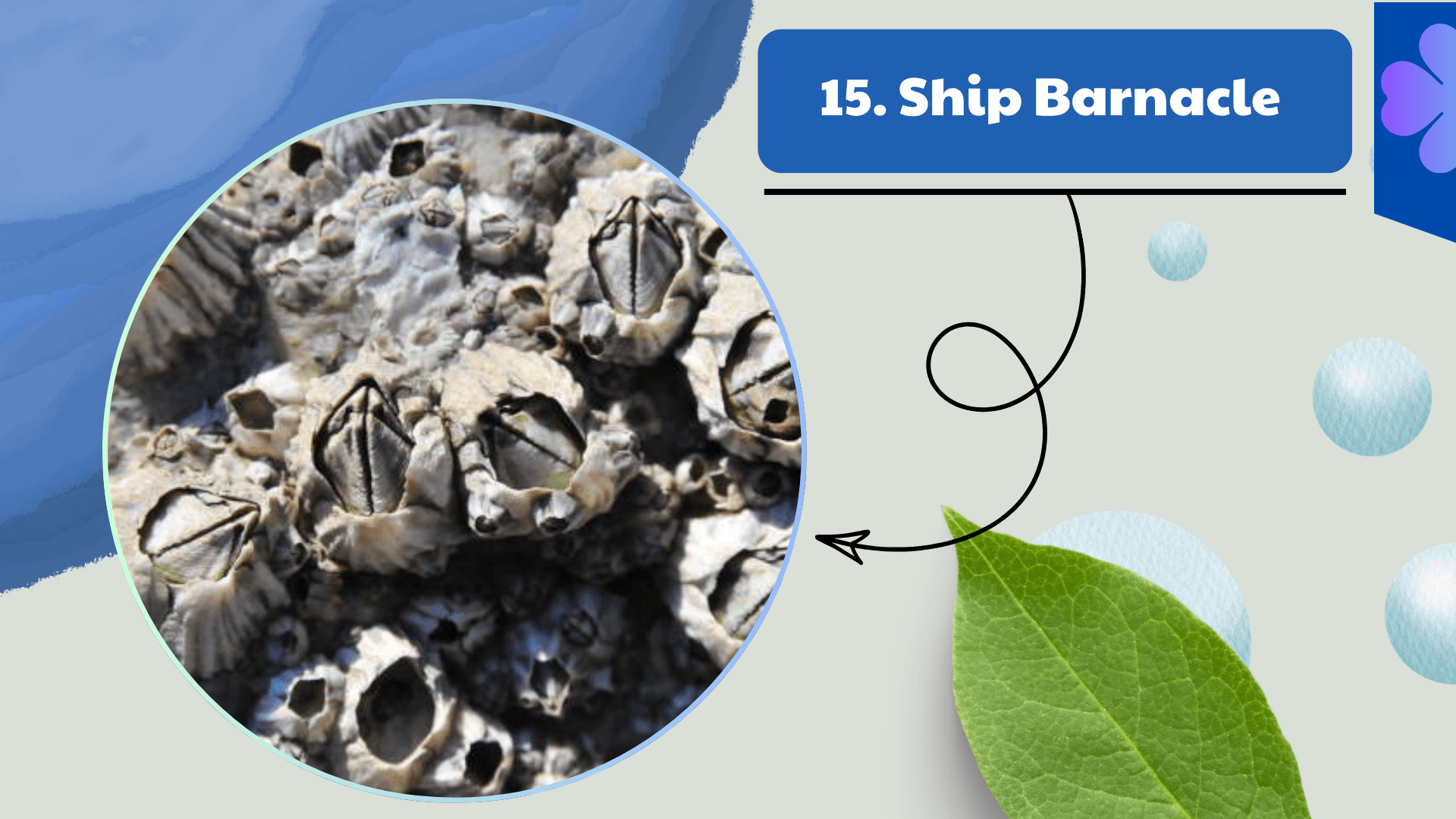
The Ship Barnacle represents a group of types of Barnacle that attach to man-made structures such as ship hulls, oil rigs, and underwater pipelines. This species is one of the most economically important barnacles due to its impact on marine transportation.
These barnacles can rapidly colonize submerged surfaces, forming dense layers that increase drag and fuel consumption for ships. Their adhesive ability is extremely strong, making them difficult to remove once attached.
Ship Barnacles feed on plankton using their cirri, just like other barnacles. However, their ability to spread across global oceans via shipping routes has made them highly successful invasive organisms.
Marine industries invest heavily in antifouling technologies to prevent their attachment, highlighting their economic significance.
16. Mangrove Barnacle (Octolasmis angulata group)

The Mangrove Barnacle is one of the specialized types of Barnacle found in estuarine and mangrove ecosystems. These environments are rich in nutrients but constantly changing due to tides and freshwater input.
This species often attaches to mangrove roots, submerged wood, and coastal vegetation. It is well adapted to fluctuating salinity levels, making it highly resilient in brackish waters.
Mangrove Barnacles play an important ecological role by contributing to nutrient cycling in coastal wetlands. They also serve as food for small fish and invertebrates in mangrove ecosystems.
Their presence is often an indicator of healthy mangrove habitats and stable coastal environments.
17. Coral Barnacle (Reef-associated group)
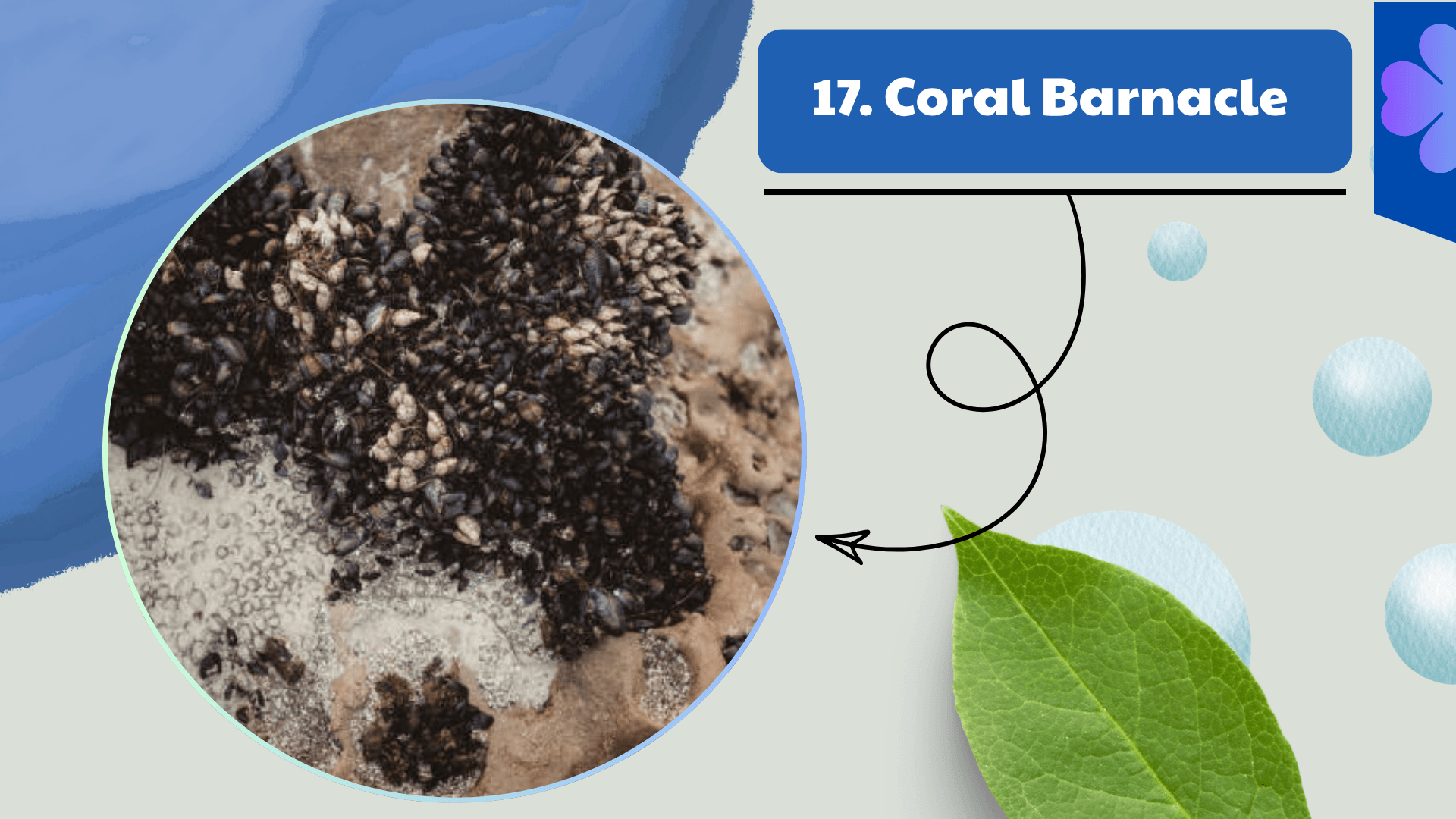
The Coral Barnacle is a reef-dwelling member of the types of Barnacle, commonly found attached to coral structures in tropical oceans. These barnacles are highly adapted to warm, clear, and nutrient-rich waters.
They often live embedded within coral formations, where they benefit from constant water flow carrying plankton and oxygen. Their small size allows them to occupy narrow spaces between coral branches.
Coral Barnacles feed on microscopic plankton and organic particles. Their presence contributes to reef biodiversity and helps maintain micro-ecosystem balance.
They are sensitive to environmental changes, making them useful indicators of coral reef health and water quality.
18. Estuarine Barnacle (Brackish water group)

The Estuarine Barnacle is adapted to brackish environments where freshwater and seawater mix. Among the types of Barnacle, this group is known for its tolerance to fluctuating salinity levels.
It attaches to rocks, submerged structures, and mangrove roots in estuaries and river mouths. These areas are dynamic and require strong physiological adaptability.
Estuarine Barnacles feed on plankton carried by tidal currents. Their ability to survive in changing salinity conditions gives them a competitive advantage over many other marine species.
They play a key role in estuarine food webs and contribute to ecosystem stability in transitional coastal zones.
19. Burrowing Barnacle (Rock-penetrating group)
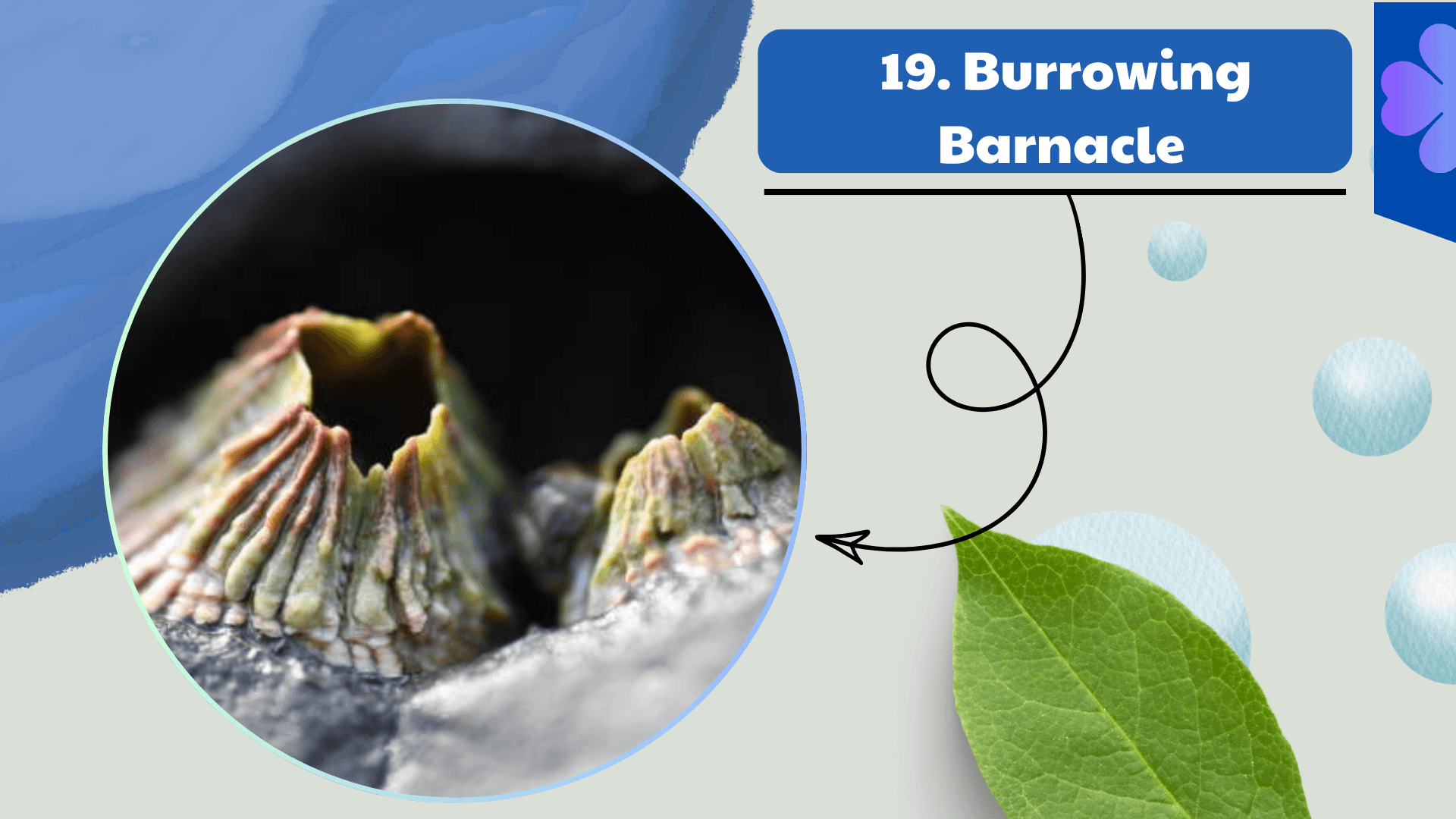
The Burrowing Barnacle is one of the most unusual types of Barnacle because it does not simply attach to surfaces—it actively bores into them. This species is commonly found in soft limestone, coral, and even some mollusk shells where it creates protective cavities.
Unlike typical barnacles that sit exposed on rocks, burrowing species remain partially hidden inside the substrate. This adaptation helps them avoid predators and reduce competition for space in crowded intertidal zones.
They feed by extending their cirri out of the burrow opening to capture plankton from surrounding seawater. Their hidden lifestyle makes them difficult to observe in natural habitats.
Burrowing Barnacles play an important ecological role in shaping marine hard substrates, contributing to microhabitat formation for small organisms.
20. Parasitic Barnacle (Rhizocephala group)
The Parasitic Barnacle is one of the most extreme types of Barnacle, completely different from typical shell-forming species. Instead of attaching to rocks, it invades the bodies of crabs and other crustaceans.
Once inside the host, it develops a root-like internal system that absorbs nutrients directly from the host’s body. Over time, it can manipulate the host’s growth and reproductive system.
Despite its strange biology, this barnacle is highly specialized and represents one of the most advanced parasitic adaptations in marine ecosystems.
It does not resemble a typical barnacle externally, but genetic studies confirm its close evolutionary relationship to other barnacles.
21. Striped Barnacle (Patterned coastal group)
The Striped Barnacle is a visually distinct member of the types of Barnacle, often recognized by alternating light and dark shell patterns. It is commonly found in temperate rocky shorelines.
These patterns may help with camouflage against textured rock surfaces and algae-covered environments. It typically forms small to medium colonies in intertidal zones.
Like other barnacles, it feeds by filtering plankton using cirri during high tide periods.
Its distribution makes it an important species for studying intertidal biodiversity and environmental adaptation.
22. Star Barnacle (Radial pattern group)
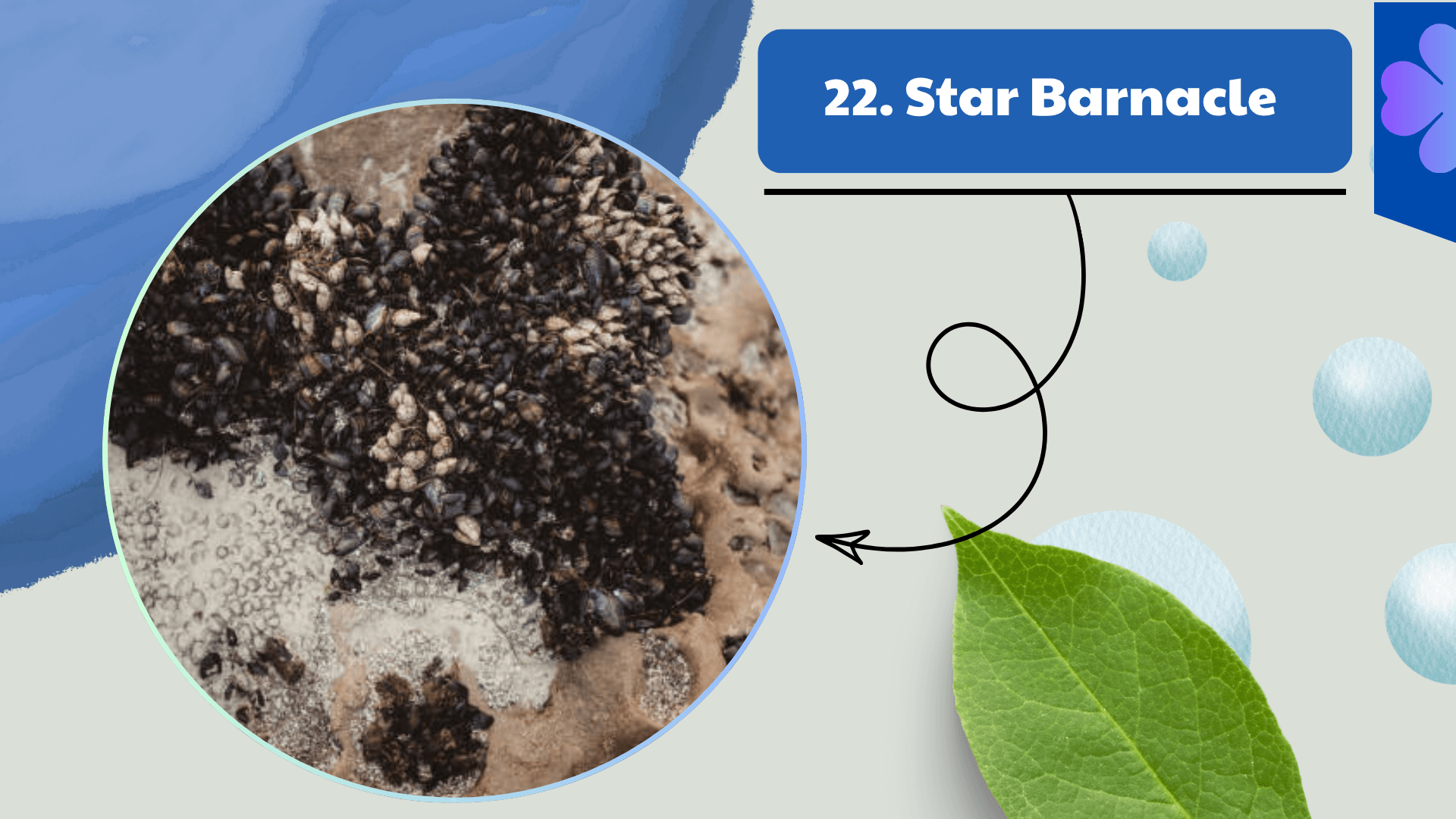
The Star Barnacle is named for its star-like shell structure, making it one of the more visually unique types of Barnacle. It is commonly found in tropical and subtropical coastal waters.
Its radial shell ridges provide extra strength and help it resist wave impact in exposed environments.
This species attaches firmly to rocks, coral, and artificial structures such as piers and seawalls.
It contributes to reef and coastal ecosystems by providing habitat complexity for small marine organisms.
23. Volcano Barnacle (Heat-resistant coastal group)
The Volcano Barnacle is a rare and specialized member of the types of Barnacle found near geothermal coastal areas and volcanic rock formations.
It is adapted to survive in environments with fluctuating temperatures and mineral-rich water conditions.
Its shell structure is often thicker and more resistant compared to typical barnacles, helping it withstand harsh environmental stress.
This species is of scientific interest due to its ability to survive in chemically active coastal zones.
24. Six-Plated Barnacle (Structural variation group)

The Six-Plated Barnacle is characterized by its shell composed of six distinct plates, making it a notable member of the types of Barnacle.
This structural design provides both flexibility and strength, allowing it to survive in moderate to high-energy coastal environments.
It is commonly found on rocks, docks, and submerged marine surfaces.
Its feeding and ecological role are similar to other filter-feeding barnacles, contributing to nutrient cycling in marine ecosystems.
25. Whaleshield Barnacle (Revisited deep attachment group)
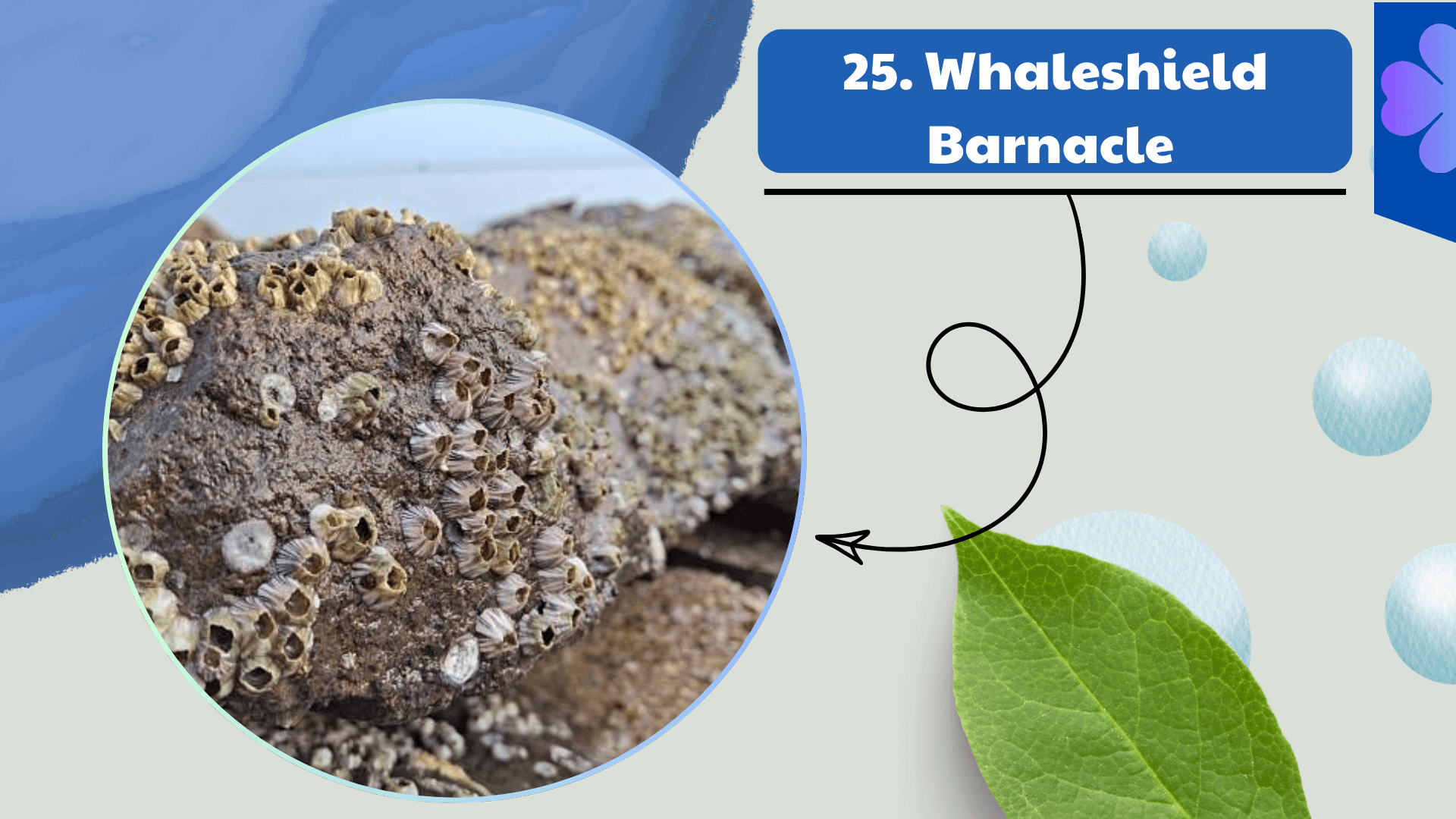
Although introduced earlier, the Whaleshield Barnacle is worth revisiting due to its unique ecological importance among types of Barnacle. It lives exclusively on large marine mammals such as whales.
Its lifecycle is fully dependent on the movement and migration of its host species, making it one of the most specialized barnacles in the ocean.
It feeds on planktonic particles in open water while benefiting from constant water flow created by whale movement.
This species highlights the complex symbiotic relationships that exist in marine ecosystems.
26. Giant Barnacle (Megabalanus species group)

The Giant Barnacle is one of the most impressive types of Barnacle due to its large size and strong shell structure. It is commonly found in warm and temperate coastal waters, especially in areas with strong wave action such as rocky shores, piers, and offshore structures.
This species stands out because its conical shell can grow significantly larger than most intertidal barnacles. The thick, ridged plates provide excellent protection against predators and physical stress from crashing waves.
Giant Barnacles are highly efficient filter feeders. When submerged, they extend their cirri to capture plankton and organic particles from fast-moving water. Their large size allows them to process more food compared to smaller barnacle species.
Ecologically, they contribute to habitat complexity by forming dense colonies that provide shelter for small marine organisms such as snails and amphipods. They are also studied for their strong natural adhesive, which is of interest in biomedical and engineering research.
27. Northern Barnacle (Cold-water intertidal group)
The Northern Barnacle is a cold-adapted member of the types of Barnacle, commonly found in Arctic and sub-Arctic coastal regions. It thrives in low temperatures and is highly resistant to seasonal ice cover and freezing conditions.
This species attaches firmly to rocks in intertidal zones where it experiences long periods of cold exposure. Its physiological adaptations allow it to survive metabolic slowdown during extreme winter months.
During feeding periods, it filters plankton using its cirri when tides bring nutrient-rich water into its habitat. Despite harsh conditions, it forms stable colonies that support local marine food webs.
It plays an important role in polar ecosystems by contributing to biodiversity in environments where few species can survive.
28. Surf Zone Barnacle (High-energy wave group)
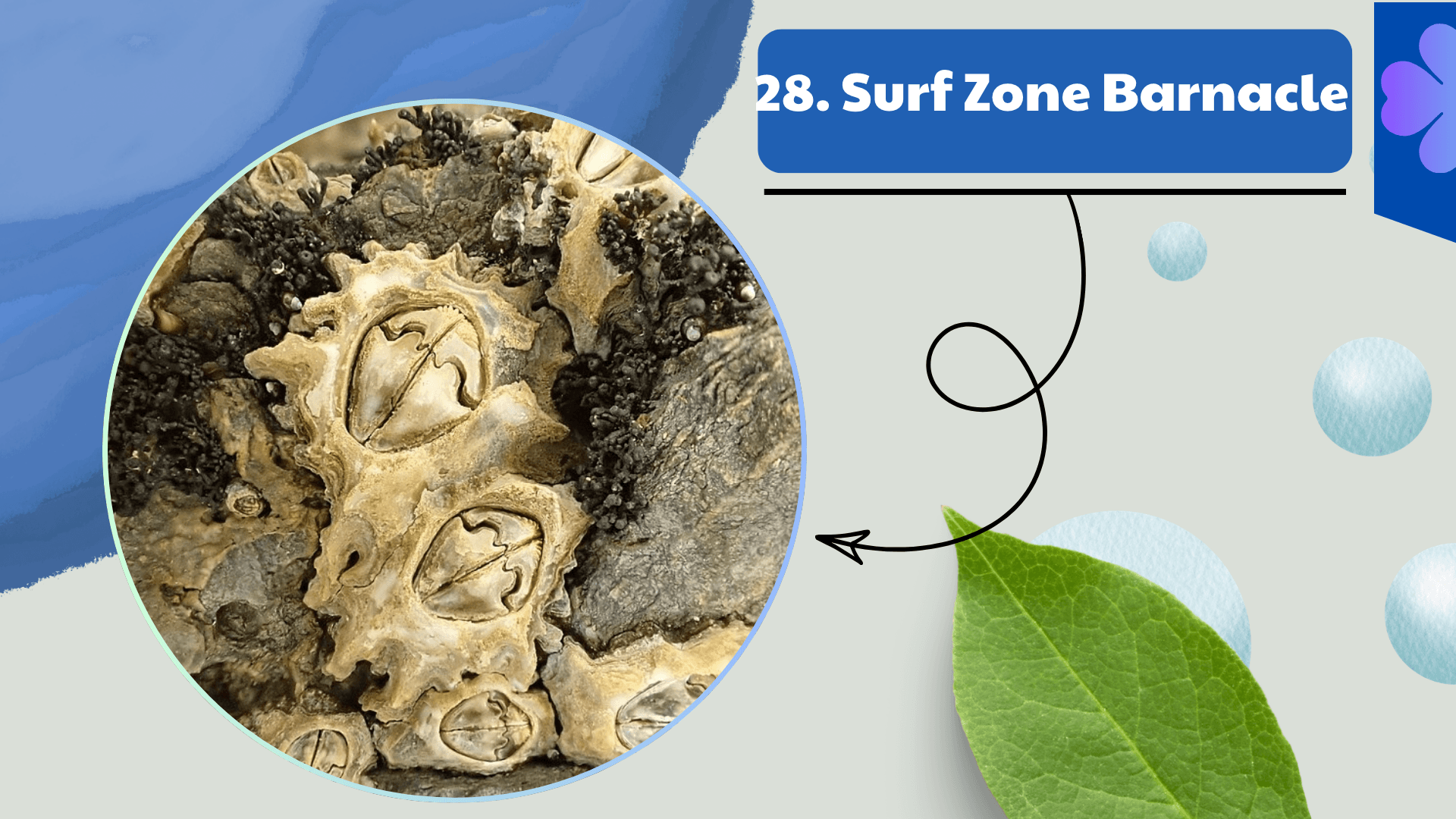
The Surf Zone Barnacle is one of the most resilient types of Barnacle, living in areas constantly hit by strong ocean waves. It is typically found on exposed rocky coastlines where wave energy is extremely high.
Its compact shell design helps it withstand continuous physical impact. These barnacles often grow in tightly packed clusters, which reduces individual exposure to wave force.
They feed during short immersion periods, quickly extending their cirri to capture plankton before retreating into their protective shells.
Surf Zone Barnacles help stabilize rocky shore ecosystems and provide microhabitats for other intertidal organisms.
29. Estuarine Mangrove Barnacle (Brackish water specialist group)
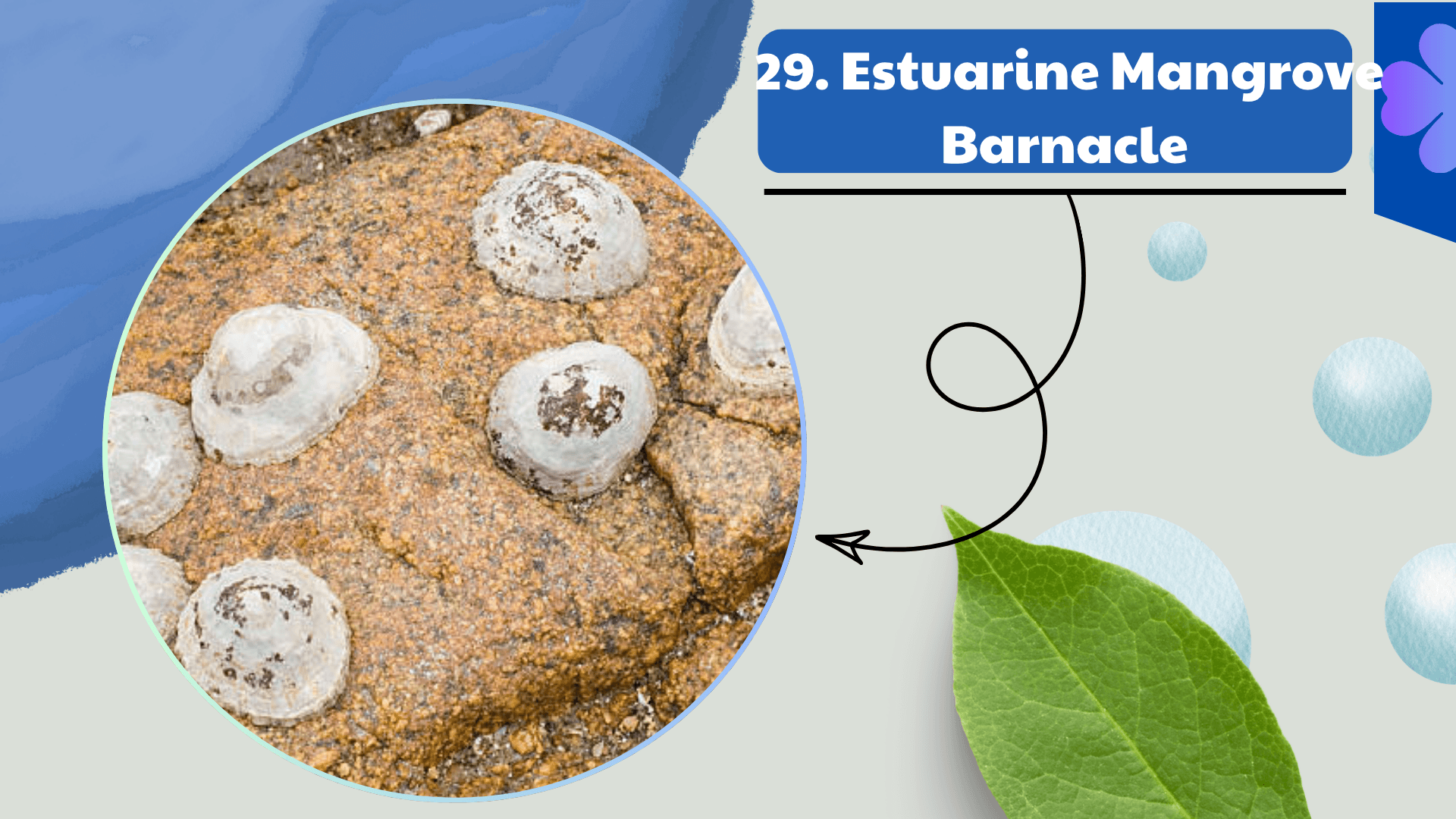
The Estuarine Mangrove Barnacle is a specialized member of the types of Barnacle that thrives in brackish environments where freshwater and seawater mix. It is commonly found attached to mangrove roots and submerged wood in estuaries.
This species is highly tolerant of fluctuating salinity levels, making it well adapted to dynamic coastal environments. Its ability to survive changing water conditions gives it a competitive advantage over many other barnacle species.
It feeds on plankton carried by tidal currents and plays a role in nutrient cycling within mangrove ecosystems. These barnacles also contribute to the structural complexity of root systems by adding hard surfaces for other organisms to colonize.
They are considered important indicators of healthy mangrove ecosystems and stable coastal conditions.
30. Deep Rock Barnacle (Abyssal hard-substrate group)
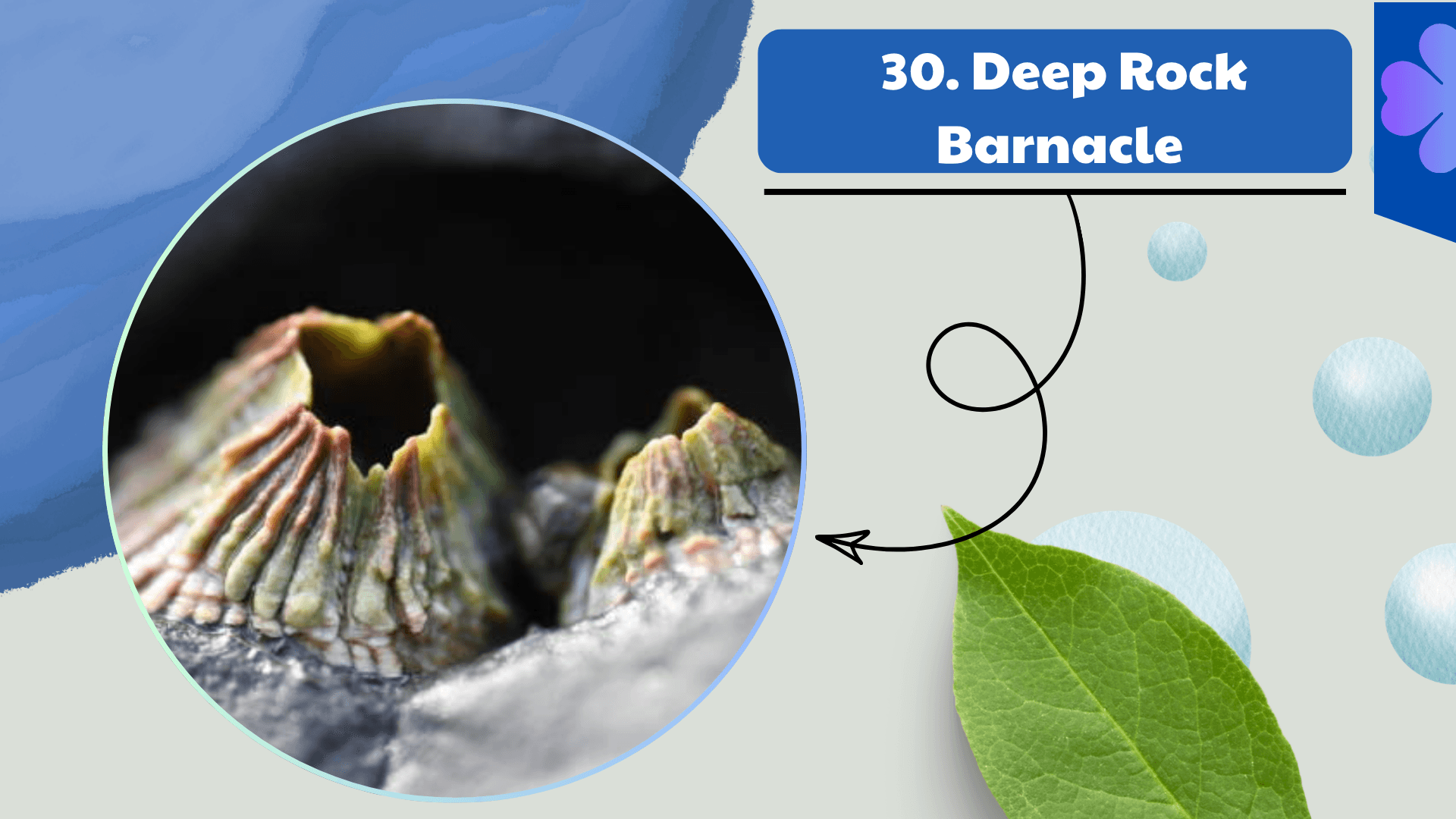
The Deep Rock Barnacle is one of the most mysterious types of Barnacle, living in deep-sea environments on rocky surfaces far below the ocean’s surface. It is adapted to extreme pressure, darkness, and low food availability.
This species attaches strongly to hard substrates such as underwater cliffs and volcanic rock formations. Its energy-efficient metabolism allows it to survive in environments where food is scarce and conditions are stable but harsh.
Instead of relying on wave-driven plankton, it feeds on marine snow—tiny organic particles drifting down from upper ocean layers. Its feeding appendages are highly sensitive to detect minimal food particles in deep water currents.
Deep Rock Barnacles are important in deep-sea ecosystems because they contribute to nutrient recycling in one of the least explored regions of the planet.
Conclusion
The types of Barnacle reveal an extraordinary level of adaptation, survival, and ecological importance within marine ecosystems. Although they are often seen as simple white shells attached to rocks or ship hulls, barnacles are actually highly specialized crustaceans with complex life strategies that allow them to thrive in some of the harshest environments on Earth.
Across coastal zones, deep oceans, polar waters, tropical reefs, estuaries, and even living hosts like whales and sea turtles, barnacles have successfully colonized nearly every available hard surface. Their ability to filter-feed using cirri, withstand tidal exposure, and produce some of the strongest natural adhesives in nature makes them one of the most efficient marine organisms.
Ecologically, barnacles play a crucial role in maintaining ocean health. They help recycle nutrients, provide habitat for small marine life, and contribute to the structure of intertidal and subtidal communities. At the same time, some species also impact human industries through biofouling on ships and infrastructure, showing both their ecological and economic significance.
From giant barnacles in temperate waters to deep-sea and parasitic species hidden in extreme environments, the diversity within this group is remarkable. Studying the types of Barnacle not only improves our understanding of marine biodiversity but also highlights how life adapts creatively to every corner of the ocean.
As marine research continues to expand, it is very likely that new barnacle species and behaviors will still be discovered in unexplored habitats. What other hidden adaptations might these small but powerful ocean builders still be waiting to reveal?
50+ Frequently Asked Questions (FAQ) About Barnacles
1. What are barnacles?
Barnacles are small marine crustaceans that permanently attach themselves to hard surfaces such as rocks, ships, whales, and turtles. Unlike most crustaceans, they are sessile as adults and filter food from seawater using specialized feeding appendages called cirri.
2. Are barnacles animals or plants?
Barnacles are animals, not plants. They belong to the crustacean group, which also includes crabs, lobsters, and shrimp. Although they look like shells or stones, they are living organisms with complex biological systems.
3. How many types of barnacle are there?
There are over 1,000 known species of barnacles worldwide. They are grouped into different ecological categories such as acorn barnacles, goose barnacles, deep-sea barnacles, and parasitic barnacles, each adapted to specific environments.
4. Where do barnacles live?
Barnacles live in oceans across the world, from shallow tidal zones to deep-sea environments. They attach to rocks, coral reefs, ship hulls, marine animals, and floating debris.
5. How do barnacles eat?
Barnacles are filter feeders. They extend feather-like appendages called cirri into the water to capture plankton, algae, and organic particles. They feed only when submerged during high tide or when water flows around them.
6. Do barnacles move?
Adult barnacles do not move once they attach to a surface. However, their larvae are free-swimming and travel through the ocean before settling and permanently attaching to a substrate.
7. Why do barnacles attach to ships?
Barnacle larvae naturally settle on any hard surface in water. Ship hulls provide an ideal substrate, allowing barnacles to grow in large numbers, which is known as biofouling.
8. Are barnacles harmful to humans?
Barnacles are not harmful to humans directly. However, they can cause problems for marine industries by attaching to ships and underwater structures, increasing drag and fuel consumption.
9. Can barnacles survive out of water?
Yes, many barnacle species can survive short periods out of water by closing their shells tightly to prevent moisture loss, especially during low tide conditions.
10. How long do barnacles live?
The lifespan of barnacles varies by species. Some live only a few years, while others can survive over 10 years depending on environmental conditions and predation pressure.
11. Do barnacles hurt whales?
Most barnacles attached to whales do not significantly harm them. However, heavy infestations may cause minor irritation or increase drag while swimming.
12. Why do barnacles attach to whales and turtles?
Barnacles attach to whales and turtles because these animals provide constant movement through plankton-rich waters, giving barnacles access to food while they remain fixed in place.
13. What is the largest type of barnacle?
The giant barnacle (Megabalanus species group) and goose barnacle species can grow relatively large compared to other barnacles, with some forming noticeable clusters on marine structures.
14. What is the smallest barnacle?
Some intertidal barnacles and parasitic species are extremely small, only a few millimeters in size, especially those living in hidden or internal habitats.
15. Are barnacles edible?
Yes, certain species such as goose barnacles are considered a delicacy in some coastal regions, especially in Spain and Portugal, where they are harvested and eaten.
16. How do barnacles reproduce?
Barnacles reproduce sexually and are often hermaphroditic. They release larvae into the water, which float freely before settling on a suitable surface to grow into adults.
17. What is barnacle larvae called?
Barnacle larvae are called nauplius and cyprid stages. The cyprid stage is responsible for finding a suitable surface to attach permanently.
18. How do barnacles stick so strongly?
Barnacles produce a natural biological adhesive that is extremely strong and waterproof. This glue allows them to attach permanently to rocks, ships, and even living animals.
19. Can barnacles be removed from ships?
Yes, barnacles can be removed using scrapers, high-pressure water jets, or chemical antifouling coatings that prevent attachment.
20. What eats barnacles?
Barnacles are eaten by sea stars, snails, fish, crabs, and some seabirds. They are an important part of marine food chains.
21. Are barnacles parasites?
Most barnacles are not parasites, but some specialized species, such as Rhizocephala, are parasitic and live inside crabs.
22. Do barnacles have eyes?
Barnacle larvae have simple eyes that help them find suitable surfaces, but adults do not have functional eyes like other animals.
23. Can barnacles move after attaching?
No, once barnacles attach to a surface, they remain permanently fixed for the rest of their lives.
24. Why are barnacles important to the ecosystem?
Barnacles help filter seawater, recycle nutrients, and provide habitat for small marine organisms, contributing to biodiversity in coastal ecosystems.
25. Do barnacles grow in freshwater?
Most barnacles live in saltwater, though a few species can tolerate brackish environments like estuaries.
26. How fast do barnacles grow?
Growth rates depend on species and environmental conditions, but barnacles can grow rapidly in nutrient-rich waters with strong plankton availability.
27. What is biofouling?
Biofouling is the accumulation of marine organisms like barnacles on submerged surfaces such as ship hulls, leading to increased drag and maintenance costs.
28. Can barnacles survive pollution?
Some barnacle species are highly resilient and can survive in polluted waters, making them useful indicators of environmental conditions.
29. Do barnacles have predators?
Yes, barnacles are preyed upon by fish, sea stars, crabs, and marine snails that can break or drill through their shells.
30. Why do barnacles grow in clusters?
Growing in clusters helps barnacles reduce water loss, increase feeding efficiency, and improve survival against wave impact and predators.
31. Are barnacles invasive species?
Some barnacle species spread globally through ship transport and can become invasive in new environments.
32. What is the difference between goose barnacle and acorn barnacle?
Goose barnacles attach using a stalk, while acorn barnacles attach directly to surfaces with a cone-shaped shell.
33. Do barnacles change color?
Yes, barnacle coloration can vary depending on species, environment, and algae growth on their shells.
34. Can barnacles damage coral reefs?
Most barnacles do not damage reefs significantly, but excessive growth can compete for space with corals.
35. How do barnacles survive storms?
Their strong adhesive and hard shells allow them to withstand extreme wave forces and storms in intertidal zones.
36. Do barnacles have blood?
Yes, barnacles have a simple circulatory system that transports nutrients throughout their bodies.
37. Are barnacles related to crabs?
Yes, barnacles are crustaceans and are evolutionarily related to crabs, lobsters, and shrimp.
38. What is the lifecycle of a barnacle?
The lifecycle includes free-swimming larval stages followed by permanent attachment and transformation into a sessile adult.
39. Why are barnacles studied by scientists?
They are studied for their unique adhesive properties, ecological role, and evolutionary adaptations.
40. Can barnacles regenerate?
Some barnacles can regenerate damaged feeding appendages during molting cycles.
41. Do barnacles sleep?
Barnacles do not sleep like mammals but have periods of reduced activity when conditions are not suitable for feeding.
42. What is the function of barnacle cirri?
Cirri are specialized appendages used to filter food particles from seawater.
43. How do barnacles impact shipping?
They increase drag on ships, leading to higher fuel consumption and maintenance costs.
44. Are barnacles sensitive to climate change?
Yes, changes in ocean temperature and acidity can affect barnacle reproduction and survival.
45. Do barnacles have brains?
Barnacles have a simple nervous system but not a centralized brain like vertebrates.
46. Can barnacles survive freezing temperatures?
Some species in polar regions can survive freezing conditions by slowing their metabolism.
47. How do barnacles attach to whales?
Their larvae settle on whale skin and grow a strong base that anchors them securely.
48. Why are barnacles important in research?
They help scientists study adhesion, marine ecology, and environmental change.
49. Do barnacles affect fishing nets?
Yes, barnacle buildup on nets can reduce efficiency and increase maintenance needs.
50. What makes barnacles unique?
Their permanent attachment lifestyle, strong natural glue, and filter-feeding system make them unique among crustaceans.
51. What is the biggest threat to barnacles?
The biggest threats include habitat changes, pollution, and ocean warming, which affect their survival and reproduction.
Read more: