

The types of Sea slug are among the most colorful and fascinating marine creatures found in oceans worldwide. Often known as nudibranchs, sea slugs are soft-bodied marine gastropods that come in an incredible variety of shapes, sizes, and vivid colors. Despite their delicate appearance, many species are highly adapted predators that feed on sponges, algae, and even other sea slugs.
In this guide, we explore 20 types of Sea slug with identification details, habitats, and ecological roles. These species are important indicators of ocean health and are widely studied in marine biology due to their unique defense mechanisms, including toxin storage and camouflage. Let’s begin with the first five species that showcase the beauty and diversity of this underwater group.
20 Types of Sea Slug
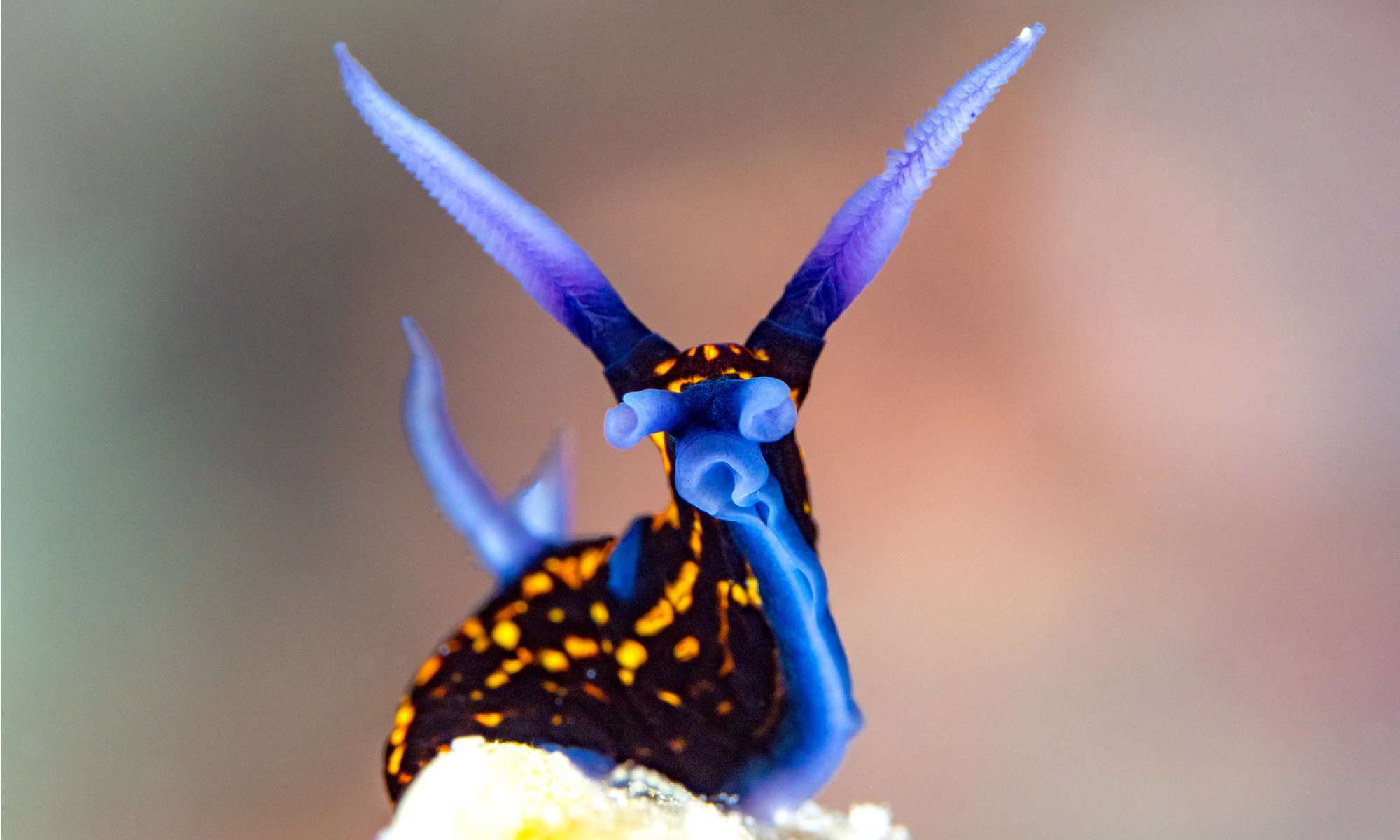
1. Chromodoris annae
Chromodoris annae is one of the most visually striking types of Sea slug, commonly found in Indo-Pacific coral reefs. It is known for its bright blue body with black and white patterns along its mantle, making it easy to identify even for beginner divers.
This species feeds mainly on sponges, from which it absorbs toxic chemicals for self-defense. These toxins make it unpalatable to predators, even though it has no shell for protection.
It is often seen gliding slowly across coral reefs, playing a role in controlling sponge populations and maintaining ecological balance.
2. Chromodoris willani
Chromodoris willani is another beautiful member of the types of Sea slug, characterized by its soft gray or pale body with delicate black lines and bright blue accents along the edges.
This species is commonly found in coral reef ecosystems where it feeds on specific sponge species. Its coloration serves as both camouflage and warning to potential predators.
It is a slow-moving but highly specialized predator that contributes to reef biodiversity by regulating sponge growth.
3. Hypselodoris apolegma
Hypselodoris apolegma is a vibrant species of sea slug known for its pinkish-purple body and bright orange gills. It is one of the more elegant-looking types of Sea slug found in tropical marine environments.
It inhabits coral reefs where it feeds on sponges, extracting chemical compounds that are used for defense. Its striking coloration warns predators of its toxicity.
This species is often observed in pairs or small groups during feeding activity, making it a favorite among underwater photographers.
4. Hypselodoris bullocki
Hypselodoris bullocki is a widely recognized sea slug species with a deep purple or lavender-colored body and bright orange rhinophores. It is one of the most elegant types of Sea slug in Indo-Pacific waters.
This species feeds primarily on sponges and is known for its strong chemical defense system. It absorbs toxins from its prey and stores them for protection.
It is commonly found on coral reefs and rocky substrates, where it moves slowly while searching for food sources.
5. Glaucus atlanticus (Blue Dragon)
Glaucus atlanticus, commonly known as the Blue Dragon, is one of the most unique types of Sea slug. Unlike reef-dwelling species, it floats upside down on the ocean surface.
This species feeds on venomous creatures like the Portuguese man o’ war and stores their stinging cells for its own defense. This makes it potentially dangerous despite its small size.
Its blue and silver coloration helps it blend with the ocean surface, protecting it from predators above and below.
6. Phyllidia varicosa
Phyllidia varicosa is one of the most recognizable types of Sea slug in tropical Indo-Pacific coral reefs. It has a thick, oval-shaped body with a striking pattern of bright yellow or orange tubercles running along its back, contrasted against a pale blue or gray base color. This warning coloration is not just for beauty—it signals toxicity to potential predators.
This species is a sponge specialist, feeding on specific types of marine sponges that contain toxic compounds. Instead of being harmed, Phyllidia varicosa stores these chemicals in its tissues, turning them into a powerful chemical defense system. This adaptation allows it to survive without a shell or physical armor.
It is commonly observed crawling slowly over coral reefs, especially in warm shallow waters. Despite its slow movement, it is an efficient predator in its ecological niche and plays a role in controlling sponge populations that could otherwise dominate reef surfaces.
Marine biologists often use this species as an indicator of reef health because it tends to thrive in stable, well-preserved coral environments with abundant sponge diversity.
7. Phyllidia ocellata
Phyllidia ocellata is another visually striking member of the types of Sea slug, known for its blue-gray body decorated with yellow or white spots that resemble eyes. These “eye-like” patterns may help confuse predators or signal toxicity.
This species is widely distributed across the Indo-Pacific region and is commonly found on coral reefs and rocky seabeds. It feeds primarily on sponges, similar to other Phyllidia species, and derives chemical defenses from its diet.
Its dorsal tubercles are arranged in distinct rows, giving it a textured appearance that helps in species identification. The combination of coloration and structure makes it one of the most studied nudibranchs in marine biology.
Phyllidia ocellata contributes to reef ecosystems by regulating sponge growth and maintaining balance among benthic organisms.
8. Jorunna parva (Sea Bunny)
Jorunna parva, commonly known as the “Sea Bunny,” is one of the most famous types of Sea slug due to its adorable appearance. It is covered in fine cilia that resemble soft fur, giving it a bunny-like look that has made it popular on social media.
Despite its cute appearance, it is a functional marine predator. It feeds mainly on sponges and uses chemical compounds from its prey for defense. Its rhinophores resemble small rabbit ears, which are actually sensory organs used to detect chemicals in the water.
This species is typically found in shallow coastal waters of Japan and the Indo-Pacific region. It moves slowly across sandy or rocky seabeds in search of food.
Jorunna parva demonstrates how evolution can produce visually charming yet ecologically important marine organisms.
9. Nembrotha kubaryana
Nembrotha kubaryana, also known as the Dusky Nembrotha, is a large and powerful member of the types of Sea slug. It is easily identified by its dark green or black body with bright orange or red markings.
Unlike many smaller nudibranchs, this species is an active predator that feeds on colonial ascidians (sea squirts). It is one of the few sea slugs that can consume toxic prey and still thrive, storing toxins for defense.
Its size and bold coloration make it one of the most impressive sea slugs seen by divers. It often moves across reef surfaces with confidence, showing little fear of predators due to its chemical defenses.
This species plays an important role in regulating ascidian populations and maintaining reef biodiversity.
10. Nembrotha lineolata
Nembrotha lineolata is a beautifully patterned sea slug and a notable member of the types of Sea slug. It has a creamy white body with fine black lines and orange accents on its rhinophores and gills.
This species is commonly found in coral reef environments across the Indo-Pacific. It feeds primarily on tunicates, similar to other Nembrotha species, and uses chemical compounds from its prey for defense.
Its elongated body and smooth movement make it an elegant sight for divers exploring shallow reefs. It often blends into its environment despite its contrasting colors, using both camouflage and warning signals.
Nembrotha lineolata contributes to the ecological balance of reef ecosystems by controlling tunicate populations.
11. Flabellina iodinea (Spanish Shawl)
Flabellina iodinea, commonly known as the Spanish Shawl, is one of the most visually striking types of Sea slug found along the Pacific coast of North America. It is famous for its vivid purple body, bright orange cerata, and electric blue rhinophores, making it one of the most photographed nudibranchs by divers and marine enthusiasts.
This species lives in shallow rocky reefs and kelp forest environments, where it actively hunts hydroids—small colonial organisms related to jellyfish. The Spanish Shawl uses a specialized feeding strategy, consuming hydroids and storing their stinging cells (nematocysts) in its own body for defense.
This remarkable adaptation allows it to defend itself without a shell or hard structure. Its bright coloration serves as an aposematic signal, warning predators that it is toxic or unpalatable.
Flabellina iodinea also plays a role in controlling hydroid populations, contributing to ecological balance in coastal marine ecosystems.
12. Flabellina verrucosa
Flabellina verrucosa is a cold-water species of sea slug and an important member of the types of Sea slug found in North Atlantic and Arctic regions. Unlike tropical nudibranchs, this species has a more muted coloration, often pinkish, reddish, or translucent with elongated cerata.
It thrives in colder marine environments where it feeds on hydroids growing on kelp, rocks, and submerged structures. Like other Flabellina species, it stores stinging cells from its prey, making it chemically defended.
Its elongated body and delicate cerata increase surface area, which may help with respiration in cold, oxygen-rich waters.
Flabellina verrucosa is often used in scientific studies of cold-water marine biodiversity due to its adaptation to extreme environments.
13. Melibe leonina (Hooded Nudibranch)
Melibe leonina, commonly known as the Hooded Nudibranch, is one of the most unusual types of Sea slug due to its unique feeding structure. Instead of a typical mouth, it has a large expandable hood that it uses to trap small crustaceans and plankton.
This species is found along the Pacific coast of North America, especially in kelp forests. It is often seen floating or slowly moving through seaweed beds while extending its hood to capture prey in a sudden suction motion.
Unlike many other nudibranchs, Melibe leonina does not rely on sponge toxins. Instead, it is an active predator that uses rapid movement and mechanical capture to feed.
It plays an important ecological role by controlling small invertebrate populations within kelp ecosystems.
14. Doriprismatica atromarginata
Doriprismatica atromarginata is a graceful and widely distributed member of the types of Sea slug found throughout the Indo-Pacific region. It is characterized by its creamy white to yellow body with a distinct black edge around its mantle.
This species feeds primarily on sponges and absorbs chemical compounds that provide protection against predators. Its smooth body and slow movement make it a typical nudibranch adapted for reef life.
It is often found on coral reefs and rocky substrates where sponge growth is abundant. Its coloration provides both camouflage and warning signals depending on the surrounding environment.
Doriprismatica atromarginata is also a popular species among underwater photographers due to its elegant appearance and slow, flowing movement.
15. Elysia chlorotica (Green Sea Slug)
Elysia chlorotica, known as the Green Sea Slug, is one of the most scientifically fascinating types of Sea slug because it can perform a process known as kleptoplasty. This means it can incorporate chloroplasts from algae into its own cells and use them for photosynthesis.
This unique ability allows it to survive for long periods without eating, essentially behaving like a plant in certain conditions. It is commonly found along the eastern coast of North America in salt marshes and shallow coastal waters.
The slug has a bright green coloration that comes directly from the chloroplasts it stores, helping it blend into algae-rich environments.
Elysia chlorotica is widely studied in biological research due to its rare ability to blur the line between animal and plant-like energy production.
16. Elysia crispata (Lettuce Sea Slug)
Elysia crispata, commonly known as the Lettuce Sea Slug, is one of the most unusual types of Sea slug due to its frilly, folded body that resembles leafy lettuce. It is found mainly in warm Caribbean and Atlantic coral reef ecosystems.
This species is part of a group called sacoglossans, which are famous for their ability to retain chloroplasts from algae they consume. Like its relative Elysia chlorotica, it can temporarily perform photosynthesis, giving it an energy advantage in nutrient-poor environments.
The lettuce-like folds increase its surface area, helping it absorb light more efficiently while also improving gas exchange. Its bright green coloration comes directly from stored chloroplasts.
Elysia crispata plays a subtle but important role in reef ecosystems by controlling algal populations and participating in nutrient cycling.
17. Aplysia californica (California Sea Hare)
Aplysia californica, known as the California Sea Hare, is one of the largest types of Sea slug in coastal North America. Despite its slug classification, it has a soft, rabbit-like appearance with small internal shell remnants.
This species is commonly found in kelp beds and seagrass meadows where it feeds on red and brown algae. It is known for its ink defense mechanism, which it releases when threatened to confuse predators.
The California Sea Hare is widely studied in neuroscience because of its relatively simple nervous system, making it a model organism in biological research.
It contributes to ecosystem balance by controlling algae growth in coastal environments.
18. Favorinus tsuruganus
Favorinus tsuruganus is a small but fascinating member of the types of Sea slug, known for its translucent body with subtle pink or yellow hues. It is found in tropical Indo-Pacific waters, often near coral reefs.
Unlike many nudibranchs that feed on sponges, this species has a more unusual diet—it preys on the eggs of other sea slugs and marine invertebrates. This makes it a specialized opportunistic predator in reef ecosystems.
Its camouflage allows it to blend into coral and algae-covered surfaces, helping it avoid detection while hunting.
Favorinus tsuruganus plays a unique ecological role in controlling egg populations of other marine organisms.
19. Ceratosoma trilobatum
Ceratosoma trilobatum is a large and visually dramatic member of the types of Sea slug, commonly found in Indo-Pacific coral reefs. It has a bright orange to reddish body with striking purple and blue accents.
This species feeds on toxic sponges and stores their chemical compounds for defense. Its body shape includes prominent lobes that may help deter predators by mimicking toxicity or distastefulness.
Ceratosoma trilobatum is often seen moving slowly across coral reefs, where its bold coloration serves as a warning signal to potential predators.
It is an important part of reef biodiversity and helps regulate sponge populations.
20. Doris pseudoargus
Doris pseudoargus is a cold-water sea slug and a representative of the types of Sea slug found in North Atlantic and European waters. It has a simple, flattened body with a mottled gray, yellow, or brown coloration that helps it blend into rocky substrates.
This species feeds mainly on sponges and plays an important ecological role in controlling sponge growth in temperate marine environments.
It is often found under rocks or on submerged surfaces in shallow coastal waters. Its camouflage is its primary defense against predators.
Doris pseudoargus is an important indicator species for studying cold-water marine ecosystems and environmental changes.
Conclusion
The types of Sea slug reveal one of the most colorful, diverse, and scientifically fascinating groups of marine life in the ocean. From vividly colored nudibranchs like Chromodoris species to highly specialized hunters such as Nembrotha and even plant-like sea slugs like Elysia chlorotica, each species shows a unique adaptation shaped by millions of years of evolution.
Sea slugs may look delicate, but they are powerful survivors. Many species use chemical defenses taken from their food, while others rely on camouflage, mimicry, or even stolen cellular machinery like chloroplasts to survive. These strategies make them important models for studying evolution, marine chemistry, and ecosystem balance.
Ecologically, sea slugs play a crucial role in coral reefs, kelp forests, and coastal environments by controlling sponge, algae, and small invertebrate populations. Because of this, they are also considered indicator species for ocean health—meaning changes in their populations can signal environmental stress.
As marine exploration continues, scientists continue to discover new species and behaviors among sea slugs, showing that the ocean still holds many secrets. Understanding and protecting these animals is not only important for biodiversity but also for maintaining healthy marine ecosystems.
In the end, the study of the types of Sea slug reminds us how even the smallest and softest creatures can play a powerful role in the balance of ocean life—so what other hidden marine species might still be waiting to be discovered beneath the waves?
Frequently Asked Questions (FAQ) About Sea Slugs
1. What are sea slugs?
Sea slugs are soft-bodied marine gastropods that belong mainly to the nudibranch group and related families. Unlike typical snails, most sea slugs do not have an external shell as adults. They are found in oceans worldwide and are known for their bright colors, unusual shapes, and complex defense mechanisms.
2. Are sea slugs and nudibranchs the same?
Nudibranchs are a subgroup of sea slugs, but not all sea slugs are nudibranchs. Sea slugs is a broader term that includes nudibranchs, sea hares, sacoglossans, and other shell-less marine gastropods.
3. Where do sea slugs live?
Sea slugs live in oceans all over the world, from tropical coral reefs to cold polar waters. Most species prefer shallow coastal areas where food such as algae, sponges, or hydroids is abundant.
4. What do sea slugs eat?
Sea slugs have diverse diets depending on the species. Many feed on sponges, hydroids, algae, or even eggs of other marine organisms. Some species are highly specialized predators with very specific food preferences.
5. Why are sea slugs so colorful?
Sea slugs are often brightly colored as a warning signal to predators. These colors usually indicate toxicity or unpalatability. In some cases, coloration also helps with camouflage or mimicry in reef environments.
6. Are sea slugs poisonous?
Many sea slugs are not poisonous to humans, but they can be toxic to predators. Some species store toxins from their prey, such as sponges or jellyfish, and use them for self-defense.
7. Can sea slugs sting humans?
Most sea slugs cannot sting humans. However, species like Glaucus atlanticus can retain stinging cells from their prey, which may cause mild irritation if handled.
8. How do sea slugs defend themselves?
Sea slugs use multiple defense strategies including toxic chemicals, bright warning colors, camouflage, and in some cases, storing stinging cells from their prey.
9. Do sea slugs have shells?
Most adult sea slugs do not have shells. However, some related species like sea hares may have internal or reduced shells.
10. How do sea slugs move?
Sea slugs move slowly using a muscular foot on their underside. They glide over surfaces using mucus to reduce friction.
11. How big can sea slugs grow?
Sizes vary widely. Some sea slugs are only a few millimeters long, while larger species like sea hares can grow over 30–40 cm in length.
12. What is the lifespan of a sea slug?
Most sea slugs live for a few months to a year, although lifespan depends on species, environment, and predation pressure.
13. How do sea slugs reproduce?
Sea slugs are usually hermaphrodites, meaning they have both male and female reproductive organs. They exchange sperm during mating and lay egg ribbons in protected areas.
14. Are sea slugs endangered?
Most sea slug species are not officially endangered, but habitat destruction, pollution, and climate change can impact their populations.
15. What eats sea slugs?
Predators include fish, crabs, sea stars, and sometimes other larger sea slugs. However, many predators avoid them due to chemical defenses.
16. Can sea slugs regenerate body parts?
Some species have limited regenerative abilities, but they do not regenerate as effectively as starfish or certain worms.
17. Do sea slugs have eyes?
Yes, but their eyes are very simple. They can detect light and dark but cannot form detailed images like human eyes.
18. How do sea slugs breathe?
Sea slugs breathe through gill structures or directly through their skin, depending on the species and habitat.
19. Why are sea slugs important to ecosystems?
They help control populations of sponges, algae, and small invertebrates, maintaining balance in marine ecosystems such as coral reefs and kelp forests.
20. Can sea slugs be kept in aquariums?
Some species can be kept in specialized marine aquariums, but they require precise water conditions and specific food sources, making them difficult for beginners.
21. What is kleptoplasty in sea slugs?
Kleptoplasty is a rare ability where some sea slugs, like Elysia species, steal chloroplasts from algae and use them to perform photosynthesis temporarily.
22. Do sea slugs use camouflage?
Yes, many species use camouflage to blend into coral, algae, or rocks, helping them avoid predators despite their slow movement.
23. How do sea slugs find food?
They use chemical sensors called rhinophores to detect food sources in the water.
24. Are sea slugs active during the day or night?
Some species are diurnal (active during the day), while others are nocturnal and prefer feeding at night to avoid predators.
25. Why do sea slugs store toxins?
They store toxins from their prey as a defense mechanism, making them unpalatable or dangerous to predators.
26. Can sea slugs swim?
Most sea slugs do not swim but crawl. However, some species like sea hares can briefly swim by flapping their body flaps.
27. What is the rarest sea slug?
Some deep-sea or region-specific nudibranchs are extremely rare, but rarity depends on habitat and research availability.
28. Are sea slugs intelligent?
Sea slugs have simple nervous systems and do not show intelligence like vertebrates, but they can respond to environmental stimuli effectively.
29. How do sea slugs lay eggs?
They lay eggs in spiral or ribbon-like structures attached to rocks, algae, or coral surfaces.
30. Why do sea slugs have horns?
The “horns” are called rhinophores and are sensory organs used to detect chemicals in the water.
31. Do sea slugs change color?
Some species can slightly change coloration depending on diet or environment, but most have stable colors.
32. What is the most beautiful sea slug?
Beauty is subjective, but species like Spanish Shawl and Chromodoris nudibranchs are often considered the most visually striking.
33. Are sea slugs harmful to coral reefs?
No, most sea slugs are beneficial and help maintain reef health by controlling sponge and algae growth.
34. How do sea slugs survive without shells?
They rely on chemical defenses, camouflage, and toxins from their prey instead of physical protection.
35. Can sea slugs live in freshwater?
No, sea slugs are strictly marine organisms and cannot survive in freshwater environments.
36. What is the fastest sea slug?
Sea slugs are generally slow-moving; none are considered fast compared to other marine animals.
37. Do sea slugs have brains?
They have simple clusters of nerve cells instead of a true brain, which control basic functions.
38. How do sea slugs communicate?
They primarily use chemical signals rather than sound or visual communication.
39. Are sea slugs nocturnal feeders?
Many species prefer nighttime feeding to reduce exposure to predators.
40. Do sea slugs migrate?
No, sea slugs are generally non-migratory and remain in localized habitats.
41. How do scientists study sea slugs?
Researchers study them through diving observations, laboratory analysis, and genetic sequencing.
42. Can sea slugs survive pollution?
Some species are sensitive to pollution, making them good indicators of environmental health.
43. What role do sea slugs play in food chains?
They act as both predators and prey, linking lower-level organisms like algae to higher-level predators.
44. Why are sea slugs important in research?
They are studied for their unique chemical compounds, defense systems, and neurological simplicity.
45. Do sea slugs have blood?
They have hemolymph, a fluid similar to blood, which circulates nutrients and oxygen.
46. Can sea slugs survive climate change?
Some species are resilient, but many are vulnerable to rising ocean temperatures and habitat loss.
47. What is the largest sea slug group?
Nudibranchs are one of the largest and most diverse groups of sea slugs.
48. Are sea slugs used in medicine?
Some compounds derived from sea slugs are being studied for potential pharmaceutical applications.
49. Do sea slugs have skeletons?
No, sea slugs have no internal or external skeleton, making them very flexible.
50. What makes sea slugs unique?
Their combination of bright colors, chemical defenses, and unusual feeding strategies makes them one of the most unique marine animals.
51. What is the future of sea slug populations?
Their future depends on ocean conservation, reef protection, and reducing pollution to preserve marine biodiversity.
Read more: