

The types of Abalone represent some of the most valuable and ecologically important marine mollusks found in coastal waters around the world. Abalone are marine snails belonging to the genus Haliotis, known for their ear-shaped shells lined with a row of respiratory pores. These animals are highly prized for their meat and beautiful iridescent shells, which are often used in jewelry and decoration.
Abalone are typically found in cold to temperate coastal waters, living on rocky reefs where they graze on algae using a strong, tooth-like radula. In this guide, we explore 30 types of Abalone with detailed identification features, habitat notes, and ecological importance. This first section covers five important species that are widely recognized in marine biology and fisheries worldwide.
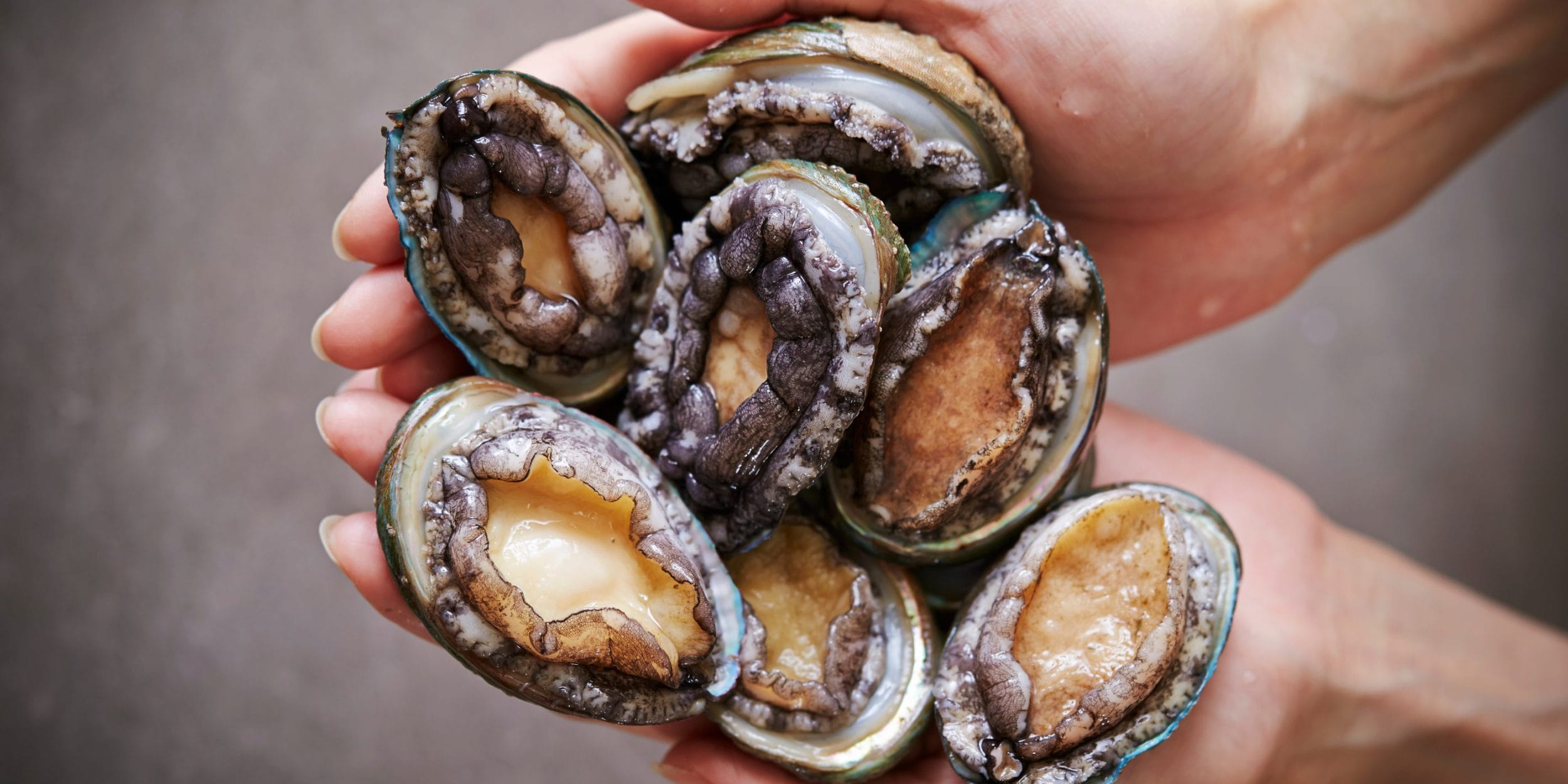
1. Red Abalone (Haliotis rufescens)
The Red Abalone is one of the most iconic types of Abalone, commonly found along the Pacific coast of North America. It is the largest abalone species in the region and is easily recognized by its thick, reddish-brown shell and strong muscular foot.
This species thrives in rocky coastal environments where kelp forests are abundant. It feeds primarily on giant kelp and other marine algae, playing a key role in maintaining the balance of kelp forest ecosystems. Its feeding activity helps prevent overgrowth of algae and supports biodiversity.
Red Abalone is highly valued in seafood markets due to its tender meat, which has led to heavy fishing pressure in the past. As a result, conservation efforts and regulated harvesting are now in place in many regions to protect wild populations.
Ecologically, it is a foundation species in kelp forest ecosystems, meaning its presence directly supports the survival of many other marine organisms.
2. Pink Abalone (Haliotis corrugata)
The Pink Abalone is another important member of the types of Abalone found in the eastern Pacific Ocean. It is named for its pinkish shell interior and slightly corrugated exterior surface.
This species prefers deeper rocky reefs compared to some other abalones and often hides in crevices to avoid predators such as sea otters and lobsters. Its strong foot allows it to cling tightly to rocks in high-energy environments.
Pink Abalone feeds on red and brown algae and contributes significantly to the health of reef ecosystems by controlling algal growth. It is slower-growing than some other species, making it more vulnerable to overfishing.
Due to population declines, conservation programs have been introduced in several coastal areas to help restore wild populations.
3. Black Abalone (Haliotis cracherodii)
The Black Abalone is one of the most well-known types of Abalone in North America, particularly along rocky intertidal zones of California. It is recognized by its dark, almost black shell exterior and rough surface texture.
This species inhabits shallow rocky shores where wave action is strong. It uses its powerful muscular foot to cling tightly to rocks, preventing dislodgement during heavy surf conditions.
Black Abalone plays a crucial ecological role in grazing algae and maintaining balance in intertidal ecosystems. However, it has experienced severe population declines due to disease, environmental stress, and historical overharvesting.
It is now considered endangered in many areas, and conservation efforts are focused on habitat protection and population recovery.
4. Green Abalone (Haliotis fulgens)
The Green Abalone is a distinctive member of the types of Abalone found along the Pacific coast of Mexico and southern California. It is named for its greenish shell interior and relatively large size.
This species inhabits rocky reefs and kelp forest environments where it feeds on a variety of marine algae. It is an important grazer in its ecosystem, helping to maintain healthy reef conditions.
Green Abalone is known for its slow growth rate, which makes it particularly vulnerable to overfishing. Conservation measures have been introduced to protect remaining populations.
Its beautiful shell has also made it popular in decorative arts, further increasing its historical harvesting pressure.
5. White Abalone (Haliotis sorenseni)
The White Abalone is one of the rarest types of Abalone and is native to deeper offshore waters along the Pacific coast of North America. It is easily identified by its smooth, pale shell and oval shape.
Unlike many other abalones, it lives in deeper waters where it attaches to rocky substrates beyond typical diving depths. This habitat once provided some protection from human harvesting.
White Abalone populations have declined drastically due to overfishing and environmental changes. It is now listed as critically endangered, with active breeding and restoration programs in place.
Despite its rarity, it remains an important species for understanding deep-water abalone ecology and conservation biology.
6. Pinto Abalone (Haliotis kamtschatkana)
The Pinto Abalone is one of the more northern-adapted types of Abalone, commonly found along the cold waters of the North Pacific, including Alaska, British Columbia, and parts of Washington State. It is smaller compared to species like the Red Abalone, but it is highly valued for its ecological role in rocky coastal ecosystems.
This species is easily recognized by its mottled shell pattern, which often resembles painted brush strokes in brown, green, and white tones. This natural camouflage helps it blend into algae-covered rocks and avoid predators such as sea otters and crabs.
Pinto Abalone feeds primarily on drift algae and benthic seaweed, scraping surfaces using its radula. It plays an important role in controlling algal growth and maintaining balance in kelp forest ecosystems.
Unfortunately, this species has experienced population declines due to overharvesting, habitat degradation, and environmental changes. Conservation programs and fishing restrictions have been implemented in several regions to help protect remaining populations.
7. Flat Abalone (Haliotis walallensis)
The Flat Abalone is another important member of the types of Abalone, found along the Pacific coastline of North America. As its name suggests, it has a relatively flatter shell compared to other abalone species, which helps it stay tightly attached to rock surfaces.
This species prefers shallow rocky reefs and intertidal zones where wave action is moderate to strong. Its flattened shape reduces resistance to water flow, allowing it to withstand turbulent coastal conditions.
Flat Abalone feeds on microalgae and seaweed growing on rocks. It contributes significantly to the health of coastal ecosystems by preventing excessive algal buildup.
Although less commercially targeted than larger species, it is still vulnerable to habitat changes and environmental stress, making conservation monitoring important for its long-term survival.
8. Threaded Abalone (Haliotis assimilis)
The Threaded Abalone is a distinctive species among the types of Abalone found in temperate marine environments. It is named for the fine, thread-like ridges on its shell surface, which give it a textured appearance.
This species typically inhabits rocky reefs at moderate depths, where it attaches firmly to hard substrates. Its shell structure provides both protection and camouflage against predators.
Threaded Abalone feeds on a variety of marine algae, playing a key role in nutrient cycling within reef ecosystems. It helps maintain ecological balance by preventing algal overgrowth.
Although not as widely harvested as larger abalone species, it still faces threats from habitat degradation and water quality changes in coastal regions.
9. Japanese Abalone (Haliotis discus hannai)
The Japanese Abalone is one of the most economically important types of Abalone in East Asia. It is widely cultivated in aquaculture systems in Japan, China, and Korea due to its high market demand.
This species has a thick, oval-shaped shell and is well adapted to cold-temperate waters. It prefers rocky coastal areas where kelp forests provide abundant food sources.
Japanese Abalone is a slow-growing species but is highly valued for its rich flavor and tender meat. Because of this, it is one of the most extensively farmed abalones in the world.
Aquaculture production has helped reduce pressure on wild populations, making it a key species in sustainable seafood development.
10. Northern Abalone (Haliotis kamtschatkana kamtschatkana)
The Northern Abalone is a subspecies closely related to the Pinto Abalone and is one of the most endangered types of Abalone in North America. It is primarily found along the coastal waters of British Columbia.
This species prefers cold, nutrient-rich waters and rocky habitats where kelp and algae are abundant. It has a relatively small and rounded shell with a rough exterior surface.
Northern Abalone plays a crucial ecological role in kelp forest ecosystems by grazing on algae and maintaining habitat balance. Its decline has had noticeable impacts on coastal biodiversity.
11. Southern Abalone (Haliotis australis)
The Southern Abalone is one of the notable types of Abalone found in temperate coastal waters of the Southern Hemisphere, especially around New Zealand and southern Australia. It is a medium-sized species with a smooth, oval shell and subtle greenish-brown coloration that helps it blend into rocky reef environments.
This species thrives in shallow subtidal zones where kelp forests are abundant. It feeds mainly on drifting algae and seaweed, scraping surfaces with its radula. Like other abalones, it plays a key role in maintaining ecological balance by preventing excessive algal growth on reefs.
Southern Abalone is relatively slow-growing, which makes it sensitive to environmental changes and overharvesting. In some regions, strict management practices have been introduced to ensure population stability and sustainable harvesting.
It is also valued in local fisheries, though conservation awareness is increasingly important to protect wild stocks.
12. Donkey Ear Abalone (Haliotis asinina)
The Donkey Ear Abalone is one of the most visually distinctive types of Abalone, named for its elongated shell shape that resembles a donkey’s ear. It is commonly found in tropical Indo-Pacific waters, including coral reef ecosystems.
This species has a thin, lightweight shell with vibrant coloration, often displaying green, brown, and pink tones. Its shell is more fragile compared to temperate abalone species, reflecting its adaptation to warmer, calmer waters.
Donkey Ear Abalone is fast-growing compared to many other abalone species and is often studied in aquaculture research due to its farming potential.
It feeds on microscopic algae and seaweed found on coral reefs, contributing to reef health by controlling algal growth.
13. Roe’s Abalone (Haliotis roei)
Roe’s Abalone is a Western Australian species and an important member of the types of Abalone found in temperate marine environments. It has a rounded shell with a rough, textured surface and typically displays greenish to reddish-brown coloration.
This species inhabits rocky coastal reefs and shallow subtidal zones where it clings tightly to surfaces exposed to moderate wave action. Its strong muscular foot allows it to resist dislodgement in turbulent waters.
Roe’s Abalone feeds on red and brown algae, playing a role in maintaining ecosystem balance in reef habitats.
It is also harvested commercially in Australia, but fisheries are carefully managed to ensure sustainability.
14. Tiger Abalone (Haliotis diversicolor supertexta group)
The Tiger Abalone is one of the more colorful types of Abalone, found in tropical and subtropical waters of the Indo-Pacific region. It is named for its striking shell patterns, which often resemble tiger-like stripes or mottled markings.
This species prefers coral reef environments and rocky coastal areas where water temperature remains warm and stable throughout the year. Its shell is relatively small but highly decorative.
Tiger Abalone feeds on algae growing on rocks and coral surfaces, contributing to reef ecosystem health by regulating algal coverage.
Due to its attractive appearance, it is sometimes collected for ornamental purposes, although conservation awareness is increasing in many regions.
15. Tuberculate Abalone (Haliotis tuberculata group)
The Tuberculate Abalone is one of the most widely distributed types of Abalone in European waters, particularly around the Atlantic coasts of France, Spain, and the British Isles. It is easily recognized by the small raised bumps (tubercles) on its shell surface.
This species inhabits rocky coastal areas with strong wave exposure. It attaches firmly to substrates and uses its muscular foot to resist dislodgement during rough sea conditions.
Tuberculate Abalone feeds on various types of seaweed and plays a vital role in coastal ecosystem dynamics by controlling algal growth.
It is also considered a delicacy in some European cuisines, which has led to localized harvesting pressures.
16. Giant Abalone (Haliotis gigantea group)
The Giant Abalone is one of the most impressive types of Abalone due to its large size and thick, heavy shell. It is mainly found in the coastal waters of East Asia, particularly around Japan, Korea, and parts of China. Its size and strong shell structure make it one of the most recognizable abalone species in the world.
This species lives in subtidal rocky reefs where kelp forests provide abundant food. It feeds primarily on large seaweeds, especially kelp, which it scrapes from rocks using its powerful radula. Its feeding activity helps maintain balance in kelp ecosystems.
Giant Abalone grows slowly but can live for many years if not disturbed. Because of its size and high demand in seafood markets, it has been heavily harvested in some regions, leading to strict aquaculture development programs.
Today, much of the commercial supply comes from farming rather than wild capture, making it an important species in sustainable seafood production.
17. Brown Abalone (Haliotis cracherodii-related complex)
The Brown Abalone is a widely recognized member of the types of Abalone, found along rocky coastlines where algae-rich waters support its diet. It has a darker brown shell exterior that helps it blend into rocky environments covered with seaweed and algae.
This species prefers shallow intertidal and subtidal zones where wave action is moderate to strong. It attaches tightly to rocks using its muscular foot, preventing dislodgement during storms.
Brown Abalone plays an essential ecological role by grazing on algae and preventing overgrowth that could otherwise smother other marine life.
Although once abundant, its populations have declined in many areas due to environmental stress and historical overfishing.
18. Blue Abalone (Haliotis sp. color variant group)
The Blue Abalone is a visually distinctive member of the types of Abalone, known for its bluish or bluish-green shell tones that stand out among other species. It is found in select temperate coastal waters where conditions support its growth.
This species typically inhabits rocky reefs with strong water movement, which brings in fresh nutrients and algae for feeding. Its coloration helps it blend into shadowed underwater rock surfaces.
Like other abalones, it feeds on marine algae and contributes to maintaining ecological balance in reef environments.
Because of its attractive shell, it has also attracted attention in shell collecting communities, increasing the importance of conservation awareness.
19. Perlemoen Abalone (Haliotis midae)
The Perlemoen Abalone is one of the most economically important types of Abalone in South Africa. It is large, slow-growing, and highly valued in international seafood markets, making it one of the most studied abalone species in aquaculture.
This species inhabits rocky coastal waters with kelp forests, where it feeds on brown and red algae. It has a thick, robust shell that provides protection against predators such as lobsters and sea stars.
Due to high demand and illegal harvesting in the past, Perlemoen Abalone has faced significant population pressure. As a result, strict conservation laws and farming initiatives have been introduced.
Today, it is a flagship species for abalone aquaculture development in southern Africa.
20. Ormer Abalone (Haliotis tuberculata – European form)
The Ormer Abalone is one of the most culturally significant types of Abalone in Europe, particularly around the Channel Islands and parts of the Atlantic coast. It has been harvested for centuries as a traditional seafood delicacy.
This species lives in rocky intertidal and subtidal zones where it feeds on seaweed and algae. Its shell is thick and slightly rough, often with natural variations in color depending on habitat.
Ormer populations are closely managed in many regions due to historical overharvesting. Seasonal harvesting restrictions are often in place to protect breeding populations.
It remains an important part of coastal cultural heritage and sustainable fisheries management.
21. Paua Abalone (Haliotis iris)
The Paua Abalone is one of the most famous types of Abalone from New Zealand, known for its stunning iridescent shell that displays vivid blues, greens, and purples. It is widely recognized both in marine biology and in cultural art traditions.
This species lives along rocky coastlines exposed to strong wave action. It prefers shallow subtidal zones where kelp and seaweed are abundant. Its strong muscular foot allows it to cling tightly to rocks even in rough sea conditions.
Paua Abalone feeds on red and brown algae and plays an important ecological role in controlling algal growth in coastal ecosystems. Its shells are highly valued in jewelry and decorative crafts, making it both an ecological and cultural icon.
Due to its popularity, it is carefully managed under strict harvesting regulations to ensure sustainable populations in the wild.
22. Chilean Abalone (Concholepas-related trade group)
The Chilean Abalone is a commercially important member of the types of Abalone found along the Pacific coast of South America. Although sometimes grouped differently in local classifications, it is widely associated with abalone-like marine gastropods.
It inhabits rocky coastal zones where nutrient-rich waters support dense algal growth. This species plays a key role in local fisheries and is an important part of traditional coastal diets.
Chilean Abalone feeds on marine algae and small organisms, contributing to ecosystem balance in intertidal zones.
Due to high demand, its populations are carefully monitored and managed through fishing regulations and aquaculture development programs.
23. Australian Blacklip Abalone (Haliotis rubra)
The Australian Blacklip Abalone is one of the most valuable types of Abalone in commercial fisheries. It is easily identified by its dark-edged shell opening (“black lip”) and thick, oval-shaped shell.
This species is found along southern Australia’s rocky coastlines, where cold, nutrient-rich waters support kelp forest ecosystems. It prefers exposed reef environments with strong wave action.
Blacklip Abalone feeds on kelp and large seaweeds, playing a vital role in maintaining healthy reef ecosystems. It is also a key species in Australia’s regulated seafood industry.
Sustainable harvesting practices are strictly enforced to prevent overexploitation and maintain long-term population stability.
24. Australian Greenlip Abalone (Haliotis laevigata)
The Greenlip Abalone is another important Australian species among the types of Abalone, named for the green coloration along the shell margin. It is highly valued in both wild fisheries and aquaculture production.
It inhabits deeper subtidal reefs compared to Blacklip Abalone and prefers slightly calmer waters. Its smooth shell and rounded shape help distinguish it from other species.
Greenlip Abalone feeds primarily on red and brown algae, contributing to ecosystem stability in reef environments.
It is widely farmed due to its fast growth rate compared to many other abalone species, making it important for sustainable seafood supply.
25. Disk Abalone (Haliotis discus group)
The Disk Abalone is a member of the types of Abalone found mainly in East Asian coastal waters. It is named for its relatively flat, disk-like shell shape that helps it stay close to rocky surfaces.
This species lives in cold to temperate waters where kelp forests provide abundant food sources. It attaches firmly to rocks using its muscular foot to withstand wave action.
Disk Abalone plays a key ecological role in grazing algae and maintaining balance in marine ecosystems. It is also important in aquaculture due to its adaptability to farming conditions.
Its stable growth and commercial value make it a key species in sustainable seafood development programs.
26. Disk Abalone (Haliotis discus hannai complex)
The Disk Abalone is one of the most important types of Abalone in East Asian marine ecosystems, especially in Japan, Korea, and northern China. It is named for its relatively flat, disk-like shell shape, which helps it remain tightly attached to rocky surfaces in strong coastal currents.
This species thrives in cold, nutrient-rich waters where kelp forests are abundant. It feeds primarily on large seaweeds such as kelp and wakame, using its strong radula to scrape food from rock surfaces.
Disk Abalone plays a critical ecological role by controlling algal growth and maintaining balance in reef ecosystems. It is also one of the most widely farmed abalone species due to its adaptability and high market demand.
Because of aquaculture success, it is considered a model species for sustainable seafood production in East Asia.
27. Tuberculate Abalone (Haliotis tuberculata group variant)
The Tuberculate Abalone is a distinctive member of the types of Abalone found in European and northeastern Atlantic waters. It is named for the small, raised bumps (tubercles) that form on its shell surface, giving it a rough, textured appearance.
This species lives in rocky intertidal and subtidal zones where wave action is moderate to strong. It clings tightly to rocks using a powerful muscular foot, preventing dislodgement during storms.
Tuberculate Abalone feeds on a variety of marine algae and contributes to maintaining healthy coastal ecosystems by preventing excessive algal buildup.
It is also culturally significant in parts of Europe, where it has been harvested for centuries as a traditional seafood delicacy.
28. Giant Abalone (Haliotis gigantea group)
The Giant Abalone is one of the largest types of Abalone, found mainly in Japan, Korea, and nearby regions of the Northwest Pacific. It is easily recognized by its thick, heavy shell and large muscular foot.
This species inhabits deeper rocky reefs and kelp forest zones where it feeds on large seaweeds. Its size allows it to process significant amounts of algae, making it an important herbivore in its ecosystem.
Giant Abalone grows slowly but can live for many years under stable conditions. Due to its high value in seafood markets, it has been heavily managed through aquaculture production.
Today, farmed Giant Abalone plays a major role in reducing pressure on wild populations.
29. Roe’s Abalone (Haliotis roei)
Roe’s Abalone is a key member of the types of Abalone found along the southern and western coasts of Australia. It has a rough, greenish-brown shell with irregular ridges that help it blend into rocky reef environments.
This species lives in shallow coastal waters where wave exposure is moderate. It attaches firmly to rocks using its muscular foot and is well adapted to withstand changing environmental conditions.
Roe’s Abalone feeds on red and brown algae, playing an essential role in maintaining ecosystem balance in coastal reef systems.
It is also part of regulated fisheries in Australia, where sustainable harvesting practices are strictly enforced.
30. Perlemoen Abalone (Haliotis midae)
The Perlemoen Abalone is one of the most economically important types of Abalone in southern Africa. It is highly valued in international seafood markets and is widely studied in aquaculture research.
This species inhabits rocky coastal waters with strong kelp growth, where it feeds on marine algae. Its thick shell provides protection against predators and harsh environmental conditions.
Perlemoen Abalone has faced significant pressure from illegal harvesting, leading to strict conservation laws and farming initiatives in South Africa.
It is now a flagship species for sustainable abalone aquaculture in the region.
Conclusion
The types of Abalone showcase one of the most fascinating and ecologically important groups of marine mollusks in the world’s oceans. From cold northern waters to tropical reefs and temperate rocky coastlines, abalone have successfully adapted to a wide range of environments, each species developing unique shell shapes, colors, and survival strategies.
Across all 30 species explored in this guide, abalone consistently play a crucial ecological role as herbivores that graze on algae. This helps maintain balance in kelp forests and rocky reef ecosystems, preventing overgrowth and supporting biodiversity. Their presence often indicates a healthy and stable marine environment.
At the same time, many abalone species are economically valuable and culturally significant, especially in coastal communities around the world. However, this demand has also led to overharvesting in some regions, making conservation, aquaculture, and sustainable fishing practices more important than ever.
Understanding the diversity of abalone not only deepens our appreciation for marine life but also highlights the importance of protecting ocean ecosystems for future generations. As research continues, there is still much to learn about their biology, behavior, and hidden populations in unexplored waters.
In the end, the study of types of Abalone reminds us that even slow-moving, simple-looking sea creatures can play a powerful role in shaping the health of our oceans—so what other hidden marine species might still be waiting to be discovered?
50+ Frequently Asked Questions (FAQ) About Abalone
1. What are abalone?
Abalone are marine sea snails belonging to the genus Haliotis. They are known for their ear-shaped shells with a row of respiratory holes. Inside the shell, they have a strong muscular foot that allows them to attach tightly to rocks in coastal waters.
2. Where do abalone live?
Abalone live mainly in cold, temperate, and sometimes tropical coastal waters around the world. They are commonly found on rocky reefs, kelp forests, and shallow subtidal zones where food sources like seaweed are abundant.
3. What do abalone eat?
Abalone are herbivores that feed primarily on marine algae and kelp. They use a specialized tongue-like organ called a radula to scrape food from rocks and underwater surfaces.
4. How many types of abalone exist?
There are around 50 known species of abalone worldwide, although new variations and subspecies are still being studied. Each species has unique shell shapes, colors, and habitat preferences.
5. Why are abalone shells colorful?
Abalone shells are made of layers of calcium carbonate and proteins that reflect light, creating a natural iridescent effect. This gives them beautiful colors such as blue, green, pink, and purple inside the shell.
6. Are abalone endangered?
Many abalone species are endangered or threatened due to overfishing, habitat loss, disease, and climate change. Some species like the white abalone are critically endangered and require active conservation programs.
7. Why are abalone valuable?
Abalone are valuable for their meat, which is considered a delicacy in many cultures, and for their shells, which are used in jewelry, decoration, and traditional crafts.
8. How do abalone move?
Abalone move very slowly using their muscular foot. They glide over rocks and surfaces by contracting and expanding this foot while secreting mucus for smoother movement.
9. Can abalone survive out of water?
Yes, abalone can survive short periods out of water by sealing their shell tightly to retain moisture. However, they cannot survive long exposure to air and will eventually die if left dry.
10. How do abalone reproduce?
Abalone reproduce by releasing eggs and sperm into the water column, where fertilization occurs externally. The larvae then drift in the ocean before settling on a suitable rocky surface.
11. What is the lifespan of abalone?
Abalone can live between 5 and 35 years depending on species and environmental conditions. Larger species in cold waters tend to live longer than smaller tropical species.
12. What eats abalone?
Natural predators of abalone include sea otters, lobsters, crabs, starfish, octopuses, and certain fish species that can break or pry open their shells.
13. How do abalone protect themselves?
Abalone protect themselves by clinging tightly to rocks using their powerful foot. Their hard shell also provides protection against most predators.
14. Why do abalone have holes in their shell?
The holes in abalone shells are used for breathing and expelling water. They allow oxygen exchange and help the animal remove waste and water from its body.
15. Can abalone be farmed?
Yes, abalone farming (aquaculture) is widely practiced in countries like China, Japan, Australia, and South Africa. It helps reduce pressure on wild populations.
16. Is abalone farming sustainable?
When properly managed, abalone farming can be sustainable. It reduces wild harvesting and provides a controlled environment for growth, but it must be carefully regulated.
17. What is the biggest abalone species?
The Red Abalone and Giant Abalone are among the largest species, capable of reaching significant sizes compared to other members of the genus.
18. What is the smallest abalone species?
Some tropical abalone species, such as Donkey Ear Abalone, are relatively small compared to temperate species and have thinner shells adapted to warmer waters.
19. Why are abalone overfished?
Abalone are overfished due to high demand for their meat and shells. Their slow growth and late maturity make them especially vulnerable to overharvesting.
20. How fast do abalone grow?
Abalone grow slowly, especially in cold waters. Some species take several years to reach reproductive maturity, which makes population recovery slow after depletion.
21. What is abalone meat like?
Abalone meat is firm, slightly chewy, and often described as a mix between scallops and squid in texture, with a mild, sweet flavor when properly prepared.
22. Are abalone related to snails?
Yes, abalone are a type of marine snail. They belong to the gastropod class, which includes snails and slugs.
23. Can abalone regenerate their shell?
Yes, abalone can repair and regrow damaged parts of their shell over time as long as they are healthy and have sufficient calcium in their environment.
24. What is the radula in abalone?
The radula is a ribbon-like structure with tiny teeth used by abalone to scrape algae from rocks. It functions like a biological rasp.
25. Do abalone have eyes?
Abalone do not have complex eyes but have simple light-sensitive organs that help them detect changes in light and shadow.
26. Why do abalone cling so tightly to rocks?
This behavior helps them avoid being dislodged by waves and protects them from predators such as sea stars and crabs.
27. Can abalone swim?
No, abalone cannot swim. They are fully benthic organisms that remain attached to surfaces throughout their adult life.
28. What is abalone pearl?
Occasionally, abalone can produce rare iridescent pearls known as abalone pearls, which are highly valued in jewelry.
29. Are abalone pearls common?
No, abalone pearls are extremely rare compared to oyster pearls, making them more valuable and collectible.
30. Why do abalone populations decline?
Population decline is mainly caused by overfishing, habitat destruction, pollution, disease, and climate change impacts on ocean ecosystems.
31. How do abalone breathe?
Abalone breathe through gills located inside their shell, drawing oxygen from seawater that flows over their respiratory structures.
32. Are abalone nocturnal?
Many abalone species are more active at night when they feed, as this reduces exposure to predators.
33. Do abalone migrate?
Abalone do not migrate long distances. They remain in localized habitats throughout their lives.
34. What is abalone habitat destruction?
It refers to damage to rocky reefs and kelp forests caused by pollution, coastal development, and climate change, which reduces available living space for abalone.
35. Can abalone be kept in aquariums?
Yes, but it requires specialized marine systems with stable temperature, salinity, and algae growth to sustain them.
36. What is the economic importance of abalone?
Abalone support fisheries, aquaculture industries, and international seafood trade, making them economically significant in many coastal countries.
37. What is abalone poaching?
Poaching refers to illegal harvesting of abalone without permits, which threatens wild populations and biodiversity.
38. Why are abalone slow to recover?
Because they grow slowly and reproduce externally, their populations take a long time to rebuild after decline.
39. What role do abalone play in ecosystems?
They control algae growth, support kelp forest health, and provide food for predators, making them important ecosystem engineers.
40. Do abalone change color?
Shell color can vary depending on diet, habitat, and environmental conditions, especially in juvenile stages.
41. What is kelp forest connection?
Abalone depend on kelp forests for food and habitat, while also helping maintain kelp balance through grazing.
42. Can abalone survive pollution?
Some species tolerate mild pollution, but heavy contamination can reduce reproduction and survival rates.
43. Are abalone seasonal breeders?
Yes, many species reproduce seasonally depending on water temperature and food availability.
44. What is abalone aquaculture feed?
Farmed abalone are often fed controlled algae diets or specially cultivated seaweed to ensure healthy growth.
45. How are abalone harvested?
They are harvested by divers in shallow waters or collected from aquaculture farms under controlled conditions.
46. Why are abalone slow swimmers?
They are not swimmers at all; their body structure is adapted for a stationary, rock-attached lifestyle.
47. Do abalone have predators in deep water?
Yes, deep-water abalone are preyed upon by fish, crabs, and starfish adapted to deeper ecosystems.
48. What is abalone conservation status?
It varies by species, with some listed as endangered, while farmed species are considered stable.
49. How do scientists study abalone?
Scientists study them through field observation, tagging, aquaculture experiments, and genetic analysis.
50. Why are abalone important to humans?
They are important for food, culture, economy, and scientific research, especially in marine ecology and aquaculture development.
51. What is the future of abalone populations?
The future depends on conservation efforts, sustainable farming, and protection of marine habitats. Without these, many species remain at risk.
Read more: