

The types of Gibbon represent one of the most agile and intelligent groups of small apes found in the forests of Asia. Known for their incredible brachiation skills—swinging effortlessly from branch to branch—gibbons are essential members of tropical forest ecosystems. Unlike great apes, they are smaller, highly territorial, and live in tightly bonded family groups. Each species has unique vocalizations, fur coloration, and habitat preferences.
In this guide, we explore 25 types of Gibbon with identification features, behavior traits, and natural habitat descriptions. These primates play a crucial ecological role in seed dispersal and forest regeneration, making them vital to biodiversity. Let’s begin with the first five species.
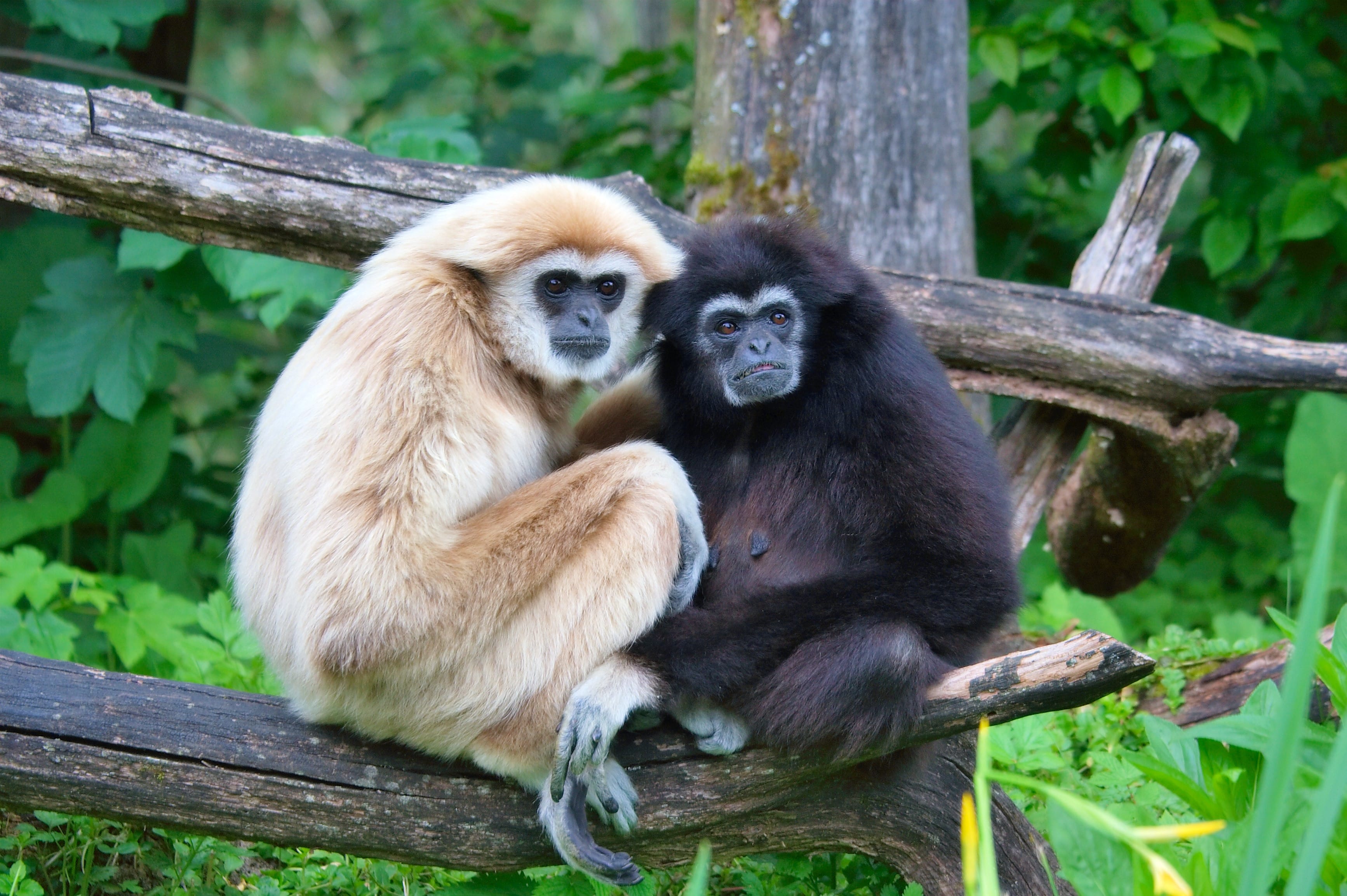
1. Lar Gibbon (Hylobates lar)
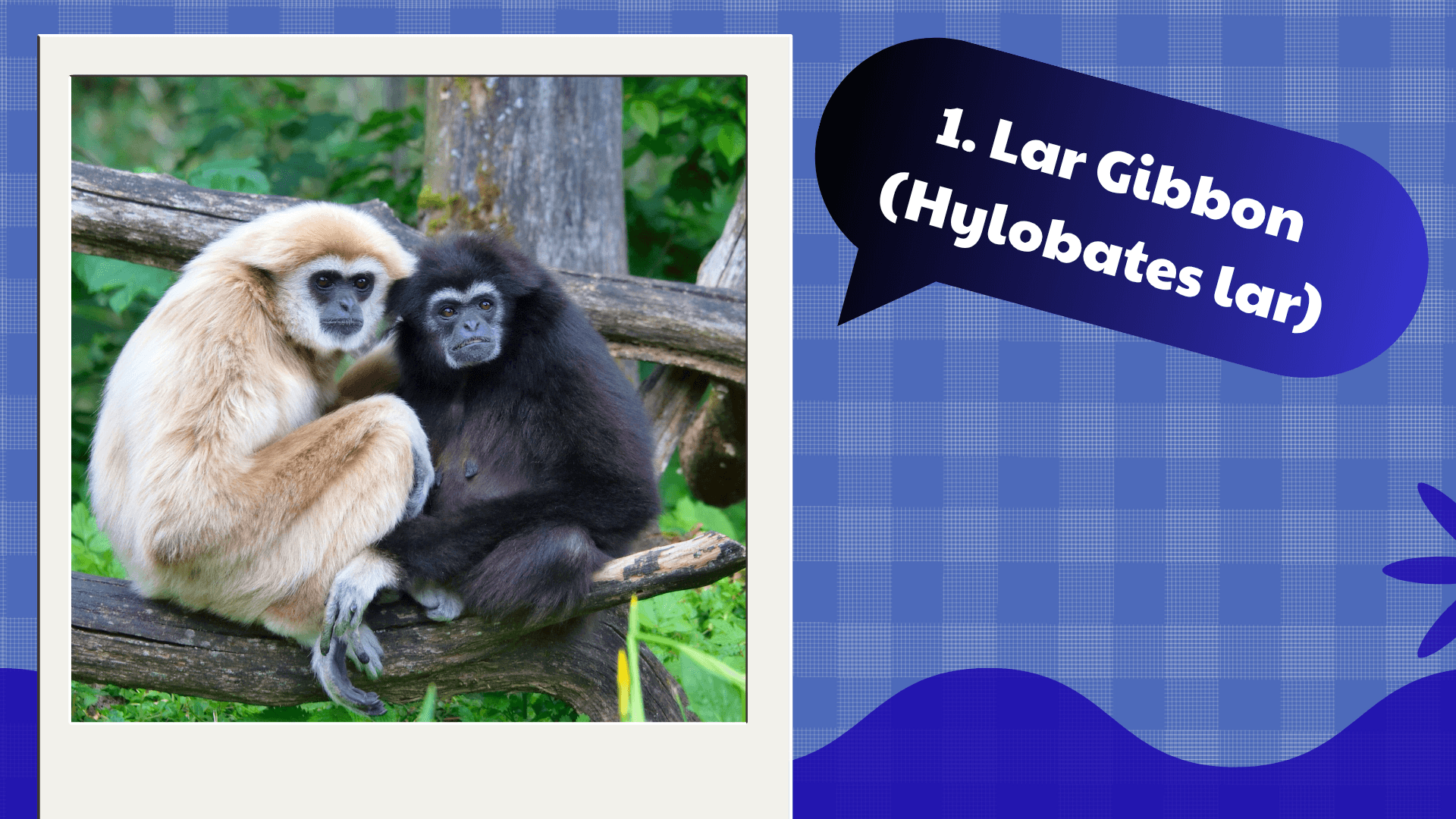
The Lar Gibbon is one of the most well-known types of Gibbon, commonly found in Southeast Asia, including Thailand, Malaysia, and parts of Indonesia. It has a distinctive light-colored face framed by black or dark brown fur, making it easy to identify in the wild.
This species is highly territorial and uses loud, melodic calls to mark its territory and strengthen pair bonds. Lar Gibbons live in monogamous family groups and are extremely agile, moving rapidly through the canopy using brachiation.
They feed mainly on fruits, leaves, and occasional insects, playing an important role in forest seed dispersal and ecosystem regeneration.
2. Agile Gibbon (Hylobates agilis)

The Agile Gibbon is one of the fastest and most energetic types of Gibbon, known for its extraordinary speed and flexibility in the treetops. It is found in Sumatra and parts of the Malay Peninsula.
Its fur varies from black to dark brown, often with lighter facial markings. Agile Gibbons are extremely skilled climbers and can leap impressive distances between trees.
They are frugivorous, feeding mostly on fruit, but will also consume young leaves and flowers. Their mobility helps maintain genetic diversity in forest plant species.
3. Bornean White-bearded Gibbon (Hylobates albibarbis)

This striking species is one of the most visually unique types of Gibbon, recognized by its light-colored “beard” contrasting with darker body fur. It is native to Borneo’s lowland forests.
It lives in small family groups and communicates through complex vocal duets between mates. These calls can travel long distances through dense rainforest.
Its diet consists mainly of ripe fruits, making it a key seed disperser in tropical ecosystems.
4. Müller’s Gibbon (Hylobates muelleri)

Müller’s Gibbon is a medium-sized ape found in Borneo’s central and eastern forests. It is one of the more adaptable types of Gibbon, capable of surviving in both primary and secondary forests.
Its fur is generally dark brown or black, with subtle facial variations depending on the population. This species is highly arboreal and rarely comes to the ground.
It feeds mainly on fruit and contributes significantly to forest regeneration through seed dispersal.
5. Kloss’s Gibbon (Hylobates klossii)
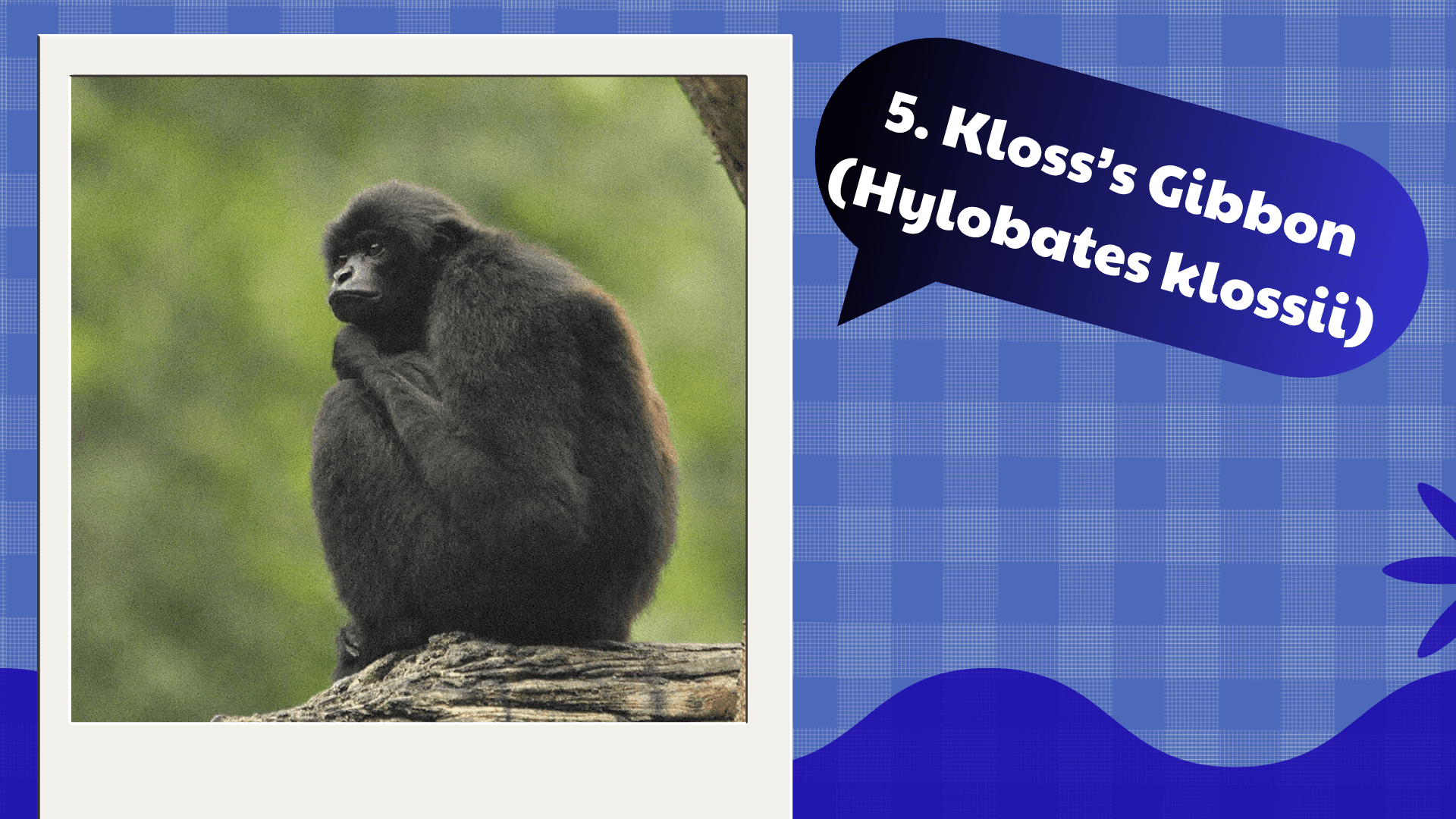
Kloss’s Gibbon is an endemic species found only in the Mentawai Islands of Indonesia. It is one of the rarest types of Gibbon, with completely black fur and no visible sexual dimorphism.
This species is known for its quiet, less complex vocalizations compared to other gibbons, but still uses sound for territory defense and bonding.
It plays a vital ecological role in island forest ecosystems, where it helps maintain plant diversity through feeding and movement patterns.
6. Pileated Gibbon (Hylobates pileatus)

The Pileated Gibbon is one of the most distinctive types of Gibbon found in Southeast Asia, particularly in Cambodia, Thailand, and parts of Laos. It is easily recognized by its striking coloration: males are mostly black with a white face ring and chest patch, while females are typically lighter gray with a dark cap on the head.
This sexual dimorphism makes identification in the wild relatively straightforward. Pileated Gibbons are highly arboreal and rarely descend to the forest floor, preferring dense evergreen and semi-evergreen forests where they can move efficiently through the canopy.
They live in monogamous family groups and are known for their loud, echoing vocal duets between mates. These calls serve both to strengthen pair bonds and to defend territory from neighboring groups.
Ecologically, they play a crucial role as seed dispersers, feeding primarily on ripe fruits, along with leaves and occasional flowers. Their movement patterns help regenerate forest structure over time.
7. Silvery Gibbon (Hylobates moloch)

The Silvery Gibbon is one of the rarest types of Gibbon, endemic to the island of Java in Indonesia. It is named for its elegant silver-gray fur, which gives it a soft, shimmering appearance in sunlight filtering through the forest canopy.
This species lives in tropical rainforests and montane forests, where it relies heavily on continuous canopy cover for movement. Habitat fragmentation is a major threat, making it one of the most vulnerable gibbon species in the world.
Silvery Gibbons are highly vocal, producing long, haunting songs that can travel across large forest distances. These calls are essential for maintaining territory and pair bonds.
Their diet consists mainly of fruit, supplemented by young leaves and flowers. They play an important ecological role in maintaining forest diversity through seed dispersal.
8. Abbott’s Gibbon (Hylobates abbotti)
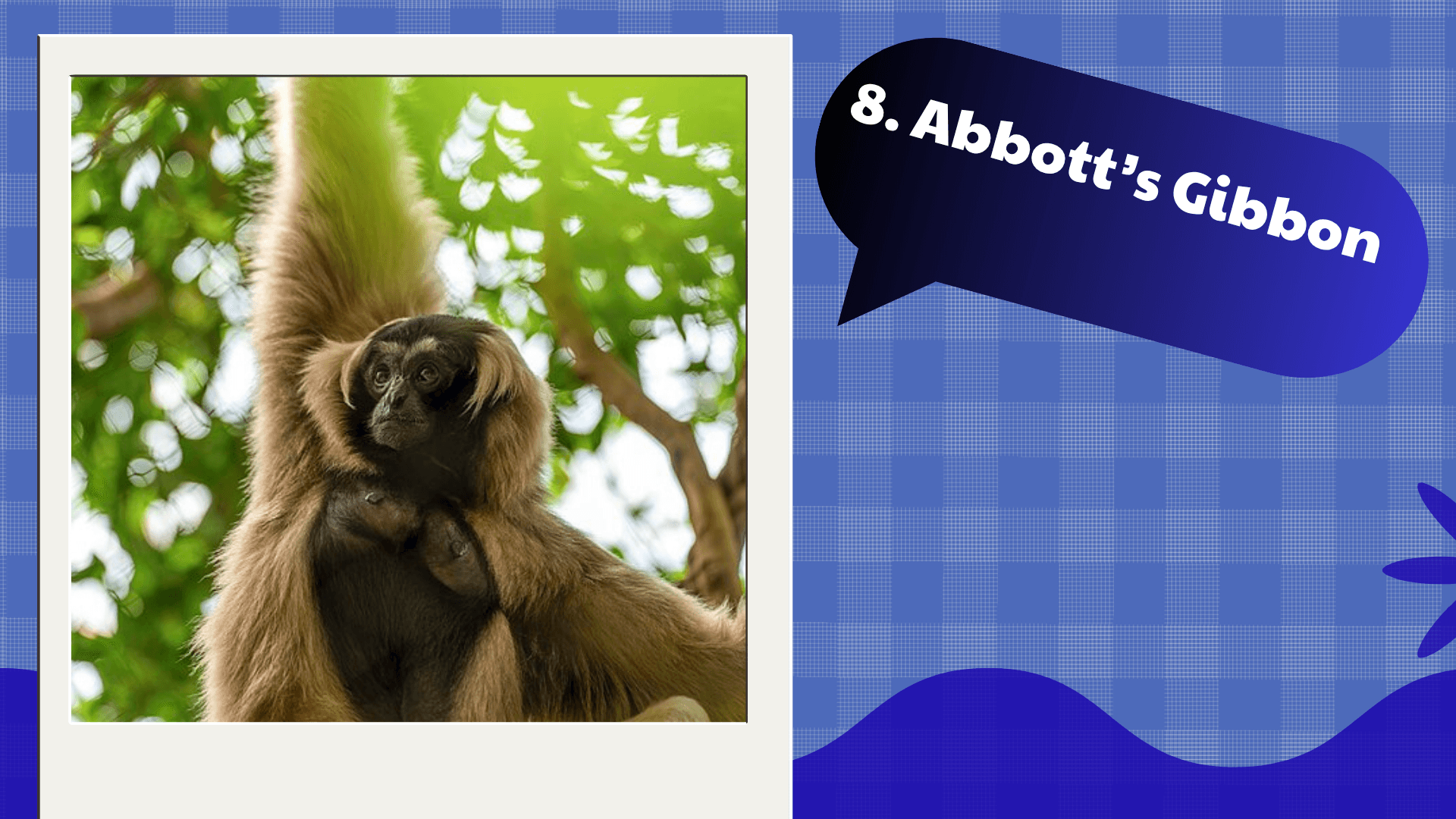
Abbott’s Gibbon is one of the lesser-known types of Gibbon, found in parts of Borneo. It has dark fur with lighter facial markings, often appearing as a subtle contrast in its appearance.
This species inhabits lowland rainforests and is highly dependent on intact forest ecosystems. It is an agile brachiator, moving swiftly between branches using its long arms.
Abbott’s Gibbon is primarily frugivorous but also consumes leaves and occasional insects. Its feeding habits contribute to seed dispersal and forest regeneration.
Because of deforestation, its populations are under pressure, making habitat protection essential for its survival.
9. Northern Grey Gibbon (Hylobates funereus)

The Northern Grey Gibbon is one of the most widespread types of Gibbon in northern Borneo. It has a mostly gray or brownish coat with subtle facial variations that help differentiate individuals.
This species thrives in tropical rainforests and shows strong adaptability to different forest types, although it still depends heavily on canopy connectivity.
It lives in small family groups and communicates through loud vocalizations that can be heard across long distances in dense forest environments.
Its diet is dominated by fruit, but it also consumes young leaves and flowers, making it an important contributor to forest ecology.
10. Agile White-handed Gibbon Complex (Hylobates lar subspecies group)
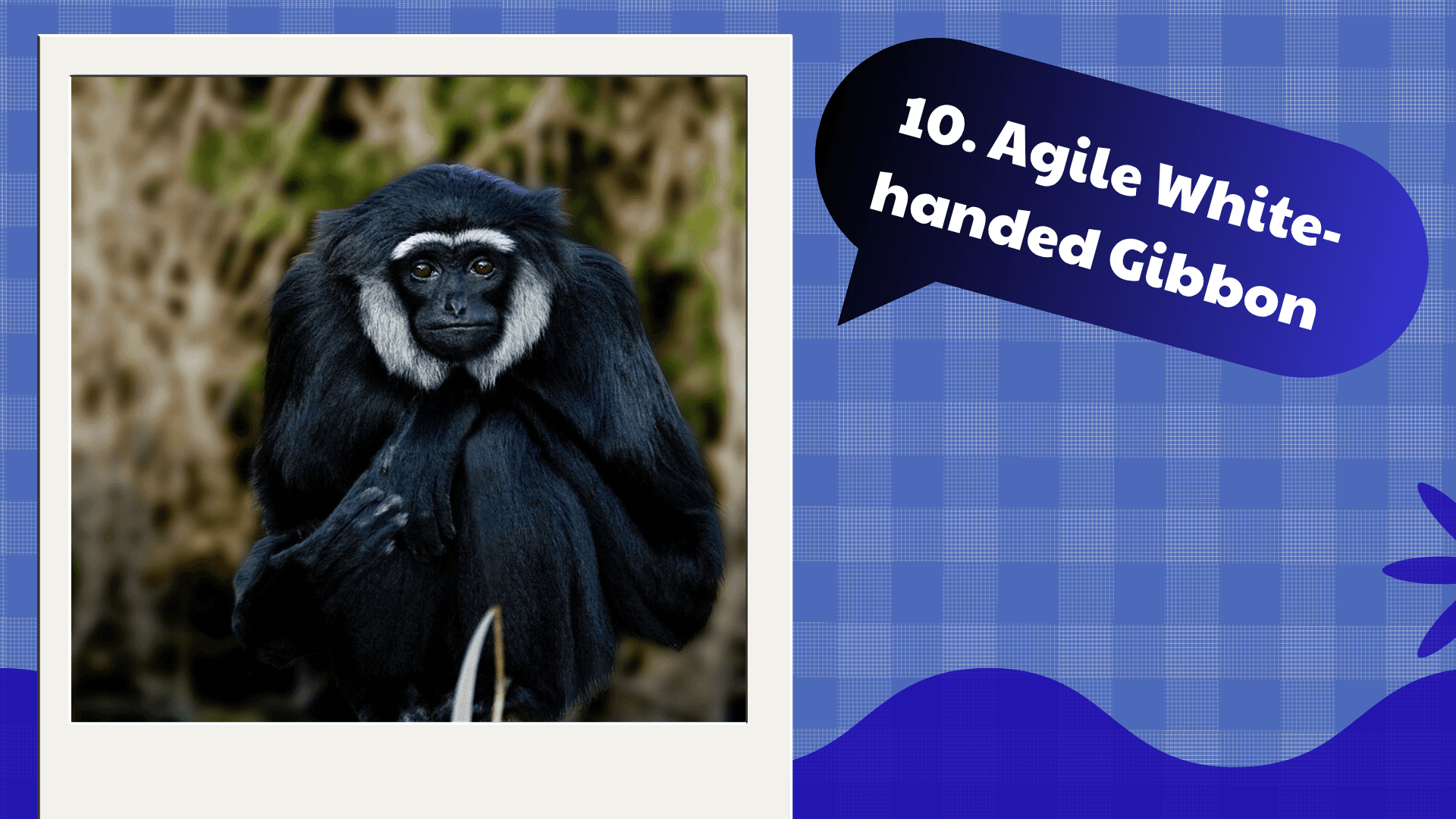
This group represents closely related populations within the broader Lar Gibbon lineage and is considered one of the most adaptable types of Gibbon. It is distributed across Thailand, Malaysia, and parts of Indonesia.
Members of this complex show variations in fur coloration, ranging from dark brown to lighter cream tones, often depending on geographic location.
They are highly territorial and use synchronized vocal duets as a key social behavior. These songs help strengthen pair bonds and establish dominance in their home range.
Like other gibbons, they are essential seed dispersers and play a vital role in maintaining tropical forest biodiversity.
11. Western Hoolock Gibbon (Hoolock hoolock)

The Western Hoolock Gibbon is one of the most important types of Gibbon found in South Asia, mainly in India, Bangladesh, and Myanmar. It is easily recognized by its black fur and distinctive white eyebrow markings, which give it a striking facial expression in the forest canopy.
This species lives in evergreen and semi-evergreen forests and depends heavily on continuous tree cover for movement. Like other gibbons, it is a brachiator, using its long arms to swing rapidly between branches.
Western Hoolock Gibbons are highly vocal, producing loud calls that help establish territory and strengthen pair bonds. These calls are often heard at dawn and are an important part of forest soundscapes.
Their diet consists mainly of fruit, leaves, and flowers, making them important seed dispersers in their ecosystem.
12. Eastern Hoolock Gibbon (Hoolock leuconedys)
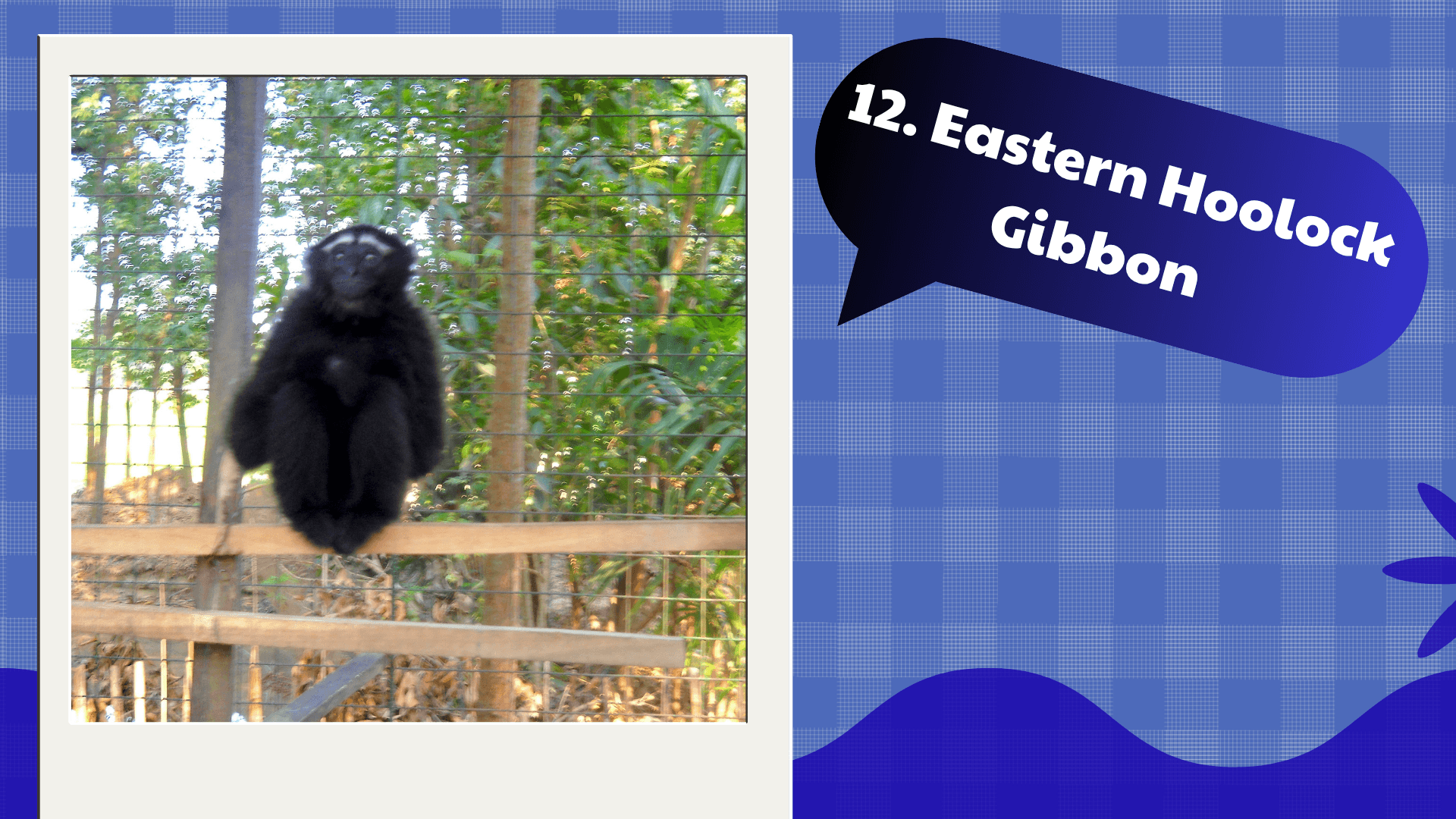
The Eastern Hoolock Gibbon is a closely related member of the types of Gibbon, found in parts of northeastern India, Myanmar, and southern China. It is slightly lighter in coloration compared to its western counterpart, often showing brownish or gray tones.
This species inhabits dense tropical forests and relies heavily on canopy connectivity. Habitat fragmentation is one of its biggest threats, limiting its movement and survival.
Eastern Hoolock Gibbons are monogamous and form strong family units. They use vocal duets as a form of communication between mates, especially during territorial defense.
Their ecological role as seed dispersers is crucial for maintaining forest regeneration and plant diversity.
13. Skywalker Hoolock Gibbon (Hoolock tianxing)

The Skywalker Hoolock Gibbon is one of the most recently recognized types of Gibbon, discovered in China and Myanmar. Its name reflects its agile, “sky-walking” movement through the forest canopy.
This species has dark fur with subtle facial markings and is highly adapted to steep, mountainous forest habitats. It is extremely rare and considered vulnerable due to habitat loss.
Skywalker Gibbons are highly arboreal and rarely descend to the ground. They rely on fruit as their main food source but may also consume leaves and flowers.
Their discovery highlights how much remains unknown about primate diversity in remote forest regions.
14. Northern White-cheeked Gibbon (Nomascus leucogenys)

The Northern White-cheeked Gibbon is one of the most visually distinctive types of Gibbon, known for the white patches on the cheeks of males and black or golden-brown fur depending on sex.
This species is found in Laos, Vietnam, and southern China, living in dense tropical forests where it depends on continuous canopy cover.
It is highly vocal, producing complex songs that help define territory and strengthen pair bonds. These vocalizations are a key part of its social structure.
The species plays an important ecological role in seed dispersal and forest regeneration but is highly endangered due to habitat destruction and hunting.
15. Southern White-cheeked Gibbon (Nomascus siki)

The Southern White-cheeked Gibbon is another important member of the types of Gibbon, found in parts of Laos and Vietnam. It is similar in appearance to the northern species but has subtle differences in coloration and vocal patterns.
Males typically have black fur with white cheek patches, while females are lighter in color. This sexual dimorphism helps researchers distinguish between populations.
They inhabit tropical evergreen forests and are highly dependent on intact habitats for survival. Their movements are fast and agile, relying on brachiation to travel efficiently through trees.
Like other gibbons, they contribute significantly to forest ecology through fruit consumption and seed dispersal.
16. Yellow-cheeked Gibbon (Nomascus gabriellae)
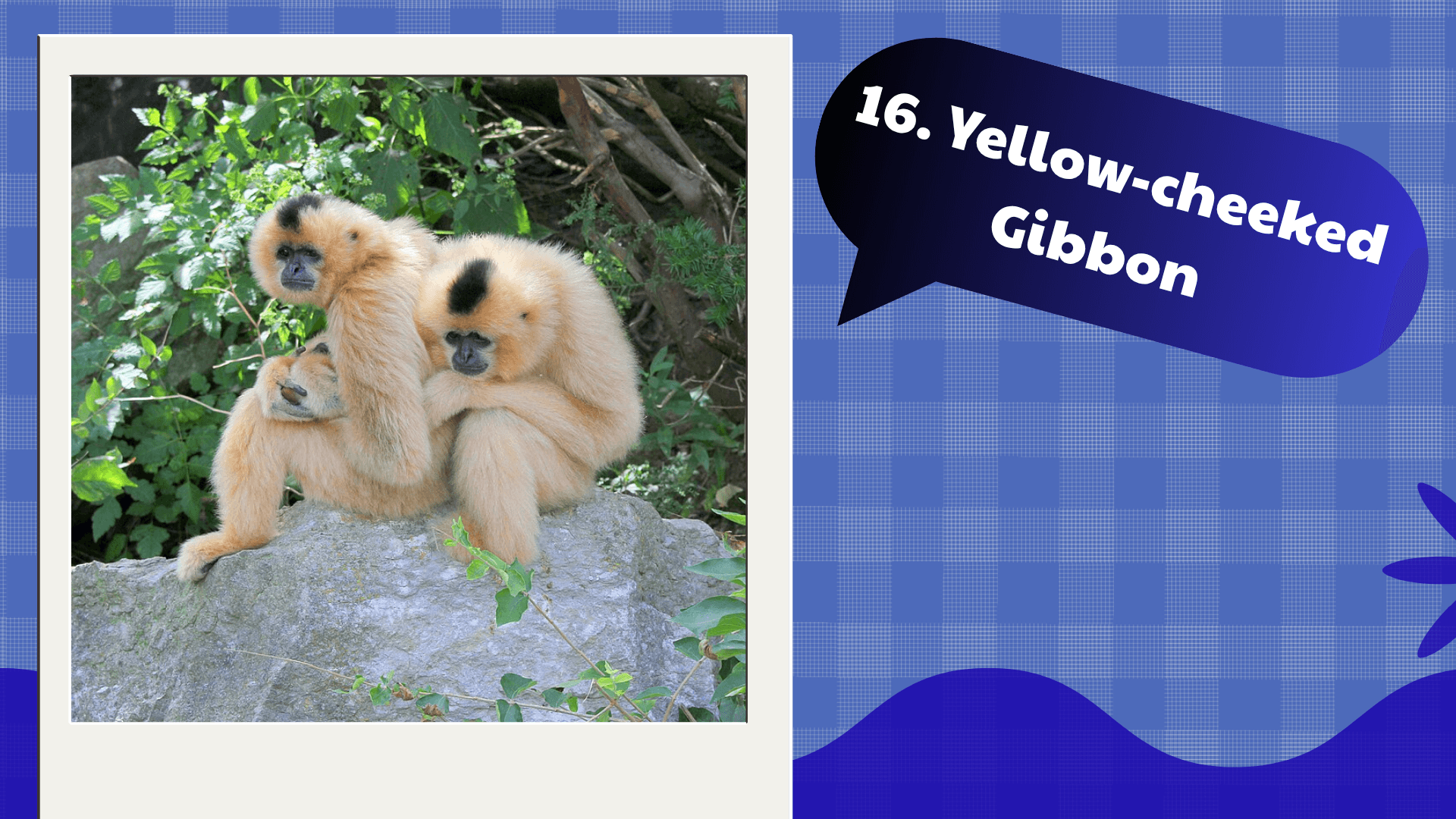
The Yellow-cheeked Gibbon is one of the most visually striking types of Gibbon, found in parts of Vietnam, Laos, and Cambodia. Males are typically black with bright yellow or orange cheek patches, while females are lighter in color with softer golden tones.
This species lives in dense evergreen forests and depends heavily on tall, continuous canopy cover. It is highly arboreal and rarely comes to the ground, relying on brachiation for movement.
Yellow-cheeked Gibbons are known for their loud, melodic duets between mates, which help strengthen pair bonds and defend territory. These vocalizations are an essential part of their social behavior.
They primarily feed on fruit, but also consume leaves and flowers, making them important seed dispersers in their ecosystem.
17. Northern Yellow-cheeked Gibbon (Nomascus annamensis)

The Northern Yellow-cheeked Gibbon is a recently recognized member of the types of Gibbon, found in the Annamite Range of Vietnam, Laos, and Cambodia. It is similar to other Nomascus species but has subtle differences in facial coloration and vocal patterns.
This species inhabits remote, mountainous forests and is highly dependent on undisturbed habitats. Its population is small and fragmented, making it vulnerable to deforestation.
Like other gibbons, it is monogamous and forms strong family groups. Its diet consists mainly of fruit, with occasional leaves and flowers.
Its discovery highlights the ongoing importance of conservation research in Southeast Asia’s biodiversity hotspots.
18. Black Crested Gibbon (Nomascus concolor)

The Black Crested Gibbon is one of the rarest and most ancient types of Gibbon, found in parts of China, Laos, and Vietnam. It has a dark black coat with a distinctive crest of hair on its head, giving it a unique silhouette.
This species lives in montane forests at higher elevations compared to many other gibbons. It is highly arboreal and depends on mature forest ecosystems.
Its vocalizations are complex and powerful, often used for long-distance communication in dense forest environments.
The Black Crested Gibbon is critically endangered, with habitat loss and fragmentation posing major threats to its survival.
19. Hainan Gibbon (Nomascus hainanus)

The Hainan Gibbon is the rarest of all types of Gibbon and one of the rarest primates in the world. It is found only on Hainan Island in China, with a population that has been reduced to only a few individuals in the wild.
This species is entirely black in appearance and lives in tropical rainforest remnants. It is highly arboreal and depends on intact canopy for survival.
Hainan Gibbons are monogamous and live in small family groups. Their vocalizations are used to maintain territory and strengthen social bonds.
Intensive conservation efforts are ongoing to prevent this species from becoming extinct.
20. Siamang (Symphalangus syndactylus)
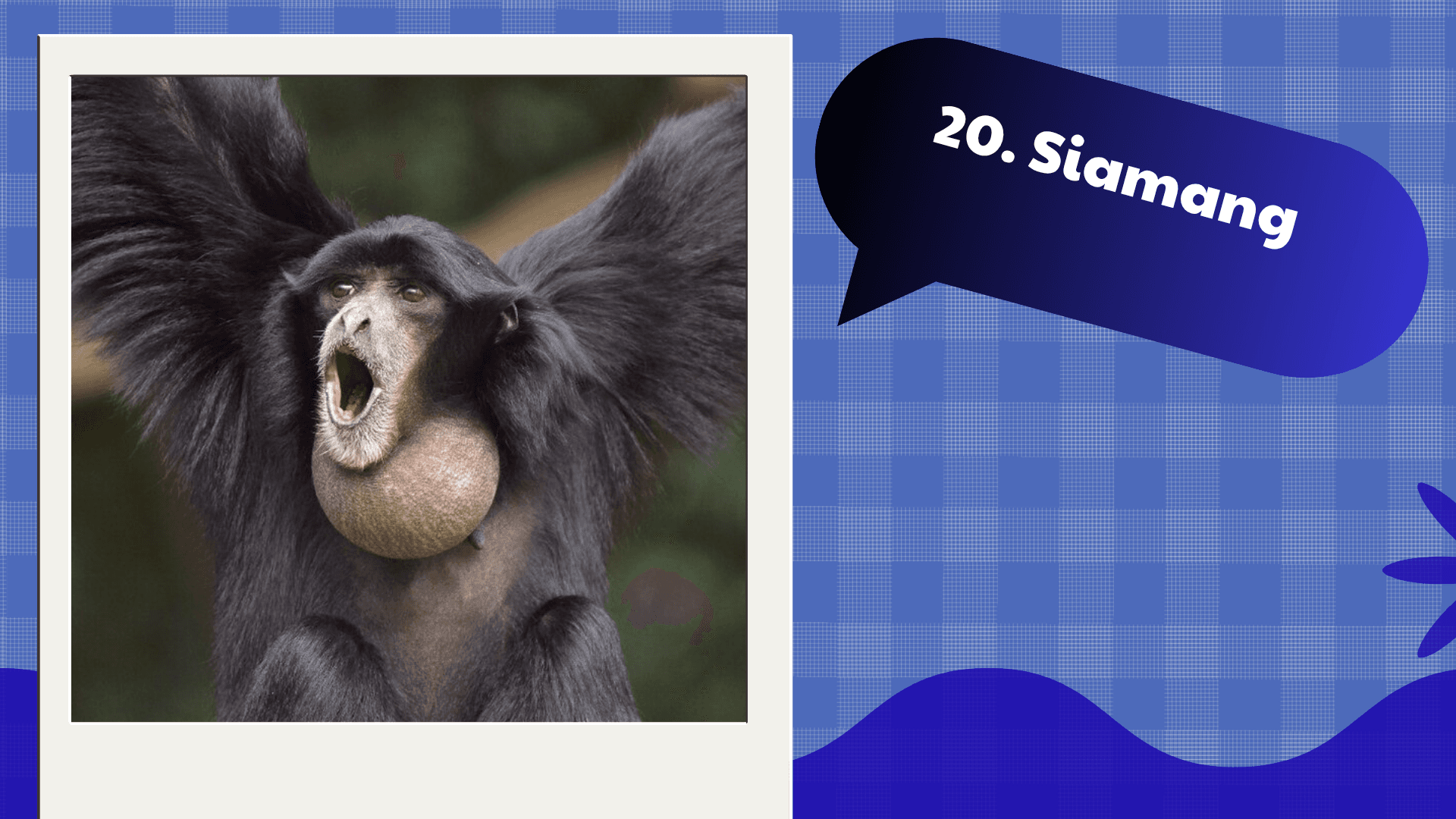
The Siamang is the largest of all types of Gibbon and is easily distinguished by its size and throat sac, which it uses to produce extremely loud vocalizations. It is found in forests of Malaysia, Sumatra, and Thailand.
Unlike smaller gibbons, Siamangs have a more robust build but still rely on brachiation for movement through the canopy. Their calls can travel over long distances and are among the loudest in the primate world.
They live in monogamous family groups and are highly territorial. Their diet consists mainly of fruit, leaves, and flowers.
Siamangs play an essential role in forest ecosystems by dispersing seeds and maintaining plant diversity.
21. Additional Nomascus Species Complex Groups
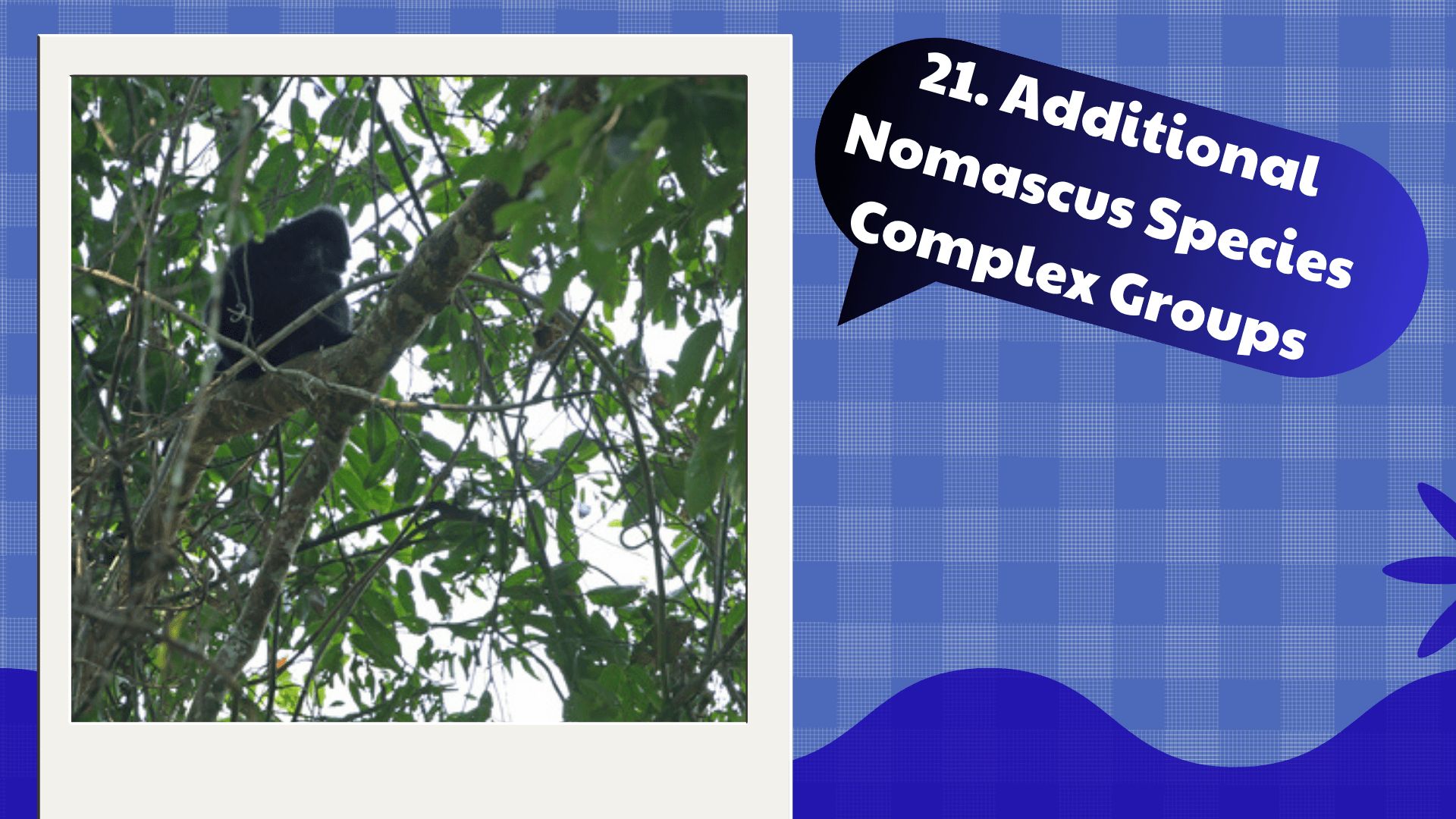
Within the types of Gibbon, several complex and hybridized populations exist under the Nomascus genus. These include regional variations of white-cheeked and crested gibbons that are still being studied by primatologists.
These populations often show slight differences in coloration, vocal patterns, and habitat preference, reflecting adaptation to specific forest regions.
They are generally found in fragmented forest areas across Laos, Vietnam, and China, where conservation status varies from vulnerable to critically endangered.
Further research is needed to fully understand their taxonomy and ecological roles.
22. Indochinese Crested Gibbon (Nomascus sp. indet. complex)

The Indochinese Crested Gibbon refers to a group of closely related populations within the types of Gibbon found across parts of Vietnam, Laos, and adjacent forest regions. These gibbons are part of the Nomascus lineage and are still being studied due to subtle differences in vocal patterns, genetics, and facial coloration.
They typically live in dense evergreen forests where continuous canopy cover is essential for their survival. Like other crested gibbons, males often display darker fur with lighter facial markings, while females tend to have lighter, golden or buff tones.
These gibbons are highly vocal, using complex duet songs between mates to define territory boundaries and strengthen pair bonds. Their calls are important ecological signals in rainforest ecosystems, often heard at dawn.
They feed primarily on fruit, with seasonal supplementation of leaves and flowers, making them important seed dispersers in their habitat.
23. Abbott’s Grey Gibbon Variant Group (Hylobates muelleri abbotti complex)

This group represents a localized population within the broader Müller’s gibbon lineage and is considered one of the more regionally specialized types of Gibbon in Borneo. It is sometimes treated as a subspecies complex due to slight morphological variations.
Members of this group typically show darker fur tones and subtle differences in facial structure compared to other Müller’s gibbons. They inhabit lowland and hill rainforests, where they rely heavily on intact canopy structures.
They are highly agile brachiators, moving rapidly between trees using their long arms. Their diet is dominated by fruit, but they also consume leaves and flowers when fruit availability is low.
Ecologically, they contribute significantly to forest regeneration by dispersing seeds across wide forest areas.
24. Bornean Grey-White Beard Complex (Hylobates funereus/albibarbis overlap group)

This complex group includes closely related populations within the types of Gibbon found in northern and western Borneo. These populations show overlapping traits between Northern Grey Gibbons and White-bearded Gibbons, making classification challenging.
They exhibit a mix of gray, brown, and lighter facial or beard-like markings depending on region and genetics. This variation reflects adaptation to different forest environments across Borneo.
These gibbons live in monogamous family groups and are highly territorial. Their loud vocalizations serve as both social bonding tools and territorial markers.
They play a vital ecological role in seed dispersal, helping maintain biodiversity in tropical rainforest ecosystems.
25. Unclassified Hoolock Gibbon Lineage Variants (Hoolock sp.)

The final entry in the types of Gibbon list includes unclassified or recently differentiated populations within the Hoolock genus. These variants are still under scientific study, particularly in regions of northeastern India, Myanmar, and parts of Southeast Asia.
These gibbons typically share the general characteristics of Hoolock species, including black fur, white eyebrow markings, and strong vocal communication. However, subtle genetic and behavioral differences suggest ongoing evolutionary divergence.
They inhabit tropical and subtropical forests and depend heavily on continuous canopy cover for survival. Habitat fragmentation remains a major threat to their long-term stability.
As with all gibbons, they play an essential role in forest ecosystems through fruit consumption and seed dispersal, contributing to forest regeneration.
Conclusion
The study of the types of Gibbon reveals a remarkable group of small apes that are perfectly adapted to life in the forest canopy. Across Asia, from the rainforests of Borneo and Sumatra to the mountain forests of Vietnam, Laos, China, and India, gibbons demonstrate incredible diversity in appearance, behavior, and vocal communication.
Despite their differences, all gibbons share key traits such as long arms for brachiation, strong pair bonds, and a highly specialized diet based mainly on fruit. These adaptations make them essential seed dispersers, helping to maintain healthy tropical forest ecosystems and supporting overall biodiversity.
However, many gibbon species are now threatened due to habitat loss, deforestation, and fragmentation of their natural environments. Some, like the Hainan Gibbon, are critically endangered and exist only in extremely small populations, highlighting the urgent need for conservation efforts.
Understanding the types of Gibbon is not only important for wildlife enthusiasts but also for conservation science. Protecting these primates means protecting entire ecosystems, as their survival is closely linked to the health of tropical forests.
Ultimately, gibbons remind us how delicate and interconnected forest life truly is—and how many more discoveries might still be hidden within the world’s remaining wild places?
50+ Frequently Asked Questions (FAQ) About Gibbons
1. What are gibbons?
Gibbons are small apes belonging to the family Hylobatidae. They are known for their long arms, agile movement, and ability to swing through trees using a method called brachiation. Unlike monkeys, gibbons do not have tails and are more closely related to humans, orangutans, gorillas, and chimpanzees.
2. Where do gibbons live?
Gibbons are native to tropical and subtropical forests of Southeast Asia, including countries like Thailand, Malaysia, Indonesia, Vietnam, Laos, Myanmar, India, and southern China. They depend heavily on dense forest canopies for survival.
3. How many types of gibbons are there?
There are around 20–25 recognized types of gibbon depending on classification systems. These are divided into four main genera: Hylobates, Hoolock, Nomascus, and Symphalangus.
4. Are gibbons monkeys or apes?
Gibbons are apes, not monkeys. The main difference is that apes do not have tails and are generally more intelligent and socially complex than monkeys.
5. What do gibbons eat?
Gibbons mainly eat fruit, but their diet can also include leaves, flowers, and occasionally insects. Their fruit-heavy diet makes them important seed dispersers in tropical forests.
6. Why are gibbons important to the ecosystem?
Gibbons play a key ecological role by dispersing seeds across forests. This helps regenerate plant life, maintain biodiversity, and support healthy forest ecosystems.
7. How do gibbons move through trees?
Gibbons use a method called brachiation, where they swing from branch to branch using their long arms. This allows them to move quickly and efficiently through the forest canopy.
8. Do gibbons live in groups?
Yes, most gibbons live in small family groups consisting of a monogamous pair and their offspring. These family units are highly territorial and stable.
9. Are gibbons monogamous?
Yes, most gibbon species are monogamous, meaning they form long-term pair bonds with a single partner. These bonds can last for many years or even a lifetime.
10. Why do gibbons sing?
Gibbons sing to communicate with their family members and to defend their territory. Their songs are complex and can be heard over long distances in the forest.
11. Are gibbon songs unique?
Yes, each species and even individual families can have unique vocal patterns. These songs help researchers identify species and understand their behavior.
12. How big are gibbons?
Gibbons are relatively small apes, typically weighing between 5 to 12 kilograms depending on the species. They are much smaller than great apes like chimpanzees or gorillas.
13. What is the largest gibbon species?
The Siamang is the largest gibbon species, known for its larger body size and the presence of a throat sac used for loud vocalizations.
14. What is the smallest gibbon species?
The Hoolock and some Hylobates species are among the smaller gibbons, with lightweight bodies adapted for fast movement through trees.
15. Are gibbons endangered?
Many gibbon species are endangered or critically endangered due to habitat destruction, illegal hunting, and deforestation across Southeast Asia.
16. What threatens gibbons the most?
The biggest threats are deforestation, habitat fragmentation, and illegal wildlife trade. These factors reduce their living space and food availability.
17. How long do gibbons live?
In the wild, gibbons can live around 25–35 years, while in captivity they may live longer due to better care and protection from predators.
18. Do gibbons have tails?
No, gibbons do not have tails, which is a key characteristic that distinguishes apes from monkeys.
19. How intelligent are gibbons?
Gibbons are intelligent primates capable of learning social behaviors, recognizing family members, and using complex vocal communication.
20. Can gibbons walk on the ground?
Yes, but they rarely do. When on the ground, they move using a bipedal walking style with their arms raised for balance.
21. Why are gibbons called “lesser apes”?
They are called lesser apes because of their smaller size compared to great apes like chimpanzees, gorillas, and orangutans.
22. How fast can gibbons swing?
Gibbons can swing at speeds of up to 35–55 km/h through the forest canopy, making them one of the fastest arboreal mammals.
23. What colors are gibbons?
Gibbon colors vary widely depending on species, ranging from black and brown to gray and golden tones, often with distinct facial markings.
24. Do baby gibbons cling to their parents?
Yes, baby gibbons cling tightly to their mothers for the first months of life and learn movement skills by observing adult behavior.
25. How do gibbons reproduce?
Gibbons reproduce sexually, and females typically give birth to one infant after a gestation period of about 7–8 months.
26. Do gibbons use tools?
Unlike some great apes, gibbons rarely use tools in the wild, relying instead on agility and natural adaptation.
27. Are gibbons noisy?
Yes, gibbons are among the loudest primates due to their territorial songs, which can travel over long distances.
28. Can gibbons swim?
Gibbons are not strong swimmers and typically avoid water whenever possible.
29. Where do gibbons sleep?
Gibbons sleep in trees, often choosing high branches or stable forks for safety from predators.
30. Do gibbons migrate?
No, gibbons are non-migratory and stay within a defined territory throughout their lives.
31. What is brachiation?
Brachiation is a form of movement where gibbons swing from branch to branch using their arms, allowing fast and efficient travel through trees.
32. Are gibbons aggressive?
Gibbons are generally not aggressive toward humans but can be territorial toward other gibbons.
33. How do gibbons mark territory?
They use loud vocal calls and sometimes physical displays to mark and defend their territory from other groups.
34. What is special about gibbon hands?
Gibbons have long fingers and hook-like hands that are perfectly adapted for gripping branches during swinging movement.
35. Do gibbons have predators?
Yes, their predators include large birds of prey, snakes, and occasionally wild cats, especially for young gibbons.
36. How do gibbons help forests?
By eating fruit and dispersing seeds, gibbons help forests regenerate and maintain plant diversity.
37. Can gibbons survive in captivity?
Yes, but they require large enclosures, social interaction, and specialized care to thrive.
38. Why are gibbons important for conservation?
They are indicator species, meaning their health reflects the condition of forest ecosystems.
39. Are all gibbon species known?
No, some populations are still being studied and may represent new or reclassified species.
40. What is the rarest gibbon?
The Hainan Gibbon is considered the rarest primate in the world, with only a few individuals remaining in the wild.
41. How do scientists study gibbons?
They use field observation, vocal recording, genetic analysis, and tracking methods to study behavior and populations.
42. Do gibbons change partners?
While most are monogamous, partner changes can occur due to death or territorial displacement.
43. What is a gibbon duet?
A duet is a coordinated song between male and female gibbons used for bonding and territorial defense.
44. Can gibbons be kept as pets?
No, keeping gibbons as pets is illegal in many countries and harmful to their survival and welfare.
45. Are gibbons social animals?
Yes, they are highly social within family units but generally avoid large group living.
46. How do gibbons communicate?
They communicate through vocal calls, body posture, and facial expressions.
47. What is the future of gibbons?
Their future depends heavily on forest conservation, anti-poaching efforts, and habitat restoration.
48. Why are gibbons disappearing?
Deforestation, habitat fragmentation, and illegal wildlife trade are the main causes of population decline.
49. Can gibbons adapt to human environments?
They have very limited adaptability and generally cannot survive outside natural forests.
50. What makes gibbons unique?
Their combination of brachiation, complex vocalization, and monogamous social structure makes them one of the most unique primates on Earth.
51. What can we do to protect gibbons?
Supporting forest conservation, reducing deforestation, and protecting wildlife habitats are key actions to ensure their survival.
Read more: