

Types of Hornets are fascinating insects that combine beauty, skill, and danger in a single package. Found across forests, gardens, and urban areas, hornets are more than just stingers — they play key roles in ecosystems, controlling pests and pollinating plants. From the massive Asian Giant Hornet to the smaller but equally interesting European Hornet, each species has its own behavior, diet, and habitat. In this guide, we’ll explore 27 types of hornets, helping you identify them, understand their habits, and appreciate their place in nature. If you’ve ever wondered what makes hornets special, this article is for you.
Types of Hornets: Introduction to the Fascinating World of Hornets
Hornets are social wasps that can inspire both fear and admiration. With their striking colors, complex nests, and hunting skills, they are among the most interesting insects to study. Understanding the different types of hornets can help you recognize which are harmless to humans and which require caution. In the sections below, we will review each hornet species, providing clear identification tips, habitat insights, and behavioral traits in a beginner-friendly style.
1. Asian Giant Hornet (Vespa mandarinia)

Overview
The Asian Giant Hornet is the largest hornet species on Earth. Its size, impressive wingspan, and powerful sting make it famous worldwide. Native to East and Southeast Asia, this hornet has been nicknamed the “murder hornet” in popular media due to its potent venom and ability to decimate honeybee colonies.
Identification
- Body length: 45–55 mm
- Orange-yellow head with large mandibles
- Dark brown thorax
- Orange and black striped abdomen
Habitat and Range
Asian Giant Hornets prefer low mountain forests and wooded areas. They build nests underground or in tree hollows, often near water sources. Their distribution includes Japan, China, Korea, and parts of Southeast Asia.
Behavior and Diet
These hornets are predators, feeding mainly on other insects, including bees and wasps. They hunt in groups and can wipe out honeybee hives in hours. Despite their fearsome reputation, they are shy towards humans and usually attack only when provoked or their nest is threatened.
Conservation Status
While feared by beekeepers, Asian Giant Hornets play a vital role in controlling pest insect populations in forests.
2. European Hornet (Vespa crabro)

Overview
The European Hornet is a large, social hornet found across Europe and parts of North America. Known for its reddish-brown color and loud buzzing, it is less aggressive than the Asian Giant Hornet but can still defend its nest fiercely.
Identification
- Body length: 25–35 mm
- Reddish-brown head and thorax
- Yellow and brown striped abdomen
- Transparent wings
Habitat and Range
European Hornets build paper-like nests in hollow trees, wall cavities, or attics. They prefer temperate forests, farmlands, and suburban areas.
Diet
They feed on a variety of insects, tree sap, and sometimes fruit. European Hornets are beneficial for controlling pest populations.
Behavior
Although their sting can be painful, European Hornets are generally non-aggressive unless their nest is disturbed. They are mostly active during twilight hours.
3. Japanese Hornet (Vespa simillima)
Overview
Japanese Hornets are closely related to the Asian Giant Hornet but smaller in size. Found in Japan and parts of Korea, these hornets are known for their coordinated hunting and foraging behavior.
Identification
- Body length: 30–40 mm
- Dark brown head and thorax
- Yellowish-orange stripes on the abdomen
- Slender body compared to the giant hornet
Habitat
They prefer forests and mountainous areas and often build aerial nests in trees or shrubs.
Behavior and Diet
Japanese Hornets hunt insects and occasionally raid honeybee hives. Their social colonies contain a queen, workers, and drones, with coordinated foraging for food and defense.
Conservation
They are common in their native range but must be treated with caution due to their painful sting.
4. Oriental Hornet (Vespa orientalis)

Overview
Oriental Hornets are medium-sized hornets found in the Middle East, North Africa, and parts of Southern Europe. They are unique for their ability to generate electrical energy from sunlight to help with nest-building.
Identification
- Body length: 20–30 mm
- Yellow-orange head with brown thorax
- Orange-brown striped abdomen
Habitat
These hornets build underground nests or in walls, favoring dry, open habitats.
Behavior and Diet
They feed on insects and nectar. Oriental Hornets are known for their active foraging during the hottest part of the day, making them visible and sometimes intimidating.
Conservation
They are not endangered and help maintain ecological balance by preying on pest insects.
5. Bald-faced Hornet (Dolichovespula maculata)

Overview
Bald-faced Hornets are large black-and-white hornets common in North America. Despite their name, they are part of the yellowjacket family and are known for building striking, paper-like nests in trees and shrubs.
Identification
- Body length: 15–25 mm
- Black body with white markings on face and thorax
- White-tipped abdomen
Habitat
They build aerial nests in trees, bushes, or under eaves. Their nests are enclosed in layered paper-like structures.
Behavior and Diet
Bald-faced Hornets are aggressive in defending their nests but are effective predators of other insects. They also feed on nectar and sweet liquids.
Conservation
They are widespread and help control insect populations in forests and gardens.
6. Greater Banded Hornet (Vespa tropica)

Overview
The Greater Banded Hornet is a striking species found in Southeast Asia. Known for its bold black and yellow banded abdomen, this hornet is a skilled hunter and an important predator in its ecosystem.
Identification
- Body length: 25–35 mm
- Black head and thorax
- Bright yellow and black striped abdomen
Habitat
They are primarily forest dwellers, nesting in tree branches, shrubs, or hidden cavities. They prefer areas with abundant prey insects.
Behavior and Diet
Greater Banded Hornets are predatory, feeding on caterpillars, flies, and other insects. They are social, living in colonies that can contain hundreds of individuals. Despite their fearsome appearance, they usually avoid human interaction.
7. Lesser Banded Hornet (Vespa affinis)
Overview
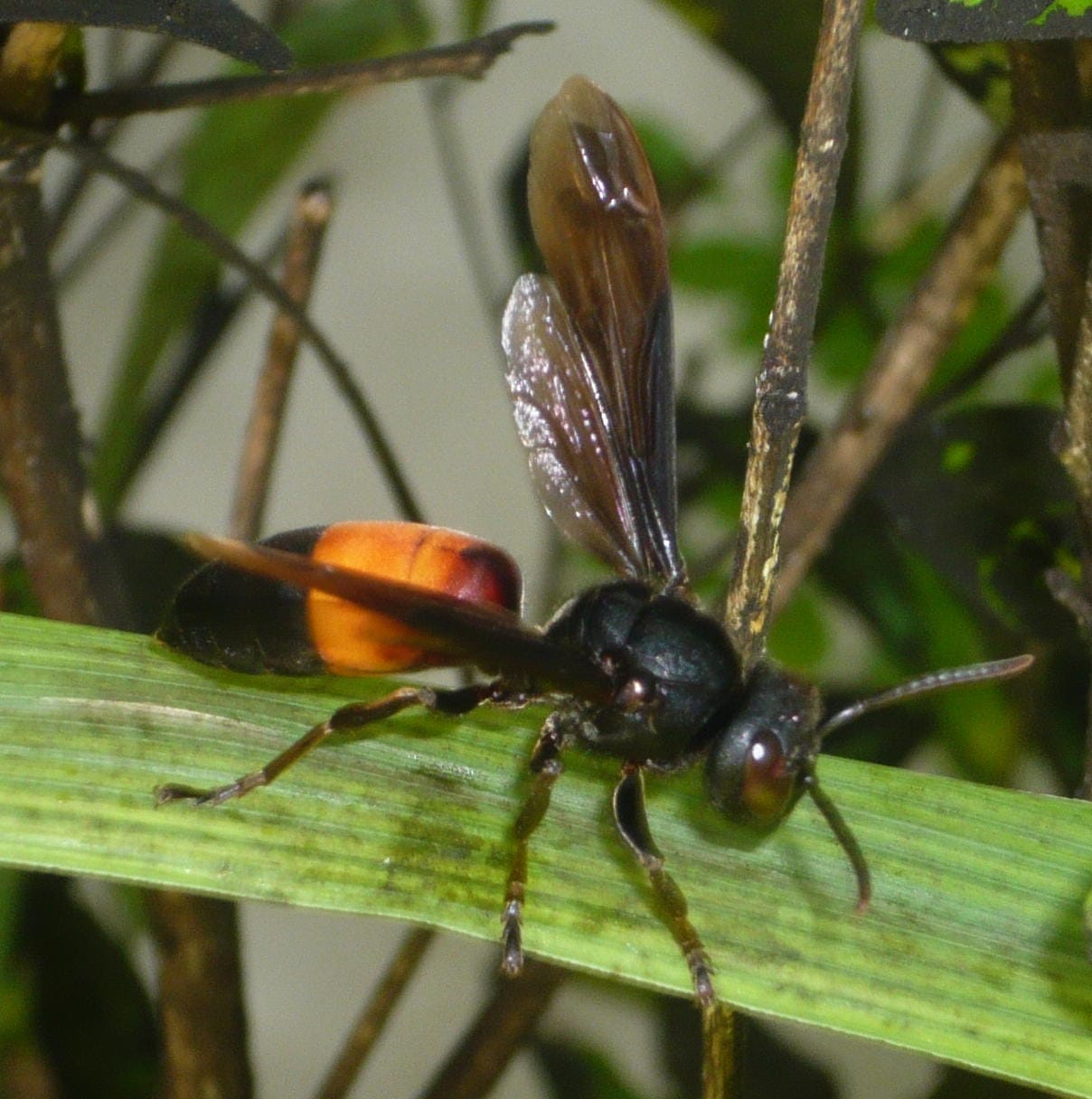
The Lesser Banded Hornet is a smaller cousin of Vespa tropica. Found across South and Southeast Asia, this hornet is notable for its bright orange-yellow bands and agile flight.
Identification
- Body length: 20–30 mm
- Orange-yellow bands across a dark brown abdomen
- Dark brown thorax and head
Habitat
Lesser Banded Hornets prefer forest edges and urban gardens. They build aerial paper nests in trees or under roof eaves.
Behavior and Diet
This hornet preys on other insects and occasionally scavenges for sweet liquids. Colonies are smaller than Greater Banded Hornets but highly organized, with a clear division of labor among workers.
8. Yellow-legged Hornet (Vespa velutina)

Overview
The Yellow-legged Hornet is an invasive species in Europe but native to Southeast Asia. Recognizable by its dark brown body and bright yellow legs, it has gained attention for threatening honeybee populations.
Identification
- Body length: 20–25 mm
- Dark brown body with orange-brown face
- Yellow legs and yellow-tipped abdomen segments
Habitat
These hornets build nests in trees, shrubs, and sometimes buildings. In Europe, they are spreading rapidly due to lack of natural predators.
Behavior and Diet
Yellow-legged Hornets are skilled hunters of honeybees, which they decapitate to feed their larvae. Despite their invasive status, they are fascinating for their intelligence and coordinated hunting strategies.
9. Common Yellow Hornet (Dolichovespula arenaria)

Bas-Saint-Laurent — Province de Québec — Canada
Prise en août 2007 — Taken in August 2007
Overview
The Common Yellow Hornet is a North American species known for its black and yellow coloration. It is often confused with yellowjackets but is larger and less aggressive.
Identification
- Body length: 18–25 mm
- Bright yellow and black striped abdomen
- Black head with yellow markings
Habitat
Common Yellow Hornets build aerial nests in trees, shrubs, and sometimes under eaves. They are widely distributed across North America.
Behavior and Diet
They feed on insects, nectar, and tree sap. Colonies are social, and the hornets are more defensive when their nest is threatened, but generally non-aggressive to humans.
10. Red Hornet (Vespa akrei)
Overview
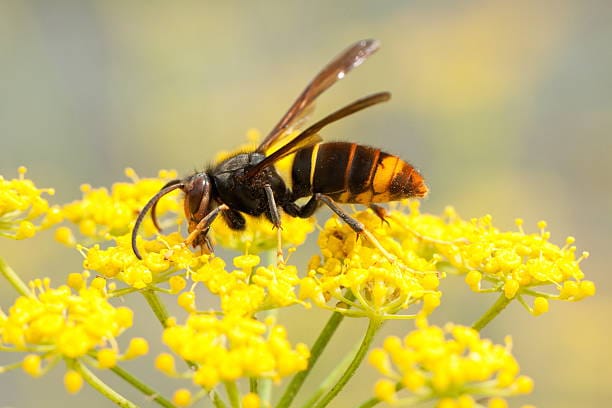
Red Hornets are a rare species in Southeast Asia, known for their striking reddish coloration and predatory behavior. They are less studied than other hornets, making them intriguing for entomologists.
Identification
- Body length: 25–30 mm
- Red head and thorax
- Dark striped abdomen
Habitat
They inhabit tropical forests and often nest in tree hollows. Red Hornets are elusive and difficult to spot due to their preference for dense vegetation.
Behavior and Diet
These hornets prey on insects and contribute to forest pest control. Their colonies are smaller but highly organized, with active workers and protective queens.
11. Black-bellied Hornet (Vespa basalis)

Overview
The Black-bellied Hornet is recognized by its dark abdomen and contrasting yellow bands. Found in East Asia, it is an efficient hunter and a fascinating example of social insect behavior.
Identification
- Body length: 25–35 mm
- Dark thorax with yellow markings
- Black-bellied abdomen with yellow stripes
Habitat
These hornets nest in trees and shrubs, usually in forested areas with abundant prey.
Behavior and Diet
They hunt insects for larvae and feed on nectar as adults. Social structure is similar to other Vespa species, with queens, workers, and drones.
12. Black-tailed Hornet (Vespa ducalis)

Overview
Black-tailed Hornets are small to medium-sized hornets found in East Asia. They are named for their distinct black-colored abdomen tip.
Identification
- Body length: 20–25 mm
- Brown head and thorax
- Black-tipped abdomen with yellow bands
Habitat
They build aerial nests in trees and under eaves, preferring temperate forests and urban gardens.
Behavior and Diet
Black-tailed Hornets feed on insects and nectar. Their colonies are smaller and less aggressive but highly organized for foraging and nest defense.
13. Black Hornet / Dybowski’s Hornet (Vespa dybowskii)
Overview
This hornet is native to Japan, Korea, and parts of Russia. Known for its dark coloration and elusive nature, it is less studied but displays fascinating social behavior.
Identification
- Body length: 22–28 mm
- Mostly black body with subtle yellow markings
- Dark wings
Habitat
They nest in trees and shrubs, often hidden from plain sight. Dense forests provide the best environment for their colonies.
Behavior and Diet
Black Hornets feed on insects and sugary liquids. Colonies are moderately sized, and they are cautious around humans.
14. Southern Giant Hornet (Vespa soror)

Overview
Southern Giant Hornets are large, aggressive hornets found in Southeast Asia. They are known for preying on honeybees and constructing enormous paper nests.
Identification
- Body length: 40–50 mm
- Orange-brown head and thorax
- Black and yellow striped abdomen
Habitat
They inhabit tropical forests and mountainous regions, nesting in tree hollows or underground cavities.
Behavior and Diet
They are skilled predators, targeting honeybee colonies. Despite their size, they are efficient flyers and highly social, with coordinated hunting strategies.
15. Vespa analis

Overview
Vespa analis is a lesser-known hornet species with subtle coloration but fascinating social behavior. They are found across parts of Asia and play an important role in controlling insect populations.
Identification
- Body length: 20–30 mm
- Dark thorax with yellow markings
- Striped abdomen, usually yellow and black
Habitat
These hornets build aerial nests in trees or shrubs, preferring dense forests and areas with abundant prey.
Behavior and Diet
They feed on insects and sugary substances, living in organized colonies with clear roles for queens, workers, and drones. Their defensive behavior is moderate but efficient when protecting the nest.
16. Vespa auraria

Overview
Vespa auraria is a medium-sized hornet found in Southeast Asia. Its modest size belies its effectiveness as a predator of insects, making it an important contributor to local ecosystems.
Identification
- Body length: 22–28 mm
- Dark brown head and thorax
- Yellow and brown striped abdomen
Habitat
This species prefers lowland forests and edge habitats, often nesting in trees or hidden cavities near human settlements.
Behavior and Diet
Vespa auraria hunts smaller insects for its larvae while feeding on nectar and fruit juice as adults. Colonies are moderately sized, and the hornets exhibit cooperative hunting and nest defense.
17. Vespa bellicosa

Overview
Vespa bellicosa is notable for its aggressive hunting style and social organization. Though not widely studied, it is recognized for its effectiveness in controlling insect populations.
Identification
- Body length: 24–30 mm
- Orange-brown thorax with dark head
- Yellow and black banded abdomen
Habitat
They build aerial nests in trees and shrubs, preferring tropical forests and lightly disturbed habitats.
Behavior and Diet
Vespa bellicosa hunts insects and scavenges for sweet substances. Colonies demonstrate strong social structure with defined roles for queens and workers.
18. Vespa bicincta

Overview
Vespa bicincta is a striking hornet with bold coloration. It is commonly found in forests of East and Southeast Asia, contributing to ecological balance as a predator.
Identification
- Body length: 20–28 mm
- Dark brown head and thorax
- Yellow bands across the abdomen
Habitat
They favor dense forests and build aerial nests in trees or bushes, away from human activity.
Behavior and Diet
This hornet preys on a variety of insects and helps reduce pest populations. Social colonies are well-organized, with cooperative care for larvae and efficient foraging strategies.
19. Vespa bicolor

Overview
Vespa bicolor is a medium-sized hornet with a distinct two-tone abdomen. It is found across Asia and is admired for its agile flight and hunting skills.
Identification
- Body length: 22–27 mm
- Black head and thorax
- Bright yellow abdomen with a single dark stripe
Habitat
They build aerial nests in trees or shrubs and thrive in forest edges and gardens.
Behavior and Diet
Vespa bicolor hunts small insects and feeds on nectar. Colonies maintain a clear hierarchy, with the queen leading reproduction and workers managing foraging and defense.
20. Vespa binghami

Overview
Vespa binghami is a lesser-known hornet species that inhabits tropical and subtropical forests. Its elusive nature makes it intriguing for entomologists and wildlife enthusiasts alike.
Identification
- Body length: 20–25 mm
- Brown head and thorax
- Dark yellow abdomen with subtle stripes
Habitat
They prefer dense forests and build aerial nests in tree branches, often concealed from predators and humans.
Behavior and Diet
Vespa binghami feeds on insects and nectar, with social colonies that exhibit cooperative defense and organized hunting strategies.
21. Vespa fervida

Overview
Vespa fervida is a medium-sized hornet recognized for its bright coloration and dynamic hunting patterns. It inhabits tropical forests and is an active predator.
Identification
- Body length: 23–28 mm
- Orange thorax with black head
- Yellow and black striped abdomen
Habitat
They nest in trees and shrubs, preferring areas with abundant insect prey.
Behavior and Diet
This species hunts insects for larvae and drinks nectar for energy. Social structure is well-developed, with efficient communication among colony members.
22. Vespa fumida
Overview
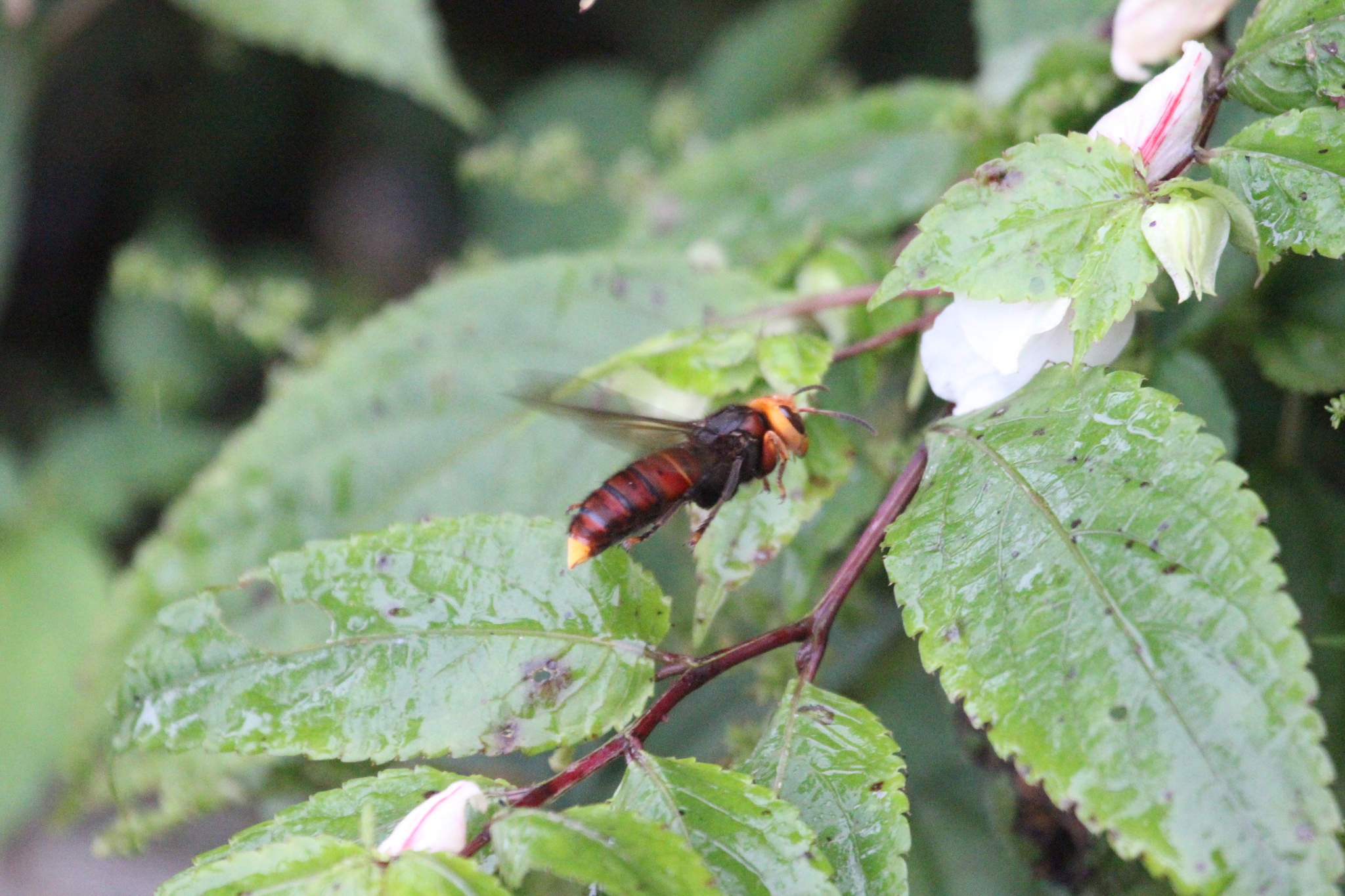
Vespa fumida is a dark-colored hornet that inhabits Southeast Asian forests. It is noted for its agile flight and skilled hunting techniques.
Identification
- Body length: 20–25 mm
- Dark brown head and thorax
- Black abdomen with subtle yellow markings
Habitat
These hornets prefer dense forests and build aerial nests hidden among foliage.
Behavior and Diet
They feed on insects and sugary liquids, displaying social cooperation in hunting and nest defense. Colonies are moderately sized and well-structured.
23. Vespa luctuosa

Overview
Vespa luctuosa is one of the less-studied hornets but is known for its striking appearance and predatory efficiency. Found in parts of Southeast Asia, it is a powerful insect despite its modest size.
Identification
- Body length: 22–27 mm
- Dark brown thorax with black head
- Yellow-striped abdomen
Habitat
Vespa luctuosa inhabits tropical forests and builds aerial nests in tree branches, often well-hidden.
Behavior and Diet
This hornet preys on insects, aiding in pest control. Social organization includes cooperative hunting and effective nest defense mechanisms.
24. Vespa mocsaryana
Overview
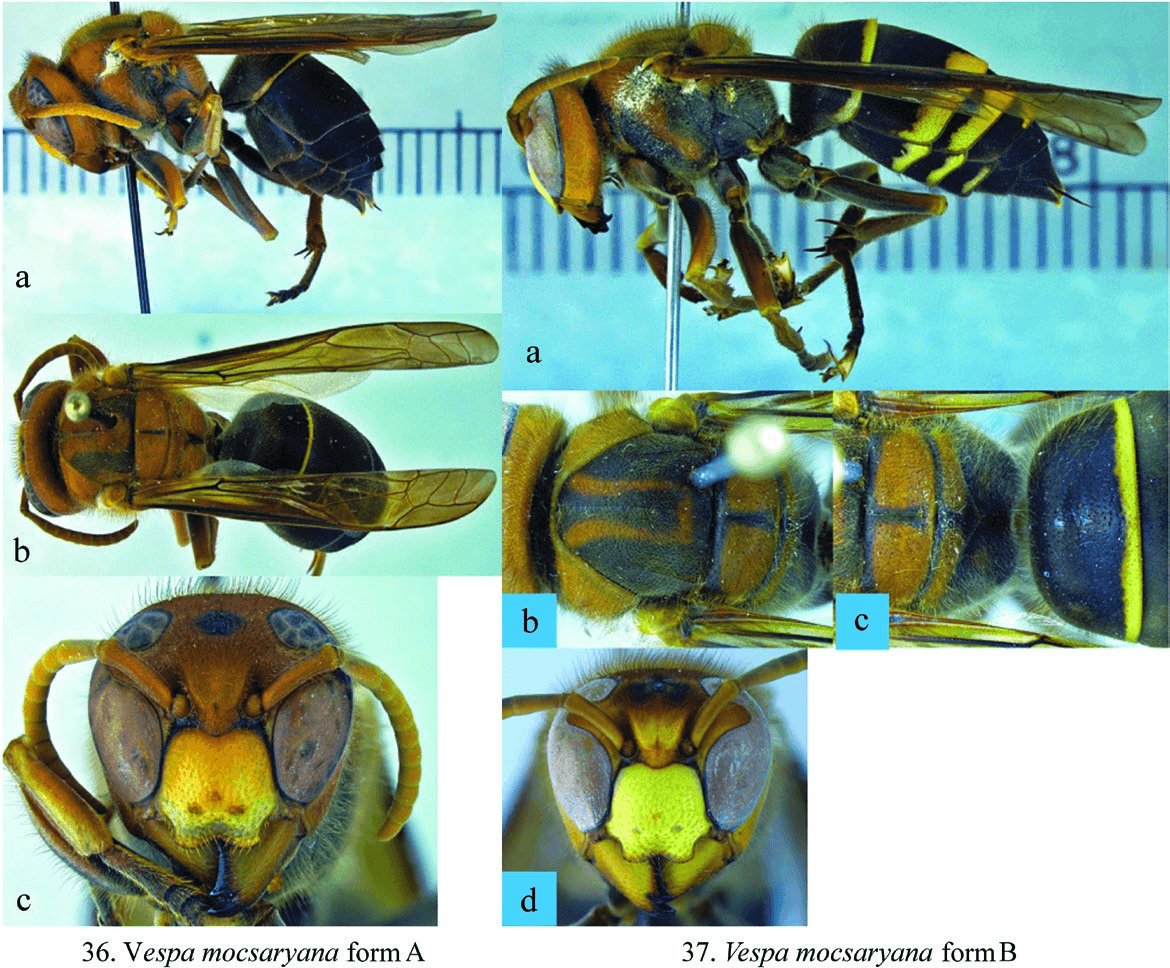
Vespa mocsaryana is native to Southeast Asia and is admired for its bright coloration and hunting efficiency. It contributes to insect population control in forests.
Identification
- Body length: 23–28 mm
- Orange-brown thorax and dark head
- Striped abdomen with yellow bands
Habitat
They build aerial nests in trees and shrubs, preferring tropical and subtropical forests.
Behavior and Diet
Vespa mocsaryana hunts insects for larvae while adults feed on nectar. Social colonies demonstrate efficient division of labor and nest protection.
25. Vespa multimaculata
Overview
Vespa multimaculata is notable for its multi-spotted abdomen and active predatory behavior. Found in Asia, it thrives in forested areas with high insect availability.
Identification
- Body length: 22–28 mm
- Brown head and thorax
- Abdomen with multiple yellow spots
Habitat
They build nests in trees or hidden vegetation, favoring locations with abundant prey.
Behavior and Diet
These hornets feed on insects and nectar. Colonies are social, and hornets communicate and hunt cooperatively.
26. Vespa philippinensis

Overview
Vespa philippinensis is endemic to the Philippines. It is medium-sized, highly social, and a skilled hunter, contributing to the balance of local ecosystems.
Identification
- Body length: 20–25 mm
- Orange-brown thorax and black head
- Yellow-striped abdomen
Habitat
They prefer tropical forests and build aerial nests in trees and shrubs.
Behavior and Diet
They feed on insects, nectar, and fruit juices. Colonies are organized, with defined roles for queens and workers.
27. Vespa vivax

Overview
Vespa vivax is a medium-sized hornet found across Asia. Known for its alert and active behavior, it plays an important role in controlling insect populations.
Identification
- Body length: 22–27 mm
- Dark brown head and thorax
- Abdomen with yellow stripes
Habitat
Vespa vivax nests in trees, shrubs, or occasionally in man-made structures, preferring forested areas with abundant prey.
Behavior and Diet
This species hunts insects for its larvae while adults feed on nectar. Social colonies are well-structured, exhibiting cooperative nest defense and efficient foraging.
Conclusion
Understanding the Types of Hornets is essential for appreciating these complex and fascinating insects. From the massive Asian Giant Hornet to the elusive Vespa vivax, each species plays a vital role in its ecosystem by controlling insect populations and pollinating plants. Observing hornets safely can reveal their impressive social organization and hunting strategies. By learning to identify these 27 hornets, you not only increase your knowledge of wildlife but also gain a greater respect for these often misunderstood creatures. Always admire hornets from a distance and respect their role in nature. Stay curious, stay safe, and continue exploring the incredible diversity of insects around us.
Frequently Asked Questions About Types of Hornets
1. What are hornets?
Hornets are large social wasps that live in colonies, build paper-like nests, and are predators of other insects.
2. How many types of hornets are there?
There are over 27 well-documented types of hornets worldwide, each with unique behavior and appearance.
3. Where do hornets live?
Hornets can be found in forests, gardens, urban areas, and tropical or temperate regions depending on the species.
4. Are hornets dangerous?
Hornets can sting when threatened. While their stings are painful, most hornets are not aggressive unless provoked.
5. What do hornets eat?
Hornets feed on insects, nectar, tree sap, and occasionally fruit juices. They are important for pest control.
6. How can I identify a hornet?
Identification is based on body size, coloration, abdomen stripes, head shape, and nest location.
7. What is the largest hornet species?
The Asian Giant Hornet (Vespa mandarinia) is the largest, measuring up to 55 mm in length.
8. Do hornets build nests?
Yes, hornets build paper-like nests in trees, shrubs, underground, or in man-made structures.
9. How long do hornets live?
Worker hornets live a few weeks to months, while queens can live up to a year, depending on the species.
10. Are all hornets aggressive?
No, aggression varies by species. Some, like European Hornets, are calm unless their nest is disturbed.
11. How do hornets defend their nests?
Hornets sting intruders, release pheromones to alert other hornets, and aggressively guard the nest.
12. Can hornets sting multiple times?
Yes, unlike honeybees, hornets can sting multiple times without dying.
13. What is the difference between hornets and wasps?
Hornets are a subset of wasps, usually larger, more social, and with more robust nests.
14. Do hornets pollinate plants?
Yes, while feeding on nectar, hornets inadvertently help pollinate flowers.
15. Are hornets beneficial?
Hornets control insect populations and pollinate plants, making them valuable to ecosystems.
16. How do hornets hunt?
Hornets hunt insects by using their strong mandibles and coordinated attacks in colonies.
17. What is a bald-faced hornet?
The Bald-faced Hornet is a black-and-white hornet common in North America, known for its large paper nests.
18. Where is the Asian Giant Hornet found?
It is native to East and Southeast Asia, including Japan, China, Korea, and parts of Southeast Asia.
19. Can hornets attack humans?
Hornets usually avoid humans but will sting if threatened or if their nest is disturbed.
20. How big are hornets?
Hornet sizes range from 20 mm to over 55 mm depending on the species.
21. What is the diet of European Hornets?
European Hornets feed on insects, tree sap, and occasionally fruit.
22. How do hornets communicate?
Hornets use pheromones and body movements to signal danger, food sources, or nest defense.
23. Are hornets attracted to sweets?
Yes, hornets are attracted to sugary substances, including fruit juices, nectar, and honey.
24. How do hornets reproduce?
The queen lays eggs, and workers tend to larvae until they develop into adults.
25. Do hornets kill bees?
Some species, like the Asian Giant Hornet, prey on honeybees to feed their larvae.
26. How can I safely remove a hornet nest?
Professional pest control is recommended. Avoid removing nests yourself as hornets are defensive.
27. What is the life cycle of a hornet?
Hornets go through egg, larva, pupa, and adult stages in their life cycle.
28. Can hornets survive winter?
In temperate regions, only queens survive winter by hibernating. Colonies die off during cold months.
29. Do hornets make honey?
No, hornets do not produce honey, though they may feed on honey produced by bees.
30. How fast can hornets fly?
Hornets can fly up to 25 mph, depending on species and environmental conditions.
31. Are hornets solitary?
No, hornets are social insects that live in colonies ranging from dozens to hundreds of individuals.
32. Can hornets sting through clothing?
Hornets can sting through thin fabrics, so wearing protective clothing is advised when near nests.
33. Do hornets have natural predators?
Yes, birds, mammals, and other insects prey on hornets, though their sting provides defense.
34. What is a Yellow-legged Hornet?
The Yellow-legged Hornet is a Southeast Asian species recognized by its dark body and bright yellow legs.
35. Are hornets endangered?
Most hornet species are not endangered, though habitat loss can affect local populations.
36. How do hornets build nests?
Hornets chew wood fibers mixed with saliva to form paper-like structures for their nests.
37. Can hornets be kept as pets?
No, hornets are aggressive and dangerous, making them unsuitable as pets.
38. How do hornets find food?
Workers forage for insects and nectar and communicate food locations to the colony using pheromones.
39. What is a Red Hornet?
Red Hornets are tropical hornets with reddish coloration, mainly found in Southeast Asian forests.
40. How can I identify the Bald-faced Hornet?
Look for black-and-white coloring, large paper nests, and white-tipped abdomens common in North America.
41. Do hornets swarm?
Yes, hornets can swarm when defending their nest or during mating flights.
42. How long does it take a hornet to build a nest?
Depending on the species, it can take a few weeks to months to build a complete nest.
43. Are hornet stings deadly?
Most stings are painful but not deadly for healthy adults. Allergic reactions can be serious and require medical attention.
44. What is a Vespa velutina?
Vespa velutina, or Yellow-legged Hornet, is an invasive species in Europe, preying on honeybees and native insects.
45. Can hornets help in gardening?
Yes, hornets control pest insects, which can benefit gardens and crops naturally.
Read more: 5 Types of Orangutans (Pictures And Identification)