

Cosmos are airy members of the daisy family grown for open, ray-petaled flowerheads, fine foliage, long stems, and a long warm-season display. This guide focuses on 20 useful species, cultivar groups, and named cultivars that show the range gardeners actually encounter rather than treating every color strain as a separate species.
What Are the Main Types of Cosmos Flowers?
Garden cosmos is dominated by three horticulturally important species: Cosmos bipinnatus, Cosmos sulphureus, and the tuberous chocolate cosmos, Cosmos atrosanguineus. Most pink, white, crimson, picotee, double, and fluted selections come from C. bipinnatus, while yellow and orange strains are usually C. sulphureus. Chocolate cosmos is different again: it is a tender, tuberous perennial with dark maroon flowers and a distinctive cocoa-like fragrance.
Related Flower Guides
Quick Comparison
| Type | Botanical identity | Main color | Typical season | Best use |
|---|---|---|---|---|
| Garden Cosmos | Cosmos bipinnatus | white, pink, rose, crimson | summer to frost | meadow borders, pollinator gardens, cutting |
| Sulfur Cosmos | Cosmos sulphureus | yellow, gold, orange, scarlet-orange | summer to frost | hot borders, naturalistic planting, pollinator gardens |
| Chocolate Cosmos | Cosmos atrosanguineus | deep maroon to brown-red | summer into fall | containers, cutting gardens, scent gardens |
| Sensation Series | Cosmos bipinnatus ‘Sensation’ Series | white, pink, rose, crimson | summer to frost | back borders, meadows, cut flowers |
| Sonata Series | Cosmos bipinnatus ‘Sonata’ Series | white, pink, rose, red | summer to frost | containers, edging, front of borders |
| Seashells Mix | Cosmos bipinnatus ‘Seashells’ | white, pink, rose, crimson | summer to frost | cottage gardens, cutting |
| Picotee | Cosmos bipinnatus ‘Picotee’ | white with rose or crimson edging | summer to frost | cutting, contrast planting |
| Candy Stripe | Cosmos bipinnatus ‘Candy Stripe’ | white with pink to crimson striping | summer to frost | cottage borders, cut flowers |
| Daydream | Cosmos bipinnatus ‘Daydream’ | soft pink with darker eye | summer to frost | romantic borders, cut flowers |
| Purity | Cosmos bipinnatus ‘Purity’ | clear white | summer to frost | white gardens, weddings, cutting |
| Antiquity | Cosmos bipinnatus ‘Antiquity’ | deep ruby to muted rose | early summer to frost | containers, edging |
| Gazebo Mix | Cosmos bipinnatus ‘Gazebo’ | white, pink, rose, red | summer to frost | mixed borders, cutting |
| Psyche Mix | Cosmos bipinnatus ‘Psyche’ | pink, rose, white | summer to frost | cutting gardens, cottage borders |
| Versailles Series | Cosmos bipinnatus ‘Versailles’ Series | white, pink, rose, crimson | summer to frost | professional-style cutting gardens |
| Double Click Cranberries | Cosmos bipinnatus ‘Double Click Cranberries’ | cranberry, burgundy-rose | summer to frost | cut flowers, dramatic borders |
| Double Click Snow Puff | Cosmos bipinnatus ‘Double Click Snow Puff’ | white | summer to frost | wedding cutting gardens, white borders |
| Cupcakes White | Cosmos bipinnatus ‘Cupcakes White’ | white | summer to frost | novelty cutting, cottage gardens |
| Rubenza | Cosmos bipinnatus ‘Rubenza’ | ruby red aging to rose | summer to frost | warm-toned borders, cutting |
| Xanthos | Cosmos bipinnatus ‘Xanthos’ | soft primrose yellow | summer to frost | containers, pastel borders |
| Cosmic Orange | Cosmos sulphureus ‘Cosmic Orange’ | intense orange | summer to frost | containers, hot-color borders, pollinator planting |
20 Types of cosmos flowers
The entries below are selected and labeled according to the article’s search intent. Names, botanical ranks, and horticultural categories are kept distinct so the list does not inflate the count with duplicate common names.
1. Garden Cosmos
Scientific name: Cosmos bipinnatus
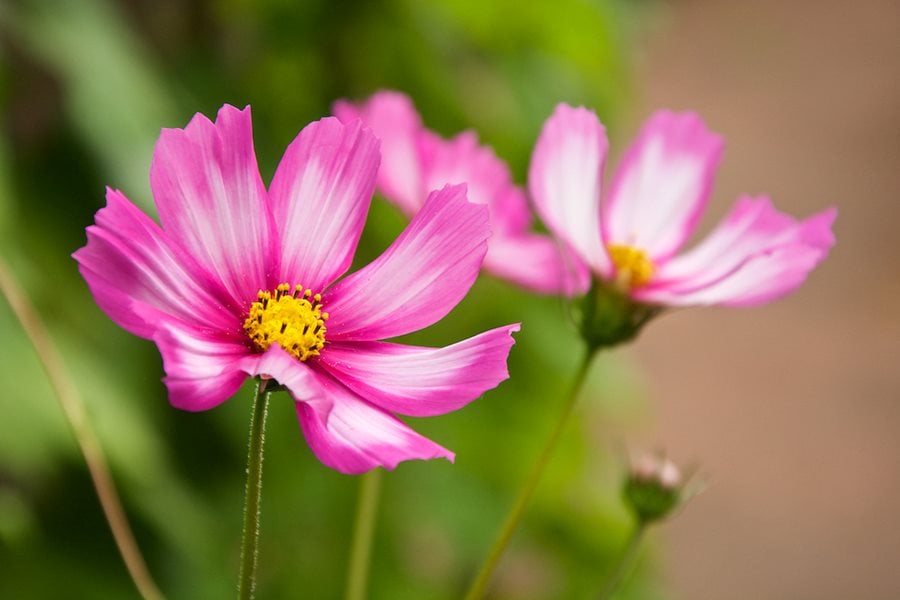
Garden Cosmos is a warm-season annual with white, pink, rose, crimson flowers, typically blooming summer to frost. It generally performs best in full sun and is useful for meadow borders, pollinator gardens, cutting. The most reliable visual clue is large daisy-like heads above very finely divided, threadlike foliage.
The species is native to Mexico and is the main parent behind many familiar seed strains. Bloom time, size, and garden performance can shift with cultivar, weather, soil, and region, so use the botanical name and plant label when making a final selection.
2. Sulfur Cosmos
Scientific name: Cosmos sulphureus
Sulfur Cosmos is a warm-season annual with yellow, gold, orange, scarlet-orange flowers, typically blooming summer to frost. It generally performs best in full sun and is useful for hot borders, naturalistic planting, pollinator gardens. The most reliable visual clue is smaller warm-colored daisy-like blooms with broader, less feathery foliage than garden cosmos.
It tolerates heat well and often self-sows where winters do not kill seedlings. Bloom time, size, and garden performance can shift with cultivar, weather, soil, and region, so use the botanical name and plant label when making a final selection.
3. Chocolate Cosmos
Scientific name: Cosmos atrosanguineus
Chocolate Cosmos is a tuberous tender perennial with deep maroon to brown-red flowers, typically blooming summer into fall. It generally performs best in full sun and is useful for containers, cutting gardens, scent gardens. The most reliable visual clue is velvety dark flowers on slender stems; the scent is strongest in warm conditions.
Usually propagated vegetatively rather than from ordinary seed strains; overwinter tubers where winters are cold. Bloom time, size, and garden performance can shift with cultivar, weather, soil, and region, so use the botanical name and plant label when making a final selection.
4. Sensation Series
Scientific name: Cosmos bipinnatus ‘Sensation’ Series
Sensation Series is a tall annual with white, pink, rose, crimson flowers, typically blooming summer to frost. It generally performs best in full sun and is useful for back borders, meadows, cut flowers. The most reliable visual clue is large single blooms on tall branching stems with lacy foliage.
A classic tall seed strain and a good reference point for traditional garden cosmos. Bloom time, size, and garden performance can shift with cultivar, weather, soil, and region, so use the botanical name and plant label when making a final selection.
5. Sonata Series
Scientific name: Cosmos bipinnatus ‘Sonata’ Series
Sonata Series is a compact annual with white, pink, rose, red flowers, typically blooming summer to frost. It generally performs best in full sun and is useful for containers, edging, front of borders. The most reliable visual clue is full-size single flowers carried on much shorter plants than classic tall cosmos.
Useful where wind exposure or limited space makes tall strains awkward. Bloom time, size, and garden performance can shift with cultivar, weather, soil, and region, so use the botanical name and plant label when making a final selection.
6. Seashells Mix
Scientific name: Cosmos bipinnatus ‘Seashells’
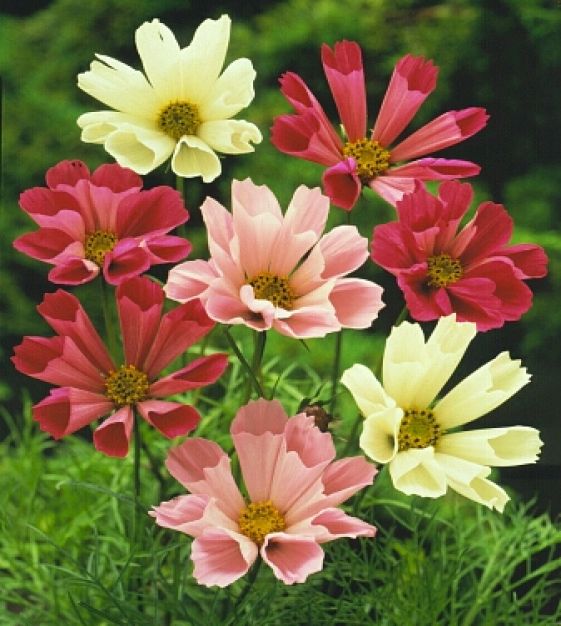
Seashells Mix is a annual with white, pink, rose, crimson flowers, typically blooming summer to frost. It generally performs best in full sun and is useful for cottage gardens, cutting. The most reliable visual clue is ray florets are rolled into tubular or fluted shapes, creating a shell-like look.
The unusual petal form is the key identification feature, not a different species. Bloom time, size, and garden performance can shift with cultivar, weather, soil, and region, so use the botanical name and plant label when making a final selection.
7. Picotee
Scientific name: Cosmos bipinnatus ‘Picotee’
Picotee is a annual with white with rose or crimson edging flowers, typically blooming summer to frost. It generally performs best in full sun and is useful for cutting, contrast planting. The most reliable visual clue is white petals edged or brushed with reddish pink around a yellow disc.
Color intensity varies among seedlings, so individual plants are not perfectly uniform. Bloom time, size, and garden performance can shift with cultivar, weather, soil, and region, so use the botanical name and plant label when making a final selection.
8. Candy Stripe
Scientific name: Cosmos bipinnatus ‘Candy Stripe’
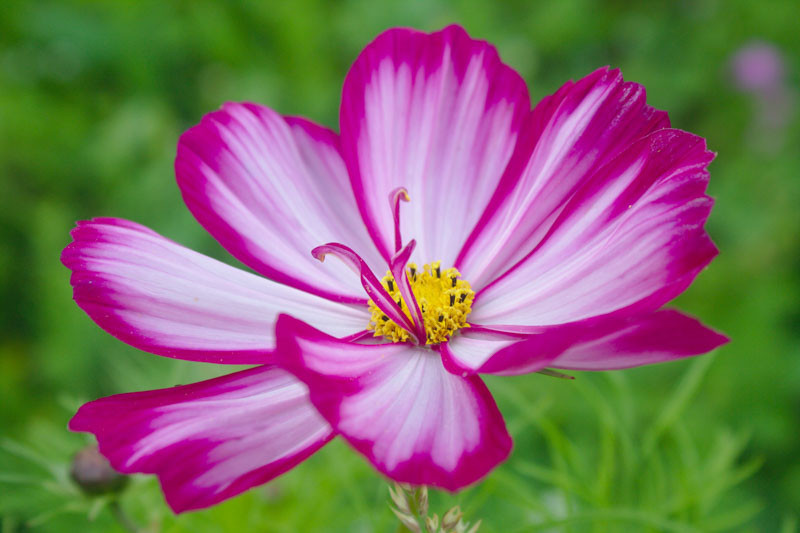
Candy Stripe is a annual with white with pink to crimson striping flowers, typically blooming summer to frost. It generally performs best in full sun and is useful for cottage borders, cut flowers. The most reliable visual clue is white ray florets marked by longitudinal pink or red streaks.
Best recognized by striping that runs along the petal rather than a simple colored edge. Bloom time, size, and garden performance can shift with cultivar, weather, soil, and region, so use the botanical name and plant label when making a final selection.
9. Daydream
Scientific name: Cosmos bipinnatus ‘Daydream’
Daydream is a annual with soft pink with darker eye flowers, typically blooming summer to frost. It generally performs best in full sun and is useful for romantic borders, cut flowers. The most reliable visual clue is pale pink petals deepen toward the central disc, producing a watercolor-like eye.
Works especially well with silver foliage and white-flowering companions. Bloom time, size, and garden performance can shift with cultivar, weather, soil, and region, so use the botanical name and plant label when making a final selection.
10. Purity
Scientific name: Cosmos bipinnatus ‘Purity’

Purity is a annual with clear white flowers, typically blooming summer to frost. It generally performs best in full sun and is useful for white gardens, weddings, cutting. The most reliable visual clue is clean white single blooms with a bright yellow center.
Tall stems make it more useful as a cut flower than many dwarf white strains. Bloom time, size, and garden performance can shift with cultivar, weather, soil, and region, so use the botanical name and plant label when making a final selection.
11. Antiquity
Scientific name: Cosmos bipinnatus ‘Antiquity’
Antiquity is a compact annual with deep ruby to muted rose flowers, typically blooming early summer to frost. It generally performs best in full sun and is useful for containers, edging. The most reliable visual clue is flowers open dark red and soften toward rose as they age.
The changing color gives one plant a multi-toned effect. Bloom time, size, and garden performance can shift with cultivar, weather, soil, and region, so use the botanical name and plant label when making a final selection.
12. Gazebo Mix
Scientific name: Cosmos bipinnatus ‘Gazebo’
Gazebo Mix is a medium-height annual with white, pink, rose, red flowers, typically blooming summer to frost. It generally performs best in full sun and is useful for mixed borders, cutting. The most reliable visual clue is traditional single cosmos flowers on plants generally shorter than the tallest Sensation strains.
A practical mid-height option for beds exposed to moderate wind. Bloom time, size, and garden performance can shift with cultivar, weather, soil, and region, so use the botanical name and plant label when making a final selection.
13. Psyche Mix
Scientific name: Cosmos bipinnatus ‘Psyche’
Psyche Mix is a tall annual with pink, rose, white flowers, typically blooming summer to frost. It generally performs best in full sun and is useful for cutting gardens, cottage borders. The most reliable visual clue is semi-double to crested-looking flowerheads with extra ray florets around the center.
The irregular extra petals give a softer, fuller texture than a standard single cosmos. Bloom time, size, and garden performance can shift with cultivar, weather, soil, and region, so use the botanical name and plant label when making a final selection.
14. Versailles Series
Scientific name: Cosmos bipinnatus ‘Versailles’ Series
Versailles Series is a tall annual with white, pink, rose, crimson flowers, typically blooming summer to frost. It generally performs best in full sun and is useful for professional-style cutting gardens. The most reliable visual clue is large blooms on long, relatively sturdy stems.
This series is commonly selected for cutting because stem length and flower quality are priorities. Bloom time, size, and garden performance can shift with cultivar, weather, soil, and region, so use the botanical name and plant label when making a final selection.
15. Double Click Cranberries
Scientific name: Cosmos bipinnatus ‘Double Click Cranberries’

Double Click Cranberries is a tall annual with cranberry, burgundy-rose flowers, typically blooming summer to frost. It generally performs best in full sun and is useful for cut flowers, dramatic borders. The most reliable visual clue is semi-double to double, ruffled flowers in deep cranberry tones.
Some flowers may be less fully double than others because petal count can vary. Bloom time, size, and garden performance can shift with cultivar, weather, soil, and region, so use the botanical name and plant label when making a final selection.
16. Double Click Snow Puff
Scientific name: Cosmos bipinnatus ‘Double Click Snow Puff’
Double Click Snow Puff is a tall annual with white flowers, typically blooming summer to frost. It generally performs best in full sun and is useful for wedding cutting gardens, white borders. The most reliable visual clue is ruffled, semi-double to double white flowers.
The flower form is fuller and more textural than single white ‘Purity’. Bloom time, size, and garden performance can shift with cultivar, weather, soil, and region, so use the botanical name and plant label when making a final selection.
17. Cupcakes White
Scientific name: Cosmos bipinnatus ‘Cupcakes White’
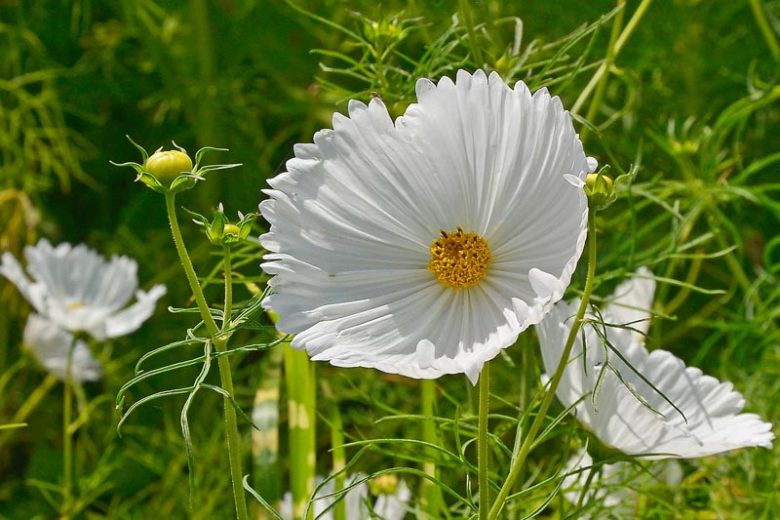
Cupcakes White is a annual with white flowers, typically blooming summer to frost. It generally performs best in full sun and is useful for novelty cutting, cottage gardens. The most reliable visual clue is ray florets are partially fused into a shallow cup or fluted liner shape.
The fused petal form is distinctive even from a distance. Bloom time, size, and garden performance can shift with cultivar, weather, soil, and region, so use the botanical name and plant label when making a final selection.
18. Rubenza
Scientific name: Cosmos bipinnatus ‘Rubenza’
Rubenza is a annual with ruby red aging to rose flowers, typically blooming summer to frost. It generally performs best in full sun and is useful for warm-toned borders, cutting. The most reliable visual clue is dark ruby flowers soften as they mature, creating several shades at once.
Avoid overfeeding; rich nitrogen-heavy soil can produce more foliage and fewer blooms. Bloom time, size, and garden performance can shift with cultivar, weather, soil, and region, so use the botanical name and plant label when making a final selection.
19. Xanthos
Scientific name: Cosmos bipinnatus ‘Xanthos’

Xanthos is a compact annual with soft primrose yellow flowers, typically blooming summer to frost. It generally performs best in full sun and is useful for containers, pastel borders. The most reliable visual clue is unusual pale yellow single flowers on relatively compact plants.
It expands the color range of C. bipinnatus beyond the familiar pink-white palette. Bloom time, size, and garden performance can shift with cultivar, weather, soil, and region, so use the botanical name and plant label when making a final selection.
20. Cosmic Orange
Scientific name: Cosmos sulphureus ‘Cosmic Orange’
Cosmic Orange is a compact warm-season annual with intense orange flowers, typically blooming summer to frost. It generally performs best in full sun and is useful for containers, hot-color borders, pollinator planting. The most reliable visual clue is bright orange semi-double to double-looking blooms with the foliage and habit of sulfur cosmos.
A strong choice for heat and bold color combinations. Bloom time, size, and garden performance can shift with cultivar, weather, soil, and region, so use the botanical name and plant label when making a final selection.
How Are Cosmos Flowers Classified?
Cosmos is a genus in the Asteraceae family. The familiar “petals” are ray florets arranged around a central disc of many small disc florets. For garden purposes, the most useful distinction is botanical species first, then cultivar or seed strain. A cultivar such as ‘Purity’ is not a separate species; it is a selected form within C. bipinnatus. Double and fluted cosmos are flower forms created by breeding, while compact or tall labels describe growth habit.
How to Identify Different Types of Cosmos Flowers
Start with foliage and color range. C. bipinnatus usually has exceptionally fine, threadlike leaves and white-to-pink or crimson flowers; C. sulphureus tends toward yellow and orange and has somewhat broader foliage. Chocolate cosmos is recognized by dark maroon flowers, a tuberous perennial habit, and warm cocoa-like scent. Within a species, use ray-floret shape, petal markings, plant height, and whether the bloom is single, semi-double, or double to separate cultivars.
Growing and Care Tips
Most seed-grown cosmos perform best in full sun and freely draining soil of modest fertility. Excess nitrogen can encourage leafy growth at the expense of flowers. Direct sow after frost danger has passed, or start seed earlier under protection where the season is short. Deadheading keeps plants blooming, while leaving a few mature heads allows seed saving and self-sowing. Tall strains may benefit from close spacing or discreet support in windy sites. Chocolate cosmos needs a different winter strategy because its tuberous roots are not reliably hardy in cold climates.
When and Where Do Cosmos Bloom?
In much of the United States, annual cosmos flower from summer until frost. Timing shifts with latitude, elevation, sowing date, and local heat. In frost-free or nearly frost-free climates, the season can be longer, while hot humid conditions may reduce flower quality for some cultivars. USDA zones are less useful for annual cosmos than the local frost calendar; chocolate cosmos requires separate winter protection decisions.
Safety and Ecology Notes
Cosmos are valuable nectar and pollen sources for many garden insects, but pollinator use varies by species and region. Avoid spraying open flowers with broad-spectrum insecticides. Do not assume every ornamental cosmos flower is edible simply because some sources discuss culinary uses for particular species or cultures; identify the exact plant and use a food-safety source before eating any ornamental flower.
Common Mistakes When Choosing or Identifying Types of cosmos flowers
- Treating every named seed strain as a species.
- Planting tall cosmos in rich, heavily fertilized soil and getting floppy foliage.
- Sowing too deeply; cosmos seed needs only light soil coverage.
- Assuming chocolate cosmos is grown exactly like annual garden cosmos.
- Expecting named open-pollinated seed strains to be perfectly uniform from plant to plant.
Fun Facts About Types of cosmos flowers
- The showy “petals” of cosmos are ray florets; the yellow center contains many tiny disc florets.
- The genus belongs to Asteraceae, the same family as daisies and sunflowers.
- Garden cosmos is native to Mexico and neighboring parts of North America.
- Many cosmos are excellent cut flowers when harvested as buds begin to open.
- Fine foliage makes cosmos useful as a light-textured filler in borders.
- Rich soil is not required for strong flowering.
- Deadheading generally extends the bloom season.
- Many annual cosmos readily self-seed.
- Chocolate cosmos is tuberous and botanically distinct from the usual seed-grown annuals.
- Single flower forms tend to offer easier access to pollen and nectar than very full doubles.
Final Thoughts on Types of cosmos flowers
The best types of cosmos flowers depend on whether you want height, a particular flower form, a cutting crop, warm yellow-orange color, or a compact container plant. Choose the species first, then the cultivar: that simple approach prevents most naming confusion and makes care much easier.
Frequently Asked Questions
1. What are the main types covered in this guide?
This guide compares 20 factual, useful examples, including Garden Cosmos, Sulfur Cosmos, Chocolate Cosmos, Sensation Series. The entries may be species, cultivars, or horticultural groups depending on what the search term actually describes.
2. Are all of these entries separate botanical species?
No. Where a named cultivar or horticultural form is used, it is labeled as such rather than being presented as a species. Botanical rank matters for accurate identification.
3. Which types are easiest for beginners?
Beginner-friendly choices depend on climate, but Garden Cosmos, Sulfur Cosmos, Chocolate Cosmos are useful starting points when their light, soil, and temperature needs match the site.
4. Which types are best for full sun?
Many flowering plants in the list prefer full sun, but the exact requirement varies. Check the individual entry and local heat conditions before planting.
5. Which types tolerate part shade?
Several species tolerate some shade, especially woodland or cool-climate plants. Part shade should be interpreted in the context of local sun intensity.
6. When do these flowers bloom?
Bloom time ranges from spring through fall depending on species. Climate, latitude, elevation, cultivar, and weather can shift the stated season.
7. Are these flowers annuals or perennials?
The list can include annuals, perennials, bulbs, shrubs, or vines when they genuinely fit the topic. Each entry identifies its growth habit.
8. Can these flowers grow in containers?
Many can, provided the container is large enough and drains well. Match pot size to mature root system and plant height.
9. Which flowers are good for cutting?
Flowers with strong stems and good postharvest performance are best for cutting. The individual entries note arrangement or cutting value where it is important.
10. Which flowers attract pollinators?
Open, accessible flowers often provide nectar or pollen to bees, butterflies, or other visitors, but pollinator value varies by species and region.
11. How should I choose flowers for my climate?
Use local hardiness, summer heat, winter moisture, frost dates, and rainfall as filters. USDA zones are useful for cold hardiness in the United States but do not describe every climate factor.
12. What soil do these flowers need?
Most garden flowers benefit from well-drained soil, but moisture and pH preferences vary. Some species prefer consistently moist soil while others resent wet roots.
13. How often should flowering plants be watered?
Water according to plant type, soil, weather, and establishment stage rather than a fixed weekly rule. Deep, less frequent irrigation is appropriate for many established garden plants.
14. Should these flowers be deadheaded?
Many repeat-blooming annuals and perennials benefit from deadheading, while plants grown for seed, wildlife value, or ornamental seed heads may be left standing.
15. Can I grow these flowers from seed?
Many species can be seed-grown, but named cultivars may not come true from seed. Bulbs, divisions, cuttings, or tissue culture are used when clonal consistency is needed.
16. What is the difference between a species and a cultivar?
A species is a botanical taxonomic unit. A cultivar is a named plant selected and maintained for particular horticultural traits.
17. What is a hybrid flower?
A hybrid results from crossing genetically distinct parents. Horticultural hybrids may occur between species, cultivars, or breeding lines and should not be described as separate wild species.
18. Why do common names cause confusion?
One common name can refer to several unrelated plants, and one plant can have several common names. Scientific names help resolve that ambiguity.
19. Can flower color change with soil or climate?
Color can shift with temperature, light, plant age, and genetics. In a few plants such as some hydrangeas, soil chemistry also influences pigment expression.
20. Are all varieties the same height?
No. Cultivars within one species can differ dramatically in height and spread. Use the specific plant label rather than a genus-wide size assumption.
21. Can I use these flowers in bouquets?
Many can be cut, but vase life and stem strength vary. Harvest stage and conditioning are important for good performance.
22. Are any of these flowers edible?
Do not infer edibility from a general flower guide. Edibility must be confirmed for the exact species and plant part, with food-safe growing conditions.
23. Are any of these flowers toxic to pets?
Some ornamental flowers can be harmful to cats, dogs, horses, or livestock. Check species-specific veterinary guidance before planting or arranging flowers around animals.
24. Can these flowers become invasive?
Some ornamental plants spread aggressively or are invasive in particular regions. Invasiveness is location-specific, so check state or regional invasive-plant guidance.
25. How can I identify an unknown flower?
Compare flower shape, petal or floret arrangement, leaves, stems, growth habit, bloom season, and habitat. Avoid identifying from color alone.
26. What are the best flowers for a low-maintenance garden?
Choose species adapted to the site’s light, soil, moisture, and winter conditions. A well-matched plant is usually lower maintenance than one that must be constantly corrected.
27. How can I extend the bloom season?
Combine early-, mid-, and late-season plants, select long-blooming cultivars, deadhead where appropriate, and maintain steady nutrition and moisture without overfeeding.
28. Do flowers need fertilizer to bloom?
Many benefit from adequate nutrients, but excessive nitrogen can produce leaves instead of flowers. Test soil when possible and fertilize according to plant needs.
29. How far apart should flowers be planted?
Spacing depends on mature width, airflow needs, and design goals. Follow species- or cultivar-specific guidance rather than using one spacing for all flowers.
30. How do I choose the best type for my garden?
Start with site conditions—sun, drainage, climate, available space—then choose for bloom season, color, pollinator value, cut-flower use, maintenance, and safety.