

True jet-black petals are extraordinarily uncommon. Most flowers sold or described as black are actually very dark purple, burgundy, maroon, or brown-red, and their undertones become visible in strong or back lighting. This guide focuses on 20 real species and cultivars that reliably create a near-black effect in gardens or floral design.
Are There Really Black Flowers?
Most “black flowers” are near-black rather than spectrally black. Dense pigments—especially anthocyanins—can make petals absorb enough visible light to look black in ordinary garden conditions. Named cultivars such as ‘Queen of Night’ tulip, ‘Black Velvet’ petunia, and ‘Arabian Night’ dahlia are therefore best described as near-black selections, while black bat flower has naturally very dark bracts.
Related Flower Guides
Quick Comparison
| Flower | Botanical identity | Actual undertone | Bloom season | Best use |
|---|---|---|---|---|
| Queen of Night Tulip | Tulipa gesneriana hybrids ‘Queen of Night’ | deep maroon-purple, near-black | late spring | spring borders, cut flowers |
| Arabian Night Dahlia | Dahlia hybrids ‘Arabian Night’ | deep burgundy-red | summer to frost | cutting gardens, dark borders |
| Black Velvet Petunia | Petunia hybrids ‘Black Velvet’ | very dark purple | late spring to frost | containers, hanging baskets |
| Before the Storm Bearded Iris | Iris germanica hybrids ‘Before the Storm’ | deep violet-purple | spring | architectural borders, cutting |
| Black Barlow Columbine | Aquilegia vulgaris ‘Black Barlow’ | deep purple-maroon | late spring to early summer | cottage gardens, cut flowers |
| Nigra Hollyhock | Alcea rosea ‘Nigra’ | dark chocolate-maroon | summer | back borders, cottage gardens |
| Black Knight Scabiosa | Scabiosa atropurpurea ‘Black Knight’ | dark wine-burgundy | summer to frost | cut flowers, pollinator planting |
| Black Star Calla Lily | Zantedeschia hybrids ‘Black Star’ | deep burgundy-purple | summer | containers, cut flowers |
| Onyx Odyssey Hellebore | Helleborus hybrid ‘Onyx Odyssey’ | deep purple to near-black | late winter to spring | woodland gardens, winter interest |
| Black Knight Sweet Pea | Lathyrus odoratus ‘Black Knight’ | deep maroon-purple | spring to early summer in cool conditions | trellises, fragrant cut flowers |
| Black Ball Cornflower | Centaurea cyanus ‘Black Ball’ | deep burgundy-plum | late spring to summer | meadow planting, cut flowers |
| Chocolate Cosmos | Cosmos atrosanguineus | dark maroon-brown | summer to fall | scent gardens, cutting |
| Black Bat Flower | Tacca chantrieri | deep purple-brown to near-black | warm-season under tropical conditions | tropical containers, conservatories |
| Black Baccara Rose | Rosa hybrid ‘Black Baccara’ | very dark velvety red-burgundy | late spring to fall in suitable climates | cutting gardens, dramatic borders, floral design |
| Dark Dimension Hyacinth | Hyacinthus orientalis ‘Dark Dimension’ | deep purple-blue | spring | fragrant spring beds, containers |
| Blacknight Hollyhock | Alcea rosea hybrids ‘Blacknight’ | deep purple-maroon | summer | tall backgrounds, cottage borders |
| Black Beauty Pansy | Viola × wittrockiana ‘Black Beauty’ | very dark purple | cool-season spring and fall | containers, edging |
| Molly Sanderson Viola | Viola hybrids ‘Molly Sanderson’ | near-black purple with yellow eye | spring and cool seasons | containers, edging |
| Black Prince Snapdragon | Antirrhinum majus ‘Black Prince’ | deep crimson-maroon | spring and fall; longer in cool climates | cutting, vertical accents |
| Persian Lily | Fritillaria persica | plum-purple to deep chocolate | spring | architectural spring borders |
20 Types of black flowers
The entries below are selected and labeled according to the article’s search intent. Names, botanical ranks, and horticultural categories are kept distinct so the list does not inflate the count with duplicate common names.
1. Queen of Night Tulip
Scientific name: Tulipa gesneriana hybrids ‘Queen of Night’
Queen of Night Tulip is a bulb with deep maroon-purple, near-black flowers, typically blooming late spring. It generally performs best in full sun and is useful for spring borders, cut flowers. The most reliable visual clue is smooth goblet-shaped flowers that read almost black from a distance.
The petals are not truly black; transmitted light reveals purple-burgundy undertones. Bloom time, size, and garden performance can shift with cultivar, weather, soil, and region, so use the botanical name and plant label when making a final selection.
2. Arabian Night Dahlia
Scientific name: Dahlia hybrids ‘Arabian Night’
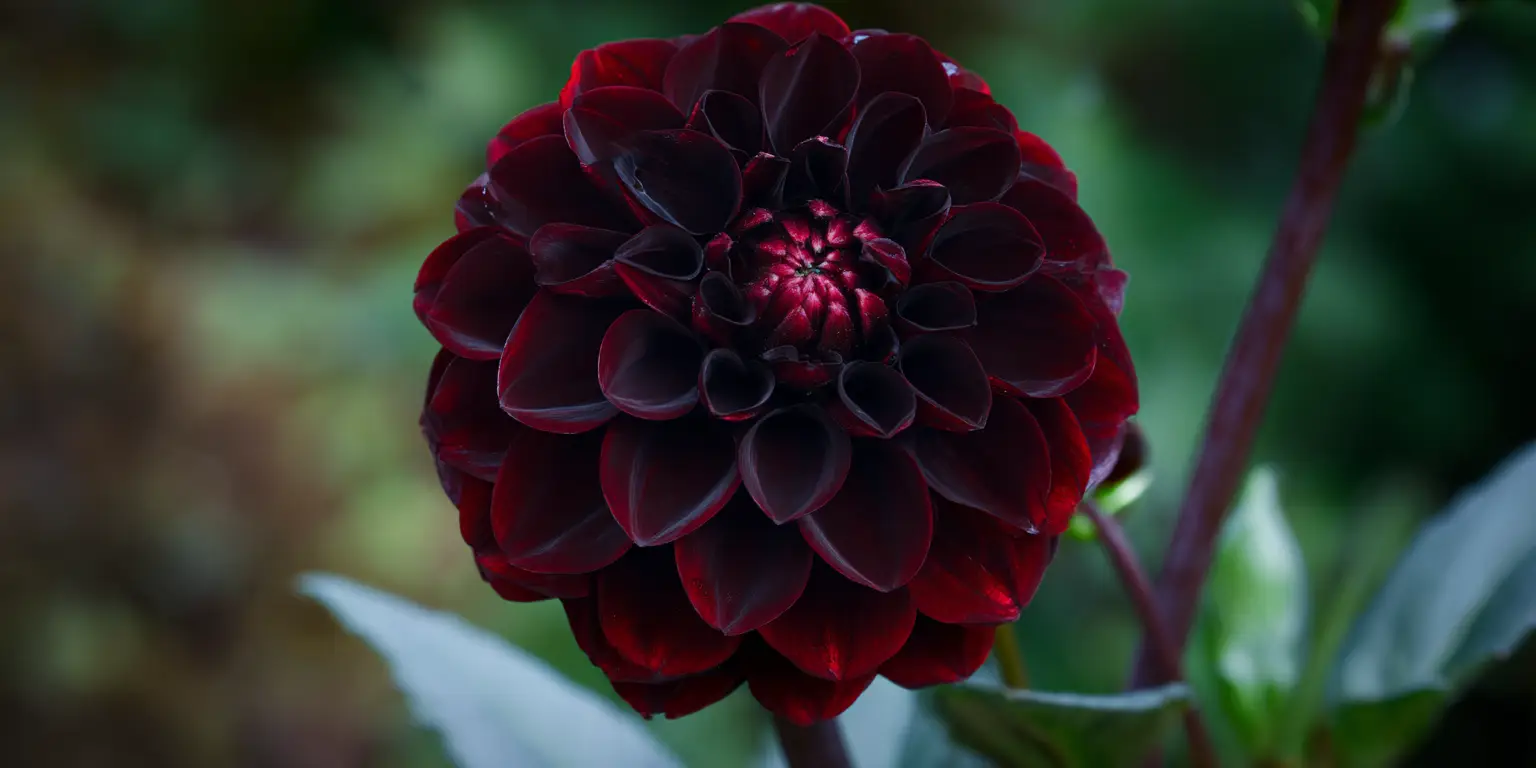
Arabian Night Dahlia is a tuberous perennial with deep burgundy-red flowers, typically blooming summer to frost. It generally performs best in full sun and is useful for cutting gardens, dark borders. The most reliable visual clue is fully double decorative-type blooms with velvety dark petals.
Lift tuberous roots for winter where freezing would damage them. Bloom time, size, and garden performance can shift with cultivar, weather, soil, and region, so use the botanical name and plant label when making a final selection.
3. Black Velvet Petunia
Scientific name: Petunia hybrids ‘Black Velvet’

Black Velvet Petunia is a tender perennial grown as annual with very dark purple flowers, typically blooming late spring to frost. It generally performs best in full sun and is useful for containers, hanging baskets. The most reliable visual clue is matte funnel-shaped blooms with unusually saturated dark pigment.
Best color contrast comes beside silver, chartreuse, or pale flowers. Bloom time, size, and garden performance can shift with cultivar, weather, soil, and region, so use the botanical name and plant label when making a final selection.
4. Before the Storm Bearded Iris
Scientific name: Iris germanica hybrids ‘Before the Storm’
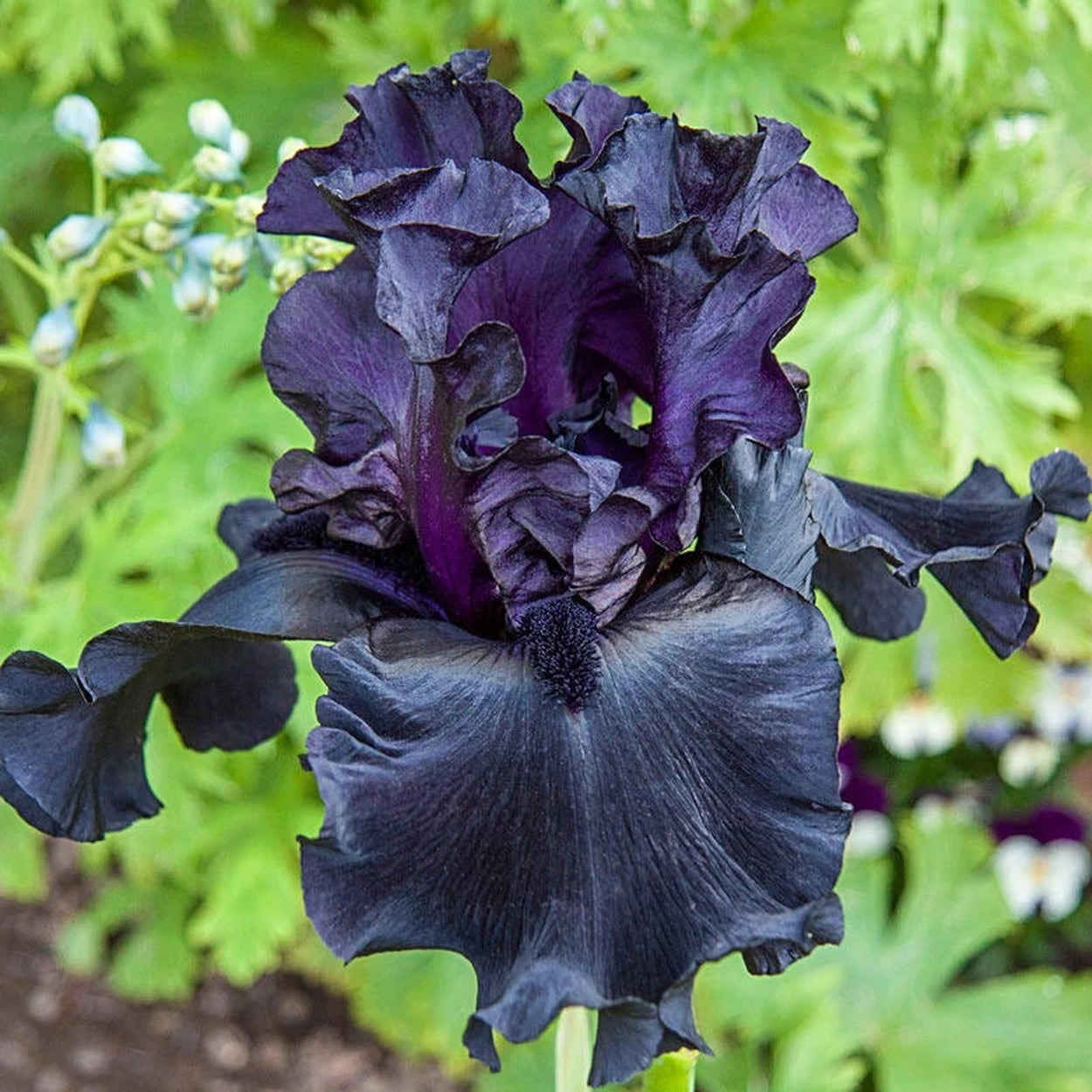
Before the Storm Bearded Iris is a rhizomatous perennial with deep violet-purple flowers, typically blooming spring. It generally performs best in full sun and is useful for architectural borders, cutting. The most reliable visual clue is ruffled standards and falls that can appear almost black.
Avoid burying bearded-iris rhizomes too deeply. Bloom time, size, and garden performance can shift with cultivar, weather, soil, and region, so use the botanical name and plant label when making a final selection.
5. Black Barlow Columbine
Scientific name: Aquilegia vulgaris ‘Black Barlow’
Black Barlow Columbine is a herbaceous perennial with deep purple-maroon flowers, typically blooming late spring to early summer. It generally performs best in sun to part shade and is useful for cottage gardens, cut flowers. The most reliable visual clue is double spurless-looking dark flowers with pointed layered petals.
Aquilegia can self-sow; seedling colors may not remain identical to the parent. Bloom time, size, and garden performance can shift with cultivar, weather, soil, and region, so use the botanical name and plant label when making a final selection.
6. Nigra Hollyhock
Scientific name: Alcea rosea ‘Nigra’
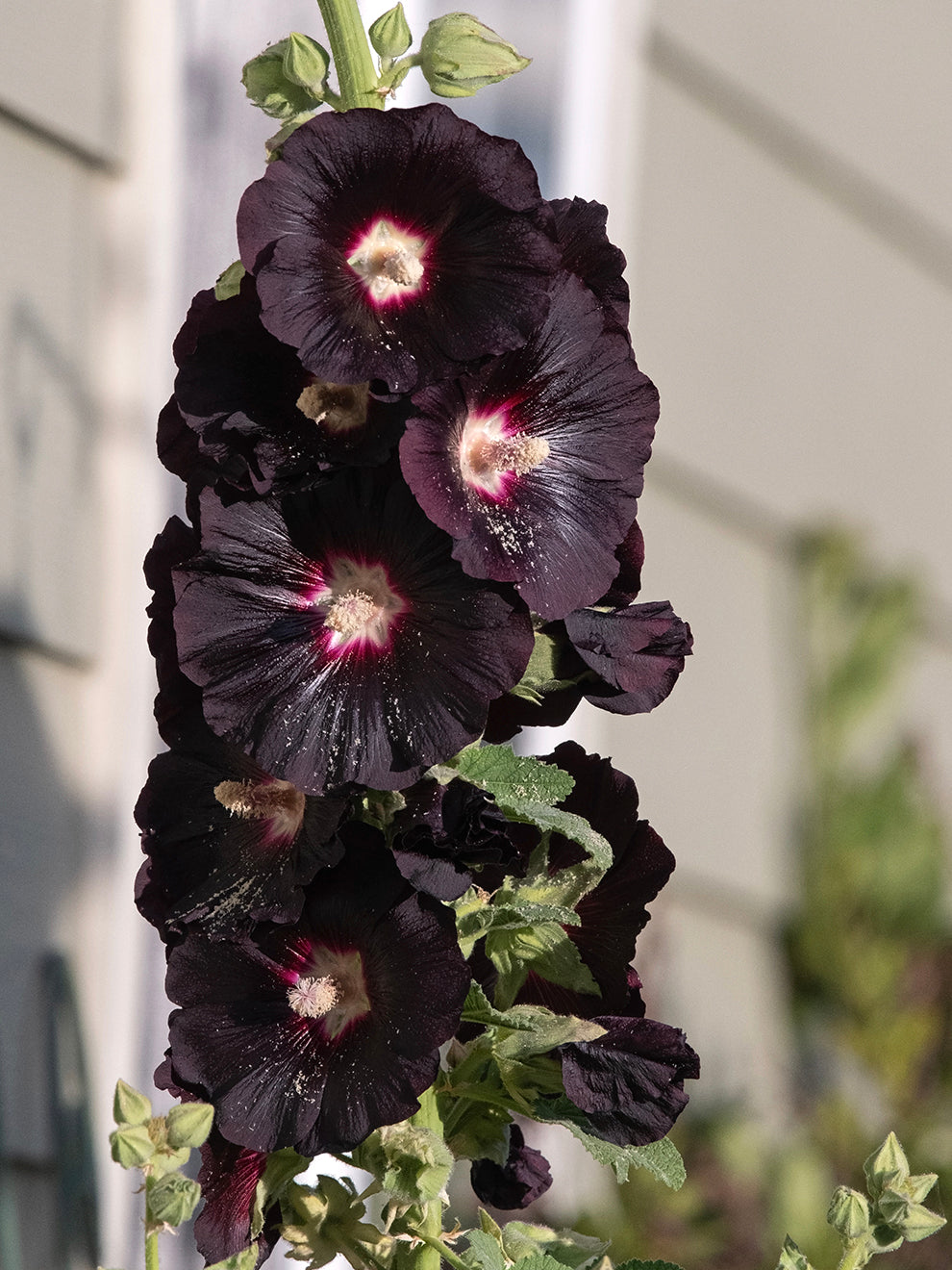
Nigra Hollyhock is a short-lived perennial or biennial with dark chocolate-maroon flowers, typically blooming summer. It generally performs best in full sun and is useful for back borders, cottage gardens. The most reliable visual clue is tall spires of open saucer-shaped dark flowers.
Rust disease is common on hollyhocks; good airflow helps. Bloom time, size, and garden performance can shift with cultivar, weather, soil, and region, so use the botanical name and plant label when making a final selection.
7. Black Knight Scabiosa
Scientific name: Scabiosa atropurpurea ‘Black Knight’
Black Knight Scabiosa is a annual or short-lived perennial depending on climate with dark wine-burgundy flowers, typically blooming summer to frost. It generally performs best in full sun and is useful for cut flowers, pollinator planting. The most reliable visual clue is pincushion flowerheads with dark petals and contrasting pale stamens.
Deadheading supports repeat bloom. Bloom time, size, and garden performance can shift with cultivar, weather, soil, and region, so use the botanical name and plant label when making a final selection.
8. Black Star Calla Lily
Scientific name: Zantedeschia hybrids ‘Black Star’

Black Star Calla Lily is a rhizomatous tender perennial with deep burgundy-purple flowers, typically blooming summer. It generally performs best in sun to part shade and is useful for containers, cut flowers. The most reliable visual clue is dark funnel-like spathe surrounding a central spadix.
Calla lilies contain calcium oxalate crystals and should not be eaten. Bloom time, size, and garden performance can shift with cultivar, weather, soil, and region, so use the botanical name and plant label when making a final selection.
9. Onyx Odyssey Hellebore
Scientific name: Helleborus hybrid ‘Onyx Odyssey’
Onyx Odyssey Hellebore is a evergreen or semi-evergreen perennial with deep purple to near-black flowers, typically blooming late winter to spring. It generally performs best in part shade and is useful for woodland gardens, winter interest. The most reliable visual clue is double nodding flowers with many dark tepals.
Hellebores are not edible and sap may irritate sensitive skin. Bloom time, size, and garden performance can shift with cultivar, weather, soil, and region, so use the botanical name and plant label when making a final selection.
10. Black Knight Sweet Pea
Scientific name: Lathyrus odoratus ‘Black Knight’

Black Knight Sweet Pea is a annual climber with deep maroon-purple flowers, typically blooming spring to early summer in cool conditions. It generally performs best in full sun with cool roots and is useful for trellises, fragrant cut flowers. The most reliable visual clue is ruffled butterfly-like flowers on tendrilled vines.
Sweet pea seeds and pods are toxic if eaten. Bloom time, size, and garden performance can shift with cultivar, weather, soil, and region, so use the botanical name and plant label when making a final selection.
11. Black Ball Cornflower
Scientific name: Centaurea cyanus ‘Black Ball’
Black Ball Cornflower is a annual with deep burgundy-plum flowers, typically blooming late spring to summer. It generally performs best in full sun and is useful for meadow planting, cut flowers. The most reliable visual clue is fringed thistle-like flowerheads on slender stems.
Often self-sows where conditions are suitable. Bloom time, size, and garden performance can shift with cultivar, weather, soil, and region, so use the botanical name and plant label when making a final selection.
12. Chocolate Cosmos
Scientific name: Cosmos atrosanguineus
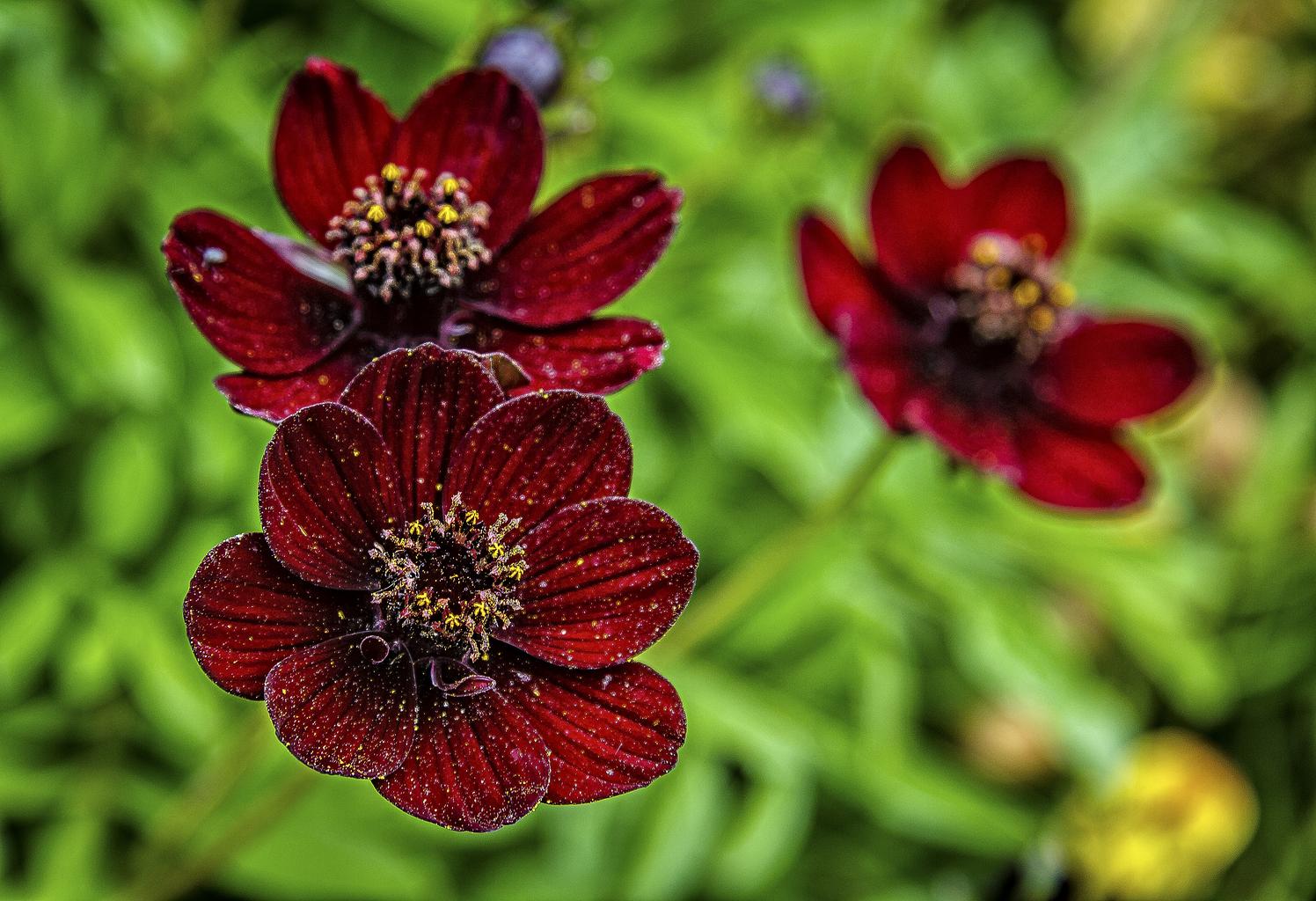
Chocolate Cosmos is a tuberous tender perennial with dark maroon-brown flowers, typically blooming summer to fall. It generally performs best in full sun and is useful for scent gardens, cutting. The most reliable visual clue is velvety daisy-like flowers with warm cocoa-like fragrance.
Not a jet-black bloom; color reads brown-red to maroon under strong light. Bloom time, size, and garden performance can shift with cultivar, weather, soil, and region, so use the botanical name and plant label when making a final selection.
13. Black Bat Flower
Scientific name: Tacca chantrieri
Black Bat Flower is a tropical rhizomatous perennial with deep purple-brown to near-black flowers, typically blooming warm-season under tropical conditions. It generally performs best in bright filtered shade and is useful for tropical containers, conservatories. The most reliable visual clue is large bat-shaped bracts with extremely long threadlike bracteoles.
Needs warmth, humidity, and protection from cold; not a temperate bedding plant. Bloom time, size, and garden performance can shift with cultivar, weather, soil, and region, so use the botanical name and plant label when making a final selection.
14. Black Baccara Rose
Scientific name: Rosa hybrid ‘Black Baccara’
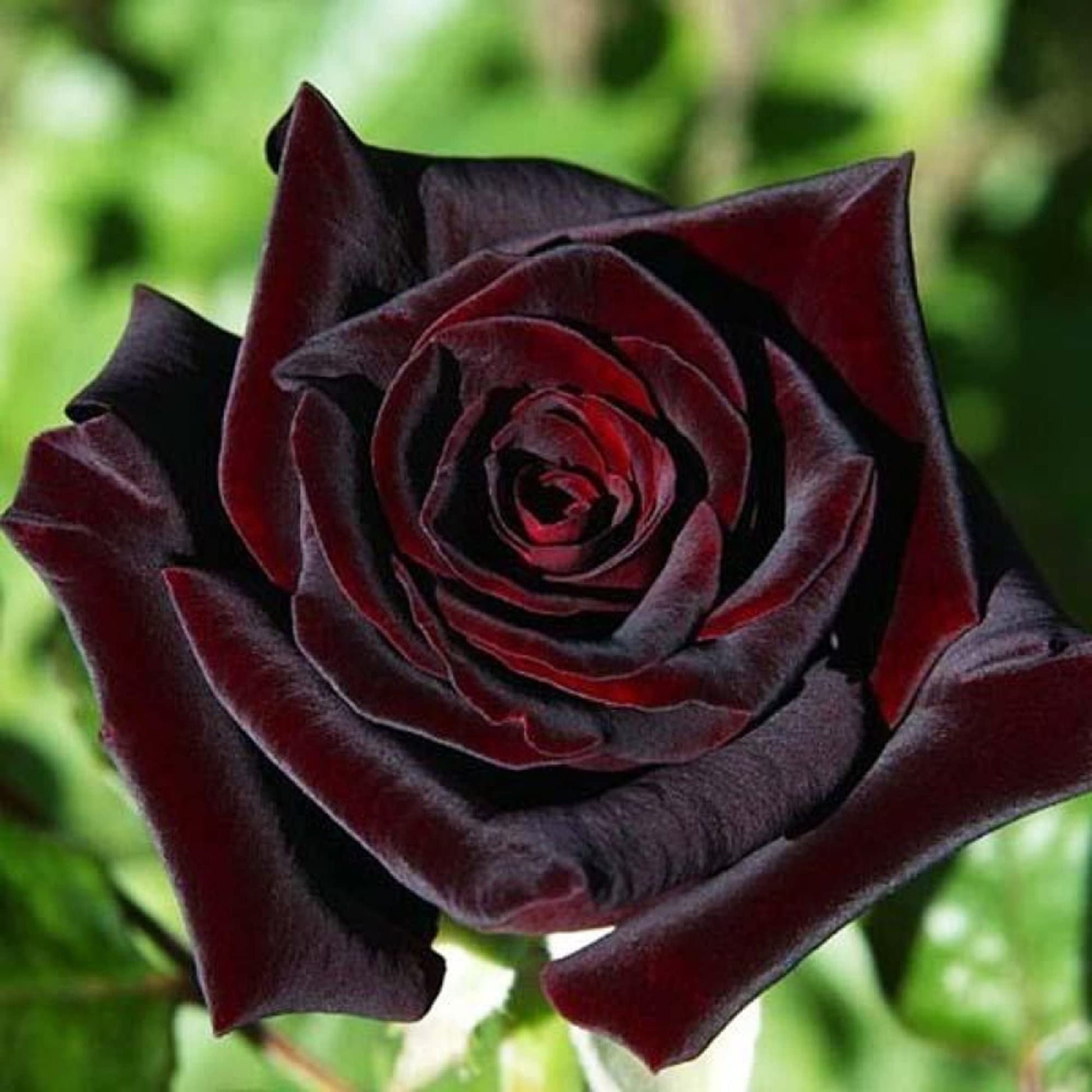
Black Baccara Rose is a deciduous flowering shrub with very dark velvety red-burgundy flowers, typically blooming late spring to fall in suitable climates. It generally performs best in full sun and is useful for cutting gardens, dramatic borders, floral design. The most reliable visual clue is high-centered velvety blooms that look nearly black in cool or low light.
It is a dark red rose rather than a true black flower; strong light reveals wine-red undertones. Bloom time, size, and garden performance can shift with cultivar, weather, soil, and region, so use the botanical name and plant label when making a final selection.
15. Dark Dimension Hyacinth
Scientific name: Hyacinthus orientalis ‘Dark Dimension’
Dark Dimension Hyacinth is a true bulb with deep purple-blue flowers, typically blooming spring. It generally performs best in sun to light shade and is useful for fragrant spring beds, containers. The most reliable visual clue is dense fragrant spike of very dark waxy florets.
Hyacinth bulbs can irritate skin and are not edible. Bloom time, size, and garden performance can shift with cultivar, weather, soil, and region, so use the botanical name and plant label when making a final selection.
16. Blacknight Hollyhock
Scientific name: Alcea rosea hybrids ‘Blacknight’

Blacknight Hollyhock is a short-lived perennial with deep purple-maroon flowers, typically blooming summer. It generally performs best in full sun and is useful for tall backgrounds, cottage borders. The most reliable visual clue is large dark funnel-shaped flowers on upright spikes.
Give tall stems support in windy sites. Bloom time, size, and garden performance can shift with cultivar, weather, soil, and region, so use the botanical name and plant label when making a final selection.
17. Black Beauty Pansy
Scientific name: Viola × wittrockiana ‘Black Beauty’
Black Beauty Pansy is a short-lived perennial grown as annual with very dark purple flowers, typically blooming cool-season spring and fall. It generally performs best in sun to part shade and is useful for containers, edging. The most reliable visual clue is rounded overlapping petals with a nearly black velvety face.
Heat reduces flowering in many pansies. Bloom time, size, and garden performance can shift with cultivar, weather, soil, and region, so use the botanical name and plant label when making a final selection.
18. Molly Sanderson Viola
Scientific name: Viola hybrids ‘Molly Sanderson’
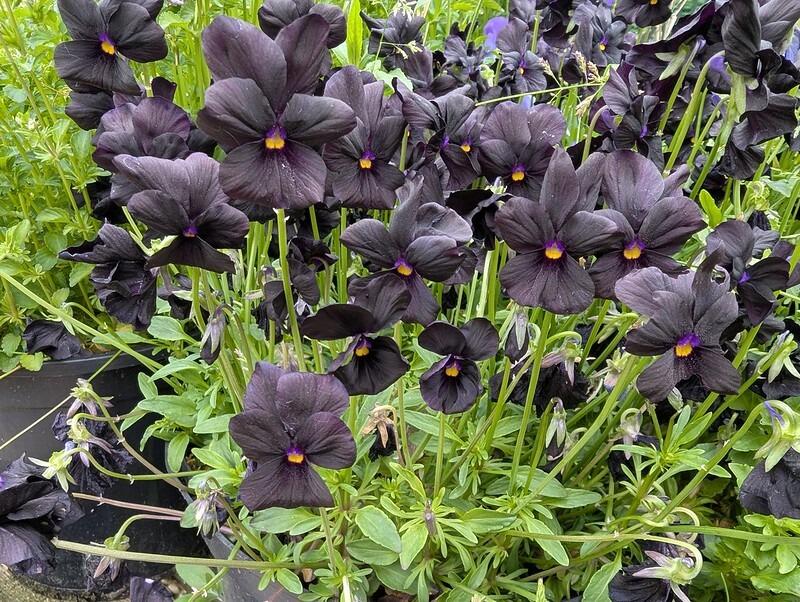
Molly Sanderson Viola is a short-lived perennial with near-black purple with yellow eye flowers, typically blooming spring and cool seasons. It generally performs best in sun to part shade and is useful for containers, edging. The most reliable visual clue is small dark viola flowers centered by a contrasting golden eye.
A useful small-scale alternative to dark pansies. Bloom time, size, and garden performance can shift with cultivar, weather, soil, and region, so use the botanical name and plant label when making a final selection.
19. Black Prince Snapdragon
Scientific name: Antirrhinum majus ‘Black Prince’
Black Prince Snapdragon is a annual or short-lived perennial with deep crimson-maroon flowers, typically blooming spring and fall; longer in cool climates. It generally performs best in full sun and is useful for cutting, vertical accents. The most reliable visual clue is dark velvety snapdragon flowers on upright spikes.
Color is deep red rather than true black. Bloom time, size, and garden performance can shift with cultivar, weather, soil, and region, so use the botanical name and plant label when making a final selection.
20. Persian Lily
Scientific name: Fritillaria persica
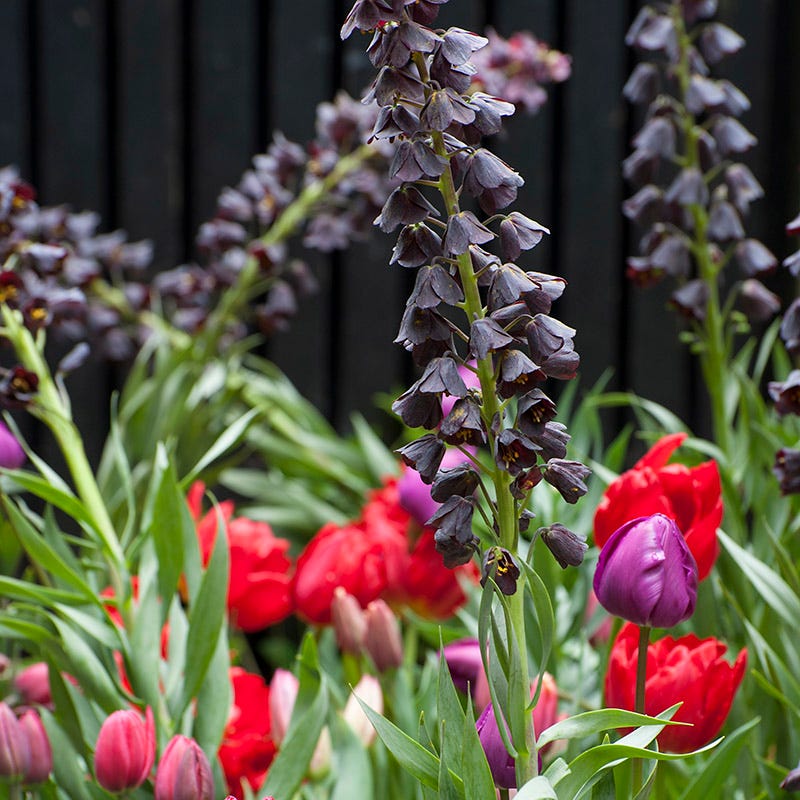
Persian Lily is a bulbous perennial with plum-purple to deep chocolate flowers, typically blooming spring. It generally performs best in full sun and is useful for architectural spring borders. The most reliable visual clue is tall spires hung with many narrow bell-shaped dark flowers.
Needs excellent drainage, especially during dormancy. Bloom time, size, and garden performance can shift with cultivar, weather, soil, and region, so use the botanical name and plant label when making a final selection.
Why Black Flowers Are Usually Purple, Burgundy, or Brown
Plants do not use a single “black pigment” comparable to black ink. Instead, extremely high concentrations and combinations of pigments make petals absorb most visible light. Lighting, petal texture, background color, and camera exposure all change how black a bloom appears. For accurate plant descriptions, it is better to call these cultivars near-black and mention the underlying hue.
How to Identify Near-Black Flowers Accurately
Look at flowers in bright indirect light and inspect the petal base and edges for their true undertone. Confirm the cultivar label because many genera contain both ordinary and near-black forms. Flower structure also matters: a near-black calla is recognized by its spathe and spadix, a tulip by its six-part cup, and a dahlia by its composite flowerhead form.
How to Use Black Flowers in Garden Design
Near-black blooms are easiest to read when they have contrast. Pair them with white, silver, pale pink, lime foliage, or warm apricot rather than placing them in a dark corner. Repeat the dark color in several small groups so it looks intentional. In containers, combine one near-black focal plant with a lighter trailing or foliage plant. For cutting, harvest by the normal maturity stage for that species; dark color does not change vase-care fundamentals.
Choosing Black Flowers by Climate
These plants do not share one climate requirement. Tulips and hyacinths are cool-season bulbs; dahlias and callas are frost-tender in many regions; petunias are warm-season annuals; hellebores prefer cooler shaded conditions; and black bat flower is tropical. Select by species first and color second.
Safety and Toxicity Notes
Dark color says nothing about edibility. Sweet pea seeds and pods are toxic, calla lilies contain irritating calcium oxalate crystals, hellebores should not be eaten, and hyacinth bulbs are not food. Never use a “black flower” as a cocktail garnish unless the exact species is confirmed edible and was grown for food use without unsuitable pesticide treatments.
Common Mistakes When Choosing or Identifying Types of black flowers
- Assuming a photograph proves a flower is truly black.
- Buying by color name without checking the exact cultivar.
- Putting near-black flowers in deep shade where the form disappears.
- Assuming dark flowers have the same care requirements.
- Using florist or nursery flowers as edible garnishes.
Fun Facts About Types of black flowers
- Most garden “black” flowers reveal purple, burgundy, or brown undertones in bright light.
- Velvety petal surfaces can make dark colors look deeper.
- Pale foliage or flowers make near-black blooms easier to see.
- Dark cultivars occur in unrelated genera, so “black flower” is a color category, not a botanical group.
- Some of the strongest black effects come from foliage rather than flowers.
- Hellebores provide near-black tones much earlier in the year than dahlias.
- Black bat flower is a tropical understory plant, not a cold-hardy garden bulb.
- Many dark cultivars were selected through horticultural breeding.
- Camera exposure can exaggerate or flatten dark petal color.
- Cultivar names containing “black” are marketing or descriptive names, not pigment measurements.
Final Thoughts on Types of black flowers
The best types of black flowers are really a collection of near-black cultivars across many plant families. Choose them for both their actual undertone and their growing requirements, then use contrast to make the dark color visible instead of relying on the word “black” in a cultivar name.
Frequently Asked Questions
1. What are the main types covered in this guide?
This guide compares 20 factual, useful examples, including Queen of Night Tulip, Arabian Night Dahlia, Black Velvet Petunia, Before the Storm Bearded Iris. The entries may be species, cultivars, or horticultural groups depending on what the search term actually describes.
2. Are all of these entries separate botanical species?
No. Where a named cultivar or horticultural form is used, it is labeled as such rather than being presented as a species. Botanical rank matters for accurate identification.
3. Which types are easiest for beginners?
Beginner-friendly choices depend on climate, but Queen of Night Tulip, Arabian Night Dahlia, Black Velvet Petunia are useful starting points when their light, soil, and temperature needs match the site.
4. Which types are best for full sun?
Many flowering plants in the list prefer full sun, but the exact requirement varies. Check the individual entry and local heat conditions before planting.
5. Which types tolerate part shade?
Several species tolerate some shade, especially woodland or cool-climate plants. Part shade should be interpreted in the context of local sun intensity.
6. When do these flowers bloom?
Bloom time ranges from spring through fall depending on species. Climate, latitude, elevation, cultivar, and weather can shift the stated season.
7. Are these flowers annuals or perennials?
The list can include annuals, perennials, bulbs, shrubs, or vines when they genuinely fit the topic. Each entry identifies its growth habit.
8. Can these flowers grow in containers?
Many can, provided the container is large enough and drains well. Match pot size to mature root system and plant height.
9. Which flowers are good for cutting?
Flowers with strong stems and good postharvest performance are best for cutting. The individual entries note arrangement or cutting value where it is important.
10. Which flowers attract pollinators?
Open, accessible flowers often provide nectar or pollen to bees, butterflies, or other visitors, but pollinator value varies by species and region.
11. How should I choose flowers for my climate?
Use local hardiness, summer heat, winter moisture, frost dates, and rainfall as filters. USDA zones are useful for cold hardiness in the United States but do not describe every climate factor.
12. What soil do these flowers need?
Most garden flowers benefit from well-drained soil, but moisture and pH preferences vary. Some species prefer consistently moist soil while others resent wet roots.
13. How often should flowering plants be watered?
Water according to plant type, soil, weather, and establishment stage rather than a fixed weekly rule. Deep, less frequent irrigation is appropriate for many established garden plants.
14. Should these flowers be deadheaded?
Many repeat-blooming annuals and perennials benefit from deadheading, while plants grown for seed, wildlife value, or ornamental seed heads may be left standing.
15. Can I grow these flowers from seed?
Many species can be seed-grown, but named cultivars may not come true from seed. Bulbs, divisions, cuttings, or tissue culture are used when clonal consistency is needed.
16. What is the difference between a species and a cultivar?
A species is a botanical taxonomic unit. A cultivar is a named plant selected and maintained for particular horticultural traits.
17. What is a hybrid flower?
A hybrid results from crossing genetically distinct parents. Horticultural hybrids may occur between species, cultivars, or breeding lines and should not be described as separate wild species.
18. Why do common names cause confusion?
One common name can refer to several unrelated plants, and one plant can have several common names. Scientific names help resolve that ambiguity.
19. Can flower color change with soil or climate?
Color can shift with temperature, light, plant age, and genetics. In a few plants such as some hydrangeas, soil chemistry also influences pigment expression.
20. Are all varieties the same height?
No. Cultivars within one species can differ dramatically in height and spread. Use the specific plant label rather than a genus-wide size assumption.
21. Can I use these flowers in bouquets?
Many can be cut, but vase life and stem strength vary. Harvest stage and conditioning are important for good performance.
22. Are any of these flowers edible?
Do not infer edibility from a general flower guide. Edibility must be confirmed for the exact species and plant part, with food-safe growing conditions.
23. Are any of these flowers toxic to pets?
Some ornamental flowers can be harmful to cats, dogs, horses, or livestock. Check species-specific veterinary guidance before planting or arranging flowers around animals.
24. Can these flowers become invasive?
Some ornamental plants spread aggressively or are invasive in particular regions. Invasiveness is location-specific, so check state or regional invasive-plant guidance.
25. How can I identify an unknown flower?
Compare flower shape, petal or floret arrangement, leaves, stems, growth habit, bloom season, and habitat. Avoid identifying from color alone.
26. What are the best flowers for a low-maintenance garden?
Choose species adapted to the site’s light, soil, moisture, and winter conditions. A well-matched plant is usually lower maintenance than one that must be constantly corrected.
27. How can I extend the bloom season?
Combine early-, mid-, and late-season plants, select long-blooming cultivars, deadhead where appropriate, and maintain steady nutrition and moisture without overfeeding.
28. Do flowers need fertilizer to bloom?
Many benefit from adequate nutrients, but excessive nitrogen can produce leaves instead of flowers. Test soil when possible and fertilize according to plant needs.
29. How far apart should flowers be planted?
Spacing depends on mature width, airflow needs, and design goals. Follow species- or cultivar-specific guidance rather than using one spacing for all flowers.
30. How do I choose the best type for my garden?
Start with site conditions—sun, drainage, climate, available space—then choose for bloom season, color, pollinator value, cut-flower use, maintenance, and safety.
SEO Title
Types of Black Flowers: 20 Stunning Dark Blooms
Meta Description
Suggested URL Slug
types-of-black-flowers