

Crickets are among the most recognizable insects in the world, known for their rhythmic nighttime chirping and their important role in ecosystems. When people search for types of cricket, they are often surprised to learn how diverse these insects actually are. From household environments to deep soil tunnels and forest canopies, crickets have adapted to a wide range of habitats. In this article, we explore five major cricket species: House Cricket, Field Cricket, Mole Cricket, Camel Cricket, and Tree Cricket. Each species has unique behaviors, physical traits, and survival strategies that make them fascinating subjects in wildlife study. Understanding these crickets not only helps with identification but also provides insight into how insects contribute to ecological balance in nature.
40 Types of Crickets
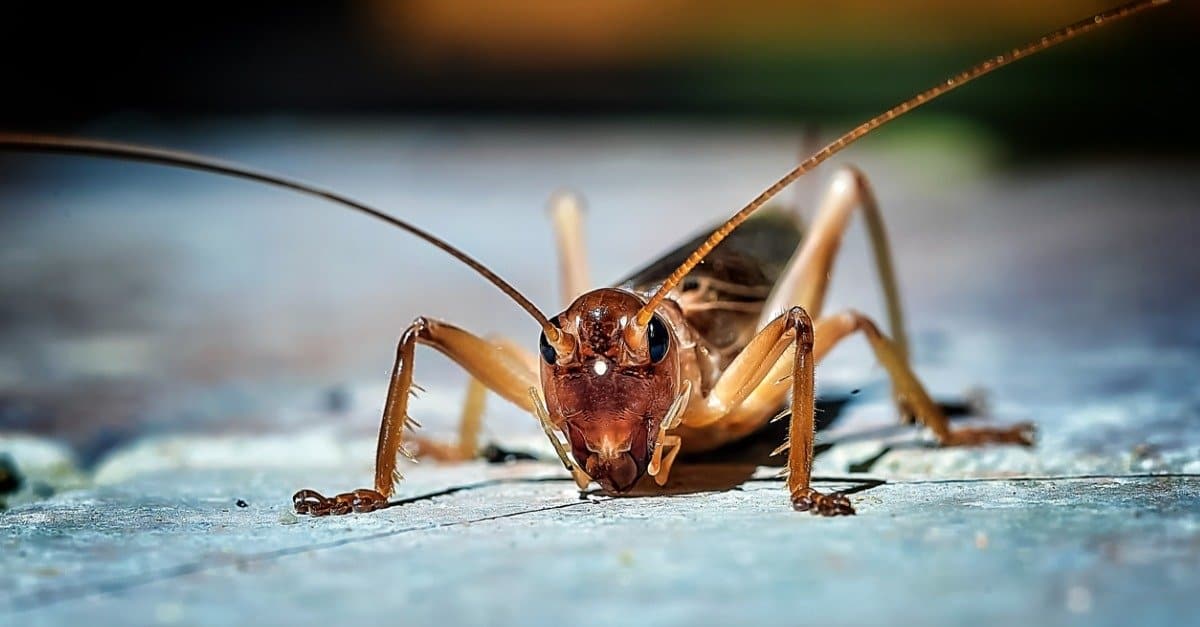
1. House Cricket (Acheta domesticus)
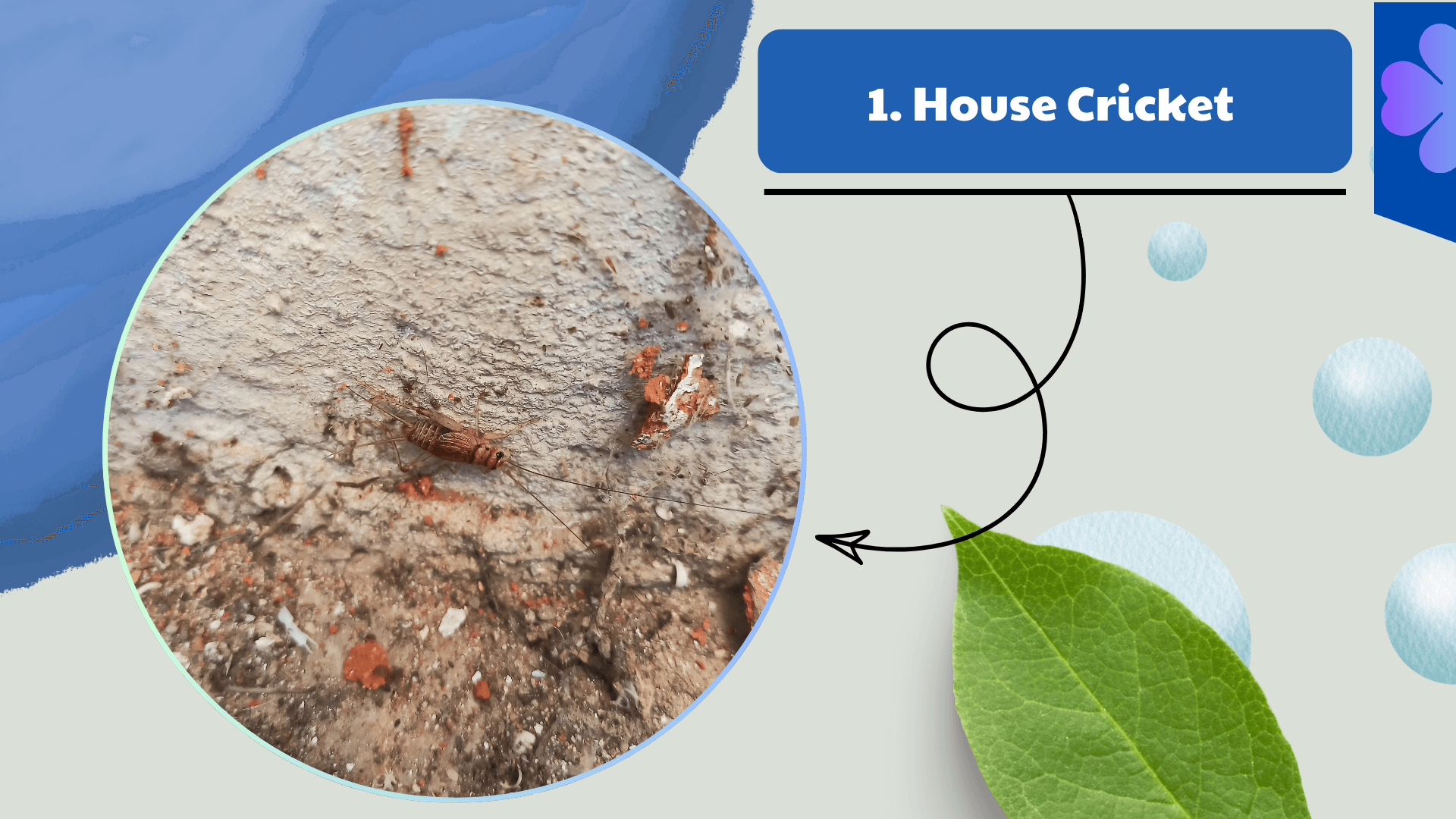
The House Cricket is one of the most well-known cricket species due to its close association with human environments. These crickets are commonly found in warm indoor spaces such as kitchens, basements, warehouses, and animal feed storage areas. They thrive in places where food scraps and warmth are available, making them highly adaptable urban survivors. House Crickets are light brown or yellowish in color, with long antennae and powerful hind legs designed for jumping.
One of the most distinctive features of House Crickets is their chirping sound, produced by rubbing their wings together. Males use this sound to attract females, and the intensity of chirping often increases with temperature. Interestingly, House Crickets are also used in scientific research and even as feeder insects for reptiles due to their high protein content.
In the wild, House Crickets play an important ecological role by breaking down organic matter and serving as food for birds, reptiles, and small mammals. Their ability to reproduce quickly allows them to maintain stable populations even in changing environments. Despite being associated with human homes, they are harmless and play a beneficial role in natural ecosystems.
2. Field Cricket (Gryllus species)
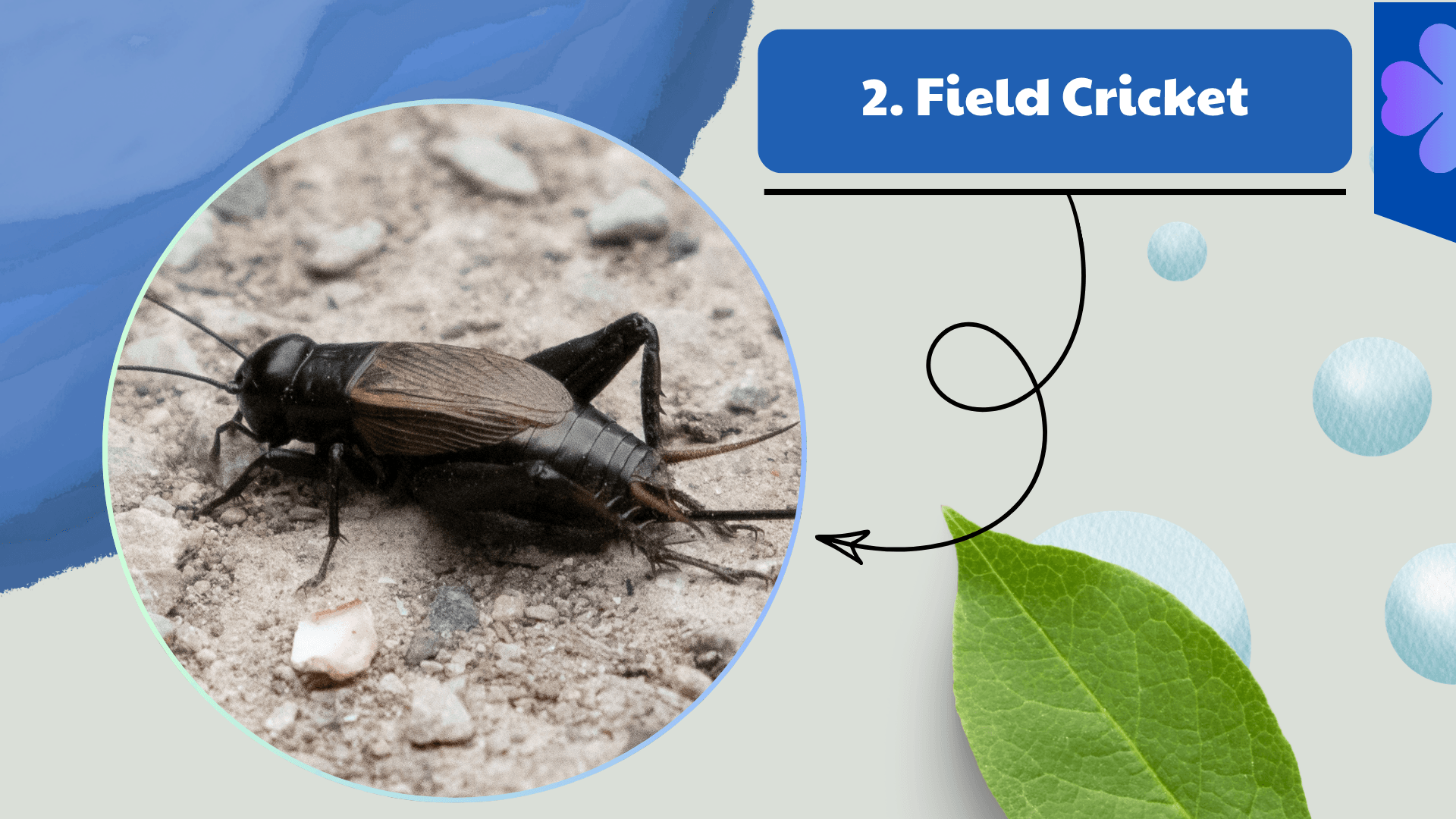
Field Crickets are larger, darker, and more robust than House Crickets, typically found in grasslands, agricultural fields, and open outdoor environments. They are usually black or very dark brown, which helps them blend into soil and vegetation. These crickets are highly active during warm months and are often heard chirping in the evenings and at night.
Unlike House Crickets, Field Crickets prefer outdoor habitats and are excellent survivors in natural ecosystems. They dig shallow burrows in soil where they hide during the day and emerge at night to feed on plant material, decaying organic matter, and sometimes small insects. Their diet makes them important decomposers in agricultural environments.
Field Crickets are also known for their loud and persistent chirping. This sound is not only used for mating but also plays a role in territorial behavior. Male crickets often compete acoustically, with louder chirps indicating stronger fitness to potential mates.
Ecologically, Field Crickets serve as a vital food source for many predators including birds, frogs, and spiders. They help recycle nutrients in soil, contributing to ecosystem health. Their presence is often considered an indicator of a balanced environment.
3. Mole Cricket (Gryllotalpidae family)
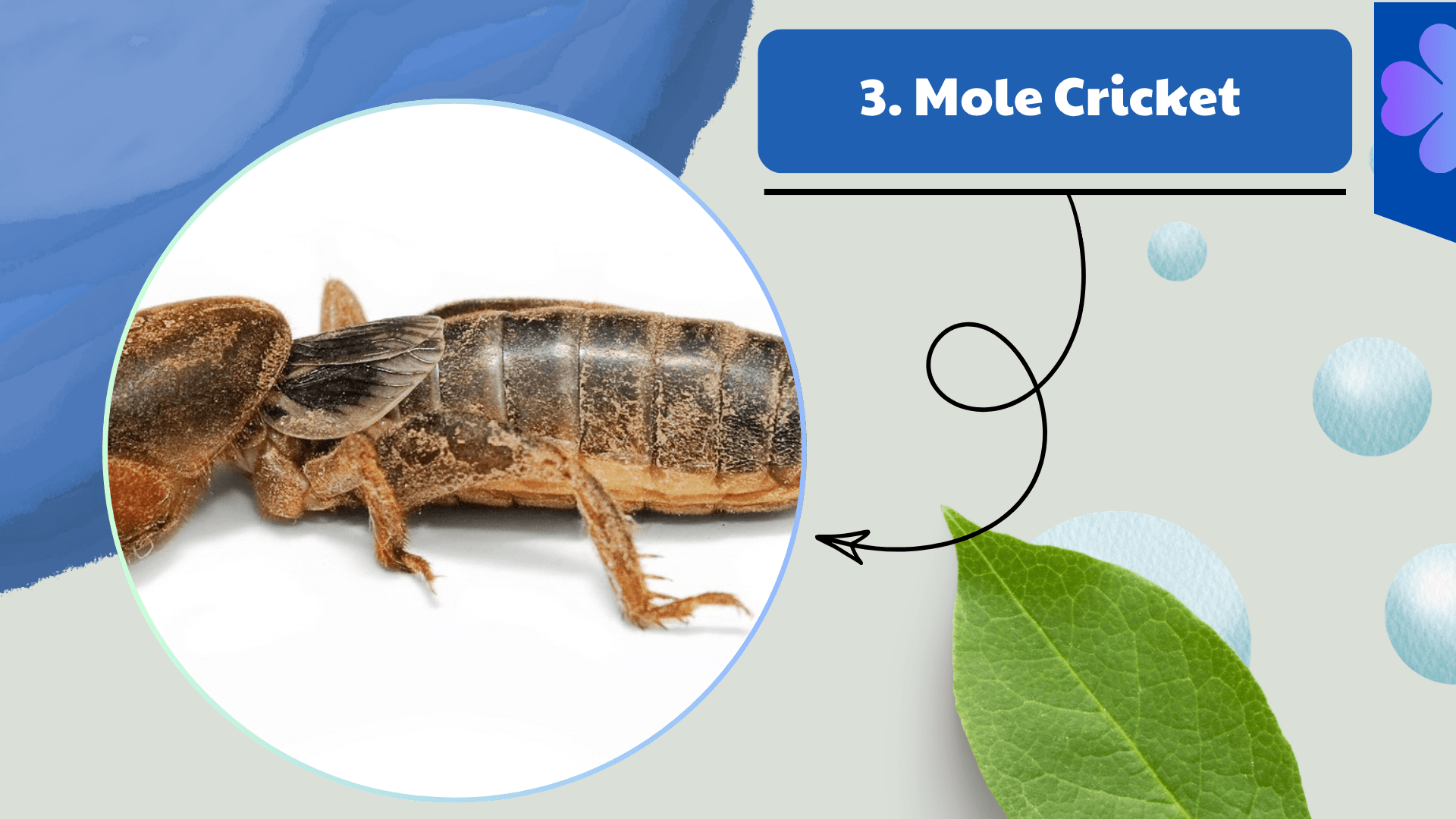
Mole Crickets are highly specialized insects adapted for underground life. Unlike most crickets, they spend nearly their entire lives in soil, where they dig extensive tunnel systems using their strong, shovel-like front legs. These adaptations make them excellent burrowers, similar in behavior to moles, which is how they got their name.
Their bodies are cylindrical and covered with fine hair, helping them move easily through soil. Mole Crickets are usually brown and have reduced vision since they rely more on touch and vibration than sight. They feed on plant roots, organic matter, and sometimes small soil organisms.
While Mole Crickets play a role in aerating soil, they can also become agricultural pests because their burrowing activity can damage plant roots and crops. In large numbers, they may affect lawns, golf courses, and farmland.
Despite their pest reputation, Mole Crickets are fascinating examples of evolutionary adaptation. Their ability to survive underground, navigate in darkness, and create complex tunnel systems makes them one of the most unique cricket types in the insect world.
4. Camel Cricket (Rhaphidophoridae family)
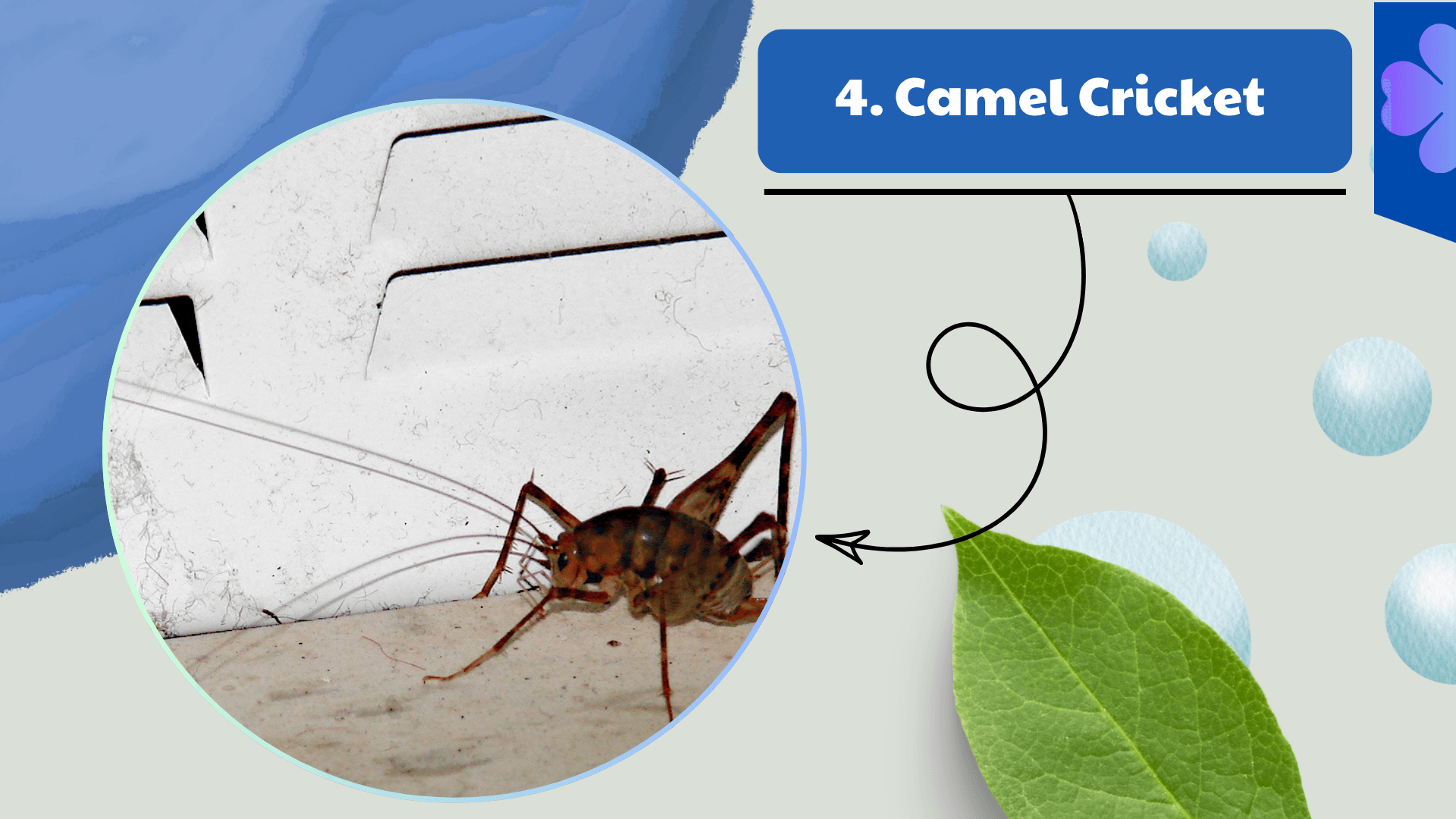
Camel Crickets are easily recognizable due to their humpbacked appearance, which gives them their unusual name. Unlike most crickets, they do not produce chirping sounds. Instead, they rely on jumping and camouflage for survival. They are typically found in dark, damp environments such as caves, basements, and under rocks or logs.
These crickets have long legs and antennae, allowing them to navigate in complete darkness. Their lack of wings makes them silent and stealthy, which helps them avoid predators. Camel Crickets are scavengers, feeding on decaying plant material, fungi, and organic debris.
Although they may appear intimidating due to their size and jumping ability, Camel Crickets are harmless to humans. They do not bite or spread disease. Instead, they play a useful ecological role in breaking down organic waste in dark environments.
Their ability to survive in low-light conditions and their unusual body structure make them a popular subject of interest in entomology and wildlife studies.
5. Tree Cricket (Oecanthinae subfamily)
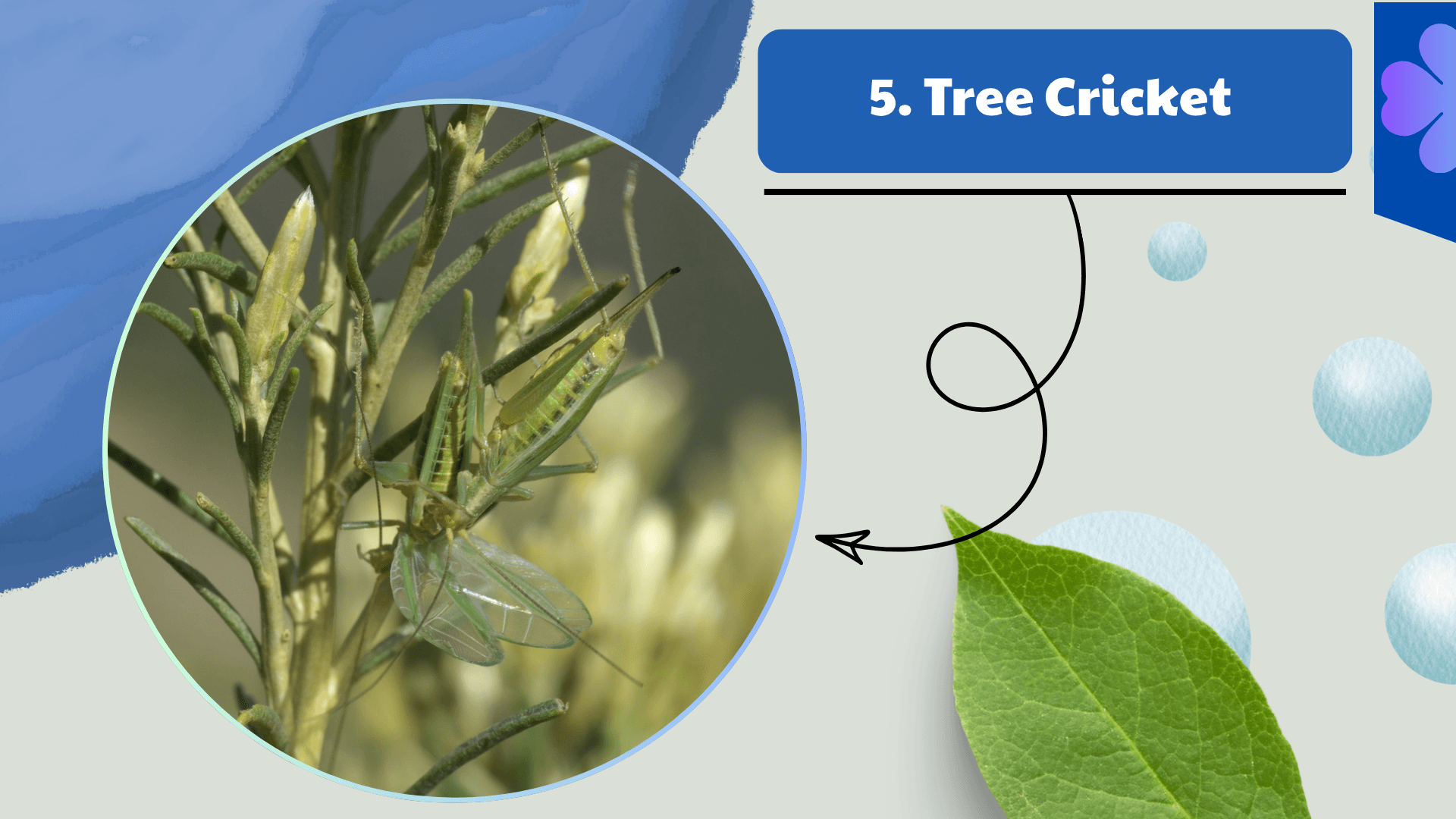
Tree Crickets are delicate, pale-colored insects commonly found in trees, shrubs, and tall vegetation. They are often light green or translucent, which helps them blend into leaves and branches. Unlike ground-dwelling crickets, Tree Crickets prefer elevated habitats where they feed on plant sap, leaves, and small insects.
One of the most interesting characteristics of Tree Crickets is their musical chirping, which is often more refined and consistent than other cricket species. Scientists have even studied Tree Cricket chirps to estimate temperature changes, as their chirping rate increases with warmth.
These crickets are important pollinators and also help control pest populations by feeding on smaller insects. Their presence in trees often indicates a healthy and balanced ecosystem.
Tree Crickets are harmless to humans and are considered beneficial insects in gardens and forests. Their quiet presence and subtle coloration make them one of the most elegant cricket species in nature.
6. Ground Cricket
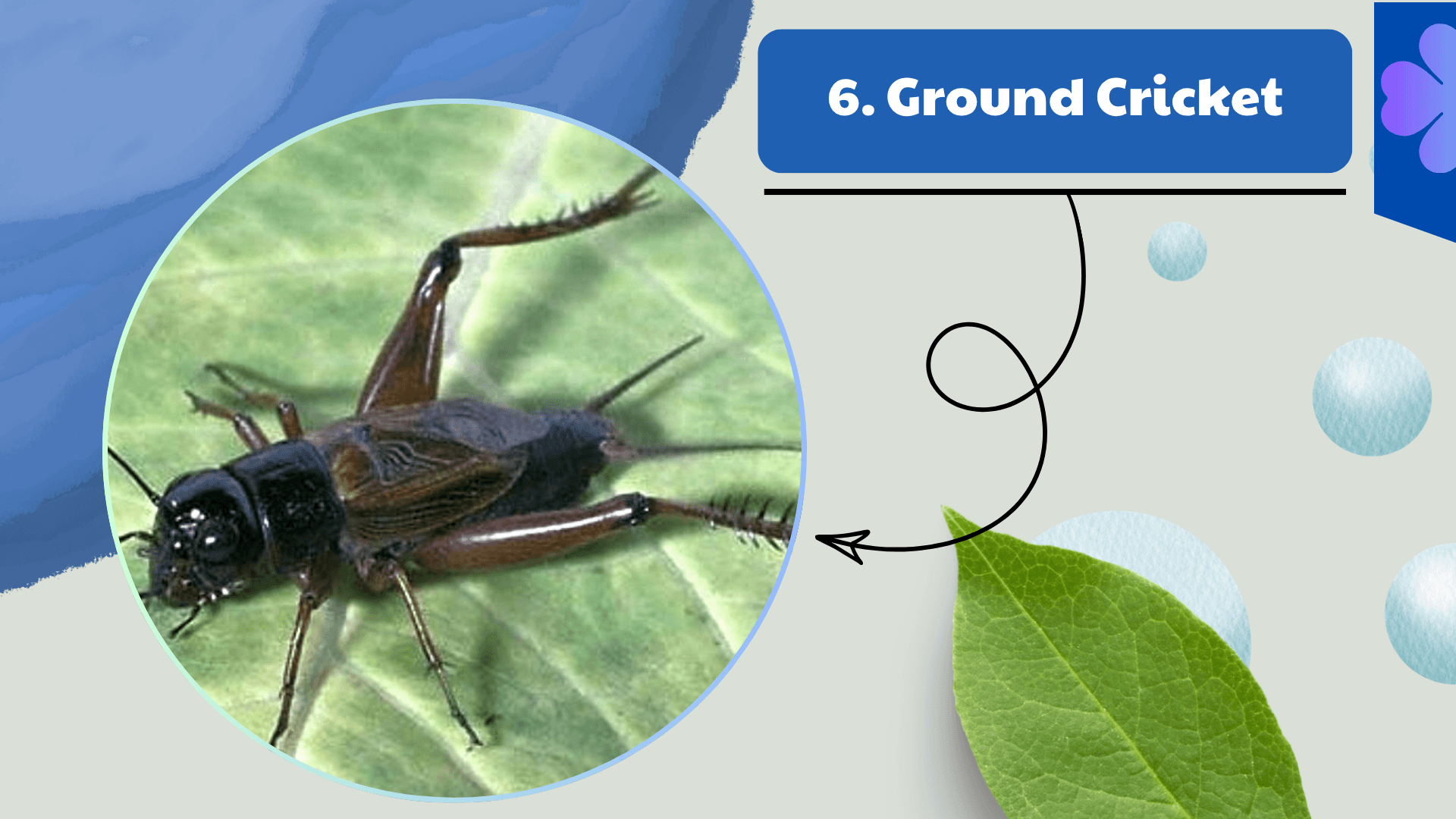
Ground Crickets are a diverse group of cricket species that primarily live close to or directly on the soil surface. They are often found in gardens, grasslands, forest edges, and agricultural fields. Unlike tree-dwelling or cave-dwelling crickets, Ground Crickets prefer environments where they can easily hide under leaves, rocks, or loose soil. This makes them highly adaptable insects that can survive in both natural and human-modified environments.
In terms of appearance, Ground Crickets are usually small to medium-sized with brown or dark gray coloring that provides excellent camouflage against soil and dead plant matter. Their bodies are streamlined for quick movement, allowing them to escape predators by rapidly jumping or hiding in small crevices. Their antennae are long and highly sensitive, helping them detect vibrations and changes in their environment.
Ground Crickets are omnivorous scavengers, feeding on decaying plant material, fungi, seeds, and sometimes small insects. This diet makes them important decomposers in ecosystems, helping recycle nutrients back into the soil. In agricultural areas, they can sometimes be seen feeding on crops, but they are generally not considered major pests compared to other insect species.
Behaviorally, Ground Crickets are mostly nocturnal. They become active at night when temperatures are cooler and predators are less active. Males produce chirping sounds by rubbing their wings together, primarily for mating purposes. These sounds are usually softer and less continuous compared to Field Crickets, making them less noticeable to humans.
Ecologically, Ground Crickets play an important role in food chains. They serve as prey for birds, reptiles, amphibians, and small mammals. Their presence in an ecosystem often indicates healthy soil and balanced biodiversity. Because of their adaptability and widespread distribution, Ground Crickets are one of the most commonly encountered cricket groups worldwide.
7. Jerusalem Cricket
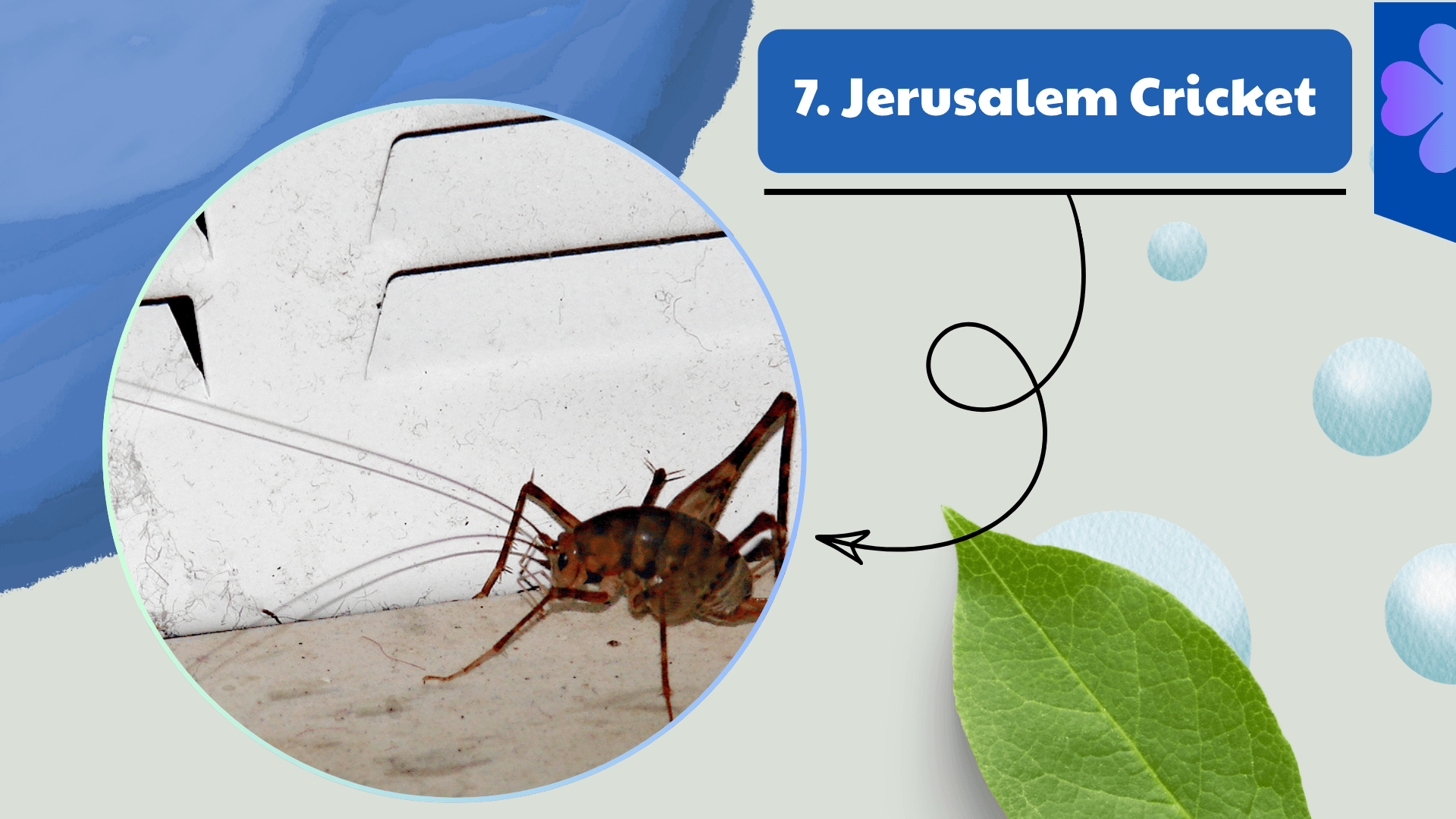
The Jerusalem Cricket is one of the most unusual and visually striking cricket species, often mistaken for a dangerous insect due to its large size and human-like patterned head. Despite its intimidating appearance, it is harmless to humans and plays an important ecological role in soil ecosystems. This species is native to parts of North America, particularly the western United States and Mexico.
Jerusalem Crickets are large, heavy-bodied insects with a rounded, striped abdomen and a large head that resembles a combination of an ant and a beetle. Their coloration ranges from yellowish-brown to orange, with dark bands that give them a distinctive look. They have strong legs adapted for digging rather than jumping, and they spend most of their lives underground.
Unlike many other crickets, Jerusalem Crickets do not produce typical chirping sounds. Instead, they communicate through vibrations and by striking their abdomen against the ground. They are primarily nocturnal and emerge at night to feed.
Their diet consists mainly of decaying organic matter, plant roots, and tubers. While they can occasionally damage root crops in agricultural areas, they also contribute to soil aeration and nutrient recycling. This makes them both beneficial and sometimes problematic depending on their population density.
Jerusalem Crickets are solitary creatures and do not form groups. They are slow-moving compared to other crickets but are strong burrowers. Their unique appearance has led to many myths and local names, including “potato bug” and “child of the earth.” Despite these names, they are harmless and non-venomous.
In ecological terms, Jerusalem Crickets are important decomposers that help break down organic material underground. Their role in soil health makes them a valuable, though often misunderstood, part of natural ecosystems.
8. Mormon Cricket
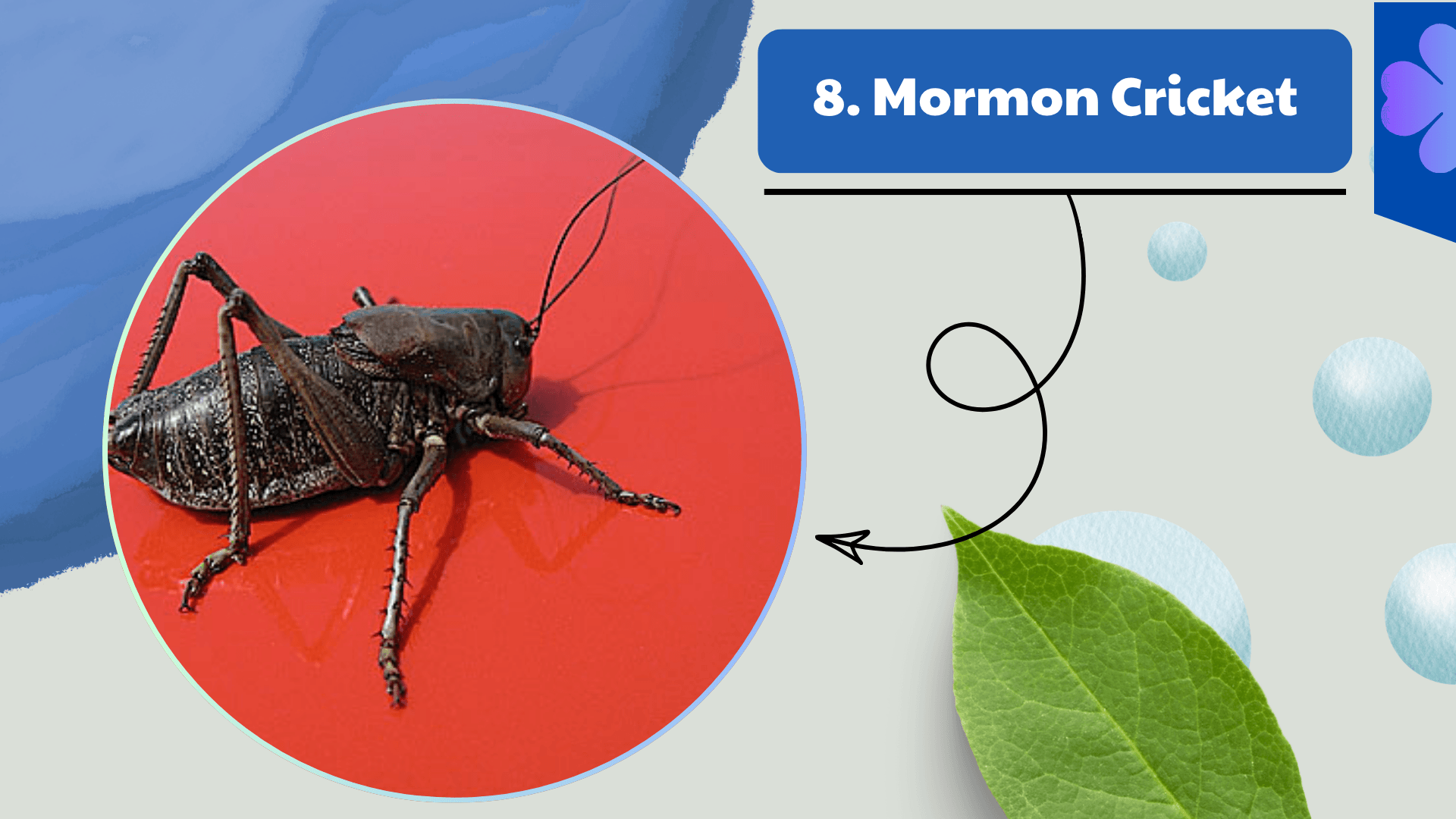
The Mormon Cricket is a large, flightless insect found primarily in the western United States. Despite its name, it is not a true cricket but belongs to the katydid family. However, it shares many cricket-like behaviors, which is why it is commonly included in discussions of cricket species.
Mormon Crickets are known for their large size, robust bodies, and dark coloration that can range from brown to black with occasional red or green markings. They are highly mobile and capable of traveling long distances in massive swarms, especially during population outbreaks. These migrations can have significant impacts on agriculture and ecosystems.
Their diet is highly varied and includes grasses, crops, and other vegetation. During swarm events, they can consume large amounts of plant material, making them occasional agricultural pests. However, in balanced ecosystems, their populations remain stable and contribute to nutrient cycling.
Unlike many cricket species, Mormon Crickets do not fly due to their reduced wings. Instead, they rely on walking and hopping. Their movement patterns can be highly coordinated when in groups, creating impressive migratory waves across landscapes.
Mormon Crickets also produce sounds by rubbing their legs against their wings, although their communication is less musical than true crickets. These sounds are often used for mating or signaling within groups.
Ecologically, Mormon Crickets serve as a major food source for birds, reptiles, and mammals. Their population cycles play an important role in shaping predator-prey dynamics in their native regions.
9. Australian Field Cricket
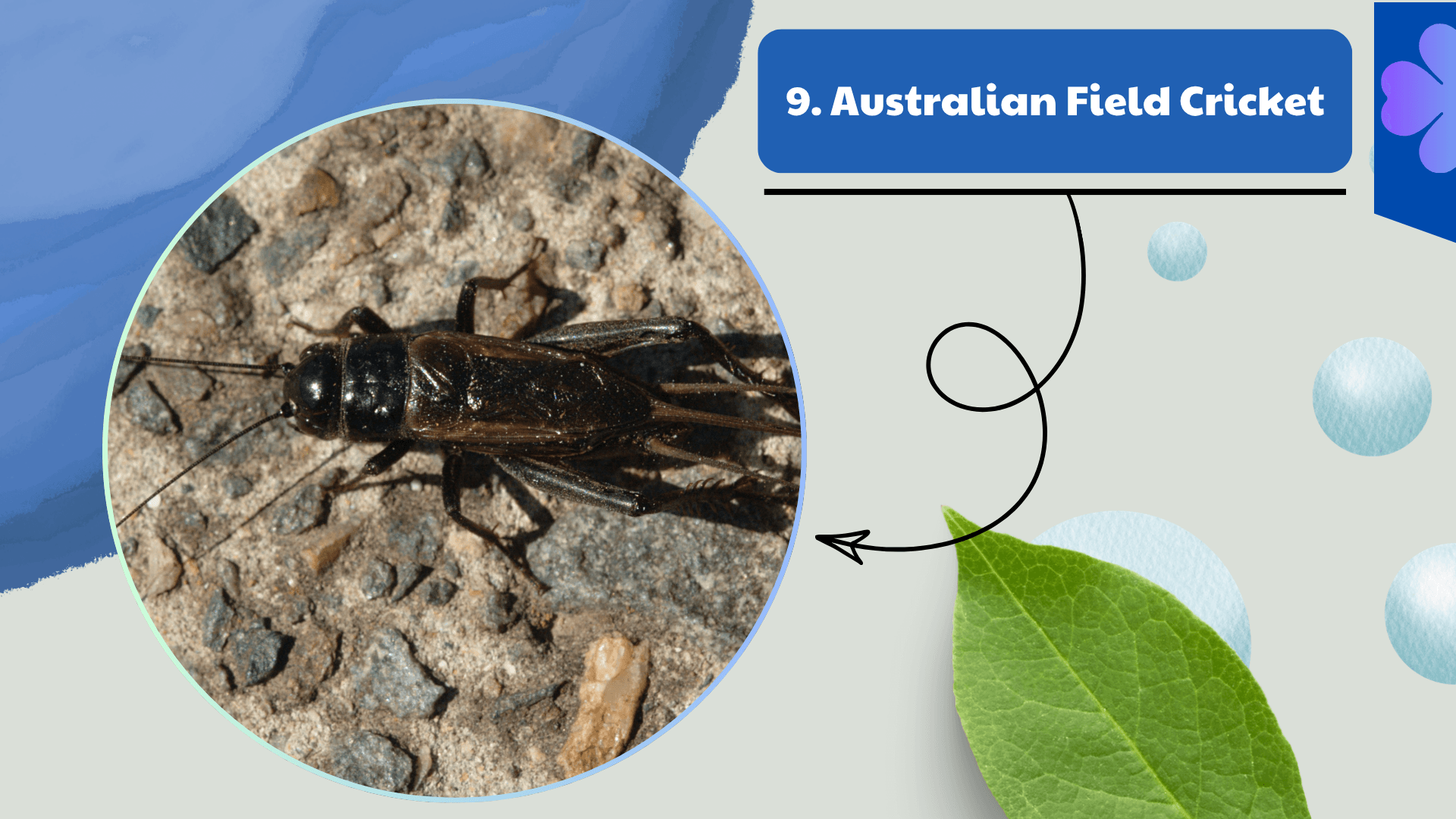
The Australian Field Cricket is a widespread insect found throughout Australia and parts of surrounding regions. It is closely related to other Field Cricket species but has adapted specifically to Australian climates and ecosystems. These crickets are commonly found in grasslands, gardens, and agricultural fields.
They are medium-sized crickets with dark brown or black bodies, strong hind legs, and long antennae. Their coloration helps them blend into soil and vegetation, making them difficult for predators to detect. Australian Field Crickets are highly active during warm months and are most often heard at night.
Their diet includes plant material, decaying organic matter, and occasionally small insects. This makes them important contributors to nutrient recycling in soil ecosystems. In agricultural settings, they can sometimes feed on crops, but they are generally not considered major pests.
Male Australian Field Crickets are well known for their loud and repetitive chirping, which is used to attract females. Their chirping intensity often increases with temperature, making them useful indicators of environmental conditions.
These crickets are highly adaptable and can survive in both natural and human-influenced environments. Their resilience has allowed them to maintain stable populations across large geographic areas.
Ecologically, they serve as an important food source for birds, reptiles, and small mammals, contributing to balanced food chains in Australian ecosystems.
10. Black Field Cricket
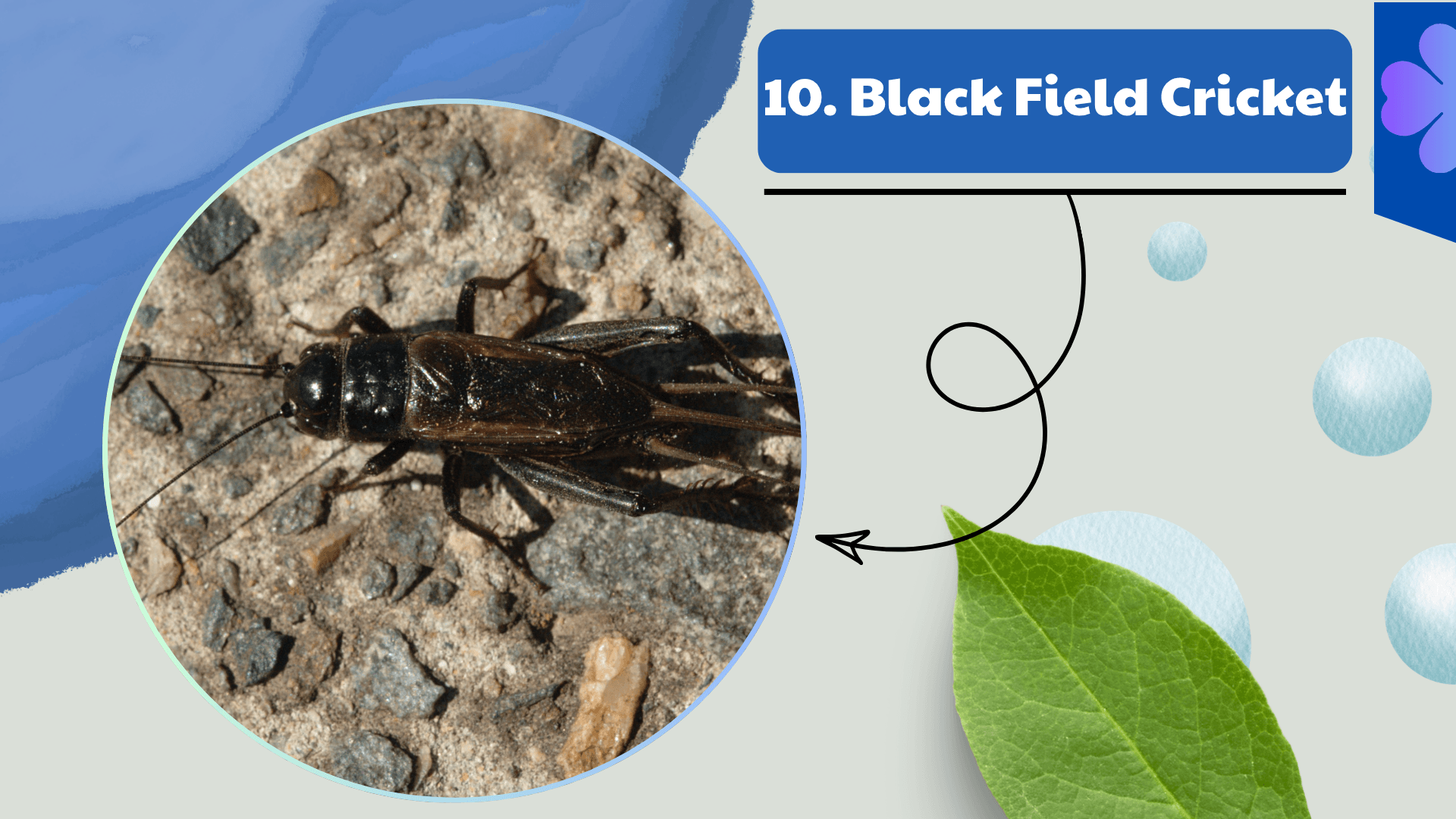
The Black Field Cricket is one of the most recognizable cricket species due to its dark, glossy appearance. It is commonly found in grasslands, fields, and rural environments where it hides under debris or in shallow burrows during the day. At night, it becomes active and begins foraging for food.
This species has a robust body structure, strong hind legs for jumping, and long antennae used for navigation and sensory perception. Its black coloration provides excellent camouflage in soil-rich environments, helping it avoid predators.
Black Field Crickets are omnivorous, feeding on plant material, seeds, and decomposing organic matter. This makes them important decomposers in ecosystems, especially in agricultural and grassland regions.
Male crickets produce loud chirping sounds that serve as mating calls. These calls are often heard during warm summer nights and are a familiar part of rural soundscapes in many regions.
Although they can occasionally be considered agricultural pests, their ecological benefits generally outweigh their negative impact. They contribute to soil health and serve as a key food source for many animals.
Black Field Crickets are hardy insects capable of surviving in a wide range of environmental conditions, making them one of the most successful cricket species in the wild.
11. European Field Cricket (Gryllus campestris)
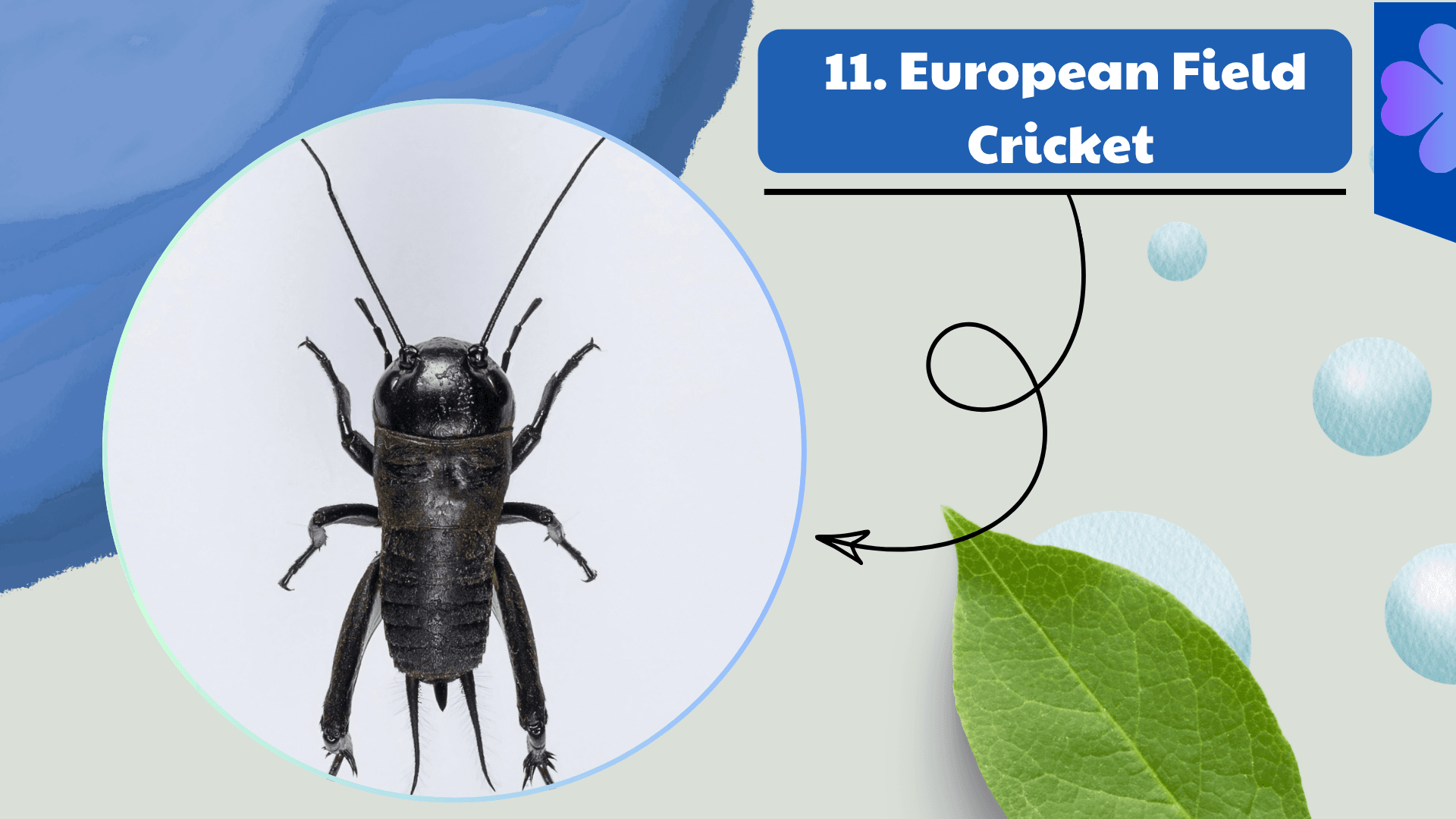
The European Field Cricket is one of the most iconic cricket species found across Europe, especially in grasslands, meadows, and dry open habitats. This species has experienced population declines in some regions due to habitat loss, making it an important focus for conservation efforts. Unlike urban-adapted crickets, the European Field Cricket prefers natural, undisturbed environments where it can dig burrows and thrive in stable ecosystems.
Physically, this cricket is dark brown to black in color with a robust body and strong hind legs built for jumping. Males are especially known for their loud and continuous chirping, which can often be heard during warm summer days. These calls are used primarily for mating and territorial defense, with each male establishing its own burrow from which it sings.
The European Field Cricket spends most of its life underground. It constructs a vertical burrow in sandy or loose soil, which provides protection from predators and extreme weather conditions. From this burrow, the male emerges to sing while remaining close to safety. Females visit these burrows for mating purposes.
Their diet consists mainly of plant material, including leaves, grasses, and occasionally decaying organic matter. This feeding behavior helps contribute to nutrient cycling within grassland ecosystems. They are also prey for birds, reptiles, and small mammals, making them an important part of the food chain.
Ecologically, the European Field Cricket is considered an indicator species, meaning its presence reflects the health of grassland habitats. Conservation programs in several European countries have been established to protect and restore its populations, highlighting its ecological importance.
12. Tropical House Cricket (Gryllodes sigillatus)
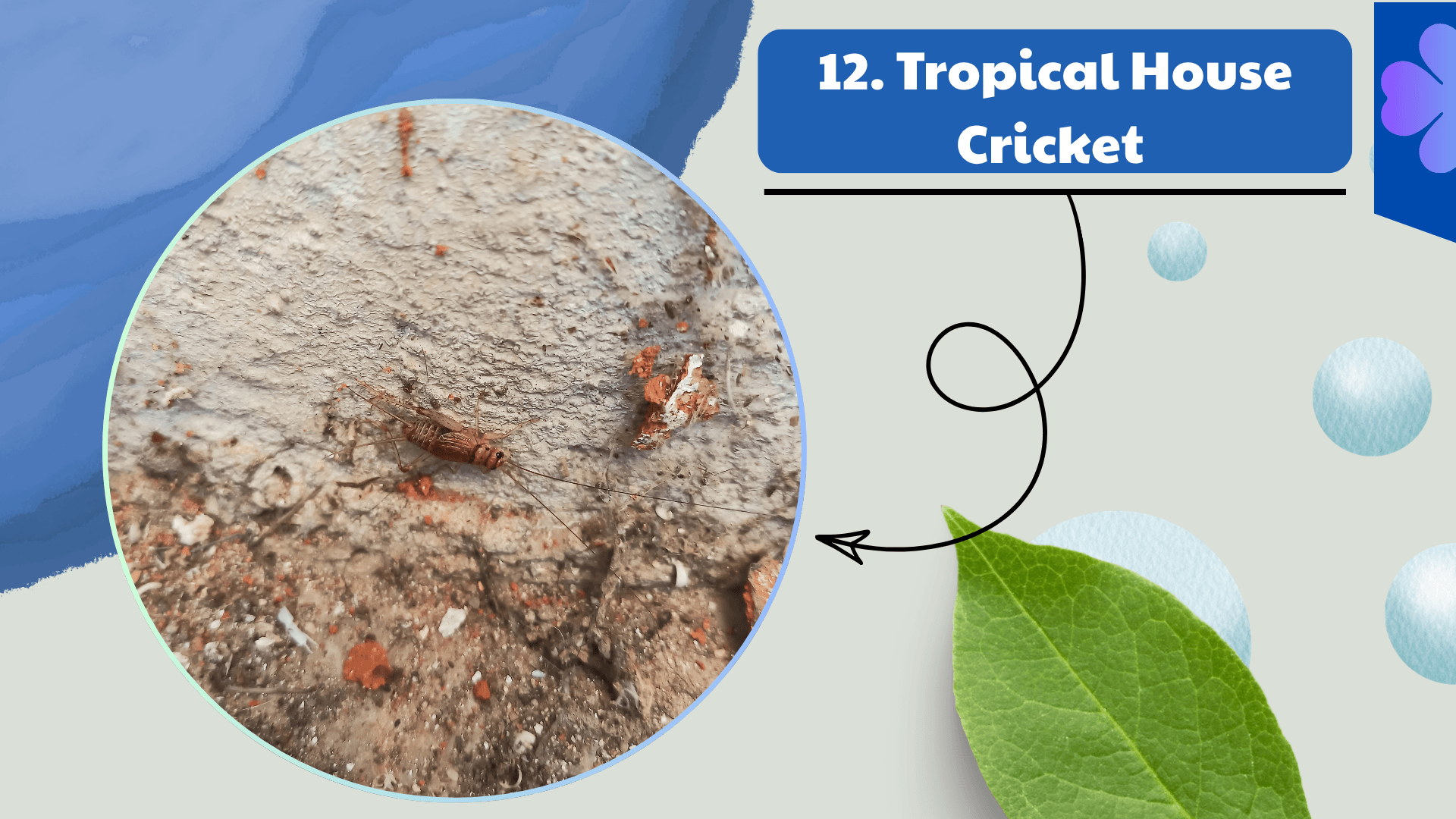
The Tropical House Cricket is a warm-climate species commonly found in tropical and subtropical regions around the world. Unlike the common House Cricket, this species is more tolerant of dry environments and is often found both indoors and outdoors in human-influenced areas.
It is a light yellowish-brown cricket with a slender body and long antennae. One of its key adaptations is its ability to thrive in high-temperature environments, which allows it to survive in regions where other cricket species may struggle. This makes it a widespread insect in tropical ecosystems.
Tropical House Crickets are omnivorous scavengers, feeding on plant matter, food scraps, and organic waste. In natural ecosystems, they contribute to decomposition and nutrient recycling. In urban environments, they may occasionally become household visitors, especially in warm and humid climates.
Males produce chirping sounds similar to other cricket species, although their calls are often softer and less rhythmic than Field Crickets. These sounds are still essential for mating communication and territorial signaling.
Because of their high reproductive rate and adaptability, Tropical House Crickets are also commonly used in the pet trade as feeder insects for reptiles and amphibians. Their nutritional value makes them an important part of captive animal diets.
Ecologically, they serve as both decomposers and prey species, contributing to balanced food webs in tropical environments.
13. Sand Field Cricket (Gryllus firmus and related species)
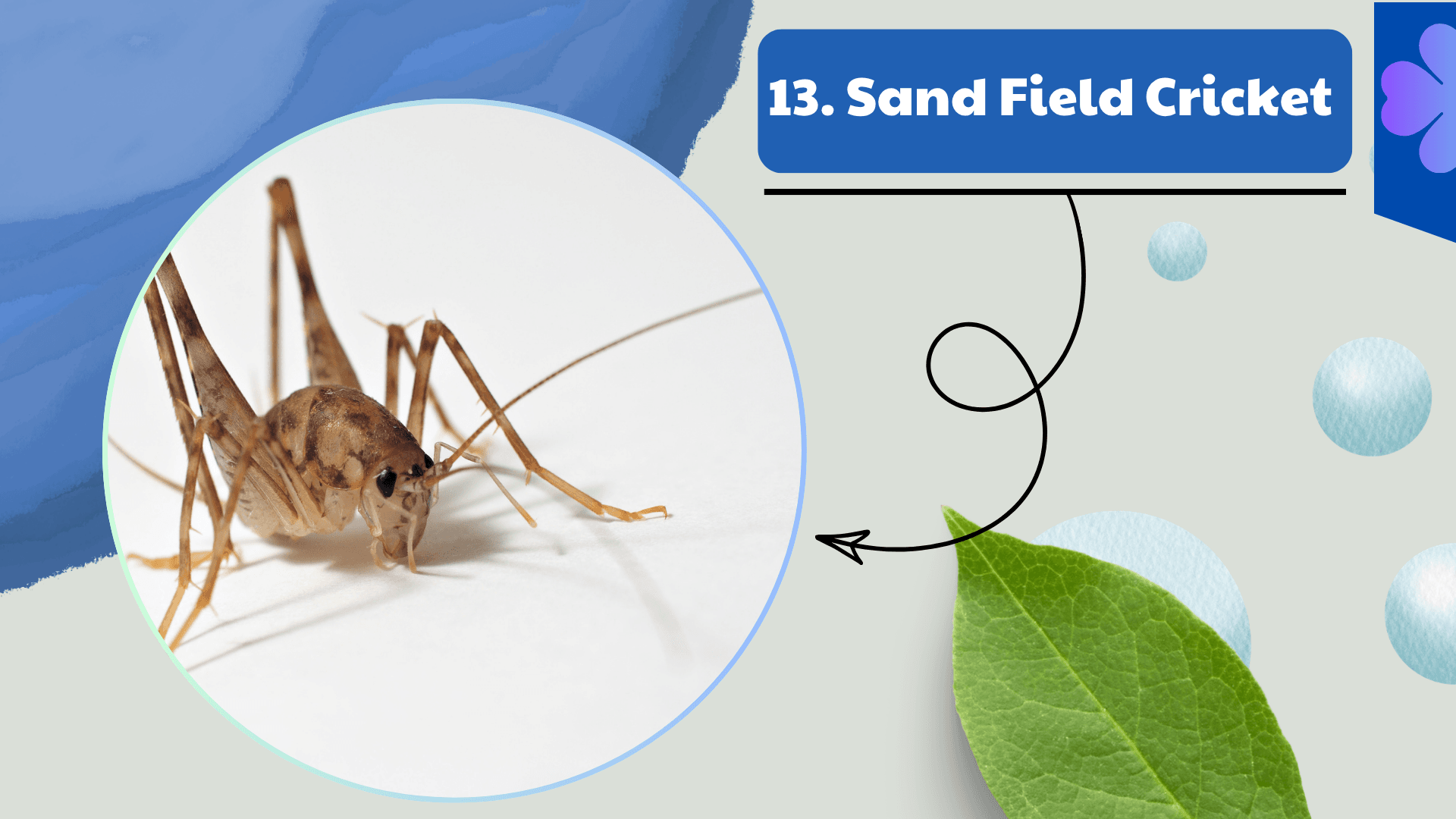
Sand Field Crickets are specialized insects adapted to sandy environments such as dunes, coastal areas, and dry inland soils. Their ability to survive in loose, shifting substrates makes them unique among cricket species. These crickets are typically found in regions with minimal vegetation where other insects may struggle to survive.
Their coloration is usually pale brown or sandy, providing excellent camouflage in their environment. This adaptation helps them avoid predators such as birds and lizards. Sand Field Crickets are agile and capable of quick bursts of movement to escape threats.
These crickets feed on a variety of organic materials, including plant debris, seeds, and decaying vegetation. In nutrient-poor sandy environments, they play a crucial role in breaking down organic matter and maintaining soil health.
Males produce chirping sounds that are used to attract females, especially during warm nights. Their calls are often softer compared to other field crickets due to wind and open habitat conditions affecting sound transmission.
Sand Field Crickets are important ecological contributors in dune ecosystems, where they serve as both decomposers and prey for specialized desert-adapted predators.
14. Spring Field Cricket (Gryllus veletis)
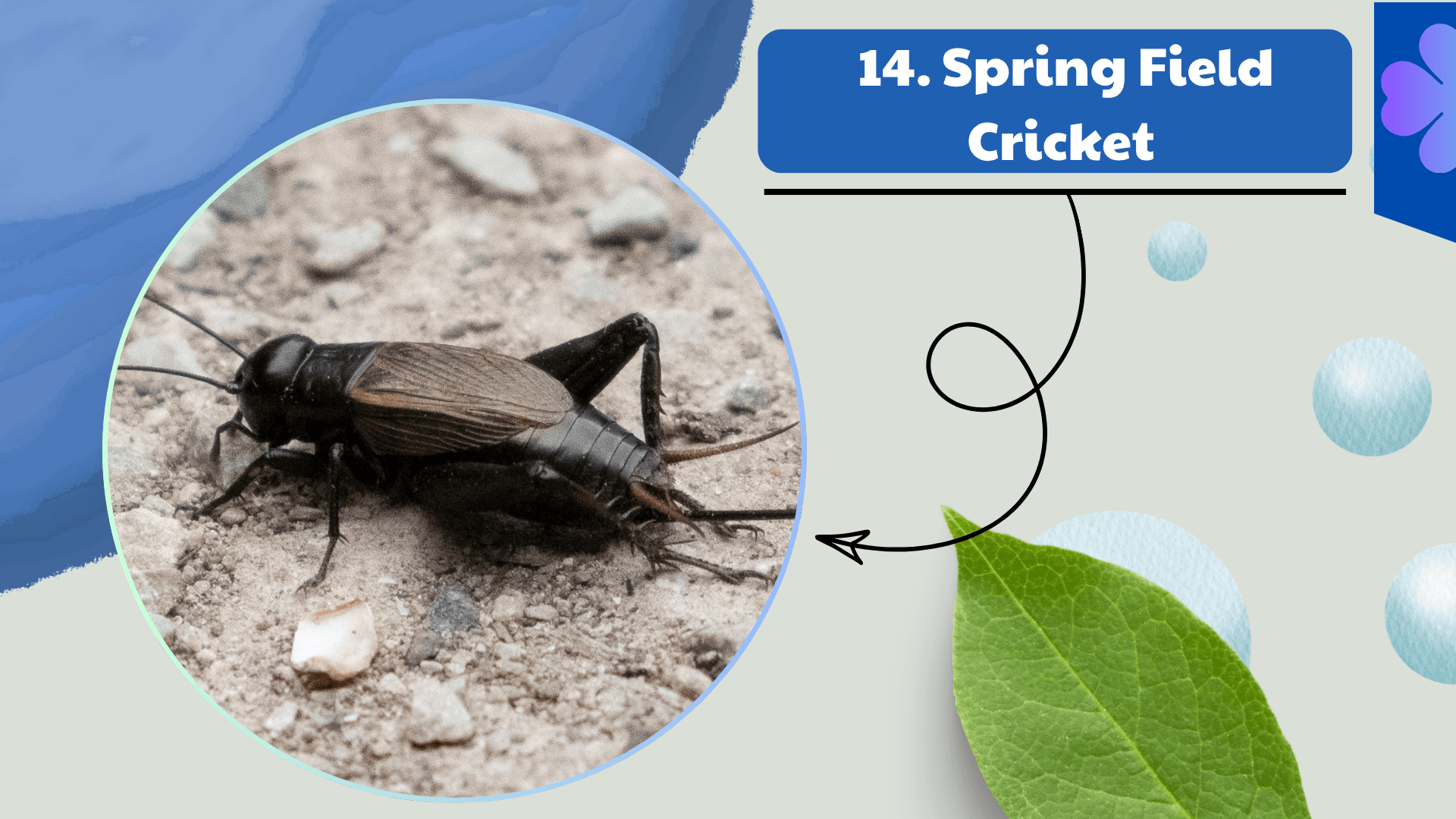
The Spring Field Cricket is a seasonal species commonly found in North America. As its name suggests, it is most active during spring and early summer, when temperatures begin to rise and vegetation becomes abundant. This species is often mistaken for other field crickets due to its similar appearance.
Spring Field Crickets are typically dark brown or black with strong hind legs and long antennae. They inhabit grasslands, gardens, and forest edges where they can easily find food and shelter. During colder months, they remain inactive in soil or sheltered areas.
Their diet includes plant material, seeds, and decaying organic matter. This makes them important contributors to decomposition and soil nutrient cycling during their active months.
Males produce distinctive chirping sounds during mating season, which are often heard in the early evenings. These calls help establish territory and attract females, playing a key role in reproduction.
Spring Field Crickets are an important food source for birds and other insectivores during spring, making them a vital part of seasonal food webs.
15. Variable Field Cricket (Gryllus assimilis complex)
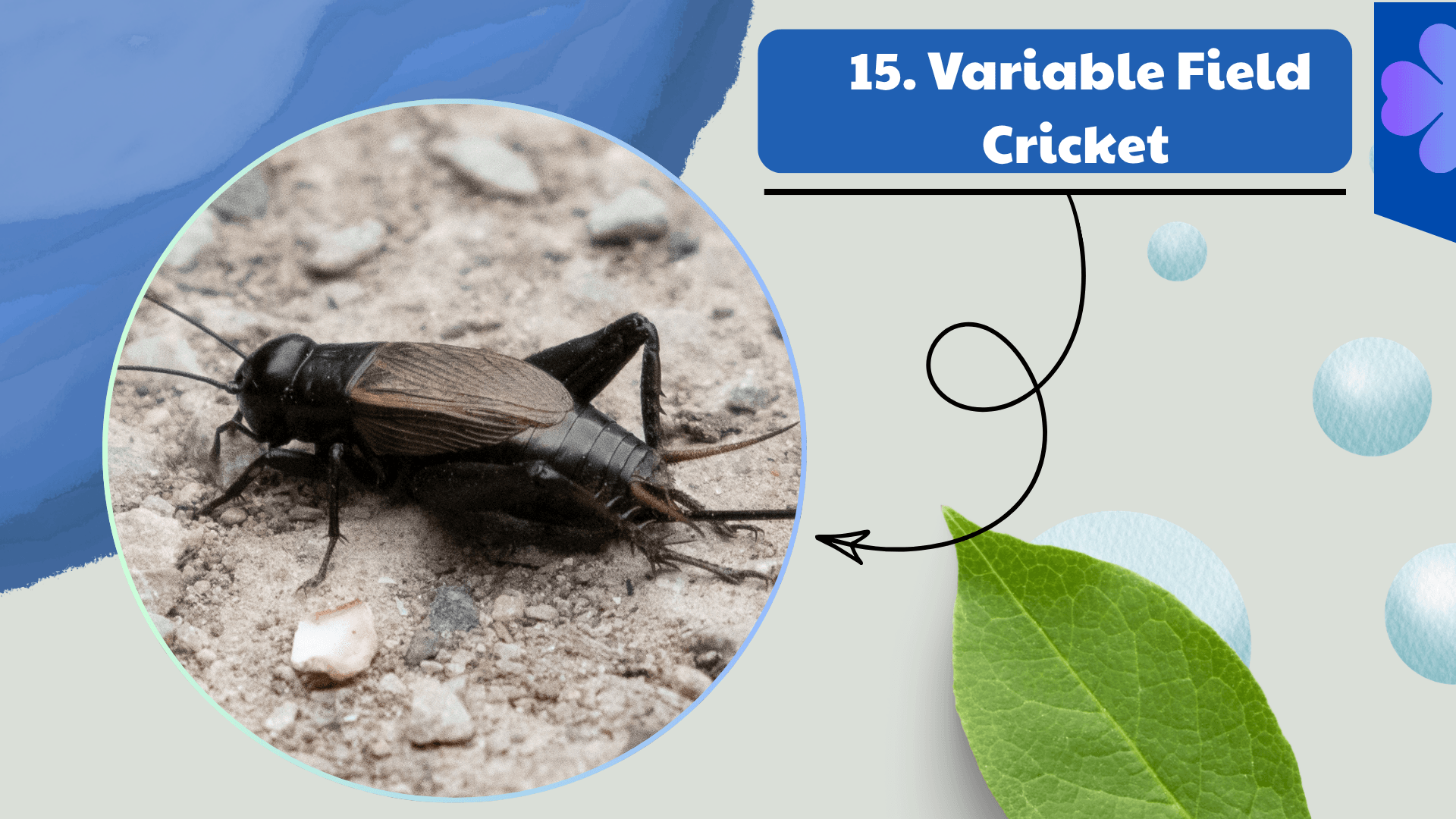
The Variable Field Cricket refers to a group of closely related species that show significant variation in size, color, and habitat preference. These crickets are widely distributed across the Americas and are known for their adaptability to different environmental conditions.
Their coloration can range from light brown to almost black, depending on habitat and environmental factors. This variability helps them survive in diverse ecosystems such as grasslands, forests, and agricultural fields.
Variable Field Crickets are omnivorous and feed on plant material, seeds, and organic debris. Their flexible diet allows them to thrive in both natural and human-altered environments.
Males produce chirping sounds used for mating communication. The pitch and rhythm of these calls can vary significantly between populations, contributing to the “variable” nature of the species group.
Ecologically, these crickets are important decomposers and serve as prey for many predators. Their adaptability makes them one of the most successful cricket groups in the Western Hemisphere.
16. Jamaican Field Cricket (Gryllus assimilis – Caribbean population)
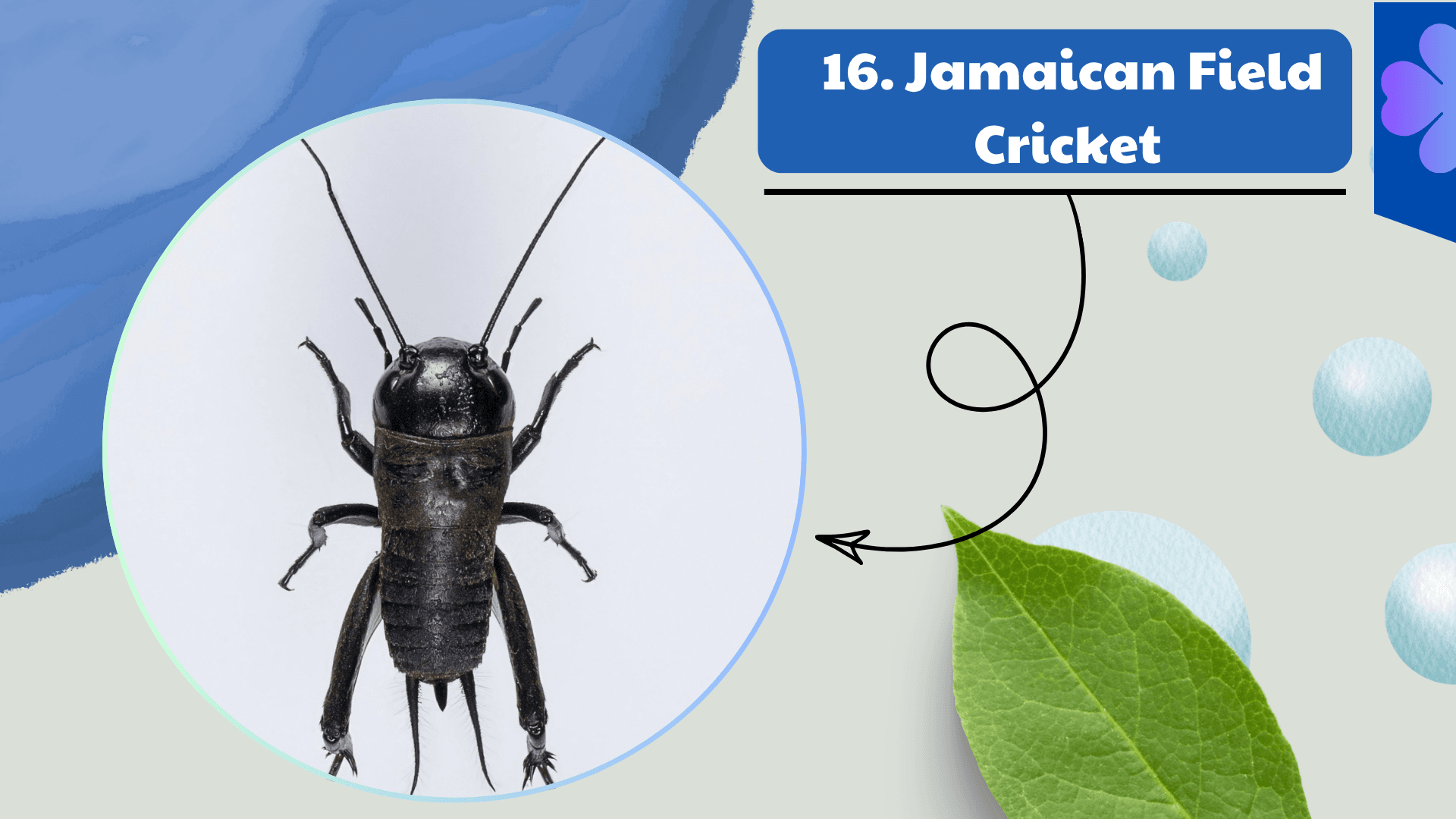
The Jamaican Field Cricket is a tropical variant of the broader Field Cricket group, commonly found throughout Jamaica and other Caribbean islands. This species thrives in warm, humid environments where vegetation is abundant and temperatures remain stable year-round. Because of these conditions, Jamaican Field Crickets are active for most of the year, unlike temperate species that have seasonal dormancy.
These crickets are typically dark brown or black, with strong hind legs adapted for jumping and escaping predators. Their bodies are built for survival in dense vegetation, where they hide under leaves, soil, or debris during the day. At night, they become highly active and begin foraging.
Their diet is omnivorous, consisting of plant material, fruits, decaying organic matter, and occasionally small insects. This makes them important contributors to nutrient recycling in tropical ecosystems. They also help break down organic waste in forest floors, improving soil quality over time.
Male Jamaican Field Crickets produce loud chirping sounds that serve both mating and territorial functions. In warm climates, their chirping is often continuous throughout the night, creating a recognizable soundscape in rural areas.
Ecologically, they serve as a key food source for birds, reptiles, and amphibians. Their stable population in tropical environments makes them an essential part of Caribbean biodiversity and ecosystem balance.
17. Two-Spotted Cricket (Gryllus bimaculatus or related species)
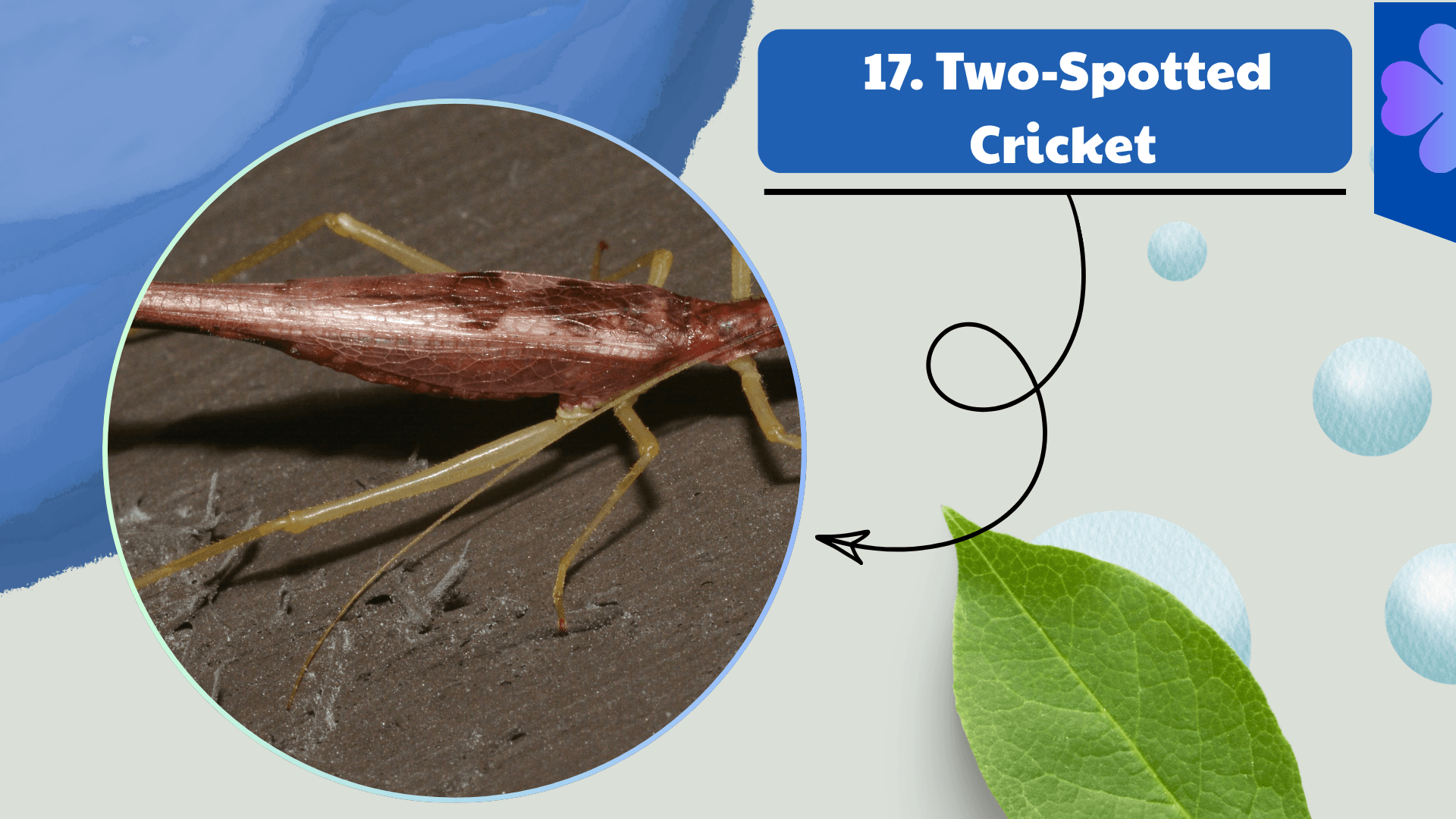
The Two-Spotted Cricket is named for the distinctive pair of markings often found on its wings or body segments. This species is widely distributed across warm regions, including parts of Africa, Asia, and the Mediterranean. It is one of the more visually identifiable cricket species due to its characteristic spot pattern.
They are medium to large crickets with robust bodies, typically dark brown or black in color. The two spots may appear lighter or yellowish depending on the individual and environment. These markings help researchers and enthusiasts distinguish them from other field cricket species.
Two-Spotted Crickets prefer grasslands, gardens, and agricultural edges where they can find both food and shelter. They are highly adaptable and can survive in both natural and semi-urban environments.
Their diet includes plant material, decaying matter, and occasionally smaller insects. This makes them important decomposers and secondary consumers in ecological food chains.
Males produce rhythmic chirping sounds used for mating communication. Their calls are often more structured compared to other field crickets, making them easier to identify in the wild.
They play an important ecological role as both prey and decomposers, supporting biodiversity in warm climate ecosystems.
18. Fall Field Cricket (Gryllus pennsylvanicus – seasonal form)
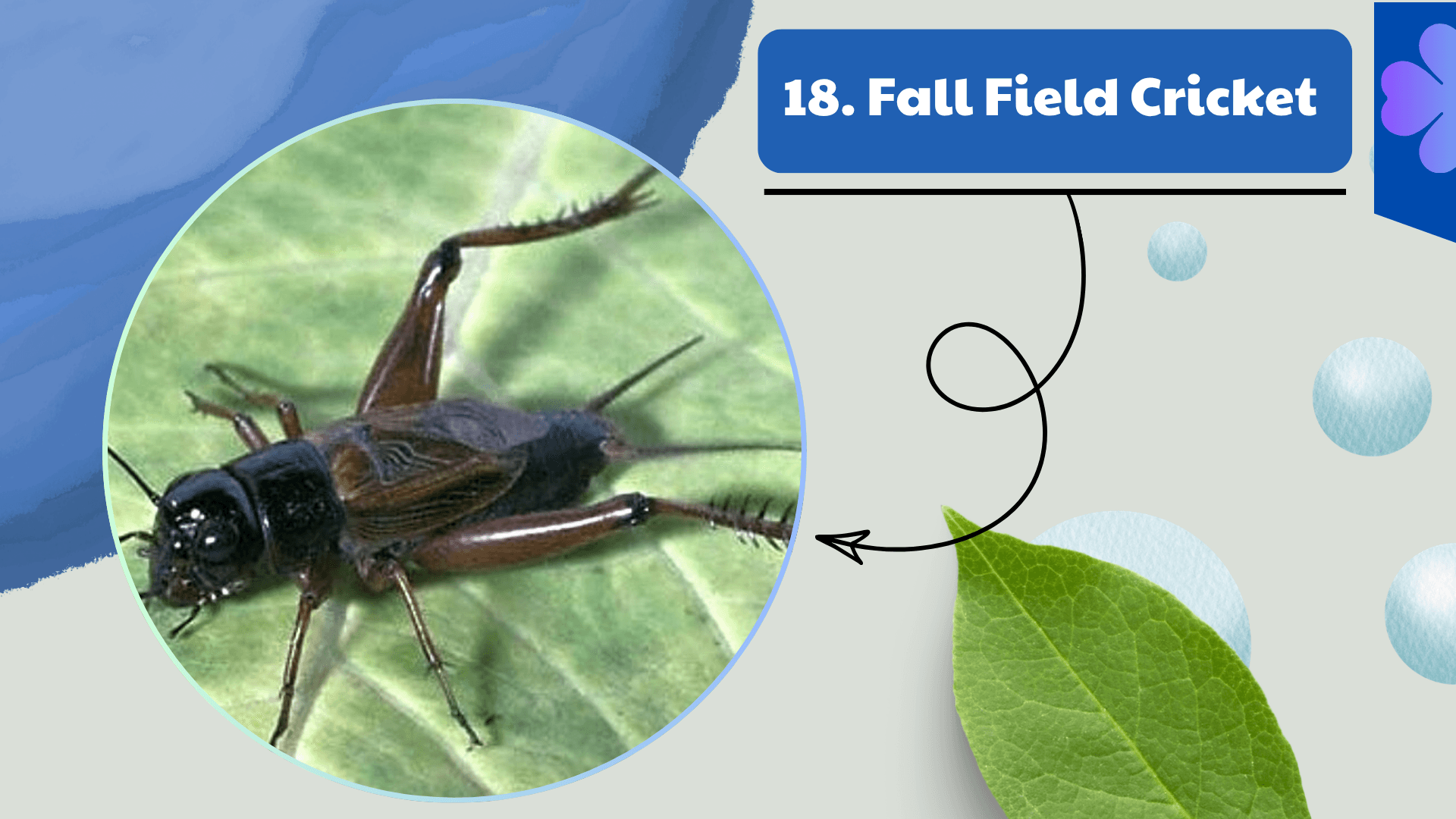
The Fall Field Cricket is a temperate species commonly found in North America, especially during late summer and autumn months. As its name suggests, it becomes most active in the fall season when temperatures begin to cool and humidity increases.
These crickets are dark brown or black and are commonly found in soil-rich environments such as gardens, fields, and forest edges. They prefer areas with loose soil where they can hide during the day and emerge at night to feed.
Their diet consists of decaying plant matter, seeds, and organic debris. This makes them particularly important for nutrient cycling during the autumn season when plant material is abundant.
Male Fall Field Crickets produce loud, repetitive chirping sounds during mating season. These calls are often one of the defining natural sounds of autumn nights in rural areas.
They serve as a crucial seasonal food source for birds preparing for migration or winter survival. Their population dynamics are closely tied to environmental conditions such as temperature and rainfall.
Fall Field Crickets are an excellent example of seasonal adaptation in insects and play a vital role in temperate ecosystem cycles.
19. Greenhouse Camel Cricket (Ceuthophilus spp.)
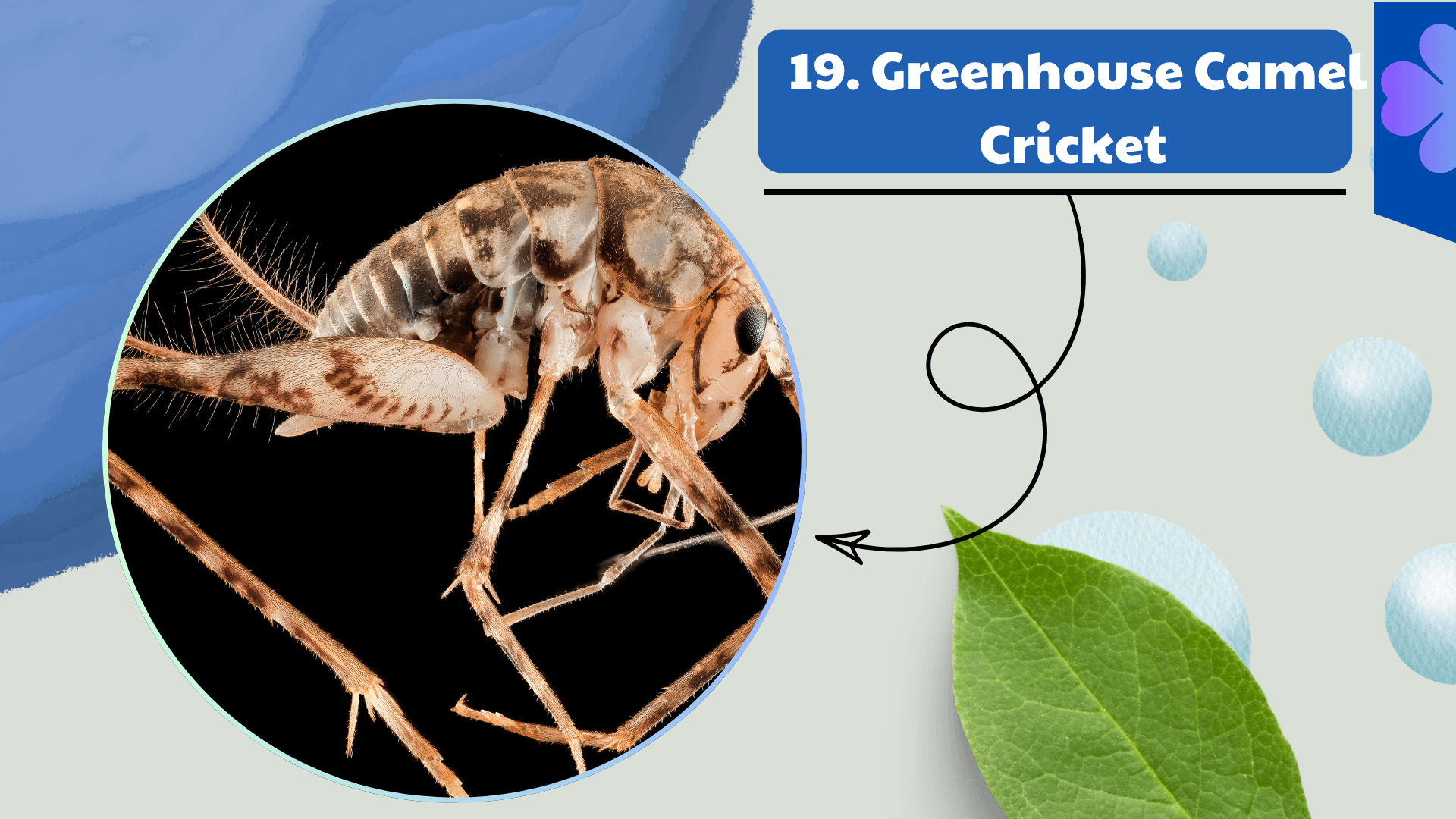
The Greenhouse Camel Cricket is a specialized form of Camel Cricket commonly found in human-made environments such as greenhouses, basements, and storage areas. These crickets thrive in warm, humid, and sheltered spaces where organic material is present.
They have the classic camel cricket appearance: humpbacked bodies, long legs, and extremely long antennae. Unlike true crickets, they do not produce chirping sounds and rely on movement and vibration detection for communication and survival.
Their pale brown coloration helps them blend into dark environments. They are highly agile jumpers, capable of making strong leaps despite their awkward appearance.
Greenhouse Camel Crickets feed on decaying plant matter, fungi, and organic debris. In greenhouse environments, they may occasionally feed on seedlings or soft plant tissue, although they are primarily decomposers.
They are harmless to humans and do not bite or transmit diseases. Their presence is often more of a nuisance than a threat in controlled environments.
Ecologically, they help break down organic waste in enclosed ecosystems, contributing to nutrient recycling even in artificial habitats like greenhouses.
20. Cave Cricket (Rhaphidophoridae family)
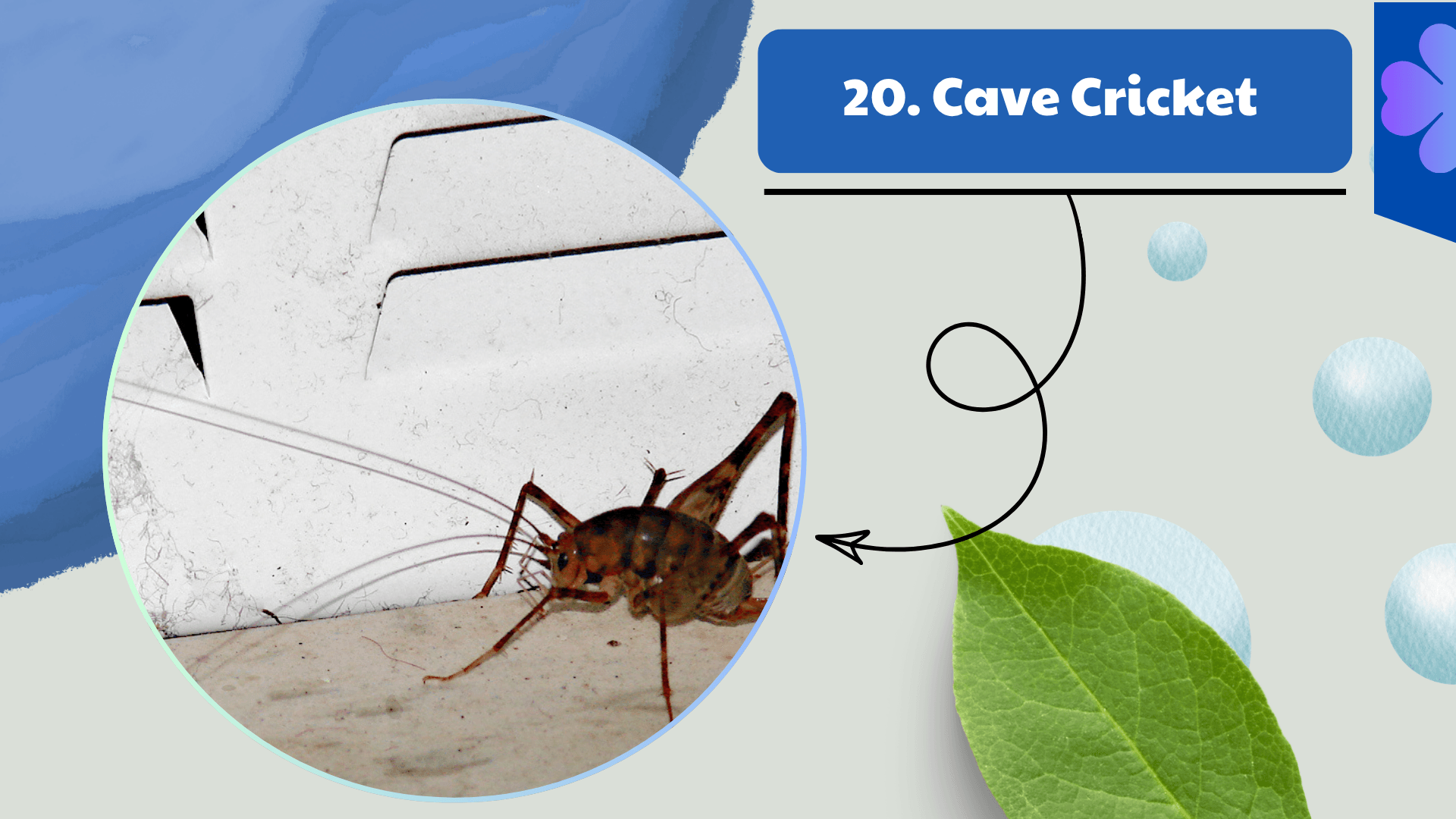
Cave Crickets are specialized insects adapted to life in dark, humid environments such as caves, rock crevices, and damp basements. They are closely related to Camel Crickets and share many similar physical traits, including long legs and antennae.
These crickets are typically light brown or tan in color and lack wings. Their bodies are adapted for silent movement in complete darkness, making them highly efficient cave dwellers.
Cave Crickets do not produce chirping sounds. Instead, they rely on vibration sensitivity and touch to navigate their environment. Their long antennae act as sensory tools, helping them detect obstacles and food sources.
Their diet consists of fungi, decaying organic matter, and small debris found within cave ecosystems. This makes them important decomposers in subterranean environments.
Cave Crickets are a vital part of cave ecosystems, serving as prey for bats, spiders, and other cave-dwelling predators. Their role helps maintain ecological balance in environments with limited food sources.
Despite their unusual appearance, Cave Crickets are harmless and play an important ecological role in underground ecosystems around the world.
21. Spider Cricket (Arachnocampa-like Camel Cricket group)
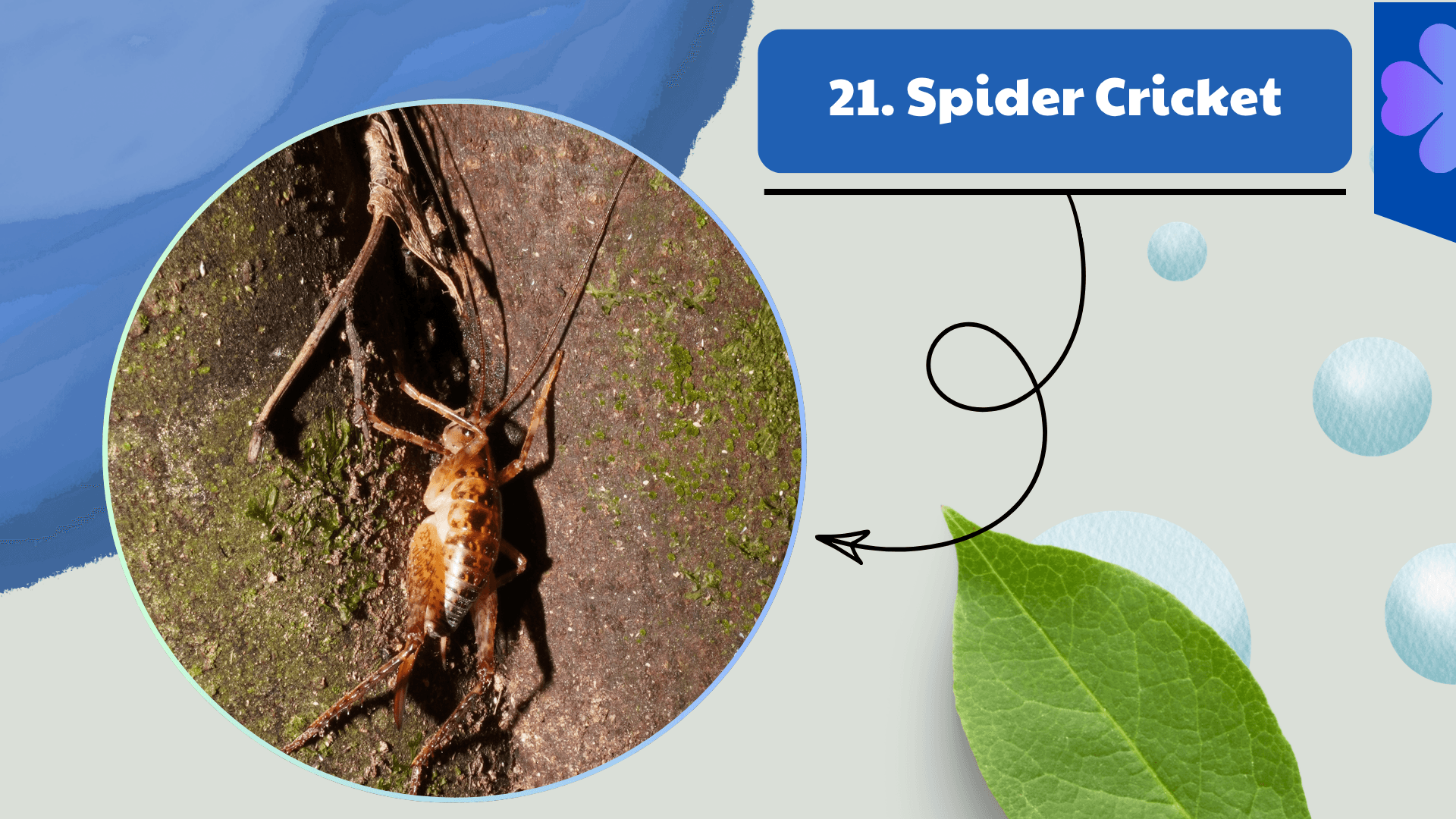
The Spider Cricket is a fascinating insect that often causes confusion due to its spider-like appearance. Despite its name, it is not a spider but a type of cricket belonging to the camel cricket family. It is commonly found in dark, humid environments such as basements, caves, woodpiles, and abandoned structures.
Spider Crickets have long, spindly legs that resemble those of a spider, which is the main reason for their name. Their bodies are humpbacked, wingless, and usually light brown or tan in color. Their antennae are extremely long and highly sensitive, allowing them to navigate in complete darkness.
Unlike many cricket species, Spider Crickets do not produce chirping sounds. Instead, they rely on jumping and rapid movement to escape predators. When threatened, they can jump surprisingly far relative to their body size, which often startles humans encountering them indoors.
Their diet consists of organic debris, fungi, and decaying plant material. In natural ecosystems, they play an important role in decomposition, especially in damp environments where organic matter accumulates.
Spider Crickets are harmless to humans and do not bite or spread disease. However, their unusual appearance often leads to fear or misunderstanding. Ecologically, they are beneficial decomposers that contribute to nutrient recycling in hidden environments.
22. Greenhouse Stone Cricket
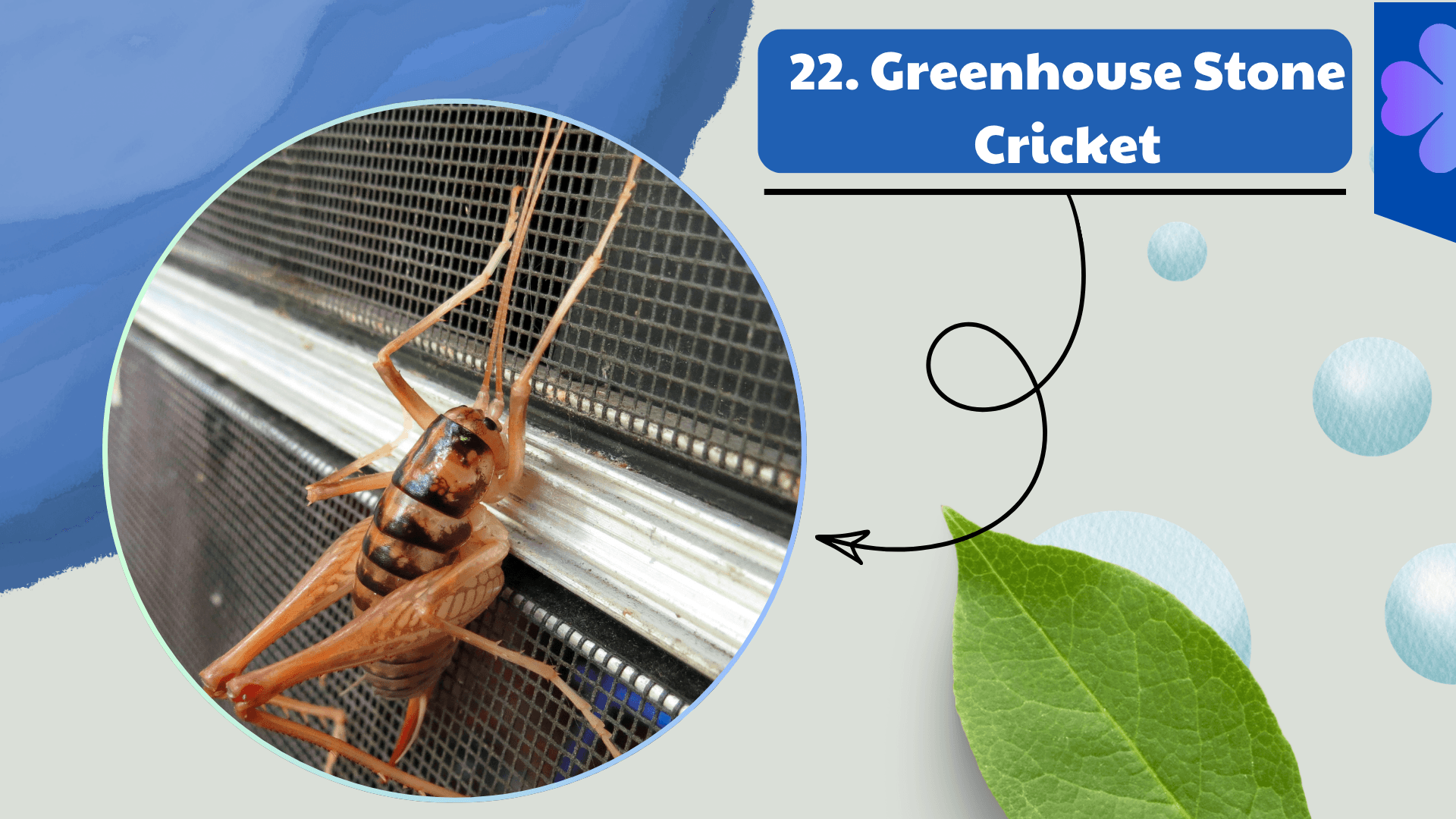
The Greenhouse Stone Cricket is a small, resilient cricket species commonly found in greenhouse environments, stone crevices, and moist garden habitats. It is well adapted to human-controlled environments where warmth and humidity are consistently available.
This species is typically light brown or gray, with a compact body structure that allows it to hide in narrow spaces between stones or plant containers. Its coloration provides excellent camouflage against soil and stone surfaces.
Greenhouse Stone Crickets feed on decaying organic matter, algae, fungi, and occasionally tender plant material. In greenhouse environments, they help break down plant waste, although they may sometimes feed on young seedlings if populations grow too large.
They are nocturnal insects, becoming active at night when humidity levels rise. Males produce soft chirping sounds used for mating communication, although these calls are often too quiet for humans to easily notice.
Ecologically, they are beneficial in controlled environments because they contribute to decomposition and organic recycling. However, in agricultural settings, they may occasionally be considered minor pests.
23. Tobacco Cricket
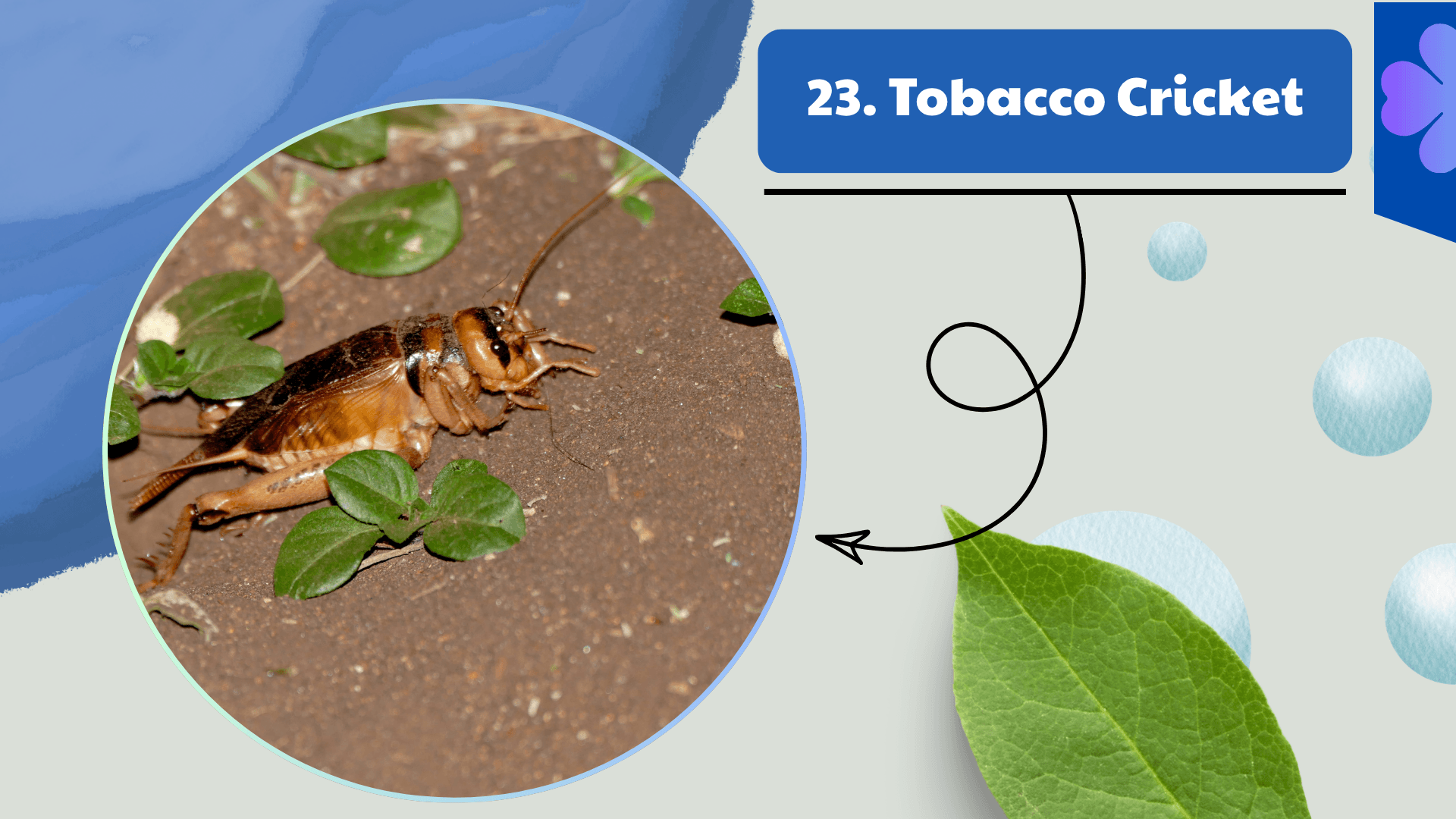
The Tobacco Cricket is a lesser-known species often associated with agricultural environments, particularly tobacco-growing regions. It thrives in warm climates and is typically found in fields, plantations, and surrounding vegetation.
This cricket is medium-sized with a dark brown or black body. Its strong hind legs allow it to jump quickly when threatened. The species is well adapted to open agricultural landscapes where vegetation provides both food and shelter.
Tobacco Crickets feed on a wide variety of plant materials, including leaves, stems, and decaying organic matter. In agricultural fields, they may occasionally feed on crops, but they are generally not considered major pests compared to other insects.
Males produce chirping sounds during warm nights, especially during breeding seasons. These sounds help attract females and establish territory among competing males.
Ecologically, Tobacco Crickets serve as both decomposers and prey for birds and reptiles. Their presence in agricultural ecosystems reflects a balanced food chain and healthy soil conditions.
24. Silver-Bell Cricket
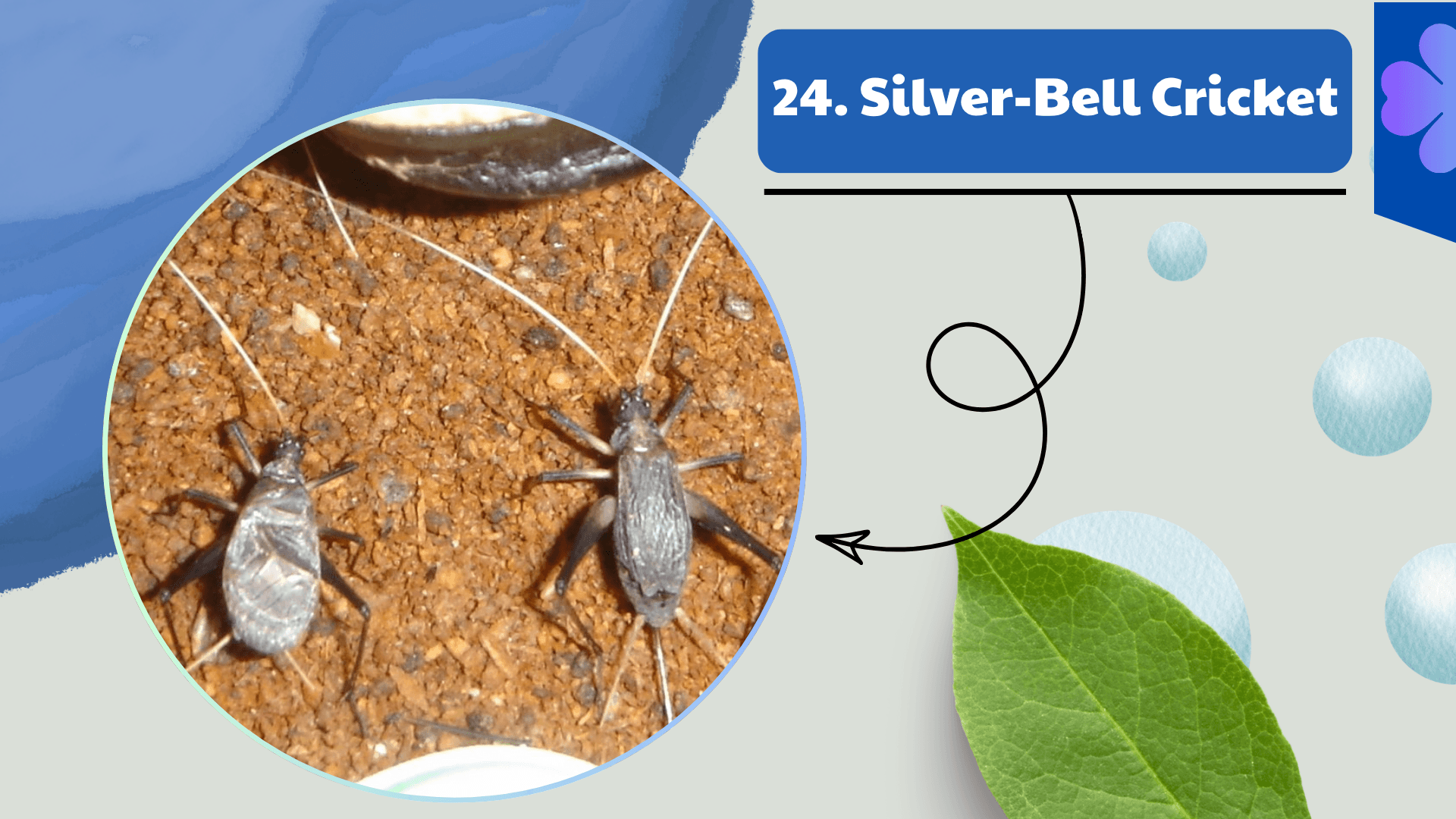
The Silver-Bell Cricket is named for the distinctive metallic-like sound it produces, which resembles a soft ringing or bell-like tone. This species is often found in grassy fields, forest edges, and lightly wooded environments.
It has a slender body with a light brown to silvery-gray coloration, which helps it blend into dry vegetation. Its wings are slightly more developed than many ground-dwelling crickets, allowing for short bursts of flight.
One of the most unique features of this species is its acoustic signaling. The chirping sound produced by males is higher-pitched and more melodic than many other cricket species, which is why it is often compared to a “silver bell.”
Silver-Bell Crickets feed on plant matter, seeds, and small organic particles. They play an important role in nutrient cycling within grassland ecosystems.
They are active primarily at night and are often heard rather than seen. Their presence is considered a sign of healthy grassland biodiversity.
25. Arizona Cricket
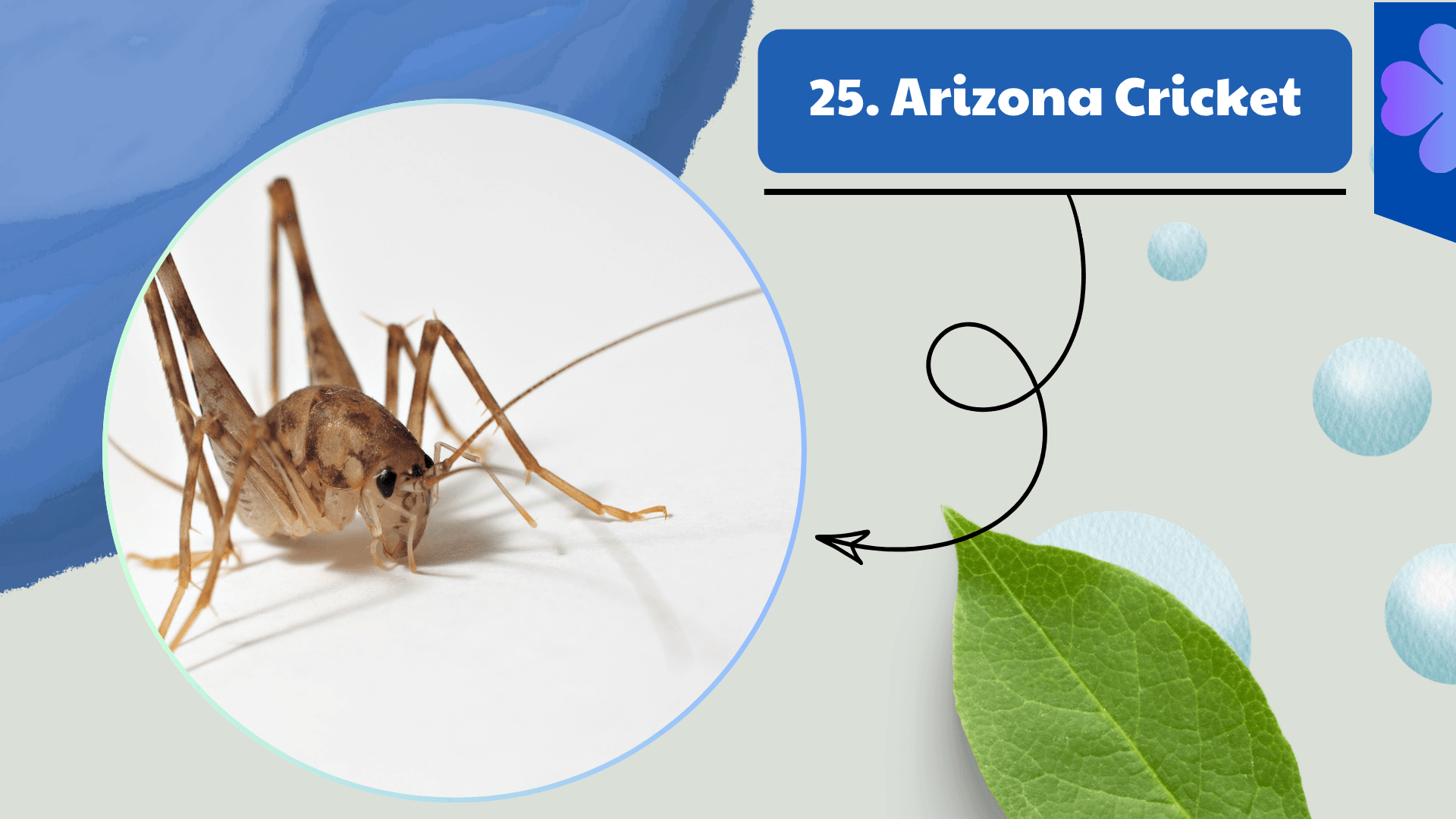
The Arizona Cricket is a desert-adapted species found in the arid regions of the southwestern United States, particularly Arizona. It is highly specialized for survival in hot, dry climates where water is scarce and temperatures fluctuate dramatically.
This cricket has a robust body with a sandy brown coloration that blends perfectly with desert soil and rocks. Its strong legs allow it to move quickly across open desert terrain, while its nocturnal behavior helps it avoid extreme daytime heat.
Arizona Crickets feed on dry plant material, seeds, and organic debris found in desert ecosystems. They are highly efficient at extracting moisture from food sources, allowing them to survive in extremely dry conditions.
Males produce chirping sounds during cooler desert nights, which can travel long distances due to open terrain. These calls are essential for mating in sparsely populated environments.
Ecologically, Arizona Crickets are important decomposers in desert ecosystems, helping recycle scarce organic material and serving as a key food source for reptiles, birds, and small mammals.
26. Giant Cricket
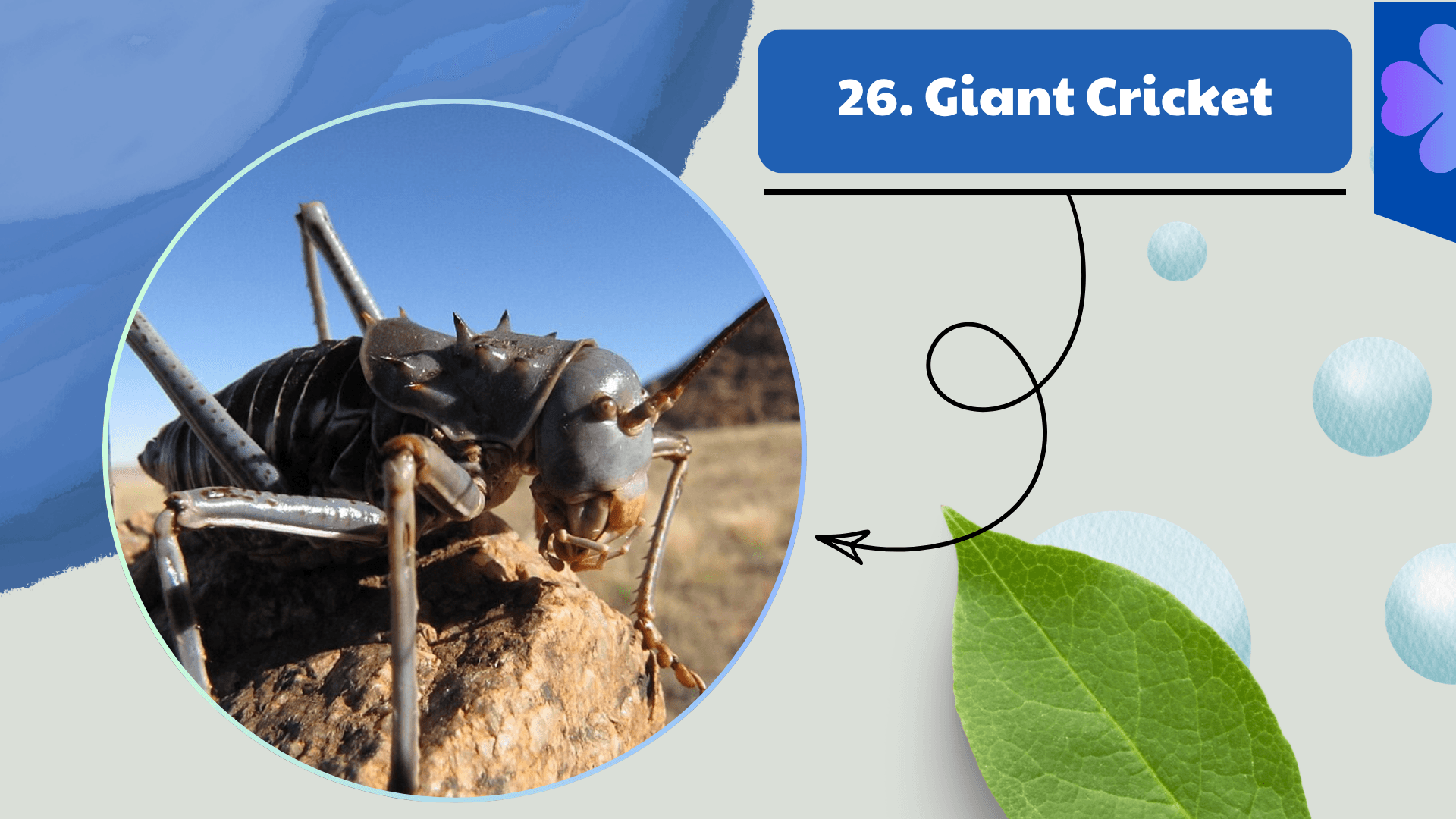
The Giant Cricket refers to several large cricket species found in tropical and subtropical regions around the world. As the name suggests, these crickets are significantly larger than common field or house crickets, making them one of the most visually impressive members of the cricket family. They are often found in forests, grasslands, and humid environments where food and shelter are abundant.
Giant Crickets typically have robust bodies, long antennae, and powerful hind legs designed for jumping and escaping predators. Their coloration ranges from dark brown to reddish-brown, allowing them to blend into forest floors, tree bark, and leaf litter. Because of their size, they are more noticeable than smaller cricket species, but they are still well-camouflaged in natural habitats.
Their diet is omnivorous, consisting of plant matter, decaying organic material, fungi, and occasionally smaller insects. This makes them important decomposers in forest ecosystems, helping recycle nutrients and maintain soil health. In some regions, they are also known to feed on fallen fruit.
Giant Crickets are primarily nocturnal. At night, they emerge to forage and interact with other individuals. Males produce deep, resonant chirping sounds that are louder and lower in pitch compared to smaller cricket species. These calls are essential for mating and territorial communication.
Ecologically, Giant Crickets serve as an important food source for birds, reptiles, amphibians, and small mammals. Their large size makes them a valuable prey item in tropical food webs. Despite their intimidating appearance, they are harmless to humans and play a beneficial ecological role.
27. Banana Cricket
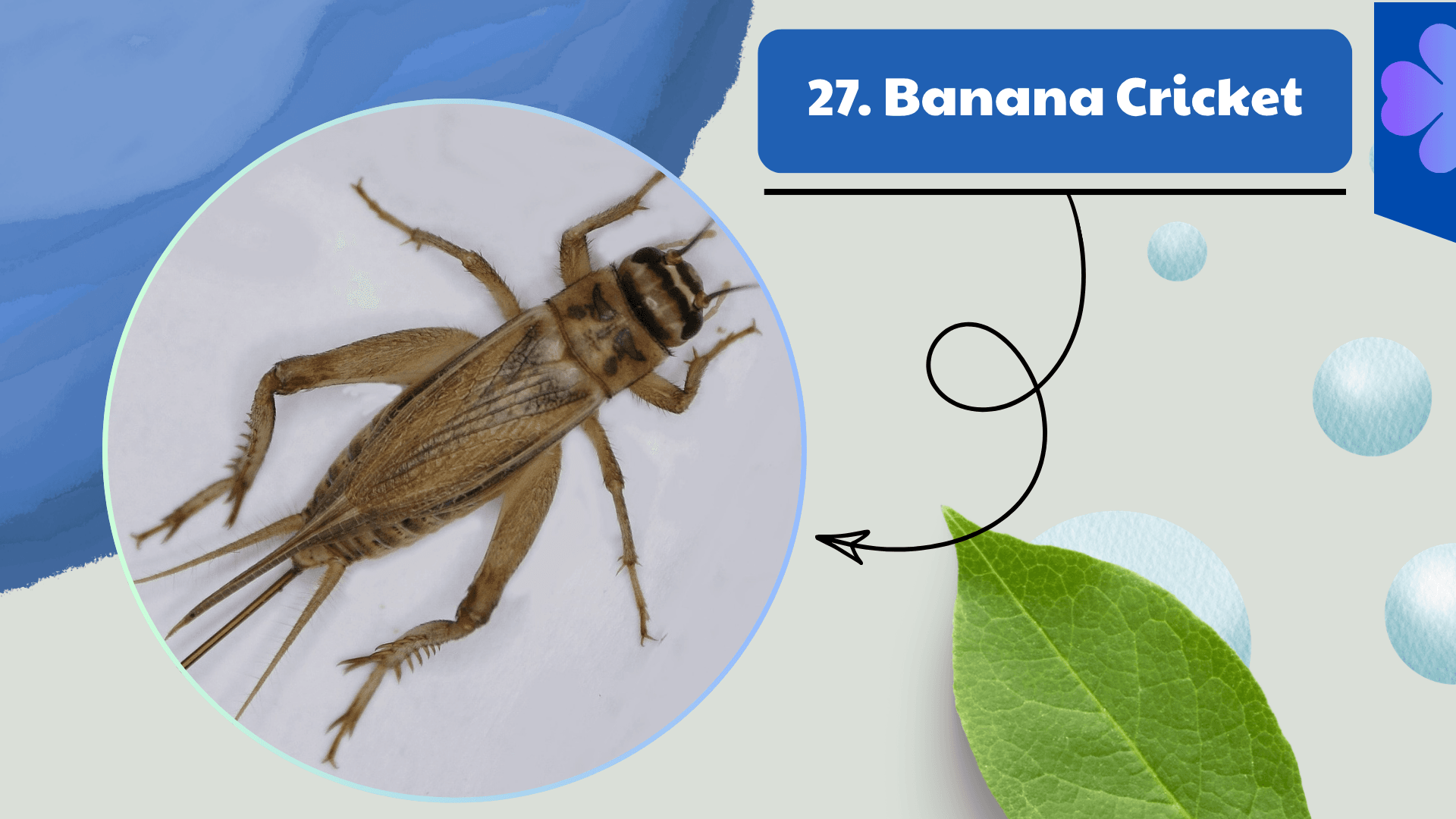
The Banana Cricket is a tropical species often associated with banana plantations and warm, humid environments where fruit crops are abundant. It is commonly found in Central and South America, as well as other tropical regions where bananas are cultivated.
This cricket species is medium-sized with a yellowish-brown to light greenish coloration, which helps it blend into banana leaves and plant stems. Its body is slender, and its long antennae allow it to navigate dense vegetation efficiently.
Banana Crickets feed on plant material, decaying fruit, and organic debris found in agricultural environments. In banana plantations, they may occasionally feed on damaged fruit, but they are generally not considered major pests.
Males produce chirping sounds during warm nights, especially in humid tropical conditions. These calls are used for mating communication and can often be heard in plantation areas after sunset.
Ecologically, Banana Crickets play a role in breaking down organic waste and contributing to nutrient cycling in tropical agricultural systems. They also serve as prey for birds, reptiles, and amphibians, supporting biodiversity in plantation ecosystems.
28. Banded Cricket
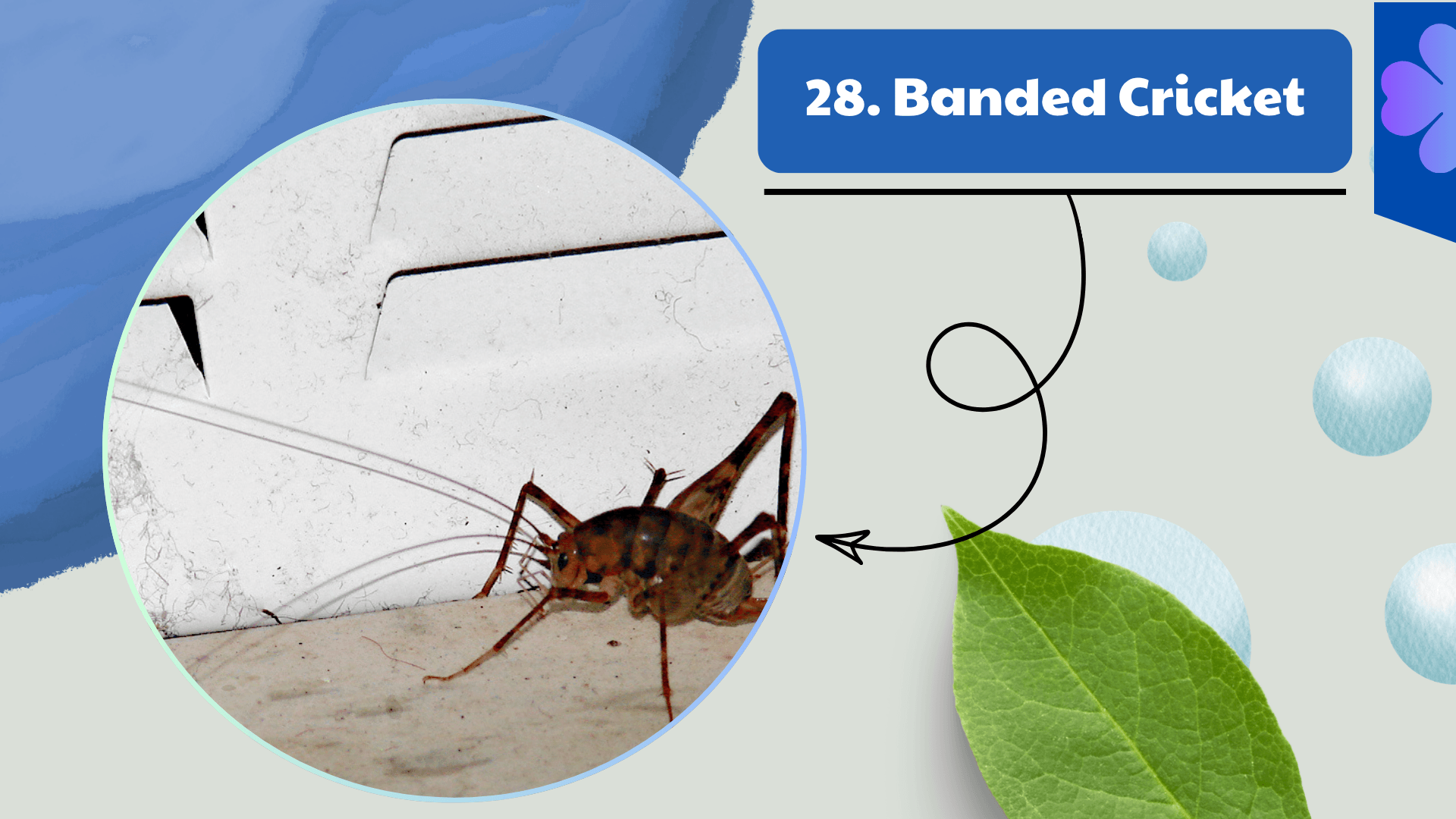
The Banded Cricket is named for the distinctive striped or banded patterns that appear across its abdomen or legs. This species is found in a variety of habitats, including grasslands, forest edges, and scrublands, where its coloration provides effective camouflage.
Banded Crickets are typically medium-sized insects with dark bodies accented by lighter stripes or bands. These patterns help break up their outline, making them difficult for predators to detect among grasses and vegetation.
Their diet consists of plant matter, seeds, and decaying organic material. In ecosystems, they contribute to decomposition and help maintain soil nutrient levels. They are also opportunistic feeders and may consume small insects when available.
Males produce rhythmic chirping sounds used for attracting mates. Their calls are often steady and repetitive, especially during warm summer nights. These sounds contribute to the natural nighttime soundscape in rural environments.
Ecologically, Banded Crickets are important prey for birds, reptiles, and small mammals. Their presence indicates a healthy and balanced ecosystem with sufficient vegetation and food resources.
29. Western Mole Cricket
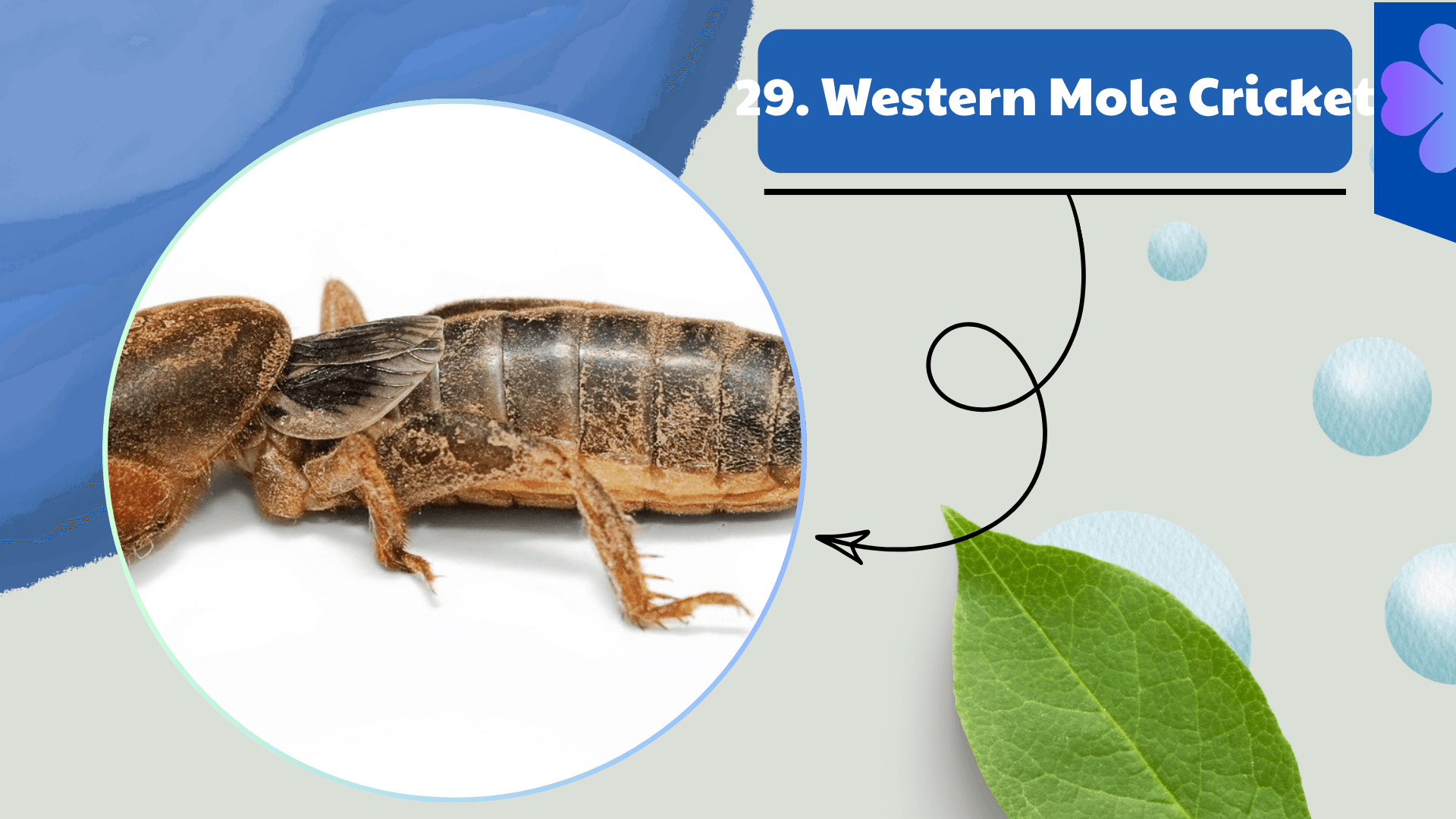
The Western Mole Cricket is a burrowing insect adapted to life underground in western regions of North America. It belongs to the mole cricket group, which is known for its powerful digging front legs and subterranean lifestyle.
This species has a cylindrical body, strong spade-like forelegs, and a brownish coloration that blends with soil. Its adaptations make it an excellent digger, capable of creating extensive tunnel systems underground.
Western Mole Crickets feed on plant roots, tubers, and organic matter found in soil. In agricultural areas, they may occasionally damage crops by feeding on root systems, making them minor pests in some regions.
Unlike many surface-dwelling crickets, their chirping is often produced from within their burrows, creating a muffled, low-frequency sound. Males use these vibrations and calls to attract females underground.
Ecologically, Western Mole Crickets contribute to soil aeration and nutrient mixing through their burrowing activity. However, their feeding habits can sometimes conflict with agricultural production.
30. Southern Mole Cricket
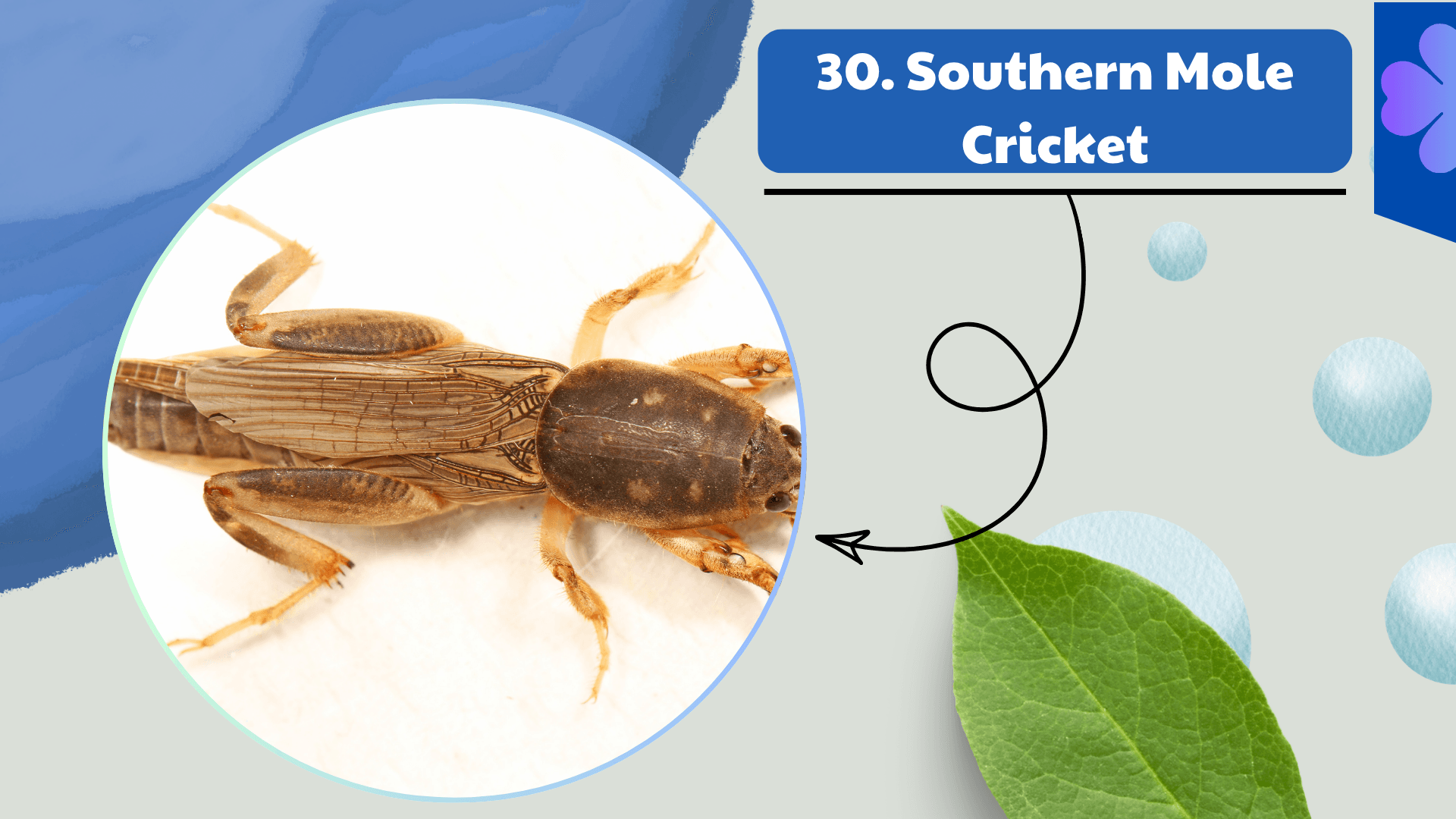
The Southern Mole Cricket is a widely distributed burrowing cricket species found in warmer regions of the southern United States and parts of Central and South America. It is one of the most well-known mole cricket species due to its agricultural impact and distinctive behavior.
This insect has a stout, cylindrical body with heavily modified front legs designed for digging through soil. Its coloration ranges from light brown to reddish-brown, helping it blend into sandy or loose soils.
Southern Mole Crickets spend most of their lives underground, where they construct tunnel systems that can extend through large areas of soil. These tunnels are used for feeding, movement, and reproduction.
Their diet includes plant roots, grasses, and organic matter. In turfgrass areas such as lawns, golf courses, and agricultural fields, they can sometimes cause damage by disrupting root systems and soil structure.
Males produce distinctive calls from specially constructed burrows that act as acoustic chambers. These calls are used to attract females and can be heard during warm nights in infested areas.
Despite their reputation as pests in some regions, Southern Mole Crickets also play a role in soil aeration and organic decomposition. Their burrowing activity influences soil structure and nutrient distribution.
31. Dune Cricket
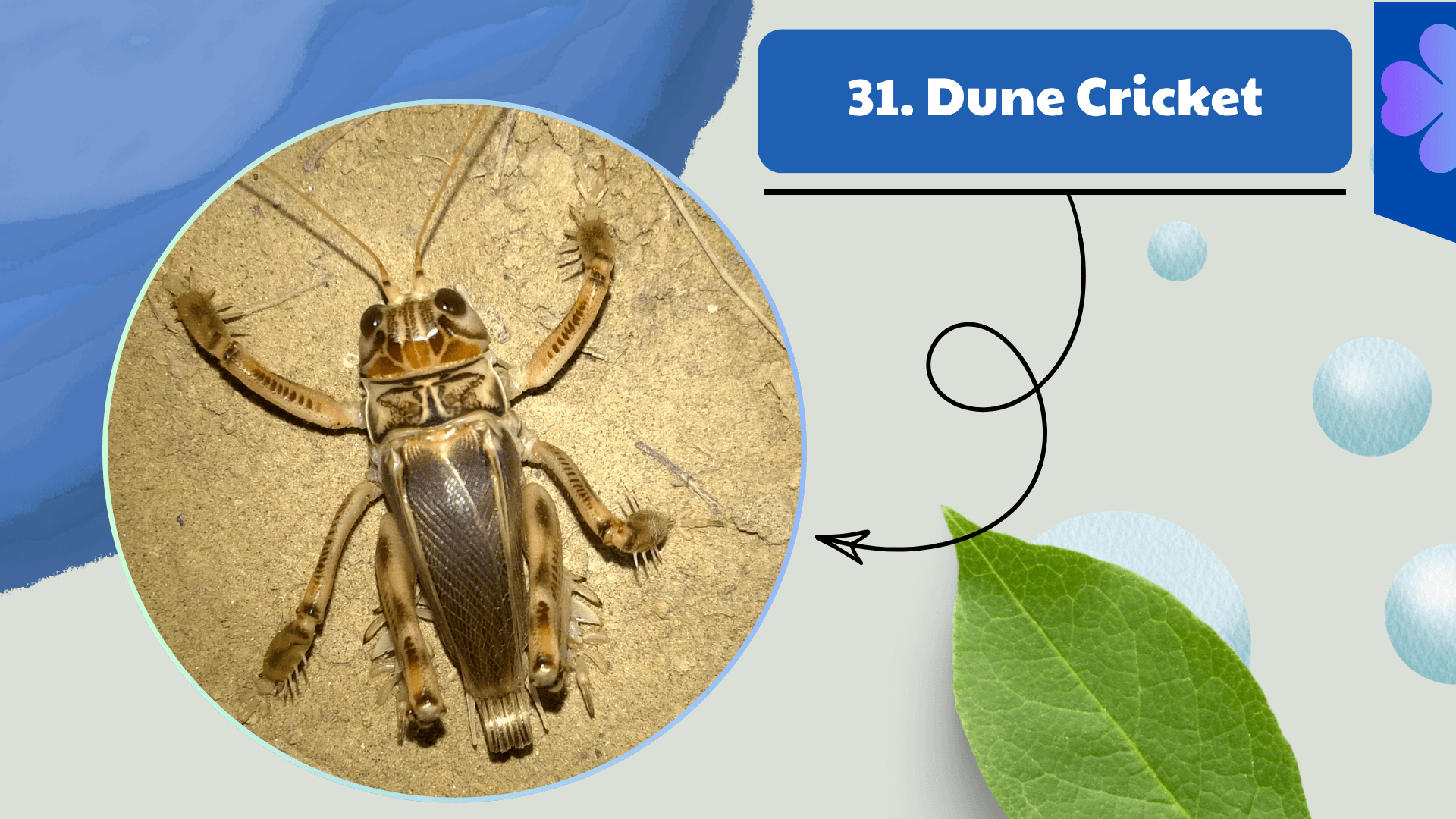
The Dune Cricket is a highly specialized insect adapted to life in sandy desert dunes and coastal sandy ecosystems. It is commonly found in arid regions where vegetation is sparse, temperatures are extreme, and moisture is extremely limited. This cricket species has evolved unique survival strategies that allow it to thrive in environments that are too harsh for many other insects.
Dune Crickets typically have a pale sandy coloration that closely matches their environment, making them nearly invisible against dune surfaces. Their bodies are lightweight, and their long hind legs allow them to move quickly across loose sand. One of their most remarkable adaptations is their ability to remain buried beneath the sand during the hottest parts of the day, emerging only at night when temperatures drop.
Their diet consists mainly of dry plant material, seeds, and organic debris that accumulates in desert environments. Because food is scarce in dunes, they are highly opportunistic feeders and can survive on very limited resources. They also play an important ecological role in breaking down organic matter and returning nutrients to sandy soils.
Dune Crickets are nocturnal and become active after sunset. During this time, males produce soft chirping sounds that are adapted to travel efficiently in open, windy environments. These calls are used for mating and territorial communication, although they are often subtle compared to those of forest-dwelling crickets.
Ecologically, Dune Crickets are a vital part of desert food webs. They serve as prey for reptiles, desert birds, and small mammals. Their presence indicates a healthy and functioning dune ecosystem, where even minimal organic matter is efficiently recycled.
32. Splay-Footed Cricket
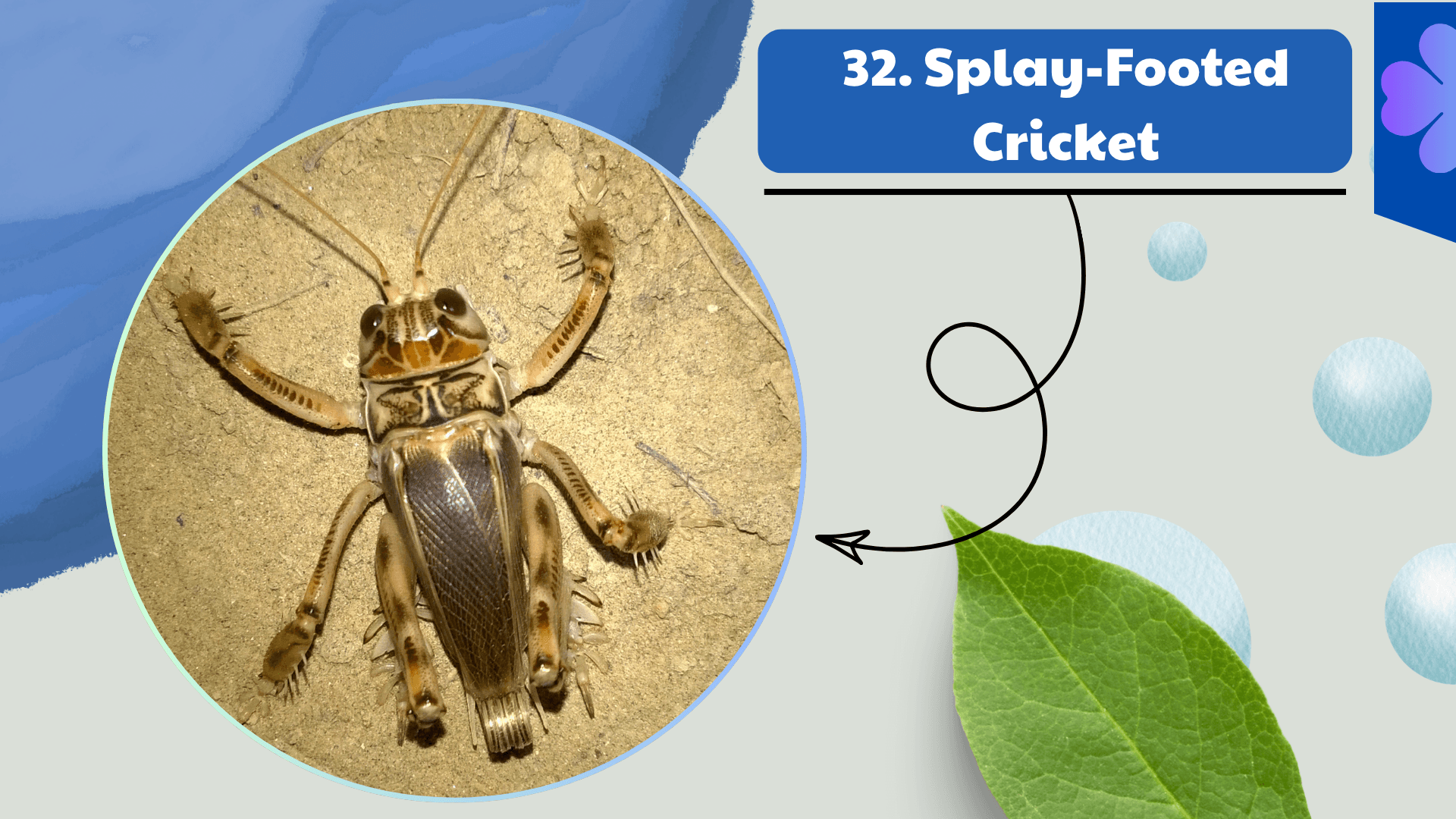
The Splay-Footed Cricket is a unique species named for its distinctively spread or “splayed” feet, which help it navigate unstable surfaces such as loose soil, leaf litter, and rocky terrain. This adaptation provides greater stability and mobility in environments where footing is difficult for other insects.
This cricket species is generally medium-sized with a brown or grayish body that provides effective camouflage in forest floors and grasslands. Its legs are specially adapted not only for jumping but also for gripping uneven surfaces, making it highly versatile in movement.
Splay-Footed Crickets are omnivorous and feed on plant material, fungi, decaying organic matter, and occasionally small insects. Their diet allows them to thrive in diverse habitats, especially forest ecosystems where organic debris is abundant.
They are primarily nocturnal and use vibration sensing and antennae movement to navigate their surroundings in the dark. Males produce chirping sounds that are often soft and rhythmic, used primarily for attracting mates.
Ecologically, they contribute significantly to decomposition processes in forest ecosystems. Their feeding behavior helps break down organic matter, improving soil quality and nutrient cycling.
33. Leaf-Rolling Cricket
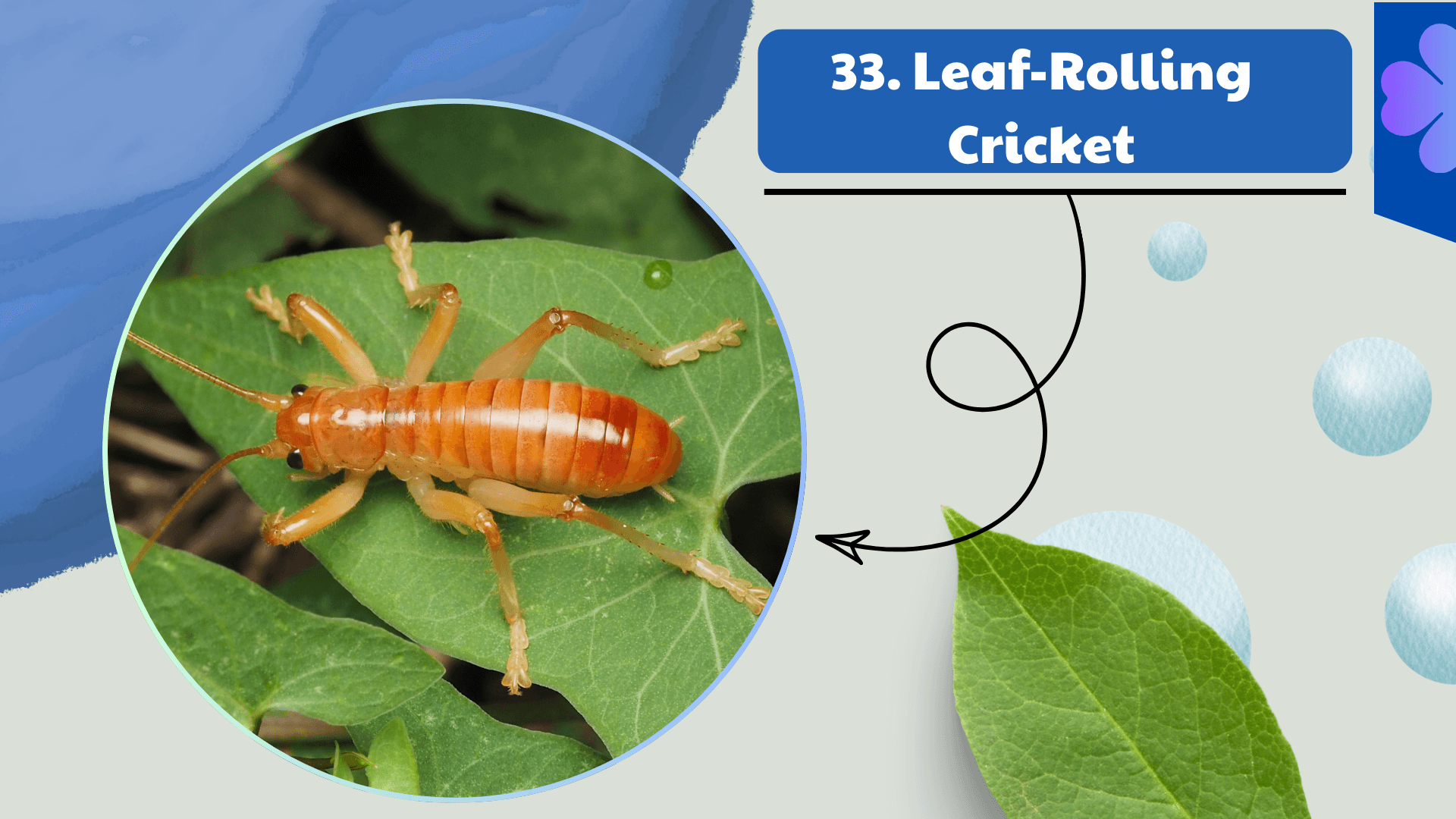
The Leaf-Rolling Cricket is a fascinating insect known for its association with rolled or folded leaves, which it uses as shelter. This behavior provides protection from predators and environmental conditions, making it one of the more behaviorally interesting cricket species.
This species is typically small to medium in size, with a greenish or brown coloration that blends perfectly with vegetation. Its body is slender, allowing it to move easily within tightly rolled leaves or dense foliage.
Leaf-Rolling Crickets feed on plant material, soft leaves, and organic debris. They are especially common in forested and tropical environments where foliage is abundant. Their feeding behavior rarely causes significant damage to plants.
One of their key survival strategies is their ability to use leaves as shelters. By curling or occupying pre-rolled leaves, they avoid predators and reduce exposure to environmental stress. This behavior also helps them conserve moisture in humid environments.
Males produce chirping sounds from within their leaf shelters, creating a unique acoustic effect in forest ecosystems. These calls are used for mating communication and can often be heard during warm nights.
34. Raspy Cricket
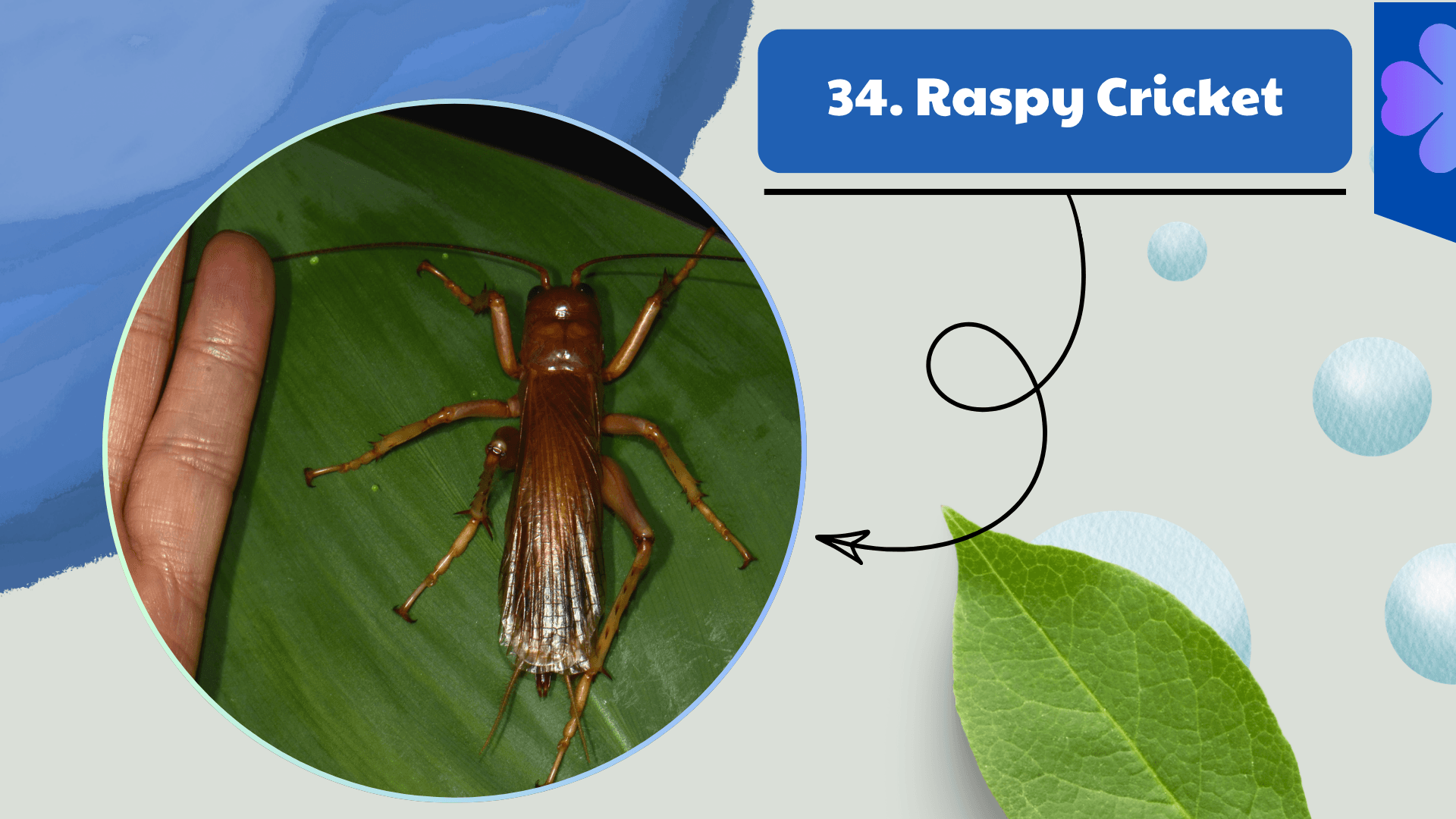
The Raspy Cricket is named for its distinctive, rough, and raspy chirping sound, which differs from the smoother calls of many other cricket species. It is commonly found in grasslands, shrublands, and forest edges across various regions.
This species typically has a dark brown or black body with strong hind legs adapted for jumping. Its coloration helps it blend into soil and vegetation, providing protection from predators.
Raspy Crickets are omnivorous and feed on plant matter, seeds, and decaying organic material. Their feeding habits make them important contributors to decomposition processes in ecosystems where they live.
The male’s raspy call is produced by specialized wing structures and is used primarily for mating. These sounds are often loud and repetitive, making them easy to identify in natural environments.
Ecologically, Raspy Crickets serve as both decomposers and prey species, supporting biodiversity in grassland and forest ecosystems.
35. King Cricket
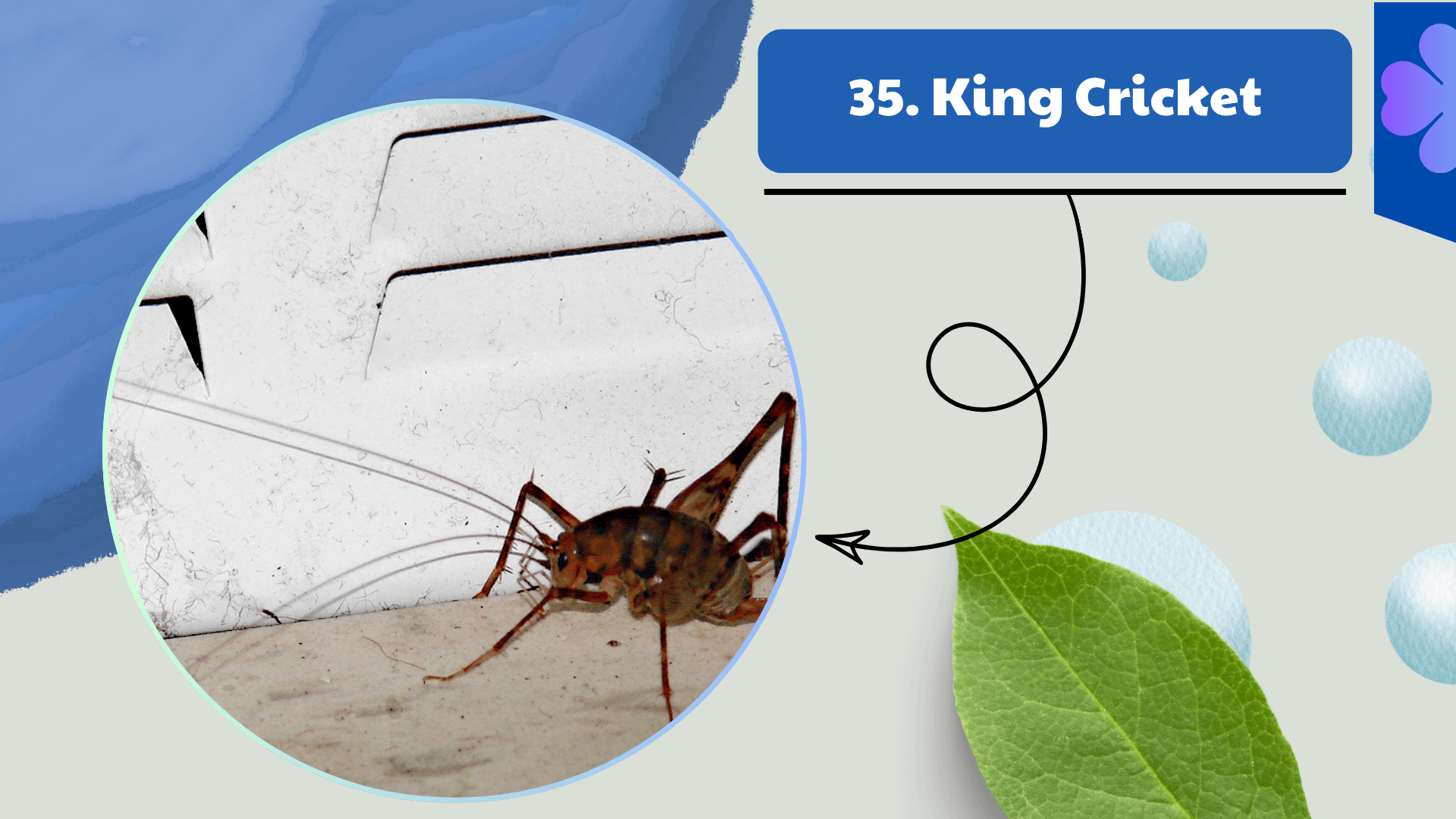
The King Cricket is one of the larger and more robust cricket species, often earning its name due to its size and dominance within its ecological niche. It is typically found in tropical and subtropical environments where food and shelter are abundant.
King Crickets have strong, muscular bodies with dark brown or black coloration. Their large size allows them to compete effectively for resources and avoid many smaller predators. They are powerful jumpers and highly active at night.
Their diet is highly varied and includes plant material, decaying organic matter, fruits, and occasionally small insects. This omnivorous diet allows them to thrive in diverse ecosystems.
Males produce deep, resonant chirping sounds that are louder and more powerful than those of many smaller cricket species. These calls are used to establish dominance and attract mates over long distances.
Ecologically, King Crickets play an important role in decomposition and serve as a major food source for larger predators. Their size and behavior make them a key species in tropical food webs.
36. Bark Cricket
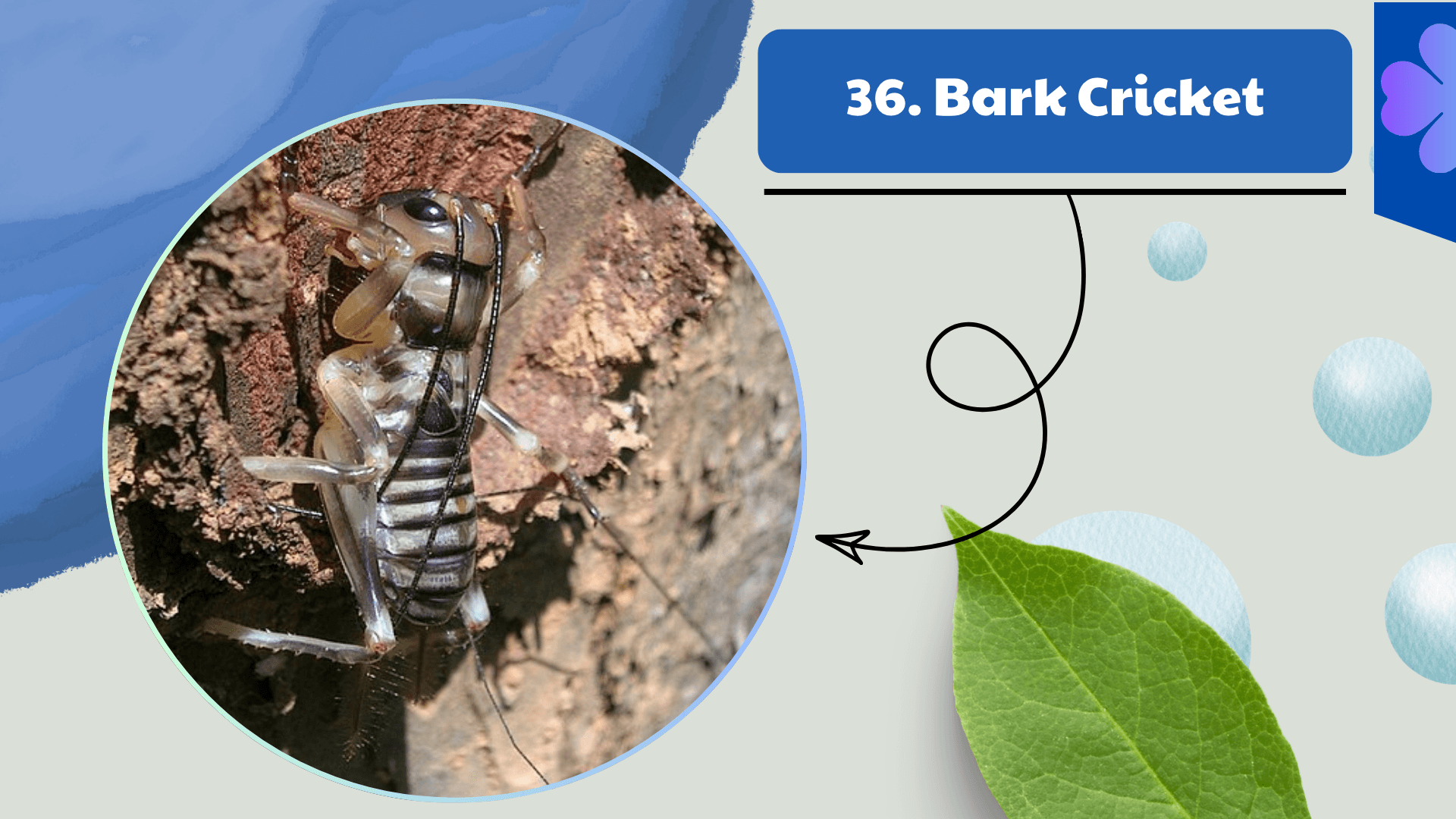
The Bark Cricket is a highly adapted tree-dwelling species that lives primarily on tree trunks, bark surfaces, and woody vegetation. Unlike ground-dwelling crickets, this species has evolved to blend seamlessly into bark textures, making it extremely difficult for predators to detect. It is commonly found in forested environments with mature trees and high humidity.
This cricket has a flattened body and mottled brown or gray coloration that mimics tree bark. Its legs are strong and equipped for gripping vertical surfaces, allowing it to climb and remain stationary on rough bark without falling. This adaptation is essential for survival in arboreal habitats.
Bark Crickets are omnivorous and feed on algae, lichens, fungi, and small organic particles found on tree surfaces. They also consume decaying plant matter that accumulates in bark crevices. Their feeding behavior contributes to nutrient cycling in forest ecosystems.
These crickets are mostly nocturnal and remain motionless during the day to avoid predators such as birds and tree-dwelling reptiles. At night, they become active and move slowly along tree trunks in search of food.
Males produce soft, subtle chirping sounds that blend with natural forest noise. These calls are used for mating communication and are often difficult for humans to detect due to their low intensity.
Ecologically, Bark Crickets are important decomposers in forest canopy ecosystems, helping maintain balance in arboreal microhabitats.
37. Snowy Tree Cricket
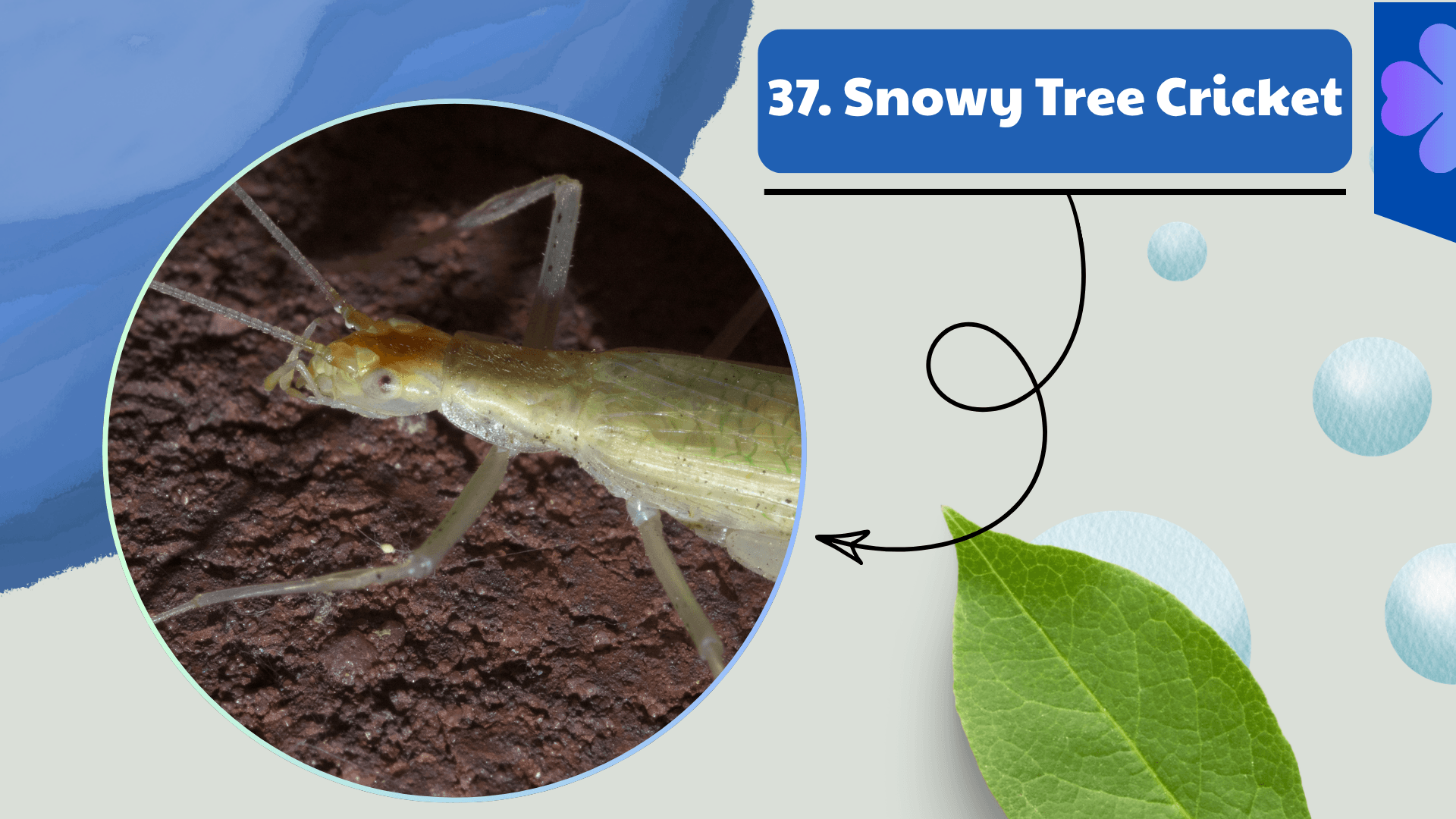
The Snowy Tree Cricket is one of the most recognizable cricket species in North America, often called the “thermometer cricket” due to the correlation between its chirp rate and temperature. It is commonly found in trees, shrubs, and dense vegetation.
This species is light green in color with long, slender legs and extremely long antennae. Its appearance helps it blend perfectly into leaves and branches, providing excellent camouflage from predators.
Snowy Tree Crickets feed on plant sap, leaves, and small organic materials found on vegetation. They are generally harmless to plants and play a minor role in plant-based ecosystems.
One of their most interesting traits is their chirping behavior. Males produce a high-pitched, rhythmic song that increases in speed as temperatures rise. This makes them useful indicators of environmental conditions.
They are highly active during warm summer nights and are often heard rather than seen. Their presence is a familiar sound in suburban and rural landscapes.
Ecologically, Snowy Tree Crickets contribute to food webs as prey for birds, spiders, and small mammals.
38. Prairie Tree Cricket
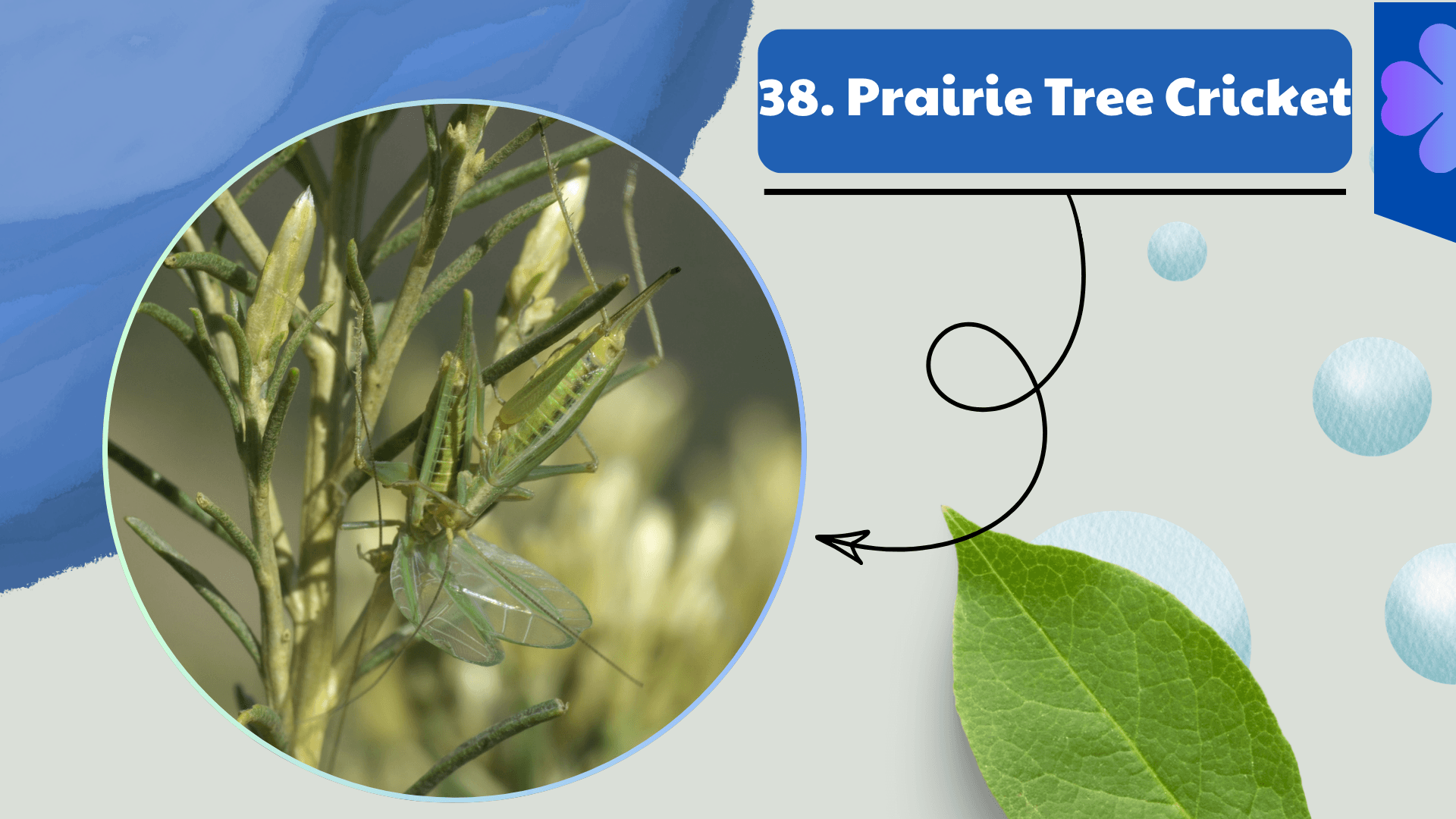
The Prairie Tree Cricket is a species commonly found in grassland and prairie ecosystems. Despite its name, it is often associated with both low vegetation and small shrubs rather than tall trees.
This cricket is light green to yellow-green in color, allowing it to blend into grasses and prairie plants. Its body is slender and well-suited for navigating dense vegetation.
Prairie Tree Crickets feed primarily on plant material, including leaves, stems, and flowers. They may also consume small insects and organic debris when available.
Their chirping is soft and rhythmic, often blending with the natural sounds of grassland environments. Males use these calls to attract mates during warm nights.
They play an important role in prairie ecosystems by contributing to plant material breakdown and serving as prey for insectivorous species.
39. Pine Tree Cricket
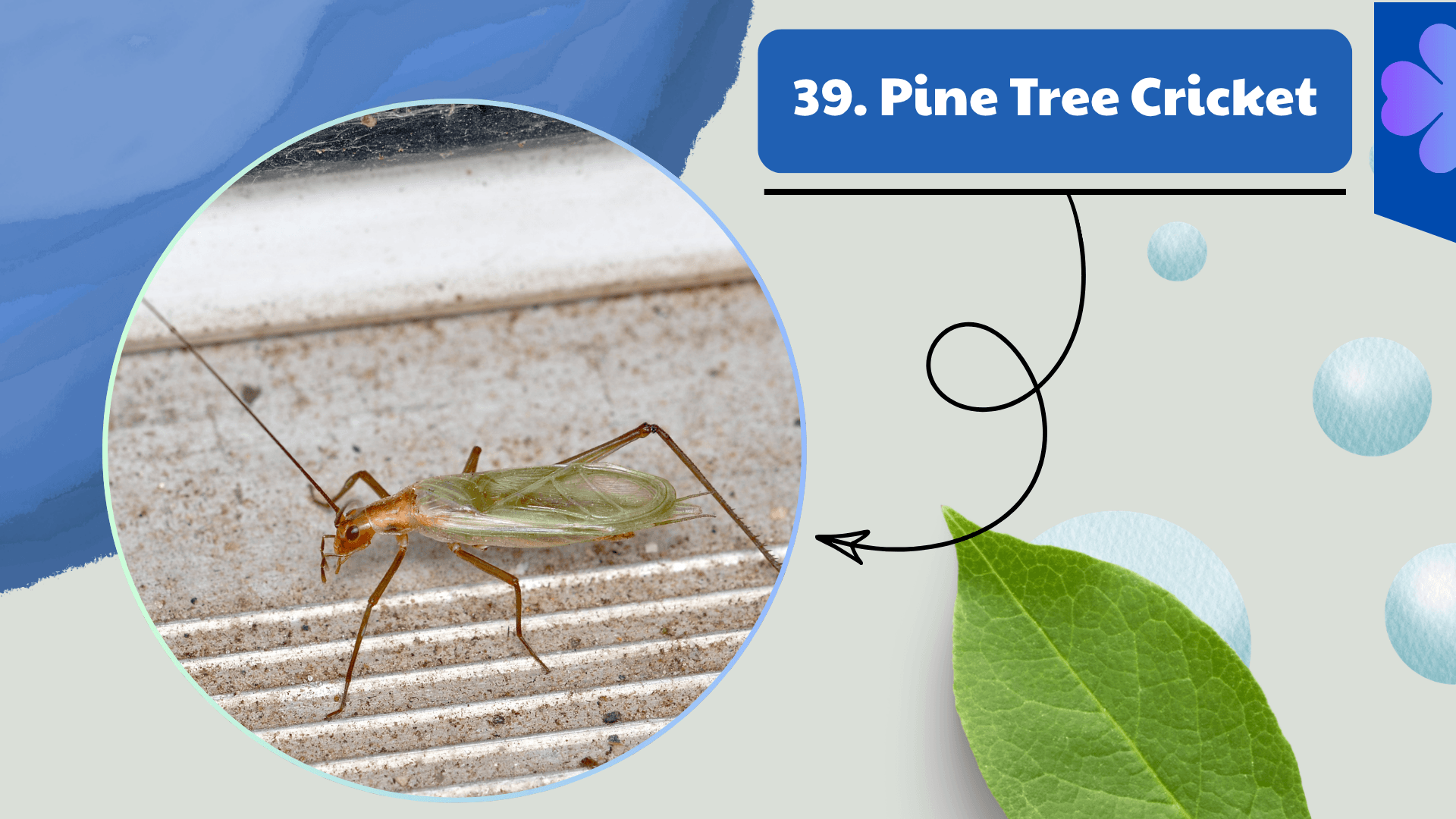
The Pine Tree Cricket is a forest-dwelling species commonly associated with coniferous trees such as pine, spruce, and fir. It is adapted to cooler, shaded environments and is often found in mountainous or northern forest regions.
This species typically has a brown or dark green coloration, allowing it to blend into pine bark and needles. Its body is compact, and its legs are adapted for climbing vertical tree surfaces.
Pine Tree Crickets feed on lichens, mosses, algae, and organic debris found on tree trunks and branches. They play a role in breaking down organic material in forest ecosystems.
Males produce soft, repetitive chirps that are often masked by wind and forest noise. These calls are used for mating communication during summer months.
Ecologically, they contribute to nutrient cycling in coniferous forests and serve as prey for birds and small mammals.
40. Australian Mole Cricket
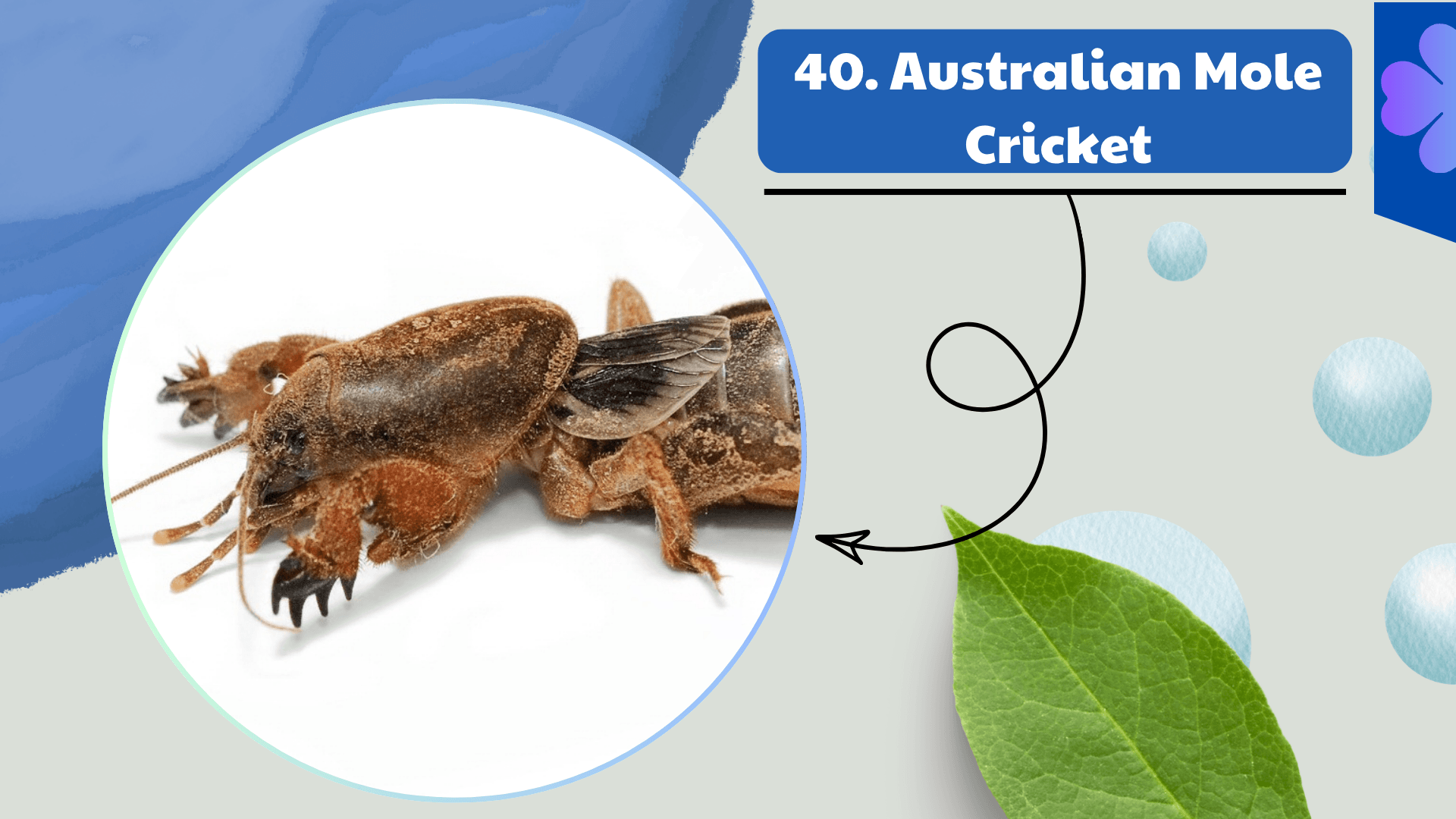
The Australian Mole Cricket is a burrowing insect native to Australia, known for its powerful digging abilities and subterranean lifestyle. It is commonly found in sandy soils, grasslands, and agricultural areas across the continent.
This species has a cylindrical body, strong spade-like front legs, and a brownish coloration that blends with soil. Its body is perfectly adapted for underground movement, allowing it to construct extensive tunnel systems.
Australian Mole Crickets feed on plant roots, grasses, and organic matter in the soil. In agricultural environments, they may sometimes be considered pests due to their root-feeding behavior.
Males produce loud calls from underground burrows, which act as natural sound amplifiers. These calls are used to attract females and can sometimes be heard above ground during warm nights.
Despite their pest reputation in some areas, they play an important ecological role in soil aeration and organic decomposition.
Conclusion
The Bark Cricket, Snowy Tree Cricket, Prairie Tree Cricket, Pine Tree Cricket, and Australian Mole Cricket highlight the incredible diversity of cricket species across forests, grasslands, and underground ecosystems. Each species is uniquely adapted to its environment, contributing to decomposition, soil health, and food webs. Understanding these types of cricket gives us a deeper appreciation of their ecological importance and evolutionary adaptability. Have you ever observed any of these fascinating cricket species in nature?
FAQ’s
1. What are crickets?
Crickets are insects belonging to the order Orthoptera, closely related to grasshoppers and katydids. They are best known for their chirping sounds produced by males rubbing their wings together. Crickets are found in almost every part of the world, from forests and grasslands to deserts and even human homes. They play an important ecological role as decomposers and as a food source for many animals.
2. Why do crickets make sound?
Crickets produce sound mainly for communication, especially during mating season. Male crickets rub their wings together in a process called stridulation to create chirping sounds. These sounds attract females and also help establish territory. Different species have unique chirping patterns, which makes them identifiable in nature.
3. Are all crickets the same species?
No, crickets are highly diverse and include hundreds of species worldwide. Each species differs in size, color, habitat, behavior, and sound patterns. Some live in trees, others underground, and some even live in caves or deserts. This diversity makes crickets one of the most adaptable insect groups.
4. Where do crickets live?
Crickets live in a wide range of habitats including forests, grasslands, deserts, caves, agricultural fields, and even inside human buildings. Their adaptability allows them to survive in both humid and dry environments as long as they have access to food and shelter.
5. What do crickets eat?
Most crickets are omnivores, meaning they eat both plant and animal matter. Their diet includes leaves, seeds, fruits, fungi, decaying organic material, and occasionally smaller insects. This feeding behavior makes them important decomposers in ecosystems.
6. Are crickets harmful to humans?
Crickets are generally harmless to humans. They do not bite, sting, or spread diseases. However, in large numbers, some species can become agricultural pests by feeding on crops. In homes, they are usually considered a minor nuisance rather than a danger.
7. Why are crickets important in nature?
Crickets play a vital role in ecosystems by breaking down organic matter and recycling nutrients into the soil. They also serve as an important food source for birds, reptiles, amphibians, and mammals, helping maintain ecological balance.
8. How long do crickets live?
Most crickets have a lifespan of about 2 to 3 months as adults, although their total life cycle (egg to adult) can take several months. Lifespan varies depending on species, environment, and food availability.
9. Do crickets fly?
Some cricket species can fly, while others cannot. Tree crickets and field crickets often have wings suitable for short flights, but many species like mole crickets are primarily burrowers and rarely fly.
10. What is the loudest cricket species?
Tree-dwelling species such as Snowy Tree Crickets are known for their loud and clear chirping. In general, larger cricket species tend to produce louder sounds due to stronger wing structures.
11. Why do crickets come into houses?
Crickets may enter homes in search of warmth, moisture, or food. They are especially attracted to lights and humid environments. House crickets are the most common species found indoors.
12. Are crickets good or bad for gardens?
Crickets are generally beneficial in gardens because they help break down organic matter. However, in large numbers, some species may feed on seedlings or soft plants, causing minor damage.
13. What eats crickets?
Crickets are preyed upon by birds, frogs, lizards, spiders, small mammals, and even other insects. Their role as prey makes them an essential part of food chains.
14. How do crickets survive predators?
Crickets survive predators through camouflage, jumping ability, nocturnal behavior, and hiding in soil, vegetation, or bark. Some species also produce sudden jumps or freeze when threatened.
15. Do female crickets chirp?
In most species, only male crickets chirp. Females typically do not produce sound but respond to male calls for mating purposes.
16. What is the difference between crickets and grasshoppers?
Crickets are generally nocturnal with long antennae and produce sound by rubbing wings. Grasshoppers are usually diurnal, have shorter antennae, and produce sound by rubbing legs against wings.
17. Why are crickets associated with night sounds?
Crickets are mostly nocturnal, meaning they are active at night. Their chirping becomes part of natural nighttime soundscapes in rural and wild environments.
18. Can crickets survive in cold weather?
Most crickets struggle in cold climates and either migrate, hibernate, or die off depending on the species. Some overwinter in egg form to survive winter conditions.
19. Are crickets used as food?
Yes, crickets are eaten in many cultures around the world. They are rich in protein and considered a sustainable food source in edible insect farming.
20. Do crickets bite humans?
Crickets rarely bite humans, and if they do, it is usually harmless and only occurs when they feel threatened. They are not aggressive insects.
21. How do crickets communicate?
Crickets communicate primarily through sound (chirping), vibrations, and sometimes chemical signals. Sound is the most common method, especially for mating.
22. What is cricket stridulation?
Stridulation is the process by which crickets produce sound by rubbing their wings together. This creates vibrations that we hear as chirping.
23. Do crickets have predators in water?
Yes, if crickets fall into water, they can be eaten by fish, aquatic insects, and amphibians. However, crickets are not aquatic insects and do not live in water.
24. Why do crickets stop chirping when approached?
Crickets are sensitive to vibrations and movement. When they sense danger, they often stop chirping and become silent to avoid detection by predators.
25. How fast can crickets jump?
Crickets are excellent jumpers and can leap many times their body length. This ability helps them escape predators quickly.
26. Do crickets have good hearing?
Yes, crickets have specialized hearing organs called tympana located on their legs, which help them detect sound vibrations.
27. Are tree crickets different from field crickets?
Yes, tree crickets live in vegetation and produce softer, higher-pitched sounds, while field crickets live on the ground and produce louder, deeper chirps.
28. What is the largest cricket species?
Some giant cricket species found in tropical regions are among the largest, reaching several centimeters in length with strong, robust bodies.
29. What is a mole cricket?
Mole crickets are burrowing insects that live underground and use powerful front legs to dig tunnels. They feed on plant roots and organic matter in soil.
30. Are crickets active during the day?
Most crickets are nocturnal and active at night, although a few species may be active during early morning or shaded daytime conditions.
31. How do crickets reproduce?
Crickets reproduce through sexual reproduction, where males attract females using chirping sounds. After mating, the female lays eggs in soil or plant material using a specialized egg-laying organ called an ovipositor. Depending on the species and environment, eggs may hatch within a few weeks or remain dormant until conditions are favorable.
32. Where do crickets lay their eggs?
Most crickets lay their eggs in moist soil, sand, or decaying plant material. This provides protection from predators and environmental extremes. Some tree-dwelling species may lay eggs in plant stems or bark crevices, while burrowing species deposit eggs deeper underground.
33. What is the cricket life cycle?
Crickets undergo incomplete metamorphosis, which includes three stages: egg, nymph, and adult. Nymphs resemble small adults but lack wings and reproductive organs. They gradually molt several times before reaching adulthood.
34. How many times do crickets molt?
Crickets typically molt between 8 to 10 times during their nymph stage. Each molt allows them to grow larger and gradually develop wings and adult features.
35. Do crickets migrate?
Most crickets do not migrate long distances. However, some species like Mormon Crickets can move in large groups when searching for food, creating mass movement events that resemble migration.
36. Why do crickets appear in large numbers sometimes?
Cricket populations can increase rapidly when environmental conditions such as temperature, humidity, and food supply are favorable. This can lead to temporary population booms, especially in warm seasons.
37. Are crickets sensitive to temperature?
Yes, crickets are highly sensitive to temperature. Their metabolism, activity level, and chirping rate all depend on environmental temperature. This is why Snowy Tree Crickets are often used as natural temperature indicators.
38. Can crickets survive indoors?
Yes, some species like House Crickets can survive indoors if they find food, warmth, and moisture. They often hide in cracks, basements, or behind appliances.
39. What attracts crickets to light?
Crickets are often attracted to light sources because artificial lighting can confuse their natural navigation instincts. This behavior increases their presence around homes at night.
40. Do crickets have wings?
Many adult crickets have wings, but not all species can fly effectively. Some use wings only for chirping, while others can make short flights to escape predators.
41. Why do crickets chirp more in warm weather?
Chirping increases in warm weather because higher temperatures speed up cricket metabolism and muscle movement. This results in faster wing vibrations and more frequent chirping.
42. Can crickets be kept as pets?
Yes, crickets are often kept as feeder insects or even as pets in small insect enclosures. They require proper humidity, food, and ventilation to survive in captivity.
43. What do baby crickets look like?
Baby crickets, called nymphs, look like smaller versions of adults but without wings. They gradually develop adult features as they molt and grow.
44. How do crickets defend themselves?
Crickets defend themselves using camouflage, jumping ability, and hiding behavior. Some species may also produce sudden movements or vibrations to confuse predators.
45. Are crickets nocturnal?
Yes, most crickets are nocturnal, meaning they are active at night. This helps them avoid predators and reduce water loss in hot environments.
46. What role do crickets play in ecosystems?
Crickets are important decomposers and prey species. They help break down organic matter and serve as food for many animals, making them a key part of food chains.
47. Can crickets hear humans?
Crickets cannot hear human speech in the same way mammals do, but they can detect vibrations and certain sound frequencies through their specialized hearing organs.
48. Why do crickets stop chirping suddenly?
Crickets often stop chirping when they detect danger. They are extremely sensitive to vibrations and movement, so even small disturbances can silence them instantly.
49. Are crickets beneficial to farmers?
Crickets can be both beneficial and harmful. They help break down organic matter and improve soil health, but some species may feed on crops if populations become too large.
50. What is the most common cricket in the world?
The House Cricket is one of the most widespread cricket species globally. It is commonly found in human dwellings and warm environments across many continents.
51. Why are crickets used in science?
Crickets are often used in scientific studies because they are easy to observe, reproduce quickly, and have well-documented behavior patterns. They help researchers understand insect communication and ecology.
52. How do crickets survive predators at night?
Crickets rely on camouflage, silence, and quick escape movements to survive predators. Their nocturnal behavior also reduces exposure to visual hunters like birds.
53. Do crickets sleep?
Crickets do not sleep like mammals but enter periods of inactivity, especially during daylight hours when they are less active and remain hidden.
54. Can crickets damage homes?
Crickets rarely cause structural damage, but they may chew on fabrics, paper, or organic materials if they enter homes in large numbers.
55. What is the lifespan of a cricket egg?
Cricket eggs typically hatch within 1–3 weeks depending on temperature and humidity. Some species may delay hatching in unfavorable conditions.
56. Why are crickets considered a symbol of luck in some cultures?
In several cultures, crickets are seen as symbols of good fortune, prosperity, and protection due to their association with nature, sound, and seasonal changes.
Read more: