

Crows are among the most intelligent and adaptable birds in the world, belonging to the Corvidae family, which also includes ravens, magpies, and jays. Found across North America, Europe, Asia, and many other regions, crows thrive in forests, farmlands, cities, and coastal environments. Their success is largely due to one key trait: an extremely flexible and opportunistic diet.
Understanding what crows eat is essential for studying urban ecology, wildlife behavior, and ecosystem balance. Unlike many birds that specialize in a narrow food range, crows are true generalists. They consume animal matter, plant material, and even human food waste, allowing them to survive in almost any habitat on Earth.
Crows are omnivores, meaning they eat both meat and plant-based foods. Their diet shifts depending on season, location, and availability. In spring and summer, they focus heavily on insects and protein-rich prey to support breeding and chick development. In autumn and winter, they rely more on seeds, nuts, fruits, and carrion when live prey becomes less available.
One of the most fascinating aspects of crow feeding behavior is their intelligence. Crows use tools, remember food locations, follow predators to find carcasses, and even solve complex problems to access food. They are known to cache (hide) food items for later use, demonstrating advanced planning abilities uncommon in most birds.
Their diet also plays a major ecological role. By feeding on insects, rodents, and carrion, crows help control pest populations and clean up dead organic matter. At the same time, by consuming fruits and seeds, they contribute to seed dispersal and plant regeneration.
Crows are highly opportunistic feeders and will take advantage of nearly any edible material they encounter. This includes natural prey such as insects and small animals, as well as human-associated food sources like garbage and leftovers. This adaptability is a major reason they thrive in urban environments.
In this guide, we will explore 30 common foods that crows eat in the wild and in human-dominated landscapes. Each food item reveals more about their intelligence, survival strategies, and ecological importance. From insects and eggs to fruits and carrion, the crow’s diet is one of the most diverse in the bird world.
Let’s begin by exploring the first group of foods that form the foundation of the crow’s natural diet.
What Do Crows Eat in the Wild ?
1. Insects
Insects form one of the most fundamental components of a crow’s diet, especially during spring and summer when protein demand is high for breeding and chick rearing. Crows actively forage on the ground, in trees, and even in agricultural fields to locate insect prey. Their intelligence allows them to quickly adapt to seasonal insect abundance, making them highly efficient insect hunters.
From a nutritional standpoint, insects provide high-quality protein, essential amino acids, and moderate fat content. These nutrients are crucial for feather growth, muscle development, and energy metabolism. Crows consume a wide variety of insects depending on availability, including both flying and ground-dwelling species.
Behaviorally, crows often follow plows or grazing animals to expose insects hidden in soil or vegetation. They also pick insects off leaves, bark, and even pavement in urban areas. Their ability to exploit human-altered environments gives them a major advantage over many other bird species.
2. Earthworms
Earthworms are a highly nutritious and easily accessible food source for crows, particularly after rainfall when worms come closer to the surface. These birds are often seen walking across lawns and fields, listening and watching for subtle soil movements.
Earthworms provide a rich supply of protein and moisture, making them especially valuable in dry conditions. They also contain trace minerals that support overall health and energy production.
Crows use both vision and behavioral cues to locate earthworms. They may stomp or peck at the ground to stimulate movement, then quickly extract the worm with their strong beak. This opportunistic feeding strategy highlights their problem-solving ability.
3. Beetles
Beetles are one of the most commonly consumed insect groups in a crow’s diet. They are abundant in forests, grasslands, and agricultural areas, making them a reliable food source year-round.
Beetles provide protein and fat, and their hard exoskeletons contribute additional minerals such as chitin. Although some beetles are difficult to digest, crows have strong digestive systems that allow them to process a wide range of insect prey.
Crows often locate beetles under logs, in soil, or on vegetation. They use their beaks to flip debris and extract hidden insects efficiently.
4. Caterpillars
Caterpillars are soft-bodied larvae of moths and butterflies and are an important seasonal food source for crows. They are especially abundant in spring and early summer when vegetation is lush.
Caterpillars are rich in protein and fat, making them ideal for supporting chick growth and adult energy demands during breeding season.
Crows often pick caterpillars directly from leaves and branches. Their slow movement makes them easy prey, and crows may consume multiple caterpillars in a single feeding session.
5. Grasshoppers
Grasshoppers are a high-energy insect prey commonly eaten by crows in open fields and agricultural landscapes. Their size makes them a more substantial meal compared to smaller insects.
Grasshoppers provide protein and fat, supporting sustained energy levels. However, their jumping ability requires crows to use quick reflexes and coordinated hunting behavior.
Crows typically catch grasshoppers on the ground or in low vegetation, often stalking them before making a sudden strike.
6. Ants
Ants are widely available and frequently consumed by crows, especially in warmer climates. They are often found in large colonies, making them an easy target for opportunistic feeding.
While small, ants provide consistent protein intake when consumed in large quantities. Some species also contain formic acid, which may offer minor antimicrobial benefits.
Crows disturb ant nests or follow trails to capture large numbers quickly, often using their beaks to scoop or peck at clusters of ants.
7. Termites
Termites are highly nutritious insects that appear seasonally in large swarms, providing an excellent feeding opportunity for crows. These events are often eagerly exploited by flocks of birds.
Termites are rich in protein and fat, making them an energy-dense food source that supports reproduction and migration.
Crows catch termites both on the ground and in flight during swarming periods, sometimes consuming them in large numbers within minutes.
8. Flies
Flies are one of the most widespread insect prey items for crows. They are found in nearly every environment, including urban areas, forests, and farmland.
Flies provide quick energy and are easy to digest. Although small, they are often consumed in large quantities.
Crows catch flies in mid-air or pick them off surfaces such as garbage, animal waste, or vegetation.
9. Mosquitoes
Mosquitoes are a minor but consistent part of the crow diet, especially near wetlands and standing water. While small, they are abundant during warm months.
They provide protein and moisture, contributing to hydration and energy needs.
Crows typically consume mosquitoes opportunistically while foraging in wet environments or near water sources.
10. Spiders
Spiders are another common prey item for crows, found in vegetation, buildings, and natural habitats. Their abundance makes them easily accessible.
Spiders provide protein and essential nutrients, although some species may have defensive mechanisms such as venom or webs.
Crows carefully extract spiders from webs or ground surfaces, using precise beak movements to avoid entanglement.
11. Small fish
Small fish are an important protein-rich food source for crows living near rivers, lakes, wetlands, and coastal areas. Although crows are primarily terrestrial foragers, their adaptability allows them to exploit aquatic environments when opportunities arise. They are often seen standing at shallow water edges, watching for movement beneath the surface.
Nutritionally, small fish provide a dense package of protein, healthy fats, omega-3 fatty acids, and essential minerals such as phosphorus and calcium. These nutrients support muscle development, feather health, and overall energy balance, particularly during breeding seasons when nutritional demands are high.
Crows use remarkable intelligence when hunting fish. They may drop objects into water to lure fish closer, wait for stranded fish in shallow pools, or pick up weakened individuals near shorelines. In some cases, they follow larger predators that disturb fish populations, taking advantage of injured or exposed prey.
Feeding behavior is highly opportunistic. Crows do not rely heavily on fish but will readily consume them when conditions allow. This flexibility demonstrates their ability to shift between land-based and aquatic food sources depending on environmental availability.
Small fish are especially important in coastal and wetland ecosystems where seasonal flooding or tidal changes increase accessibility. In such environments, crows may form small groups to forage efficiently, improving their chances of successful capture.
12. Frogs
Frogs are a valuable seasonal food source for crows, particularly in wetlands and pond-rich environments. These amphibians are easiest to catch during their active feeding periods near water edges or vegetation.
Frogs provide high levels of protein and moderate fat content, making them a nutritious and energy-rich prey item. They also contain essential nutrients that support growth and reproduction in birds.
Crows typically hunt frogs using ambush or opportunistic strategies. They wait for frogs to surface or move across shallow water before striking quickly with their strong beaks. Juvenile frogs are especially vulnerable due to their small size and limited mobility.
In some cases, crows may also consume frog eggs or tadpoles when available, further demonstrating their flexible feeding behavior. This adaptability allows them to exploit different life stages of amphibians depending on seasonal conditions.
Frogs are more commonly consumed during rainy seasons when amphibian populations increase and breeding activity is high, making them easier to locate.
13. Toads
Toads are similar to frogs but are generally more terrestrial and often possess toxic skin secretions as a defense mechanism. Despite this, crows are known for their intelligence in handling and sometimes avoiding or minimizing exposure to these toxins.
Toads provide similar nutritional benefits to frogs, including protein and fats. However, their chemical defenses make them a more challenging prey item.
Crows often test and manipulate toads before consumption. They may flip them, peck selectively, or abandon individuals that produce strong defensive chemicals. This behavior highlights their ability to learn and adapt based on experience.
In regions where toads are abundant, crows may still include them in their diet opportunistically, especially younger or smaller individuals that produce fewer toxins.
This selective feeding behavior demonstrates advanced cognitive processing, as crows assess risk versus reward before consuming potentially harmful prey.
14. Lizards
Lizards are another vertebrate prey occasionally consumed by crows, particularly in warmer climates where reptiles are more abundant. These small reptiles are typically found basking on rocks, walls, or vegetation.
Lizards provide a rich source of protein and fat, making them a high-energy food option compared to insects or plant material.
Crows hunt lizards using rapid strikes and ambush tactics. They rely on surprise and speed, targeting smaller or juvenile lizards that are easier to overpower. Once captured, the prey is quickly subdued and consumed.
This behavior reflects the crow’s opportunistic nature, as they are not specialized reptile hunters but will exploit available vertebrate prey when conditions allow.
Lizard consumption is more common in open, dry, or rocky environments where reptiles are frequently exposed during basking.
15. Snakes
Small snakes are an occasional but notable part of the crow diet. These encounters typically involve juvenile or small species of non-venomous snakes, though crows may also harass larger individuals.
Snakes provide a high concentration of protein and fats, making them a valuable but risky food source. Their defensive behavior and agility require crows to be highly cautious.
Crows often attack snakes in groups, mobbing or distracting them before delivering precise strikes. This cooperative behavior increases their success rate and reduces individual risk.
Once subdued, snakes are consumed carefully, often starting from the head to minimize resistance during swallowing.
This feeding behavior highlights the intelligence and social coordination of crows, as they are capable of recognizing threats and adapting group strategies for hunting.
16. Small rodents
Small rodents, such as young rats or juvenile mammals, are occasionally consumed by crows in both rural and urban environments. These prey items are typically found near food sources, fields, or human settlements.
Rodents are highly nutritious, offering protein, fat, and essential nutrients in a dense energy package. They are especially valuable during breeding seasons or harsh weather conditions when other food is limited.
Crows use opportunistic hunting or scavenging strategies to obtain rodents. They may catch weakened individuals or feed on carcasses left by predators or vehicles.
In urban areas, rodents are often more accessible due to human activity, making them a regular supplemental food source for city-dwelling crow populations.
This adaptability reinforces the crow’s role as a highly versatile omnivore capable of exploiting a wide range of ecological niches.
17. Mice
Mice are a common small mammal consumed by crows, especially in agricultural landscapes where rodent populations are high. These animals are often exposed in fields, barns, or storage areas.
Mice provide high levels of protein and fat, supporting energy demands during breeding and migration periods. They are one of the more efficient vertebrate prey sources for crows.
Crows typically capture mice through opportunistic encounters rather than active hunting. They may seize individuals caught in the open or weakened by environmental stress.
The ability to exploit rodent populations helps crows play a role in controlling agricultural pests, indirectly benefiting human farming systems.
This feeding behavior illustrates the crow’s opportunistic and highly adaptive nature in both wild and human-influenced environments.
18. Baby birds
Baby birds, or nestlings, are occasionally targeted by crows, particularly during the breeding season when protein demand is high. Nests located in trees, shrubs, or buildings can become vulnerable to crow predation.
Nestlings provide concentrated protein and fat, making them highly nutritious prey items that support growth and reproduction.
Crows locate nests using observation and intelligence, often remembering nesting sites over time. They may return to known locations when adult birds are away.
This behavior can impact local bird populations, though it is a natural part of ecosystem balance and predation dynamics.
Crows are highly strategic in this behavior, often working in pairs or groups to distract adult birds while accessing nests.
19. Bird eggs
Bird eggs are a highly energy-rich food source and are frequently targeted by crows when accessible. Eggs provide concentrated nutrients essential for growth and reproduction.
They are rich in protein, fats, vitamins, and minerals, making them one of the most efficient food sources available in nature.
Crows use intelligence and problem-solving skills to access nests, sometimes observing parent birds to identify unattended opportunities.
Once eggs are obtained, they are broken open and consumed quickly to maximize nutritional intake.
This behavior has significant ecological impacts, as it influences nesting success rates of other bird species in shared habitats.
20. Carrion (dead animals)
Carrion is one of the most important and reliable food sources for crows, especially during winter or periods of food scarcity. As scavengers, crows play a critical role in ecosystem cleanup.
Carrion provides a dense supply of protein, fats, and minerals. It allows crows to survive when live prey is limited or unavailable.
Crows often locate carrion by observing predators, following other scavengers, or using memory of past feeding sites. Their intelligence allows them to efficiently exploit carcasses before decomposition progresses too far.
Feeding on carrion also reduces disease spread in ecosystems by removing decaying organic matter. This makes crows ecologically beneficial despite their opportunistic nature.
They often feed in groups at carcasses, demonstrating social feeding behavior and dominance hierarchies within flocks.
21. Snails
Snails are a consistent and easily accessible food source for crows, especially in moist environments such as wetlands, gardens, riverbanks, and forest floors. These slow-moving mollusks are particularly valuable because they are easy to locate and require minimal energy to capture compared to faster prey like insects or vertebrates.
From a nutritional perspective, snails provide a moderate amount of protein along with important minerals such as calcium and magnesium. Calcium is especially beneficial for birds because it supports bone strength and, in breeding females, eggshell formation. While snails are not as energy-dense as carrion or rodents, they contribute to dietary diversity and nutritional balance.
Crows use their intelligence and physical strength to extract snails from their shells. They may drop snails from heights onto hard surfaces like rocks or roads to break the shell open. This behavior is a well-documented example of tool-assisted feeding in corvids, demonstrating their problem-solving abilities. In other cases, crows may repeatedly peck at the shell until it cracks.
Feeding on snails often occurs in damp habitats after rainfall when snail activity increases. Crows take advantage of these conditions to forage efficiently, often working individually or in small groups to locate multiple prey items in a short time.
This behavior highlights the crow’s adaptability and ability to exploit both soft-bodied and hard-shelled prey using innovative feeding techniques.
22. Crabs
Crabs are an important food source for crows living in coastal regions, estuaries, and mangrove ecosystems. These crustaceans are abundant in intertidal zones where they are exposed during low tide, making them accessible to opportunistic feeders like crows.
Crabs provide high levels of protein and minerals, including calcium and phosphorus, which are essential for feather development and overall body maintenance. Their hard exoskeleton also contains chitin, which can contribute to dietary fiber in birds.
Crows typically hunt crabs during low tide when they are easier to spot and capture. They may pick them up directly from the sand or mud, or use their beaks to flip them over and target softer underside tissues. In some cases, crows may drop crabs from heights onto rocks to crack their shells, similar to their snail-feeding behavior.
This feeding strategy demonstrates both intelligence and environmental awareness, as crows time their foraging activity with tidal cycles to maximize efficiency.
Crabs are particularly important in coastal crow populations, where they form a seasonal but reliable source of nutrition.
23. Shrimp
Shrimp are small aquatic crustaceans that serve as a valuable protein source for crows in wetland, coastal, and riverine environments. These birds often forage along shallow water edges where shrimp are abundant and easily accessible.
Shrimp are rich in protein, omega fatty acids, and essential trace minerals such as iodine. These nutrients support metabolic function, feather health, and energy production.
Crows typically capture shrimp by wading into shallow water or picking them from exposed mudflats. Their excellent vision allows them to detect subtle movements beneath the water surface.
In some cases, crows may follow tides or seasonal flooding patterns to exploit temporary shrimp abundance. This opportunistic behavior reflects their ability to adapt feeding strategies based on environmental changes.
Shrimp consumption is more common in coastal populations, where access to marine or brackish ecosystems increases feeding opportunities.
24. Crayfish
Crayfish are freshwater crustaceans commonly found in rivers, streams, ponds, and wetlands. They are an important food source for crows in aquatic ecosystems where these organisms are abundant.
Crayfish provide high-quality protein, calcium, and other minerals that support bone and feather development. Their muscular structure also offers a substantial energy return compared to smaller invertebrates.
Crows often hunt crayfish in shallow water or along muddy banks. They may use their beaks to pull crayfish from burrows or capture them during surface movement. Like other hard-shelled prey, crayfish may be dropped from heights to break their protective exoskeleton.
This demonstrates the crow’s advanced problem-solving behavior and use of environmental tools to access difficult food sources.
Crayfish are particularly important in freshwater ecosystems where seasonal availability aligns with crow breeding cycles, providing essential nutrients during high-energy periods.
25. Seeds
Seeds are a fundamental plant-based food source in the crow diet, especially during autumn and winter when animal prey becomes less abundant. Crows forage in fields, forests, and urban areas to collect a wide variety of seeds.
Seeds provide carbohydrates, fiber, and essential fats, making them an important energy source for maintaining body condition during colder months. They also contribute to long-term energy storage.
Crows often collect seeds from the ground or directly from plants. They may also cache (store) seeds in hidden locations for later consumption, demonstrating advanced memory and planning abilities.
This caching behavior is particularly important in seasonal environments where food availability fluctuates. Stored seeds help crows survive periods of scarcity.
Seed consumption also contributes to ecosystem processes such as seed dispersal, indirectly supporting plant regeneration and forest growth.
26. Grains
Grains such as wheat, corn, barley, and rice are commonly consumed by crows, particularly in agricultural landscapes. These birds are often seen foraging in harvested fields or around storage areas where grains are accessible.
Grains are rich in carbohydrates, providing a quick and efficient energy source. While lower in protein compared to animal prey, they are essential for sustaining energy during non-breeding seasons.
Crows often feed in flocks on grain fields, taking advantage of human agricultural activity. Their intelligence allows them to time feeding with harvesting cycles for maximum efficiency.
In urban areas, grains may also be found in discarded human food waste, further expanding their dietary flexibility.
This adaptability highlights the crow’s ability to thrive in human-modified environments.
27. Nuts
Nuts are a highly nutritious food source for crows, providing dense energy and essential fats. Common examples include acorns, walnuts, hazelnuts, and almonds, depending on regional availability.
Nuts are rich in healthy fats, protein, and micronutrients that support brain function, feather health, and energy storage, particularly during winter months.
Crows are famous for their intelligence in handling nuts. They often drop hard-shelled nuts onto roads or rocks to crack them open or place them in traffic to be crushed by vehicles.
This behavior is one of the most well-known examples of tool use in birds and demonstrates advanced cognitive abilities such as planning and cause-and-effect understanding.
Nuts play a crucial role in crow survival during cold seasons when other food sources are limited.
28. Fruits
Fruits are an important seasonal food source for crows, especially during late summer and autumn when many plants produce ripe fruit. These include wild berries, orchard fruits, and fallen fruit in human environments.
Fruits provide natural sugars, vitamins, antioxidants, and hydration. While not as protein-rich as animal prey, they offer quick energy and nutritional variety.
Crows often feed on fruits directly from trees or collect fallen fruit from the ground. They are highly opportunistic and will exploit both wild and cultivated fruit sources.
Fruit consumption also contributes to seed dispersal, as undigested seeds are often transported and deposited in new locations.
This makes crows important ecological agents in plant reproduction and forest regeneration.
29. Berries
Berries are one of the most commonly consumed fruit types in the crow diet. They are abundant in forests, shrubs, hedgerows, and urban green spaces.
Berries provide antioxidants, vitamins, and natural sugars that support immune function and energy needs. They are especially important during seasonal transitions.
Crows often feed on berries in groups, stripping bushes or trees efficiently. Their mobility allows them to access a wide range of berry-producing plants.
This food source is particularly important in autumn when insects become scarce and birds shift toward plant-based diets.
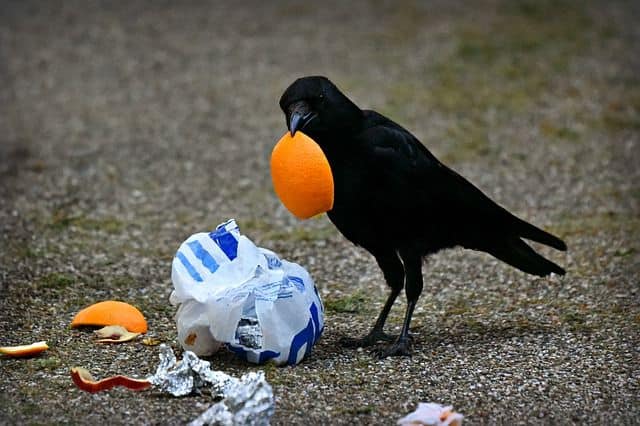
30. Human food scraps (garbage)
Human food waste is a major component of crow diets in urban and suburban environments. Crows are highly adaptable and have learned to exploit garbage bins, landfills, and outdoor feeding areas.
Food scraps provide a mix of fats, carbohydrates, proteins, and processed nutrients, although they vary widely in nutritional quality.
Crows demonstrate remarkable intelligence when accessing human food sources. They can open containers, recognize human routines, and remember locations where food is regularly available.
This behavior has allowed crow populations to thrive in cities, where natural prey may be limited but anthropogenic food sources are abundant.
However, reliance on human food can also expose crows to unhealthy or contaminated materials, making their adaptability both an advantage and a risk.
Conclusion
Crows are among the most adaptable and intelligent birds on Earth, and their diet clearly reflects this flexibility. As true omnivores, they consume an exceptionally wide range of foods, including insects, worms, small vertebrates, eggs, fruits, seeds, grains, carrion, and even human food waste. This dietary diversity is one of the key reasons crows thrive in almost every habitat, from remote forests to densely populated cities.
In natural ecosystems, crows play a dual ecological role as both predator and scavenger. By feeding on insects, rodents, and carrion, they help regulate pest populations and contribute to the decomposition of organic matter. At the same time, their consumption of fruits and seeds aids in plant dispersal, supporting forest regeneration and biodiversity.
Their opportunistic feeding behavior is closely tied to their advanced intelligence. Crows are capable of problem-solving, tool use, memory-based foraging, and even social cooperation when accessing difficult food sources. These cognitive abilities allow them to exploit food resources that many other species cannot.
In human-altered environments, crows have further expanded their dietary range by incorporating agricultural crops and urban food waste. While this brings them into frequent contact with people, it also highlights their remarkable ability to adapt to changing environments.
Overall, the crow’s diet is a perfect example of survival through versatility. Their ability to switch between animal and plant matter, natural and human-made food sources, ensures not only their survival but also their continued ecological importance in balancing ecosystems worldwide.
50+ FAQs About What Crows Eat
1. What do crows mainly eat?
Crows are omnivores, meaning they eat both animal and plant-based foods. Their main diet includes insects, small animals, fruits, seeds, grains, carrion, and human food waste. This flexibility allows them to survive in almost any environment.
2. Are crows carnivores or herbivores?
Crows are neither strictly carnivores nor herbivores. They are omnivores, which means they consume both meat and plant materials depending on availability and season.
3. Do crows eat insects?
Yes, insects are a major part of a crow’s diet. They eat beetles, grasshoppers, caterpillars, ants, termites, flies, and many other insect species, especially during breeding seasons.
4. Do crows eat worms?
Crows frequently eat earthworms, especially after rain when worms come to the soil surface. They are an easy and nutritious food source.
5. Do crows eat meat?
Yes, crows eat meat in the form of small animals, carrion, insects, and sometimes vertebrates like frogs, lizards, and rodents.
6. Do crows eat dead animals?
Crows are well-known scavengers and regularly feed on carrion (dead animals), which provides high protein and energy.
7. Do crows eat fish?
Yes, crows sometimes eat small fish, especially in wetland or coastal areas where fish are easily accessible in shallow water.
8. Do crows eat frogs?
Crows will eat frogs when available. Frogs are a rich protein source and are often hunted near ponds and wetlands.
9. Do crows eat eggs?
Yes, crows often raid nests to eat bird eggs, which are highly nutritious and rich in protein and fats.
10. Do crows eat baby birds?
Crows may sometimes eat nestlings (baby birds), especially when protein demand is high during breeding seasons.
11. Do crows eat rodents?
Yes, small rodents such as mice and young rats are part of their diet, especially in farmland and urban environments.
12. Do crows eat snakes?
Crows occasionally eat small snakes, usually juvenile or non-venomous species, using group hunting or quick attacks.
13. Do crows eat lizards?
Yes, small lizards are opportunistically eaten by crows in warm climates where reptiles are common.
14. Do crows eat fruits?
Crows eat many types of fruits, including berries, apples, and wild fruits, especially in late summer and autumn.
15. Do crows eat berries?
Yes, berries are a common seasonal food source and provide sugars, vitamins, and antioxidants.
16. Do crows eat seeds?
Crows eat seeds from grasses, wild plants, and crops, especially during colder months.
17. Do crows eat grains?
Yes, grains such as corn, wheat, and rice are commonly consumed in agricultural areas.
18. Do crows eat nuts?
Crows eat nuts like acorns and walnuts and are known for dropping them onto roads to crack shells open.
19. Do crows eat human food?
Yes, crows often eat leftovers, garbage, and processed foods in urban environments.
20. Do crows eat garbage?
Crows are highly adaptable and frequently forage in garbage bins and landfills for food scraps.
21. Why do crows eat carrion?
Carrion provides a rich source of protein and fat, especially when live prey is scarce.
22. Do crows hunt or scavenge?
Crows do both. They actively hunt insects and small animals but also scavenge dead animals and human waste.
23. Do crows store food?
Yes, crows cache food by hiding it in various locations and retrieving it later when needed.
24. Are crows picky eaters?
No, crows are highly opportunistic and will eat almost anything edible.
25. Do crows eat spiders?
Yes, spiders are part of their insect-based diet and are commonly consumed.
26. Do crows eat ants?
Yes, ants are frequently eaten, especially in large colonies or trails.
27. Do crows eat termites?
Yes, termites are an important seasonal food source during swarming periods.
28. Do crows eat shrimp or crabs?
In coastal areas, crows eat shrimp, crabs, and other small crustaceans.
29. Do crows eat aquatic animals?
Yes, they eat small fish, frogs, aquatic insects, and crustaceans when available.
30. Do crows eat plants?
Yes, crows eat seeds, grains, fruits, and plant matter as part of their omnivorous diet.
31. What foods do crows eat in cities?
In cities, crows commonly eat garbage, processed food scraps, bread, and other human leftovers.
32. What foods do crows eat in winter?
In winter, they rely more on carrion, seeds, nuts, and stored food caches.
33. What foods do crows eat in summer?
In summer, they eat more insects, worms, and small vertebrates due to higher availability.
34. Do crows eat other birds?
Crows may occasionally eat small birds or nestlings, especially when protein demand is high.
35. Do crows eat plants in gardens?
Yes, they may feed on fruits, vegetables, and seeds in gardens and farms.
36. Why are crows so adaptable in diet?
Their intelligence, memory, and opportunistic feeding behavior allow them to exploit many food sources.
37. Do crows eat alone or in groups?
Crows often feed in groups, especially when food is abundant or large carcasses are available.
38. Do crows eat at night?
Crows are primarily daytime feeders but may occasionally feed at dawn or dusk.
39. How do crows find food?
They use vision, memory, observation of other animals, and environmental cues to locate food.
40. Do crows compete for food?
Yes, they compete with other crows and scavengers but often use intelligence to outcompete rivals.
41. Do crows eat toxic food?
They generally avoid toxic foods but may experiment and learn to avoid harmful items.
42. Can crows eat cooked food?
Yes, they can eat cooked food such as rice, meat scraps, and bread when available.
43. Do crows eat bread?
Yes, but bread is not very nutritious and is considered a supplementary food.
44. Do crows eat cheese?
Yes, they may eat dairy products like cheese if accessible in human environments.
45. Do crows eat insects from farms?
Yes, farms provide abundant insect prey such as beetles, worms, and larvae.
46. Do crows help the environment through feeding?
Yes, they control pests, clean carrion, and help disperse seeds, benefiting ecosystems.
47. Are crows beneficial or harmful to humans?
They are both: beneficial for pest control and cleanup, but sometimes problematic in agriculture.
48. Do crows change diet by season?
Yes, their diet shifts significantly depending on seasonal food availability.
49. Do baby crows eat the same food as adults?
Chicks are fed softer, protein-rich foods like insects and small animal pieces.
50. Why are crows considered intelligent feeders?
Because they can solve problems, use tools, remember food locations, and adapt to new food sources quickly.
Read more: