
Texas is home to a variety of dove species, each with unique characteristics, behaviors, and habitats. From the widespread Mourning Dove to the tropical Inca Dove, understanding these birds can enhance your birdwatching experience across the Lone Star State. Below is a detailed guide to the most common doves in Texas.
1. Mourning Dove (Zenaida macroura)

Physical Characteristics
The Mourning Dove is easily recognizable by its slender body, long, pointed tail, and soft gray-brown plumage. Adults have a subtle pinkish hue on their breast and black spots on their wings. They measure about 9–13 inches in length with a wingspan of 17–18 inches, and weigh around 100–170 grams. Juveniles are slightly duller in color and lack the full wing pattern of adults.
Habitat and Distribution
Mourning Doves are highly adaptable and found throughout Texas. They inhabit open fields, farmland, suburban areas, parks, and woodland edges. They prefer areas with scattered trees or shrubs for nesting and roosting, often close to water sources.
Behavior
These doves are monogamous during the breeding season and are known for their soft, mournful cooing calls. They often feed on the ground, picking up seeds and grains with their small beaks. Mourning Doves are strong fliers, capable of swift, direct flight and quick takeoffs when threatened.
Diet
Mourning Doves primarily eat seeds, including grass seeds, weeds, and agricultural grains. Occasionally, they may also consume small insects, especially during the breeding season to provide protein for their young.
Identification Tips
Look for their slender body, long pointed tail with white edges, and soft gray-brown plumage with black spots on the wings. Their distinctive cooing call and ground-foraging habits also help identify them.
Conservation Status
Mourning Doves are abundant in Texas and across North America. They are protected under the Migratory Bird Treaty Act, and regulated hunting ensures sustainable populations.
2. White-winged Dove (Zenaida asiatica)
Physical Characteristics
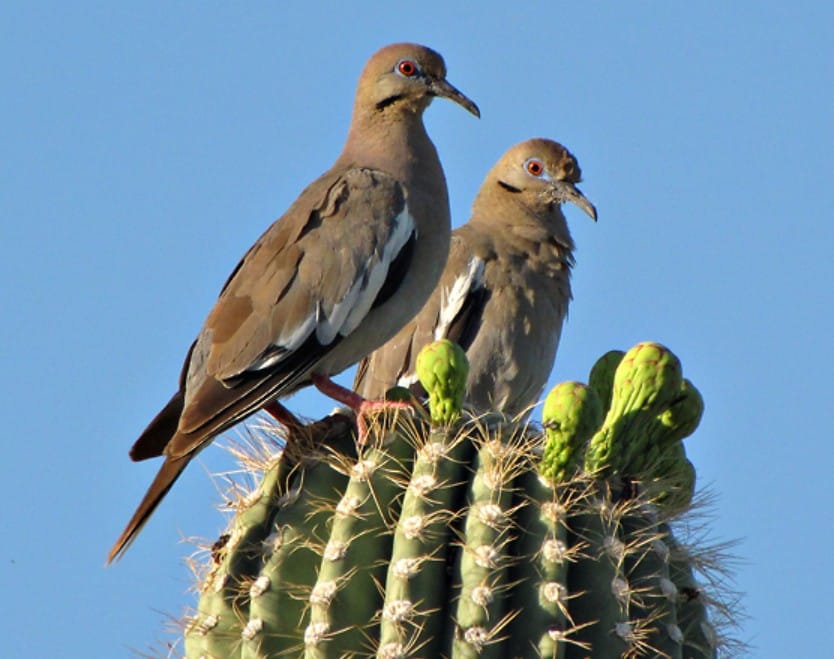
White-winged Doves are larger and more robust than Mourning Doves, measuring 12–14 inches in length with a wingspan of 22 inches. They have gray-brown plumage with distinctive white bands visible on the edges of their wings during flight. Their eyes are surrounded by a subtle blue skin ring, and the tail is squared with white tips.
Habitat and Distribution
These doves thrive in southern and central Texas, especially in desert scrub, mesquite woodlands, and urban areas. They are commonly found near water sources, feeders, and agricultural lands, including grain fields.
Behavior
White-winged Doves are social birds that often form large flocks. They are known for their noisy, harsh cooing calls and impressive flock formations in flight. During the breeding season, they are territorial and construct stick nests in trees or shrubs.
Diet
Their diet consists mostly of seeds and grains. They also consume fruits, berries, and occasionally insects. Urban populations are often attracted to bird feeders, where they readily eat sunflower seeds and corn.
Identification Tips
Key features include the white wing edge visible in flight, gray-brown plumage, blue eye ring, and robust body shape. Their loud, rolling cooing call is another identifier.
Conservation Status
White-winged Doves have expanded their range in Texas due to agricultural development. Populations are stable, and they are protected under the Migratory Bird Treaty Act.
3. Inca Dove (Columbina inca)
Physical Characteristics
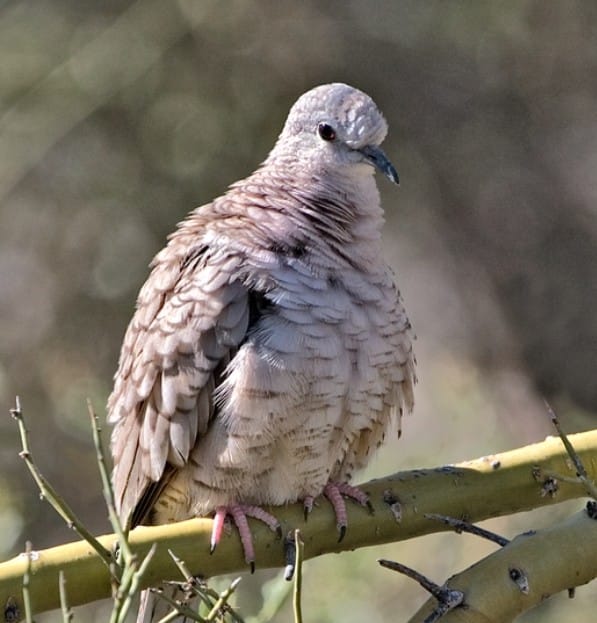
Inca Doves are small, delicate birds measuring only 6–7 inches in length with a wingspan of 9–10 inches. Their plumage is light brown with scaly, gray-buff edges on the feathers, giving them a unique patterned appearance. They have slender bodies, long tails, and pale, dark-ringed eyes.
Habitat and Distribution
Inca Doves inhabit the southern regions of Texas and are commonly found in deserts, suburban areas, and gardens. They prefer areas with shrubs, low trees, and open spaces where they can forage for seeds.
Behavior
These doves are gentle and often seen walking on the ground in pairs or small groups. They are not strong fliers, preferring to glide short distances. Their soft, repetitive cooing calls are gentle compared to other dove species. Inca Doves often feed in loose flocks at feeders and open areas.
Diet
Their diet is mainly seeds, grains, and small fruits. They forage on the ground, often flicking their heads as they pick up food. Occasional small insects supplement their diet, particularly during breeding season.
Identification Tips
Look for their scaly patterned plumage, small size, long tail, and gentle cooing calls. Their walking behavior and preference for ground feeding also help identify them.
Conservation Status
Inca Doves are widespread and stable in Texas. They are not considered threatened and have adapted well to human-altered landscapes.
Conclusion
Texas hosts a variety of dove species, each with unique appearances, behaviors, and habitats. The Mourning Dove, White-winged Dove, and Inca Dove are among the most common, and they can be identified through careful observation of size, plumage patterns, calls, and behaviors. Understanding these doves enriches birdwatching experiences and highlights the diversity of Texas wildlife.
Frequently Asked Questions (FAQs)
- Q: What is the most common dove in Texas?
A: The Mourning Dove is the most widespread and commonly seen dove throughout Texas. - Q: Do doves migrate in Texas?
A: Some species, like Mourning Doves, migrate seasonally, while others, like Inca Doves, are mostly resident year-round. - Q: Are doves protected in Texas?
A: Yes, most dove species are protected under the Migratory Bird Treaty Act. - Q: What do doves eat?
A: Doves primarily eat seeds and grains, but some species may also consume fruits and small insects. - Q: Can I attract doves to my backyard in Texas?
A: Yes, by providing seeds like millet, sunflower seeds, and water sources, you can attract doves to feeders and gardens. - Q: How can I tell Mourning Doves from White-winged Doves?
A: Mourning Doves are smaller, with a soft gray-brown body and long pointed tail, while White-winged Doves are larger with white wing edges visible in flight and a blue eye ring. - Q: Do Inca Doves nest in trees or on the ground?
A: Inca Doves usually nest low in shrubs or trees, often hidden in dense foliage. - Q: How many dove species are native to Texas?
A: There are over 10 dove and pigeon species recorded in Texas, but the most common are Mourning Dove, White-winged Dove, and Inca Dove. - Q: Are doves easy to spot in urban areas?
A: Yes, doves often adapt to urban and suburban areas, especially where feeders and open spaces are available. - Q: What is the lifespan of doves in Texas?
A: Doves typically live 1–5 years in the wild, though some may reach over 10 years. - Q: Do doves have predators in Texas?
A: Yes, common predators include hawks, falcons, cats, and snakes. - Q: Can doves be aggressive?
A: Doves are generally gentle and non-aggressive, though males may defend nests during breeding season. - Q: How do doves communicate?
A: Through cooing calls, body language, and occasional flight displays. - Q: Do doves roost together?
A: Yes, many doves roost in groups for safety, especially in trees and shrubs. - Q: What time of year is best to see doves in Texas?
A: Spring and fall are ideal for spotting doves due to migration and breeding activity. - Q: Are there endangered doves in Texas?
A: Most common doves are not endangered, though habitat loss can affect local populations. - Q: Can I feed doves year-round?
A: Yes, but be mindful of attracting predators and keep feeders clean. - Q: Do doves mate for life?
A: Some species, like Mourning Doves, form seasonal monogamous pairs, but long-term pair bonds can occur. - Q: Are doves noisy?
A: Doves are relatively quiet, producing soft cooing calls rather than loud squawks. - Q: How fast can doves fly?
A: Mourning Doves, for example, can reach speeds up to 55 mph during flight. - Q: Do doves drink a lot of water?
A: Yes, doves require regular water for drinking and bathing, especially in hot Texas climates.
Read more: 4 Types of Doves in Iowa (Pictures and Identification)