

Toucans are some of the most colorful and iconic birds in tropical forests, easily recognized by their oversized, brightly colored bills and playful personalities. This article explores the Types of Toucans found across Central and South America, providing detailed insights into their appearance, habitat, behavior, diet, and ecological roles. Whether you are a beginner birdwatcher, a wildlife enthusiast, or simply curious about these fascinating birds, our guide will introduce you to 30 unique toucans in an educational and friendly way.
From the striking Toco Toucan to the rare Citron-throated Toucan, each species has its own story, adaptations, and significance in forest ecosystems. By the end of this article, you will have a deep appreciation for these vibrant birds and a comprehensive understanding of Types of Toucans.
30 Types of Toucans
1. Toco Toucan (Ramphastos toco)
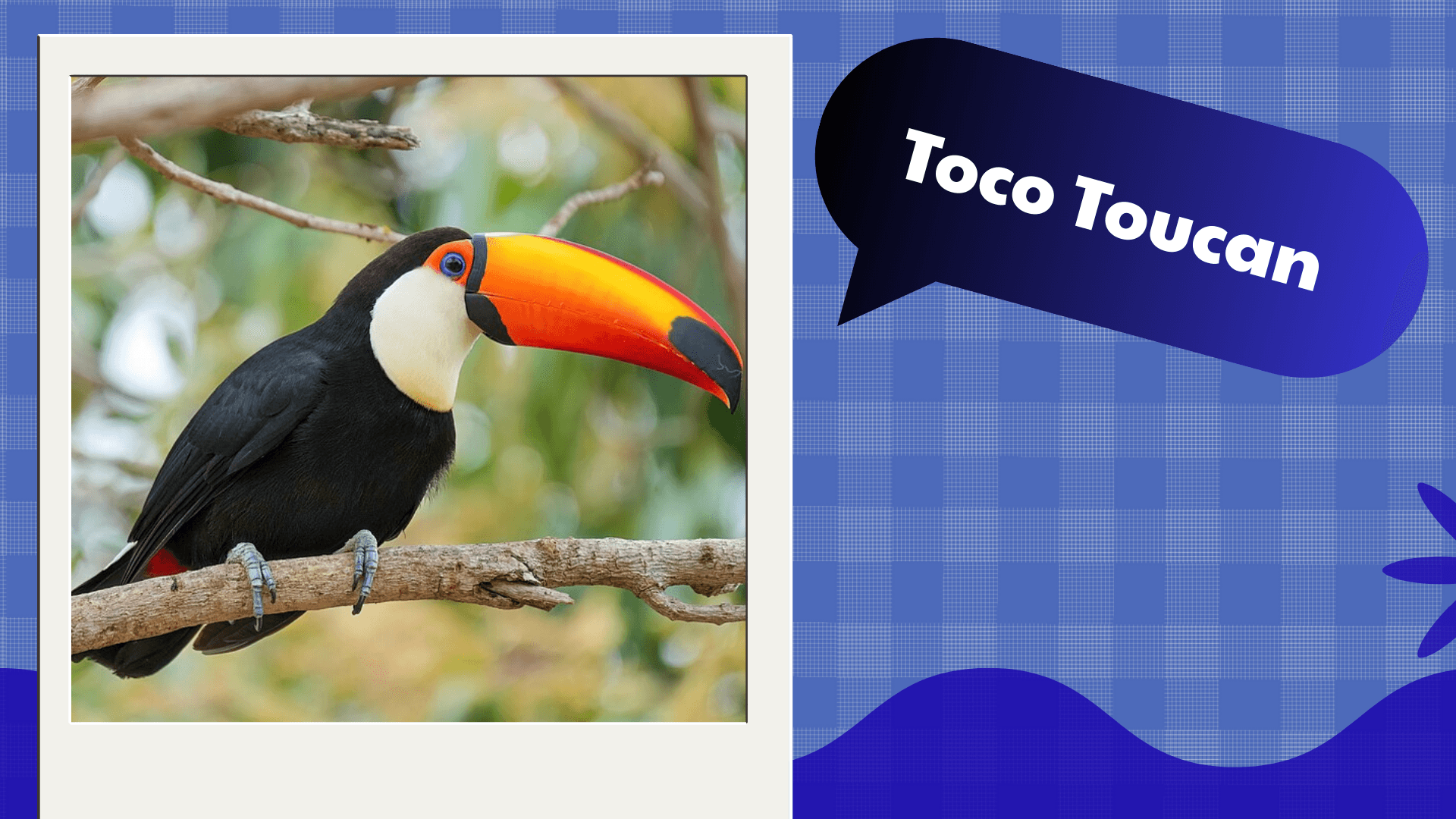
The Toco Toucan is perhaps the most famous of all toucans, easily recognized by its massive orange bill that can measure up to 20 centimeters long. Native to South America, particularly Brazil, Paraguay, and northern Argentina, the Toco Toucan thrives in tropical and subtropical forests, savannas, and open woodlands. Its bold black-and-white body contrasts strikingly with its vivid bill, making it a favorite among wildlife photographers and bird enthusiasts.
Toco Toucans are highly social and often move in small flocks. They feed primarily on fruit but will also consume insects, eggs, and small reptiles. Their large bill is not just ornamental—it helps reach fruit on branches that may otherwise be out of reach and plays a role in thermoregulation by releasing excess heat. Breeding occurs in tree cavities, where both parents care for the chicks. Conservation-wise, Toco Toucans are not currently endangered, but deforestation poses a significant threat to their habitat.
2. Channel‑billed Toucan (Ramphastos vitellinus)
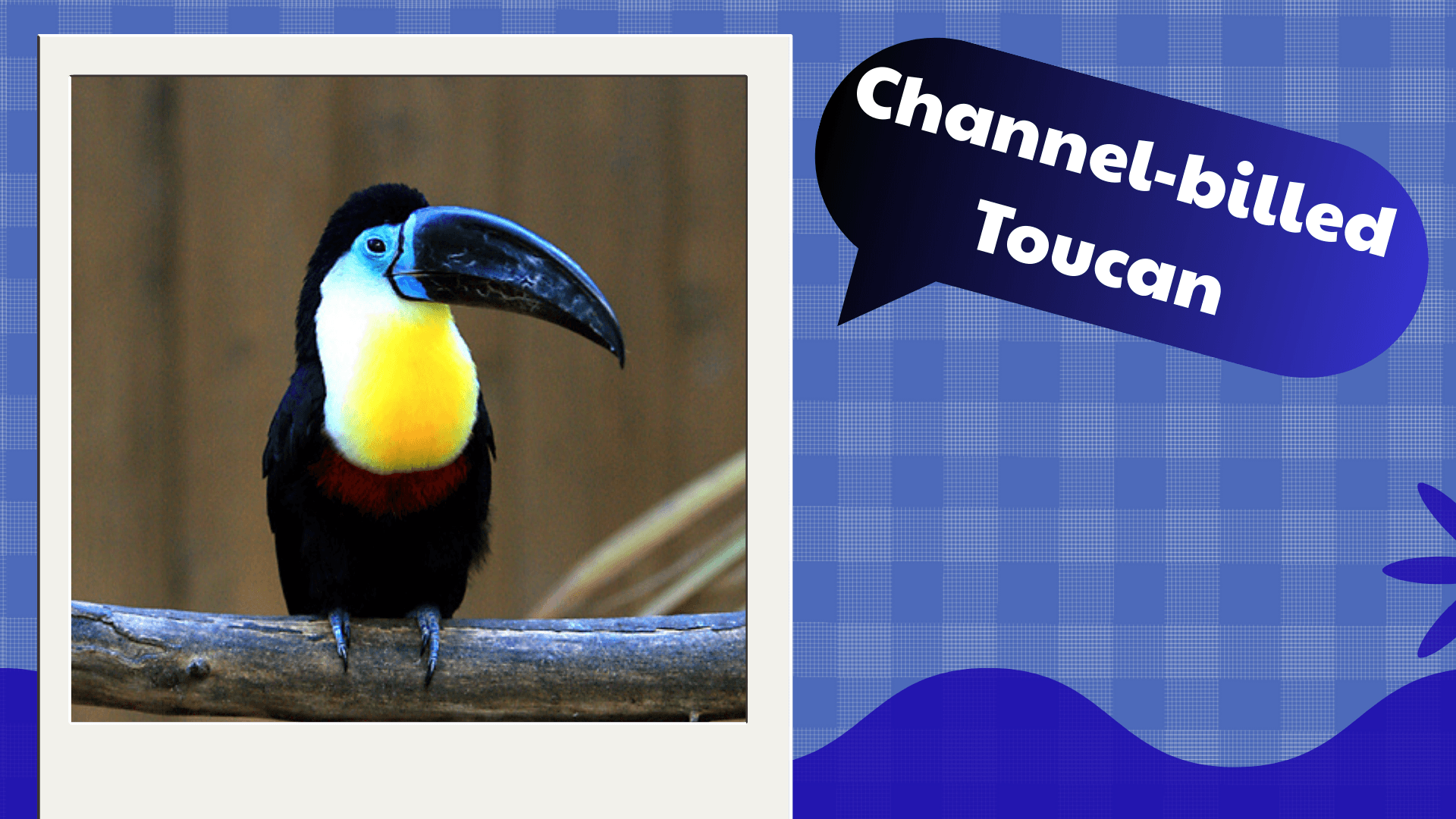
The Channel-billed Toucan, also called the Yellow-ridged Toucan, is known for its long, slightly curved bill with distinctive yellow markings along the ridge. Found in northeastern South America, including the Amazon basin, this species prefers dense forests and edges of riverine habitats. Its plumage is mostly black with a vibrant yellow throat, making it highly visible in the green canopy.
Diet mainly consists of fruit, but Channel-billed Toucans occasionally feed on small birds and eggs, demonstrating their opportunistic feeding behavior. They are social birds, often seen in groups that forage together. Nests are created in natural tree cavities or abandoned woodpecker holes. With a population considered stable, the Channel-billed Toucan remains a key species for seed dispersal, contributing significantly to the health of tropical forests.
3. Keel‑billed Toucan (Ramphastos sulfuratus)
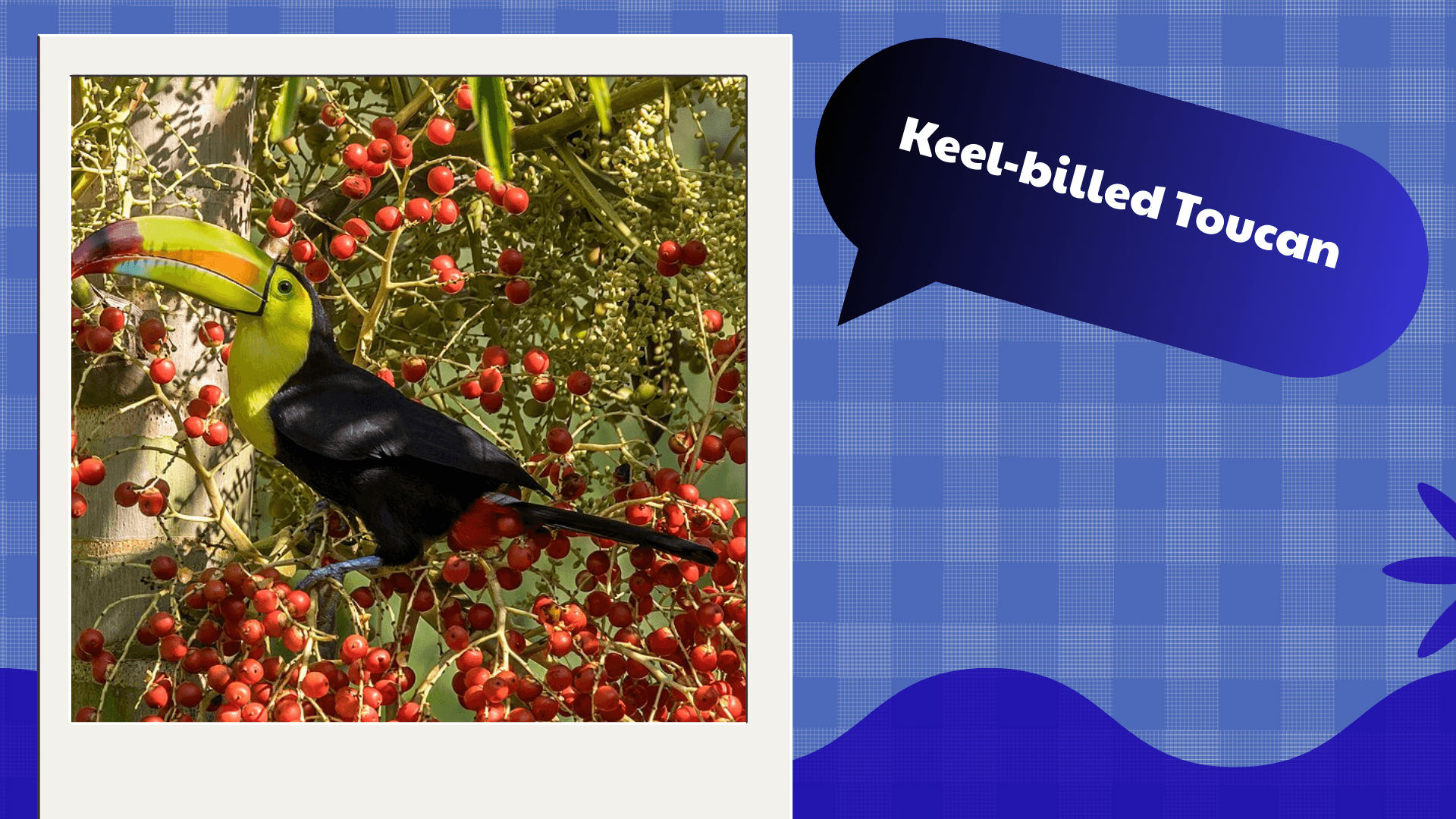
The Keel-billed Toucan is famous for its spectacular rainbow-colored bill, featuring shades of green, orange, red, and blue. This medium-sized toucan inhabits tropical rainforests from southern Mexico to northern Colombia. Keel-billed Toucans are highly social and vocal, often heard before they are seen. Their loud calls are a familiar sound in Central American forests.
Fruit dominates their diet, but they also consume insects, lizards, and bird eggs when available. Their bright bills help in foraging, allowing access to fruits on branches too weak to support their body weight. Breeding pairs raise chicks in tree cavities, with both parents sharing incubation and feeding duties. The Keel-billed Toucan is culturally significant in Central America, often featured in folklore and local art, making it a symbol of tropical biodiversity.
4. Red‑billed Toucan / White‑throated Toucan (Ramphastos tucanus)
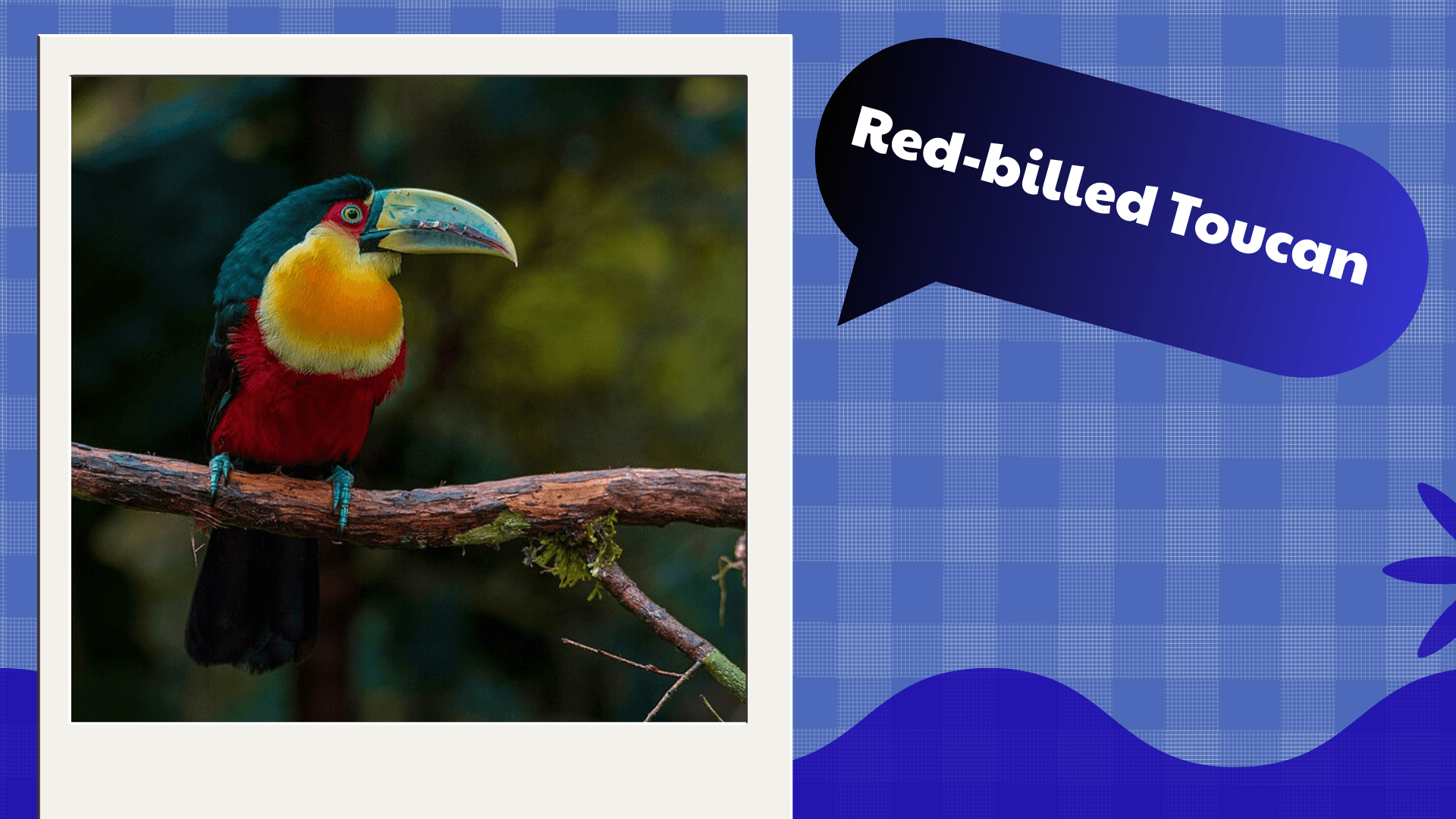
The Red-billed Toucan, also called the White-throated Toucan, is found throughout the Amazon rainforest and surrounding regions. It features a striking red-orange bill and a contrasting white throat that makes it easily recognizable. Its body is mostly black with vivid yellow and red accents near the chest and under-tail regions.
This toucan primarily eats fruit but supplements its diet with insects and small vertebrates. Red-billed Toucans are social and vocal, communicating with loud, resonant calls. They nest in tree cavities, with both parents actively involved in chick-rearing. These birds play an essential ecological role as seed dispersers, helping maintain the diversity and regeneration of tropical forests.
5. Citron‑throated Toucan (Ramphastos citreolaemus)
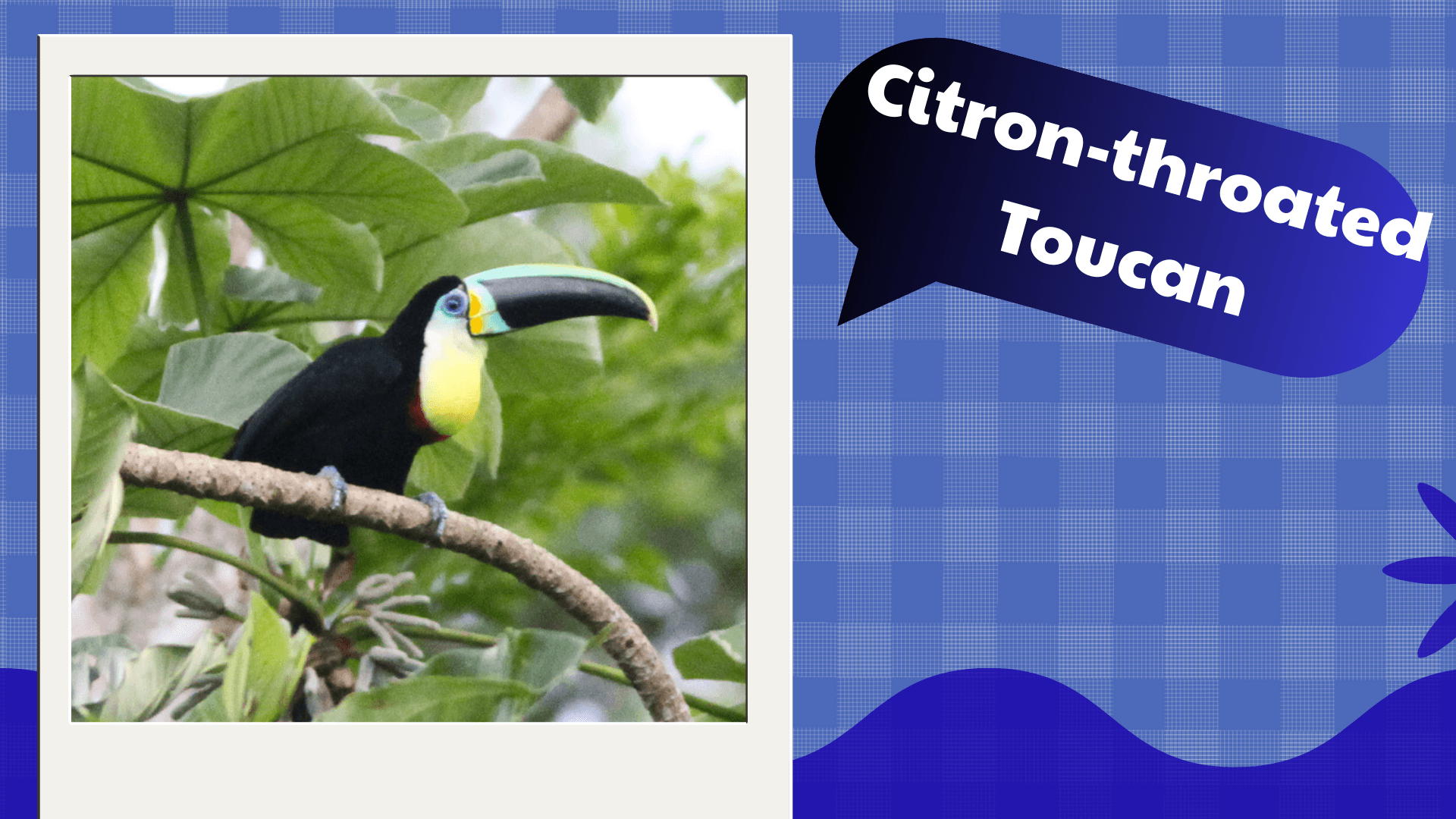
The Citron-throated Toucan is a medium-sized toucan with a predominantly black body, bright yellow throat, and a long, slightly curved orange bill tipped with green. It is native to the lowland rainforests of northern South America, where it prefers dense canopies and riverine forests. Its vibrant colors and distinctive markings make it easy to spot among dense foliage.
Its diet consists mainly of fruit, although it occasionally eats insects and small reptiles. Citron-throated Toucans are social, often moving in pairs or small groups. Breeding occurs in tree cavities, and both parents contribute to feeding and caring for the chicks. As frugivores, these toucans are vital for seed dispersal, which maintains the structure and diversity of tropical forests. While not currently endangered, habitat loss poses a long-term threat to their population.
6. Yellow‑throated Toucan (Ramphastos ambiguus)
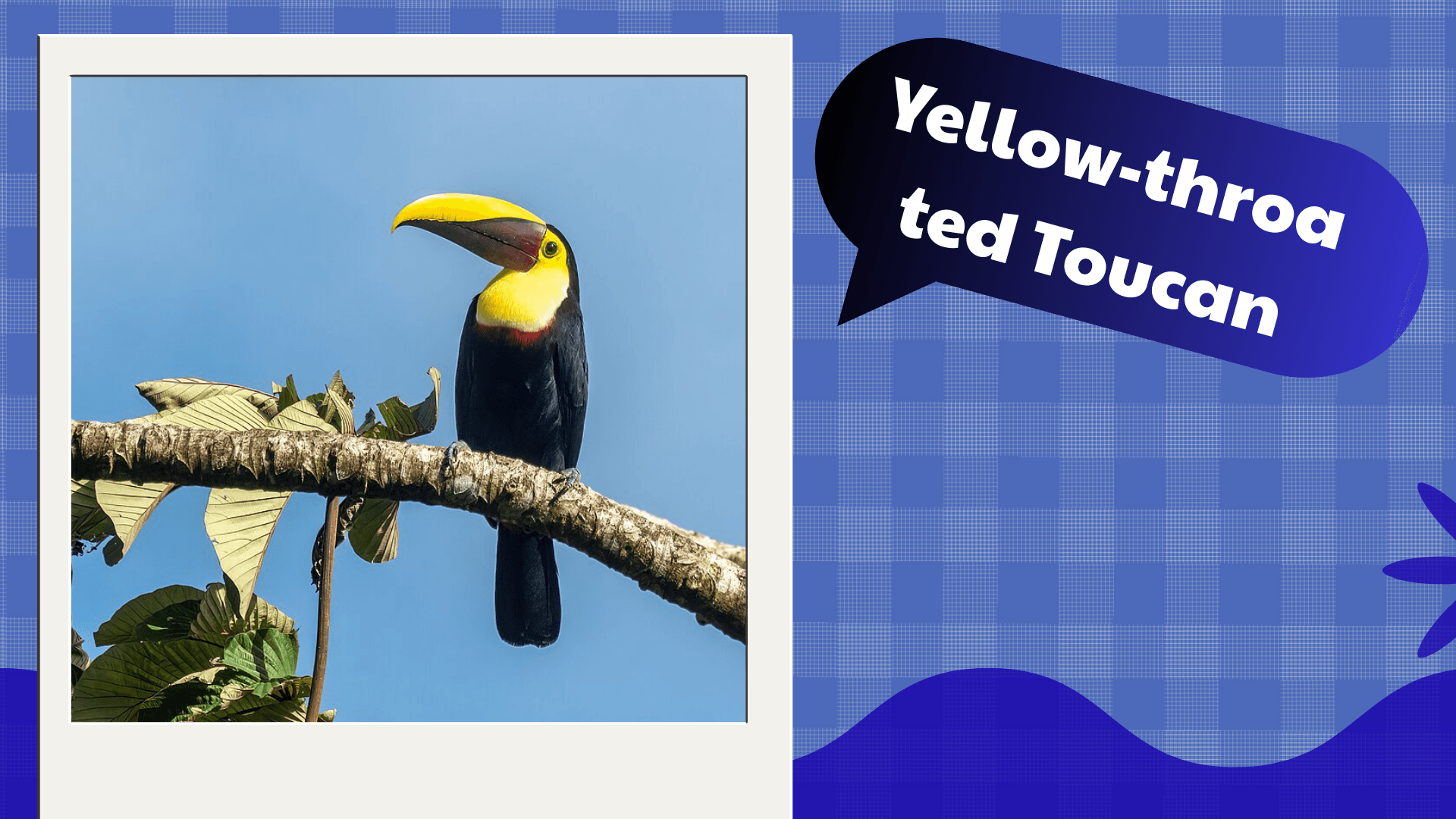
The Yellow-throated Toucan is a medium-sized, vibrant bird native to the forests of Central and South America. Its striking yellow throat contrasts beautifully with its black body and large, colorful bill. This species prefers lowland tropical forests and forest edges, where it can easily forage for fruit and small prey.
Diet mainly consists of fruits, but it may also eat insects, eggs, and small reptiles. Yellow-throated Toucans are social and often found in small flocks or family groups. Their large bills not only help in accessing fruit on slender branches but also play a role in thermoregulation. Nesting occurs in tree cavities, and both parents actively care for their chicks. As frugivores, they are essential seed dispersers, contributing significantly to forest regeneration.
7. Green‑billed Toucan (Ramphastos dicolorus)
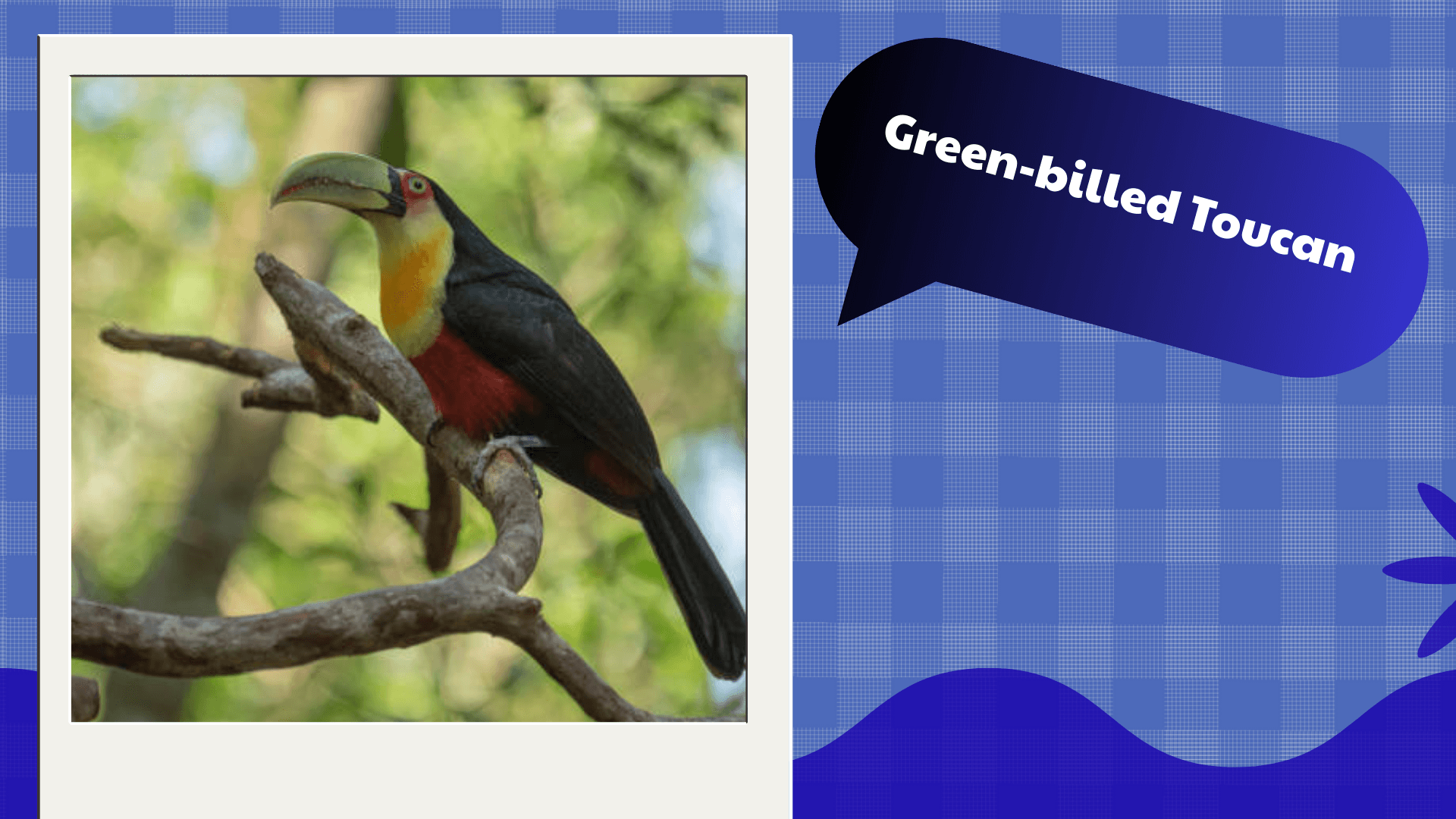
The Green-billed Toucan is known for its bright green bill and mostly black plumage, accented with a red undertail and throat markings. Native to the Atlantic Forest of Brazil, this toucan prefers dense, humid forests where fruit is abundant. It is a medium-sized, highly social bird often seen in pairs or small groups.
Its diet is primarily frugivorous but can include insects and other small invertebrates. The Green-billed Toucan plays an important ecological role as a seed disperser, helping to maintain the biodiversity and structure of the forests it inhabits. Breeding takes place in natural tree cavities, with both parents sharing incubation and chick-rearing duties. Despite being less known than the Toco Toucan, the Green-billed Toucan remains an iconic species for forest conservation in Brazil.
8. Red‑breasted Toucan (Ramphastos dicolorus variant)
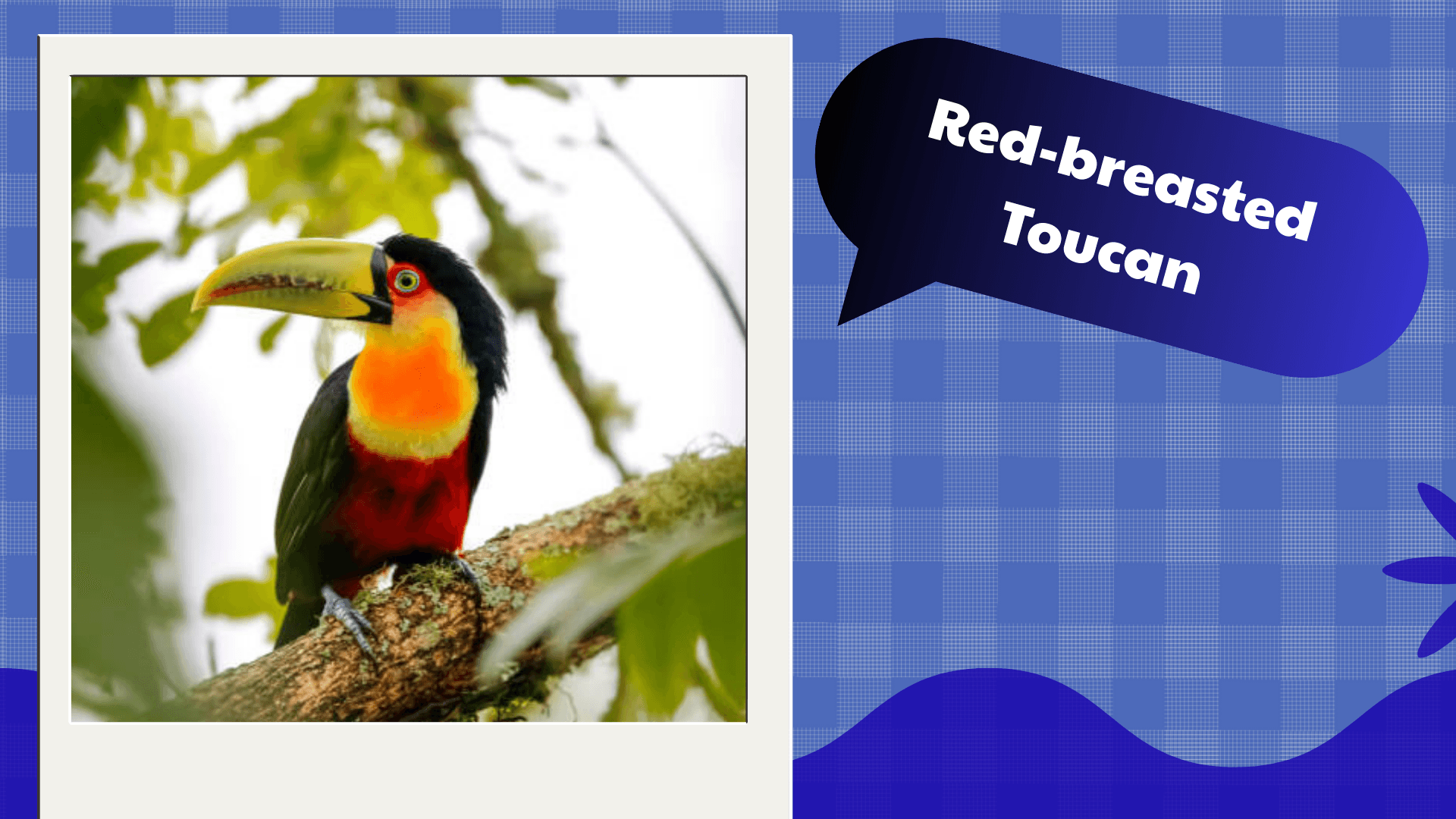
The Red-breasted Toucan, a variant of the Green-billed Toucan, features a vibrant red chest that contrasts sharply with its dark body and green-tinted bill. Found in the southern and eastern regions of Brazil, it inhabits Atlantic forests and humid woodlands, often preferring mid-level forest canopies.
This species primarily consumes fruits, playing a vital role in seed dispersal, though it may occasionally eat insects and small eggs. Socially, Red-breasted Toucans are seen in small flocks, communicating through distinctive calls. Nesting occurs in tree cavities, with both parents actively feeding their young. Habitat loss due to deforestation poses a threat, making the conservation of their forest homes critical for their survival and the maintenance of ecosystem diversity.
9. Black‑mandibled Toucan (Ramphastos ambiguus)
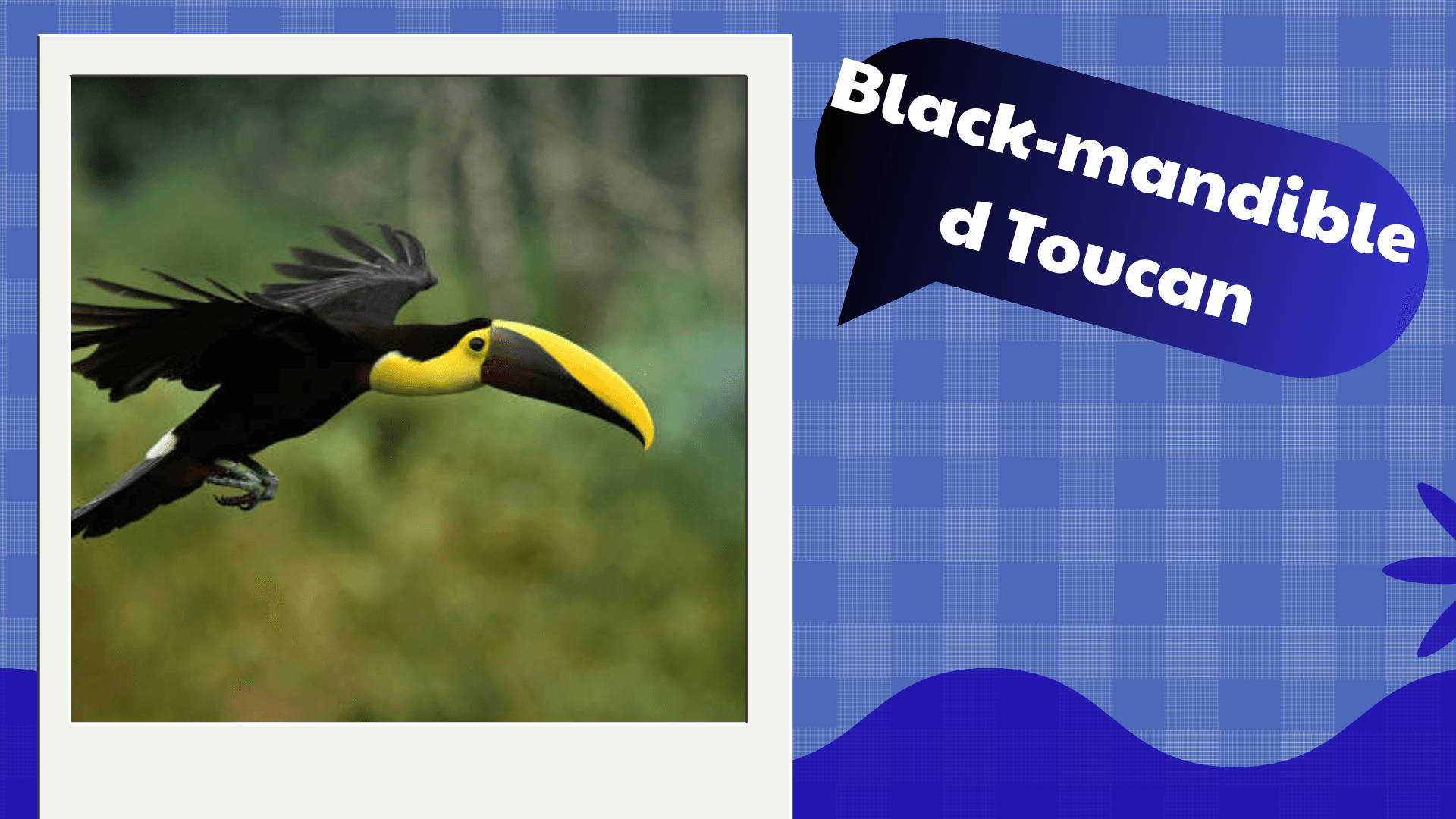
The Black-mandibled Toucan is one of the larger toucan species, easily recognized by its dark-colored bill and vibrant yellow throat. It inhabits tropical forests in Central and northern South America, including Costa Rica, Panama, and Colombia. Preferring lowland rainforests and forest edges, it is often observed in small social groups.
Its diet consists largely of fruit, supplemented occasionally by insects, eggs, and small vertebrates. Black-mandibled Toucans are highly vocal, using calls to maintain group cohesion. Breeding occurs in tree cavities, with shared parental care for the chicks. By dispersing seeds, they maintain the health and regeneration of tropical forests, highlighting their ecological importance as frugivorous birds.
10. Chestnut‑mandibled Toucan (Ramphastos swainsonii)
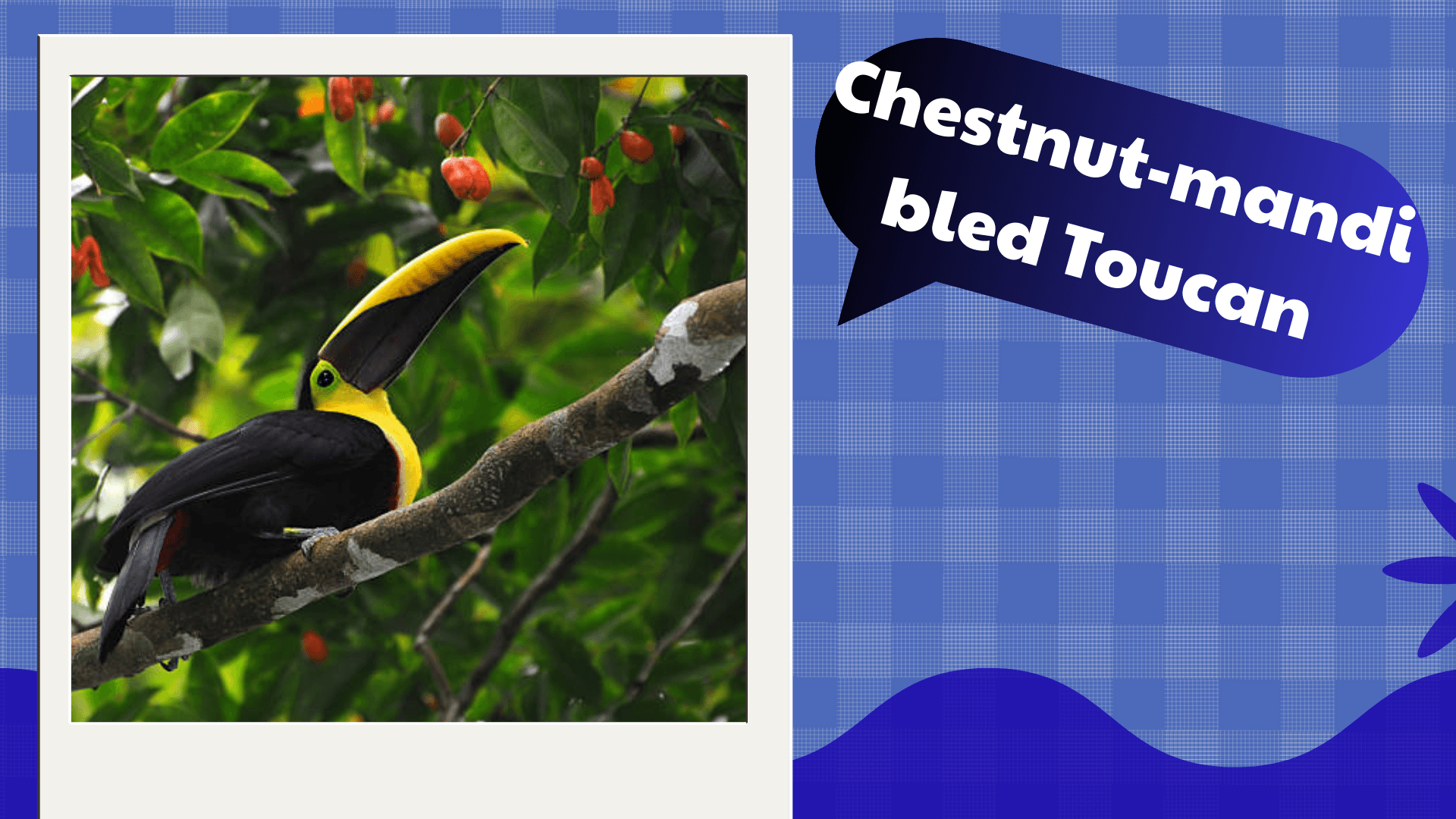
The Chestnut-mandibled Toucan is a medium-to-large toucan species, distinguished by its chestnut-colored bill and striking yellow throat. Native to Central America, including Panama, Costa Rica, and Nicaragua, it thrives in humid lowland forests and occasionally in secondary growth areas. This social bird is usually found in small groups or family units, often vocalizing as it moves through the canopy.
Its diet is predominantly fruit-based, but Chestnut-mandibled Toucans also eat insects, small reptiles, and eggs when available. Their bills help access food on branches too delicate to support their weight, and they also aid in regulating body temperature. Breeding takes place in tree cavities, with both parents participating in feeding and protecting the chicks. As seed dispersers, Chestnut-mandibled Toucans play a vital role in maintaining tropical forest ecosystems and biodiversity.
11. Black‑billed Mountain‑Toucan (Andigena nigrirostris)

The Black-billed Mountain-Toucan is a striking species native to the cloud forests of the Andes, spanning Colombia, Ecuador, Peru, and Bolivia. It features a mostly dark body with a subtle blue-green tinge, a black bill, and vibrant yellow markings around the eyes and throat. Preferring high-altitude forests, this toucan is adapted to cooler and misty environments, which is unique among its relatives.
Its diet consists mainly of fruits and berries, supplemented by insects and small vertebrates. Black-billed Mountain-Toucans are social birds, often seen in pairs or small flocks, and are highly vocal, using calls to maintain contact in dense forests. Breeding occurs in natural tree cavities, with both parents actively involved in feeding the chicks. As frugivores, they are essential for seed dispersal, supporting biodiversity in Andean cloud forests.
12. Grey‑breasted Mountain‑Toucan (Andigena hypoglauca)
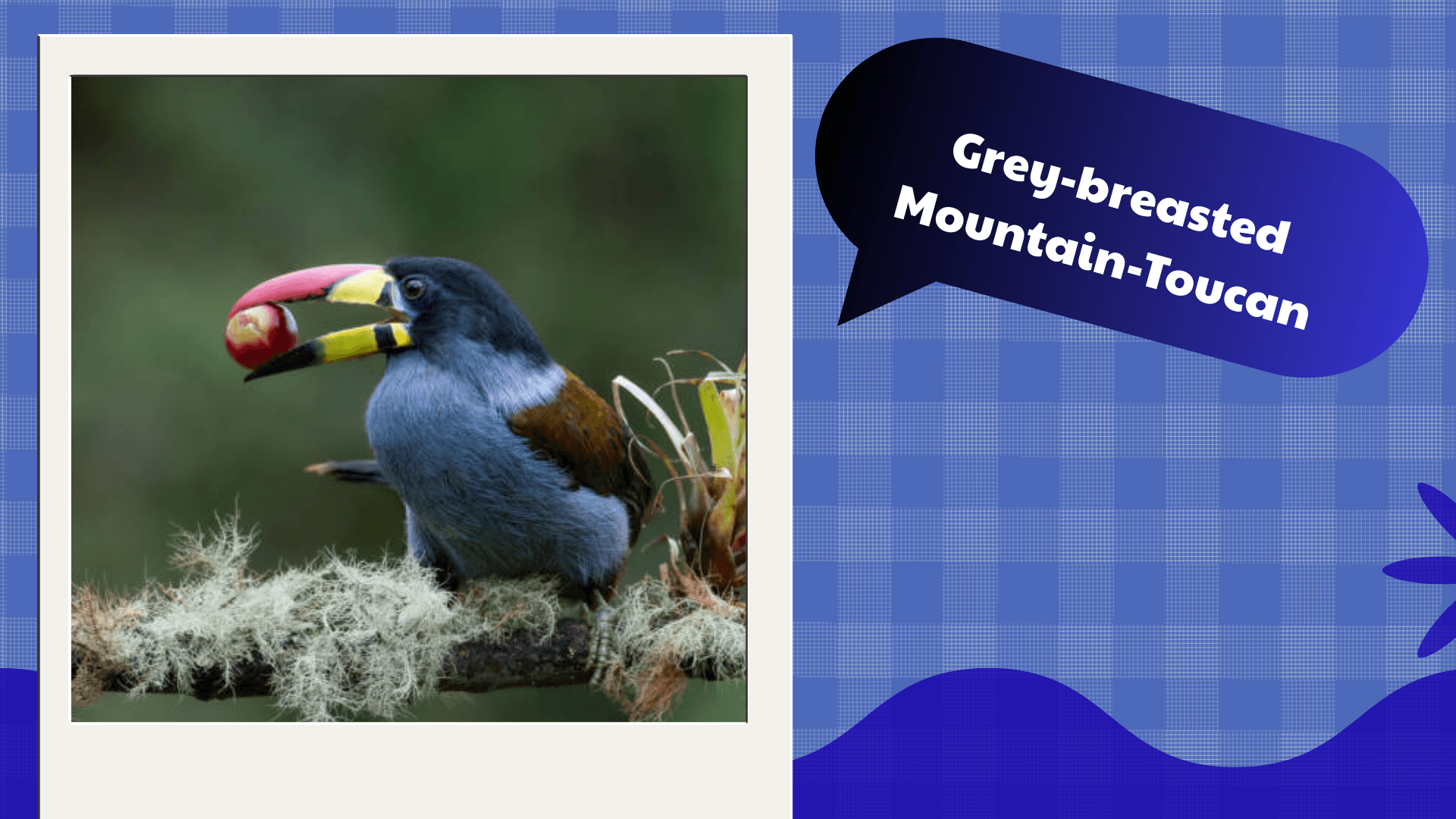
The Grey-breasted Mountain-Toucan is a medium-sized toucan found in the Andean cloud forests of Colombia, Ecuador, and northern Peru. Its distinctive grey breast contrasts with a primarily dark body, and its colorful bill features shades of orange, yellow, and black. Adapted to high-altitude humid forests, this species is known for its quiet yet social behavior, often seen moving in small groups through the canopy.
Diet mainly consists of fruits, although it occasionally consumes insects and small birds. Grey-breasted Mountain-Toucans are cavity nesters, with both parents sharing the responsibility of incubating eggs and feeding chicks. Their role as frugivores helps maintain plant diversity, ensuring the regeneration of cloud forests. Due to habitat loss from deforestation and agriculture, their populations are monitored to ensure long-term conservation.
13. Plate‑billed Mountain‑Toucan (Andigena laminirostris)
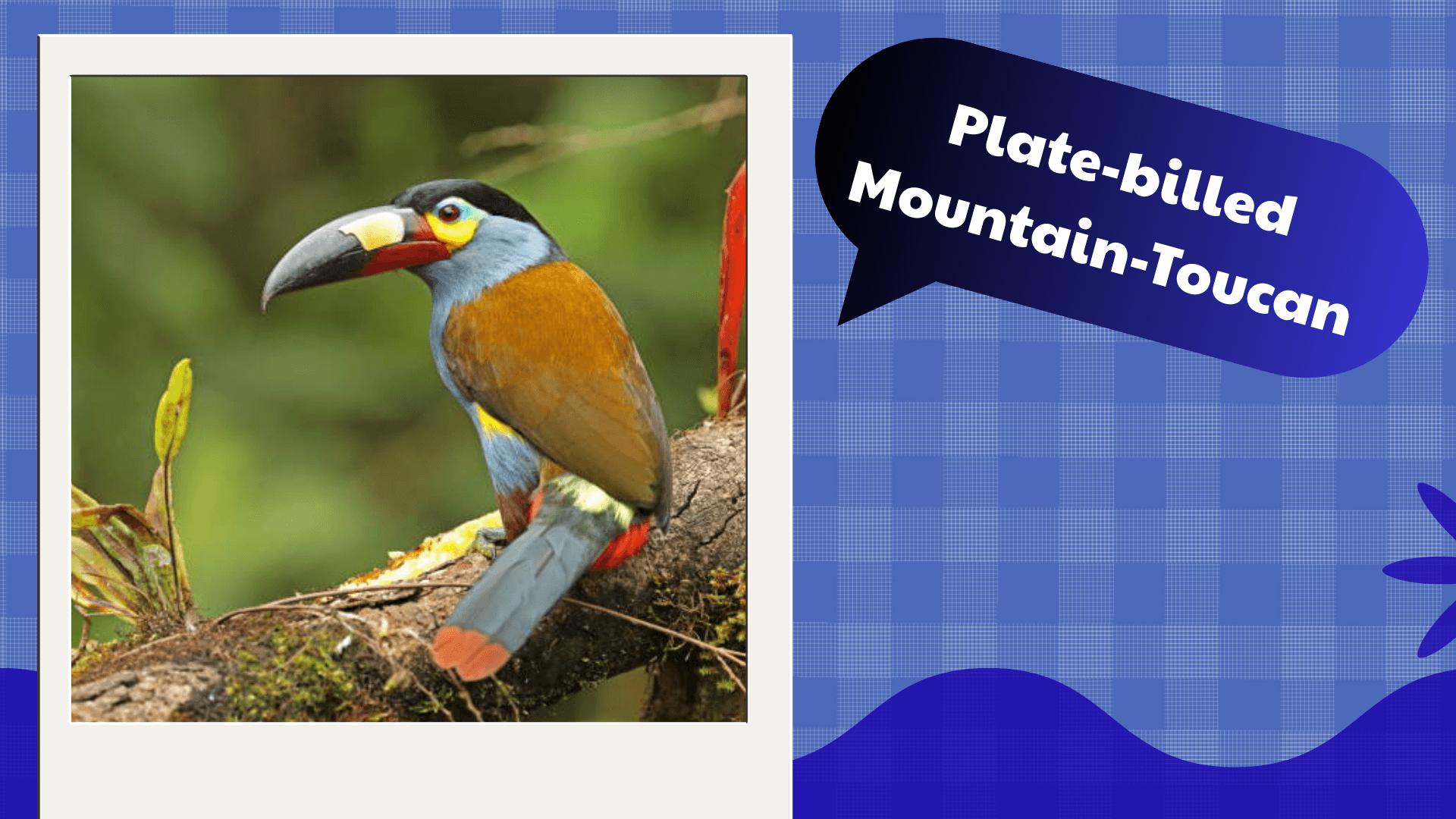
The Plate-billed Mountain-Toucan is native to the montane forests of Ecuador and northern Peru. This striking bird has a predominantly black body with a white throat, bright yellow under-tail coverts, and a uniquely patterned plate on its bill, giving it its name. It is a high-altitude species, favoring cloud forests above 2,000 meters, where fruit-bearing trees are abundant.
Its diet is primarily frugivorous, but it will also eat insects, small amphibians, and eggs when available. Plate-billed Mountain-Toucans are social, often seen in family groups or small flocks. They nest in tree cavities, with both parents involved in raising the young. By dispersing seeds, this toucan plays a critical role in sustaining the diversity of Andean cloud forests and maintaining healthy forest ecosystems.
14. Hooded Mountain‑Toucan (Andigena cucullata)
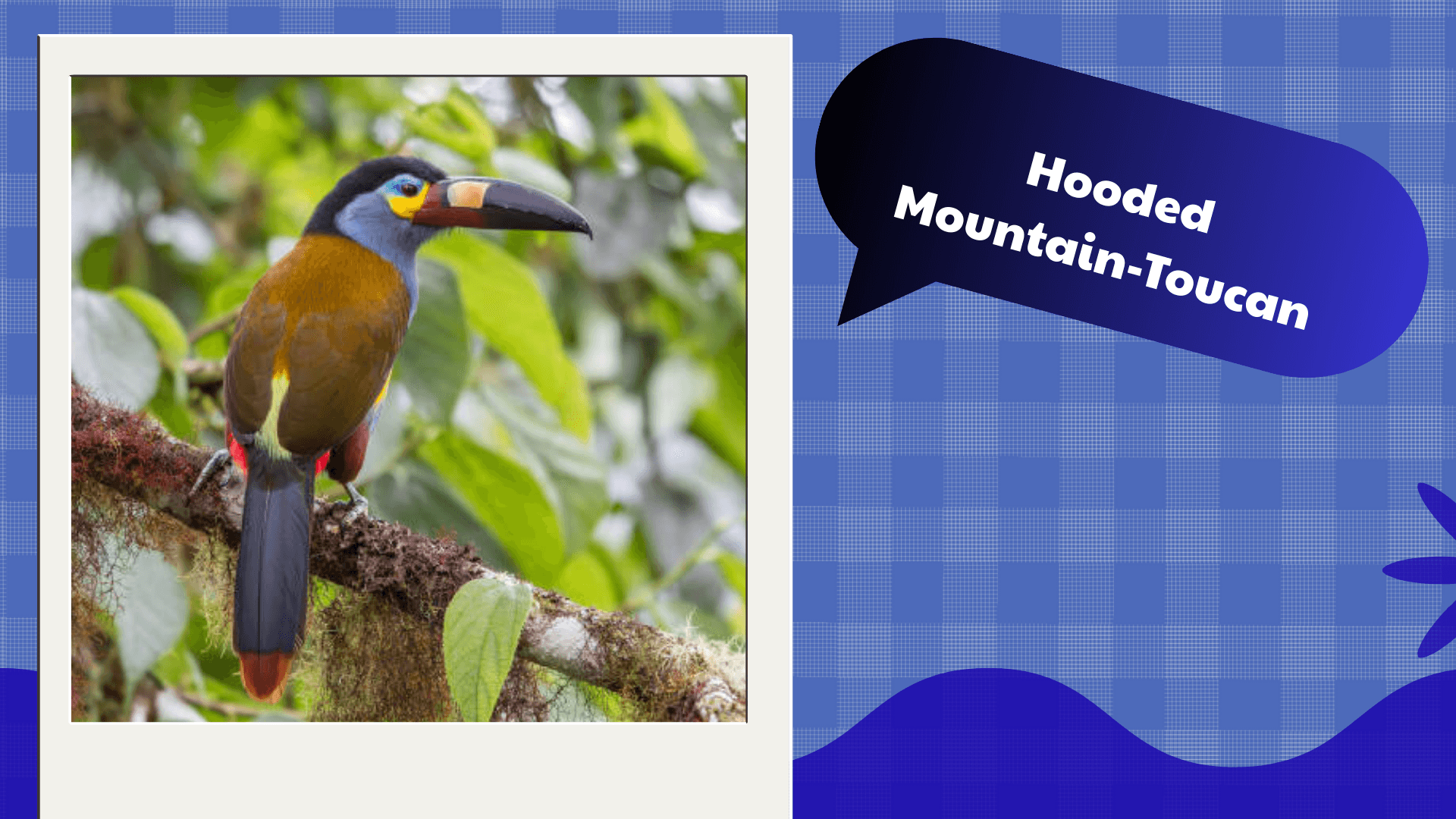
The Hooded Mountain-Toucan inhabits the cloud forests of Peru and Bolivia. Its distinctive “hooded” black cap, yellow throat, and red undertail make it easily recognizable. Preferring dense montane forests, it is an agile climber and often moves silently among the branches, blending with the forest shadows.
Its diet is primarily composed of fruits, berries, and occasionally small animals. Hooded Mountain-Toucans are social, often observed in small flocks, and they use loud, resonant calls to communicate. Breeding occurs in tree cavities, and both parents feed and care for the chicks. This species’ role as a frugivore is essential for maintaining the regeneration and diversity of cloud forests, highlighting its ecological significance.
15. Blue‑banded Toucanet (Aulacorhynchus coeruleicinctis)
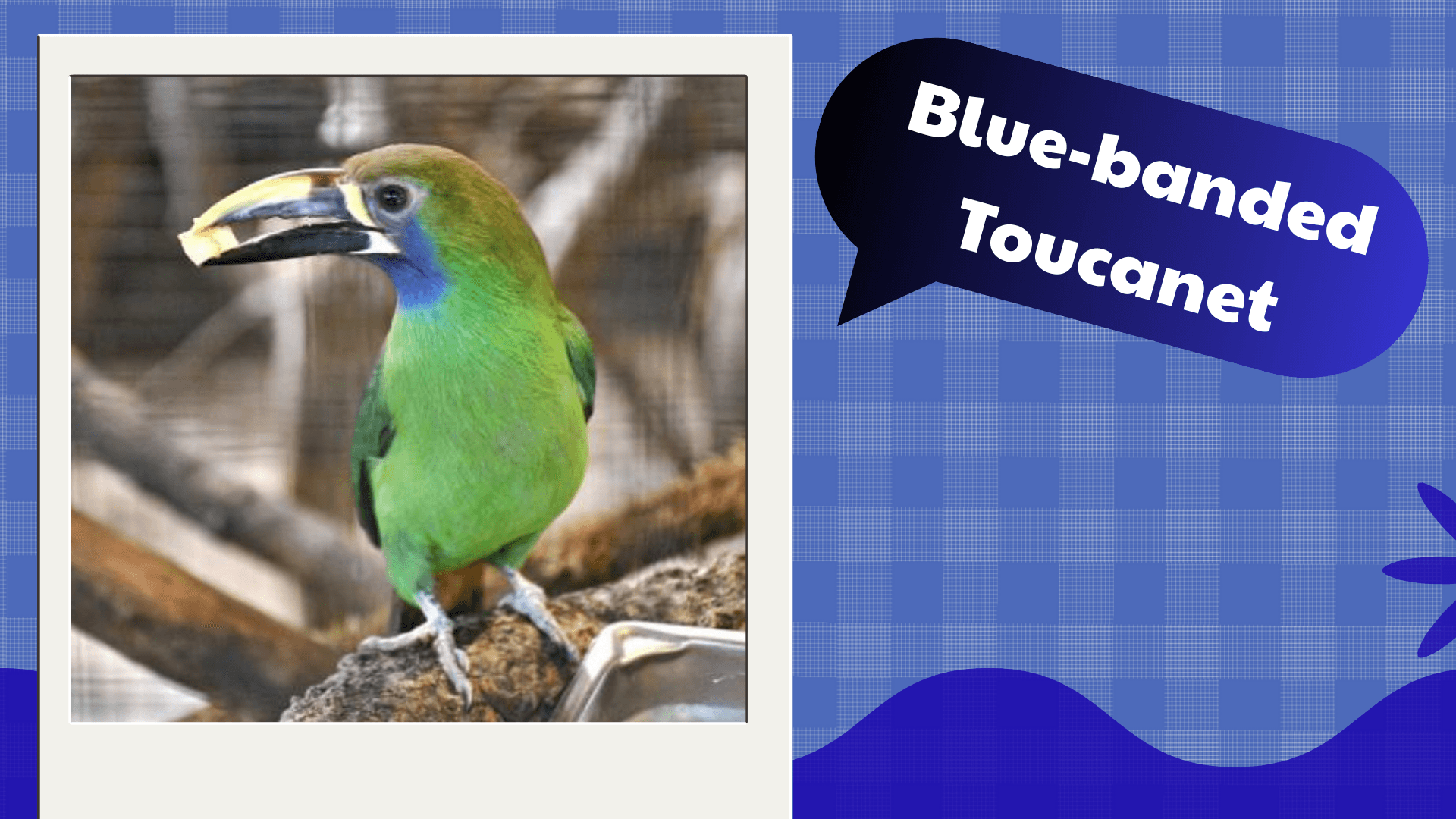
The Blue-banded Toucanet is a small, vibrant toucanet found in the Andean forests of Colombia, Ecuador, and northern Peru. It features a green body with striking blue bands across the chest and wings, complemented by a bright, moderately sized bill. This species prefers humid montane forests and forest edges, where it can forage effectively among fruiting trees.
Its diet consists mainly of fruits, with insects and small arthropods supplementing its nutrition. Blue-banded Toucanets are social and often travel in small family groups, communicating with soft, high-pitched calls. They nest in tree cavities, and both parents share incubation and feeding duties. As frugivores, they are vital for dispersing seeds and maintaining forest biodiversity, making them an important component of Andean ecosystems.
16. Chestnut‑tipped Toucanet (Aulacorhynchus derbianus)
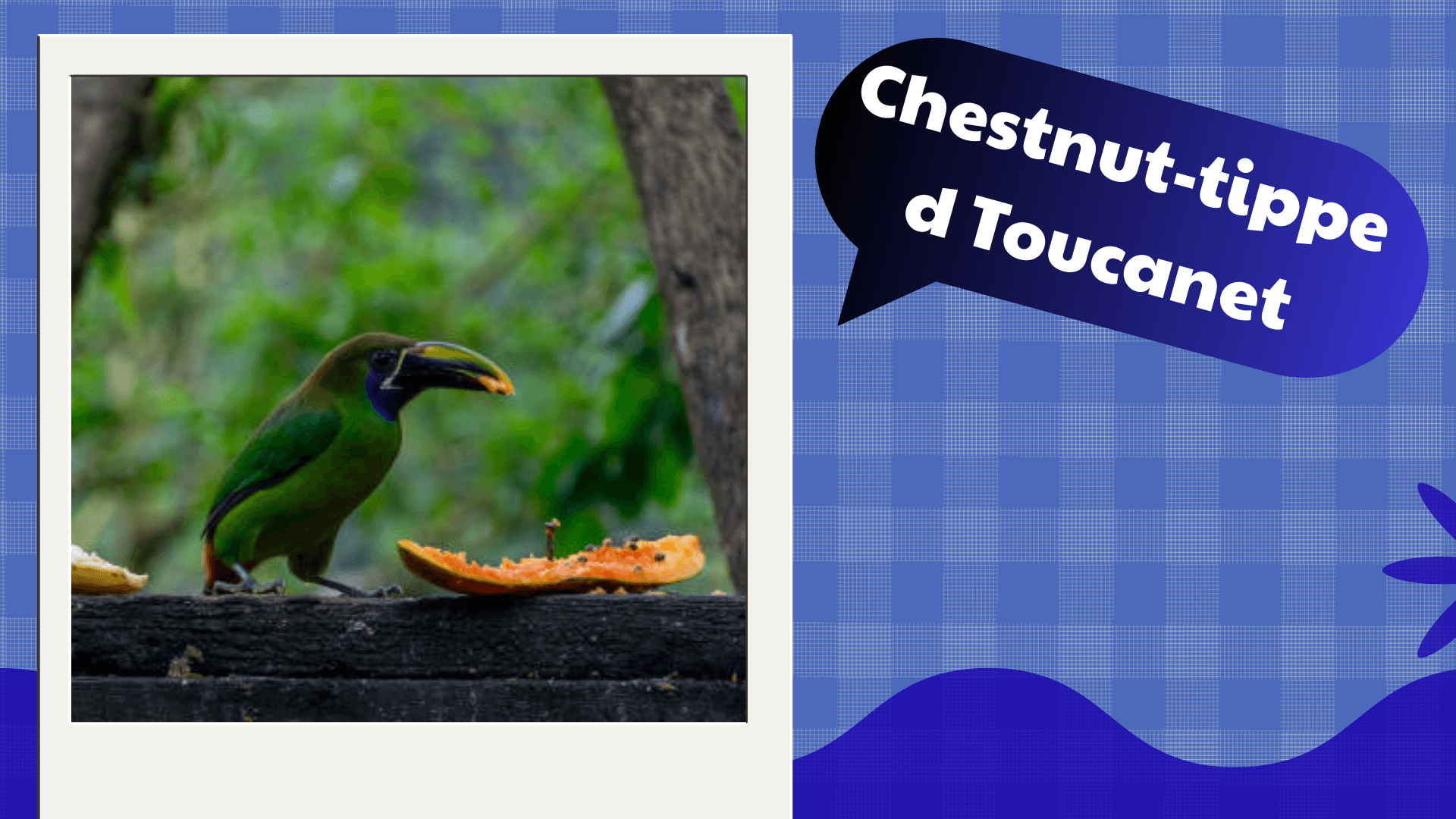
The Chestnut-tipped Toucanet is a small, vibrant member of the toucan family, native to the montane forests of Colombia and Ecuador. This species is renowned for its lush green plumage and the distinctive chestnut-colored tips on its wings and tail, giving it its name. Unlike larger toucans, toucanets are smaller and more agile, allowing them to navigate dense forest canopies with ease. Their compact size helps them forage among branches and vines where larger toucans might struggle.
Chestnut-tipped Toucanets primarily feed on a frugivorous diet, favoring a variety of forest fruits and berries. However, their opportunistic feeding behavior sometimes includes insects, small arthropods, and occasional eggs, making them both important seed dispersers and insect population regulators. Their feeding habits help maintain the health of their forest ecosystem by spreading seeds to new locations, which contributes to forest regeneration.
Socially, these toucanets are typically found in small groups or family units. They communicate through soft, high-pitched calls that carry through the canopy, allowing members of the group to maintain contact even in dense vegetation. Their vocalizations are gentle compared to the loud, booming calls of larger toucans, but they are nonetheless vital for social cohesion.
Breeding occurs in natural tree cavities, often abandoned by woodpeckers or other cavity-nesting birds. Both parents actively participate in incubation, feeding, and protecting the chicks until they fledge. The cooperative care ensures high survival rates for the young and reinforces family bonds within these small social groups.
Chestnut-tipped Toucanets thrive in humid, montane forests, but habitat loss due to deforestation poses a significant threat. Conservation efforts aimed at preserving Andean cloud forests are essential for the survival of this species. Ecologically, the Chestnut-tipped Toucanet plays a crucial role in forest dynamics, as their seed dispersal activity promotes plant diversity and sustains the habitat for countless other species. Observing these colorful birds in their natural habitat offers a glimpse into the intricate relationships that sustain tropical ecosystems.
17. Crimson‑rumped Toucanet (Aulacorhynchus haematopygus)
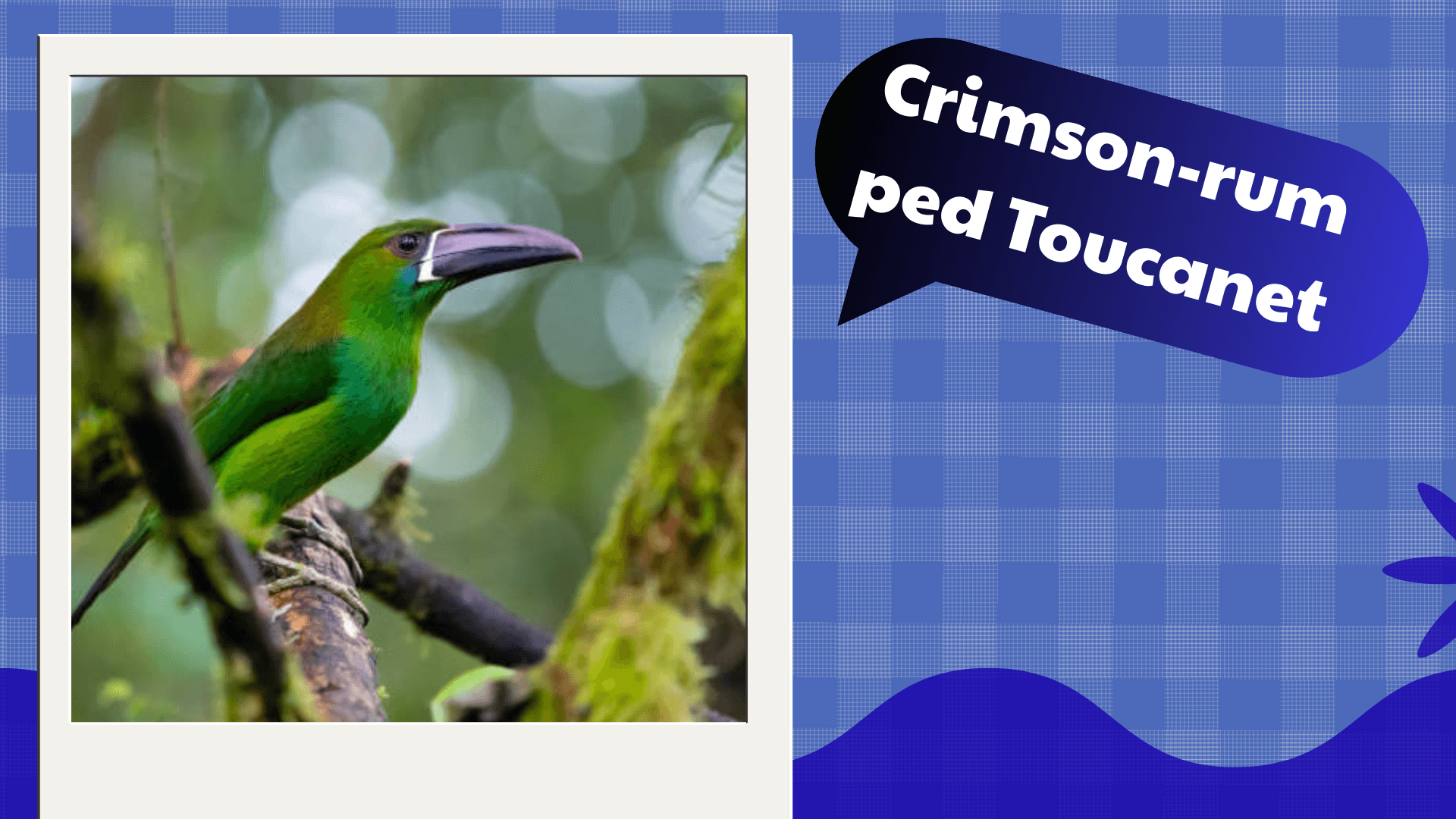
The Crimson-rumped Toucanet is a captivating toucanet found primarily in the montane cloud forests of Colombia and Ecuador. This species is easily recognized by its vivid green plumage contrasted with a bright crimson patch at the base of its tail. Its moderate size allows it to maneuver skillfully among branches while foraging, making it an agile and efficient feeder. The crimson patch not only gives it a striking appearance but also plays a role in communication and mate recognition.
These toucanets are primarily frugivorous, consuming a wide array of fruits and berries found throughout their montane habitat. They also supplement their diet with insects and other small invertebrates, contributing to insect population control within their ecosystem. By dispersing seeds from the fruits they consume, Crimson-rumped Toucanets are vital players in maintaining forest health and promoting plant diversity, particularly at high altitudes.
Crimson-rumped Toucanets are social birds, often seen in pairs or small flocks. Their soft vocalizations help maintain cohesion within the group and alert others to the presence of predators. Despite their relatively quiet calls, these vocalizations are an essential aspect of their social structure, facilitating coordinated movement through dense foliage and enabling effective foraging.
Nesting occurs in natural tree cavities, often in large trees with sufficient cover to protect the young. Both parents share responsibilities for incubating the eggs and feeding the chicks until they are ready to fledge. This cooperative parenting ensures that the next generation thrives, strengthening the species’ overall resilience in its cloud forest habitat.
Habitat destruction remains a primary threat, as deforestation and agricultural expansion reduce available nesting and foraging sites. Conservation efforts that protect montane forests not only safeguard the Crimson-rumped Toucanet but also preserve an array of other species that depend on these ecosystems. Watching this vibrant toucanet flit through the canopy offers an unparalleled view of the beauty and complexity of Andean cloud forests.
18. Northern Emerald Toucanet (Aulacorhynchus prasinus)
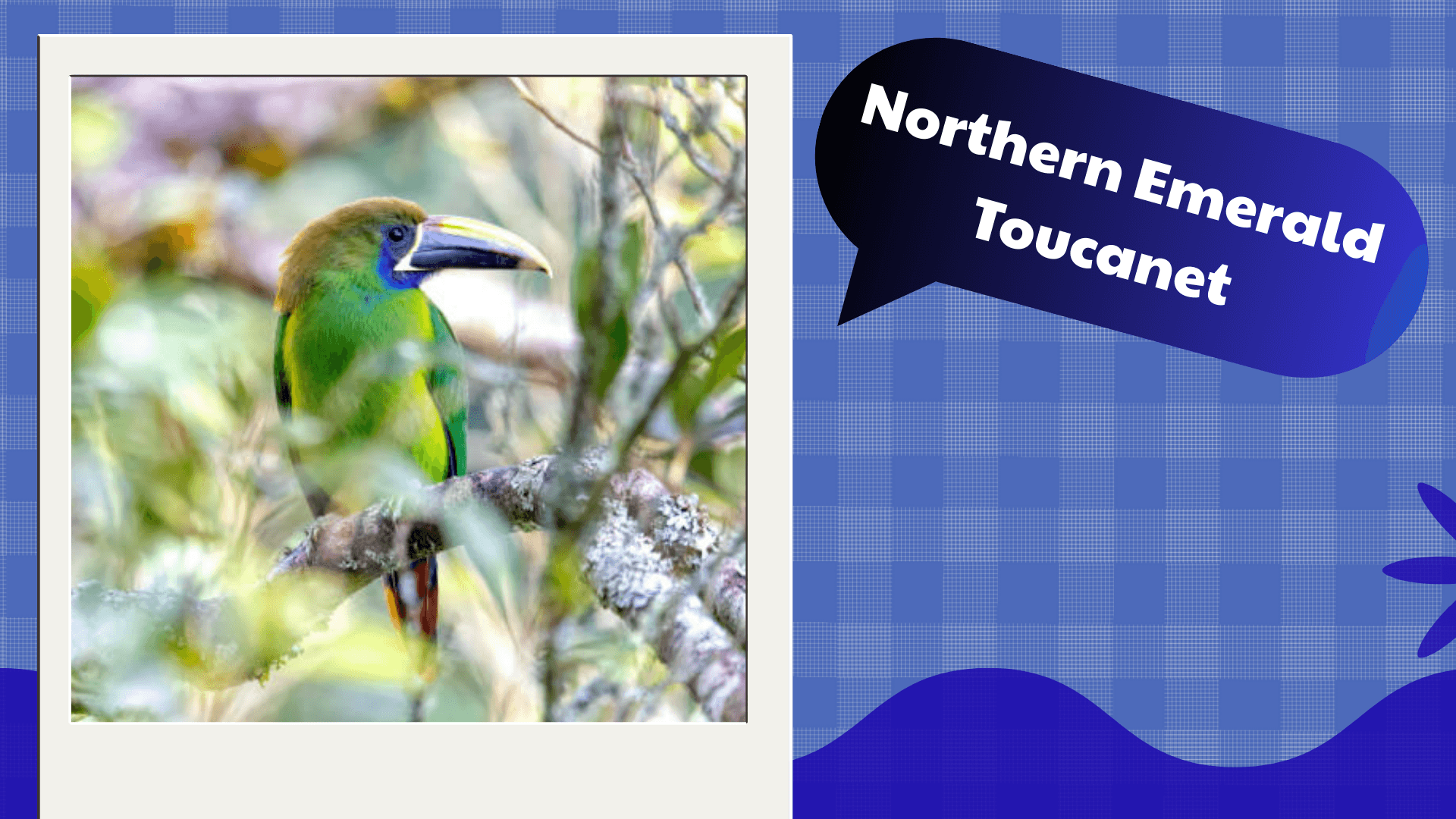
The Northern Emerald Toucanet is a small, vividly colored bird inhabiting the tropical and subtropical forests of Mexico, Central America, and parts of northern South America. Its emerald green body, accented with blue or turquoise tinges on the wings and tail, makes it a dazzling presence in the forest canopy. The moderately sized bill, often tipped with orange or yellow, is perfectly adapted for feeding on fruits and berries, though it also allows for occasional insect predation.
This toucanet’s diet is predominantly frugivorous, focusing on the wide variety of fruits found in its forest home. In addition to fruit, Northern Emerald Toucanets will consume insects, small reptiles, and eggs when available, demonstrating an opportunistic feeding strategy that ensures their nutritional needs are met year-round. Their role as seed dispersers is essential for maintaining forest diversity and supporting regeneration, particularly in fragmented habitats where seed dispersal is crucial for ecological recovery.
Socially, these birds are active and vocal, typically forming small groups that forage together. Their calls are a series of soft, musical notes that allow the group to communicate while navigating the dense canopy. Observing their social interactions provides insight into the complex behavioral ecology of toucanets, highlighting cooperation and communication as vital survival strategies.
Nesting takes place in tree cavities, and both parents participate in raising their young. Eggs are carefully incubated, and chicks are fed a steady diet of fruit pulp and small insects until they are ready to fledge. This biparental care is common among toucanets and contributes to their overall reproductive success.
The Northern Emerald Toucanet is resilient but vulnerable to habitat loss due to deforestation, agriculture, and urban development. Conservation of forested areas is crucial to ensure this species continues to thrive. Their vibrant plumage and active foraging behavior make them a favorite among birdwatchers and an emblematic species representing Central American tropical forests.
19. Southern Emerald Toucanet (Aulacorhynchus albivitta)
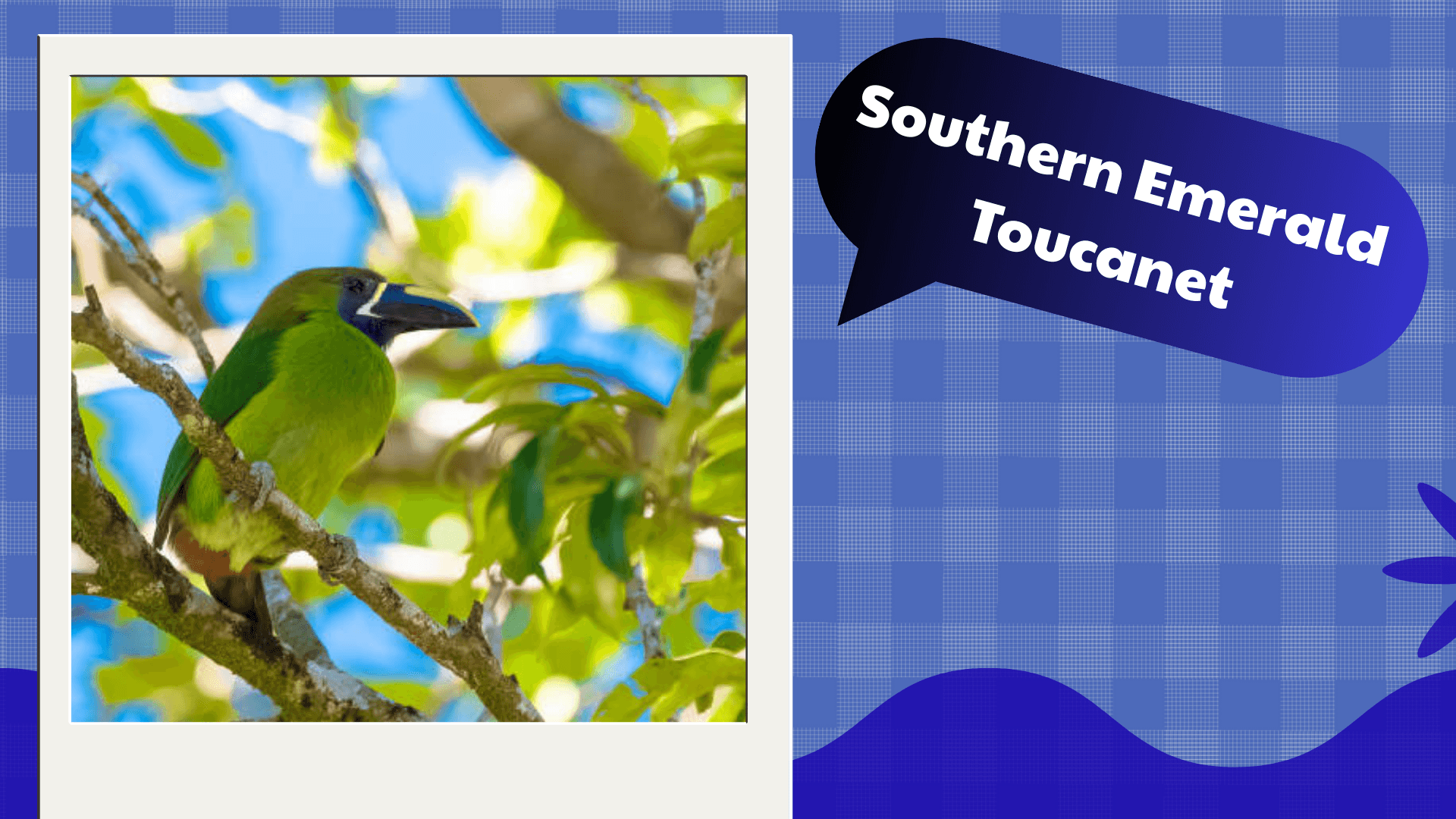
The Southern Emerald Toucanet inhabits montane and subtropical forests from Colombia to northern Peru. It is similar in appearance to its northern counterpart but features subtle differences in plumage, including lighter markings under the wings and tail. Its bright green feathers allow it to blend seamlessly into the canopy, while the slightly curved orange and yellow bill aids in foraging for a variety of fruits and berries.
Like other toucanets, it primarily feeds on fruit but supplements its diet with insects, small vertebrates, and occasionally bird eggs. By consuming and dispersing seeds, Southern Emerald Toucanets contribute to forest regeneration, supporting plant diversity and promoting ecosystem resilience. Their feeding activity helps maintain the structure and function of montane forests, which are often sensitive to environmental changes.
Social behavior is typically observed in small groups or family units. These toucanets are vocal, using soft calls to maintain contact while moving through the dense foliage. Nesting occurs in tree cavities, with both parents sharing incubation and chick-rearing duties. This cooperative care is crucial in ensuring chick survival in habitats where predation and competition are significant challenges.
Conservation of montane forests is critical for this species, as deforestation threatens nesting sites and food availability. Observing Southern Emerald Toucanets offers an opportunity to appreciate the delicate balance of tropical ecosystems and the importance of frugivorous birds in sustaining biodiversity.
20. Black‑throated Toucanet (Aulacorhynchus atrogularis)
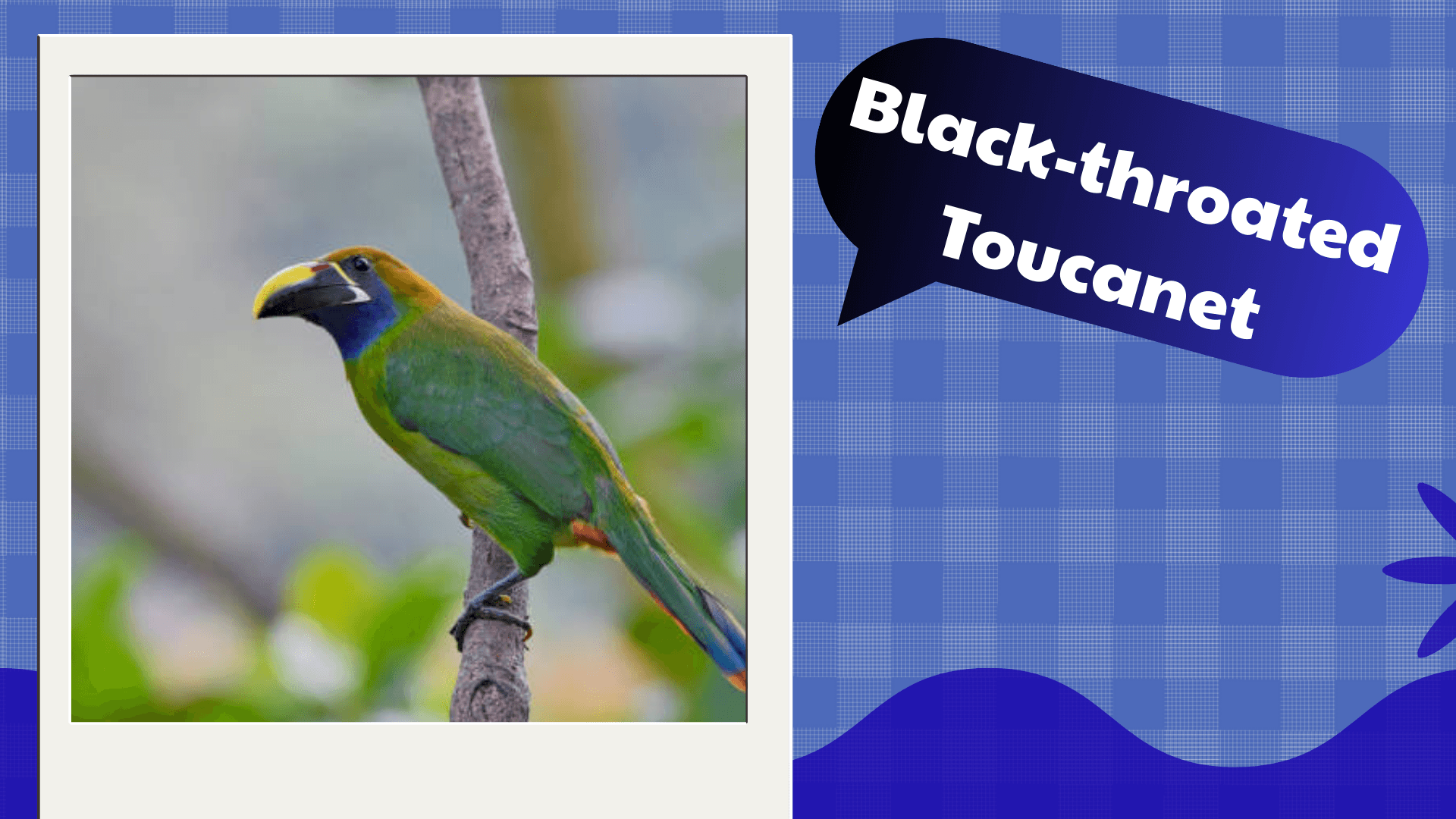
The Black-throated Toucanet is a small, vibrant toucanet native to montane forests of northern South America, particularly Venezuela and Colombia. Its green plumage is complemented by a distinctive black throat patch, which sets it apart from closely related species. Adapted to humid forests at mid-to-high elevations, this bird is agile, maneuvering easily through branches and vines in search of fruit and other food sources.
Its diet is primarily frugivorous, consuming a variety of forest fruits and berries. In addition, it occasionally eats insects, small invertebrates, and eggs, reflecting its opportunistic feeding habits. By dispersing seeds, Black-throated Toucanets play a vital role in maintaining plant diversity and supporting forest regeneration, which is essential in montane ecosystems.
Socially, they are usually found in small groups or pairs, using soft vocalizations to communicate while foraging. Their social structure supports cooperative behavior, including shared vigilance against predators. Nesting occurs in natural tree cavities, with both parents contributing to incubation and chick feeding. The species relies on intact forests for both food and nesting sites, making conservation of its habitat critical.
The Black-throated Toucanet is not as widely known as larger toucans, but its ecological role is significant. Protecting its montane forest habitat ensures the survival of this species and the overall health of these biodiverse ecosystems. Observing these birds highlights the beauty, complexity, and importance of small frugivorous toucans in tropical forest ecology.
21. Wagler’s Toucanet (Aulacorhynchus wagleri)
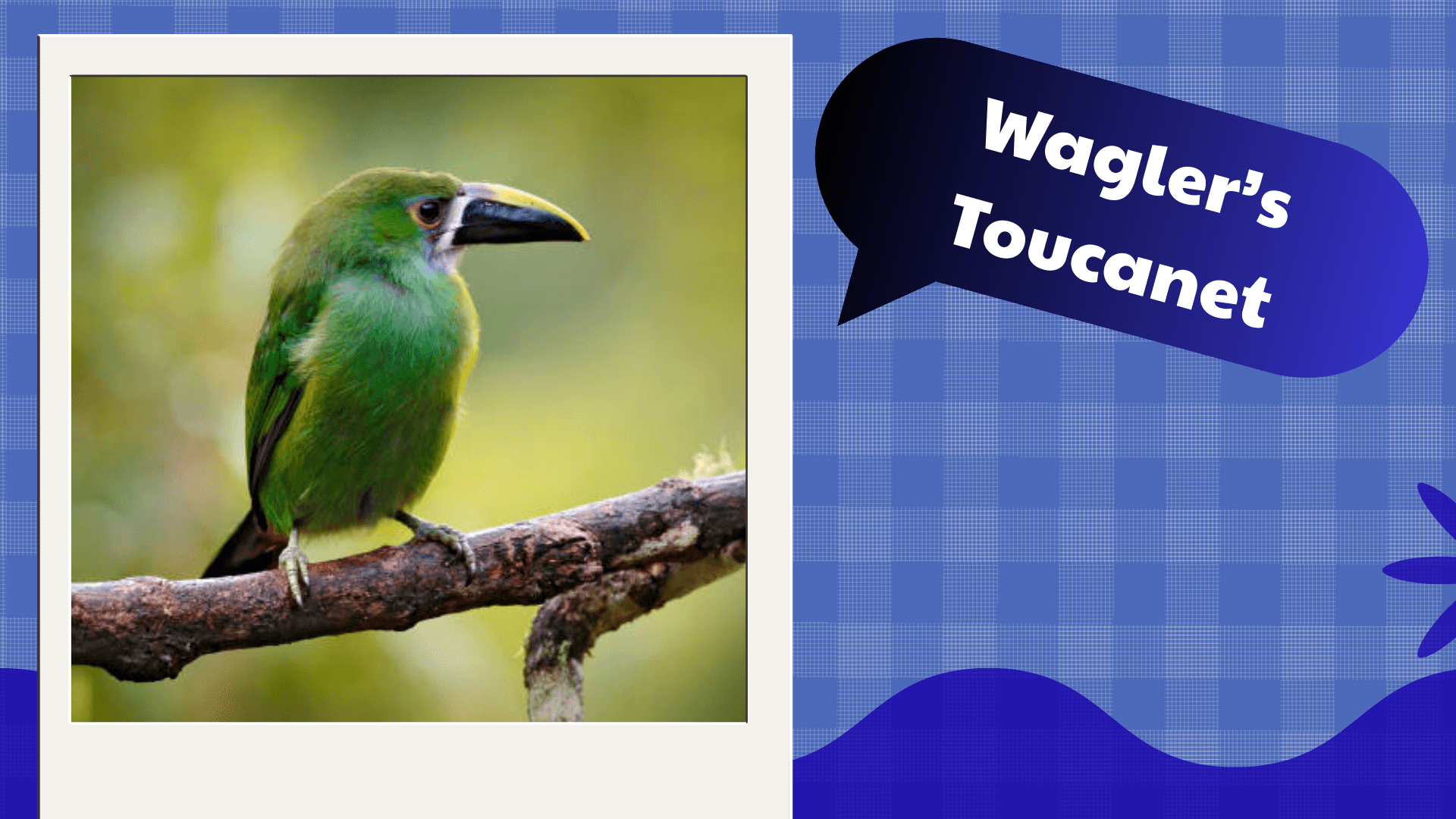
Wagler’s Toucanet is a small, vibrantly colored bird native to the cloud forests of southern Mexico and Guatemala. Its emerald green plumage is accented with bright yellow patches around the eyes and throat, and a moderately long, slightly curved bill designed for precision feeding. Unlike larger toucans, Wagler’s Toucanet is highly agile, able to navigate dense foliage and forage on slender branches that might not support heavier species.
Diet primarily consists of fruits and berries, which the bird skillfully plucks with its bill. Insects, small arthropods, and occasionally eggs supplement its diet, reflecting an opportunistic feeding strategy. As frugivores, Wagler’s Toucanets play a crucial role in seed dispersal, helping maintain forest diversity and supporting regeneration, particularly in fragmented or high-altitude habitats.
These birds are typically observed in pairs or small family groups, exhibiting cooperative behavior. Their calls are soft and melodic, aiding communication in the dense canopy. Nesting occurs in tree cavities, often abandoned by woodpeckers or other cavity-nesting species. Both parents actively participate in incubation and feeding of chicks, ensuring high survival rates for the young.
Wagler’s Toucanet prefers montane and cloud forests, making it sensitive to deforestation and habitat fragmentation. Conservation of high-altitude forests is essential to preserve this species and the ecosystems they support. Birdwatchers prize Wagler’s Toucanets for their bright colors, lively behavior, and ecological importance as key frugivores in tropical forests.
22. Black‑necked Aracari (Pteroglossus aracari)
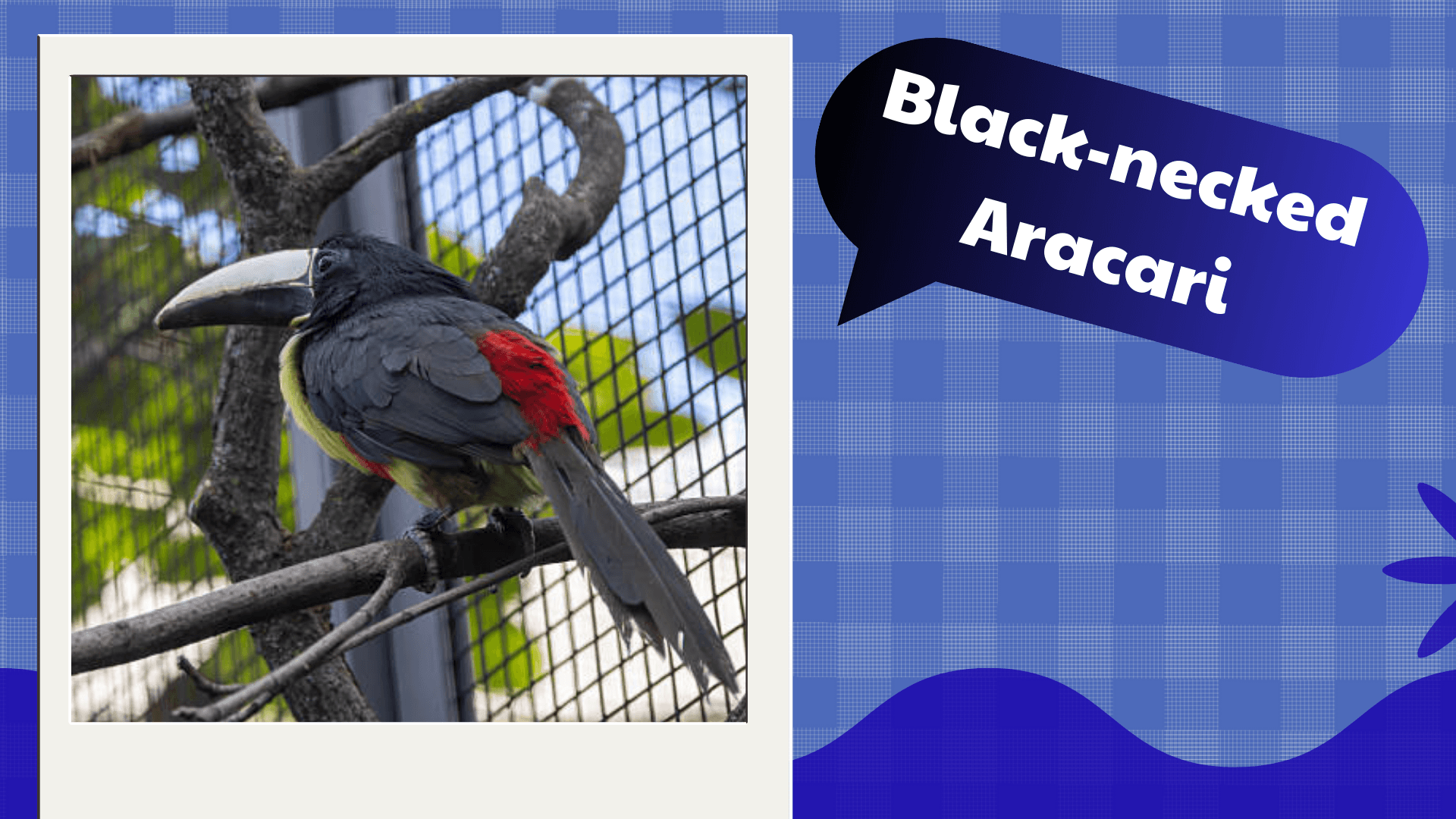
The Black-necked Aracari is a medium-sized member of the toucan family, native to the lowland forests of South America, particularly Colombia, Ecuador, and northern Peru. It features a vibrant plumage of red, yellow, green, and black, with a distinct black neck marking that gives the species its name. Its long, curved bill is adapted for accessing fruit, insects, and small vertebrates in the canopy.
Aracaris are highly social birds, often found in flocks of up to ten individuals. Their social structure allows cooperative foraging and protection against predators. Diet consists mainly of fruit, but Black-necked Aracaris will also feed on insects, small reptiles, and bird eggs. By dispersing seeds, they play a vital role in forest regeneration and the maintenance of plant diversity.
Nesting occurs in tree cavities, where pairs lay a clutch of 2–4 eggs. Both parents share incubation and chick-rearing responsibilities. Fledglings remain with the parents for several weeks after leaving the nest, learning essential foraging skills. Their social and cooperative behavior strengthens group cohesion and improves survival rates.
Despite their adaptability, Black-necked Aracaris are affected by deforestation, which reduces available food and nesting sites. Preserving lowland tropical forests ensures the survival of these birds and maintains the ecological balance of their habitats. Observing these colorful aracaris in the wild provides insight into the complex social and ecological dynamics of toucans and toucanets.
23. Collared Aracari (Pteroglossus torquatus)

The Collared Aracari is a small, lively toucan species found in Central America, including Mexico, Belize, and Costa Rica. Its plumage is a vivid combination of red, green, yellow, and black, with a distinctive “collar” of color across its chest. This species prefers lowland rainforests and secondary forests where fruit is abundant, often seen hopping along branches or gliding short distances between trees.
Diet is largely frugivorous, but Collared Aracaris also consume insects, eggs, and small vertebrates. Their feeding behavior contributes significantly to seed dispersal, ensuring forest regeneration and plant diversity. Socially, they are highly interactive, traveling in small flocks of up to ten birds. Their calls are high-pitched and repetitive, facilitating group communication within dense foliage.
Nesting occurs in tree cavities, often natural hollows or abandoned woodpecker holes. Both parents participate in feeding and protecting the chicks until they fledge. Cooperative behavior among flock members may also help guard against predators. As active frugivores, Collared Aracaris are vital contributors to tropical forest ecology, aiding in seed dispersal and maintaining biodiversity.
Habitat loss due to deforestation and agricultural expansion is the primary threat to this species. Conservation of tropical lowland forests ensures that Collared Aracaris continue to thrive and maintain their ecological roles. Birdwatchers often enjoy their colorful plumage, social behavior, and vibrant calls, which make them a highlight of Central American forests.
24. Green Aracari (Pteroglossus viridis)
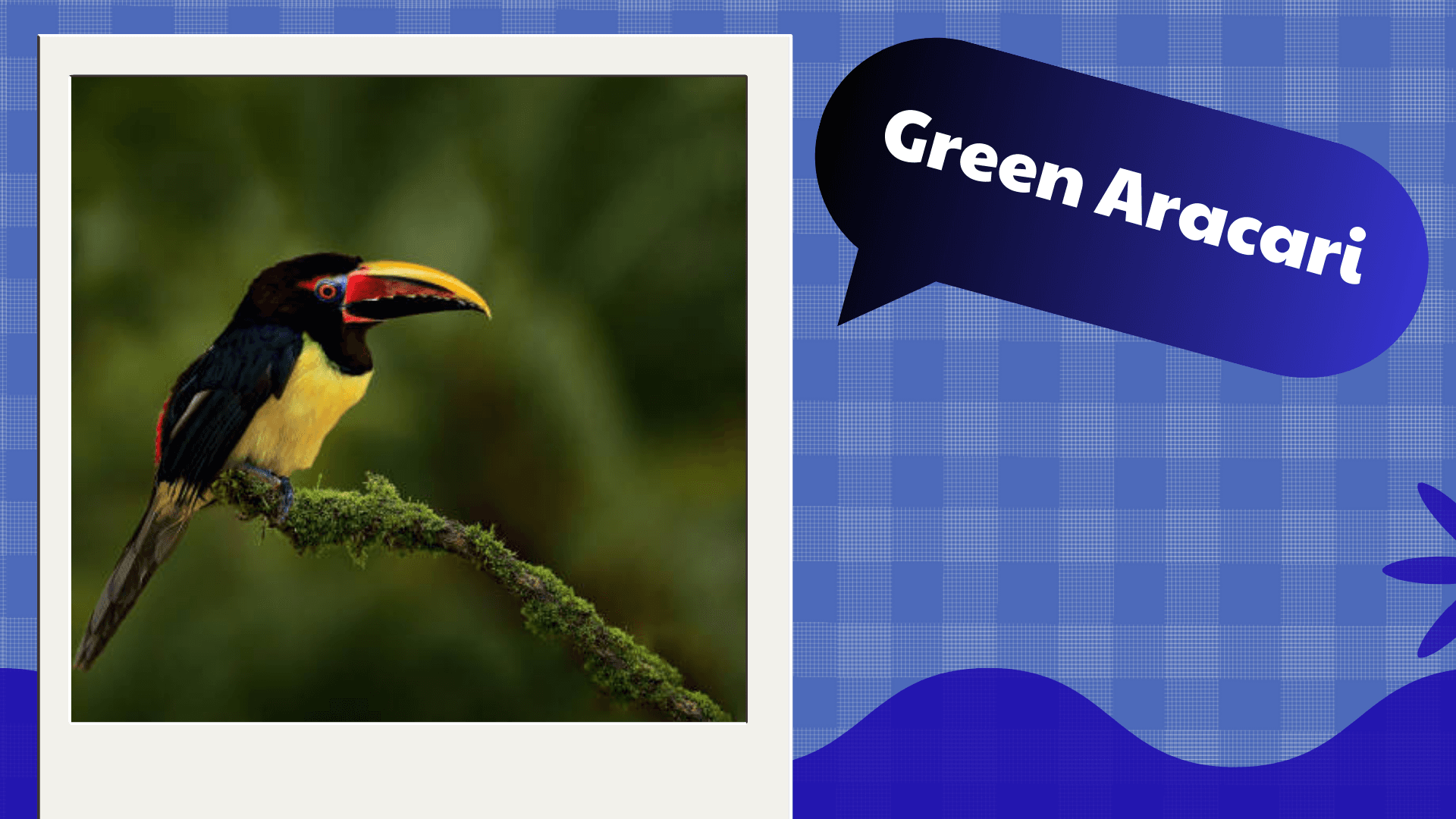
The Green Aracari is a small toucan with predominantly green plumage accented with red, yellow, and black markings. Native to the Guiana Shield and northern Amazon regions, this bird inhabits lowland tropical forests, riverine forests, and forest edges. Its long, curved bill allows it to access fruit and small prey hidden within dense foliage.
Green Aracaris are highly social, often seen in small flocks of five to ten individuals. Their diet consists mainly of fruit, supplemented with insects and small vertebrates. Their frugivorous feeding habits make them essential seed dispersers, contributing to forest regeneration and ecological balance. They communicate with soft, repetitive calls that help maintain flock cohesion.
Nesting takes place in natural tree cavities, with both parents sharing incubation and chick-rearing duties. Juveniles remain with parents after fledging, learning to forage efficiently and navigate forest canopies. By ensuring the next generation learns essential survival skills, Green Aracaris maintain strong social bonds and thriving populations.
Although adaptable, they face threats from deforestation, logging, and habitat fragmentation. Preserving tropical lowland forests is vital for their survival and the ecological health of their habitats. Green Aracaris are popular among bird enthusiasts for their vibrant colors, social nature, and critical role as seed dispersers in tropical ecosystems.
25. Ivory‑billed Aracari (Pteroglossus azara)
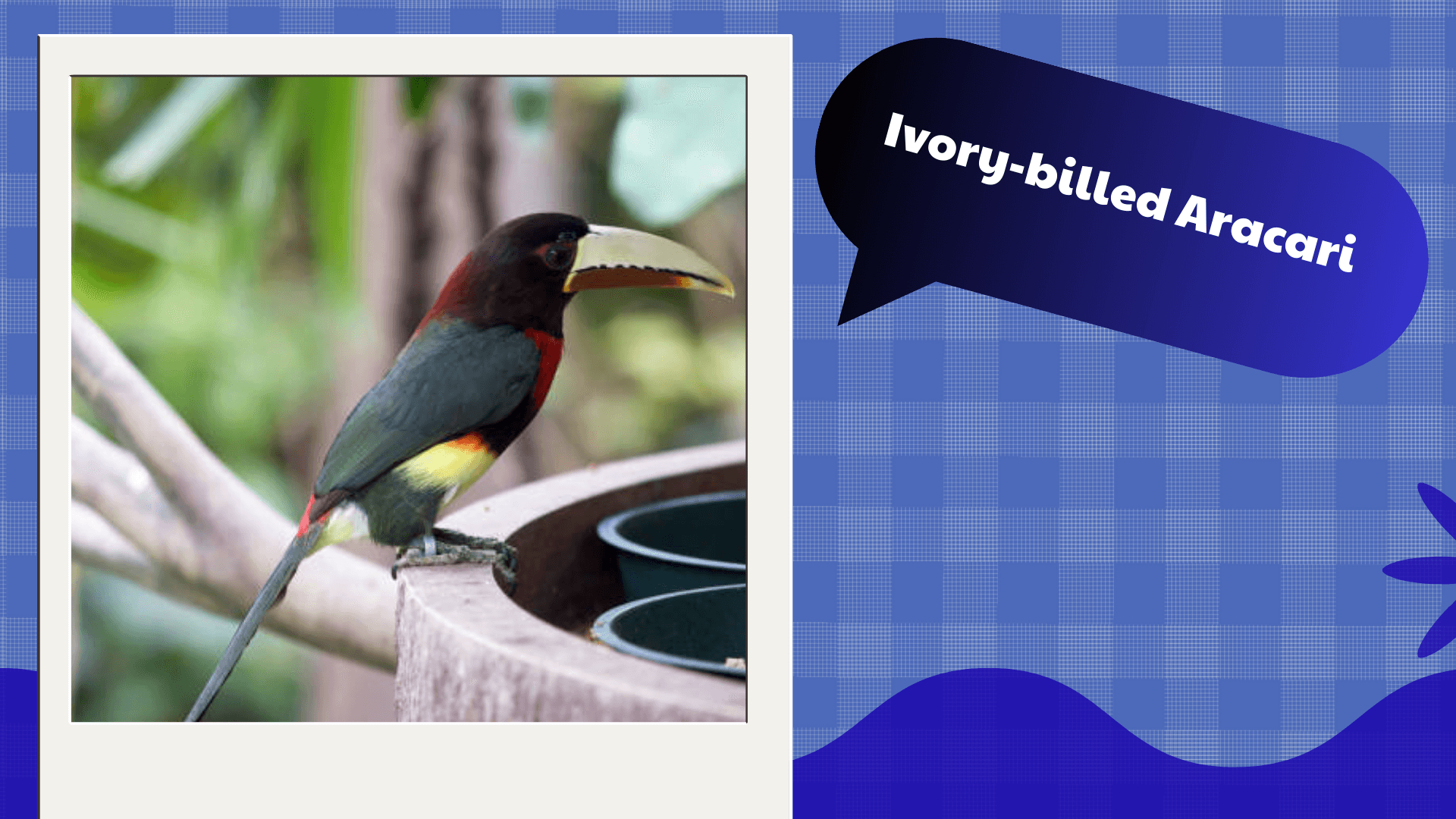
The Ivory-billed Aracari is a striking small toucan species native to South America, including Paraguay, Argentina, and Brazil. Its vibrant plumage features combinations of yellow, red, green, and black, with a long, slightly curved bill that is pale or “ivory” in color. This bill not only serves as a feeding tool but also functions in thermoregulation and social signaling.
Its diet primarily consists of fruits, though it opportunistically consumes insects, small reptiles, and bird eggs. As frugivores, Ivory-billed Aracaris play an essential role in seed dispersal, promoting forest regeneration and maintaining plant diversity. Their social behavior is highly interactive; they often forage in small groups, communicating with high-pitched, repetitive calls that strengthen group cohesion.
Nesting occurs in natural tree cavities, where both parents share responsibilities for incubation and chick care. Juveniles remain with parents for several weeks post-fledging, learning critical foraging skills and social behavior. Cooperative feeding and defense help ensure chick survival, highlighting the importance of social structure in these birds.
Deforestation and habitat fragmentation pose significant threats, as Ivory-billed Aracaris rely on intact forests for food and nesting. Conservation of lowland and subtropical forests is critical for maintaining stable populations. Observing this species provides insight into the complex ecological interactions of toucans and their role in sustaining tropical ecosystems.
26. Lettered Aracari (Pteroglossus inscriptus)
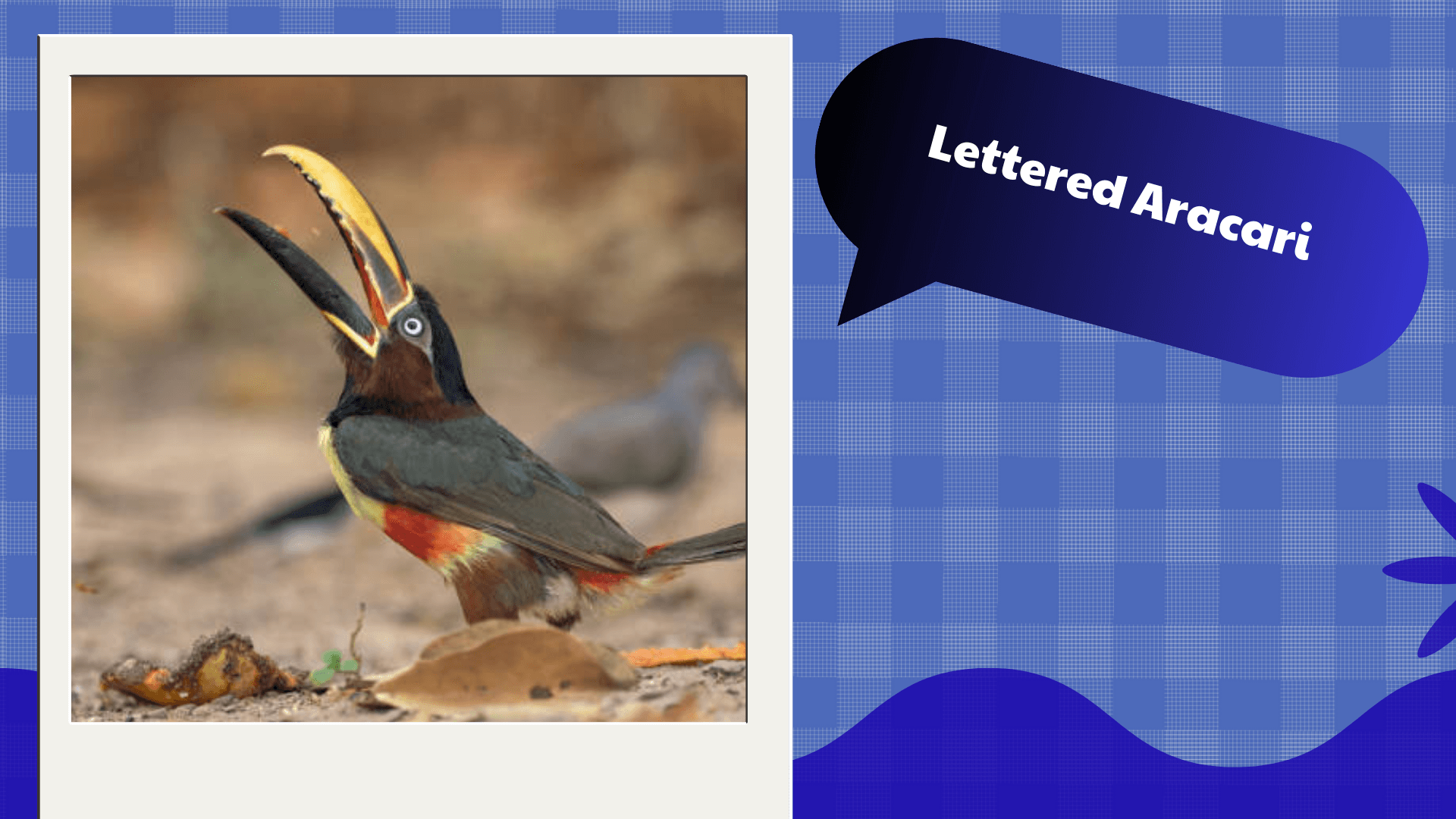
The Lettered Aracari is a medium-sized toucan known for its distinctive patterned bill, which appears as though it is “lettered” with dark markings against a pale background. Native to the lowland forests of northern South America, particularly the Amazon Basin, this species inhabits primary and secondary forests, often favoring forest edges near rivers. Its vibrant plumage includes bright yellow, red, and green hues, complemented by a dark head and neck. The striking bill not only aids in feeding but also serves as a visual signal for communication and mate recognition.
Lettered Aracaris are primarily frugivorous, consuming a wide variety of fruits and berries. However, their opportunistic diet includes insects, eggs, and small vertebrates, making them versatile feeders. By dispersing seeds, these toucans play a vital role in maintaining forest diversity and promoting regeneration, particularly in areas affected by human activity.
These birds are highly social and typically found in small flocks or family groups. Their soft, repeated calls help maintain cohesion within the group and alert members to potential predators. Nesting occurs in tree cavities, with both parents actively sharing incubation and feeding duties. Juveniles often remain with the parents post-fledging, learning essential foraging and social behaviors.
Deforestation and habitat fragmentation threaten Lettered Aracaris, as intact forest is crucial for nesting and feeding. Conservation of tropical lowland forests ensures their survival while supporting countless other species dependent on these ecosystems. Observing Lettered Aracaris offers a glimpse into the dynamic interactions of frugivorous birds and their critical role in forest ecology.
27. Pale‑mandibled Aracari (Pteroglossus erythropygius)
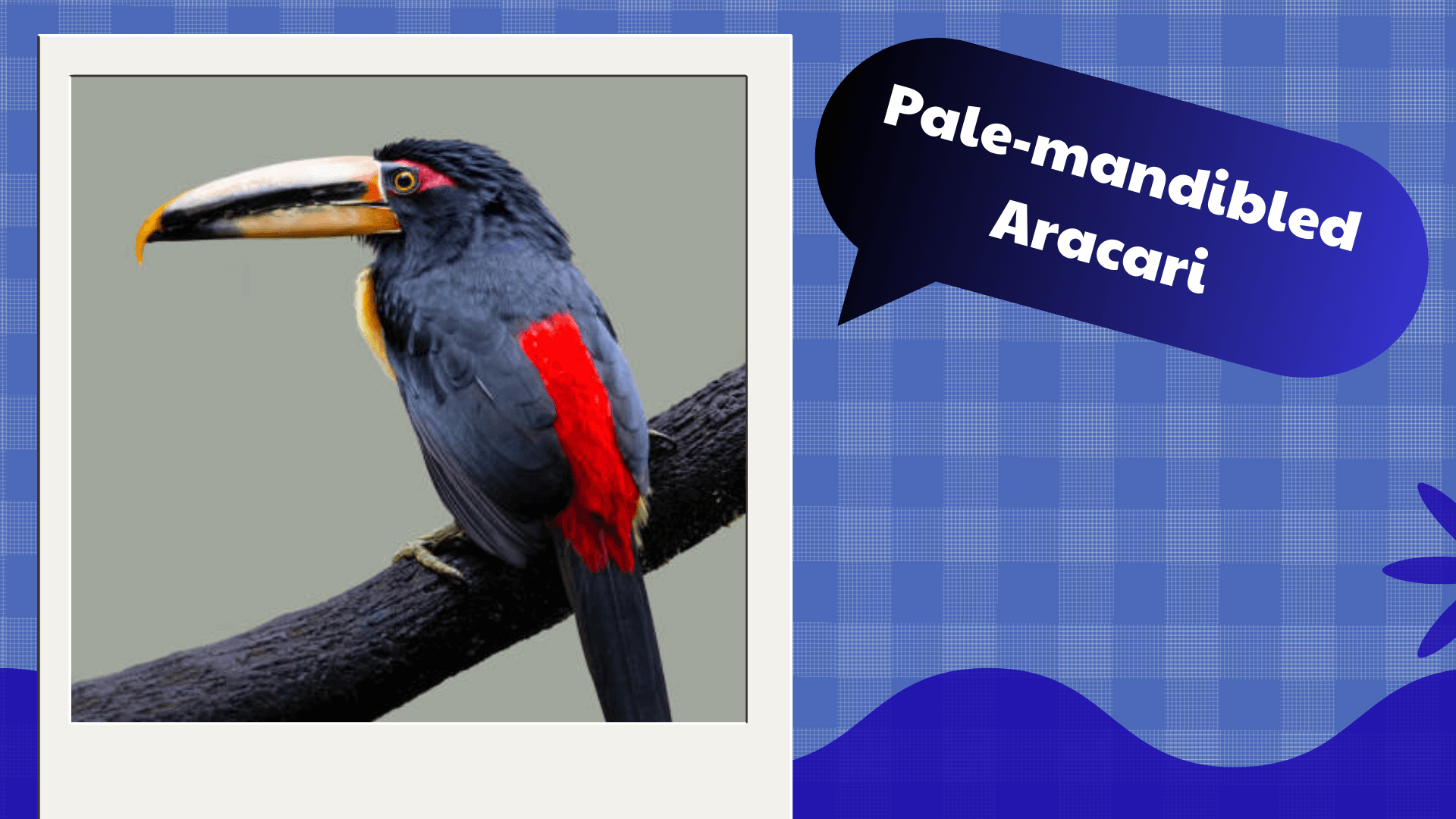
The Pale-mandibled Aracari is a small, colorful toucan species native to the lowland forests of Central America, including Costa Rica and Panama. Its most distinctive feature is the pale-colored bill, which contrasts with its bright plumage of yellow, red, and green. This bird inhabits humid tropical forests and forest edges, where it is active and highly social, moving through the canopy in small flocks.
Diet consists mainly of fruit, which it skillfully plucks from branches using its long, curved bill. Occasionally, Pale-mandibled Aracaris supplement their diet with insects, small vertebrates, and eggs. Their frugivorous behavior ensures they play an essential role in seed dispersal, promoting forest regeneration and plant diversity. By feeding on a variety of fruits, they help maintain the structure and ecological balance of tropical forests.
These aracaris are highly vocal, using high-pitched calls to communicate with flock members. Nesting occurs in tree cavities, with both parents sharing incubation and chick-rearing duties. Fledglings remain with their parents after leaving the nest, learning foraging techniques and social behaviors critical for survival. The cooperative parenting and social interactions strengthen group cohesion and improve survival rates.
Deforestation and habitat loss pose significant threats to Pale-mandibled Aracaris, emphasizing the importance of protecting tropical lowland forests. These toucans are not only visually stunning but also play a key role in maintaining healthy forest ecosystems, making them important both ecologically and aesthetically for wildlife enthusiasts.
28. Red‑necked Aracari (Pteroglossus bitorquatus)
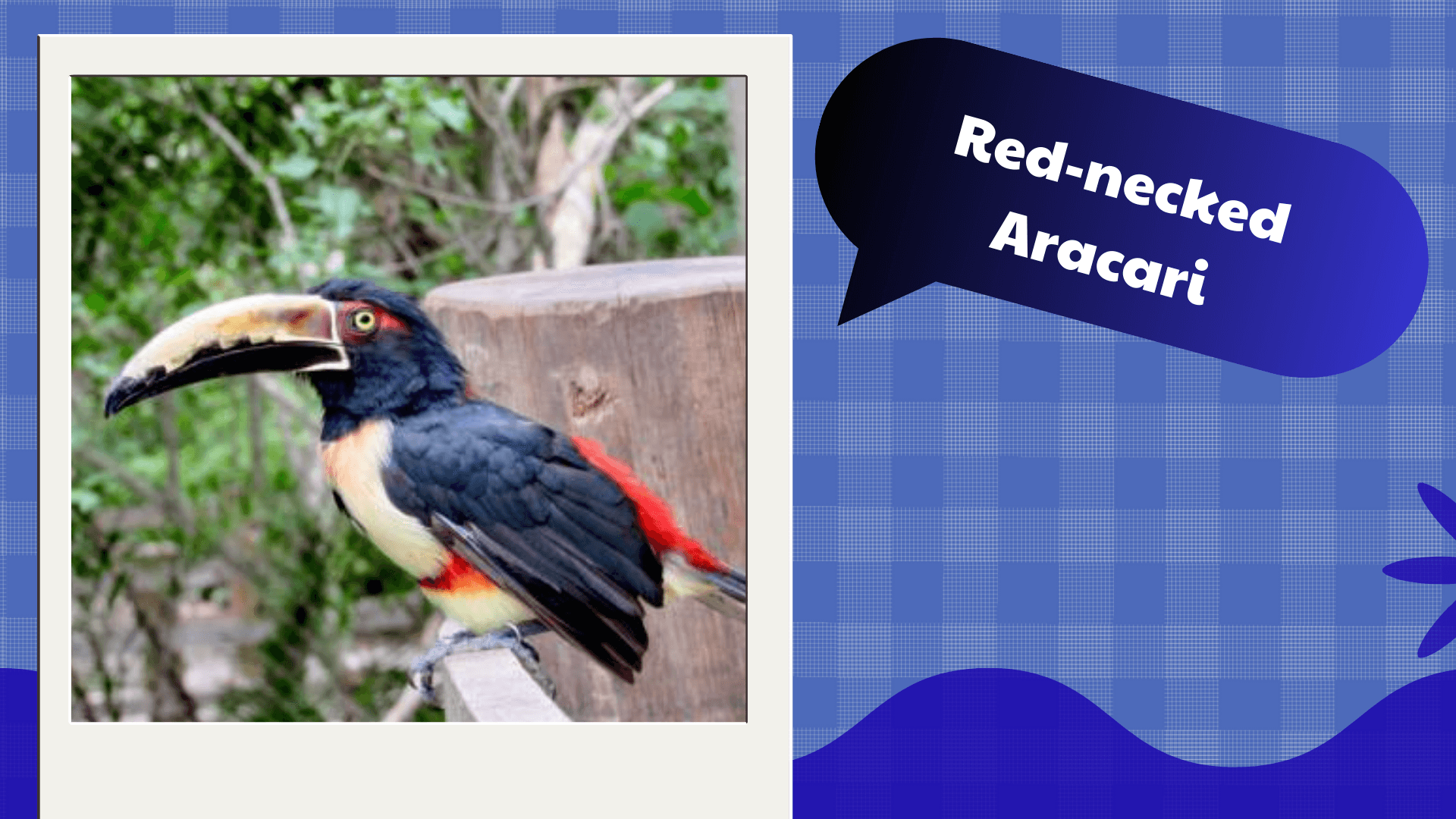
The Red-necked Aracari is a medium-sized toucan native to the Amazon Basin, including Brazil, Peru, and Colombia. Its most distinguishing feature is the red band across the neck, contrasting with the green, yellow, and black plumage of its body. This species inhabits lowland tropical forests and often favors areas near rivers, where fruit is plentiful. Its long, curved bill enables it to reach fruit on branches that are otherwise inaccessible.
Diet is primarily frugivorous, supplemented by insects, small reptiles, and occasionally bird eggs. Red-necked Aracaris are highly social, usually traveling in flocks of five to ten individuals. Their vocalizations are high-pitched and repetitive, facilitating communication and coordination during foraging. These birds play a crucial role in seed dispersal, aiding the growth and diversity of tropical forests.
Nesting occurs in tree cavities, and both parents share responsibilities for incubating eggs and feeding chicks. Juveniles often remain with parents to learn essential foraging and social behaviors. Conservation of intact lowland forests is critical, as habitat loss directly threatens their feeding and nesting sites. Observing Red-necked Aracaris highlights the social complexity and ecological importance of frugivorous birds in maintaining forest ecosystems.
29. Saffron Toucanet (Pteroglossus bailloni)
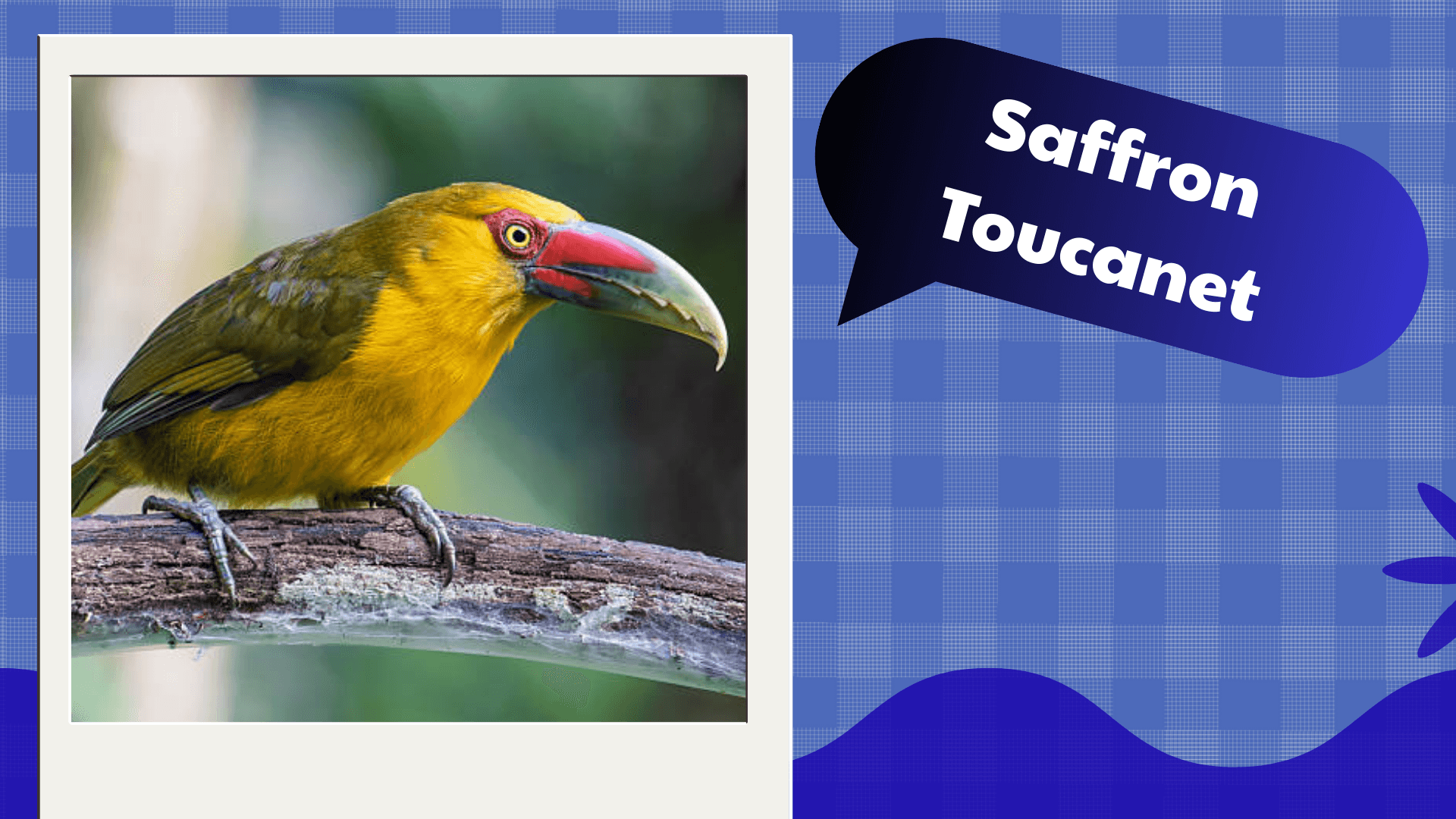
The Saffron Toucanet is a medium-sized toucan native to the Atlantic Forest of Brazil, Paraguay, and Argentina. Its brilliant golden-yellow plumage contrasted with a black head and wings makes it one of the most visually striking members of the toucan family. The moderately long, curved bill is adapted for a primarily frugivorous diet, allowing it to access a wide variety of fruits throughout its habitat.
Diet mainly consists of fruits, with occasional supplementation from insects and small invertebrates. Saffron Toucanets play an essential ecological role by dispersing seeds, promoting forest regeneration, and maintaining plant diversity. They are social birds, often seen in pairs or small groups, and communicate through soft, repetitive calls that coordinate group movements and alert flock members to threats.
Nesting occurs in tree cavities, where both parents actively care for their young. The cooperative care ensures high chick survival and contributes to the stability of the population. Habitat loss due to deforestation poses a significant threat, emphasizing the need for conservation of Atlantic forests. Saffron Toucanets are not only beautiful but also vital for the ecological health of their forests, making them a priority for conservation efforts.
30. Stripe‑billed Aracari (Pteroglossus sanguineus)
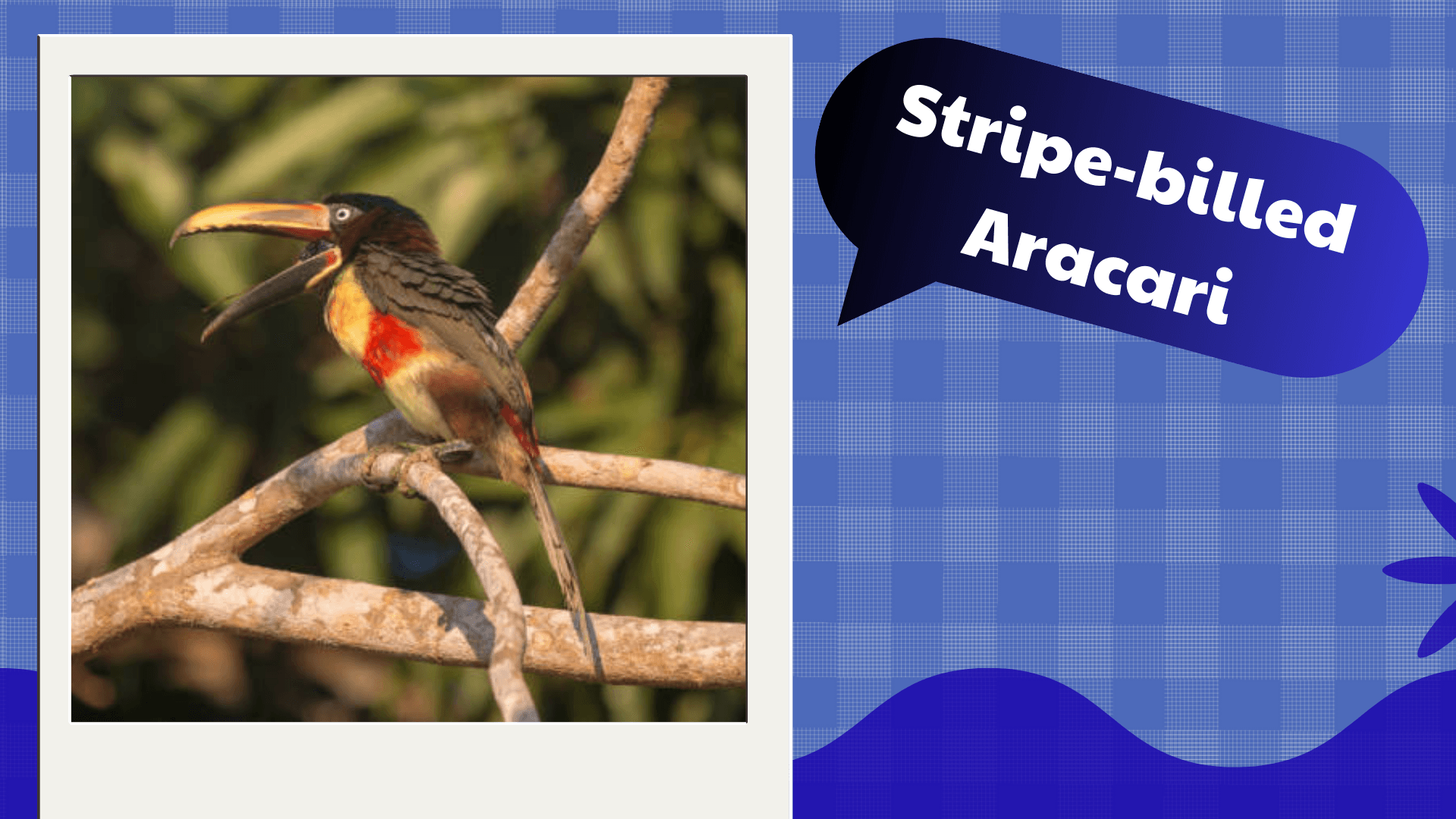
The Stripe-billed Aracari is a small, vibrant toucan species native to the lowland and foothill forests of Central America, including Costa Rica and Panama. It is easily recognized by its distinctive striped bill, which contrasts with the bird’s bright green, red, and yellow plumage. This species inhabits humid forests, forest edges, and secondary growth areas, often moving in small, social flocks.
Its diet is largely frugivorous, focusing on a variety of forest fruits, berries, and occasionally insects or small vertebrates. By dispersing seeds, Stripe-billed Aracaris contribute significantly to forest regeneration and plant diversity, maintaining healthy ecosystems in tropical forests. Their social nature and cooperative foraging behavior strengthen group cohesion and improve survival rates.
Nesting occurs in tree cavities, with both parents participating in incubation and feeding of chicks. Juveniles stay with parents post-fledging to learn vital foraging and social skills. Habitat loss and deforestation threaten their survival, highlighting the importance of protecting tropical forest habitats. Observing Stripe-billed Aracaris in the wild provides a vivid example of the ecological role and social complexity of small toucans.
Conclusion
Exploring the fascinating world of Types of Toucans reveals a stunning diversity of shapes, colors, and behaviors. From the towering Toco Toucan to the small and agile toucanets, each species plays an important ecological role, especially as frugivores and seed dispersers that maintain tropical forest health. These birds are not only visually striking but also socially complex, often living in small family groups or flocks, communicating through calls, and caring cooperatively for their young.
Understanding the habitats, diets, and behaviors of these 30 remarkable toucans highlights their importance in preserving biodiversity across Central and South America. Many species face threats from deforestation, habitat fragmentation, and human activity, emphasizing the need for conservation efforts to protect forests and maintain ecological balance. Observing toucans in their natural environment allows us to appreciate their beauty, intelligence, and contribution to tropical ecosystems.
Whether you are a birdwatcher, nature enthusiast, or student of wildlife, learning about Types of Toucans deepens our understanding of forest ecology and the intricate relationships that sustain life. By protecting these incredible birds and their habitats, we help ensure that future generations can continue to enjoy the vivid colors, playful behavior, and vital ecological roles of toucans throughout the Americas.
Frequently Asked Questions About Types of Toucans
1. What are toucans?
Toucans are colorful, tropical birds known for their large bills and social behavior. They are primarily frugivores, meaning they mainly eat fruit.
2. How many types of toucans exist?
There are over 40 recognized species of toucans and toucanets, each varying in size, color, and habitat. This article focuses on 30 notable types.
3. Where do toucans live?
Toucans are native to Central and South America, primarily inhabiting tropical lowland forests, montane cloud forests, and secondary growth areas.
4. What do toucans eat?
Their diet mainly consists of fruits and berries, but they may also eat insects, small reptiles, and bird eggs.
5. Why do toucans have big bills?
A toucan’s large bill helps it reach fruit on thin branches, aids in thermoregulation, and plays a role in communication and mate attraction.
6. Are toucans social birds?
Yes, most toucans are social and are often seen in small flocks or family groups, communicating with vocal calls.
7. How do toucans nest?
Toucans nest in natural tree cavities, often reusing holes made by woodpeckers or other birds, where both parents help raise the chicks.
8. What is the smallest toucan species?
The smallest toucan species are toucanets, such as the Blue-banded Toucanet, which are small, agile, and adapted to dense forest canopies.
9. What is the largest toucan species?
The Toco Toucan is the largest, known for its massive orange bill and striking black-and-white plumage.
10. How do toucans communicate?
Toucans communicate through vocal calls, which vary in pitch and intensity depending on the species and social situation.
11. Can toucans fly long distances?
Toucans are capable of short, agile flights but are not long-distance migratory birds. They prefer hopping and gliding between trees.
12. Do toucans eat meat?
While primarily frugivorous, toucans may occasionally eat insects, small reptiles, or eggs for extra protein.
13. How long do toucans live?
In the wild, toucans typically live 12–20 years, depending on species and habitat conditions.
14. Are toucans endangered?
Some species, like the Saffron Toucanet and certain Andean toucanets, are threatened by deforestation, but many have stable populations.
15. What role do toucans play in the ecosystem?
Toucans are important seed dispersers, helping maintain forest biodiversity and enabling forest regeneration.
16. Can toucans be kept as pets?
Keeping toucans as pets is generally discouraged due to their specialized diets, social needs, and legal protections in many countries.
17. How do toucans care for their young?
Both parents incubate eggs and feed chicks, providing protection until the young are ready to fledge.
18. What is a toucanet?
Toucanets are small members of the toucan family, typically under 30 cm in length, adapted to agile movement through dense canopies.
19. How do toucans find food?
They forage visually in the forest canopy, using their bills to pluck fruit from branches and occasionally snatch insects or eggs.
20. What colors do toucans come in?
Toucans display vibrant colors, including yellow, red, green, orange, black, and blue, often with contrasting patterns on bills and feathers.
21. What is the difference between a toucan and an aracari?
Aracaris are smaller toucans with colorful plumage and long bills, typically social and flocking, while larger toucans are more solitary or pair-based.
22. Do toucans migrate?
Most toucans are non-migratory, staying in their tropical habitats year-round.
23. What is the diet of the Toco Toucan?
The Toco Toucan mainly eats fruit but occasionally consumes insects, small reptiles, and bird eggs for protein.
24. Are toucans frugivores?
Yes, toucans primarily eat fruit, and their role as seed dispersers is critical for forest ecosystems.
25. How do toucans survive predators?
Toucans rely on dense foliage for camouflage, flock vigilance, and quick flights to avoid predators such as snakes, birds of prey, and mammals.
26. What is a toucan’s habitat?
Toucans live in tropical lowland forests, montane cloud forests, and secondary forests throughout Central and South America.
27. How do toucans socialize?
Toucans communicate vocally and visually, forming flocks or family groups that forage and travel together.
28. How many eggs do toucans lay?
Most species lay 2–4 eggs per clutch, which both parents incubate and feed after hatching.
29. Do toucans have predators?
Yes, natural predators include large birds of prey, snakes, and some mammals that may raid nests.
30. How important is the toucan’s bill?
The large bill aids in feeding, thermoregulation, mating displays, and occasionally defending territory.
31. Are toucans loud?
Toucans can be loud, using calls to communicate across dense forests, though some smaller toucanets are quieter.
32. How fast can toucans fly?
Toucans are not built for speed; they fly in short bursts, hopping and gliding through the forest canopy instead of sustained flight.
33. What is the Toco Toucan known for?
The Toco Toucan is famous for its massive orange bill and bold black-and-white plumage, making it the most recognizable toucan.
34. How do toucans mate?
Toucans form monogamous pairs, often performing bill fencing and vocal displays to strengthen pair bonds.
35. What is the ecological role of toucanets?
Toucanets disperse seeds, maintain plant diversity, and control insect populations, playing a vital role in forest ecosystems.
36. Can toucans climb trees?
Yes, toucans use their strong feet to grip branches and their bills to reach fruit in complex canopy structures.
37. What is the lifespan of a toucanet?
Toucanets live about 10–15 years in the wild, depending on species and environmental conditions.
38. Do toucans drink water?
Yes, toucans drink water collected from leaves, tree cavities, or small pools, often using their bills to scoop it up.
39. What is a toucan’s primary defense?
Camouflage, flock vigilance, and quick escape flights are the primary defense mechanisms against predators.
40. Can toucans be endangered?
Yes, species like the Saffron Toucanet face threats from deforestation, but conservation efforts can protect their habitats.
41. How do toucans contribute to forests?
Toucans disperse seeds from the fruits they eat, aiding in forest regeneration and promoting biodiversity.
42. Are all toucans brightly colored?
Most toucans have vibrant plumage, but some species, like mountain-toucans, have subtler colors suited for cloud forest habitats.
43. How big is a toucan’s bill?
Toco Toucan bills can be up to 20 cm long, while smaller toucanets have proportionally smaller but functional bills.
44. Do toucans sleep in trees?
Yes, toucans sleep in tree cavities or dense branches for protection and camouflage.
45. How do toucans regulate temperature?
The large bill helps dissipate heat in warm climates, acting as a natural thermoregulatory organ.
46. Are toucans good flyers?
Toucans are capable flyers for short distances but rely on hopping and gliding rather than sustained flight.
47. What threats do toucans face?
Deforestation, hunting, and the pet trade are major threats to many toucan species across Central and South America.
48. How can we protect toucans?
Protecting tropical forests, enforcing anti-deforestation laws, and supporting conservation programs are key ways to protect toucans.
49. What is a key feature of Aracaris?
Aracaris are small toucans with long, colorful bills, highly social behavior, and vibrant plumage patterns.
50. Why are toucans important for tourism?
Their striking colors and charismatic behavior attract birdwatchers and wildlife enthusiasts, boosting ecotourism in tropical regions.
51. Do toucans interact with humans?
Toucans are generally shy in the wild but may approach forest edges where humans are present, especially in protected reserves.
52. Can toucans be indicators of forest health?
Yes, their presence indicates abundant fruit availability and a healthy, biodiverse forest ecosystem.
Read more: 15 Types of Armadillos (Pictures And Identification)