

Squirrels are a familiar yet fascinating sight across Michigan, hopping between trees, dashing across lawns, or gliding silently through forests at night. From the common Eastern Gray Squirrel to the nocturnal Northern Flying Squirrel, Michigan hosts a variety of species that adapt to both wild and urban environments. But how can one tell them apart? In this guide, we’ll explore ten types of squirrels in Michigan, highlighting their physical characteristics, behaviors, habitats, diets, reproduction, and quirky traits that make each species remarkable. Whether you’re an amateur naturalist or just curious about backyard wildlife, this comprehensive overview will help you identify these lively creatures and appreciate their ecological importance.
1. Eastern Fox Squirrel (Sciurus niger)

Physical Characteristics & Identification Tips
The Eastern Fox Squirrel is the largest tree squirrel in Michigan, measuring up to 28 inches from nose to tail. Its coat ranges from reddish-brown to orange, often with gray undertones, and its bushy tail acts as a balance aid while climbing. Adult males and females show minimal sexual dimorphism, but males tend to be slightly larger.
Behavior
Fox Squirrels are diurnal and highly active during the morning and late afternoon. They are agile climbers and often leap between branches, foraging for nuts and seeds. Despite their size, they are surprisingly cautious, giving observers a glimpse only when they are confident no predator is near. One might even witness them performing playful chases that resemble “squirrel acrobatics” in suburban yards.
Habitat and Range
They prefer open forests, woodlots, and parklands, often near nut-producing trees like oaks and hickories. In Michigan, they are abundant in southern Lower Peninsula forests and scattered urban areas where large trees are present.
Diet
Primarily granivorous, their diet includes acorns, walnuts, hickory nuts, seeds, and occasionally bird eggs. They are known to cache food, burying nuts that may sprout into future trees, contributing to forest regeneration.
Reproduction and Life Cycle
Fox Squirrels breed twice a year, usually in early spring and midsummer. After a gestation period of about 44 days, females give birth to 2–6 kits in a leaf-lined nest high in a tree. Young squirrels wean at 8–10 weeks and reach sexual maturity by their first winter.
Fun Facts / Unique Traits
Did you know the Fox Squirrel’s tail can act as a sunshade or even a rain shield? Their ability to adapt to suburban environments while maintaining wild behaviors is remarkable.
Human Interaction
While generally harmless, they can occasionally raid bird feeders or gardens. Providing squirrel feeders or planting nut trees can help coexistence, allowing observers to enjoy their lively antics safely.
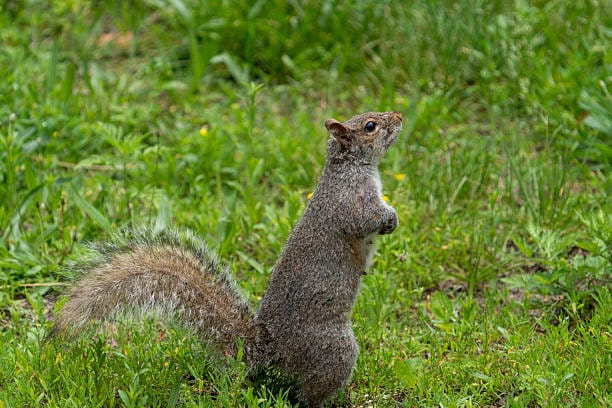
2. Eastern Gray Squirrel (Sciurus carolinensis)
Physical Characteristics & Identification Tips
The Eastern Gray Squirrel is medium-sized, about 18–20 inches long, with predominantly gray fur, sometimes tinged with brown, and a fluffy white-edged tail. Juveniles are slightly darker, but adults show a more silver-gray tone.
Behavior
Known for their boldness, Gray Squirrels are active both day and dusk. They engage in complex social interactions, communicate with tail flicks, and exhibit fascinating problem-solving skills, such as navigating obstacles to reach food. Have you ever noticed them inspecting a bird feeder as if reading a “map”? That’s intelligence at work.
Habitat and Range
Gray Squirrels thrive in deciduous forests, suburban parks, and city yards. They are highly adaptable, thriving wherever oak and maple trees are abundant. Michigan’s Lower Peninsula forests are especially populated with this species.
Diet
While their diet is similar to Fox Squirrels, Gray Squirrels also consume buds, fruits, fungi, and occasionally insects. They are prolific hoarders, storing hundreds of acorns annually in scattered locations.
Reproduction and Life Cycle
Breeding occurs twice yearly. Gestation lasts 44 days, producing 2–5 kits. They are weaned at 10 weeks and learn survival skills by observing adults.
Fun Facts / Unique Traits
Gray Squirrels can find buried nuts months later, even under snow, using an extraordinary spatial memory. Their tails also help with balance, communication, and temperature regulation.
Human Interaction
Gray Squirrels are familiar in suburban neighborhoods, often accepted as part of the local scenery. They may occasionally chew on wiring or birdhouses but are otherwise non-threatening.
3. American Red Squirrel (Tamiasciurus hudsonicus)

Physical Characteristics & Identification Tips
Smaller than tree squirrels, Red Squirrels measure 10–12 inches in length. They are reddish-brown above with a white underbelly and smaller, pointed ears. Their sharp eyes and agile movements distinguish them from other squirrels.
Behavior
These squirrels are feisty and territorial, often vocalizing to warn intruders. They spend most of their time in conifer forests, scurrying along branches and cones. Their energy and quick reflexes make them a delight to watch, like tiny forest acrobats.
Habitat and Range
Red Squirrels prefer coniferous forests, particularly in Michigan’s northern Lower Peninsula and Upper Peninsula. They are often associated with spruce, pine, and fir trees.
Diet
Primarily seed eaters, especially pine and spruce cones, but they also consume fungi, berries, and occasionally bird eggs. Their habit of caching cones ensures a stable winter food supply.
Reproduction and Life Cycle
They breed once or twice annually, giving birth to 2–5 kits after a 35-day gestation. Young are weaned at about 8 weeks and quickly learn to forage.
Fun Facts / Unique Traits
Red Squirrels are fiercely protective of their territories, often chasing larger species away. Their vocalizations, ranging from chatters to trills, alert others to danger.
Human Interaction
While rarely entering homes, Red Squirrels may raid bird feeders or small gardens. They are otherwise non-aggressive and can be observed safely from a distance.
4. Northern Flying Squirrel (Glaucomys sabrinus)

Physical Characteristics & Identification Tips
Northern Flying Squirrels are small, nocturnal, and possess a membrane called the patagium, stretching from wrist to ankle, enabling them to glide between trees. Adults measure 9–10 inches long, with a soft gray-brown coat and a pale underbelly. Their large, dark eyes are adapted for low-light vision, aiding their nighttime navigation.
Behavior
These squirrels are primarily nocturnal, venturing out under the cover of darkness to forage. They are highly social, often nesting communally in tree cavities or abandoned woodpecker holes. Watching them glide silently from tree to tree is like witnessing an aerial ballet in the forest canopy.
Habitat and Range
Northern Flying Squirrels inhabit mature coniferous and mixed forests, particularly in Michigan’s Upper Peninsula. They favor areas with large, old trees and abundant moss, fungi, and nuts for foraging.
Diet
Unlike tree squirrels, their diet heavily features fungi, including truffles, which they help disperse. They also eat seeds, nuts, berries, and occasionally insects. Their role in forest ecology is crucial, particularly in spreading fungal spores that aid tree health.
Reproduction and Life Cycle
Breeding occurs once a year, typically in late winter. After a 40-day gestation, females give birth to 2–4 kits, which remain in the nest for about 8 weeks. Young quickly develop gliding skills, essential for survival in the forest canopy.
Fun Facts / Unique Traits
Did you know that Northern Flying Squirrels can glide over 100 feet without touching the ground? Their gliding ability allows them to escape predators and access new feeding sites efficiently.
Human Interaction
Due to their nocturnal habits, encounters with humans are rare. They rarely enter homes but may be attracted to bird feeders or fruit trees if available nearby.
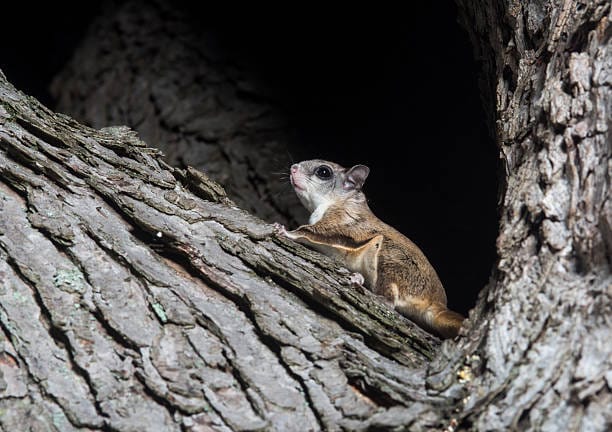
5. Southern Flying Squirrel (Glaucomys volans)
Physical Characteristics & Identification Tips
Smaller than their northern cousins, Southern Flying Squirrels measure 8–10 inches long. They have soft gray-brown fur, a white underbelly, and a slightly shorter tail than the Northern Flying Squirrel. Their gliding membrane allows controlled aerial travel, making them fascinating nocturnal acrobats.
Behavior
These squirrels are strictly nocturnal and highly social, often nesting in groups. They communicate with high-pitched squeaks and utilize tree cavities for shelter and reproduction. Observers might notice them darting silently across backyards under moonlight, seemingly floating between trees.
Habitat and Range
Southern Flying Squirrels prefer deciduous and mixed forests, particularly in southern Lower Peninsula Michigan. They favor areas with hollow trees and abundant nut-producing species.
Diet
Their diet includes nuts, seeds, fungi, berries, and occasional insects. They are proficient hoarders, storing food in tree cavities to survive scarce winter months.
Reproduction and Life Cycle
They breed twice per year, producing 2–5 young per litter. Kits remain in the nest for approximately 6–8 weeks before venturing out, gradually learning to glide and forage independently.
Fun Facts / Unique Traits
Southern Flying Squirrels are known for their exceptional gliding precision and ability to share nests communally, reducing heat loss in cold winter months.
Human Interaction
They are rarely seen due to nocturnal habits but may occasionally visit backyard feeders. They pose no threat and are an enjoyable species to spot for night-time wildlife enthusiasts.
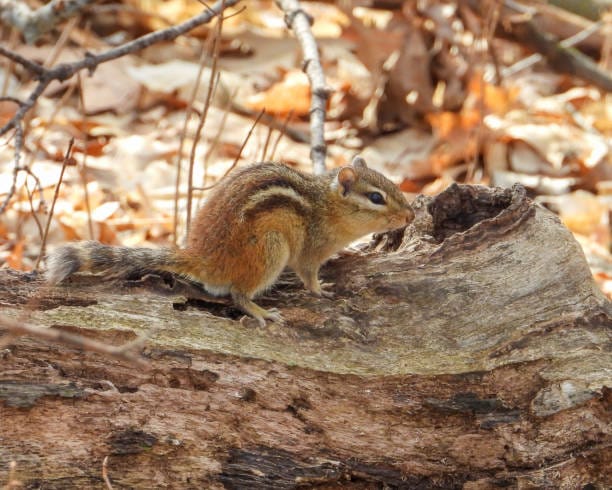
6. Eastern Chipmunk (Tamias striatus)
Physical Characteristics & Identification Tips
Eastern Chipmunks are small, 8–10 inches long including the tail, with distinctive brown, white, and black striped fur. Their cheek pouches allow them to carry large amounts of food, an identifying trait for anyone observing their busy habits.
Behavior
These diurnal squirrels are known for energetic foraging and territorial behaviors. They dig intricate burrows, often with multiple entrances, and may perform rapid, chattering calls to signal danger. Watching a chipmunk stash nuts into its burrow is like observing a tiny, fur-covered construction crew at work.
Habitat and Range
Chipmunks favor deciduous forests, brushy areas, and suburban gardens throughout Michigan. They adapt well to human environments as long as cover and food sources are present.
Diet
Their diet includes nuts, seeds, berries, fungi, and occasionally small insects. They are avid hoarders, storing food underground for winter consumption.
Reproduction and Life Cycle
Breeding occurs twice a year, with gestation lasting approximately 31 days. Litters of 2–5 young are born in underground nests. Kits are weaned in about 6 weeks and begin foraging under adult supervision.
Fun Facts / Unique Traits
Chipmunks can move up to 165% of their body weight in a single cheek pouch load! Their ability to remember food cache locations is impressive, often returning to buried nuts months later.
Human Interaction
Eastern Chipmunks are generally non-threatening and delight backyard observers with their rapid movements and cheek-stuffing antics. They can be encouraged by planting native nut-bearing trees or shrubs.
7. Groundhog / Woodchuck (Marmota monax)

Physical Characteristics & Identification Tips
Groundhogs, while technically part of the squirrel family, are much larger, measuring 16–26 inches long. They have stout bodies, coarse brownish fur, and short legs adapted for digging. Their size and slow movements distinguish them from typical tree squirrels.
Behavior
Groundhogs are primarily diurnal and spend most of their time foraging or digging burrows. They are expert diggers, creating complex underground networks for shelter and hibernation. Observing one surfacing from its burrow can be like watching a furry sentry scanning the horizon.
Habitat and Range
They prefer open fields, meadows, and edges of forests across Michigan. Burrows are typically dug in well-drained soil with a clear line of sight for predator detection.
Diet
Groundhogs are herbivores, consuming grasses, herbs, vegetables, and fruits. Gardeners often notice them feasting on cultivated plants, which sometimes leads to conflict.
Reproduction and Life Cycle
Breeding occurs once a year in early spring. Females produce 2–6 young after a 31-day gestation. Kits are weaned at 5–6 weeks and emerge from burrows as miniature versions of adults.
Fun Facts / Unique Traits
Groundhogs hibernate for up to 5 months during winter. Their burrows provide shelter for other wildlife once abandoned, making them ecological engineers of sorts.
Human Interaction
While sometimes considered garden pests, groundhogs are largely harmless. Their burrowing can aerate soil, and spotting one can be a fun educational experience for families and wildlife enthusiasts.
8. Franklin’s Ground Squirrel (Poliocitellus franklinii)

Physical Characteristics & Identification Tips
Franklin’s Ground Squirrels are medium-sized, measuring about 12–16 inches including the tail. Their fur is brownish-gray with subtle white spots on the back and sides. They have short, sturdy limbs adapted for digging and a bushy tail used for balance and communication.
Behavior
These squirrels are primarily diurnal and highly alert, often standing on their hind legs to scan for predators. They dig burrows to create nests, escape routes, and storage chambers. While less agile in trees, their terrestrial lifestyle showcases incredible digging prowess.
Habitat and Range
Franklin’s Ground Squirrels prefer open grasslands, prairies, and agricultural edges across southern Michigan. Their burrows often provide microhabitats for insects and other small wildlife.
Diet
They are omnivorous, feeding on seeds, grasses, fruits, insects, and occasionally small vertebrates. Their diet changes seasonally, with more protein intake in spring to support growth and reproduction.
Reproduction and Life Cycle
Breeding occurs in early spring after hibernation. Females give birth to 4–8 young following a 28-day gestation. Kits emerge from burrows within a few weeks, gradually learning to forage and dig independently.
Fun Facts / Unique Traits
Franklin’s Ground Squirrels can stand fully upright for extended periods, appearing like tiny sentinels. They are excellent diggers, and abandoned burrows often become shelters for other species.
Human Interaction
They are rarely seen by humans due to shy nature and hibernation. When spotted, they offer a fascinating glimpse into prairie and farmland ecosystems.
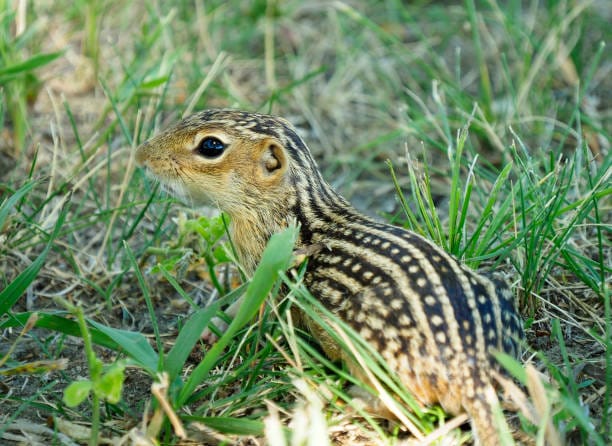
9. Thirteen-Lined Ground Squirrel (Ictidomys tridecemlineatus)
Physical Characteristics & Identification Tips
Recognizable by its thirteen alternating light and dark stripes running from head to tail, this small ground squirrel measures 7–10 inches long. Its slender body and pointed face give it a streamlined appearance for burrowing and sprinting across open terrain.
Behavior
Thirteen-Lined Ground Squirrels are diurnal and highly active. They dig intricate burrow systems for nesting, storing food, and hibernating. Their rapid movements and alertness make them challenging to approach closely.
Habitat and Range
They thrive in grasslands, open fields, and agricultural landscapes throughout Michigan. Their burrows often help improve soil aeration and drainage, indirectly benefiting local plant life.
Diet
Omnivorous by nature, their diet includes seeds, grains, insects, and small invertebrates. They frequently hoard seeds in burrows to sustain them through hibernation.
Reproduction and Life Cycle
Breeding occurs shortly after emergence from hibernation in spring. Females typically give birth to 5–8 kits, which are weaned after 4–5 weeks and soon begin independent foraging.
Fun Facts / Unique Traits
The thirteen-lined pattern provides excellent camouflage in grassy habitats. They hibernate for up to 6 months, emerging in spring with a renewed energy for feeding and breeding.
Human Interaction
These squirrels are generally harmless and can be spotted in open fields, parks, and large gardens. Their burrowing may sometimes disturb lawns, but they also contribute to ecosystem health.
10. Red Squirrel / American Red Squirrel (Tamiasciurus hudsonicus)
Physical Characteristics & Identification Tips
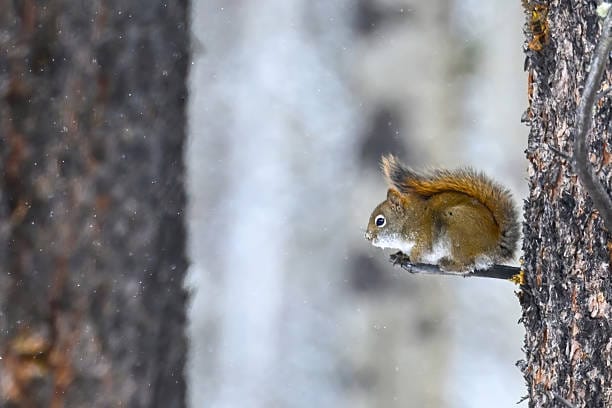
Red Squirrels are small, about 7–9 inches long, with a reddish-brown coat and a white or cream-colored belly. Their bushy tails are proportionally large, helping with balance and warmth. Distinctive ear tufts may be visible during winter months.
Behavior
Highly territorial, Red Squirrels are vocal and may chase intruders away from food caches. They are active year-round, often seen scurrying along tree branches or performing acrobatic leaps between conifers.
Habitat and Range
They favor coniferous and mixed forests throughout Michigan, often in areas with dense stands of spruce, pine, and fir. They nest in tree cavities, abandoned woodpecker holes, or in leafy dreys.
Diet
Primarily feeding on conifer seeds, they also consume nuts, berries, fungi, and occasionally bird eggs. Their caching behavior ensures a steady winter food supply.
Reproduction and Life Cycle
Red Squirrels breed twice a year, with litters of 2–5 kits. Young remain in nests for 6–8 weeks before venturing out to forage independently.
Fun Facts / Unique Traits
Red Squirrels are known for their feisty nature and impressive memory, returning to hundreds of hidden caches during winter. Their vocalizations include sharp, high-pitched calls used to defend territory.
Human Interaction
Often spotted in backyards and parks, Red Squirrels delight birdwatchers and wildlife enthusiasts alike. They are bold around humans but generally pose no threat, adding charm to forested areas.
FAQ’s
1. How many different kinds of squirrels are there in Michigan?
Michigan has three main types of squirrels: the Eastern Gray Squirrel, the Fox Squirrel, and the Red Squirrel. Each species has its own habitat and behaviors, from urban parks to dense forests.
2. How rare is a black squirrel in Michigan?
Black squirrels are a melanistic variant of the Eastern Gray Squirrel. They are relatively uncommon but can be found in some urban areas and forests, especially in the southern part of the state.
3. What is the biggest squirrel in Michigan?
The Fox Squirrel is the largest squirrel in Michigan. Adults can weigh up to 2–3 pounds and measure about 20 inches long, including the tail.
4. Where do squirrels sleep in Michigan?
Squirrels sleep in nests called “dreys,” which are made of leaves and twigs in tree branches. They may also take shelter in tree cavities, attics, or other quiet, enclosed spaces.
5. What is the lifespan of a squirrel in Michigan?
In the wild, squirrels usually live 5–7 years, although some may reach 10 years or more. Predation, disease, and accidents often limit their lifespan.
6. What time of year do squirrels have babies in Michigan?
Squirrels in Michigan typically have two litters per year. The first is in late winter or early spring (February–April), and the second is in summer (June–August). Litters usually contain 2–5 young.
7. Do you need a license to hunt squirrels in Michigan?
Yes, you need a valid hunting license to hunt squirrels in Michigan. There are also regulations on season dates, daily limits, and allowed hunting methods to ensure sustainable populations.
8. What types of squirrels live in Michigan?
Michigan is home to a variety of squirrels, including the Eastern Gray Squirrel, Fox Squirrel, Red Squirrel, Southern Flying Squirrel, Northern Flying Squirrel, Thirteen-Lined Ground Squirrel, Franklin’s Ground Squirrel, Eastern Chipmunk, American Red Squirrel, and Black Squirrel (a melanistic variant of the Eastern Gray Squirrel).
9. Are there flying squirrels in Michigan?
Yes, Michigan hosts both the Southern Flying Squirrel and the Northern Flying Squirrel. These nocturnal creatures glide between trees using their membrane-like patagium, making them unique among the state’s small mammals.
10. Which squirrel is most common in Michigan?
The Eastern Gray Squirrel is the most abundant and widely distributed squirrel species across Michigan, often found in urban parks, woodlands, and suburban areas.
11. Do squirrels hibernate in Michigan?
Most Michigan squirrels do not hibernate, but they may reduce activity during the coldest winter months. Ground squirrels, like the Franklin’s Ground Squirrel, do enter hibernation, staying underground until spring.
12. Are black squirrels common in Michigan?
Black squirrels, a melanistic variant of the Eastern Gray Squirrel, are present in Michigan, though they are less common than the standard gray or red-colored squirrels. They are more frequently seen in urban and suburban areas.
13. What do Michigan squirrels eat?
Squirrels in Michigan primarily feed on nuts, seeds, fruits, fungi, and occasionally insects. Ground squirrels may also consume grasses and plant roots.
14. How can I attract squirrels to my backyard?
You can attract squirrels by providing nuts, sunflower seeds, and bird feeders. Planting native nut-bearing trees like oak or hickory can also create natural feeding opportunities.
15. Are any Michigan squirrels endangered?
Most squirrel species in Michigan are not endangered. However, their populations can be affected by habitat loss, urban development, and severe winters, so preserving green spaces is important.
Conclusion
Michigan hosts an impressive diversity of squirrels, each contributing in its own way to the state’s ecosystems. From the acrobatic Gray Squirrel leaping through suburban neighborhoods to the secretive Franklin’s Ground Squirrel burrowing in grasslands, these small mammals play vital roles in seed dispersal, forest regeneration, and even soil aeration. Observing their behaviors—whether it’s the Red Squirrel’s territorial calls or the Thirteen-Lined Ground Squirrel’s intricate burrows—offers a window into the fascinating world of Michigan’s wildlife.
Understanding the types of squirrels in Michigan helps residents and wildlife enthusiasts appreciate the balance of nature around them. While some squirrels thrive near human habitation, others remain elusive, reminding us of the rich and varied habitats within the state. By learning to identify and respect these species, we can coexist with them and support the conservation of their habitats for generations to come.
Whether you are a casual observer, a budding naturalist, or a seasoned wildlife enthusiast, Michigan’s squirrels are a testament to the adaptability and charm of small mammals. Keep your eyes open—one might spot a flash of reddish fur dashing up a tree or a tiny ground squirrel surveying its grassy domain, quietly reminding us that nature is never far from home.
Read more:
-
- 40 Types of Squirrels: Species Identification with Pictures
- Ultimate Guide for Squirrel Hunting
- 12 Types of Squirrels in Canada (Pictures And Identification)
- Squirrel Hunting in the Rain: The Ultimate Guide
- What Do Squirrels Eat? 50 Foods They Love the Most
- 18 Types of Squirrels in Idaho (Pictures And Identification)
- 8 Types of Squirrels in Arizona (Pictures And Identification)
- What Is The Best Time To Go Squirrel Hunting?
- How to Trap Squirrels
- 8 Types of Squirrels in Massachusetts (Pictures And Identification)
- 10 Types of Squirrels in Texas (Pictures and Identification)
- 15 Types of Squirrels in Wisconsin (Pictures and Identification)
- 5 Types of Squirrels in Indiana (Pictures And Identification)
- 8 Types of Squirrels in Illinois (Pictures and Identification)
- 10 Types of Squirrels in New York | Identification and Facts
- 8 Squirrels in Ohio (Pictures And Identification)