

This guide separates genuine outdoor winter bloomers from bulbs and houseplants commonly forced indoors for winter display. Timing varies strongly by climate.
Which Flowers Bloom in Winter?
Common choices include Hellebore, Snowdrop, Winter Aconite, Witch Hazel, Camellia, Pansy, Cyclamen, Winter Jasmine. The best final choice depends on the recipient, setting, season, local availability, and safety considerations.
Quick Comparison
| Flower | Colors | Typical Season | Key Feature |
|---|---|---|---|
| Hellebore | white, green, pink, purple | winter–early spring | nodding cup-shaped blooms |
| Snowdrop | white with green markings | midwinter–early spring | small nodding bell |
| Winter Aconite | bright yellow | late winter | small buttercup-like bloom |
| Witch Hazel | yellow, orange, red | late fall–winter | spidery ribbon petals on bare branches |
| Camellia | white, pink, red, striped | fall–spring depending on type | waxy layered or single bloom |
| Pansy | purple, yellow, blue, white, orange | fall–spring | five-petaled face-like flower |
| Cyclamen | pink, magenta, white | winter–early spring | backswept petals above patterned leaves |
| Winter Jasmine | yellow | winter–early spring | small yellow blooms on green arching stems |
| Wintersweet | pale yellow with maroon center | winter | waxy cup flowers on bare twigs |
| Daphne | pink buds to white/pale pink | late winter–early spring | small fragrant clusters |
| Mahonia | yellow | winter–early spring | upright clusters of small yellow flowers |
| Heath | pink, purple, white | winter–early spring | tiny urn-shaped flowers |
| Christmas Cactus | pink, red, white, orange | late fall–winter indoors | segmented stems with tubular flowers |
| Amaryllis | red, white, pink, striped | winter indoors when forced | large trumpet flowers on thick stalks |
| Paperwhite | white | winter indoors when forced | clusters of starry narcissus blooms |
| Primrose | yellow, pink, red, purple, white | late winter–spring | low rosettes with clustered flowers |
| Flowering Quince | red, coral, pink, white | late winter–early spring | flowers along often-thorny bare stems |
| Edgeworthia | cream to yellow | late winter | rounded clusters of tubular flowers |
| Winter-Flowering Viburnum | pink buds to pale pink-white | late fall–winter in mild spells | fragrant clustered flowers |
| Reticulated Iris | blue-purple, violet | late winter–early spring | small iris bloom near the ground |
| Poinsettia | red, pink, white, cream bracts | winter display | colored bracts around tiny true flowers |
| Sweet Box | creamy white | winter | tiny fragrant flowers among glossy leaves |
| Algerian Iris | lavender-blue | winter in mild climates | low iris flowers among grassy leaves |
| Winter-Flowering Cherry | pale pink to white | late fall–early spring intermittently | delicate blossom on bare twigs |
| Bergenia | pink, magenta, white | late winter–spring | clusters above leathery leaves |
| Pieris | white or pinkish | late winter–spring | drooping chains of urn flowers |
| Calendula | yellow, orange, cream | cool seasons–spring | layered daisy-like bloom |
| Violet | violet, blue, white, yellow | late winter–spring | small five-petaled flower |
| Daffodil | yellow, white, cream, orange-centered | late winter–spring | six tepals around a trumpet or cup |
| Iris | purple, blue, white, yellow | late winter–spring | upright standards and drooping falls |
1. Hellebore
Scientific name: Helleborus spp.
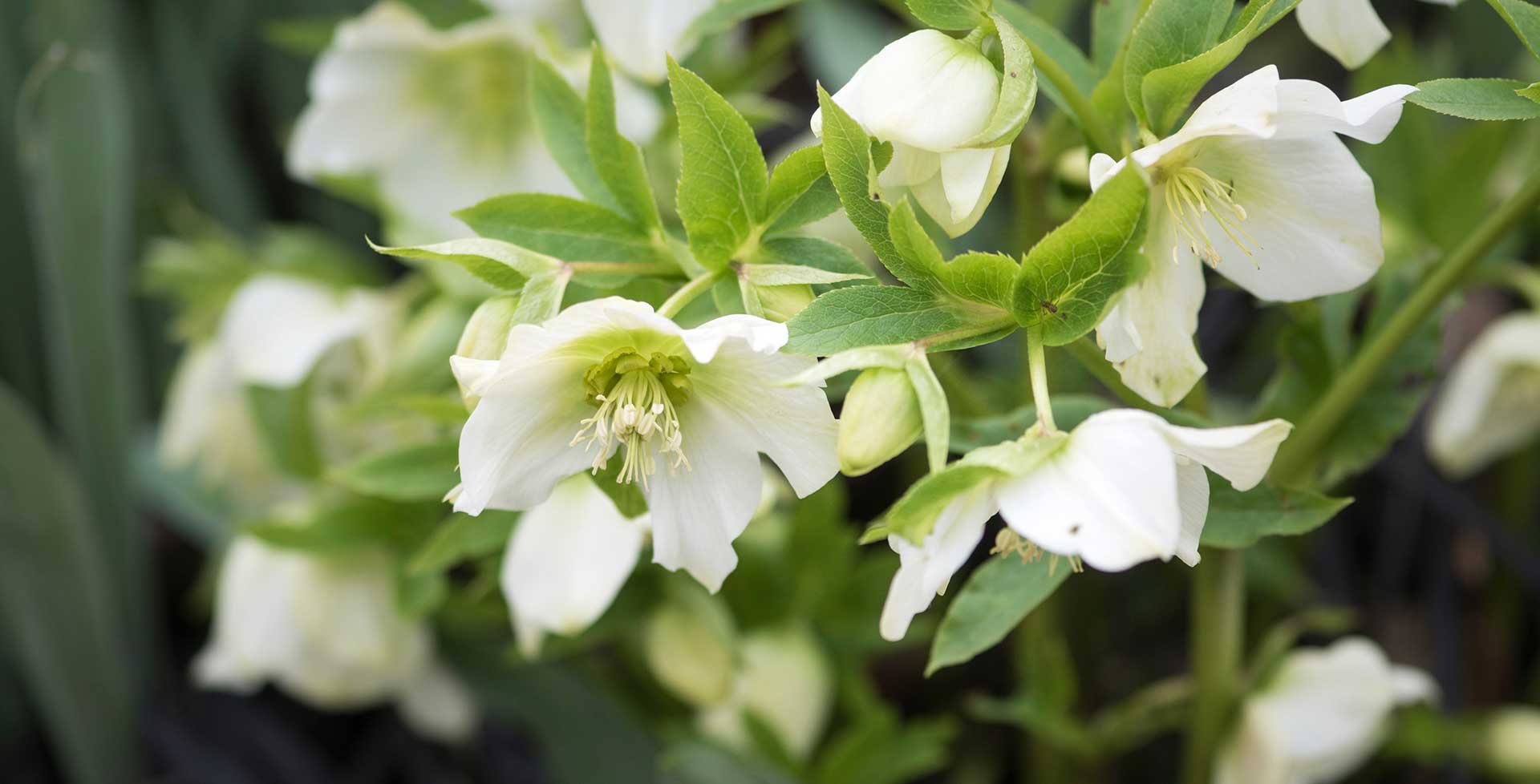
Hellebore belongs in a winter-flower guide because its usual season is winter–early spring. It is identified by nodding cup-shaped blooms, commonly in white, green, pink, purple. Exact flowering time varies with USDA zone, elevation, exposure, and winter weather.
Winter note: All parts are toxic if eaten. Some plants here are outdoor winter bloomers, while others are bulbs or houseplants commonly forced indoors for winter display; the distinction matters when planning a garden.
2. Snowdrop
Scientific name: Galanthus spp.
Snowdrop belongs in a winter-flower guide because its usual season is midwinter–early spring. It is identified by small nodding bell, commonly in white with green markings. Exact flowering time varies with USDA zone, elevation, exposure, and winter weather.
Winter note: True cold-season bulb. Some plants here are outdoor winter bloomers, while others are bulbs or houseplants commonly forced indoors for winter display; the distinction matters when planning a garden.
3. Winter Aconite
Scientific name: Eranthis hyemalis
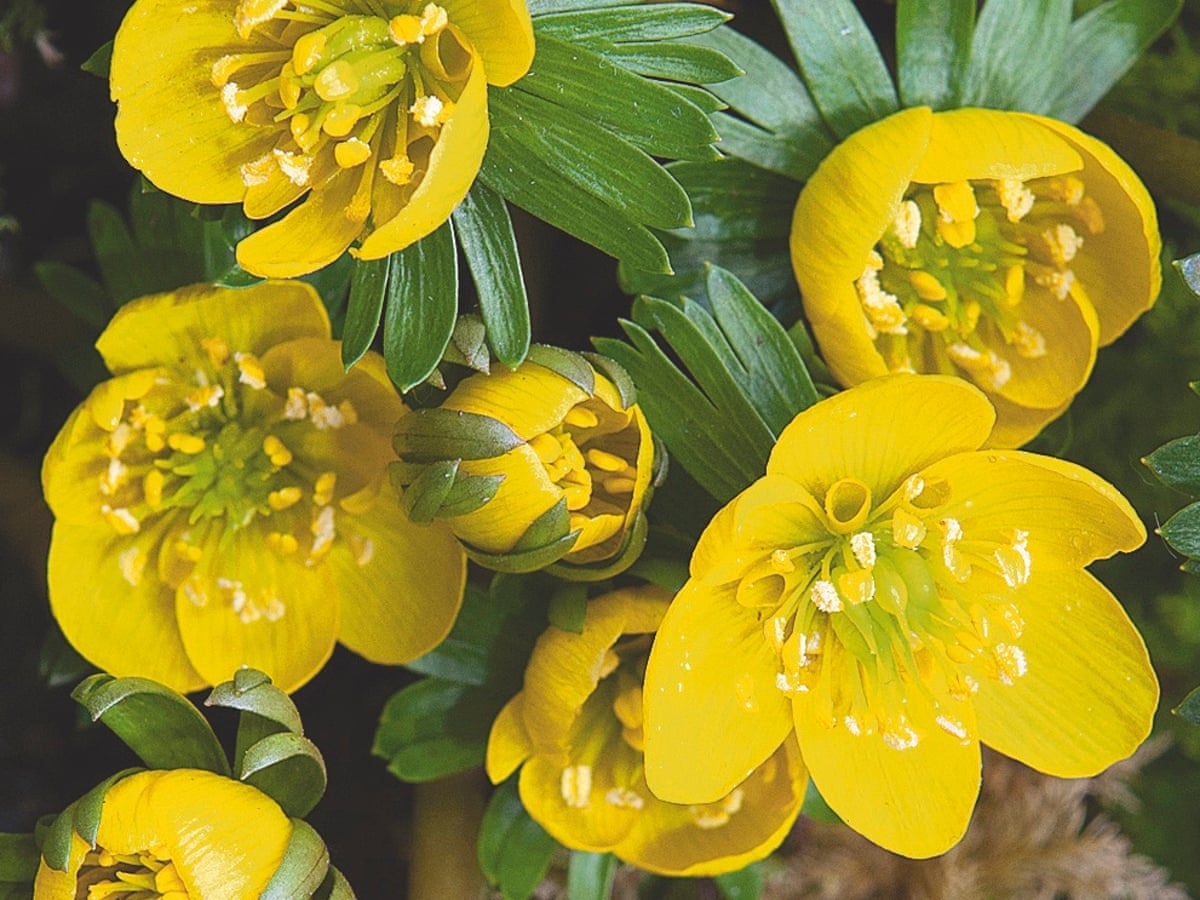
Winter Aconite belongs in a winter-flower guide because its usual season is late winter. It is identified by small buttercup-like bloom, commonly in bright yellow. Exact flowering time varies with USDA zone, elevation, exposure, and winter weather.
Winter note: Toxic if eaten. Some plants here are outdoor winter bloomers, while others are bulbs or houseplants commonly forced indoors for winter display; the distinction matters when planning a garden.
4. Witch Hazel
Scientific name: Hamamelis spp.
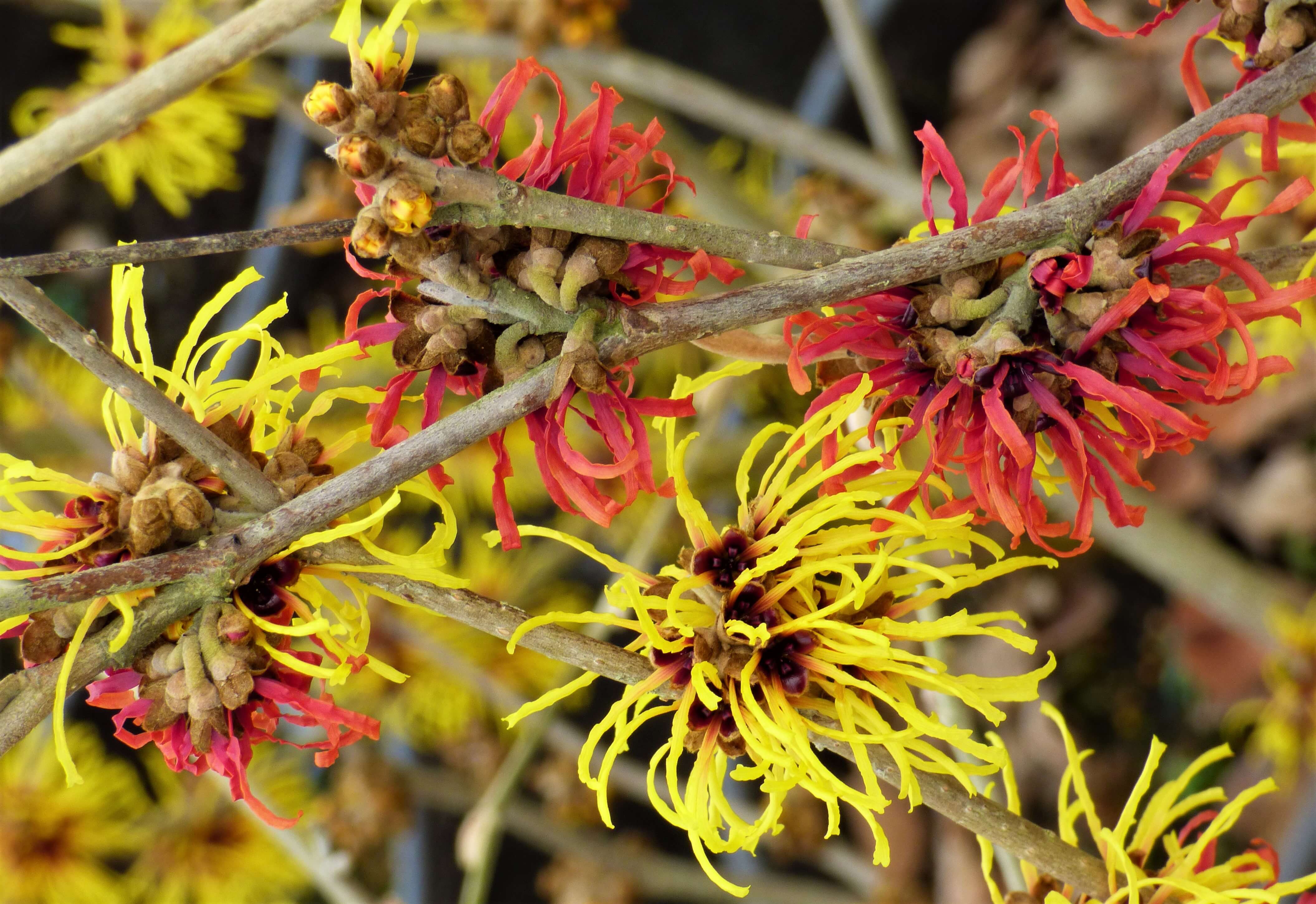
Witch Hazel belongs in a winter-flower guide because its usual season is late fall–winter. It is identified by spidery ribbon petals on bare branches, commonly in yellow, orange, red. Exact flowering time varies with USDA zone, elevation, exposure, and winter weather.
Winter note: One of the clearest winter-flowering shrubs. Some plants here are outdoor winter bloomers, while others are bulbs or houseplants commonly forced indoors for winter display; the distinction matters when planning a garden.
5. Camellia
Scientific name: Camellia japonica and C. sasanqua
Camellia belongs in a winter-flower guide because its usual season is fall–spring depending on type. It is identified by waxy layered or single bloom, commonly in white, pink, red, striped. Exact flowering time varies with USDA zone, elevation, exposure, and winter weather.
Winter note: Important mild-winter flowering shrub. Some plants here are outdoor winter bloomers, while others are bulbs or houseplants commonly forced indoors for winter display; the distinction matters when planning a garden.
6. Pansy
Scientific name: Viola × wittrockiana
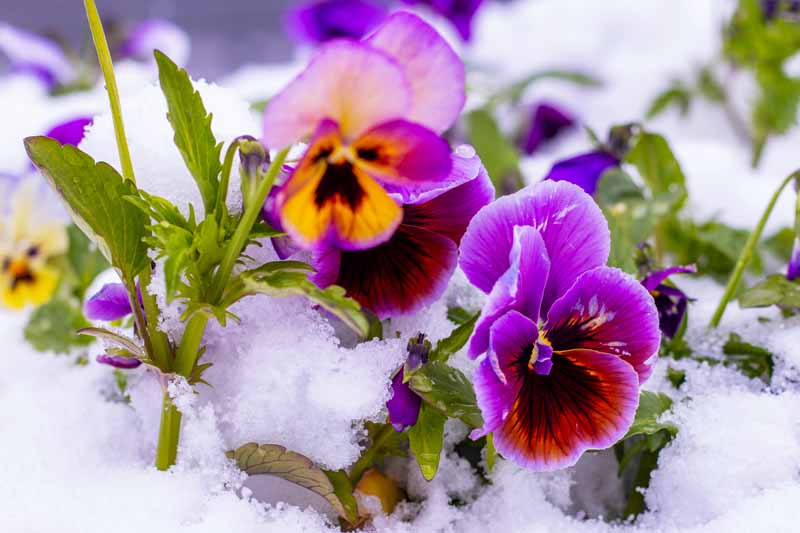
Pansy belongs in a winter-flower guide because its usual season is fall–spring. It is identified by five-petaled face-like flower, commonly in purple, yellow, blue, white, orange. Exact flowering time varies with USDA zone, elevation, exposure, and winter weather.
Winter note: Thrives in cool weather. Some plants here are outdoor winter bloomers, while others are bulbs or houseplants commonly forced indoors for winter display; the distinction matters when planning a garden.
7. Cyclamen
Scientific name: Cyclamen coum

Cyclamen belongs in a winter-flower guide because its usual season is winter–early spring. It is identified by backswept petals above patterned leaves, commonly in pink, magenta, white. Exact flowering time varies with USDA zone, elevation, exposure, and winter weather.
Winter note: Hardy cyclamen differs from florist cyclamen. Some plants here are outdoor winter bloomers, while others are bulbs or houseplants commonly forced indoors for winter display; the distinction matters when planning a garden.
8. Winter Jasmine
Scientific name: Jasminum nudiflorum
Winter Jasmine belongs in a winter-flower guide because its usual season is winter–early spring. It is identified by small yellow blooms on green arching stems, commonly in yellow. Exact flowering time varies with USDA zone, elevation, exposure, and winter weather.
Winter note: Not strongly fragrant. Some plants here are outdoor winter bloomers, while others are bulbs or houseplants commonly forced indoors for winter display; the distinction matters when planning a garden.
9. Wintersweet
Scientific name: Chimonanthus praecox
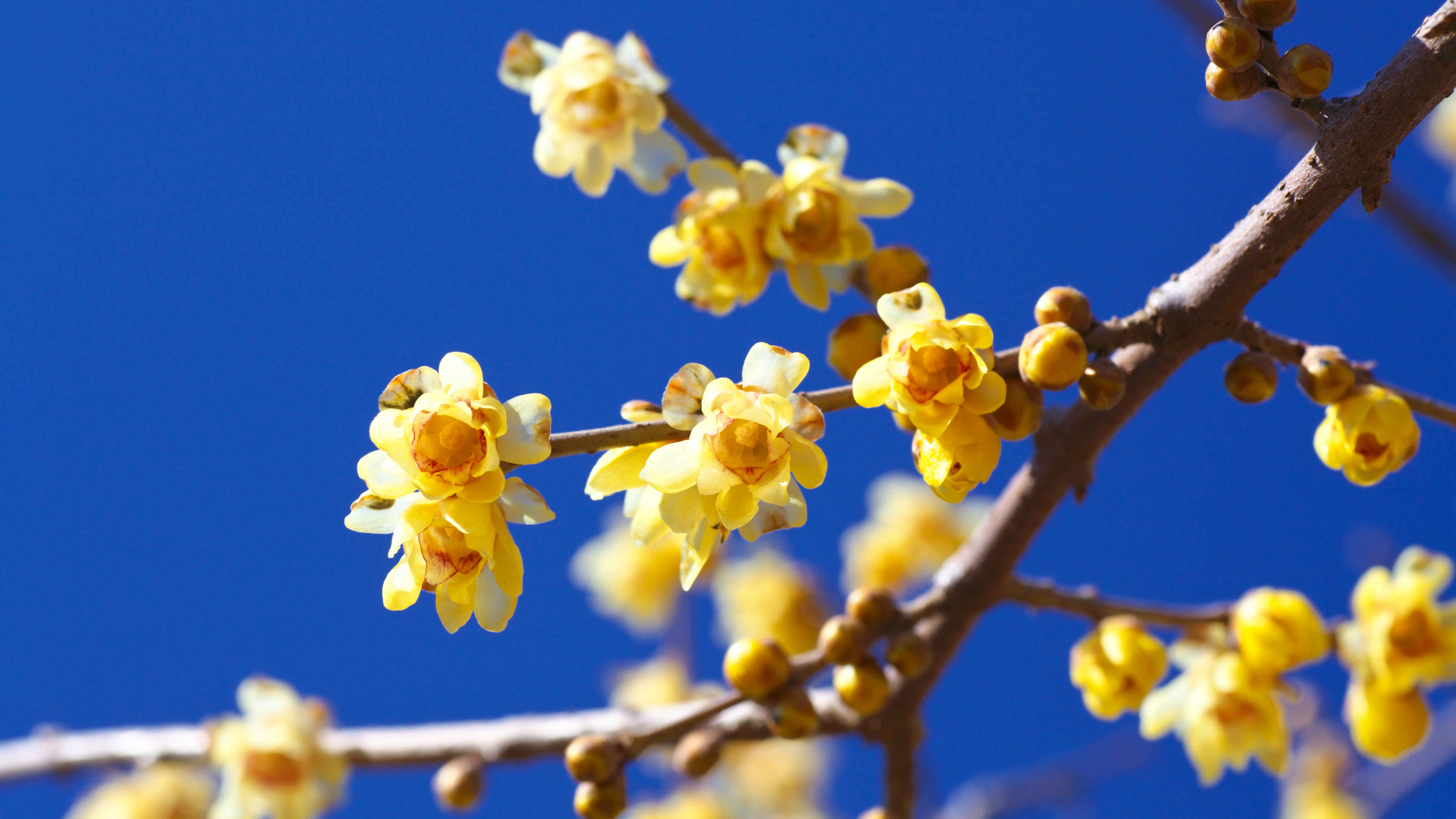
Wintersweet belongs in a winter-flower guide because its usual season is winter. It is identified by waxy cup flowers on bare twigs, commonly in pale yellow with maroon center. Exact flowering time varies with USDA zone, elevation, exposure, and winter weather.
Winter note: Strongly fragrant in suitable climates. Some plants here are outdoor winter bloomers, while others are bulbs or houseplants commonly forced indoors for winter display; the distinction matters when planning a garden.
10. Daphne
Scientific name: Daphne odora
Daphne belongs in a winter-flower guide because its usual season is late winter–early spring. It is identified by small fragrant clusters, commonly in pink buds to white/pale pink. Exact flowering time varies with USDA zone, elevation, exposure, and winter weather.
Winter note: Toxic if eaten and needs excellent drainage. Some plants here are outdoor winter bloomers, while others are bulbs or houseplants commonly forced indoors for winter display; the distinction matters when planning a garden.
11. Mahonia
Scientific name: Mahonia × media and relatives
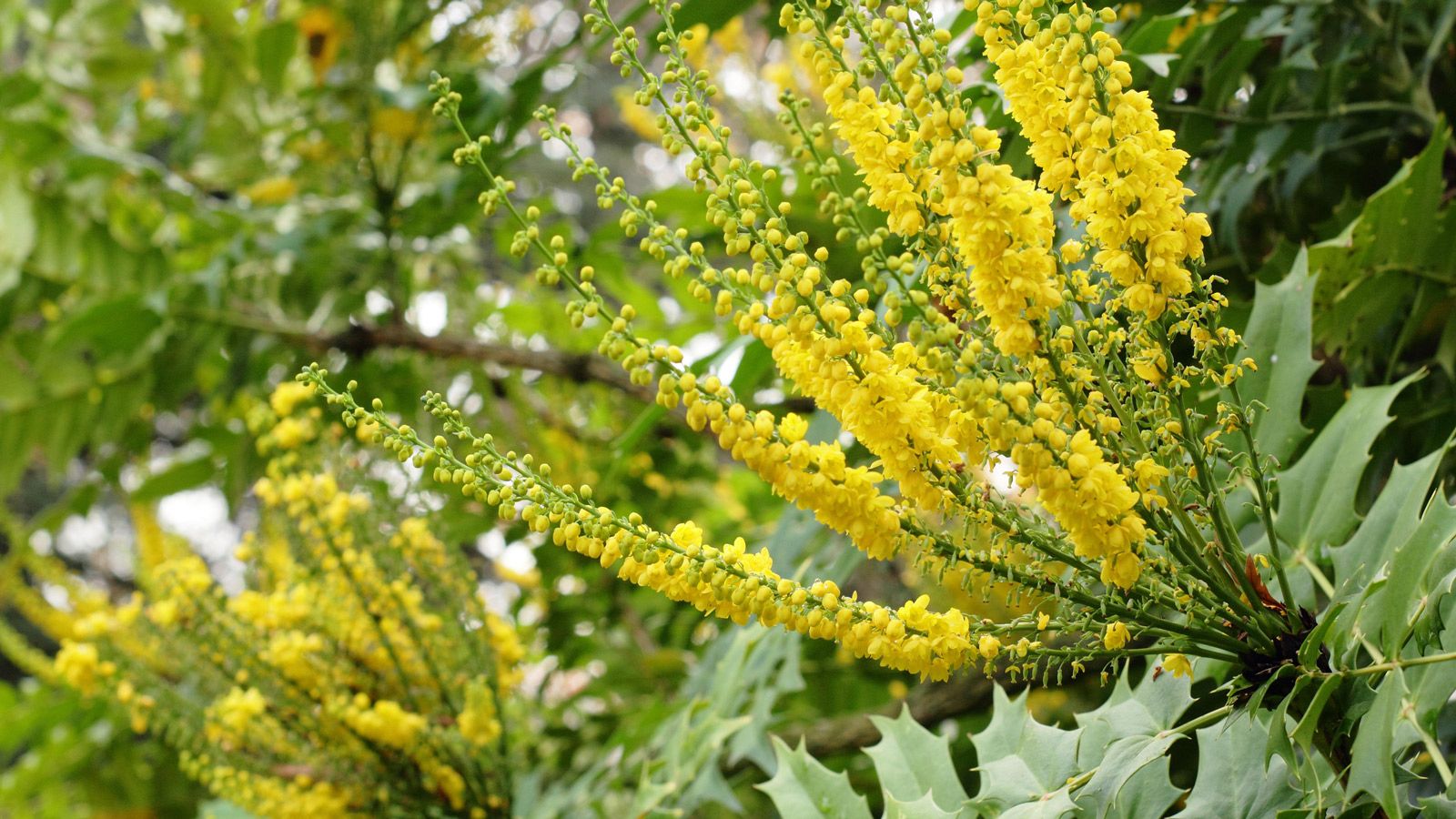
Mahonia belongs in a winter-flower guide because its usual season is winter–early spring. It is identified by upright clusters of small yellow flowers, commonly in yellow. Exact flowering time varies with USDA zone, elevation, exposure, and winter weather.
Winter note: Evergreen winter structure. Some plants here are outdoor winter bloomers, while others are bulbs or houseplants commonly forced indoors for winter display; the distinction matters when planning a garden.
12. Heath
Scientific name: Erica carnea
Heath belongs in a winter-flower guide because its usual season is winter–early spring. It is identified by tiny urn-shaped flowers, commonly in pink, purple, white. Exact flowering time varies with USDA zone, elevation, exposure, and winter weather.
Winter note: Low evergreen winter groundcover. Some plants here are outdoor winter bloomers, while others are bulbs or houseplants commonly forced indoors for winter display; the distinction matters when planning a garden.
13. Christmas Cactus
Scientific name: Schlumbergera hybrids
Christmas Cactus belongs in a winter-flower guide because its usual season is late fall–winter indoors. It is identified by segmented stems with tubular flowers, commonly in pink, red, white, orange. Exact flowering time varies with USDA zone, elevation, exposure, and winter weather.
Winter note: Indoor winter-flowering houseplant. Some plants here are outdoor winter bloomers, while others are bulbs or houseplants commonly forced indoors for winter display; the distinction matters when planning a garden.
14. Amaryllis
Scientific name: Hippeastrum hybrids
Amaryllis belongs in a winter-flower guide because its usual season is winter indoors when forced. It is identified by large trumpet flowers on thick stalks, commonly in red, white, pink, striped. Exact flowering time varies with USDA zone, elevation, exposure, and winter weather.
Winter note: Bulbs are toxic if eaten. Some plants here are outdoor winter bloomers, while others are bulbs or houseplants commonly forced indoors for winter display; the distinction matters when planning a garden.
15. Paperwhite
Scientific name: Narcissus papyraceus
Paperwhite belongs in a winter-flower guide because its usual season is winter indoors when forced. It is identified by clusters of starry narcissus blooms, commonly in white. Exact flowering time varies with USDA zone, elevation, exposure, and winter weather.
Winter note: Strong fragrance; bulbs are toxic. Some plants here are outdoor winter bloomers, while others are bulbs or houseplants commonly forced indoors for winter display; the distinction matters when planning a garden.
16. Primrose
Scientific name: Primula spp.

Primrose belongs in a winter-flower guide because its usual season is late winter–spring. It is identified by low rosettes with clustered flowers, commonly in yellow, pink, red, purple, white. Exact flowering time varies with USDA zone, elevation, exposure, and winter weather.
Winter note: Cool-season plant. Some plants here are outdoor winter bloomers, while others are bulbs or houseplants commonly forced indoors for winter display; the distinction matters when planning a garden.
17. Flowering Quince
Scientific name: Chaenomeles spp.
Flowering Quince belongs in a winter-flower guide because its usual season is late winter–early spring. It is identified by flowers along often-thorny bare stems, commonly in red, coral, pink, white. Exact flowering time varies with USDA zone, elevation, exposure, and winter weather.
Winter note: Useful early-flowering shrub. Some plants here are outdoor winter bloomers, while others are bulbs or houseplants commonly forced indoors for winter display; the distinction matters when planning a garden.
18. Edgeworthia
Scientific name: Edgeworthia chrysantha
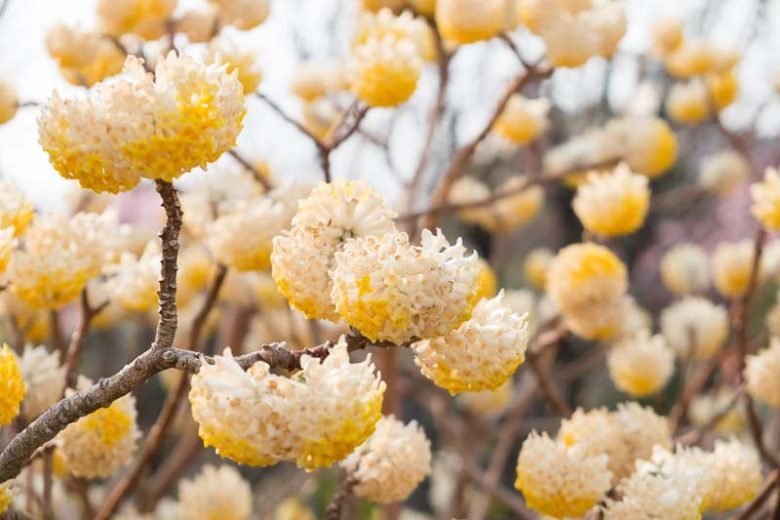
Edgeworthia belongs in a winter-flower guide because its usual season is late winter. It is identified by rounded clusters of tubular flowers, commonly in cream to yellow. Exact flowering time varies with USDA zone, elevation, exposure, and winter weather.
Winter note: Fragrant and best in moderate winters. Some plants here are outdoor winter bloomers, while others are bulbs or houseplants commonly forced indoors for winter display; the distinction matters when planning a garden.
19. Winter-Flowering Viburnum
Scientific name: Viburnum × bodnantense
Winter-Flowering Viburnum belongs in a winter-flower guide because its usual season is late fall–winter in mild spells. It is identified by fragrant clustered flowers, commonly in pink buds to pale pink-white. Exact flowering time varies with USDA zone, elevation, exposure, and winter weather.
Winter note: Bloom timing shifts with weather. Some plants here are outdoor winter bloomers, while others are bulbs or houseplants commonly forced indoors for winter display; the distinction matters when planning a garden.
20. Reticulated Iris
Scientific name: Iris reticulata

Reticulated Iris belongs in a winter-flower guide because its usual season is late winter–early spring. It is identified by small iris bloom near the ground, commonly in blue-purple, violet. Exact flowering time varies with USDA zone, elevation, exposure, and winter weather.
Winter note: Very early bulbous iris. Some plants here are outdoor winter bloomers, while others are bulbs or houseplants commonly forced indoors for winter display; the distinction matters when planning a garden.
21. Poinsettia
Scientific name: Euphorbia pulcherrima
Poinsettia belongs in a winter-flower guide because its usual season is winter display. It is identified by colored bracts around tiny true flowers, commonly in red, pink, white, cream bracts. Exact flowering time varies with USDA zone, elevation, exposure, and winter weather.
Winter note: Milky sap can irritate skin. Some plants here are outdoor winter bloomers, while others are bulbs or houseplants commonly forced indoors for winter display; the distinction matters when planning a garden.
22. Sweet Box
Scientific name: Sarcococca confusa
Sweet Box belongs in a winter-flower guide because its usual season is winter. It is identified by tiny fragrant flowers among glossy leaves, commonly in creamy white. Exact flowering time varies with USDA zone, elevation, exposure, and winter weather.
Winter note: Chosen more for scent than show. Some plants here are outdoor winter bloomers, while others are bulbs or houseplants commonly forced indoors for winter display; the distinction matters when planning a garden.
23. Algerian Iris
Scientific name: Iris unguicularis
Algerian Iris belongs in a winter-flower guide because its usual season is winter in mild climates. It is identified by low iris flowers among grassy leaves, commonly in lavender-blue. Exact flowering time varies with USDA zone, elevation, exposure, and winter weather.
Winter note: Best in mild winters. Some plants here are outdoor winter bloomers, while others are bulbs or houseplants commonly forced indoors for winter display; the distinction matters when planning a garden.
24. Winter-Flowering Cherry
Scientific name: Prunus × subhirtella ‘Autumnalis’
Winter-Flowering Cherry belongs in a winter-flower guide because its usual season is late fall–early spring intermittently. It is identified by delicate blossom on bare twigs, commonly in pale pink to white. Exact flowering time varies with USDA zone, elevation, exposure, and winter weather.
Winter note: Flowers during mild spells. Some plants here are outdoor winter bloomers, while others are bulbs or houseplants commonly forced indoors for winter display; the distinction matters when planning a garden.
25. Bergenia
Scientific name: Bergenia cordifolia and hybrids
Bergenia belongs in a winter-flower guide because its usual season is late winter–spring. It is identified by clusters above leathery leaves, commonly in pink, magenta, white. Exact flowering time varies with USDA zone, elevation, exposure, and winter weather.
Winter note: Late-winter perennial. Some plants here are outdoor winter bloomers, while others are bulbs or houseplants commonly forced indoors for winter display; the distinction matters when planning a garden.
26. Pieris
Scientific name: Pieris japonica
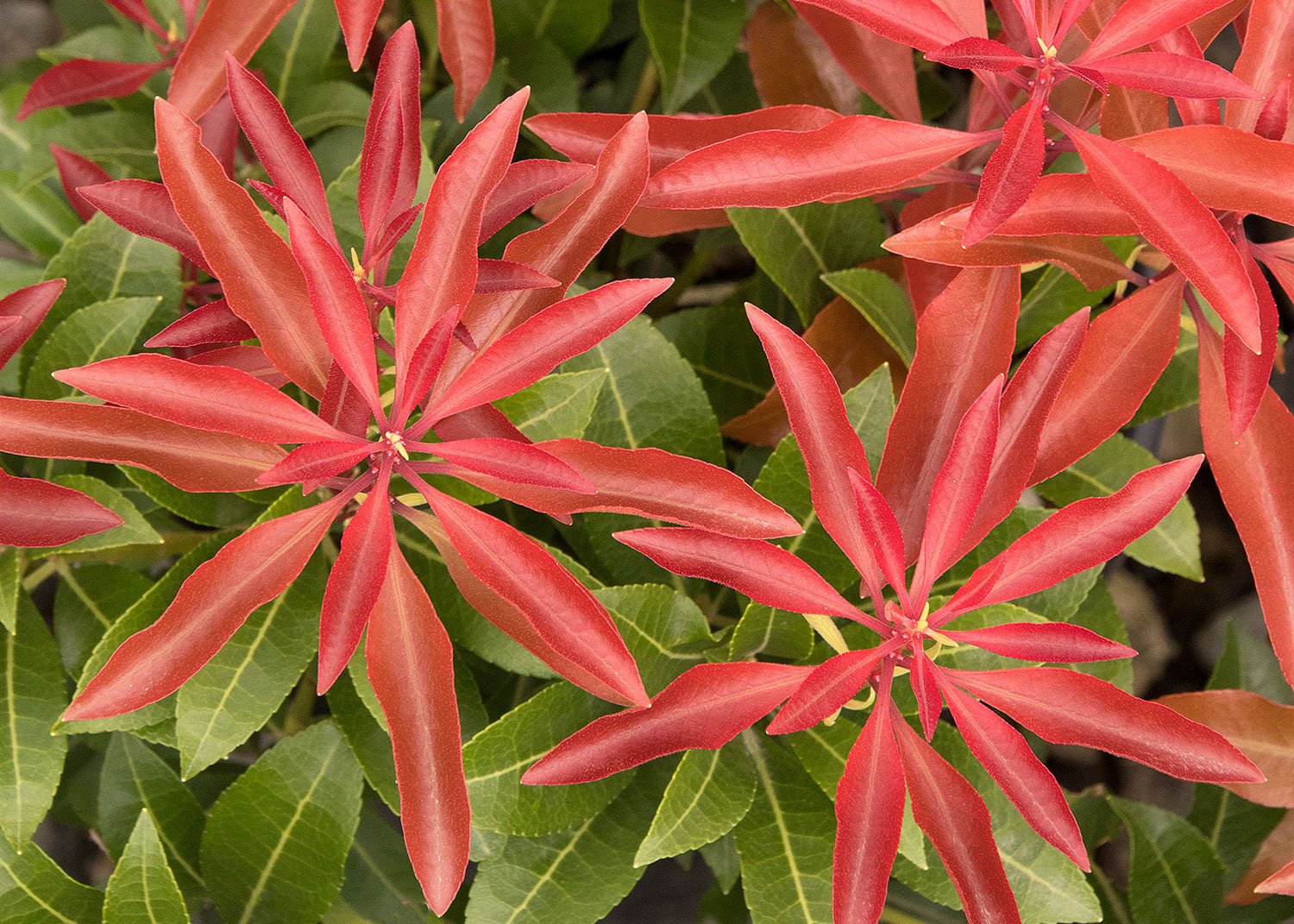
Pieris belongs in a winter-flower guide because its usual season is late winter–spring. It is identified by drooping chains of urn flowers, commonly in white or pinkish. Exact flowering time varies with USDA zone, elevation, exposure, and winter weather.
Winter note: Toxic if eaten. Some plants here are outdoor winter bloomers, while others are bulbs or houseplants commonly forced indoors for winter display; the distinction matters when planning a garden.
27. Calendula
Scientific name: Calendula officinalis
Calendula belongs in a winter-flower guide because its usual season is cool seasons–spring. It is identified by layered daisy-like bloom, commonly in yellow, orange, cream. Exact flowering time varies with USDA zone, elevation, exposure, and winter weather.
Winter note: Often called pot marigold but not a Tagetes marigold. Some plants here are outdoor winter bloomers, while others are bulbs or houseplants commonly forced indoors for winter display; the distinction matters when planning a garden.
28. Violet
Scientific name: Viola spp.
Violet belongs in a winter-flower guide because its usual season is late winter–spring. It is identified by small five-petaled flower, commonly in violet, blue, white, yellow. Exact flowering time varies with USDA zone, elevation, exposure, and winter weather.
Winter note: Some species are edible, but only with positive identification. Some plants here are outdoor winter bloomers, while others are bulbs or houseplants commonly forced indoors for winter display; the distinction matters when planning a garden.
29. Daffodil
Scientific name: Narcissus spp.
Daffodil belongs in a winter-flower guide because its usual season is late winter–spring. It is identified by six tepals around a trumpet or cup, commonly in yellow, white, cream, orange-centered. Exact flowering time varies with USDA zone, elevation, exposure, and winter weather.
Winter note: Bulbs are toxic if eaten. Some plants here are outdoor winter bloomers, while others are bulbs or houseplants commonly forced indoors for winter display; the distinction matters when planning a garden.
30. Iris
Scientific name: Iris spp.
Iris belongs in a winter-flower guide because its usual season is late winter–spring. It is identified by upright standards and drooping falls, commonly in purple, blue, white, yellow. Exact flowering time varies with USDA zone, elevation, exposure, and winter weather.
Winter note: Distinctive form works well for identification and art. Some plants here are outdoor winter bloomers, while others are bulbs or houseplants commonly forced indoors for winter display; the distinction matters when planning a garden.
Outdoor Winter Blooms vs. Forced Indoor Flowers
Hellebores, snowdrops, winter aconite, witch hazel, winter jasmine, and some camellias can bloom outdoors in winter. Amaryllis, paperwhites, Christmas cactus, and poinsettia are usually indoor winter displays in cold regions.
Choosing by Climate
- Check USDA hardiness and local extension guidance.
- Protect container roots from deeper freezes.
- Expect bloom pauses during severe cold.
- Use mild-winter shrubs only where climate fits.
- Separate bloom time from planting time.
Safety
Hellebore, winter aconite, daphne, amaryllis, narcissus, cyclamen, and pieris can be toxic if eaten.
Final Thoughts on Types Of Flowers For Winter
The strongest choices match the real purpose of the article: the person, design, season, climate, culture, and safety context matter more than a generic list. Use this curated selection as a practical starting point, then refine it for the specific setting.
Frequently Asked Questions
1. What flowers really bloom outdoors in winter?
Hellebores, snowdrops, winter aconite, witch hazel, winter jasmine, some camellias, heath, and hardy cyclamen can.
2. Do winter flowers bloom at the same time everywhere?
No. Climate and weather can shift flowering by weeks or months.
3. Can pansies bloom in winter?
Yes in many mild or cool climates, though severe freezes can pause flowering.
4. Is amaryllis an outdoor winter flower?
Usually not in cold climates; Hippeastrum bulbs are commonly forced indoors.
5. Are paperwhites winter flowers?
They are commonly forced indoors for winter bloom and grow outdoors mainly in mild climates.
6. What shrubs bloom in winter?
Witch hazel, winter jasmine, daphne, wintersweet, mahonia, sweet box, viburnum, and some camellias.
7. Which flowers bloom earliest?
Snowdrops, winter aconite, reticulated iris, and some hardy cyclamen are among the earliest.
8. Do winter flowers need full sun?
It depends on species; several tolerate partial shade.
9. Can winter flowers help pollinators?
Early blooms can provide food during mild winter spells when insects are active.
10. How do I protect plants from hard freezes?
Choose plants hardy for your zone and use mulch, sheltered sites, or temporary frost protection where appropriate.
11. How should I keep cut flowers fresh?
Use a clean vase, fresh water, clean cuts, and remove leaves below the water line.
12. Should I use flower food?
Commercial flower food can help when mixed according to the label.
13. Can I mix different flower types?
Yes, if their proportions, colors, and handling needs work together.
14. How do I choose colors?
Start with the recipient, setting, or design goal and use a limited palette for cohesion.
15. Are flower meanings scientific facts?
No. They come from cultural and historical traditions.
16. Why do common names cause confusion?
One common name can refer to several species or even unrelated plants.
17. Do flowers have the same season everywhere?
No. Outdoor timing changes by climate and commercial supply extends availability.
18. Are imported flowers always less fresh?
No. Harvest timing and cold-chain handling matter more than distance alone.
19. Can fragrance be a problem?
Yes. Strong scent can bother people with allergies, migraines, or sensitivities.
20. How do I avoid pollen stains?
Choose low-pollen flowers or remove mature lily anthers before pollen sheds.
21. Are all ornamental flowers edible?
No. Never eat a flower without positive identification and food-safe handling.
22. Should I buy flowers fully open?
Often a mix of open blooms and firm buds gives immediate display plus continued opening.
23. Why do flowers wilt?
Water stress, bacteria, heat, bruising, and natural vase-life differences all matter.
24. Can flowers be refrigerated?
Cool storage can help many cut flowers, but ordinary refrigerators may be too dry or contain ethylene-producing fruit.
25. How should flowers be transported?
Keep stems hydrated, support delicate heads, and avoid hot cars or crushing.
26. Should damaged petals be removed?
Yes, when they can be removed without harming the bloom.
27. What is a focal flower?
A focal flower is the visually dominant bloom in an arrangement.
28. What is a filler flower?
Filler flowers connect larger blooms with small texture.
29. What is a line flower?
Line flowers create height, direction, and movement.
30. How can I make flower choices personal?
Use favorite colors, family memories, birth flowers, or flowers from meaningful places.