
California hosts an impressive variety of hummingbirds, thanks to its warm climate, diverse landscapes, and long flowering seasons. From permanent residents that brighten gardens year-round to dazzling migrants passing through coastal and desert corridors, each species brings its own charm and behaviors. This guide highlights 14 types of hummingbirds in California, offering clear identification tips, behaviors, habitats, diets, and memorable traits. If you’re hoping to recognize the birds visiting your feeders or simply want a deeper appreciation for these remarkable fliers, this list breaks everything down in a friendly and easy-to-follow way. Think of it as your field companion—only lighter and much less likely to fly away.
1. Anna’s Hummingbird (Calypte anna)
Physical Characteristics & Identification Tips
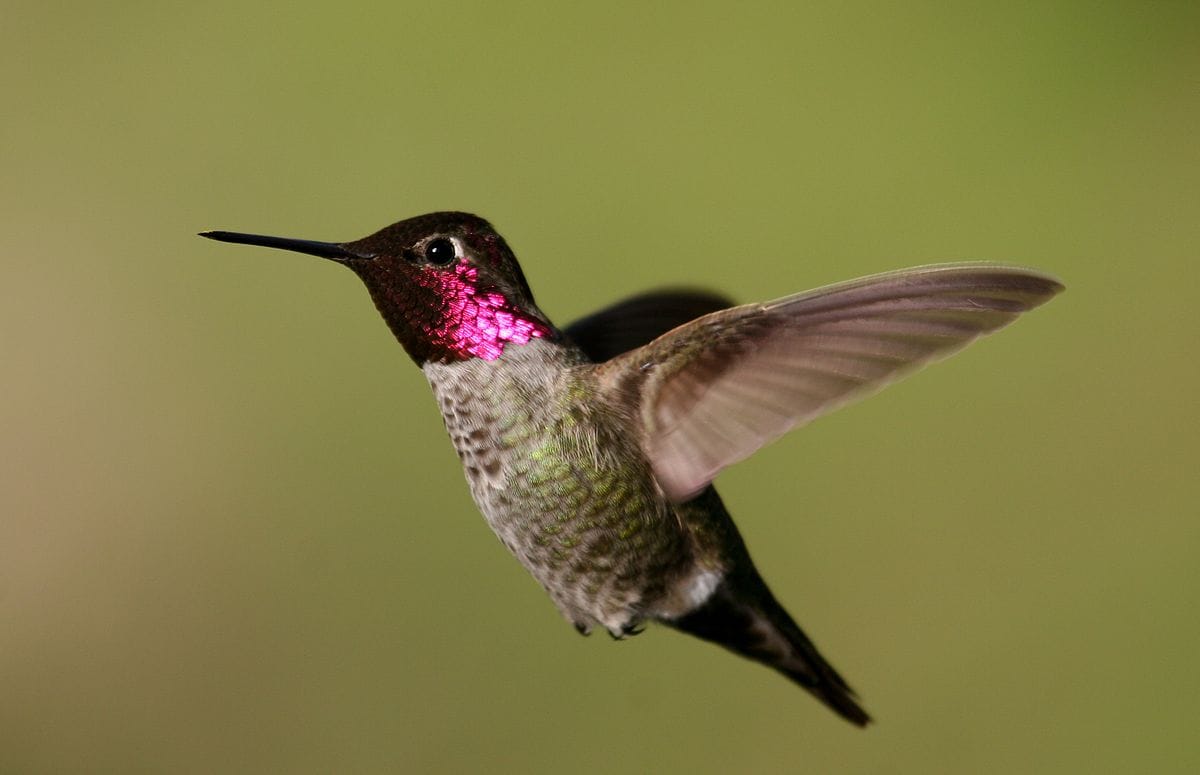
Anna’s Hummingbird is often the first species Californians become familiar with, largely because it stays throughout the year and isn’t shy about visiting backyard feeders or blooming shrubs. Measuring around 3.9 to 4.3 inches in length, these birds are slightly larger than many migrant hummingbirds. The male is unmistakable once you’ve seen him in good light: the entire crown and throat flash a shimmering rosy-red, almost like a tiny knight wearing a helmet forged from sunlight. In shade, the color can appear dark, but when he turns his head, the iridescence wakes up instantly. Females lack this full faceplate of color but still show a modest reddish patch on the throat along with green upperparts and grayish underparts.
One of the most helpful identification cues is their vocal behavior. Anna’s Hummingbirds produce squeaky, scratchy calls that many people describe as sounding like a tiny bicycle brake. They also display a sharp, diving “pop” sound created by the tail feathers—a clue that a territorial male might be patrolling the garden.
Behavior
Anna’s Hummingbirds are confident, bold, and sometimes downright feisty. Males defend feeding and nesting territories with gusto, swooping at intruders in fast, arcing dives. They are known for performing dramatic display flights, rising high into the air before plummeting downward in a U-shaped arc. To a human observer, this can look like a miniature airshow, complete with sound effects. Females tend to be calmer but remain alert, frequently monitoring nearby flowers for bees or other hummingbirds competing for nectar.
Despite their size, they handle California’s cooler winter nights remarkably well. They use a nightly energy-saving state called torpor, allowing their metabolism to drop temporarily. It’s easy to imagine an Anna’s Hummingbird as a tiny, rechargeable creature powering down to get through a chilly night before revving back up at dawn.
Habitat and Range
Anna’s Hummingbird occupies nearly every region of California—from coastal gardens and chaparral to suburban neighborhoods and mountain foothills. While originally native to the Pacific Coast, their range expanded significantly during the 20th century as people planted exotic flowering shrubs and kept sugar-water feeders. Now, they are one of the most common hummingbirds in the state and the most likely species you’re seeing during winter months.
Diet
Nectar fuels most of their day, and California’s climate provides blooms throughout the year. They drink from backyard gardens, natural habitats, and feeders. In addition to nectar, they consume a surprising amount of insects such as gnats, small flies, and spiders. It’s not unusual to see them darting from flower to flower before suddenly snapping up an insect mid-air—almost like a tiny green dragonfly on a mission.
Reproduction and Life Cycle
Males attempt to impress females with their aerial displays, but after mating, females shoulder the entire responsibility of raising the young. They construct miniature nests using plant fibers, feathers, and plenty of spider silk, allowing the nest to expand as the chicks grow. A typical clutch contains two eggs about the size of small jellybeans. Incubation lasts around two weeks, with fledging occurring about three weeks after hatching.
The sight of young Anna’s Hummingbirds peeking over the rim of the nest—necks stretched, bills open—is a moment many nature enthusiasts cherish. After fledging, juveniles continue to beg from the female until they learn to forage efficiently on their own.
Fun Facts / Unique Traits
Males produce their iconic dive-bomb sound using the outer tail feathers, not by vocalizing. Another charming behavior is their habit of perching on exposed twigs or wires, almost as if they enjoy surveying their domain like tiny, iridescent sentinels. And while they may look delicate, their ability to remain active through cool winter days shows they’re far hardier than they appear.
Human Interaction
Gardeners love Anna’s Hummingbirds, and the admiration is mutual—at least when food is involved. They readily visit feeders and show loyalty to yards with consistent nectar sources. Many Californians notice that “their” hummingbirds return year after year, becoming miniature regulars who zip in and out like familiar neighbors. Adding native plants such as California fuchsia, gooseberry, and manzanita encourages healthy, natural food sources for these year-round residents.
2. Allen’s Hummingbird (Selasphorus sasin)
Physical Characteristics & Identification Tips
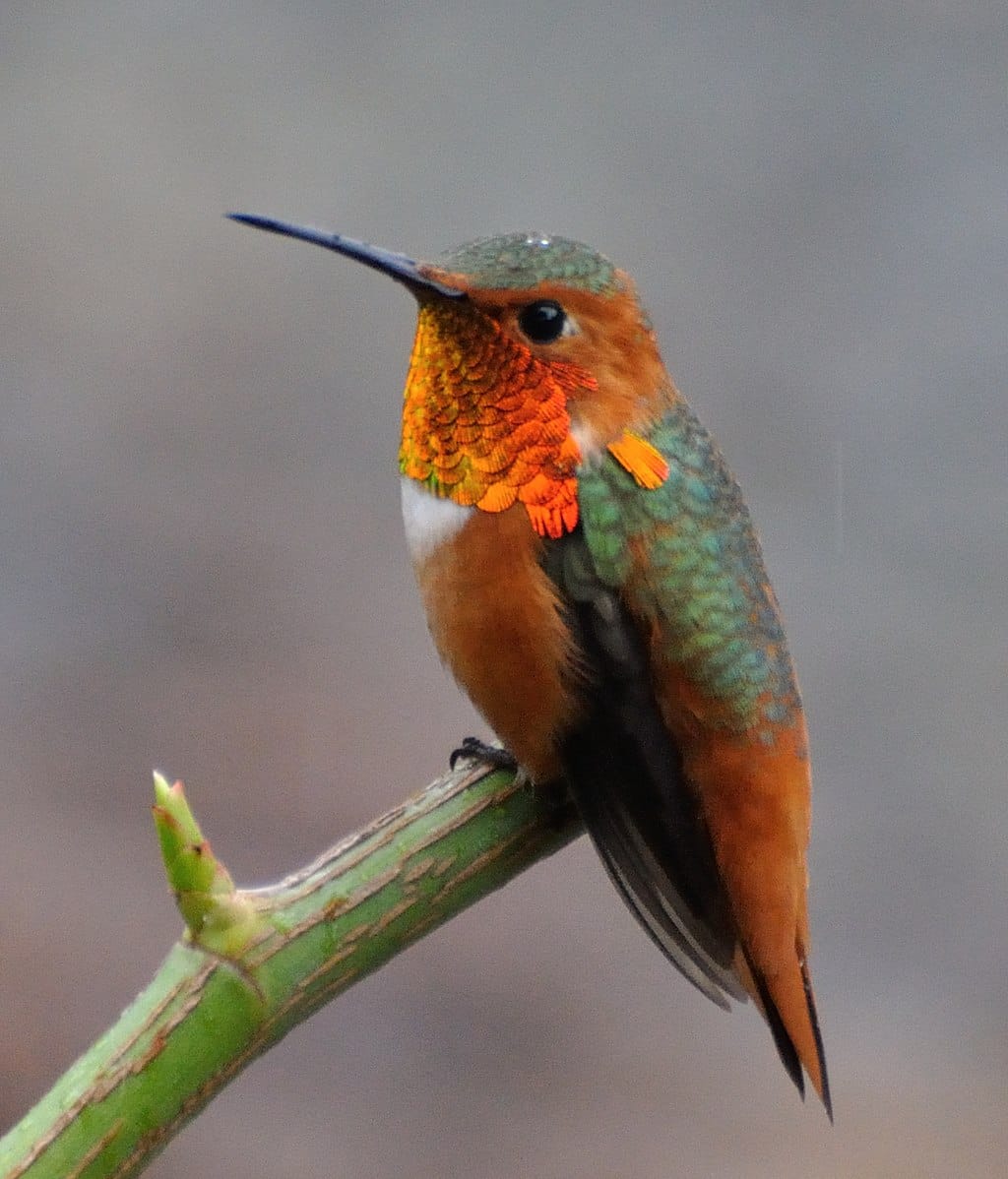
Allen’s Hummingbird is a dazzling orange-and-green species that lights up the California coast during spring and summer. Males have a brilliant coppery body, green back, and an iridescent orange-red throat patch that glows like a tiny ember when the sunlight hits it. Their tail feathers are pointed and narrow, often giving them a slightly sharper silhouette than Anna’s Hummingbirds. Females are greener above and paler below, but they still show warm rufous tones on the flanks and tail.
If you’ve ever watched a small blur zip past in coastal shrubs with a distinctly orangish glow, there’s a good chance you saw an Allen’s. They are easy to confuse with Rufous Hummingbirds, but Allen’s typically show more green on the back and wings. Their flight style is direct and energetic, with males performing elaborate courtship displays that look almost like they’re tracing the outline of a pendulum in the sky.
Behavior
Allen’s Hummingbirds are enthusiastic defenders of their territories. Males set up perches overlooking high-quality flower patches and dive aggressively at intruders. These dives aren’t subtle—one might liken them to a tiny athlete doing repeated, perfectly timed leaps from a diving board. Their energy seems endless, and even experienced birdwatchers sometimes marvel at how many displays a single male can perform during a breeding season.
Females, meanwhile, focus on finding rich feeding sites and protecting their nesting areas from other females. While less confrontational than males, they won’t hesitate to chase off a competitor if food is scarce. Despite all the territorial intensity, observers often find Allen’s Hummingbirds highly entertaining; their dynamic behaviors give gardens a sense of motion and excitement.
Habitat and Range
Allen’s Hummingbird has a relatively narrow breeding range compared with Anna’s. They favor coastal California from roughly San Diego to the Bay Area, with some populations extending slightly north. During migration, they may wander farther, but the core breeding zone remains centered on coastal scrub, chaparral, and urban gardens near the ocean. These birds depend heavily on early-season blooms, making them closely tied to springtime coastal habitats.
Interestingly, there are two forms of Allen’s Hummingbird: a migratory population and a resident population. The resident group is centered on the Los Angeles region, staying year-round, while migratory individuals winter in Mexico before returning north in early spring.
Diet
Nectar from coastal wildflowers—particularly hummingbird sage, manzanita, and monkeyflower—is essential to their diet. They also visit eucalyptus blooms in many urban areas. A considerable portion of their protein intake comes from tiny insects, which they capture through mid-air sallies or glean from leaves. Their appetite is steady, and one can watch them move rapidly from bloom to bloom like small, determined gourmets evaluating a buffet.
Reproduction and Life Cycle
The breeding season often begins early, with males performing elaborate displays that involve rapid dives and sharp, buzzing wing sounds. Females construct nests using grass fibers, plant down, and spider silk, building them on low branches or across sheltered shrubs. The two-egg clutch follows the typical hummingbird pattern. After an incubation period of about two weeks, the young grow quickly, encouraged by frequent feedings of nectar and insects.
By the time fledglings leave the nest—generally after about three weeks—they already show hints of the classic rufous color, though males do not achieve their full brilliance until later. Watching young Allen’s Hummingbirds take their first awkward flights is a treat for anyone lucky enough to spot it.
Fun Facts / Unique Traits
Unlike many hummingbirds, Allen’s males have courtship dives that produce a distinctive “zing” sound at the bottom of each swoop. Some birders say it resembles the brief flick of a violin string—short, sharp, and full of character. Another fascinating detail is their tight association with coastal habitats, making them one of California’s most region-specific hummingbirds.
Human Interaction
Allen’s Hummingbirds are frequent visitors to coastal gardens. Homeowners who plant flowering natives—especially early-season bloomers—tend to attract them. Because these birds depend heavily on particular plant communities, suburban landscaping choices can directly influence their survival. As more people learn this connection, interest in hummingbird-friendly gardening along the coast continues to grow. Many Californians look forward to the annual arrival of migratory Allen’s each spring, treating it almost like the return of an old friend.
3. Rufous Hummingbird (Selasphorus rufus)
Physical Characteristics & Identification Tips
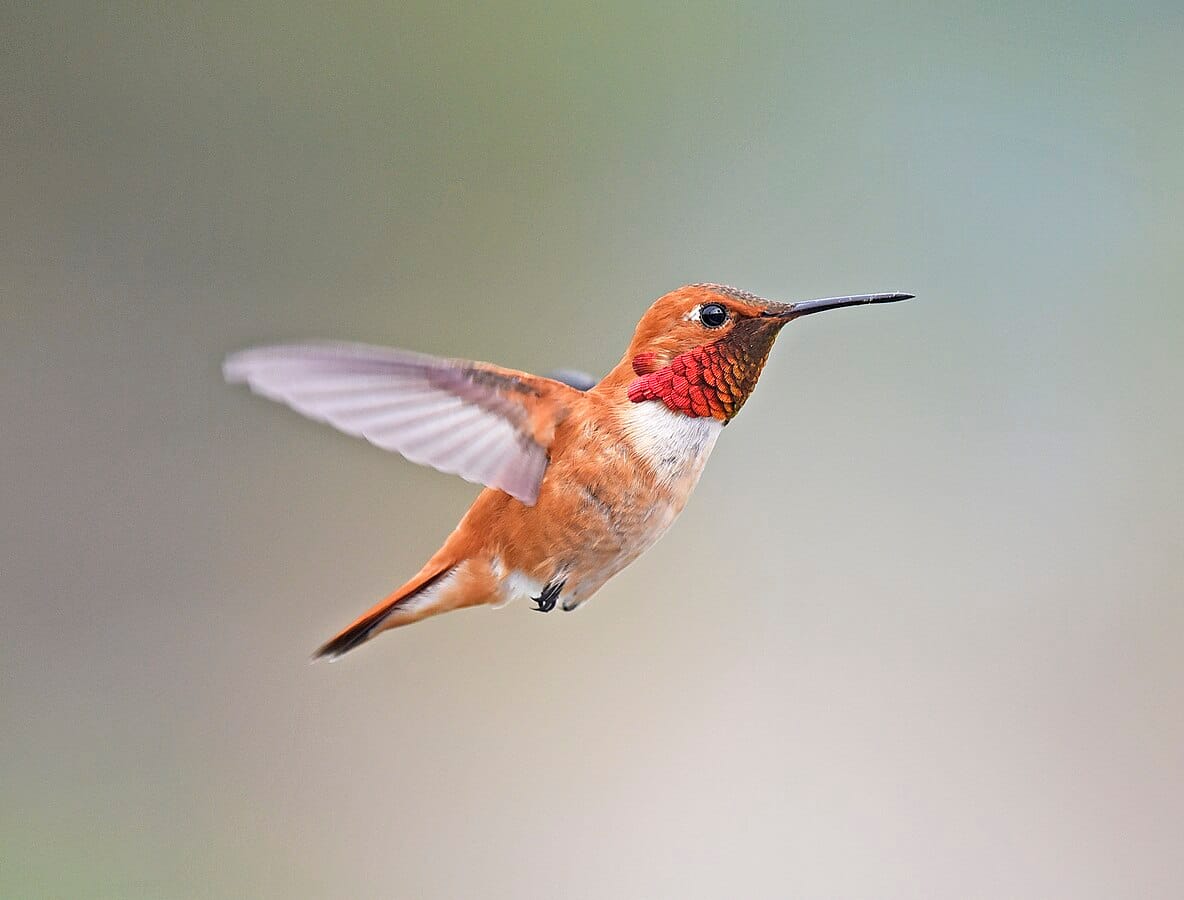
Few hummingbirds are as instantly eye-catching as the Rufous Hummingbird. The males are gleaming copper-orange from head to tail, with an iridescent red throat that gleams like polished metal. Their warm coloring makes them look almost as though they were carved from autumn leaves. Females are primarily green above with rufous tones along the sides and tail; they also show speckling on the throat. Many observers comment that female Rufous Hummingbirds have a feisty spark in their demeanor that matches their coloration.
One of the best identification distinctions between Rufous and Allen’s Hummingbirds is the amount of green on the back. Rufous males have almost entirely rufous backs, whereas Allen’s males typically show more green. The tail feathers also tend to be broader in Rufous. In practice, however, the two can be confusing, especially for beginners. Fortunately, their different seasonal patterns often help: Rufous Hummingbirds are common migrants passing through California during spring and, to a lesser extent, late summer.
Behavior
Rufous Hummingbirds are famous for their fiery attitude. Even among hummingbirds—birds already known for their bold tempers—Rufous stand out. Males often dominate feeders, driving away species much larger than themselves. Observers sometimes joke that Rufous Hummingbirds believe they own every flower in the garden, and everyone else is merely borrowing space. They chase, dive, loop, and buzz with high energy, creating busy scenes wherever they go.
These hummingbirds are among the most impressive long-distance migrants in North America. They travel thousands of miles each year, moving between Mexico, the western United States, Canada, and sometimes Alaska. Their journey is astounding when you consider their size—barely heavier than a few paperclips. But their stamina is legendary, and many birdwatchers eagerly await their predictable spring migration.
Habitat and Range
Rufous Hummingbirds do not typically breed in California, but the state sits along their major migration routes. During spring, they move northward along the coast and interior valleys, stopping to refuel at gardens, wildflower patches, and riparian zones. In late summer, some return south through the mountains and coastal habitats. Because they cover such wide distances, they are adaptable and take advantage of many environments during migration, from desert edges to moist coastal forests.
Diet
Rufous Hummingbirds consume nectar from a wide variety of tubular flowers, including columbine, currant, paintbrush, and lupine. They are enthusiastic feeders and often drain exposed flowers quickly before dashing off to chase an intruder. Their reliance on nectar is balanced by their appetite for insects. They pick off small arthropods from leaves or capture flying insects with impressive accuracy. Their metabolism runs hot, and they must feed frequently—another reason they become so defensive at feeders.
Reproduction and Life Cycle
Although Rufous Hummingbirds migrate through California, their breeding grounds lie farther north. Understanding their life cycle helps explain their seasonal behavior in California. After arriving in the Pacific Northwest or parts of Canada, females build nests using plant fibers and spider silk, binding the tiny cups to branches or stems. Two eggs are the norm, with incubation lasting about two weeks. Fledging takes place roughly three weeks after hatching.
Their return migration aligns with flower availability. Young birds undertake the long journey south after only a short time out of the nest. Many Californians are surprised to learn that the Rufous visiting their feeders in summer may be juveniles heading to wintering grounds for the first time.
Fun Facts / Unique Traits
Rufous Hummingbirds hold several impressive records, including one of the longest migrations of any bird relative to body size. They are also known for exceptional memory. Observers report that Rufous Hummingbirds remember specific feeders and return to the same yards year after year, timing their arrival closely to when the flowers bloom or feeders are filled. If a homeowner forgets to refill the feeder on schedule, a Rufous may hover nearby as if giving a gentle reminder.
Human Interaction
People often describe Rufous Hummingbirds as bold and entertaining guests at feeders. Their visiting periods create bursts of activity in gardens, and many bird lovers look forward to their arrival during spring migration. Because they move along predictable routes, garden choices—especially early-blooming natives—can make a meaningful difference for this species. Homeowners along the coast and interior valleys can help migrating Rufous Hummingbirds by providing nectar sources during the early months of the year, when natural flowers may be limited. Watching them defend feeders, display their coppery brilliance, and zip through blooming yards is one of the joys of hummingbird season in California.
4. Calliope Hummingbird (Selasphorus calliope)
Physical Characteristics & Identification Tips
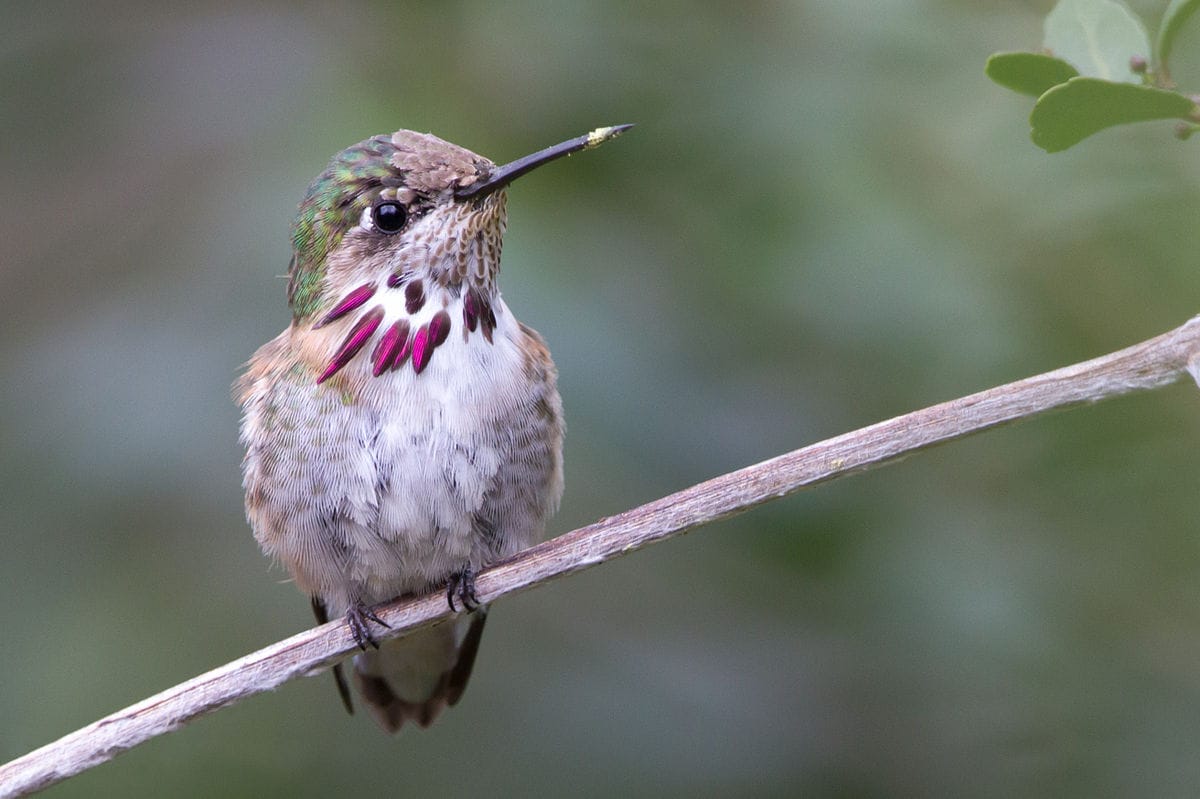
The Calliope Hummingbird is North America’s smallest long-distance migratory bird, measuring only about 3 inches. Despite its tiny size, it packs a visual punch. Adult males feature striking magenta throat streaks, called a gorget, that sparkle vividly in sunlight. Their backs are green, underparts white, and flanks show subtle cinnamon hues. Females and juveniles are more subdued, greenish on top with pale underparts and faint throat spotting. Identification can be tricky due to their size, but the magenta streaked throat of males and the rapid, high-pitched wingbeats often give them away. Observers often describe their flight as delicate yet incredibly fast, like a tiny humming blur in the garden.
Behavior
Calliope Hummingbirds are agile, energetic, and bold relative to their size. Males perform dramatic aerial displays during mating season, flying upward in rapid zig-zags while showing off their brilliant gorget. Despite weighing only a few grams, they fiercely defend feeding territories against intruders, including larger hummingbirds. Their behavior is a mix of elegance and feistiness, zipping through flowers, perching briefly, and then launching into rapid chases that seem disproportionate for such a tiny bird. These aerial antics make them a favorite among birdwatchers who enjoy observing high-speed displays close up.
Habitat and Range
Calliope Hummingbirds breed in open coniferous or mixed forests of western North America, with California as part of their southern breeding range. They are commonly spotted in mountain foothills, oak woodlands, and riparian areas during migration. Wintering grounds extend into Mexico, so they cover hundreds of miles despite their small size. Migratory timing is precise, with the birds arriving in California in spring before heading north to breed and returning south in fall for the winter months.
Diet
Their diet consists mainly of nectar from tubular flowers such as currants, columbine, and penstemons, which provide the high-energy sugar required for their fast metabolism. Insects, spiders, and tiny arthropods supplement their protein needs, particularly for breeding and raising young. Their feeding style includes hovering while sipping nectar and quick darting movements to catch insects mid-air, a remarkable display of coordination for a bird barely three inches long.
Reproduction and Life Cycle
Males perform high-speed aerial displays to attract females, but they do not participate in nesting. Females build tiny cup-shaped nests using plant down and spider silk, typically on slender tree branches or shrubs, sometimes camouflaged with lichens. The clutch consists of two eggs, roughly 0.5 inches long, incubated for 14–16 days. Fledglings leave the nest after about three weeks, though the mother continues to feed them until they are self-sufficient. The reproductive cycle is synchronized with migration, ensuring the young have time to develop before the southbound journey.
Fun Facts / Unique Traits
Calliope Hummingbirds are known for their “high-pitched chatter” during flight displays, a sound that is more noticeable given their tiny size. They also hold the title of smallest long-distance migrant in North America, traveling impressive distances relative to their body mass. Observers are often amazed at how these miniature birds survive the strenuous journeys through mountains and deserts.
Human Interaction
Although tiny, Calliope Hummingbirds are frequent visitors to California gardens with native flowering plants. Homeowners who maintain hummingbird feeders with fresh nectar and place them in open, sunny spots often notice these birds zipping in for quick sips. Observing their bold aerial displays and rapid maneuvers adds excitement and educational value to backyard birding.
5. Rufous Hummingbird (Selasphorus rufus)
Physical Characteristics & Identification Tips
Rufous Hummingbirds are medium-small, about 3–3.5 inches, but their fiery copper-orange plumage makes them stand out instantly. Males have an iridescent red throat gorget that can appear almost metallic in sunlight, green backs, and rufous tails. Females are primarily green above with rufous flanks and lightly speckled throats. Identification is easier during migration when they appear in California, as their bold coloration and intense behavior are distinctive. Their tail feathers flare outward during feeding, which provides an added identification clue for keen observers.
Behavior
Rufous Hummingbirds are notoriously aggressive and highly territorial. Males will chase away birds larger than themselves, including other hummingbirds and small passerines. Their flight is fast and erratic, and they defend rich feeding grounds with intensity. Despite their small size, they exhibit incredible endurance, particularly during migration, when they cover thousands of miles from Mexico to Alaska. Their energy seems inexhaustible, creating a dynamic scene wherever they feed or nest.
Habitat and Range
During migration, Rufous Hummingbirds pass through California, often stopping in coastal and inland gardens, chaparral, and riparian zones. They breed further north, in the Pacific Northwest and parts of Canada. Their migration timing is precise, with spring passage beginning in February–March and fall migration around August–September. Gardens with abundant early spring blooms are especially likely to attract these travelers.
Diet
Nectar from tubular flowers is essential, but insects provide vital protein for their energetic lifestyle. They feed on a variety of flowers including columbine, currants, and penstemon, often moving quickly from one bloom to the next. Their feeding habits, combined with territorial behavior, make them some of the most noticeable hummingbirds in gardens during migration.
Reproduction and Life Cycle
Breeding occurs in northern regions. Females build nests using fine plant material and spider silk, camouflaged with lichens or bark strips. Two eggs per clutch are incubated for about two weeks. Fledging occurs after roughly three weeks, and juveniles quickly learn to forage independently. Migration begins shortly after, meaning they must prepare for an arduous journey soon after gaining independence.
Fun Facts / Unique Traits
Rufous Hummingbirds are considered one of the most aggressive hummingbirds, often displacing larger species from feeders. Their migration distance relative to their size is among the longest of any bird in North America, which is impressive given their tiny bodies. Birders often delight in watching their bold and fiery antics.
Human Interaction
Homeowners often notice Rufous Hummingbirds at feeders during spring and late summer migration. Providing fresh nectar, planting early-blooming native flowers, and maintaining multiple feeding stations can help these birds refuel during their journey. Their vivid colors and feisty demeanor make them exciting guests in any garden.
6. Costa’s Hummingbird (Calypte costae)
Physical Characteristics & Identification Tips
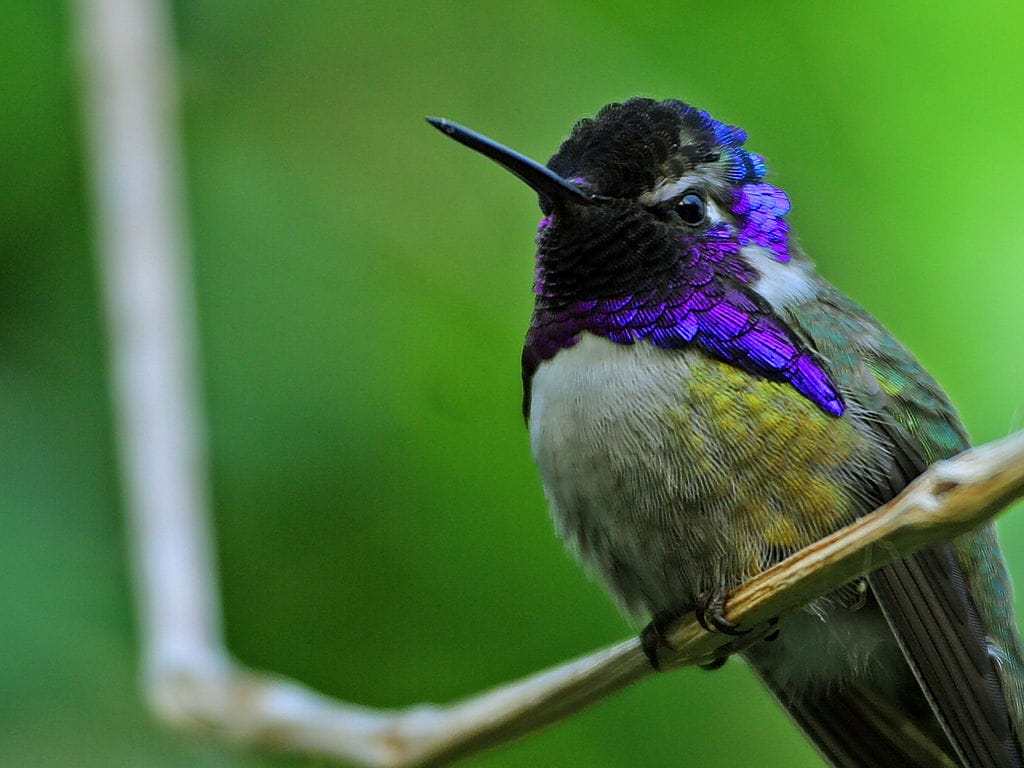
Costa’s Hummingbird is a small but eye-catching species, about 3 inches long. Males have a vibrant violet crown and elongated throat feathers that flare in a spectacular display, contrasting with metallic green back and white underparts. Females are more muted, green above with pale underparts and subtle throat spots. Identification is facilitated by the male’s striking purple throat, especially when caught in sunlight. Their size and elegant profile make them a favorite among photographers and bird enthusiasts in desert and coastal regions.
Behavior
Costa’s Hummingbirds are bold and highly territorial. Males perform a variety of aerial displays, including swoops, dives, and lateral movements, showing off their elongated gorget feathers. They hover skillfully at flowers and feeders, darting rapidly between nectar sources. Females are more cautious but are alert to intruders and potential predators. Overall, their behavior reflects both agility and determination, typical of hummingbirds thriving in arid and resource-limited environments.
Habitat and Range
In California, Costa’s Hummingbirds are primarily found in southern desert regions, including the Colorado Desert and parts of the Mojave. They favor arid scrub, desert washes, and areas with flowering cacti or desert shrubs. These habitats are well suited for their feeding and nesting needs. During migration, some individuals wander slightly beyond traditional desert zones, occasionally appearing in urban gardens with ample flowering plants.
Diet
Nectar is the primary food source, with preferred flowers including desert honeysuckle, ocotillo, and penstemons. Small insects and spiders supplement their diet, providing the protein required for breeding and molting. They are opportunistic feeders and adapt to available blooms, including garden feeders with sugar water.
Reproduction and Life Cycle
Breeding occurs in early spring, with males performing elaborate aerial displays to attract females. Females construct small, camouflaged nests on low shrubs or cactus branches using plant fibers and spider silk. Each clutch typically contains two eggs. Incubation lasts about 14 days, and fledglings leave the nest after roughly three weeks. Juveniles gradually become independent, preparing for survival in the desert’s challenging conditions.
Fun Facts / Unique Traits
Costa’s Hummingbirds are known for their impressive gorget displays, which flare dramatically during courtship. These displays are not only beautiful but also communicate strength and vitality to potential mates. Despite living in harsh desert conditions, these hummingbirds maintain high energy levels and show remarkable agility in flight.
Human Interaction
Desert gardeners often spot Costa’s Hummingbirds visiting feeders and flowering shrubs. They are particularly attracted to red and orange tubular flowers and are tolerant of human presence when nectar sources are abundant. Providing fresh nectar and native plants in gardens can support their local populations and allow for close observation of these remarkable desert-adapted birds.
7. Rivoli’s (Magnificent) Hummingbird (Eugenes fulgens)
Physical Characteristics & Identification Tips
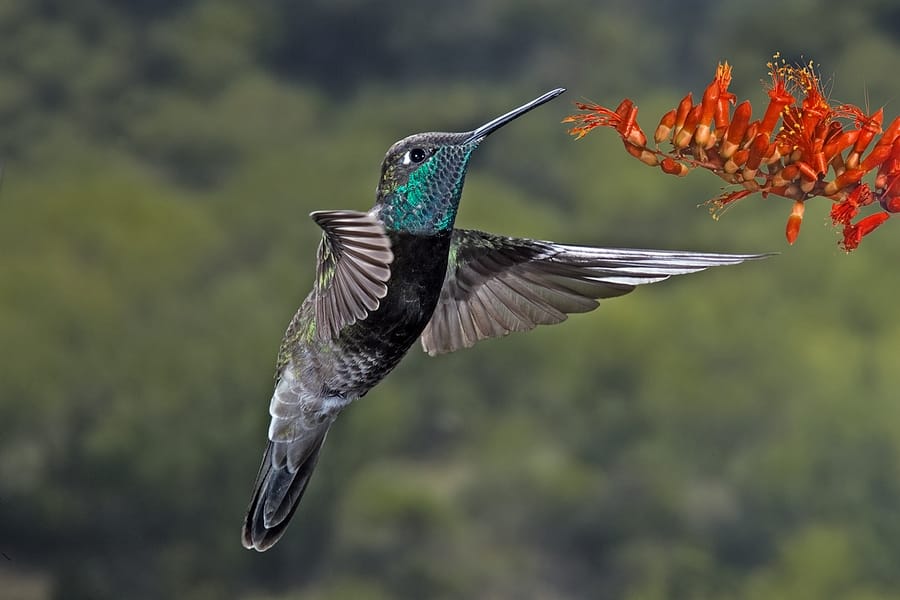
Rivoli’s Hummingbird, also known as the Magnificent Hummingbird, is one of the larger hummingbirds found in California, measuring approximately 4 inches. Males are striking, with a deep iridescent green back, bright blue-green crown, and a rose-colored gorget. Females are subtler, with green backs and pale underparts, sometimes displaying faint throat spots. Their relatively large size and robust build make them distinguishable from smaller hummingbirds. One key identification tip is the male’s wide, colorful gorget that spreads widely during display, catching the sunlight and making them instantly recognizable.
Behavior
Rivoli’s Hummingbirds are generally calm compared to more aggressive species like Rufous Hummingbirds. Males establish territories around high-quality feeding spots but are less likely to chase larger birds. They hover gracefully while feeding, often pausing to perch quietly between sips. During courtship, males perform sweeping dives and lateral displays, showing off their shimmering gorget. Their flight is smooth and steady, and while they can be agile, they rely more on endurance than rapid, aggressive maneuvers.
Habitat and Range
These hummingbirds favor mountainous habitats and are typically found in forested canyons, oak woodlands, and riparian corridors. In California, they are seen mostly in southern and eastern regions near higher elevations, where flowering shrubs and small trees provide ample nectar sources. They migrate primarily to Mexico during winter but may linger in California gardens during favorable conditions. Their preference for high-elevation forests distinguishes them from many lowland hummingbird species.
Diet
Their diet consists primarily of nectar from tubular flowers, including fuchsias, penstemons, and currants. Small insects and spiders provide essential protein, especially for breeding females. Rivoli’s Hummingbirds are known to feed patiently, often spending more time at individual flowers than smaller, faster species, which makes observing their feeding behavior easier for birdwatchers.
Reproduction and Life Cycle
Breeding males display prominently near abundant nectar sources. Females construct nests using plant fibers, moss, and spider silk on horizontal branches or in shrubs. Clutches consist of two tiny eggs, incubated for 16–18 days. Fledglings remain in the nest about three weeks and continue to receive nourishment for a short period afterward. Breeding is closely tied to seasonal flower abundance, ensuring food is available for both adults and chicks.
Fun Facts / Unique Traits
Rivoli’s Hummingbirds are often noted for their majestic appearance and size, earning the nickname “Magnificent.” Their courtship dives create a shimmering spectacle, particularly when sunlight illuminates the gorget. Observers often remark that these hummingbirds combine elegance with impressive endurance, making them favorites among bird photographers.
Human Interaction
These hummingbirds visit gardens with abundant flowering plants, particularly tubular blooms. Although less aggressive than smaller hummingbirds, they will take advantage of feeders with fresh nectar. Gardeners planting high-elevation or desert-adapted plants can attract Rivoli’s Hummingbirds and observe their graceful feeding and display behaviors up close.
8. Violet-crowned Hummingbird (Amazilia / Ramosomyia violiceps)
Physical Characteristics & Identification Tips
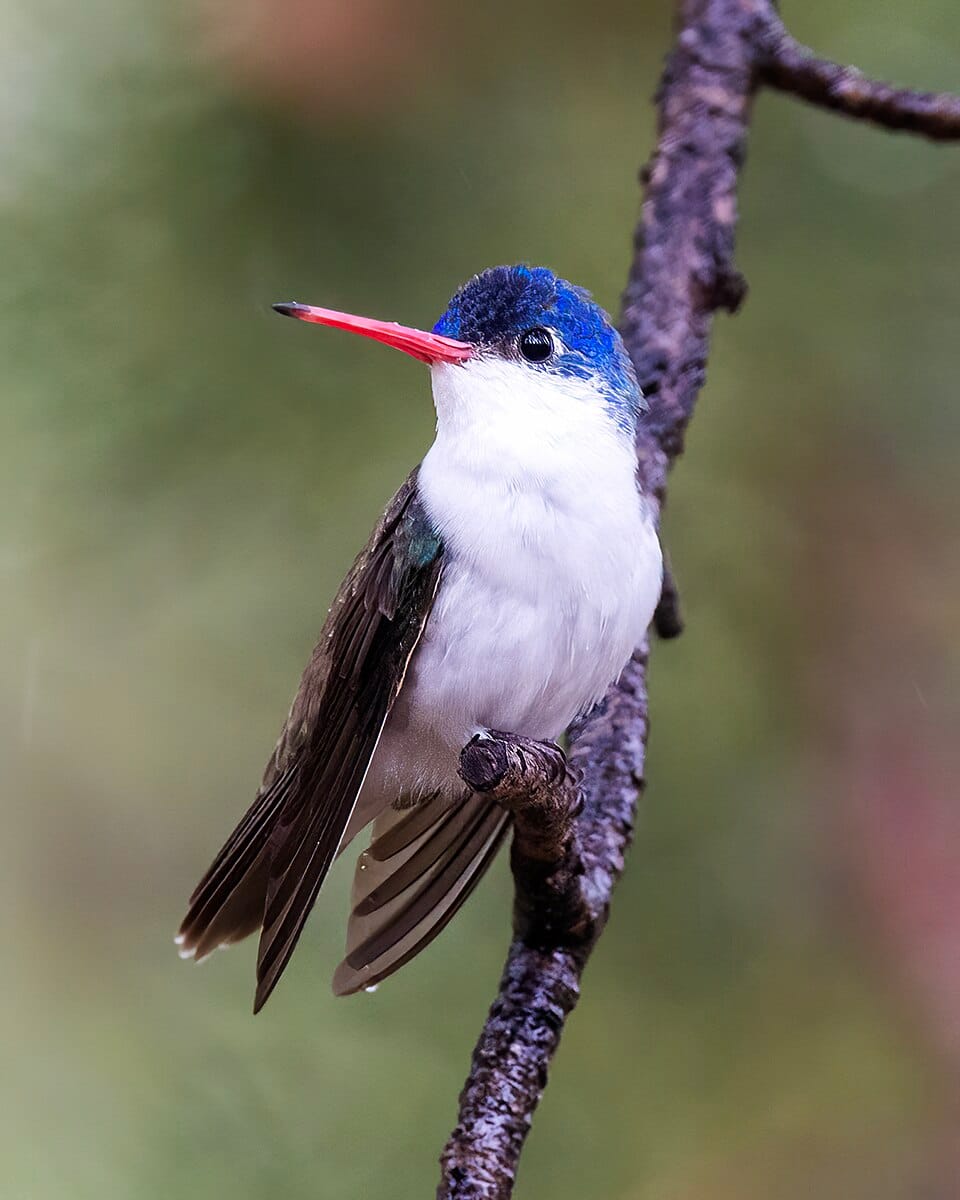
The Violet-crowned Hummingbird is easily recognizable by its brilliant violet crown and white underparts. Males have metallic green backs and a subtle iridescent throat, while females are more muted but retain the signature violet crown. Measuring about 3.5 inches, they are medium-sized hummingbirds with a slender profile and slightly curved bill. Birders can identify them by the combination of the violet crown and the white throat and underparts, which contrast sharply with their green back.
Behavior
Violet-crowned Hummingbirds are active and moderately territorial, defending feeding areas from intruders of similar size. They hover skillfully in front of flowers and feeders and can remain stationary for extended periods while sipping nectar. Courtship involves males performing short, rapid flights to display the violet crown and iridescent throat, attracting females with visual signals rather than aggressive chases. Their flight is agile but more measured compared to smaller, feistier species like Rufous Hummingbirds.
Habitat and Range
In California, these hummingbirds are mostly found in southern desert regions, riparian zones, and semi-arid scrublands. They prefer areas with abundant flowering shrubs and occasionally visit urban gardens. During migration, their range extends into northern Mexico. They are especially drawn to areas where desert flora such as ocotillo, desert willow, and various cacti bloom abundantly.
Diet
Their diet primarily consists of nectar from tubular flowers, supplemented with small insects and spiders for protein. They show preference for red, pink, or orange tubular blooms but are opportunistic feeders and will visit feeders with sugar water. Their feeding style includes hovering, gentle probing of flowers, and quick short flights between blooms.
Reproduction and Life Cycle
Breeding occurs during spring and summer. Females construct nests with plant fibers and spider silk, often camouflaged with lichens or bark pieces. The clutch typically contains two eggs, incubated for 14–16 days. Fledging occurs around three weeks, with the female continuing to feed the young for a few days. Nesting success is often influenced by the availability of nectar sources and insect prey in their arid habitats.
Fun Facts / Unique Traits
The violet crown of males can appear almost fluorescent under direct sunlight, making them a visual delight. Their moderately territorial nature allows birdwatchers to observe multiple individuals feeding within the same garden without excessive conflict. They are a desert-adapted species that thrives in hot, arid conditions, yet they display remarkable energy and agility.
Human Interaction
Gardeners and bird enthusiasts can attract Violet-crowned Hummingbirds by planting native flowering plants and maintaining fresh nectar feeders. Their calm nature and striking coloration make them favorites for photography and casual observation, even for those new to birdwatching.
9. Blue-throated Mountain-gem (Lampornis clemenciae)
Physical Characteristics & Identification Tips
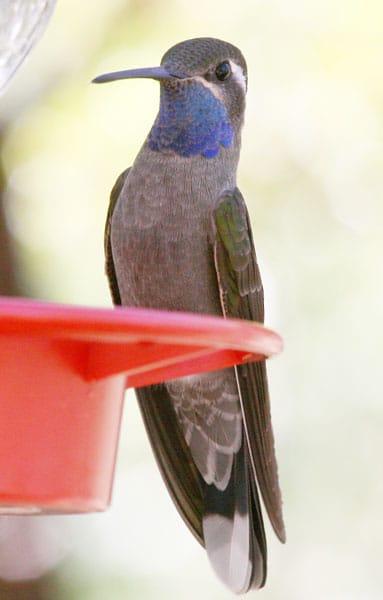
The Blue-throated Mountain-gem is California’s largest hummingbird, measuring 4–5 inches. Males have an iridescent blue throat, green back, and white underparts, with subtle rufous highlights on the tail. Females are slightly smaller, with green backs, pale throats, and muted blue hints on the throat. Identification is straightforward due to their size, robust build, and vivid blue throat in males. Their wings are powerful, producing a distinct hum audible from a short distance.
Behavior
Blue-throated Mountain-gems are bold and active, often feeding alongside other hummingbirds without hesitation. Males defend prime feeding territories and perform spectacular aerial displays to attract females. Their flight is strong and deliberate, capable of hovering for long periods while sipping nectar or surveying their territory. They are less skittish than smaller species and can tolerate human presence if undisturbed.
Habitat and Range
In California, these hummingbirds inhabit mountainous forests, oak woodlands, and riparian corridors at higher elevations. They are mostly present in southern and eastern parts of the state. During migration, they may venture into lower elevation areas if food is abundant. Their preference for wooded mountain regions distinguishes them from smaller desert species.
Diet
The diet includes nectar from large tubular flowers, such as fuchsias, penstemons, and trumpet creepers. Insects and spiders provide protein for growth and maintenance. Their feeding behavior is deliberate, often returning to the same flowers throughout the day. This consistent pattern makes them predictable visitors in suitable habitats.
Reproduction and Life Cycle
Females are solely responsible for nest building, typically on tree branches or shrubs. Nests are small but well-constructed with plant fibers, moss, and spider silk, often camouflaged with lichen. Two eggs per clutch are incubated for about 16 days. Fledglings leave the nest in three to four weeks and gradually gain independence under the mother’s watchful care. Their reproductive success is closely linked to nectar availability and the presence of suitable nesting sites in mountainous regions.
Fun Facts / Unique Traits
The Blue-throated Mountain-gem holds the record for California’s largest hummingbird. Their iridescent blue throat makes them particularly noticeable against green foliage. Despite their size, they maintain the agility and hovering capability characteristic of all hummingbirds. Birdwatchers often describe them as majestic due to both size and striking coloration.
Human Interaction
These hummingbirds frequently visit high-elevation feeders and gardens with native flowering plants. Their calm demeanor and large size make them excellent subjects for photography. Planting nectar-rich flowers such as penstemons and fuchsias can help attract these remarkable mountain-adapted birds to residential areas within their range.
10. Ruby-throated Hummingbird (Archilochus colubris)
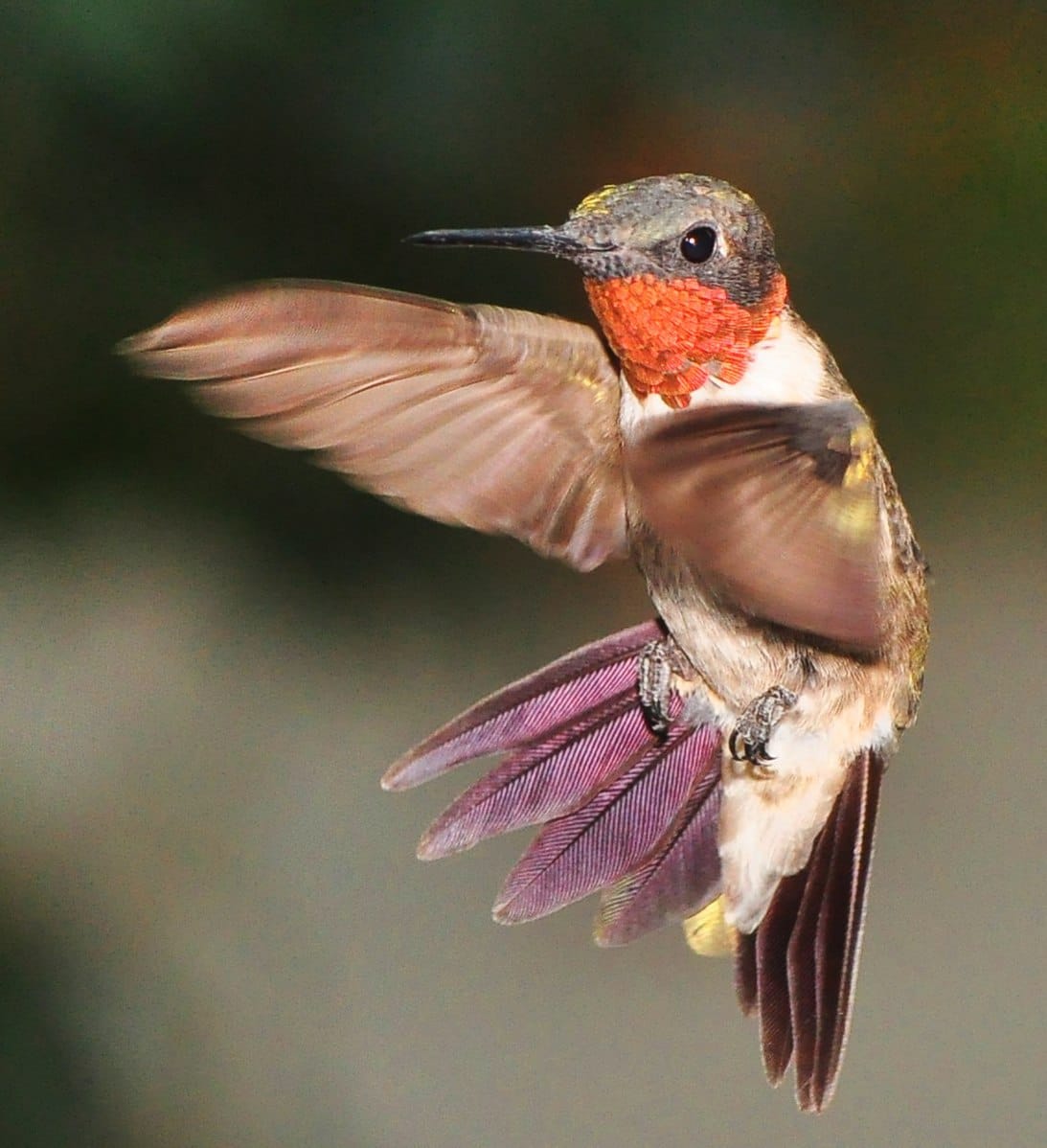
Physical Characteristics & Identification Tips
The Ruby-throated Hummingbird is one of the most recognizable hummingbirds, measuring about 3 inches. Males have a vivid ruby-red throat (gorget), metallic green back, and grayish-white underparts. Females are subtler with green backs and whitish throats. Key identification features include the sparkling red throat of males and the slightly forked tail. Their small size, combined with rapid wing beats, makes them a blur of motion when in flight.
Behavior
These hummingbirds are energetic and highly territorial. Males chase away intruders from prime feeding areas and perform aerial displays to attract females. They hover and dart rapidly from flower to flower, showing remarkable agility. Ruby-throated Hummingbirds are known for their nonstop feeding throughout the day, maintaining their high-energy lifestyle necessary for long migratory journeys.
Habitat and Range
Ruby-throated Hummingbirds are mainly eastern and central North American species but occasionally appear in California as rare vagrants during migration. They inhabit open woodlands, gardens, and riparian areas. Their presence in California is typically brief, often limited to migratory stopovers where suitable nectar sources are available.
Diet
These birds feed primarily on nectar from tubular flowers such as bee balm, columbines, and trumpet creepers. Small insects and spiders supplement their diet with essential proteins. During migration, they are highly dependent on abundant nectar sources to fuel their long journeys across regions.
Reproduction and Life Cycle
Females are responsible for nesting and raising young. Nests are tiny cups made from plant fibers and spider silk, camouflaged with lichens. A clutch of two eggs is incubated for 12–14 days. Fledglings leave the nest after about three weeks. Reproduction occurs mainly in their primary range, with California sightings unlikely to involve breeding.
Fun Facts / Unique Traits
The ruby-red gorget of males appears black in low light but shines vividly in sunlight. These hummingbirds are famous for long migrations, with some individuals flying nonstop over the Gulf of Mexico. Their small size hides immense endurance and strength.
Human Interaction
Although rare in California, they are welcomed at backyard feeders when present. Planting native flowers and maintaining fresh nectar solutions can attract them during migratory stopovers, providing a chance to observe one of North America’s most iconic hummingbirds.
11. Xantus’s Hummingbird (Basilinna xantusii)

Physical Characteristics & Identification Tips
Xantus’s Hummingbird is a medium-sized species, around 3.25 inches long. Males have a vivid green back, iridescent violet-blue throat, and grayish underparts. Females are less colorful, with muted green backs and pale throats. The violet-blue gorget is the key distinguishing feature, particularly in males. Their relatively compact size and subtle tail markings help differentiate them from other California hummingbirds.
Behavior
These hummingbirds are active and moderately territorial, especially males during breeding season. They hover adeptly at flowers, feeding for long periods without much interruption. Males engage in display flights to attract females, showcasing the vibrant gorget under direct sunlight. Xantus’s Hummingbirds are agile, making short darting flights and occasionally perching quietly between feeding sessions.
Habitat and Range
Xantus’s Hummingbirds are endemic to Baja California but are occasionally spotted in southern California as rare vagrants. They prefer coastal chaparral, desert scrub, and areas with flowering shrubs. Their appearance in California is primarily linked to migration or dispersal events, often near gardens and riparian corridors where nectar is abundant.
Diet
They feed primarily on nectar from tubular flowers like penstemons, salvia, and desert willow. Insects and small spiders provide protein and are especially important during breeding. Their feeding technique is deliberate and precise, often revisiting the same flowers throughout the day.
Reproduction and Life Cycle
Females build cup-shaped nests using plant fibers, spider silk, and moss, camouflaged with lichens or bark. Clutches typically contain two eggs, incubated for approximately 14–16 days. Young fledge in about three weeks and continue to be fed by the mother. California sightings rarely involve breeding but provide excellent observational opportunities.
Fun Facts / Unique Traits
Xantus’s Hummingbirds are admired for the brilliant blue-violet gorget of males, visible even at a distance. Despite their limited California presence, their striking coloration makes them memorable for birders. Their calm demeanor allows for closer observation compared to more aggressive species.
Human Interaction
These hummingbirds visit gardens with abundant native flowering plants. Maintaining feeders with fresh nectar can attract them during rare appearances. They provide excellent photography opportunities due to their vivid colors and relatively relaxed feeding behavior.
12. White-eared Hummingbird (Hylocharis / Basilinna leucotis)
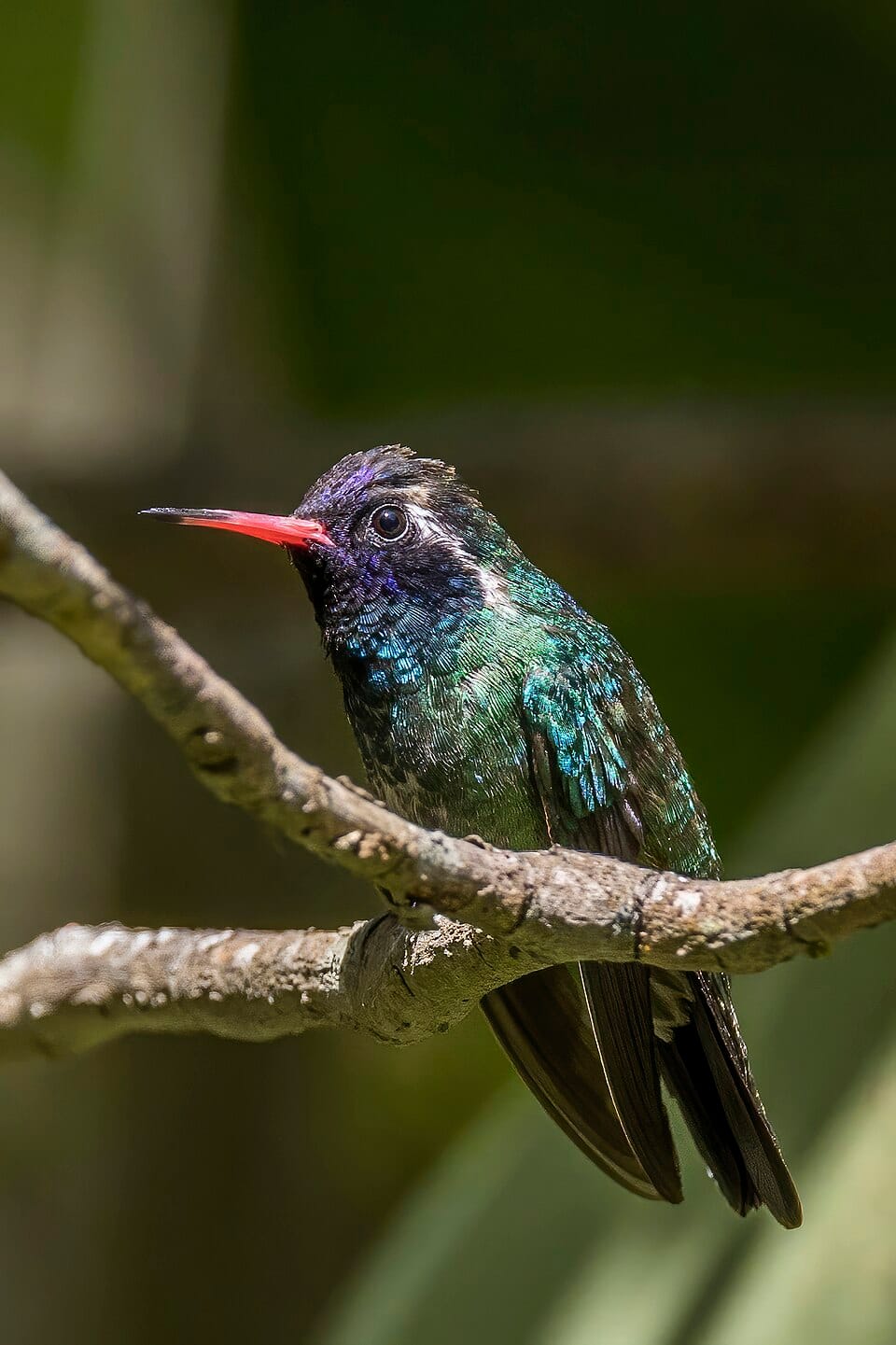
Physical Characteristics & Identification Tips
The White-eared Hummingbird is a medium-sized species, measuring about 3 inches. Males have a metallic green back, blue-violet throat, and distinctive white patch behind the eyes. Females are less colorful but retain the white ear patch and green back. The contrasting white ear patch and colorful throat make identification straightforward. Their slender, slightly curved bill is adapted for deep tubular flowers.
Behavior
White-eared Hummingbirds are generally calm but can defend prime feeding territories. They hover precisely in front of flowers, sipping nectar efficiently. Males perform brief aerial displays to attract mates, showing off their iridescent throat and eye patches. Their flight is agile, capable of quick maneuvers to avoid predators or rivals.
Habitat and Range
They are primarily found in Mexico and Central America, but rare vagrants occasionally appear in southern California. Preferred habitats include oak woodlands, forest edges, and gardens with flowering shrubs. Their presence in California is sporadic, usually during migration or unusual dispersal events.
Diet
Their diet consists mainly of nectar from tubular flowers, supplemented by small insects and spiders. They show a preference for bright-colored flowers, particularly red and orange blooms. Feeding is methodical, and they often return to favorite flowers multiple times during the day.
Reproduction and Life Cycle
Females build small nests from plant fibers and spider silk, camouflaged with lichens or bark. Clutches consist of two eggs, incubated for 14–16 days. Young fledge in roughly three weeks. As rare visitors, White-eared Hummingbirds in California are unlikely to breed, but they display natural nesting behaviors in their typical range.
Fun Facts / Unique Traits
The white patch behind the eyes gives this hummingbird its name and provides a striking contrast to the iridescent throat. Their small size belies impressive stamina and precision in feeding. Observers often note their graceful hovering and delicate approach to flowers.
Human Interaction
Though rare in California, they can be attracted to gardens with native tubular flowers and hummingbird feeders. Their calm and methodical feeding behavior makes them approachable for observation and photography, even for casual birdwatchers.
13. Black-chinned Hummingbird (Archilochus alexandri)
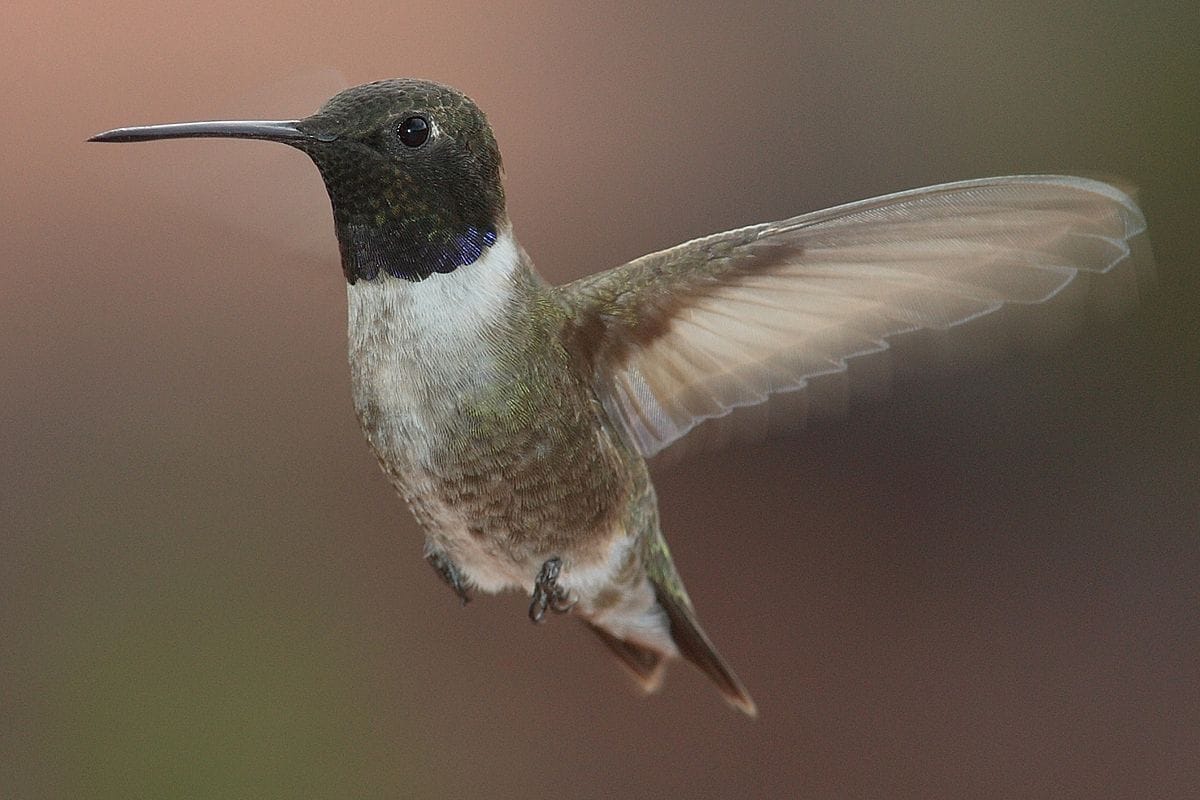
Physical Characteristics & Identification Tips
The Black-chinned Hummingbird is a small to medium-sized hummingbird, about 3 inches long. Males have a striking black throat with a subtle violet band just below it, metallic green back, and gray underparts. Females are duller with pale throats and soft green backs. A useful identification tip is the slightly forked tail and the black chin, especially visible when males flare during courtship or territorial displays.
Behavior
These hummingbirds are agile fliers, darting among flowers with incredible speed. Males establish territories around nectar-rich areas and aggressively chase intruders. Their hovering allows them to feed from flowers that many other birds cannot access. Despite their small size, Black-chinned Hummingbirds are known for being feisty, often confronting larger hummingbirds if they enter their territory.
Habitat and Range
Black-chinned Hummingbirds are primarily found in southwestern regions of Colorado and California, favoring riparian zones, canyons, and open woodlands. They migrate south to Mexico for the winter and return in spring to breed. Elevations for breeding range from lowlands to mid-mountain zones, where food and nesting sites are abundant.
Diet
Their diet consists mostly of nectar from tubular flowers such as penstemons, honeysuckle, and columbines. They also supplement with small insects and spiders, which are crucial sources of protein during nesting and growth periods. Their constant movement from flower to flower requires a high-calorie intake to maintain energy.
Reproduction and Life Cycle
Females are solely responsible for nesting. They construct small cup-shaped nests using plant down, spider silk, and lichens for camouflage. Each clutch contains two eggs, incubated for 14–16 days. Young fledge in roughly three weeks but continue receiving food from the female for several more days. Mating and nesting occur primarily after their return from winter migration.
Fun Facts / Unique Traits
The Black-chinned Hummingbird gets its name from the male’s black chin, but in sunlight, the violet band appears vividly, creating a subtle but beautiful color display. These birds are remarkable for their long migratory routes relative to their size, often covering hundreds of miles between breeding and wintering grounds.
Human Interaction
Black-chinned Hummingbirds are frequent visitors to backyard feeders and gardens filled with native flowering plants. Proper feeder placement and fresh nectar attract them consistently. Gardeners and birdwatchers often notice their aggressive behavior at feeders, which adds a dynamic aspect to observing them up close.
14. Calliope Hummingbird (Selasphorus calliope)
Physical Characteristics & Identification Tips
The Calliope Hummingbird is the smallest bird in North America, measuring only about 3 inches. Males have a magenta throat (gorget) with streaks extending down the chest, a green back, and grayish-white underparts. Females are less vivid, with a pale throat and green back. Identification is aided by their tiny size, short bill, and distinctive magenta gorget in males, which glimmers in sunlight.
Behavior
Calliope Hummingbirds are energetic and highly active feeders, frequently hovering in front of flowers and making rapid short flights. Males are territorial, performing elaborate aerial displays to impress females. Their quick wing beats allow them to remain suspended while feeding, and they can adjust hovering position with incredible precision. They are generally less aggressive than larger hummingbirds but still defend prime feeding areas.
Habitat and Range
These hummingbirds breed in mountainous regions of the western United States, including Colorado and parts of California. They prefer open coniferous forests, forest edges, and shrublands, often near streams and meadows. Calliope Hummingbirds migrate south to Mexico for the winter, with stopovers in nectar-rich areas along the way.
Diet
Their diet primarily consists of nectar from flowers like penstemons, columbines, and currant bushes. They also consume small insects and spiders for protein, particularly during the breeding season. Frequent feeding is critical because of their high metabolism and tiny size.
Reproduction and Life Cycle
Females build tiny cup-shaped nests using plant down, spider silk, and lichens for camouflage. Typically, two eggs are laid per clutch and incubated for about 14–16 days. Fledglings leave the nest in around three weeks but are fed by the mother for a short while afterward. Breeding occurs after they return from wintering grounds, usually in higher elevation habitats with abundant food.
Fun Facts / Unique Traits
The Calliope Hummingbird is famous for being the smallest bird in the U.S., often mistaken for an insect due to its size and rapid movement. Males display their magenta gorget in dazzling courtship flights, which is captivating to observe. Their tiny size does not hinder their long migratory journeys, sometimes covering thousands of miles annually.
Human Interaction
These birds are frequent visitors to feeders with sugar water, especially in mountain gardens with native flowering plants. Despite their small size, they are bold and approachable, allowing close observation. Calliope Hummingbirds add charm to gardens, and their remarkable energy is a delight for birdwatchers and photographers alike.
Frequently Asked Questions (FAQs) about Hummingbirds in California
1. What are the most common hummingbirds in California?
The most common hummingbirds include Anna’s Hummingbird, Rufous Hummingbird, Black-chinned Hummingbird, and Allen’s Hummingbird. These species are frequently seen in gardens, parks, and urban areas throughout the state.
2. How can I attract hummingbirds to my garden?
Plant native flowering plants such as penstemons, salvia, and columbines. Using red-colored feeders with fresh sugar water also helps attract these birds. Make sure feeders are cleaned regularly to prevent mold and bacteria.
3. When is hummingbird migration season in California?
Most hummingbirds migrate during spring (March-May) and fall (August-October). For example, Rufous Hummingbirds travel long distances between Alaska and Mexico, passing through California during migration.
4. What do hummingbirds eat?
Hummingbirds primarily feed on nectar from flowers and feeders. They also consume small insects and spiders for protein, especially during nesting and molting periods.
5. How long do hummingbirds live?
Most hummingbirds live 3–5 years in the wild, although some can survive up to 9–10 years. Predation and harsh winters can reduce their lifespan.
6. How can I tell male and female hummingbirds apart?
Males often have brightly colored throats, called gorgets, while females are generally duller in color. For example, male Anna’s Hummingbirds have a vivid rose-pink throat, whereas females have green backs and grayish chests.
7. How fast can hummingbirds fly?
Hummingbirds can fly at speeds of 25–30 mph during normal flight. During courtship dives, some species like the Anna’s Hummingbird can reach speeds up to 40–50 mph.
8. Do hummingbirds defend territories?
Yes, males aggressively defend feeding and nesting territories. They chase away other hummingbirds and even larger birds if they encroach on their space.
9. How big are California hummingbirds?
Size varies by species. Small hummingbirds like the Calliope measure around 3 inches, while larger species such as Rivoli’s Hummingbird can reach up to 5 inches.
10. Are all hummingbirds in California migratory?
Not all. Anna’s Hummingbirds are mostly year-round residents, especially in urban areas with abundant food, while Rufous and Black-chinned Hummingbirds migrate seasonally.
11. Can hummingbirds hover indefinitely?
Hummingbirds hover using rapid wing beats (50–80 per second), but they need frequent feeding to maintain energy. They cannot hover indefinitely without rest or food.
12. What colors are common among hummingbirds?
Colors include iridescent green, red, purple, rose, turquoise, and bronze. Iridescence often appears brighter in sunlight and helps males attract females during courtship.
13. How do hummingbirds build their nests?
Females build tiny cup-shaped nests using plant down, spider silk, and sometimes lichen for camouflage. Nests are attached to branches, shrubs, or sometimes human structures.
14. How many eggs do hummingbirds lay?
Typically, two eggs per clutch are laid. Incubation lasts about 14–16 days, and chicks fledge approximately three weeks after hatching.
15. Do hummingbirds sleep at night?
Yes, they enter a state called torpor, slowing their metabolism to conserve energy during cold nights or food shortages.
16. Can I identify hummingbirds by their songs?
Yes, though most sounds are high-pitched and subtle. Courtship dives and wing sounds are more distinctive for species identification than vocalizations.
17. What are the smallest and largest hummingbirds in California?
The smallest is the Calliope Hummingbird (~3 inches), and the largest is Rivoli’s Hummingbird (~5 inches). Their sizes affect energy needs and flight patterns.
18. Are any California hummingbirds endangered?
Most common species are not endangered. However, habitat loss and climate change can threaten populations, particularly for migratory species dependent on specific flowering plants.
19. Can hummingbirds drink water?
They rarely drink water directly, as they get most hydration from nectar. Occasionally, they sip droplets or dew from leaves.
20. How far do hummingbirds migrate?
Rufous Hummingbirds travel over 3,900 miles round trip between Alaska and Mexico, one of the longest migrations relative to body size in the animal kingdom.
21. Do hummingbirds eat insects?
Yes, insects provide essential protein, especially during breeding. They catch gnats, spiders, and small flies midair or glean them from leaves.
22. Why are hummingbirds attracted to red feeders?
Red is highly visible to hummingbirds and mimics natural nectar sources. Feeders with red bases or tubes are more likely to attract them.
23. Can I keep hummingbirds as pets?
No, hummingbirds are wild birds and should not be kept in captivity. Observing them in natural habitats or from feeders is the ethical approach.
24. How do hummingbirds recognize flowers?
They are attracted to brightly colored tubular flowers with high nectar content. They also memorize feeding locations and revisit them regularly.
25. How do hummingbirds avoid predators?
They rely on speed, agility, and camouflage. Hummingbirds can perform rapid vertical and lateral maneuvers to escape threats from larger birds or cats.
26. Do hummingbirds ever fight?
Yes, males often engage in aerial duels to defend feeding territories or attract mates. These battles are usually brief but intense.
27. Can hummingbirds coexist with other birds?
They often share habitats with other small birds but may become aggressive when defending feeders or flower patches.
28. Do hummingbirds have favorite flowers?
Yes, tubular flowers like columbines, penstemons, and fuchsias are preferred. These flowers provide easy access to nectar for their long bills and tongues.
29. How do climate changes affect hummingbirds?
Earlier springs and shifting flowering seasons can disrupt migration timing and food availability, potentially impacting survival and reproduction.
30. How can I help hummingbirds in California?
Plant native flowering plants, maintain clean feeders with fresh sugar water, and protect habitats from pesticides. Providing safe environments ensures hummingbirds thrive throughout the year.
31. Do hummingbirds visit urban areas?
Yes, many species like Anna’s Hummingbird thrive in cities and suburbs where gardens, parks, and feeders provide abundant food sources.
Conclusion
California is home to an incredible variety of hummingbirds, each with its own vibrant colors, behaviors, and fascinating life stories. From the tiny Calliope Hummingbird to the bold Anna’s Hummingbird, these species highlight the diversity and adaptability of hummingbirds in the state. Observing these birds in gardens, parks, and natural habitats not only provides joy but also helps support local ecosystems through pollination. By planting native flowers, maintaining clean feeders, and protecting their habitats, humans can play a meaningful role in the survival and thriving of these remarkable creatures. Understanding the types of hummingbirds in California enhances our appreciation for wildlife and encourages conservation efforts for generations to come.
Read more:
- 32 Types of Hummingbirds (Pictures, Identification)
- 12 Types of Hummingbirds in Colorado: Species, Identification, and Photos
- 20 Types of Hummingbirds in Texas: Species, Identification, and Photos
- 8 Types of Hummingbirds in Wisconsin: Species, Identification, and Photos
- 15 Types of Hummingbirds in Alabama: Species, Identification, and Photos
- 13 Types of Hummingbirds in Georgia: Species, Identification, and Photos
- 9 Types of Hummingbirds in Michigan: Species, Identification, and Photos
- 8 Types of Hummingbirds in Ohio: Species, Identification, and Photos
- 5 Types of Hummingbirds in Maine: Species, Identification, and Photos
- 30 Types of Wild Birds (Pictures And Identification)
- 200 Types of Birds (Pictures and Identification)
- 12 Types of Hummingbirds in Tennessee: Species, Identification, and Photos
- 17 Types of Quail Birds: Species Identification with Pictures
- 17 Types of Mockingbirds (Pictures and Identification)
- 40 Types of Warbler Birds (Pictures And Identification)
- 35 Types of Woodpeckers (Pictures And Identification)