

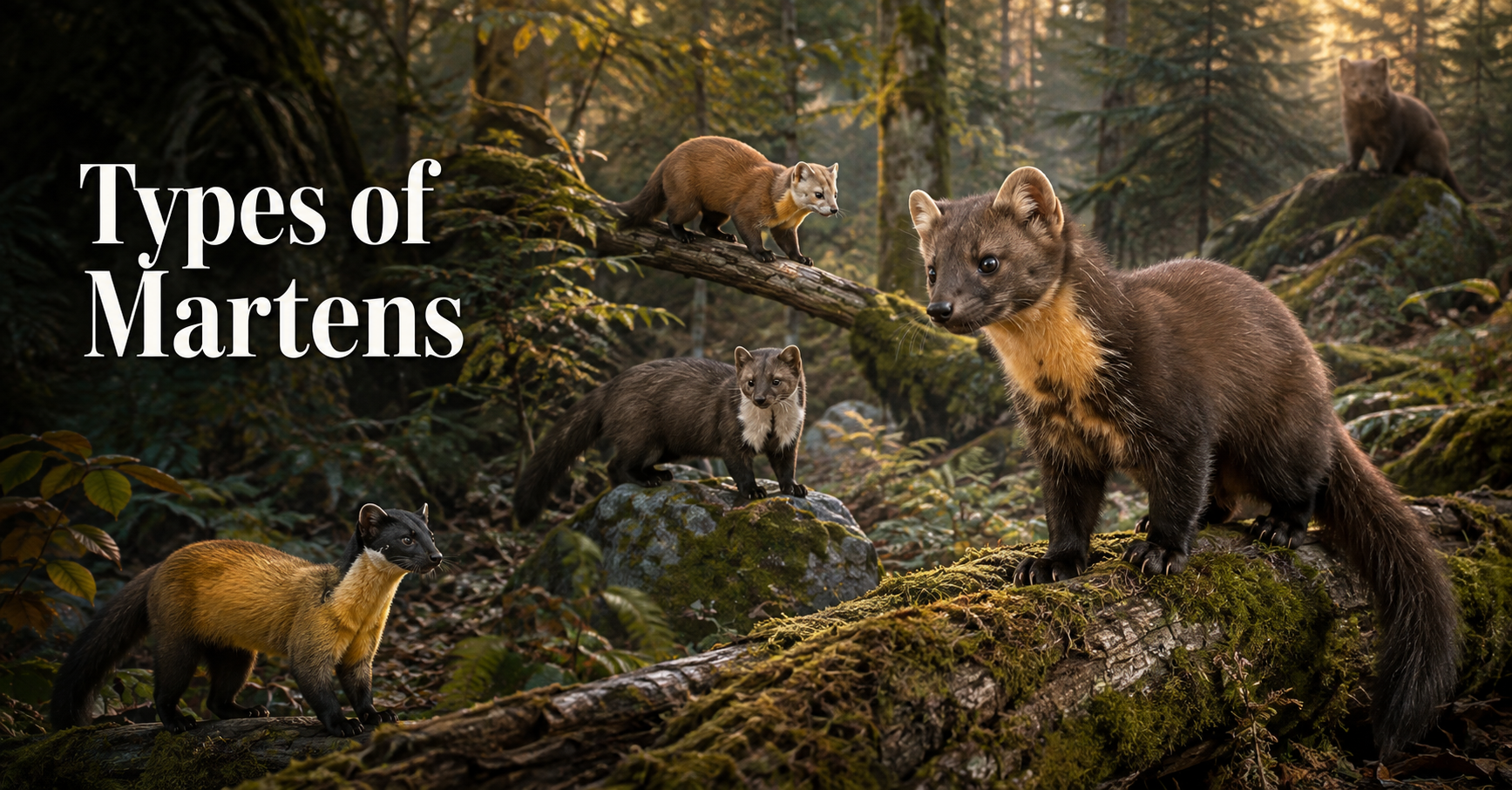
Martens are agile, long-bodied mammals in the weasel family, best known for their dense fur, bushy tails, curious behavior, and remarkable ability to move through forests. The eight living types of martens occur across North America, Europe, and Asia, from snowy boreal forests to tropical mountain woodlands. Although they share a similar body plan, their coat patterns, ranges, habitat preferences, and lifestyles can be surprisingly different.
This guide covers every currently recognized living species in the genus Martes. It explains how to identify each marten, where it lives, what it eats, and which conservation issues affect it. It also clears up confusing names, including why the fisher and tayra are close relatives but are not considered true martens under modern classification.
What Are the Main Types of Martens?
There are eight recognized living species in the genus Martes: the American marten, Pacific marten, yellow-throated marten, beech marten, Nilgiri marten, European pine marten, Japanese marten, and sable. Most are forest animals with slender bodies, short legs, rounded ears, and long tails. The yellow-throated and Nilgiri martens are especially colorful, while the sable and northern forest martens generally have richer brown coats suited to colder environments.
| Common Name | Scientific Name | Main Range | Key Identification Feature |
|---|---|---|---|
| American marten | Martes americana | Canada, Alaska, and northern United States | Brown coat, pale throat patch, and furry foot soles |
| Pacific marten | Martes caurina | Western North America | Northwestern range and subtle skull and genetic differences |
| Yellow-throated marten | Martes flavigula | South, Southeast, and East Asia | Bright yellow throat and sharply contrasting dark limbs |
| Beech marten | Martes foina | Europe and parts of western and central Asia | White, often forked throat bib and pale nose |
| Nilgiri marten | Martes gwatkinsii | Western Ghats of southern India | Dark body with a vivid yellow-orange throat |
| European pine marten | Martes martes | Europe and western Asia | Cream-to-yellow throat patch and dark nose |
| Japanese marten | Martes melampus | Japan | Seasonally variable coat that may become yellowish in winter |
| Sable | Martes zibellina | Northern Asia | Silky dark coat with a less sharply defined throat patch |
1. American Marten
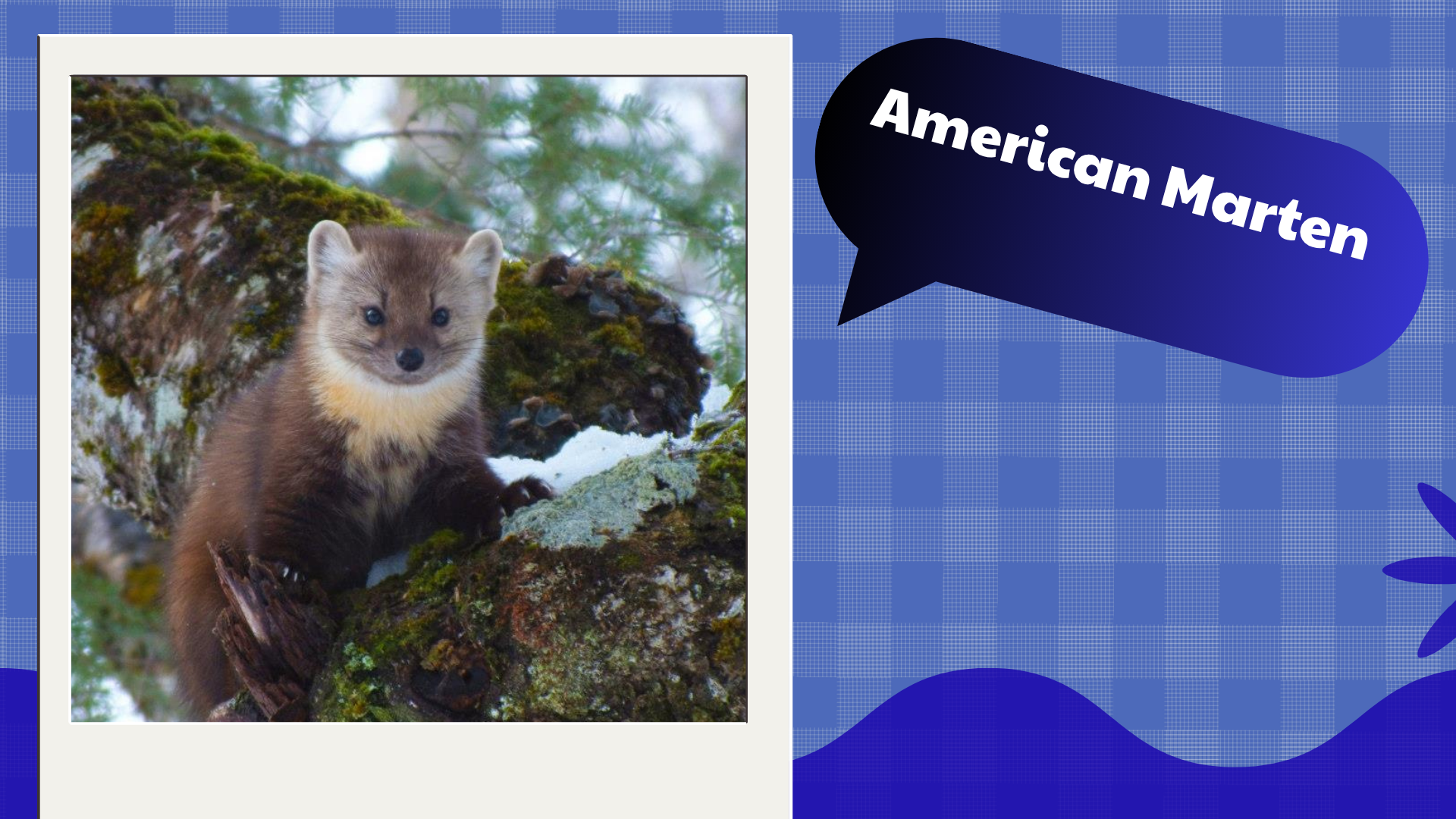
The American marten, Martes americana, is a small forest predator of northern North America. Its range extends across much of Canada and Alaska and reaches south into isolated areas of the northern United States. It is closely associated with boreal and mixed forests that provide overhead cover, fallen logs, tree cavities, and complex ground structure. These features offer resting sites, protection from larger predators, and access to prey beneath the snow.
An American marten typically has a long, slim body, a pointed face, rounded ears, and a full tail. The coat ranges from pale golden brown to deep chocolate, with darker legs and tail. A cream, orange, or buff patch is usually visible on the throat and upper chest. Its broad feet are covered with fur, helping distribute its weight when it travels over soft snow. Males are noticeably larger than females, but both remain much smaller and lighter than fishers.
Despite belonging to the order Carnivora, the American marten has a flexible diet. Voles and other small mammals are important prey, but it may also eat squirrels, birds, insects, carrion, berries, and other seasonal foods. It hunts on the ground, explores fallen timber, and climbs readily when searching for food or escaping danger. Activity can occur during the day or night and often changes with weather, prey availability, and season.
For field identification, range is essential because the American and Pacific martens look very similar. A small brown mustelid moving through a mature northern forest east of the main Pacific marten range is more likely to be an American marten. Tracks commonly appear as paired bounds in snow, with five toes sometimes visible. Responsible observation means keeping a distance from den sites and never using food to lure an animal closer.
2. Pacific Marten
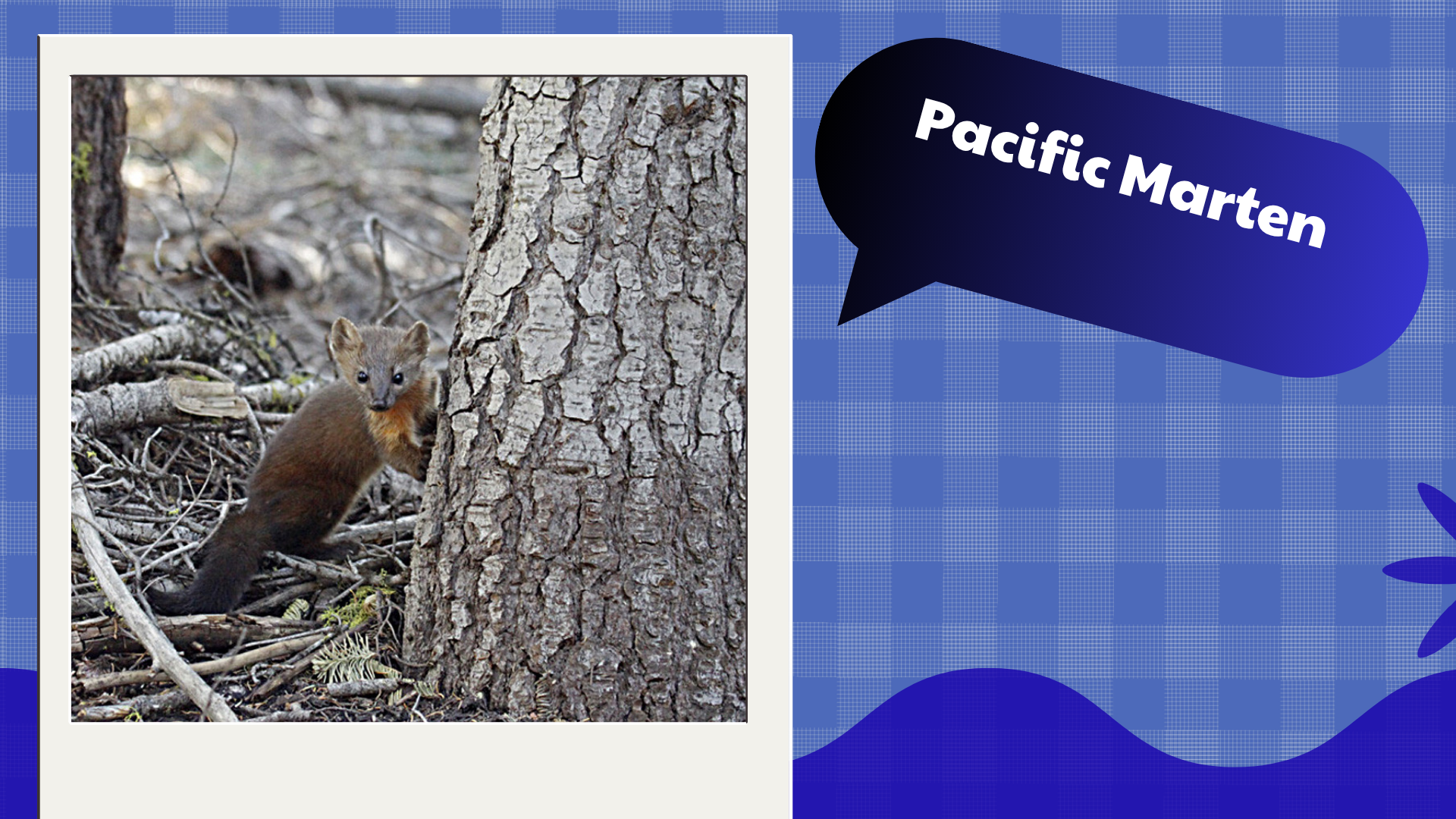
The Pacific marten, Martes caurina, is the western North American counterpart of the American marten. Modern mammal classifications recognize it as a separate species based on genetic, geographic, and anatomical evidence. Its distribution includes southeastern Alaska and western Canada, parts of the Pacific Northwest and northern California, and sections of the Rocky Mountains. Older books and some wildlife agencies may still treat certain populations under the name Martes americana, so readers should check the taxonomy used by each source.
Visually, separating a Pacific marten from an American marten can be difficult. Both have brown fur, pale throat patches, rounded ears, bushy tails, and snow-adapted feet. Researchers use skull characteristics, genetics, and geographic origin more reliably than coat color alone. In areas where historical lineages meet or have been affected by animal translocations, identification can be even more complicated.
Pacific martens occupy several forest environments, including cool conifer forests, high-elevation woodland, and moist coastal forest. They benefit from structural complexity rather than simply a dense stand of trees. Large logs, shrub cover, cavities, root masses, and standing dead trees create hunting routes and secure resting places. Coastal populations may use dense shrub layers extensively, while mountain populations cope with deep winter snow.
The diet includes small mammals, birds, insects, carrion, and fruit when available. Like other martens, this species is agile enough to hunt both on the ground and in trees. Conservation needs differ sharply across its large range. Some populations remain widespread, while the coastal distinct population in parts of Oregon and northern California receives special protection because of its limited distribution and threats such as habitat loss, severe wildfire, vehicle strikes, and accidental trapping. Seeing one in the wild is unusual; tracks, scat, and remote-camera records are often more practical evidence than a direct sighting.
3. Yellow-Throated Marten
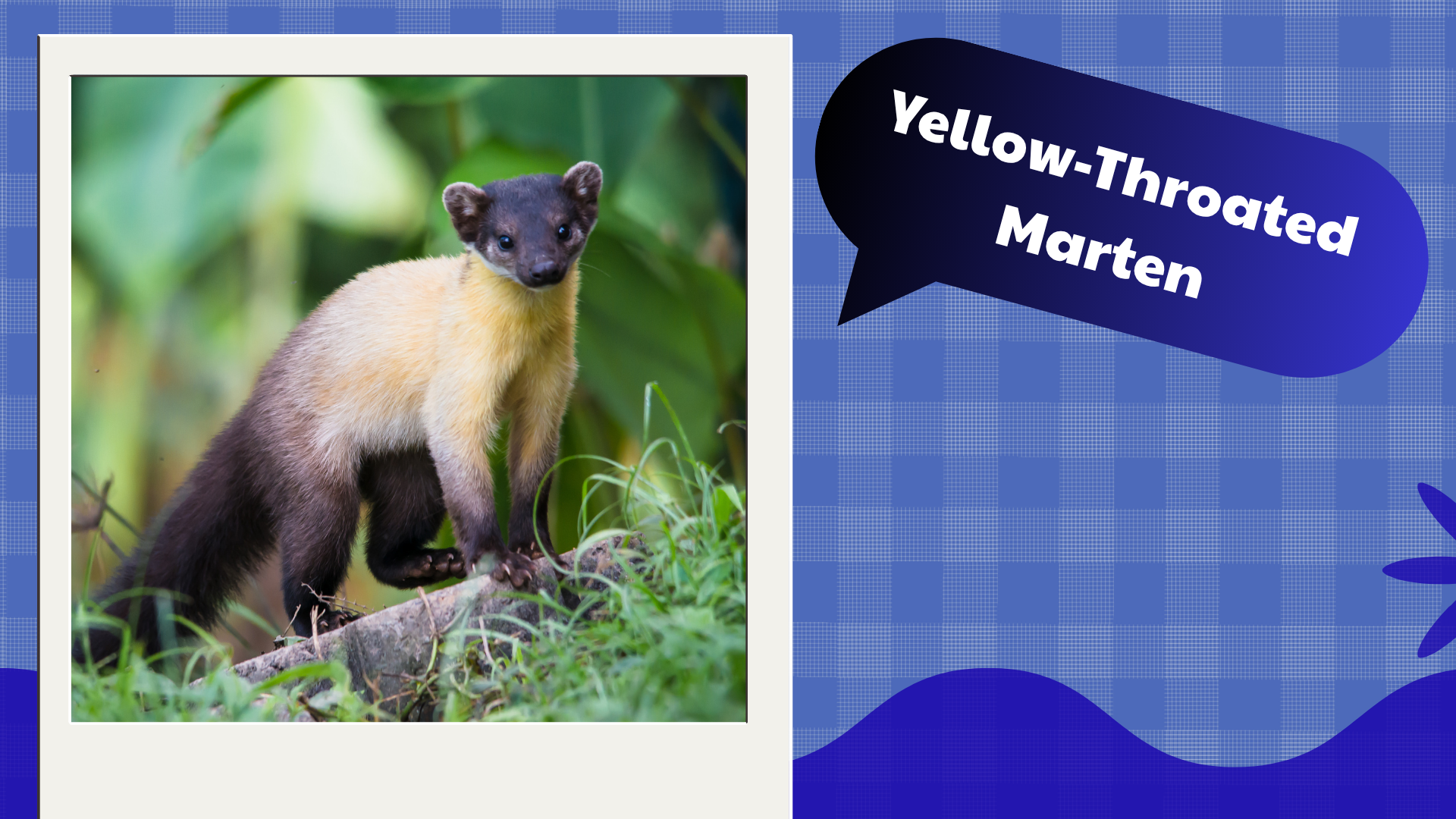
The yellow-throated marten, Martes flavigula, is the most boldly patterned of the true martens. Its head and limbs are generally dark, while the throat and upper chest glow yellow or golden orange. A paler body and long dark tail create a striking color-blocked appearance. The exact shades vary across its enormous range, but the bright throat is an excellent first identification clue.
This species lives across a broad part of southern and eastern Asia, including the Himalayas, China, mainland Southeast Asia, parts of Indonesia, the Korean Peninsula, and the Russian Far East. It uses tropical and subtropical forests in warmer regions as well as temperate mixed forest and northern conifer forest. Its ability to occupy different forest types helps explain its wide geographic distribution.
Yellow-throated martens are generally larger and more powerfully built than many northern Martes species. They are fast, confident travelers and skilled climbers. Observers sometimes report pairs or small groups, an unusual impression compared with the strongly solitary image associated with many other mustelids. They communicate through scent marking and vocalizations and may cover considerable distances while foraging.
Their menu is highly varied. Small mammals, birds, eggs, reptiles, amphibians, insects, fruit, nectar, honey, and carrion may all be eaten. The species can tackle relatively large prey for its size, but dramatic accounts should not overshadow its everyday role as an opportunistic omnivore. When identifying one, look for the contrasting yellow throat, blackish legs, dark face, and long tail rather than relying on body size alone. Habitat conversion, hunting, and local persecution can affect populations even where the species is not globally considered highly threatened. Forest connectivity remains important because these active animals need room to travel and forage.
4. Beech Marten
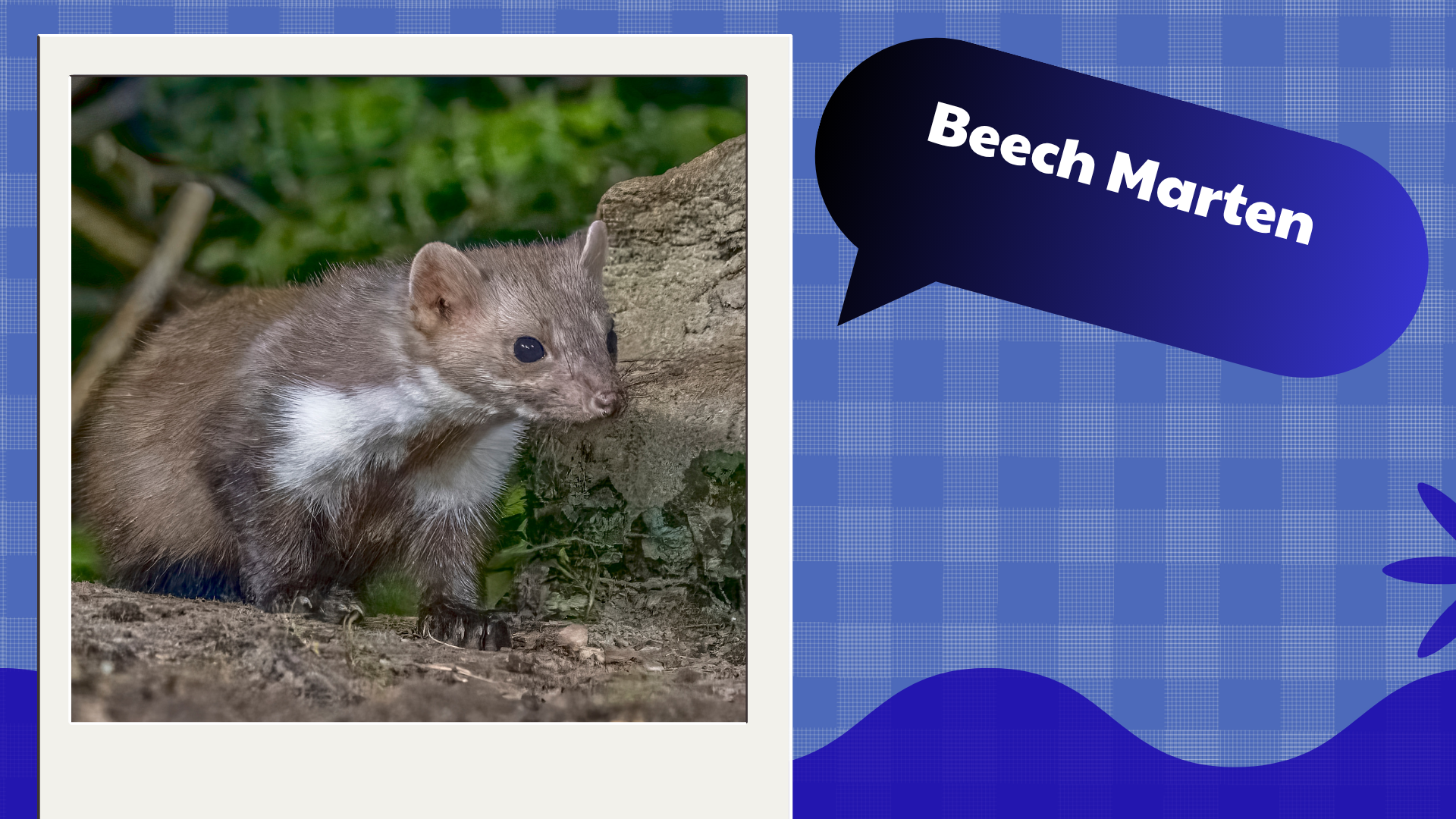
The beech marten, Martes foina, is also called the stone marten or house marten. It is widespread across much of continental Europe and extends into parts of western and central Asia. Unlike more forest-dependent martens, it readily uses rocky ground, farmland edges, villages, suburbs, barns, attics, and other human-altered places. This adaptability makes it one of the martens people are most likely to encounter near buildings.
Its most useful field mark is a white throat bib that often divides into two branches and extends toward the forelegs. The nose is usually pale pinkish or gray-brown, while the coat is grayish brown and somewhat coarse. The ears appear relatively short, and the soles have less fur than those of the European pine marten. These traits are especially helpful where both species occur, although lighting and individual variation can make quick sightings difficult.
Beech martens are mostly active from dusk through the night. They rest in rock crevices, tree holes, roof spaces, hay piles, and abandoned structures. Their diet changes with location and season and can include rodents, birds, eggs, insects, reptiles, fruit, and discarded human food. In agricultural landscapes, fruit may form a substantial seasonal portion of the diet.
Living close to people sometimes causes conflict. A beech marten may make noise in a roof space, disturb insulation, raid poultry enclosures, or enter parked vehicles and damage soft components. Humane prevention is safer and more effective than attempting to capture an animal without understanding local law. Seal entry points only after confirming that no adult or young remains inside, protect poultry with secure mesh, and avoid leaving food accessible. In the field, distinguish this species from the pine marten by combining the white forked bib, pale nose, open or rocky habitat, and relatively bare-looking footpads rather than depending on a single feature.
5. Nilgiri Marten
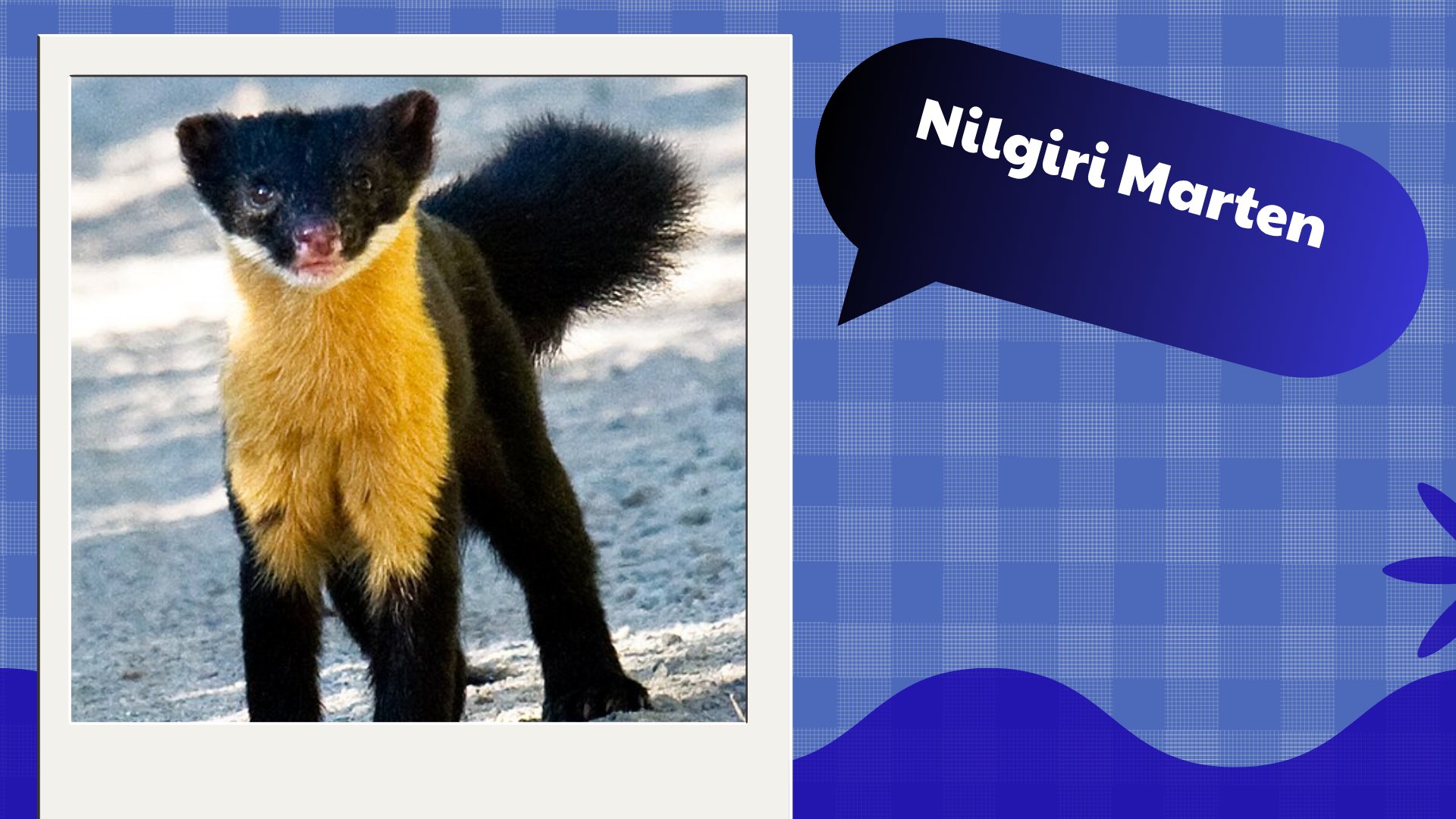
The Nilgiri marten, Martes gwatkinsii, is a rare and geographically restricted species found only in the Western Ghats of southern India. It inhabits moist evergreen forest, high-elevation shola forest, and neighboring montane habitats. Its limited range makes it one of the least familiar types of martens and gives every reliable observation scientific value.
This marten has a dark brown to nearly black body, a long tail, and a vivid yellow, orange, or golden patch across the throat and chest. The color contrast can resemble that of the yellow-throated marten, but geography quickly separates them in most situations. The Nilgiri marten is confined to the Western Ghats and often appears dark-bodied overall. Its powerful build, alert face, and fluid movement through trees and along the forest floor are typical of the genus.
Because the animal is elusive and occurs at relatively low densities, many aspects of its ecology remain less thoroughly documented than those of widespread martens. Available observations indicate an opportunistic diet that includes small vertebrates, insects, and fruit. It is a capable climber and may be seen alone or occasionally with another individual. Camera traps, tracks, and brief daytime sightings provide much of the information available to researchers.
The Nilgiri marten is considered Vulnerable, with habitat loss, fragmentation, road development, and other pressures within its restricted range creating concern. Protecting connected native forest across elevation zones is especially important. Wildlife watchers should stay on established routes, avoid broadcasting calls or baiting animals, and report photographs with accurate location information to appropriate conservation projects when requested. Never publicize a sensitive den or resting-site location. For beginners, the safest identification combination is its Western Ghats location, large marten shape, very dark body, and bright golden throat.
6. European Pine Marten
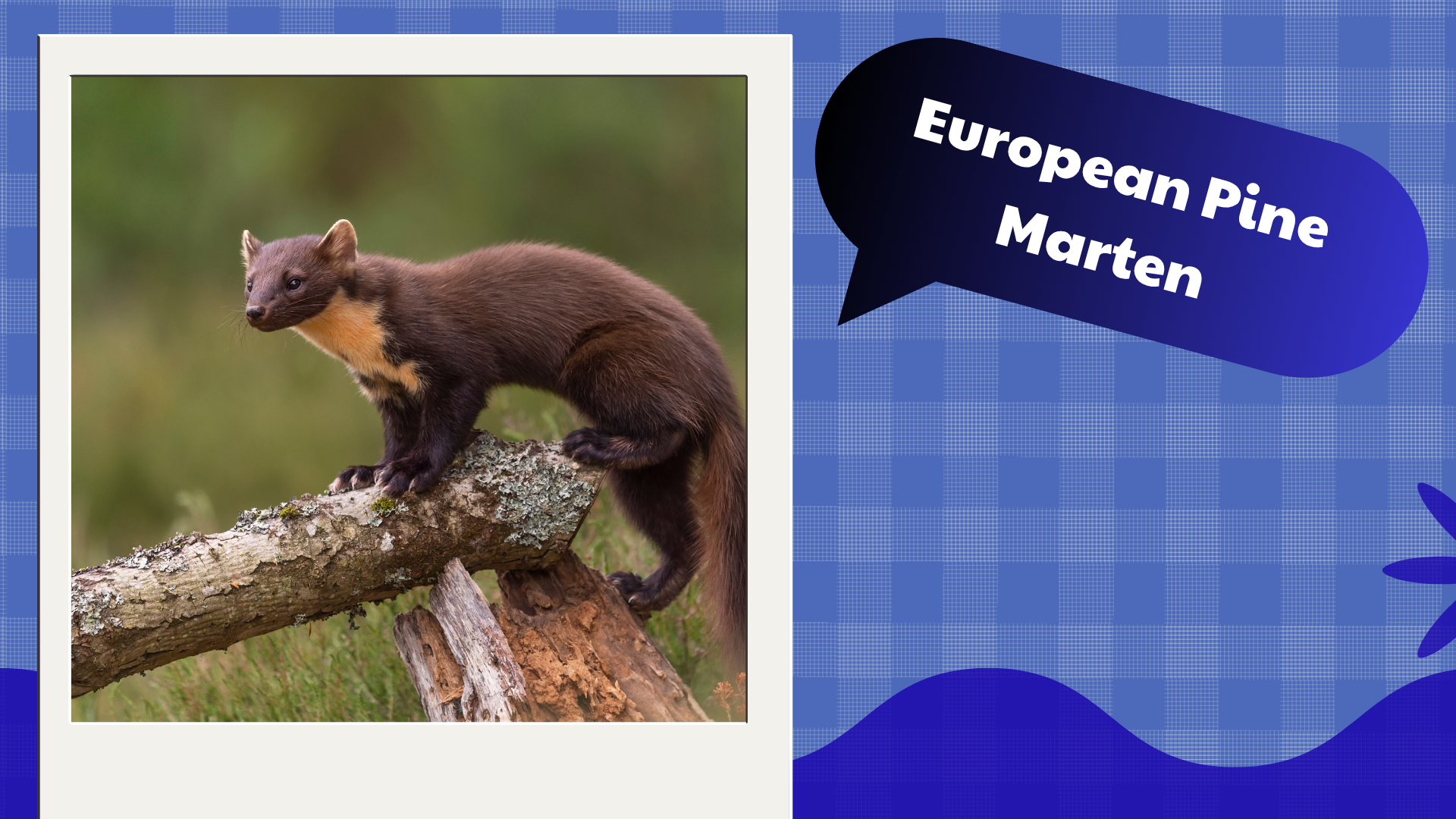
The European pine marten, Martes martes, inhabits forests across much of Europe and into western Asia. It is strongly associated with woodland but can use a mosaic of conifer forest, deciduous woodland, scrub, and connected hedgerows. Tree cavities, squirrel dreys, rock crevices, and dense vegetation provide resting and denning sites.
A typical pine marten has rich brown fur, a long bushy tail, rounded ears edged with pale fur, and a cream-to-yellow throat patch. The bib is usually less white and less strongly forked than that of a beech marten. Its nose is commonly dark, and the soles are well furred. None of these features is infallible, so observers in areas of overlap should consider several traits together.
Pine martens are excellent climbers, yet they do much of their traveling and hunting on the ground. Small mammals are major prey, while birds, eggs, insects, carrion, berries, and other fruit broaden the diet. Seasonal fruit feeding can make the animal an effective seed disperser. Activity is often concentrated around dusk and nighttime, but daylight sightings are possible, especially where disturbance is low.
Historical trapping and forest loss reduced the species in parts of Europe. Legal protection, woodland recovery, and reintroduction programs have supported expansion in some regions, although status varies by country. One widely studied ecological effect is the relationship between recovering pine martens and gray squirrels in parts of Britain and Ireland; local food webs are complex, so outcomes should not be simplified into a universal rule. To observe pine martens responsibly, look for tracks and twisted scat on prominent logs or trails, use a trail camera only where permitted, and avoid placing food near roads or homes. A dark nose, yellowish bib, forest setting, and furred feet together favor pine marten over beech marten.
7. Japanese Marten

The Japanese marten, Martes melampus, is native to Japan and occurs naturally on the main islands of Honshu, Shikoku, and Kyushu. It has also been introduced to some other Japanese islands. Forests are important habitat, but the species may use plantations, woodland edges, and countryside near farms when food and cover are available.
Coat color varies noticeably among individuals and seasons. Some Japanese martens are brown, while others become pale yellow or golden, particularly in winter. The face may appear whitish, and the legs and tail are often darker than the body. This variability means that location, body shape, and the full pattern are more reliable than expecting a single standard color.
Japanese martens eat small mammals, birds, insects, frogs, fruit, seeds, and other foods as opportunities change through the year. Fruit consumption allows them to disperse seeds through forest and edge habitats. They are agile climbers but also travel extensively on the ground, where droppings may be left at conspicuous points used for communication.
One identification challenge is the presence of the Japanese weasel, which is generally slimmer and has a proportionally shorter, less luxuriant tail. The invasive small Indian mongoose occurs in parts of Japan as well, but differs in posture, coat texture, and tail form. A Japanese marten usually looks sturdier than a weasel and carries a conspicuously full tail. Conservation concerns include road mortality, habitat change, and genetic or ecological effects associated with introduced populations. Island subspecies or regional populations can have different conservation priorities, so local status deserves attention even when the species as a whole remains relatively widespread.
8. Sable
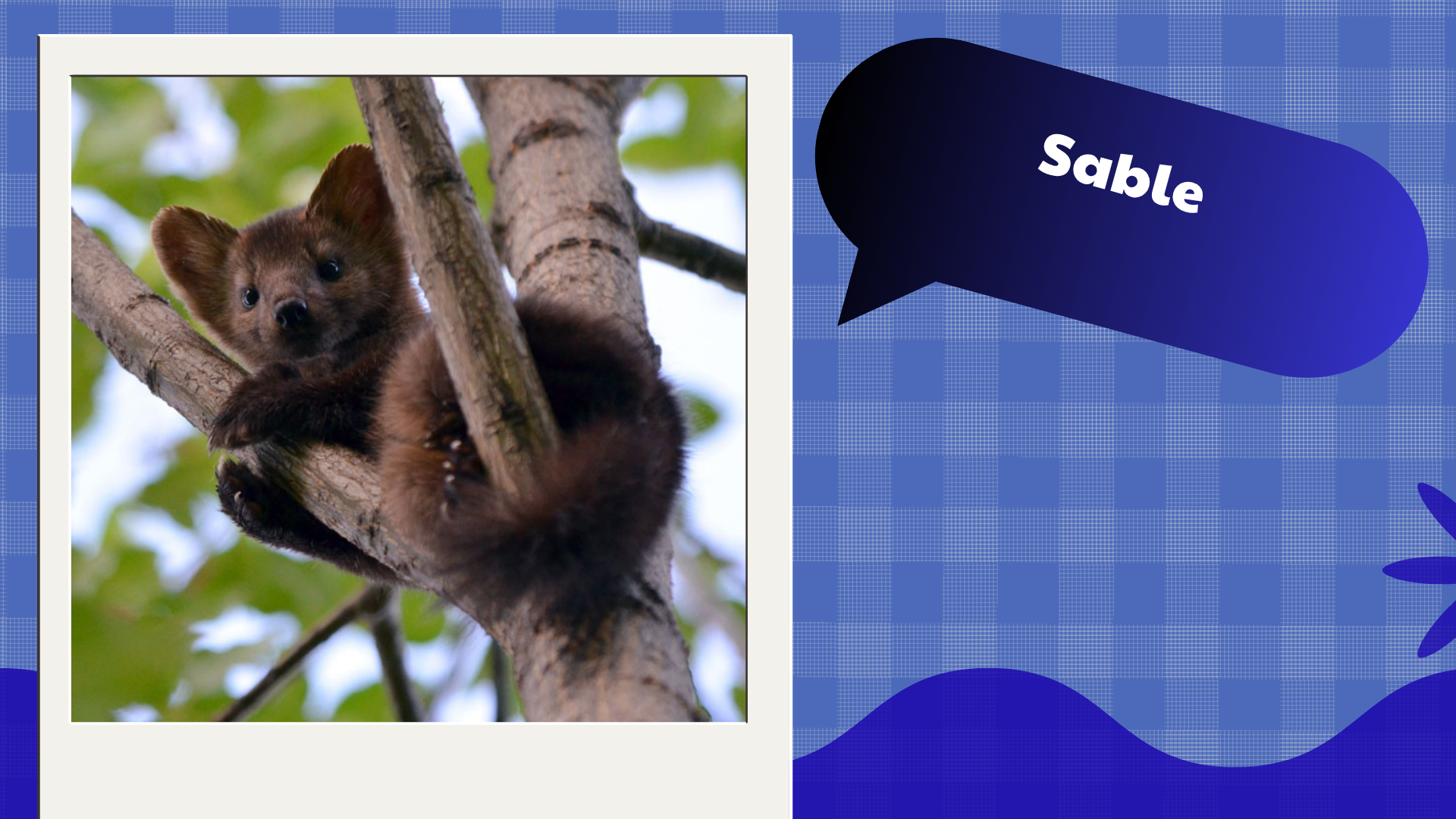
The sable, Martes zibellina, is a true marten even though its common name does not contain the word “marten.” It inhabits northern Asian forests, especially across Russia and into neighboring parts of Kazakhstan, Mongolia, China, North Korea, and Japan. Dense taiga, mountain forest, cedar woodland, and landscapes with abundant fallen timber provide suitable cover.
Sables are famous for exceptionally soft, dense fur. Coat color ranges from sandy or chestnut brown to nearly black, often with a lighter patch on the throat. The head may be slightly paler than the body, and the ears have rounded outlines. Compared with the European pine marten, a sable often looks more uniformly colored and its throat marking may be smaller or less distinct, but considerable variation makes range an important identification tool.
This species searches the forest floor for voles, mice, squirrels, birds, eggs, insects, and carrion. Berries and the seeds of some trees can become important when available. Although able to climb, the sable spends much of its time traveling and hunting on the ground. In winter it uses spaces beneath snow, roots, logs, and tree cavities for shelter.
The sable has a long history in the fur trade. Intensive exploitation caused severe declines in some areas, followed by hunting regulation, protected areas, captive breeding, and reintroductions. Many populations recovered, but management quality and local conditions still matter. A regulated harvest is not automatically sustainable; reliable monitoring and enforcement are necessary. Wildlife travelers should never purchase unverified animal products and should follow protected-area rules. In nature, the combination of a northern Asian range, compact marten form, lush dark coat, and subdued throat patch helps distinguish the sable from other species.
How Are the Different Types of Martens Classified?
All true martens belong to the genus Martes, within the family Mustelidae and subfamily Guloninae. Mustelidae also includes weasels, otters, badgers, mink, and several other carnivores. Within Guloninae, martens are close to the fisher, tayra, and wolverine, but each belongs to a separate modern genus.
- Kingdom: Animalia
- Phylum: Chordata
- Class: Mammalia
- Order: Carnivora
- Family: Mustelidae
- Subfamily: Guloninae
- Genus: Martes
The eight-species count reflects modern recognition of the Pacific marten as Martes caurina, separate from the American marten. Some older references list seven species because they combine the two North American forms. Scientific classification changes when stronger genetic, anatomical, and geographic evidence becomes available, so differences among older field guides do not necessarily indicate an error.
The fisher was historically called Martes pennanti but is now generally classified as Pekania pennanti. The tayra is Eira barbara, and the wolverine is Gulo gulo. They are relatives of martens, not additional species of Martes.
Where Do Martens Live?
Martens are native to the Northern Hemisphere. The American and Pacific martens occupy North America; the European pine and beech martens occur mainly in Europe and western Asia; and the remaining species live in Asia. No true marten is native to Africa, Australia, South America, or Antarctica.
Forest is the unifying habitat, but the details vary. American martens, Pacific martens, sables, and many pine martens use cool coniferous or mixed forests. Yellow-throated martens range from tropical forest to cold temperate woodland. Nilgiri martens occupy the montane forests of southern India, while beech martens are unusually comfortable in rocky areas, farmland, villages, and cities. Japanese martens use native woodland, plantation forest, and edge habitat.
Good marten habitat often includes more than living trees. Fallen logs, snags, cavities, dense shrubs, rock piles, and root systems provide shelter and hunting opportunities. Connected habitat allows animals to disperse, find mates, and adjust their ranges as weather and food supplies change.
How to Identify Different Types of Martens
- Check the location first: Geographic range eliminates most species immediately and is especially useful for separating similar brown martens.
- Study the throat patch: Yellow-throated and Nilgiri martens have bright golden areas; beech martens usually have a white forked bib; pine martens usually show a cream or yellow bib.
- Look at the nose: A pale nose supports beech marten, while a dark nose is more typical of the European pine marten.
- Consider the feet: Northern forest martens often have broad, furry soles suited to snow. Beech martens generally show less fur on the soles.
- Judge the tail: True martens have long, well-furred tails. A notably larger, heavier animal may be a fisher, while a smaller animal with a shorter-looking tail may be a weasel.
- Note the habitat: A marten in a roof space or rocky village edge in Europe is more likely to be a beech marten than a pine marten.
- Watch movement: Martens commonly use a flexible, bounding gait and can climb quickly. Movement alone cannot confirm the species.
- Use several clues: Color varies with age, season, lighting, and individual genetics. Never identify a marten from one coat feature alone.
Tracks, Scat, and Other Signs
Marten tracks usually show five toes, although one may fail to register. In snow, their bounding movement often creates paired or grouped prints. Furry feet can blur fine details, and track dimensions overlap among sexes and species. Photograph a track beside a ruler, record the trail pattern, and include habitat information rather than trying to identify it from a single print.
Scat is typically narrow, twisted, and tapered, but its appearance varies greatly with diet. It may contain fur, seeds, berry skins, insect fragments, or feathers. Martens sometimes leave droppings on logs, rocks, trail junctions, and other prominent features as scent signals. Because several carnivores produce similar scat, visual identification should be treated as tentative unless confirmed through expert examination or DNA.
Other signs include small dens in tree cavities, tracks crossing fallen logs, and scent-marking sites. Do not reach into holes, disturb bedding material, or approach young animals. A trail camera positioned legally on an established wildlife route is often the least intrusive way to confirm a species.
Outdoor Tips for Finding and Observing Martens
- Choose suitable habitat. Search mature or structurally complex forest within the known range of the species.
- Look after fresh snow. Tracks are often easier to detect than the animal itself.
- Scan fallen logs and forest edges. Martens frequently use logs as travel routes and lookout points.
- Be patient at dawn and dusk. Many species are active during low-light periods, although activity patterns vary.
- Keep quiet and control pets. Noise and free-running dogs can disturb wildlife or drive it away.
- Use binoculars or a camera with zoom. Observe from a distance instead of approaching.
- Never bait a marten. Feeding changes natural behavior, increases conflict, and may expose animals to roads or predators.
- Follow local rules. Trail cameras, night access, and wildlife photography may be regulated.
Safety, Sustainability, and Conservation Notes
Wild martens normally avoid people, but any cornered mammal can bite. Never handle a marten, enter a den, or try to rescue an apparently healthy youngster. Contact a licensed wildlife rehabilitator or local wildlife authority if an animal is injured or trapped inside a building.
Conservation status varies by species and population. The Nilgiri marten is globally vulnerable, while some geographically restricted Pacific marten populations receive legal protection even though conditions elsewhere differ. Other martens may be common over broad areas but face local declines from forest fragmentation, road mortality, unsustainable trapping, prey changes, or loss of resting and denning structures.
Protecting martens requires more than preserving tree cover. Forests need connected canopies, understory vegetation, fallen wood, old trees, and cavities. Responsible forestry can retain these elements and maintain movement corridors. Where trapping is legal, regulations, selective methods, accurate reporting, and population monitoring are essential. Visitors can help by staying on trails, securing food and waste, reporting wildlife crimes, and keeping sensitive locations private.
Fun Facts About Martens
- All eight true marten species belong to the genus Martes.
- The sable is a marten even though “marten” is not part of its common name.
- Pacific and American martens were often treated as one species in older references.
- Most martens can rotate and flex their bodies efficiently while climbing and bounding through cluttered forest.
- Broad, furry feet help northern species move over soft snow.
- Fruit can be an important seasonal food, making some martens useful seed dispersers.
- The yellow-throated marten ranges from tropical Southeast Asia to cold forests near the Russian Far East.
- Beech martens are unusually adaptable and may live in attics, barns, and urban structures.
- The Japanese marten can change noticeably in color between seasons.
- The fisher and tayra are close relatives but belong to the genera Pekania and Eira, not Martes.
Final Thoughts on Types of Martens
The eight living types of martens share the long body, bushy tail, agility, and adaptable diet typical of their group, yet each is shaped by a distinct part of the Northern Hemisphere. Range and throat pattern provide the fastest identification clues, while habitat, nose color, foot fur, body size, and seasonal coat add supporting evidence. Learning these differences makes wildlife observation more rewarding and helps prevent confusion with fishers, weasels, mink, and other mustelids. Whether searching snowy tracks or watching a forest edge, give martens space and protect the complex habitats they need.
Frequently Asked Questions
1. How many types of martens are there?
There are eight recognized living species in the genus Martes. The count includes the Pacific marten as a species separate from the American marten.
2. What are the eight marten species?
They are the American marten, Pacific marten, yellow-throated marten, beech marten, Nilgiri marten, European pine marten, Japanese marten, and sable.
3. Are martens weasels?
Martens and weasels belong to the same family, Mustelidae, but they are not the same group. True martens belong to Martes, while the animals commonly called weasels are classified mainly in other genera.
4. Is a fisher a type of marten?
The fisher is a close relative but is not currently classified as a true marten. Its accepted scientific name is Pekania pennanti, although older sources placed it in Martes.
5. Is a sable a marten?
Yes. The sable is Martes zibellina and is one of the eight living species in the marten genus.
6. What is the difference between an American and a Pacific marten?
The two are most reliably separated by geographic range, genetics, and anatomical measurements. Their coats and general body shapes are so similar that a photograph without location information may not allow a confident identification.
7. Where are martens found?
Wild martens occur naturally across North America, Europe, and Asia. Different species occupy boreal forest, temperate woodland, tropical mountain forest, rocky country, farmland edges, and even some urban areas.
8. Do martens live in the United States?
Yes. American martens occur in northern and northeastern regions, while Pacific martens occupy parts of Alaska, the Pacific states, and the Rocky Mountain region. Distribution is patchy in the contiguous United States.
9. Are there martens in the United Kingdom?
The European pine marten occurs in the United Kingdom. Its distribution has expanded in some areas through natural recovery and conservation work, but it remains much easier to find in certain regions than others.
10. What habitat do martens prefer?
Most martens prefer forests with cover and structural complexity, including fallen logs, cavities, snags, rocks, and dense vegetation. The beech marten is more tolerant of open and human-modified environments than most species.
11. What do martens eat?
Martens are opportunistic omnivores. Depending on species and season, they eat small mammals, birds, eggs, insects, reptiles, amphibians, carrion, berries, seeds, and other fruit.
12. Do martens eat squirrels?
Some martens catch squirrels, but the importance of squirrels varies with species, region, and opportunity. Voles, mice, birds, insects, fruit, and carrion may be equally or more important at different times.
13. Can martens climb trees?
Yes. Martens are agile climbers with strong claws and flexible bodies. They use trees to forage, rest, escape danger, and reach cavities, although many species also spend substantial time on the ground.
14. Are martens nocturnal?
Many martens are active at night or around dawn and dusk, but they are not strictly nocturnal. Weather, human disturbance, prey activity, season, and individual behavior can all influence when they move.
15. Are martens dangerous to people?
Martens generally avoid people and are not considered a normal threat. However, a trapped, injured, or handled animal may defend itself, so it should always be given space.
16. Will martens attack pets?
Serious incidents involving household pets are uncommon, but small unattended animals and poultry can be vulnerable to many wild predators. Secure enclosures and supervised outdoor time reduce risk without harming wildlife.
17. How can I distinguish a pine marten from a beech marten?
A pine marten usually has a cream or yellow throat patch, dark nose, and more heavily furred soles. A beech marten commonly has a white forked bib, pale nose, and less fur on its soles. Habitat and several features should be considered together.
18. How can I distinguish a marten from a mink?
Martens generally have larger rounded ears, a bushier tail, longer legs, and a more obvious throat patch. Mink are more closely associated with water and usually look sleeker, darker, and more uniformly colored.
19. How can I distinguish a marten from a fisher?
A fisher is usually heavier, darker, and more robust, with a broader head and a less obvious pale throat patch. Size overlaps by sex and age, so location, proportions, and clear photographs are valuable.
20. What do marten tracks look like?
Marten prints may show five toes and a rounded heel area. Their bounding gait often leaves paired groups in snow. Furry feet can make the edges indistinct, so the full trail pattern is more useful than one print.
21. Why do martens have furry feet?
Fur around the soles provides insulation, grip, and a broader contact surface. In northern species, this helps conserve heat and improves movement across soft snow.
22. Which marten has a yellow throat?
The yellow-throated marten has the most obvious bright yellow throat. The Nilgiri marten also has a vivid yellow-orange throat, while several other species may show smaller cream, buff, or yellowish patches.
23. Which is the rarest marten?
The Nilgiri marten is among the most range-restricted and conservation-sensitive true martens. Rarity can also be local, and some Pacific marten populations are far less secure than the species across its entire range.
24. Are any martens endangered?
Threat levels vary by species, region, and legal system. The Nilgiri marten is globally listed as Vulnerable, and certain Pacific marten populations receive threatened-species protection. Always consult current regional authorities for local status.
25. Why are martens important to forests?
Martens help shape food webs by hunting small animals, scavenging, and consuming insects. Species that eat fruit can disperse seeds, while their sensitivity to habitat structure can also make them useful subjects for forest conservation research.
26. Do martens hibernate?
No. Martens remain active throughout winter. Northern species use dense fur, sheltered resting sites, food caching, and travel beneath or across snow to survive cold conditions.
27. Do martens live alone?
Most martens are primarily solitary outside breeding and maternal care. Yellow-throated martens are sometimes observed traveling or foraging in pairs or small groups more often than many other species.
28. How long do martens live?
Lifespan differs among species and environments. Many wild individuals die young because of predation, food shortages, disease, trapping, or vehicles, while animals that survive early life may live for several years.
29. Can martens be kept as pets?
Martens are wild animals with extensive space, behavioral, diet, and welfare needs. Private possession may be illegal or require permits, and keeping one as a pet is generally unsuitable.
30. What should I do if a marten enters my attic?
Do not trap, poison, or seal it inside. Contact a qualified humane wildlife professional, confirm whether dependent young are present, remove attractants, and close entry points only after every animal has safely left.
31. Should I feed a wild marten?
No. Feeding can make martens approach people, buildings, pets, and roads. It may also spread disease and alter natural movement, diet, and hunting behavior.
32. What is the best time to see a marten?
Dawn and dusk can be productive, but timing varies among species and locations. Fresh snow is especially useful because it reveals tracks even when the animal remains hidden.
33. Can martens swim?
Martens can swim when necessary, but they are not specialized aquatic hunters like otters or mink. Most of their foraging and travel occur on land or in trees.
34. Do martens change color in winter?
Some martens develop longer, denser, and sometimes paler winter coats. The Japanese marten can show a particularly noticeable seasonal shift, but martens do not normally turn pure white like an ermine.
35. How can people help conserve martens?
Support connected forest habitat, keep dogs controlled, drive carefully in wildlife areas, avoid buying unverified fur products, follow trapping laws, and report reliable sightings through appropriate wildlife programs.
READ MORE:
Types of Wallabies: Species, Habitats, and Identification