

The types of Pelican represent some of the most iconic and easily recognized water birds in the world. Pelicans belong to the family Pelecanidae and are famous for their enormous wingspans, long bills, and expandable throat pouches used for catching fish. These birds are found across coastal regions, lakes, rivers, and wetlands on nearly every continent except Antarctica. In this guide, we explore 15 types of Pelican, focusing on their appearance, habitat, behavior, and identification features. Whether you are a birdwatcher or a wildlife enthusiast, understanding pelican diversity helps you appreciate how these birds have adapted to both marine and freshwater ecosystems around the world.
1. American White Pelican
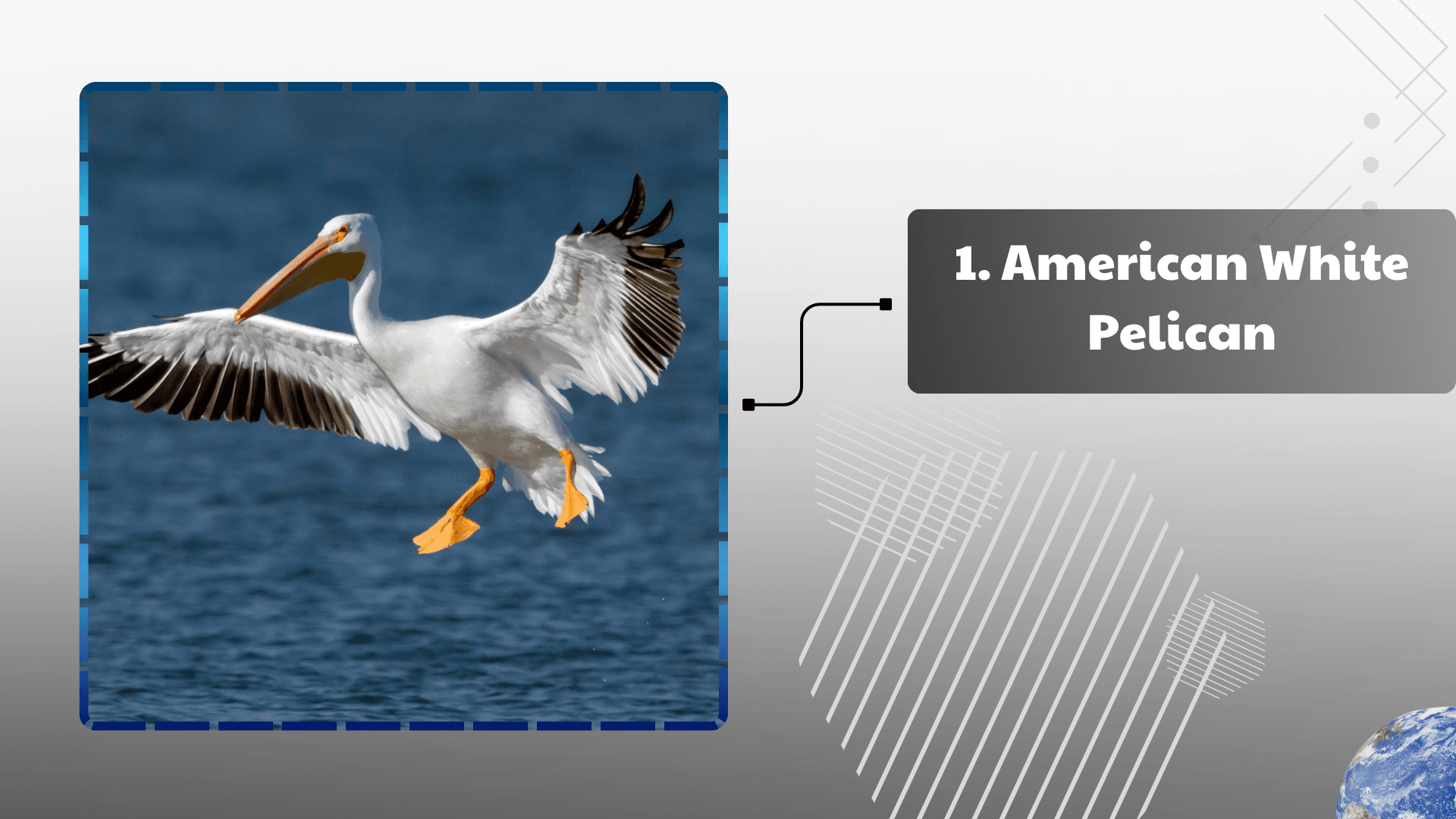
The American White Pelican is one of the most recognizable types of Pelican in North America. It is known for its pure white body, black flight feathers, and massive orange bill. This species has one of the largest wingspans among North American birds, often exceeding 3 meters.
Unlike some pelicans that dive for fish, the American White Pelican is a cooperative feeder. Groups of pelicans often work together in shallow lakes, herding fish into tight clusters before scooping them up with their large pouches.
They prefer freshwater lakes, marshes, and inland wetlands during breeding season. After breeding, they migrate to coastal regions for winter survival.
2. Brown Pelican
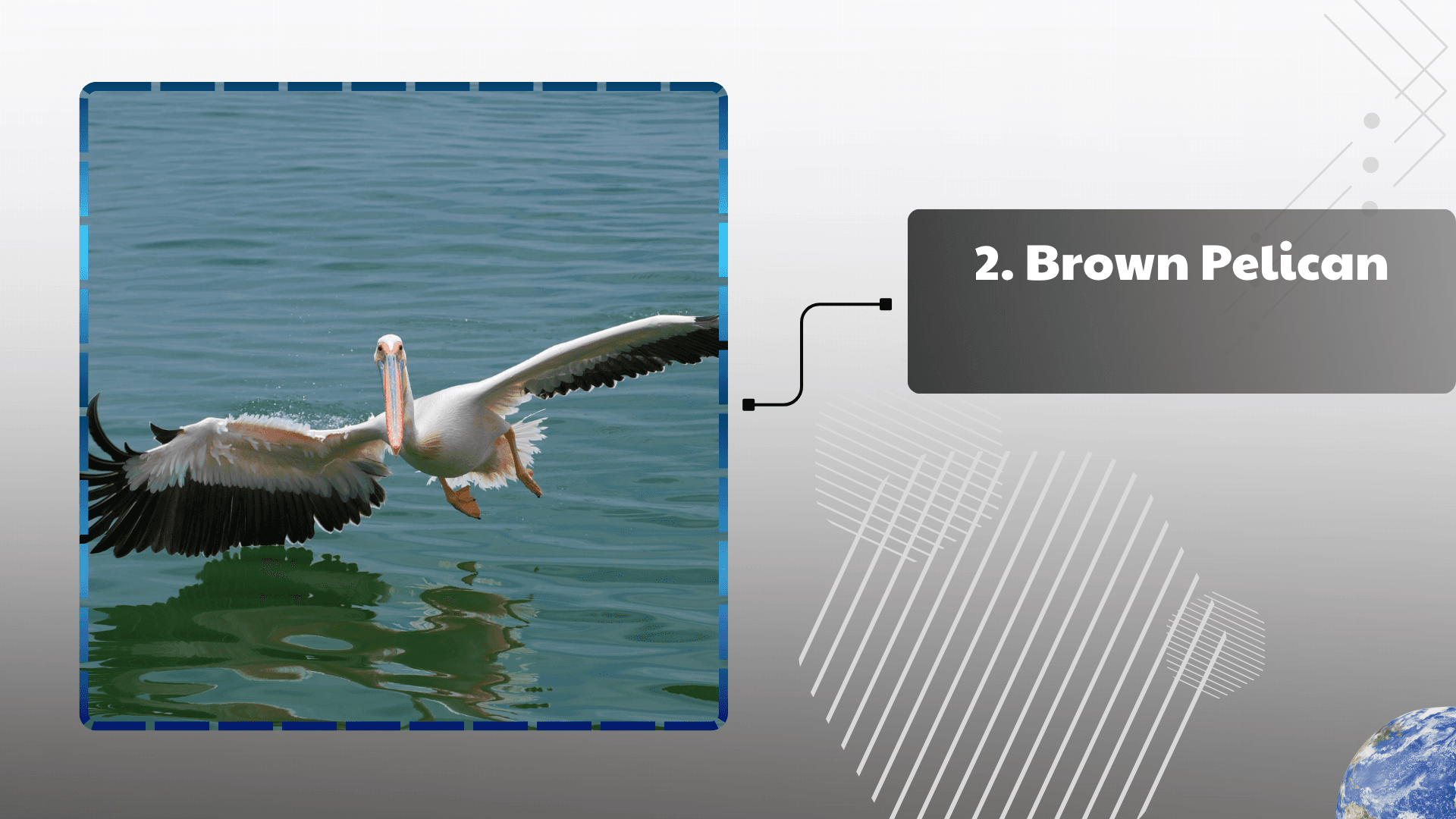
The Brown Pelican is one of the most famous coastal types of Pelican, especially along the coasts of the Americas. It is smaller than white pelican species but is highly recognized for its dramatic diving behavior.
Unlike other pelicans, Brown Pelicans dive headfirst into the ocean to catch fish. This unique hunting method makes them one of the most skilled aerial fishers among seabirds.
They inhabit coastal areas, estuaries, and beaches, often seen flying low over waves in search of prey. Conservation efforts have helped this species recover from pesticide-related declines in the past.
3. Peruvian Pelican
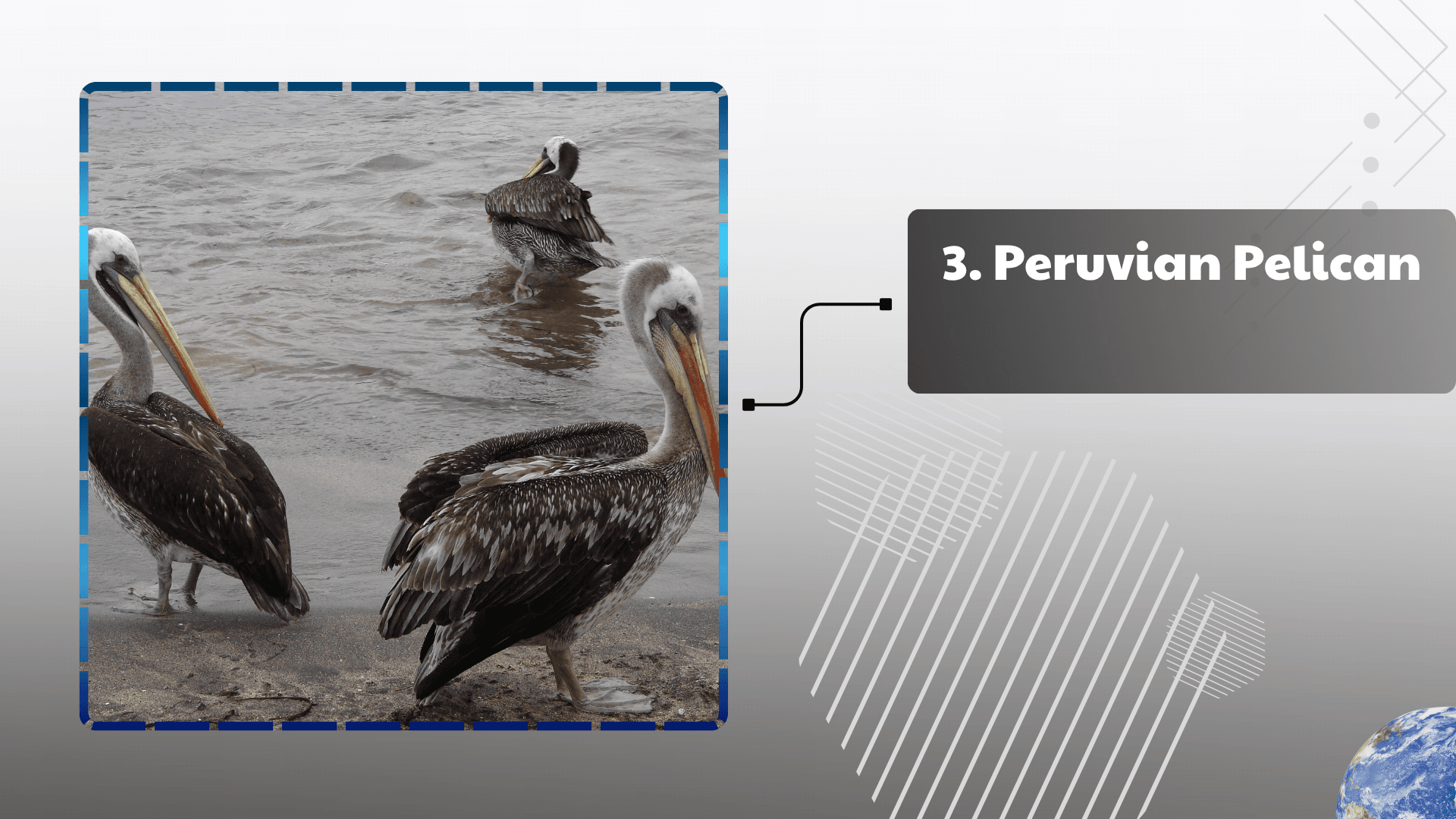
The Peruvian Pelican is a coastal South American species and one of the more regionally specialized types of Pelican. It closely resembles the Brown Pelican but is generally larger and darker.
It is commonly found along the Pacific coast of Peru and Chile, where cold nutrient-rich waters support large fish populations. This species plays an important ecological role in marine food chains.
Peruvian Pelicans are strong divers and often feed alone or in small groups rather than large cooperative flocks.
4. Great White Pelican
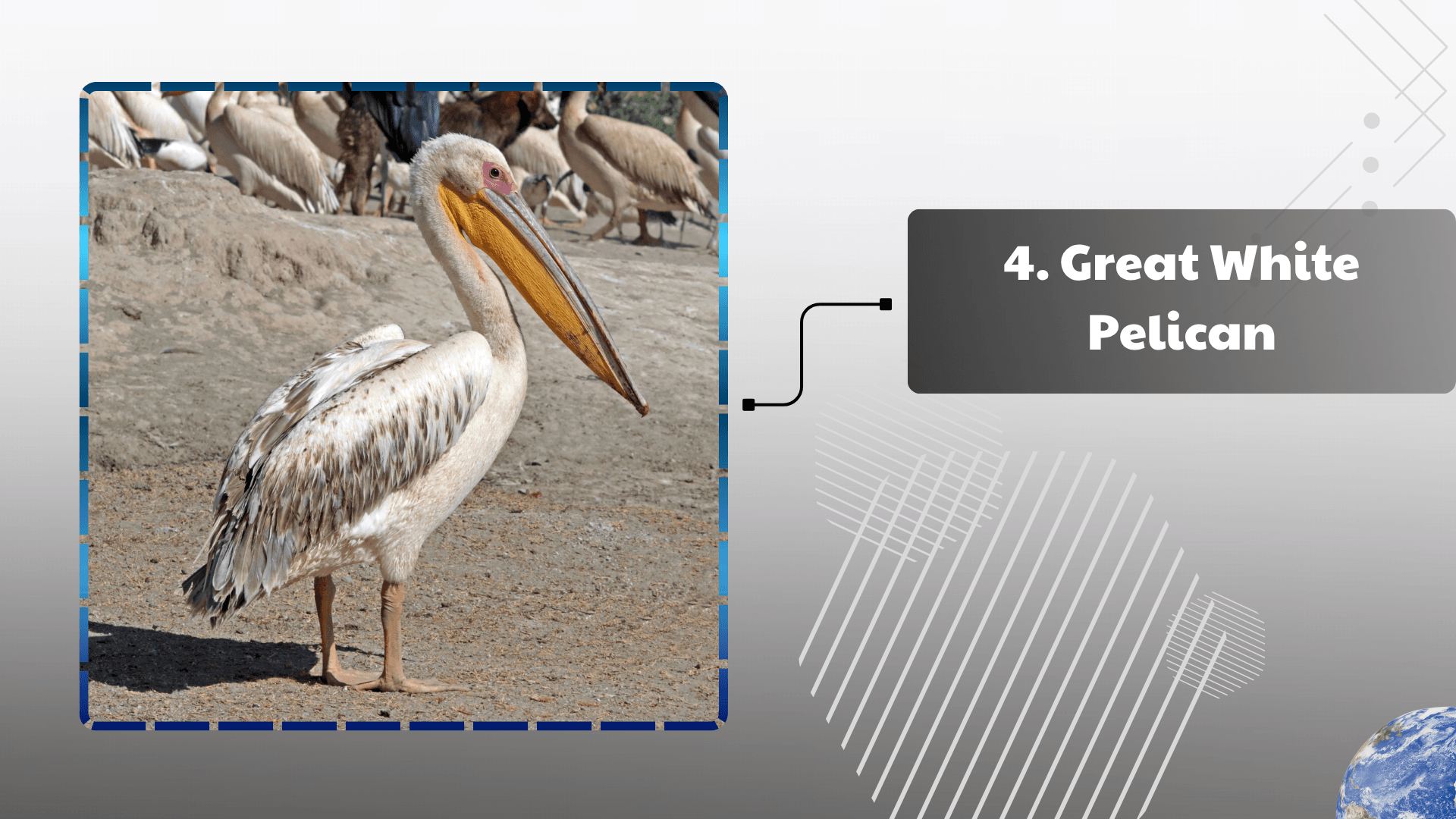
The Great White Pelican is one of the largest types of Pelican in the world, found across Africa, southeastern Europe, and parts of Asia. It is easily recognized by its white plumage and massive yellow-orange bill.
This species is highly social and often breeds in large colonies on islands or isolated wetlands. During feeding, they may hunt individually or in coordinated groups depending on food availability.
Great White Pelicans are strong flyers and can migrate long distances between breeding and wintering grounds.
5. Dalmatian Pelican
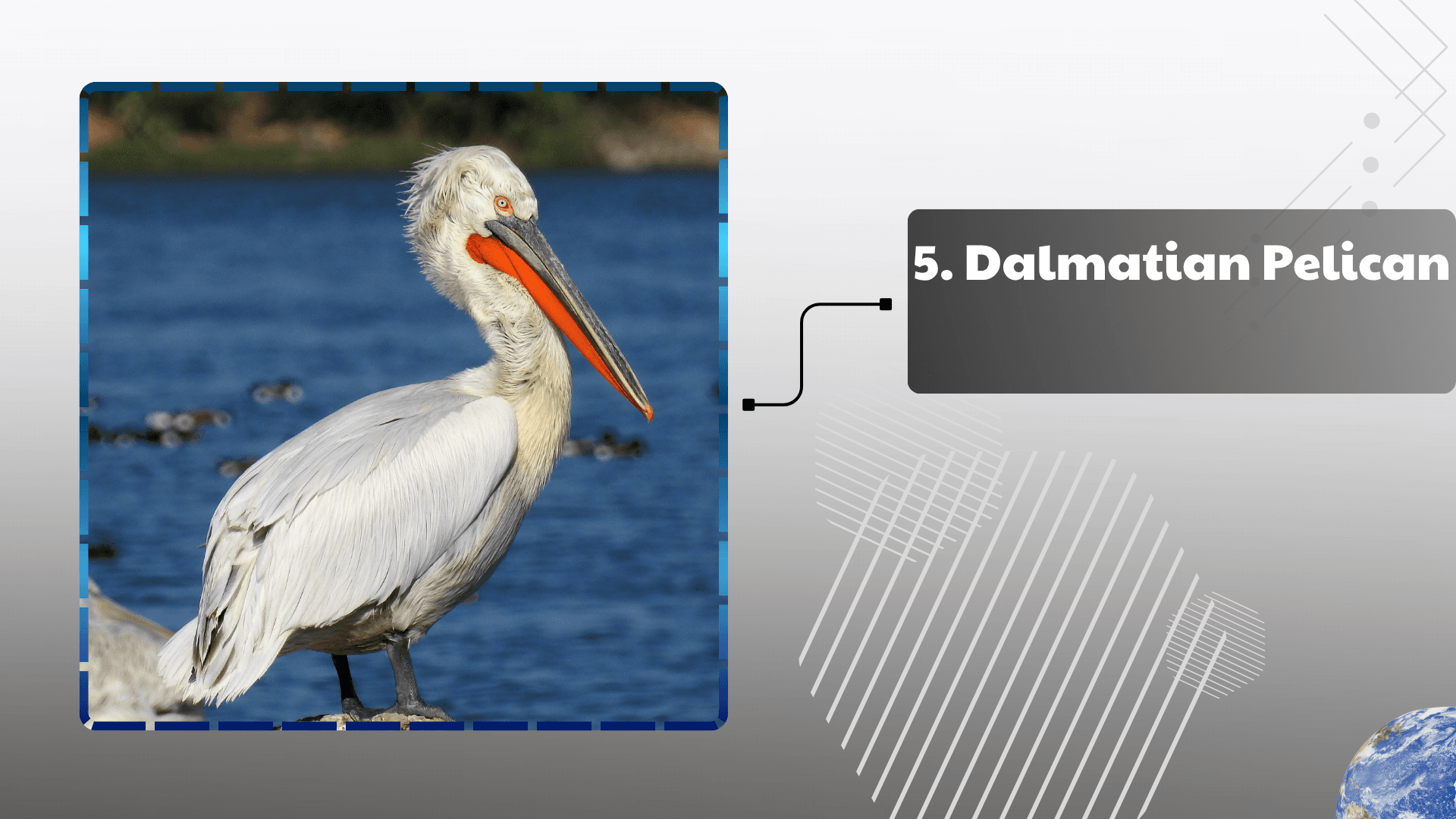
The Dalmatian Pelican is one of the rarest and most impressive types of Pelican, known for its large size and shaggy gray-white plumage during breeding season.
It is found in southeastern Europe and parts of Asia, typically inhabiting freshwater lakes, deltas, and wetlands. It prefers undisturbed aquatic environments for nesting.
Dalmatian Pelicans are highly sensitive to habitat disturbance, making conservation efforts critical for their survival. They are powerful swimmers and skilled fish hunters.
This first section of the types of Pelican guide introduces some of the most widespread and iconic species across the Americas, Europe, Africa, and Asia. In the next section, we will continue with additional pelican species, including tropical, coastal, and regionally adapted forms.
6. Australian Pelican
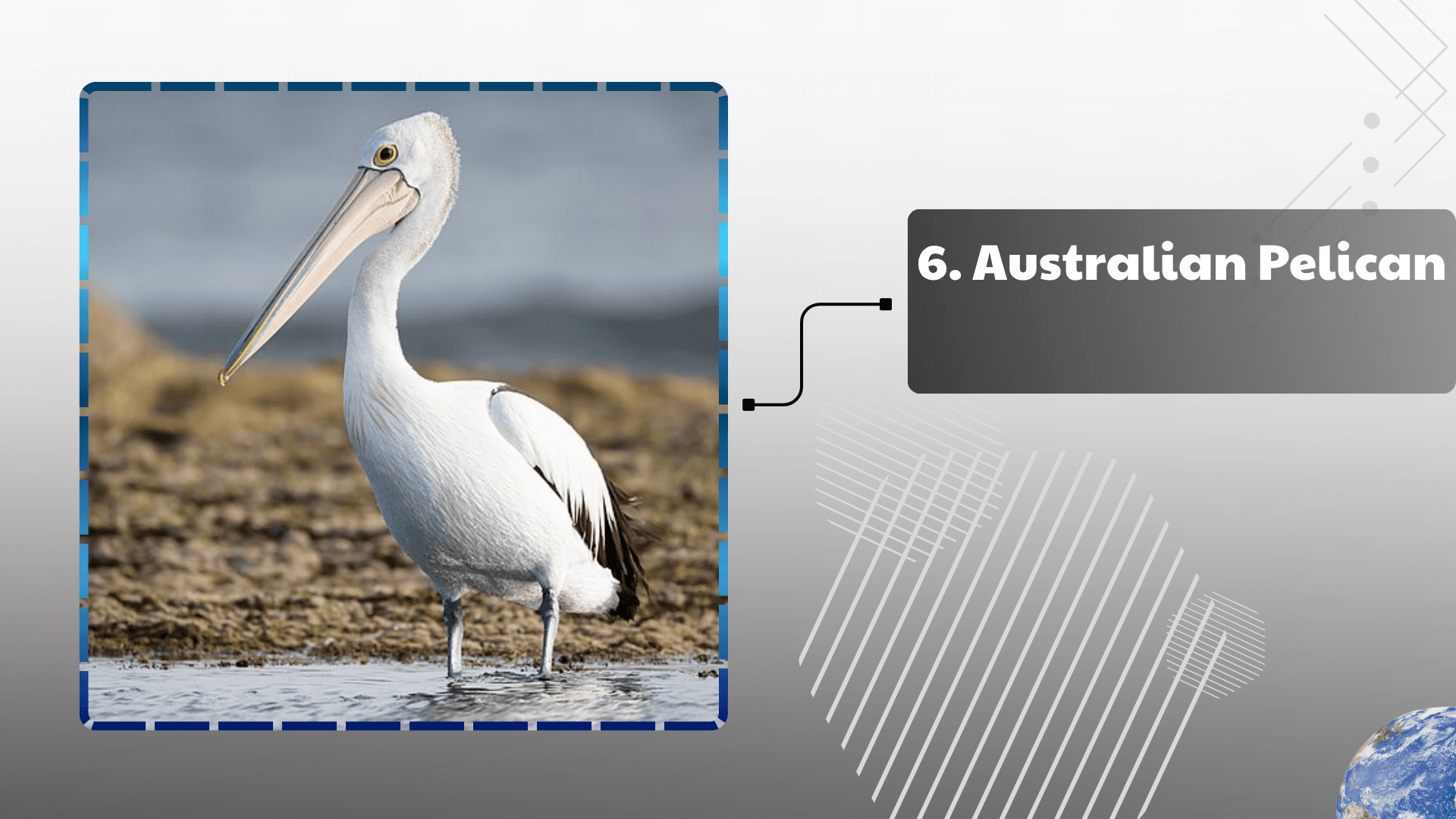
The Australian Pelican is one of the most widespread types of Pelican in the Southern Hemisphere and is easily recognized by its long pinkish bill, white body, and black wing tips. It is the only pelican species native to Australia, though it can also be found in parts of Indonesia, Papua New Guinea, and surrounding islands.
This species is highly adaptable and thrives in both coastal and inland freshwater habitats, including lakes, rivers, estuaries, and wetlands. It often travels long distances in search of food, especially after rainfall when inland water bodies fill with fish.
Australian Pelicans are social birds and may gather in large groups, particularly when feeding or breeding. Their cooperative behavior helps them herd fish into shallow waters for easier capture.
7. Pink-backed Pelican
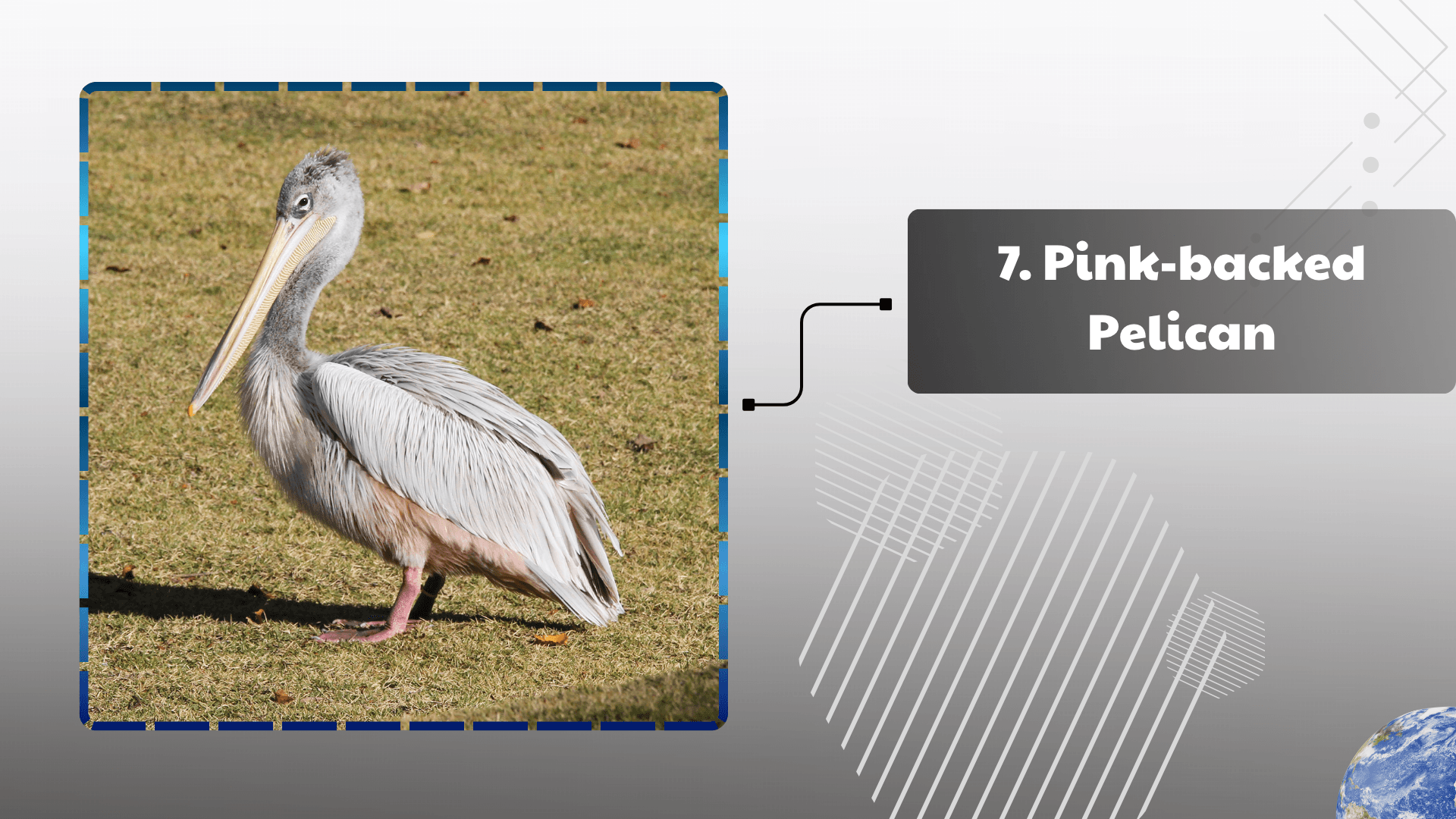
The Pink-backed Pelican is one of the more delicate-looking types of Pelican, found mainly in sub-Saharan Africa. It gets its name from the soft pink shading on its back feathers during the breeding season.
This species is smaller than many other pelicans and prefers quieter freshwater environments such as swamps, lagoons, and slow-moving rivers. It is often seen perched in trees, which is unusual for pelicans.
Pink-backed Pelicans are less aggressive hunters and typically feed in small groups. They use their large throat pouch to scoop up fish and small aquatic creatures from shallow water.
8. Spot-billed Pelican
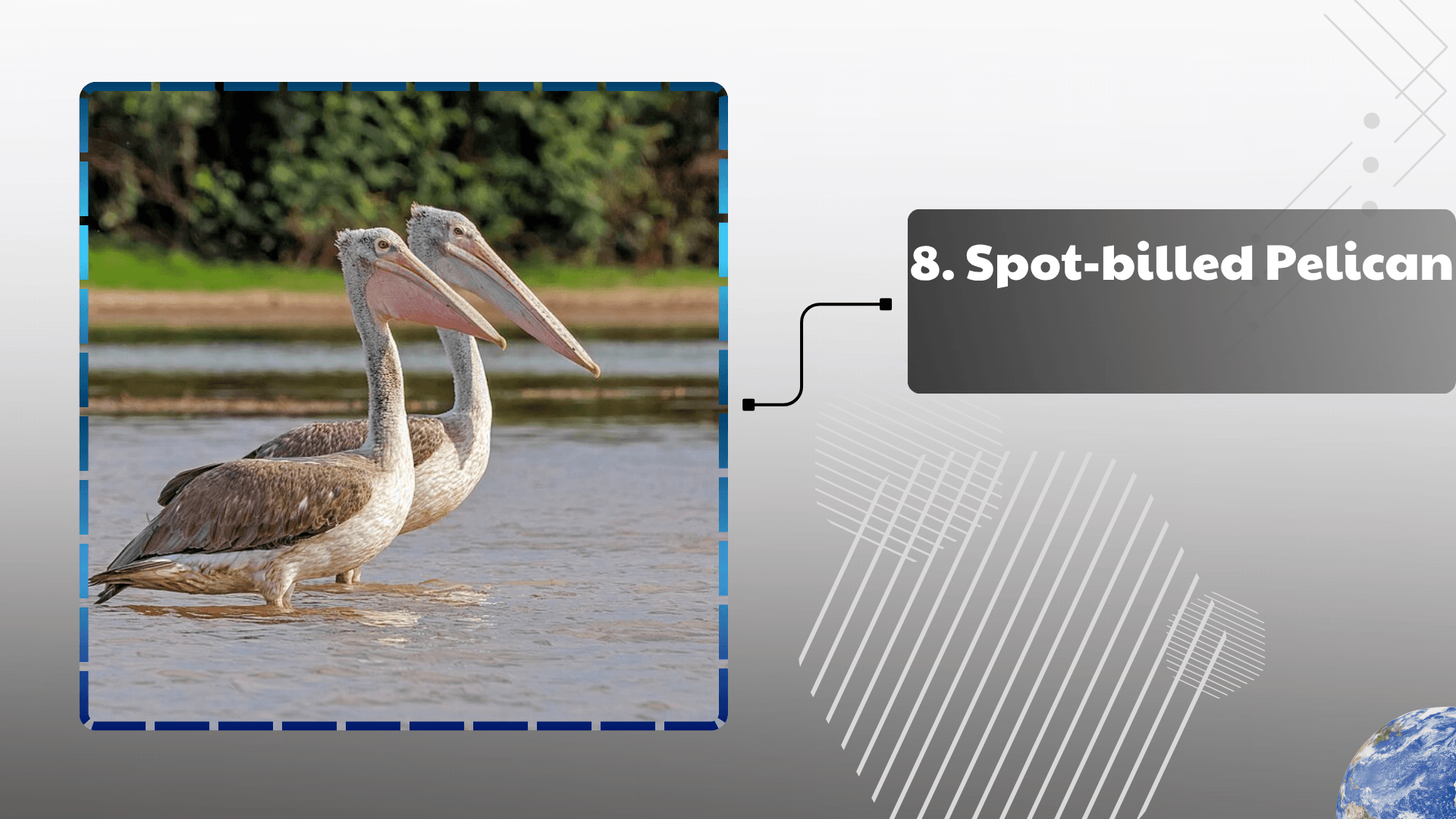
The Spot-billed Pelican is a rare and endangered member of the types of Pelican, primarily found in South and Southeast Asia. It is named after the distinctive spotted markings on its upper bill.
This species inhabits large freshwater lakes, marshes, and wetlands, often forming small breeding colonies in protected areas. It is highly sensitive to habitat loss and human disturbance.
Spot-billed Pelicans are strong fish hunters and often feed in coordinated groups. Their populations are closely monitored due to conservation concerns.
9. Eastern Brown Pelican
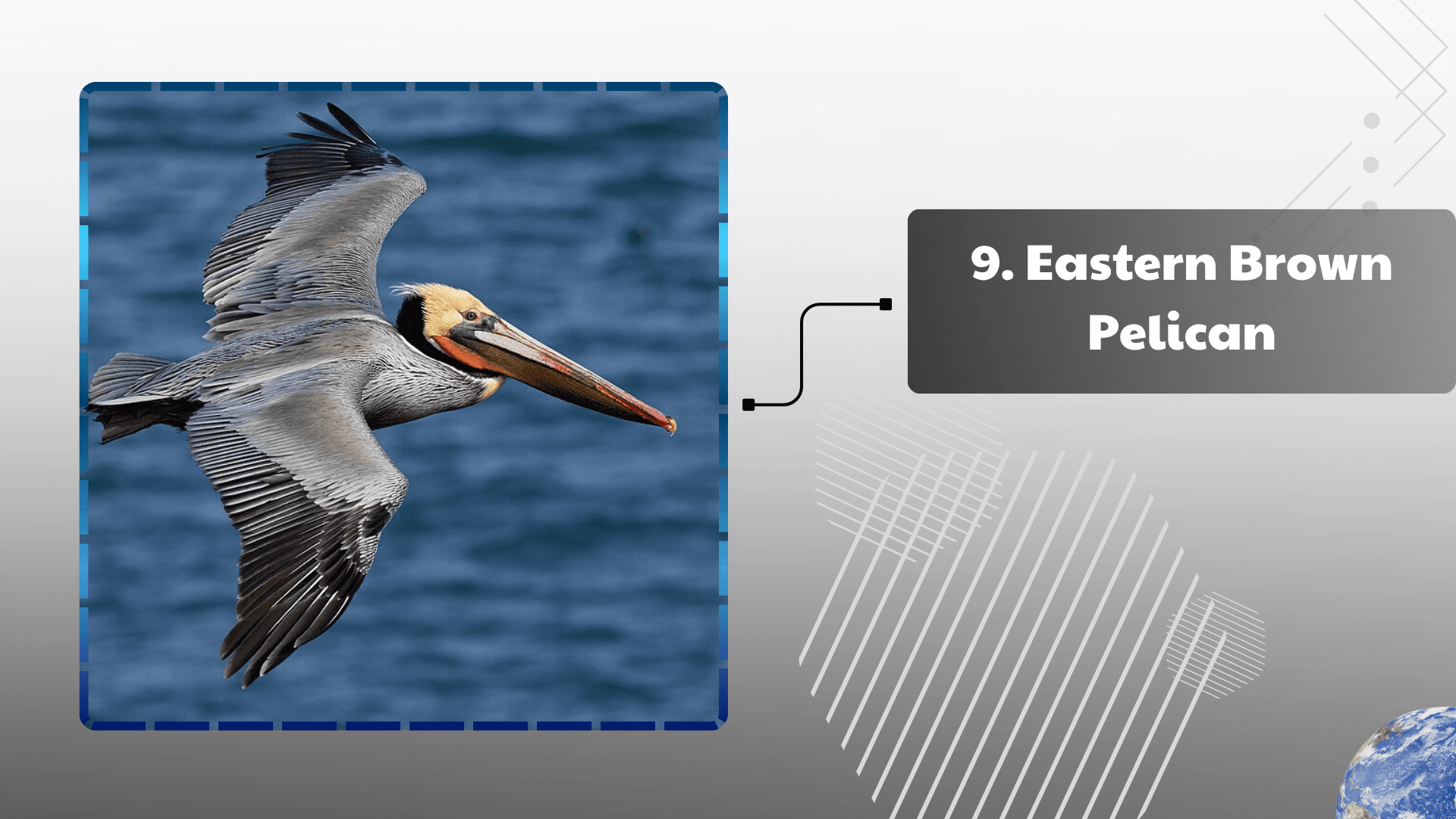
The Eastern Brown Pelican is a regional form of the Brown Pelican and one of the most common coastal types of Pelican in the southeastern United States and the Caribbean.
It is best known for its dramatic diving behavior, where it plunges from the air directly into the ocean to catch fish. This hunting style is highly efficient and visually striking.
Eastern Brown Pelicans were once heavily affected by pesticide pollution but have made a strong recovery thanks to conservation efforts. They are now commonly seen along beaches, piers, and coastal waters.
10. North American White Pelican
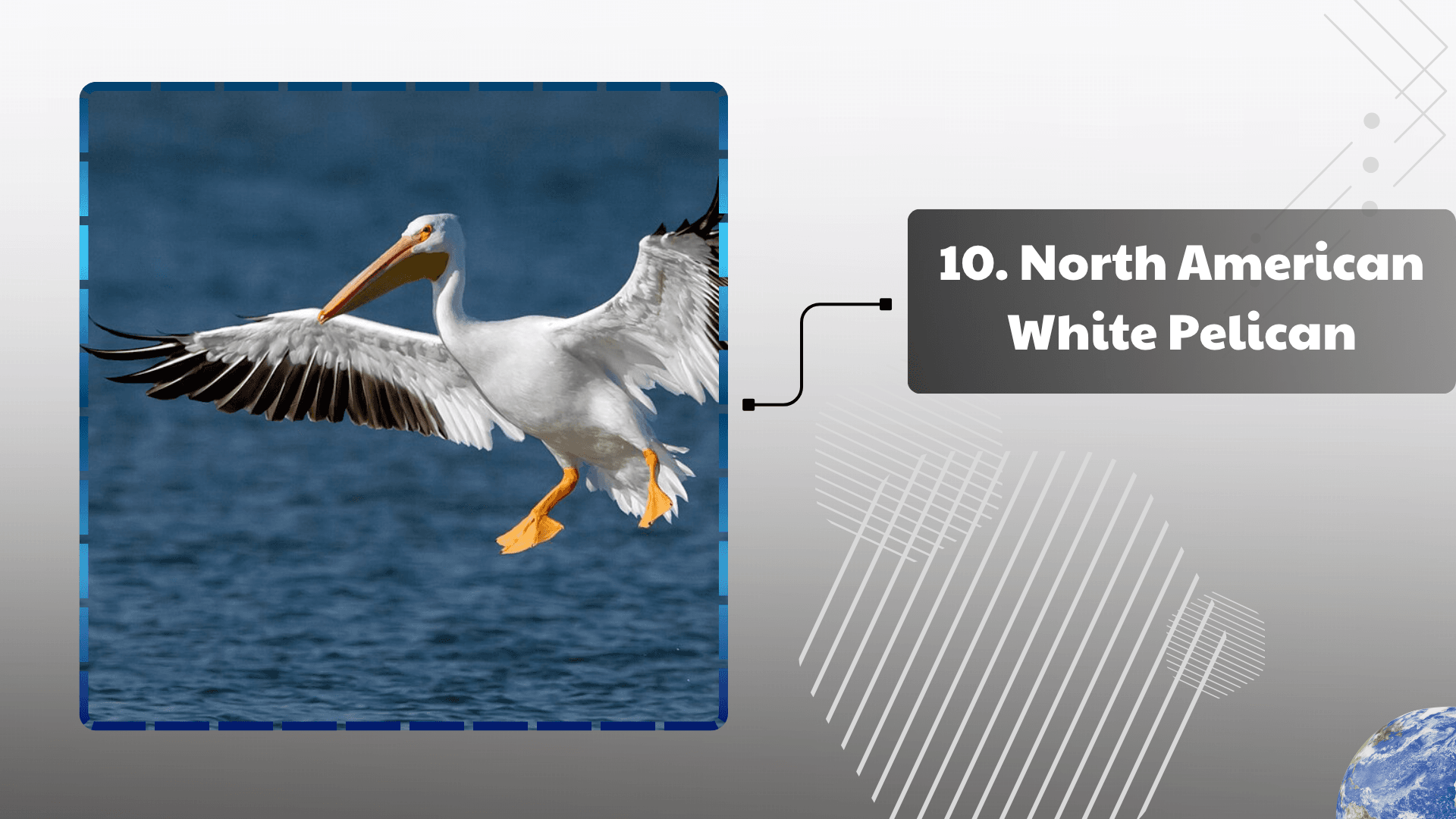
The North American White Pelican is one of the largest types of Pelican in North America and is closely related to the American White Pelican but often used in regional classification contexts.
It is easily recognized by its massive wingspan, pure white plumage, and orange bill with a flexible throat pouch. Unlike diving pelicans, this species feeds mainly by cooperative surface fishing.
Groups of North American White Pelicans work together to herd fish into shallow waters, making them easier to catch. They are commonly found in inland lakes and marshes during breeding season.
This second section of the types of Pelican guide highlights species adapted to both coastal and inland environments, showing how pelicans have evolved different hunting strategies and habitats across continents. In the final section, we will explore the remaining pelican species, including Asian and African regional specialists and their unique ecological roles.
11. European White Pelican
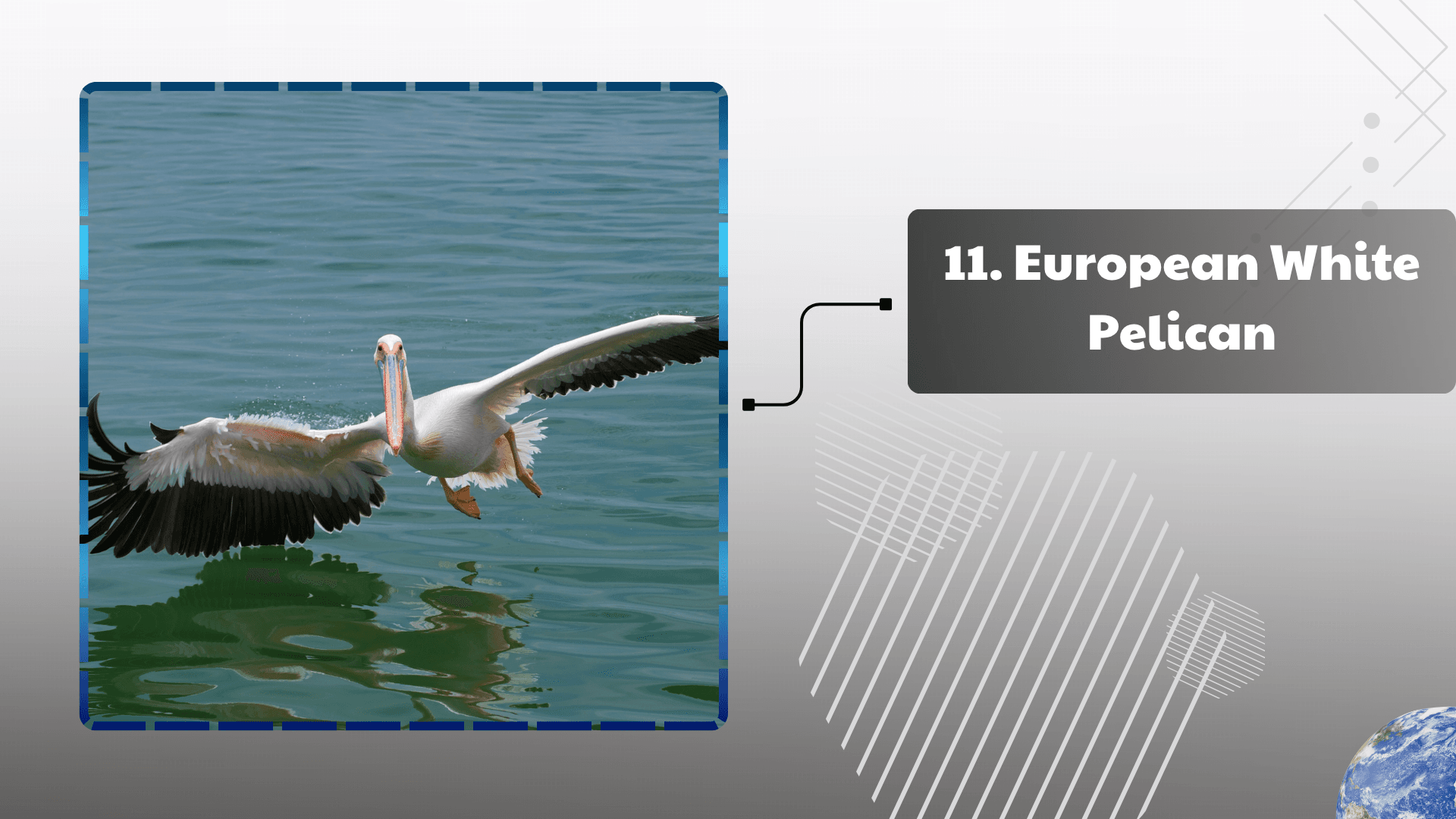
The European White Pelican is one of the most well-known Old World types of Pelican, found across southeastern Europe, parts of Asia, and into the eastern Mediterranean region. It is closely related to the Great White Pelican but is often used in regional classification based on habitat distribution.
This species is highly social and typically breeds in large colonies on lakes, river deltas, and protected wetlands. Its bright white plumage and enormous yellow bill make it easy to identify, especially during flight when its broad wingspan becomes fully visible.
European White Pelicans are cooperative feeders, often working in groups to herd fish into shallow water. This teamwork significantly increases hunting success and is one of their most fascinating behavioral traits.
12. African White Pelican
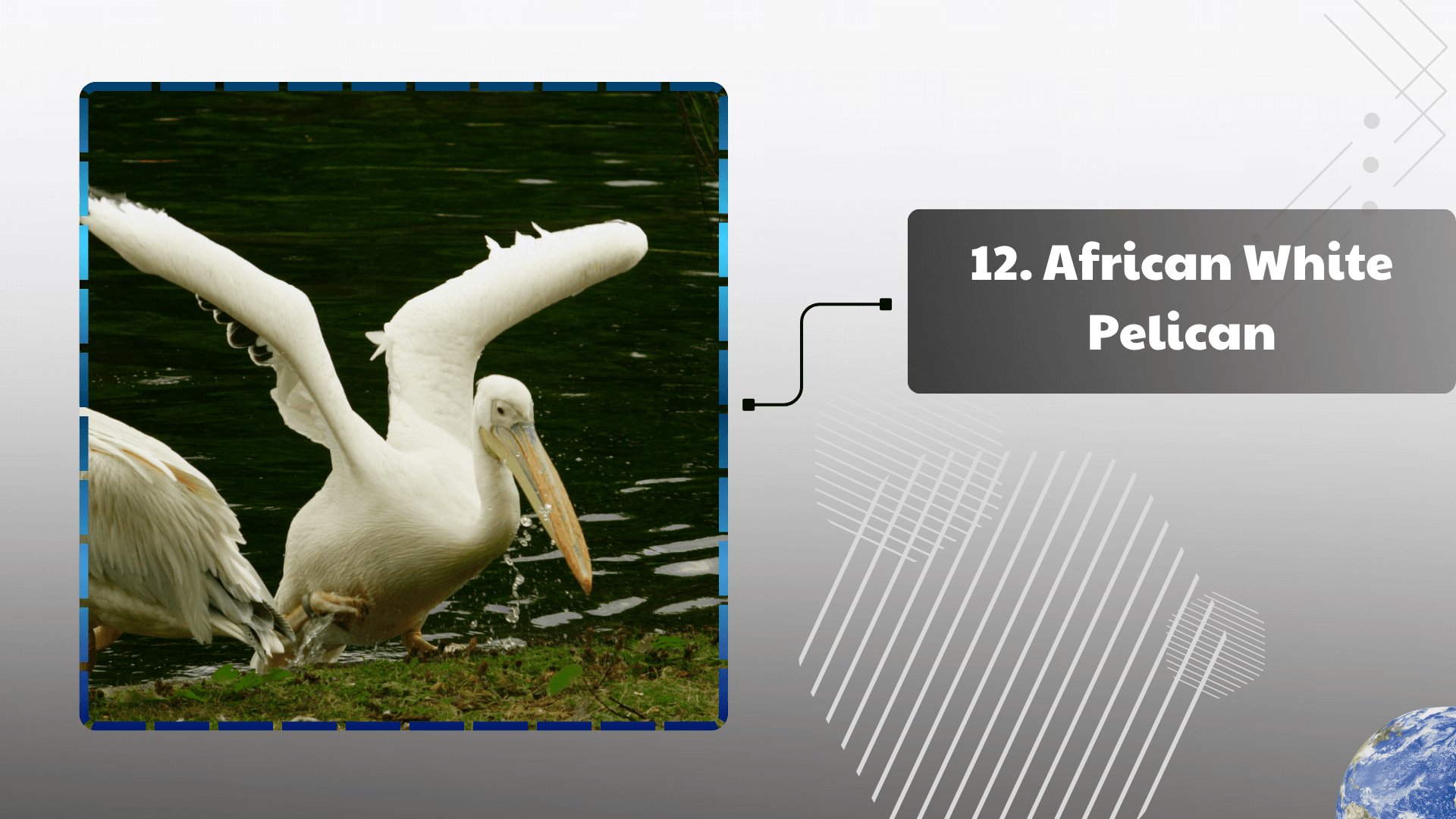
The African White Pelican is one of the most widespread types of Pelican across Africa. It closely resembles other white pelican species but is adapted to diverse African freshwater and coastal environments.
It is commonly found in large inland lakes, marshes, and river basins, especially in regions like East and West Africa. These pelicans often form massive colonies that include thousands of breeding pairs.
They are strong cooperative hunters, using synchronized movements to trap fish in shallow waters. Their ability to adapt to seasonal water changes makes them highly resilient in fluctuating environments.
13. Indian Spot-billed Pelican
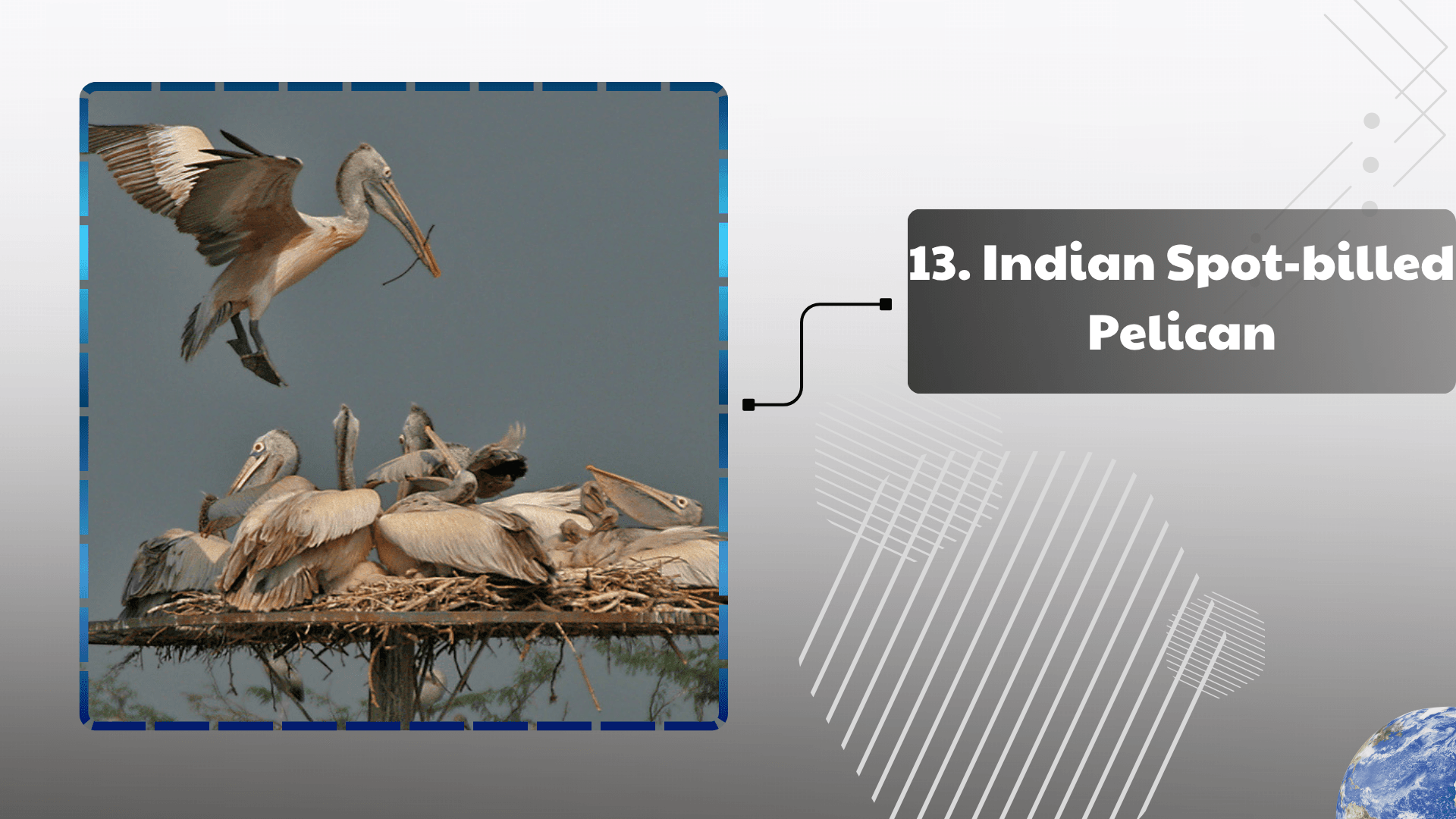
The Indian Spot-billed Pelican is one of the most distinctive Asian types of Pelican, known for the speckled markings on its large bill. It is native to the Indian subcontinent and parts of Southeast Asia.
This species prefers freshwater lakes, large reservoirs, and wetland ecosystems with abundant fish populations. It is often seen nesting in colonies located in trees near water bodies.
The Indian Spot-billed Pelican is a strong swimmer and efficient hunter, feeding primarily on fish caught in shallow waters. Habitat loss remains one of its major conservation challenges.
14. West African Pink-backed Pelican
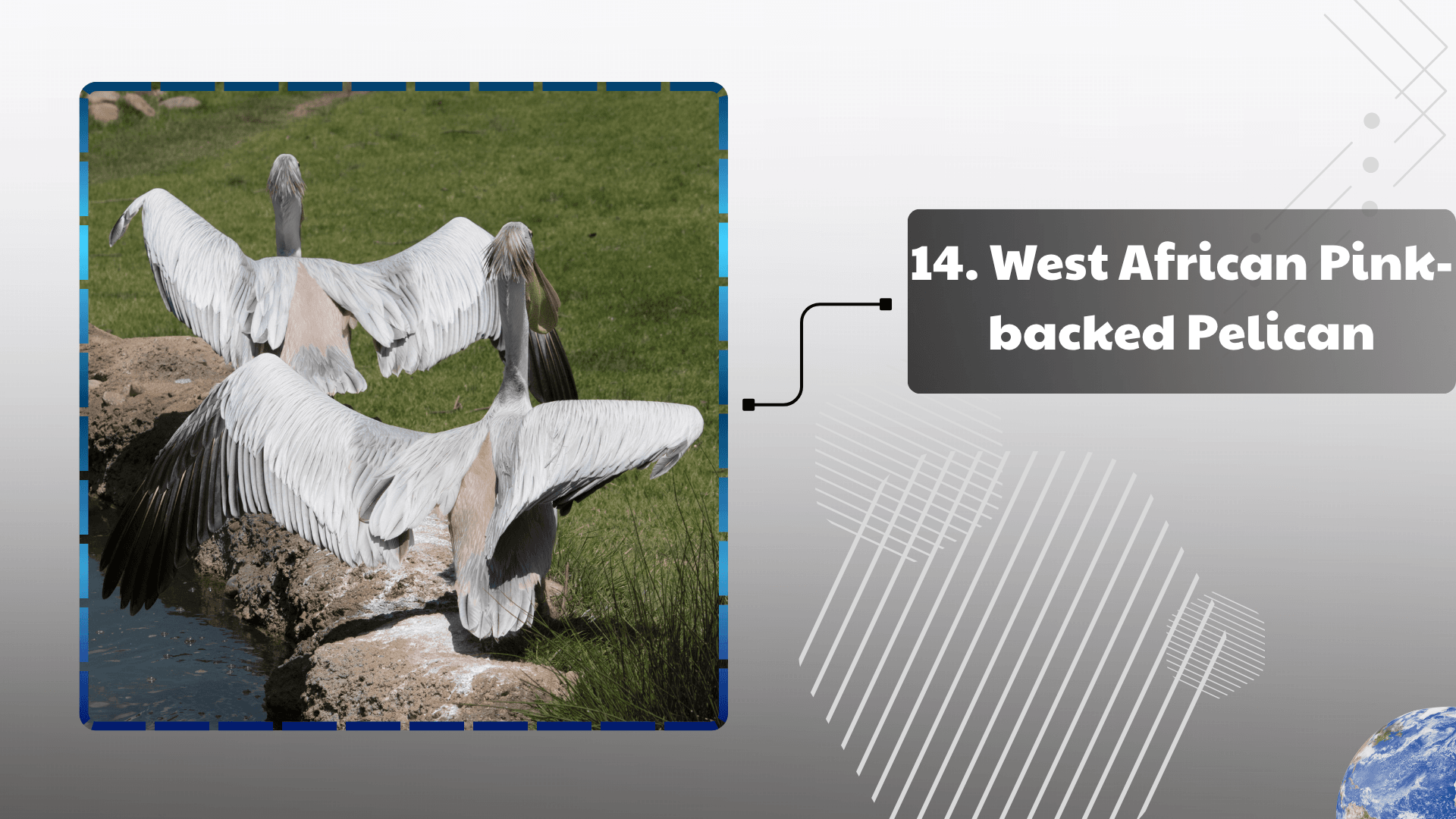
The West African Pink-backed Pelican is a regional form of the Pink-backed Pelican and one of the more specialized types of Pelican found in sub-Saharan Africa.
It inhabits wetlands, lagoons, and slow-moving rivers, often preferring quieter aquatic environments compared to larger pelican species. During breeding season, its back feathers may develop a soft pink hue.
This species is relatively smaller and more agile, often feeding in smaller groups. It can also perch in trees, which is uncommon among larger pelican species.
15. South American Brown Pelican
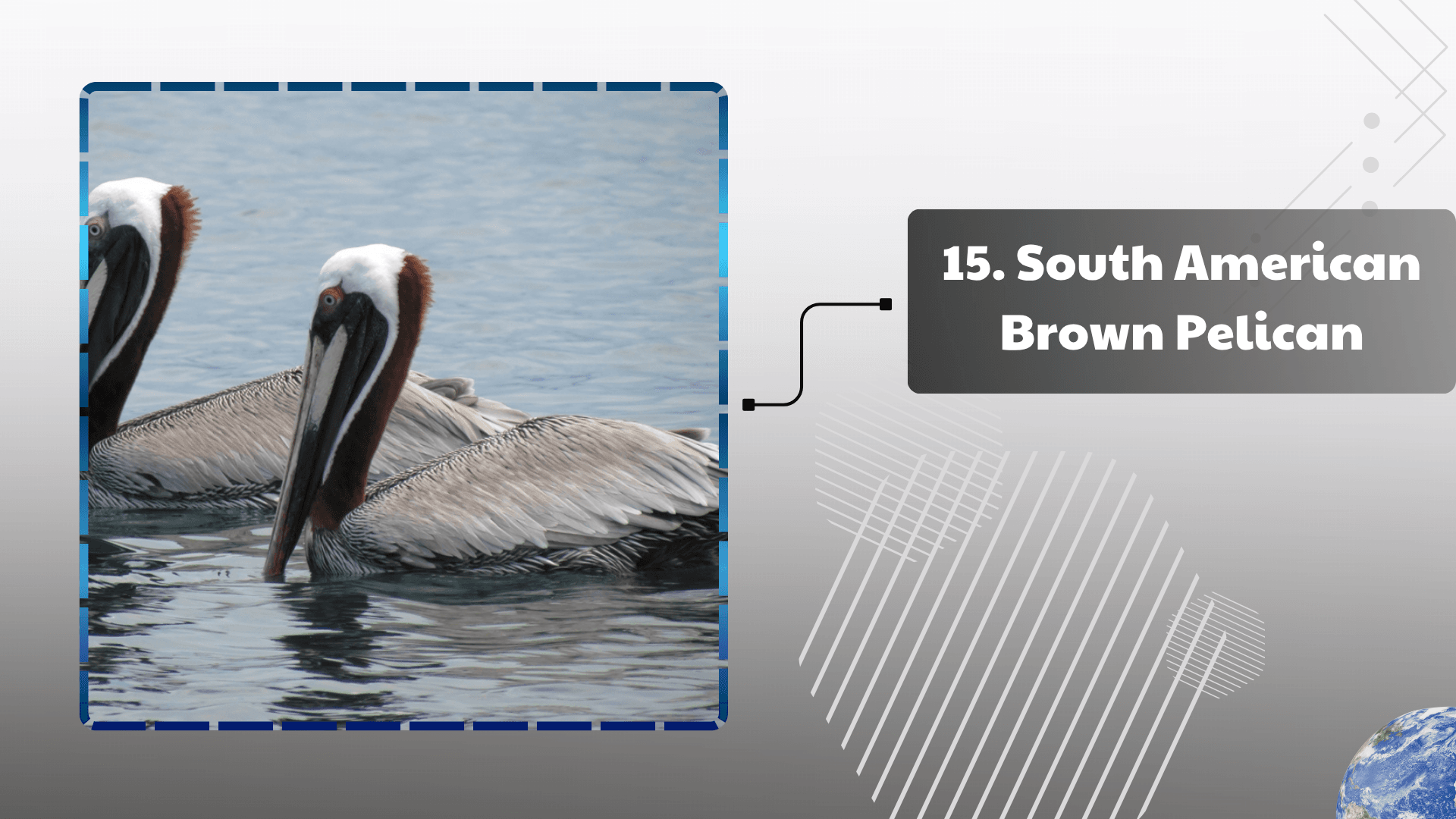
The South American Brown Pelican is a regional population of the Brown Pelican and represents one of the most widespread coastal types of Pelican along the Pacific and Atlantic coasts of South America.
It is famous for its dramatic plunge-diving hunting style, where it dives from the air directly into the ocean to capture fish near the surface. This behavior makes it one of the most dynamic seabirds in coastal ecosystems.
This pelican is commonly found near beaches, fishing harbors, and rocky coastlines. Conservation efforts have helped stabilize its population after historical declines due to pollution and pesticide exposure.
Conclusion: Understanding the Types of Pelican
The full range of types of Pelican shows how adaptable and ecologically important these large water birds are across the world. From inland lake specialists like the Dalmatian Pelican to ocean-diving species like the Brown Pelican, each type has evolved unique feeding strategies, behaviors, and habitat preferences.
Pelicans play a crucial role in maintaining healthy aquatic ecosystems by regulating fish populations and supporting biodiversity in wetlands, rivers, and coastal environments. Their cooperative feeding behavior, massive wingspans, and striking appearance make them one of the most iconic bird groups in nature.
Protecting pelican habitats is essential for preserving wetland ecosystems worldwide. As human activity continues to affect coastal and freshwater environments, how can we better protect these remarkable birds for future generations?
50+ FAQs About Pelicans (Types, Behavior, Habitat & Identification)
1. What are pelicans?
Pelicans are large water birds belonging to the family Pelecanidae. They are best known for their long beaks and expandable throat pouches used for catching fish. Pelicans are strong swimmers and excellent flyers, often seen gliding over lakes, rivers, and coastal waters in search of food.
2. How many types of pelicans exist?
There are 8 officially recognized pelican species in the world, but when regional populations and variations are included, references often expand this to around 15 “types of pelican.” These include species such as the Brown Pelican, Great White Pelican, Dalmatian Pelican, and Australian Pelican.
3. Where do pelicans live?
Pelicans are found on every continent except Antarctica. They live in coastal areas, inland lakes, rivers, estuaries, and wetlands. Each species has adapted to specific environments, ranging from tropical coasts to cold freshwater lakes.
4. What do pelicans eat?
Pelicans mainly eat fish, but their diet can also include crustaceans and small aquatic animals. They use their large throat pouch to scoop up prey from the water, then drain the water before swallowing the food.
5. How do pelicans catch fish?
Most pelicans catch fish by dipping their bill into the water and scooping up prey. Some species, like the Brown Pelican, perform dramatic plunge-dives from the air to capture fish near the surface.
6. Why do pelicans have a throat pouch?
The throat pouch acts like a fishing net. It helps pelicans catch multiple fish at once while filtering out water. This adaptation makes them highly efficient aquatic hunters.
7. Are pelicans dangerous to humans?
No, pelicans are not dangerous to humans. They are calm, non-aggressive birds. They may approach fishing areas, but they do not attack people and generally avoid direct interaction.
8. Can pelicans fly long distances?
Yes, pelicans are strong long-distance flyers. Some species migrate seasonally between breeding and feeding grounds. They use thermal air currents to glide efficiently and conserve energy during flight.
9. How big are pelicans?
Pelicans are among the largest flying birds. Their wingspans can reach up to 3.5 meters depending on the species. Body size varies, with larger species like the Dalmatian Pelican being among the heaviest.
10. What is the largest pelican species?
The Dalmatian Pelican is generally considered the largest pelican species in terms of weight and wingspan. It is a powerful bird adapted to freshwater lakes and wetlands in Europe and Asia.
11. What is the smallest pelican species?
The Brown Pelican is one of the smallest pelican species. Despite being “small” relative to others, it is still a large seabird with impressive diving abilities.
12. Do pelicans live in groups?
Yes, most pelicans are highly social birds. They often form colonies for breeding and may hunt cooperatively. Group living helps them increase feeding efficiency and protect against predators.
13. Why do pelicans hunt together?
Some pelican species, like the American White Pelican, hunt in groups to herd fish into shallow water. This cooperative behavior increases the chances of successful feeding for the entire group.
14. Do all pelicans dive for fish?
No, not all pelicans dive. The Brown Pelican is known for diving, while most other species feed by scooping fish from the water surface in shallow areas.
15. How long do pelicans live?
Pelicans typically live between 15 and 30 years in the wild, depending on species and environmental conditions. In protected environments, they may live even longer due to reduced threats.
16. Where do pelicans build nests?
Pelicans usually nest in colonies on islands, wetlands, or isolated coastal areas. Some species build ground nests, while others nest in trees depending on habitat.
17. How many eggs do pelicans lay?
Pelicans typically lay 1 to 3 eggs per breeding season. Both parents take part in incubating the eggs and caring for the chicks.
18. How do pelican chicks grow?
Pelican chicks are born helpless and depend on their parents for food. They are fed regurgitated fish until they are strong enough to hunt on their own.
19. Why are pelicans important to ecosystems?
Pelicans help regulate fish populations and maintain balance in aquatic ecosystems. Their presence is often an indicator of healthy wetlands and coastal environments.
20. Are pelicans endangered?
Some pelican species are threatened due to habitat loss, pollution, and climate change. However, many populations are stable thanks to conservation efforts.
21. What threats do pelicans face?
Major threats include habitat destruction, water pollution, overfishing, and disturbance of nesting sites. Oil spills also heavily impact coastal pelican populations.
22. Can pelicans swim?
Yes, pelicans are strong swimmers. They use their webbed feet to move through water efficiently while searching for food or resting on lakes and rivers.
23. Why do pelicans float on water?
Pelicans have lightweight bones and air sacs that help them float easily on water surfaces while resting or waiting for feeding opportunities.
24. How fast do pelicans fly?
Pelicans can fly at speeds of around 40–60 km/h depending on wind conditions. They often glide using air currents to conserve energy.
25. Do pelicans migrate?
Yes, many pelican species migrate seasonally to find food and suitable breeding environments. Migration distances vary by species and region.
26. Why do pelicans open their beaks?
Pelicans open their beaks to scoop water and fish, regulate temperature, and sometimes during social displays or communication.
27. Do pelicans fight each other?
Pelicans may show mild competition during feeding or nesting, but serious fights are rare. Most conflicts are resolved through display behaviors.
28. Are pelicans good fishermen?
Yes, pelicans are extremely efficient hunters. Their specialized bills and cooperative behaviors make them highly successful at catching fish.
29. Can pelicans survive in freshwater?
Yes, many species live in freshwater lakes and rivers. Species like the Dalmatian and Great White Pelican prefer inland waters during breeding seasons.
30. Do pelicans sleep on water?
Pelicans often rest on water surfaces, especially in calm conditions. They may also sleep on land or perched on sandbanks or trees depending on species.
31. Why do pelicans sometimes perch in trees?
Some species, like the Pink-backed Pelican, perch in trees for nesting and resting, which helps them avoid ground predators.
32. How do pelicans communicate?
Pelicans use vocal sounds, body movements, and visual displays such as bill clapping and head movements to communicate.
33. Can pelicans recognize humans?
Pelicans may become accustomed to human presence, especially in fishing areas, but they do not form strong individual recognition like mammals.
34. Do pelicans steal fish?
Pelicans may opportunistically take fish from fishing nets or near human activity, but they do not actively “steal” in a behavioral sense.
35. What time of day do pelicans hunt?
Pelicans are most active during daylight hours, especially early morning and late afternoon when fish are closer to the surface.
36. Why are pelicans important for tourism?
Pelicans attract birdwatchers and eco-tourists due to their size, beauty, and unique feeding behavior, supporting local wildlife tourism economies.
37. Are pelicans noisy birds?
Pelicans are generally quiet compared to other seabirds, but they may produce grunts or low vocal sounds during breeding or feeding.
38. Do pelicans have predators?
Adult pelicans have few natural predators, but eggs and chicks are vulnerable to gulls, raptors, and terrestrial predators.
39. Can pelicans live in cities?
Some pelicans adapt to urban coastal environments, especially near harbors and fishing areas, but they still rely on natural habitats for breeding.
40. How do pelicans clean their feathers?
Pelicans preen their feathers using their beaks to remove dirt and maintain waterproofing, which is essential for swimming and flying.
41. Why do pelicans stretch their wings?
Wing stretching helps dry feathers, regulate body temperature, and maintain muscle flexibility after swimming.
42. Do pelicans mate for life?
Most pelicans form seasonal monogamous pairs, but they do not always mate for life. Pair bonds usually last one breeding season.
43. How do pelicans choose nesting sites?
They select safe, isolated areas with low predator risk and easy access to water and food sources.
44. Can pelicans fly during storms?
Pelicans typically avoid severe storms and may seek shelter, but they are strong enough to handle moderate wind conditions.
45. Do pelicans drink water?
Pelicans obtain most moisture from fish but may drink freshwater when available, especially in hot environments.
46. How do pelicans survive winter?
Species in colder regions migrate to warmer climates where water remains unfrozen and food is available.
47. Are pelicans intelligent?
Yes, pelicans show problem-solving abilities, especially in cooperative hunting and adapting to environmental changes.
48. What makes pelicans unique?
Their massive wingspans, throat pouches, and cooperative feeding behavior make them one of the most distinctive bird groups in the world.
49. How do pelicans affect fish populations?
They help control fish populations naturally, preventing overpopulation and maintaining ecological balance in aquatic systems.
50. Why should pelicans be protected?
Pelicans are vital to wetland ecosystems and biodiversity. Protecting them also helps preserve healthy aquatic environments for many other species.
51. What is the biggest conservation challenge for pelicans today?
The biggest challenges include habitat destruction, pollution, climate change, and human disturbance of nesting and feeding areas.