

People looking up types of Scottish Fold cats usually mean ear form, coat length, or coat color. The Scottish breed group includes folded- and straight-eared cats in longhair and shorthair forms, plus many color and pattern combinations.
There is also an essential health point: the mutation that produces folded ears affects cartilage throughout the body and is associated with osteochondrodysplasia. Any guide to Scottish Folds should explain that welfare issue rather than treating the ears as a harmless style difference.
What Are the Main Types of Scottish Fold Cats?
The clearest structural groupings are Scottish Fold Shorthair, Scottish Fold Longhair, Scottish Straight Shorthair, and Scottish Straight Longhair. Within those groups, cats can be solid, tabby, bicolor, calico, tortie, smoke, shaded, pointed, and other colors accepted by specific registries.
The folded-ear phenotype is not simply cosmetic. It is linked to a cartilage mutation that can cause progressive skeletal disease.
Scottish Cat Types at a Glance
| Type | Ears | Coat | Main Note |
|---|---|---|---|
| Scottish Fold Shorthair | Folded | Short, plush | Fold mutation affects cartilage |
| Scottish Fold Longhair | Folded | Long | Same fold-related welfare concern |
| Scottish Straight Shorthair | Upright | Short | Scottish breed-group variant |
| Scottish Straight Longhair | Upright | Long | Long coat, normal ear position |
| Color/pattern variations | Folded or upright | Short or long | Many registry-recognized combinations |
1. Scottish Fold Shorthair
The shorthaired Scottish Fold has the breed’s rounded body and head with a dense, plush short coat. Its defining feature is the forward-folding ear cartilage, which is caused by a mutation that also affects cartilage elsewhere in the body.
The ear appearance may be visually appealing, but it is not merely cosmetic. The same genetic change is associated with osteochondrodysplasia and can lead to painful joint and skeletal disease.
If you already own a Scottish Fold, regular veterinary monitoring for stiffness, reluctance to jump, lameness, tail pain, or changes in movement is especially important.
2. Scottish Fold Longhair
Longhaired Scottish Folds are often called Highland Folds in informal use. They have the same folded-ear genetic issue as shorthaired Folds but carry a longer coat with more feathering around the neck, tail, and body.
The longer coat requires more grooming, especially around the hindquarters, belly, armpits, and ruff. Matting can make movement uncomfortable, which is particularly undesirable in a breed already at risk for joint pain.
Coat length does not reduce or increase the fundamental welfare issue created by the fold mutation itself.
3. Scottish Straight Shorthair
Scottish Straights are straight-eared cats born within Scottish breeding programs. TICA describes the Scottish breed group as including Fold and Straight, each in longhair and shorthair forms.
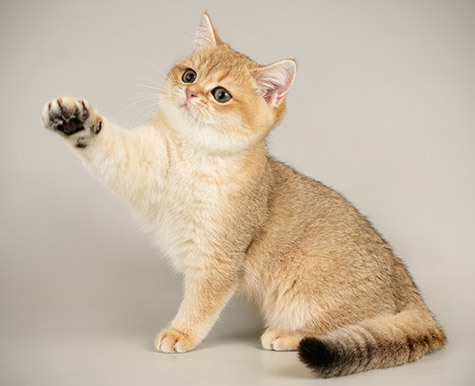
A straight-eared sibling may resemble a Fold in body shape, round face, and temperament but does not display the folded-ear phenotype. Genetic status still matters in breeding programs, so a DNA test and pedigree are more informative than visual ear shape alone.
For pet buyers seeking the general Scottish look, a straight-eared cat avoids deliberately selecting for the folded-ear appearance associated with cartilage disease.
4. Scottish Straight Longhair
The longhaired Scottish Straight combines upright ears with a longer coat. It belongs to the broader Scottish breed group in registries that recognize that structure.
Longhair requires regular combing but gives the cat a softer, fuller outline. The upright ears make the head look different from the classic Fold while retaining the rounded Scottish body type.
As with any pedigree cat, health screening and breeder practices matter more than whether the coat is long or short.
5. Solid-Color Scottish Fold
Scottish Folds and Straights can occur in many solid colors, including white, black, blue, red, cream, chocolate, lilac, cinnamon, and fawn in standards that accept them.
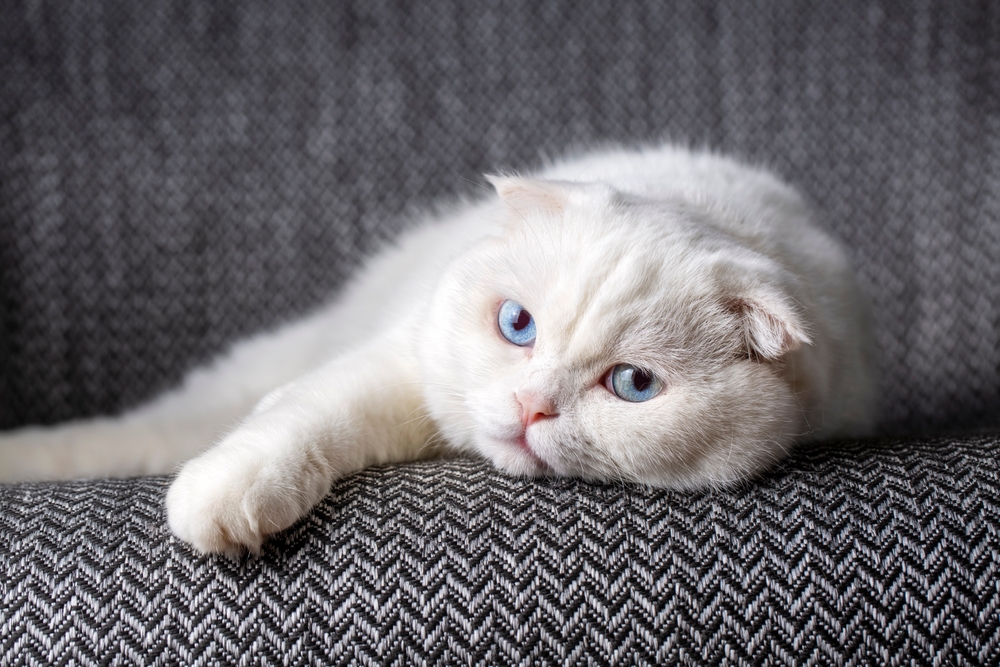
A solid-color cat should appear predominantly one color rather than displaying obvious tabby, smoke, tortie, or white-spotting patterns. Eye and nose color requirements vary by the exact shade and registry.
The coat color is independent of the fold mutation. Choosing a rare solid color does not change the skeletal health risk of a folded-ear cat.
6. Tabby Scottish Fold
Tabby Scottish cats can show classic, mackerel, spotted, ticked, or patched patterning depending on the standard. The stripes or spots often emphasize the breed’s round face and large eyes.
Tabby describes coat pattern, not ear type. A Fold or a Straight can both be tabby, and each may also be longhaired or shorthaired.
This overlapping terminology is why internet lists of “types” can be confusing: ear shape, coat length, base color, and pattern are separate traits.
7. Bicolor, Calico, and Tortoiseshell Scottish Fold
White spotting can combine with many Scottish colors and patterns. Bicolor means white plus another color or pattern, while calico combines white with black-and-red or their dilute equivalents. Tortoiseshell combines black-based and red-based pigment without the extensive white of calico.
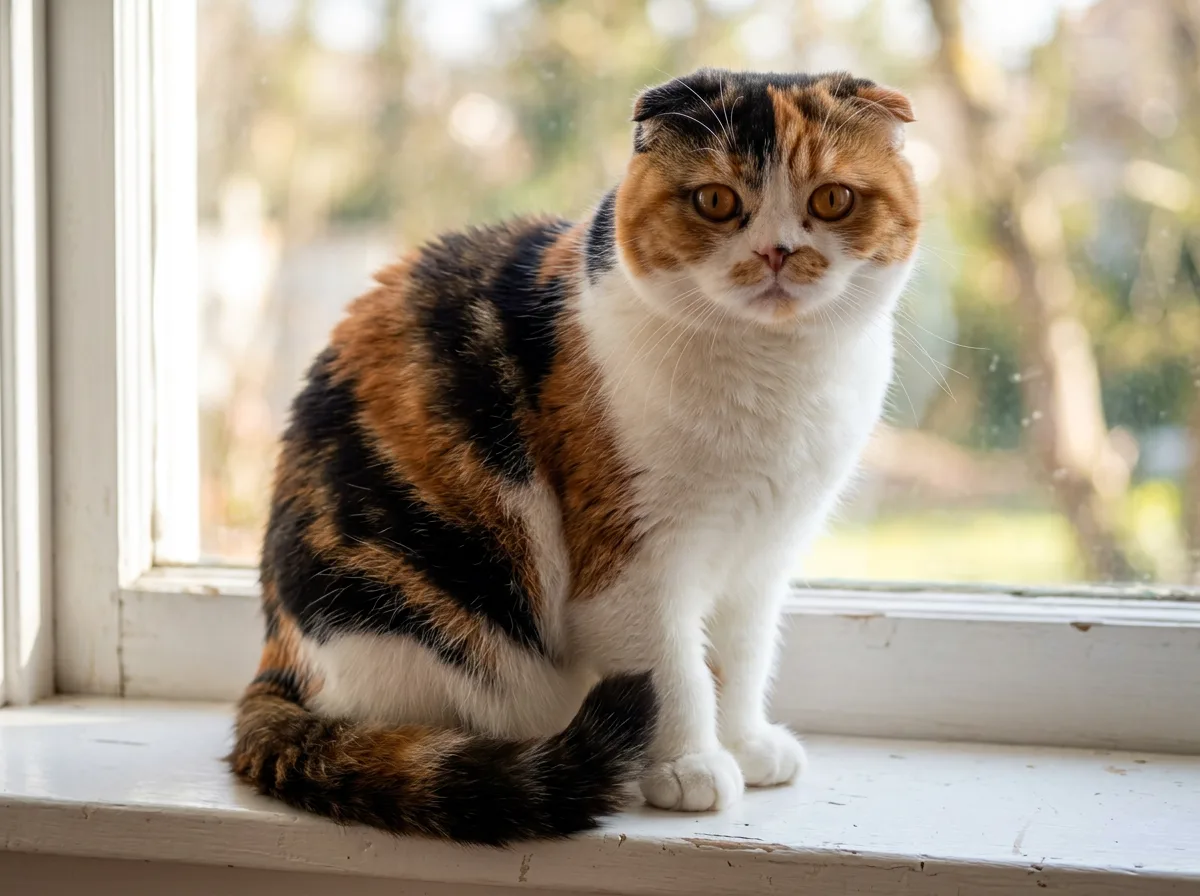
These patterns can appear in both shorthaired and longhaired cats. They are visual variations only and do not alter the welfare implications of folded ears.
Tortoiseshell and calico cats are overwhelmingly female because of sex-linked color genetics.
8. Smoke, Shaded, and Pointed Scottish Variations
Scottish cats can also occur in smoke, shaded, and pointed pattern families under registries that recognize those colors. Smoke hides a pale undercoat beneath darker fur; shaded coats concentrate pigment toward the hair tips; pointed cats have darker extremities and a lighter body.
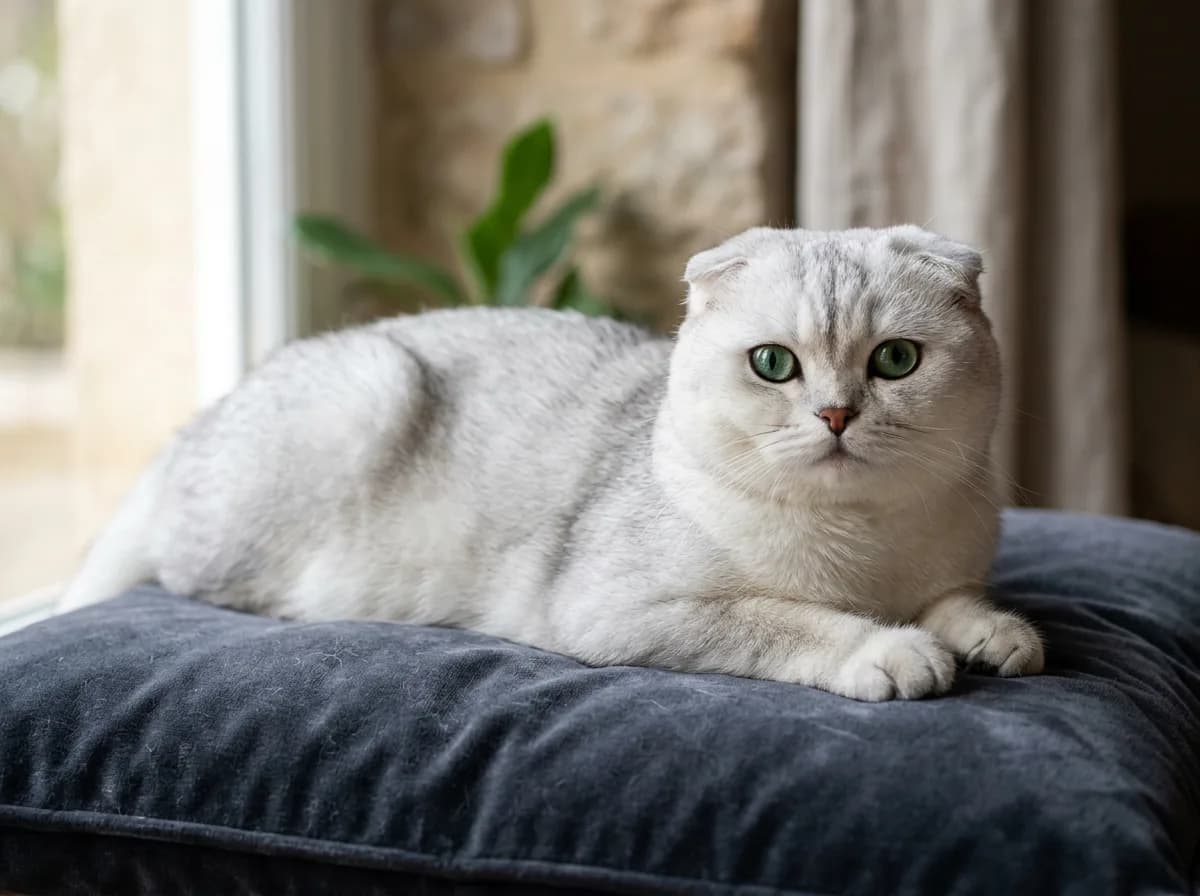
These pattern families produce a very wide range of possible looks, so a fixed number of Scottish Fold “types” is not scientifically meaningful.
If formal registration matters, use the current registry standard because accepted combinations and class names can change.
How Are Scottish Fold Types Classified?
Scottish cats can be classified along four independent axes: ear phenotype, coat length, base color, and pattern. Mixing those axes creates many combinations, which is why a simple numeric list can be misleading. Breed registries may also classify Fold and Straight varieties differently.
Where Did Scottish Fold Cats Originate?
The modern Scottish Fold traces back to a naturally occurring folded-ear farm cat discovered in Scotland in the early 1960s. Breeders selected the ear trait and developed the modern rounded type through subsequent breeding.
What was initially valued as a distinctive appearance is now understood to be a cartilage-development mutation with effects beyond the ears. That history is central to modern welfare discussions about the breed.
How to Identify Different Types of Scottish Cats
- First note whether the ears fold forward or stand upright.
- Then determine whether the coat is long or short.
- Identify the color family: solid, tabby, tortie, bicolor/calico, smoke, shaded, or pointed.
- Do not use fold tightness as a health score; severe skeletal disease cannot be judged from ear appearance alone.
- Use pedigree and, when relevant, DNA testing to understand breeding status.
Practical Care Tips for Scottish Fold Owners
- Keep body weight lean to reduce unnecessary joint load.
- Watch for reduced jumping, stiffness, abnormal gait, tail discomfort, or reluctance to play.
- Provide easy-access resting areas, litter boxes, food, and water if mobility decreases.
- Brush according to coat length and prevent mats.
- Schedule veterinary assessment promptly when mobility or pain behavior changes.
Safety, Welfare, and Responsible Ownership Notes
The fold gene is associated with Scottish Fold osteochondrodysplasia. Cats with two copies of the mutation are at especially high risk of severe disease, but even one copy can produce cartilage and joint abnormalities.
For prospective owners, welfare should take priority over the folded-ear look. For current owners, the goal is attentive monitoring, early recognition of discomfort, weight control, and veterinary pain management when needed.
Fun Facts About Scottish Cats
- Fold kittens are born with straight ears before the fold develops.
- The visible ear fold reflects a cartilage mutation, not simply soft ear leather.
- Scottish Straights can be born in the same breeding programs as Folds.
- Both Fold and Straight cats can be longhaired or shorthaired.
- The Scottish breed group can occur in many colors and patterns.
- Tabby is a coat pattern and can occur with folded or straight ears.
- Longhaired Folds are often informally called Highland Folds.
- Fold tightness can vary between cats.
- The health impact of the fold mutation can vary in age of onset and severity.
- Coat color does not reduce the skeletal risk linked to folded ears.
Final Thoughts on Types of Scottish Fold Cats
The main types of Scottish Fold cats are best understood through ear shape, coat length, and color pattern. But the most important fact is medical: folded ears result from a mutation that can also affect cartilage and joints throughout the body.
If you already share your home with a Fold, focus on comfort, lean body condition, and veterinary monitoring. If you are choosing a future cat, consider welfare before appearance.
Frequently Asked Questions
1. How many types of Scottish Fold cats are there?
There is no single official number. Scottish cats can be grouped by folded versus straight ears, longhair versus shorthair, and many colors and patterns.
2. What are the four Scottish breed-group varieties?
TICA describes Scottish Fold Longhair, Scottish Fold Shorthair, Scottish Straight Longhair, and Scottish Straight Shorthair.
3. What causes Scottish Fold ears to fold?
A mutation affecting cartilage development causes the ears to fold forward.
4. Are all Scottish Fold kittens born with folded ears?
No. Kittens are born with straight ears, and folding develops in affected kittens after the first few weeks.
5. What is a Scottish Straight?
A Scottish Straight is a straight-eared cat from the Scottish breed group. It shares the general body type but lacks the folded-ear phenotype.
6. Is a Highland Fold different from a Scottish Fold?
Highland Fold is a common informal name for the longhaired Scottish Fold.
7. Do Scottish Folds have health problems because of their ears?
Yes. The mutation responsible for the fold also affects cartilage and bone throughout the body and is associated with osteochondrodysplasia and progressive joint disease.
8. Can a Scottish Fold be healthy-looking and still have skeletal changes?
Yes. Severity and age of onset vary, and some changes may exist before obvious pain is recognized.
9. What signs of pain should owners watch for?
Stiffness, reduced jumping, lameness, reluctance to play, abnormal gait, tail discomfort, or changes in grooming and behavior warrant veterinary evaluation.
10. What colors do Scottish Folds come in?
They can occur in a very wide range of solid, tabby, tortie, bicolor, calico, smoke, shaded, and pointed combinations depending on registry rules.
11. Can Scottish Folds be longhaired?
Yes. Longhaired Folds are recognized in several registry systems.
12. Can Scottish Straights be longhaired?
Yes. Longhair and shorthair Straights can occur.
13. What is a single, double, or triple fold?
These are informal descriptions of how tightly the ears fold. They are not separate breeds and should not distract from the underlying cartilage disorder.
14. Are Scottish Folds hypoallergenic?
No. Their coat does not eliminate cat allergens.
15. Do Scottish Folds shed?
Yes. Both longhair and shorthair varieties shed.
16. How often should a Scottish Fold be brushed?
Shorthairs often need weekly brushing, while longhairs generally need more frequent combing to prevent tangles.
17. Are Scottish Folds good indoor cats?
Indoor living can protect cats from traffic, disease, and injury, but a Fold still needs veterinary monitoring, enrichment, and appropriate weight control.
18. Should a Scottish Fold be allowed to become overweight?
No. Extra body weight can add stress to joints, which is especially undesirable in a breed predisposed to cartilage and bone disease.
19. Can Scottish Folds jump normally?
Some can, especially when young, but pain and skeletal disease may reduce jumping over time. Changes in mobility should be evaluated.
20. Is the folded ear only a cosmetic trait?
No. It is a visible sign of a mutation that affects cartilage throughout the body.
21. Why is Scottish Fold breeding controversial?
Animal-welfare organizations and veterinary experts object because the desired folded-ear trait is linked directly to a painful skeletal disorder.
22. Are Scottish Folds banned in some places?
Rules vary by country and jurisdiction, and some breeding or sale restrictions exist or are proposed. Check current local law if this matters to you.
23. Do Scottish Folds need special ear cleaning?
They need routine ear checks, but excessive cleaning can irritate the ear. Ask a veterinarian for guidance if wax, odor, redness, or discharge develops.
24. Are Scottish Folds friendly?
Many are described as calm and affectionate, but temperament varies by individual and socialization.
25. Can Scottish Folds live with other pets?
Many can, with gradual introductions and compatible temperaments.
26. Does coat color affect Scottish Fold health?
The fold-related skeletal risk comes from the ear-fold mutation, not the coat color.
27. Is a straight-eared sibling free of the fold mutation?
Often straight ears indicate absence of the fold phenotype, but genetic testing is the clearest way to confirm status in a breeding context.
28. How can I identify a Scottish Fold?
Pedigree plus characteristic folded ears, round head, large eyes, and sturdy body can identify the breed, but appearance alone is not proof of registration.
29. What is the most responsible choice if I like the Scottish look?
Consider a healthy straight-eared cat or another breed without a deliberately selected cartilage disorder, and prioritize welfare over the folded-ear appearance.
30. What should current Scottish Fold owners do?
Provide attentive veterinary care, keep the cat lean, monitor mobility closely, use comfortable resources such as low-entry litter boxes if needed, and address pain promptly.