

Lemurs are some of the most fascinating primates in the world, unique to the island of Madagascar and a few surrounding islands. Known for their expressive eyes, agile movements, and diverse social behaviors, these creatures captivate wildlife enthusiasts and researchers alike. In this guide, we explore the Types of Lemurs, providing in-depth information on 30 species, their physical characteristics, habitats, behaviors, and conservation status. Whether you are a beginner in wildlife studies or an experienced naturalist, this review offers detailed insights into lemur identification and ecology, making it easier to appreciate their beauty and importance in Madagascar’s ecosystems.
1. Ring-tailed Lemur (Lemur catta)
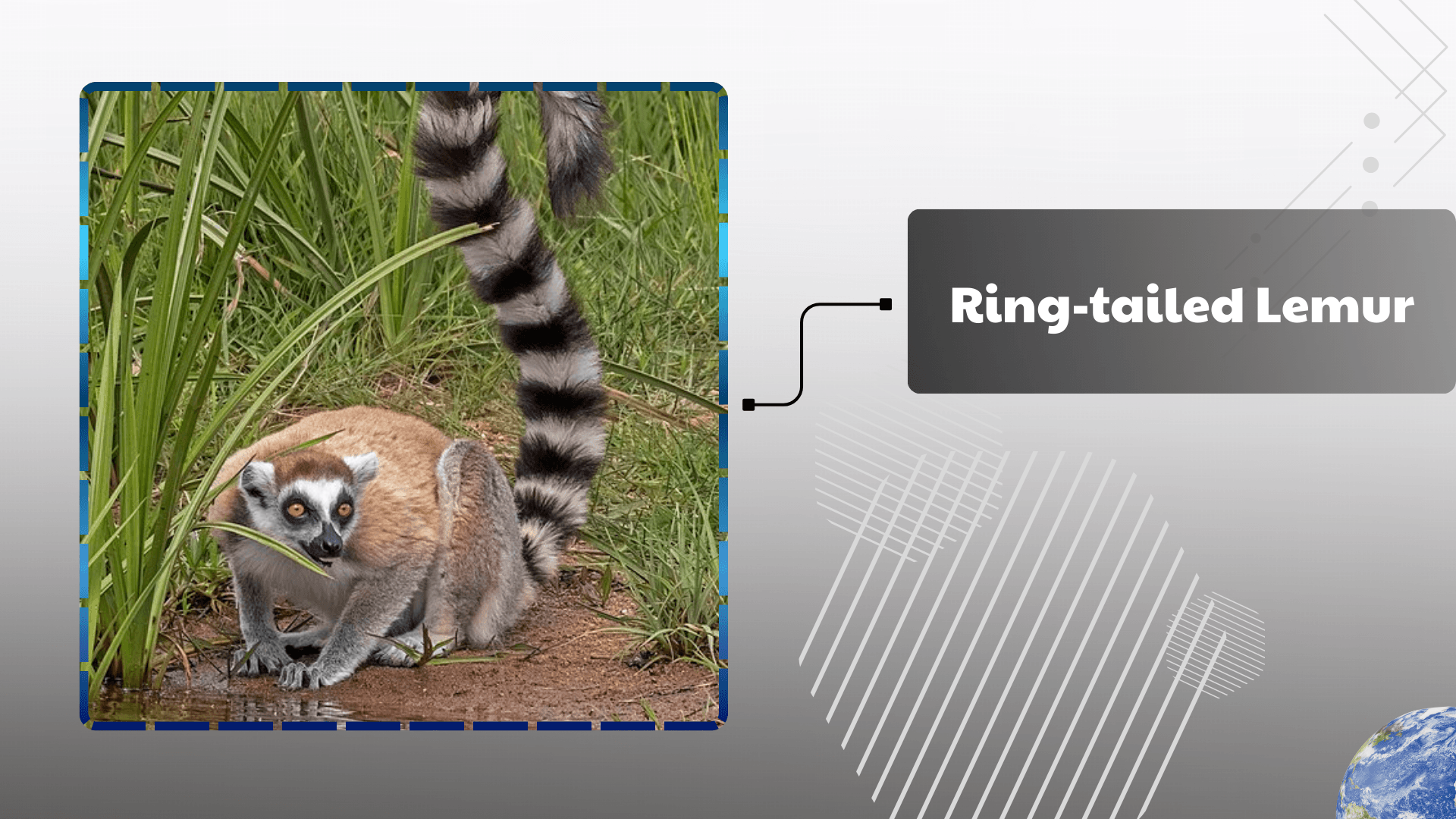
The Ring-tailed Lemur is one of the most recognizable lemur species, famous for its long black-and-white striped tail. Native to the southern and southwestern regions of Madagascar, these lemurs are highly social and live in troops of up to 30 individuals. Their diet consists mainly of fruits, leaves, flowers, and occasionally insects, which makes them primarily frugivorous but opportunistically omnivorous.
Ring-tailed Lemurs are diurnal, meaning they are active during the day, which is unusual for many lemur species that tend to be nocturnal. Their social structure is matriarchal, with females dominating over males, a rare trait among primates. Communication within the troop is achieved through vocalizations, scent marking, and body language. For example, they have “stink fights” where males rub scent glands on their tails and waft the odor at rivals during territorial disputes or mating competitions.
These lemurs are excellent climbers but spend a significant amount of time on the ground, especially when foraging. Their habitats include spiny forests, gallery forests, and scrublands. Ring-tailed Lemurs are also known for their sun-basking behavior; they sit upright with arms outstretched to absorb warmth, especially in the mornings. Despite their adaptability, habitat loss due to deforestation and human encroachment has made them vulnerable, prompting conservation efforts that focus on protecting their remaining forest habitats and maintaining sustainable ecotourism practices.
2. Red Ruffed Lemur (Varecia rubra)
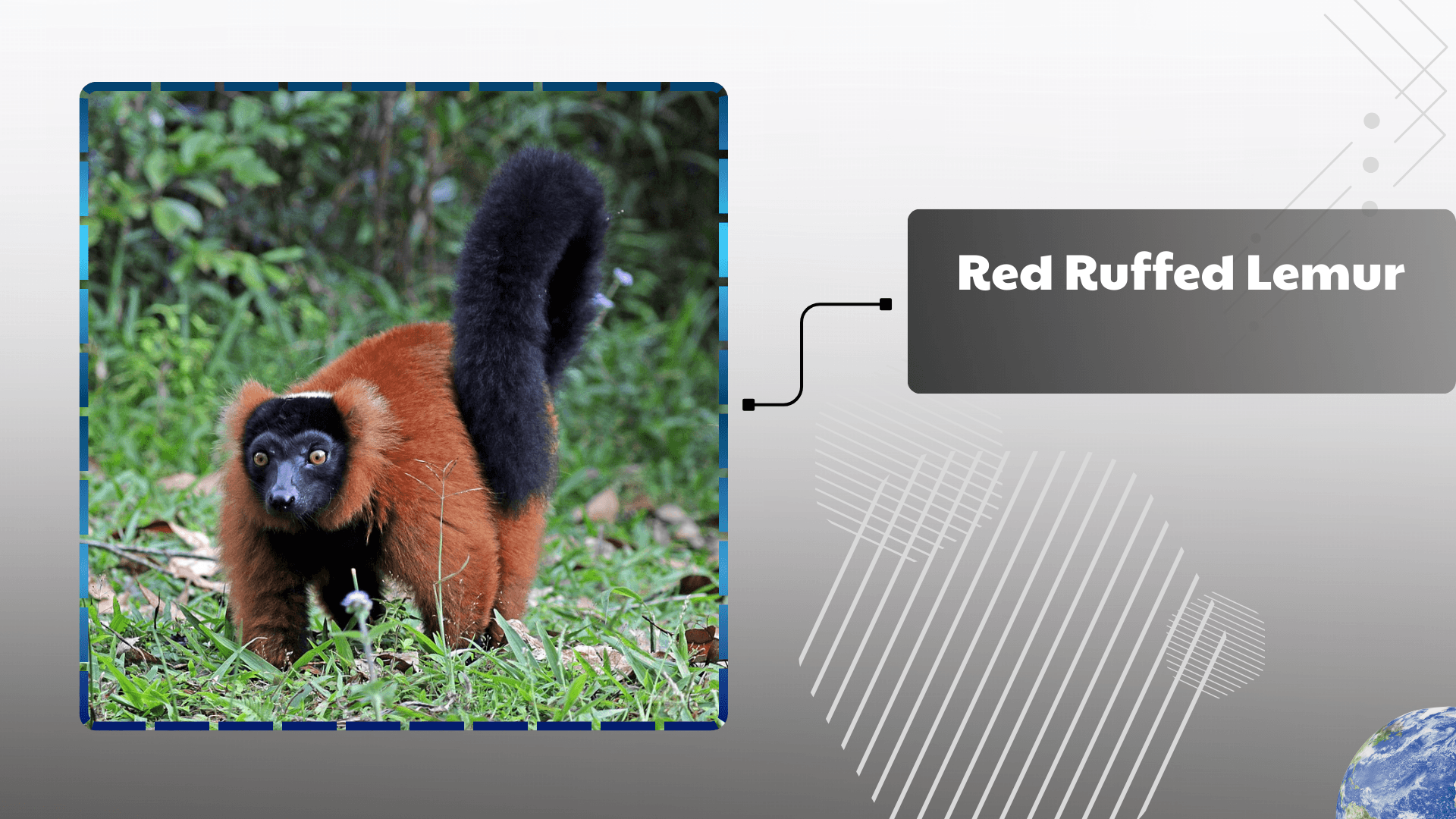
The Red Ruffed Lemur is endemic to the Masoala Peninsula in northeastern Madagascar. As one of the largest lemurs, it is notable for its vibrant red fur, black face, and tufted ears, making it striking and easily distinguishable. Red Ruffed Lemurs primarily feed on fruits but also consume nectar, leaves, and seeds, which positions them as critical seed dispersers in their rainforest ecosystem.
Red Ruffed Lemurs live in groups known as “sleeping nests” with fluid social structures that allow for dynamic interactions. They are arboreal, rarely coming down to the forest floor, and are highly active during the day. Vocalizations are particularly important for this species; their loud calls carry across the dense forest canopy to maintain contact between individuals and alert the group to potential threats. Breeding involves the construction of nests in the treetops where females rear their young communally.
Due to the limited range and ongoing habitat degradation from logging and slash-and-burn agriculture, the Red Ruffed Lemur is classified as Critically Endangered by the IUCN. Conservation programs focus on habitat restoration, legal protection, and captive breeding programs to ensure the survival of this iconic species. Observing these lemurs in their natural environment provides invaluable insights into tropical forest ecology and the importance of biodiversity preservation in Madagascar.
3. Black and White Ruffed Lemur (Varecia variegata)
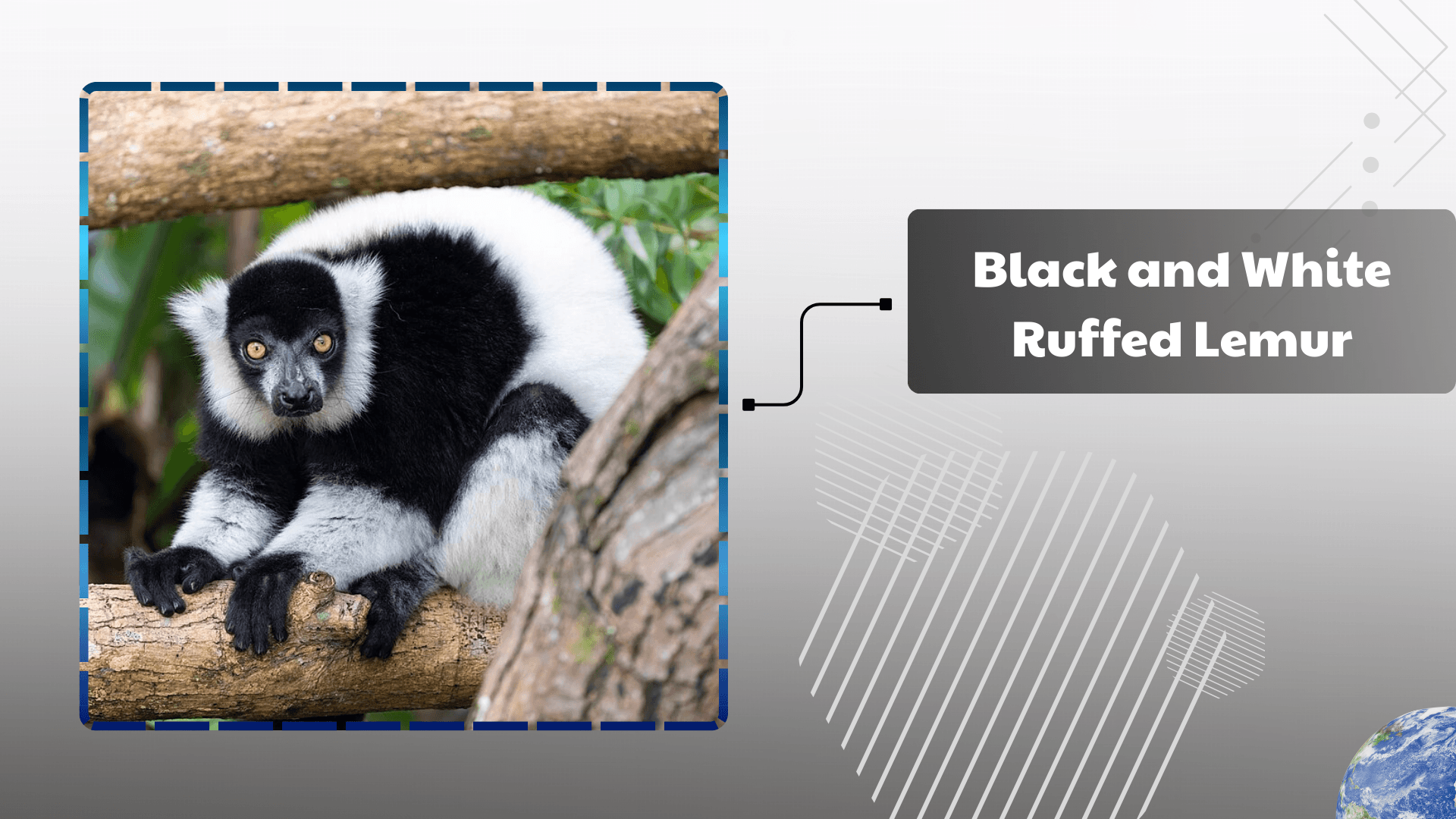
The Black and White Ruffed Lemur is distributed across the eastern rainforests of Madagascar and is notable for its contrasting black and white fur patterns. Unlike many lemurs, it exhibits a flexible social system, living in both small family groups and larger aggregations, depending on food availability and habitat density. Its diet is heavily fruit-based, and like other ruffed lemurs, it is a significant seed disperser, influencing forest regeneration and composition.
These lemurs are exclusively arboreal and rarely descend to the ground. They are highly vocal, using a complex system of calls to communicate with each other across the forest canopy. Their locomotion is adapted for leaping between trees, aided by strong hind limbs and prehensile hands and feet that help grip branches securely. Breeding is seasonal, and females give birth to litters of two to three offspring in nests located high in trees.
Black and White Ruffed Lemurs face critical threats from deforestation and hunting. Conservation efforts include the establishment of protected areas, reforestation projects, and environmental education for local communities. Their striking appearance and charismatic behavior make them a flagship species for rainforest conservation in Madagascar, highlighting the crucial connection between wildlife preservation and ecosystem health.
4. Greater Bamboo Lemur (Prolemur simus)
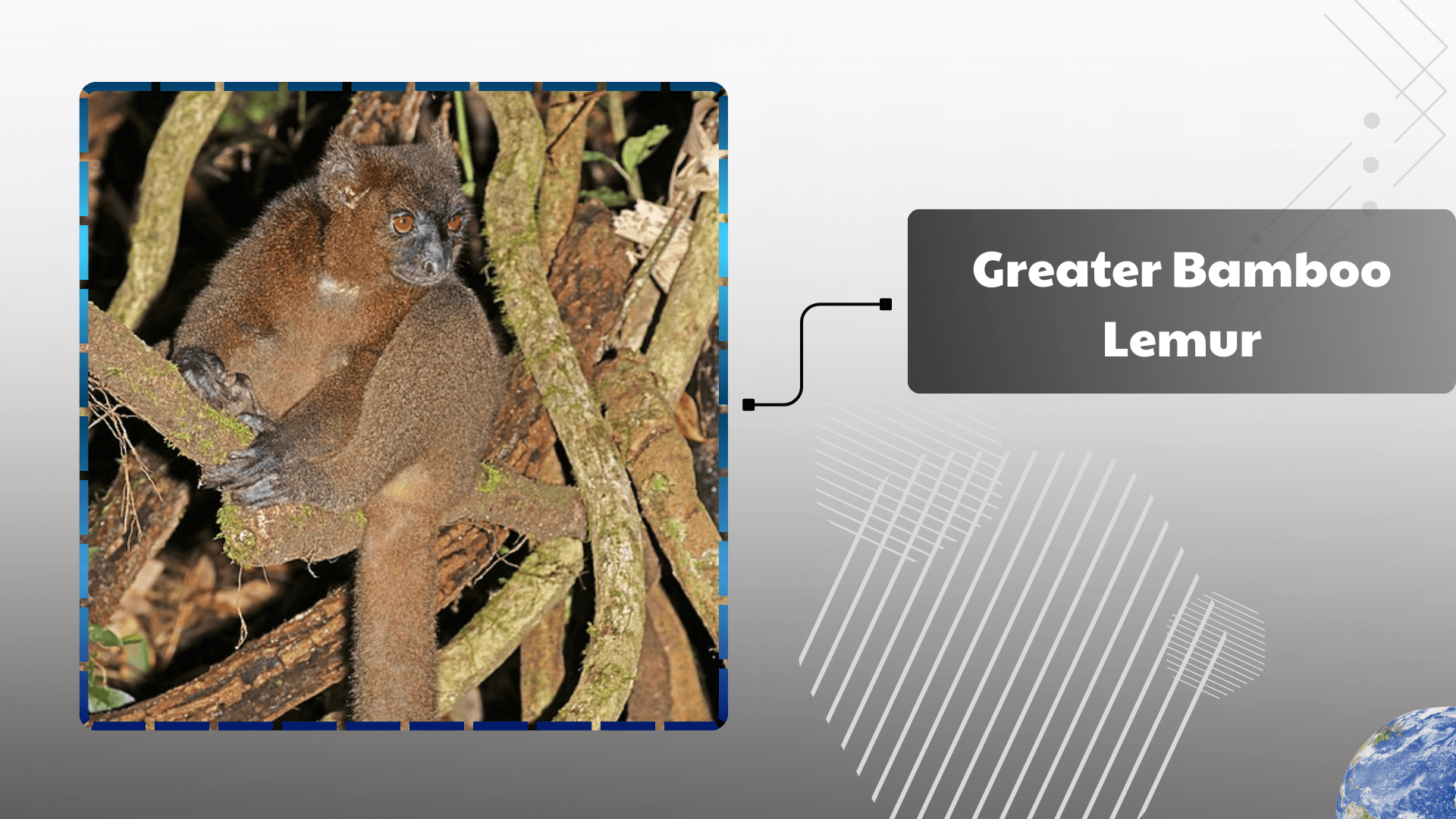
The Greater Bamboo Lemur is one of Madagascar’s rarest lemur species, primarily inhabiting the eastern rainforests. Characterized by its dense grey fur, white facial markings, and striking black limbs, this lemur is specialized in feeding on bamboo, particularly consuming the cyanide-rich species, Cephalostachyum madagascariense. This highly specialized diet makes it vulnerable to habitat changes and bamboo depletion.
These lemurs live in small family groups, usually consisting of a dominant female, several males, and offspring. They are highly arboreal, moving efficiently through the canopy in search of bamboo shoots and leaves. Their reproduction is seasonal, with females giving birth to one or two infants per year. The Greater Bamboo Lemur plays a crucial ecological role by influencing bamboo growth and providing prey for native predators.
Due to habitat loss and small population sizes, the Greater Bamboo Lemur is listed as Critically Endangered. Conservation actions include habitat protection, anti-poaching initiatives, and community involvement in forest management. Observing this species offers important lessons in dietary specialization, adaptation, and the delicate balance of rainforest ecosystems.
5. Golden Bamboo Lemur (Hapalemur aureus)
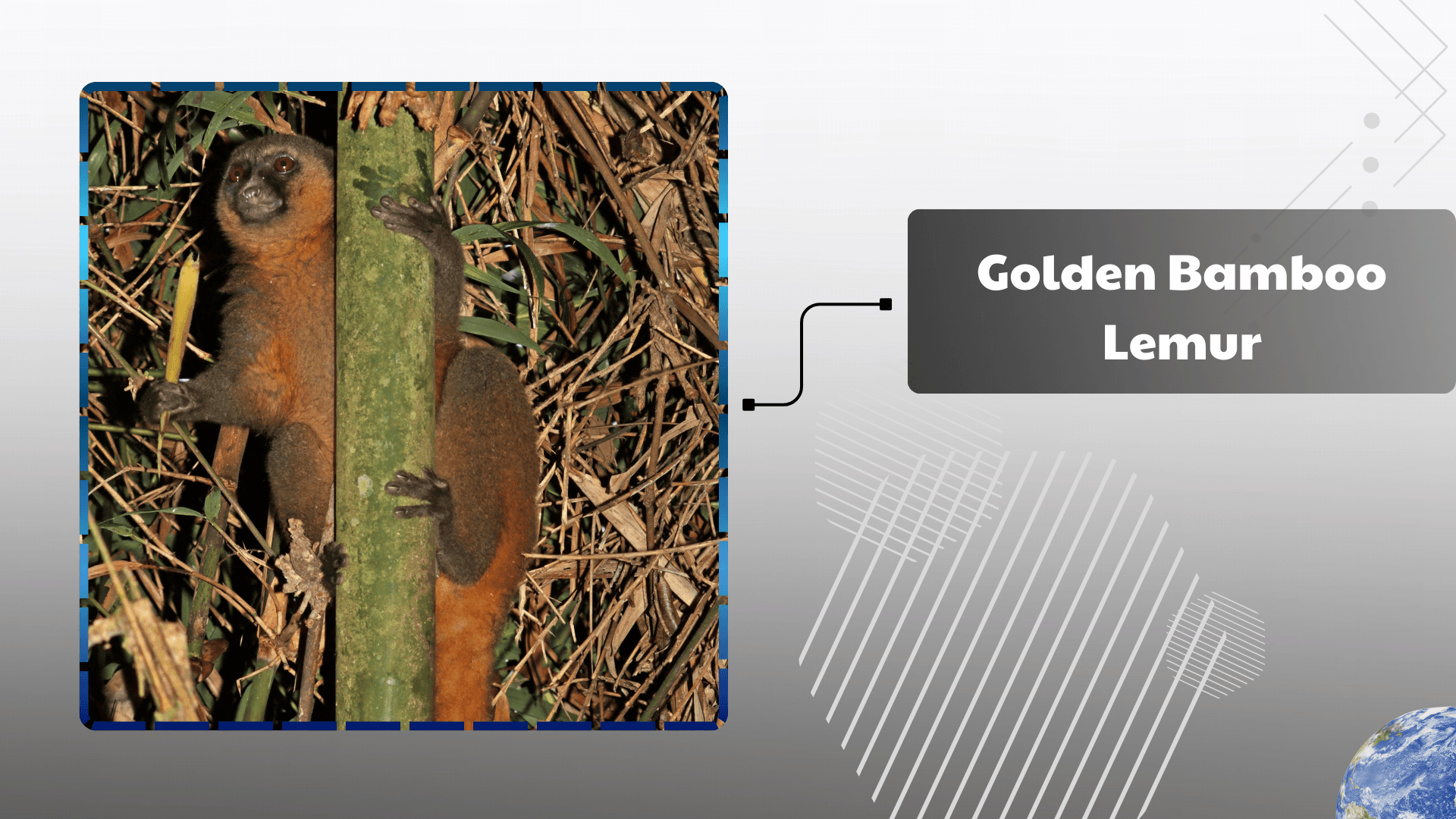
The Golden Bamboo Lemur is a medium-sized lemur found in southeastern Madagascar. It is easily recognized by its golden-orange fur and contrasting dark face. Its diet consists mainly of bamboo, similar to the Greater Bamboo Lemur, and it has evolved specialized digestive adaptations to process the cyanide-rich shoots safely. This specialization makes it highly dependent on intact bamboo forests for survival.
Golden Bamboo Lemurs live in small social groups, engaging in grooming and vocalizations to maintain cohesion. They are diurnal and arboreal, spending most of their time in the dense bamboo canopy. Reproduction occurs seasonally, and females typically give birth to one infant per year. By consuming bamboo, they aid in seed dispersal and nutrient cycling within their ecosystem.
This species is endangered due to habitat fragmentation and human activities, including agriculture and logging. Conservation efforts emphasize habitat restoration, monitoring populations, and involving local communities in sustainable forest management. The Golden Bamboo Lemur serves as a symbol of Madagascar’s unique biodiversity and the importance of protecting specialized species and their habitats.
6. Common Brown Lemur (Eulemur fulvus)
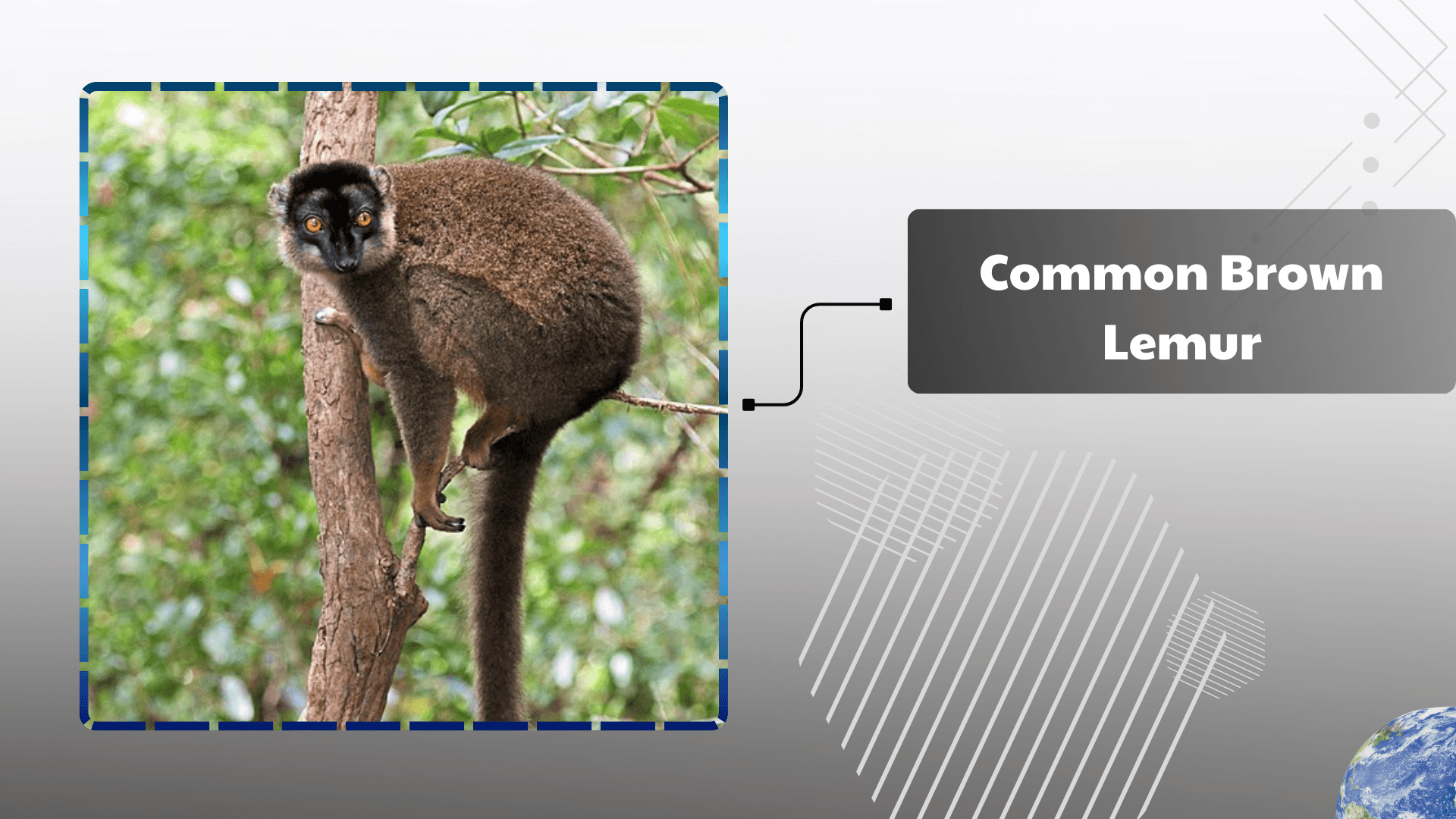
The Common Brown Lemur is a versatile primate found across Madagascar’s eastern rainforests, dry forests, and gallery forests. Sporting a coat of soft brown fur with a lighter face and distinctive dark markings around the eyes, this lemur is easily recognized yet often overlooked due to its widespread distribution. The species is omnivorous, feeding on fruits, leaves, flowers, and occasionally insects, which helps it adapt to diverse habitats. This adaptability makes it one of the most resilient lemurs, capable of surviving in areas impacted by human activities.
Common Brown Lemurs live in social groups ranging from 5 to 20 individuals, usually dominated by females. Social cohesion is maintained through grooming, vocalizations, and playful interactions. These lemurs are largely arboreal but occasionally descend to the forest floor in search of food. Their daily activity is diurnal, with peaks in the morning and late afternoon. Reproduction is seasonal, with females giving birth to one or two infants annually. Conservation of this species is linked to maintaining forest corridors and reducing human-wildlife conflict, as habitat fragmentation remains a significant threat.
7. Red-Bellied Lemur (Eulemur rubriventer)
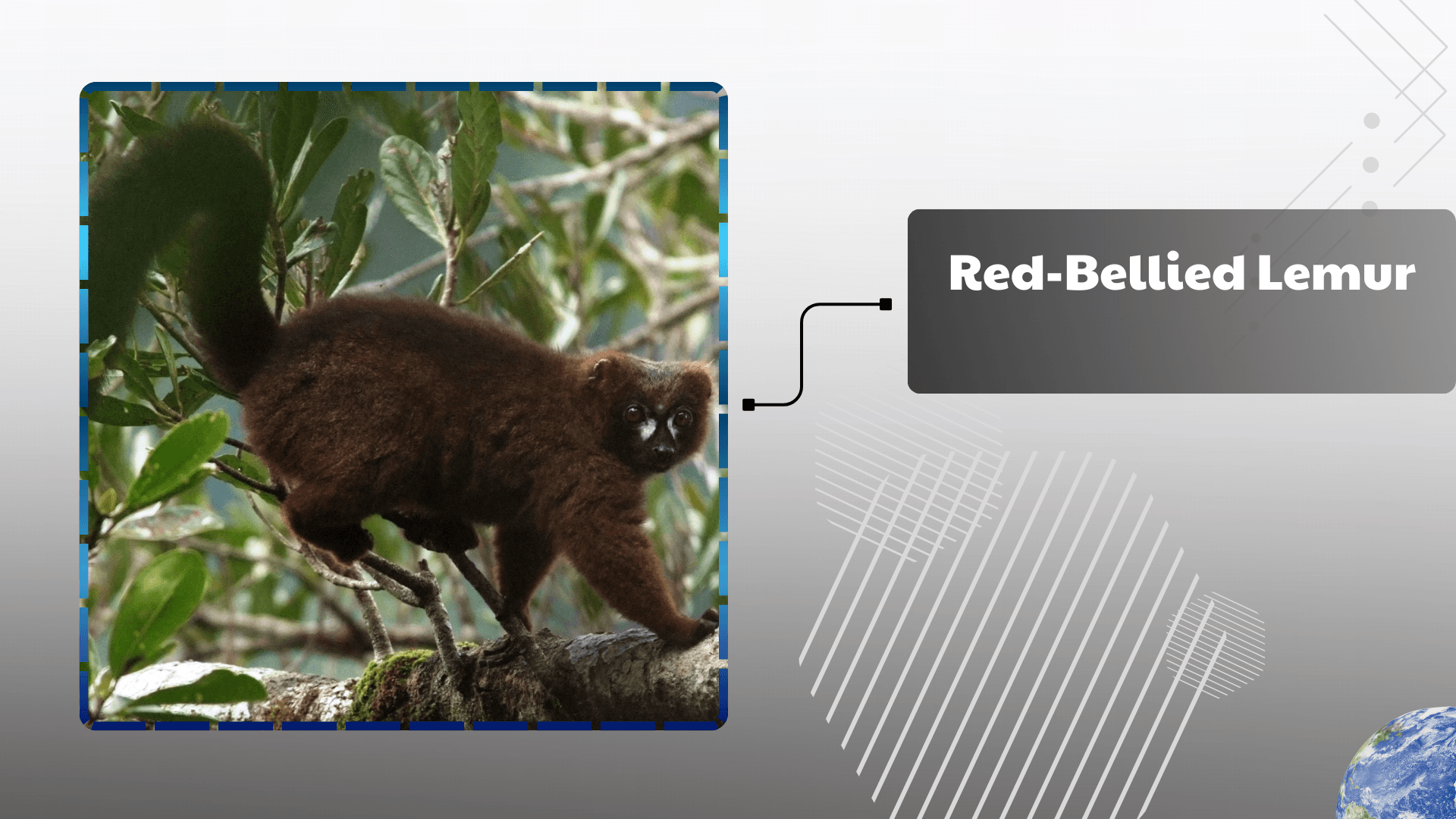
The Red-Bellied Lemur, native to the rainforests of eastern Madagascar, is characterized by a rich reddish-brown belly, grayish back, and darker face. This lemur primarily consumes fruit, supplemented by leaves, flowers, and nectar. Its feeding behavior is instrumental in seed dispersal, contributing to forest regeneration. The species is active during the day and spends most of its time in the canopy, using its strong limbs to leap between branches with precision.
Red-Bellied Lemurs live in small family groups, often consisting of a monogamous pair and their offspring. Vocal communication is crucial for maintaining group cohesion and alerting others to predators. Breeding occurs once a year, and females typically give birth to one offspring. Habitat loss due to deforestation and agriculture threatens this species, prompting conservation programs focused on preserving protected areas and restoring degraded forests. Observing Red-Bellied Lemurs highlights the intricate balance between primate behavior, diet, and forest health.
8. Blue-Eyed Black Lemur (Eulemur flavifrons)
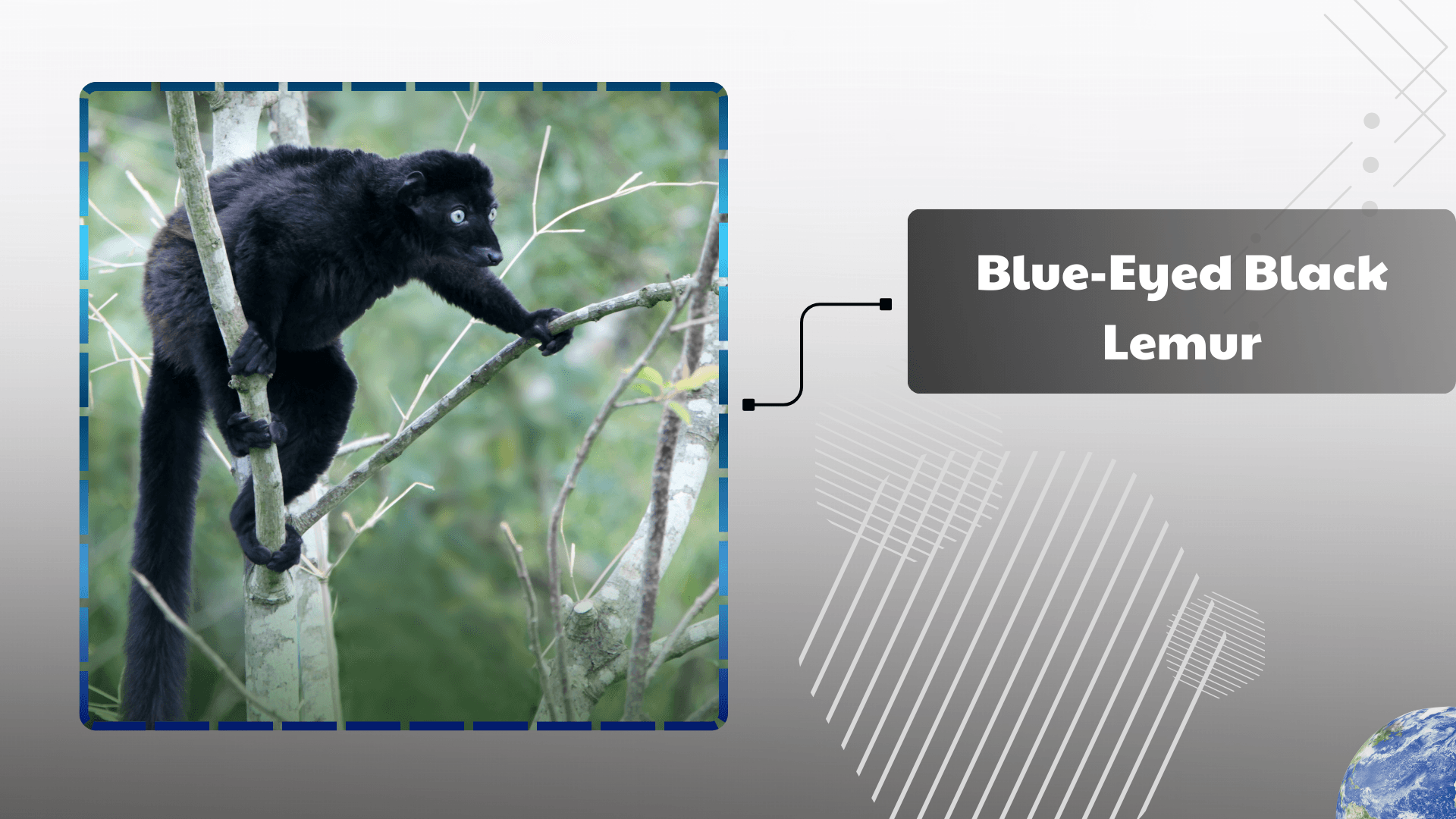
The Blue-Eyed Black Lemur is one of Madagascar’s most visually striking primates, distinguished by its jet-black fur and piercing blue eyes in males (females are brown). Found in the northwestern rainforests, this lemur is primarily frugivorous but also consumes leaves, flowers, and insects when fruit is scarce. Its role as a seed disperser is critical for the regeneration of its forest habitat.
Socially, Blue-Eyed Black Lemurs form groups of 5–15 individuals. Female dominance is a key feature of their social structure, influencing access to food and mating opportunities. These lemurs are diurnal and arboreal, spending most of their time navigating the canopy with remarkable agility. Breeding occurs annually, with females giving birth to one or two infants. Conservation challenges include habitat destruction and hunting, which have resulted in the species being classified as Critically Endangered. Protective measures include habitat preservation, community education, and legal enforcement to prevent hunting.
9. Mongoose Lemur (Eulemur mongoz)
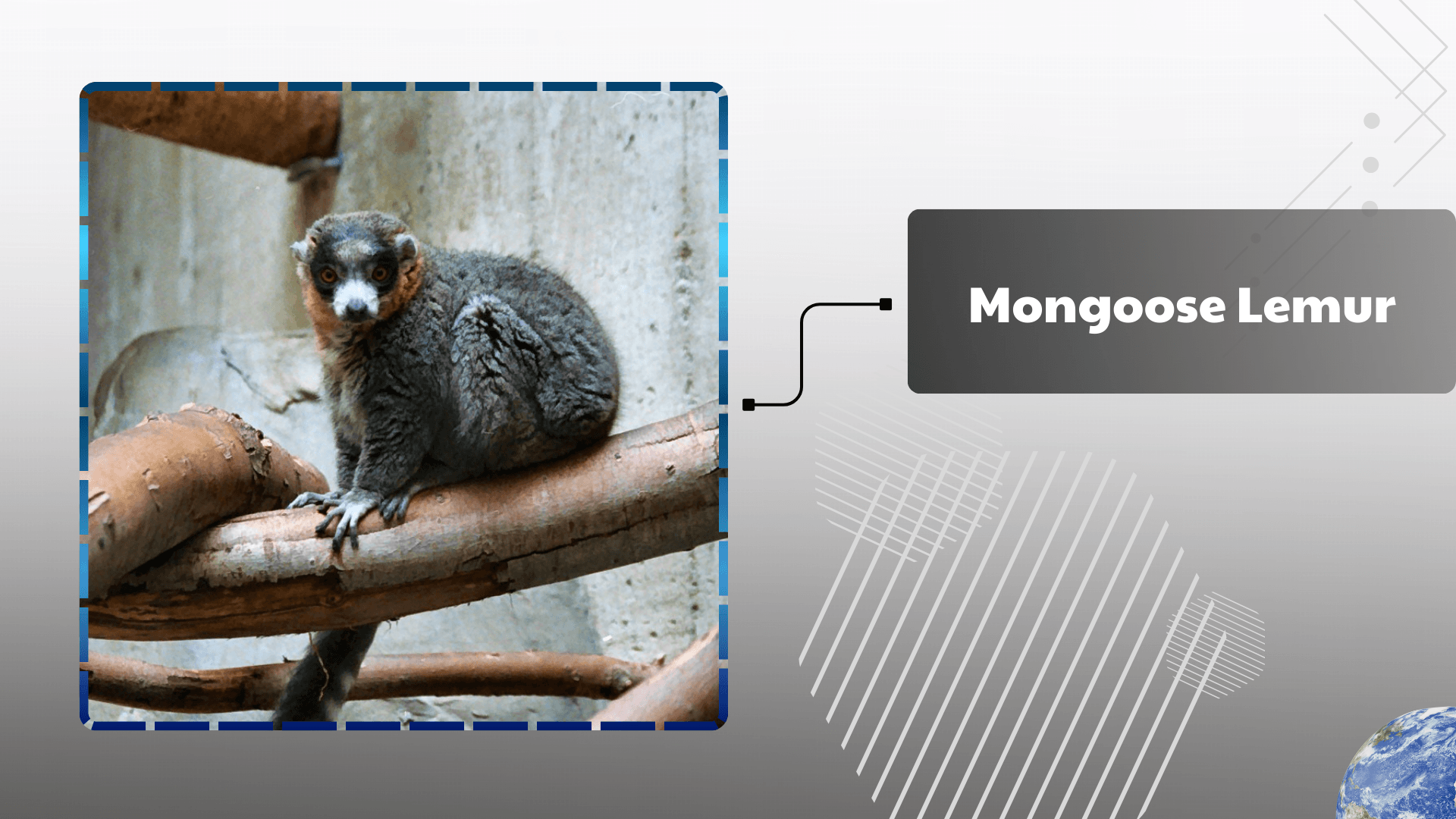
The Mongoose Lemur inhabits the dry forests of western Madagascar and the Comoros Islands. Named for its elongated body and agile movements, this lemur has a soft gray-brown coat with reddish highlights. Its diet consists of fruits, flowers, and leaves, with seasonal variations affecting its food preferences. Mongoose Lemurs are also known to feed on nectar, making them important pollinators in their ecosystem.
These lemurs live in monogamous pairs or small groups, with a strong bond between mates that lasts for multiple breeding seasons. Social grooming and vocalizations help maintain group harmony. Mongoose Lemurs are primarily arboreal but occasionally descend to forage on the forest floor. Reproduction is seasonal, and females usually give birth to one offspring per year. The species faces threats from habitat loss, hunting, and the pet trade, leading to its classification as Endangered. Conservation efforts focus on habitat protection, community involvement, and monitoring population trends.
10. Crowned Lemur (Eulemur coronatus)
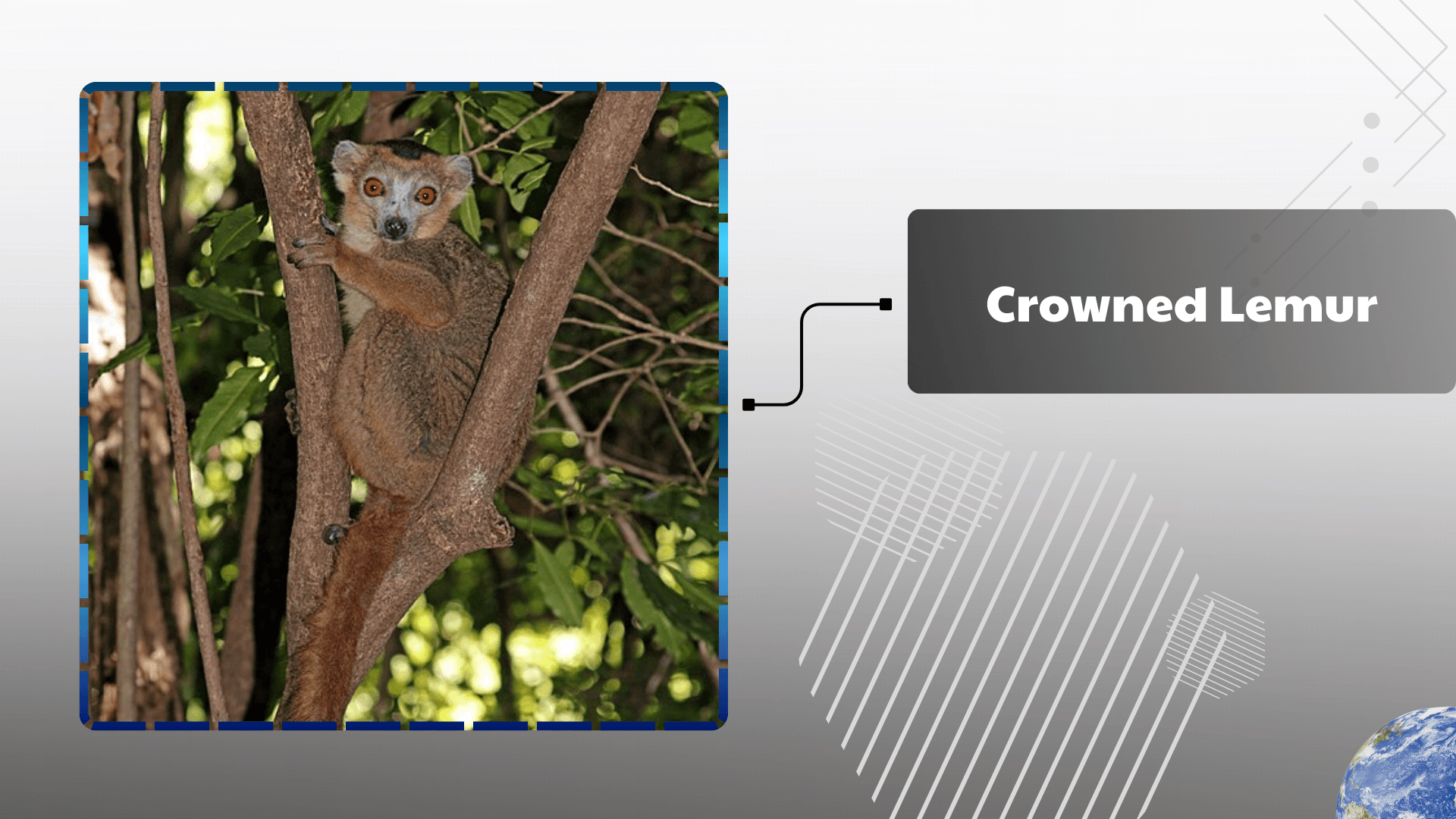
The Crowned Lemur is a striking species found in the northern forests of Madagascar. Males display a grayish body with a white “crown” of fur on the head and a black facial mask, while females are lighter in color. These lemurs are diurnal and arboreal, feeding on fruits, flowers, leaves, and occasionally insects. Their foraging behavior plays a key role in seed dispersal, helping maintain forest health.
Crowned Lemurs live in small social groups, typically 2–12 individuals, and exhibit a female-dominated hierarchy. Communication is achieved through vocalizations, scent marking, and visual cues. Breeding occurs annually, with females giving birth to one or two offspring. Habitat destruction and fragmentation, particularly due to logging and agriculture, have rendered the species vulnerable. Conservation initiatives include protected areas, reforestation projects, and community education programs to ensure the survival of this iconic lemur species.
11. Eastern Woolly Lemur (Avahi laniger)
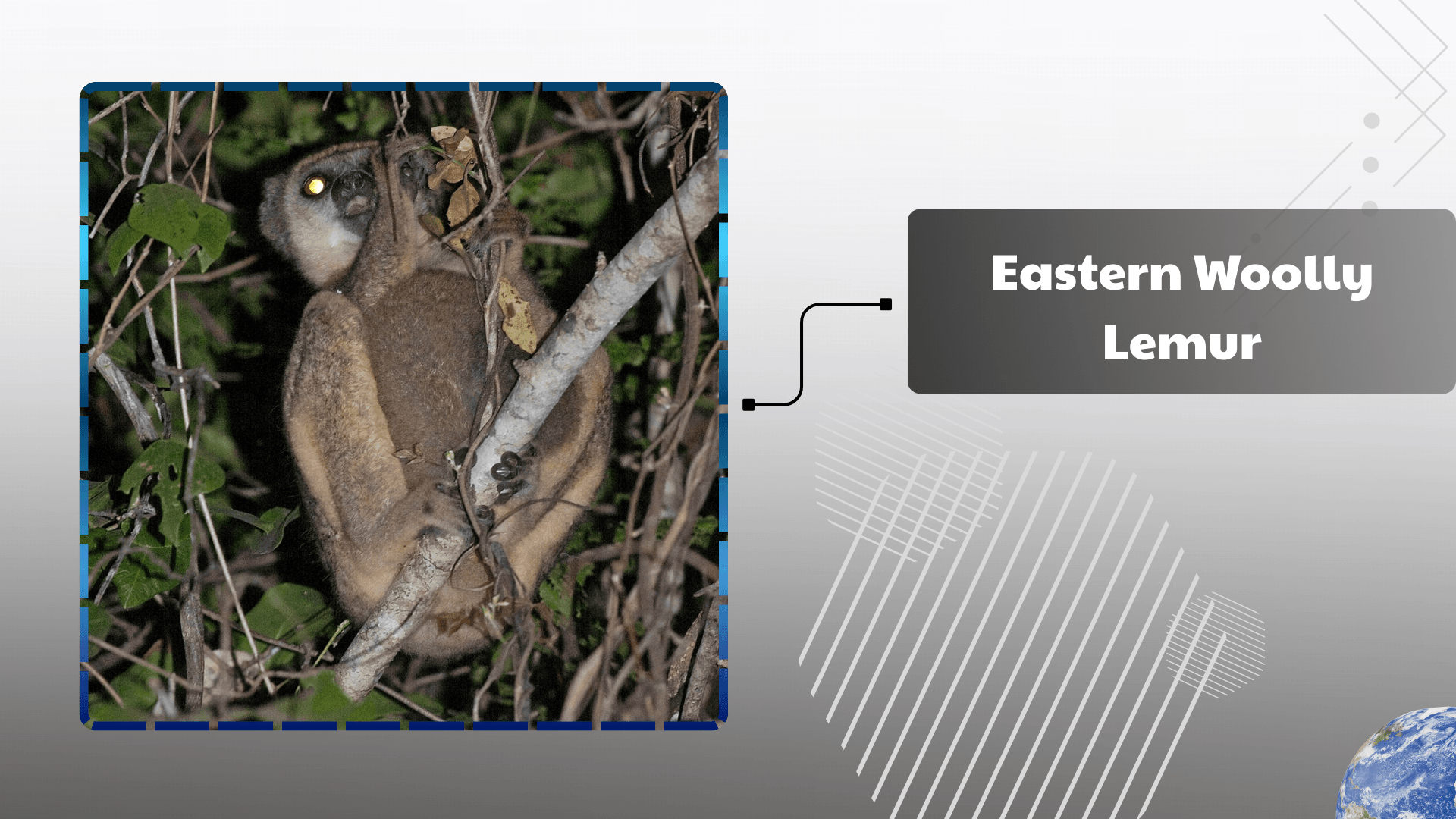
The Eastern Woolly Lemur is a nocturnal species endemic to the rainforests of eastern Madagascar. Characterized by dense, soft fur that ranges from gray to brown and a bushy tail, this lemur is adapted to a life in the canopy. Its diet primarily consists of leaves, supplemented occasionally by flowers and fruit. As a folivore, it plays a key role in maintaining the health and diversity of its forest ecosystem.
Eastern Woolly Lemurs are generally solitary but may form small family groups for breeding. They are highly arboreal, rarely descending to the forest floor, and move with slow, deliberate leaps between branches. Communication is primarily through soft vocalizations and scent markings. Reproduction occurs annually, with females giving birth to a single infant. Habitat destruction and fragmentation have made this species vulnerable, highlighting the importance of rainforest conservation. Protecting these lemurs ensures the preservation of Madagascar’s unique nocturnal biodiversity.
12. Western Woolly Lemur (Avahi occidentalis)
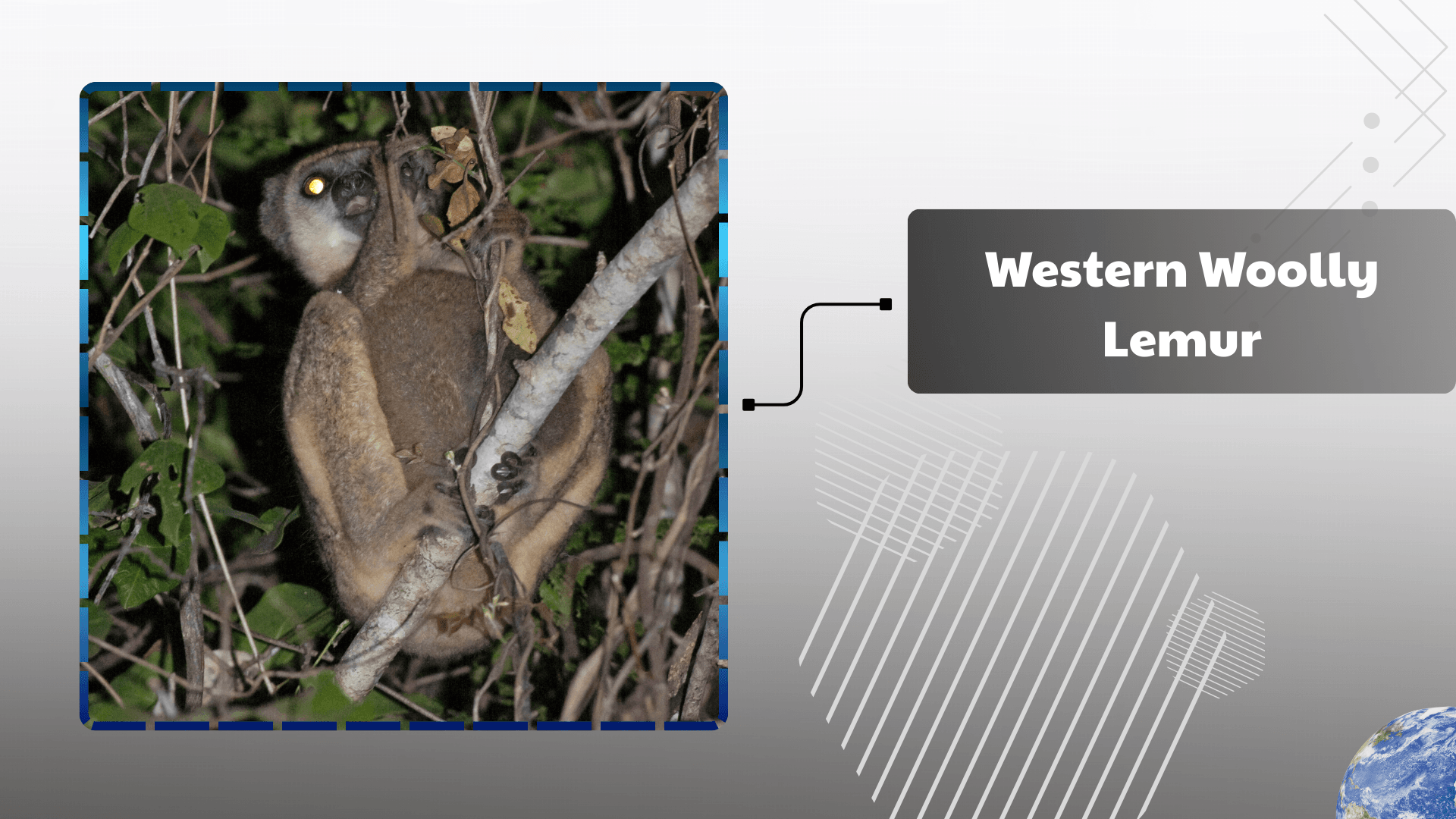
The Western Woolly Lemur is found in the dry and deciduous forests of western Madagascar. It has a similar appearance to its eastern counterpart, with thick gray-brown fur, large eyes adapted for nocturnal vision, and a bushy tail. Its diet is primarily leaves, making it an important folivore that helps recycle nutrients and maintain forest structure.
These lemurs are nocturnal and mainly arboreal, spending their nights feeding and moving carefully through the treetops. They exhibit solitary or paired social structures, often forming monogamous pairs during the breeding season. Communication involves soft calls, scent marking, and subtle movements. Females typically give birth to one offspring annually. Deforestation and habitat fragmentation are major threats, necessitating the creation of protected areas and sustainable forest management programs to preserve their populations and the ecological services they provide.
13. Aye-Aye (Daubentonia madagascariensis)
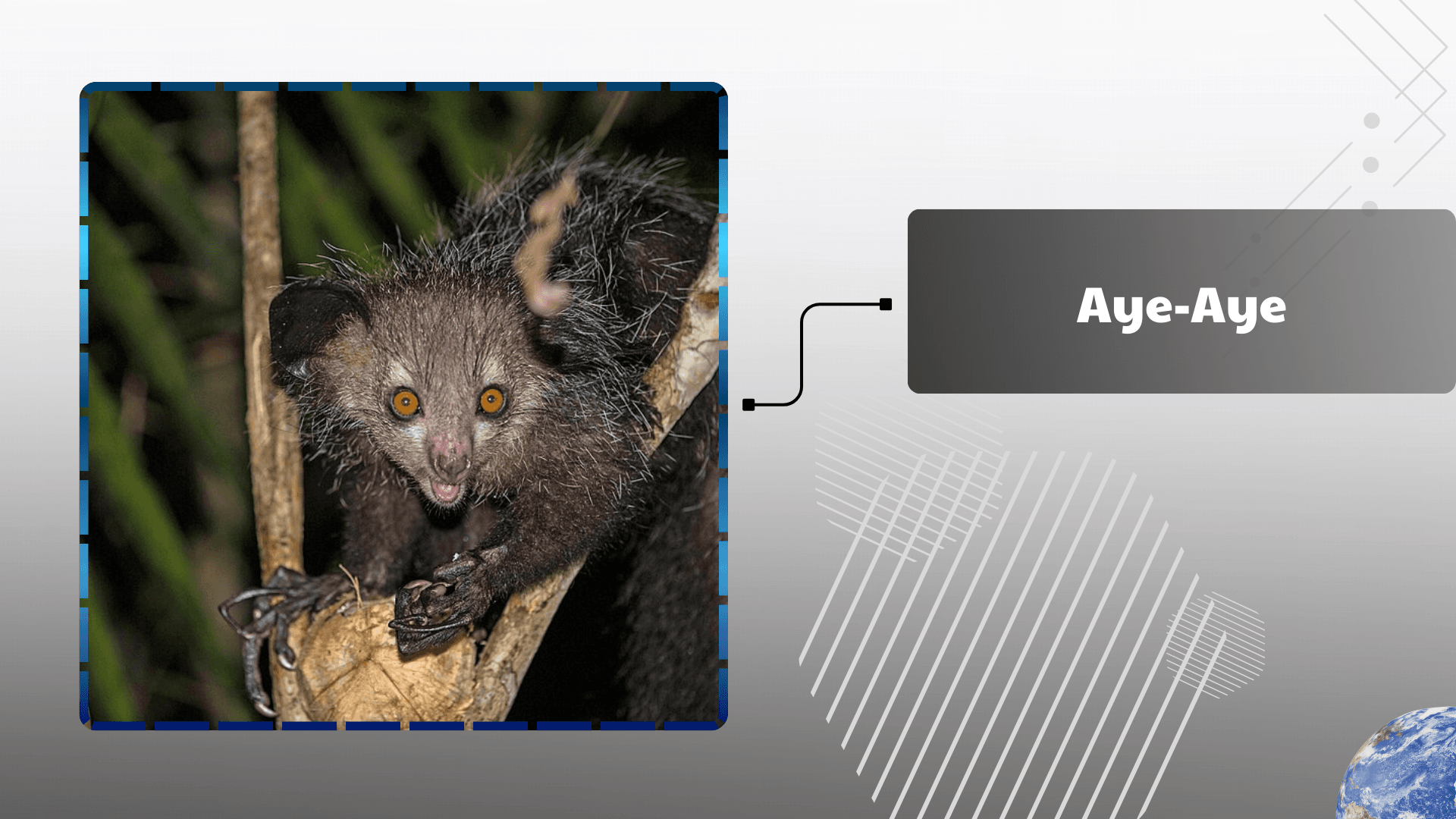
The Aye-Aye is one of the most unusual lemurs, famed for its distinctive long, thin middle finger used to extract insects from tree bark. Native to Madagascar’s rainforests, this nocturnal species has dark fur, large eyes adapted for night vision, and prominent ears that help detect prey. Its diet is varied, including insects, larvae, fruits, and nectar, making it both a seed disperser and insect predator.
Aye-Ayes are largely solitary, maintaining large home ranges to find sufficient food. Their foraging technique, known as percussive foraging, involves tapping on wood to locate hollow cavities before gnawing with sharp teeth and using their specialized finger to extract prey. Breeding is seasonal, and females usually produce one offspring per year. Due to superstition, habitat destruction, and hunting, the Aye-Aye is considered Endangered. Conservation programs focus on education, habitat preservation, and research to ensure the survival of this enigmatic lemur species.
14. Grey Mouse Lemur (Microcebus murinus)
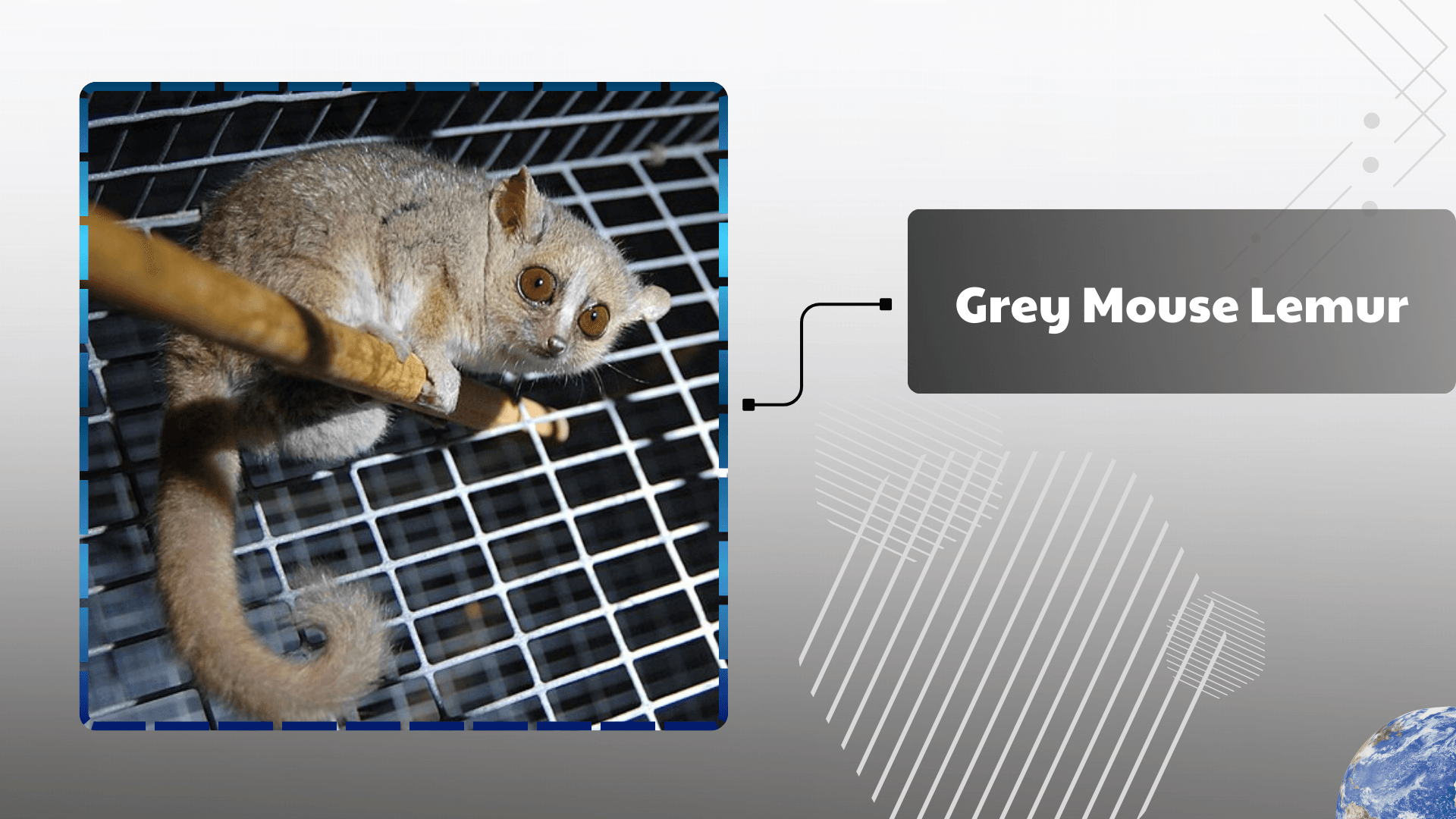
The Grey Mouse Lemur is a tiny, nocturnal primate found across northern and western Madagascar. It is among the smallest lemurs, weighing only 60–80 grams, with large eyes adapted for low-light conditions and soft gray fur. Its diet is omnivorous, including fruits, insects, nectar, and occasionally small vertebrates. This lemur plays a vital role in both pollination and seed dispersal.
Grey Mouse Lemurs are primarily solitary but may form temporary sleeping groups for warmth and protection. They are excellent climbers and leapers, navigating the dense canopy with agility. Breeding occurs twice a year in some regions, and females typically produce two offspring per litter. Predation from birds, snakes, and introduced species, combined with habitat loss, has impacted populations. Conservation strategies focus on habitat protection, research on population dynamics, and environmental education to highlight the importance of these tiny nocturnal primates in Madagascar’s ecosystems.
15. Brown Mouse Lemur (Microcebus rufus)
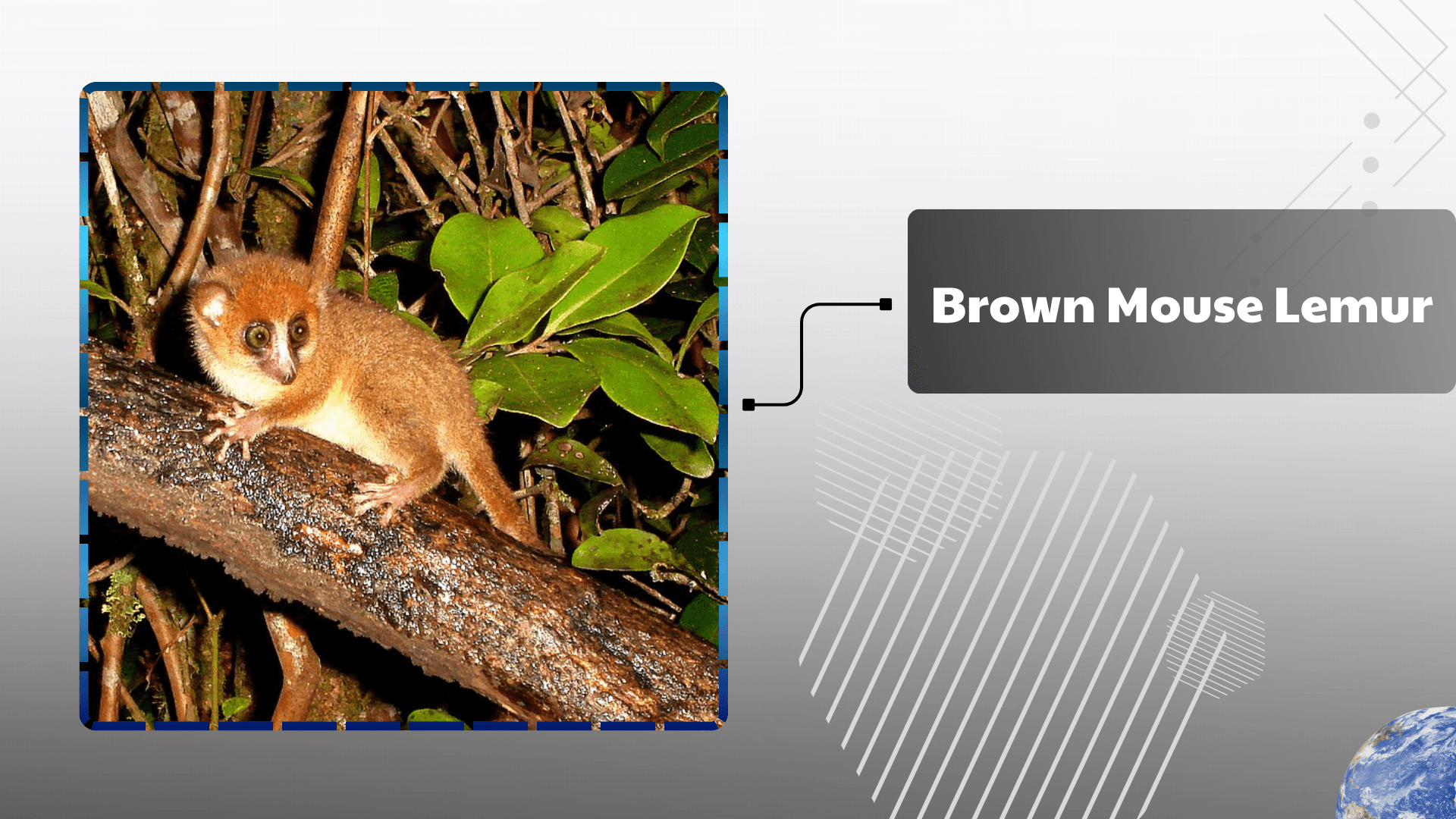
The Brown Mouse Lemur is another small nocturnal lemur, inhabiting the rainforests of eastern and southern Madagascar. Its reddish-brown fur provides camouflage among tree branches and leaves. This lemur is omnivorous, feeding on fruits, flowers, nectar, and insects, contributing to both seed dispersal and pollination within its habitat. Its small size and nocturnal activity make it a master of evasion from predators.
Brown Mouse Lemurs are solitary foragers, resting during the day in tree hollows or dense vegetation. Their locomotion is highly agile, enabling them to leap between trees and avoid ground predators. Breeding is seasonal, with females typically giving birth to one or two offspring annually. Threats include deforestation, predation by introduced species, and climate change. Conservation efforts emphasize habitat preservation, research, and community engagement to protect these small but ecologically important primates. Their presence reflects the health of Madagascar’s forest ecosystems and highlights the critical need for biodiversity conservation.
16. Fat-Tailed Dwarf Lemur (Cheirogaleus medius)
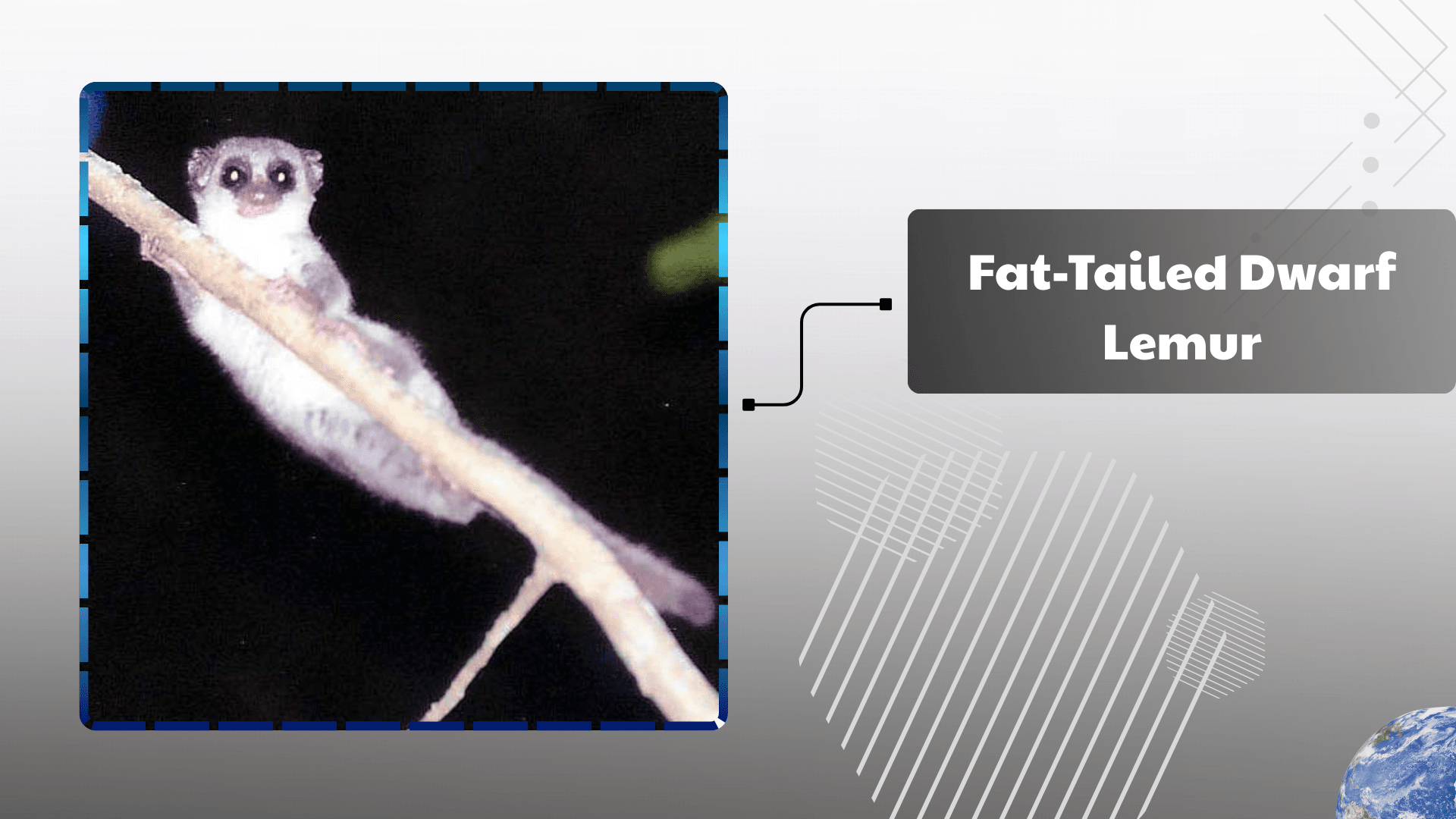
The Fat-Tailed Dwarf Lemur is a small, nocturnal lemur native to the dry forests and spiny bush of southern and western Madagascar. It is most notable for its distinctive fat-storing tail, which allows it to survive periods of food scarcity by storing fat that can be metabolized during hibernation. This unique adaptation sets it apart from many other lemur species and highlights the incredible diversity of survival strategies among Madagascar’s primates. The Fat-Tailed Dwarf Lemur has soft gray-brown fur with lighter underparts, large reflective eyes for night vision, and a gentle temperament.
These lemurs are largely solitary foragers, feeding on fruits, flowers, nectar, and insects. During the dry season, they enter a hibernation-like state called torpor, retreating to tree hollows or underground burrows to conserve energy. Breeding occurs after emerging from torpor, with females usually giving birth to one or two offspring annually. Fat-Tailed Dwarf Lemurs are a key example of physiological adaptation in lemurs, and their conservation is linked to the protection of their forest habitats. Deforestation and climate change remain the primary threats to this species, emphasizing the importance of habitat preservation for maintaining Madagascar’s unique biodiversity.
17. Black Lemur (Eulemur macaco)
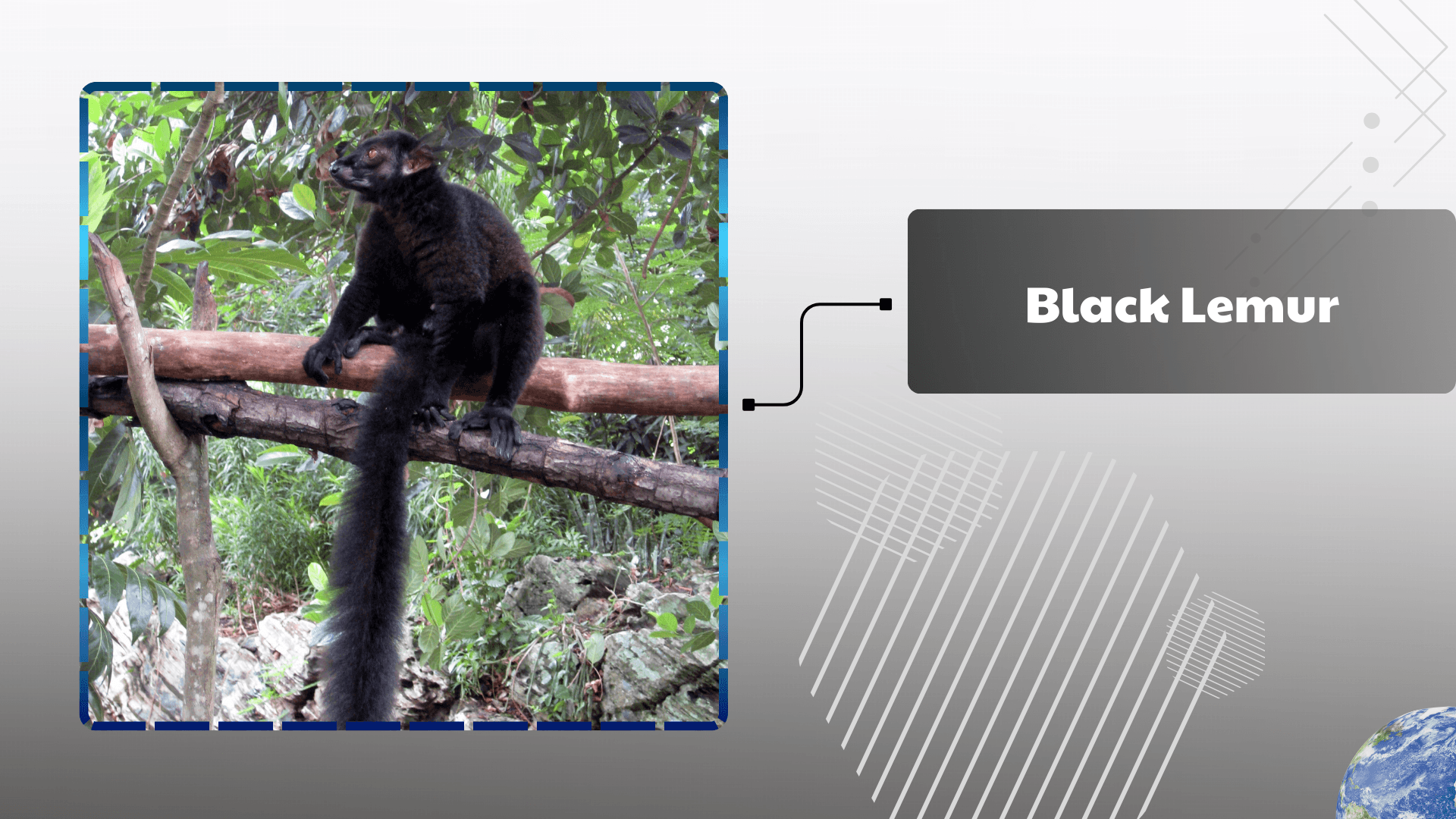
The Black Lemur is a medium-sized primate found in the forests of northwestern Madagascar and the nearby islands. Sexual dimorphism is striking in this species: males are completely black, while females display reddish-brown fur, making gender identification easy at a glance. These lemurs are primarily frugivorous, feeding on fruits, leaves, flowers, and occasionally small insects. Their dietary choices make them vital seed dispersers, contributing significantly to forest regeneration.
Black Lemurs live in social groups of 5–15 individuals, with female dominance influencing access to food and mates. They are diurnal and arboreal, spending most of their time in the canopy while moving with agility between trees. Vocalizations and scent marking are key components of their social communication, helping maintain group cohesion and territory boundaries. Breeding occurs seasonally, with females typically producing one offspring per year. Conservation threats include habitat loss, hunting, and human encroachment. Protected areas and community-based conservation programs are critical for sustaining healthy populations of Black Lemurs and the ecological services they provide.
18. Coquerel’s Sifaka (Propithecus coquereli)
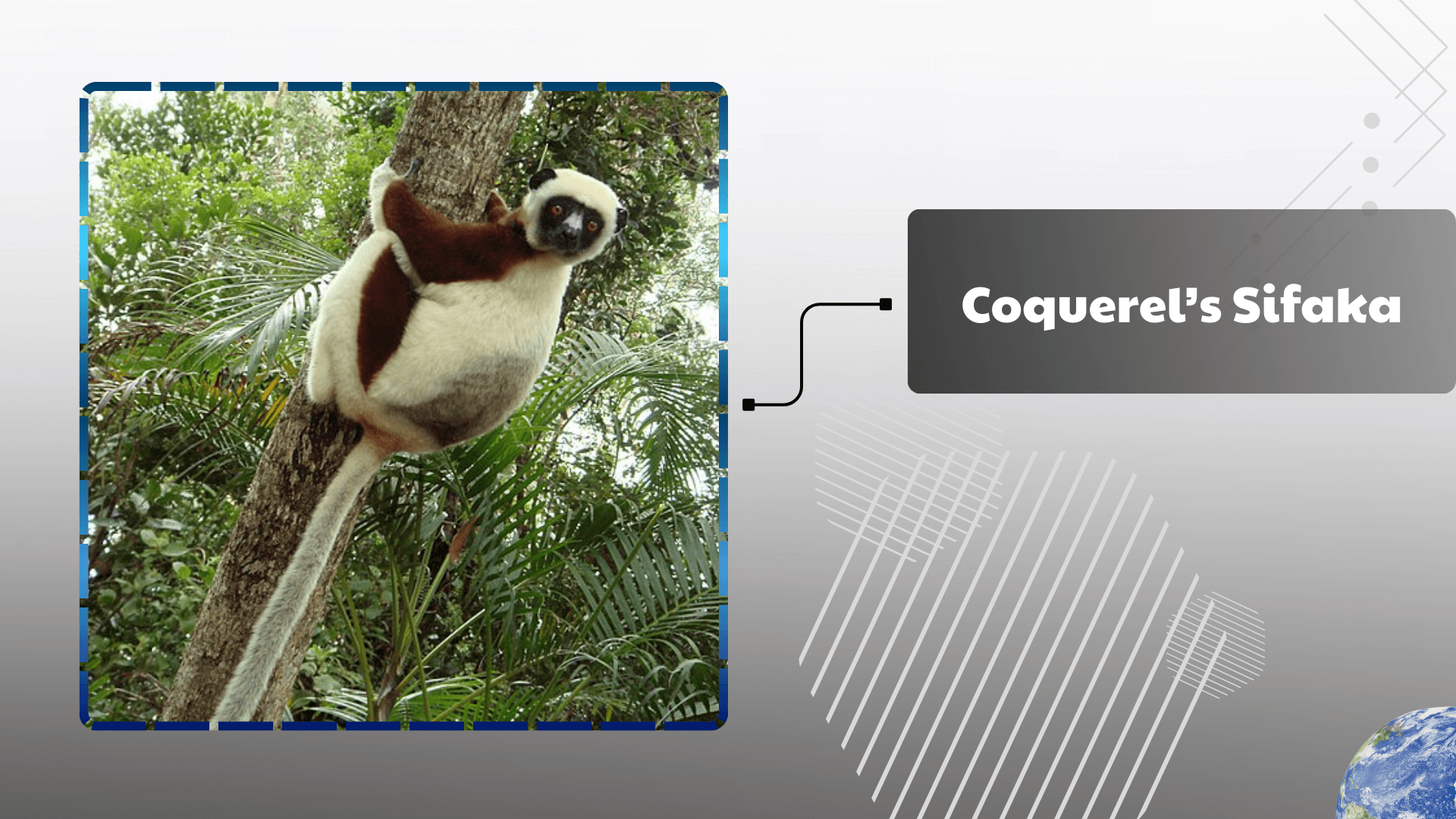
Coquerel’s Sifaka is a striking lemur species endemic to the dry deciduous forests of northwestern Madagascar. Known for its extraordinary leaping ability, it moves across the forest floor using a series of graceful, bipedal “dance-like” hops, while navigating the canopy with powerful, acrobatic leaps. Its coat is predominantly white with chestnut and black markings, and its face is dark with expressive eyes that enhance its charismatic appearance. Coquerel’s Sifaka is primarily herbivorous, feeding on leaves, fruits, flowers, and seeds.
These sifakas live in social groups of 3–10 individuals, exhibiting strong female dominance. Grooming, vocalizations, and coordinated movements maintain group cohesion. Breeding occurs once a year, and females usually give birth to a single infant. Due to its striking locomotion and unique appearance, Coquerel’s Sifaka has become an iconic symbol of Madagascar’s lemur diversity. Habitat destruction and fragmentation, however, threaten its survival, making conservation efforts—such as protected forest areas and reforestation programs—essential for the preservation of this remarkable species.
19. Verreaux’s Sifaka (Propithecus verreauxi)
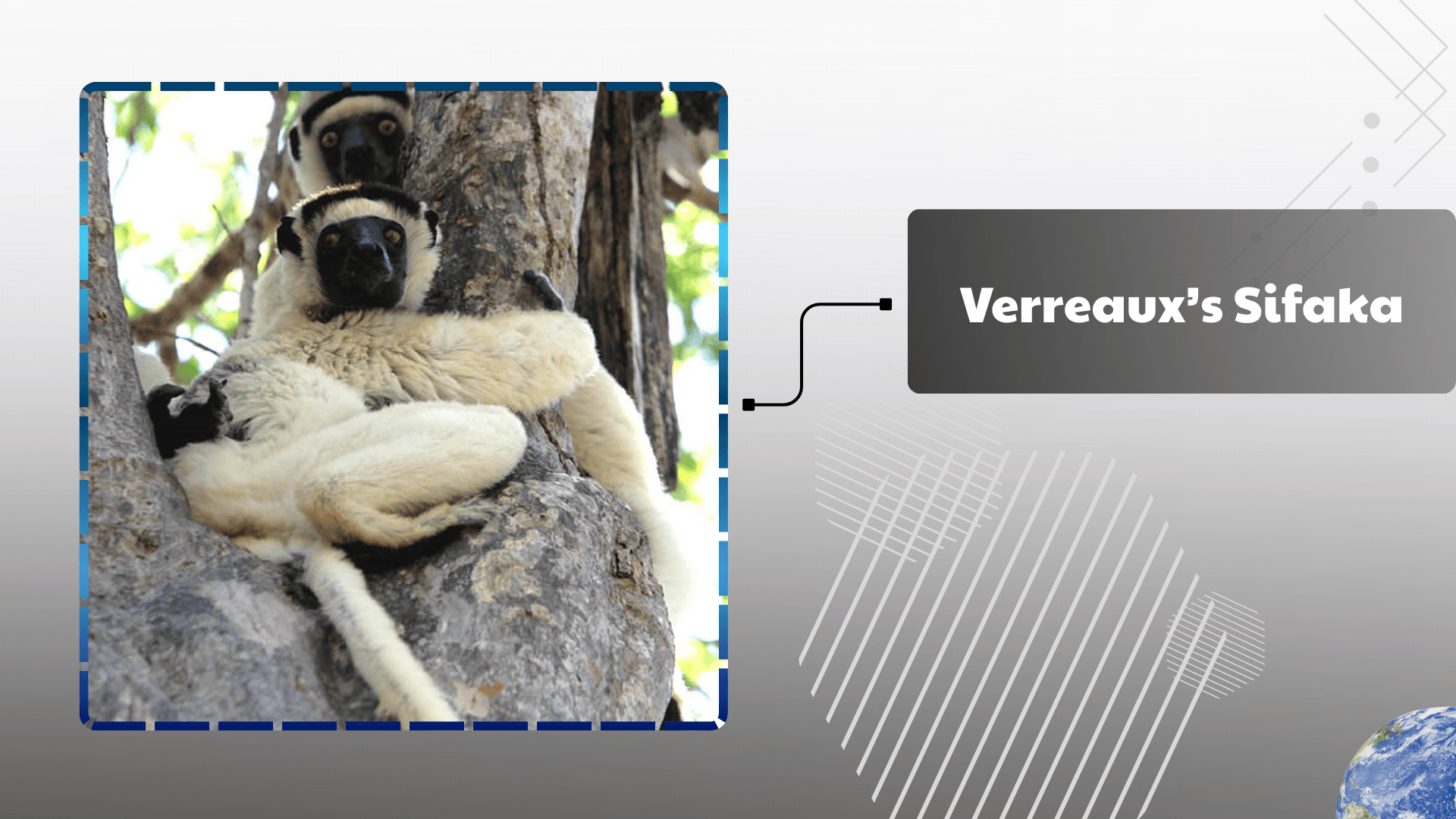
Verreaux’s Sifaka, often referred to as the “dancing lemur,” is famous for its distinctive bipedal hopping on the ground, which resembles a dance. Native to the spiny forests and dry deciduous forests of southern and southwestern Madagascar, this sifaka has a primarily white coat with dark brown or black markings on the head, limbs, and sometimes the tail. It is primarily herbivorous, feeding on leaves, flowers, fruits, and bark. This diet makes it a critical agent for seed dispersal, supporting the regeneration of Madagascar’s unique ecosystems.
Verreaux’s Sifaka lives in groups of 3–10 individuals, exhibiting a matriarchal social structure where females dominate males in access to food and mating opportunities. Communication involves a combination of vocalizations, scent marking, and visual signals. Reproduction occurs seasonally, with females giving birth to one offspring per year. Despite being charismatic and well-studied, Verreaux’s Sifaka faces threats from habitat destruction and hunting. Conservation programs focus on creating protected areas, educating local communities, and restoring degraded forests to ensure the survival of this emblematic species.
20. Diademed Sifaka (Propithecus diadema)
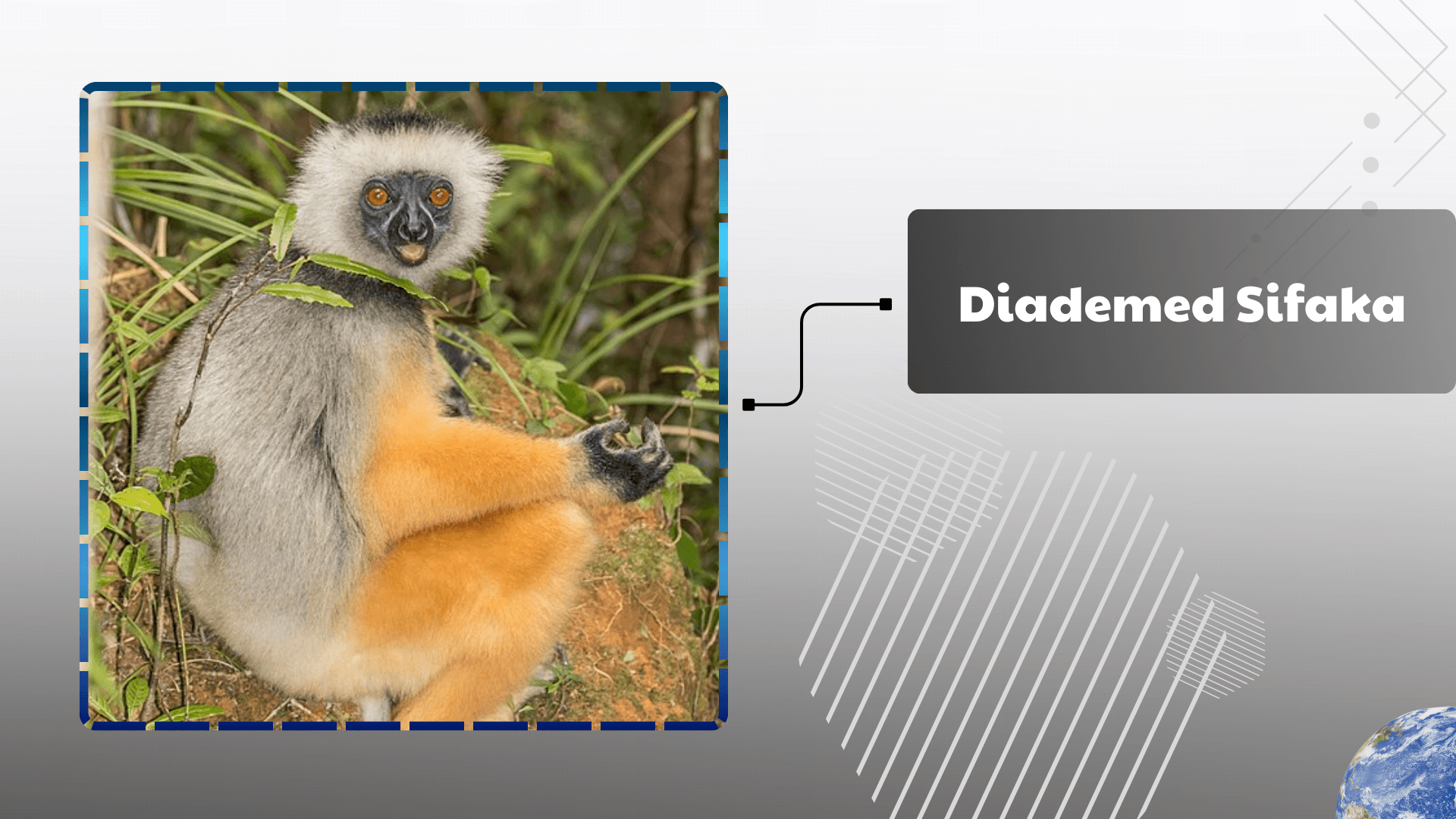
The Diademed Sifaka is one of the largest and most visually stunning lemur species, endemic to the rainforests of eastern Madagascar. Its luxurious, multi-colored coat features a combination of white, gray, black, and golden hues, with a distinctive crown-like patch on its head, giving rise to its name. It is primarily folivorous but also consumes fruits, flowers, and seeds. As a large arboreal primate, it plays an essential role in seed dispersal and maintaining forest health.
Diademed Sifakas live in social groups of 5–10 individuals, typically with a female-dominated hierarchy. They are diurnal and extremely agile, moving through the canopy with remarkable leaping ability. Vocal communication and scent marking are critical for coordinating group activities and defending territories. Females give birth to one offspring per year after a gestation period of around 5–6 months. Due to deforestation and hunting, the Diademed Sifaka is classified as Critically Endangered. Conservation initiatives focus on habitat protection, ecotourism that supports local communities, and reforestation efforts to preserve this spectacular lemur species for future generations.
21. Indri (Indri indri)
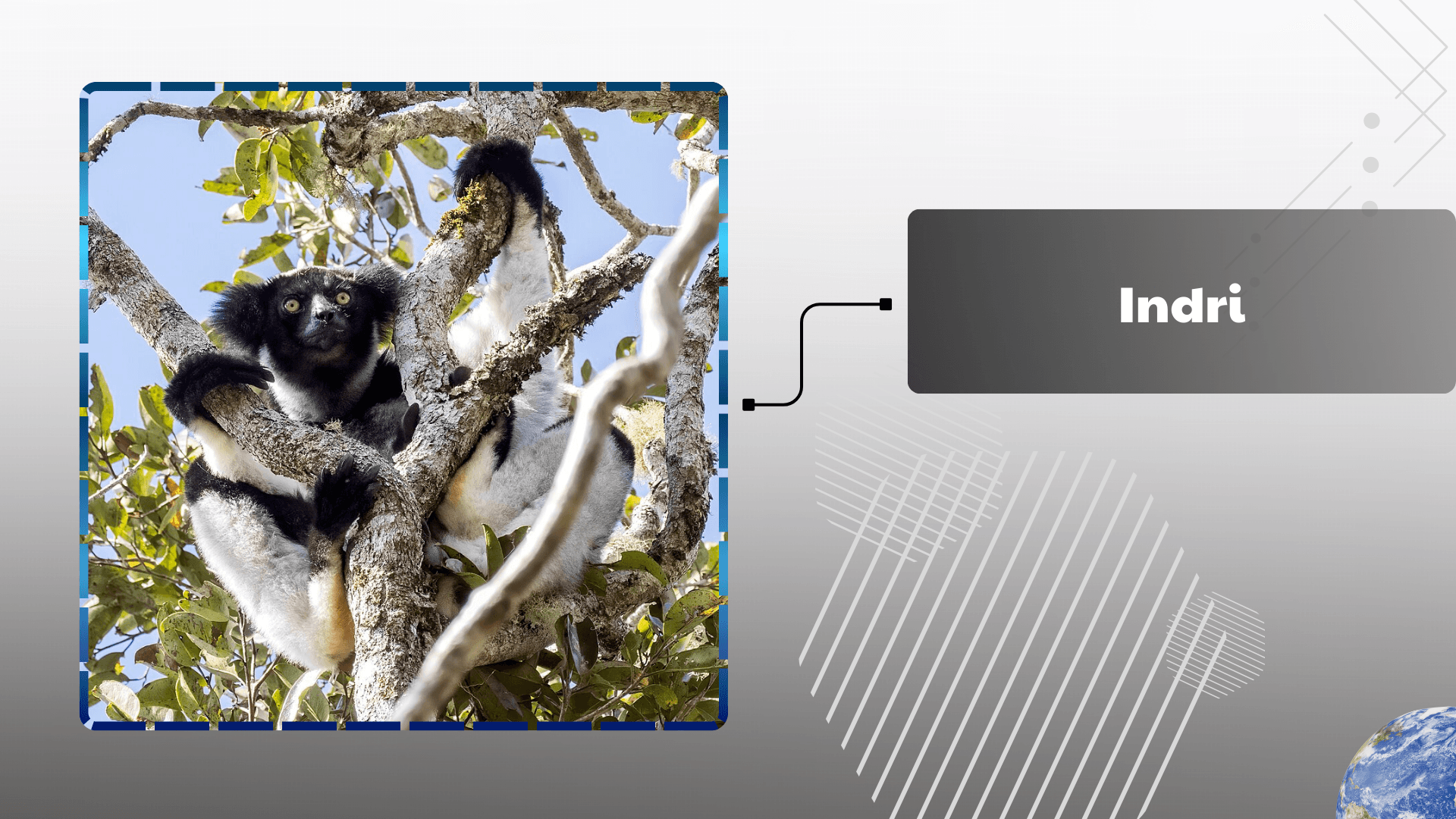
The Indri is the largest living lemur and one of Madagascar’s most iconic primates. With a striking black-and-white coat, short tail, and large expressive eyes, the Indri is instantly recognizable. Native to the eastern rainforests of Madagascar, this lemur is primarily folivorous, feeding on leaves, fruits, flowers, and seeds. Its feeding behavior plays a vital role in seed dispersal, helping maintain the structure and diversity of its forest habitat.
Indris live in small family groups, usually consisting of a monogamous pair and their offspring. They are arboreal and diurnal, leaping with extraordinary power between trees using their strong legs. Communication is a key feature of Indri society: their haunting, loud songs can be heard over long distances, serving to maintain group cohesion and defend territories. Females give birth to a single infant per year. Habitat loss, hunting, and fragmentation have placed the Indri under threat, making conservation efforts—such as protected reserves, reforestation, and ecotourism programs—critical for their survival.
22. Red-Fronted Lemur (Eulemur rufifrons)
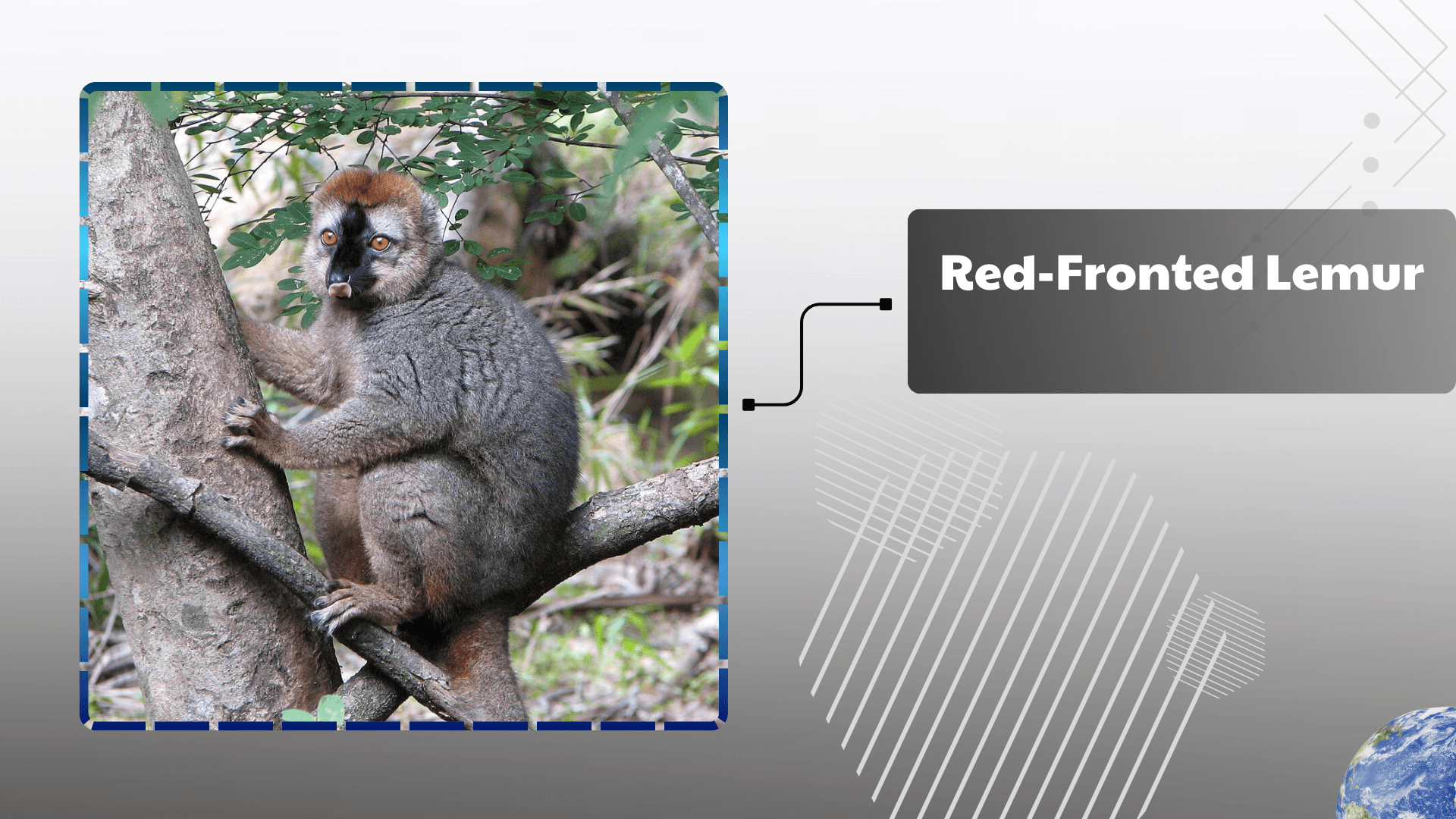
The Red-Fronted Lemur, found in western and southwestern Madagascar, is distinguished by its reddish forehead and soft brown-gray body fur. This medium-sized lemur is primarily frugivorous, though it supplements its diet with leaves, flowers, and insects. By dispersing seeds and foraging on various plants, Red-Fronted Lemurs help maintain the health of Madagascar’s forests.
Socially, Red-Fronted Lemurs form groups of 5–25 individuals, with a female-dominated hierarchy. Grooming, vocalizations, and scent marking are essential for group cohesion. These lemurs are diurnal and arboreal, but they occasionally descend to the forest floor to forage. Breeding occurs seasonally, and females typically produce one infant annually. Threats include deforestation and hunting. Conservation programs focus on habitat protection and community education to sustain Red-Fronted Lemur populations.
23. Collared Brown Lemur (Eulemur collaris)
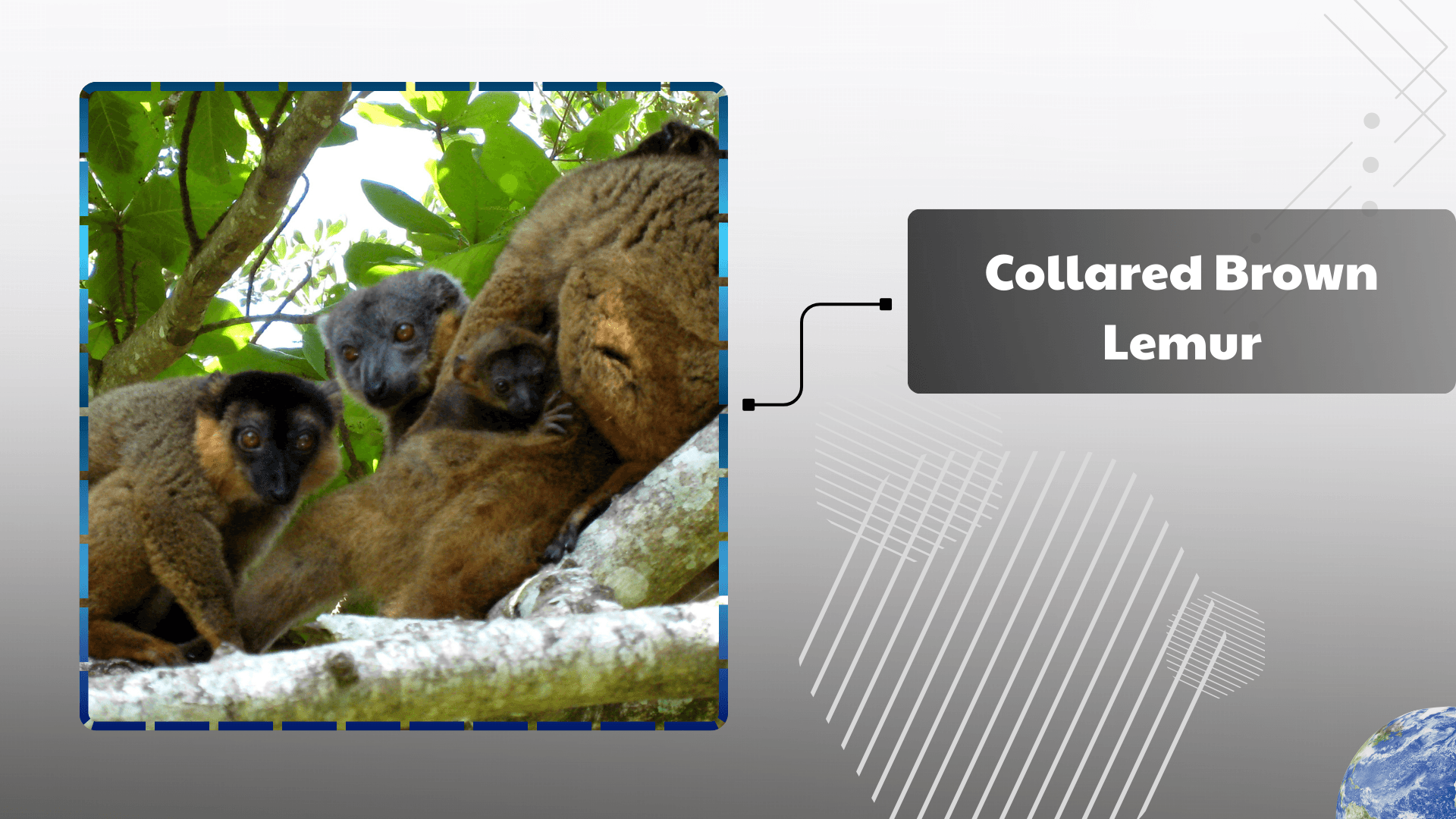
The Collared Brown Lemur is a medium-sized primate native to southeastern Madagascar. Its name derives from the distinctive black “collar” around its neck contrasting with lighter body fur. These lemurs are omnivorous, feeding on fruits, leaves, flowers, nectar, and occasionally small animals, which helps diversify their diet and supports ecosystem balance.
Collared Brown Lemurs live in social groups of 10–20 individuals. Female dominance governs access to food and mating, while vocalizations and scent marking facilitate communication. Arboreal and diurnal, these lemurs are active foragers, moving efficiently through the canopy. Breeding is seasonal, and females give birth to one or two infants annually. Deforestation, hunting, and habitat fragmentation are primary threats. Conservation efforts include protected forest areas, habitat restoration, and public awareness campaigns to protect this visually distinctive lemur species.
24. Eastern Lesser Bamboo Lemur (Hapalemur griseus)
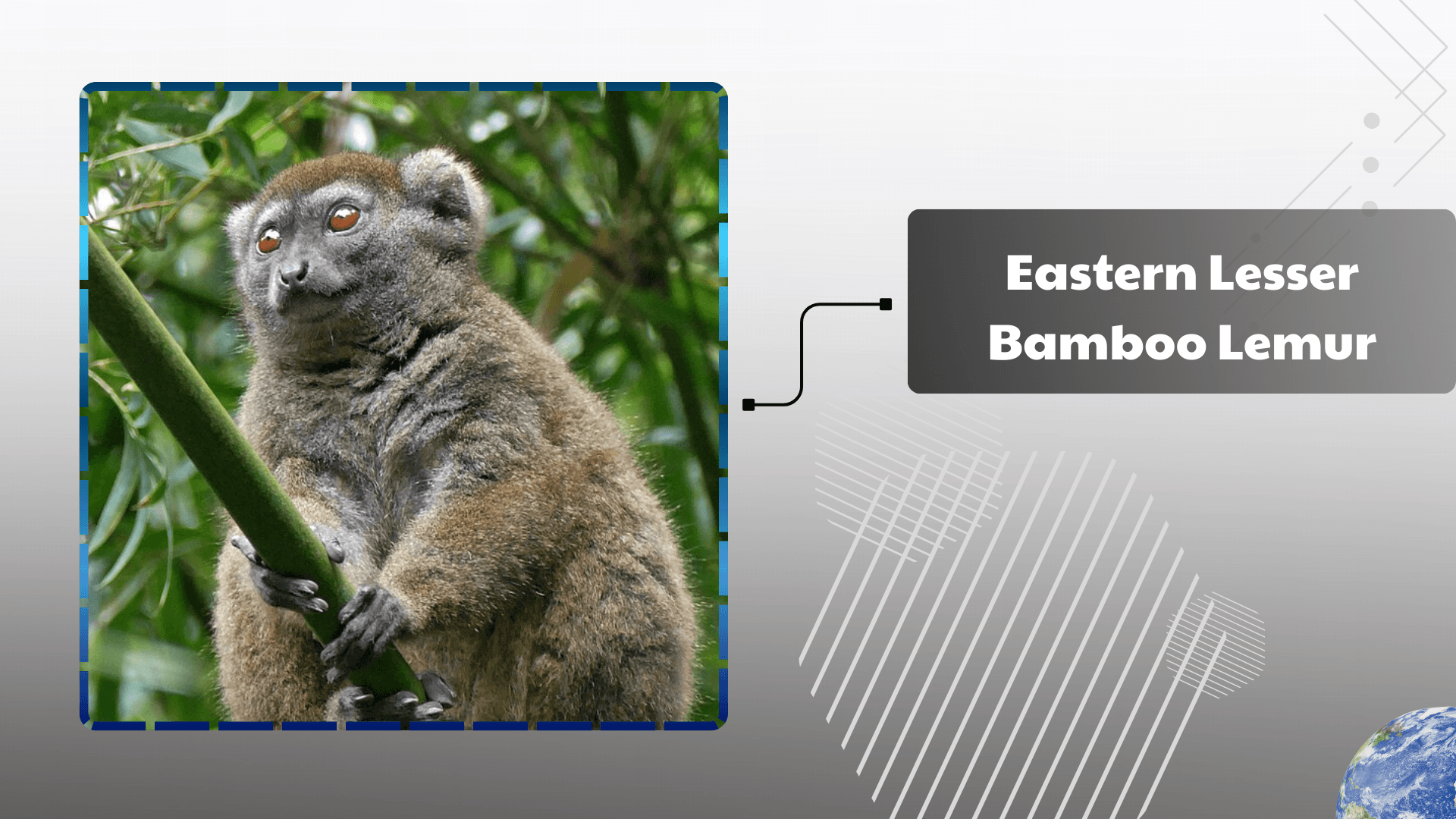
The Eastern Lesser Bamboo Lemur inhabits the humid forests of eastern Madagascar and is closely associated with bamboo thickets. It is a small, agile lemur with gray-brown fur, adept at navigating the dense understory. Its diet primarily consists of bamboo shoots and leaves, but it also consumes fruits and flowers, making it an essential component in bamboo forest ecosystems.
These lemurs live in social groups of 5–15 individuals, often exhibiting female dominance. They are diurnal and highly arboreal, using strong limbs to leap between bamboo stalks and trees. Breeding occurs seasonally, with females giving birth to one infant per year. Eastern Lesser Bamboo Lemurs face threats from habitat destruction due to logging, agriculture, and bamboo harvesting. Conservation measures include forest protection, community involvement, and scientific monitoring to ensure their survival and the preservation of their specialized habitats.
25. Northern Bamboo Lemur (Hapalemur occidentalis)
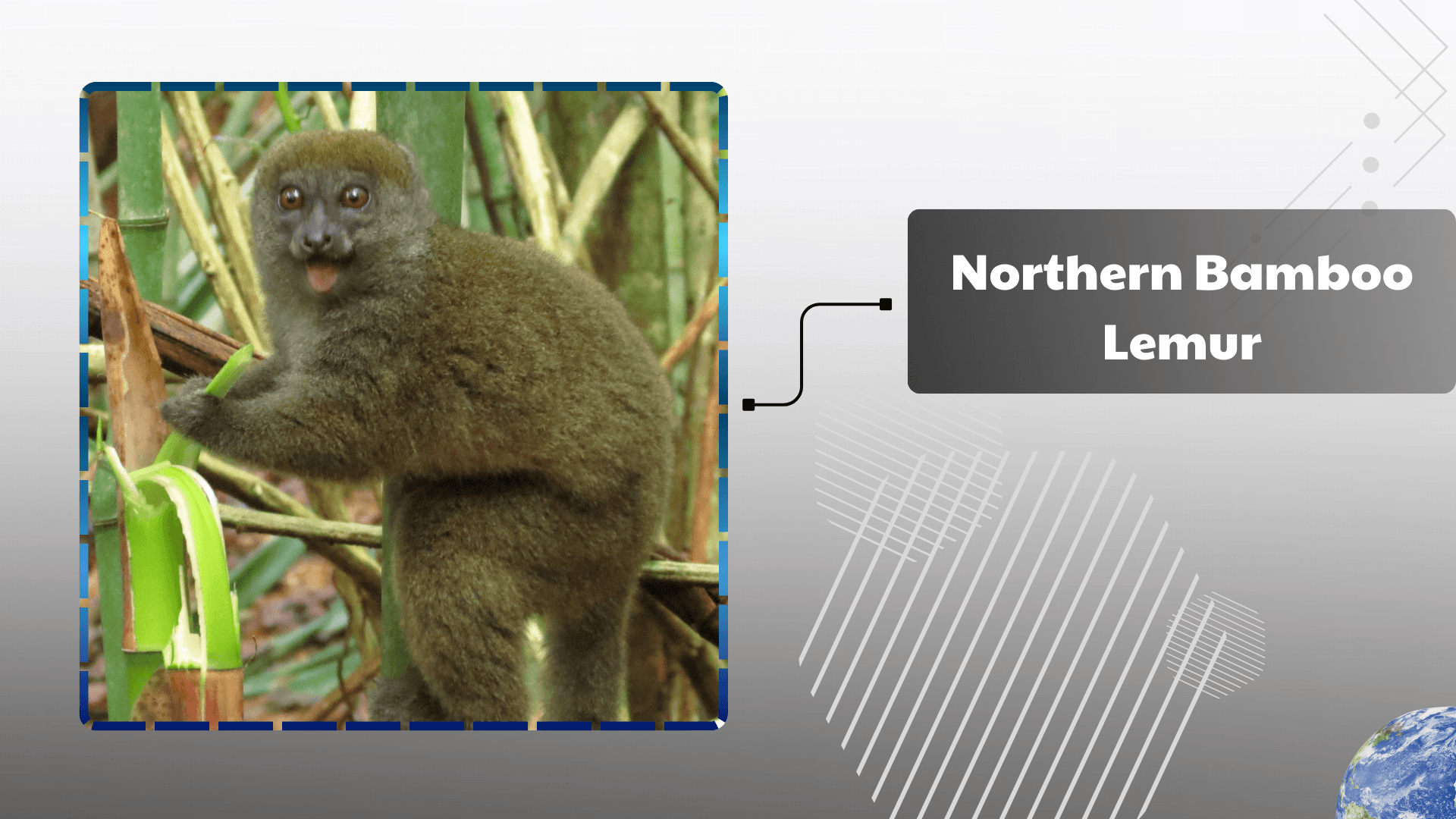
The Northern Bamboo Lemur is native to northern Madagascar and is closely linked to bamboo forests. It has a gray-brown coat and a small, agile body adapted for moving through dense vegetation. Its diet is heavily reliant on bamboo shoots, leaves, and occasionally fruits. These lemurs play a critical ecological role by influencing bamboo forest structure through their feeding behavior.
Northern Bamboo Lemurs form small social groups, usually 3–8 individuals, with a female-led hierarchy. They are diurnal and arboreal, leaping between bamboo stalks and low trees with precision. Breeding occurs once a year, and females typically produce one offspring. Threats include deforestation, bamboo harvesting, and hunting, which have contributed to their population decline. Conservation programs focus on habitat protection, reforestation, and environmental education to secure the future of these specialized lemurs.
26. Southern Lesser Bamboo Lemur (Hapalemur meridionalis)
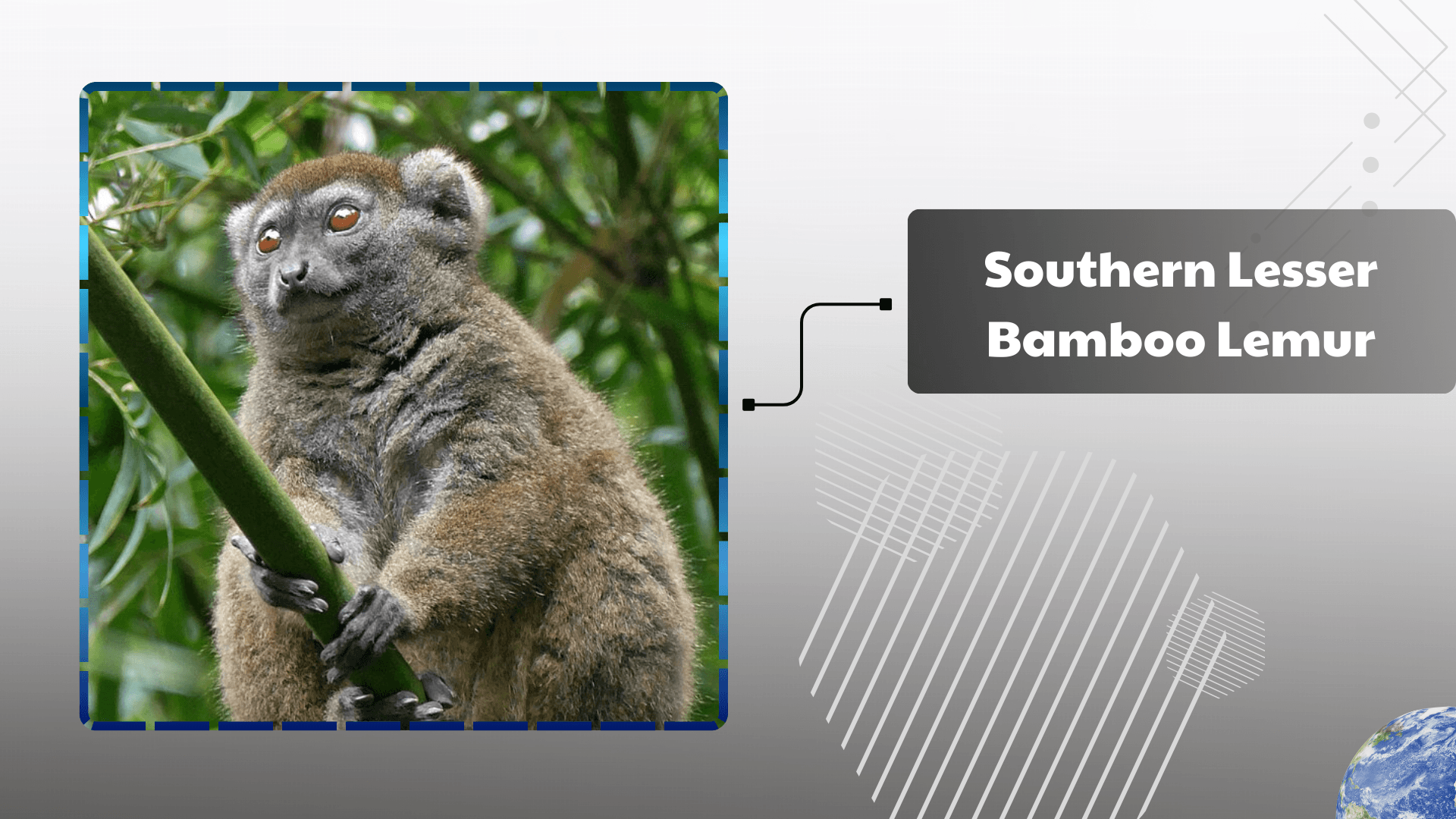
The Southern Lesser Bamboo Lemur, found in southern Madagascar, is another bamboo specialist. Its small size and grayish-brown coat allow it to move stealthily through dense bamboo thickets. Its diet primarily includes bamboo shoots, leaves, and sometimes fruits, contributing to both bamboo forest maintenance and seed dispersal.
These lemurs live in small social groups of 4–10 individuals, with females usually dominant. Diurnal and arboreal, they leap expertly between bamboo stalks and small trees. Breeding occurs seasonally, and females give birth to one offspring. Habitat destruction, particularly from agriculture and logging, threatens their survival. Conservation strategies emphasize habitat protection, sustainable land management, and community engagement to ensure the persistence of these bamboo-dependent primates.
27. Ankarana Sportive Lemur (Lepilemur ankaranensis)
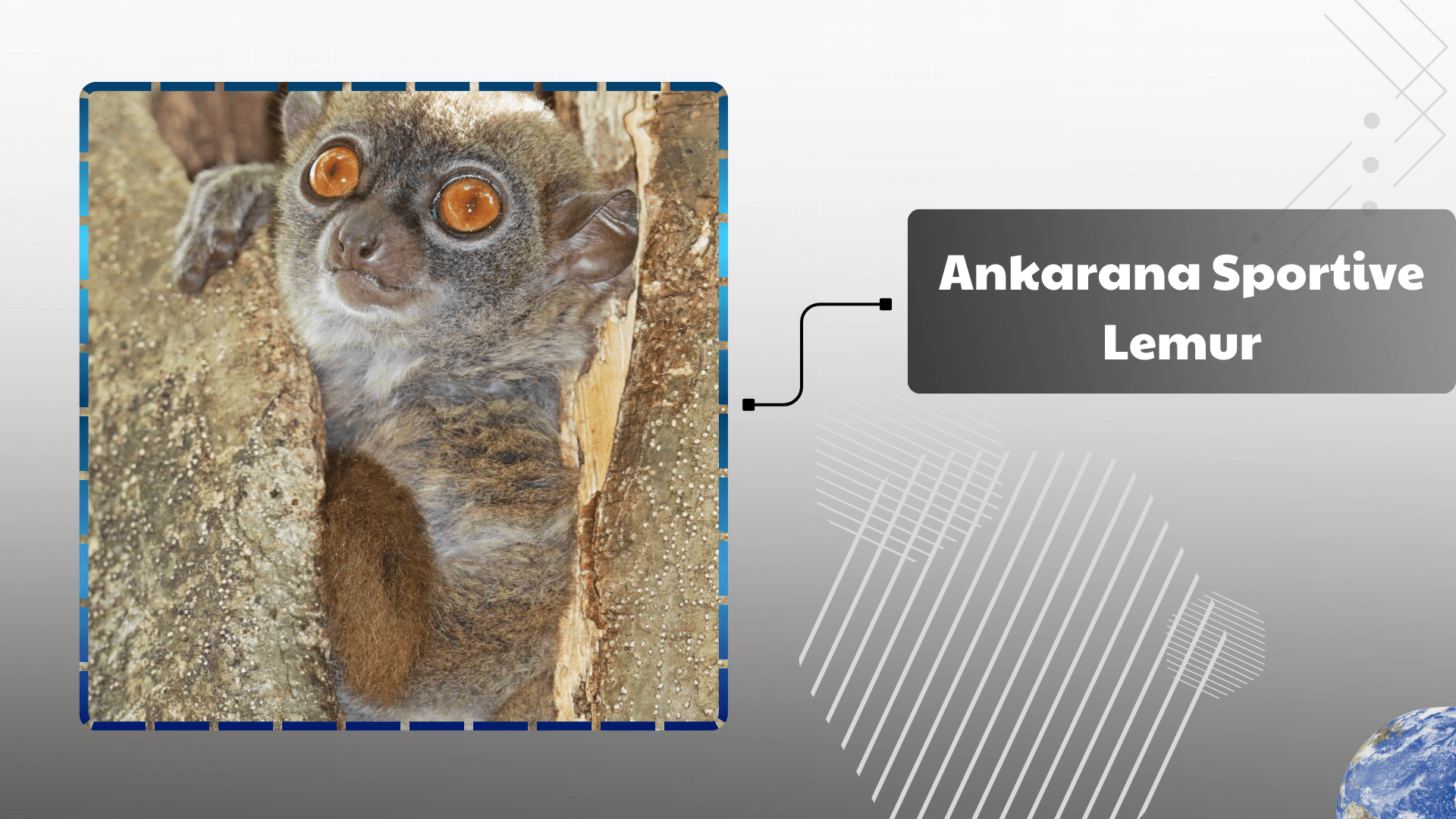
The Ankarana Sportive Lemur is endemic to the limestone forests of northern Madagascar, specifically the Ankarana region. Small and nocturnal, this lemur has soft gray-brown fur and large reflective eyes for night vision. Its diet is mainly leaves, though flowers and fruits are consumed opportunistically. As a folivore, it contributes to nutrient cycling and forest health.
Ankarana Sportive Lemurs are largely solitary, occupying defined territories marked by scent glands. Arboreal and nocturnal, they are highly agile, moving carefully among branches and tree trunks. Reproduction occurs annually, with females giving birth to a single infant. Threats include habitat loss and fragmentation, and conservation programs focus on protecting limestone forest habitats and monitoring population trends to ensure survival.
28. Weasel Sportive Lemur (Lepilemur mustelinus)
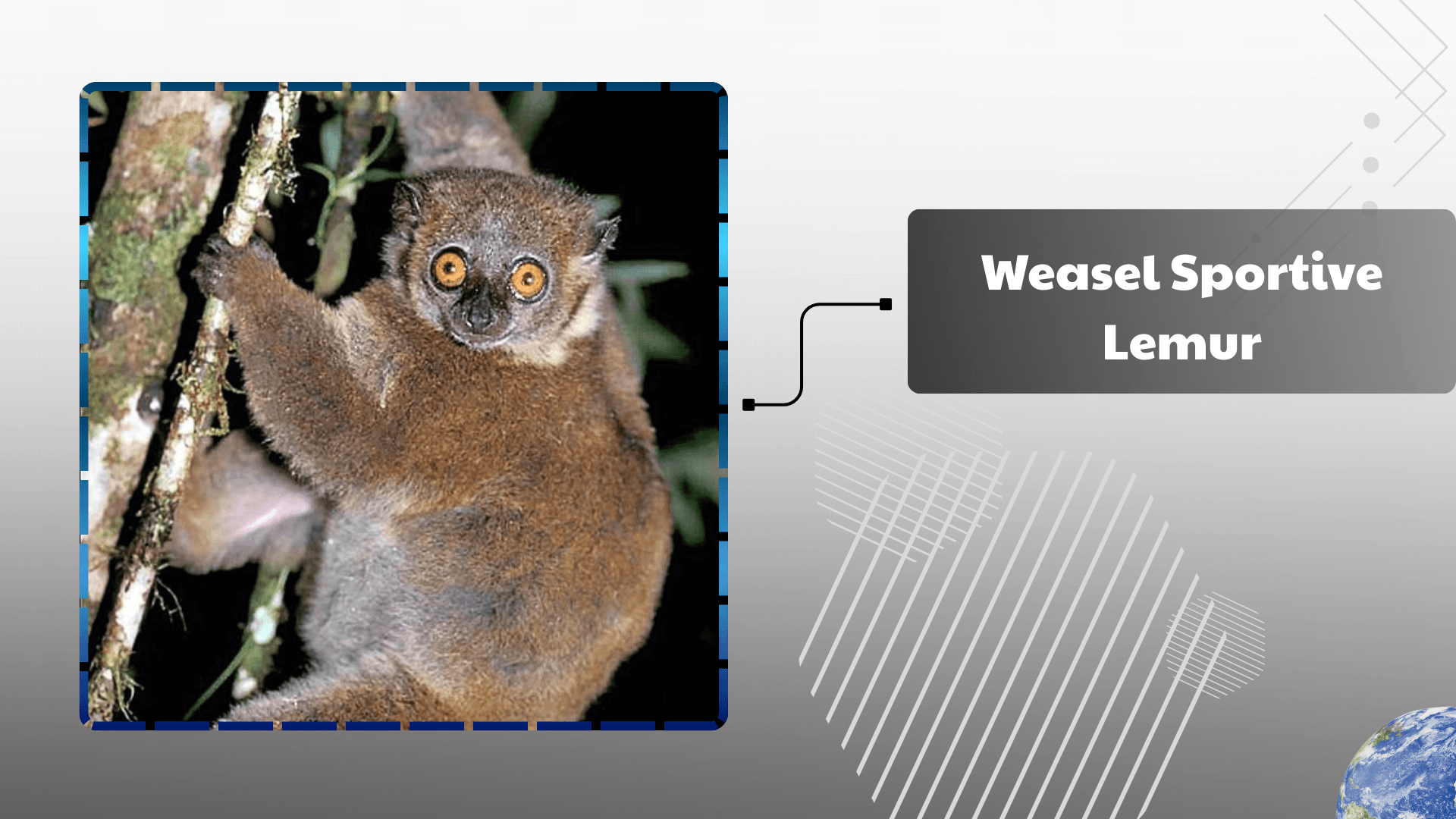
The Weasel Sportive Lemur is a small, nocturnal lemur native to Madagascar’s eastern forests. Its slender body and soft gray-brown fur allow it to move with agility similar to a weasel. Primarily folivorous, it feeds on leaves, occasionally supplementing with flowers and fruit. Its foraging behavior aids in forest nutrient cycling and ecosystem maintenance.
These lemurs are largely solitary, maintaining territories through vocalizations and scent marking. Arboreal and nocturnal, they move with remarkable stealth among tree branches. Breeding occurs seasonally, and females typically give birth to one offspring per year. Habitat loss and predation are major threats. Conservation strategies include habitat protection, community education, and research on population dynamics to preserve this nocturnal lemur species.
29. White-Footed Sportive Lemur (Lepilemur leucopus)
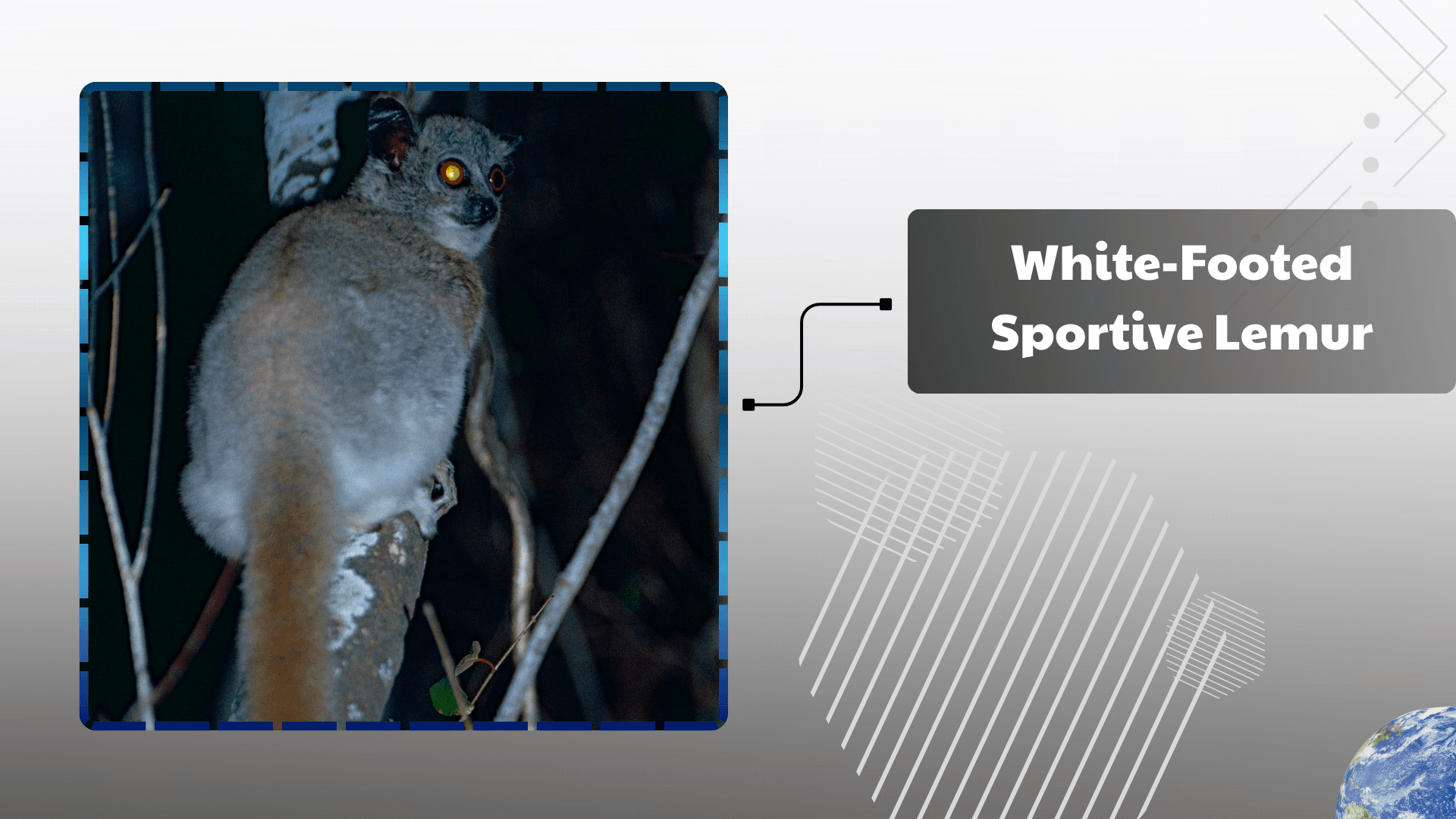
The White-Footed Sportive Lemur, found in southwestern Madagascar, is named for its distinctive white feet contrasting with gray-brown body fur. Nocturnal and arboreal, this lemur primarily feeds on leaves, occasionally consuming flowers and fruits. It is an important folivore, helping maintain forest health through leaf consumption and nutrient recycling.
These lemurs are solitary and territorial, using vocalizations and scent markings to communicate. They navigate the forest canopy at night with agility, leaping between branches and tree trunks. Breeding is seasonal, with females giving birth to a single infant. Habitat destruction and fragmentation threaten the species, emphasizing the importance of protected areas, community involvement, and research to conserve the White-Footed Sportive Lemur and the unique forests it inhabits.
30. Milne-Edwards’s Sportive Lemur (Lepilemur edwardsi)
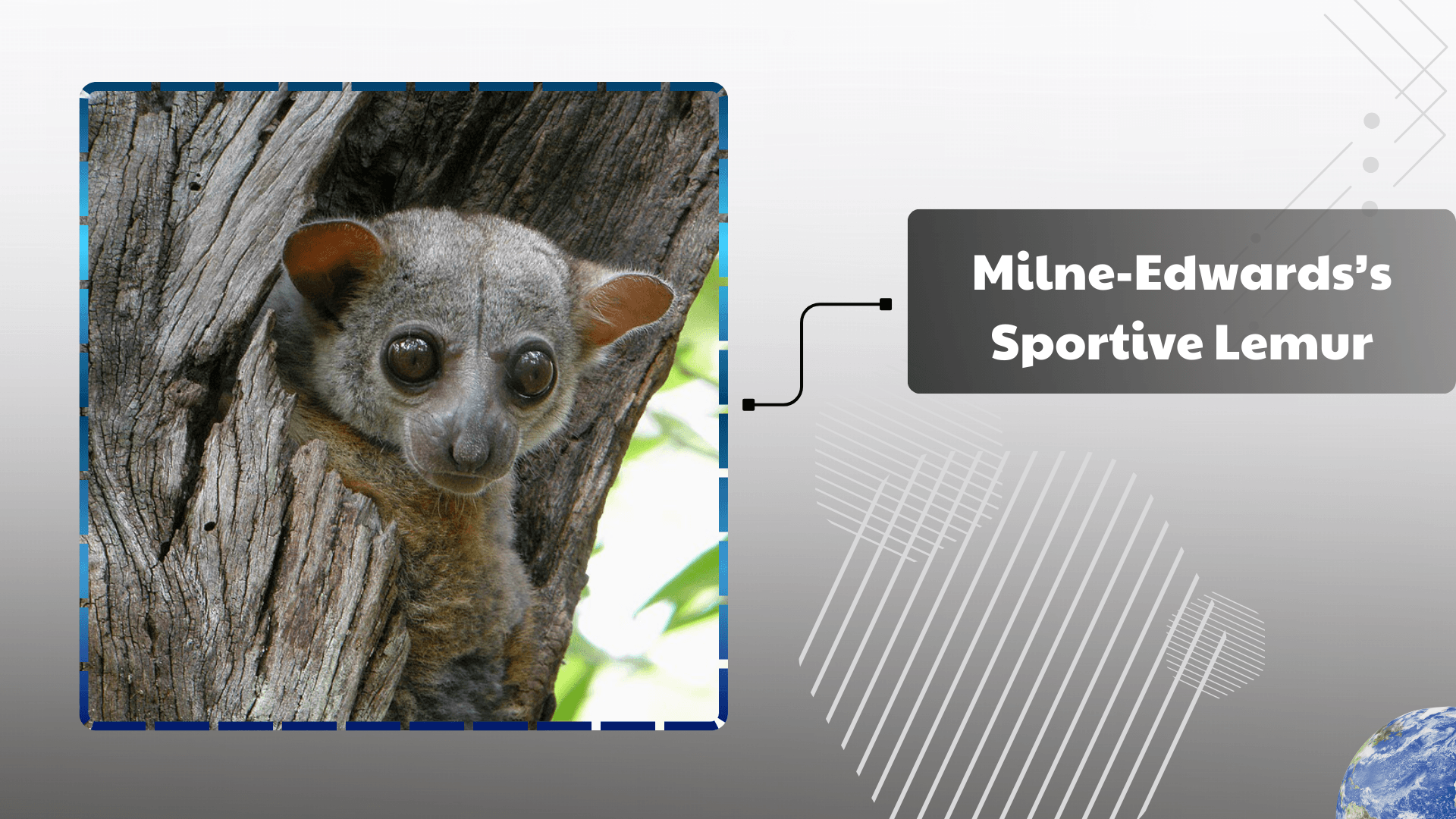
Milne-Edwards’s Sportive Lemur is a nocturnal primate endemic to the rainforests of southwestern Madagascar. Small and agile, it has soft gray-brown fur, large eyes adapted for night vision, and a bushy tail for balance. Its diet primarily consists of leaves, supplemented by fruits and flowers. By feeding on a variety of leaves, this lemur helps maintain forest nutrient cycles and plant diversity.
These lemurs are solitary, occupying and defending territories using vocalizations and scent marking. Arboreal and nocturnal, they move with precision among branches and small trees. Breeding occurs once a year, and females typically give birth to a single offspring. Threats include habitat loss, predation, and human encroachment. Conservation measures focus on forest protection, ecological research, and community education to ensure the survival of Milne-Edwards’s Sportive Lemur and the fragile ecosystems it inhabits.
Conclusion: Types of Lemurs
Madagascar’s forests are home to an astonishing diversity of lemurs, ranging from the tiny mouse lemurs to the iconic Indri and colorful Diademed Sifaka. Each of the 30 species we explored demonstrates unique adaptations, diets, and social behaviors, highlighting the incredible evolutionary pathways these primates have taken. From nocturnal folivores like the Fat-Tailed Dwarf Lemur to the diurnal, acrobatic sifakas, lemurs play critical roles in pollination, seed dispersal, and maintaining the ecological balance of their habitats.
Conservation of these species is vital, as habitat destruction, climate change, and human activities continue to threaten their survival. Protecting Madagascar’s forests ensures the persistence of these remarkable creatures while supporting global biodiversity. Understanding the different Types of Lemurs helps foster appreciation and awareness for these extraordinary primates. By promoting conservation efforts and sustainable practices, we can secure a future where lemurs continue to thrive in their natural habitats, offering both ecological and cultural value to generations to come.
Frequently Asked Questions about Types of Lemurs
1. What are lemurs?
Lemurs are primates native to Madagascar, known for their diverse sizes, behaviors, and unique adaptations. They range from tiny mouse lemurs to large species like the Indri.
2. How many types of lemurs are there?
There are over 100 lemur species, but this article reviews 30 distinct types, each with unique characteristics and habitats.
3. Where do lemurs live?
Lemurs are endemic to Madagascar, living in rainforests, dry deciduous forests, bamboo thickets, and spiny forests.
4. Are lemurs nocturnal or diurnal?
It depends on the species. Many lemurs, like mouse lemurs and sportive lemurs, are nocturnal, while sifakas and Indris are diurnal.
5. What do lemurs eat?
Lemurs are mostly frugivores or folivores, eating fruits, leaves, flowers, nectar, and occasionally insects or small animals.
6. How do lemurs move?
Lemurs are primarily arboreal, leaping, climbing, and sometimes “dancing” across the forest floor, as seen in sifakas.
7. Are lemurs social animals?
Many lemurs live in social groups with female-dominated hierarchies, though some species like sportive lemurs are solitary.
8. How do lemurs communicate?
Lemurs communicate using vocalizations, scent marking, and visual signals to establish territories, attract mates, and coordinate group activities.
9. How long do lemurs live?
Smaller lemurs like mouse lemurs may live 5–10 years, while larger species such as Indri can live 20 years or more in the wild.
10. What is the largest lemur?
The Indri is the largest lemur species, known for its striking black-and-white coat and long legs adapted for powerful leaping.
11. What is the smallest lemur?
The Madame Berthe’s mouse lemur is the smallest, weighing about 30 grams and measuring only 9–11 cm in body length.
12. How do lemurs reproduce?
Most lemurs breed seasonally, with females giving birth to one or two infants per year, depending on species size and environment.
13. What is a sifaka?
Sifakas are lemurs known for their vertical clinging and leaping and their unique “dancing” motion when moving on the ground.
14. What is a sportive lemur?
Sportive lemurs are nocturnal folivores, small and agile, often solitary and highly adapted to leaf-based diets.
15. Are lemurs endangered?
Yes, most lemur species are threatened by deforestation, habitat fragmentation, and hunting, with several classified as Endangered or Critically Endangered.
16. Why are lemurs important?
Lemurs are vital for seed dispersal, pollination, and maintaining forest health in Madagascar.
17. Can lemurs swim?
Most lemurs avoid water, though some species can wade or swim short distances if necessary.
18. Do lemurs have tails?
Yes, most lemurs have tails used for balance, communication, and sometimes fat storage, as in the Fat-Tailed Dwarf Lemur.
19. How do lemurs avoid predators?
Lemurs rely on agility, leaping, camouflage, vocal alarms, and social vigilance to evade predators like fossa, birds, and snakes.
20. What colors are lemurs?
Lemur fur ranges from gray, brown, and black to reddish, golden, or multi-colored patterns, often showing sexual dimorphism.
21. What is unique about the Aye-Aye?
The Aye-Aye has a long, thin middle finger used to extract insects from wood, a rare and specialized adaptation among primates.
22. What is the Indri’s song for?
Indris produce loud, haunting calls to defend territory, communicate with group members, and strengthen social bonds.
23. Can lemurs jump long distances?
Yes, sifakas and Indris can leap up to 10 meters between trees, using their powerful hind legs and long arms.
24. What is the difference between bamboo lemurs?
Bamboo lemurs differ in size, habitat, and diet, but all rely heavily on bamboo for sustenance, with some specializing in particular bamboo species.
25. Are lemurs friendly to humans?
Lemurs are wild animals; while some tolerate human presence in reserves, they should not be approached or fed to avoid stress and disease.
26. How do lemurs sleep?
Most lemurs sleep in tree hollows, branches, or dense foliage. Nocturnal species rest during the day, while diurnal species rest at night.
27. Do lemurs hibernate?
Some lemurs, like the Fat-Tailed Dwarf Lemur, enter a torpor or hibernation-like state during food-scarce periods.
28. How do lemurs raise their young?
Female lemurs carry, nurse, and protect infants. Many species leave offspring in nests or clinging to branches while foraging.
29. What threats do lemurs face?
Primary threats include deforestation, slash-and-burn agriculture, hunting, and climate change, which reduce habitat and resources.
30. Are all lemurs arboreal?
Most lemurs are arboreal, living in trees, though some species, like sifakas, occasionally move on the ground.
31. What is sexual dimorphism in lemurs?
Sexual dimorphism refers to differences in size, color, or markings between males and females, as seen in Black Lemurs.
32. How do lemurs communicate with scent?
Lemurs have scent glands on wrists, chest, or genital areas. Scent marking helps establish territory, identify individuals, and signal reproductive status.
33. Do lemurs eat insects?
Yes, while most lemurs eat fruit and leaves, smaller species like mouse lemurs also consume insects for protein.
34. What role do lemurs play in Madagascar’s ecosystem?
Lemurs are crucial for pollination, seed dispersal, controlling insect populations, and maintaining forest structure.
35. Can lemurs survive outside Madagascar?
Lemurs are endemic to Madagascar; survival outside their native habitat is extremely limited due to dietary, ecological, and climatic needs.
36. How do sifakas move on the ground?
Sifakas move bipedally on the ground in a distinctive sideways hopping or “dancing” motion to travel efficiently between trees.
37. What is the lifespan of a lemur in captivity?
Larger lemurs like Indris may live up to 25 years, while smaller species like mouse lemurs live 10–12 years under proper care.
38. How do lemurs maintain social hierarchy?
Through grooming, vocalizations, scent marking, and dominance interactions, usually with females at the top in many species.
39. What is unique about the Aye-Aye’s diet?
The Aye-Aye specializes in insects hidden in wood, using percussive tapping and its elongated finger to locate and extract prey.
40. Are lemurs endangered?
Yes, more than 90% of lemur species are threatened, making Madagascar a global priority for primate conservation.
41. How do lemurs adapt to seasonal changes?
Some species store fat, enter torpor, or adjust their diets to cope with seasonal scarcity of food and water.
42. Can lemurs be kept as pets?
No, lemurs are wild animals and keeping them as pets is illegal and detrimental to their health and conservation.
43. How do lemurs avoid predators at night?
Nocturnal lemurs rely on camouflage, stealthy movement, and nocturnal vision to evade predators.
44. How do lemurs groom each other?
Grooming involves cleaning fur, removing parasites, and reinforcing social bonds within the group.
45. What is the most colorful lemur?
The Diademed Sifaka is highly colorful, with white, black, gray, and golden fur, making it one of the most visually striking lemurs.
46. Do lemurs migrate?
Most lemurs do not migrate; they remain within home ranges but may shift territories in response to food availability.
47. How do lemurs communicate over long distances?
Lemurs use loud vocalizations, especially Indris and sifakas, to communicate between distant group members and defend territory.
48. What is the role of bamboo lemurs?
Bamboo lemurs specialize in bamboo consumption, helping manage bamboo growth and support forest biodiversity.
49. Do lemurs have predators?
Yes, lemurs face predation from fossa, snakes, birds of prey, and introduced species like dogs and cats.
50. How can humans help lemurs?
Support conservation programs, protect natural habitats, reduce deforestation, and promote environmental education to protect lemurs.
51. Why study lemurs?
Studying lemurs provides insights into primate evolution, behavior, ecology, and the unique biodiversity of Madagascar.
52. Are all lemurs tree-dwellers?
Most lemurs are arboreal, but some, like sifakas, spend time on the ground for short distances while traveling.
53. What is a lemur’s role in seed dispersal?
Lemurs consume fruits and excrete seeds away from parent plants, aiding forest regeneration and maintaining plant diversity.
Read more: