

The Types of Whale shark are not separate species, but rather ecological populations, behavioral patterns, and regional groups of the world’s largest fish, the whale shark (Rhincodon typus). Found in tropical and warm-temperate oceans, whale sharks are gentle filter feeders that travel vast distances following plankton blooms. Scientists and marine biologists often categorize them based on geography, migration behavior, feeding patterns, and seasonal aggregation sites. This guide explains 30 commonly referenced “types” of whale sharks used in wildlife research and ecotourism studies. Understanding these groups helps us learn how whale sharks survive, migrate, and interact with marine ecosystems across the globe.
1. Indo-Pacific Whale Shark

The Indo-Pacific Whale Shark represents one of the most widespread Types of Whale shark, found across the warm waters of the Indian and Pacific Oceans. This population travels through regions including Indonesia, the Philippines, Australia, and East Africa.
These whale sharks are known for long-distance migration patterns, often following seasonal plankton blooms. They can grow up to 12–18 meters in length, although most individuals average slightly smaller sizes depending on food availability.
Indo-Pacific whale sharks are frequently observed near coral reefs and coastal upwelling zones, where nutrient-rich waters attract dense plankton concentrations. Their feeding behavior involves slow surface swimming with wide-open mouths, filtering thousands of liters of water per hour.
This group is also heavily studied due to its predictable aggregation sites, making it important for marine tourism and conservation programs.
2. Atlantic Whale Shark
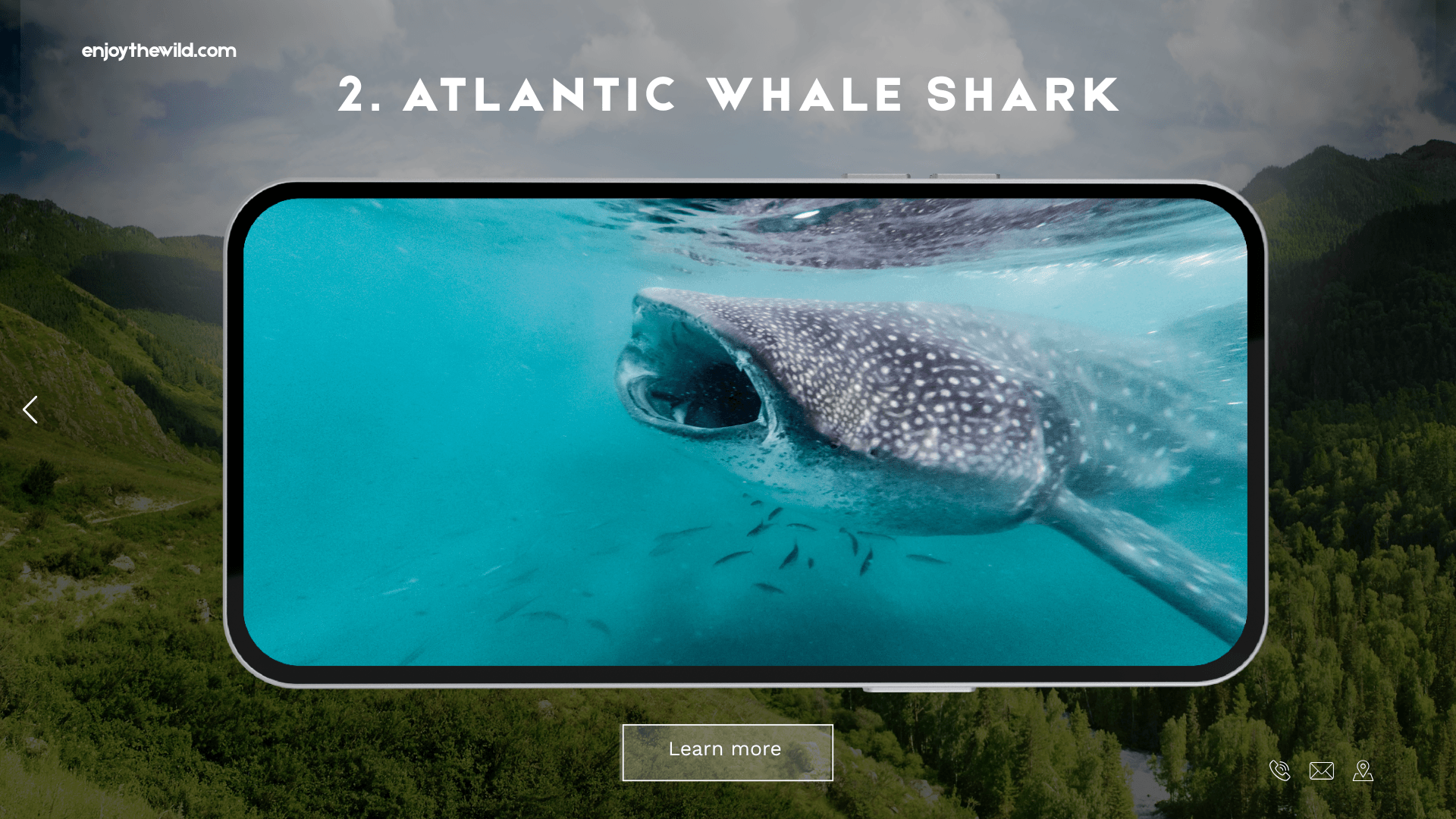
The Atlantic Whale Shark is one of the less commonly observed Types of Whale shark, primarily found in the tropical and subtropical regions of the Atlantic Ocean.
Unlike Indo-Pacific populations, Atlantic whale sharks are more widely dispersed and less frequently seen in large aggregations. They tend to travel through waters near the Gulf of Mexico, the Caribbean Sea, and parts of West Africa.
These sharks prefer deep offshore environments but occasionally approach coastal zones when plankton concentrations rise. Their feeding behavior remains consistent with other whale sharks, relying entirely on filter feeding rather than predation.
Because of their wide range and lower sighting frequency, Atlantic whale sharks are still less understood compared to Indo-Pacific populations, making them an important focus of ongoing marine research.
3. Indian Ocean Whale Shark
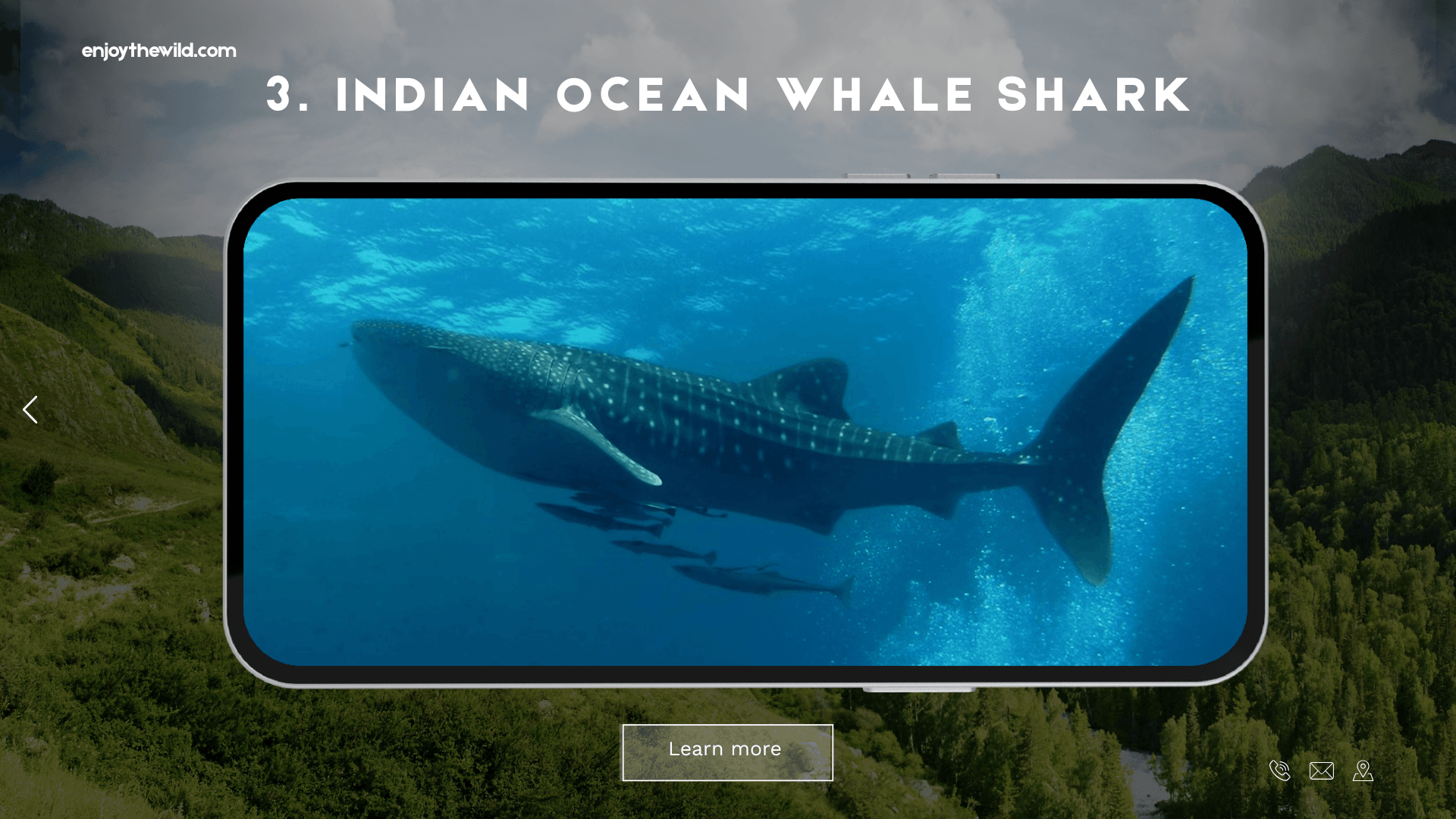
The Indian Ocean Whale Shark is one of the most studied Types of Whale shark, especially around countries like Mozambique, Tanzania, Oman, and India.
This population is well known for predictable seasonal appearances near coastal feeding grounds. One of the most famous locations is the Gulf of Tadjoura and the waters around the Maldives, where whale sharks gather in large numbers.
These sharks often associate with monsoon-driven plankton blooms, which create nutrient-rich conditions ideal for feeding. Juveniles are frequently observed in coastal nursery areas, suggesting these waters play a role in early development.
The Indian Ocean population is a major attraction for ecotourism, but it also faces threats from boat strikes and fishing gear entanglement.
4. Eastern Pacific Whale Shark

The Eastern Pacific Whale Shark is a distinct regional group within the broader Types of Whale shark, found along the Pacific coasts of Central and South America.
This population is commonly observed in waters near Mexico, Costa Rica, and Peru. They are known for seasonal aggregations, particularly near nutrient-rich coastal upwellings influenced by ocean currents.
Eastern Pacific whale sharks often exhibit strong migratory behavior, moving between feeding grounds depending on plankton availability. Their movement patterns are influenced by ocean temperature changes and seasonal productivity cycles.
This group is important for understanding whale shark migration corridors across the Pacific Ocean basin.
5. Western Pacific Whale Shark

The Western Pacific Whale Shark is one of the most visible Types of Whale shark, commonly seen around the Philippines, Taiwan, and parts of Indonesia.
This population is famous for predictable seasonal gatherings, especially in locations like Donsol (Philippines), where whale sharks feed near the surface during plankton-rich months.
They are typically juveniles and subadults, suggesting that western Pacific waters may serve as important feeding or nursery zones. These sharks are often observed interacting with tourism boats, making them one of the most photographed populations globally.
Despite their popularity, conservation concerns remain due to boat traffic, habitat disruption, and declining plankton availability caused by climate shifts.
This first section of the Types of Whale shark guide highlights how whale sharks are grouped by ocean regions and migration behavior rather than true species differences. In the next section, we will continue exploring additional regional populations, feeding classifications, and ecological behavior groups that further explain the global distribution of this gentle giant.
6. Tropical Coastal Whale Shark
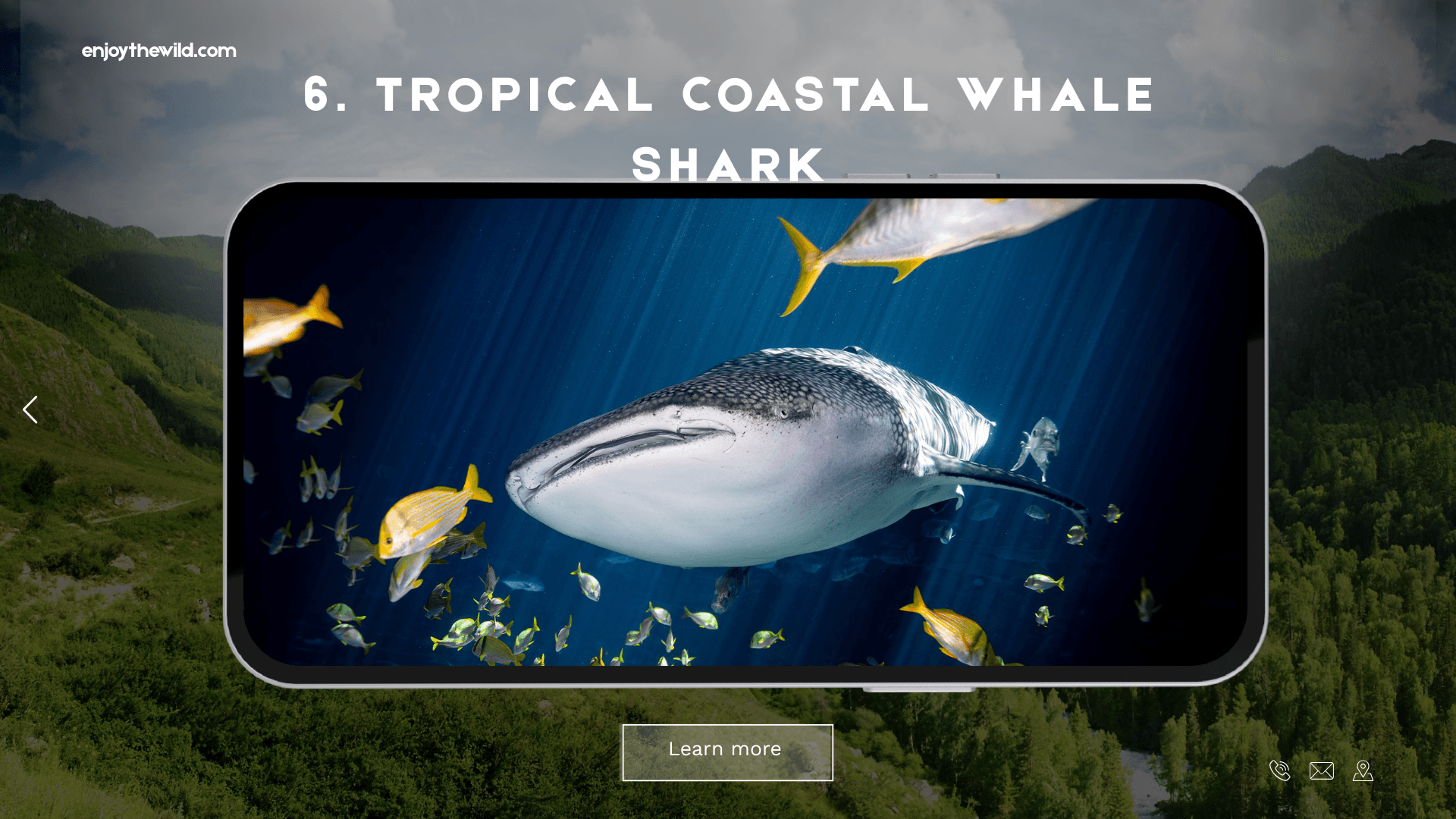
The Tropical Coastal Whale Shark is one of the most frequently observed Types of Whale shark, typically found in warm, shallow coastal waters near tropical reefs and islands. These sharks often stay closer to continental shelves where plankton blooms are more predictable and nutrient-rich.
Unlike more oceanic populations, tropical coastal whale sharks are regularly seen near shorelines, especially in regions with strong seasonal upwelling. Their movements are influenced by water temperature, salinity, and food availability rather than strict migration routes.
They are often encountered near coral reef systems, where currents concentrate plankton and small marine organisms. This makes them highly visible to divers and eco-tourism operators in popular destinations around the world.
Ecologically, these sharks play a key role in transferring nutrients between coastal and offshore ecosystems as they move in and out of shallow feeding grounds.
7. Open Ocean Whale Shark

The Open Ocean Whale Shark represents a more pelagic lifestyle among the Types of Whale shark, spending most of its life far from land in deep offshore waters.
These individuals are less frequently observed because they inhabit remote oceanic zones where plankton is widely dispersed rather than concentrated. They are highly migratory and capable of traveling thousands of kilometers across ocean basins.
Open ocean whale sharks rely on large-scale ocean currents and upwelling systems to locate food. Satellite tracking studies have revealed that they can dive to significant depths before returning to surface waters to feed.
This population is important for understanding global ocean connectivity and the long-distance migration patterns of large marine species.
8. Juvenile Whale Shark
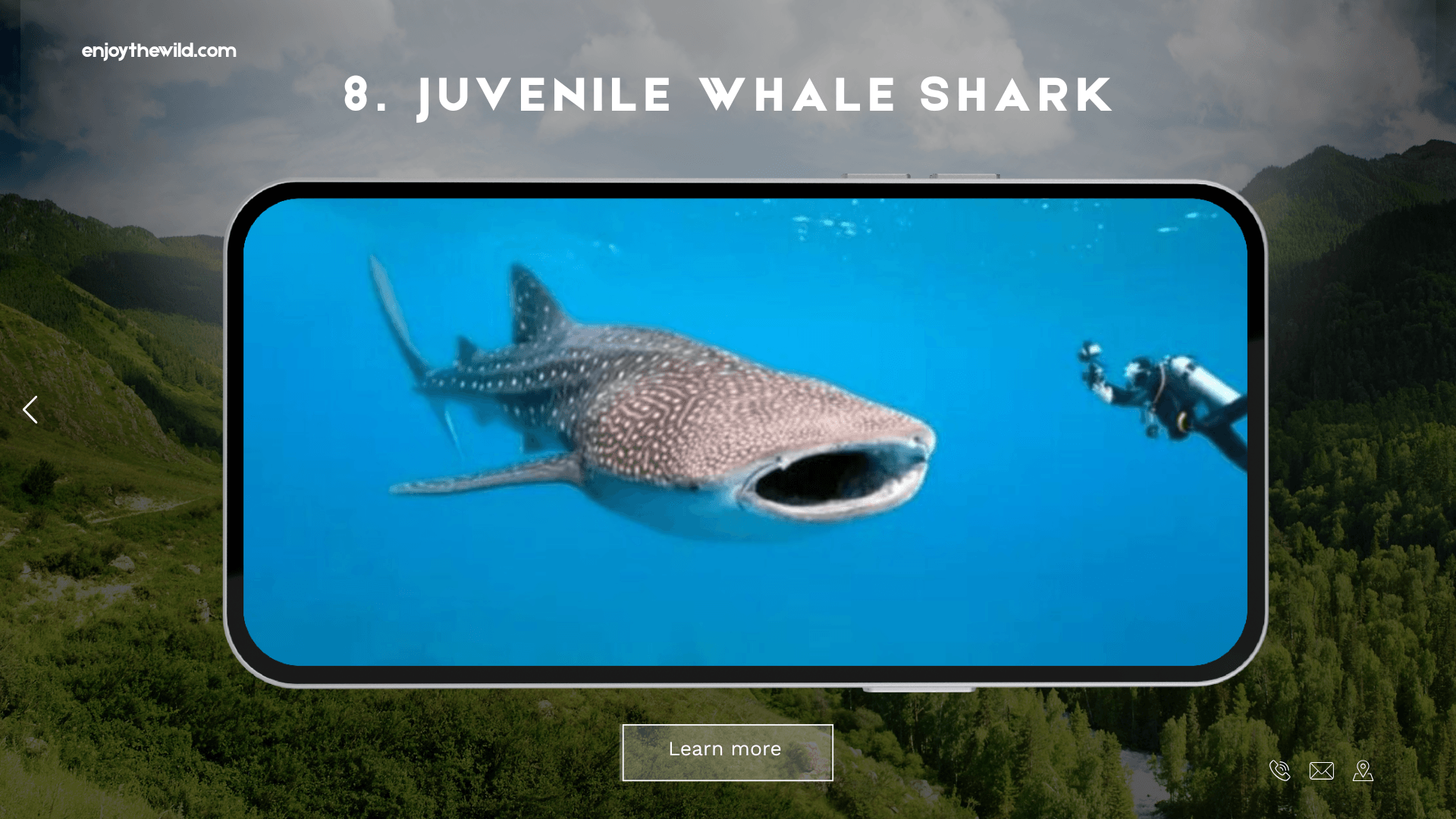
Juvenile Whale Sharks are one of the most commonly studied Types of Whale shark due to their frequent appearance in coastal aggregation sites. These young sharks are typically under 8 meters in length and are often found in shallow, warm waters.
Juveniles tend to stay in safer coastal zones where food is abundant and predator risk is lower. These areas often serve as nursery grounds where young whale sharks can grow before moving into deeper waters as adults.
Their diet consists primarily of plankton, fish eggs, and small larvae, which are filtered continuously as they swim slowly near the surface.
Juvenile whale sharks are extremely important for population studies because they provide insight into survival rates, growth patterns, and early-life habitat preferences.
9. Subadult Whale Shark

The Subadult Whale Shark represents an intermediate stage within the Types of Whale shark, bridging the gap between juvenile and fully mature adults.
These sharks are larger than juveniles but not yet fully grown, often ranging between 8–12 meters in length. They begin expanding their range beyond coastal nursery areas and start exploring deeper offshore environments.
Subadult whale sharks show more complex migratory behavior compared to juveniles, often traveling between feeding grounds over longer distances.
This stage is crucial for understanding how whale sharks transition from protected coastal zones to open ocean ecosystems.
10. Adult Whale Shark
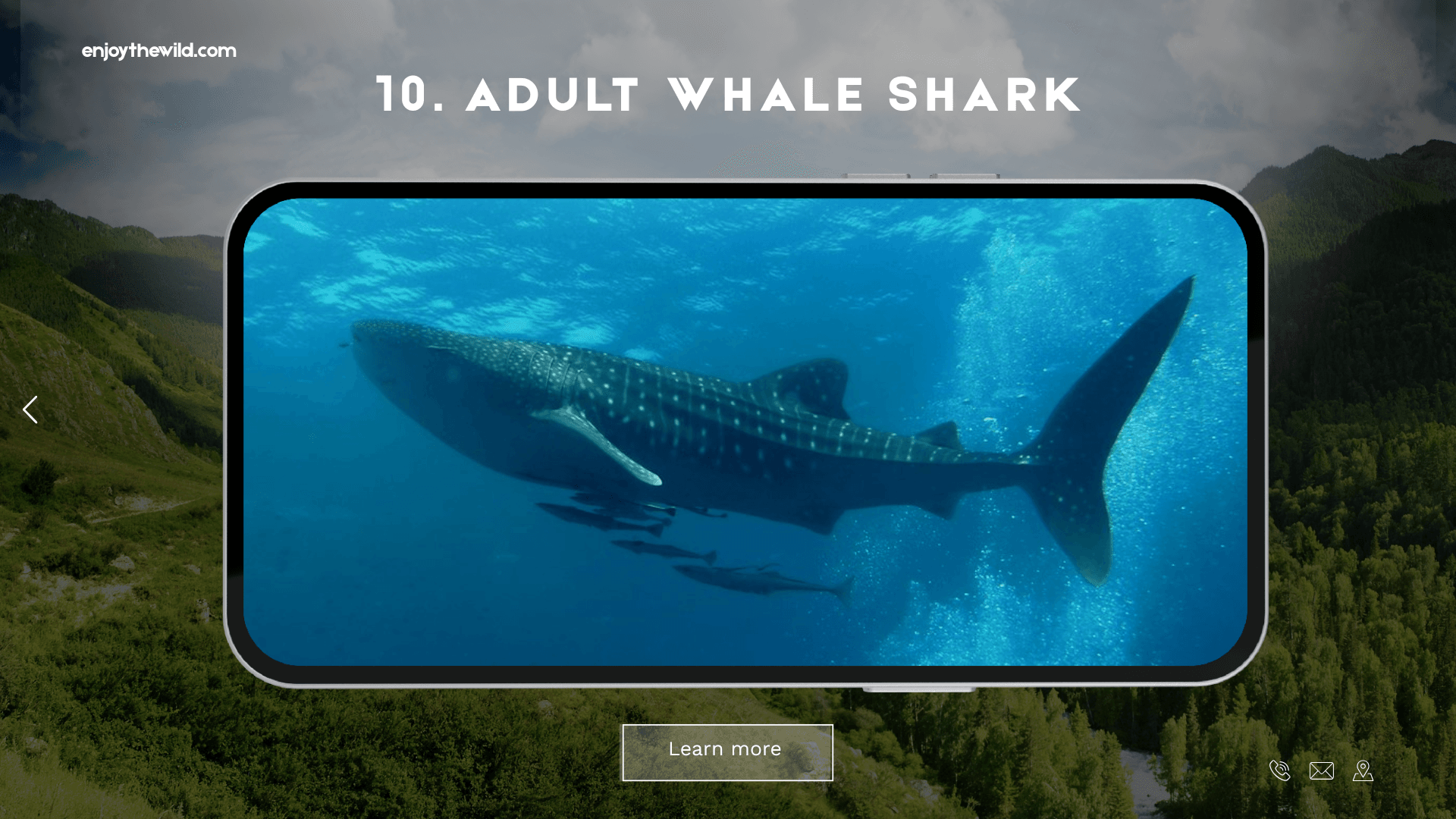
Adult Whale Sharks are the largest and most mature among all Types of Whale shark, often reaching lengths of 12–18 meters or more. These giants are fully developed and capable of long-distance migration across entire ocean basins.
Adults are typically found in deep offshore waters but will periodically visit coastal regions during plankton-rich seasonal events. Their movements are highly influenced by ocean currents and large-scale environmental changes.
As adults, whale sharks have fully developed filtering systems, allowing them to consume massive quantities of plankton and small organisms while swimming slowly through nutrient-rich waters.
They play a major ecological role in regulating plankton populations and contributing to nutrient cycling in marine ecosystems worldwide.
This second section of the Types of Whale shark guide highlights how whale sharks differ based on habitat preference, life stage, and movement behavior rather than distinct biological species. In the next section, we will continue exploring famous aggregation sites, regional populations, and unique behavioral classifications that further define the global distribution of this gentle ocean giant.
11. Ningaloo Reef Whale Shark (Australia Aggregation Group)

The Ningaloo Reef Whale Shark is one of the most famous Types of Whale shark due to its predictable seasonal appearance off Western Australia. Every year, whale sharks gather along Ningaloo Reef, creating one of the world’s most reliable viewing locations.
These sharks are usually juveniles and subadults, attracted by coral spawning events that trigger massive plankton blooms. This food-rich environment supports repeated seasonal feeding behavior.
Ningaloo whale sharks are well studied because they allow scientists to observe individual identification patterns using spot markings. This has contributed greatly to global whale shark research and conservation efforts.
The region is also a major ecotourism hotspot, where regulated swimming and diving with whale sharks is carefully managed to reduce stress on the animals.
12. Mexico Yucatán Whale Shark
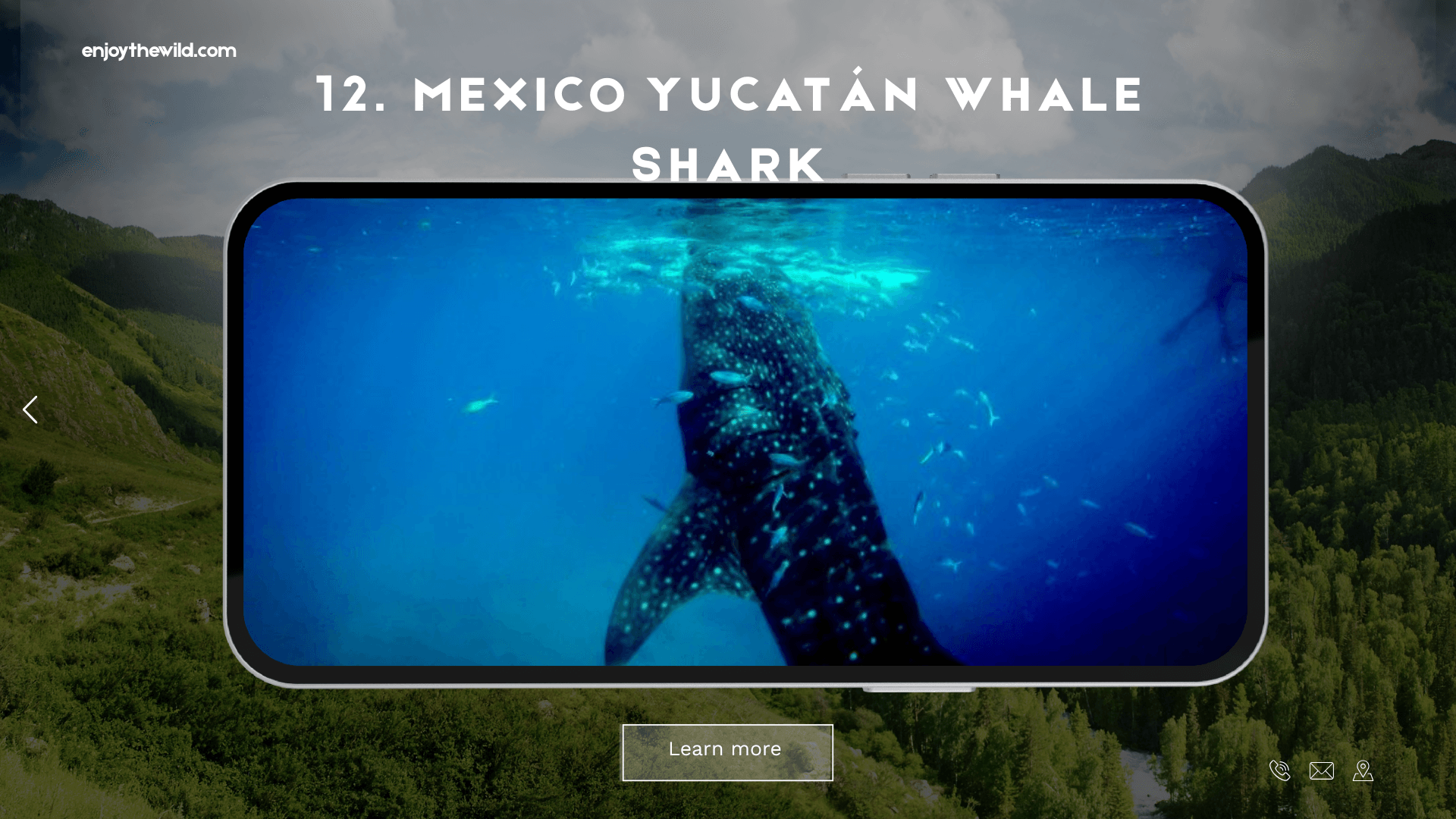
The Yucatán Whale Shark is another well-known regional grouping within the Types of Whale shark, found in the waters near Isla Holbox and Isla Mujeres in Mexico.
This population is famous for large seasonal aggregations that occur when plankton concentrations increase during warm months. Hundreds of whale sharks may gather in the same feeding zone.
These sharks are typically young individuals, suggesting that the Yucatán region may function as a key feeding ground or nursery habitat.
Their predictable presence has made Mexico one of the most important global destinations for whale shark tourism and marine research.
13. Belize Barrier Reef Whale Shark

The Belize Whale Shark population is one of the most studied Types of Whale shark in the Caribbean region. These sharks appear seasonally near the Belize Barrier Reef during spawning events of snappers and groupers.
This behavior is highly specialized, as whale sharks time their arrival to coincide with fish spawning, which increases plankton and egg availability.
The Belize aggregation is smaller compared to Indo-Pacific populations but is ecologically significant due to its predictable nature and strong link to reef spawning cycles.
This makes it a critical site for understanding predator-prey interactions in marine ecosystems.
14. Philippines Donsol Whale Shark

The Donsol Whale Shark population is one of the most iconic Types of Whale shark, located in the Philippines. Donsol is known globally for its seasonal whale shark sightings in shallow coastal waters.
These sharks are typically juveniles and subadults that gather near the surface during plankton blooms triggered by seasonal currents.
Unlike some heavily industrialized tourism sites, Donsol has developed eco-friendly whale shark interaction programs focused on “responsible tourism” rather than feeding or manipulation.
This population has played a major role in raising global awareness about whale shark conservation and marine biodiversity protection.
15. Taiwan Seasonal Whale Shark

The Taiwan Whale Shark population is one of the more seasonal Types of Whale shark, appearing in waters around eastern Taiwan during specific ocean current cycles.
These sharks are often associated with upwelling zones that bring nutrient-rich waters to the surface, resulting in plankton-rich feeding conditions.
Sightings are less predictable compared to other regions, but when conditions align, whale sharks can be observed feeding near coastal waters.
This population helps researchers understand how oceanographic changes influence whale shark migration across the western Pacific region.
This third section of the Types of Whale shark guide highlights how regional aggregation sites shape whale shark behavior across the world. These locations are not separate species but critical feeding zones that influence migration, survival, and population structure. In the next section, we will continue with African, Indian Ocean, and other key regional populations that complete the global picture of whale shark distribution.
16. Madagascar Whale Shark

The Madagascar Whale Shark is one of the important regional Types of Whale shark found in the western Indian Ocean. These sharks are frequently observed along the coastal waters of Madagascar, especially in nutrient-rich upwelling zones.
This region provides seasonal plankton blooms driven by ocean currents, which attract whale sharks for feeding. Most sightings involve juveniles and subadults, suggesting Madagascar may function as a feeding corridor rather than a permanent habitat.
Madagascar whale sharks are also part of broader migratory routes connecting East Africa, Mozambique, and the Indian Ocean basin. Satellite tracking has shown long-distance movement between feeding areas.
This population is ecologically significant because it links multiple Indian Ocean ecosystems through seasonal migration.
17. Mozambique Whale Shark
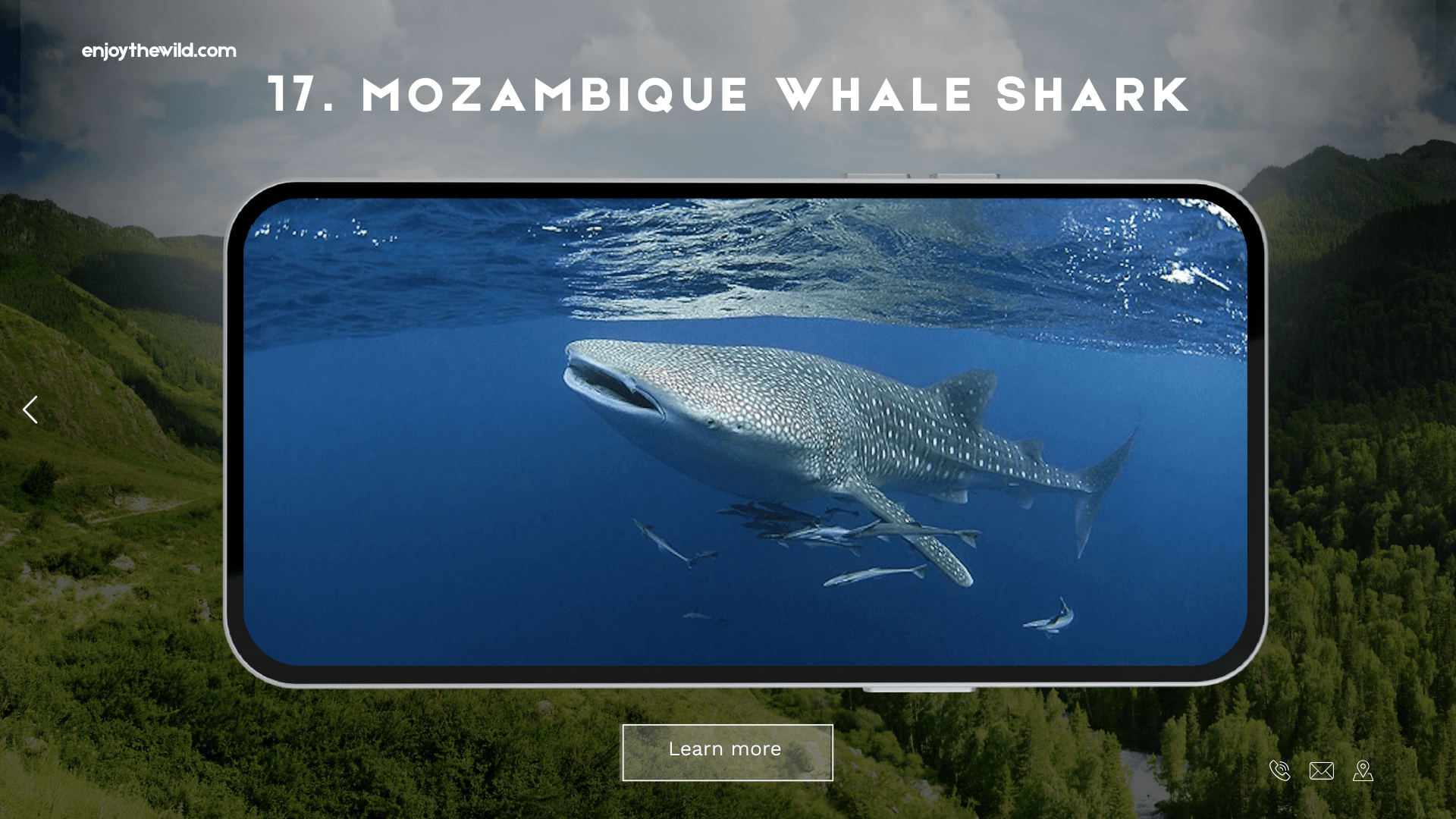
The Mozambique Whale Shark is another key member of the Types of Whale shark in the western Indian Ocean, especially well known around Tofo Beach.
This region is famous for one of the highest whale shark encounter rates in the world. Sharks gather here due to consistent plankton availability and favorable warm currents.
Mozambique whale sharks are often observed close to divers and snorkelers, making this location a global hotspot for eco-tourism and scientific observation.
The population here is heavily studied, particularly for individual identification, migration tracking, and population health monitoring.
18. Tanzania Whale Shark
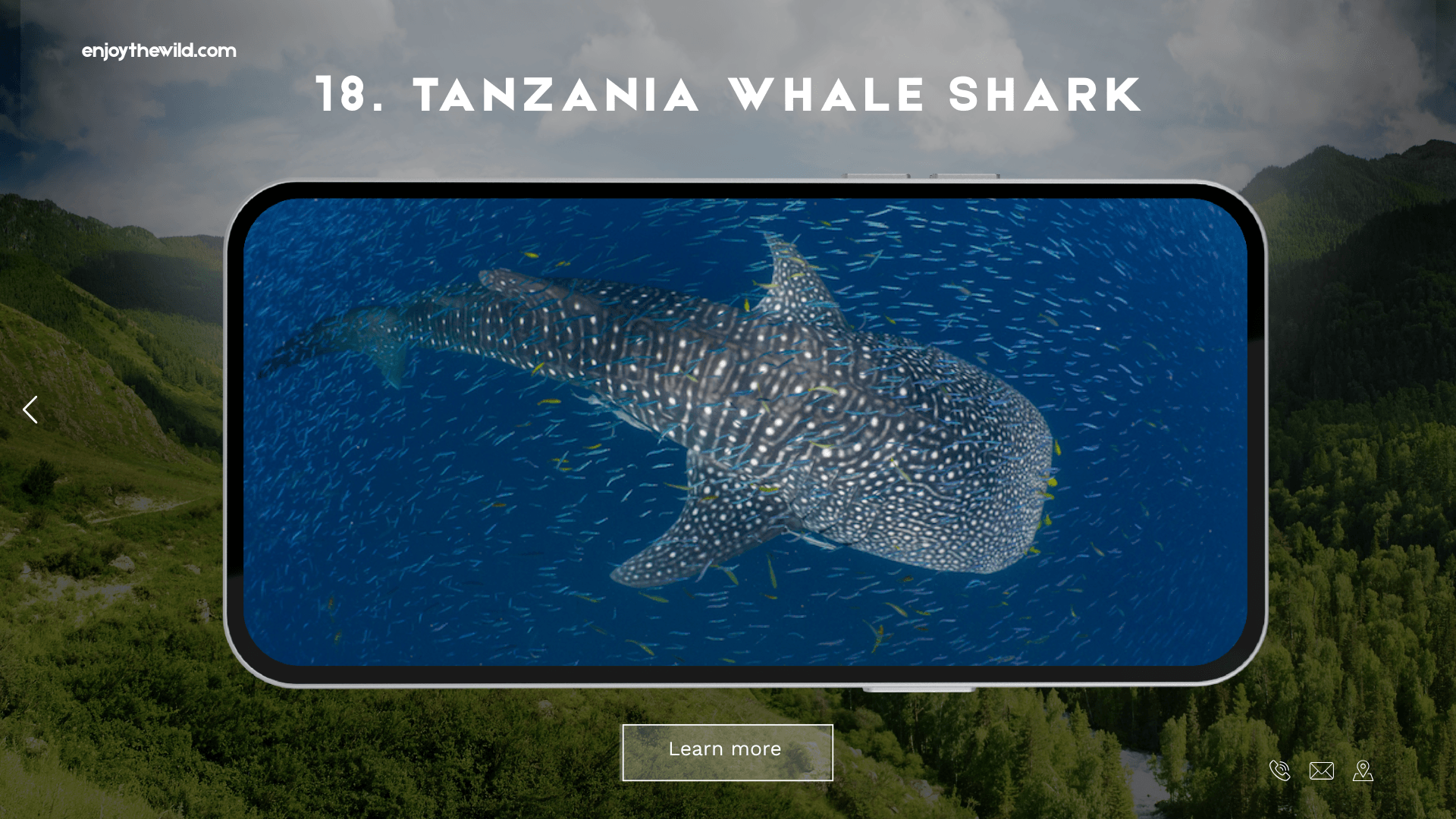
The Tanzania Whale Shark is part of the East African Types of Whale shark, commonly seen around Zanzibar and Mafia Island.
These sharks appear seasonally, usually when plankton blooms increase in coastal waters due to monsoon-driven currents.
Juvenile whale sharks are frequently observed in this region, suggesting it may serve as a developmental feeding ground.
Conservation efforts in Tanzania focus on reducing boat strikes and regulating tourism to ensure sustainable interaction with these gentle giants.
19. Red Sea Whale Shark

The Red Sea Whale Shark represents one of the more isolated Types of Whale shark, inhabiting warm, saline-rich waters between Africa and the Arabian Peninsula.
These sharks are less frequently observed but are known to pass through the region during seasonal migration cycles.
The Red Sea’s unique environmental conditions, including high salinity and stable warm temperatures, create a distinct habitat compared to other ocean regions.
This population is still under-researched, making it an important focus for future marine biology studies.
20. Oman Gulf Whale Shark

The Oman Whale Shark is one of the most famous Types of Whale shark in the Arabian Sea region, especially around the Gulf of Oman.
This area experiences strong seasonal upwelling, which creates dense plankton blooms that attract whale sharks in large numbers.
Unlike some other regions, Oman is known for occasional large aggregations where multiple whale sharks feed in relatively shallow waters.
This population is crucial for understanding whale shark migration pathways between the Indian Ocean and Arabian Sea systems.
This fourth section of the Types of Whale shark guide highlights key populations across the Indian Ocean, East Africa, and the Arabian Sea. These regions are critical feeding and migration corridors that connect global whale shark movements. In the final section, we will cover behavioral classifications and ecological “types” that describe how whale sharks interact with their environment beyond geography alone.
21. Surface-Feeding Whale Shark
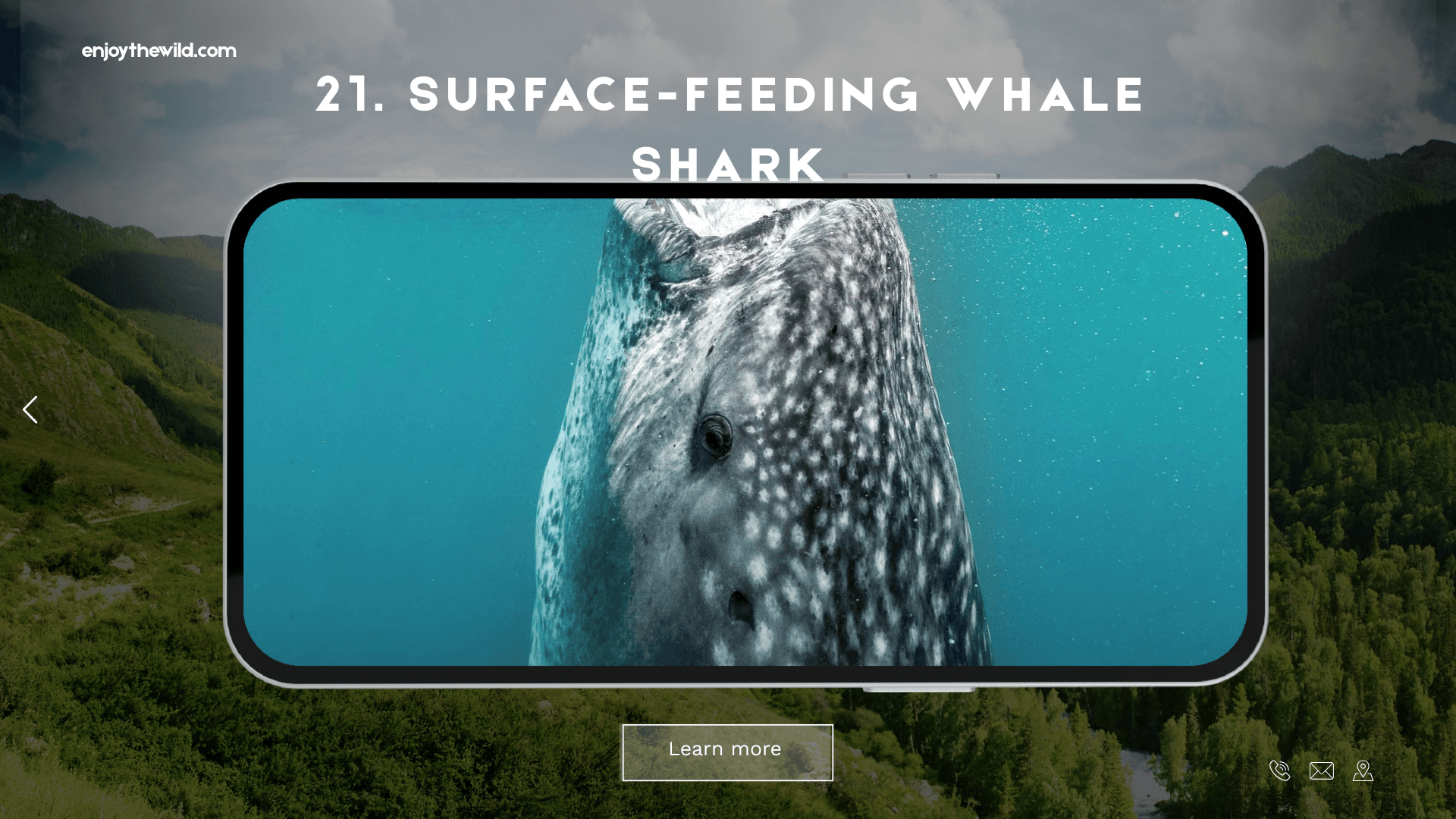
The Surface-Feeding Whale Shark is one of the most commonly observed behavioral Types of Whale shark, often seen gliding near the ocean’s upper layers with its mouth wide open. This feeding style allows it to capture dense concentrations of plankton, fish eggs, and microscopic organisms.
These sharks rely heavily on surface productivity zones where sunlight drives plankton growth. They are frequently spotted during calm sea conditions when plankton remains concentrated near the water’s top layer.
Surface feeding behavior is especially important for eco-tourism sightings because it makes whale sharks highly visible to divers and snorkelers.
This feeding strategy conserves energy while maximizing intake, making it one of the most efficient survival behaviors among large marine filter feeders.
22. Deep-Water Diving Whale Shark

The Deep-Water Diving Whale Shark represents a less visible but scientifically important group within the Types of Whale shark. These sharks regularly descend to deeper ocean layers, sometimes reaching several hundred meters below the surface.
Unlike surface feeders, these individuals may be tracking deep scattering layers of plankton or responding to temperature shifts in the water column.
Satellite tagging studies have shown that whale sharks are capable of vertical migration, spending part of their time in deep, cold waters before returning to the surface to feed.
This behavior helps scientists understand how whale sharks utilize the entire ocean column, not just surface ecosystems.
23. Migratory Whale Shark
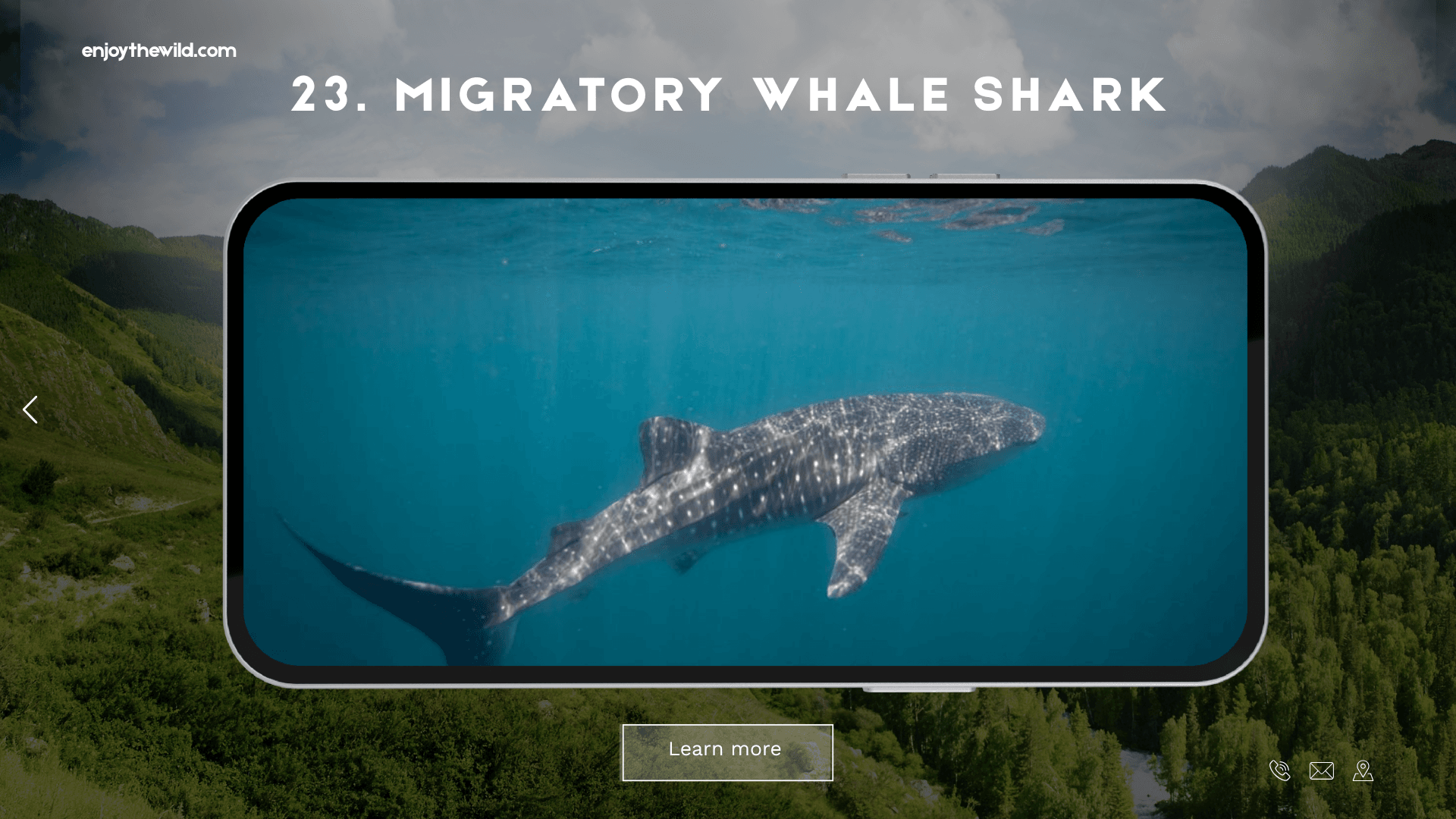
The Migratory Whale Shark is one of the most important ecological Types of Whale shark, characterized by long-distance seasonal movement across entire ocean basins.
These sharks can travel thousands of kilometers between feeding and breeding areas, following predictable ocean currents and plankton-rich zones.
Migration is influenced by water temperature, food availability, and oceanographic changes such as El Niño and monsoon cycles.
Understanding migratory patterns is essential for global conservation efforts, as these sharks cross multiple international waters and protected zones.
24. Resident Coastal Whale Shark
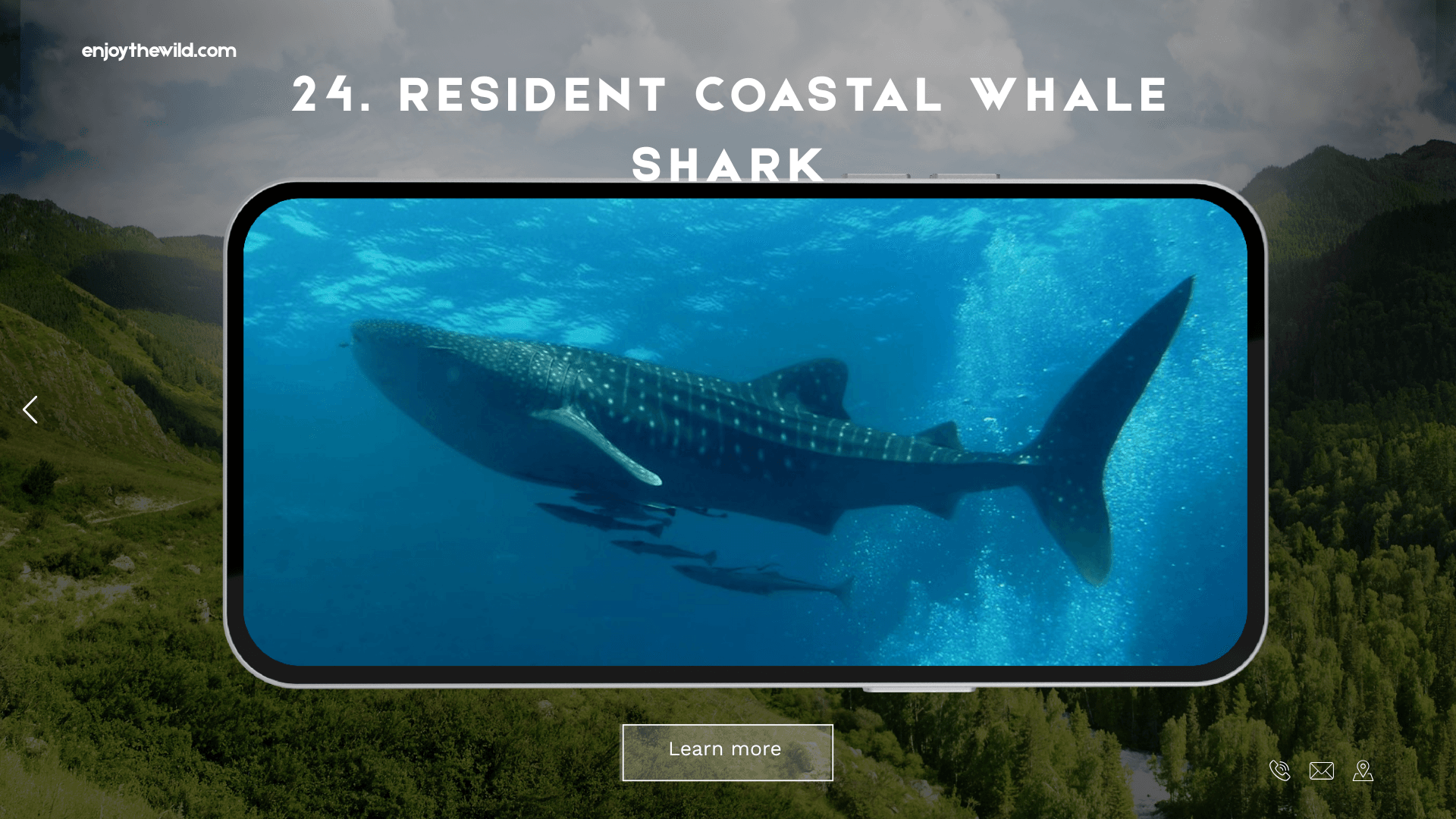
The Resident Coastal Whale Shark is a regional behavioral Types of Whale shark that tends to remain within a relatively small geographic area for extended periods.
These sharks are often found in specific coastal regions where food supply remains stable year-round, reducing the need for long-distance migration.
Resident individuals are especially valuable for research because they allow long-term tracking of growth, behavior, and site fidelity.
They also play a key role in local ecosystems by consistently cycling nutrients within a limited marine area.
25. Solitary Whale Shark
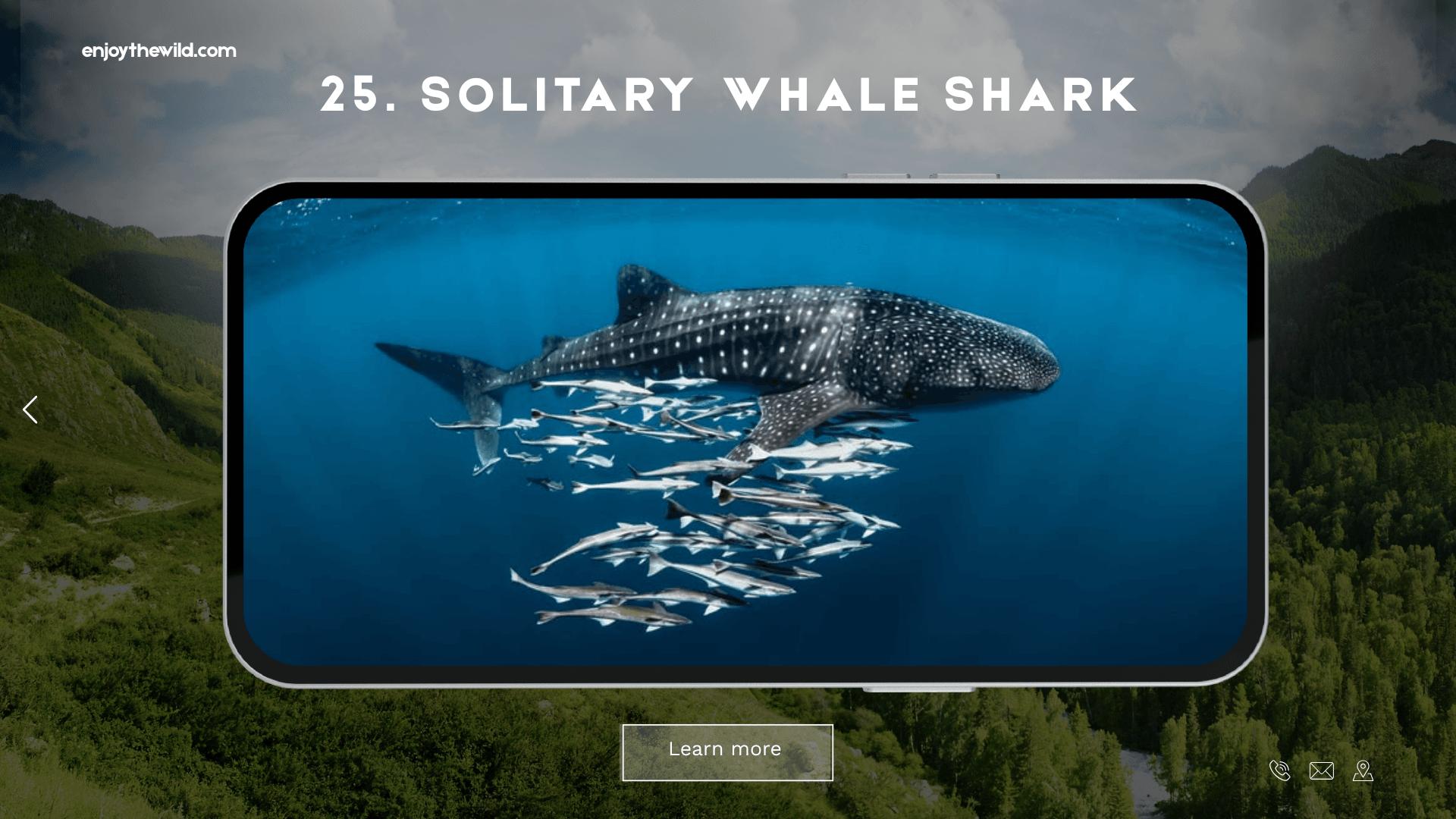
The Solitary Whale Shark is one of the most common behavioral Types of Whale shark, referring to individuals that are typically observed alone rather than in groups.
Despite occasional aggregations, most whale sharks spend their lives independently, roaming vast ocean areas in search of food.
Solitary behavior reduces competition for plankton resources and allows efficient movement across large distances.
This behavior also makes tracking and studying population size more challenging for marine scientists.
26. Aggregating Whale Shark

The Aggregating Whale Shark refers to individuals that gather in large numbers at predictable feeding hotspots, making it one of the most visually striking Types of Whale shark.
These aggregations are usually driven by seasonal plankton blooms, fish spawning events, or oceanographic upwelling systems.
Locations such as Mexico, the Philippines, and Western Australia are famous for these gatherings, where dozens to hundreds of whale sharks may appear together.
Aggregations are critical for ecotourism and scientific tagging studies, providing rare opportunities to observe social spacing and feeding dynamics.
27. Feeding Aggregation Whale Shark
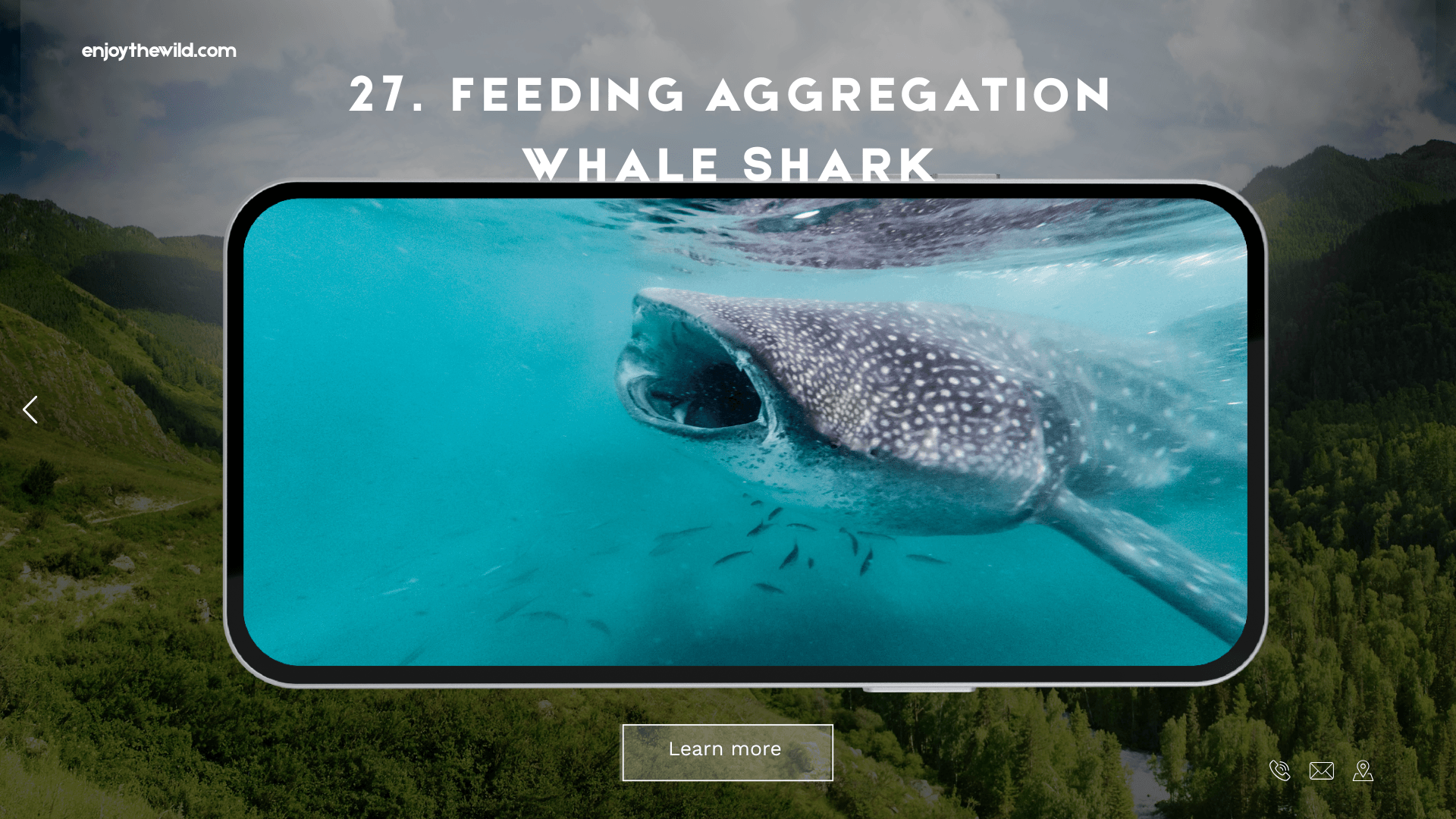
The Feeding Aggregation Whale Shark is a specific behavioral classification within the Types of Whale shark where multiple individuals actively feed in the same nutrient-rich area.
These aggregations occur when plankton density reaches unusually high levels, allowing many sharks to feed simultaneously without strong competition.
Despite feeding in proximity, whale sharks maintain non-aggressive behavior and continue slow, synchronized swimming patterns.
This behavior is one of the most important indicators of ecosystem productivity in marine environments.
28. Nursery Juvenile Whale Shark
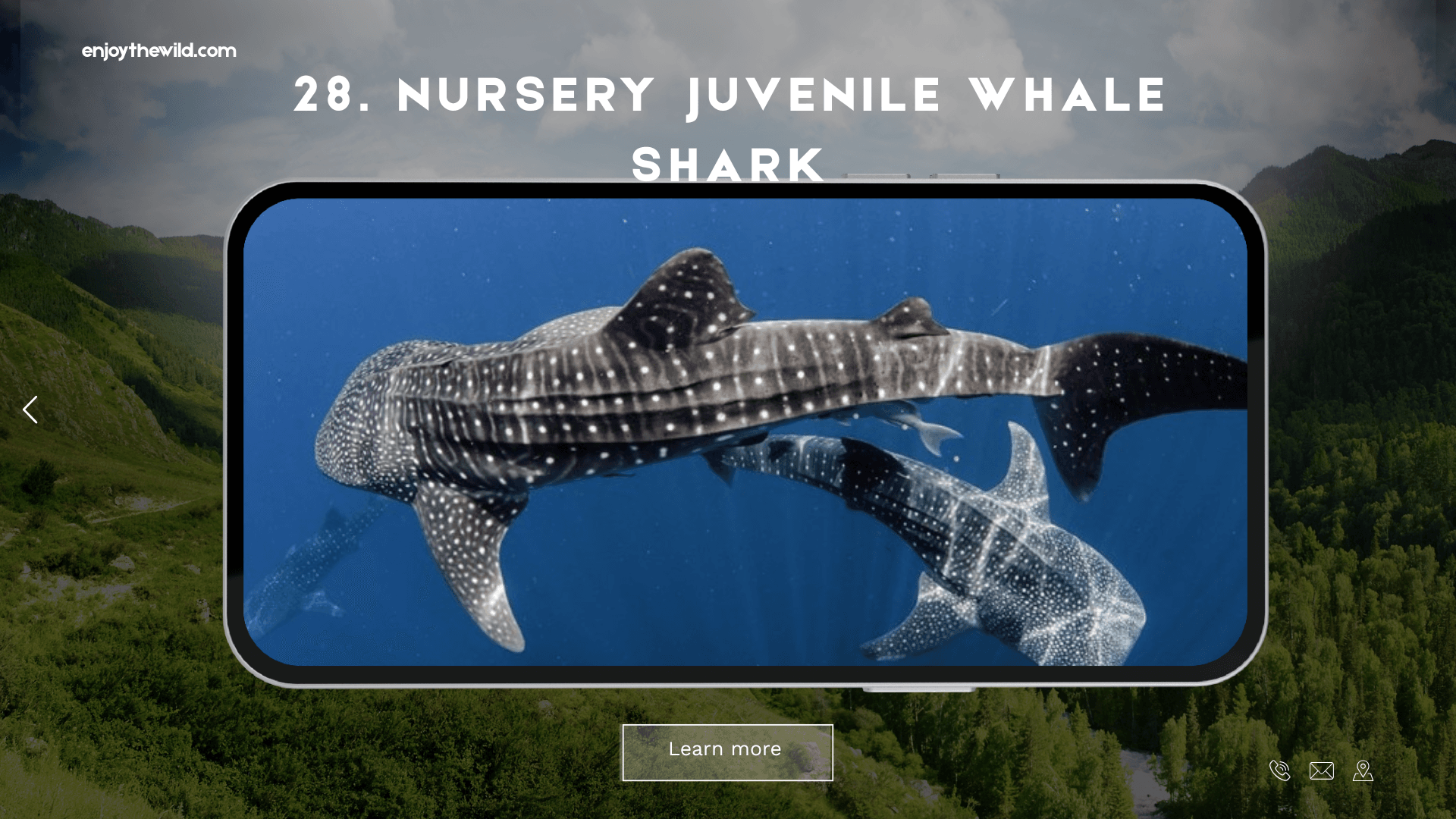
The Nursery Juvenile Whale Shark refers to young individuals that inhabit protected coastal zones, making it one of the most ecologically important Types of Whale shark.
These nursery areas provide safe environments with abundant food and reduced predation risk, allowing juveniles to grow rapidly.
Common nursery zones include parts of the Indian Ocean, western Pacific, and Gulf regions where plankton productivity is consistently high.
Protecting these habitats is essential for maintaining healthy global whale shark populations.
29. Striped Pattern Whale Shark Variant
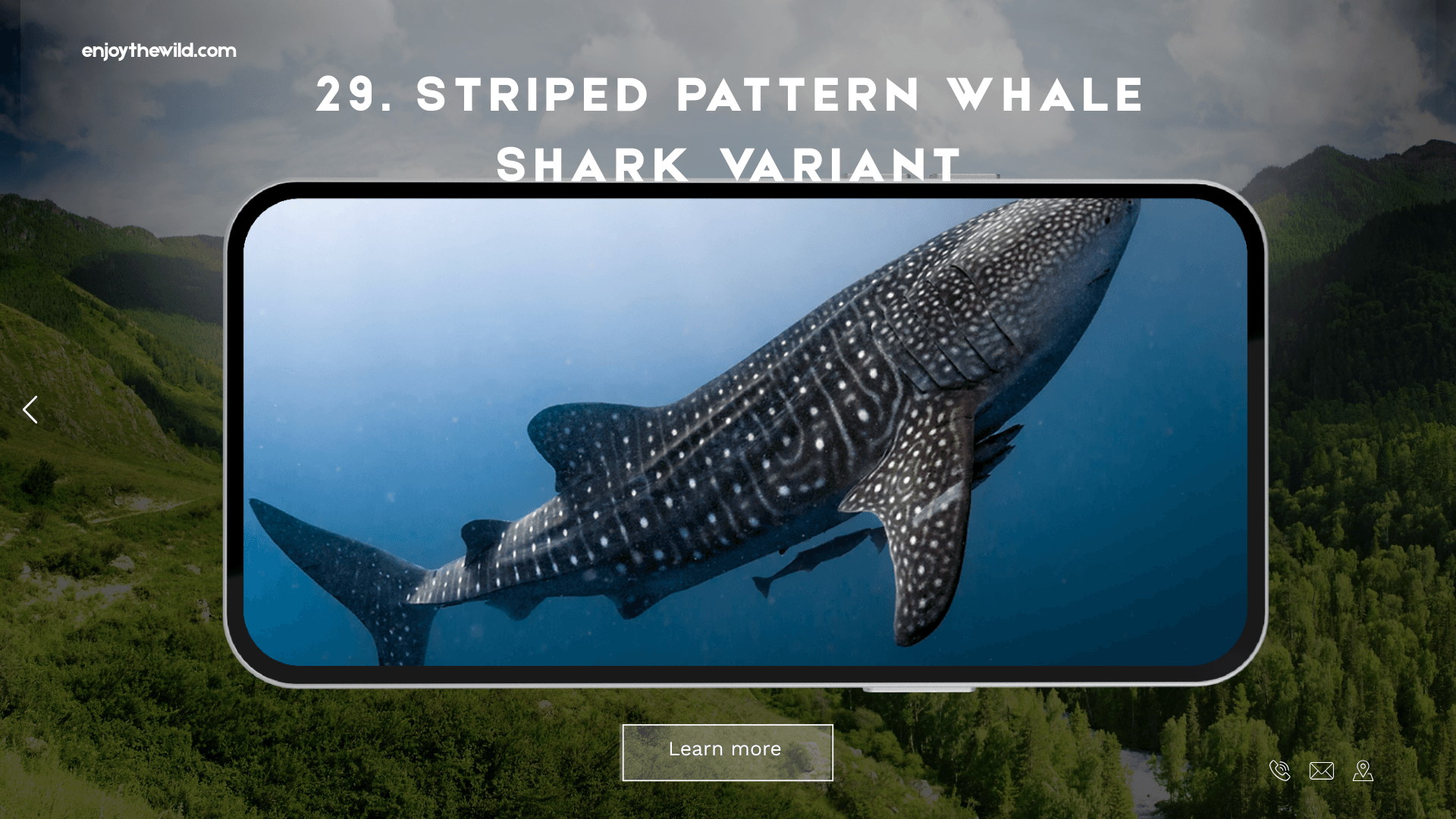
The Striped Pattern Whale Shark Variant refers to individuals that display more pronounced longitudinal striping alongside their characteristic spots, making them one of the visually distinctive Types of Whale shark.
These patterns are not fully understood but are believed to be related to genetic variation, age, or regional adaptation.
Stripe visibility may change over time, becoming more or less prominent depending on maturity and environmental conditions.
Scientists often use these markings for photo-identification in whale shark tracking studies.
30. Spotted Pattern Whale Shark Variant
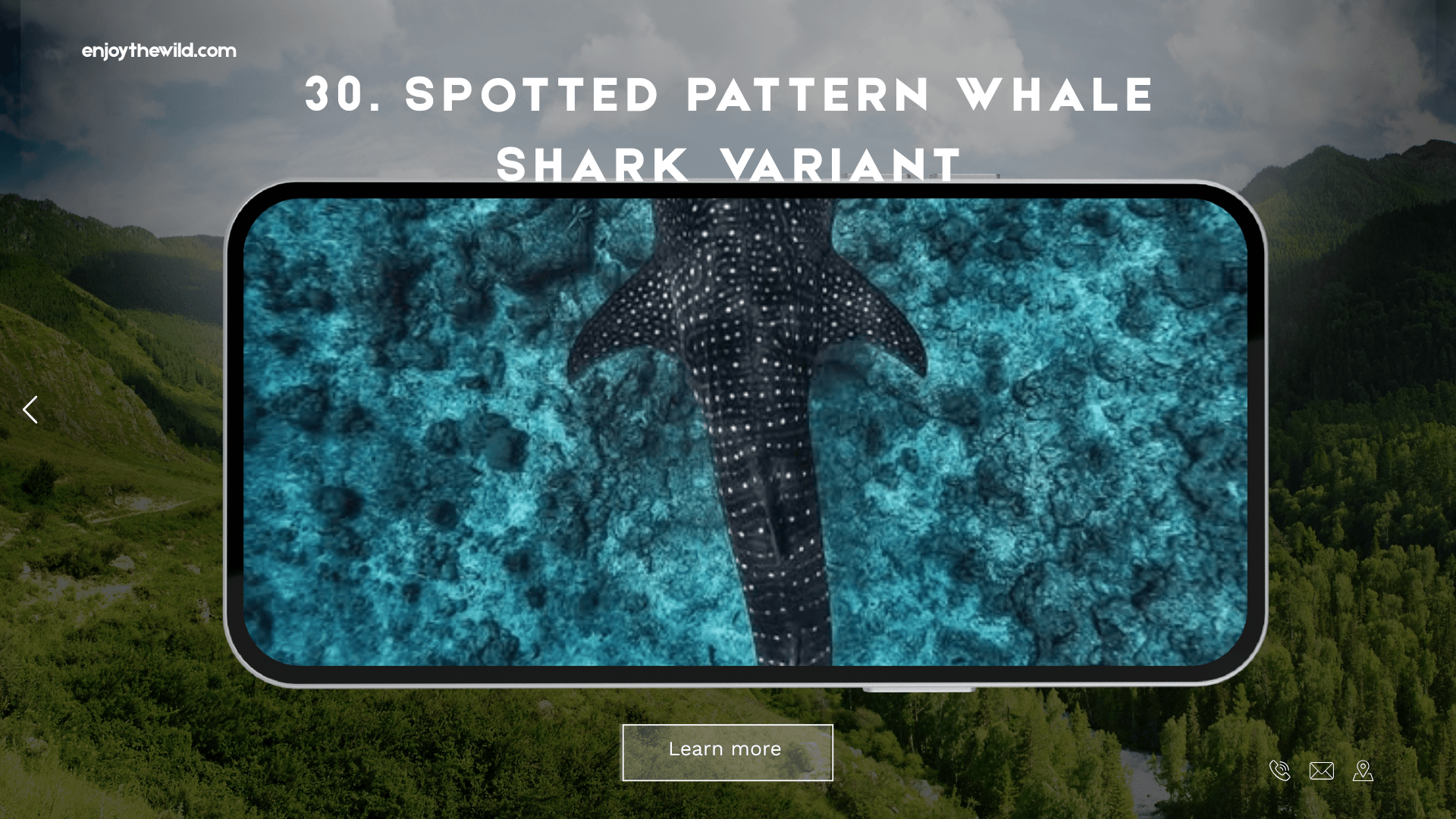
The Spotted Pattern Whale Shark Variant is the most recognizable form within the Types of Whale shark, known for its unique constellation-like white spots across a dark gray body.
These spot patterns are unique to each individual, much like a human fingerprint, allowing researchers to identify and track sharks over long periods.
This identification method has revolutionized whale shark research, enabling non-invasive population monitoring through photography.
Spotted patterns also play a role in camouflage, helping break up the shark’s outline in sunlit water environments.
Conclusion: Understanding the Types of Whale Shark
The full range of Types of Whale shark shows that these gentle giants are not divided into multiple species, but instead into ecological populations, behavioral groups, and regional aggregations. From surface feeders and deep divers to migratory travelers and resident coastal populations, whale sharks demonstrate extraordinary adaptability across global oceans.
Each classification helps scientists better understand how whale sharks survive, migrate, and interact with marine ecosystems. These distinctions are essential for conservation, especially as climate change and human activity continue to impact ocean environments.
By studying these different types, we gain a clearer picture of how whale sharks maintain their role as the largest filter-feeding fish in the ocean and why their protection is critical for marine biodiversity. Could the future survival of ocean ecosystems depend on how well we understand the behavior of whale sharks?
50+ FAQs About Whale Shark (Types, Behavior, Habitat & Facts)
1. What is a whale shark?
The whale shark is the largest fish in the world, scientifically known as Rhincodon typus. Despite its size, it is completely harmless to humans. It is a filter-feeding shark that survives mainly on plankton, fish eggs, and tiny marine organisms.
2. Are there different types of whale sharks?
Scientifically, there is only one whale shark species. However, researchers classify it into different “Types of Whale shark” based on region, behavior, migration patterns, and feeding habits for easier study and conservation tracking.
3. How big do whale sharks get?
Whale sharks can grow up to 18 meters (60 feet) in length, although most individuals are smaller. Their massive size makes them the largest known fish species in the ocean.
4. What do whale sharks eat?
They feed mainly on plankton, krill, fish eggs, and small organisms. They filter food by swimming with their mouths open, allowing water to pass through gill rakers that trap food particles.
5. Are whale sharks dangerous to humans?
No, whale sharks are completely harmless. They do not have aggressive behavior and pose no threat to humans. Many divers swim safely alongside them.
6. Where do whale sharks live?
Whale sharks live in tropical and warm-temperate oceans worldwide, including the Indian Ocean, Pacific Ocean, and Atlantic Ocean.
7. Do whale sharks migrate?
Yes, whale sharks are highly migratory. They travel thousands of kilometers following food sources and seasonal plankton blooms.
8. Why do whale sharks gather in groups?
They gather in areas with high plankton concentration, fish spawning events, or nutrient-rich waters. These gatherings are called feeding aggregations.
9. How long do whale sharks live?
Whale sharks are believed to live 70–100 years, although exact lifespan estimates are still being studied due to limited long-term tracking data.
10. How do scientists identify whale sharks?
They use unique spot patterns on each whale shark’s body. These patterns are like fingerprints and allow researchers to track individuals over time.
11. What is a juvenile whale shark?
Juvenile whale sharks are young individuals that stay in coastal waters where food is abundant and predators are fewer, allowing safe growth.
12. What is a subadult whale shark?
Subadults are intermediate-sized whale sharks transitioning from coastal nursery areas to deeper ocean environments.
13. What is an adult whale shark?
Adult whale sharks are fully mature individuals capable of long-distance migration and reaching maximum body size.
14. Why are whale sharks important to the ecosystem?
They help regulate plankton populations and contribute to nutrient cycling in marine ecosystems, maintaining ecological balance.
15. Do whale sharks sleep?
Whale sharks do not sleep in the same way humans do, but they can enter rest-like states while continuing slow swimming and minimal activity.
16. How fast do whale sharks swim?
They are slow swimmers, typically moving at around 3–5 km/h, which helps conserve energy while filtering food.
17. Can whale sharks be kept in aquariums?
It is extremely rare and ethically controversial. Only a few aquariums have attempted it, and most conservation groups discourage captivity.
18. What is a whale shark aggregation site?
It is a location where whale sharks gather in large numbers due to high food availability, such as Mexico, the Philippines, and Australia.
19. Why do whale sharks have spots?
The spots may help with camouflage and are also used for individual identification by scientists.
20. Can whale sharks jump out of water?
They rarely breach the surface completely but may partially emerge while feeding near the surface.
21. How do whale sharks reproduce?
They are ovoviviparous, meaning eggs hatch inside the female’s body, and live young are born.
22. How many babies do whale sharks have?
A female can carry hundreds of embryos, but only a few survive to birth due to natural selection.
23. Are whale sharks endangered?
Yes, whale sharks are classified as endangered due to threats like fishing, boat strikes, and habitat loss.
24. What threatens whale sharks the most?
Major threats include illegal fishing, accidental capture, marine pollution, and increasing ship traffic.
25. Can whale sharks hear?
They do not have external ears but can detect vibrations and low-frequency sounds in water.
26. How do whale sharks breathe?
They breathe by passing water through their gills while swimming, extracting oxygen efficiently.
27. Do whale sharks have teeth?
Yes, but their teeth are very small and not used for feeding, since they rely on filter feeding instead.
28. Why are whale sharks called “whale” sharks?
Because of their massive size similar to whales and their gentle feeding behavior.
29. What is a migratory whale shark?
It refers to individuals that travel long distances across oceans following seasonal food sources.
30. What is a resident whale shark?
Resident whale sharks stay in specific regions for extended periods due to consistent food availability.
31. What is a surface-feeding whale shark?
These whale sharks feed near the ocean surface where plankton is concentrated.
32. What is a deep-diving whale shark?
These individuals dive into deep ocean layers, possibly following plankton movements or temperature changes.
33. Do whale sharks interact with humans?
Yes, they are known for their calm behavior and often allow divers to swim nearby safely.
34. Can whale sharks recognize people?
There is no evidence they recognize individual humans, but they are not fearful of divers.
35. How many whale sharks exist today?
Exact numbers are unknown, but populations are believed to be declining in many regions.
36. Why are whale sharks slow swimmers?
Their slow movement helps conserve energy while continuously filtering food from water.
37. What is the largest whale shark ever recorded?
The largest confirmed whale sharks measured over 18 meters in length.
38. Do whale sharks live alone?
Most whale sharks are solitary, although they sometimes gather in feeding groups.
39. Are whale sharks fish or mammals?
They are fish, not mammals, even though they are sometimes mistaken for whales due to their size.
40. Do whale sharks have predators?
Adult whale sharks have very few predators, but juveniles may be vulnerable to larger marine predators.
41. Can whale sharks survive in cold water?
They prefer warm tropical waters and are rarely found in cold environments.
42. Why are whale sharks important for tourism?
They attract eco-tourism, supporting conservation awareness and local economies.
43. Do whale sharks change behavior with seasons?
Yes, they migrate and adjust feeding behavior based on seasonal plankton availability.
44. What is a whale shark nursery?
A nursery is a safe coastal area where juvenile whale sharks grow before moving into deep waters.
45. Can whale sharks be tracked?
Yes, scientists use satellite tags and photo-identification to monitor movements.
46. Do whale sharks sleep at night?
They remain active but may slow down significantly during nighttime hours.
47. Are whale sharks social animals?
They are generally not social but can gather temporarily in feeding areas.
48. What makes whale sharks unique?
Their size, filter-feeding system, gentle behavior, and global migration patterns make them unique.
49. Can whale sharks be protected?
Yes, through marine protected areas, fishing restrictions, and responsible tourism practices.
50. Why should we protect whale sharks?
They are key indicators of ocean health and play an important role in maintaining marine ecosystem balance.
51. What is the biggest mystery about whale sharks?
One of the biggest mysteries is where and how they reproduce, as mating and birthing locations are still largely unknown.