
If you’re curious about the wildlife in Mississippi, one group you’re likely to encounter is the state’s wild rabbits. In this guide, we’ll explore the types of wild rabbits in Mississippi, from the common Eastern Cottontail to the less frequent Swamp Rabbit, and a few rare species that might appear near the state’s borders. Understanding these rabbits can help you identify them in the wild, learn about their behavior, and appreciate their role in the ecosystem. Whether you’re a wildlife enthusiast, a gardener, or just curious about what hops through Mississippi’s forests and fields, this guide is for you.
1. Eastern Cottontail (Sylvilagus floridanus)

Physical Characteristics & Identification Tips
The Eastern Cottontail is the most familiar wild rabbit in Mississippi. They are small to medium-sized, about 14–19 inches long, with a gray-brown coat and a signature white “cotton” tail. Look for rounded ears, a slightly arched back, and powerful hind legs. Juveniles are smaller but have similar coloration. Observing the tail when they bolt is often the easiest way to confirm you’ve spotted a cottontail.
Behavior
Eastern Cottontails are primarily crepuscular, meaning they are active at dawn and dusk. They live solitary lives and are extremely alert, freezing at the first sign of danger or running in a zigzag pattern to confuse predators. These rabbits are known to thump their hind legs as a warning to others nearby.
Habitat and Range
They inhabit open fields, meadows, woodland edges, and suburban areas. The species is extremely adaptable and can thrive near human settlements as long as there is cover for hiding.
Diet
Eastern Cottontails are herbivores. In summer, they feed on grasses, clover, and garden vegetables. In winter, they rely on twigs, buds, and bark. They practice coprophagy—eating their own fecal pellets to extract more nutrients.
Reproduction and Life Cycle
Breeding occurs from early spring to late fall, with females producing up to six young per litter. Nests are shallow depressions lined with grass and fur. The young are born blind and hairless but grow rapidly, leaving the nest within a few weeks.
Fun Facts / Unique Traits
The name “cottontail” comes from the distinctive white tail that flashes when the rabbit is startled. They are excellent at hiding, relying on camouflage rather than burrows for safety.
Human Interaction
Eastern Cottontails are common in suburban yards and farmland edges. They can nibble on garden plants but generally coexist quietly with humans if not cornered or harassed.
2. Swamp Rabbit (Sylvilagus aquaticus)
Physical Characteristics & Identification Tips
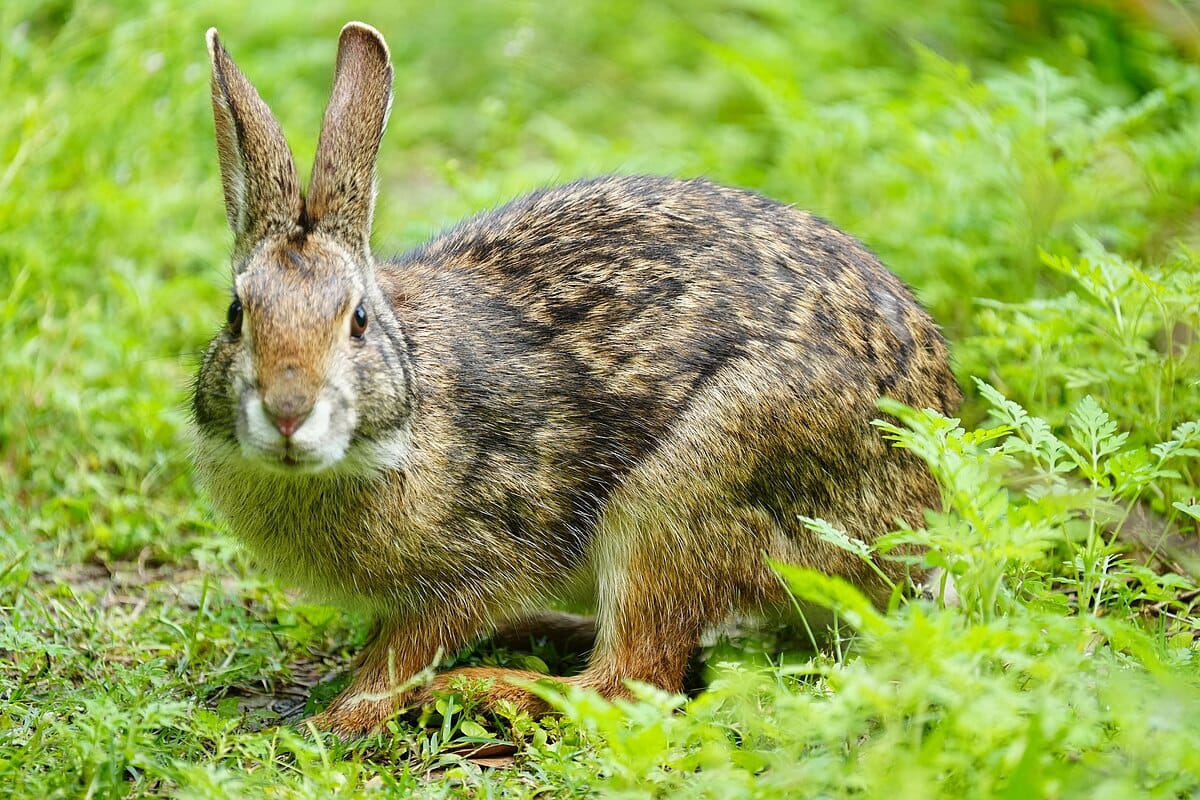
Swamp Rabbits are larger than cottontails, with adults measuring 18–24 inches long. They have dark brown coats, long ears, and large hind feet adapted for wet habitats. Unlike cottontails, their tails are shorter and darker. Their tracks in muddy areas are wider and often show webbing between toes.
Behavior
They are mostly nocturnal and are excellent swimmers, often diving into water to escape predators. Swamp Rabbits are more secretive and prefer hiding in dense vegetation near rivers, swamps, and bottomland forests.
Habitat and Range
Swamp Rabbits are mostly found in the southern and central parts of Mississippi. They favor areas with heavy underbrush near water sources and may travel several hundred meters along streams to find food or cover.
Diet
Their diet is similar to cottontails but includes more aquatic vegetation such as cattails, sedges, and water lilies. They also eat bark, twigs, and leaves during winter.
Reproduction and Life Cycle
Swamp Rabbits breed year-round in mild climates. Litters typically contain 2–4 young, born fully furred and ready to move shortly after birth. Females often have multiple litters per year.
Fun Facts / Unique Traits
Swamp Rabbits are excellent swimmers and can cross rivers and swamps effortlessly. They use water as a primary escape route when threatened by predators.
Human Interaction
Swamp Rabbits rarely interact with humans due to their preference for wet, dense habitats. However, they are occasionally spotted near rural roads or wetlands, especially at night.
3. Marsh Rabbit (Sylvilagus palustris) – Rare Visitor
Physical Characteristics & Identification Tips
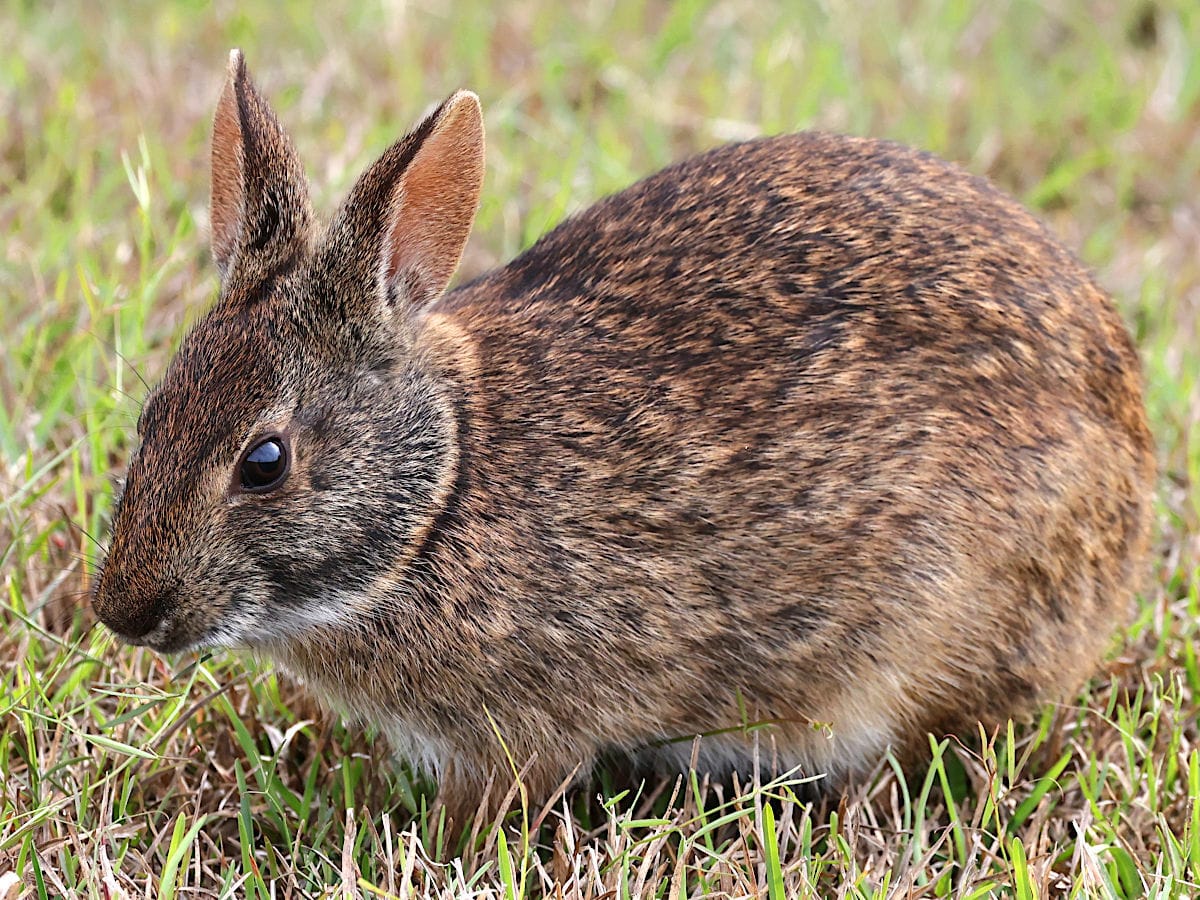
Marsh Rabbits are small, dark-coated rabbits with short ears and legs. Adults reach 13–18 inches. Their fur is usually dark brown or black, helping them blend into marshy wetlands. They have small tails and distinctive rounded bodies.
Behavior
Marsh Rabbits are strong swimmers and spend a lot of time near water. They are mostly nocturnal and feed under the cover of vegetation. When threatened, they dive into water or dense brush.
Habitat and Range
Primarily found in coastal wetlands and marshes in nearby Gulf Coast states, they are rare visitors to southern Mississippi. Sightings are mostly in lowland marsh areas near rivers and swamps.
Diet
The diet includes grasses, sedges, aquatic plants, and sometimes berries. They also eat bark and twigs in winter, supplementing their intake when food is scarce.
Reproduction and Life Cycle
Marsh Rabbits breed year-round with 2–4 young per litter. They create nests in dense marsh vegetation. Young are born blind but develop quickly.
Fun Facts / Unique Traits
They are some of the few rabbits comfortable in deep wetlands and are very agile swimmers. Their dark fur provides excellent camouflage among reeds and cattails.
Human Interaction
Marsh Rabbits rarely interact with humans. Their primary challenge is habitat loss from wetland drainage and urban expansion.
4. New England Cottontail (Sylvilagus transitionalis) – Rare Visitor
Physical Characteristics & Identification Tips
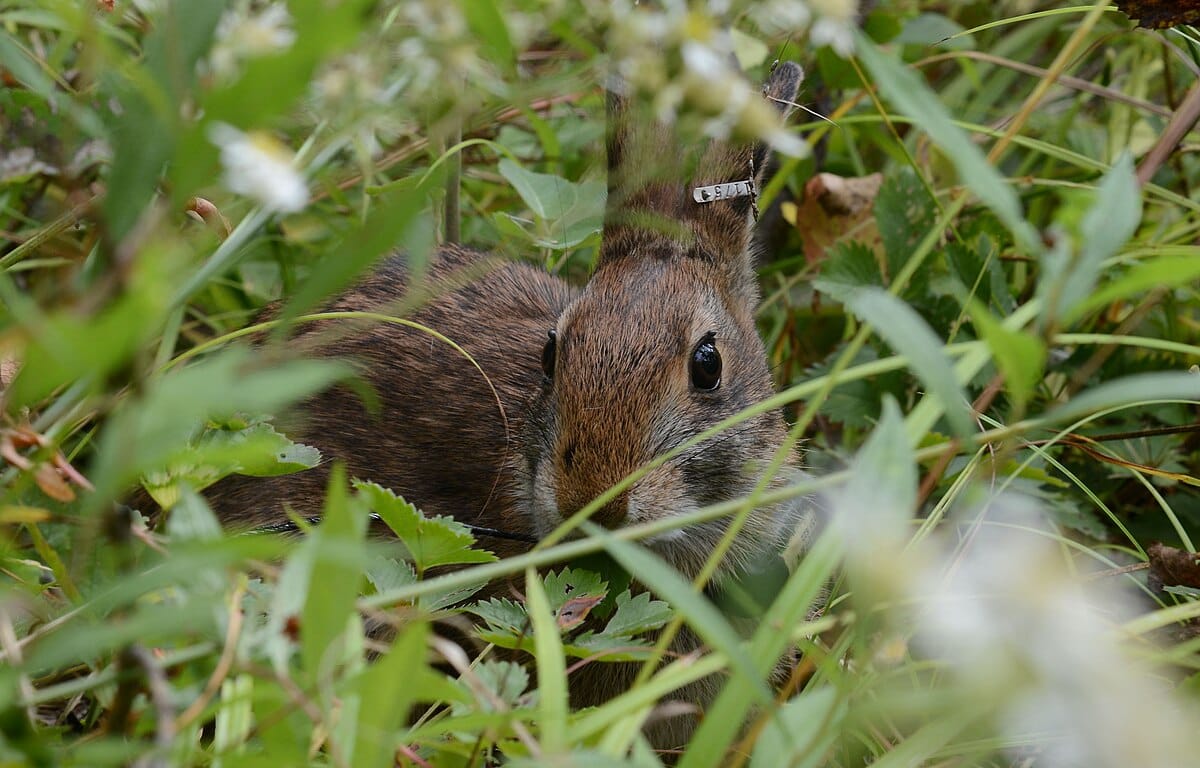
New England Cottontails are similar to Eastern Cottontails but slightly smaller and grayer. Their tails are white underneath. They have a shorter face and rounder body, which helps differentiate them from Eastern Cottontails.
Behavior
These rabbits are shy, mostly nocturnal, and prefer thick brush. They are solitary and often avoid open areas.
Habitat and Range
While native to the northeast U.S., they have occasionally been spotted near northern Mississippi, likely due to migration or accidental introduction. They favor shrubby habitats and edges of fields and forests.
Diet
Their diet includes grasses, leaves, buds, and twigs. Like other cottontails, they adapt seasonally, eating more woody plants in winter.
Reproduction and Life Cycle
New England Cottontails breed 2–3 times a year with 3–5 young per litter. Nests are hidden in dense vegetation.
Fun Facts / Unique Traits
They are among the rarest cottontails in the U.S. and are often confused with the more common Eastern Cottontail.
Human Interaction
Encounters in Mississippi are extremely rare. Conservation efforts focus on habitat preservation to support small populations elsewhere.
5. Snowshoe Hare (Lepus americanus) – Rare Visitor

Physical Characteristics & Identification Tips
Snowshoe Hares are larger than cottontails, with long ears and feet covered in fur. In winter, their fur turns white for camouflage in snow, and in summer, it’s brown. They have large, powerful hind legs for jumping long distances.
Behavior
Snowshoe Hares are mostly nocturnal and solitary. They rely on speed and camouflage to escape predators, hopping in zigzag patterns to confuse threats.
Habitat and Range
Native to northern forests, Snowshoe Hares are rare visitors to northern Mississippi, typically during unusual migration events. They prefer dense forests and shrubby areas.
Diet
They feed on leaves, twigs, bark, and buds. In winter, their diet consists mainly of woody vegetation.
Reproduction and Life Cycle
Snowshoe Hares produce 2–3 litters annually, with 2–6 young each. The young are born fully furred with eyes open and are capable of hopping shortly after birth.
Fun Facts / Unique Traits
Snowshoe Hares’ fur changes color seasonally. Their oversized feet act like snowshoes, helping them move across snowy terrain efficiently.
Human Interaction
Encounters in Mississippi are extremely rare. They do not interact much with humans, and sightings are mostly reported by wildlife researchers or northern migrants.
Conclusion
Mississippi hosts two native wild rabbits: the Eastern Cottontail and the Swamp Rabbit. For educational purposes, we’ve included three rare or occasional visitors: Marsh Rabbit, New England Cottontail, and Snowshoe Hare. Understanding types of wild rabbits in Mississippi helps us appreciate their roles in ecosystems, recognize their behaviors, and protect their habitats. Whether you’re observing rabbits in your backyard or exploring wetlands, respecting their space ensures they thrive for generations to come.
Frequently Asked Questions about Wild Rabbits in Mississippi
1. How many wild rabbit species are in Mississippi?
Mississippi has two native species: the Eastern Cottontail and the Swamp Rabbit. Additionally, rare visitors like the Marsh Rabbit, New England Cottontail, and Snowshoe Hare may occasionally appear.
2. How can I identify an Eastern Cottontail?
Look for a small gray-brown rabbit with a white fluffy tail. Rounded ears, arched back, and strong hind legs are also characteristic.
3. What distinguishes a Swamp Rabbit from other rabbits?
Swamp Rabbits are larger, darker, and better swimmers. They have long hind feet and shorter tails compared to cottontails.
4. Where do Eastern Cottontails live?
They inhabit open fields, meadows, forest edges, and suburban areas with nearby cover.
5. What is the Swamp Rabbit’s preferred habitat?
Swamp Rabbits thrive in bottomland forests, wetlands, and dense vegetation near rivers and swamps.
6. Are Marsh Rabbits found in Mississippi?
They are rare visitors, mostly seen in southern marshy lowlands near the Gulf Coast.
7. What do Eastern Cottontails eat?
They feed on grasses, clover, garden vegetables, twigs, bark, and buds, depending on the season.
8. How do Swamp Rabbits escape predators?
They dive into water or dense brush to hide, using swimming as a primary escape method.
9. Can Snowshoe Hares survive in Mississippi?
They are extremely rare visitors, mostly in northern Mississippi during migration events or unusual environmental conditions.
10. How do rabbits communicate?
Rabbits use body language, foot thumping, scent marking, soft grunts, and occasional squeaks.
11. How fast can rabbits run?
Eastern Cottontails can reach speeds of 18 mph, while Swamp Rabbits may move slightly slower but are agile swimmers.
12. What predators eat Mississippi rabbits?
Foxes, coyotes, hawks, owls, bobcats, and domestic pets pose threats to wild rabbits.
13. How do rabbits avoid predators?
They rely on camouflage, freezing, zigzag hopping, and dense cover to evade predators.
14. When do Eastern Cottontails breed?
From early spring to late fall, producing multiple litters per year with 3–6 young each.
15. How often do Swamp Rabbits reproduce?
Year-round in mild climates, with 2–4 young per litter and multiple litters annually.
16. What is the average lifespan of wild rabbits?
1–3 years due to predation, disease, and environmental factors. Some Swamp Rabbits may live slightly longer.
17. Do rabbits hibernate?
No, rabbits remain active year-round, adapting diets and seeking shelter during harsh weather.
18. How do rabbits adapt to winter?
Eastern Cottontails eat bark and twigs; Swamp Rabbits use dense cover; Snowshoe Hares grow white fur for camouflage.
19. How can you tell a Marsh Rabbit apart?
It is small, dark, with short ears and legs, adapted for marshy wetland habitats.
20. Are New England Cottontails native to Mississippi?
They are rare visitors, not native, occasionally seen in northern areas.
21. Can rabbits swim?
Swamp Rabbits and Marsh Rabbits are excellent swimmers; Eastern Cottontails swim only if necessary.
22. How far do rabbits travel daily?
Eastern Cottontails usually stay within 1–5 acres; Swamp Rabbits move along water corridors; Marsh Rabbits stick to dense marsh areas.
23. How do rabbits mark territory?
They use scent glands under the chin and urine marking to communicate and mark territory.
24. Are rabbits nocturnal?
Mostly, yes. Eastern Cottontails are crepuscular, Swamp Rabbits and rare visitors like Marsh Rabbits and Snowshoe Hares are mostly nocturnal.
25. Do rabbits affect gardens?
They may eat vegetables and tender plants. Fencing or raised beds can protect gardens.
26. Can humans safely observe wild rabbits?
Yes, using binoculars, staying quiet, and keeping distance allows safe observation without stress to the animals.
27. How do juvenile rabbits develop?
Cottontail young are born blind and hairless; Swamp and Marsh Rabbit young are born furred with eyes open, ready to move quickly.
28. How do Snowshoe Hares escape predators?
They use camouflage, zigzag hopping, and their large feet to move quickly across snow or dense cover.
29. What role do rabbits play in Mississippi ecosystems?
They control vegetation, serve as prey for predators, and contribute to nutrient cycling.
30. Are rabbits endangered in Mississippi?
No, Eastern Cottontails and Swamp Rabbits are stable. Rare visitors are not established populations in the state.
31. Do rabbits carry diseases?
Yes, they can carry ticks, fleas, and tularemia. Avoid handling wild rabbits directly to reduce risk.
32. How do rabbits communicate danger?
Foot thumping signals others, and sometimes vocalizations warn nearby rabbits of predators.
33. Can rabbits climb trees?
No, all Mississippi wild rabbits are ground dwellers, relying on speed, camouflage, and cover.
34. How do rabbits affect human activity?
They can nibble gardens but also provide observation opportunities for wildlife enthusiasts and photographers.
35. How to encourage rabbits safely in your yard?
Provide native shrubs and grasses for cover, avoid pesticides, and maintain quiet areas for rabbits to forage and hide safely.
Read more: 6 Types of Wild Rabbits in Wyoming (Pictures And Identification)