

If you’re trying to understand the different types of deer in USA, you’re not alone. Many people only recognize the common white-tailed deer, but the country is home to a surprising mix of native and introduced species. Some live in dense forests, some roam deserts, and others stay tucked away in mountain valleys. In this guide, I’ll walk you through all 12 species using clear language, friendly explanations, and plenty of details you can use for real identification. Whether you’re a hiker, a wildlife watcher, or simply someone curious about deer in USA, this article should help you tell one species from another without needing a biology degree. And by the end, you’ll have a full picture of the main deer found across the country, all in one simple place.
1. White-Tailed Deer
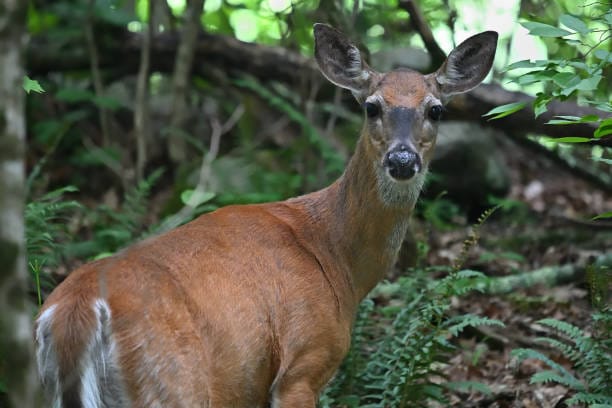
The white-tailed deer is the classic American deer, the one you see in movies, on road signs, and probably in your backyard if you live near trees or farmland. They’re the most widespread deer in the USA, which makes them both familiar and surprisingly misunderstood. People tend to think the species is “all the same,” but this deer changes a bit depending on where it lives. A white-tail in Florida is lighter, slimmer, and smaller, while one in the northern Midwest looks like it’s wearing winter armor.
When identifying a white-tailed deer, the easiest clue is right in the name. If the animal lifts its tail and you see a bright white underside that looks like a flag waving, you’ve found your species. They flash that white tail when they sense danger. It’s like the deer version of saying, “Something’s wrong—follow me!” The habit is so consistent that biologists can often spot a white-tail even when the animal is half-hidden in the brush.
White-tailed deer have narrow faces, long legs, and a gentle curve to their bodies. Bucks grow antlers each year, and those antlers can vary a lot depending on food and genetics. Some bucks have tall, branching antlers that look like a small tree sprouting from their heads. Others have more compact antlers that spread outward. Many hunters assume “more points” means a buck must be older, but that’s not always true. Food, stress, and even local habitat can change antler size from year to year.
This deer lives in almost every U.S. state except Alaska and Hawaii. Forest edges, crop fields, marshes—if there’s cover and food, they’ll make themselves at home. They’re surprisingly adaptable, which explains why you see them living comfortably even near suburbs and golf courses. If you’ve ever driven at night and had one stare into your headlights like it’s questioning your life choices, you’ve met the adaptable white-tail.
Another interesting thing about this species is how it behaves in groups. Females often travel in small family units with their fawns, especially in summer. Bucks are more solitary except during the rut, the breeding season, when they suddenly act like teenagers full of confidence and poor decisions. They roam farther, fight more, and forget that cars exist. If you’ve ever wondered why deer collisions spike during fall, that’s why.
White-tailed deer play a huge ecological role. They shape forests by what they eat. In areas where there are too many of them, they can overbrowse plants faster than the forest can recover. But in balanced populations, they help maintain healthy plant communities, making room for other wildlife. They’re a key prey species for wolves, mountain lions, coyotes, and even black bears.
If you want to identify white-tailed deer quickly, remember these clues:
• Tail with bright white underside
• Slim, graceful body
• Found nearly everywhere
• Bucks with antlers that curve forward
It’s no exaggeration to say the white-tailed deer is the most recognized large mammal in the country. And even though millions of people see them every year, they still manage to keep a bit of mystery. You can watch them for years and still catch new behavior that surprises you—like how they stomp their feet before bolting, or how a fawn freezes in place so well it almost disappears. That blend of familiarity and quiet charm is exactly why this species is such a favorite.
2. Mule Deer

The mule deer gets its name from its large, mule-like ears, and once you see them, you’ll understand immediately. Their ears look almost oversized, and they rotate them like little satellite dishes trying to catch every sound. They’re built for open country, where hearing danger matters as much as seeing it. If white-tailed deer are the suburban neighbors, then mule deer are the rugged hikers who always know the best mountain trails.
These deer live mostly in the western half of the USA, especially in places with hills, sagebrush, and wide-open valleys. They prefer rough terrain where they can spot predators from afar. One of their most famous behaviors is something called “stotting,” where instead of running, they leap straight up with stiff legs, bouncing like a giant spring. It looks dramatic, but it’s actually a useful move for escaping predators on rocky ground.
Mule deer have stockier bodies than white-tails and a distinctive black-tipped tail. Their antlers grow differently too. Instead of branching from a single main beam, mule deer antlers fork and then fork again, creating a symmetrical pattern that’s easy to recognize once you know what to look for.
Because they’re well adapted to dry landscapes, you’ll often see mule deer feeding on shrubs, sagebrush, and woody plants rather than lush grasses. This diet gives them an advantage in places where water can be scarce, and it also helps explain their wide distribution across deserts, foothills, and high-elevation areas.
Socially, mule deer tend to stick together in small groups. Females form herds with their fawns, while bucks roam more independently except during the breeding season. During the rut, bucks become more active, often traveling long distances and sparring with rivals.
To identify mule deer, use these checkpoints:
• Very large ears
• Black-tipped tail
• Antlers that fork instead of branching from a main beam
• Bouncing gait (stotting) when alarmed
If you ever see a deer standing on a rocky ridge at sunset, perfectly still with the wind catching its fur, there’s a high chance it’s a mule deer. They have a calm confidence that makes them feel almost statuesque. Watching them stand against the desert sky feels like looking at a piece of western history frozen in time.
3. Black-Tailed Deer

Black-tailed deer are actually a regional form of mule deer, but they behave and look distinct enough that wildlife watchers treat them as their own category. They live along the Pacific Coast from California up through Washington and into Canada. Their tails are darker than mule deer tails, with a clear black top that makes identification easier.
These deer live in some of the wettest, most forested parts of the western USA. Unlike their mule deer relatives who enjoy open landscapes, black-tailed deer prefer thick vegetation, tall trees, and shaded understories. This habitat difference shapes how they move. They slip through dense shrubs quietly, making them harder to spot. If a white-tailed deer is like that neighbor who waves every time you pass, a black-tailed deer is the shy neighbor who ducks inside before anyone notices them.
Black-tailed deer tend to be smaller than mule deer and slightly more compact. Their antlers still fork like mule deer antlers, but usually with fewer, more subtle points. Their coats are darker too, especially in winter, blending perfectly with coastal forests. Because they live in areas with heavy rainfall, their habitat stays green year-round, which influences their feeding habits. They browse on leaves, twigs, mushrooms, and forest plants.
Their behavior reflects their environment. They’re cautious, quiet, and good at disappearing behind a single fern. They often stay close to cover and move with slow, careful steps. If threatened, they slip into the vegetation rather than running across open spaces.
Key identification notes:
• Tail with black upper surface
• Smaller body than mule deer
• Lives along the Pacific Coast
• Prefers dense forests instead of open terrain
Black-tailed deer add a calm presence to the coastal forests they inhabit. If you’re patient enough, you might catch one feeding under redwoods or pausing beside a moss-covered log. They fit the environment so completely that they almost feel like they’re part of the forest itself. And that quiet harmony is one of the reasons nature lovers enjoy searching for them.
4. Elk (Wapiti)
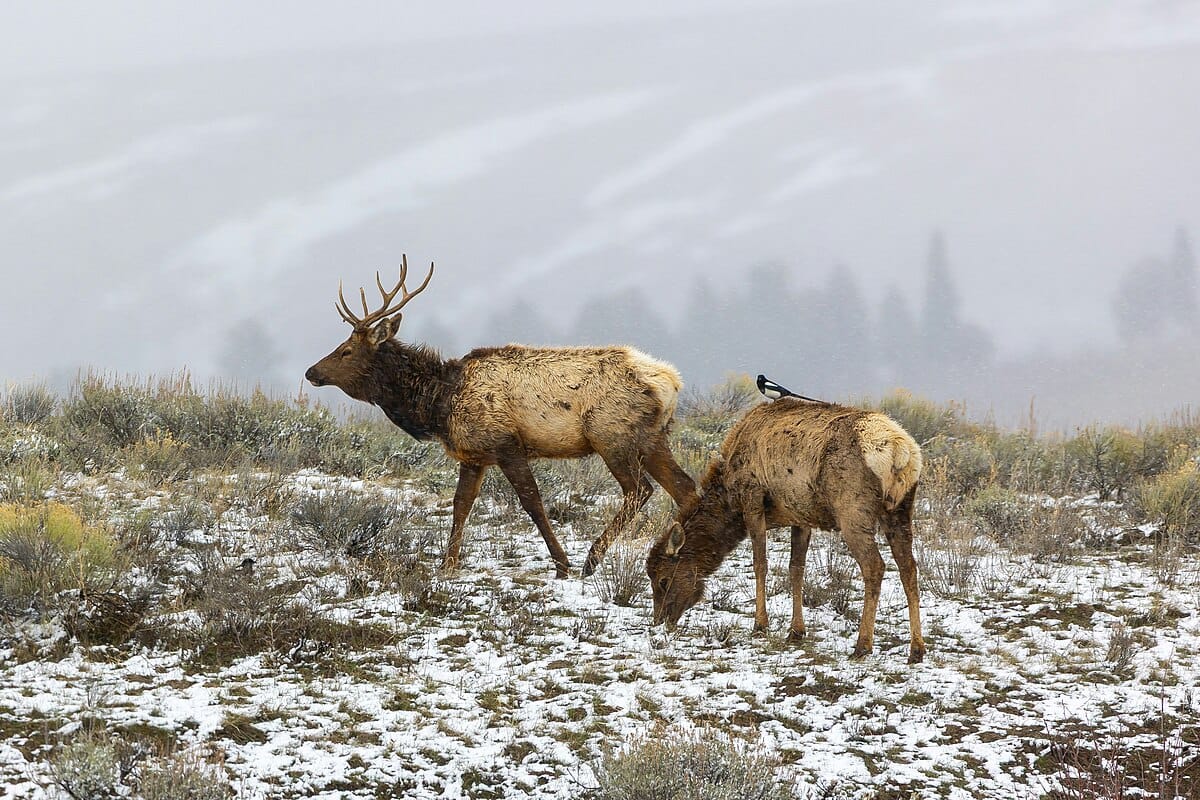
Elk, often called “wapiti,” are one of the largest members of the deer family in the United States. If white-tails are the everyday neighbors and mule deer are the outdoorsy hikers, elk are the massive cousins who show up at family gatherings and immediately draw attention. Their sheer size is the first thing people notice—an adult bull can weigh as much as a small car. But their size isn’t the only thing fascinating about them. Elk have a mix of confidence, curiosity, and peacefulness that makes them memorable even if you only see one for a second.
Elk live in forests, mountains, open meadows, and wide valleys across the western USA, though smaller populations also exist in states like Pennsylvania, Kentucky, and Arkansas thanks to careful reintroductions. They move in herds that can be surprisingly large. Watching a herd of elk crossing a field feels like watching a slow-moving river—steady, coordinated, and full of life. These animals stick together for protection and communication, and they’re constantly alert to anything unusual.
One thing elk are famous for is the bugle. If you’re ever in the Rockies during fall and hear a long, high, echoing call that sounds a little spooky, that’s an elk bull advertising himself. The call carries across valleys, bouncing off cliffs like an eerie instrument. Bulls bugle to declare territory and attract cows during the breeding season, which can be a noisy and chaotic time. Bulls chase rivals, clash antlers, and gather harems of cows that they guard closely. It’s like wildlife soap opera—full of drama, dust, and unexpected surprises.
Elk antlers are incredible. They grow new ones every year, and some racks spread like huge branches, almost as wide as the animal is tall. Bulls use their antlers for displays and battles, but they also shed them every winter. The idea that such enormous structures grow back year after year is mind-blowing. If humans regrew something that big each year, we’d never stop talking about it.
Their diet is pretty simple: grasses, shrubs, bark, and twigs. In high-elevation areas, elk spend summer feeding on lush plants and then move lower when snow builds up. These seasonal shifts, often called migrations, are important for their survival. They save energy, follow food resources, and avoid deep snow that would make movement difficult. It’s easy to think of elk as slow or heavy animals, but they’re surprisingly agile. They can run fast, jump fences, and climb steep slopes with the grace of something half their size.
If you’re trying to identify elk, here are clear signs:
• Very large body size
• Light brown coat with darker neck and legs
• Cream-colored rump patch
• Bulls with large, sweeping antlers
• High-pitched bugle calls during fall
Elk contribute a lot to natural habitats. They shape plant communities through grazing, provide food for predators, and influence how forests and meadows develop. When herds pass through an area, they leave paths, open spaces, and small grazing patches that other animals later use. In forests, their browsing habits affect which plants thrive and which struggle.
Elk have also become symbols of wild America. People travel long distances just to see them, especially in places like Yellowstone or Rocky Mountain National Park. Watching a bull elk stride across a meadow at sunrise feels like stepping into an old painting—quiet, powerful, and strangely peaceful. And even though elk are huge, they’re gentle by nature. They’d rather walk away than fight, except during the rut when adrenaline takes over.
If you’re exploring deer in USA and want a species that shows size, drama, and elegance all in one animal, elk definitely fit that description. They’re one of those species you never forget after seeing them once.
5. Moose
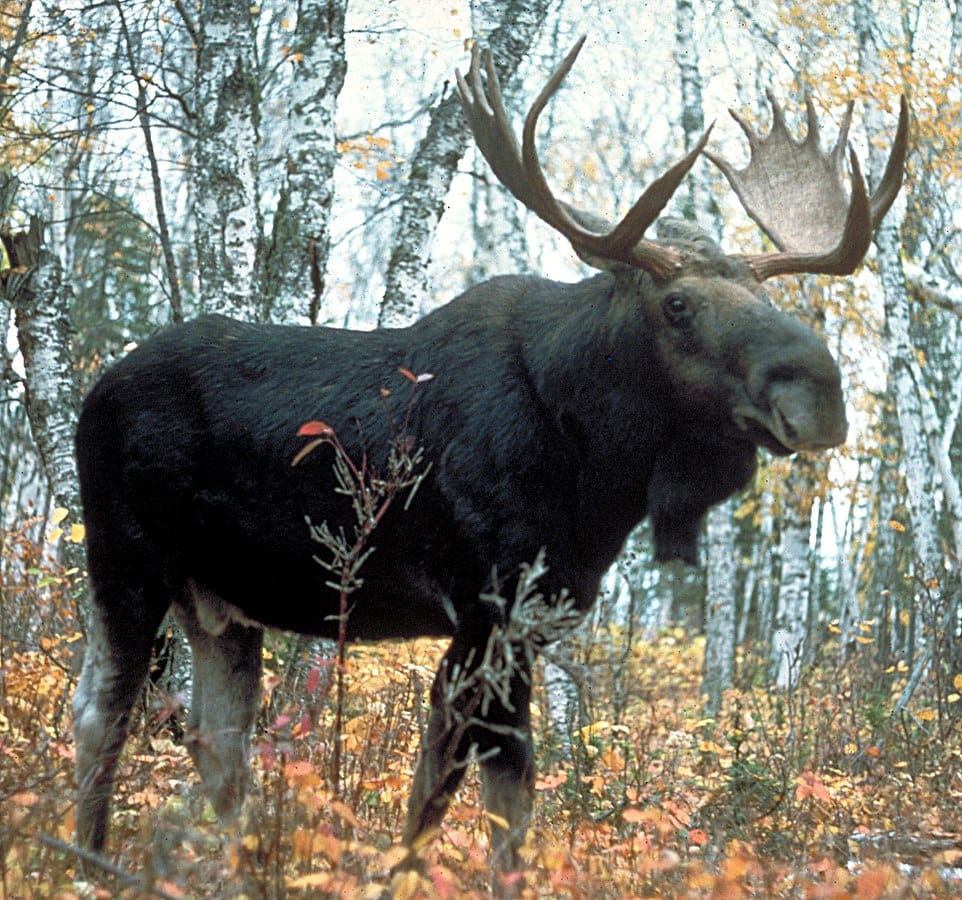
Moose are the giants of the deer family. They’re the largest deer in the United States, towering over every other species. Most people don’t realize just how massive they are until they see one in person. A bull moose can stand over six feet tall at the shoulder, with antlers that span wider than most doors. If elk are big, moose are on an entirely different level. Seeing one up close feels a bit like meeting a prehistoric animal that somehow wandered into modern life.
Moose live mainly in northern states—Alaska, Montana, Wyoming, Minnesota, Maine, and others with cold climates and big forests. They love wetlands, ponds, and lakes because their favorite foods grow in shallow water. Moose are excellent swimmers. They can wade into lakes, dunk their heads, and pull up aquatic plants like they’re shopping for groceries. They even dive completely underwater to reach vegetation. Watching a moose disappear into a lake and then pop up again with plants in its mouth is strangely funny.
Their distinctive appearance makes identification easy. Moose have long legs, a large nose, and a dewlap under the throat known as a “bell.” Their bodies are dark brown, while their faces may be slightly lighter. Bulls grow broad, flat antlers that look like giant paddles and can weigh over 40 pounds total. These antlers aren’t just impressive—they’re a symbol of maturity and health. Bulls use them for displays and fights during the rut.
Moose behavior is a mix of calm patience and sudden bursts of power. They’re usually quiet and spend much of the day feeding. But they can sprint surprisingly fast when threatened, reaching speeds that catch people off guard. Because of their size, moose don’t rely on hiding the same way smaller deer do. Instead, they depend on their strength and awareness. A mature bull has very few natural predators.
Moose diet includes shrubs, leaves, twigs, lilies, and a variety of water plants. In winter, they browse willows and birches and spend many hours feeding. Their digestive system allows them to process tough vegetation that many animals avoid.
Identification notes:
• Enormous size
• Long legs and large nose
• Hanging dewlap under the throat
• Wide, paddle-shaped antlers on bulls
• Found in northern forests and wetlands
Moose are important to ecosystems. Their feeding habits shape vegetation in both wetlands and forests. Predators like wolves and bears rely on calves as a seasonal food source. Moose trails also create access paths that other wildlife later use.
People tend to think moose look calm, but they’re unpredictable during the rut or when cows are protecting calves. It’s always smart to give them plenty of space. A startled moose can act faster than you’d expect. That combination of calm beauty and surprising energy makes them fascinating animals to watch.
Moose add a sense of wilderness to northern landscapes. Seeing one in the wild feels like a special moment. They’re quiet giants, but they leave a strong impression. If you’re exploring deer in USA and want the most impressive creature in terms of size and presence, the moose earns that title without competition.
6. Caribou (Reindeer)
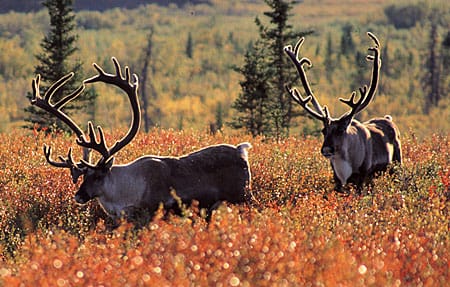
Caribou, also known as reindeer in many parts of the world, live in the far northern USA, especially Alaska. They’re famous for long migrations, large herds, and an ability to survive some of the harshest winter conditions on the planet. While most people think of them as “Christmas animals,” real caribou are far more fascinating than any holiday story lets on. They’re tough, social, and incredibly well adapted to cold places where wind and snow dominate the landscape.
Caribou are medium to large-sized deer with thick fur, wide hooves, and a distinctive body shape. Their necks are strong and muscular, built to dig through snow for food. Their hooves act almost like snowshoes. When you watch them walk across deep snow or marshy ground, it looks effortless. These wide hooves also help with swimming. Caribou are excellent swimmers and cross rivers during migrations.
One of the most unusual things about caribou is that both males and females grow antlers. They’re the only deer species in the USA where this happens. Males grow large, branching antlers used in displays and fights. Females grow smaller antlers that help them defend feeding areas during winter. Antler shapes vary widely between individuals. Some look like tangled branches, while others grow smooth and symmetrical.
Caribou depend heavily on lichens, especially in winter. Lichens grow slowly and can survive extreme cold, making them a reliable food source. In summer, caribou shift to grasses, leaves, birch shoots, and wildflowers. Their ability to adapt their diet throughout the year helps them survive environments that would challenge most animals.
Caribou migrations are legendary. Some herds travel hundreds of miles twice a year. Picture thousands of animals moving together like a living river across tundra, forests, and mountains. These migrations allow them to escape deep snow, find food, and avoid predators. Watching a herd move across a valley can feel surreal, like nature choreographed a massive dance.
Identification notes:
• Both sexes grow antlers
• Wide, snowshoe-like hooves
• Thick fur for cold climates
• Lives mainly in Alaska
• Migratory behavior
Caribou face challenges from climate shifts, shrinking habitats, and changing vegetation. Their migrations depend on timing and food availability, so even small environmental changes can affect entire herds. Still, they remain symbols of northern wilderness. For many people, seeing a herd of caribou running across tundra is a once-in-a-lifetime experience.
Of all the deer in USA, caribou have the strongest connection to snow, wind, and wide open spaces. They’re tough, graceful, and endlessly interesting. And while most people only think about them during winter holidays, the real animals deserve recognition for their strength and endurance. If you’re building a complete picture of deer in USA, caribou add an important northern chapter to the story.
7. Sika Deer (Introduced Populations in Select States)
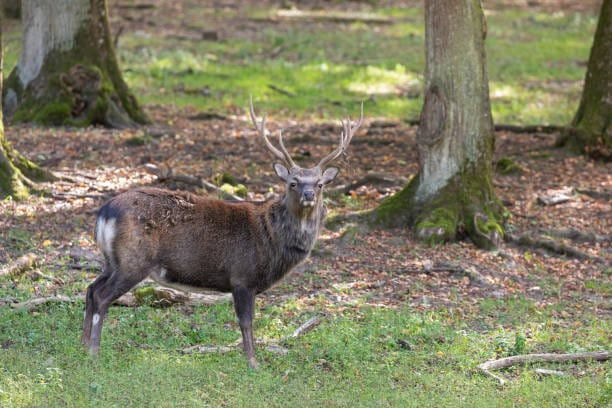
Sika Deer (Cervus nippon) come from East Asia, but they’ve carved out small colonies in parts of the U.S., especially on the East Coast. Maryland’s Eastern Shore is the most famous spot—they’ve lived there for more than a century. Even though they’re not native, they’re now a quirky part of some local ecosystems, and you’ll hear many hunters and wildlife watchers talk about them as if they’ve always been around.
Appearance & Size
Sika deer look like a middle step between a miniature elk and a spotted whitetail. Adults stay short, usually 2.5–3 feet at the shoulder, and they carry a compact frame. Their fur often stays dark chocolate brown, but some keep faint spots even into adulthood, which makes them stand out from native species nearby. Bucks grow antlers with simple branching, usually one or two tines off the main beam, giving them a clean and tidy appearance.
One trait that many people talk about is their “rounder” face and shorter snout. It gives them a youthful, alert look, even as adults. Some individuals come in different color phases, including lighter tan or nearly black.
Behavior & Daily Life
Sika are loud for their size. During the breeding season, males make a bugling sound that resembles a high-pitched version of elk. If you hear it echoing across a marsh in Maryland, you might think a ghost of an elk wandered east. They’re active, nimble, and good at moving through wet ground. They prefer marshes, drowned forests, and soggy edges where native whitetails rarely stand for long.
They’re more cautious than many U.S. deer. Even in areas where they’re used to humans, they tend to keep their distance and freeze at the slightest concern. This makes them interesting to observe but harder to photograph.
Habitat in the United States
Sika populations are scattered and localized. The best-known ones are:
• Maryland (Dorchester County holds the strongest population)
• Virginia (smaller pockets)
• Texas (on some private ranches)
• Some isolated introductions in the West
Marsh ecosystems suit them well. They have hooves shaped for soft ground and have no issue wading through ankle-deep water.
Diet
Their menu is simple but flexible. They graze on marsh grasses, sedges, reeds, and shrubs. They can eat some foods that whitetails ignore, which helps them squeeze into tight habitats without constant competition. They’ll also browse woody plants in winter when grass thins out.
Reproduction
The rut begins in autumn. Males set up and defend small territories, pacing like little marshland soldiers. Bugling is their main way of attracting females. Females usually give birth to one fawn, though two can happen.
Behavior Around Humans
Sika deer don’t behave like city whitetails. You won’t see them raiding gardens or strolling through suburban flower beds. They prefer quiet coastal areas. When people see them up close, it’s usually in wildlife refuges or during careful early-morning hikes.
On the hunting side, they’re considered challenging and fun. They respond well to calls, but they’re careful animals that do not tolerate sloppy movement.
Why They Matter
Even though they’re introduced, they’ve become part of local tradition in their main range. Birders and photographers often spot them while visiting places like Blackwater National Wildlife Refuge. They add an unusual touch to an already interesting habitat.
8. Fallow Deer (Introduced or Farmed Populations)
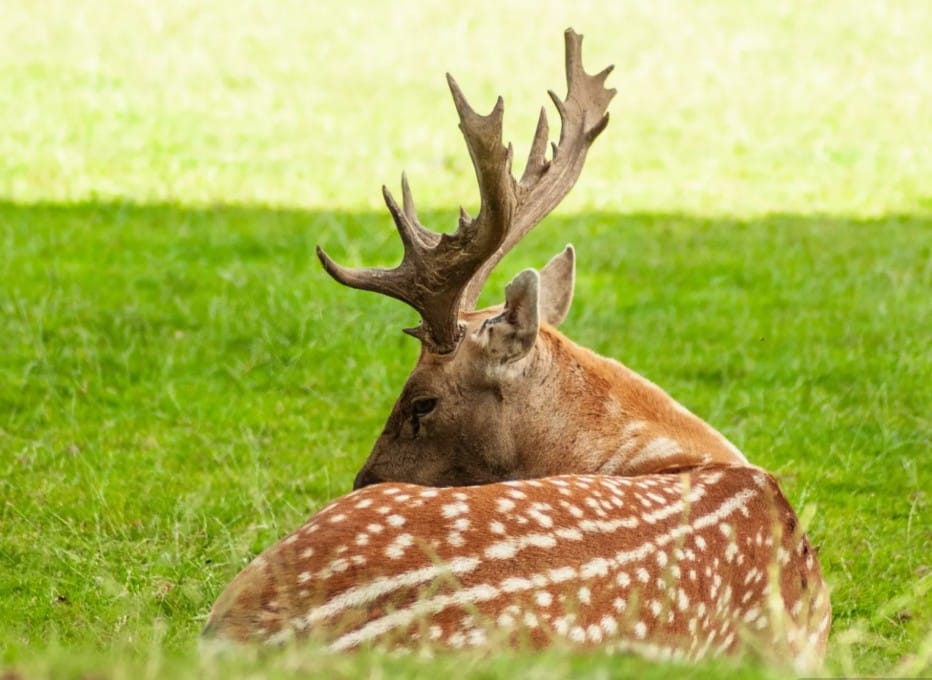
Fallow Deer (Dama dama) have a long history with humans. They originated in Europe and western Asia, and people transported them all over the globe for thousands of years. Today, they’re found across ranches, private preserves, and a few free-ranging pockets in the United States.
They’re immediately recognizable. Even someone who doesn’t know deer can usually point out a fallow because of their spotted coats, moose-like palmate antlers, and upright posture.
Appearance & Size
Fallow deer may be the most visually varied deer species on Earth. They come in several color phases:
• Common — chestnut brown with white spots
• Menil — lighter with sharper spots
• White — pale but not albino
• Black — chocolate to deep coal color
Bucks grow large, flattened antlers. The broad top section looks like a paddle, which helps them stand out instantly from native species.
Adults reach about 3 feet at the shoulder, weighing 100–200 pounds. Bucks usually run bigger than does, but overall they stay smaller than mule deer and elk.
Behavior & Social Structure
Fallow deer are highly social. Outside the breeding season, they form groups—sometimes large ones—where they move, feed, and watch for danger together. They’re quick, lively, and have a graceful gait where their legs appear to “float.”
During the autumn rut, males defend small zones called “rutting stands.” They grunt, chase rivals, and try to charm nearby females. Their vocalizations sound rough and rhythmic, almost like a steady croak.
Diet
They feed on grass first. If grass is short, they browse shrubs, forbs, and farm crops. Their flexible diet is one reason they adapt well to ranch environments.
Range in the United States
Most fallow deer in the U.S. live in controlled areas or private ranches. States where they appear include:
• Texas (largest numbers)
• Oklahoma
• Pennsylvania
• California (small groups historically, many reduced)
A few herds roam free, but most populations are managed.
Interaction with People
Fallow deer often appear calmer than whitetails. On ranches where they’re accustomed to seeing people, they may tolerate a close look. Their striking coat patterns make them popular among photographers.
There’s ongoing debate about the ecological impact of non-native deer. In most U.S. areas, fallow numbers are small enough that their influence stays limited.
Why They Matter
Even though they aren’t part of North America’s original wildlife, they’ve become a familiar sight in some managed lands. Their appearance is memorable, and their antlers attract attention wherever they live.
9. Red Deer (Found in Managed Herds in the USA)
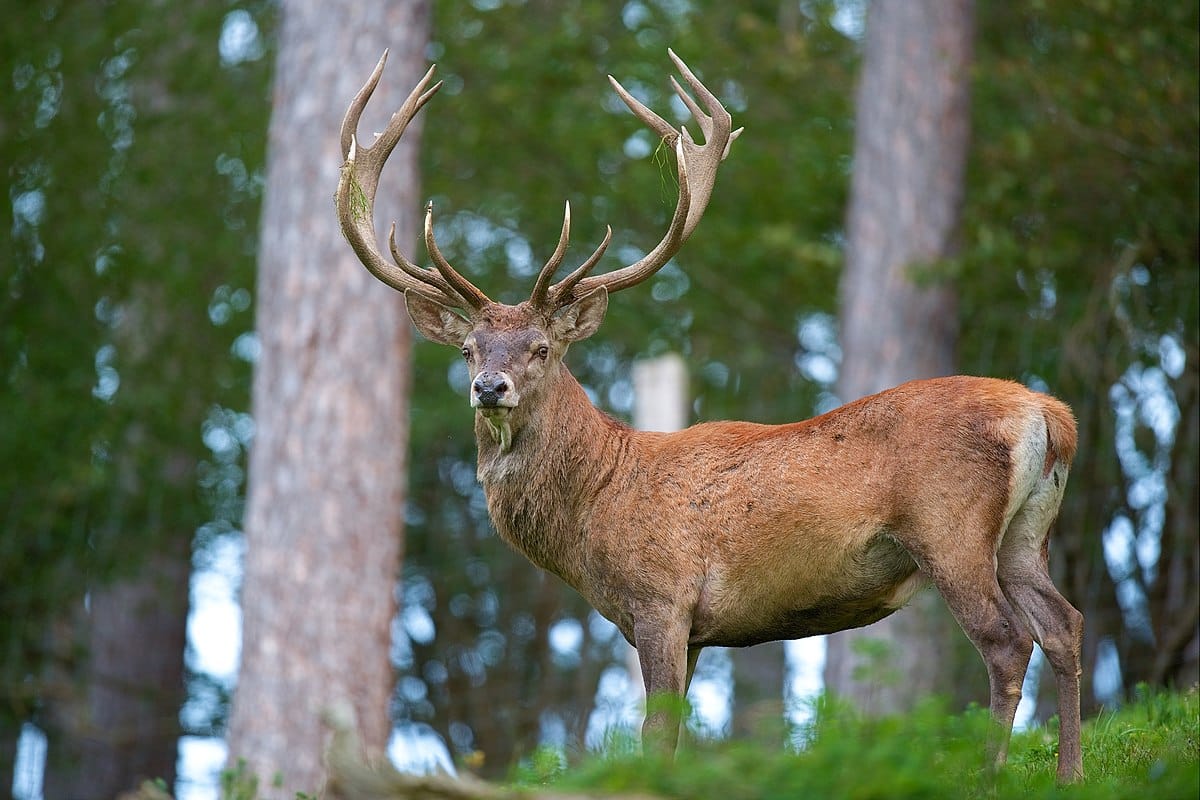
Red Deer (Cervus elaphus) are close relatives of elk. In fact, many scientists group the two together because they share so many traits. The elk you see in the Rockies is technically a subspecies within the same broader family. But the European “red deer” you find in some parts of the U.S. has its own look, sound, and behavior.
Appearance & Size
Red deer look like a smaller, slimmer version of elk. Adults have long legs, athletic builds, and coats that change from reddish-brown to grayish in winter. Males grow branched antlers shaped like sturdy tree limbs. They usually have several points rising upward in clean, tall beams.
Mature stags often carry a thick neck mane. During autumn, this mane darkens and makes them look bigger than they are.
Size varies, but most stags weigh 350–500 pounds. This puts them far larger than mule deer but smaller than American elk.
Behavior & Social Life
Red deer are active and expressive. During fall, males roar—a deep, chest-shaking call that you can feel in your bones if you’re close enough. These roars echo through valleys and create intense energy around the herd.
They’re loyal to familiar areas and follow patterns tied to food and shelter. In fenced or semi-wild ranges, they move along well-worn paths and gather in groups that shift with seasons.
Range in the United States
Red deer don’t exist as a widespread wild species in the U.S. Instead, you’ll find them mainly on private preserves, ranches, or controlled habitats. States with the most noticeable populations include:
• Texas
• Pennsylvania
• Montana
• Colorado
Occasionally, hybrids between elk and red deer appear where the two species are kept in close proximity, though this usually happens in ranch settings rather than free-ranging areas.
Diet
Their diet mirrors elk. They graze on grass when it’s abundant and browse shrubs, acorns, and twigs during winter. In ranch settings, they may receive supplemental feed depending on management style.
Behavior Toward People
Red deer tend to be wary but not overly skittish. In places where they’re housed on large ranches, they sometimes approach closer than elk might. Their roar, antlers, and presence often make a strong impression on visitors.
For people who have only seen whitetails, encountering a red deer for the first time feels like stepping into a European forest without boarding a plane.
Why They Matter
Red deer broaden the wildlife experience on private lands where they’re kept. Their size, vocalizations, and antlers make them memorable animals for observers. Even though they aren’t native, they’ve become part of the landscape in certain controlled habitats.
10. Reindeer (Rangifer tarandus)
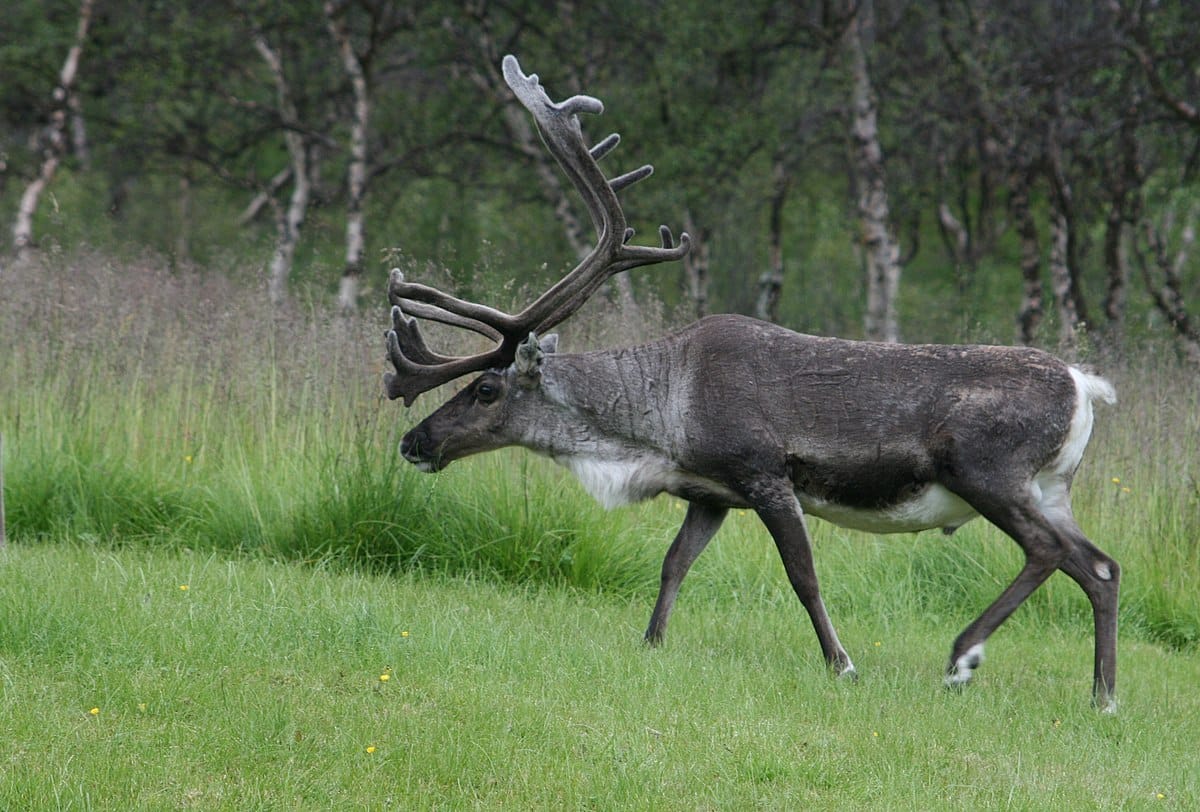
If you’ve ever pictured a snowy northern landscape, you’ve probably imagined a herd of reindeer moving slowly across the horizon. Even though reindeer aren’t native to the lower 48 states, they still have a presence in the country through managed herds, cultural farms, and educational wildlife centers. And yes, despite the holiday jokes, they’re real animals with real behavior, habits, and personalities. In this section, we’ll look at what makes them a remarkable part of the broader group of deer in the USA—even if their appearance here comes from human introduction rather than natural expansion. This gives folks the chance to see a cold-weather specialist up close without having to fly to Alaska or Canada.
Reindeer and caribou are the same species, but people often use the word “reindeer” for the domesticated or semi-domesticated animals raised by humans. Because of this, these deer often behave a bit differently than their wild cousins. They’re calmer, more tolerant of people, and sometimes show a curiosity that feels almost like a big farm animal rather than a skittish woodland deer. Still, they share all the classic traits you’d expect from northern deer—broad hooves for walking on snow, thick coats for warmth, and a build made for long-distance travel.
One of the most interesting things about reindeer is that both males and females grow antlers. It makes them stand out among deer species, where female antlers are usually rare. Their antlers are large, shaped almost like a swirling, branching sculpture. If you ever get to see them up close, you’ll notice that each antler looks a bit different. No two animals carry the same design. Their antlers help them dig into snow for food and sort out dominance within their herds. Reindeer don’t fight as intensely as some deer species, but they still use those antlers to make a point when needed.
Their diet is simple but suited to tough environments. In the far north, reindeer often rely on lichen—yes, the stuff that looks like a cross between moss and fungus. They also eat grasses, shrubs, and other vegetation when they can find it. In the U.S., farmed herds usually graze on hay and supplemental feed, and keepers try to mimic the natural balance so the animals stay healthy.
Reindeer hooves are worth talking about too. They’re wide, flexible, and almost snowshoe-like. They spread as the deer walks, letting it move through snow without sinking too deeply. Those same hooves help them paddle through water during migrations. These animals are used to changing ground beneath them—snow, ice, bogs, frozen earth—so their hooves adapt more than most deer hooves.
Socially, reindeer tend to live in large herds. In the wild, some herds include tens of thousands of animals. In the U.S., you won’t see anything like that, but you can still observe their strong herd instincts in smaller groups. They move together, rest together, and respond to threats as a unit. Even in captivity, a lone reindeer doesn’t feel quite right without at least one companion nearby.
And yes, they are famously associated with Christmas. That’s thanks to old Arctic traditions mixed with European folklore and American pop culture. But even without the holiday image, reindeer deserve attention for their survival skills. Nature shaped them to thrive where most animals would struggle, and that toughness still shows even in managed herds inside the United States.
If you’re researching types of deer in the USA, reindeer make the list because you can legally encounter them here in controlled settings. They’re not native, but they’re part of the broader deer experience available in the country, and learning about them helps connect people to northern wildlife they might never see otherwise.
11. Père David’s Deer (Elaphurus davidianus)
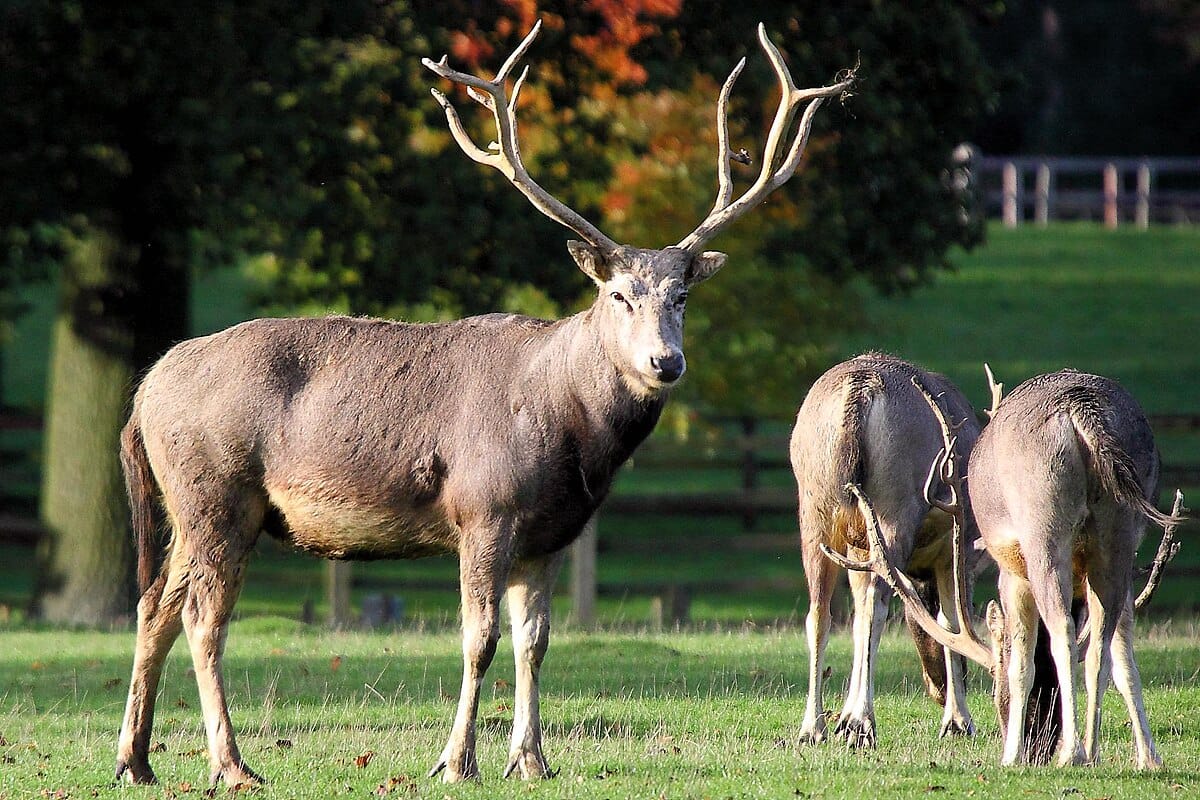
Père David’s Deer is one of the most unusual deer species you’ll ever hear about, and its story reads almost like a wildlife rescue novel. While this species isn’t native to the United States, it exists here through specialty farms, conservation centers, and a few private reserves. These deer play a small but significant role in introducing people to a species that nearly disappeared from the planet. And that alone gives them a place on this list of deer found in the U.S., even if their presence is managed rather than wild.
Père David’s Deer stands out because it looks like a mix of several animals. Their bodies resemble elk, their tails are long like donkeys, their antlers curve backward, and their hooves look slightly oversized. You might wonder whether nature was experimenting the day it created them. That odd combination earned them the nickname “sibuxiang”—a Chinese phrase meaning “the four unlikes.”
These deer have a fascinating history. They originally lived in the marshlands of China but vanished from the wild more than a century ago. A small captive group survived in European collections thanks to the efforts of Armand David, a French missionary and naturalist who helped scientists recognize the species’ importance. Later, conservationists rebuilt the population through breeding programs, and today the species is rebounding, with numbers growing both in China and abroad—including in the U.S.
Père David’s Deer prefer wetlands, marshes, and soft ground. They’re strong swimmers and spend plenty of time wading. Their feet spread out well on muddy surfaces, letting them move across soft areas without getting trapped. Even in American farms, you can often find them near ponds or wet soil because keepers try to mimic the habitat they evolved in.
Their antlers make them even more interesting. The main beam curves backward, opposite of most deer antlers. When they grow a new set each year, you can see a clear backward shape that sets them apart. Males use these antlers during the breeding season, and their displays can be dramatic, with lowered heads, circling, and lots of vocal noise.
Socially, this species tends to form herds. Males join the group during the breeding season, then drift back into bachelor groups afterward. Females stick together for safety and help each other raise fawns, especially in large enclosures. Fawns are born with spotted coats, giving them camouflage while they stay hidden in tall grass or reeds.
Their diet includes grasses, aquatic plants, and soft vegetation. They’re grazers more than browsers, which fits their marsh-based lifestyle. In U.S. facilities, they often eat hay, grains, and fresh greens.
Seeing a Père David’s Deer in the United States is a reminder that global conservation can work. This species went from nearly extinct to slowly recovering thanks to coordinated herds around the world. They have become an example of persistence, cooperation, and careful recovery.
When discussing deer in the USA, including this species provides context about how some deer survive not through natural expansion, but through human-led conservation. And their presence helps educate people about the value of protecting wildlife before it’s too late.
12. Muntjac (Muntiacus spp.)

Eccles-on-Sea, Norfolk, UK. December
Muntjacs don’t look like most deer people are used to seeing. They’re small, low to the ground, and have a curious mix of traits that make them stand out wherever they appear. In the United States, muntjacs exist mainly through captive populations, farmed herds, or private breeders. They’re not widespread, and they’re definitely not native, but they’re known well enough to earn a spot among deer species you might encounter in controlled settings across the country.
These deer come from Asia, where several species live in forests, mountains, and even grasslands. The most commonly seen species in U.S. collections is the Reeves’s Muntjac. It’s a compact deer with short antlers that don’t branch much, but it also has something extra—tiny canine tusks. Yes, you read that right. Males have small downward-curving tusks that give their face a look that surprises people seeing them for the first time.
Their bodies are small and sturdy, usually weighing 20–40 pounds. Because of their size, they move quickly and can squeeze through narrow openings that larger deer could never manage. Their coloration ranges from warm brown to reddish tones, blending easily with forest surroundings. Fawns are born spotted, which helps them hide in dense vegetation.
Muntjacs have a reputation for being vocal—really vocal. They can bark when alarmed, grunt when communicating, and make a range of sounds that seem unexpected for such a small deer. Their barking behavior is one reason they’re sometimes called “barking deer.” In their native habitat, this sound helps warn the herd of predators.
When describing behavior, it’s hard not to marvel at how confident these little deer can be. Even though they’re small, they stand their ground when startled, and males can be surprisingly assertive during the mating season. Those little tusks aren’t just decorative; males use them in dominance displays and fights.
Their diet consists of leaves, shoots, fruits, and occasionally grasses. They’re browsers more than grazers, so they prefer shrubs and undergrowth. In American facilities, keepers feed them a mix of greens, vegetables, and hay, creating a balanced diet that mimics what they’d find in the wild.
Muntjacs adapt well to different environments, which is one reason their populations expanded rapidly in some countries outside their native range. They reproduce often, and females can have more than one fawn per year under the right conditions. In the U.S., their numbers are controlled carefully to prevent accidental spread.
Although they aren’t part of native wildlife, muntjacs offer a chance to observe a type of deer that feels entirely different from the bigger species found across the U.S. They’re an example of how diverse deer really are once you look beyond the familiar forms. And for people building educational wildlife collections, they help demonstrate the range of behaviors and appearances across global deer species.
If you’re exploring types of deer in the USA, muntjacs help fill the picture by representing smaller forest-adapted deer that would otherwise be unknown to many Americans.
Conclusion: Understanding the Many Types of Deer in the USA
The United States is home to a wide mix of deer, from the familiar White-tailed Deer to the harder-to-spot species living in small pockets or managed herds. Learning about the different types of deer in USA habitats helps you see how varied these animals really are. Some spend their lives in dense forests, while others wander open plains or icy mountain slopes. No two species behave the same, and that variety is what draws many people to study them in the first place.
If you’ve made it this far, you’ve journeyed through the habits, food choices, calls, tracks, personalities, and quirks of many American deer. And even though a few species aren’t native here, they’ve found their way into managed lands, farms, and research herds. Each one brings its own story and teaches us something about wildlife management and how animals adapt when they’re moved to new places.
If you’re already planning a trip to see some of these deer in person, great. Watching them in the wild gives you a whole new perspective. And if you’re researching because you love wildlife, then keep going—there’s always more to learn. The more people care about deer, the better chance these species have to thrive across the country.
Thanks for reading, and feel free to explore more guides on animals across the U.S. If you’re curious about other creatures living alongside these deer in usa landscapes, you’ll find plenty of surprises waiting.
FAQs About Types of Deer in the USA
1. How many types of deer live in the USA?
There are several native species and a few introduced or farmed ones. The most common wild species are White-tailed Deer, Mule Deer, Black-tailed Deer, Moose, Elk, and Caribou.
2. What’s the most common deer in the United States?
The White-tailed Deer is the most widespread and can be found in nearly every state.
3. Which deer is the biggest in North America?
The Moose is the largest. Adult bulls can tower over six feet at the shoulder.
4. Do Mule Deer and Black-tailed Deer count as the same species?
They are related, but Black-tailed Deer are often considered a coastal subspecies of Mule Deer.
5. Where are Moose found in the USA?
They live mainly in northern states like Alaska, Maine, Minnesota, and parts of the Rocky Mountains.
6. What’s the difference between Elk and Moose?
Moose are larger and have broad, flat antlers. Elk are slimmer with tall, branching antlers and a loud bugle call.
7. Do Caribou still live in the lower 48 states?
As of today, wild herds in the lower 48 are gone. Caribou remain only in Alaska within the USA.
8. Are Sika Deer native to America?
No. They were introduced and now live in small wild or semi-wild groups in states like Maryland, Texas, and Virginia.
9. What is a Fallow Deer?
Fallow Deer are an Old World species brought to the USA through farms and preserves. A few feral herds roam some regions.
10. Are Red Deer the same as Elk?
They’re related but not the same. Elk are native to North America, while Red Deer come from Europe and Asia.
11. Do Reindeer live in the USA?
Yes, but mostly in managed or farm settings. Wild Caribou are their closest relatives in North America.
12. What do deer eat?
They eat leaves, grasses, twigs, fruits, and nuts. Their diet shifts depending on the season and habitat.
13. Why do deer shed their antlers?
Antlers fall off each year after the breeding season so new ones can grow the next spring.
14. How fast can a deer run?
White-tailed Deer can hit about 30 mph. Mule Deer are also quick and can leap high to escape predators.
15. Do all deer species grow antlers?
Only males grow antlers in most species. Caribou are an exception because females also grow them.
16. Are deer active at night?
They’re most active around dawn and dusk, but many move at night to avoid danger.
17. What animals hunt deer?
Predators include wolves, coyotes, mountain lions, bobcats, and bears depending on the area.
18. Do deer migrate?
Some do. Caribou are famous for long migrations, and many Mule Deer follow seasonal routes.
19. Why do deer “snort” or stomp their feet?
It’s a warning signal to alert other deer that something might be wrong.
20. Do deer see color?
They see limited color. Blue and green shades stand out more to them than reds.
21. How long do deer live?
In the wild, most live 4–8 years, though some reach 10+ in safe habitats.
22. What states have the most deer?
Texas, Pennsylvania, Wisconsin, Georgia, and Michigan have large populations.
23. Can deer swim?
Yes. They’re strong swimmers and often use water to escape danger.
24. Why do Moose have such large antlers?
Antlers help males compete for mates and show off their strength.
25. How far can a deer smell?
Deer have excellent noses and can detect scents from long distances—sometimes hundreds of yards away.
26. Are there albino or piebald deer?
Yes, but they’re rare genetic variations. Albino deer are completely white with pink eyes, while piebald deer have white patches.
27. Why do deer freeze when they see headlights?
Bright lights overwhelm their night vision, causing them to stop instead of running.
28. Do deer sleep standing up?
They doze lightly while standing but lie down for deeper rest.
29. What’s the main difference between Mule Deer and White-tailed Deer?
Mule Deer have large ears and bounce in a high, springy hop called “stotting.” White-tails run with their tails raised.
30. Do Moose live in herds?
No. They’re mostly solitary except during mating season or when a cow has a calf.
31. How high can a deer jump?
Many deer can clear fences eight feet tall if needed.
32. Why do deer shed their summer coat?
They trade their thin reddish coat for a thicker gray winter coat to stay warm.
33. Are Fallow Deer dangerous?
They’re usually calm, but males can be aggressive during breeding season. Keeping distance is wise.
34. Do deer have good hearing?
Yes. Their ears rotate to pick up sounds from many directions.
35. What do baby deer eat?
Fawns drink milk for the first weeks, then slowly start nibbling plants.
36. Do deer remember places?
Yes. They follow familiar paths and use the same feeding and bedding spots each season.
37. Why do some deer have velvet on their antlers?
Velvet is a soft layer that feeds growing antlers. It falls off when the antlers harden.
38. Can deer see well at night?
Yes. Their eyes are built to catch light, which helps them move safely in the dark.
39. Do deer fight?
Bucks clash antlers during the rut to win access to females, though many conflicts end quickly.
40. Are Muntjac found in the wild in the USA?
Mostly in managed farms, but a few small groups may exist in isolated areas.
41. How do deer survive cold winters?
They grow thick coats, eat more before winter, and move to sheltered areas.
42. Do deer make sounds?
They grunt, bleat, wheeze, and snort depending on the situation. Elk also have a piercing bugle.
43. Why do deer lick their newborns?
It removes scent and helps the fawn blend in, keeping predators away.
44. Do deer stay in one home range?
Most keep a regular territory unless food or weather forces them to move.
45. Can deer live in cities or suburbs?
Yes. Many adapt well to parks, yards, and green spaces if food is available.
46. What’s the rarest deer to see in the USA?
Wild Caribou in Alaska’s far north and some introduced species like Pere David’s Deer on private lands.
47. Do all deer lose their antlers at the same time?
No. Timing varies by species, age, and location.
48. Are deer good climbers?
They aren’t climbers, but they handle steep hills surprisingly well.
49. Can deer smell human scent?
Yes, very clearly. Their sense of smell is their strongest alert system.
50. Why do deer wag their tails?
It can signal danger, reassurance to fawns, or simple communication with other deer.
Read more:
- 30 Types of Deer (Pictures and Identification)
- 15 Types of Deer in North America (Pictures And Identification)
- 25 Types of Deer in Africa (Pictures And Identification)
- What Do Deer Eat? Complete Guide to Deer Diet, Foods, and Seasonal Feeding Habits
- 5 Types of Deer in Scotland (Pictures and Identification)
- 8 Types of Deer in UK (Pictures And Identification)
- 8 Types of Deer in Texas (Pictures and Identification)
- How to Hunt Deer from the Ground: Expert Tips for Successful Ground-Level Deer Hunting
- 8 Types of Deer in California (Pictures And Identification)
- 5 Types of Deer in Colorado: Species Identification with Pictures
- 5 Types of Deer in Illinois (Pictures And Identification)
- 5 Types of Deer in Oregon (Pictures and Identification)
- 5 Types of Deer in New Mexico (Pictures and Identification)
- 5 Types of Deer in Wisconsin (Pictures And Identification)
- 11 Moose Facts About the Majestic Herbivorous Giant
- 15 Types of Elk (Pictures And Identification)
- 5 Types of Deer in Montana (Pictures And Identification)