
Texas is home to a diverse range of wild rabbits that have adapted to its wide variety of landscapes, from arid deserts to wetlands and grasslands. In this guide, we will explore Types of Wild Rabbits in Texas, highlighting their unique characteristics, behaviors, and habitats. Whether you are a wildlife enthusiast, photographer, or just curious about Texas’ native fauna, understanding these rabbits helps appreciate their role in local ecosystems. From the fast and agile Black-tailed Jackrabbit to the elusive Davis Mountains Cottontail, each species showcases fascinating adaptations that allow them to thrive in Texas’ varied environments.
1. Eastern Cottontail – A Common Type of Wild Rabbits in Texas

The Eastern Cottontail is arguably the most familiar among Types of Wild Rabbits in Texas. You’ve likely seen one dart across a meadow or freeze near a roadside. Its distinctive white tail, soft brown-gray fur, and alert posture make it stand out in fields and brushy areas. Understanding the Eastern Cottontail gives insight into how adaptable rabbits can be across Texas’ varied environments.
Physical Characteristics & Identification Tips
The Eastern Cottontail averages 12–18 inches in length and weighs 2–4 pounds. Its fur is generally brown with a mix of gray and black, which helps it blend with leaf litter and brush. The signature white underside of the tail is often the first clue of its presence when it hops away quickly.
Its ears are medium-sized with slightly rounded tips, distinguishing it from the longer-eared Black-tailed Jackrabbit. Eyes are large and alert, giving the cottontail a wide field of vision. Hind legs are strong, allowing fast, zigzag running to escape predators. Footprints typically show four toes in front and four hind toes, leaving an elongated pattern on soft ground.
Identification tip: If you see a small, brownish-gray rabbit with a flashing white tail in fields, gardens, or woodland edges in Texas, you’re likely observing an Eastern Cottontail.
Behavior
Eastern Cottontails are mostly crepuscular, active at dawn and dusk. During the day, they remain hidden in burrows or under dense brush. They are solitary but may share overlapping territories. When threatened, they freeze first, relying on camouflage, then sprint in zigzag patterns to confuse predators.
This species uses scent marking and foot thumping to communicate. A sharp thump warns nearby rabbits of danger. They are agile and quick, often making sudden directional changes that leave predators guessing.
Habitat and Range
Eastern Cottontails inhabit a wide range of environments in Texas: fields, meadows, gardens, woodland edges, and suburban yards. They thrive where cover is available and food is abundant. This adaptability has made them widespread across the state, from East Texas forests to Central Texas open areas. Dense brush, shrubs, and tall grasses provide essential protection from predators.
Diet
Eastern Cottontails are herbivorous. They eat grasses, clovers, herbaceous plants, leaves, and young shoots. In winter, they may consume bark, twigs, and dried vegetation. They practice coprophagy—re-ingesting partially digested pellets—to extract maximum nutrients, a crucial adaptation during scarce food periods.
Seasonal changes influence diet. Spring and summer favor tender greens, while fall and winter diets are dominated by woody material and dried plant matter. They usually feed in safe, concealed areas to avoid predators.
Reproduction and Life Cycle
Eastern Cottontails breed multiple times yearly, with 3–5 litters common in Texas. Each litter may include 3–8 kits. Nests are shallow depressions lined with grass and fur, hidden under shrubs or in tall grasses. Young are born blind and hairless, remaining in the nest until they are 2–3 weeks old.
Rapid growth and early independence are vital due to high predation. By 4–6 weeks, juveniles can forage on their own. Reproduction is closely linked to food availability and seasonal temperatures, making them highly adaptable breeders across Texas regions.
Fun Facts / Traits
- Eastern Cottontails are prolific and adaptable, thriving in diverse habitats.
- Their white tail serves as a predator distraction signal when fleeing.
- They are excellent jumpers, capable of clearing 3–4 feet in a single bound.
- They rarely dig complex burrows, instead using shallow forms or existing holes.
- Thumping communicates danger and can alert nearby rabbits to predators.
Human Interaction
Eastern Cottontails are often spotted in urban and suburban areas of Texas. While they may nibble garden plants, they are harmless if observed responsibly. Maintaining brush, shrubs, and safe cover helps support local populations. Feeding them is discouraged, as wild rabbits require natural diets and human food can cause illness.
These rabbits provide enjoyment for wildlife watchers, photographers, and educators. Observing them from a distance helps ensure they stay wild, healthy, and safe from predators and human interference.
2. Desert Cottontail – A Resilient Wild Rabbit in Texas
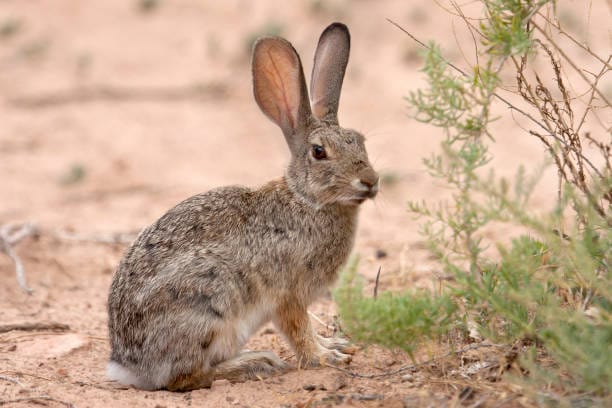
The Desert Cottontail is one of the most adaptable Wild Rabbits in Texas, thriving in dry, open areas where other rabbits may struggle. It is smaller and faster than some of its relatives, with a keen ability to survive in harsh desert and scrubland environments. Observing a Desert Cottontail offers insight into how Texas rabbits adjust to limited water and sparse vegetation while remaining active and alert.
Physical Characteristics & Identification Tips
Desert Cottontails typically measure 12–16 inches in length and weigh 1.5–3 pounds. Their fur is pale brown to grayish, providing excellent camouflage against sandy soil and desert brush. The underbelly is lighter, almost white, and the tail is characteristically fluffy and white underneath, visible when the rabbit hops away.
The ears are relatively short compared to Black-tailed Jackrabbits, but longer than Brush Rabbits, giving them a distinct appearance. Their eyes are large and expressive, adapted to detect predators across open terrain. Hind legs are powerful, built for short bursts of speed to escape threats.
Identification tip: Look for a small, sandy-brown rabbit with a white tail in deserts or scrublands of Texas. Quick, darting movements and preference for open areas help distinguish Desert Cottontails from woodland species.
Behavior
Desert Cottontails are mostly crepuscular, active during dawn and dusk to avoid the hottest part of the day. They rely on short sprints and zigzag maneuvers to evade predators like hawks, foxes, and coyotes. When resting, they use shallow forms in brush or under shrubs for concealment.
This species is generally solitary, though males and females may share overlapping territories. They use foot thumps as warning signals, alerting others to danger. Desert Cottontails are fast, alert, and highly responsive to their environment, which is essential for survival in open Texas landscapes.
Habitat and Range
Desert Cottontails inhabit western and southwestern Texas, including desert flats, scrublands, and grasslands. They are particularly common in areas with sparse vegetation where they can easily spot predators. These rabbits adapt well to disturbed habitats and can even be found along roadsides, fields, and ranches.
Cover is critical, even in open terrain. Small shrubs, cacti, and brush provide shade and protection, while the sandy soil allows quick escapes. Desert Cottontails can survive in areas with scarce water, obtaining moisture from succulent plants and dew.
Diet
Desert Cottontails are herbivores, feeding on grasses, clovers, cacti, herbs, and shrubs. In dry seasons, they may nibble on twigs and bark. They re-ingest soft fecal pellets to extract additional nutrients, a vital adaptation in desert regions with limited food.
Their diet varies seasonally. During spring and summer, tender greens and flowers are preferred, while in winter, woody plants and dried vegetation sustain them. Desert Cottontails forage mostly at dawn and dusk to balance food intake with safety from predators.
Reproduction and Life Cycle
Desert Cottontails breed multiple times each year in Texas, often producing 3–5 litters annually. Litter sizes range from 3–6 kits. Nests are shallow depressions lined with grass and fur, hidden among brush or vegetation.
Kits are born blind and hairless, remaining in the nest for 2–3 weeks. After this period, they begin exploring the surrounding area and gradually forage independently. Rapid growth and frequent breeding help maintain population numbers, even with high predation pressure.
Fun Facts / Traits
- Desert Cottontails can survive without drinking open water, relying on moisture in plants.
- Their coloring changes slightly with seasons, becoming lighter during hotter months.
- They are excellent jumpers, using short bursts of speed to escape threats.
- They prefer open areas, unlike Brush or Nuttall’s Cottontail, which favor dense cover.
- Foot thumping warns nearby rabbits of approaching predators.
Human Interaction
Desert Cottontails are commonly seen by hikers, birders, and photographers in Texas’ western regions. They sometimes nibble on crops or garden plants, but usually avoid humans. Preserving small shrubs and brush along open areas helps maintain safe cover for these rabbits. Observing from a distance is recommended, as feeding can disrupt their natural diet and behavior.
Desert Cottontails illustrate the adaptability and resilience of Texas wild rabbits. By surviving in dry, open habitats, they highlight how wildlife adjusts to climate and terrain challenges, providing fascinating insights for anyone interested in local ecosystems.
3. Swamp Rabbit – A Unique Wild Rabbit in Texas
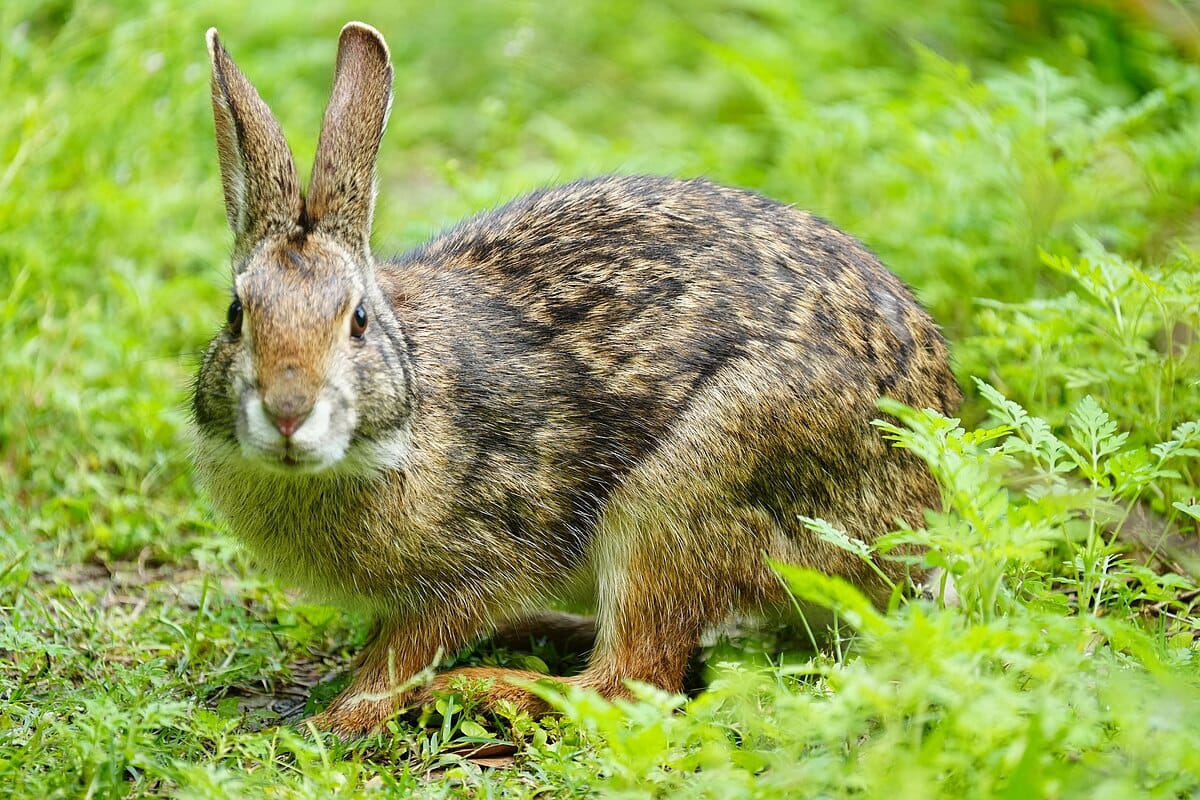
The Swamp Rabbit is one of the more fascinating Types of Wild Rabbits in Texas due to its affinity for wet, forested areas. Unlike desert or grassland species, Swamp Rabbits are excellent swimmers and thrive in bottomland forests, marshes, and riverine areas. Observing a Swamp Rabbit provides a glimpse into the adaptability of wild rabbits and their ability to thrive in very different habitats across Texas.
Physical Characteristics & Identification Tips
Swamp Rabbits are among the largest cottontails in Texas, measuring 16–20 inches in length and weighing 3–5 pounds. Their fur is dark brown to gray with a lighter underbelly. The tail is white underneath, but smaller than the Eastern or Desert Cottontail, and less noticeable when they hop away.
Swamp Rabbits have strong, muscular hind legs, ideal for swimming and jumping. Their ears are medium-length, with slightly rounded tips. Eyes are large and alert, reflecting their vigilance in predator-rich habitats. Tracks show elongated hind prints and a distinctive hopping pattern on soft, muddy ground.
Identification tip: If you see a larger, dark-brown rabbit near marshes, rivers, or swamps in eastern Texas, you are likely observing a Swamp Rabbit. Their swimming ability and preference for wetland areas distinguish them from other Texas rabbits.
Behavior
Swamp Rabbits are primarily nocturnal, though they can be active during early morning and evening. They are strong swimmers and will escape predators by diving into water or swimming across streams. They usually stay near dense vegetation, using it for cover and nesting.
These rabbits are more social than some other species, with overlapping home ranges in resource-rich areas. Like other rabbits, they use foot thumping to communicate danger and remain alert to birds of prey, snakes, foxes, and coyotes. Swamp Rabbits are agile, able to move through both land and water with ease.
Habitat and Range
Swamp Rabbits inhabit the wetlands, swamps, and bottomland forests of eastern Texas, often near rivers, lakes, or marshes. They rely on dense vegetation for protection and nesting sites. Flooded areas provide an advantage as fewer predators can access them there.
They are generally absent from arid or open regions of Texas, unlike Desert or Eastern Cottontails. Conservation of wetland habitats is essential for their survival, as they are heavily dependent on water-adjacent areas.
Diet
Swamp Rabbits are herbivores with a diet that includes grasses, aquatic plants, leaves, shoots, and bark. During spring and summer, they favor tender leaves and shoots, while in winter, they eat twigs, bark, and any remaining vegetation. Like other rabbits, they re-ingest soft fecal pellets to maximize nutrient absorption.
They are particularly adapted to wetland areas, feeding on marsh grasses and plants that grow near water. Their diet flexibility helps them survive seasonal changes in wetland vegetation.
Reproduction and Life Cycle
Swamp Rabbits breed multiple times a year, typically producing 2–4 litters in Texas. Each litter contains 3–6 kits. Nests are hidden among dense vegetation near water sources. Young are born blind and hairless and remain in the nest for the first 2–3 weeks of life.
After leaving the nest, juveniles quickly learn to forage and swim. Their growth and survival depend on abundant cover and water availability. Swamp Rabbits reproduce rapidly in favorable conditions, which helps maintain stable populations despite predation.
Fun Facts / Traits
- Swamp Rabbits are excellent swimmers, a rare skill among cottontails.
- They can remain submerged for several seconds to escape predators.
- Unlike desert rabbits, they thrive in flooded or wet habitats.
- They are among the largest wild rabbits in Texas.
- Foot thumping and warning signals are used to communicate in dense wetlands.
Human Interaction
Swamp Rabbits are less likely to interact with humans due to their wetland habitat. However, they can sometimes be seen near rivers, ponds, or marshy areas during wildlife observation trips. Preserving wetlands and minimizing human disturbance is crucial for their survival.
Swamp Rabbits offer a unique glimpse into the diversity of Texas wildlife. Their adaptability to water-rich habitats highlights how different rabbit species can occupy very distinct ecological niches. Observing them safely from a distance allows enthusiasts to enjoy their behavior without impacting their natural lifestyle.
4. Black-tailed Jackrabbit – A Swift Wild Rabbit in Texas
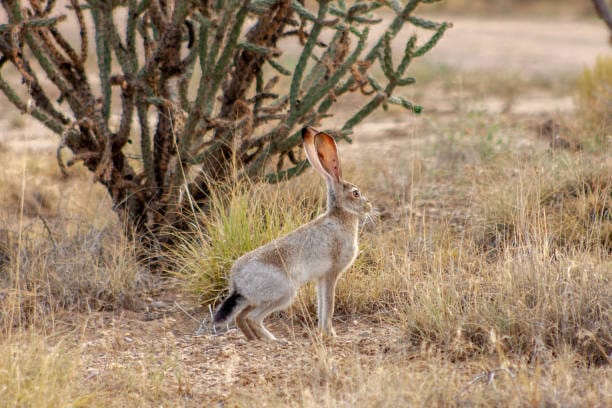
The Black-tailed Jackrabbit is one of the most iconic Types of Wild Rabbits in Texas, known for its remarkable speed, large size, and long ears. Unlike smaller cottontails, it thrives in open grasslands and desert regions, using its agility to avoid predators. Watching a Black-tailed Jackrabbit in its natural habitat is a testament to how well-adapted rabbits can be to harsh, open environments.
Physical Characteristics & Identification Tips
Black-tailed Jackrabbits are among the largest rabbits in Texas, measuring 18–24 inches long and weighing 3–6 pounds. Their fur is grayish-brown with a salt-and-pepper pattern, providing excellent camouflage in grasslands and desert scrub. The black tip on their tail is a distinctive feature, making identification straightforward.
They have long ears, often 4–6 inches, which help detect distant sounds. Their hind legs are powerful, built for long leaps and fast sprints, while front legs are shorter and agile. Eyes are large and positioned for wide peripheral vision, allowing early detection of predators.
Identification tip: If you see a large rabbit with long ears and a black-tipped tail sprinting across open fields in Texas, you are observing a Black-tailed Jackrabbit. Their size, color, and tail mark distinguish them from cottontails and smaller species.
Behavior
Black-tailed Jackrabbits are primarily crepuscular, active at dawn and dusk. They rely on speed and agility to escape predators, often running in erratic zigzag patterns. When threatened, they may freeze and rely on camouflage before suddenly bounding away in long leaps that can exceed 10 feet.
This species is generally solitary, with individuals maintaining separate territories. Communication occurs via foot thumping and scent marking. Their behavior reflects a combination of caution and opportunistic foraging, essential for surviving in predator-rich, open environments.
Habitat and Range
Black-tailed Jackrabbits inhabit open grasslands, deserts, prairies, and agricultural fields across Texas, particularly in western and southern regions. They prefer areas with sparse shrubs, which provide minimal cover but allow them to detect predators early. Jackrabbits are highly adaptable to human-altered landscapes, often occupying roadside fields, ranches, and pastures.
Vegetation type, soil composition, and availability of escape routes influence habitat preference. Open spaces allow them to utilize their speed advantage effectively, making dense forests and wetlands unsuitable.
Diet
Black-tailed Jackrabbits are herbivorous, feeding on grasses, shrubs, leaves, and crops. In dry seasons, they may consume twigs and bark. Their diet is opportunistic, adjusting to seasonal availability. They also practice coprophagy, re-ingesting soft fecal pellets to extract more nutrients, which is especially important in arid regions with limited forage.
Feeding usually occurs in the early morning or late evening. These rabbits balance the need for food with the risk of predation, selecting areas that provide both nourishment and quick escape routes.
Reproduction and Life Cycle
Black-tailed Jackrabbits breed multiple times a year in Texas, with 3–5 litters per year being common. Each litter contains 2–6 kits. Nests are shallow depressions lined with grass and fur, often hidden among sparse shrubs. Young are born fully furred but with closed eyes, opening them within a few days.
Rapid growth and early mobility are vital for survival in open habitats. By 4–6 weeks, juveniles forage independently. Breeding cycles are influenced by food availability and seasonal climate, allowing populations to maintain themselves even under predation pressure.
Fun Facts / Traits
- Black-tailed Jackrabbits can reach speeds up to 40 mph in short bursts.
- They use zigzag running patterns to evade predators.
- They are mostly solitary but have overlapping ranges.
- Foot thumping is used to warn nearby jackrabbits of danger.
- They are strong jumpers, capable of clearing obstacles over 3 feet high.
Human Interaction
Black-tailed Jackrabbits are often observed in rural and semi-rural areas of Texas. They may browse on crops, causing minor agricultural damage, but are generally harmless to humans. Maintaining open spaces with minimal human disturbance supports healthy populations.
Wildlife enthusiasts, photographers, and educators enjoy watching their speed and alert behavior. Observing Black-tailed Jackrabbits from a distance ensures they remain wild and undisturbed while allowing people to appreciate their remarkable adaptations to Texas’ open landscapes.
5. Texas Pygmy Rabbit – The Small but Mighty Wild Rabbit in Texas
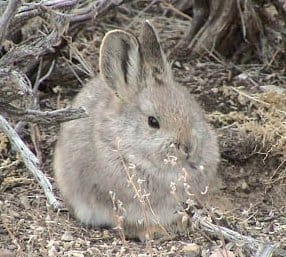
The Texas Pygmy Rabbit is one of the smallest and most intriguing Types of Wild Rabbits in Texas. Despite its tiny size, it is highly adapted to survive in arid and semi-arid regions of Texas. Observing this species offers a rare glimpse into how some rabbits thrive in extreme conditions while remaining largely hidden from human view.
Physical Characteristics & Identification Tips
Texas Pygmy Rabbits are remarkably small, measuring 8–11 inches in length and weighing only 0.7–1.5 pounds. Their fur is grayish-brown, blending perfectly with the dry soil and sagebrush-dominated landscapes where they live. The underbelly is lighter, and the tail is short and white underneath.
They have proportionally large ears for their size, which provide excellent hearing and help regulate body temperature in hot climates. Eyes are small but alert, and their hind legs, though short, are powerful enough for quick, darting movements. Tracks are small, showing distinctive hop patterns in soft soil or sand.
Identification tip: Look for a tiny, gray-brown rabbit hopping close to the ground in dry, brushy areas of West Texas. Its small size and preference for burrowing distinguish it from larger cottontails and jackrabbits.
Behavior
Texas Pygmy Rabbits are crepuscular and nocturnal, mostly active at dusk, dawn, and night to avoid heat and predators. They spend much of their time in burrows or under dense shrubs. Unlike other rabbits, they dig extensive burrow systems or utilize abandoned burrows from other animals to stay protected.
These rabbits are solitary or live in small family groups. They rely on stealth and burrowing for survival rather than speed. Foot thumping is less common due to their underground lifestyle, but they are quick to retreat to safety when threatened.
Habitat and Range
Texas Pygmy Rabbits are primarily found in arid and semi-arid regions of West Texas, particularly where sagebrush or dense scrub provides cover. They prefer sandy or loose soil, which makes burrowing easier. These rabbits are habitat specialists, relying on specific vegetation for food and protection.
Their range is limited compared to more widespread species like Eastern Cottontails or Black-tailed Jackrabbits. Habitat fragmentation and human development have restricted their populations, making conservation efforts important for their continued survival.
Diet
Texas Pygmy Rabbits are herbivorous, feeding mainly on sagebrush, grasses, and herbs. They also consume leaves, twigs, and seeds. In winter, sagebrush becomes a critical food source due to its availability and nutritional content. Like other rabbits, they re-ingest soft fecal pellets to maximize nutrient absorption.
Food availability is a major factor influencing activity patterns. These rabbits are careful foragers, feeding in concealed areas and avoiding open spaces where predators are more likely to spot them.
Reproduction and Life Cycle
Texas Pygmy Rabbits breed multiple times per year, typically producing 2–4 litters. Each litter contains 2–5 kits. Nests are located within burrows or under dense brush, lined with fur and grass. Young are born blind and hairless, emerging after 2–3 weeks to begin exploring the surrounding habitat.
Rapid growth and early independence are crucial due to predation risks. By 4–5 weeks, juveniles begin foraging alongside adults. Reproductive success is highly dependent on habitat quality and food availability.
Fun Facts / Traits
- Texas Pygmy Rabbits are excellent diggers, creating intricate burrow systems.
- They are one of the smallest rabbit species in the United States.
- They primarily rely on stealth and camouflage rather than speed.
- Sagebrush is essential for both food and protection.
- Populations are limited and highly sensitive to habitat changes.
Human Interaction
Texas Pygmy Rabbits are rarely seen due to their secretive nature and specialized habitat. Conservationists focus on preserving sagebrush and arid scrub areas to maintain populations. Observing them in the wild requires patience and minimal disturbance.
While they may seem delicate due to their size, Texas Pygmy Rabbits are resilient survivors. They provide insight into how wildlife adapts to extreme conditions and highlight the importance of habitat conservation in Texas.
6. Davis Mountains Cottontail – A Rare Wild Rabbit in Texas
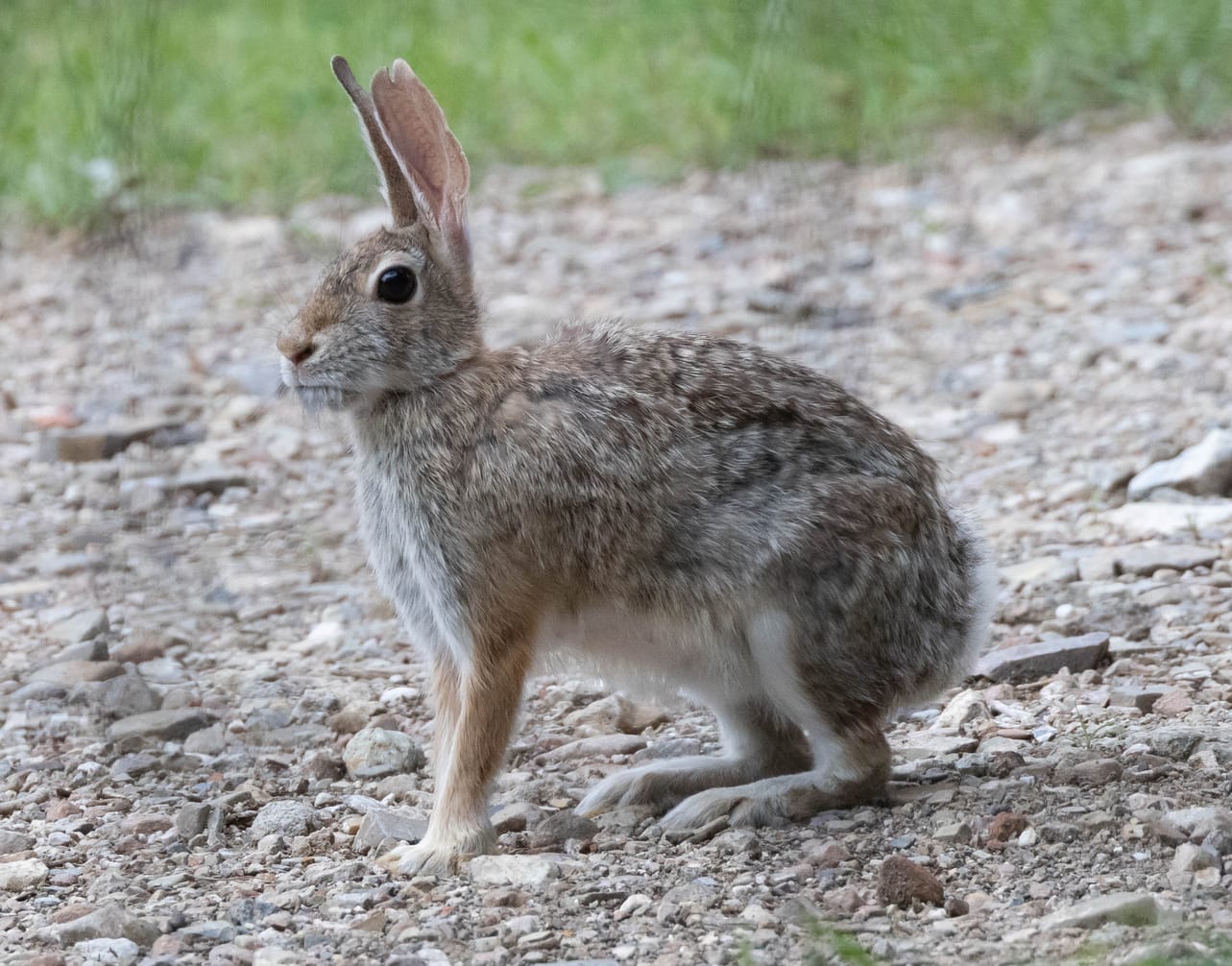
The Davis Mountains Cottontail is one of the less commonly seen Types of Wild Rabbits in Texas, restricted primarily to the higher elevations of the Davis Mountains in West Texas. Its limited range and specialized habitat make it a fascinating species for wildlife enthusiasts. Observing this rabbit highlights how local geography and climate can shape the behavior and lifestyle of Texas rabbits.
Physical Characteristics & Identification Tips
Davis Mountains Cottontails are medium-sized rabbits, measuring 12–16 inches in length and weighing 2–3.5 pounds. Their fur is brownish-gray with subtle mottling, providing camouflage against rocky terrain and brush. The underbelly is lighter, and their tail is white underneath, characteristic of cottontails.
The ears are medium-length, rounded, and well-adapted for detecting predators. Eyes are large and alert, allowing wide peripheral vision. Strong hind legs provide agility and jumping ability across rocky landscapes. Tracks show a hopping pattern, often between rocks and scrub vegetation.
Identification tip: Look for a medium-sized rabbit in the rocky, elevated habitats of the Davis Mountains with brown-gray fur and a white tail. Its preference for highland scrub distinguishes it from lowland species.
Behavior
Davis Mountains Cottontails are primarily crepuscular, active at dawn and dusk. They are cautious and agile, often remaining hidden under rocks or shrubs during the day. When threatened, they sprint in zigzag patterns to evade predators such as hawks, foxes, and bobcats.
Solitary by nature, they occupy overlapping home ranges in areas with abundant food. Communication occurs through foot thumping and scent marking. These rabbits are adept climbers and jumpers, navigating rocky terrain with ease.
Habitat and Range
As their name suggests, Davis Mountains Cottontails are largely confined to the Davis Mountains region of West Texas. They prefer rocky outcrops, high elevation scrub, and mixed grassland areas. Dense brush, shrubs, and rocky cover provide protection from predators and harsh weather.
The limited range makes them vulnerable to habitat changes, including human development or grazing pressures. Conservation of mountainous scrub and rock-strewn areas is crucial for sustaining their populations.
Diet
Davis Mountains Cottontails are herbivorous, feeding on grasses, shrubs, leaves, and seasonal vegetation. In winter, they consume bark, twigs, and dried plant material. Coprophagy allows them to extract additional nutrients from their food, which is particularly important in areas with limited resources.
They forage primarily during early morning and late evening, balancing nutrition intake with safety. Food preferences vary seasonally depending on availability.
Reproduction and Life Cycle
Davis Mountains Cottontails breed multiple times per year, producing 2–4 litters with 3–6 kits per litter. Nests are hidden in dense shrubs or rock crevices, lined with fur and grass. Kits are born blind and hairless, remaining in the nest for 2–3 weeks before venturing out to forage.
Rapid growth and early independence are essential for survival. Breeding cycles are influenced by local climate, food availability, and predator pressure, ensuring that populations remain viable despite the species’ restricted range.
Fun Facts / Traits
- Davis Mountains Cottontails are highly adapted to rocky, elevated habitats.
- They are agile climbers and jumpers, navigating uneven terrain with ease.
- Their limited range makes them one of the more elusive Texas wild rabbits.
- They rely on dense brush and rocky cover for safety.
- Foot thumping is used to signal predators’ presence to nearby rabbits.
Human Interaction
Due to their remote and rugged habitat, Davis Mountains Cottontails rarely interact with humans. Hikers and wildlife watchers may observe them, but they are generally cautious and quick to retreat. Preserving the unique highland and scrub habitats of the Davis Mountains is essential to maintaining this species.
For those interested in rare wildlife sightings, observing Davis Mountains Cottontails provides a rewarding experience, showcasing how rabbits can adapt to specialized ecological niches in Texas.
7. Audubon’s Cottontail – A Lesser-Known Wild Rabbit in Texas
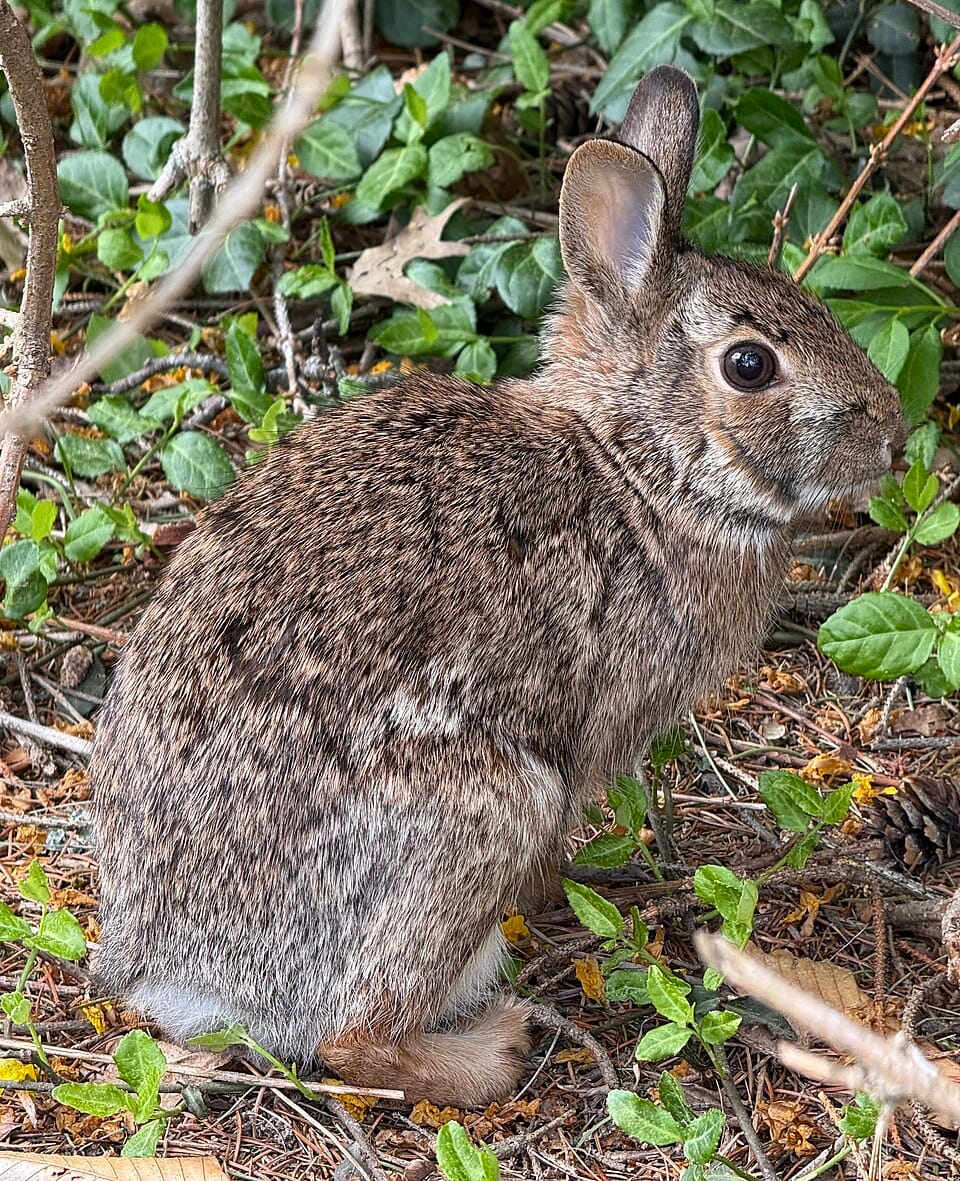
Audubon’s Cottontail is one of the more subtle Types of Wild Rabbits in Texas, often overlooked due to its similarity with other cottontail species. Found primarily in Central and Western Texas, it favors semi-arid and brushy habitats. Studying this rabbit highlights how slight differences in appearance, behavior, and habitat can distinguish species within Texas’ diverse rabbit populations.
Physical Characteristics & Identification Tips
Audubon’s Cottontails are medium-sized, averaging 12–16 inches in length and weighing 2–4 pounds. Their fur is gray-brown with faint mottling, helping them blend with grasses and shrubs. The underbelly is lighter, and the tail is white underneath, though slightly smaller than Eastern Cottontails.
Ears are medium-length, rounded at the tips, and provide excellent auditory sensitivity. Eyes are large, aiding in predator detection. Hind legs are strong, allowing swift, zigzag running. Tracks often appear in small, overlapping clusters along brushy paths.
Identification tip: Look for a medium-sized rabbit with gray-brown fur and a white tail in scrubland or semi-arid areas of Texas. Its subtle color patterns and habitat preference distinguish it from more common cottontail species.
Behavior
Audubon’s Cottontails are primarily crepuscular, active at dawn and dusk. They remain hidden under brush or in tall grasses during daylight hours. When threatened, they freeze first, relying on camouflage, then dash in quick zigzag patterns to evade predators such as coyotes, foxes, hawks, and snakes.
They are generally solitary, with individuals maintaining overlapping territories. Foot thumping is used to signal danger. Despite their small size, they are alert, fast, and highly responsive to environmental cues, which is key to surviving in semi-arid Texas landscapes.
Habitat and Range
Audubon’s Cottontails inhabit Central and Western Texas, preferring scrubland, brushy hills, and semi-arid plains. They rely on dense shrubs and grasses for cover and nesting. These rabbits are adaptable but avoid open plains without brush, which increases exposure to predators.
Their specific habitat preference differentiates them from Eastern or Desert Cottontails, which occupy more widespread or open areas. Preserving brushy landscapes is crucial for maintaining healthy populations.
Diet
Audubon’s Cottontails are herbivorous, consuming grasses, herbs, leaves, shoots, and occasional twigs. In dry seasons, they may feed on bark and dried plant material. They practice coprophagy, re-ingesting soft fecal pellets to extract additional nutrients, which is essential in habitats with limited food availability.
Feeding occurs mostly during low-light hours. They select areas that balance food accessibility with safety from predators, often nibbling near dense cover.
Reproduction and Life Cycle
Audubon’s Cottontails breed multiple times per year in Texas, typically producing 2–4 litters. Each litter contains 3–6 kits. Nests are hidden under brush or tall grasses and lined with fur and plant material. Kits are born blind and hairless, emerging after 2–3 weeks to explore the surroundings.
Early mobility and rapid growth are critical for survival. Juveniles begin foraging independently by 4–6 weeks. Breeding success depends on food availability, cover density, and predator pressure, ensuring stable populations despite environmental challenges.
Fun Facts / Traits
- Audubon’s Cottontails are adapted to semi-arid and scrub habitats.
- They rely heavily on brush for protection and nesting.
- Foot thumping is used to communicate danger to nearby rabbits.
- They are agile and fast, capable of quick zigzag escapes.
- Subtle fur patterns help them remain concealed from predators.
Human Interaction
Audubon’s Cottontails are rarely encountered by casual observers due to their preference for dense brush and remote areas. Wildlife watchers and photographers may spot them in Central and Western Texas, but they are generally cautious and elusive.
Conservation of brushy, semi-arid habitats supports this species and other small wildlife. Observing them from a distance allows people to enjoy their behavior without disturbing their natural activities, ensuring that Audubon’s Cottontails continue to thrive in their native Texas environment.
Conclusion
Exploring the Types of Wild Rabbits in Texas reveals the rich diversity and adaptability of these small mammals. From the deserts to the wetlands, and from the plains to mountainous regions, each rabbit species has evolved specific traits that allow it to survive and thrive in its environment. Observing these rabbits provides insight into Texas’ ecosystems and highlights the importance of conserving natural habitats for wildlife. Whether you are watching them in the wild, photographing, or studying their behaviors, these rabbits remind us how resilient and fascinating nature can be. Protecting their habitats ensures that these unique species continue to thrive for generations to come.
Frequently Asked Questions About Wild Rabbits in Texas
1. What are the most common types of wild rabbits in Texas?
Texas hosts a variety of wild rabbits, including Eastern Cottontail, Desert Cottontail, Swamp Rabbit, Black-tailed Jackrabbit, Texas Pygmy Rabbit, Davis Mountains Cottontail, and Audubon’s Cottontail.
2. Where can I find Eastern Cottontails in Texas?
Eastern Cottontails are widespread across Central and Eastern Texas, inhabiting grasslands, fields, and suburban areas with dense cover.
3. How can I identify Desert Cottontails in Texas?
Desert Cottontails are medium-sized with gray-brown fur and large ears. They are commonly found in arid regions of West Texas and can be distinguished from other rabbits by their lighter fur and long hind legs.
4. Are Swamp Rabbits native to Texas?
Yes, Swamp Rabbits are native to Texas, primarily found in wetlands, marshes, and bottomland forests of Eastern Texas.
5. What is the habitat of Black-tailed Jackrabbits in Texas?
Black-tailed Jackrabbits prefer open grasslands, deserts, prairies, and agricultural fields in West and Southern Texas.
6. How do Texas Pygmy Rabbits survive in arid regions?
Texas Pygmy Rabbits survive by burrowing, staying close to brush for cover, and feeding on sagebrush and other vegetation adapted to dry areas.
7. Where is the Davis Mountains Cottontail found in Texas?
Davis Mountains Cottontails are restricted to high-elevation areas in the Davis Mountains of West Texas, inhabiting rocky terrain and brushy hills.
8. What distinguishes Audubon’s Cottontail in Texas from other rabbits?
Audubon’s Cottontail prefers semi-arid and brushy habitats in Central and Western Texas and has subtle gray-brown fur, slightly smaller than Eastern Cottontails.
9. How many species of wild rabbits live in Texas?
There are at least seven commonly recognized species of wild rabbits in Texas.
10. What do wild rabbits eat in Texas?
Wild rabbits in Texas eat grasses, herbs, leaves, shoots, twigs, and seeds depending on the species and habitat.
11. How do wild rabbits adapt to Texas’ climate?
Rabbits adapt by being nocturnal or crepuscular, seeking shelter during extreme heat or cold, and adjusting their diet to available vegetation.
12. Are wild rabbits in Texas active during the day or night?
Most wild rabbits in Texas are crepuscular, active at dawn and dusk, though some species like Swamp Rabbits may be active at night.
13. How do rabbits in Texas reproduce?
Wild rabbits breed multiple times per year, producing 2–5 litters depending on the species and environmental conditions.
14. What predators threaten wild rabbits in Texas?
Predators include coyotes, foxes, bobcats, hawks, owls, snakes, and domestic dogs or cats.
15. How do Black-tailed Jackrabbits evade predators in Texas?
They use speed, long leaps, and zigzag running patterns to escape predators in open grasslands and deserts.
16. Can Swamp Rabbits swim in Texas wetlands?
Yes, Swamp Rabbits are strong swimmers, using water to escape predators and move through wetland habitats.
17. How does habitat loss affect wild rabbits in Texas?
Habitat loss reduces cover, food availability, and breeding sites, making rabbits more vulnerable to predators and environmental stress.
18. Where are Texas Pygmy Rabbits most commonly found?
They are primarily found in arid and semi-arid regions of West Texas with dense sagebrush for cover and food.
19. How long do wild rabbits live in Texas?
Wild rabbits typically live 1–3 years in the wild, though some may reach 4–5 years depending on predation and environmental conditions.
20. Can I observe wild rabbits in Texas parks?
Yes, many Texas parks provide suitable habitats for Eastern Cottontails, Black-tailed Jackrabbits, and other species, especially in areas with dense brush or grasslands.
21. What is the difference between Desert Cottontails and Eastern Cottontails in Texas?
Desert Cottontails are smaller, adapted to arid regions, with lighter fur and longer hind legs, while Eastern Cottontails prefer moist grasslands and are larger with darker fur.
22. Are any wild rabbits endangered in Texas?
Texas Pygmy Rabbits have limited populations due to habitat loss, but most other species are stable.
23. How do wild rabbits communicate in Texas?
Rabbits communicate using foot thumping, scent marking, and body language to signal danger and territory.
24. What role do wild rabbits play in Texas ecosystems?
They are important prey for predators, help with seed dispersal, and influence plant community dynamics through grazing.
25. How can I safely photograph wild rabbits in Texas?
Use a telephoto lens, stay quiet, and observe from a distance to avoid disturbing their natural behavior.
26. Do wild rabbits in Texas cause damage to crops or gardens?
Yes, some species like Eastern and Desert Cottontails may browse on vegetables, flowers, or young plants.
27. How can I attract wild rabbits to my property in Texas?
Provide brush piles, cover, and native grasses, and avoid excessive human disturbance to create a rabbit-friendly habitat.
28. When is the best time to see wild rabbits in Texas?
Dawn and dusk are ideal times because most rabbits are crepuscular and active during these hours.
29. How do Davis Mountains Cottontails survive in rocky habitats of Texas?
They use dense brush and rocky outcrops for shelter, rely on agility to navigate terrain, and feed on available shrubs and grasses.
30. What are fun facts about wild rabbits in Texas?
Many Texas rabbits can swim, dig burrows, leap long distances, and have specialized diets depending on habitat.
31. How do Texas rabbits differ from rabbits in other states?
Texas rabbits are adapted to a wide variety of habitats, from deserts to wetlands, making them more diverse in behavior and diet than rabbits in some other regions.
32. Are Swamp Rabbits in Texas active year-round?
Yes, they remain active throughout the year, particularly near water sources, though activity may vary with weather.
33. What adaptations help wild rabbits survive in Texas deserts?
Adaptations include nocturnal activity, water-efficient diets, camouflage, and fast escape behaviors to avoid predators.
Read more: