

Maryland has more wild rabbits than people realize. Some hide in grassy backyards, others stay deep in wetlands or cool forests. If you’re trying to identify them, you may feel unsure at first. Many look similar, especially when all you see is a blur of brown fur hopping into a bush. This guide covers the five main Types of Wild Rabbits in Maryland and breaks down what makes each one stand out. You’ll learn how they behave, where they live, what they eat, and how to recognize them without guessing. The goal is to make rabbit ID simple for beginners and clear enough for anyone who enjoys watching wildlife.
1. Eastern Cottontail

The Eastern Cottontail is the rabbit that most Maryland residents see first. Kids grow up spotting them in yards, fields, and parks. They blend in so well with suburban spaces that many people forget they’re truly wild. But they are, and they’re excellent survivors. Below is a detailed look at how this familiar rabbit lives, looks, and interacts with people. Since it’s one of the most common Wild Rabbits in Maryland, learning this species makes the rest easier.
Physical Characteristics & Identification Tips
The Eastern Cottontail has a round, stocky body covered in brown-gray fur. The back usually mixes black and brown, while the belly stays pale. The tail is bright white underneath, which is why people call it a “cottontail.” When the rabbit runs, that white puff bounces like a tiny signal light. Its ears are medium-length, not short like some forest rabbits and not long like the snowshoe hare. The eyes look large for the face and always alert. If you watch one for a moment, you’ll see small twitches and quick motions as it checks every sound.
A simple way to identify this species is by looking at the head shape. Eastern Cottontails have a gentle slope from the nose to the forehead. The fur at the nape often holds a faint rusty tint. Juveniles look more compact, but they share the same general patterns. Adults weigh between two and four pounds—big enough to notice but small enough to hide in grass only a few inches tall.
If you’re trying to tell this species apart from the Appalachian Cottontail, look at the forehead. Eastern Cottontails tend to have a smoother coat pattern there, while Appalachian Cottontails carry more mottled or patchy coloring. Another field clue is confidence: Eastern Cottontails tolerate people more. They may freeze in place while you walk past, hoping you don’t notice them.
Behavior
Eastern Cottontails behave like small athletes. Their reflexes are sharp, and they rely on bursts of speed instead of long-distance running. They also trust silence; if danger isn’t close, they choose to stay still rather than flee. This “freeze first” habit works well, because predators often overlook something that doesn’t move.
They’re active during dawn and dusk, when the light is soft and most predators are hunting. You’ll catch them nibbling on clover before the sun rises or hopping across lawns as the day cools down. During storms they shelter in thick brush or burrows dug by other animals. They don’t create deep tunnels of their own, which surprises many people. Instead, they use natural hollows or abandoned groundhog holes as temporary hideouts.
Socially, Eastern Cottontails don’t form big cooperative groups. They may share a field with others, but they keep personal space. They communicate with thumps, soft grunts, and sudden jumps that look like odd dances. These movements send signals about danger or mating interest.
Habitat and Range
Maryland suits Eastern Cottontails perfectly. They live in almost every county and use nearly every landscape except very wet marshes. Meadows, backyards, forest edges, farms, and even parking lots with shrubs become their home. They prefer mixed habitats—places with open grass for feeding and thick cover nearby for safety.
Their wide range means you can find them along the Eastern Shore, the piedmont region, and the western mountains. They don’t migrate. They stay where food and cover are stable, often living their entire lives within a few acres.
Diet
Their diet changes by season. In spring and summer, they eat clover, grass, plantain, and garden vegetables. People who grow kale or beans know this all too well. In fall, they shift toward dry grasses, fallen leaves, and twigs. When winter comes, they chew bark from shrubs and young trees. They aren’t picky; they simply take what is available.
One thing that helps them survive is their habit of re-eating partially digested food. It may sound strange, but it lets them pull extra nutrients from tough plant materials. Many herbivores do the same, though they don’t talk about it for obvious reasons.
Reproduction and Life Cycle
Eastern Cottontails reproduce quickly. Females can raise several litters each year, with each litter holding three to seven kits. The mother builds a shallow nest in the ground, lines it with grass and fur, and covers it with vegetation. The nest looks like part of the soil, so many people don’t see it until their dog discovers it by accident.
The young stay hidden for about two weeks. Their eyes open around day ten, and they begin exploring shortly after. The mother visits only a few minutes each day to nurse, which reduces the chance of predators finding the nest. The kits grow fast and become independent in less than a month. Few reach adulthood, but enough survive to keep the population steady.
Fun Facts / Traits
Eastern Cottontails can leap up to fifteen feet in a single dash when escaping danger. They also zigzag instead of running straight, tricking predators that rely on quick grabs. Their hearing is impressive; those ears work like tiny radar dishes. And although they look gentle, they can defend themselves with sharp kicks when cornered. Think of them as small creatures with surprising confidence.
Human Interaction
People and Eastern Cottontails cross paths often. Most interactions are peaceful. They nibble gardens, hop across driveways, and show up during summer evenings like quiet neighbors. Some people enjoy watching them graze in their yards. Others feel frustrated when lettuce disappears overnight. Rabbits don’t try to cause trouble; they simply take advantage of easy food.
If you want to protect plants, simple solutions like fencing or using raised beds work well. These rabbits don’t challenge obstacles. They prefer easy meals. You’ll also see them along roadsides, especially at night. Collisions are unfortunately common, since their instinct tells them to freeze instead of run.
Despite these challenges, humans remain the least dangerous threat. Predators such as hawks, foxes, owls, and domestic pets take more rabbits each year. Eastern Cottontails adapt by staying alert and raising many young. It’s a rough life, but they’ve survived for thousands of years by being quick thinkers with fast legs.
That wraps up the first species. In the next part, we’ll examine the Appalachian Cottontail and the Marsh Rabbit—two species that live quieter lives and hide from the spotlight far more than the familiar Eastern Cottontail.
2. Appalachian Cottontail
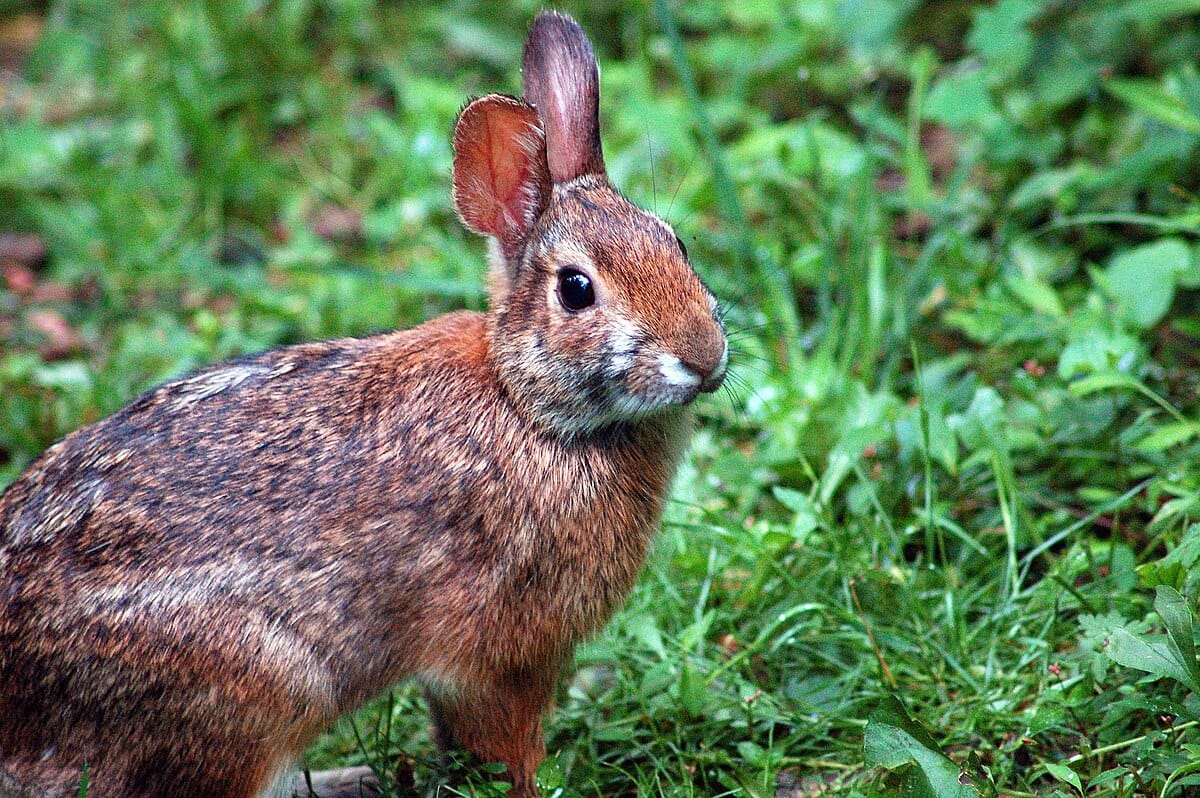
The Appalachian Cottontail is one of Maryland’s quieter forest residents. Most people never notice it, even when it’s only a few steps away. It keeps a low profile and blends into thick mountain brush like it’s part of the landscape. While it looks similar to the Eastern Cottontail, it has its own habits, features, and story. If you like hiking in Maryland’s western mountains, you may have crossed paths with this species without realizing it. Here’s a detailed look at this often-misunderstood rabbit.
Physical Characteristics & Identification Tips
The Appalachian Cottontail carries a mix of brown, black, and tan fur that gives it a textured look. Compared to the Eastern Cottontail, its coat usually appears more patterned, especially around the back and shoulders. The fur often feels denser, and the colors blend into each other instead of forming smoother patches. The underside is pale, sometimes creamy white, and the tail has the trademark bright lower surface that flashes when it hops away.
Its head looks slightly rounder than the Eastern Cottontail’s. The ears tend to be shorter and darker at the tips. If you’re holding binoculars and watching from a distance, the darker ear tips can be a reliable clue. The size of this species is modest, often two to three pounds, though weight varies with diet and season.
One common confusion is between this species and young Eastern Cottontails. But if you’re in mountain terrain with dense rhododendron or laurel, chances are you’re looking at an Appalachian Cottontail. Their habitat choices offer the easiest identification method. When people struggle to tell them apart, the rule of thumb is simple: “Location helps more than looks.”
Behavior
Appalachian Cottontails behave with caution. They don’t linger in open spaces and rarely cross large fields. Instead, they hop through tunnels of vegetation, using shadows as their shield. They prefer short trips instead of long movements. When something startles them, they retreat into thickets where predators can’t easily follow.
These rabbits stay active mostly during twilight and night. They may step out during the day in quiet, shaded forests, but they avoid bright sunlight. They aren’t very social and don’t form long-term groups. If several are near each other, they still keep personal space and avoid close contact except during the breeding season.
One behavior that stands out is their reliance on “scent mapping.” They leave faint scent marks along familiar paths, which helps them navigate dense undergrowth. These informal trails act like memory markers, guiding them away from danger and back to feeding spots.
Habitat and Range
In Maryland, Appalachian Cottontails stay mostly in the western counties. You’ll find them in the Allegheny Mountains, scattered hardwood forests, and cool, damp areas with thick vegetation. They love places filled with mountain laurel, hemlock, blueberry, and rhododendron. These shrubs create cover that hides them from predators.
Elevation matters for this species. They prefer higher ground where temperatures stay cooler and humidity remains steady. They avoid farmland, suburban yards, and flat coastal regions. If you’re hiking in Green Ridge State Forest or Savage River State Forest, you’re walking through their territory.
Diet
Their diet matches the mountain environment. In spring and summer, they eat grasses, ferns, clover, and forest herbs. When berries are available, they nibble new shoots and young leaves from blueberry plants. During fall, they shift to bark strips, buds, and twigs. They take what the forest offers without fussing over specific plants.
Winter is tougher. Snow reduces access to ground vegetation, so they rely more on woody plants. The mountain air can be cold, but their thick coats help them endure the season. They focus on plants close to the ground and sheltered under brush, choosing areas protected from wind and predators.
Reproduction and Life Cycle
The Appalachian Cottontail’s breeding season typically runs from early spring through late summer. Females may raise two to three litters each year, depending on weather and food conditions. Each litter includes around three to five kits.
The mother builds shallow nests under shrubs or in small depressions lined with fur. These nests stay hidden underneath tangles of branches and fallen logs. As with most rabbits, the mother visits only briefly to feed her young so she doesn’t attract attention. The kits grow quickly and leave the nest in about two weeks.
Survival rates vary widely. Mountain predators like owls, foxes, and bobcats pose challenges. But the thick vegetation gives young rabbits more places to hide. By fall, those that survive become independent and establish their own feeding routes.
Fun Facts / Traits
The Appalachian Cottontail is a master of camouflage. If you walk through forest brush and think you saw a “moving shadow,” it may have been this species. Their fur blends so well into dry leaves and mountain soil that they seem to disappear in plain sight. They also use small boulder piles and fallen logs as lookout points, quietly observing their surroundings before hopping forward.
Another little quirk: they sometimes sit upright like tiny statues to check for danger. This posture gives them a better view of predators, especially when shrubs are tall enough to block their line of sight.
Human Interaction
People rarely see Appalachian Cottontails unless they spend time in deep forest areas. They stay away from cities and suburbs. When hikers encounter them, the rabbits usually flee quickly, leaving only rustling leaves behind.
Habitat loss is the biggest concern for this species. As forests change or become fragmented, their hiding spaces and feeding areas shrink. Conservation groups monitor their numbers in several states, though they remain present in Maryland’s mountain regions.
For those who enjoy wildlife watching, the key to seeing this species is patience. Move slowly, scan low to the ground, and listen for soft crunches in leaf litter. They reveal themselves only to those who earn their trust through calm walking and quiet observation.
3. Marsh Rabbit
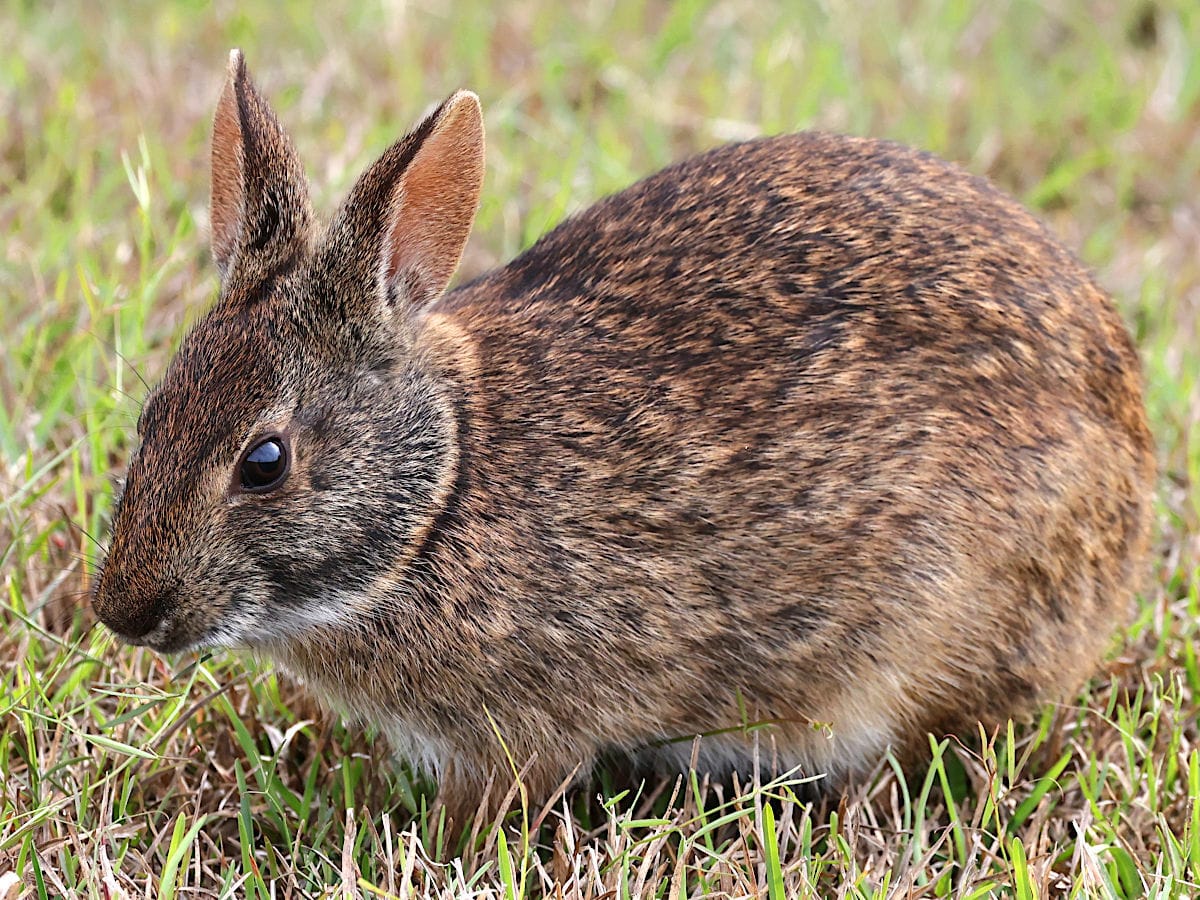
The Marsh Rabbit stands out from the other species on this list because it favors wet, swampy places that most mammals avoid. Instead of grassy fields or forest edges, it lives in wetlands full of standing water, soft mud, and thick aquatic plants. In Maryland, this species lives mainly in the southern and coastal regions. It’s a shy rabbit with special adaptations that help it survive wet environments. If you’ve ever walked along a marsh boardwalk and saw a small brown shape slipping through cattails, you may have spotted one.
Physical Characteristics & Identification Tips
Marsh Rabbits have darker fur than most cottontails. The coat often appears brownish-black, especially on the back and sides. Their bellies are not bright white like other species. Instead, the underside looks gray or brown. This muted contrast helps them blend into swampy backgrounds.
Their ears are shorter than the Eastern Cottontail’s and noticeably rounder. The face looks compact, with a slightly narrower muzzle and darker markings around the eyes. Their legs are shorter as well, especially the hind legs. This makes their hopping style different—almost like a quick shuffle instead of the longer leaps typical of dry-land rabbits.
Another clue: the feet. Marsh Rabbits have dense hair on the soles, which helps them walk on wet surfaces without sinking too much. Their tail is also less visible, lacking the bright white “flag” that other cottontails display. If the rabbit runs and you don’t see a bright flash, that’s a good hint you’re looking at a Marsh Rabbit.
Behavior
These rabbits behave differently from upland species. They aren’t afraid of water and often use shallow pools to escape predators. They can swim well—much better than many people expect. If something chases them, they slip into the water, paddle quietly, and hide under overhanging plants.
They’re slow compared to their upland cousins, but their agility in water compensates for that. They also stay low to the ground, moving through marsh grasses in tight tunnels they create. If you hear faint splashes or see ripples in shallow marshes at dusk, a Marsh Rabbit may be nearby.
These rabbits tend to be solitary. They feed alone, rest alone, and move through the marsh with caution. They usually become active around sunset and continue feeding through the night.
Habitat and Range
Marsh Rabbits live in coastal plains, tidal wetlands, freshwater marshes, and swamp edges. In Maryland, they’re mainly found in the lower Eastern Shore and near the Chesapeake Bay’s marsh systems. They avoid dry ground and won’t venture far from wet areas. If the soil doesn’t squish under your boots, it’s probably too dry for this rabbit.
They rely heavily on dense cover such as cattails, reeds, cordgrass, and swamp shrubs. These plants create a maze of paths and hiding spots that keep them safe from predators.
Diet
Their diet consists mostly of aquatic plants. They eat grasses, reeds, sedges, and the tender shoots of wetland vegetation. During warmer months, they take advantage of fresh growth. In winter, they shift to bark, roots, and dried plant stems found close to the waterline.
This species has a flexible digestive system that helps it process fibrous plants efficiently. They reuse partially digested material to extract extra nutrients—common among rabbits, though still surprising to many people.
Reproduction and Life Cycle
Marsh Rabbits breed from early spring through late summer. Females may have several litters, usually with two to four kits each. They build nests above damp ground, using grass and fur to keep moisture out. If water levels rise suddenly, they may shift their nests to higher clumps of vegetation.
The kits stay hidden for two weeks, just like other rabbits. When they leave the nest, they’re already cautious and skilled at slipping through thick marsh plants. Many predators patrol the wetlands, so young rabbits face tough odds. Still, their quick movements and ability to hide in both water and vegetation help some reach adulthood.
Fun Facts / Traits
One surprising fact is how comfortable Marsh Rabbits are in water. They can dive briefly to escape threats and swim across channels without hesitation. They also leave round, flat tracks with soft edges because the wet ground absorbs the prints differently than dry soil.
Another interesting trait is their soft calls. When startled, they may emit a faint squeak, but they usually rely on stillness and silence. Their lifestyle revolves around the marsh’s rhythm, which gives them an almost ghostlike presence.
Human Interaction
People don’t see Marsh Rabbits often unless they explore wetlands regularly. Habitat loss, rising water levels, and invasive plants affect their numbers. In some areas, they’re declining because their habitats are shrinking or changing faster than they can adapt.
When they do appear near people, most encounters are harmless. Sometimes they nibble garden plants in wet yards, but they rarely stray far from marshes. Conservation groups monitor their wetland habitats closely, since many species rely on the same areas.
For those who enjoy observing wildlife, patience and quiet movement help. Spotting a Marsh Rabbit feels like a small reward after a long walk through thick, moist terrain.
4. Snowshoe Hare
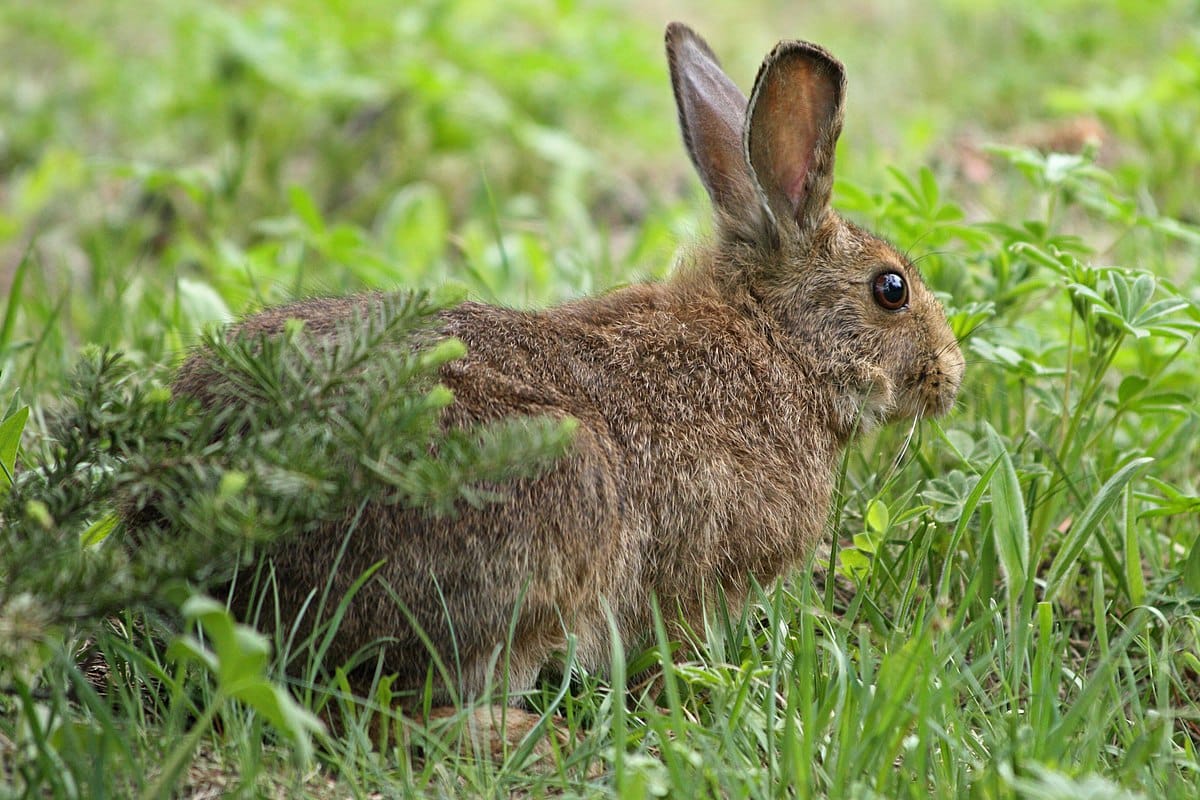
The Snowshoe Hare is one of Maryland’s most fascinating Wild Rabbits in Maryland. Unlike most rabbits that stay brown all year, this species changes color with the seasons. In winter, it turns almost pure white, blending seamlessly with snow, and in summer, its fur becomes brown again. This color-shifting ability is an adaptation to avoid predators and survive in colder climates. Though less common in Maryland than the Eastern Cottontail, Snowshoe Hares can be found in the higher elevations of western counties. They’re active, fast, and uniquely adapted to life in snowy or rugged terrain.
Physical Characteristics & Identification Tips
Snowshoe Hares are larger than typical cottontails, weighing between four and six pounds. Their long hind legs help them bound quickly across snow and rough ground. Their feet are broad and covered with fur, acting like natural snowshoes, which gives the species its name. The tail is smaller than the Eastern Cottontail’s and is brown on top with a white underside.
The fur is thick and soft. During winter, it becomes white, camouflaging the hare perfectly in snow-covered fields. Summer fur turns brownish-gray with a slightly reddish tint in some areas. Eyes are dark, alert, and slightly larger proportionally than those of cottontails, helping them detect predators even in low light. The ears are long, standing straight and capable of picking up faint sounds from far away.
Field identification is easier when you notice movement patterns. Snowshoe Hares make large, bounding leaps, leaving distinct footprints in snow or soft soil. Unlike smaller cottontails, which dart and zigzag, hares move in long, smooth bounds that appear effortless.
Behavior
Snowshoe Hares are crepuscular, meaning they are most active at dawn and dusk. They rely on stealth, camouflage, and speed for survival. When startled, they spring forward in long jumps, zigzagging if pursued by a predator. Their large hind feet give them traction on snow, mud, or uneven terrain.
Unlike cottontails, Snowshoe Hares don’t create nests in burrows. They hide in shallow depressions lined with leaves, grass, and fur. These “forms” are temporary, used during the day while they rest. At night, they forage for plants, twigs, and buds. They are solitary creatures, usually avoiding other hares except during mating season.
Habitat and Range
In Maryland, Snowshoe Hares inhabit forested mountains and higher elevation areas where snow can persist in winter. They prefer mixed coniferous and hardwood forests with dense understory. Thick shrubs provide shelter from predators such as foxes, hawks, and owls. The western counties, including Garrett and Allegany, offer the best habitats for this species.
Snowshoe Hares migrate short distances depending on food availability. They are more mobile than cottontails, moving several hundred yards to find cover or forage. They avoid open fields where predators can spot them easily.
Diet
Their diet includes grasses, leaves, twigs, buds, and bark. In winter, they feed on bark, twigs, and buds of shrubs and small trees. In summer, they eat fresh grasses, herbs, and leafy vegetation. Snowshoe Hares are selective feeders, choosing tender and nutritious parts when available.
They practice coprophagy, re-ingesting soft fecal pellets to absorb nutrients that the first digestion missed. This helps them extract maximum energy from fibrous plant material, especially important during winter months when food is scarce.
Reproduction and Life Cycle
Snowshoe Hares breed from March to September, producing two to three litters annually. Each litter has three to eight leverets. Unlike cottontails, the young are born fully furred with eyes open, ready to move within a few hours. The mother visits the nest only briefly to nurse, leaving young hidden and less vulnerable to predators.
Young hares grow quickly. By the time they are a few weeks old, they are independent and able to forage. Predation and harsh winter conditions keep survival rates lower, but their adaptability allows populations to remain stable.
Fun Facts / Traits
Snowshoe Hares can change coat color twice a year—brown to white and back again. This is rare among Maryland rabbits. They can leap up to ten feet in one bound, escape predators, and cross snow without sinking. Their large feet also allow them to move silently, almost like gliding over snow. In addition, their seasonal fur change is influenced by daylight length, which is a fascinating adaptation to northern climates.
Human Interaction
People rarely see Snowshoe Hares unless they explore higher forests in winter. They avoid urban areas and farms. Human impact mainly comes from habitat loss and hunting in some regions. Conservation efforts focus on maintaining dense forest habitats to support populations. Observing them requires patience and quiet, but seeing a white hare against snowy woods is always memorable.
5. New England Cottontail
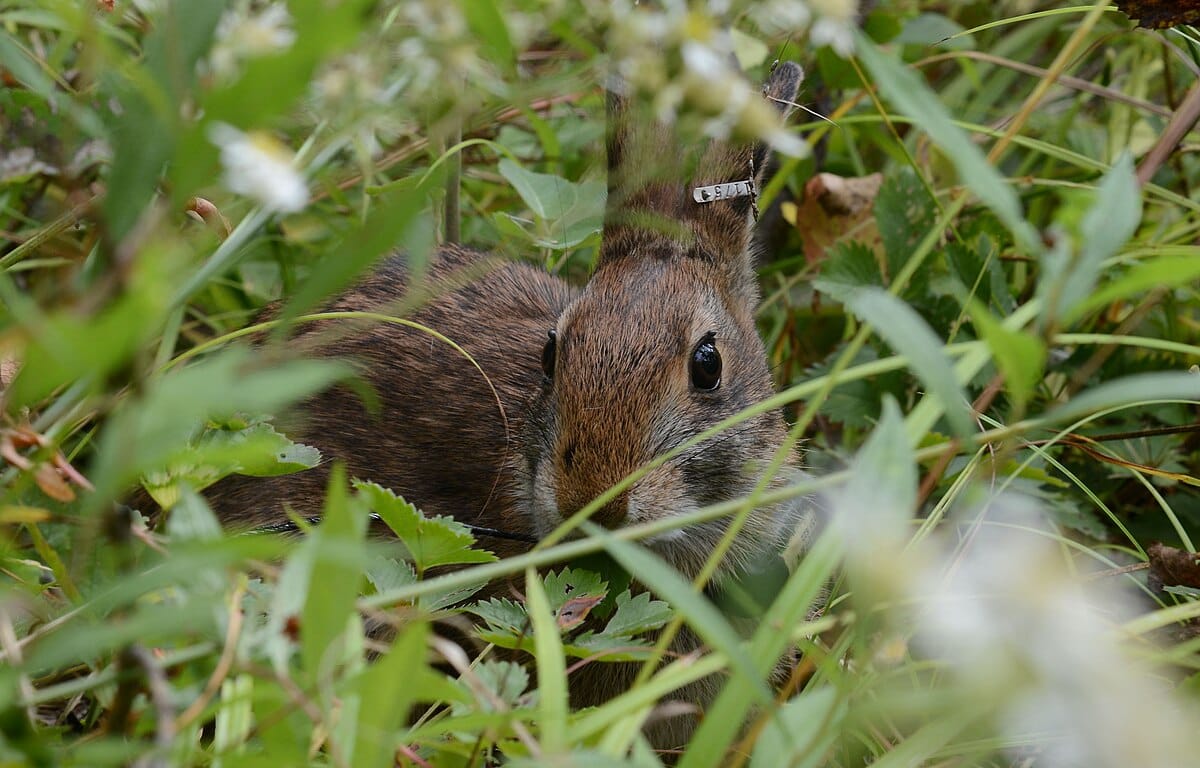
The New England Cottontail is a rare and shy rabbit found in Maryland’s forests and shrubby areas. It’s smaller and darker than the Eastern Cottontail, and its population has been declining due to habitat loss. Conservationists monitor it closely because it requires dense cover to survive. It prefers upland habitats and avoids open spaces, making it one of the less-seen Wild Rabbits in Maryland.
Physical Characteristics & Identification Tips
New England Cottontails are slightly smaller than Eastern Cottontails, weighing about two to three pounds. Fur is grayish-brown with some black streaks, giving a mottled appearance. The belly is pale, and the tail is white underneath but smaller than Eastern Cottontails. Their ears are medium-length, often darker at the tips.
Identification is tricky. If you are in a dense shrub or forest edge in western or southern Maryland, you are more likely seeing this species. They avoid open fields and suburban areas. Watching movement is a helpful clue: they dart through dense vegetation rather than crossing open spaces.
Behavior
New England Cottontails are mostly nocturnal or crepuscular. They feed at night and hide in thick brush during the day. They are shy and rarely approach human presence. They communicate through scent marks, thumps, and soft noises, usually staying hidden from predators.
Unlike Eastern Cottontails, they do not tolerate human activity nearby. They rely on quick, stealthy movements and cover to survive. This cautious behavior is part of why sightings are rare.
Habitat and Range
This species inhabits dense shrubs, young forests, and forest edges. In Maryland, it can be found in scattered upland areas with thick vegetation. It avoids open farmland, lawns, and areas with heavy human development. Habitat fragmentation is a serious concern for this rabbit.
Diet
New England Cottontails eat grasses, herbaceous plants, twigs, buds, and bark. They prefer tender shoots when available. In winter, bark from shrubs and small trees becomes more important. Like other rabbits, they re-ingest some fecal pellets to maximize nutrient absorption.
Reproduction and Life Cycle
They breed from spring through summer. Females have two to three litters, usually with three to six kits. Nests are shallow, hidden under dense cover, lined with grass and fur. Kits stay hidden for a couple of weeks before venturing out. Survival depends heavily on cover and predator avoidance.
Fun Facts / Traits
New England Cottontails are highly secretive, making them difficult to study. They are excellent hiders and use dense brush to evade predators. Their presence often indicates healthy shrubland habitat, and they play an important role in ecosystem dynamics by grazing selectively and serving as prey.
Human Interaction
Human development is the main threat. Conservation programs plant shrubs and maintain early successional habitats to support populations. Gardeners rarely encounter them due to their preference for dense cover, making them mostly unseen in human landscapes.
Conclusion
Maryland hosts a variety of wild rabbits, each adapted to its own habitat and lifestyle. From the common Eastern Cottontail to the elusive New England Cottontail, these creatures teach us about survival, adaptation, and the subtle beauty of nature. Recognizing the Types of Wild Rabbits in Maryland helps beginners enjoy wildlife observation, understand ecosystems, and appreciate the diversity of local species. Next time you see a rabbit hopping through a yard, forest, or marsh, take a moment to notice its size, color, and movements—you might be looking at one of Maryland’s fascinating wild rabbits.
If you want to observe rabbits responsibly, keep a respectful distance, avoid disturbing nests, and watch quietly during dawn or dusk. By doing so, you contribute to the well-being of these small but remarkable animals and gain a deeper understanding of Wild Rabbits in Maryland.
Frequently Asked Questions about Wild Rabbits in Maryland
1. What species of wild rabbits live in Maryland?
Maryland hosts five main species of wild rabbits: Eastern Cottontail, Appalachian Cottontail, Marsh Rabbit, Snowshoe Hare, and New England Cottontail. Each species prefers specific habitats and has unique behaviors.
2. How can I identify an Eastern Cottontail?
Eastern Cottontails are brown-gray with a white underside on the tail. They have medium-length ears and a gentle slope on the head. Look for their round body and quick darting movements in open fields or suburban yards.
3. Where do Appalachian Cottontails live?
They are mostly found in Maryland’s western mountains, preferring dense forests, shrubs, and shaded understory. Unlike Eastern Cottontails, they avoid open fields and suburban areas.
4. What makes Marsh Rabbits different from other rabbits?
Marsh Rabbits live in wetlands and marshes. They have darker fur, shorter ears, and can swim well. They rarely leave water-rich areas and use aquatic plants as shelter and food.
5. How do Snowshoe Hares adapt to winter?
Snowshoe Hares turn their fur white during winter to camouflage in snow. Their large, furry feet help them move across snow without sinking, and their long hind legs allow them to bound quickly to escape predators.
6. Are New England Cottontails endangered?
They are not officially endangered nationwide, but their populations have declined due to habitat loss. Conservation programs focus on preserving dense shrublands and early successional habitats.
7. When are wild rabbits most active?
Most wild rabbits in Maryland are crepuscular, meaning they are most active during dawn and dusk. Marsh Rabbits are also active at night, while Eastern Cottontails may venture out during the day if they feel safe.
8. What do Eastern Cottontails eat?
Their diet includes grasses, clover, herbs, vegetables, bark, and twigs. They adapt seasonally, eating tender shoots in summer and woody material during winter.
9. How do Appalachian Cottontails avoid predators?
They rely on dense vegetation, scent marking trails, and cautious movements. They rarely venture into open areas and use thickets to escape predators like foxes and hawks.
10. Can Marsh Rabbits swim?
Yes, Marsh Rabbits are excellent swimmers. They use water to escape predators and can paddle through shallow marshes silently.
11. How can you tell a Snowshoe Hare from other rabbits?
Look for size and seasonal fur color. Snowshoe Hares are larger, with long hind legs, broad furry feet, and a coat that turns white in winter and brown in summer.
12. What habitats do New England Cottontails prefer?
They live in dense shrublands, young forests, and forest edges. They avoid open fields, lawns, and heavily developed areas.
13. How do wild rabbits reproduce?
Rabbits have multiple litters per year. Females build shallow nests lined with grass and fur. Kits remain hidden for two weeks (cottontails) or are born fully furred with eyes open (Snowshoe Hares).
14. How many young does a rabbit have per litter?
Eastern and Appalachian Cottontails usually have 3–7 kits per litter. Marsh Rabbits have 2–4 kits, Snowshoe Hares 3–8, and New England Cottontails 3–6.
15. Are wild rabbits dangerous to humans?
No. They are shy and generally avoid humans. They may nibble gardens, but they pose no direct threat.
16. What predators eat wild rabbits in Maryland?
Common predators include foxes, coyotes, owls, hawks, bobcats, and domestic pets. Rabbits use speed, camouflage, and dense cover to survive.
17. Can you keep wild rabbits as pets?
No, it is not advisable to keep wild rabbits as pets. They are adapted to the wild and may carry diseases. Domestic rabbits are the appropriate pet option.
18. Do rabbits hibernate in winter?
No. Rabbits remain active all year, adapting their diet and using shelter to survive cold conditions.
19. How long do wild rabbits live?
Most wild rabbits live 1–3 years due to predation, disease, and environmental hazards. Some Snowshoe Hares may live slightly longer in less dangerous habitats.
20. What is the difference between a hare and a rabbit?
Hares, like the Snowshoe Hare, are usually larger, born with fur and open eyes, and have longer legs. Rabbits are smaller, born blind and hairless, and tend to dig shallow nests rather than form “forms.”
21. Can you feed wild rabbits?
It’s better not to feed them directly. Human food can harm them, and feeding encourages dependence or increases predation risk.
22. How do rabbits communicate?
They use body language, thumping hind legs, scent marking, soft grunts, and occasionally squeaks to signal danger, mating readiness, or territory boundaries.
23. Why do Eastern Cottontails thump their feet?
Thumping signals danger to other rabbits. It can also be a warning to predators that they’ve been spotted.
24. How can you tell a Marsh Rabbit from a Cottontail?
Marsh Rabbits have darker fur, shorter ears, smaller tails, and are associated with wetlands. Cottontails are lighter, larger, and prefer open fields or suburban areas.
25. Do Snowshoe Hares migrate?
They do not migrate long distances but may move short distances seasonally to find food or shelter.
26. Are wild rabbits good for gardens?
They can be both. They control some plants by grazing but may also eat vegetables. Fencing or raised beds can protect gardens.
27. How do New England Cottontails impact ecosystems?
They maintain shrubland health by selective grazing and serve as prey for local predators. Their presence indicates a healthy ecosystem.
28. Can you see rabbits during the day?
Yes, sometimes. Eastern Cottontails may appear during daylight, but most species prefer dawn, dusk, or night to avoid predators.
29. How do rabbits survive predators?
They rely on camouflage, speed, zigzag running, hiding in dense cover, and alert behavior to evade predators. Marsh Rabbits also use swimming.
30. What role do rabbits play in Maryland’s environment?
Rabbits help control vegetation, provide prey for predators, and contribute to nutrient cycling in ecosystems. Their presence supports biodiversity.
31. How can I observe wild rabbits responsibly?
Use binoculars, keep distance, move quietly, and avoid disturbing nests. Observe during dawn or dusk for the best chance to see rabbits naturally.
32. Do rabbits carry diseases?
Wild rabbits can carry ticks, fleas, and tularemia. Avoid direct handling to prevent disease transmission. Most encounters are safe if left alone.
33. How do rabbits cope with winter food scarcity?
They switch to bark, twigs, buds, and fibrous plant parts. They also re-ingest fecal pellets to extract extra nutrients and survive harsh conditions.
34. Can Snowshoe Hares and cottontails coexist?
Yes, they can coexist in overlapping ranges. Snowshoe Hares prefer colder, higher-elevation forests, while cottontails stay in lower fields and forest edges.
35. Why are wild rabbits important to watch and study?
Studying wild rabbits helps understand ecosystem health, predator-prey relationships, habitat conservation, and wildlife behavior, providing valuable ecological insight.
Read more: 2 Types of Wild Rabbits in Michigan (Pictures And Identification)