
Woodpeckers are fascinating birds known for their distinctive pecking behavior, vibrant plumage, and important ecological roles. Found in forests, woodlands, and even urban parks, types of woodpeckers vary widely in size, color, and habitat preferences. From the iconic Pileated Woodpecker with its striking red crest to the small and agile Downy Woodpecker, these birds are not only beautiful but also play a crucial role in controlling insect populations and creating nesting cavities for other species. This guide explores 35 types of woodpeckers, highlighting their unique physical traits, behaviors, and habitats. Whether you are a beginner birdwatcher or an experienced wildlife enthusiast, this article will help you identify and appreciate these incredible birds.
1. Downy Woodpecker (Picoides pubescens)

The Downy Woodpecker is one of the smallest woodpeckers in North America, measuring just 14–17 cm in length with a wingspan of 25–30 cm. Its black and white plumage is complemented by a small red patch on the back of males. Despite its tiny size, it is a skilled forager, using its strong bill to peck at tree bark and extract insects hidden within crevices.
Downy Woodpeckers are highly adaptable, inhabiting deciduous forests, parks, and suburban areas. They feed mainly on insects such as beetles, ants, and caterpillars, but will also eat seeds and berries during winter. Nesting occurs in tree cavities, which they excavate themselves, providing safe havens for their young. Observing a Downy Woodpecker demonstrates remarkable agility, precise pecking skills, and the critical role these small birds play in controlling insect populations and maintaining healthy forest ecosystems.
2. Hairy Woodpecker (Picoides villosus)

The Hairy Woodpecker closely resembles the Downy Woodpecker but is larger, measuring 18–26 cm in length with a wingspan of 30–36 cm. It has a longer bill, which is proportionally equal to the length of its head. Its black-and-white plumage, coupled with a white back, gives it a striking appearance when perched on tree trunks.
Hairy Woodpeckers feed primarily on insects such as beetle larvae, ants, and caterpillars, often drilling deep into tree bark to access prey. They are found in mature forests, woodland edges, and sometimes suburban areas. They excavate nest cavities in dead or decaying trees, providing shelter for themselves and other cavity-nesting species. Watching a Hairy Woodpecker in action highlights its strength, adaptability, and vital role in forest health, as they help control insect infestations that can damage trees.
3. Pileated Woodpecker (Dryocopus pileatus)

The Pileated Woodpecker is one of the largest woodpeckers in North America, measuring 40–49 cm in length with a wingspan of 66–75 cm. It is easily recognized by its black body, white wing patches, and prominent red crest. This impressive bird is known for creating large rectangular holes in dead trees, often leaving dramatic marks on forests and attracting attention from birdwatchers.
Pileated Woodpeckers feed mainly on carpenter ants, beetle larvae, and occasionally small vertebrates. They forage by hammering their powerful bills into wood, revealing insects hidden deep within. Nests are built in large tree cavities, often reused for many years. Observing a Pileated Woodpecker provides insight into the strength and precision required to peck through dense wood, showcasing their ecological importance as both predators of forest insects and creators of nesting sites for other wildlife.
4. Red-headed Woodpecker (Melanerpes erythrocephalus)
The Red-headed Woodpecker is a striking medium-sized bird measuring 19–29 cm in length with a wingspan of 42–46 cm. Its most notable feature is the bright red head, which contrasts sharply with its white underparts and black back and wings. This bird is not only visually stunning but also exhibits remarkable intelligence and adaptability.
Red-headed Woodpeckers feed on insects, fruits, seeds, and even small vertebrates. They are known for storing food in tree crevices, a behavior that helps them survive in winter months. Nesting occurs in tree cavities, which they excavate themselves or use abandoned ones. Observing a Red-headed Woodpecker showcases its bold coloration, diverse diet, and the fascinating behavior of caching food, demonstrating both ecological significance and adaptability to changing environments.
5. Red-bellied Woodpecker (Melanerpes carolinus)

The Red-bellied Woodpecker is a medium-sized woodpecker native to the eastern United States, measuring 22–26 cm in length with a wingspan of 38–46 cm. Despite its name, the red belly is faint, while the most striking feature is the bright red cap extending from the forehead to the nape. Its black-and-white barred back and pale underparts make it easily recognizable in woodland habitats.
Red-bellied Woodpeckers feed on insects, nuts, seeds, and fruits. They exhibit territorial behavior and often drum loudly on trees to communicate with mates or warn intruders. Nests are excavated in dead trees or branches, providing safe spaces for raising young. Observing a Red-bellied Woodpecker highlights its energetic foraging style, vocal communication, and its important role in controlling insect populations and dispersing seeds, contributing to forest health and biodiversity.
6. Northern Flicker (Colaptes auratus)
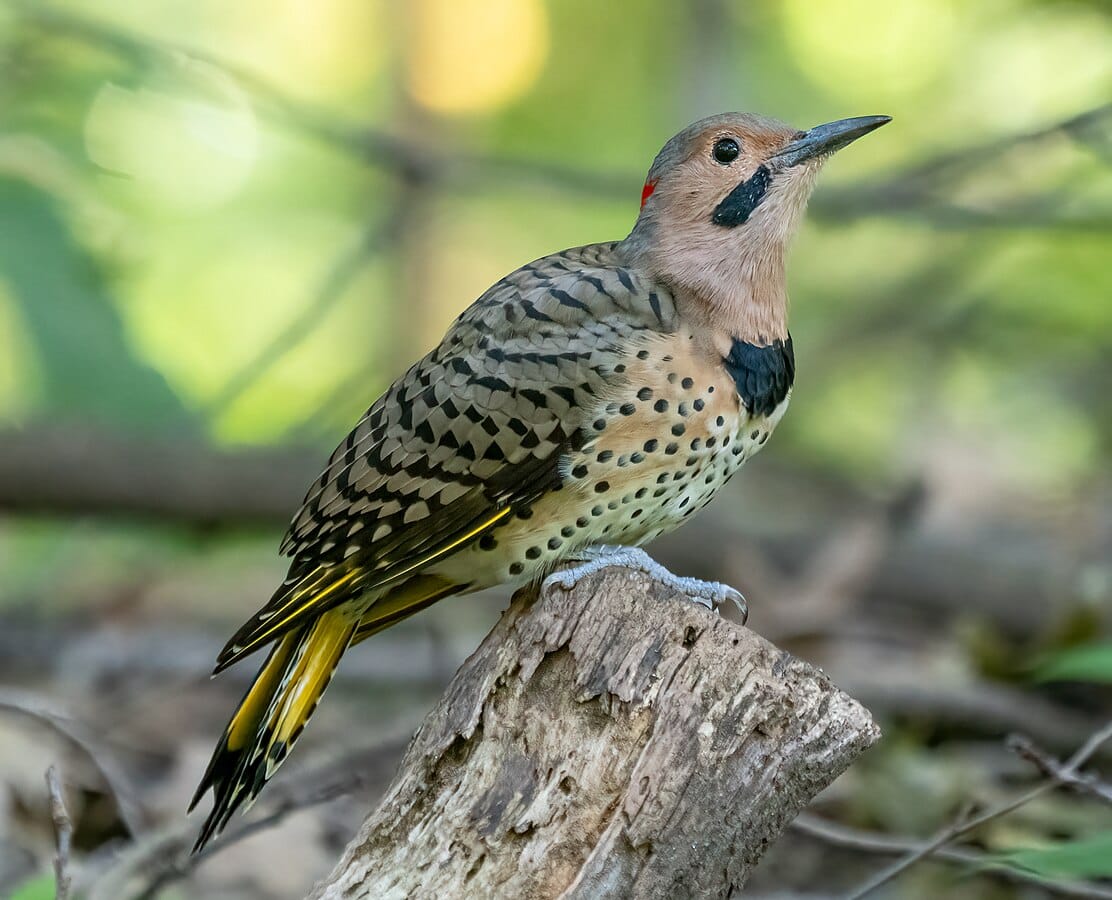
The Northern Flicker is a large, striking woodpecker found across North America, measuring 30–40 cm in length with a wingspan of 42–51 cm. Unlike many woodpeckers, it often forages on the ground, feeding on ants and beetles, rather than exclusively on tree trunks. Its distinctive barred back, spotted underparts, and bright red or yellow shafted wing feathers make it easily recognizable in flight.
Northern Flickers have diverse diets, including insects, fruits, and seeds, which they skillfully capture using their long, sticky tongue. Nesting occurs in tree cavities, often in dead or decaying wood, and they are known to reuse old nests from previous seasons. Observing a Northern Flicker demonstrates its unique foraging behavior, striking plumage, and contribution to both insect control and cavity creation, benefiting other wildlife in the ecosystem.
7. Yellow-bellied Sapsucker (Sphyrapicus varius)

The Yellow-bellied Sapsucker is a small migratory woodpecker native to North America, measuring 17–22 cm in length with a wingspan of 28–33 cm. It is named for its habit of drilling neat rows of holes in tree bark to access sap, which it consumes alongside insects attracted to the sap. Males and females are distinguished by red markings on the head and throat.
These woodpeckers play a vital ecological role by creating sap wells that other birds and insects also utilize. Their diet includes tree sap, insects, and occasionally fruits. Nesting occurs in tree cavities, often in dead or decaying trees, where both parents care for the chicks. Observing a Yellow-bellied Sapsucker provides insight into unique feeding strategies, resource sharing among species, and the delicate balance of forest ecosystems.
8. Red-naped Sapsucker (Sphyrapicus nuchalis)

The Red-naped Sapsucker is a medium-sized woodpecker found in western North America, measuring 19–22 cm in length with a wingspan of 33–38 cm. It is closely related to the Yellow-bellied Sapsucker but distinguished by a red patch on the nape and throat. Like its relatives, it drills orderly rows of sap wells in tree bark, feeding on sap and insects.
Red-naped Sapsuckers are important for forest ecology, as their sap wells provide nourishment for other species, including hummingbirds and insects. They inhabit mixed forests, often preferring aspen, birch, and coniferous trees. Nesting occurs in tree cavities, with both adults sharing parental duties. Observing a Red-naped Sapsucker highlights their intricate feeding behavior, ecological impact, and adaptability to seasonal migrations and forest environments.
9. Williamson’s Sapsucker (Sphyrapicus thyroideus)
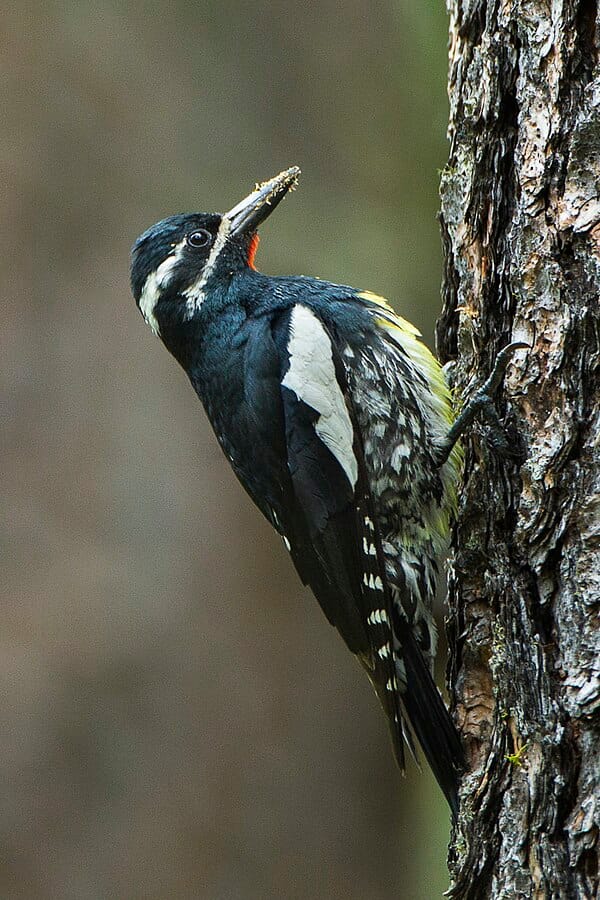
Williamson’s Sapsucker is a medium-sized woodpecker native to western North America, measuring 20–25 cm in length. Males and females have strikingly different plumage: males have black and red heads and backs, while females are brown with barred patterns. This species specializes in drilling sap wells in coniferous trees, particularly pines and firs, consuming sap and the insects it attracts.
Williamson’s Sapsuckers play a key ecological role by providing resources for other species. They nest in tree cavities and are usually solitary or found in pairs during breeding season. Observing Williamson’s Sapsucker offers a unique glimpse into sexual dimorphism, specialized feeding behavior, and the importance of cavity-nesting birds in forest ecosystems, highlighting the diversity and ecological significance of woodpeckers.
10. Lewis’s Woodpecker (Melanerpes lewis)

Lewis’s Woodpecker is a medium-sized, striking bird native to western North America, measuring 28–33 cm in length with a wingspan of 46–51 cm. Unlike most woodpeckers, it often catches flying insects mid-air, showcasing its unique hunting style. Its dark green back, pinkish belly, and red face make it a colorful and distinctive species.
Lewis’s Woodpeckers feed on insects, fruits, and nuts, often perching quietly before darting out to catch prey. They nest in tree cavities, frequently in dead or burned trees, and both parents participate in raising the young. Observing Lewis’s Woodpecker highlights the species’ aerial foraging adaptations, striking coloration, and ecological importance in controlling insect populations while contributing to cavity nesting habitats for other birds.
11. Acorn Woodpecker (Melanerpes formicivorus)

The Acorn Woodpecker is a medium-sized, social woodpecker native to western North America and Central America, measuring 21–27 cm in length with a wingspan of 34–41 cm. Its black-and-white body, red crown, and white face make it easily recognizable. This species is renowned for its unique behavior of storing acorns in granaries—holes drilled in tree trunks or wooden structures.
Acorn Woodpeckers primarily feed on acorns, insects, and fruit. Their cooperative social structure involves groups of birds maintaining and defending communal granaries, sometimes containing tens of thousands of acorns. Nesting occurs in tree cavities, with several adults often sharing parental duties. Observing an Acorn Woodpecker provides insight into cooperative breeding, advanced food storage strategies, and the intricate social behavior that sets this species apart in the woodpecker family.
12. Gila Woodpecker (Melanerpes uropygialis)

The Gila Woodpecker is a medium-sized woodpecker native to the deserts of southwestern United States and Mexico, measuring 22–27 cm in length. It has brownish body plumage, a black-and-white barred back, and a red crown on males. Unlike many woodpeckers, it often nests in saguaro cacti, making it a unique desert-adapted species.
Gila Woodpeckers feed on insects, fruits, and nectar, and their nesting cavities provide homes for other species once abandoned. They are highly adaptable, thriving in desert scrub, urban areas, and even cultivated landscapes. Observing a Gila Woodpecker highlights its remarkable adaptations to arid environments, cavity-nesting behavior, and ecological contributions to desert ecosystems, demonstrating the versatility and resilience of woodpeckers in diverse habitats.
13. Ladder-backed Woodpecker (Picoides scalaris)
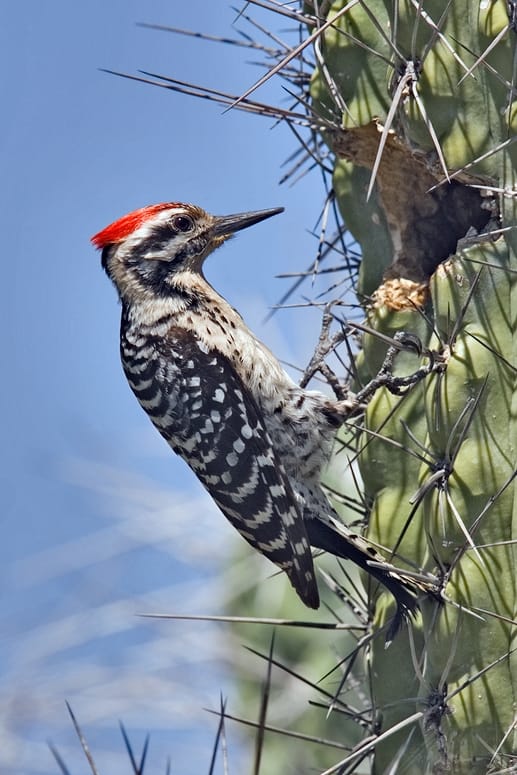
The Ladder-backed Woodpecker is a small woodpecker native to the arid regions of the southwestern United States and Mexico, measuring 15–18 cm in length. Its distinctive black-and-white barred back resembles a ladder, while the red patch on the back of males adds a splash of color. This species is highly adept at foraging on cacti, shrubs, and dead trees in desert landscapes.
Ladder-backed Woodpeckers feed mainly on insects, including beetles and ants, often excavating bark or decaying wood. They nest in cavities in cacti, trees, or wooden posts. Observing a Ladder-backed Woodpecker demonstrates specialized desert foraging techniques, adaptability to sparse habitats, and the importance of cavity excavation for ecosystem biodiversity. Their presence is a testament to the resilience of woodpeckers in challenging environments.
14. Arizona Woodpecker (Picoides arizonae)

The Arizona Woodpecker is a medium-sized woodpecker found in southeastern Arizona, southwestern New Mexico, and northern Mexico, measuring 19–23 cm in length. It has a gray-brown body, black-and-white striped wings, and a red crown patch in males. This species prefers oak and pine-oak forests and is less aggressive than other woodpeckers, making it relatively secretive and hard to spot.
Arizona Woodpeckers feed on insects, including beetle larvae, ants, and caterpillars, often foraging on tree trunks and branches. They nest in tree cavities, usually excavated in dead branches. Observing an Arizona Woodpecker reveals subtle foraging behaviors, habitat preferences, and the vital ecological role they play in maintaining insect populations and forest health, offering birdwatchers a rewarding and rare sighting experience.
15. Black-backed Woodpecker (Picoides arcticus)

The Black-backed Woodpecker is a medium-sized species native to North American boreal forests, measuring 20–26 cm in length. It has black plumage on its back, yellow crown on males, and white underparts. This woodpecker is closely associated with burned forests, where it thrives on the abundance of wood-boring beetles in recently charred trees.
Black-backed Woodpeckers feed primarily on beetle larvae and other insects found in dead or burnt wood, showcasing remarkable specialization. Nesting occurs in tree cavities, often excavated in burned snags. Observing a Black-backed Woodpecker highlights the bird’s unique ecological niche, its role in post-fire forest recovery, and the fascinating adaptations that allow it to exploit habitats that many other species avoid.
16. American Three-toed Woodpecker (Picoides dorsalis)

The American Three-toed Woodpecker is a medium-sized woodpecker native to North American boreal forests, measuring 19–24 cm in length. True to its name, it has three toes instead of the usual four, an adaptation that enhances grip on vertical tree trunks. Its black-and-white plumage, yellow crown on males, and distinctive back pattern make it recognizable to birdwatchers and researchers alike.
This species feeds primarily on wood-boring beetle larvae, especially in dead or dying conifers. They excavate deep into bark to reach their prey and nest in tree cavities, often reusing old ones. Observing the American Three-toed Woodpecker offers insight into specialized adaptations for foraging, the important ecological role of insect control in forested habitats, and the resilience of species that thrive in challenging northern climates.
17. Eurasian Three-toed Woodpecker (Picoides tridactylus)

The Eurasian Three-toed Woodpecker is found across northern Europe and Asia, measuring 19–23 cm in length. Like its American counterpart, it has three toes and a predominantly black-and-white plumage, with a yellow crown in males. Its compact body and powerful bill make it an expert at extracting insects from coniferous trees, especially in boreal forests.
Diet primarily consists of beetle larvae and ants, and it is especially common in areas affected by forest fires, which increase insect availability. Nesting occurs in tree cavities, providing safe shelters for raising young. Observing the Eurasian Three-toed Woodpecker reveals specialized adaptations to northern habitats, its role in post-disturbance forest ecosystems, and the fascinating behaviors that ensure survival in harsh climates.
18. Great Spotted Woodpecker (Dendrocopos major)

The Great Spotted Woodpecker is a medium-sized woodpecker widely distributed across Europe and parts of Asia, measuring 23–26 cm in length. Its striking black-and-white plumage with red markings on the belly and nape make it one of the most easily recognized species in its range. This woodpecker is active and highly versatile in various forested habitats.
Great Spotted Woodpeckers feed on insects, larvae, seeds, and nuts, often using their strong bills to hammer into tree bark. They excavate cavities in dead or decaying trees for nesting and roosting. Observing this species showcases its adaptability, problem-solving abilities in foraging, and crucial role in controlling insect populations while creating nesting sites for other wildlife in European forests.
19. Lesser Spotted Woodpecker (Dryobates minor)
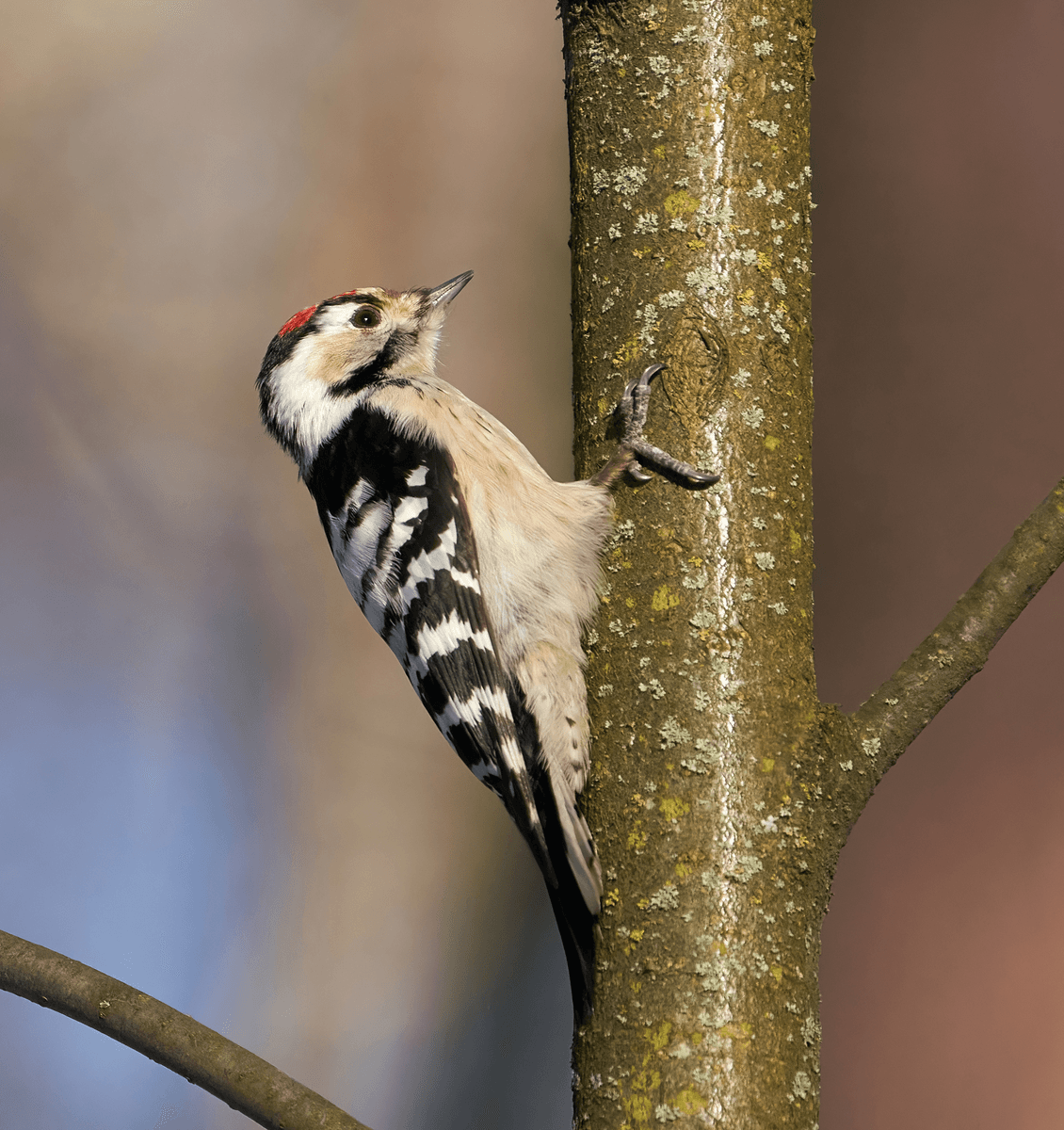
The Lesser Spotted Woodpecker is a small, elusive woodpecker found across Europe and western Asia, measuring just 14–16 cm in length. Its black-and-white barred wings and subtle red cap in males make it distinct yet easily overlooked. Preferring mature deciduous woodlands, it often occupies dense tree canopies and quiet forest edges.
Diet consists mainly of insects and larvae, which it extracts from branches and twigs. Nesting occurs in small cavities, typically in dead branches, with both parents sharing incubation duties. Observing the Lesser Spotted Woodpecker highlights its delicate foraging techniques, secretive nature, and the importance of old-growth forests for sustaining populations of small, specialized woodpecker species.
20. White-backed Woodpecker (Dendrocopos leucotos)
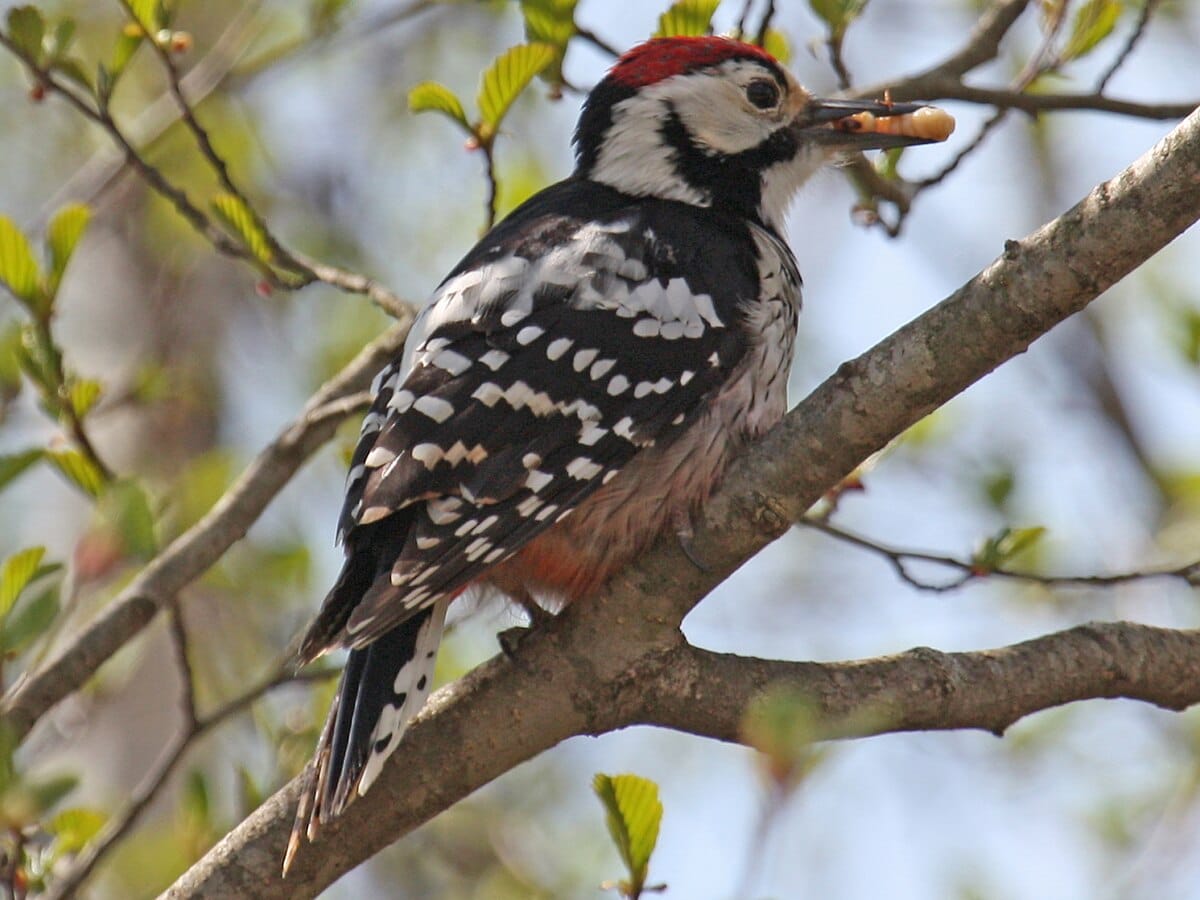
The White-backed Woodpecker is a medium-sized woodpecker native to Europe and northern Asia, measuring 23–27 cm in length. It has black plumage with white stripes on the back and wings, and males exhibit a red crown. Preferring mature deciduous and mixed forests, this species relies heavily on deadwood habitats for foraging and nesting.
White-backed Woodpeckers feed mainly on beetle larvae and other insects found in decaying trees. They excavate large cavities for nesting, which can also provide shelter for other cavity-nesting birds and mammals. Observing this species offers insights into the importance of deadwood management, forest ecosystem health, and the specialized behaviors of woodpeckers adapted to mature forest environments.
21. Grey-headed Woodpecker (Picus canus)
The Grey-headed Woodpecker is a medium-sized woodpecker native to Europe and parts of Asia, measuring 28–33 cm in length with a wingspan of 38–44 cm. Its most striking feature is the grey head contrasting with a greenish body, making it relatively easy to identify. This species favors deciduous and mixed forests with abundant deadwood for foraging.
Grey-headed Woodpeckers feed primarily on ants, beetle larvae, and other insects found in trees and on the ground. Nesting occurs in tree cavities, which they excavate themselves. Observing this woodpecker provides insight into specialized foraging strategies, the importance of deadwood for ecosystem health, and the subtle beauty of woodpecker species that rely on quieter, forested habitats for survival.
22. Green Woodpecker (Picus viridis)

The Green Woodpecker is a large, vibrant woodpecker found across Europe and western Asia, measuring 30–36 cm in length. Its bright green body, yellow rump, and red crown (in males) make it easily distinguishable. Unlike many woodpeckers, it often feeds on ants on the ground, demonstrating its unique ecological niche.
Green Woodpeckers forage extensively on lawns, meadows, and forest edges for ants, larvae, and occasionally fruits. They nest in tree cavities or old woodpecker holes, with both parents actively participating in raising chicks. Observing a Green Woodpecker highlights its distinctive foraging behavior, vibrant coloration, and the role it plays in maintaining balanced insect populations in both woodland and semi-open habitats.
23. Black Woodpecker (Dryocopus martius)

The Black Woodpecker is the largest woodpecker in Europe, measuring 45–55 cm in length with a wingspan of 64–68 cm. Its striking black plumage and bright red crest in males make it unmistakable in mature forests. This species primarily inhabits old-growth coniferous and mixed forests where large trees are available for nesting and foraging.
Black Woodpeckers feed mainly on wood-boring insects, ants, and occasionally small fruits. They excavate large cavities for nesting, which are often reused by other birds and mammals. Observing a Black Woodpecker demonstrates incredible strength and precision, highlighting its ecological importance as a keystone species that shapes forest biodiversity through cavity creation and insect control.
24. Ivory-billed Woodpecker (Campephilus principalis)

The Ivory-billed Woodpecker, historically found in the southeastern United States and Cuba, is one of the most iconic and enigmatic woodpeckers, measuring 48–53 cm in length. It has striking black and white plumage with a prominent ivory bill and red crest in males. This species prefers mature bottomland hardwood forests, particularly those with abundant deadwood.
Ivory-billed Woodpeckers feed primarily on beetle larvae in dead or decaying trees, using their powerful bills to excavate deep into wood. Due to habitat loss and deforestation, it is considered critically endangered, with confirmed sightings extremely rare. Observing this species—if possible—offers a rare glimpse into the ecological dynamics of old-growth forests and highlights the urgent need for habitat conservation to protect iconic woodpecker species and their ecosystems.
25. Pale-billed Woodpecker (Campephilus guatemalensis)

The Pale-billed Woodpecker is a large Central American woodpecker measuring 38–46 cm in length, easily identified by its pale ivory bill and striking red head in males. Found in lowland and montane forests, it is primarily associated with mature, undisturbed habitats with abundant deadwood for foraging and nesting.
Pale-billed Woodpeckers feed mainly on beetle larvae, ants, and other insects excavated from dead trees. Nesting occurs in large cavities, which are vital for the species’ reproductive success and also benefit other cavity-dependent wildlife. Observing a Pale-billed Woodpecker showcases its impressive foraging skills, vibrant coloration, and the ecological importance of maintaining intact forest habitats to support large woodpecker species and forest biodiversity.
26. Crimson-crested Woodpecker (Campephilus melanoleucos)

The Crimson-crested Woodpecker is a large, striking bird native to Central and South America, measuring 34–38 cm in length. It is easily recognized by its bold black-and-white body and vivid crimson crest. Preferring lowland forests, plantations, and forest edges, it is a spectacular example of tropical woodpecker diversity.
Crimson-crested Woodpeckers feed primarily on wood-boring insects, larvae, and occasionally fruits. They excavate large cavities for nesting, which can also serve as shelters for other species. Observing this woodpecker highlights the beauty, strength, and ecological importance of tropical woodpeckers, as they help control insect populations while creating critical nesting sites in forest ecosystems.
27. Lineated Woodpecker (Dryocopus lineatus)

The Lineated Woodpecker is a large woodpecker found throughout Central and South America, measuring 33–36 cm in length. It features a striking black body with white lines on the neck and a vivid red crest in males. Its preference for forested habitats with tall trees makes it a key species in tropical and subtropical ecosystems.
Lineated Woodpeckers feed primarily on insects, especially wood-boring larvae, and occasionally consume fruits. Nesting occurs in large cavities excavated in mature trees. Observing this species showcases its adaptability, powerful bill, and ecological role as both predator and cavity creator, which supports biodiversity by providing shelter for many forest species.
28. Golden-fronted Woodpecker (Melanerpes aurifrons)

The Golden-fronted Woodpecker is a medium-sized bird native to southern Texas, Mexico, and Central America, measuring 23–27 cm in length. Its most distinctive features include a golden-yellow forehead, black-and-white barred back, and red nape in males. This woodpecker inhabits woodlands, savannas, and suburban areas.
Golden-fronted Woodpeckers feed on insects, fruits, seeds, and occasionally small vertebrates. They nest in tree cavities, often excavated in dead or decaying wood. Observing this species highlights its foraging versatility, territorial behavior, and importance in seed dispersal and insect population control, emphasizing the ecological significance of adaptable woodpeckers in varied habitats.
29. Red-cockaded Woodpecker (Leuconotopicus borealis)

The Red-cockaded Woodpecker is a small, endangered woodpecker native to the southeastern United States, measuring 18–22 cm in length. It has black-and-white barred backs, white underparts, and distinctive black cheek patches. It inhabits old-growth pine forests, making it highly dependent on mature ecosystems with longleaf pines.
Red-cockaded Woodpeckers feed primarily on insects found on pine trees. They excavate cavities exclusively in living pine trees, a unique behavior that reduces competition and predation risk. Observing this species underscores the importance of forest conservation, the specialized adaptations of cavity-nesting woodpeckers, and the delicate balance required to maintain biodiversity in pine ecosystems.
30. Hoffmann’s Woodpecker (Melanerpes hoffmannii)

Hoffmann’s Woodpecker is a medium-sized species native to Central America, measuring 20–25 cm in length. It features olive-green upperparts, a white belly, black wings with white barring, and a bright red crown in males. This adaptable bird is often found in open woodlands, gardens, and urban areas.
Hoffmann’s Woodpeckers feed on insects, fruits, and sap, foraging on tree trunks, branches, and even man-made structures. Nesting occurs in tree cavities, and both parents participate in raising the young. Observing Hoffmann’s Woodpecker highlights adaptability to human-altered landscapes, versatile foraging behavior, and the ecological role of medium-sized woodpeckers in controlling insect populations and dispersing seeds in Central American habitats.
31. Black-cheeked Woodpecker (Melanerpes pucherani)

The Black-cheeked Woodpecker is a medium-sized tropical woodpecker found in Central America, measuring 20–24 cm in length. Its striking features include black cheeks, olive-green upperparts, a white belly, and a bright red crown in males. This bird prefers humid lowland forests and forest edges, making it a colorful resident of Central American woodlands.
Black-cheeked Woodpeckers feed primarily on insects, fruits, and occasionally nectar, demonstrating versatile foraging behavior. They nest in tree cavities, which provide shelter for their young and other cavity-dependent species. Observing this species highlights the diversity of tropical woodpeckers, their adaptability in forest ecosystems, and their vital role in maintaining ecological balance through insect control and seed dispersal.
32. White-headed Woodpecker (Picoides albolarvatus)

The White-headed Woodpecker is a medium-sized species native to western North America, measuring 21–25 cm in length. It is easily recognized by its black body, white head, and small red patch on males. This woodpecker inhabits coniferous forests, particularly pine-dominated areas, often at higher elevations.
White-headed Woodpeckers feed primarily on pine seeds and insects, showing a preference for conifer seeds during winter. Nesting occurs in tree cavities, often excavated in dead pine branches or trunks. Observing this woodpecker emphasizes the importance of coniferous forests for specialized species, highlights foraging adaptations to seed-based diets, and underscores the ecological role of cavity-nesting birds in mountainous habitats.
33. Red-breasted Sapsucker (Sphyrapicus ruber)

The Red-breasted Sapsucker is a medium-sized woodpecker native to western North America, measuring 21–26 cm in length. Its striking features include a red head, throat, and upper breast, black wings with white bars, and a mottled belly. This species prefers coniferous and mixed forests, often near streams or moist areas.
Red-breasted Sapsuckers feed primarily on tree sap, insects attracted to sap wells, and fruits. They drill precise holes in tree bark, which are used repeatedly and provide resources for other wildlife. Nesting occurs in tree cavities, where both parents care for the young. Observing this species highlights unique feeding adaptations, ecological contributions through sap wells, and the intricate behaviors that support forest biodiversity.
34. Strickland’s Woodpecker (Leuconotopicus stricklandi)
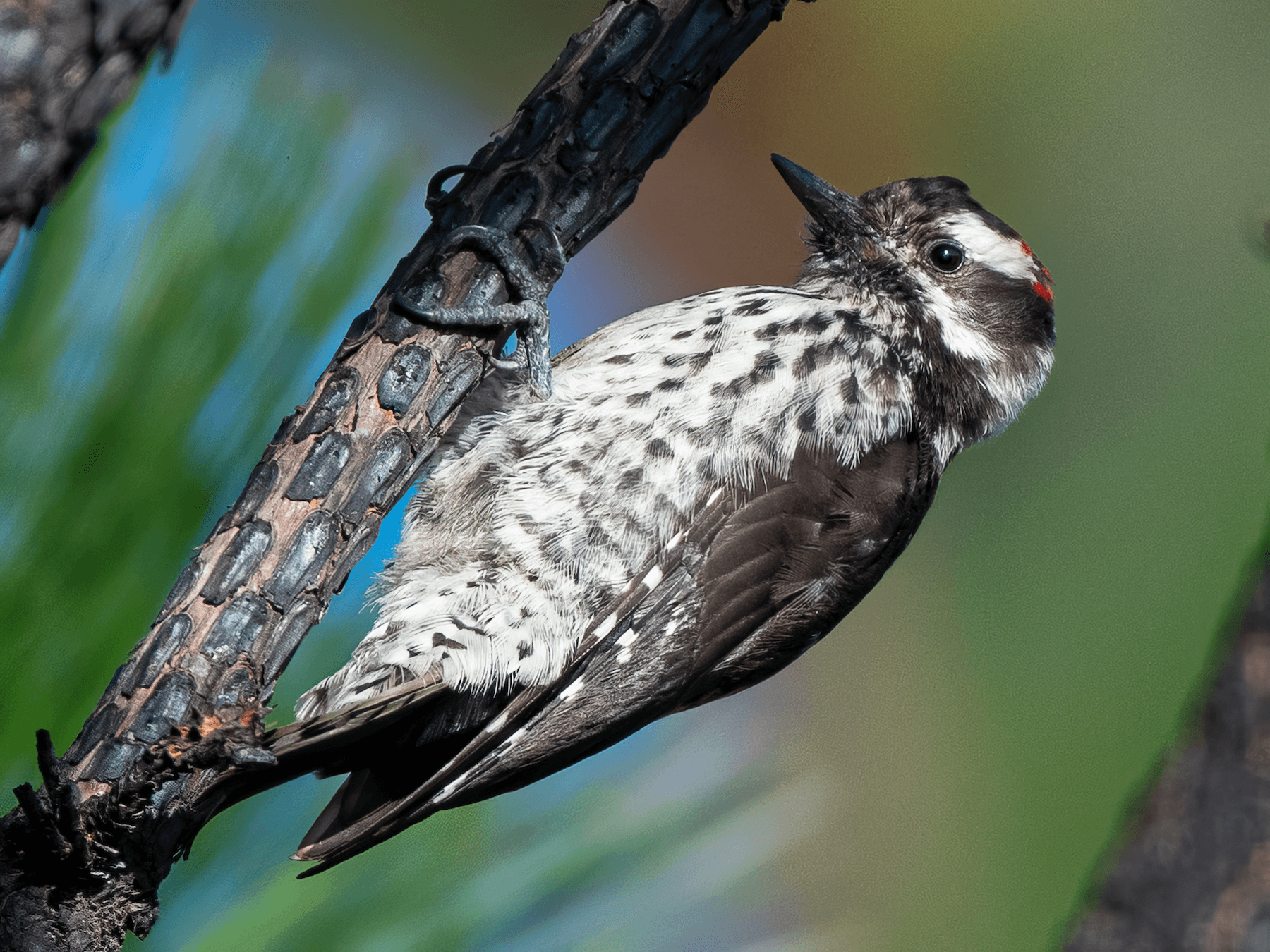
Strickland’s Woodpecker is a medium-sized bird native to central Mexico, measuring 21–24 cm in length. Males feature a red crown, while both sexes have black-and-white barred backs and pale underparts. This woodpecker inhabits pine-oak forests and is known for its quiet and secretive nature.
Strickland’s Woodpeckers feed on insects, larvae, and occasionally fruits, foraging on tree trunks, branches, and sometimes dead wood. Nesting occurs in tree cavities, often in isolated areas. Observing this species provides insight into its foraging strategies, habitat specialization, and the importance of preserving Mexican forest ecosystems for maintaining biodiversity and supporting cavity-nesting species.
35. Crested Woodpecker (Celeus elegans)
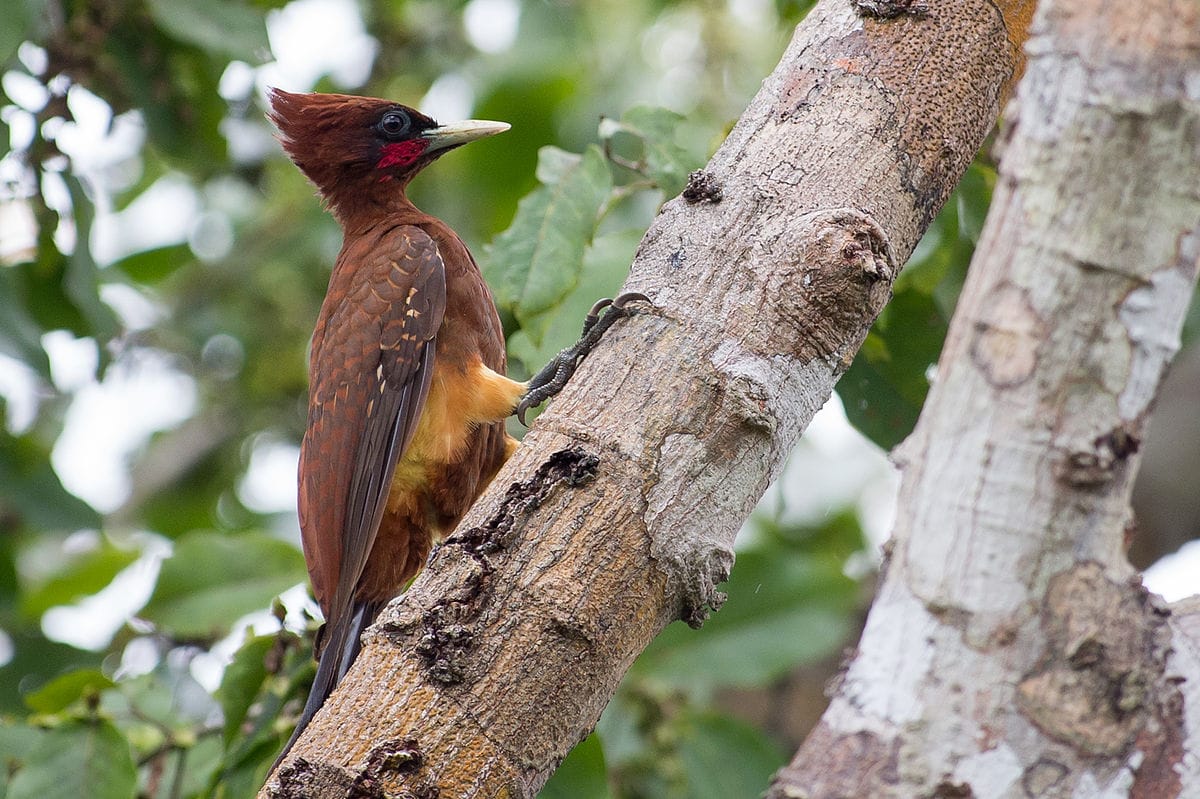
The Crested Woodpecker is a medium-to-large woodpecker native to Central and South America, measuring 27–33 cm in length. Its most striking features include a prominent crest, bold black-and-white plumage, and red highlights on the head. It prefers tropical forests, forest edges, and secondary growth areas.
Crested Woodpeckers feed primarily on insects, especially wood-boring larvae, and occasionally fruits and seeds. They excavate large cavities for nesting, which are used by themselves and other wildlife. Observing this species highlights its adaptability, striking appearance, and important role in forest ecosystems as both predator and cavity creator, contributing to the health and biodiversity of tropical forests.
Frequently Asked Questions About Woodpeckers
1. What is the most common woodpecker?
The Downy Woodpecker is the most common, found across North America, often in forests, parks, and even backyards.
2. What is the most aggressive woodpecker?
The Red-headed Woodpecker is known for being territorial and can act aggressively toward other birds around its nesting area.
3. What is the rarest type of woodpecker?
The Ivory-billed Woodpecker is extremely rare, possibly extinct, and was once found in the southeastern United States and Cuba.
4. What is the big type of woodpecker?
The Pileated Woodpecker is one of the largest, with a striking red crest and a wingspan of up to 30 inches.
5. Which country has the most woodpeckers?
Brazil and other parts of South America have the highest diversity of woodpecker species, thanks to vast tropical forests.
6. Is a blue jay a woodpecker?
No, blue jays are not woodpeckers. They belong to the crow family (Corvidae) and are known for their intelligence and loud calls.
7. What is the smallest woodpecker called?
The Speckled Piculet and the Downy Woodpecker are among the smallest, measuring just around 6–7 inches in length.
8. What is the rarest bird in the world?
The Spix’s Macaw is considered the rarest bird, with very few individuals left in captivity and conservation programs.
9. How rare is a green woodpecker?
The European Green Woodpecker is not very rare in its habitat, commonly found in woodlands and open countryside across Europe.
10. Can a woodpecker peck 20 times a second?
Yes, some woodpeckers, like the Downy or Pileated Woodpecker, can peck 15–20 times per second when foraging for insects.
11. How can you identify a female woodpecker?
Females often have duller coloration or a smaller red patch on the head, depending on the species, compared to males.
12. How hard can woodpeckers peck?
Woodpeckers can exert force up to 1,200 g’s on their heads when pecking, yet their skulls and specialized brain structures prevent injury.
13. Are woodpeckers good to have around?
Yes, they help control insect populations, including harmful pests, and contribute to healthy forest ecosystems.
14. Why is it called pileated?
The name “pileated” comes from the Latin word “pileatus,” meaning “capped,” referring to the woodpecker’s prominent red crest.
15. What is the name of Woody Woodpecker?
Woody Woodpecker is a famous cartoon character created by Walter Lantz in 1940, known for his laughter and mischievous personality.
16. Are magpies a type of jay?
Magpies are related to jays; both belong to the Corvidae family, but magpies are distinct species with long tails and striking black-and-white plumage.
17. Is a toucan a type of woodpecker?
No, toucans belong to the Ramphastidae family and are known for their large colorful bills, while woodpeckers are in the Picidae family.
18. What bird is Mordecai?
Mordecai is a blue jay from the cartoon series “Regular Show,” not a real woodpecker or jay species.
19. What is the rarest woodpecker in the world?
The Ivory-billed Woodpecker holds the title for the rarest woodpecker due to its critically endangered status and extremely limited sightings.
20. What is a woodpecker’s favorite food?
Woodpeckers mainly eat insects, especially beetle larvae, ants, and termites, but some also enjoy nuts, seeds, and fruits.
21. How do woodpeckers not get concussions?
Woodpeckers have thick skulls, spongy bone tissue, and tiny brains that absorb shock, along with a special tongue that acts like a safety belt.
22. Who is Woody Woodpecker’s enemy?
Woody Woodpecker’s classic enemy is Wally Walrus, often portrayed trying to outsmart or annoy Woody in cartoons.
23. What is the nickname of the acorn woodpecker?
The Acorn Woodpecker is sometimes called the “clown of the oak” because of its playful behavior and habit of storing acorns in holes.
24. Is there a girl Woody Woodpecker?
Yes, Winnie Woodpecker is Woody’s female counterpart in the cartoon series.
25. What are the big woodpeckers called?
Large woodpeckers include the Pileated Woodpecker, Ivory-billed Woodpecker, and Black Woodpecker, known for their impressive size and loud drumming.
26. What color are woodpecker eggs?
Woodpecker eggs are typically white, which helps parents spot them easily in dark tree cavities.
27. How to tell the difference between woodpeckers?
Look at size, head markings, bill shape, and plumage color. Each species has distinct patterns, drumming sounds, and preferred habitats.
28. How many times does a woodpecker peck in a day?
A woodpecker can peck thousands of times per day while foraging for insects or communicating by drumming on trees.
29. How can I stop woodpeckers from pecking?
Use visual deterrents like shiny objects, reflective tape, or decoys, and block cavity access if they are damaging structures, but never harm the birds.
30. How fast is a woodpecker’s head?
The head can accelerate at speeds over 15–20 g’s during pecking, but their specialized anatomy prevents brain injury.
31. How smart is a woodpecker?
Woodpeckers are intelligent, capable of remembering food cache locations and adapting to different environments and tree types.
32. What bird sounds like laughing in the UK?
The Green Woodpecker has a distinctive “yaffle” call, which sounds like loud laughing and is commonly heard in the UK countryside.
33. What is the nickname for the green woodpecker?
The European Green Woodpecker is often nicknamed the “yaffle bird” because of its laughing call.
34. Is a woodpecker an Indian bird?
Woodpeckers are found worldwide, including India, which is home to several species such as the Black-rumped Flameback and the Brown-fronted Woodpecker.
35. Is a jay a crow?
Jays are part of the crow family (Corvidae) but are distinct species. They are colorful, intelligent, and not woodpeckers.
36. Is a kingfisher a jay?
No, kingfishers belong to the family Alcedinidae, known for diving into water to catch fish, unlike jays in the Corvidae family.
37. What are the predators of the woodpecker?
Predators include hawks, owls, snakes, raccoons, and squirrels, which may target eggs, chicks, or even adult woodpeckers.
38. Are blue jays woodpeckers?
No, blue jays are not woodpeckers; they are intelligent corvids with bright blue feathers and loud calls.
39. Which is the most common woodpecker?
The Downy Woodpecker holds the title as the most common woodpecker in North America due to its adaptability and wide distribution.
Conclusion
Woodpeckers are some of the most fascinating and ecologically important birds in the world. From the tiny Downy Woodpecker to the striking Crested Woodpecker, each species exhibits unique adaptations for foraging, nesting, and thriving in diverse habitats—from dense forests and deserts to tropical jungles. By drilling, excavating, and foraging, woodpeckers control insect populations, disperse seeds, and create nesting cavities that support countless other wildlife species.
Studying the 35 types of woodpeckers in this guide reveals the incredible diversity, specialized behaviors, and ecological significance of these birds. Observing woodpeckers in their natural habitats offers both educational insights and a deep appreciation for their beauty, resilience, and vital role in maintaining healthy ecosystems. Protecting their habitats ensures these remarkable birds continue to flourish, inspiring wildlife enthusiasts and supporting biodiversity for generations to come.
Read more: