

Albatrosses are some of the most majestic seabirds in the world, known for their incredible wingspans, long-distance flights, and fascinating behaviors. In this guide, we explore the types of albatross, their habitats, physical characteristics, feeding habits, and ecological importance. Whether you are a wildlife enthusiast, birder, or beginner, this article will give you a comprehensive look at 25 unique albatross species, helping you identify them and understand their role in marine ecosystems. By the end, you’ll gain a deeper appreciation for these remarkable birds and their importance to ocean biodiversity.
1. Wandering Albatross (Diomedea exulans)

Identification and Physical Characteristics
The Wandering Albatross is arguably the most famous albatross species, renowned for having the largest wingspan of any bird—up to 3.5 meters (11 feet). Adults have primarily white plumage with black tips on their wings and a pale yellowish head. Juveniles are darker, with more brownish feathers. Their massive wings allow them to glide effortlessly over oceans for hours without flapping, a remarkable adaptation for energy-efficient travel across vast distances.
Habitat and Distribution
Wandering Albatrosses inhabit the Southern Ocean, nesting on sub-Antarctic islands such as South Georgia, Crozet Islands, and Kerguelen. They spend most of their lives at sea, feeding on fish, squid, and krill. Their distribution covers thousands of kilometers of open ocean, showcasing their exceptional migratory abilities and navigational skills.
Behavior and Diet
These albatrosses are highly skilled gliders, capable of traveling over 10,000 kilometers in a single foraging trip. They feed mainly at night and during twilight, diving or snatching prey from the ocean surface. Wandering Albatrosses mate for life and are known for their elaborate courtship dances, including bill clapping and synchronized movements.
Conservation Status
The Wandering Albatross is currently listed as Vulnerable by the IUCN due to longline fishing bycatch and habitat disturbances. Conservation efforts include protecting nesting islands, regulating fisheries, and monitoring populations to prevent further decline.
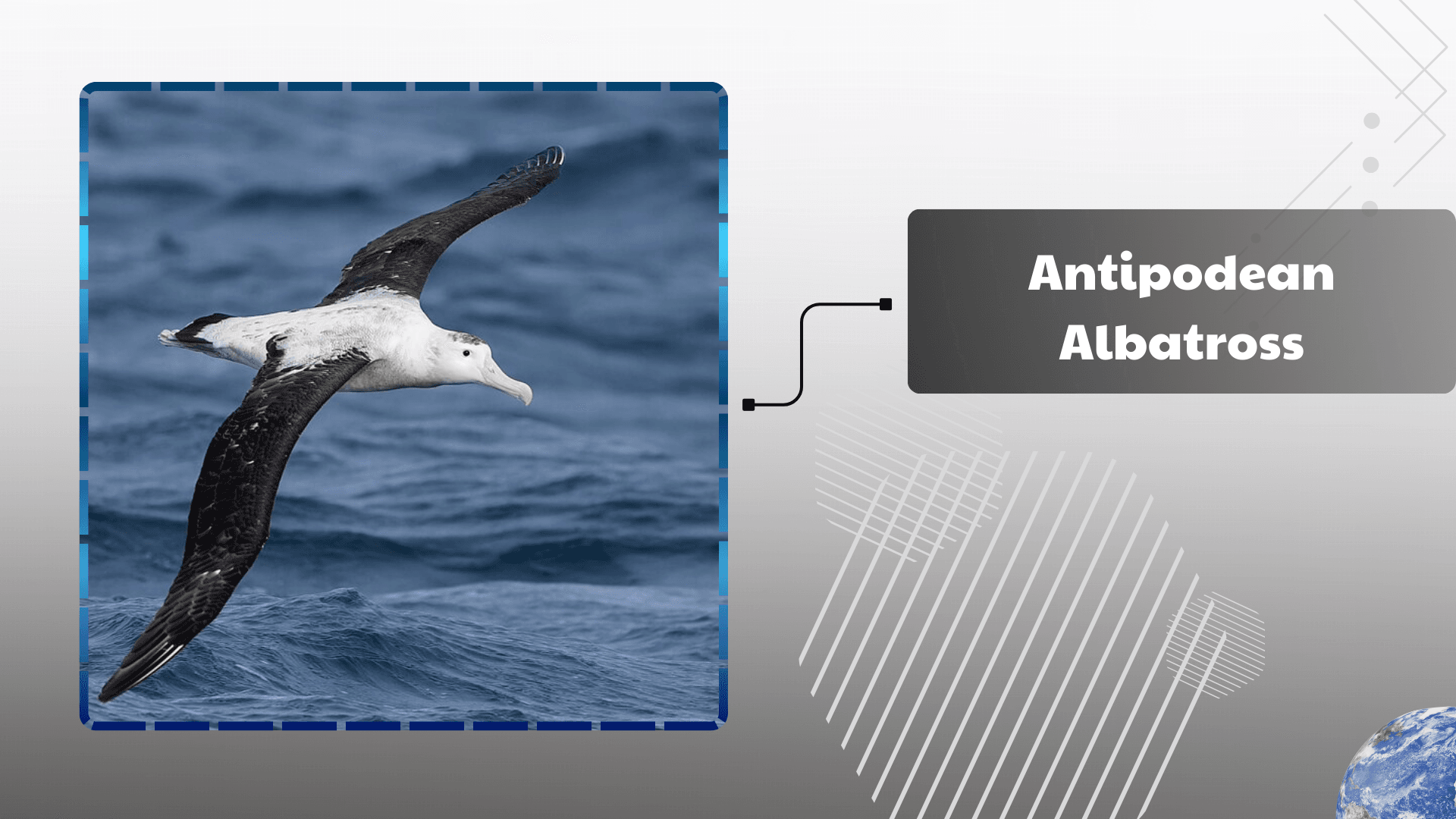
2. Antipodean Albatross (Diomedea antipodensis)
Identification and Physical Characteristics
The Antipodean Albatross is a close relative of the Wandering Albatross but is slightly smaller. Adults have white bodies with black and gray markings on the wings and back. The head can have a pale yellow tint, and juveniles exhibit darker plumage with more gray and brown. Its long wingspan enables effortless gliding over the Southern Ocean.
Habitat and Distribution
These albatrosses breed mainly on the Antipodes Islands of New Zealand and forage over vast areas of the Southern Ocean. They are highly pelagic, rarely coming to land except during the breeding season. Their extensive range requires them to navigate dynamic oceanic conditions efficiently.
Behavior and Diet
The Antipodean Albatross feeds on fish, squid, and crustaceans, often following fishing vessels opportunistically. Like other Diomedea species, they are monogamous, with elaborate courtship displays that strengthen pair bonds. They are slow to mature, reaching sexual maturity around 10 years old.
Conservation Status
Listed as Endangered due to threats from longline fishing, habitat disturbance, and introduced predators on nesting islands. Conservation measures include invasive species control, monitoring, and bycatch mitigation programs.
3. Amsterdam Albatross (Diomedea amsterdamensis)

Identification and Physical Characteristics
The Amsterdam Albatross is one of the rarest albatrosses, with fewer than 150 breeding pairs. Adults are predominantly brown with lighter heads and a wingspan around 3 meters. Juveniles are darker. Its relatively small population makes its identification important for conservationists and bird enthusiasts.
Habitat and Distribution
This species breeds exclusively on Amsterdam Island in the southern Indian Ocean and forages widely across surrounding oceans. Their restricted breeding range makes them highly vulnerable to environmental changes and human activities.
Behavior and Diet
The Amsterdam Albatross feeds primarily on squid and fish, often foraging at night. They are monogamous, returning to the same nesting site and partner each year. The species demonstrates strong site fidelity, rarely nesting outside Amsterdam Island.
Conservation Status
Critically Endangered due to its extremely small population. Conservation programs include predator control, habitat protection, and careful monitoring of breeding success.
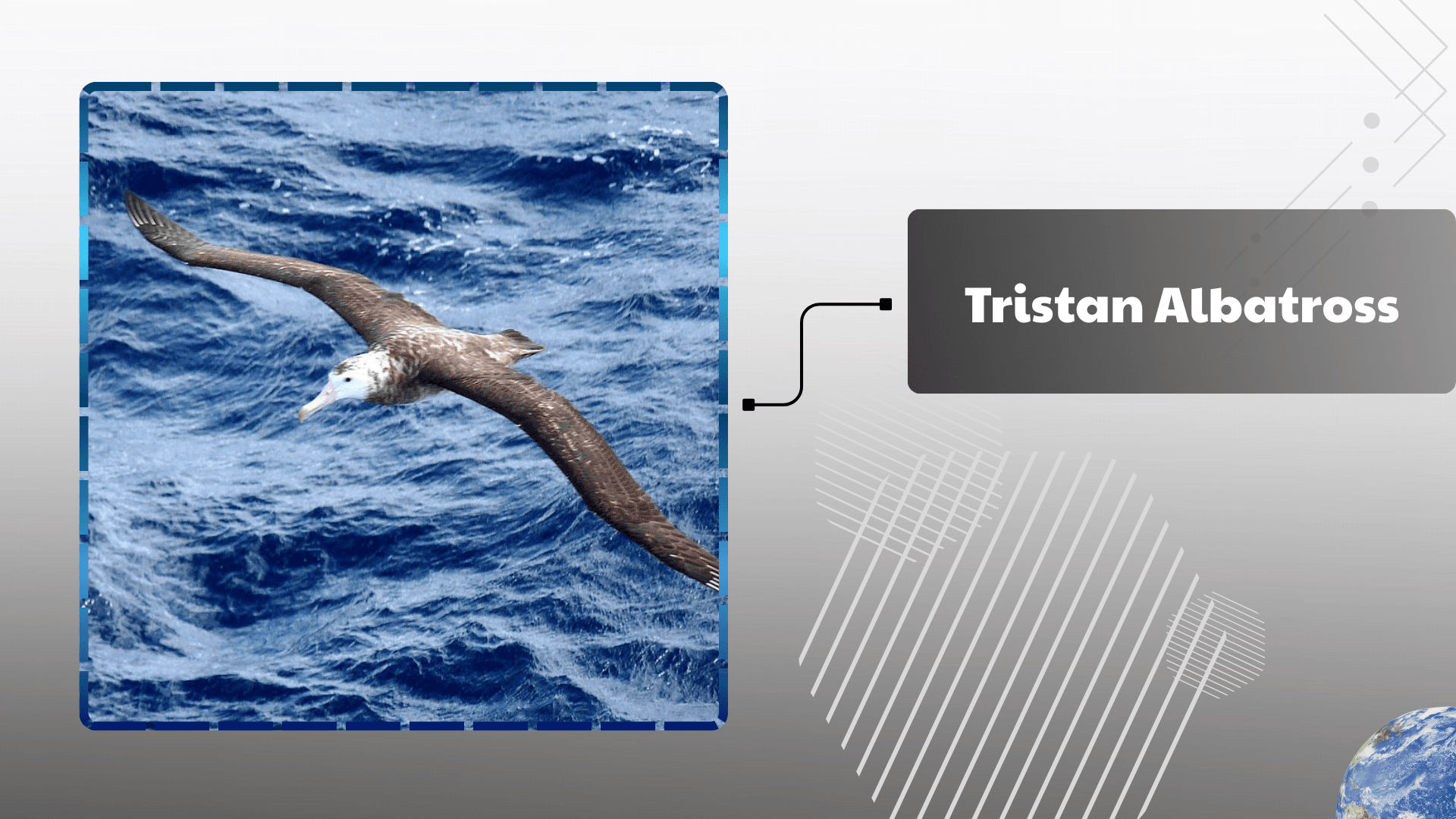
4. Tristan Albatross (Diomedea dabbenena)
Identification and Physical Characteristics
The Tristan Albatross resembles the Wandering Albatross but is smaller, with a wingspan of about 2.8–3 meters. Adults are mostly white with black wing tips and some grayish tones on the back. Their long, narrow wings allow them to glide over oceanic winds efficiently, covering enormous distances while conserving energy.
Habitat and Distribution
This species breeds on Tristan da Cunha islands in the South Atlantic Ocean and spends most of its life at sea. They are pelagic birds, returning to islands only to breed.
Behavior and Diet
Tristan Albatrosses feed on squid, fish, and crustaceans. They are known for their striking courtship dances, aerial displays, and long-term monogamous pairings. Their ability to navigate open ocean is critical to their survival, as food sources can be widely dispersed.
Conservation Status
Critically Endangered due to habitat destruction, invasive species, and bycatch in longline fisheries. Conservation strategies focus on protecting breeding sites and implementing bycatch mitigation measures.
5. Northern Royal Albatross (Diomedea sanfordi)

Identification and Physical Characteristics
The Northern Royal Albatross is a large seabird with a wingspan up to 3.2 meters. Adults have predominantly white plumage with black wingtips and pale yellowish heads. Juveniles are darker, with grayish-brown wings. Its long wings make it a master of dynamic soaring, allowing efficient travel over vast ocean distances.
Habitat and Distribution
They breed on New Zealand’s Chatham Islands and foraging occurs over the southern Pacific Ocean. These birds are highly pelagic and rely on oceanic winds for long-distance flight, returning to land primarily for breeding.
Behavior and Diet
The Northern Royal Albatross feeds mainly on squid and fish. They exhibit strong pair bonding, elaborate courtship rituals, and fidelity to nesting sites. They are slow to mature, with individuals often not breeding until 10–15 years of age.
Conservation Status
Listed as Endangered due to bycatch in fisheries and limited breeding areas. Conservation efforts include habitat protection, invasive species control, and monitoring population trends to prevent further decline.
6. Southern Royal Albatross (Diomedea epomophora)

Identification and Physical Characteristics
The Southern Royal Albatross is a large seabird closely related to the Northern Royal Albatross. It boasts a wingspan of up to 3.2 meters, making it one of the largest flying birds. Adults have predominantly white plumage with dark black wingtips and a pale yellowish head. Juveniles display more gray and brown on their wings. Its long, narrow wings are perfectly adapted for dynamic soaring over the open ocean, allowing effortless gliding for hours at a time.
Habitat and Distribution
These albatrosses breed mainly on sub-Antarctic islands, including Campbell Island and nearby areas. They spend most of their lives in the Southern Ocean, ranging widely across southern temperate waters. Their preference for open-ocean habitats makes them highly pelagic and rarely seen close to shore except during breeding season.
Behavior and Diet
Southern Royal Albatrosses are expert gliders, capable of covering thousands of kilometers while foraging for squid, fish, and crustaceans. They are monogamous, often returning to the same partner and nesting site each year. Courtship involves elaborate dances and synchronized movements that strengthen pair bonds. These birds are slow to mature, typically breeding for the first time at around 10 years old.
Conservation Status
Listed as Endangered due to longline fishing bycatch, habitat disturbances, and invasive predators on nesting islands. Conservation efforts focus on monitoring populations, protecting breeding grounds, and implementing bycatch mitigation strategies to ensure survival.
7. Waved Albatross (Phoebastria irrorata)

Identification and Physical Characteristics
The Waved Albatross is distinguished by its long, narrow wings, yellowish bill, and mostly brown body with a paler head. It has a wingspan of approximately 2.2 meters. Its name comes from the subtle wavy pattern on its plumage. Juveniles are darker with more uniform brown feathers. The Waved Albatross is highly adapted to soaring over the Pacific Ocean, often flying in wide arcs above the water.
Habitat and Distribution
This species breeds almost exclusively on Española Island in the Galápagos Islands and spends the rest of the year foraging over the eastern Pacific Ocean. It is one of the few tropical albatross species, thriving in warm marine environments rather than sub-Antarctic zones.
Behavior and Diet
Waved Albatrosses feed primarily on squid, fish, and small crustaceans. They often follow fishing boats to scavenge for discarded bait. Courtship is highly ritualized, featuring synchronized dances, bill clapping, and bowing displays. These birds form long-term pair bonds and demonstrate strong fidelity to nesting sites.
Conservation Status
Critically Endangered, with a small breeding population threatened by habitat degradation, invasive species, and accidental bycatch. Conservation initiatives include habitat restoration, invasive species control, and community engagement to protect their breeding grounds.
8. Short-tailed Albatross (Phoebastria albatrus)

Identification and Physical Characteristics
The Short-tailed Albatross is a striking seabird with a creamy yellow head, white body, and black wings. Its wingspan ranges from 2.2 to 2.5 meters. Juveniles are darker, with brown plumage that gradually lightens as they mature. This species is notable for its relatively short tail compared to other albatrosses, which gives it its name.
Habitat and Distribution
Historically widespread across the North Pacific, Short-tailed Albatrosses breed mainly on islands off Japan. They forage extensively over the North Pacific Ocean, sometimes venturing to the Aleutian Islands and coastal Alaska. These birds are highly pelagic and rely on open-ocean currents for efficient travel.
Behavior and Diet
They feed primarily on fish, squid, and other marine invertebrates. Short-tailed Albatrosses are monogamous and return to the same nesting sites annually. Their courtship displays involve synchronized head nods, bill clapping, and wing spreading. Despite their name, they are long-distance gliders capable of traversing thousands of kilometers.
Conservation Status
Once nearly extinct due to feather hunting in the 19th and 20th centuries, this species is now classified as Vulnerable. Conservation programs focus on habitat protection, population monitoring, and preventing bycatch in fisheries to aid recovery.
9. Laysan Albatross (Phoebastria immutabilis)

Identification and Physical Characteristics
The Laysan Albatross has a wingspan of about 2.1 meters and a distinctive dark back and upper wings contrasted with a pale head and underparts. Its bill is dark gray, and juveniles are slightly browner. Known for graceful soaring, it can glide over ocean waters for hours without flapping.
Habitat and Distribution
Laysan Albatrosses breed on islands in the North Pacific, including Hawaii and Midway Atoll. They spend most of the year at sea, foraging across vast expanses of the Pacific Ocean. Their colonies are often dense, and nesting occurs on sandy flats or grassy areas.
Behavior and Diet
They feed on squid, fish, and crustaceans, often following fishing vessels for additional food. Laysan Albatrosses form long-term monogamous pairs with elaborate courtship rituals. These birds are highly social during breeding, nesting closely together in large colonies.
Conservation Status
Near Threatened, primarily due to bycatch in fisheries, plastic ingestion, and introduced predators on breeding islands. Conservation includes habitat protection, predator control, and monitoring of breeding populations to prevent decline.
10. Black-footed Albatross (Phoebastria nigripes)

Identification and Physical Characteristics
The Black-footed Albatross is mostly dark brown to black, with slightly lighter underparts and a long, slender bill. Its wingspan ranges from 1.8 to 2.2 meters. Juveniles are darker, with a slightly mottled appearance. Unlike some other albatrosses, it has a more uniform dark coloration, making it easier to identify at sea.
Habitat and Distribution
Breeding occurs on islands in the North Pacific, such as Midway Atoll and the Hawaiian Islands. Black-footed Albatrosses spend much of their life flying over open ocean waters, rarely coming to land except for nesting purposes. They are highly pelagic and adapt well to variable oceanic conditions.
Behavior and Diet
These albatrosses feed on fish, squid, and other marine organisms, often scavenging near fishing vessels. They are monogamous and return to the same nesting sites each year. Their courtship includes bowing, bill clapping, and aerial displays. Black-footed Albatrosses are excellent long-distance gliders and rely on wind currents to conserve energy.
Conservation Status
Near Threatened, with bycatch in longline fisheries being the main threat. Conservation efforts include bycatch mitigation, monitoring nesting colonies, and habitat protection to support population stability.
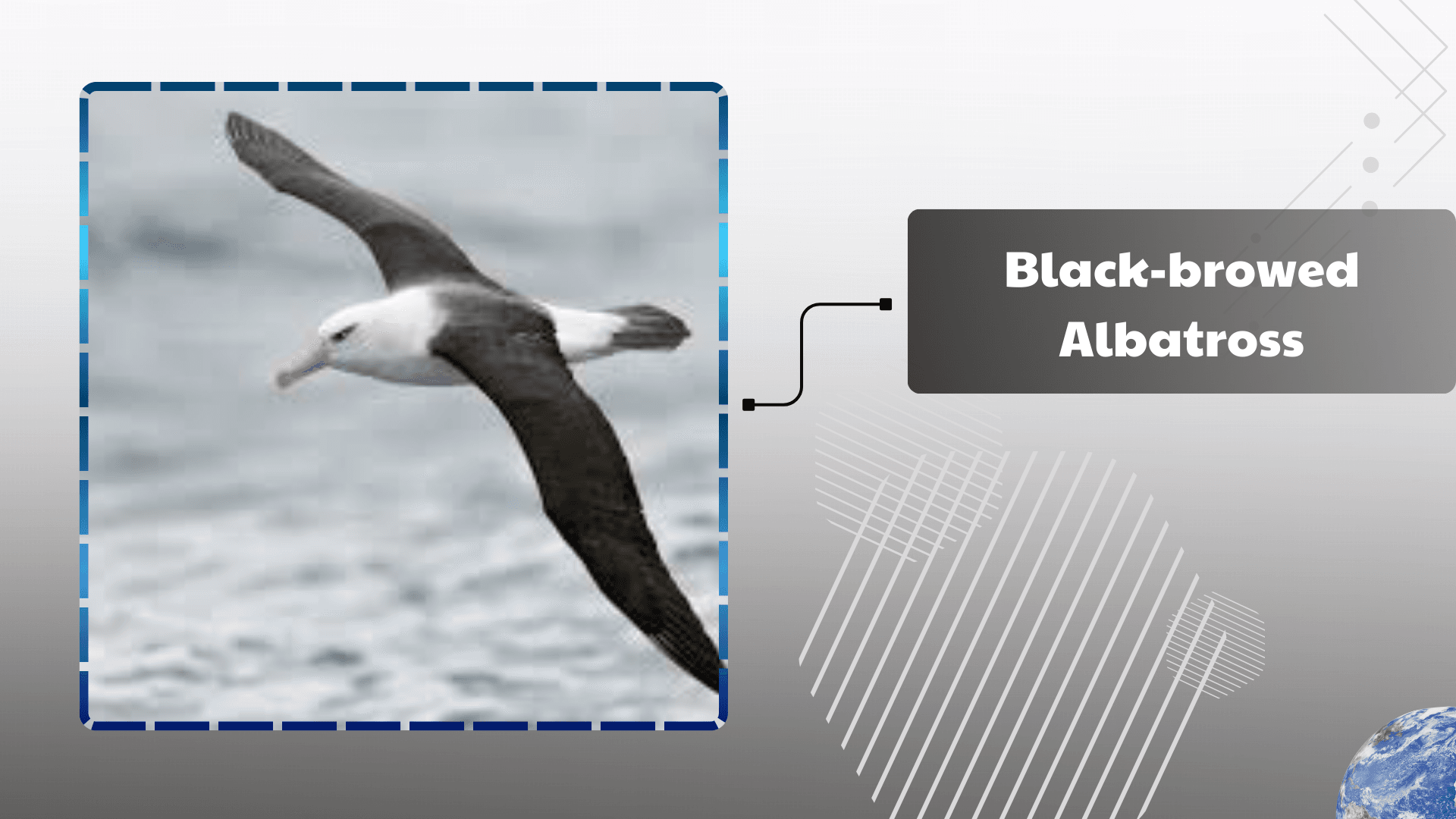
11. Black-browed Albatross (Thalassarche melanophris)
Identification and Physical Characteristics
The Black-browed Albatross is a medium-sized albatross with a wingspan of approximately 2.1 meters. Its most distinctive feature is the dark stripe above its eyes, giving it a “black-browed” appearance. The body is mostly white, with black upper wings and grayish back. Juveniles have darker plumage that gradually lightens as they mature.
Habitat and Distribution
Black-browed Albatrosses breed on islands in the southern Atlantic, Indian, and Pacific Oceans, including South Georgia, Falkland Islands, and Crozet Islands. They are highly pelagic, spending most of their lives gliding over open ocean waters and returning to land only to breed.
Behavior and Diet
They feed primarily on squid, fish, and crustaceans, often following fishing boats to scavenge. Black-browed Albatrosses are monogamous, forming long-term pair bonds. Courtship involves synchronized dancing, bill clapping, and sky-pointing rituals. These birds are also exceptional gliders, capable of covering thousands of kilometers while expending minimal energy.
Conservation Status
Listed as Least Concern, though populations have declined in some areas due to longline fishing bycatch. Conservation efforts focus on bycatch mitigation, monitoring colonies, and protecting breeding habitats.
12. Campbell Albatross (Thalassarche impavida)

Identification and Physical Characteristics
The Campbell Albatross is a large seabird with a wingspan of about 2.3 meters. Adults have a white head and body with dark gray to black upper wings. Juveniles are darker and more uniformly colored. Their long, narrow wings are highly adapted for gliding over oceanic winds, making them efficient long-distance travelers.
Habitat and Distribution
This species breeds exclusively on Campbell Island, south of New Zealand, and forages across the southern Pacific Ocean. Their restricted breeding range and pelagic lifestyle make them highly dependent on the health of both terrestrial and marine environments.
Behavior and Diet
Campbell Albatrosses feed primarily on squid, fish, and crustaceans. They are monogamous and return to the same nesting site each breeding season. Courtship displays include synchronized dancing, bowing, and bill clapping, strengthening pair bonds and ensuring reproductive success.
Conservation Status
Listed as Vulnerable due to limited breeding areas and threats from longline fisheries. Conservation programs include habitat protection, population monitoring, and research on foraging behaviors.
13. Shy Albatross (Thalassarche cauta)

Identification and Physical Characteristics
The Shy Albatross is medium-sized with a wingspan of 2 meters. Adults have white underparts, a pale yellow head, and dark upper wings. Juveniles are darker and more mottled. The species is named for its relatively cautious behavior when humans approach, compared to other more curious albatrosses.
Habitat and Distribution
Shy Albatrosses breed on islands off southern Australia, including Albatross Island and Mewstone. They spend the remainder of their time at sea, gliding over temperate southern oceans in search of food.
Behavior and Diet
Shy Albatrosses feed on fish, squid, and crustaceans. They form long-term monogamous pairs and engage in elaborate courtship rituals involving bill clapping, sky-pointing, and synchronized dancing. These birds rely heavily on wind currents for energy-efficient travel across vast oceanic distances.
Conservation Status
Listed as Vulnerable due to bycatch, climate change, and habitat disturbance. Conservation efforts focus on protecting breeding colonies, monitoring populations, and implementing bycatch reduction programs.
14. White-capped Albatross (Thalassarche steadi)

Identification and Physical Characteristics
The White-capped Albatross is distinguished by its white head, grayish back, and dark wings. Its wingspan is approximately 2.1 meters. Juveniles are darker and develop the characteristic white cap as they mature. Their long, narrow wings allow them to glide effortlessly over southern oceans.
Habitat and Distribution
They breed mainly on islands around New Zealand, including the Auckland and Campbell Islands. They are highly pelagic outside of the breeding season, covering vast distances in the southern Pacific Ocean.
Behavior and Diet
White-capped Albatrosses feed on squid, fish, and other marine invertebrates. They form monogamous pairs and return annually to the same nesting sites. Courtship displays involve synchronized movements and vocalizations that strengthen pair bonds and maintain reproductive success.
Conservation Status
Listed as Near Threatened due to limited breeding areas and bycatch in fisheries. Conservation programs focus on monitoring colonies, protecting habitats, and mitigating threats from longline fishing.
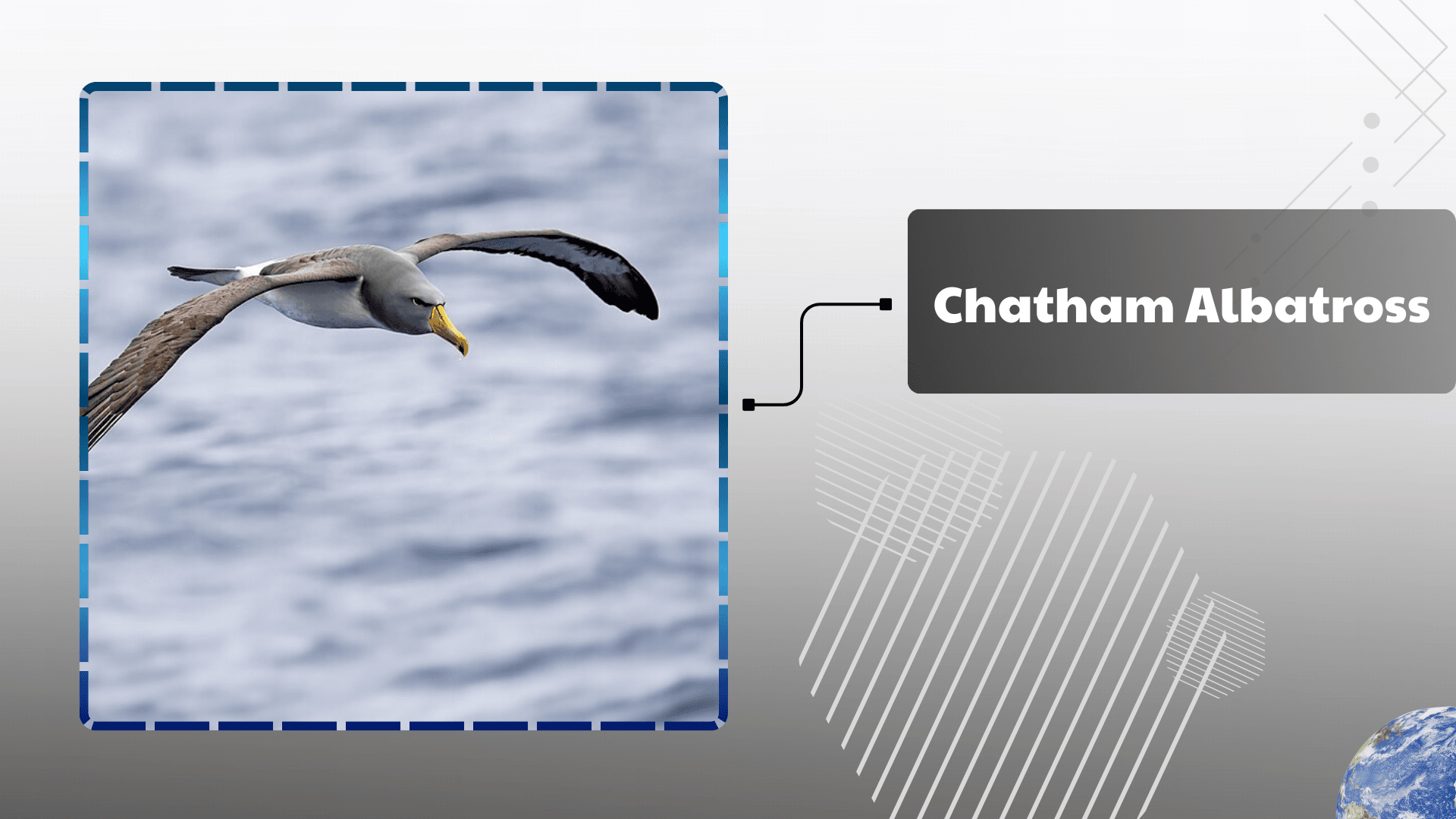
15. Chatham Albatross (Thalassarche eremita)
Identification and Physical Characteristics
The Chatham Albatross is medium-sized, with a wingspan around 2.1 meters. Adults have a dark gray back, white underparts, and a pale yellow head. Juveniles are darker and gradually lighten as they mature. Their wings are well-adapted for dynamic soaring over the open ocean.
Habitat and Distribution
Chatham Albatrosses breed exclusively on The Pyramid, a rocky island in the Chatham group east of New Zealand. They forage across the southern Pacific Ocean during non-breeding periods. Their highly restricted breeding range makes them vulnerable to environmental and human-induced changes.
Behavior and Diet
They feed primarily on fish and squid, sometimes scavenging near fishing vessels. Chatham Albatrosses are monogamous, performing elaborate courtship dances and vocalizations to strengthen pair bonds. They are long-distance gliders, capable of covering thousands of kilometers over open ocean while conserving energy.
Conservation Status
Listed as Vulnerable due to habitat restriction, bycatch in fisheries, and introduced predators on breeding islands. Conservation efforts focus on habitat protection, predator control, and monitoring breeding success to maintain population stability.
16. Salvin’s Albatross (Thalassarche salvini)

Identification and Physical Characteristics
Salvin’s Albatross is a medium-sized seabird with a wingspan of around 2.1 meters. Adults have a white head, grayish back, and dark wings, while juveniles are darker and mottled. Its striking white head and contrasting wings make it distinguishable from closely related albatrosses, especially during flight.
Habitat and Distribution
They breed primarily on the Bounty Islands near New Zealand and forage widely across the southern Pacific Ocean. Salvin’s Albatrosses are highly pelagic, spending most of their lives gliding over open ocean waters and returning to breeding sites only during the nesting season.
Behavior and Diet
These birds feed on fish, squid, and other small marine creatures, often scavenging near fishing vessels. They are monogamous, forming long-term pair bonds, and their courtship displays include synchronized dancing, bill clapping, and sky-pointing. Salvin’s Albatrosses rely on wind currents for effortless gliding over vast distances.
Conservation Status
Listed as Vulnerable due to bycatch in longline fisheries and limited breeding areas. Conservation efforts include habitat protection, bycatch reduction, and monitoring population trends to ensure stability.
17. Grey-headed Albatross (Thalassarche chrysostoma)

Identification and Physical Characteristics
The Grey-headed Albatross has a gray head, white underparts, and dark wings, with a wingspan of approximately 2.2 meters. Juveniles are darker, with grayish-brown plumage that lightens with age. Its distinct gray head and powerful wings make it easily identifiable at sea.
Habitat and Distribution
Breeding occurs on sub-Antarctic islands, including South Georgia and Crozet Islands. They forage widely across the Southern Ocean, often covering thousands of kilometers while searching for squid, fish, and crustaceans. Grey-headed Albatrosses are highly pelagic and rarely come to land outside the breeding season.
Behavior and Diet
They are skilled gliders and dynamic soarers, capable of traveling immense distances without flapping their wings. Courtship involves intricate dances, bill clapping, and sky-pointing. Grey-headed Albatrosses are monogamous and form long-term pair bonds, returning to the same nesting sites annually.
Conservation Status
Listed as Endangered due to bycatch in longline fisheries, predation by invasive species, and habitat threats. Conservation initiatives focus on protecting breeding colonies, regulating fisheries, and monitoring populations.
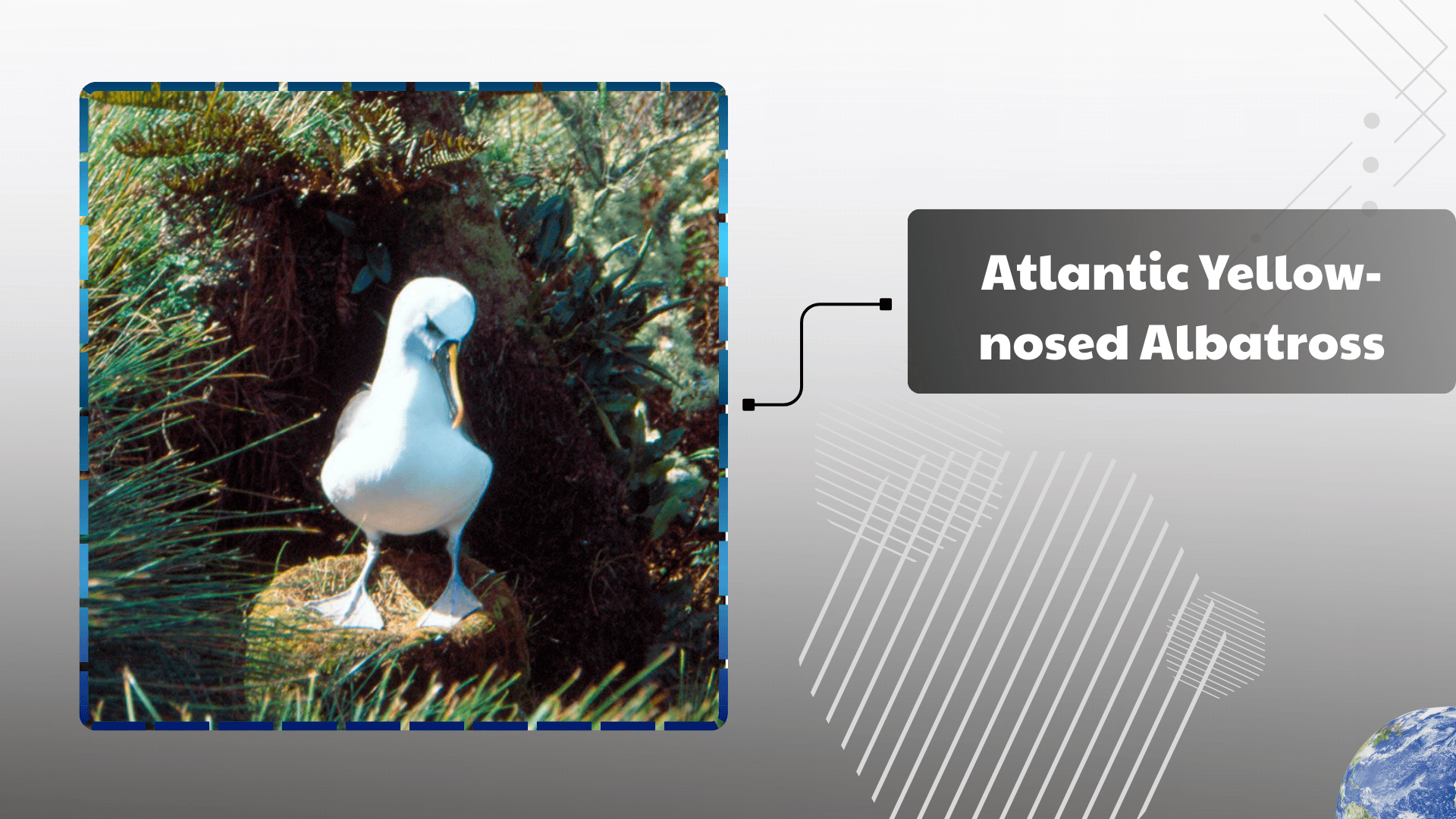
18. Atlantic Yellow-nosed Albatross (Thalassarche chlororhynchos)
Identification and Physical Characteristics
The Atlantic Yellow-nosed Albatross has a white head, gray back, and black upper wings. Its most notable feature is a yellow-tipped bill, giving it its name. Juveniles are darker and gradually develop the adult coloration. Wingspan ranges from 2 to 2.3 meters, ideal for long-distance gliding.
Habitat and Distribution
They breed on islands in the South Atlantic, including Tristan da Cunha and Gough Island. Outside the breeding season, they are highly pelagic, ranging across the South Atlantic Ocean. Their reliance on oceanic winds allows them to travel vast distances with minimal energy expenditure.
Behavior and Diet
Atlantic Yellow-nosed Albatrosses feed on squid, fish, and crustaceans, often following fishing vessels. They form monogamous pairs with elaborate courtship rituals that include synchronized dances, bill clapping, and vocalizations. These birds are long-distance gliders and excellent at exploiting wind patterns.
Conservation Status
Listed as Endangered due to bycatch in longline fisheries and limited breeding locations. Conservation efforts focus on bycatch mitigation, breeding site protection, and population monitoring.
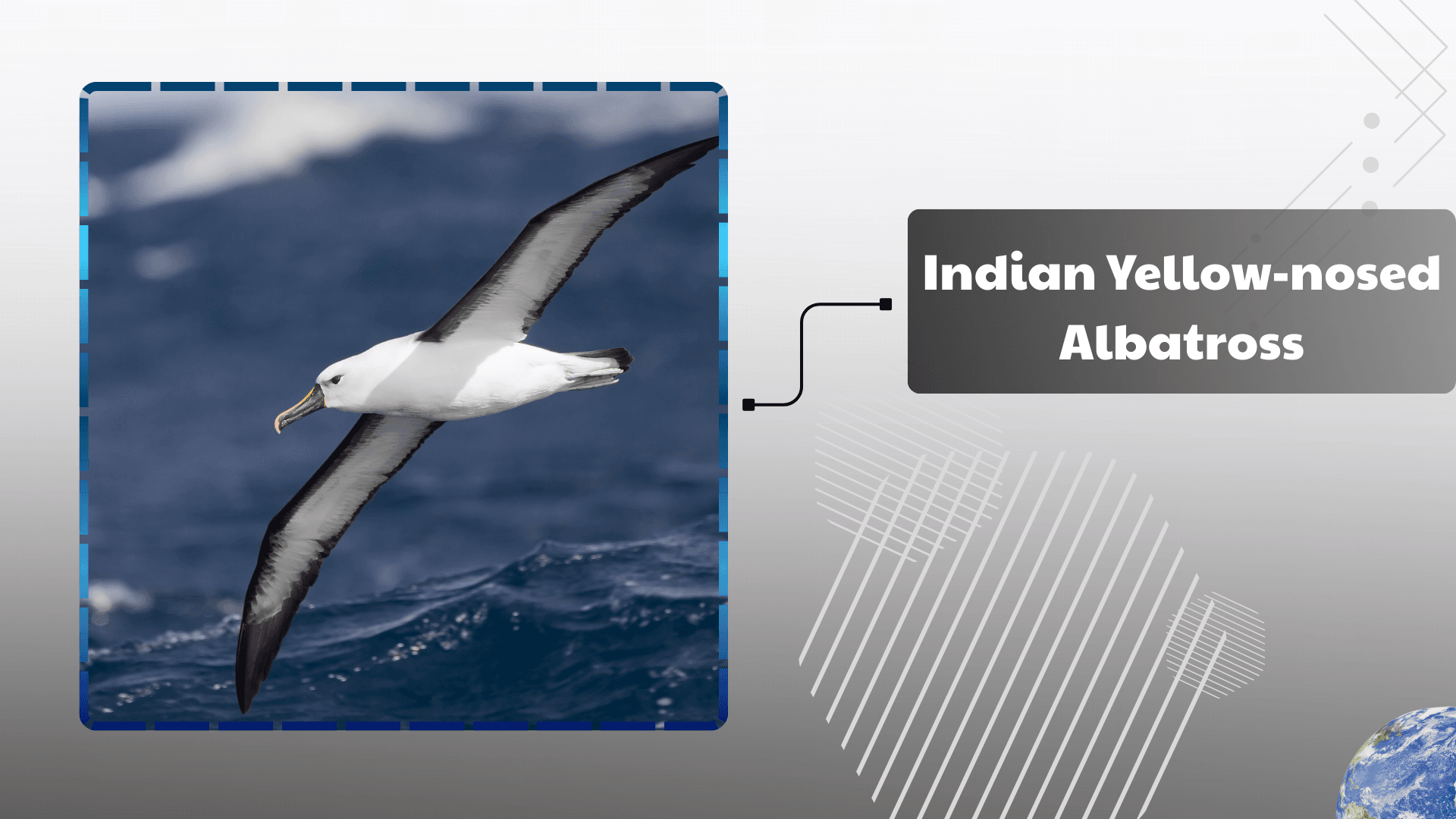
19. Indian Yellow-nosed Albatross (Thalassarche carteri)
Identification and Physical Characteristics
The Indian Yellow-nosed Albatross is similar to the Atlantic Yellow-nosed but breeds in the Indian Ocean. Adults have a white head, gray back, and black wings, with a yellow-tipped bill. Juveniles are darker with mottled plumage. Wingspan is around 2.1–2.3 meters, allowing efficient gliding over oceanic winds.
Habitat and Distribution
They breed on islands in the southern Indian Ocean, including Amsterdam and St. Paul Islands. During non-breeding periods, they are highly pelagic, traveling widely across the Indian Ocean in search of squid, fish, and crustaceans.
Behavior and Diet
Indian Yellow-nosed Albatrosses are monogamous and perform elaborate courtship dances involving bill clapping, bowing, and synchronized movements. They rely on dynamic soaring and wind currents to cover long distances efficiently. Their diet mainly includes squid and small fish, often scavenged near fishing vessels.
Conservation Status
Listed as Endangered due to bycatch, habitat disturbance, and invasive species on breeding islands. Conservation actions include habitat protection, bycatch mitigation, and monitoring breeding colonies to support population recovery.
20. Buller’s Albatross (Thalassarche bulleri)

Identification and Physical Characteristics
Buller’s Albatross is medium-sized with a wingspan of 2 meters. Adults have a white head, gray back, and dark wings, while juveniles are darker with mottled plumage. Its robust build and long wings enable effortless soaring over southern oceans.
Habitat and Distribution
They breed mainly on the Snares and Solander Islands near New Zealand. Outside of breeding, Buller’s Albatross forages over the southern Pacific Ocean, relying on prevailing winds for energy-efficient travel across vast distances.
Behavior and Diet
Buller’s Albatrosses feed on squid, fish, and small crustaceans, often near the ocean surface. They are monogamous, returning annually to the same nesting sites and partners. Courtship displays include synchronized movements, bill clapping, and sky-pointing. They are adept gliders and spend most of their lives at sea.
Conservation Status
Listed as Vulnerable due to bycatch and habitat limitations. Conservation efforts include monitoring colonies, protecting breeding sites, and mitigating threats from longline fisheries.
21. Light-mantled Albatross (Phoebetria palpebrata)

Identification and Physical Characteristics
The Light-mantled Albatross is a medium-sized albatross with a wingspan of about 2.2 meters. It has striking dark gray wings and back, with a lighter gray or silvery mantle, giving it a distinctive “light-mantled” appearance. The head and underparts are paler, and juveniles are darker overall. Its slender, elongated wings are perfectly adapted for dynamic soaring over the Southern Ocean.
Habitat and Distribution
Light-mantled Albatrosses breed on sub-Antarctic islands such as the South Sandwich Islands and Macquarie Island. Outside the breeding season, they are highly pelagic, foraging widely across southern oceans. Their dependence on wind currents allows them to glide effortlessly over vast distances, often covering thousands of kilometers.
Behavior and Diet
These albatrosses feed on fish, squid, and other marine invertebrates, often following fishing vessels for opportunistic feeding. They are monogamous and form long-term pair bonds. Courtship involves bowing, synchronized movements, and bill clapping. Light-mantled Albatrosses are exceptional gliders, capable of sustained flight without flapping.
Conservation Status
Listed as Near Threatened due to bycatch in longline fisheries and environmental changes. Conservation initiatives focus on protecting breeding colonies, monitoring populations, and reducing accidental mortality from fishing operations.
22. Sooty Albatross (Phoebetria fusca)

Identification and Physical Characteristics
The Sooty Albatross is a dark, medium-sized bird with a wingspan around 2.1 meters. Adults are mostly sooty brown or dark gray, with paler undersides on the head and throat. Juveniles are even darker and gradually lighten as they mature. Its sleek, streamlined body and long wings make it a skilled glider over turbulent southern oceans.
Habitat and Distribution
Sooty Albatrosses breed on sub-Antarctic islands such as Tristan da Cunha, Gough Island, and Marion Island. They are highly pelagic, traveling vast distances over the Southern Ocean in search of prey. These albatrosses are rarely seen near human settlements except for monitoring purposes on breeding islands.
Behavior and Diet
Feeding primarily on squid, fish, and carrion, Sooty Albatrosses often follow fishing vessels for scavenging. They form monogamous pairs, returning to the same nesting sites each year. Courtship includes sky-pointing, bowing, and vocalizations, strengthening pair bonds. These birds are remarkable gliders, relying on wind currents to cover long distances efficiently.
Conservation Status
Listed as Endangered due to bycatch in fisheries, habitat degradation, and invasive species on breeding islands. Conservation programs include monitoring breeding colonies, habitat protection, and bycatch mitigation strategies.
23. Gibson’s Albatross (Diomedea exulans gibsoni)

Identification and Physical Characteristics
Gibson’s Albatross is a subspecies of the Wandering Albatross, distinguished by its slightly darker plumage on the wings and back. Adults have a large wingspan of up to 3.4 meters, white body, and pale yellow head. Juveniles are darker, with mottled brown plumage. Its massive wings make it an expert glider, capable of covering thousands of kilometers without flapping.
Habitat and Distribution
This albatross breeds mainly on the Auckland Islands near New Zealand and forages widely across the Southern Ocean. They are highly pelagic and spend most of their lives at sea, returning to land only for breeding. Gibson’s Albatross is notable for its restricted breeding range within the larger Wandering Albatross population.
Behavior and Diet
Feeding on squid, fish, and crustaceans, Gibson’s Albatross often follows fishing vessels. They are monogamous, performing elaborate courtship displays involving bowing, bill clapping, and sky-pointing. These birds return to the same nesting sites annually and have strong pair bonds.
Conservation Status
Listed as Vulnerable due to bycatch in longline fisheries, limited breeding range, and environmental changes. Conservation efforts include monitoring colonies, protecting nesting grounds, and implementing bycatch reduction measures.
24. Southern Giant-headed Albatross (Diomedea epomophora variant)

Identification and Physical Characteristics
The Southern Giant-headed Albatross is a variant of the Southern Royal Albatross, characterized by its unusually large head and wingspan of up to 3.2 meters. Adults are predominantly white with black wingtips and pale yellow heads. Juveniles are darker and gradually lighten with age. Their massive wings allow effortless gliding over the Southern Ocean.
Habitat and Distribution
This variant breeds on sub-Antarctic islands, including Campbell and Macquarie Islands. Outside of the breeding season, they forage widely across the southern oceans, demonstrating remarkable navigational abilities and endurance during long-distance flights.
Behavior and Diet
They feed on squid, fish, and crustaceans, often following fishing vessels. Monogamous pairs form strong bonds, returning to the same nesting sites each year. Courtship includes bowing, synchronized movements, and vocalizations. Their gliding efficiency allows them to conserve energy while traveling long distances over the open ocean.
Conservation Status
Listed as Vulnerable due to bycatch, limited breeding sites, and environmental changes. Conservation measures include protecting breeding colonies, monitoring populations, and regulating fisheries to prevent accidental mortality.
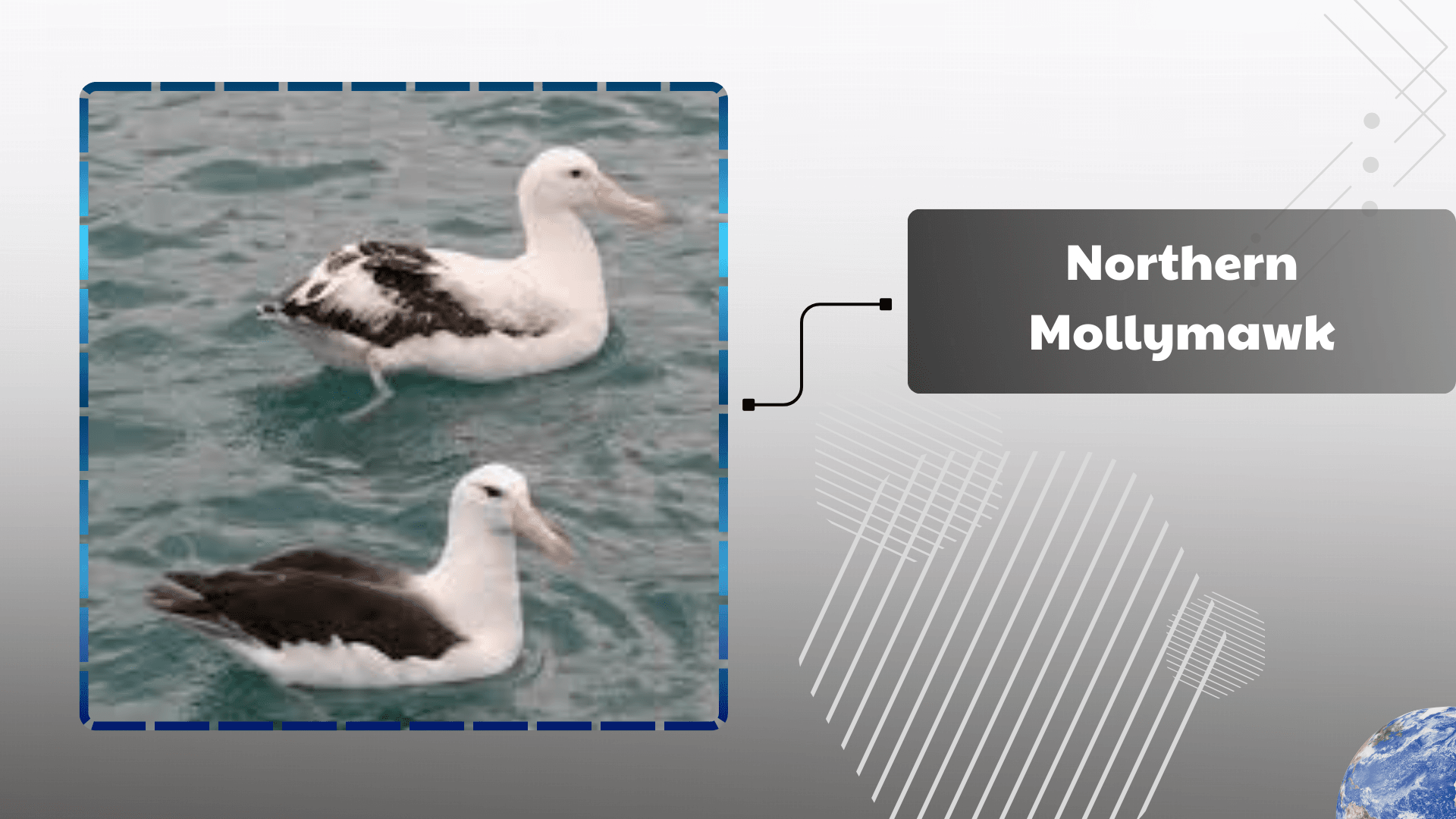
25. Northern Mollymawk (Thalassarche spp. variant)
Identification and Physical Characteristics
Northern Mollymawks are medium-sized albatrosses with a wingspan of approximately 2 meters. Adults have a white head, gray back, and dark wings, while juveniles are darker and more mottled. The Northern Mollymawk group includes several closely related species or subspecies found in the North Pacific and northern Atlantic, distinguished by subtle differences in bill color, head markings, and size.
Habitat and Distribution
They breed on northern islands, including those in the North Pacific, and forage widely over temperate oceanic waters. These albatrosses are highly pelagic, spending most of their lives at sea and returning to land only to breed.
Behavior and Diet
Northern Mollymawks feed on fish, squid, and crustaceans, often scavenging near fishing vessels. They are monogamous, returning to the same nesting site and partner annually. Courtship involves synchronized movements, bill clapping, and sky-pointing. Their wings are adapted for dynamic soaring, allowing efficient long-distance travel.
Conservation Status
Listed as Vulnerable or Near Threatened depending on the specific subspecies. Conservation programs include monitoring colonies, protecting nesting sites, and mitigating threats from fisheries.
Conclusion: Understanding the 25 Types of Albatross
Albatrosses are among the most awe-inspiring seabirds, admired for their remarkable wingspans, long-distance flights, and unique behaviors. In this guide, we explored 25 different types of albatross, from the iconic Wandering Albatross to the elusive Northern Mollymawk, highlighting their identification features, habitats, diets, and conservation statuses. Each species demonstrates incredible adaptations for life at sea, including efficient gliding, navigational precision, and fascinating courtship rituals. Many of these albatrosses face threats from fishing bycatch, habitat disturbance, and environmental changes, making conservation efforts essential to ensure their survival. By learning to identify and understand these magnificent seabirds, we not only gain a deeper appreciation for marine biodiversity but also support the efforts to protect these long-lived ocean travelers for future generations.
Frequently Asked Questions About Albatrosses
1. What is an albatross?
An albatross is a large seabird known for its impressive wingspan, oceanic lifestyle, and exceptional gliding abilities. Albatrosses belong to the family Diomedeidae and are highly adapted to life at sea.
2. How many types of albatross are there?
There are around 22 to 25 recognized types of albatrosses, depending on classification. Our guide covers 25 types, including Wandering Albatross, Black-browed Albatross, and Laysan Albatross.
3. What is the largest albatross?
The Wandering Albatross has the largest wingspan of any living bird, reaching up to 3.5 meters (11 feet) across.
4. Where do albatrosses live?
Albatrosses are found across the world’s oceans, primarily in the Southern Ocean, Pacific, and Atlantic. Some species, like the Waved Albatross, breed in tropical regions such as the Galápagos Islands.
5. How long do albatrosses live?
Albatrosses are long-lived seabirds, with many species living 50 years or more in the wild.
6. What do albatrosses eat?
Albatrosses primarily feed on squid, fish, and crustaceans. They often follow fishing vessels to scavenge discarded bait or catch marine prey at the surface.
7. Are albatrosses monogamous?
Yes, most albatross species are monogamous and form long-term pair bonds, often returning to the same partner and nesting site each year.
8. How do albatrosses fly long distances?
Albatrosses use dynamic soaring and wind currents to glide efficiently over the ocean for thousands of kilometers with minimal energy.
9. What is the wingspan of an albatross?
Albatross wingspans vary by species, ranging from 2 meters (6.5 feet) in smaller species to over 3.5 meters (11 feet) in the Wandering Albatross.
10. Are albatrosses endangered?
Several albatross species are endangered or vulnerable due to longline fishing bycatch, habitat loss, and invasive predators on breeding islands.
11. What is the difference between a Mollymawk and an albatross?
Mollymawk is a term used for several smaller species of albatross, typically found in the North Pacific and Southern Oceans, distinguished by their smaller size and specific plumage patterns.
12. How do albatrosses breed?
Albatrosses breed on isolated islands, building nests from soil, grass, or guano. They typically lay a single egg per season, and both parents share incubation and feeding responsibilities.
13. When do albatrosses mate?
Albatrosses have long courtship periods, often starting months before breeding. Mating occurs during the breeding season, which varies depending on the species and location.
14. What are albatross courtship rituals?
Courtship involves elaborate dances, synchronized bowing, bill clapping, and sky-pointing displays to strengthen pair bonds.
15. Where do Wandering Albatrosses breed?
They breed on sub-Antarctic islands such as South Georgia, Crozet Islands, and Prince Edward Islands.
16. How do albatrosses navigate the ocean?
Albatrosses use a combination of visual cues, wind currents, and possibly magnetic fields to navigate across vast ocean distances.
17. What threats do albatrosses face?
Main threats include bycatch in longline and trawl fisheries, plastic pollution, invasive predators on breeding islands, and climate change.
18. What is the smallest albatross?
The smallest albatross species are the Shy Albatross and Buller’s Albatross, with wingspans around 2 meters.
19. Can albatrosses swim?
Albatrosses are not strong swimmers; they primarily use their wings to glide over the ocean surface and may occasionally paddle on water.
20. Do albatrosses sleep while flying?
Yes, studies suggest that albatrosses can rest portions of their brain while gliding over the ocean, allowing them to remain airborne for extended periods.
21. How fast can albatrosses fly?
Albatrosses typically fly at speeds of 50–80 km/h (30–50 mph) while gliding over the ocean, adjusting their course based on wind currents.
22. What is the difference between Southern and Northern Albatrosses?
Southern Albatrosses primarily inhabit the Southern Ocean and sub-Antarctic islands, while Northern species, like the Short-tailed and Laysan Albatross, are found in the North Pacific.
23. What is a Black-browed Albatross?
The Black-browed Albatross is a medium-sized seabird with a dark stripe above its eyes, white body, and dark wings. It breeds in the southern Atlantic and Pacific Oceans.
24. What is the diet of the Waved Albatross?
Waved Albatrosses feed primarily on squid, small fish, and crustaceans, often capturing prey near the water’s surface or scavenging near boats.
25. How long do albatross chicks stay in the nest?
Albatross chicks may take 5–10 months to fledge, depending on the species, during which both parents feed and care for the chick.
26. Why are albatrosses important to the ocean ecosystem?
Albatrosses help regulate marine food webs by preying on fish and squid and serve as indicators of ocean health due to their sensitivity to environmental changes.
27. What is the difference between a Royal and a Giant-headed Albatross?
Royal Albatrosses have a larger wingspan and paler head, while Giant-headed variants have disproportionately large heads and massive wingspans for gliding efficiency.
28. Where do Laysan Albatrosses breed?
Laysan Albatrosses breed mainly on Hawaiian islands and Midway Atoll in the North Pacific Ocean.
29. What is the population trend of albatrosses?
Some species are stable, but many face population declines due to human-induced threats like bycatch and habitat disturbance.
30. Do albatrosses migrate?
Yes, most albatrosses are migratory, traveling thousands of kilometers between breeding and feeding grounds across oceans.
31. Can albatrosses drink seawater?
Yes, albatrosses have specialized salt glands above their eyes to excrete excess salt, allowing them to drink seawater safely.
32. How do albatrosses find food?
They use keen eyesight and olfactory senses to locate prey from the air, often detecting squid or fish near the surface.
33. Are albatrosses social birds?
Yes, during breeding, they form dense colonies, though they are mostly solitary while foraging at sea.
34. What is the wingspan of the Wandering Albatross?
The Wandering Albatross has the largest wingspan of any living bird, averaging 3 to 3.5 meters (10–11.5 feet).
35. How do albatrosses avoid predators?
On open ocean, albatrosses face few natural predators. On land, nesting colonies can be threatened by invasive species such as rats and cats, which they avoid through nesting in remote islands.
36. Can albatrosses drink fresh water?
Yes, though they primarily rely on seawater and their salt glands for hydration.
37. How often do albatrosses breed?
Most species breed once per year or once every two years, depending on food availability and species characteristics.
38. What is the role of the albatross in mythology?
Albatrosses have been seen as symbols of good or bad luck in maritime folklore, famously featured in Coleridge’s poem, “The Rime of the Ancient Mariner.”
39. Do all albatrosses have long wings?
Yes, long wings are a defining characteristic, adapted for dynamic soaring over the open ocean.
40. How do albatross chicks learn to fly?
Chicks develop strong wing muscles while waiting in the nest, and fledging occurs gradually as they practice short flights before leaving the nesting site entirely.
41. What is the Black-footed Albatross?
A North Pacific species with mostly dark plumage, a wingspan of 1.8–2.2 meters, and exceptional long-distance gliding abilities.
42. What is the difference between a Sooty and a Light-mantled Albatross?
Sooty Albatrosses are uniformly dark, while Light-mantled Albatrosses have lighter gray mantles contrasting with darker wings and back.
43. How do albatrosses communicate?
They use vocalizations, bill clapping, and visual displays during courtship and social interactions within colonies.
44. What is the White-capped Albatross?
A medium-sized albatross with a white head, gray back, and black wings, breeding mainly on islands near New Zealand.
45. How far can albatrosses travel in a day?
Some species can travel over 500–600 km (310–370 miles) in a single day while gliding over ocean winds.
46. Can albatrosses swim underwater?
No, they are surface feeders and excellent gliders, not adapted for underwater swimming.
47. What is the Chatham Albatross?
A vulnerable species breeding exclusively on The Pyramid in the Chatham Islands, known for its long-distance gliding ability.
48. How do climate changes affect albatrosses?
Climate change impacts food availability, breeding success, and ocean currents, all of which affect albatross survival and distribution.
49. Can albatrosses drink salt water?
Yes, their specialized salt glands allow them to excrete excess salt, enabling them to drink seawater safely.
50. Why are albatrosses important to humans?
Albatrosses are indicators of ocean health, inspire conservation awareness, and play a key role in maritime culture and literature.
51. How do albatrosses maintain long pair bonds?
Through repeated courtship rituals, synchronized movements, and returning to the same nesting sites annually, albatrosses maintain strong lifelong pair bonds.
52. What is the Northern Mollymawk?
A variant of albatross found in the North Pacific and northern Atlantic, recognizable by its medium size, gray back, and yellow-tipped bill in some subspecies.
Read more: 35 Types Of Amphibians (Pictures And Identification)