

The types of Goby represent one of the most diverse and fascinating groups of small fish in the world. Belonging to the order Gobiiformes, gobies are found in freshwater, brackish, and marine environments across nearly every continent. Despite their small size, gobies are incredibly adaptive, with specialized behaviors such as burrowing, symbiotic partnerships, and suction-based movement using fused pelvic fins. In this guide, we explore 30 different types of goby fish, focusing on their identification, habitat, behavior, and ecological importance. These fish play a crucial role in aquatic ecosystems, especially in controlling algae, cleaning substrates, and forming unique relationships with other marine species.
1. Bumblebee Goby (Brachygobius xanthozonus)
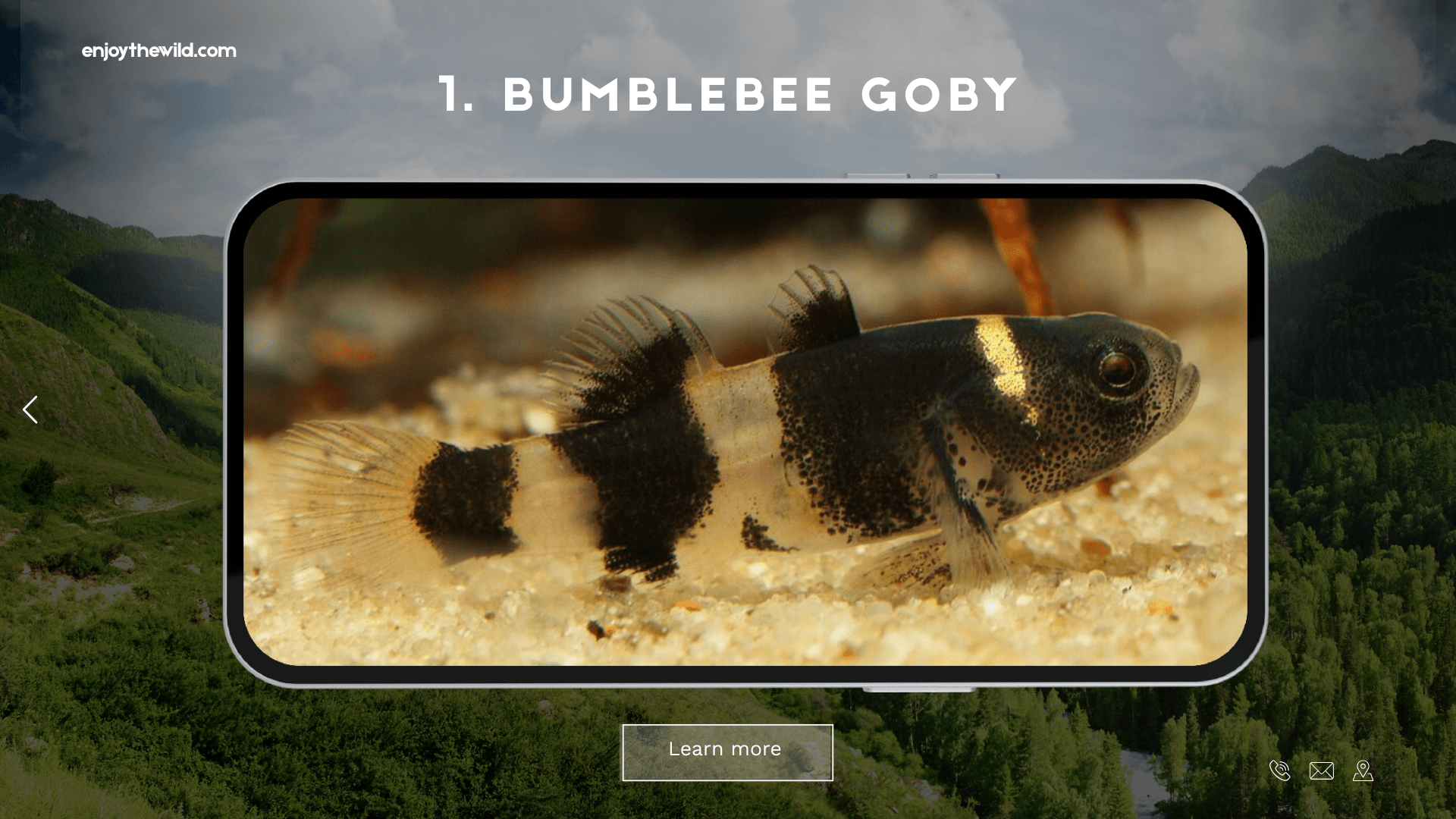
The Bumblebee Goby is one of the most recognizable types of Goby due to its striking black and yellow striped pattern, which resembles a bumblebee. This small fish is native to brackish waters in Southeast Asia, including mangroves, estuaries, and slow-moving streams.
It typically grows only 2–4 cm in length, making it one of the smallest goby species. Despite its size, it has a strong personality and can be territorial, especially in confined spaces. In the wild, Bumblebee Gobies prefer muddy bottoms where they can hide among roots and debris.
Their diet consists mainly of small invertebrates such as worms, larvae, and tiny crustaceans. In aquarium environments, they require slightly salty (brackish) water conditions to thrive, which often surprises beginners who assume they are freshwater fish.
Ecologically, they help control micro-invertebrate populations and contribute to the balance of estuarine ecosystems.
2. Dragon Goby (Gobioides broussonnetii)
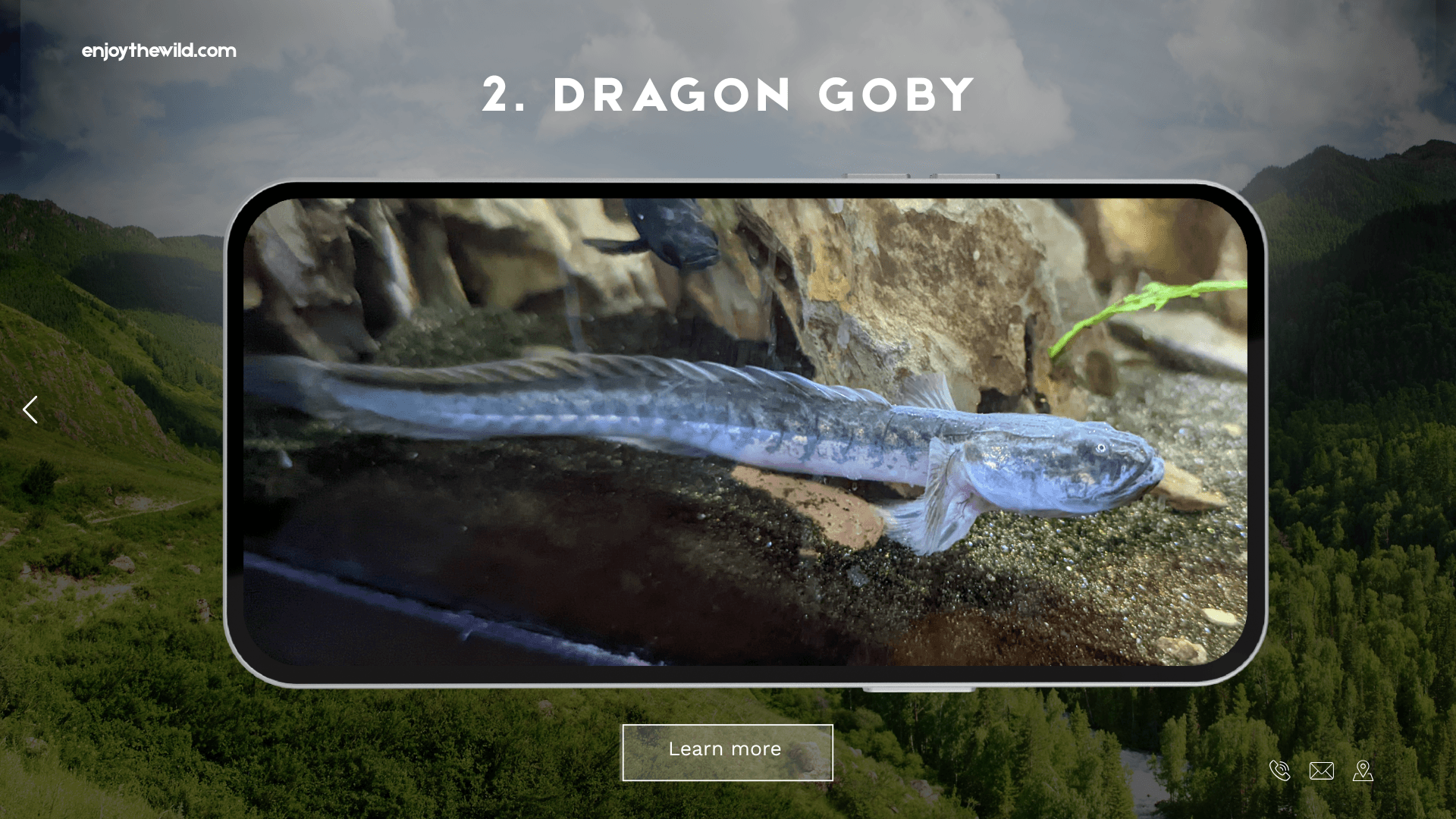
The Dragon Goby is one of the most unique-looking types of Goby, often mistaken for an eel due to its elongated body and smooth, scaleless appearance. It is native to coastal waters of the Americas, especially in brackish marshes and estuaries.
This species can grow much larger than most gobies, reaching up to 50 cm in length. Its body is dark gray to black, with a flattened head and prominent jaw structure. Despite its intimidating appearance, it is generally peaceful and scavenges for food at the bottom of waterways.
Dragon Gobies are detritivores, feeding on organic matter, algae, and small organisms in the sediment. This makes them important cleaners of muddy aquatic environments.
They prefer low-light, slow-moving water and often burrow into soft substrate, leaving only their heads exposed.
3. Neon Goby (Elacatinus oceanops)
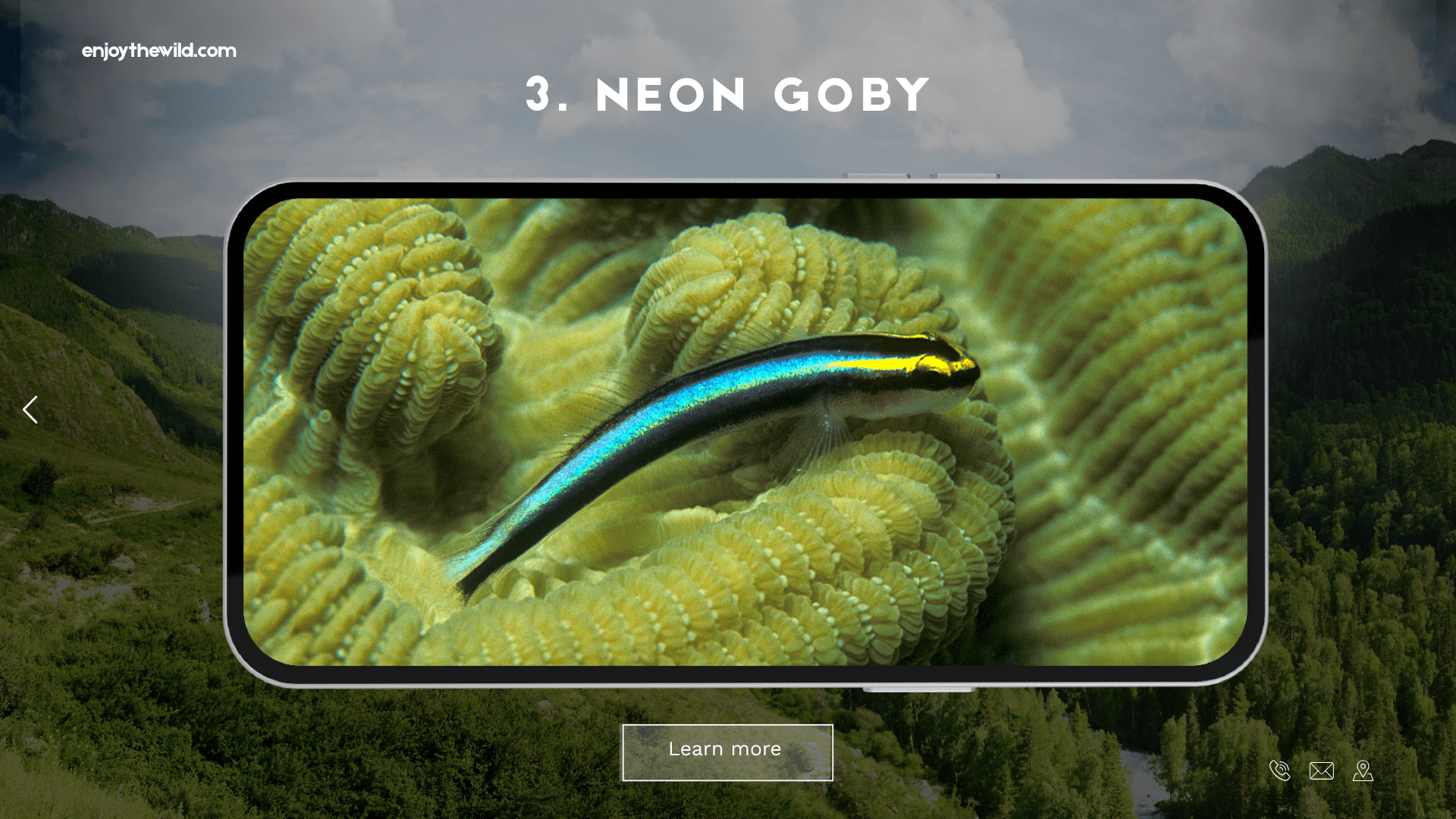
The Neon Goby is one of the most popular reef-associated types of Goby, known for its bright electric-blue stripe running along its body. It is commonly found in coral reefs of the Western Atlantic, including the Caribbean Sea.
This small fish grows to about 4–5 cm and is widely recognized for its cleaning behavior. Neon Gobies act as “cleaner fish,” removing parasites and dead tissue from larger fish species. This creates a mutualistic relationship where both species benefit.
They are highly active and constantly move along coral surfaces, inspecting passing fish for parasites. Their vivid coloration also serves as a visual signal to potential “clients” that they are cleaning specialists.
Neon Gobies play an important role in reef health by reducing parasite loads on larger fish populations.
4. Cobalt Goby (Elacatinus spp.)
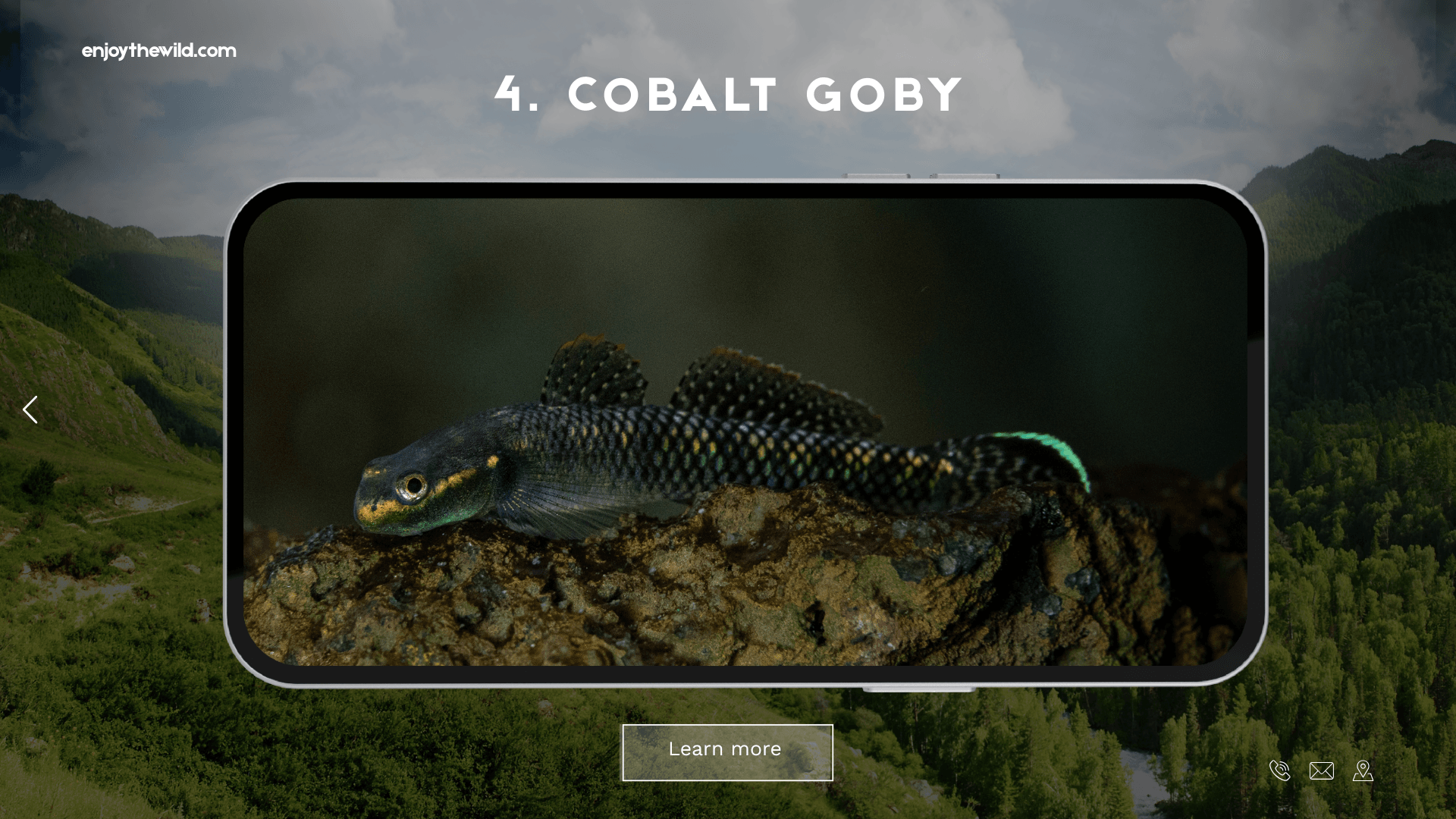
The Cobalt Goby is closely related to the Neon Goby and is another visually striking member of the types of Goby. It features a deep cobalt-blue body with a sleek, streamlined shape adapted for reef environments.
This species is found in tropical coral reefs where it establishes cleaning stations similar to other gobies in its genus. Larger fish visit these stations to have parasites removed, creating a constant flow of “customers.”
Cobalt Gobies are small, usually under 5 cm, but they are highly active and territorial around their cleaning areas. They depend heavily on coral reef health, making them sensitive to environmental degradation such as coral bleaching.
Their role as cleaner fish makes them essential contributors to reef ecosystem balance.
5. Desert Goby (Chlamydogobius eremius)
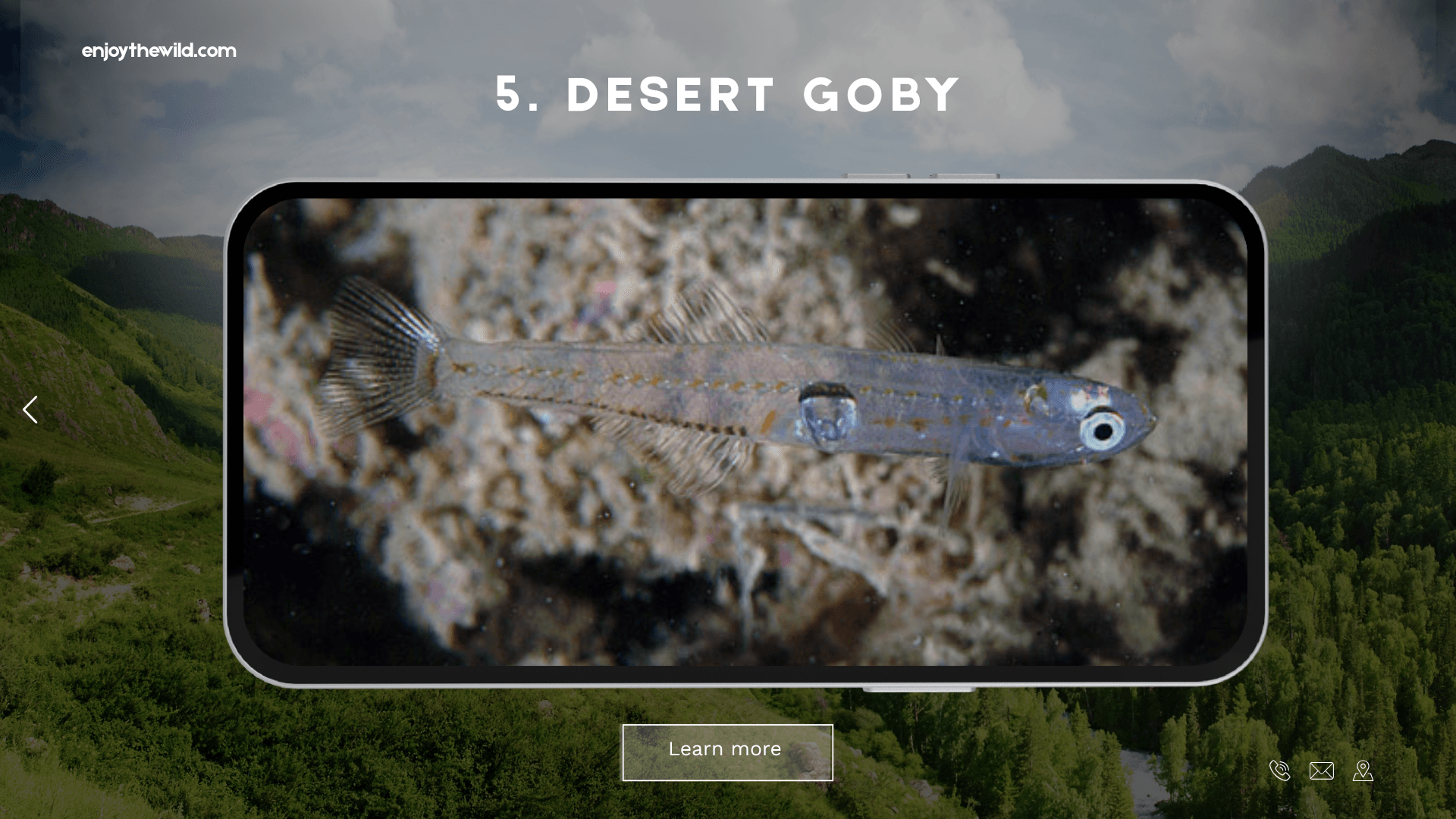
The Desert Goby is one of the most resilient types of Goby, adapted to extreme freshwater environments in Australia’s arid regions. It is capable of surviving in hot, oxygen-poor, and highly variable water conditions.
This species is small, typically reaching around 5–7 cm, and has a mottled brown or olive coloration that helps it blend into sandy or rocky substrates. Unlike many gobies, it thrives in temporary pools and isolated waterholes that may dry up seasonally.
Desert Gobies are highly adaptable feeders, consuming algae, small invertebrates, and organic debris. They can tolerate wide fluctuations in temperature and salinity, making them one of the toughest freshwater fish in harsh environments.
Their survival strategy includes rapid breeding cycles when water is available, ensuring population continuity even in unpredictable climates.
This first group of types of Goby highlights the incredible adaptability of goby fish—from reef-cleaning specialists to desert survivors and brackish water experts. In the next section, we will continue with additional species that showcase even more ecological diversity and unique survival strategies.
6. Knight Goby (Stigmatogobius sadanundio)
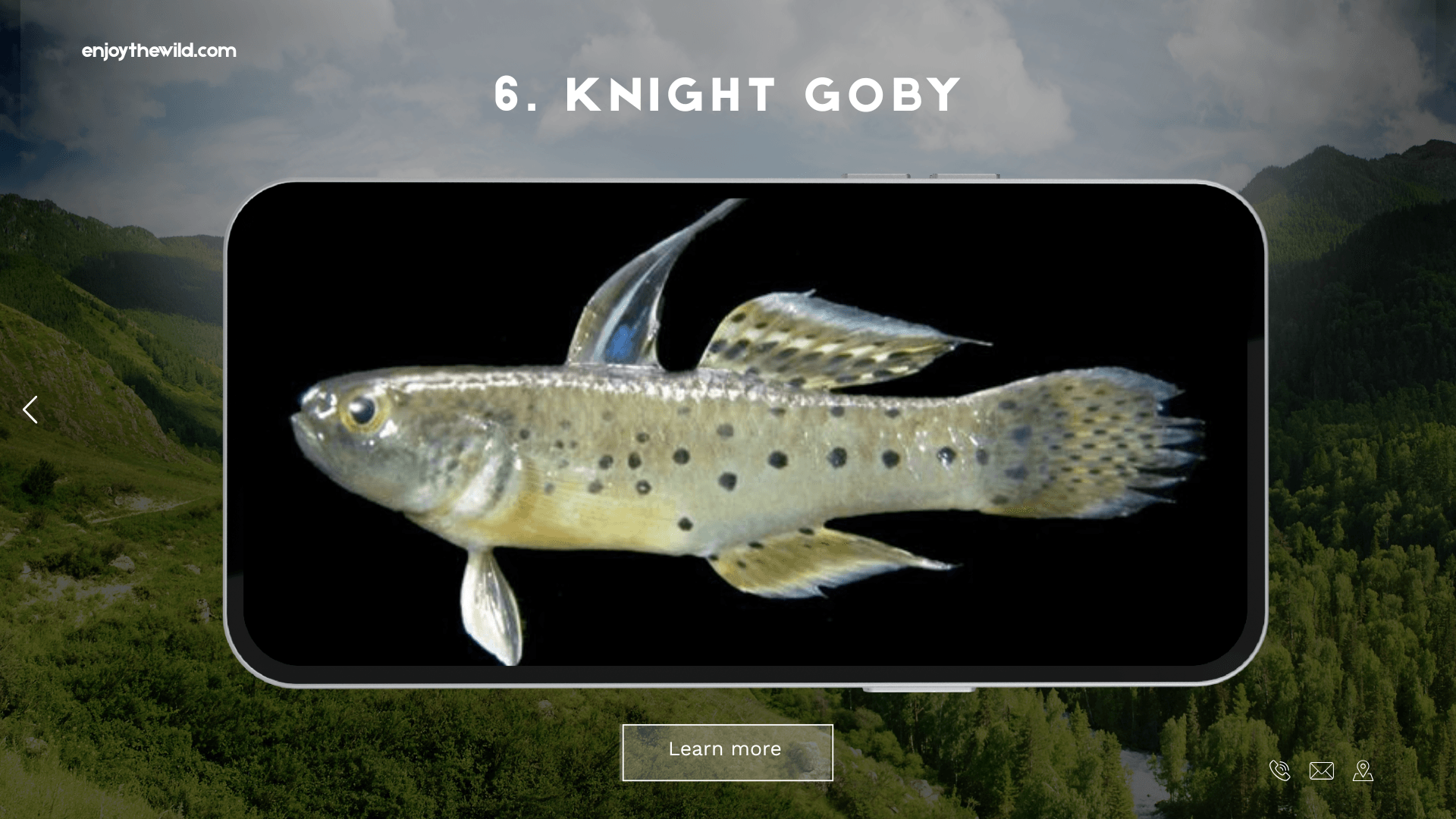
The Knight Goby is one of the most visually distinct types of Goby due to its bold contrast of dark body coloration and lighter markings. It is native to brackish and freshwater systems across South and Southeast Asia, especially in slow-moving rivers, estuaries, and coastal wetlands.
This species typically reaches 6–10 cm in length and has a semi-aggressive temperament compared to other gobies. Its name “Knight Goby” comes from its upright posture and alert behavior, which gives it a vigilant, almost “guard-like” appearance in aquatic environments.
In the wild, Knight Gobies are opportunistic feeders. They consume small crustaceans, insect larvae, and organic detritus. They are also known to be territorial, often defending small hiding spaces under rocks or submerged wood.
Ecologically, they help regulate small invertebrate populations in estuarine environments and contribute to maintaining substrate cleanliness in slow-moving waters.
7. Marbled Sleeper Goby (Oxyeleotris marmorata)
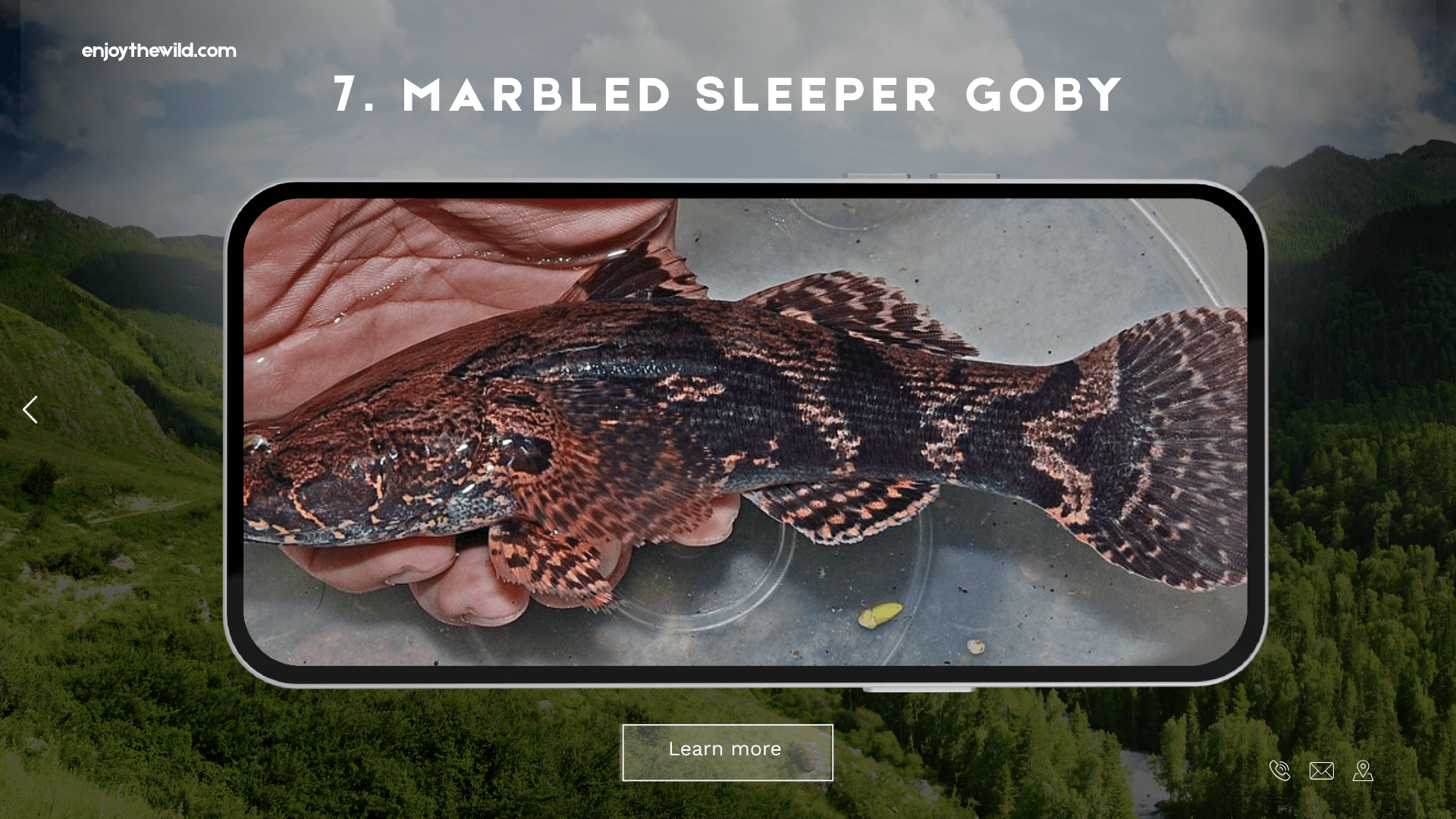
The Marbled Sleeper Goby is one of the largest and most economically important types of Goby. It is found in freshwater rivers and lakes across Southeast Asia, including Thailand, Vietnam, Cambodia, and Malaysia.
This species is easily recognized by its mottled marbled pattern, which provides excellent camouflage against muddy riverbeds. It can grow significantly larger than most gobies, sometimes exceeding 50–60 cm in length.
Unlike active reef gobies, the Marbled Sleeper Goby is a bottom-dwelling ambush predator. It feeds on fish, insects, crustaceans, and any small aquatic organisms that come within striking distance.
Because of its size and firm flesh, it is highly valued in local fisheries and aquaculture. However, overfishing in some regions has led to population pressure, making sustainable management increasingly important.
8. Flame Goby (Rhinogobius duospilus)
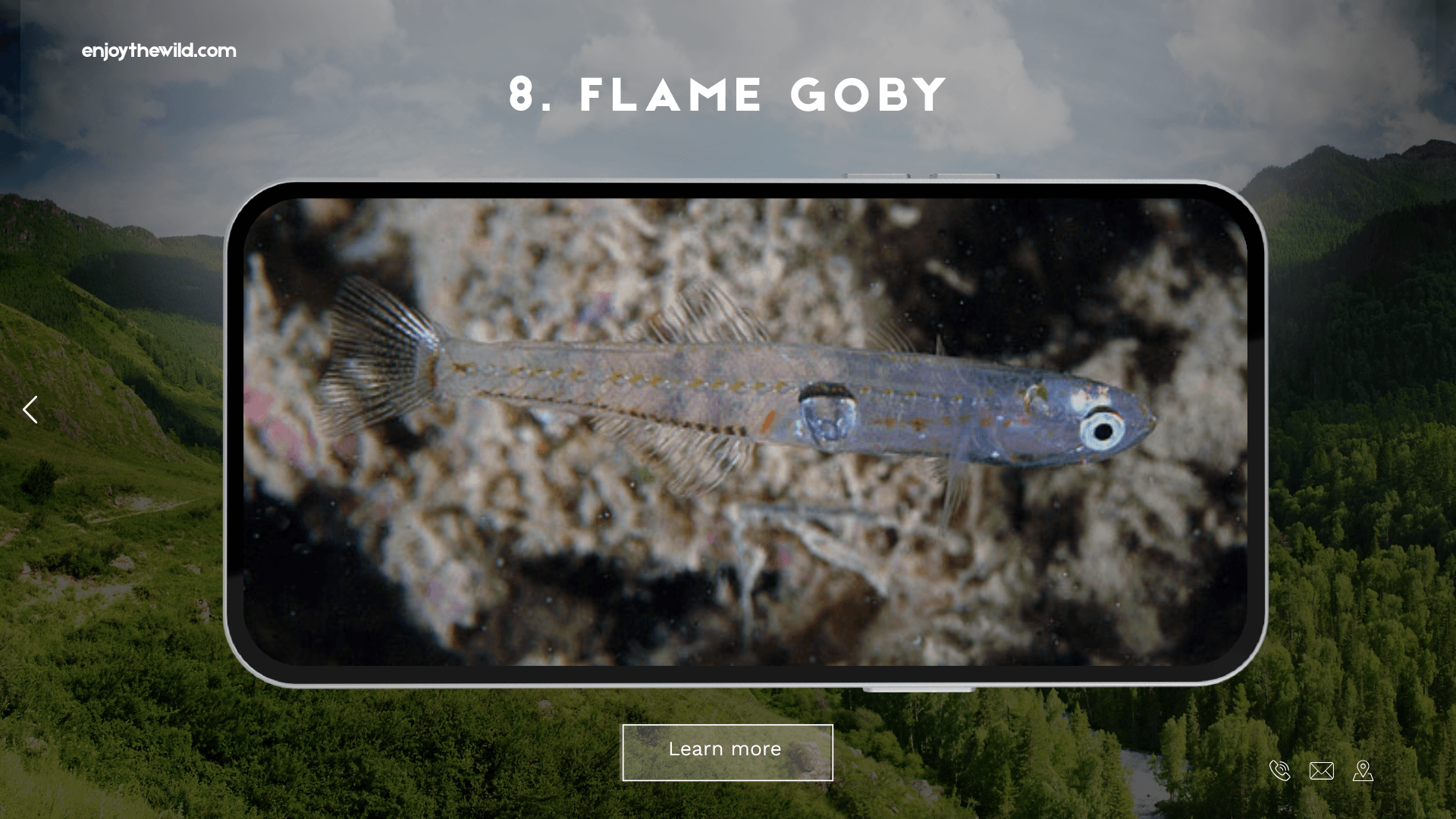
The Flame Goby is one of the most colorful types of Goby, known for its bright orange-red markings that resemble flickering flames along its body. It is native to freshwater streams in East Asia, particularly in China and surrounding regions.
This small fish, usually 5–7 cm in length, prefers clear, fast-flowing streams with rocky substrates. It is highly active and often seen darting between stones in search of food.
Flame Gobies feed on small invertebrates, algae, and organic particles. Their vivid coloration plays an important role in mating displays, with males becoming more vibrant during breeding season.
They are also popular in the aquarium trade due to their striking appearance and dynamic behavior, although they require well-oxygenated water to thrive.
9. Red Cheek Goby (Rhinogobius rubromaculatus)

The Red Cheek Goby is another visually striking member of the types of Goby, characterized by red or orange markings near its gill area. It is found in freshwater streams and rivers in parts of East Asia.
This species prefers clean, oxygen-rich water with gravel or rocky bottoms. It is a small goby, usually reaching around 4–6 cm in length, and is highly territorial during breeding periods.
The Red Cheek Goby is an opportunistic feeder, consuming small insects, larvae, and organic debris. Its coloration becomes more intense during mating seasons, especially in males competing for territory.
It plays an important ecological role in stream ecosystems by helping control insect populations and contributing to the food chain as prey for larger fish.
10. Orange Fin Goby (Awaous flavus)
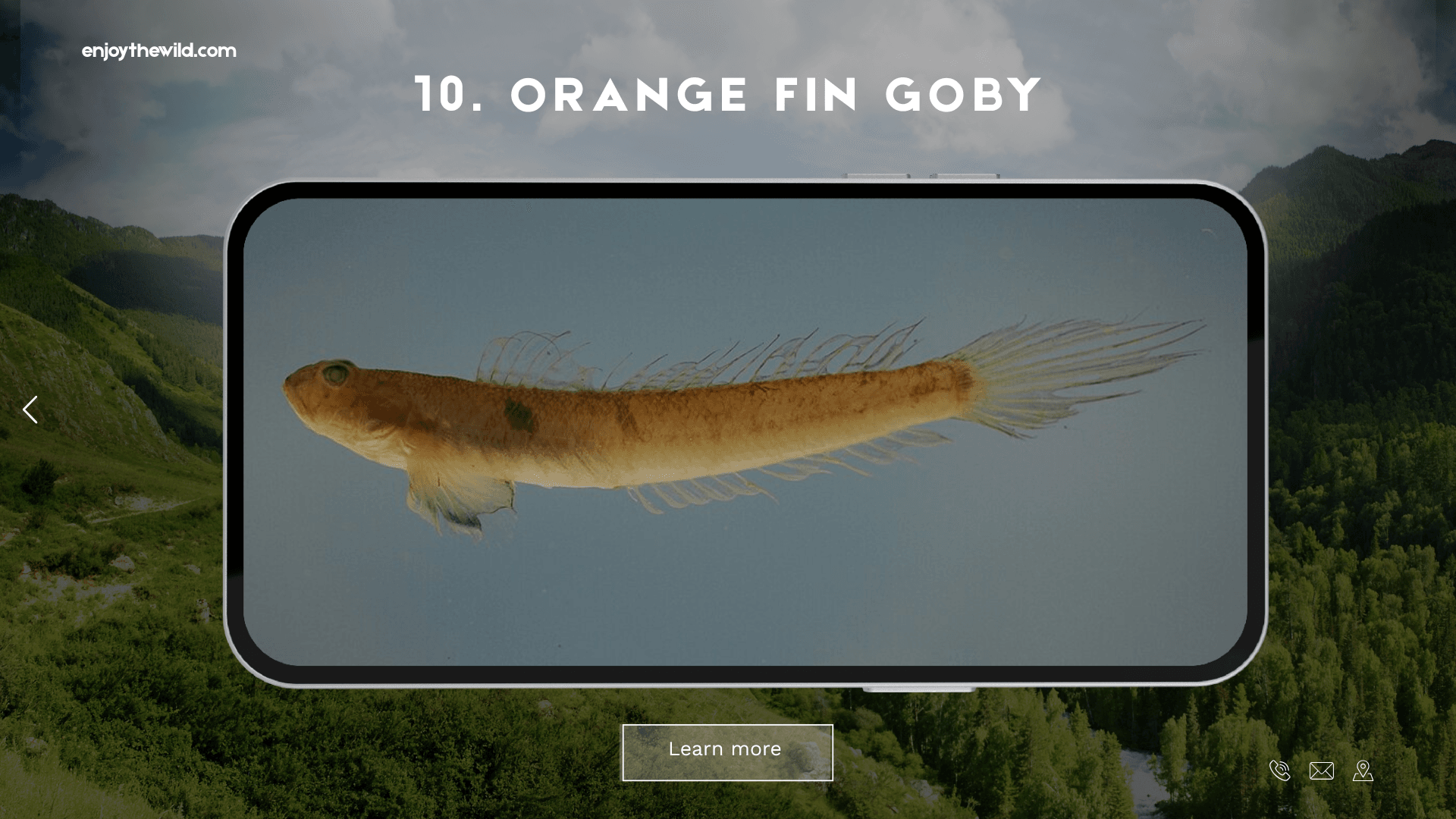
The Orange Fin Goby is one of the more subtle yet ecologically important types of Goby, found in freshwater and brackish environments across South America and parts of coastal regions.
This species is named for its distinctive orange-tinted fins, which contrast with its generally pale or sandy body coloration. It typically grows to about 8–12 cm in length.
Orange Fin Gobies prefer sandy or muddy riverbeds where they can forage for food and hide from predators. They are bottom feeders, consuming algae, detritus, and small invertebrates.
Their burrowing behavior helps aerate sediment, improving nutrient cycling in aquatic ecosystems. This makes them important contributors to habitat health in freshwater and estuarine environments.
This second group of types of Goby highlights even greater ecological diversity—from large predatory sleepers to brightly colored stream dwellers and sediment-cleaning species. In the next section, we will continue exploring even more gobies with unique adaptations, behaviors, and habitats across the world’s aquatic ecosystems.
11. White-Cheeked Goby (Rhinogobius nagoyae)
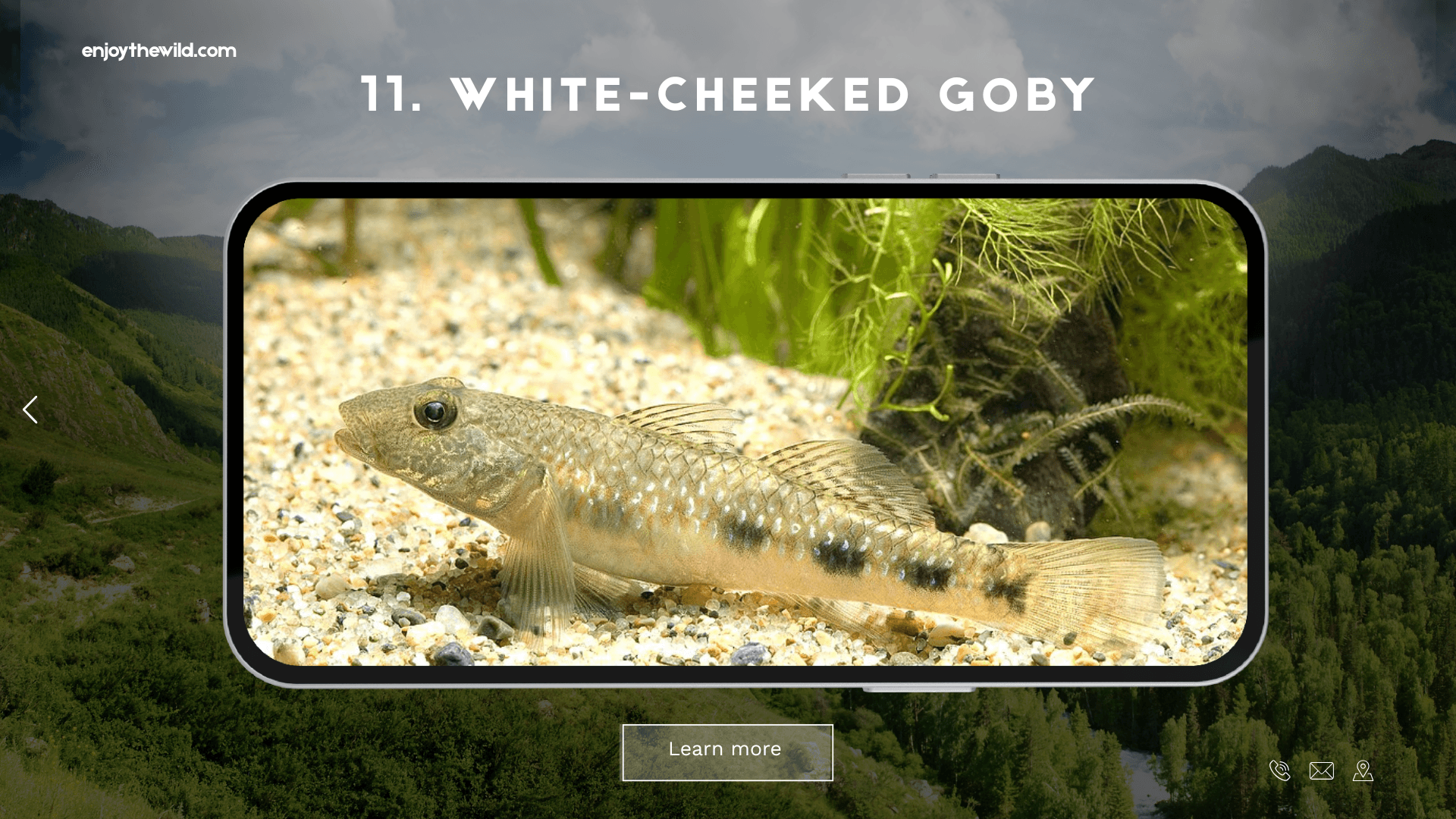
The White-Cheeked Goby is a small but distinctive member of the types of Goby, commonly found in freshwater streams across East Asia. Its name comes from the pale or whitish marking near its cheek area, which contrasts with its darker body coloration.
This species typically grows to about 5–7 cm and prefers clear, fast-flowing streams with rocky or gravel substrates. It is highly adapted to oxygen-rich water and is often used as an indicator of healthy freshwater ecosystems.
White-Cheeked Gobies are bottom dwellers that feed on insect larvae, small crustaceans, and organic particles. They are active hunters, constantly moving along the riverbed while using their fused pelvic fin disc to stabilize themselves in strong currents.
During breeding season, males become territorial and defend small nesting areas under stones or within crevices. Their reproductive behavior is important for maintaining stable population cycles in seasonal river systems.
12. Blue Neon Goby (Stiphodon atropurpureus)
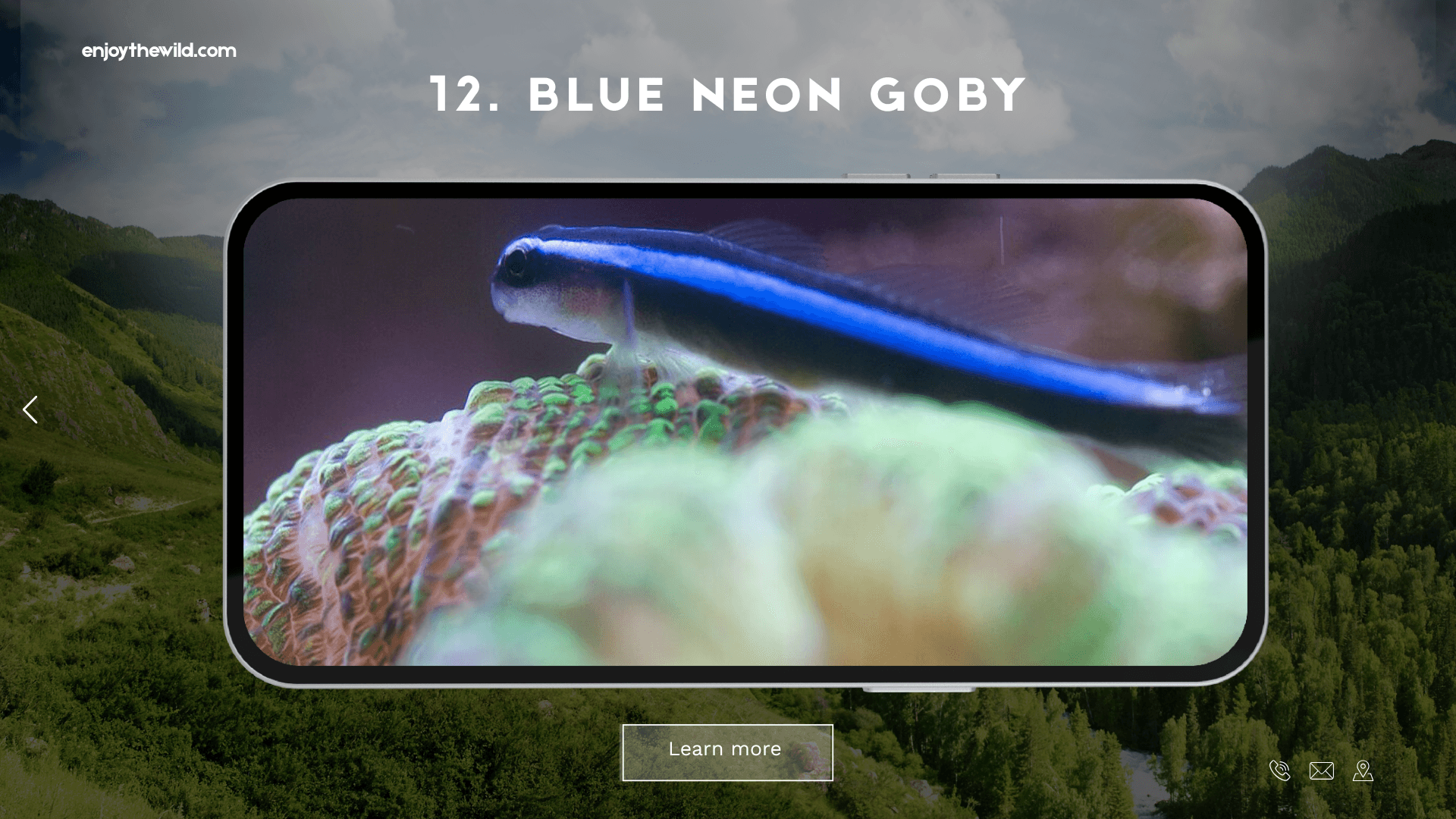
The Blue Neon Goby is one of the most visually striking types of Goby, known for its shimmering blue and turquoise coloration. It is found in tropical freshwater streams across Southeast Asia and nearby island regions.
This species is small, usually around 4–6 cm, and prefers fast-flowing, clear water with rocky substrates. It is highly active and often seen grazing on algae growing on rocks and submerged surfaces.
Unlike predatory gobies, the Blue Neon Goby is primarily herbivorous, feeding on biofilm and algae. This feeding behavior plays an important ecological role in controlling algae growth and maintaining water clarity in stream ecosystems.
Males develop brighter coloration during breeding periods, using visual signals to attract females and defend territory.
13. Red Neon Goby (Stiphodon semoni)
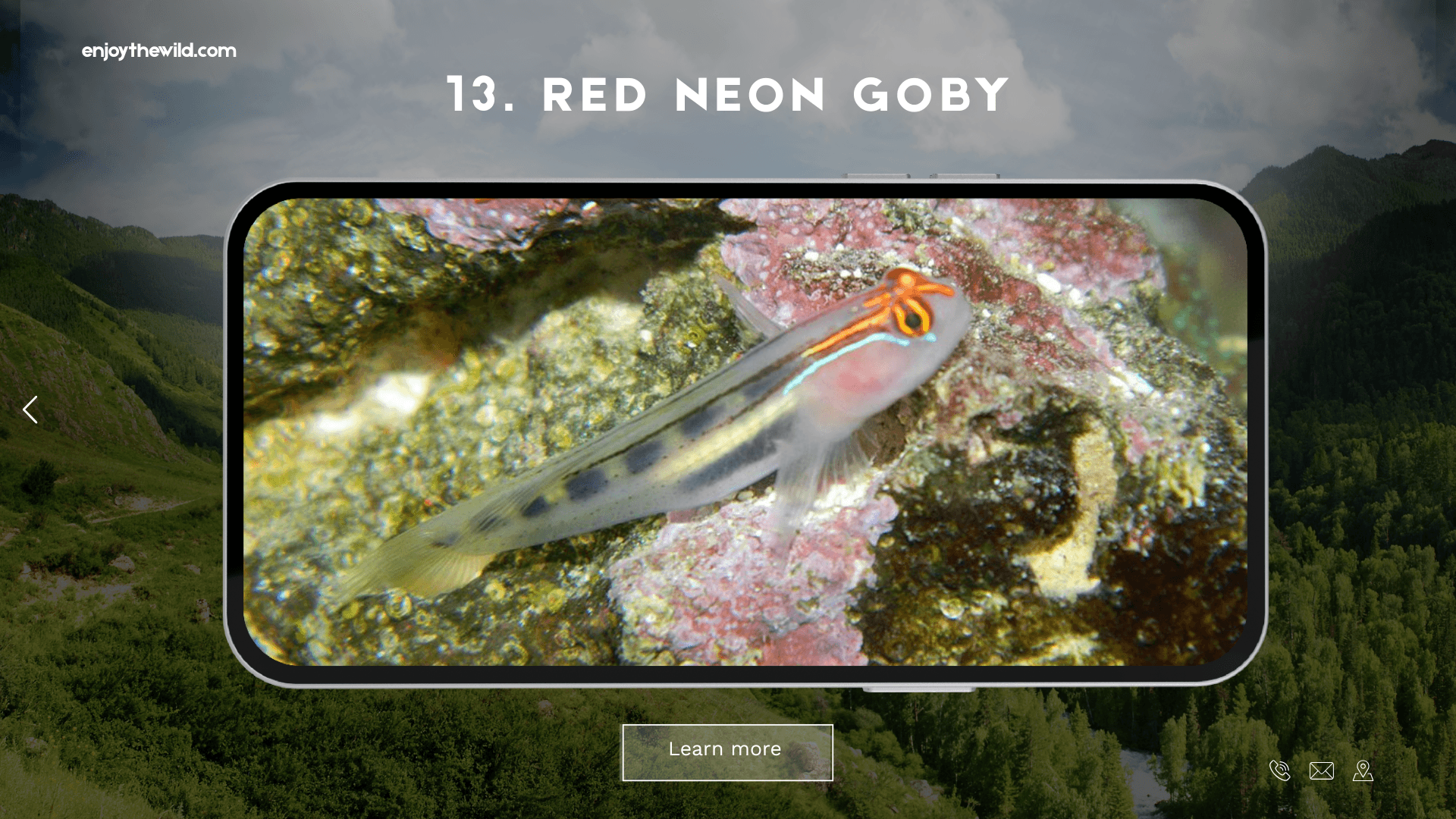
The Red Neon Goby is closely related to the Blue Neon Goby and is another vibrant representative of the types of Goby. It features striking red and orange hues along its fins and body, making it highly recognizable in freshwater habitats.
It is typically found in tropical river systems with fast currents and rocky bottoms. Like other Stiphodon species, it relies heavily on algae as its primary food source.
This species plays a vital role in stream ecosystems by scraping algae from rocks, helping prevent excessive growth that could disrupt oxygen balance in freshwater environments.
Red Neon Gobies are also known for their strong climbing ability during their larval stages, allowing them to move upstream against strong currents after hatching.
14. Tiger Goby (Tateurndina ocellicauda)
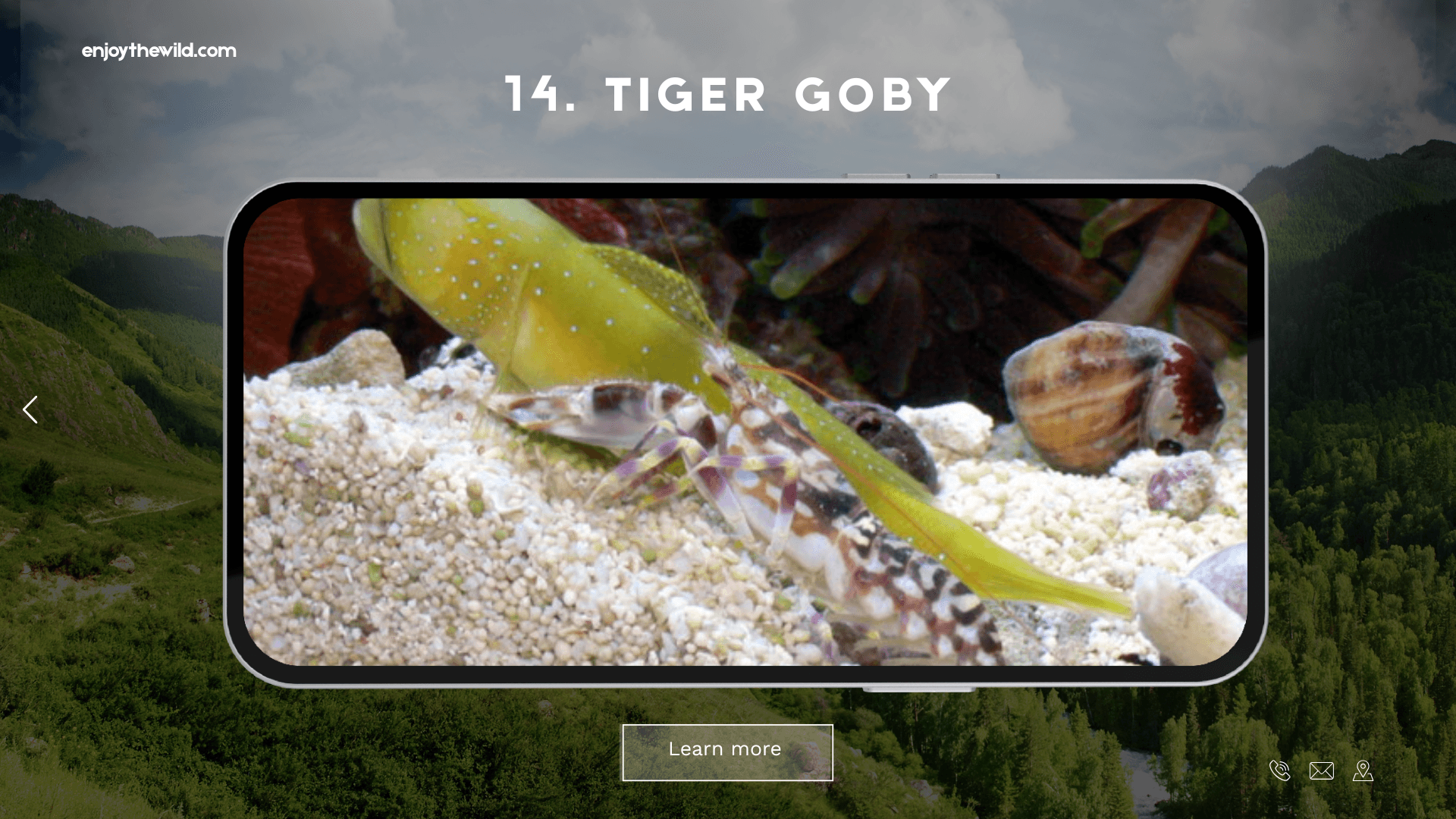
The Tiger Goby, also known as the Peacock Goby, is one of the most popular ornamental types of Goby due to its vibrant coloration and peaceful nature. It is native to freshwater streams and ponds in Papua New Guinea.
This species grows to about 6–8 cm and displays striking patterns of blue, yellow, and red along its body. Its fins are often elongated and decorated with eye-like markings that enhance its visual appeal.
Tiger Gobies are relatively peaceful compared to many other goby species. They feed on small invertebrates and zooplankton and are often observed hovering near vegetation or sheltered areas.
They are also known for their interesting breeding behavior, where males guard eggs laid inside caves or small cavities until they hatch.
15. Yellow Watchman Goby (Cryptocentrus cinctus)
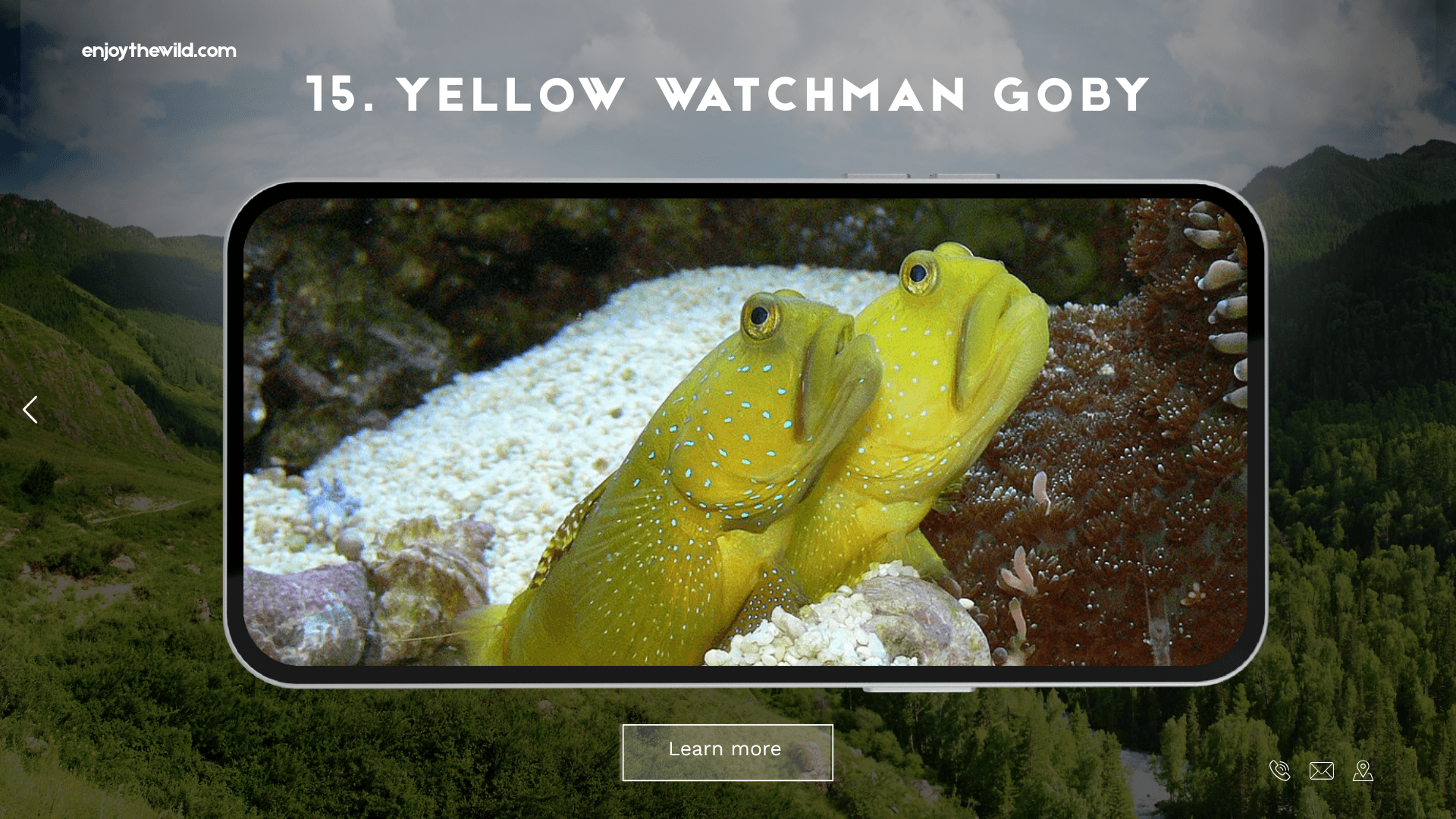
The Yellow Watchman Goby is one of the most famous marine types of Goby, commonly found in coral reef environments across the Indo-Pacific region. It is recognized by its bright yellow body and alert, upright posture.
This species forms a remarkable symbiotic relationship with pistol shrimp. The shrimp digs and maintains a shared burrow, while the goby acts as a “watchman,” warning the shrimp of approaching predators through tail signals.
Yellow Watchman Gobies typically grow to about 7–10 cm and are bottom dwellers, spending most of their time near burrow entrances. They feed on small crustaceans and organic debris.
This mutualistic relationship is one of the most well-known examples of cooperation between different marine species in coral reef ecosystems.
This third group of types of Goby showcases the incredible diversity of gobies, from algae-grazing freshwater species to symbiotic reef dwellers. In the next section, we will continue with more goby species that demonstrate even more unique adaptations, behaviors, and ecological roles across global aquatic environments.
16. Randall’s Prawn Goby (Amblyeleotris randalli)
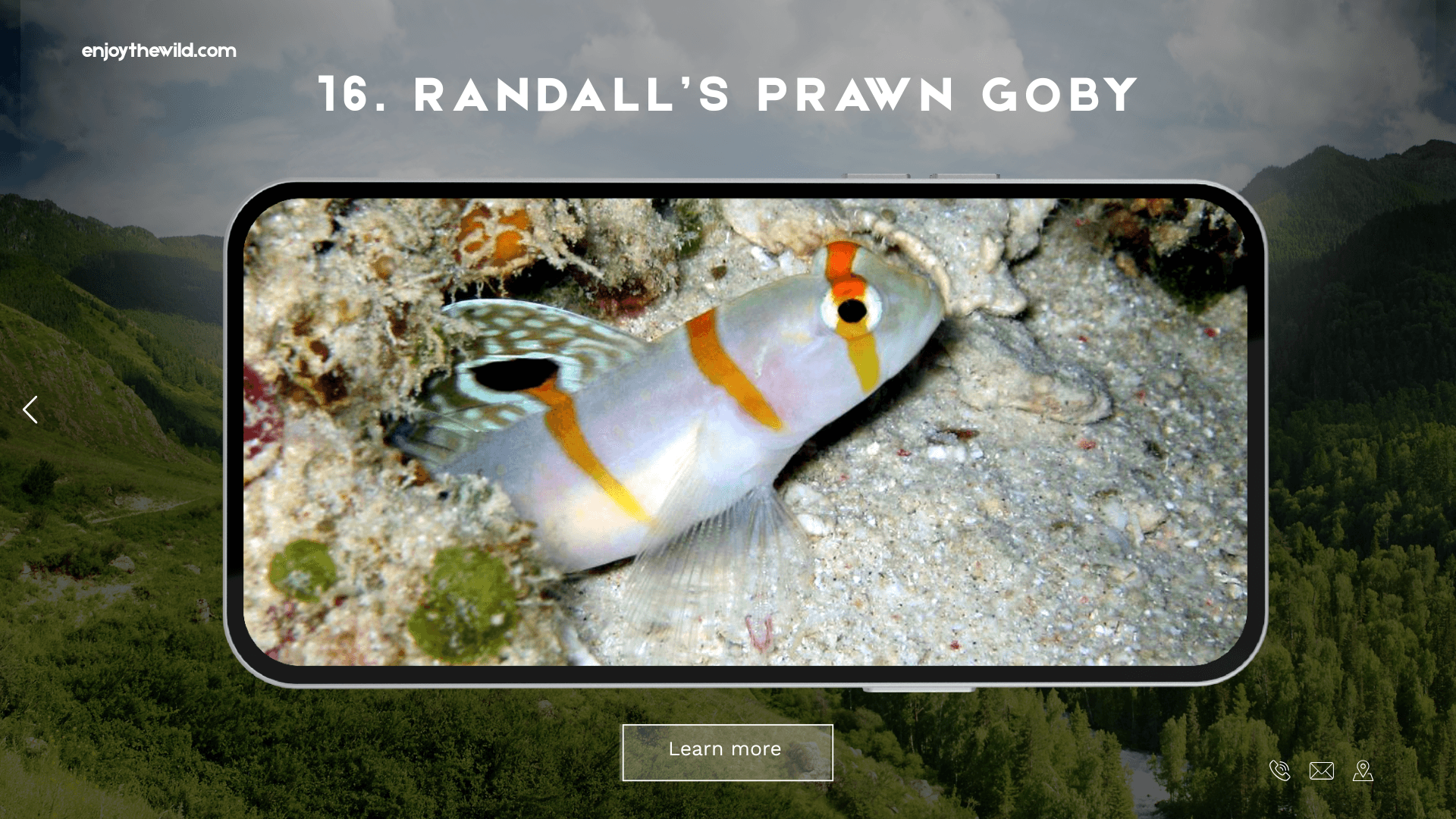
Randall’s Prawn Goby is one of the most fascinating marine types of Goby, widely known for its symbiotic relationship with pistol shrimp. It is found in tropical Indo-Pacific coral reefs, where sandy bottoms and rubble zones provide ideal burrowing conditions.
This species typically grows to 6–9 cm and has a pale body with orange or reddish bands. Its coloration helps it blend into sandy environments while still remaining visible enough to communicate with its shrimp partner.
Randall’s Prawn Goby shares a burrow with a pistol shrimp, forming a highly coordinated partnership. The shrimp digs and maintains the burrow, while the goby acts as a lookout, warning of predators through tail movements or body signals.
This cooperative behavior is one of the most advanced interspecies relationships in marine ecosystems and plays a key role in reef sediment turnover.
17. Orange Stripe Goby (Amblyeleotris wheeleri)
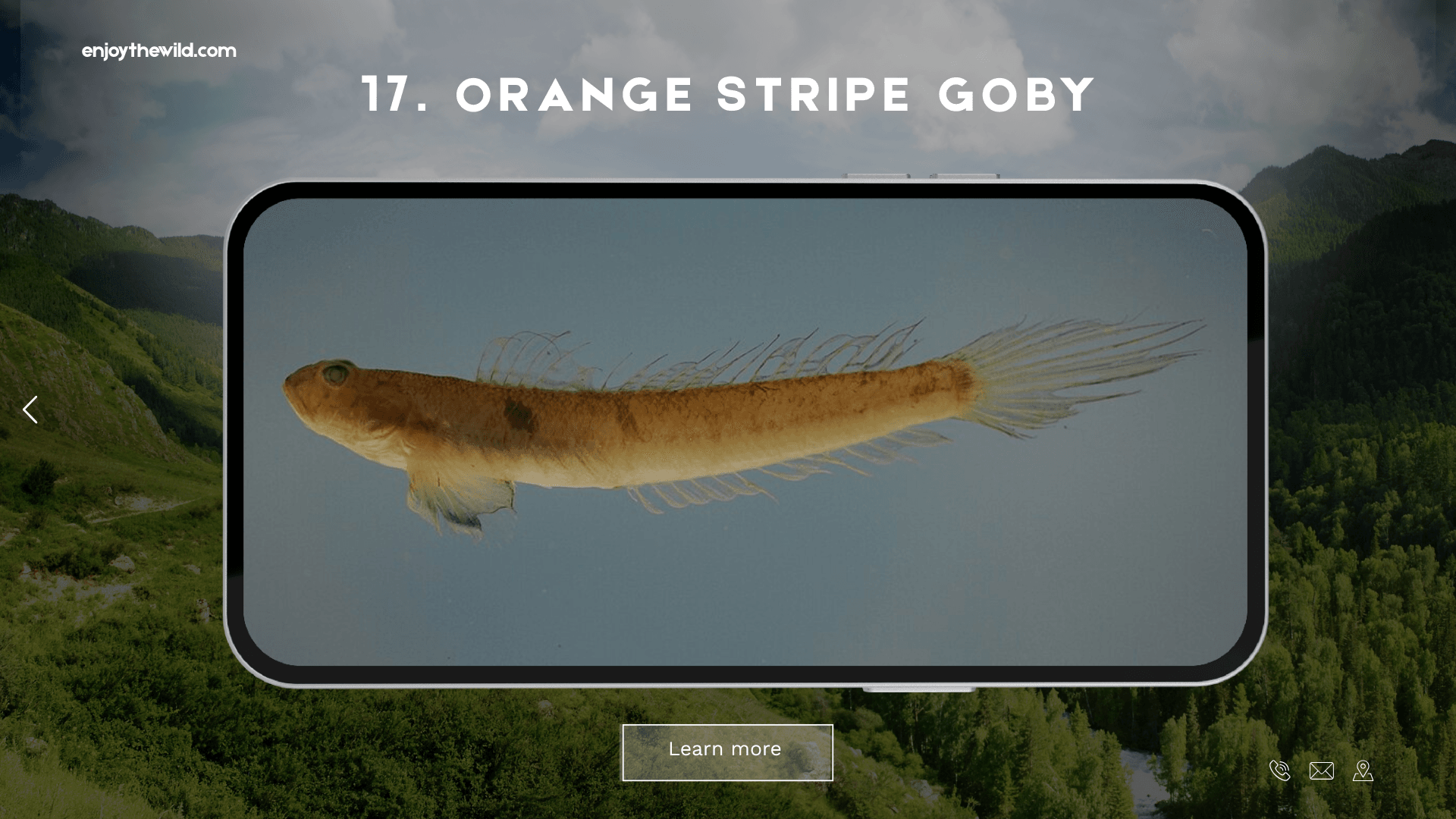
The Orange Stripe Goby is another important member of the types of Goby that engage in shrimp symbiosis. It is found in sandy reef habitats throughout the Indo-Pacific region.
This species is easily identified by its white body with bold orange stripes running along its length. It usually reaches 7–10 cm and spends most of its time near burrow entrances.
Like other symbiotic gobies, it relies heavily on pistol shrimp for shelter. In return, it provides constant vigilance against predators. This mutualistic relationship increases survival rates for both species.
The Orange Stripe Goby feeds on small plankton and benthic organisms, playing a minor but important role in reef micro-ecosystems.
18. Sleeper Goby (Dormitator maculatus)
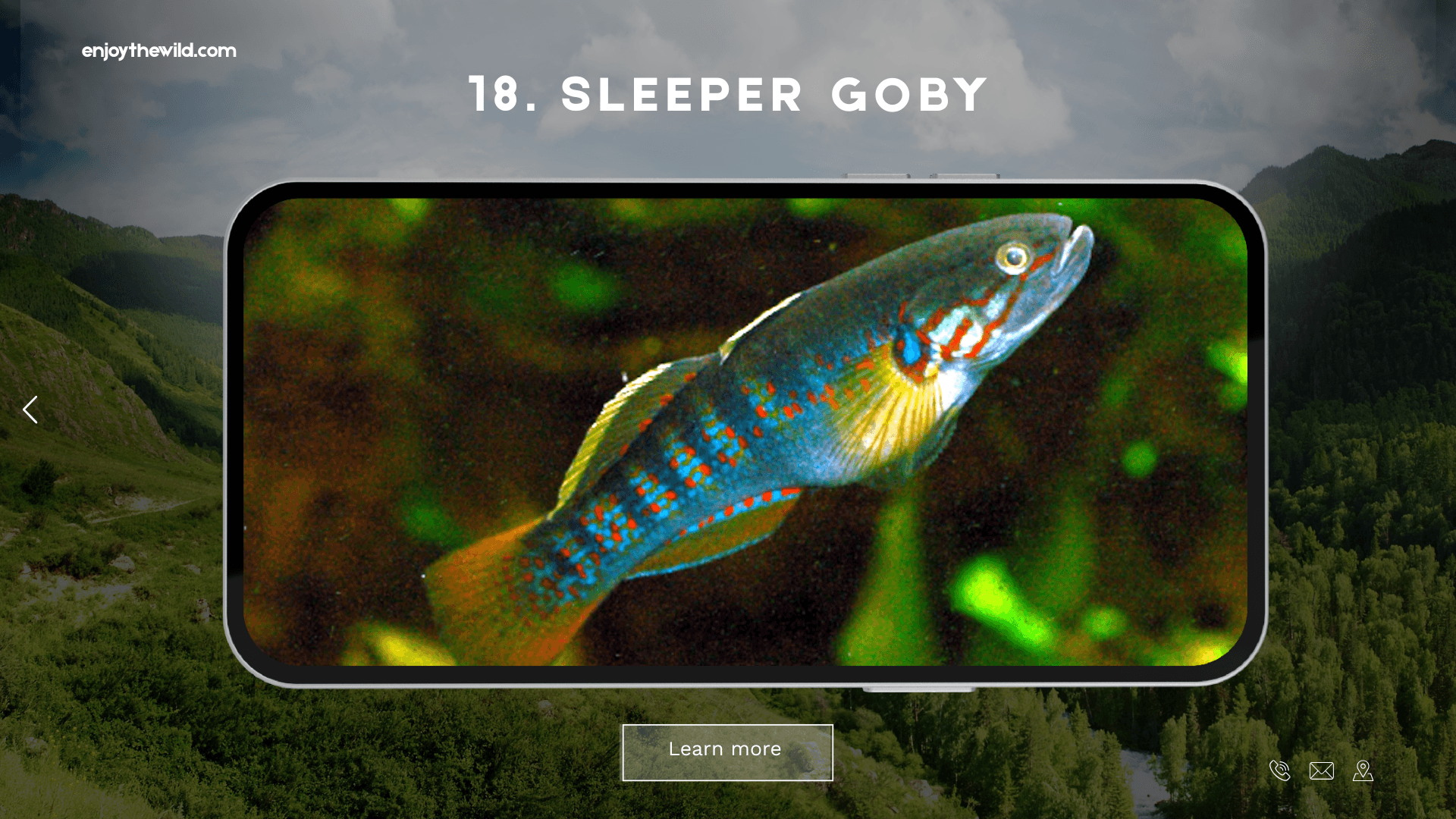
The Sleeper Goby is one of the larger freshwater and brackish types of Goby, found in coastal rivers and estuaries across the Americas. It is named for its habit of resting motionless for long periods, resembling a “sleeping” fish.
This species can grow up to 20–25 cm and has a stout, robust body with mottled brown or gray coloration. It is highly adaptable and can survive in low-oxygen waters, muddy bottoms, and variable salinity conditions.
Sleeper Gobies are opportunistic feeders, consuming small fish, insects, crustaceans, and organic matter. Their flexible diet allows them to thrive in unstable environments.
They are important components of estuarine ecosystems, helping regulate small aquatic populations and recycle organic material.
19. Mangrove Goby (Mugilogobius chulae)
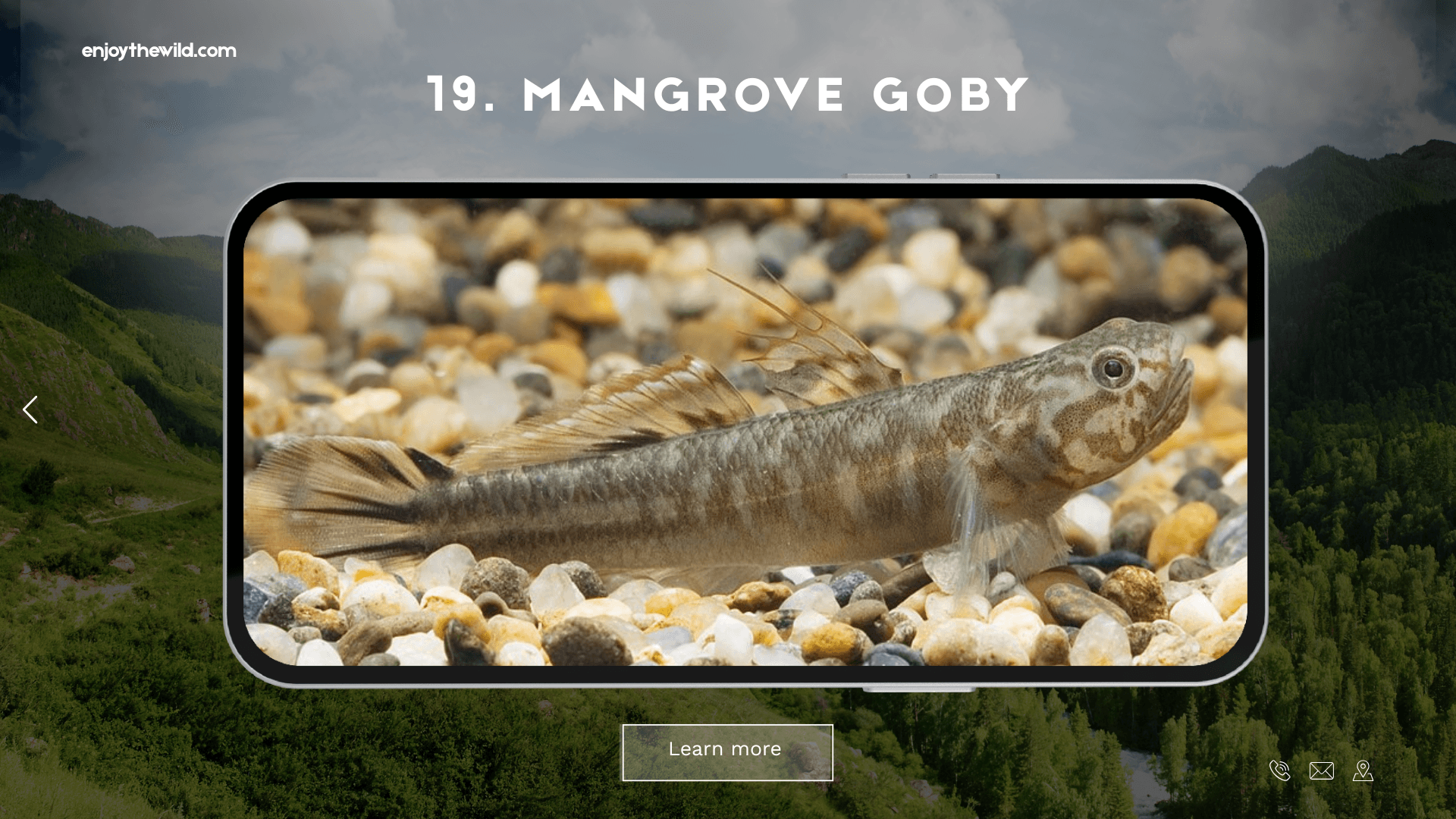
The Mangrove Goby is a small but ecologically important member of the types of Goby, commonly found in mangrove forests and brackish coastal zones of Southeast Asia.
This species usually grows to about 3–6 cm and has a slender body with muted brown or gray coloration that helps it blend into muddy mangrove roots and sediments.
Mangrove Gobies are highly adapted to fluctuating salinity levels, as mangrove environments often shift between freshwater and saltwater conditions. This adaptability makes them highly resilient.
They feed on algae, detritus, and small invertebrates, playing an important role in nutrient recycling within mangrove ecosystems.
20. Sand Goby (Pomatoschistus minutus)
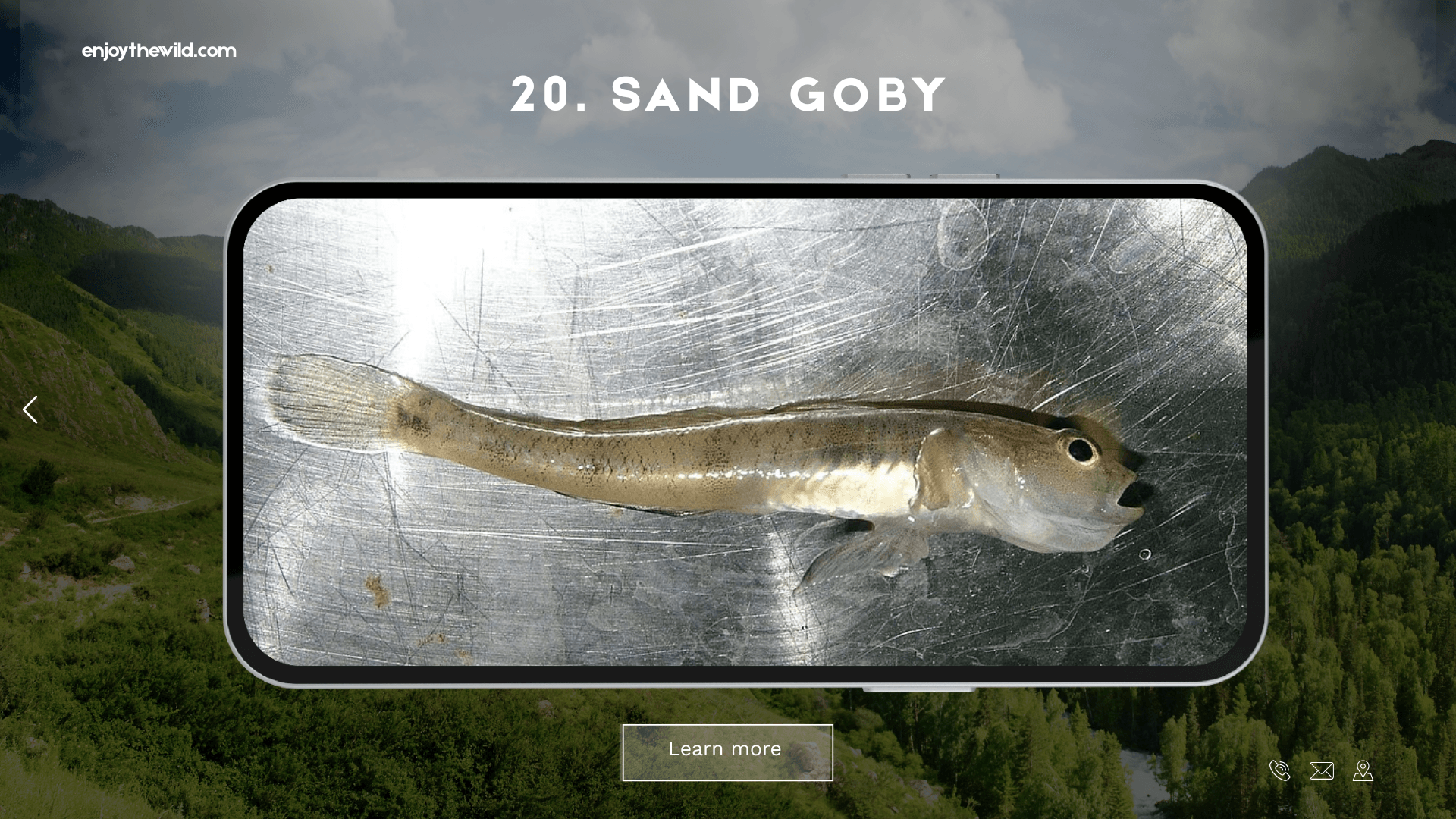
The Sand Goby is one of the most widespread European types of Goby, found along coastal waters, estuaries, and sandy seabeds. It is a small, bottom-dwelling fish that thrives in shallow marine environments.
This species typically grows to 5–7 cm and has a pale, translucent body with subtle markings that help it blend into sandy substrates. It is highly camouflaged, making it difficult for predators to detect.
Sand Gobies are active feeders, consuming small crustaceans, worms, and planktonic organisms. They play a key role in controlling benthic invertebrate populations.
During breeding season, males construct and defend small nests under shells or stones, where females lay eggs. The male then guards the eggs until they hatch.
This fourth group of types of Goby highlights some of the most ecologically important and behaviorally complex gobies—from shrimp-symbiotic reef species to adaptable mangrove and estuarine survivors. In the final section, we will continue with the remaining species that complete the full diversity of goby fish worldwide.
21. Common Goby (Pomatoschistus microps)
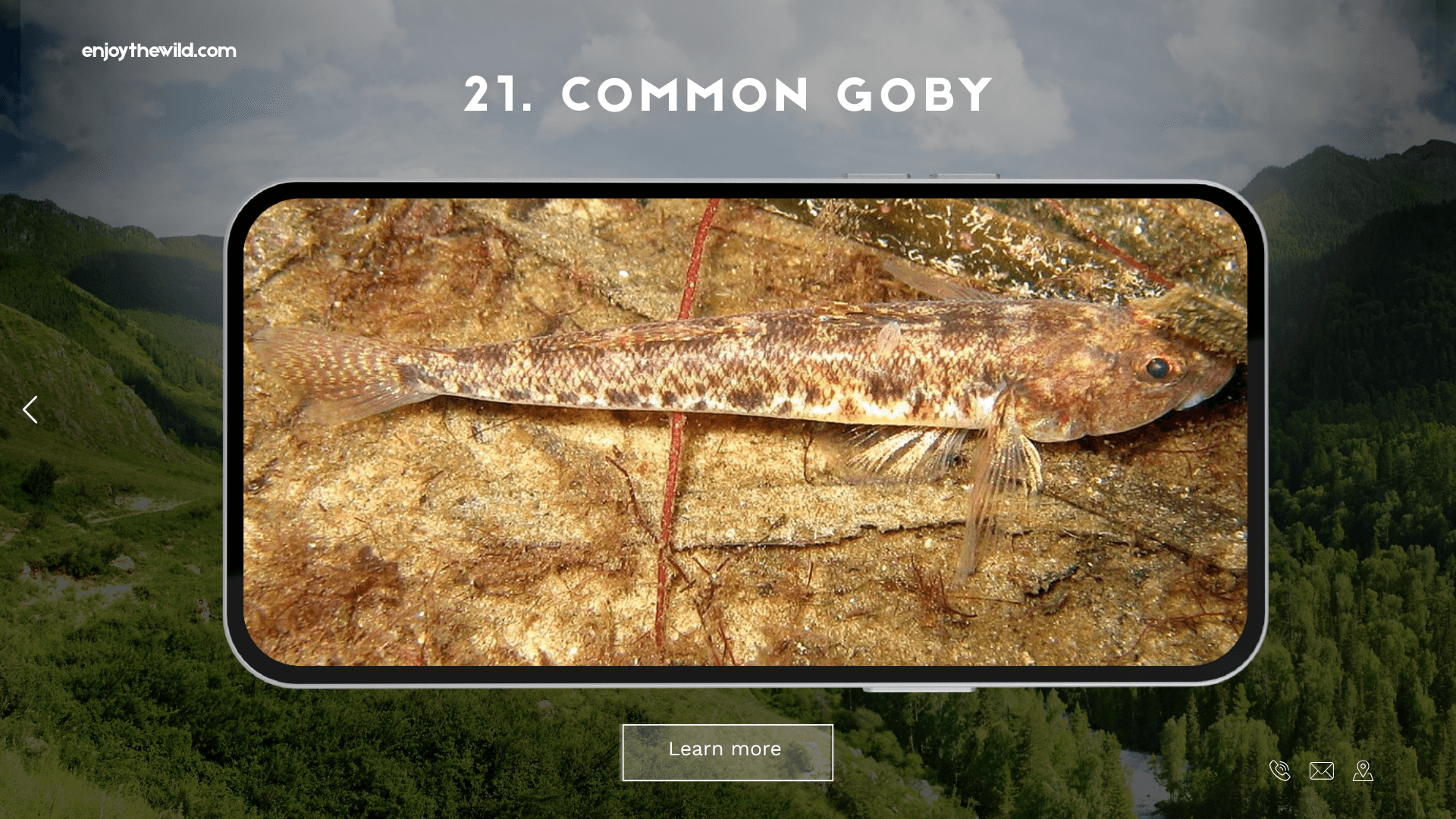
The Common Goby is one of the most widely distributed types of Goby in European coastal waters. It inhabits estuaries, tidal pools, and shallow sandy or muddy seabeds where conditions change frequently with tides.
This species is small, usually 4–6 cm in length, and has a translucent to light brown body that provides excellent camouflage. It is highly adaptable and can tolerate both freshwater influence and full marine salinity, depending on the environment.
Common Gobies are bottom feeders that consume small crustaceans, worms, and organic debris. Their feeding behavior helps maintain sediment balance and reduces organic buildup in coastal ecosystems.
During breeding season, males create small nests under shells or stones and actively guard eggs until they hatch, showing strong parental behavior uncommon in many fish species.
22. Black Goby (Gobius niger)
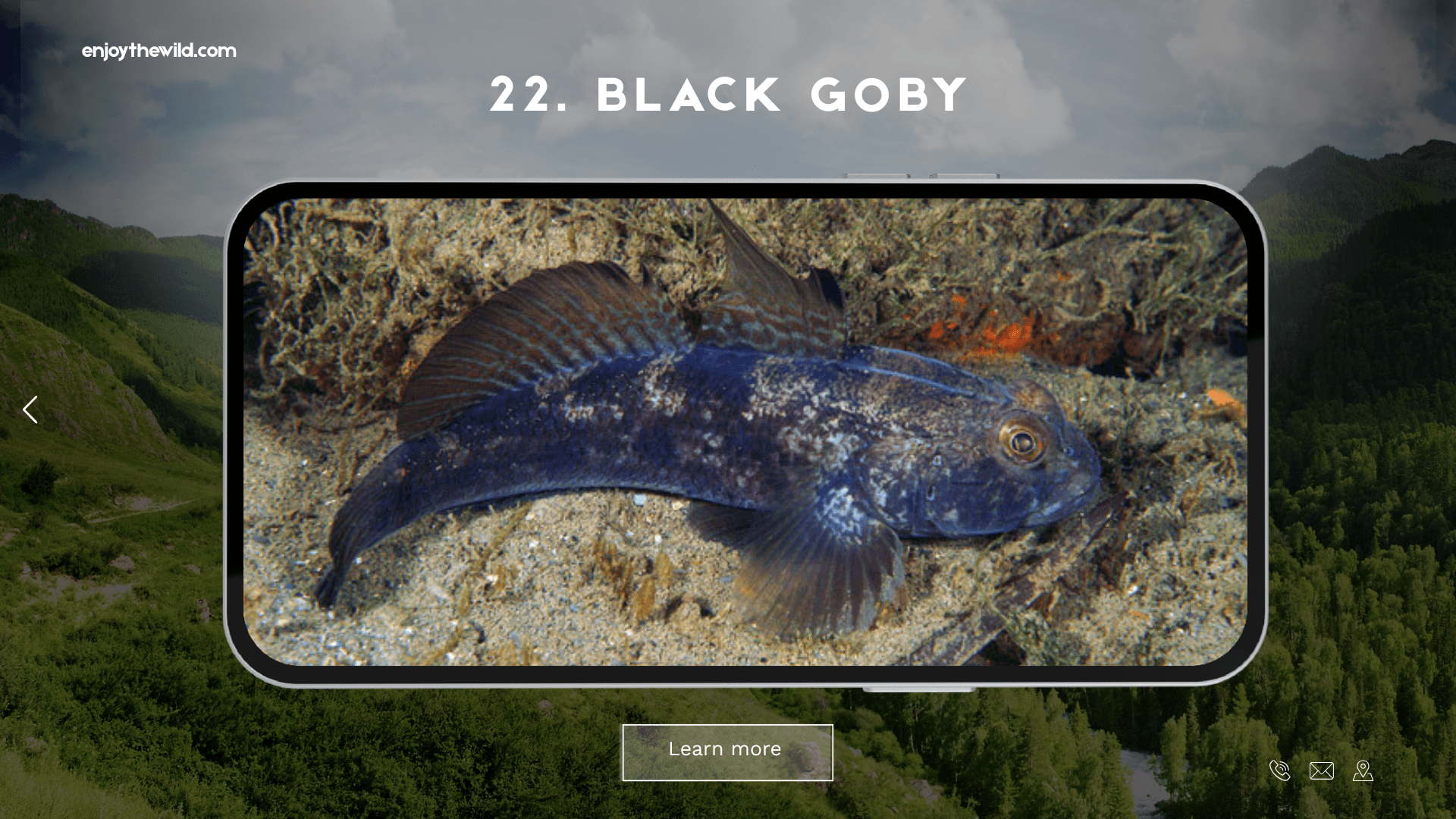
The Black Goby is one of the more robust types of Goby, commonly found in coastal waters, estuaries, and muddy seabeds across Europe and parts of the Mediterranean region.
It can grow up to 12–18 cm, making it larger than many goby species. Its dark gray to black coloration helps it blend into muddy or low-light environments where it typically resides.
Black Gobies are territorial and often defend small areas on the seabed. They feed on crustaceans, mollusks, and benthic invertebrates.
They play an important role in estuarine ecosystems by controlling small bottom-dwelling populations and contributing to sediment turnover.
23. Rock Goby (Gobius paganellus)
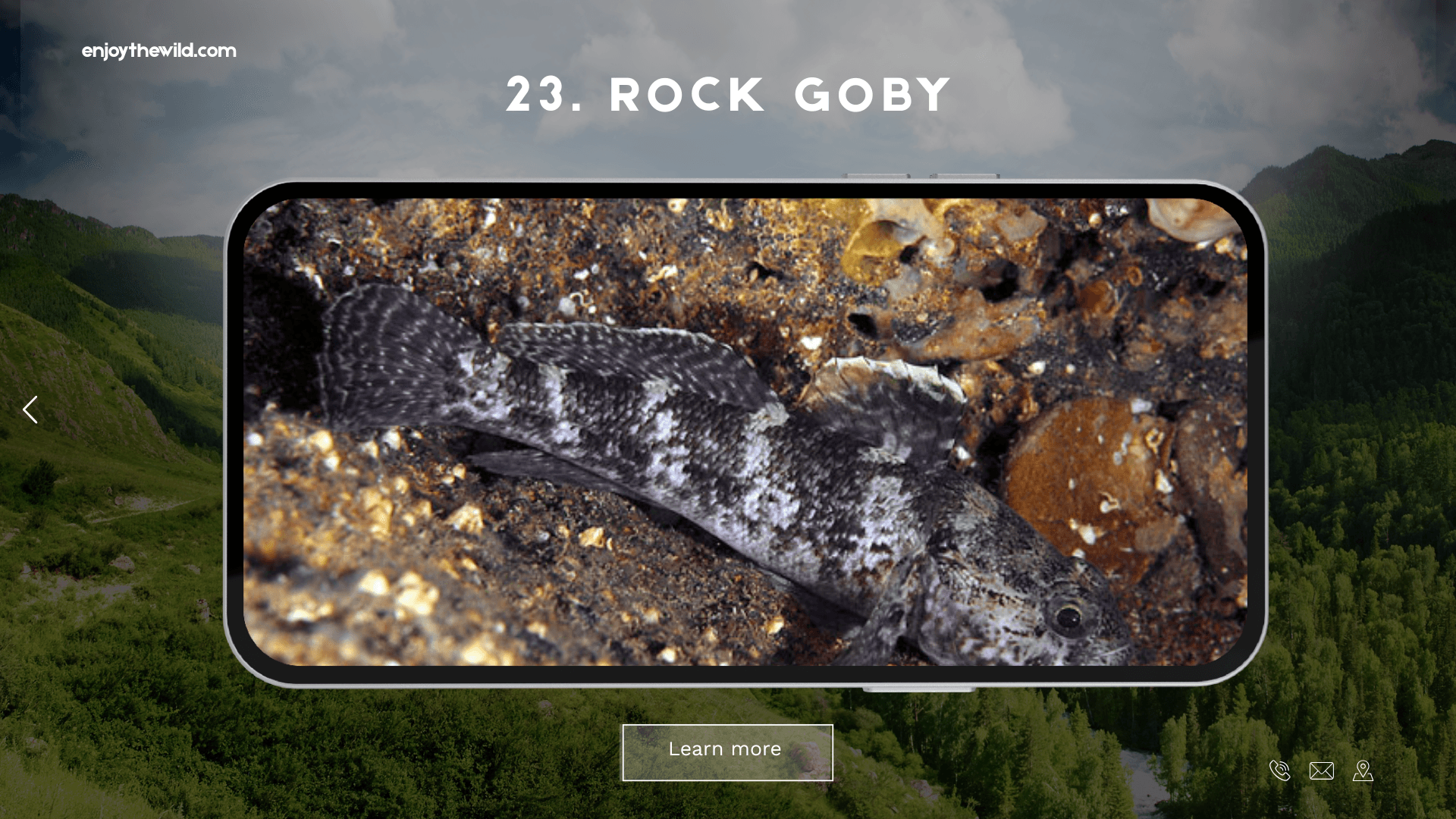
The Rock Goby is a coastal-dwelling member of the types of Goby, commonly found in rocky shorelines, tide pools, and shallow marine habitats across the northeastern Atlantic.
This species is typically 8–12 cm long and has a mottled brown or olive coloration that blends perfectly with rocks and algae-covered surfaces.
Rock Gobies are highly territorial and prefer sheltered crevices where they can hide from predators and strong waves. They are active feeders, consuming small crustaceans and marine worms.
They are also known for their resilience to fluctuating water conditions, including changes in temperature and salinity in tidal zones.
24. Painted Goby (Pomatoschistus pictus)
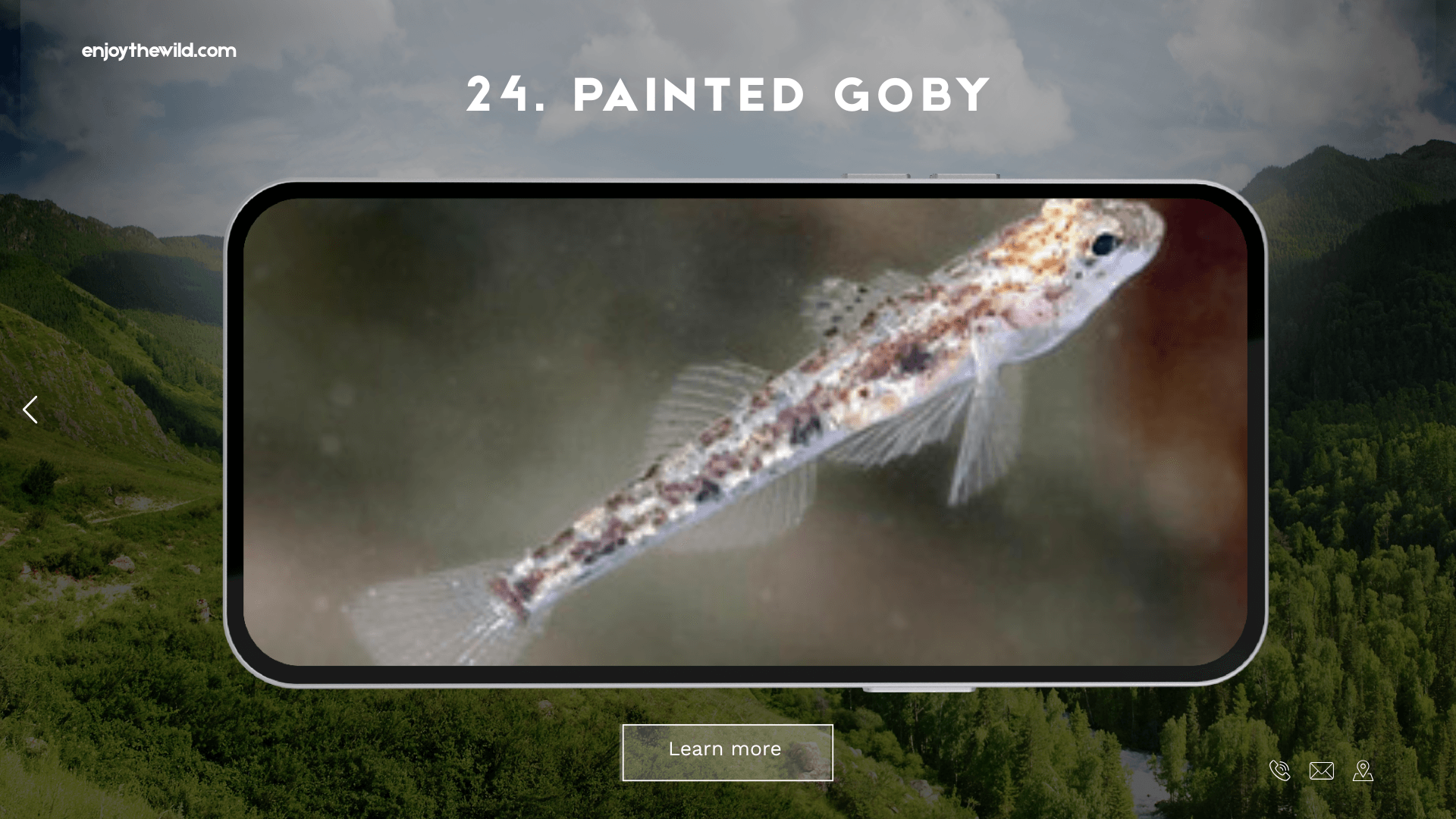
The Painted Goby is one of the most visually appealing types of Goby, found in shallow coastal waters and sandy seabeds across Europe.
It typically grows to 5–7 cm and features striking blue, orange, and black markings, especially in males during breeding season. These colors are used for courtship displays and territorial signaling.
Painted Gobies are bottom dwellers that feed on small crustaceans and plankton. Their active hunting behavior makes them important micro-predators in sandy marine environments.
Males construct nests in sandy substrates or under shells and guard the eggs until hatching, demonstrating strong reproductive investment.
25. Crystal Goby (Crystallogobius linearis)
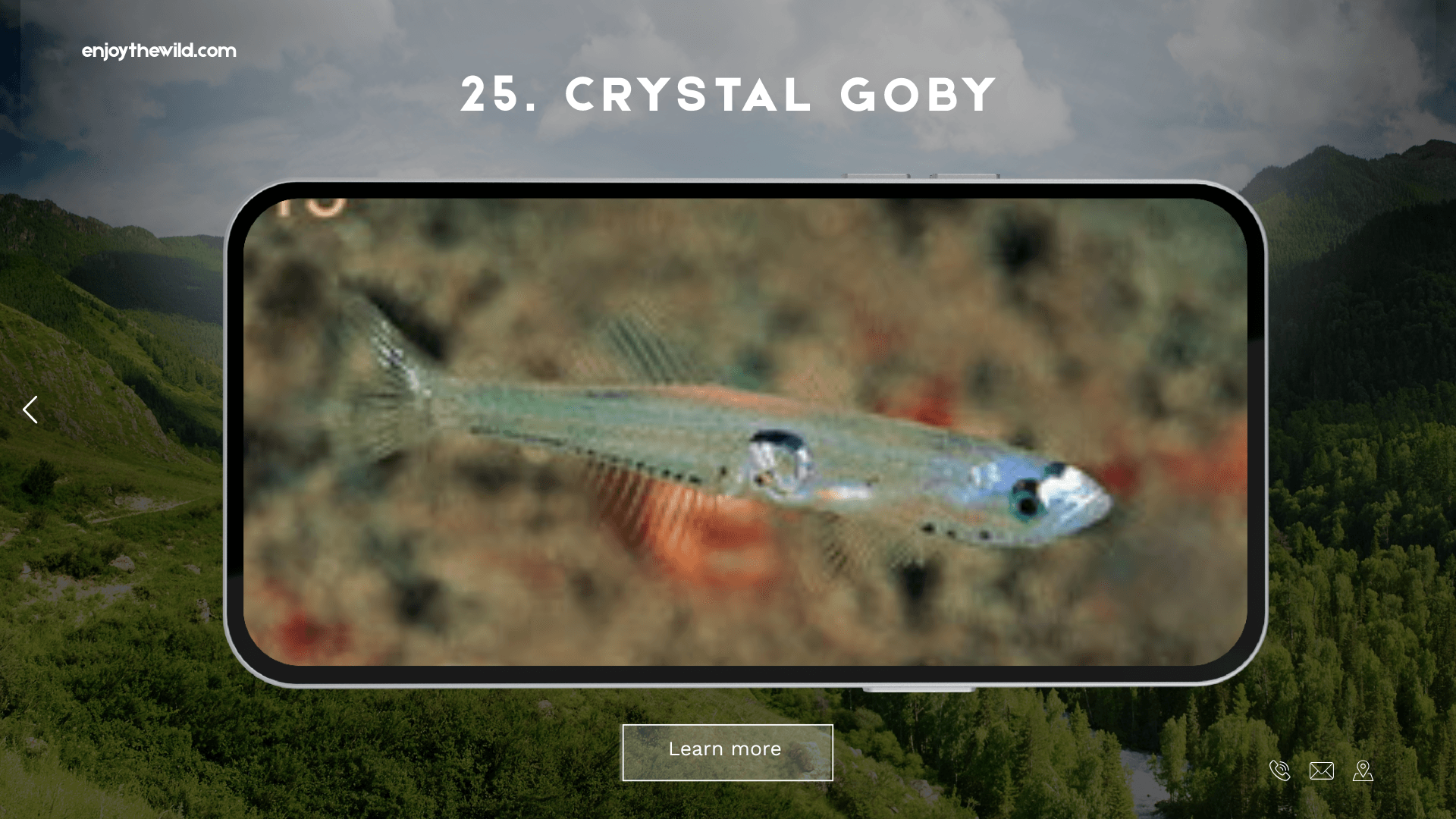
The Crystal Goby is one of the most delicate and transparent types of Goby, commonly found in cold waters of the North Atlantic and Baltic Sea.
This species is nearly transparent, with a fragile body structure that allows it to blend seamlessly into open water and avoid predators.
Crystal Gobies are very small, usually 3–5 cm in length, and feed on tiny plankton and microscopic organisms suspended in the water column.
Unlike many gobies, they often live pelagically rather than strictly on the seabed, making them unique among benthic-associated fish.
26. Giant Goby (Gobius cobitis)
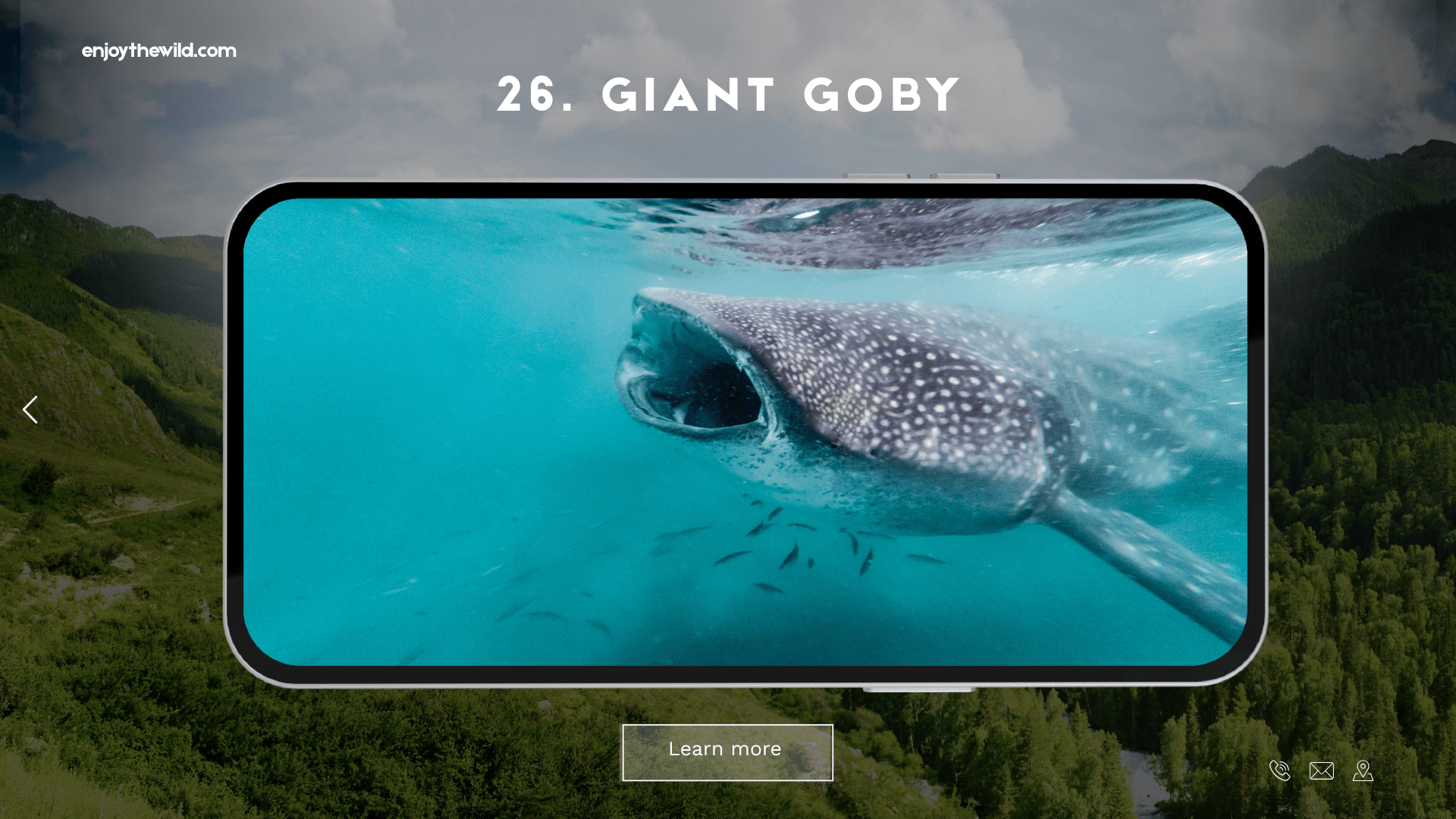
The Giant Goby is one of the largest European types of Goby, found along rocky coastal regions of the northeastern Atlantic and Mediterranean Sea.
It can grow up to 25 cm and has a thick, robust body with dark mottled coloration that provides excellent camouflage in rocky habitats.
Giant Gobies are territorial and often defend crevices or sheltered rocky areas. They feed on crustaceans, mollusks, and other small marine organisms.
Their size and strength make them one of the dominant small predators in rocky intertidal zones.
27. Two-Spotted Goby (Gobiusculus flavescens)
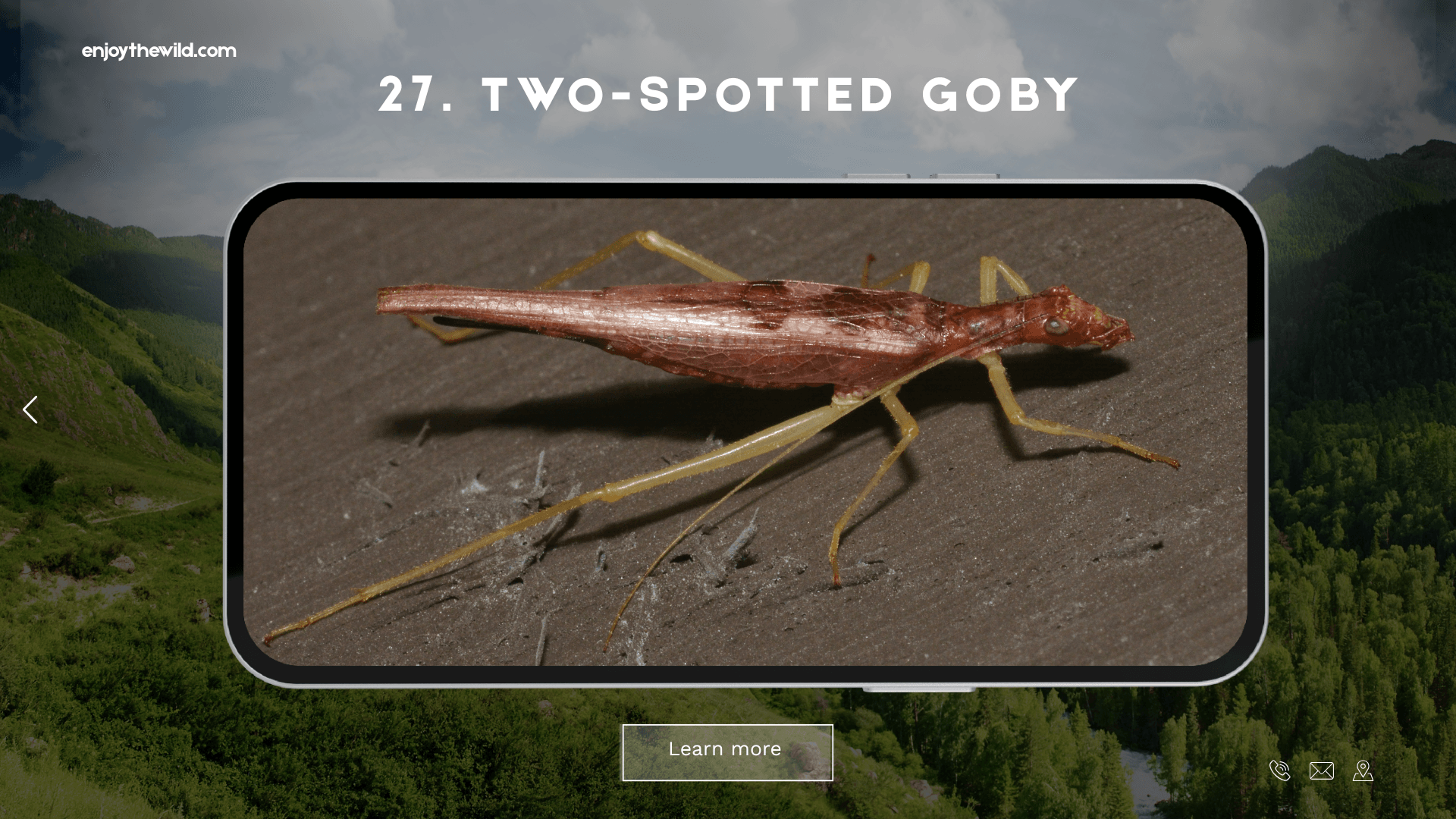
The Two-Spotted Goby is a small but distinctive member of the types of Goby, found in shallow coastal waters and seagrass beds across northern Europe.
It is named for its two dark spots along the body, which help with species identification and possibly mating recognition.
This species grows to about 5–7 cm and feeds on plankton and small invertebrates. It is highly active and often swims slightly above the seabed compared to other gobies.
It plays a role in coastal food webs by serving as prey for larger fish while also controlling plankton populations.
28. Transparent Goby (Aphia minuta)
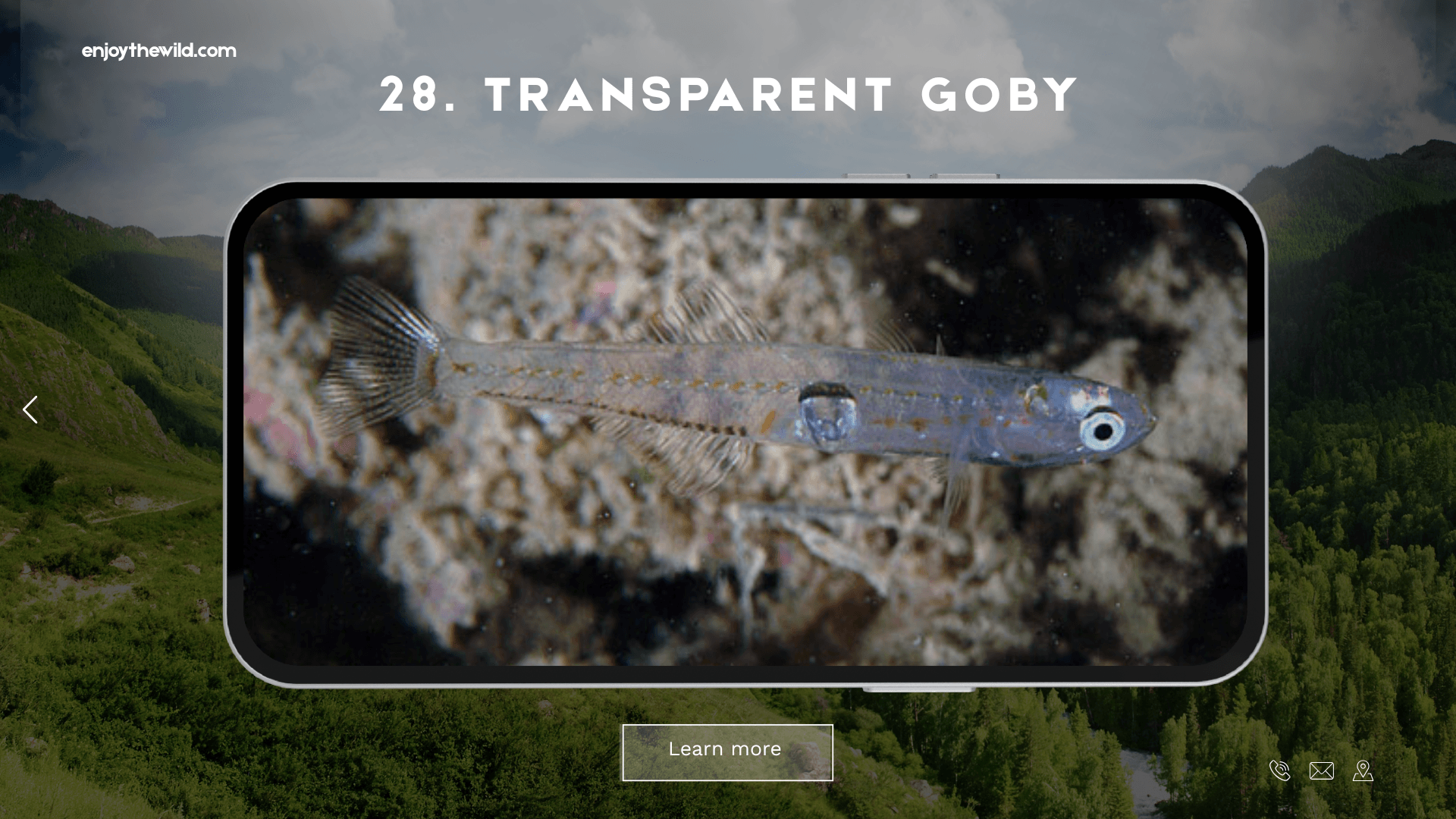
The Transparent Goby is one of the most fragile-looking types of Goby, known for its almost glass-like body transparency. It is found in European coastal waters, especially in the Mediterranean and Atlantic.
This species is extremely small, often less than 5 cm, and is adapted for life in open water and coastal zones.
Its transparency helps it avoid predators by reducing visibility in the water column. It feeds on plankton and microscopic organisms.
Transparent Gobies often form large schools, which increases their survival rate by confusing predators.
29. Couch’s Goby (Gobius couchi)
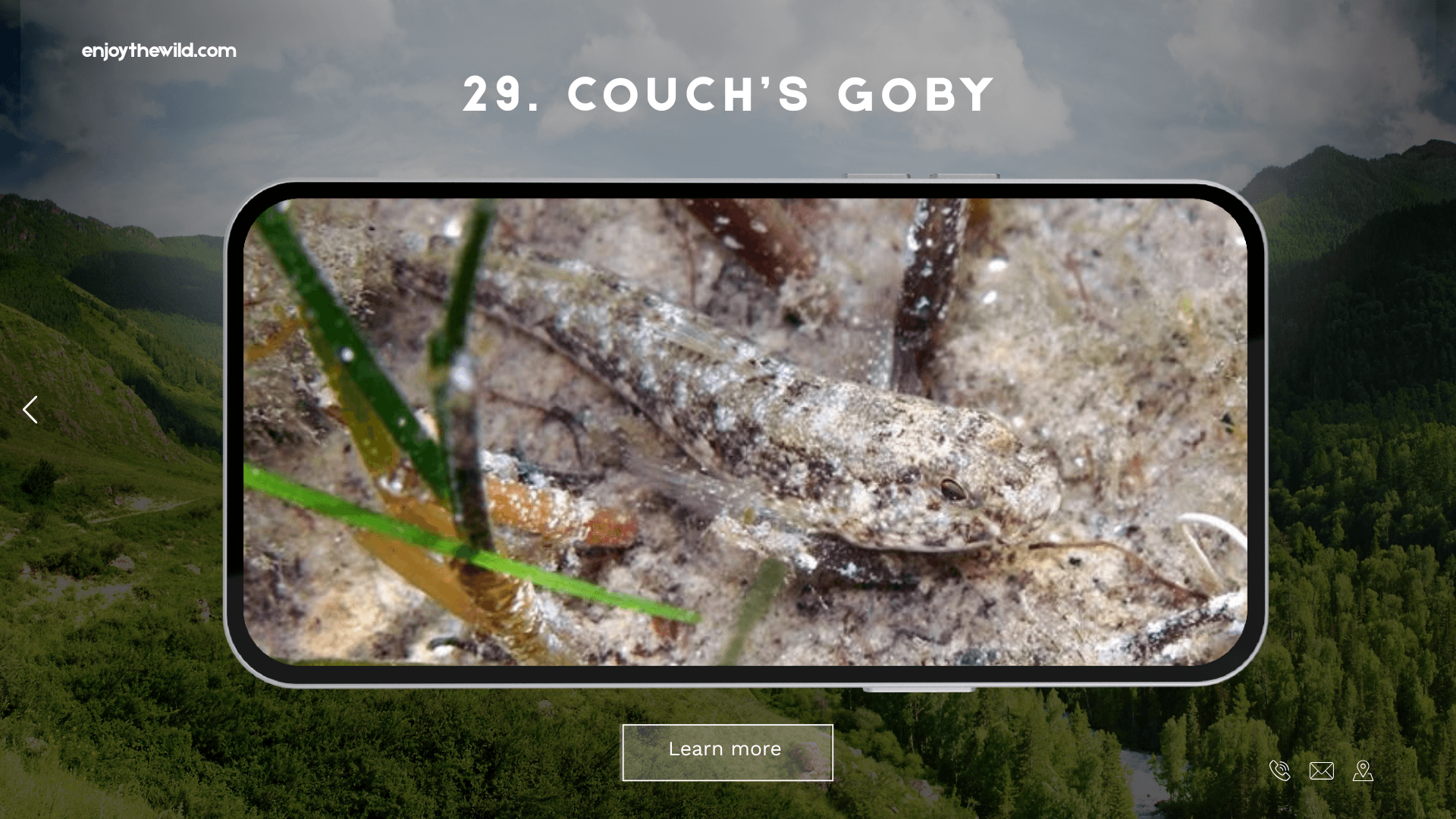
Couch’s Goby is a lesser-known but ecologically important member of the types of Goby, found in shallow coastal waters and rocky substrates of the northeastern Atlantic.
It is small, typically 6–8 cm, and has a mottled brown body that blends well with rocks and seabeds.
This species is a bottom dweller that feeds on small crustaceans and worms. It prefers sheltered habitats such as crevices and tide pools.
Couch’s Goby plays a small but important role in maintaining balance in coastal benthic ecosystems.
30. Leopard Goby (Thorogobius ephippiatus)
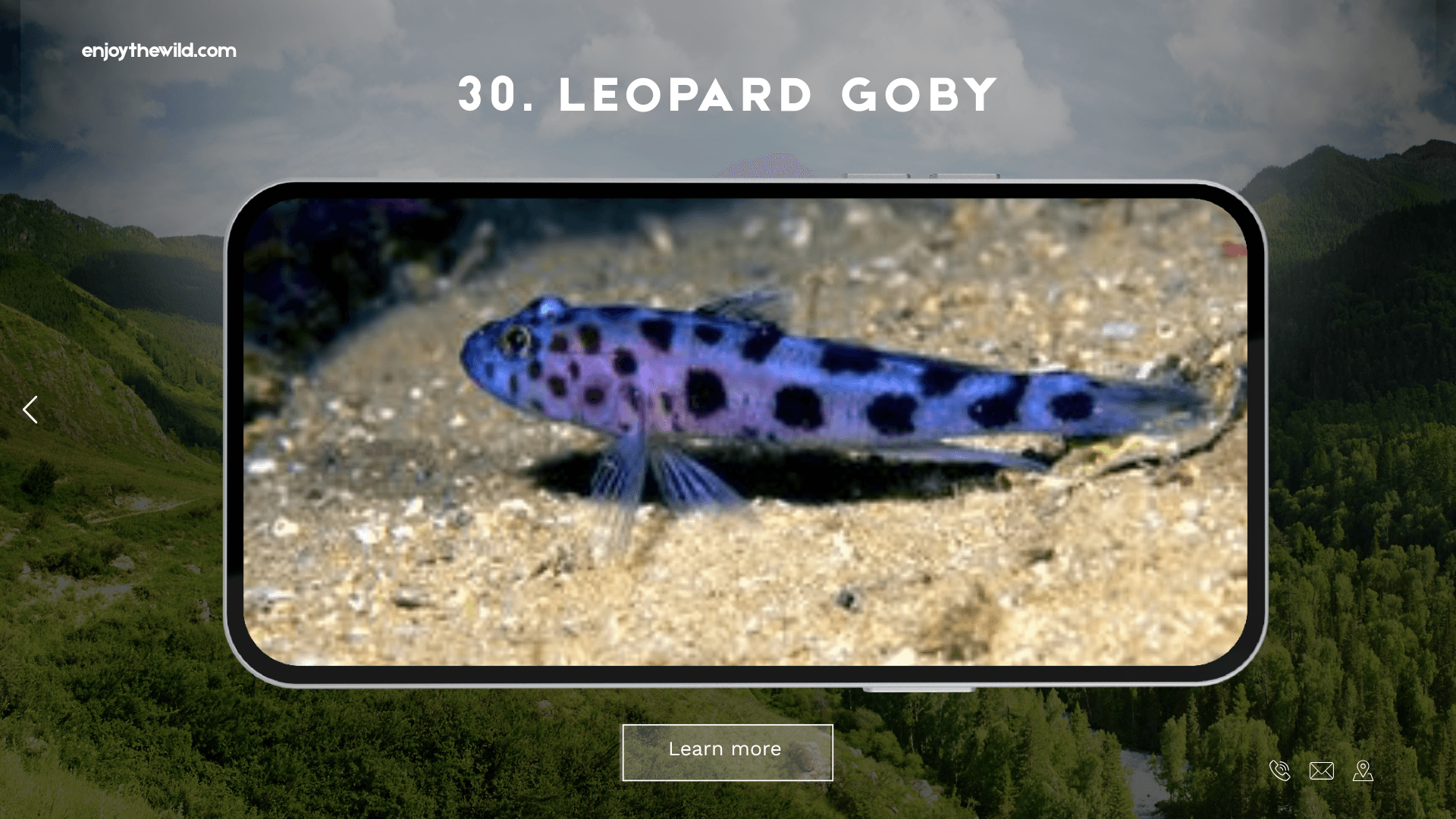
The Leopard Goby is one of the most visually striking types of Goby, named for its spotted pattern resembling a leopard’s coat. It is found in rocky coastal areas of the northeastern Atlantic and Mediterranean Sea.
This species typically grows to 10–13 cm and prefers deep crevices and shaded rocky habitats. Its spotted pattern provides excellent camouflage among rocks and algae.
Leopard Gobies are carnivorous, feeding on small crustaceans and marine invertebrates. They are relatively secretive and spend much of their time hidden within rocky shelters.
Despite their elusive nature, they are an important part of coastal ecosystems, contributing to the balance of small predator-prey relationships.
Conclusion: The Diversity of Goby Fish Worldwide
The full range of types of Goby demonstrates one of the most diverse and adaptable fish families on Earth. From transparent plankton feeders and reef-cleaning symbionts to burrowing desert survivors and territorial coastal species, gobies occupy nearly every aquatic niche imaginable.
Their ecological importance is often underestimated, yet they play critical roles in food webs, sediment health, algae control, and symbiotic relationships with other marine species. Without gobies, many aquatic ecosystems would lose balance and stability.
Understanding these 30 types of goby helps highlight how even the smallest fish can have a massive ecological impact across oceans, rivers, and wetlands. Could these tiny bottom-dwellers actually be some of the most important fish in aquatic ecosystems worldwide?
50+ FAQs About Types of Goby (Detailed Answers)
1. What are goby fish?
Goby fish are a large and diverse group of small to medium-sized fish belonging to the order Gobiiformes. They are found in freshwater, brackish, and marine environments around the world. Most gobies are bottom-dwelling species that use a fused pelvic fin “suction disc” to attach to rocks, sand, or coral.
2. How many types of goby exist in the world?
There are more than 2,000 known species of gobies, making them one of the largest fish families. These are grouped into many “types of goby” based on habitat, appearance, and behavior, including freshwater gobies, reef gobies, sand gobies, and burrowing gobies.
3. Where do gobies live?
Gobies live in almost every aquatic environment, including oceans, rivers, estuaries, mangroves, coral reefs, and even temporary freshwater pools. Their adaptability allows them to survive in both clean and polluted waters depending on the species.
4. Why are gobies so diverse?
Gobies are highly diverse because they have evolved to occupy many ecological niches. Their small size, adaptability, and ability to form symbiotic relationships allow them to thrive in different environments.
5. What do gobies eat?
Most gobies feed on small organisms such as plankton, insect larvae, algae, worms, and tiny crustaceans. Some larger species may even eat small fish or organic debris from the seabed.
6. Are gobies dangerous to humans?
No, gobies are completely harmless to humans. They do not bite, sting, or carry toxins that are dangerous to people.
7. How big do gobies get?
Most gobies are very small, typically between 2 cm and 15 cm. However, some species like the Dragon Goby or Marbled Sleeper Goby can grow significantly larger, reaching up to 50–60 cm.
8. Why do gobies have a suction disc?
The fused pelvic fins form a suction disc that helps gobies attach to rocks, coral, or sand. This adaptation allows them to stay stable in strong currents or wave-heavy environments.
9. Are all gobies bottom-dwellers?
Most gobies are bottom-dwellers, but some species can swim freely in the water column, especially during feeding or larval stages.
10. Do gobies live in freshwater or saltwater?
Gobies are found in freshwater, saltwater, and brackish environments. Some species are highly specialized, while others can tolerate wide salinity changes.
11. What is a symbiotic goby?
Some gobies form mutualistic relationships with other animals, such as pistol shrimp. The shrimp builds a burrow, and the goby acts as a lookout for predators.
12. Why do gobies and shrimp live together?
This relationship benefits both species. The shrimp gets protection from predators, while the goby gains a safe home to hide in.
13. Are gobies intelligent fish?
Gobies are considered moderately intelligent for small fish. They show problem-solving behavior, territory defense, and cooperative interactions.
14. How do gobies reproduce?
Most gobies lay eggs in hidden nests under rocks or shells. Males often guard the eggs until they hatch, protecting them from predators.
15. Do gobies migrate?
Some gobies migrate between freshwater and saltwater during different life stages, especially species that reproduce in the ocean but live in rivers as adults.
16. What is the lifespan of goby fish?
Most gobies live between 1 and 5 years, depending on species and environmental conditions. Larger species may live slightly longer.
17. Why are gobies important in ecosystems?
Gobies help maintain ecosystem balance by controlling algae, consuming small invertebrates, and serving as prey for larger fish species.
18. Do gobies change color?
Some goby species can slightly change color based on mood, stress, or breeding conditions, especially males during courtship.
19. What is the smallest goby species?
Some goby species, like the Transparent Goby, can be less than 2–3 cm long, making them among the smallest vertebrates in the ocean.
20. What is the largest goby species?
The Marbled Sleeper Goby is among the largest, growing over 50 cm in length and often used in fisheries.
21. Are gobies popular in aquariums?
Yes, many gobies such as Neon Gobies, Bumblebee Gobies, and Watchman Gobies are popular in aquariums due to their small size and interesting behavior.
22. Do gobies need special water conditions?
Some gobies require specific conditions such as brackish water, while others thrive in freshwater or marine tanks depending on the species.
23. Can gobies live with other fish?
Yes, but compatibility depends on species. Some gobies are peaceful, while others are territorial and may defend their space aggressively.
24. Why do gobies bury themselves in sand?
Many gobies bury themselves for protection from predators and to ambush prey more effectively.
25. Do gobies clean reefs?
Some gobies act as cleaner fish, removing parasites and dead tissue from larger marine species, especially in coral reef environments.
26. What is a burrowing goby?
Burrowing gobies live in holes or tunnels they dig in sand or mud. These shelters protect them from predators and strong currents.
27. Are gobies active during the day or night?
Most gobies are diurnal, meaning they are active during the day, although some species may be nocturnal or crepuscular.
28. How do gobies breathe in low oxygen water?
Some gobies can tolerate low oxygen levels by reducing activity and using efficient gill structures to extract oxygen from water.
29. Why are gobies colorful?
Coloration helps gobies with camouflage, mating displays, and species recognition, especially in reef environments.
30. Do gobies have predators?
Yes, gobies are prey for larger fish, birds, crabs, and other aquatic predators due to their small size.
31. Can gobies survive pollution?
Some species are highly tolerant of polluted or low-quality water, while others are very sensitive and require clean environments.
32. What is a freshwater goby?
Freshwater gobies live entirely in rivers and lakes and do not require saltwater at any stage of their life cycle.
33. What is a marine goby?
Marine gobies live in oceans and coral reefs, often forming symbiotic relationships with shrimp or cleaning other fish.
34. What is a brackish goby?
Brackish gobies live in environments where freshwater and saltwater mix, such as estuaries and mangroves.
35. Do gobies fight each other?
Yes, many gobies are territorial and may fight over space, especially during breeding seasons.
36. How do gobies defend territory?
They use visual displays, chasing behavior, and sometimes physical confrontation to defend their territory.
37. What is a sand goby?
Sand gobies live in sandy coastal areas and often bury themselves to avoid predators.
38. Are gobies endangered?
Most gobies are not endangered, but some localized species face threats from habitat loss and pollution.
39. Do gobies make nests?
Yes, many gobies build or use nests under rocks, shells, or in burrows for breeding.
40. Why are gobies important to science?
Gobies are studied for their adaptability, symbiotic relationships, and ecological roles in aquatic environments.
41. Can gobies survive in aquariums long-term?
Yes, many species adapt well to aquariums if proper water conditions and diet are maintained.
42. Do gobies have good eyesight?
Yes, gobies rely heavily on vision to find food, detect predators, and communicate during breeding.
43. Why are gobies so small?
Small size helps gobies hide in crevices, avoid predators, and exploit microhabitats in complex environments.
44. What is goby behavior like?
Gobies are active, territorial, and often display interesting behaviors such as burrowing, cleaning, and cooperative living.
45. Do gobies live alone?
Some gobies are solitary, while others form pairs or symbiotic partnerships with shrimp or other species.
46. What is the most famous goby relationship?
The goby–pistol shrimp relationship is one of the most famous examples of symbiosis in marine biology.
47. Can gobies survive droughts?
Some freshwater gobies can survive temporary drying conditions by burrowing or entering dormant states.
48. How do gobies adapt to currents?
They use their suction disc to anchor themselves to rocks and resist strong water currents.
49. Why are gobies important for aquariums?
They help control algae and add natural behavior diversity, making aquariums more dynamic and balanced.
50. What makes gobies unique among fish?
Their suction disc, diversity, symbiotic relationships, and adaptability make them one of the most unique fish families.
51. What will happen if gobies disappear?
If gobies disappeared, many aquatic ecosystems would become unstable due to the loss of key prey species and ecosystem regulators.