

The types of Egret found around the world are among the most elegant and recognizable wetland birds in nature. Egrets are long-legged wading birds closely related to herons and are famous for their white plumage, graceful movements, and sharp hunting skills. These birds can be seen in marshes, rivers, lakes, mangroves, and coastal habitats across nearly every continent. Some species are bright white, while others display dark gray, black, or bluish feathers depending on their environment. In this guide, we explore 20 types of Egret, focusing on their identification, habitat, feeding behavior, and unique characteristics. Whether you enjoy birdwatching or simply love wildlife, understanding egret diversity helps reveal how adaptable and important these birds are to wetland ecosystems.
1. Great Egret
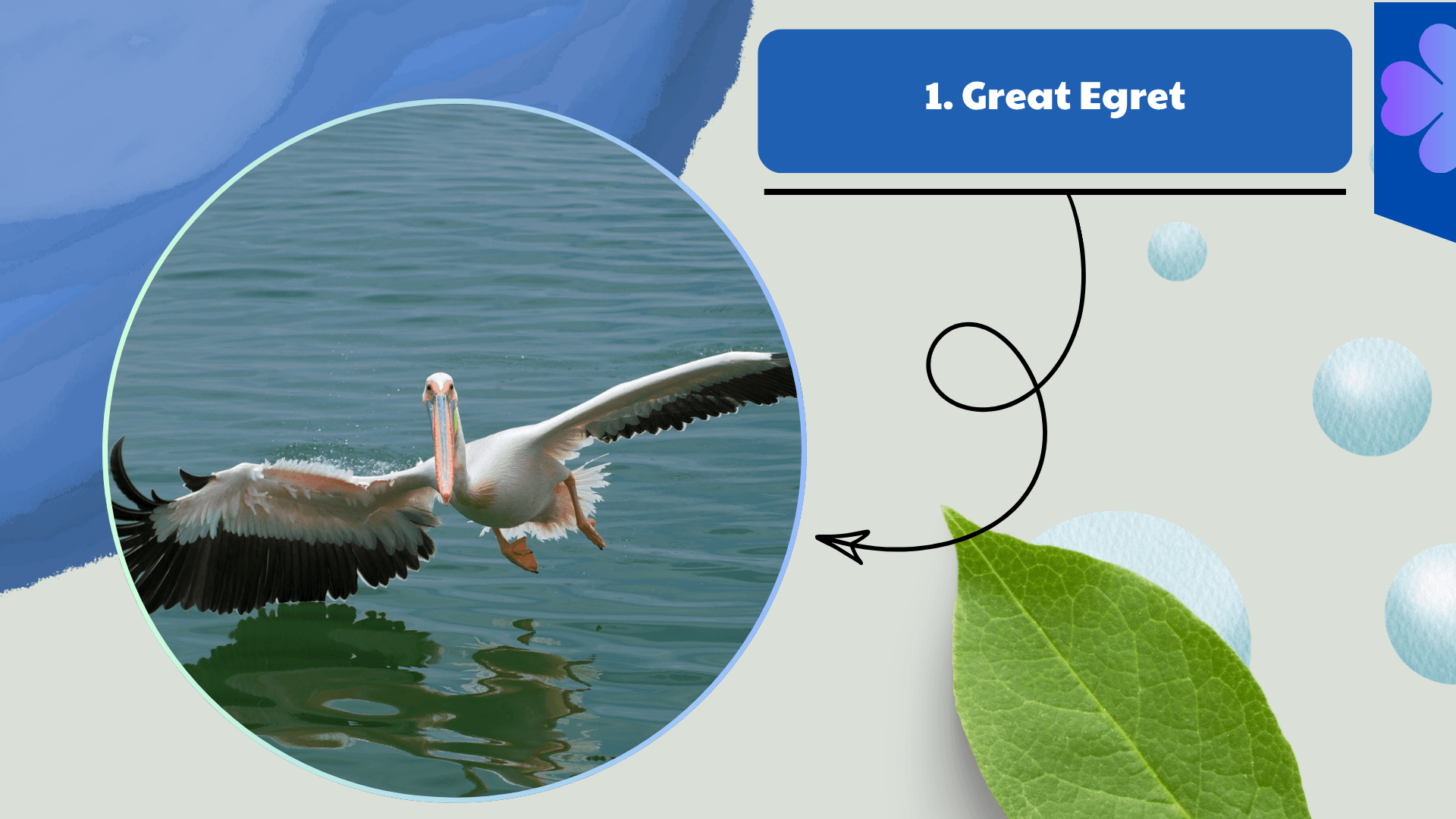
The Great Egret is one of the most famous types of Egret and is widely recognized for its tall stature, pure white plumage, and long yellow bill. It is found across North America, South America, Europe, Africa, Asia, and Australia, making it one of the most widespread egret species in the world.
This elegant bird prefers wetlands, marshes, lakes, rivers, and coastal lagoons where shallow water allows easy access to prey. The Great Egret hunts slowly and carefully, often standing motionless before striking fish or amphibians with incredible speed.
Adult Great Egrets can reach over 1 meter in height and have an impressive wingspan. During breeding season, they develop long ornamental feathers called aigrettes, which were once heavily targeted by the fashion industry. This led to severe population declines in the late 19th century before conservation laws helped the species recover.
The Great Egret feeds mainly on fish, frogs, snakes, crustaceans, and insects. It uses sharp eyesight and patience while hunting, making it one of the most efficient wetland predators among wading birds.
This species often nests in colonies called rookeries alongside herons and ibises. Nests are built in trees or shrubs over water to reduce predator risk. Both parents help incubate eggs and care for chicks.
One reason the Great Egret remains one of the most admired types of Egret is its graceful flight. It flies slowly with deep wingbeats and keeps its neck folded into an “S” shape while airborne.
2. Snowy Egret

The Snowy Egret is a smaller but highly striking member of the types of Egret. It is best known for its bright white feathers, black bill, black legs, and vivid yellow feet that appear like “golden slippers.”
This species is commonly found in North and South America in wetlands, tidal flats, estuaries, mangroves, and shallow coastal areas. Snowy Egrets are much more active hunters than larger egrets and often run, shuffle, or stir the water with their feet to flush out prey.
Snowy Egrets feed mainly on fish, shrimp, insects, crustaceans, and small amphibians. Their energetic hunting style makes them entertaining to observe compared to more motionless egret species.
During breeding season, Snowy Egrets develop beautiful plume feathers on the head, neck, and back. These feathers were once highly valued for decorative hats, causing major declines in their populations during the plume trade era.
Conservation efforts eventually protected the species, and today Snowy Egrets are common again in many regions. They often breed in colonies with herons, ibis species, and other wading birds.
One of the most distinctive identification features of the Snowy Egret is its bright yellow feet. Birdwatchers often use this feature to distinguish it from similar white herons and egrets.
3. Little Egret
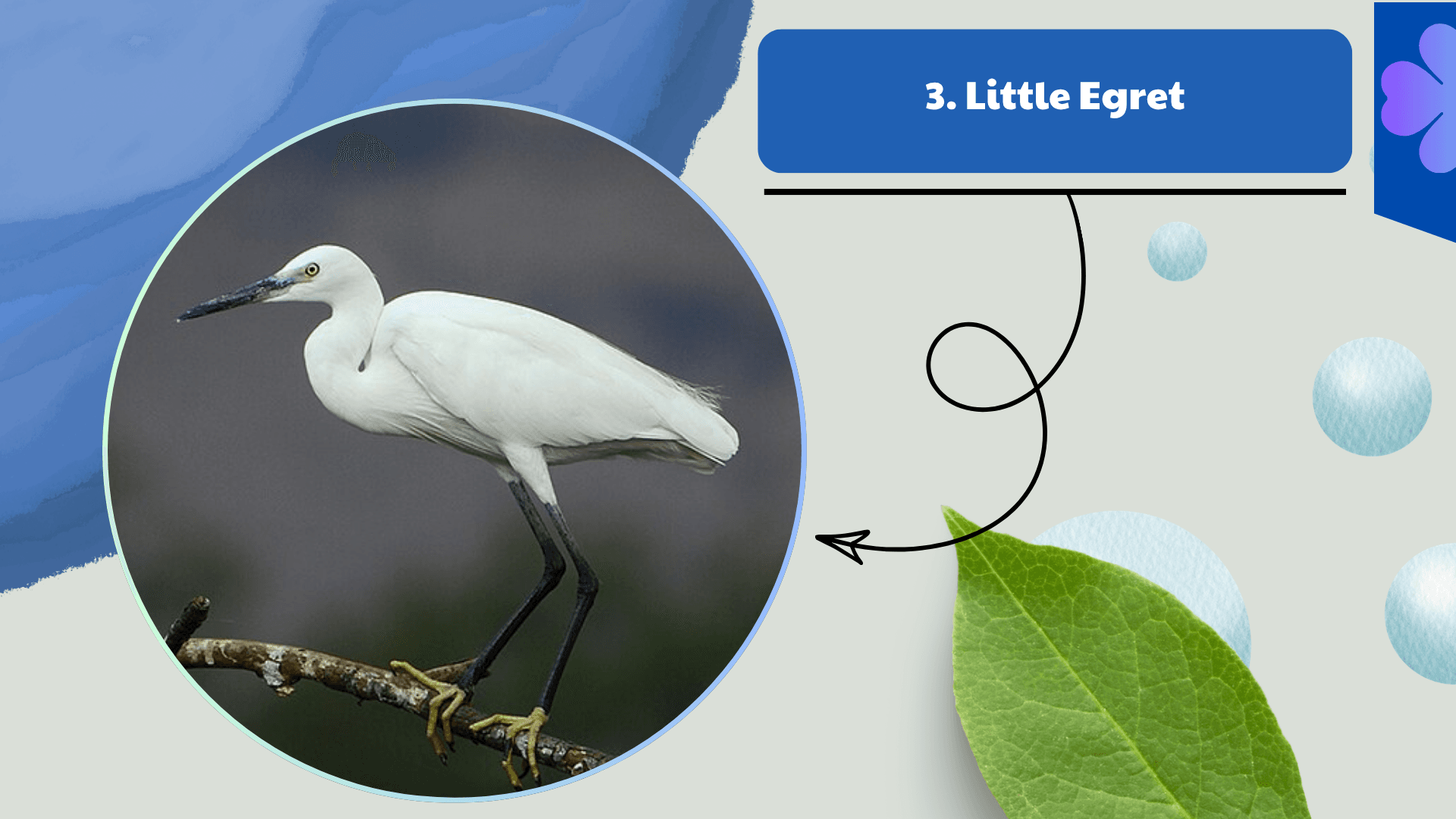
The Little Egret is one of the most elegant types of Egret found across Europe, Africa, Asia, and Australia. It resembles the Snowy Egret but is slightly more slender and refined in appearance.
This species prefers wetlands, shallow rivers, mudflats, marshes, and coastal lagoons. It hunts by slowly stalking prey through shallow water, though it can also become surprisingly active when chasing fish.
Little Egrets are highly adaptable and can survive in both freshwater and saltwater environments. Their diet includes fish, insects, frogs, mollusks, and small crustaceans.
During breeding season, adults develop delicate ornamental plumes extending from the neck and back. These decorative feathers become especially noticeable during courtship displays.
Little Egrets are social birds that often gather in mixed-species colonies. They nest in trees, reed beds, or shrubs near water sources and may return to the same nesting sites year after year.
This species has expanded its range significantly in recent decades, especially in Europe where warmer climates and protected wetlands have improved survival opportunities.
4. Cattle Egret
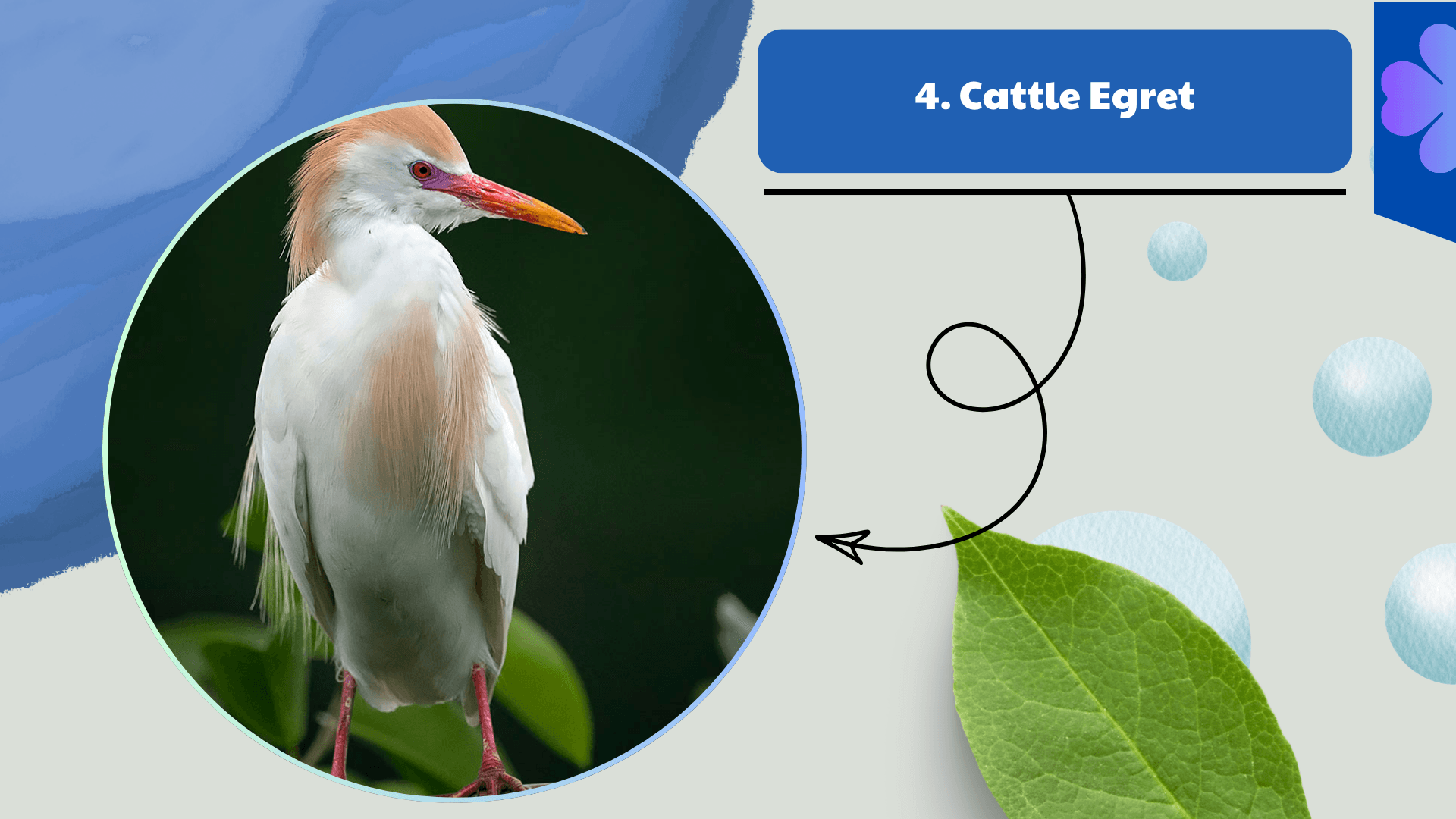
The Cattle Egret is one of the most unusual types of Egret because it spends much of its time in grasslands and agricultural areas rather than wetlands.
Unlike most egrets that hunt fish in water, the Cattle Egret follows grazing animals such as cattle, buffalo, horses, and even tractors. As these large animals move through grass, insects and small creatures are disturbed, giving the egret easy feeding opportunities.
Cattle Egrets feed on grasshoppers, flies, frogs, spiders, and small reptiles. Their close relationship with livestock makes them common sights on farms and open pastures worldwide.
Originally native to Africa and Asia, the species has expanded naturally across Europe, the Americas, and Australia. It is now considered one of the most successful and widespread wading birds globally.
During breeding season, adults develop orange or buff-colored feathers on the head, chest, and back. This seasonal coloration makes them easy to distinguish from other white egrets.
The adaptability of the Cattle Egret is one reason it remains among the most successful types of Egret in modern ecosystems.
5. Reddish Egret
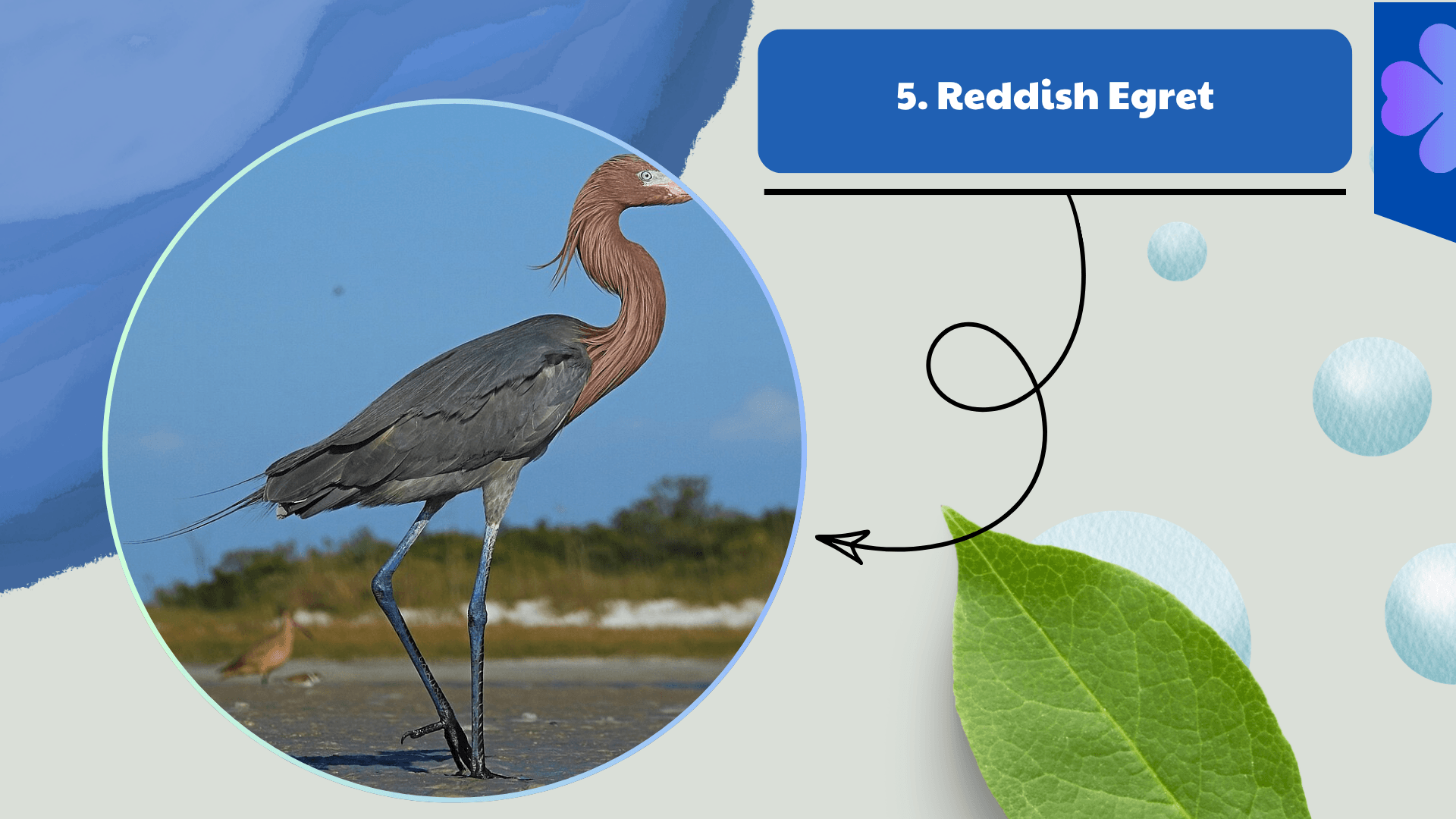
The Reddish Egret is one of the rarest and most active types of Egret found mainly along the Gulf Coast, Caribbean region, and parts of Central America.
This species exists in both dark and white color morphs, though the dark reddish-gray form is more famous. It is highly energetic and uses dramatic hunting movements such as running, jumping, spinning, and spreading its wings while chasing fish.
Reddish Egrets prefer shallow coastal lagoons, mangroves, mudflats, and tidal pools where small fish are abundant. Their feeding behavior is much more animated than most other egrets.
This species is considered sensitive to habitat disturbance and coastal development. Protecting shallow feeding grounds is critical for maintaining healthy populations.
Reddish Egrets usually nest in isolated coastal colonies, often alongside herons and other wading birds. Both parents help raise chicks and defend nesting territories.
Because of its rarity, unique behavior, and striking appearance, the Reddish Egret remains one of the most fascinating types of Egret for birdwatchers and wildlife photographers worldwide.
These first five types of Egret highlight the remarkable diversity within this elegant bird group. From the giant Great Egret to the energetic Reddish Egret, each species has evolved unique hunting strategies and habitat preferences. In the next section, we will continue exploring more egret species from Asia, Africa, and coastal ecosystems around the world.
6. Intermediate Egret

The Intermediate Egret is one of the lesser-known but highly elegant types of Egret found across Africa, Asia, and Australia. As its name suggests, it is medium-sized, falling between the smaller Little Egret and the much larger Great Egret in overall body size.
This species is commonly seen in freshwater wetlands, flooded rice fields, marshes, lakeshores, and slow-moving rivers. It prefers shallow water where fish, frogs, insects, and crustaceans are abundant.
The Intermediate Egret has bright white plumage, a yellow bill, and dark legs. During breeding season, its facial skin may become greenish or bluish, and ornamental plumes appear along the back and chest.
Unlike more aggressive wading birds, the Intermediate Egret hunts calmly and methodically. It often stands motionless before quickly striking prey with its long bill.
This species is highly adaptable and can live near agricultural lands and urban wetlands if enough food is available. In many Asian countries, it is commonly observed in rice paddies feeding alongside other water birds.
The Intermediate Egret nests in colonies, usually in trees over water or dense reed beds. These nesting colonies may include herons, ibises, cormorants, and other egret species.
Because of its graceful posture and elegant appearance, birdwatchers often confuse this species with the Great Egret. However, the shorter neck and smaller body size help distinguish it in the field.
7. Chinese Egret
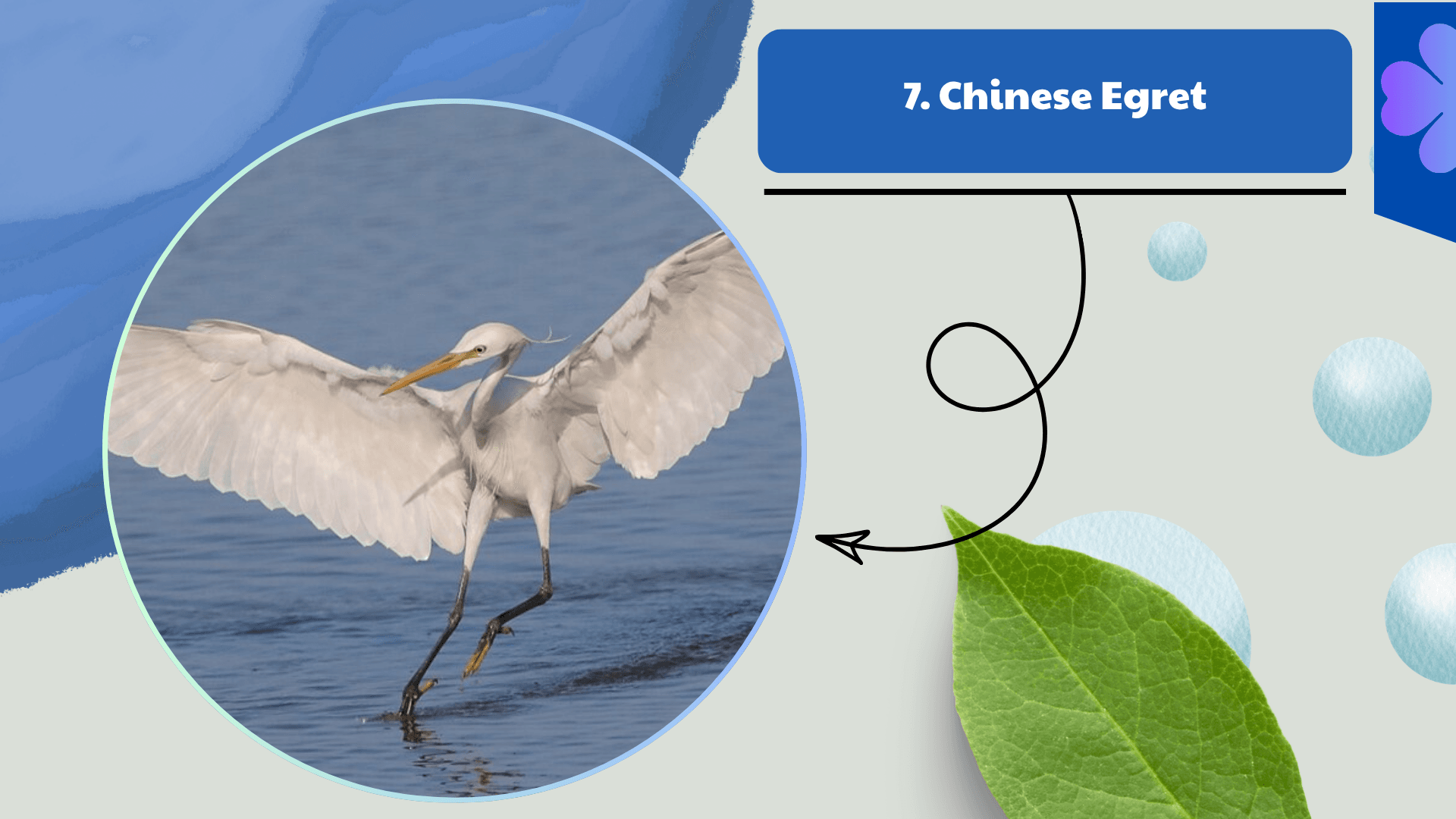
The Chinese Egret is one of the rarest and most threatened types of Egret in Asia. It is mainly found in eastern China, Korea, Japan, Taiwan, and parts of Southeast Asia during migration.
This species prefers coastal mudflats, estuaries, mangroves, and shallow tidal wetlands where fish and marine invertebrates are plentiful. Unfortunately, many of these habitats are disappearing due to coastal development and pollution.
The Chinese Egret has beautiful white plumage, a dark bill, and yellowish legs. During breeding season, it develops long ornamental plumes and colorful facial skin that make it especially striking.
Like many egrets, this species hunts by slowly stalking prey in shallow water. It feeds on fish, crabs, shrimp, mollusks, and aquatic insects.
Because its population is relatively small, the Chinese Egret is considered vulnerable in many parts of its range. Conservation organizations work to protect its breeding colonies and migration stopover habitats.
The Chinese Egret is highly sensitive to human disturbance, especially near nesting sites. Birdwatchers are encouraged to observe from a safe distance to avoid disrupting breeding activities.
This rare species remains one of the most prized sightings among bird enthusiasts studying Asian wetland birds.
8. Eastern Reef Egret
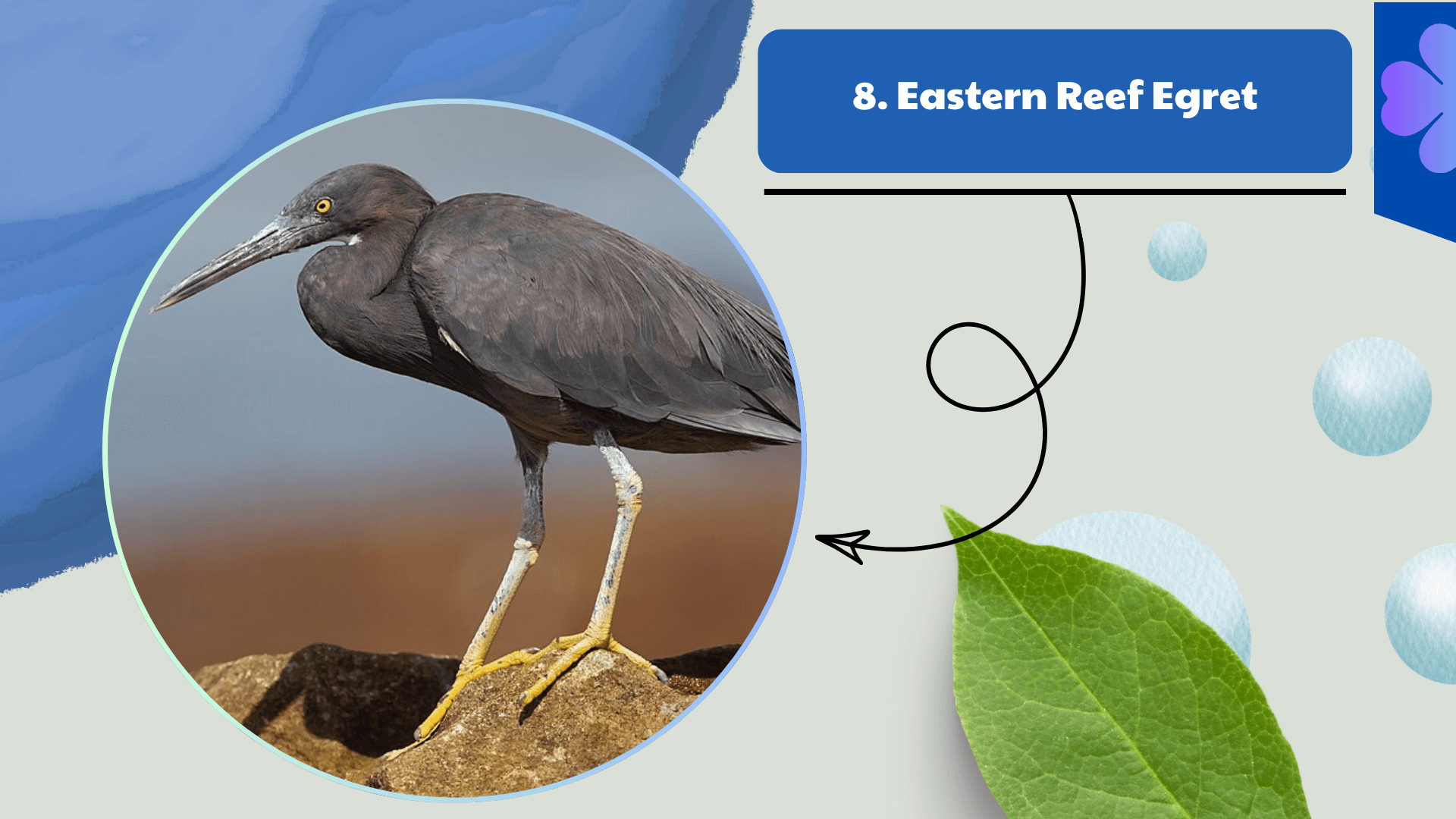
The Eastern Reef Egret is one of the most coastal-adapted types of Egret, found throughout the Indo-Pacific region including Australia, Southeast Asia, and Pacific islands.
Unlike many white egrets, this species commonly appears in dark gray or slate-colored plumage, although white morphs also exist in some populations.
Eastern Reef Egrets live along rocky shorelines, coral reefs, tidal pools, mangroves, and coastal lagoons. They are highly skilled hunters that specialize in catching marine prey such as fish, crabs, shrimp, and small mollusks.
This species is often seen standing alone on coastal rocks during low tide, carefully watching for movement in shallow water. Its patience and stealth make it an efficient predator.
The Eastern Reef Egret is less social than inland egrets and usually feeds alone or in pairs. However, breeding colonies may form in protected coastal vegetation.
Its darker plumage provides excellent camouflage against volcanic rocks and reef environments, helping it approach prey unnoticed.
The Eastern Reef Egret demonstrates how adaptable types of Egret can become when evolving in marine ecosystems rather than freshwater habitats.
9. Western Reef Egret
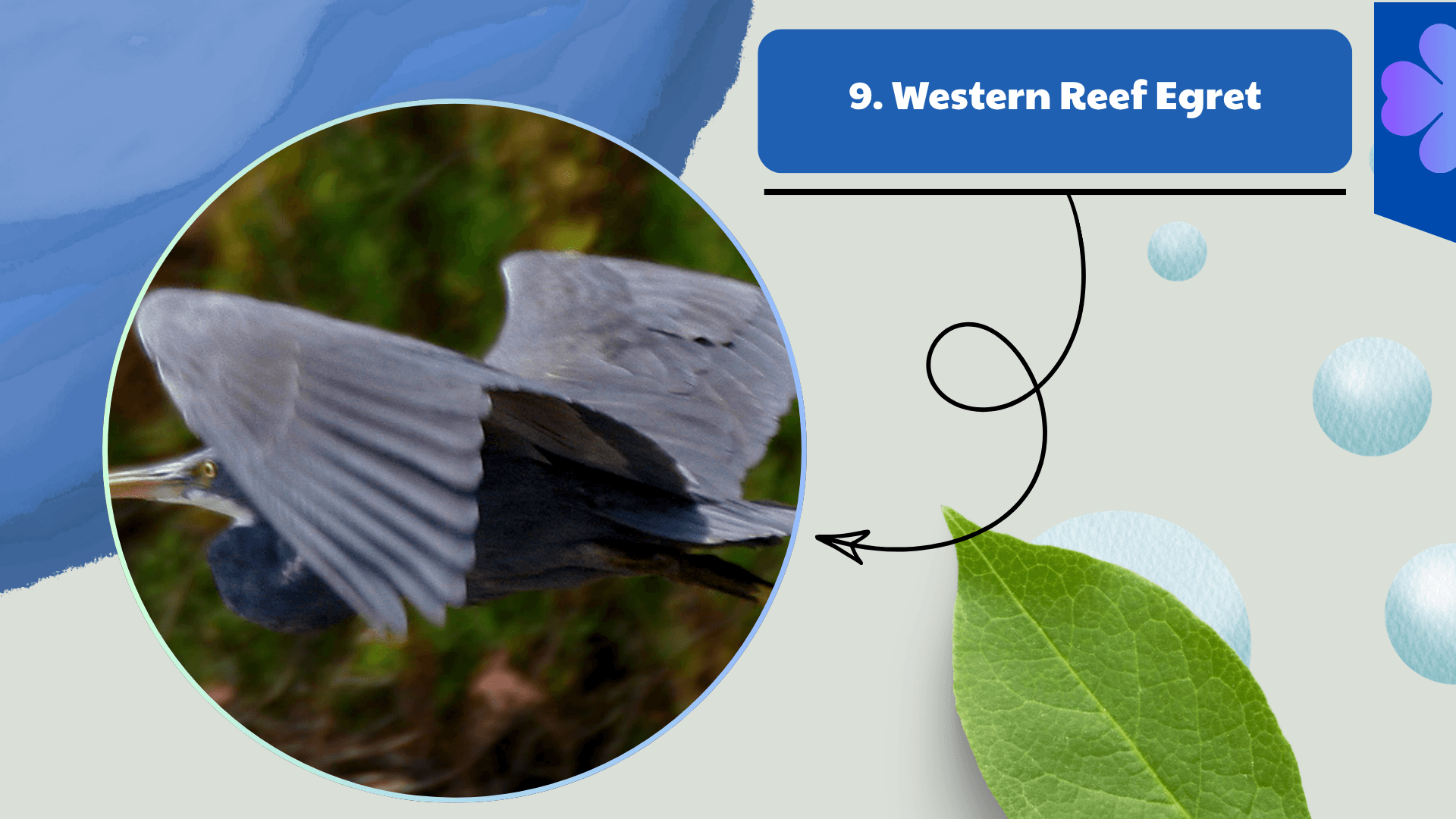
The Western Reef Egret is closely related to the Eastern Reef Egret and is another highly specialized coastal member of the types of Egret.
It is commonly found along the coastlines of West Africa, the Middle East, the Red Sea, and parts of the Indian Ocean. This species prefers rocky coasts, mudflats, tidal estuaries, and coral reef systems.
Western Reef Egrets may appear in dark gray, bluish, or white plumage depending on regional populations. Their flexible coloration helps them adapt to different shoreline environments.
This species feeds mainly on marine fish, crustaceans, and small aquatic animals. It hunts slowly in shallow coastal waters and often waits patiently for prey to approach.
Unlike highly social inland egrets, Western Reef Egrets are often solitary hunters. They may defend small feeding territories against other birds.
During breeding season, they develop elegant head and neck plumes used in courtship displays. Nests are usually built in mangroves, coastal shrubs, or rocky islands.
Because of their dependence on healthy coastal ecosystems, these birds can be negatively affected by pollution, oil spills, and habitat destruction.
10. Black Egret
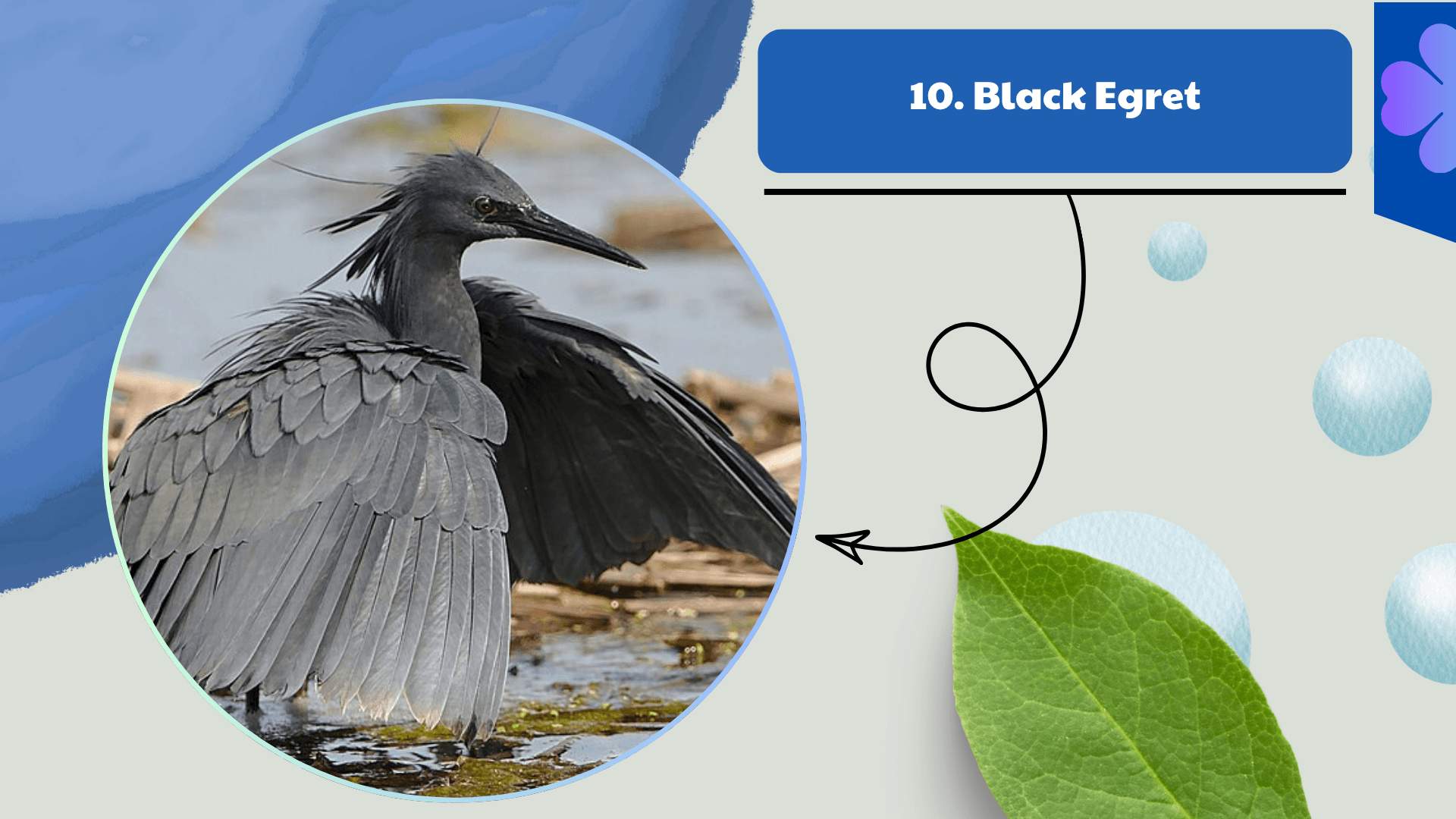
The Black Egret is one of the most fascinating and unusual types of Egret in Africa. It is famous for its remarkable hunting behavior known as “canopy feeding.”
This species has entirely black plumage and long dark legs. It inhabits freshwater wetlands, marshes, lakes, floodplains, and shallow rivers throughout sub-Saharan Africa.
When hunting, the Black Egret spreads its wings forward to form a shaded umbrella over the water surface. This reduces glare and may attract fish seeking shelter in the shade, allowing the bird to strike quickly.
This feeding strategy is considered one of the most specialized hunting techniques among all wading birds.
Black Egrets feed mainly on fish, frogs, aquatic insects, and crustaceans. They often hunt alone but may gather in small groups where food is abundant.
The species usually nests in mixed colonies alongside herons and ibises. Nesting sites are often located in trees or reed beds near water.
Because of its dramatic black coloration and unique umbrella-like hunting display, the Black Egret remains one of the most visually memorable types of Egret for wildlife photographers and birdwatchers alike.
These next five types of Egret show how adaptable egrets can be across freshwater wetlands, tidal coastlines, and tropical marine habitats. Some species have evolved specialized feeding strategies and unique plumage colors that help them thrive in very different environments. In the next section, we will continue exploring additional egret species and regional forms found around the world.
11. Slaty Egret
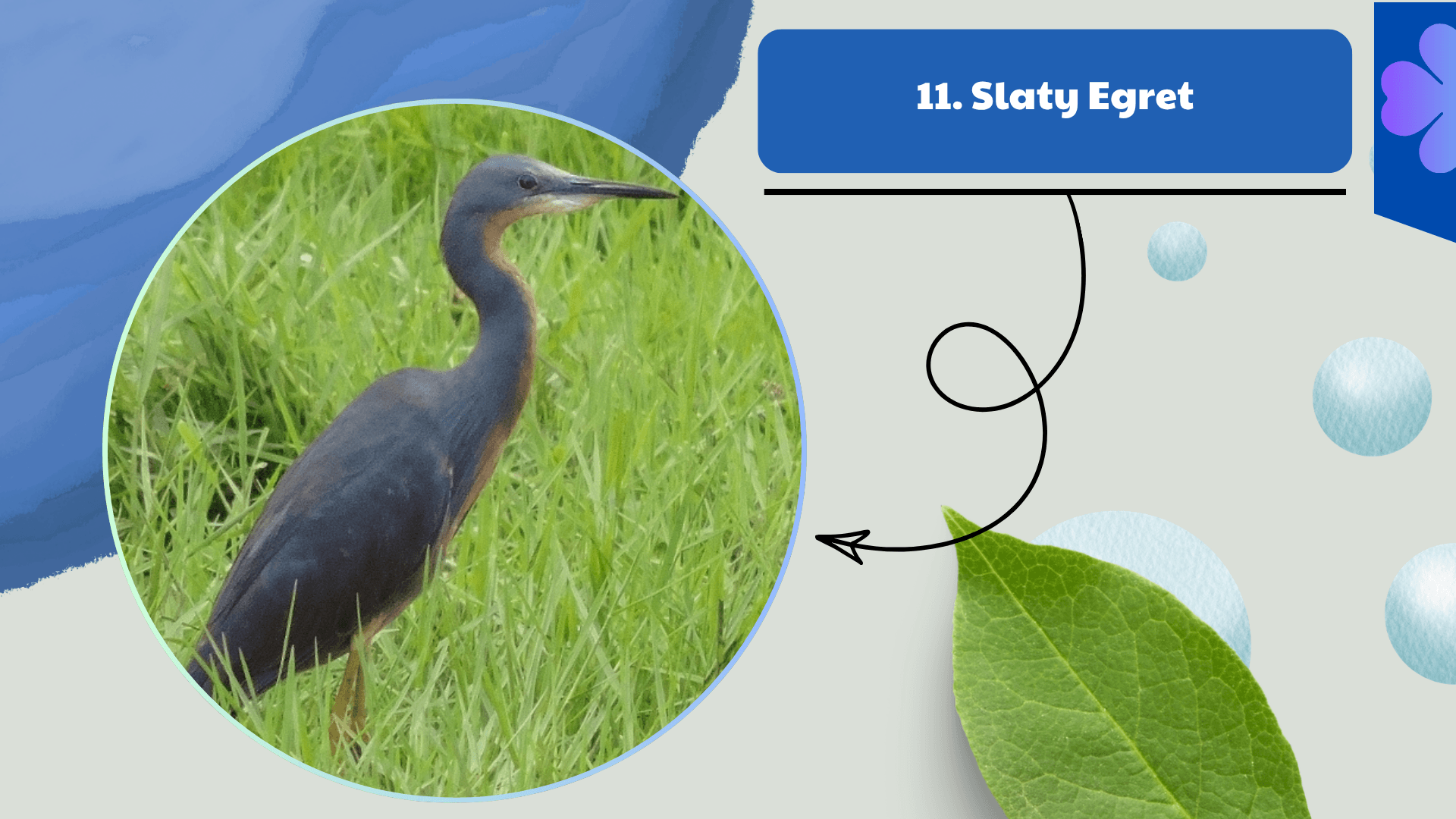
The Slaty Egret is one of the rarest and most specialized types of Egret in Africa. It is recognized by its dark bluish-gray plumage, slender body, and highly active hunting style. This species is mainly found in the wetlands of southern and central Africa, especially in regions connected to the Okavango Delta and surrounding floodplains.
Unlike many larger egrets that hunt slowly, the Slaty Egret is extremely energetic while feeding. It frequently runs through shallow water, flaps its wings, and stirs mud to flush out fish and aquatic insects. This active approach allows it to catch prey hidden among vegetation.
The Slaty Egret prefers freshwater marshes, seasonal floodplains, papyrus swamps, and shallow lagoons. It is highly dependent on stable wetland ecosystems, making habitat loss one of its greatest threats.
Its dark coloration helps distinguish it from white egret species and provides camouflage in shaded marsh environments. During breeding season, the bird develops longer ornamental plumes around the neck and back.
Because the Slaty Egret has a relatively small global population, conservationists closely monitor breeding sites and wetland health in key African regions.
This species is often considered one of the most beautiful and mysterious types of Egret due to its elegant movement and uncommon appearance.
12. Yellow-billed Egret
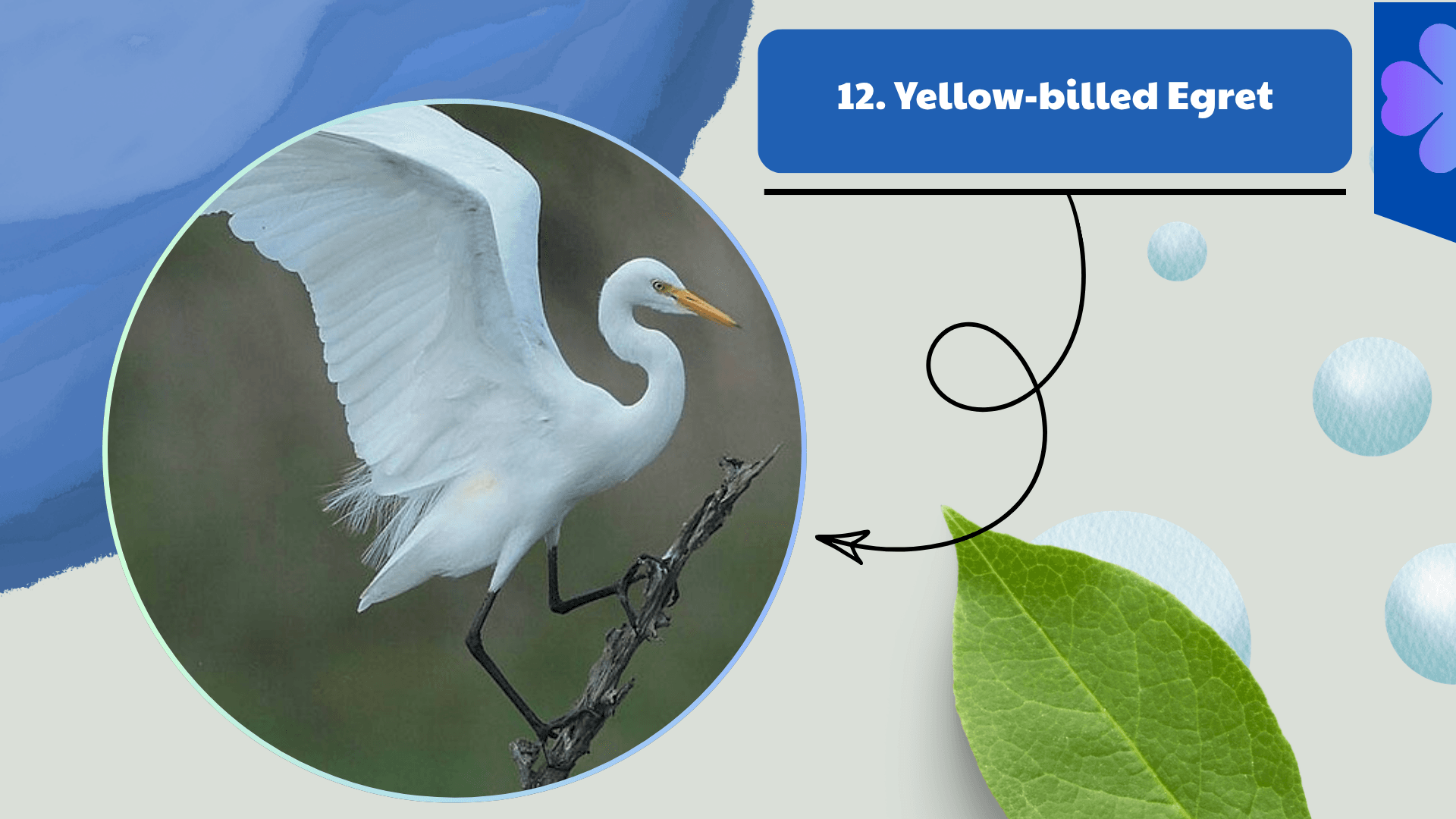
The Yellow-billed Egret is a striking African member of the types of Egret, easily recognized by its bright yellow bill and pure white plumage. It is found throughout sub-Saharan Africa in wetlands, riverbanks, marshes, and flooded grasslands.
This species closely resembles the Great Egret but is generally smaller and more compact. Its yellow bill becomes even brighter during breeding season, helping attract mates and signal breeding readiness.
Yellow-billed Egrets feed mainly on fish, frogs, insects, crustaceans, and small reptiles. They hunt slowly in shallow water, using careful movements to avoid startling prey.
Like many colonial water birds, this species nests in groups near water sources. Nesting colonies are often shared with herons, ibis species, and cormorants.
The Yellow-billed Egret is highly adaptable and may survive near agricultural wetlands if food remains plentiful. However, pollution and drainage of wetlands continue to threaten local populations in some regions.
Birdwatchers admire this species for its elegant white feathers contrasted against the vivid yellow bill and dark legs.
13. Pacific Reef Heron

The Pacific Reef Heron is one of the most coastal-oriented types of Egret, although some experts classify it closer to herons. It inhabits tropical shorelines, coral reefs, rocky coasts, mangroves, and tidal lagoons across the Pacific and Indian Oceans.
This species occurs in both dark gray and white color forms, depending on regional genetics and habitat conditions. Its flexible coloration helps it blend into different shoreline environments.
Pacific Reef Herons feed mainly on marine prey such as fish, shrimp, crabs, mollusks, and small reef animals. They hunt quietly along the shoreline, often remaining perfectly still before attacking prey with lightning-fast strikes.
Unlike highly social inland egrets, Pacific Reef Herons are often solitary and territorial while feeding. They may aggressively defend productive hunting spots from other birds.
Breeding colonies are usually small and hidden within coastal vegetation or rocky islands. Both parents help raise chicks and guard nests from predators.
The Pacific Reef Heron demonstrates how types of Egret have successfully adapted to marine ecosystems rather than inland freshwater habitats.
14. Western Reef Heron
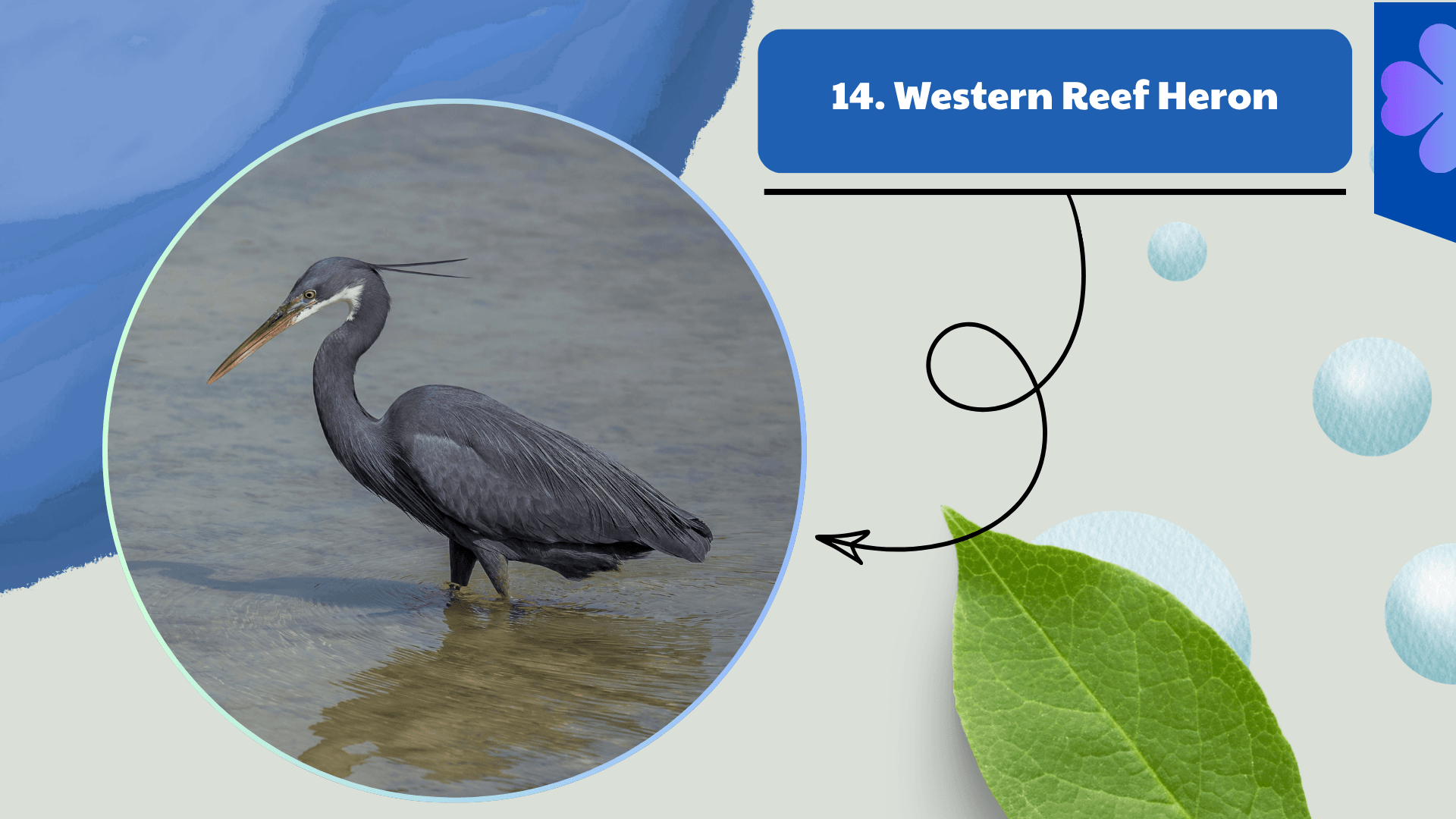
The Western Reef Heron is another marine-adapted member of the types of Egret group, commonly found along the coasts of Africa, the Arabian Peninsula, and the Indian Ocean.
This species thrives in mangroves, tidal flats, rocky shorelines, estuaries, and coral reef systems. It may appear in dark gray or white plumage depending on the local population.
Western Reef Herons are patient hunters that feed on fish, crabs, shrimp, and marine insects. They often stalk prey slowly in shallow coastal water before striking with their sharp bill.
Unlike some highly social egrets, these birds usually hunt alone or in pairs. Their solitary behavior helps reduce competition in narrow coastal feeding areas.
The species nests in coastal shrubs, mangroves, or rocky islands where predators are less common. During breeding season, adults display ornamental feathers and courtship behaviors to attract mates.
Healthy coral reefs and tidal ecosystems are essential for this species. Habitat destruction, pollution, and rising sea levels pose increasing challenges to coastal egret populations worldwide.
15. Eastern Cattle Egret
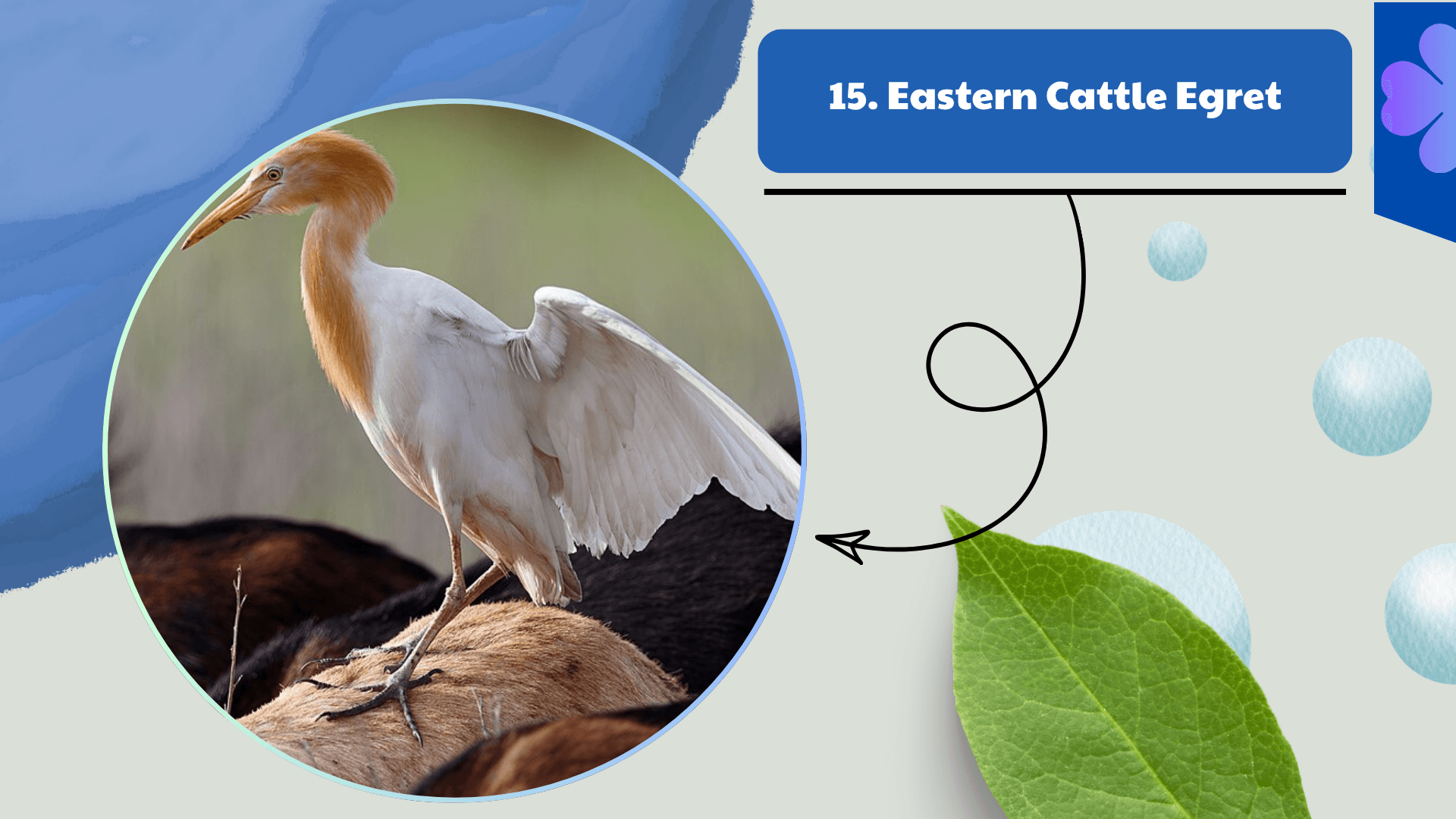
The Eastern Cattle Egret is one of the most adaptable types of Egret and is commonly found across Asia, Australia, and parts of eastern Africa.
This species is famous for following grazing animals such as cattle, buffalo, horses, and elephants. As large animals move through grass, insects and small prey are disturbed, giving the egret easy access to food.
Eastern Cattle Egrets feed mainly on grasshoppers, beetles, flies, spiders, frogs, and small reptiles. Unlike fish-hunting egrets, they spend much of their time in open fields and agricultural landscapes.
During breeding season, the bird develops orange or golden feathers on the head, chest, and back. These colors become brighter during courtship displays.
This species is highly successful because it adapts well to human-modified environments such as farms, rice fields, and pasturelands.
Eastern Cattle Egrets often nest in large colonies with other water birds. Their populations have expanded significantly in many regions over the last century due to changing agricultural landscapes.
Their close relationship with grazing animals makes them one of the most familiar and easily recognized types of Egret in rural ecosystems around the world.
These additional types of Egret highlight the incredible ecological diversity within the egret family, from freshwater wetland hunters to highly specialized coastal species. In the final section, we will explore the remaining egret species and conclude this complete identification guide.
16. Western Cattle Egret
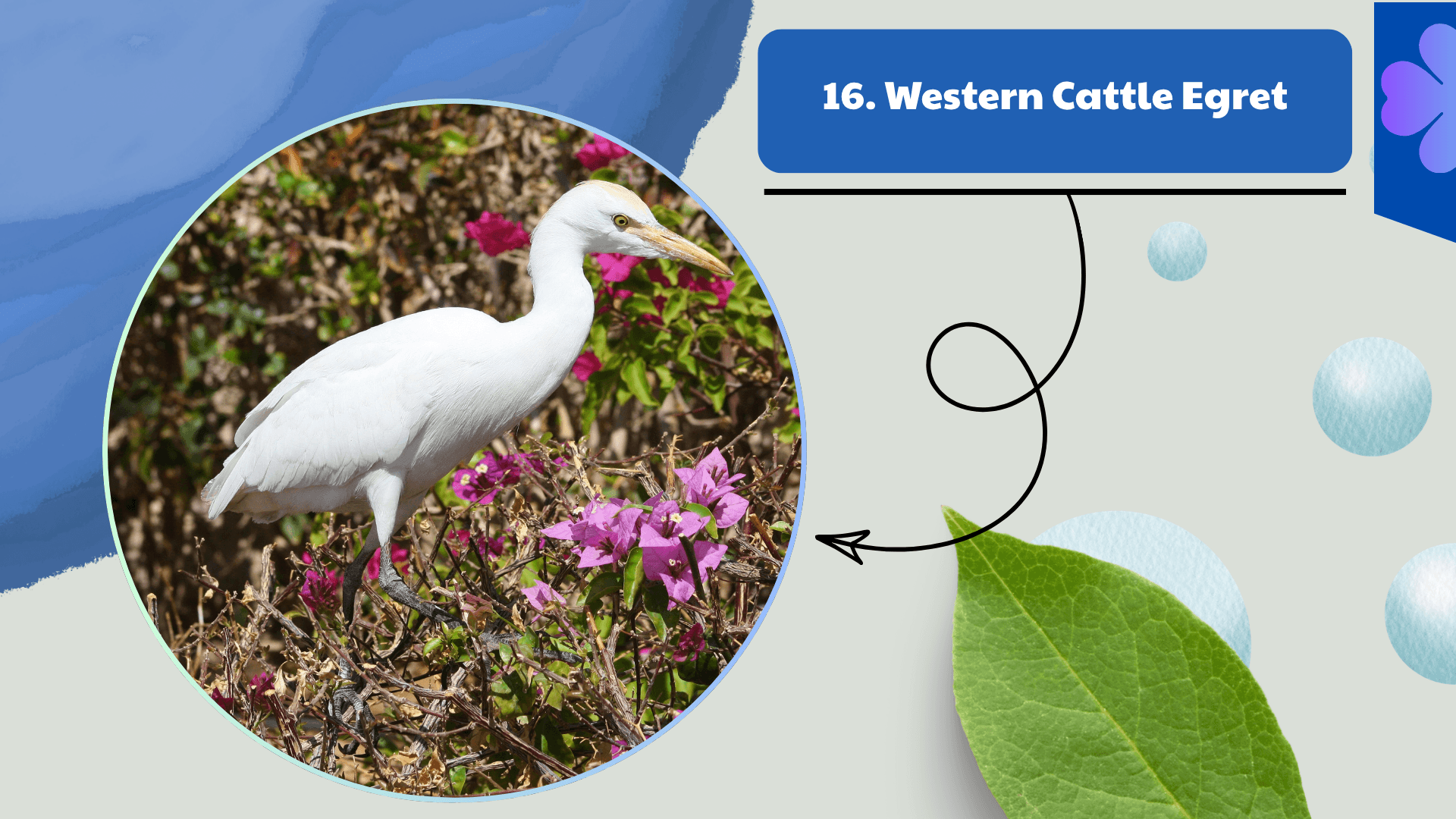
The Western Cattle Egret is one of the most widespread and adaptable types of Egret found across Africa, Europe, and the Americas. It is closely related to the Eastern Cattle Egret but is commonly recognized as a separate regional form due to differences in distribution and slight breeding characteristics.
Unlike many wetland-dependent egrets, the Western Cattle Egret spends most of its time in grasslands, farms, open fields, and savannas. It is famous for following cattle and other large mammals to feed on insects disturbed by their movement.
Grasshoppers, flies, beetles, spiders, frogs, and small reptiles make up most of its diet. This feeding strategy allows the species to thrive even far from water sources.
The Western Cattle Egret is smaller and stockier than larger egrets such as the Great Egret. During breeding season, adults develop buff-orange feathers on the head, neck, and chest.
This species has expanded rapidly across the globe over the last century. Scientists believe its success is linked to agricultural development and livestock farming, which create ideal feeding conditions.
Western Cattle Egrets usually nest in large colonies with herons, ibises, and cormorants. Nesting areas are often located in trees near wetlands or rivers.
Because of its remarkable adaptability and close association with grazing animals, the Western Cattle Egret remains one of the most successful types of Egret worldwide.
17. White Egret
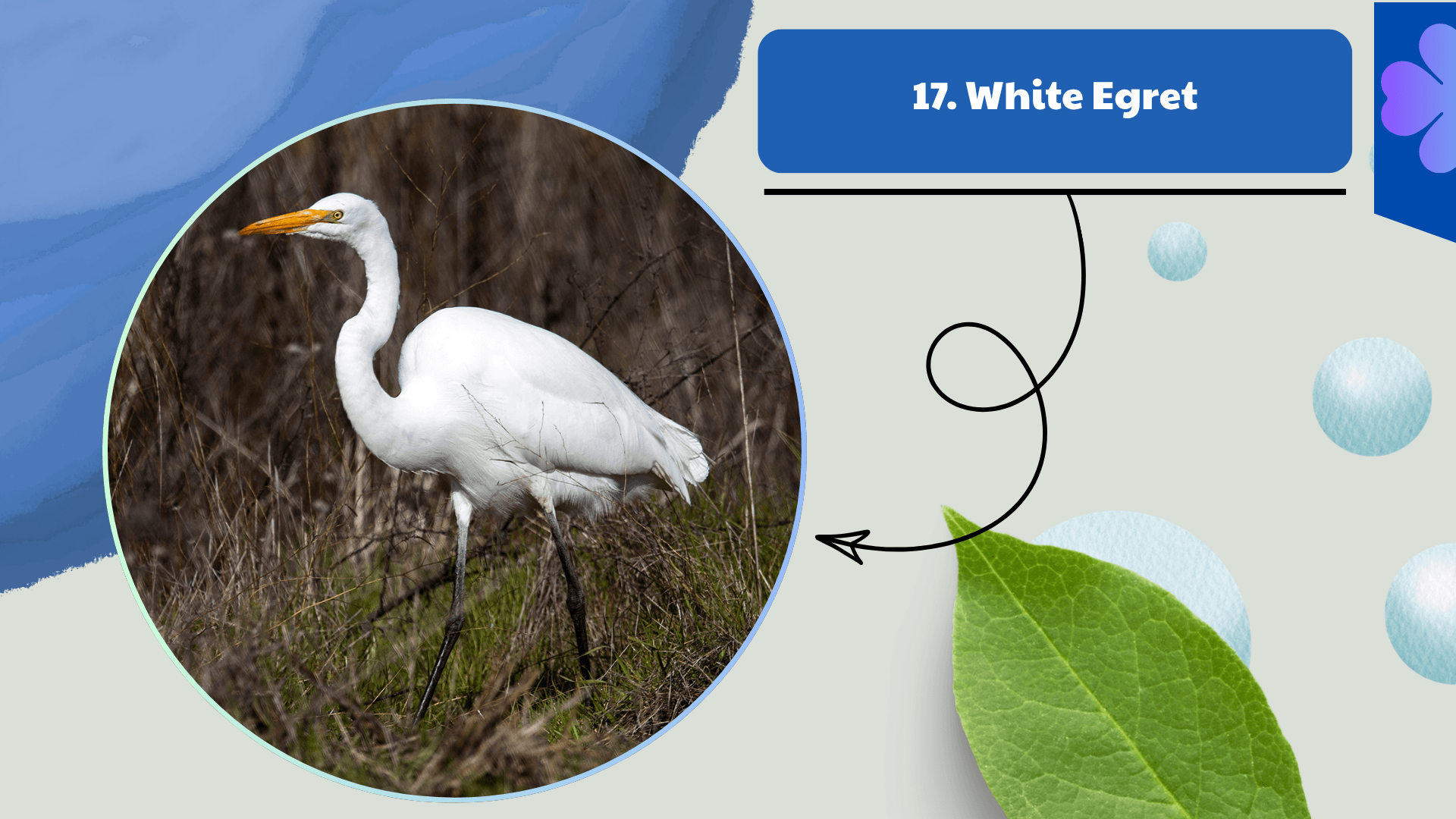
The term White Egret is often used as a general name for several white-plumaged members of the types of Egret, especially in local birdwatching guides and regional wildlife references.
These birds are typically associated with wetlands, lakes, marshes, estuaries, and shallow coastal waters. White egrets are admired for their graceful appearance, long legs, and elegant hunting movements.
Most white egrets feed on fish, frogs, insects, shrimp, and crustaceans. They use patience and stealth while hunting, often standing perfectly still before launching a rapid strike with their pointed bill.
White egrets are important indicators of healthy wetland ecosystems because they rely heavily on clean water and stable fish populations.
Many species referred to as “white egrets” develop long ornamental breeding plumes during mating season. Historically, these feathers were heavily hunted for the fashion trade, which caused major declines in egret populations before wildlife protection laws were introduced.
Today, white egrets are protected in many countries and are commonly seen in wildlife reserves, wetlands, and coastal habitats around the world.
Their elegant white plumage and calm behavior make them among the most photographed types of Egret in nature photography.
18. Great White Egret
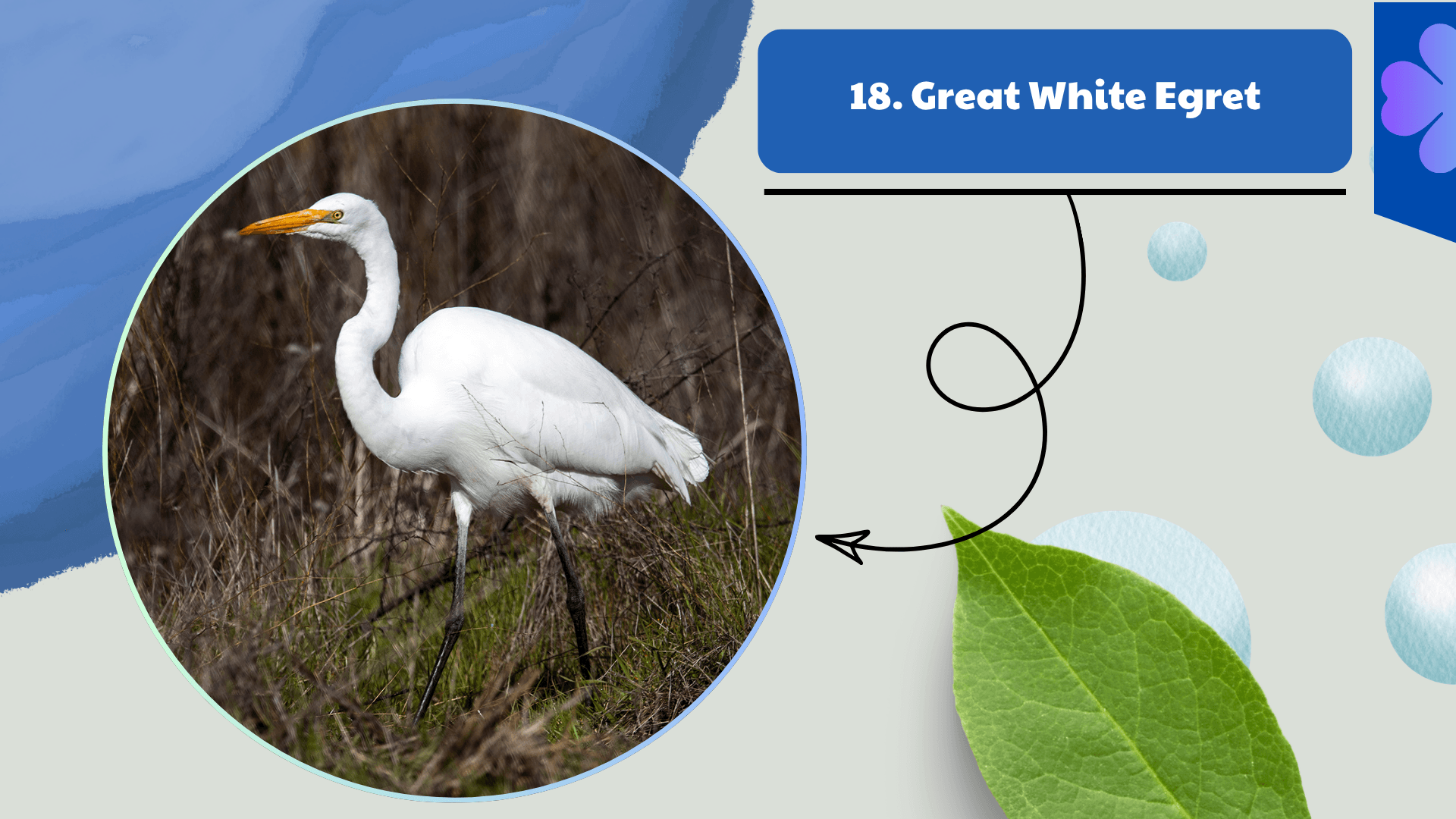
The Great White Egret is another regional name commonly used for the Great Egret and represents one of the largest and most iconic types of Egret.
This species is known for its tall body, long neck, pure white feathers, and bright yellow bill. It inhabits freshwater wetlands, rivers, coastal lagoons, estuaries, and marshes across multiple continents.
Great White Egrets are patient hunters that rely on stealth and precision while feeding. Their diet includes fish, frogs, insects, snakes, and small aquatic animals.
One of the most impressive features of this bird is its graceful flight style. It flies slowly with deep wingbeats while keeping its neck folded into an “S” shape.
Breeding adults develop delicate ornamental plumes that extend from the back and tail region. These feathers were once highly prized in the fashion industry, leading to severe hunting pressure during the late 1800s.
Conservation laws eventually protected the species, and today Great White Egrets are considered conservation success stories in many parts of the world.
Because of their size, elegance, and widespread distribution, Great White Egrets are often viewed as symbols of healthy wetland ecosystems.
19. Salty Egret
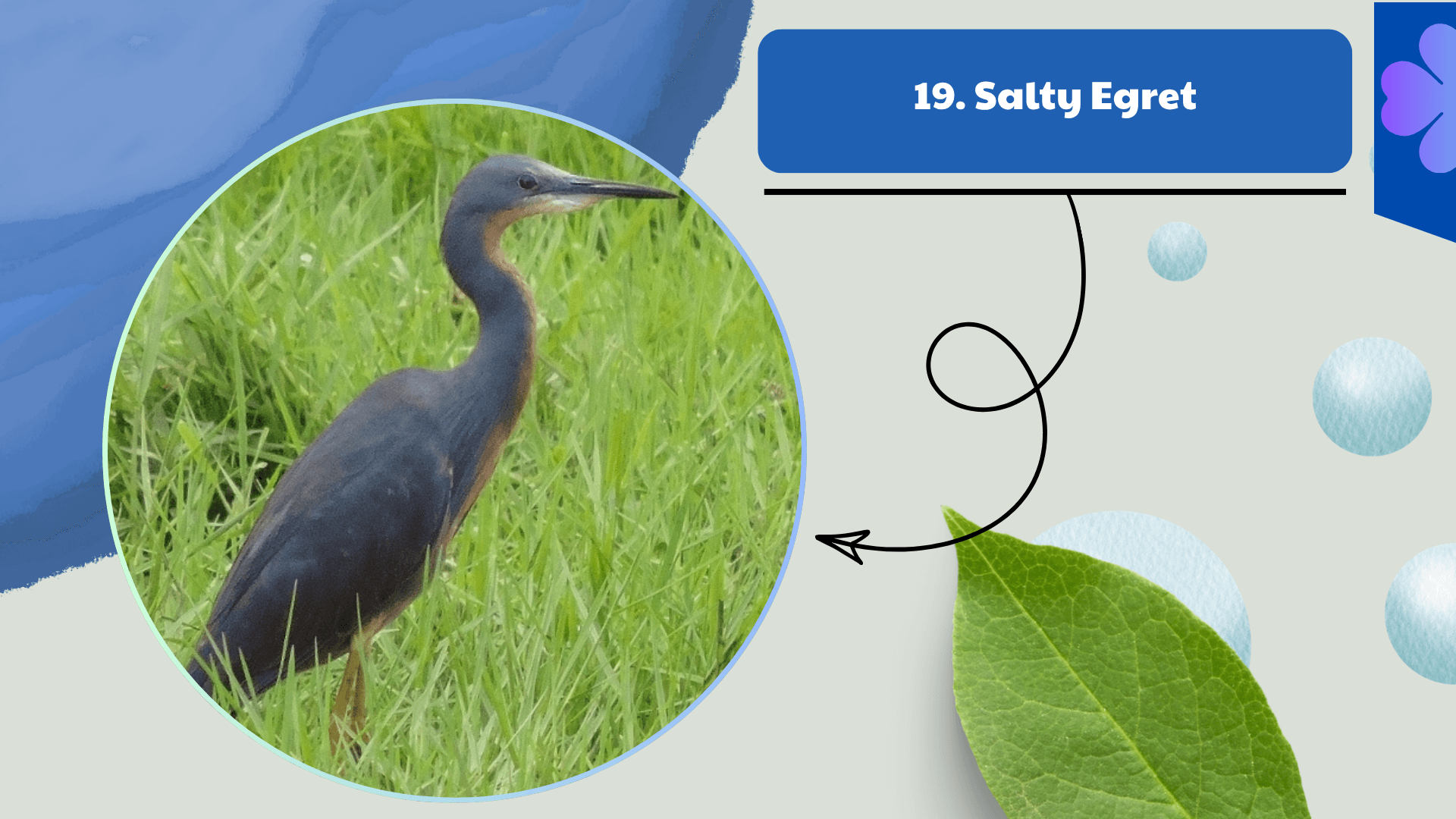
The Salty Egret is a lesser-known regional name associated with coastal and saltwater-adapted types of Egret. It is often connected to reef and shoreline egret species inhabiting marine ecosystems.
These birds prefer tidal marshes, mangroves, mudflats, rocky shores, and coastal lagoons where marine prey is abundant. Their diet mainly consists of fish, crabs, shrimp, and other small coastal animals.
Salty Egrets are highly patient hunters and often feed during low tide when prey becomes concentrated in shallow pools and exposed reef systems.
Many coastal egrets develop darker plumage compared to inland species. This coloration helps them blend into rocky shoreline environments and avoid detection by prey.
Because coastal habitats are sensitive to pollution, rising sea levels, and habitat destruction, marine-adapted egrets face growing environmental challenges.
Despite these threats, many coastal egret populations remain stable where protected wetlands and marine reserves exist.
The Salty Egret represents how diverse and adaptable types of Egret can become when evolving in ocean-based ecosystems.
20. Black Heron

The Black Heron is one of the most fascinating African members among the types of Egret and is closely associated with the Black Egret due to similar appearance and behavior.
This bird is completely dark black in coloration and is best known for its extraordinary feeding technique called canopy feeding. During hunting, it spreads its wings over the water like an umbrella to create shade.
The shaded area attracts fish seeking cover and also reduces sunlight glare, allowing the bird to spot prey more clearly. Once prey enters the shaded zone, the bird quickly strikes with its sharp bill.
Black Herons inhabit marshes, floodplains, shallow rivers, lakes, and wetlands throughout sub-Saharan Africa.
Their diet includes fish, aquatic insects, frogs, and crustaceans. They usually hunt alone but may gather in small groups where food is abundant.
This species nests in colonies near water alongside herons, ibis species, and other wading birds. Nests are often built in trees or reed beds.
Because of its unique umbrella-like hunting display and striking black plumage, the Black Heron remains one of the most memorable types of Egret for wildlife enthusiasts worldwide.
Conclusion: Understanding the Types of Egret
The incredible diversity of types of Egret demonstrates how these elegant birds have adapted to wetlands, coastlines, grasslands, rivers, and coral reef ecosystems around the world. From the towering Great Egret to the energetic Reddish Egret and the highly specialized Black Heron, each species plays an important ecological role in controlling fish and insect populations.
Egrets are more than beautiful birds. They are indicators of healthy wetlands and balanced ecosystems. Their presence often reflects clean water, abundant aquatic life, and stable natural habitats.
As wetlands continue to face threats from pollution, urbanization, and climate change, protecting egret habitats becomes increasingly important for biodiversity conservation worldwide. By learning more about these graceful birds, we can better appreciate the ecosystems they depend on and the role they play in nature. Which of these remarkable types of Egret would you most like to see in the wild someday?
50+ FAQs About Types of Egret (Identification, Habitat, Diet & Behavior)
1. What is an egret?
An egret is a long-legged wading bird closely related to herons. Egrets are known for their slender bodies, sharp bills, graceful necks, and elegant feathers. Most species are white, but some egrets can appear gray, blue, or black depending on the species. They are commonly found near wetlands, rivers, lakes, marshes, and coastal habitats where they hunt fish and aquatic animals.
2. How many types of Egret are there?
There are several recognized species of egrets worldwide, with many regional forms and closely related birds included in wildlife guides. Common examples include the Great Egret, Snowy Egret, Little Egret, Cattle Egret, Reddish Egret, and Black Egret.
3. What is the difference between an egret and a heron?
Egrets are technically a type of heron. The main difference is appearance. Egrets usually have white feathers and more delicate body shapes, while herons often display gray, blue, or brown plumage. Both belong to the same bird family and share similar hunting behavior.
4. Where do egrets live?
Egrets live on every continent except Antarctica. They are commonly found near wetlands, rivers, swamps, marshes, estuaries, mangroves, and coastal shorelines. Some species also adapt well to farms and grasslands.
5. What do egrets eat?
Egrets mainly eat fish, frogs, insects, shrimp, crabs, snakes, and small aquatic animals. They are carnivorous birds that rely on sharp eyesight and quick strikes to capture prey.
6. How do egrets hunt for food?
Most egrets hunt by standing still in shallow water and waiting for prey to come close. Once prey appears, they quickly stab it with their long pointed bill. Some species also run, shuffle their feet, or spread their wings while hunting.
7. Can egrets swim?
Egrets can float briefly if necessary, but they are not true swimming birds like ducks. They are adapted for wading through shallow water using their long legs.
8. Why are egrets white?
White plumage helps many egret species blend into bright wetland environments and reflect sunlight in hot climates. It may also help reduce overheating while hunting in open water areas.
9. Are all egrets white?
No. While many species are white, some egrets are gray, blue, or black. Examples include the Black Egret and reef egrets that can appear dark gray or slate-colored.
10. What is the largest egret species?
The Great Egret is considered one of the largest egret species. It has a tall body, long neck, and a wingspan that can exceed 1.5 meters.
11. What is the smallest egret species?
The Little Egret and Snowy Egret are among the smaller egret species. Despite their smaller size, they are highly agile and efficient hunters.
12. Why do egrets stand on one leg?
Egrets often stand on one leg to conserve body heat and reduce muscle fatigue. This behavior is common among many wading birds.
13. Do egrets migrate?
Some egret species migrate seasonally to follow food sources and warmer climates. Others remain in the same region year-round if food and habitat conditions remain stable.
14. Are egrets social birds?
Yes. Many egret species live and nest in colonies called rookeries. These colonies may include herons, ibis species, cormorants, and spoonbills.
15. What is a rookery?
A rookery is a breeding colony where large numbers of birds nest close together. Egrets often build nests in trees, shrubs, or reed beds near water.
16. How long do egrets live?
Most egrets live between 10 and 20 years in the wild depending on species, habitat quality, and predation risks.
17. How do egrets build nests?
Egrets build nests from sticks, reeds, and vegetation. Nests are usually located in trees or dense wetlands close to feeding areas.
18. How many eggs do egrets lay?
Most egret species lay between 2 and 5 eggs per breeding season. Both parents usually help incubate the eggs and feed the chicks.
19. Are egrets endangered?
Some egret species are stable, while others face threats from habitat destruction, pollution, and wetland loss. Rare species like the Chinese Egret are considered vulnerable.
20. Why were egrets hunted in the past?
During the late 1800s and early 1900s, egrets were heavily hunted for their decorative breeding plumes, which were used in hats and fashion accessories.
21. What saved egrets from extinction?
Wildlife protection laws and conservation movements helped stop plume hunting and protect nesting colonies, allowing many egret populations to recover.
22. What is special about the Snowy Egret?
The Snowy Egret is famous for its bright yellow feet, energetic hunting behavior, and elegant breeding plumes.
23. Why do Cattle Egrets follow cows?
Cattle Egrets follow grazing animals because movement through grass disturbs insects and small prey, making feeding easier for the birds.
24. Can egrets live near humans?
Yes. Many egrets adapt well to human environments such as farms, city wetlands, parks, and agricultural fields if food remains available.
25. Do egrets eat snakes?
Yes. Larger egrets may eat small snakes in addition to fish, frogs, insects, and crustaceans.
26. Are egrets intelligent birds?
Egrets show strong hunting skills and environmental awareness. Some species use complex feeding techniques and adapt well to changing habitats.
27. What is canopy feeding?
Canopy feeding is a hunting behavior used by the Black Egret. The bird spreads its wings over the water like an umbrella to create shade and attract fish.
28. Do egrets have predators?
Adult egrets face threats from large birds of prey, crocodiles, and mammals. Eggs and chicks are vulnerable to raccoons, snakes, gulls, and crows.
29. Why are wetlands important for egrets?
Wetlands provide food, nesting sites, and safe breeding areas. Healthy wetlands are essential for the survival of most egret species.
30. What role do egrets play in ecosystems?
Egrets help control fish, insect, and amphibian populations. They are important predators in wetland food chains.
31. Are egrets protected by law?
Yes. Many egret species are protected under wildlife conservation laws that prohibit hunting and disturbance of nesting colonies.
32. Can egrets fly long distances?
Yes. Egrets are strong flyers and can travel long distances during migration or while searching for feeding habitats.
33. Why do egrets fly with folded necks?
Like herons, egrets fly with their neck folded into an “S” shape. This helps maintain balance and aerodynamic efficiency.
34. What is the rarest egret species?
The Chinese Egret is considered one of the rarest egret species due to habitat loss and declining coastal wetlands.
35. What colors can egret legs be?
Egret legs may be black, yellow, gray, or dark green depending on the species and breeding condition.
36. Do egrets make sounds?
Yes. Egrets produce croaks, squawks, and harsh calls, especially during breeding season or territorial disputes.
37. Are egrets active at night?
Most egrets are active during the day, although some species may feed during dawn, dusk, or moonlit nights.
38. What attracts egrets to an area?
Shallow water, abundant fish, healthy wetlands, and safe nesting sites attract egrets to an area.
39. Can egrets survive in cold weather?
Some species migrate to warmer climates during winter, while others remain if water sources stay unfrozen and food is available.
40. Do egrets compete with other birds?
Yes. Egrets may compete with herons, ibis species, and other wading birds for food and nesting space.
41. Why do egrets spread their wings?
Wing spreading may help with balance, drying feathers, shading water while hunting, or attracting mates during courtship displays.
42. What is the fastest egret hunter?
The Reddish Egret is considered one of the most active and energetic hunting egrets due to its running and jumping feeding style.
43. Can egrets recognize humans?
Egrets can become accustomed to human presence in safe areas, but they remain cautious and usually avoid close interaction.
44. Why are egrets important to birdwatchers?
Egrets are admired for their graceful appearance, interesting hunting behaviors, and beautiful breeding plumage.
45. Do egrets eat insects?
Yes. Many species eat insects such as grasshoppers, beetles, dragonflies, and flies, especially Cattle Egrets.
46. What is the most common egret?
The Cattle Egret is among the most widespread and abundant egret species globally due to its adaptability.
47. How do egrets stay clean?
Egrets regularly preen their feathers using oil from glands near the tail to maintain waterproofing and feather condition.
48. Can egrets perch in trees?
Yes. Many species perch and nest in trees, especially near wetlands and rivers.
49. Why are egrets symbols of healthy ecosystems?
Because they rely on clean water and abundant aquatic life, egret populations often indicate healthy wetland conditions.
50. How can people help protect egrets?
Protecting wetlands, reducing pollution, supporting wildlife conservation, and avoiding disturbance near nesting colonies all help egret populations survive.
51. Why are types of Egret important in wildlife education?
Learning about the different types of Egret helps people understand wetland biodiversity, bird behavior, migration, and ecosystem conservation around the world.
Meta Description:
Discover 20 types of Egret with detailed identification, habitat, diet, and behavior facts. Learn about Great Egret, Snowy Egret, Cattle Egret, and more in this complete wildlife guide.