

The Types of Markhor represent one of the most fascinating wild goat groups in the world. Native to the rugged mountains of Central and South Asia, the markhor is famous for its dramatic spiral horns, strong climbing ability, and resilience in harsh environments. These animals belong to the species Capra falconeri and are considered the largest wild goats in the world. In this guide, we explore 10 distinct types of markhor, focusing on their identification, habitat, behavior, and conservation status. Each type has adapted uniquely to mountainous terrain, making them true survival specialists of rocky cliffs and steep valleys.
1. Astor Markhor (Capra falconeri falconeri)
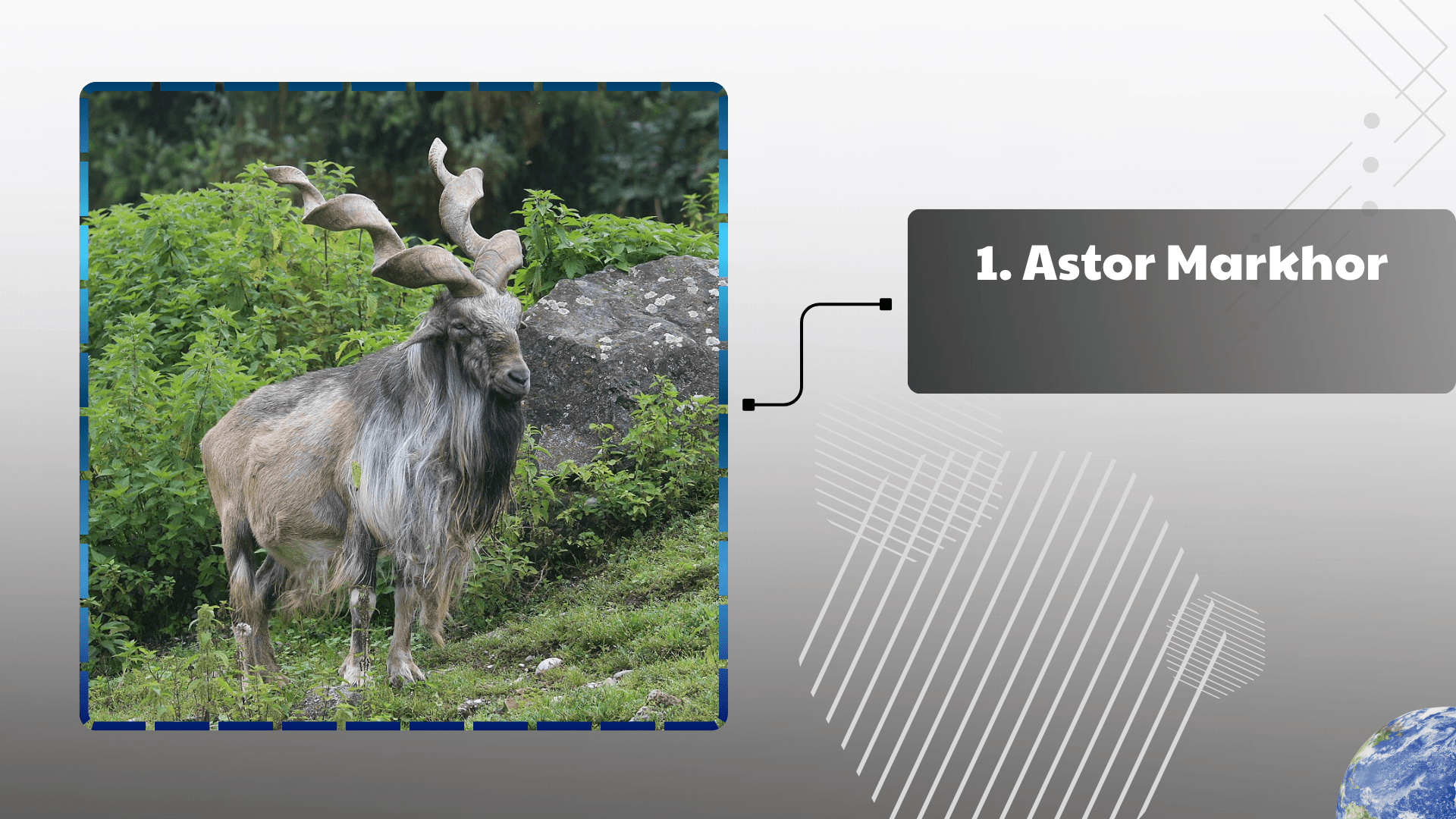
The Astor Markhor is one of the most iconic Types of Markhor and is widely recognized for its impressive corkscrew-shaped horns that can twist up to three full rotations. It is mainly found in northern Pakistan, particularly in the regions of Gilgit-Baltistan and parts of Kashmir.
This subspecies prefers steep, rocky mountain slopes where it can easily escape predators. Its strong hooves allow it to climb almost vertical cliffs, making it one of the most agile wild goats in the world. Males are significantly larger than females and develop long, spiraling horns used in dominance battles during mating season.
Astor Markhors are herbivores, feeding on grasses, leaves, and shrubs. During winter, they move to lower elevations to avoid deep snow. Their population has been affected by hunting and habitat fragmentation, but conservation programs in Pakistan have helped stabilize some herds.
2. Kabul Markhor (Capra falconeri megaceros)
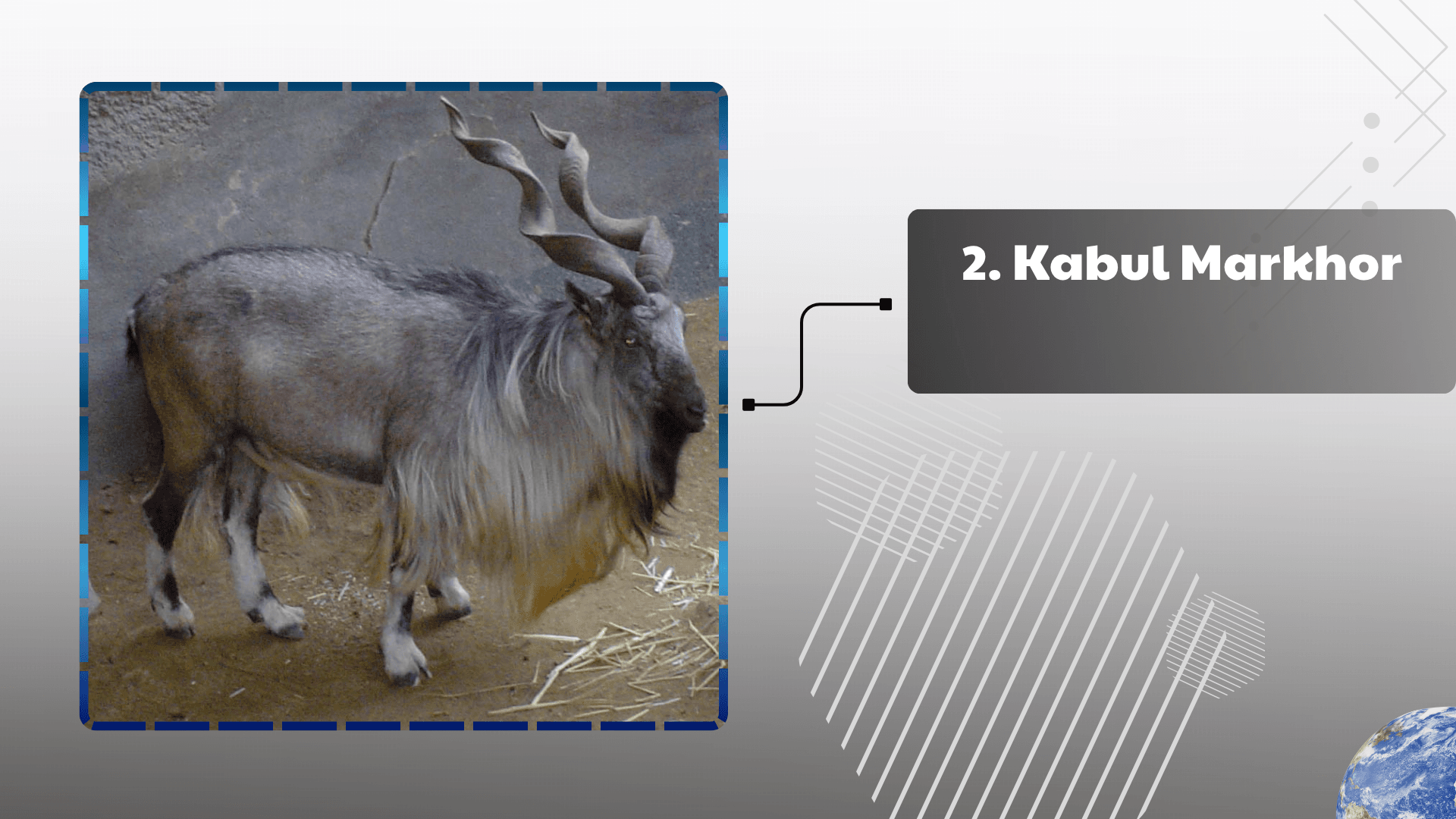
The Kabul Markhor is another important member of the Types of Markhor, primarily found in Afghanistan and parts of Pakistan. It is slightly different from other subspecies due to its horn structure, which is less tightly coiled and more widely flared.
This subspecies inhabits dry, rugged mountains and open rocky terrain. It is highly adapted to arid conditions, surviving on sparse vegetation and limited water sources. Its ability to thrive in such harsh environments makes it a true symbol of resilience.
Kabul Markhors are social animals and are often seen in small groups. Males become more solitary during the mating season. Due to decades of hunting pressure and instability in its range, this subspecies is considered vulnerable, though conservation efforts are improving its outlook in protected areas.
3. Bukharan Markhor (Capra falconeri heptneri)
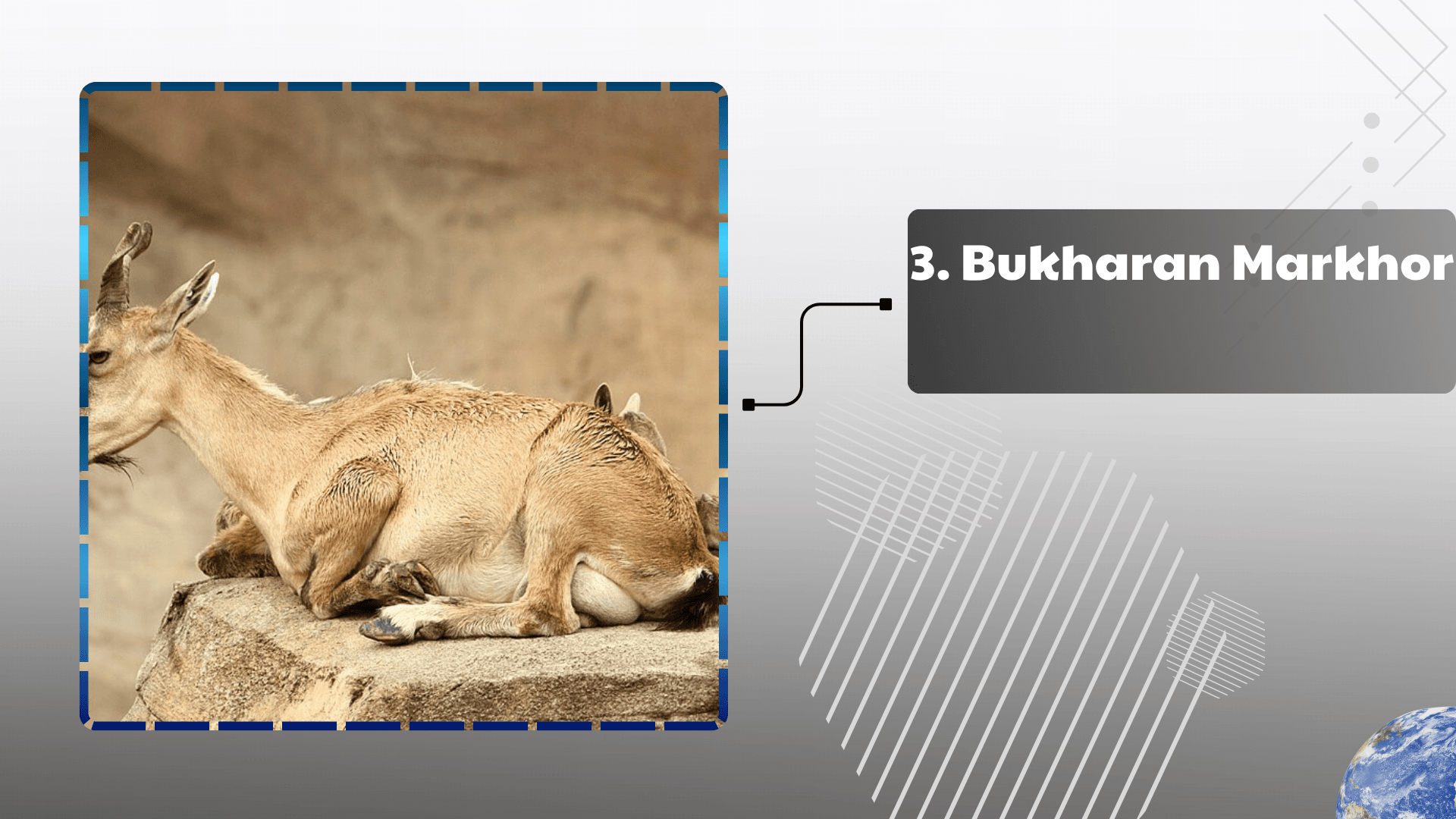
The Bukharan Markhor is one of the rarest Types of Markhor, found mainly in Tajikistan, Uzbekistan, and parts of Turkmenistan. It has a more compact body structure and horns that are less tightly twisted compared to other subspecies.
This markhor prefers dry mountain valleys and rugged cliffs with sparse vegetation. It is highly adapted to extreme temperature fluctuations, from hot summers to freezing winters. Its thick coat provides insulation against cold mountain winds.
Bukharan Markhors are critically important for biodiversity in Central Asia. Their population is small and fragmented, mainly due to habitat loss and historical hunting. Conservation programs in protected reserves have become essential for their survival.
4. Kashmiri Markhor
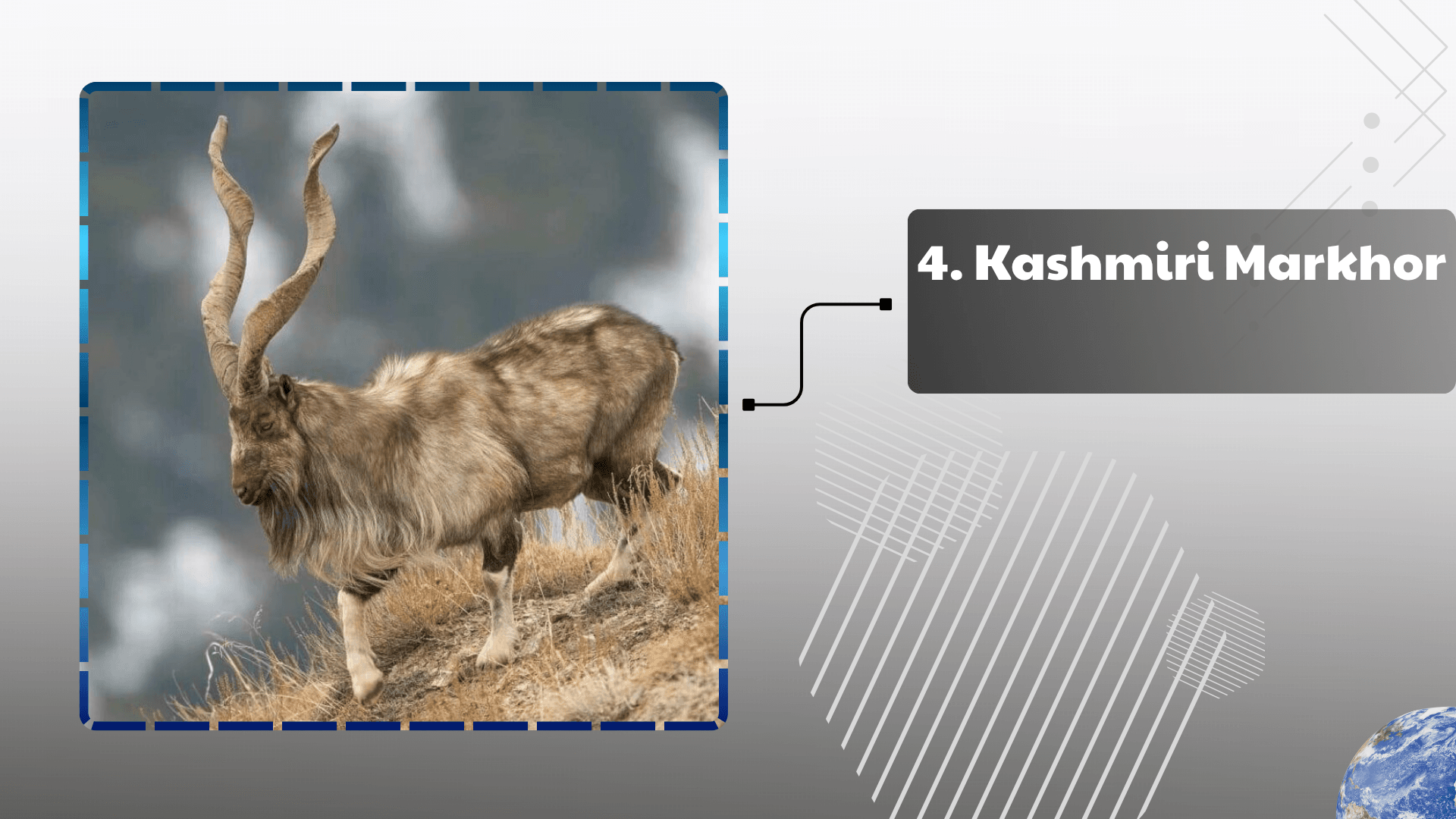
The Kashmiri Markhor is one of the most visually striking Types of Markhor, found in the Kashmir region of India and Pakistan. It is closely related to the Astor Markhor but is often distinguished by its horn curvature and slightly different coat pattern.
This subspecies lives in steep forested mountains where coniferous trees mix with rocky cliffs. It is extremely cautious and prefers areas with minimal human disturbance. Its diet includes grasses, shrubs, and tree leaves depending on seasonal availability.
Kashmiri Markhors are known for their strong climbing ability and excellent balance on narrow ledges. They are also culturally significant in the region, often symbolizing strength and wilderness. Habitat encroachment remains a major threat to their long-term survival.
5. Pir Panjal Markhor
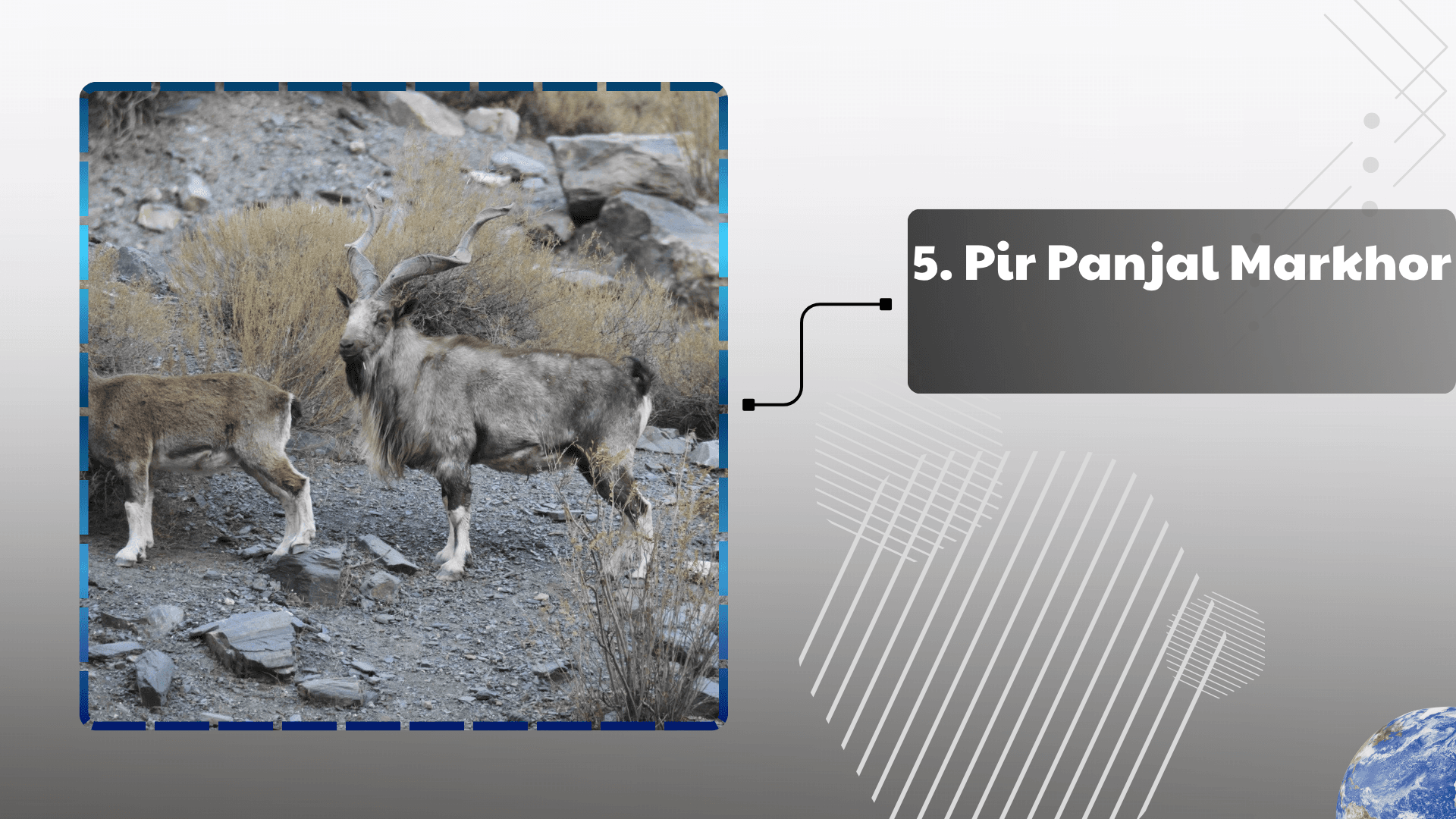
The Pir Panjal Markhor is one of the most geographically restricted Types of Markhor, found in the Pir Panjal mountain range of the western Himalayas. It is considered rare and highly localized compared to other subspecies.
This markhor is adapted to steep, forested slopes with dense vegetation and rocky outcrops. It is highly agile and capable of navigating extremely rugged terrain with ease. Its horns are large, but typically less tightly spiraled than those of the Astor Markhor.
Pir Panjal Markhors are shy and elusive, making them difficult to study in the wild. They are primarily active during early morning and late afternoon to avoid predators and human disturbance. Conservation efforts are critical, as habitat fragmentation has significantly reduced their range.
This first group of Types of Markhor shows how each subspecies has uniquely adapted to different mountain ecosystems—from dense Himalayan forests to dry Central Asian valleys. In the next section, we will continue exploring the remaining five types, including some of the rarest and most endangered wild goats in the world.
6. Straight-horned Markhor
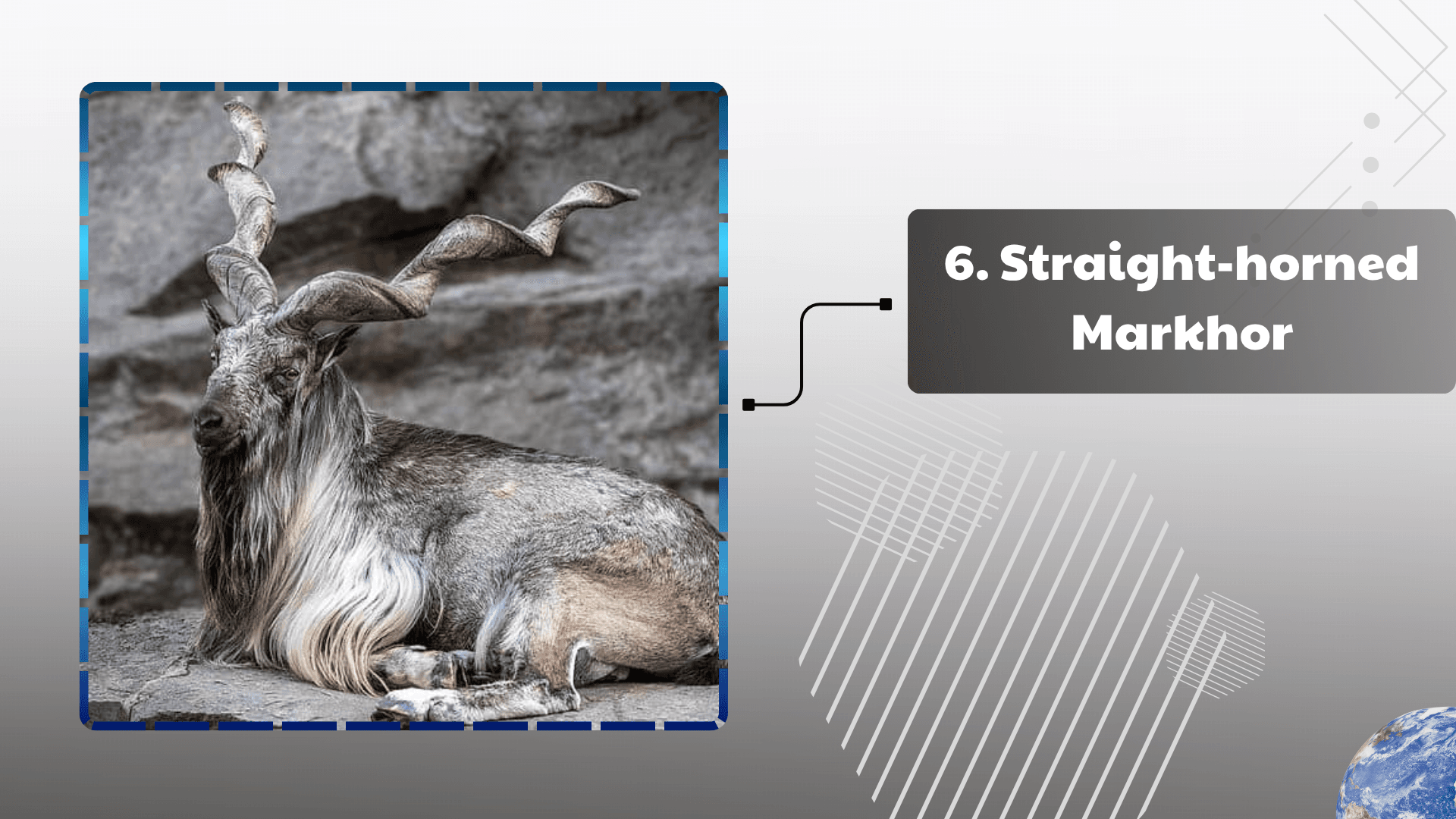
The Straight-horned Markhor is one of the most visually distinct Types of Markhor because of its relatively less twisted horns compared to other subspecies. Instead of forming tight corkscrew spirals, the horns grow in a more upright and slightly curved shape. This gives it a powerful, “antler-like” silhouette when viewed from a distance in rocky mountain landscapes.
This type of markhor is typically found in rugged mountainous regions of Central Asia where steep cliffs, dry valleys, and scattered vegetation dominate the terrain. Its body is built for endurance and climbing, with strong legs and hooves designed to grip narrow rock ledges. These adaptations allow it to escape predators such as wolves and snow leopards.
In terms of diet, the Straight-horned Markhor is a flexible herbivore. It feeds on grasses during warmer months and shifts to shrubs, dry leaves, and bark in winter. This seasonal feeding behavior helps it survive in harsh, unpredictable mountain climates.
Although not as widely studied as other subspecies, it plays a critical ecological role by helping shape vegetation growth in high-altitude ecosystems. Its grazing patterns prevent overgrowth and support biodiversity in alpine regions.
7. Flare-horned Markhor
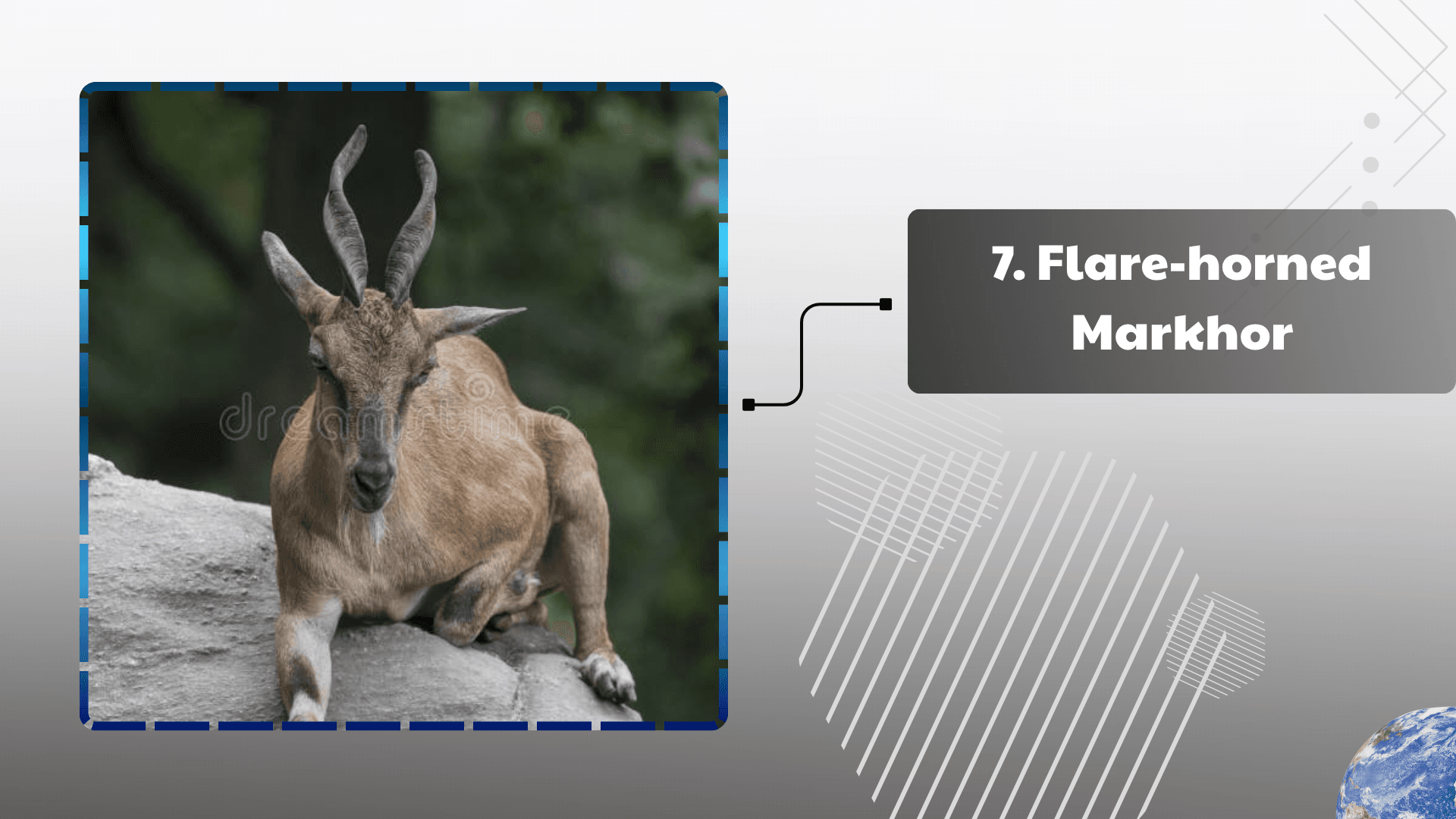
The Flare-horned Markhor is one of the most striking Types of Markhor due to its outward-flaring horn structure. Unlike tightly spiraled species, its horns curve outward and then slightly backward, creating a wide, dramatic shape that makes mature males highly recognizable.
This subspecies is found in remote mountain regions with mixed rocky cliffs and open alpine meadows. It prefers areas where it can easily scan for predators while still having access to grazing vegetation. Its strong vision and alert behavior make it one of the most cautious wild goats in its habitat.
Flare-horned Markhors often form small herds consisting of females and young, while males tend to be solitary outside the breeding season. During mating periods, males compete through horn clashes, using their wide horn structure to gain advantage in dominance fights.
This subspecies is highly sensitive to human disturbance. Habitat fragmentation and illegal hunting have reduced its population in some regions, making conservation monitoring extremely important for long-term survival.
8. Sulaiman Markhor
The Sulaiman Markhor is one of the most well-known Types of Markhor, primarily found in the Sulaiman mountain range of Pakistan and parts of Afghanistan. It is often considered one of the most iconic wild goats in South Asia due to its impressive appearance and cultural significance.
This subspecies is characterized by long, tightly spiraled horns that can grow significantly larger in mature males. These horns are used in dominance battles during the breeding season, where males compete for access to females.
Sulaiman Markhors are highly adapted to steep, dry mountains with sparse vegetation. They can survive long periods with limited water, relying on moisture from plants. Their agility allows them to climb near-vertical cliffs, making them difficult for predators to capture.
Conservation efforts have helped stabilize some populations in protected reserves, but hunting pressure remains a concern in unprotected areas. This species is also considered a national symbol in Pakistan, representing strength and resilience.
9. Chiltan Markhor
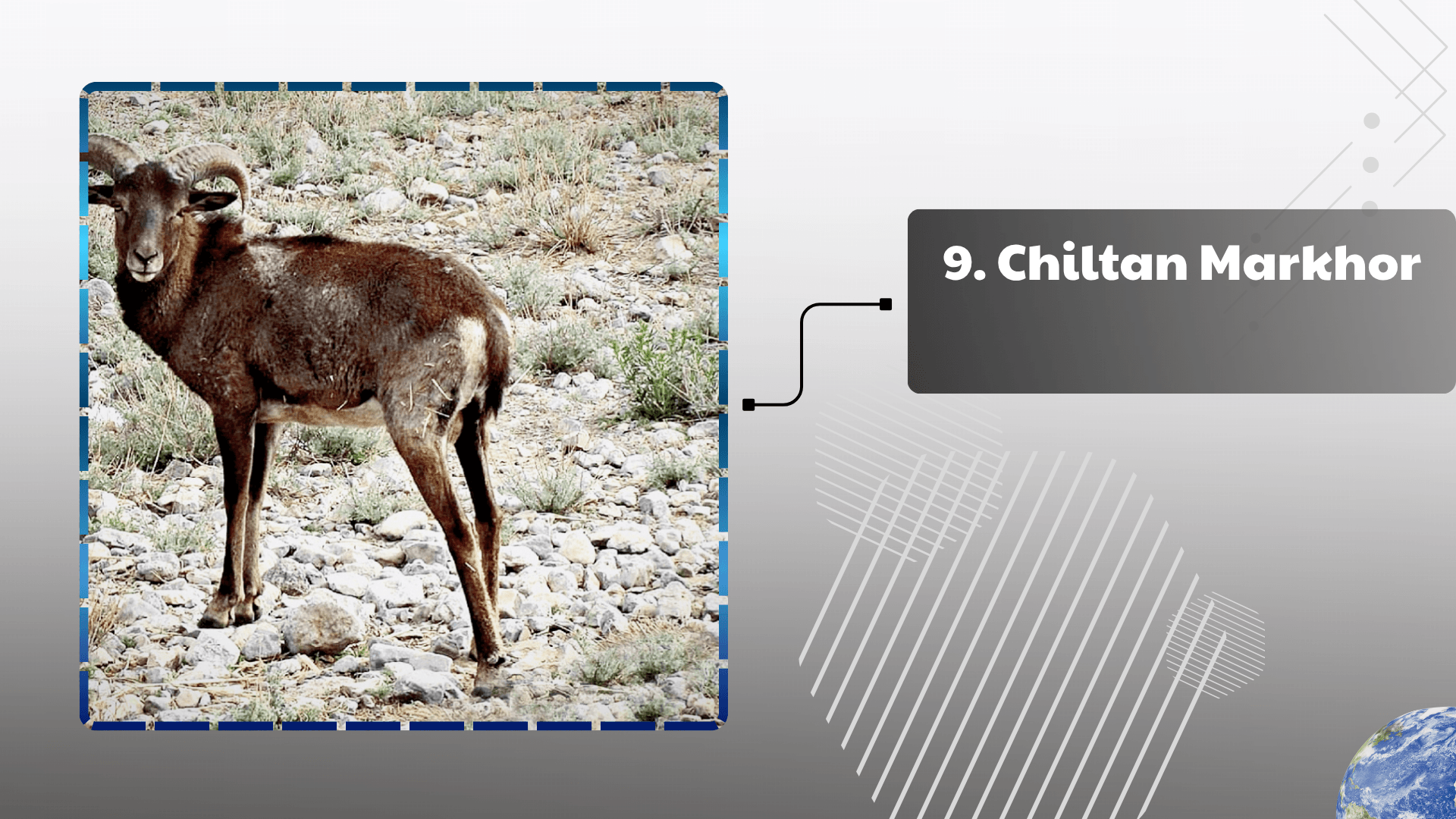
The Chiltan Markhor is one of the rarest Types of Markhor in the world and is primarily found in the Chiltan mountain range of Pakistan. It has a very limited distribution, which makes it highly vulnerable to environmental changes and human activity.
This subspecies is slightly smaller than others, but it still possesses strong climbing abilities and well-developed horns. Its habitat consists of rocky hills, dry scrublands, and sparse forest patches. The terrain is extremely harsh, requiring excellent adaptation for survival.
Chiltan Markhors are shy and elusive animals, rarely seen by humans. They are mostly active during early morning and late afternoon when temperatures are cooler. Their diet consists mainly of grasses, shrubs, and seasonal vegetation.
Due to its extremely limited range, this subspecies is a high conservation priority. Protected areas have been established to prevent further population decline, and breeding programs are helping support its survival.
10. Tajik Markhor
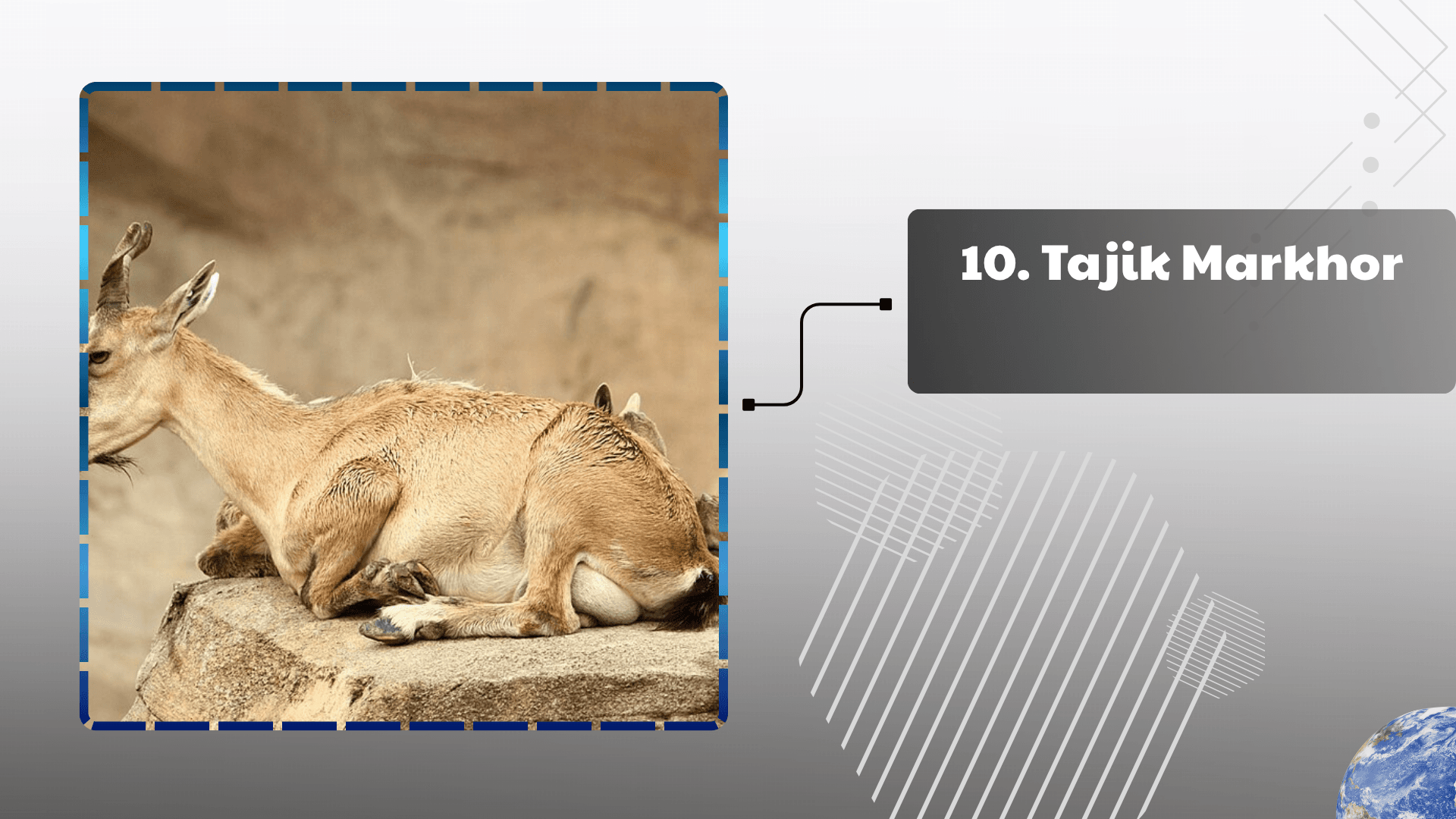
The Tajik Markhor is one of the northernmost Types of Markhor, found in the mountainous regions of Tajikistan. It is adapted to extremely cold climates and steep, rocky terrain, often living at high elevations where vegetation is sparse and winters are severe.
This subspecies has strong, thick horns that are moderately spiraled and adapted for both defense and mating competition. Its body is covered in a dense coat that helps it withstand freezing temperatures and strong mountain winds.
Tajik Markhors are highly resilient animals capable of surviving in isolated mountain ecosystems. They move seasonally to lower elevations during winter months to access food sources buried under snow.
Because of its remote habitat, this subspecies is less studied than others, but it remains an important part of Central Asian mountain biodiversity. Conservation efforts are increasingly focused on protecting its fragile alpine ecosystem.
Conclusion: The Diversity of Markhor Species
The full range of Types of Markhor demonstrates how one species can adapt into multiple unique forms across different mountain ecosystems. From tightly spiraled horns of the Sulaiman Markhor to the rare Chiltan subspecies, each variation reflects millions of years of adaptation to rugged terrain, harsh climates, and predator-rich environments.
Despite their strength and adaptability, all markhor types face threats from habitat loss, illegal hunting, and environmental change. Conservation programs across Asia play a critical role in protecting these iconic wild goats for future generations.
Understanding the diversity of markhor is not just about wildlife classification—it is about appreciating one of nature’s greatest mountain survivors and the fragile ecosystems they represent. Could protecting these incredible animals help preserve the entire mountain biodiversity they depend on?
50+ FAQs About Types of Markhor (Detailed Answers)
1. What are markhor?
Markhor are large wild goats belonging to the species Capra falconeri. They are native to the mountainous regions of Central and South Asia. They are best known for their impressive spiral horns, strong climbing ability, and adaptation to steep, rocky terrain.
2. How many types of markhor exist?
There are several recognized subspecies of markhor, commonly grouped into around 5–6 main biological subspecies, but culturally and regionally expanded into about 10 “types.” These include Astor, Kabul, Bukharan, Sulaiman, and others adapted to specific mountain ranges.
3. Where do markhor live?
Markhor live in rugged mountain regions across Pakistan, Afghanistan, India, Tajikistan, Uzbekistan, and surrounding Central Asian countries. They prefer steep cliffs, rocky slopes, and alpine valleys where they can easily escape predators.
4. Why do markhor have spiral horns?
Male markhor have spiral horns used for mating competition and defense. The twisting shape develops as they grow older and is influenced by genetics and subspecies differences. The horns can also be used to display dominance during fights.
5. Are all markhor horns the same?
No. Some types have tightly corkscrewed horns, while others have more open or flared horn shapes. For example, Astor markhor have tight spirals, while Straight-horned markhor have less twisted horns.
6. What do markhor eat?
Markhor are herbivores. They eat grasses, leaves, shrubs, and small branches. In winter, they rely more on dry vegetation and bark when fresh food is scarce.
7. Are markhor dangerous to humans?
Markhor are not aggressive toward humans. They are shy and avoid contact. However, males can become defensive during the mating season if threatened or cornered.
8. How big are markhor?
Adult male markhor can weigh between 80–120 kg depending on the subspecies, while females are smaller. They can reach over 1.5 meters in body length, excluding horns.
9. Why are markhor called “screw-horned goats”?
They are called screw-horned goats because of their unique spiral-shaped horns that resemble a twisted screw or corkscrew.
10. What is the rarest type of markhor?
The Bukharan and Chiltan markhor are among the rarest due to their limited range and small population sizes.
11. Are markhor endangered?
Markhor are currently listed as Near Threatened. Some populations have recovered due to conservation efforts, but they still face threats from hunting and habitat loss.
12. Why were markhor hunted in the past?
They were hunted for their meat, horns, and as trophy animals. Their impressive horns made them highly valued in illegal and regulated hunting markets.
13. What predators hunt markhor?
Snow leopards, wolves, and lynxes are natural predators of markhor, especially targeting young or weak individuals.
14. How do markhor survive in mountains?
They survive using strong hooves for climbing, excellent balance, and the ability to move quickly across steep cliffs that predators cannot access easily.
15. Do markhor live in groups?
Yes, females and young usually form small herds, while males are often solitary except during mating season.
16. What is the mating behavior of markhor?
During mating season, males compete by clashing horns to establish dominance and gain access to females.
17. How long do markhor live?
In the wild, markhor typically live 10–13 years, depending on environmental conditions and predation risks.
18. Can markhor climb trees?
No, they do not climb trees. However, they are extremely skilled at climbing steep rocky cliffs and vertical slopes.
19. What makes markhor special?
Their spiral horns, extreme climbing ability, and adaptation to harsh mountain environments make them one of the most unique wild goats in the world.
20. Where can you see markhor in the wild?
They can be seen in protected areas and national parks in Pakistan, Afghanistan, and Central Asia, especially in remote mountain regions.
21. What is the habitat of markhor?
Their habitat includes dry mountains, alpine forests, rocky cliffs, and steep valleys with limited vegetation.
22. Are markhor good climbers?
Yes, they are among the best climbers in the animal kingdom, capable of navigating near-vertical rock faces.
23. Why are markhor important to ecosystems?
They help control vegetation growth and serve as prey for large predators, maintaining ecological balance in mountain ecosystems.
24. How do markhor avoid predators?
They use steep cliffs as escape routes and rely on vigilance and herd behavior to detect danger early.
25. Do markhor migrate?
They do not migrate long distances but may move seasonally between higher and lower elevations.
26. What is the difference between markhor and ibex?
Both are wild goats, but markhor have distinctive spiral horns, while ibex usually have backward-curving horns.
27. Are markhor related to domestic goats?
Yes, domestic goats share a common ancestor with wild goats like markhor.
28. What is the biggest threat to markhor?
Habitat loss and illegal hunting are the biggest threats, along with human encroachment.
29. How are markhor protected?
They are protected through national parks, hunting regulations, and conservation breeding programs.
30. Can markhor be domesticated?
No, markhor are wild animals and are not suitable for domestication.
31. Why are markhor horns valuable?
Their horns are considered trophies in hunting culture, which has contributed to illegal poaching in the past.
32. Do female markhor have horns?
Yes, but they are much smaller and less developed compared to males.
33. What is the role of markhor in culture?
In regions like Pakistan, markhor is a national symbol representing strength and resilience.
34. How fast can markhor run?
They are not built for speed but can move quickly over rocky terrain when escaping predators.
35. Are markhor active during the day?
Yes, they are mainly diurnal, active during early morning and late afternoon.
36. How do markhor communicate?
They use body language, vocal sounds, and scent marking to communicate.
37. What is the social structure of markhor?
Females form groups with young, while males are mostly solitary except during breeding season.
38. Do markhor fight often?
Males fight during mating season to compete for females, using their horns in controlled clashes.
39. What color are markhor?
They usually have brown, gray, or reddish coats that help them blend into rocky environments.
40. Why do markhor have strong legs?
Strong legs help them climb steep cliffs and maintain balance on narrow rock ledges.
41. Are markhor nocturnal?
No, they are mainly active during daylight hours.
42. What is the breeding season of markhor?
Breeding usually occurs in winter months depending on region and climate.
43. How many babies do markhor have?
Females typically give birth to one or two kids at a time.
44. How long is markhor pregnancy?
Gestation lasts about 5–6 months.
45. Do markhor have good eyesight?
Yes, they have excellent vision to detect predators from long distances.
46. Can markhor swim?
They are not known for swimming and prefer rocky terrain.
47. Why are markhor important for conservation?
They are flagship species for mountain ecosystem conservation and help protect biodiversity.
48. What is the population trend of markhor?
Some populations are recovering due to conservation, but others remain vulnerable.
49. Are markhor used in tourism?
Yes, wildlife tourism in protected areas sometimes includes markhor watching.
50. What makes markhor unique among wild goats?
Their spiral horns, extreme agility, and ability to survive in harsh mountain environments make them unique.
51. What will happen if markhor disappear?
Their disappearance would disrupt mountain ecosystems and reduce biodiversity in Central Asian highlands.