

The types of Starling represent one of the most diverse and widely distributed groups of passerine birds in the world. Belonging to the family Sturnidae, starlings are known for their intelligence, social behavior, and remarkable ability to mimic sounds. These birds are found across Europe, Asia, Africa, and parts of the Pacific islands, where they thrive in forests, grasslands, urban areas, and farmlands. Many species display glossy, iridescent feathers that shimmer in sunlight, making them some of the most visually striking birds in the wild. In this guide, we explore 30 types of starling, focusing on their identification features, habitats, behavior, and ecological roles. Whether you are a birdwatcher or a wildlife enthusiast, starlings offer a fascinating look into complex avian social systems and adaptation strategies.
1. European Starling
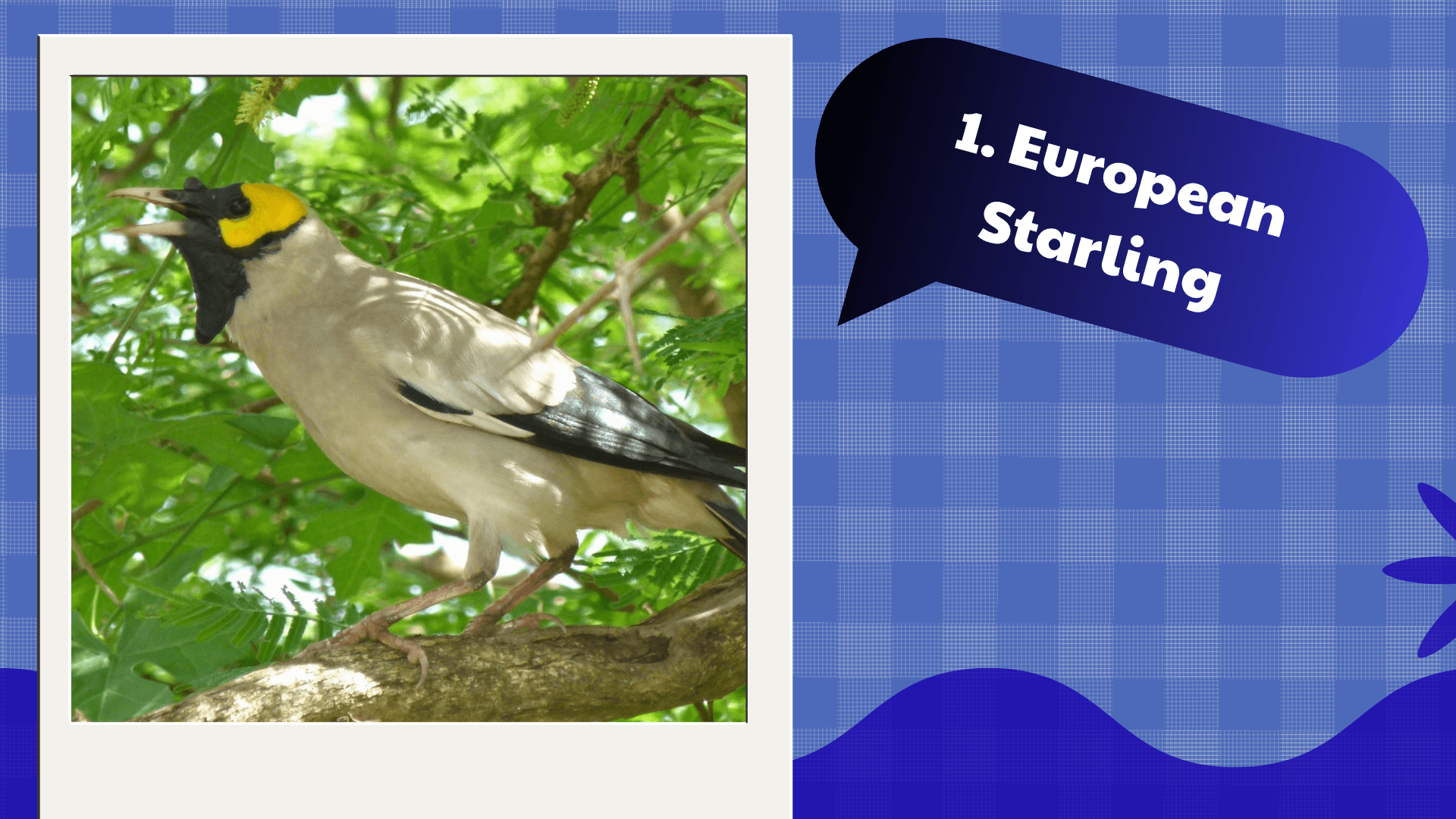
The European Starling is one of the most well-known types of Starling and has been widely introduced across North America and other regions. It has a compact body, short tail, and glossy black plumage with purple and green iridescence that becomes more visible in sunlight.
This species is highly social and often gathers in massive flocks called murmurations, which create stunning synchronized flight patterns in the sky. These formations help protect them from predators and improve communication within the group.
European Starlings are extremely adaptable and can thrive in urban environments, farmlands, and open woodlands. Their diet is highly varied, including insects, fruits, seeds, and waste grains.
One of their most remarkable traits is vocal mimicry. They can imitate sounds from other birds, animals, and even human-made noises such as car alarms and machinery.
Although considered invasive in some regions, they play a role in controlling insect populations and dispersing seeds.
2. Common Starling
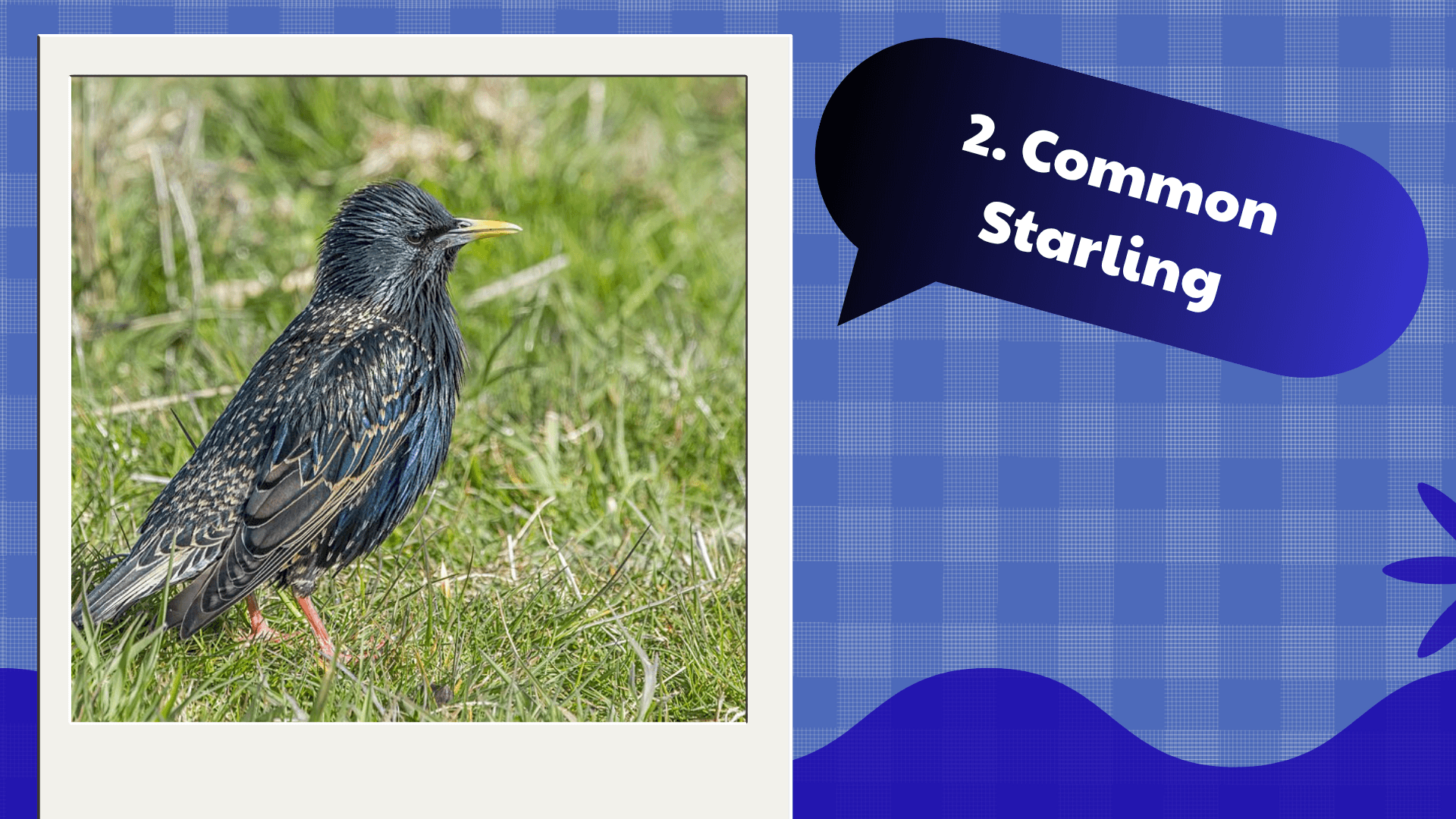
The Common Starling is another widely recognized member of the types of Starling, closely related to the European Starling and often considered part of the same complex species.
It features a sleek black body with metallic sheen and white speckling during the non-breeding season. This seasonal change in appearance makes it particularly interesting for birdwatchers.
Common Starlings are highly social birds that form large flocks for feeding and roosting. These flocks can number in the thousands, especially during migration or winter months.
Their diet includes insects, worms, berries, and grains. They forage primarily on the ground using their strong beaks to probe soil and leaf litter.
They are also known for their vocal abilities, capable of producing a wide range of whistles, clicks, and mimicked sounds.
3. Spotless Starling
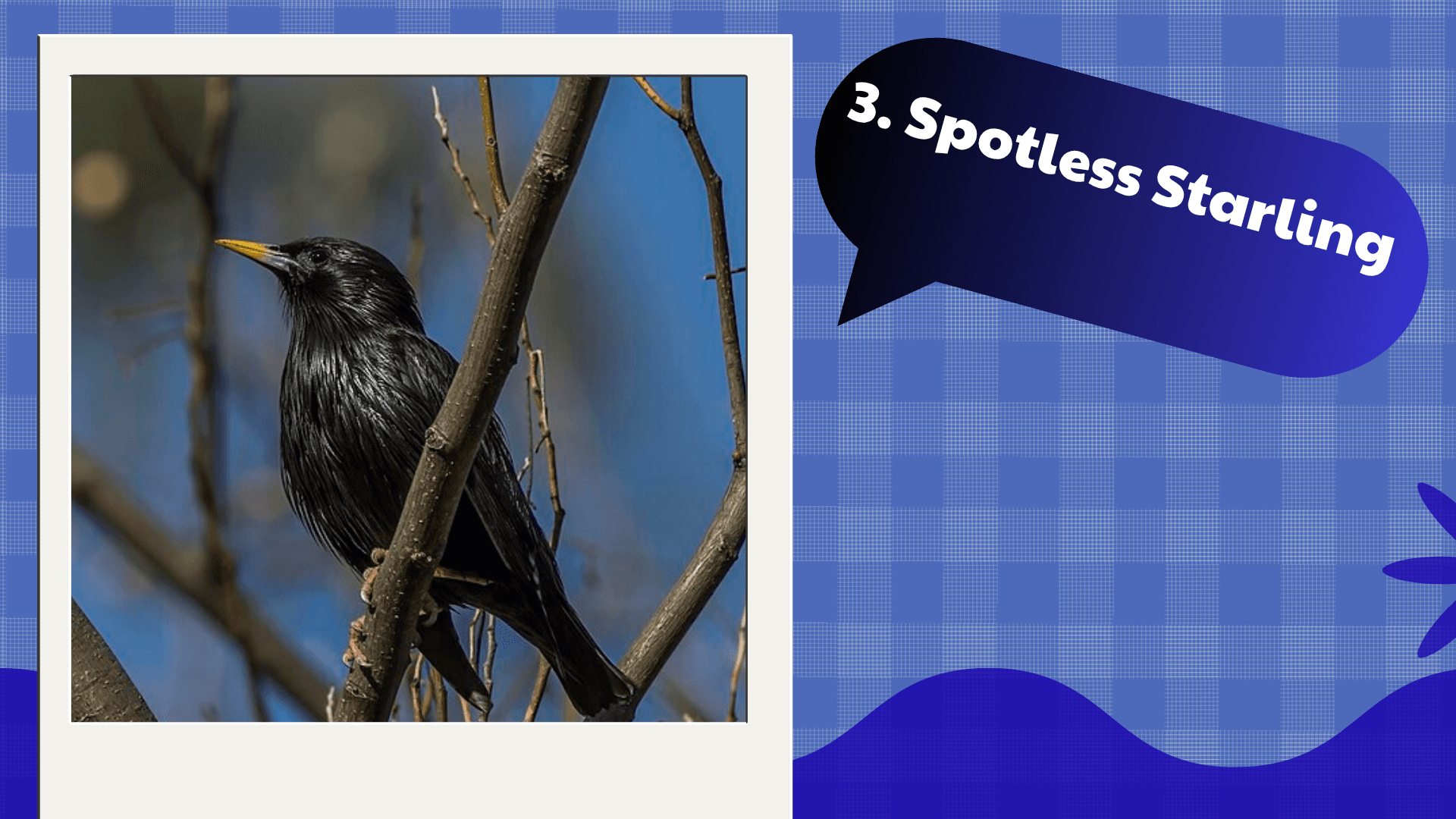
The Spotless Starling is one of the distinctive types of Starling found mainly in southern Europe and parts of North Africa. Unlike many starling species, it lacks the white speckling commonly seen in winter plumage.
This species has a glossy dark body with purple and green highlights, giving it a smooth and uniform appearance throughout the year.
Spotless Starlings prefer open woodlands, farmlands, and urban parks. They are highly adaptable and often nest in buildings and cavities.
Their diet consists mainly of insects, fruits, and small invertebrates. They are particularly active during breeding season when they require high protein intake.
They are social birds and often form flocks outside the breeding season, although they may be less densely grouped compared to other starling species.
4. Rosy Starling
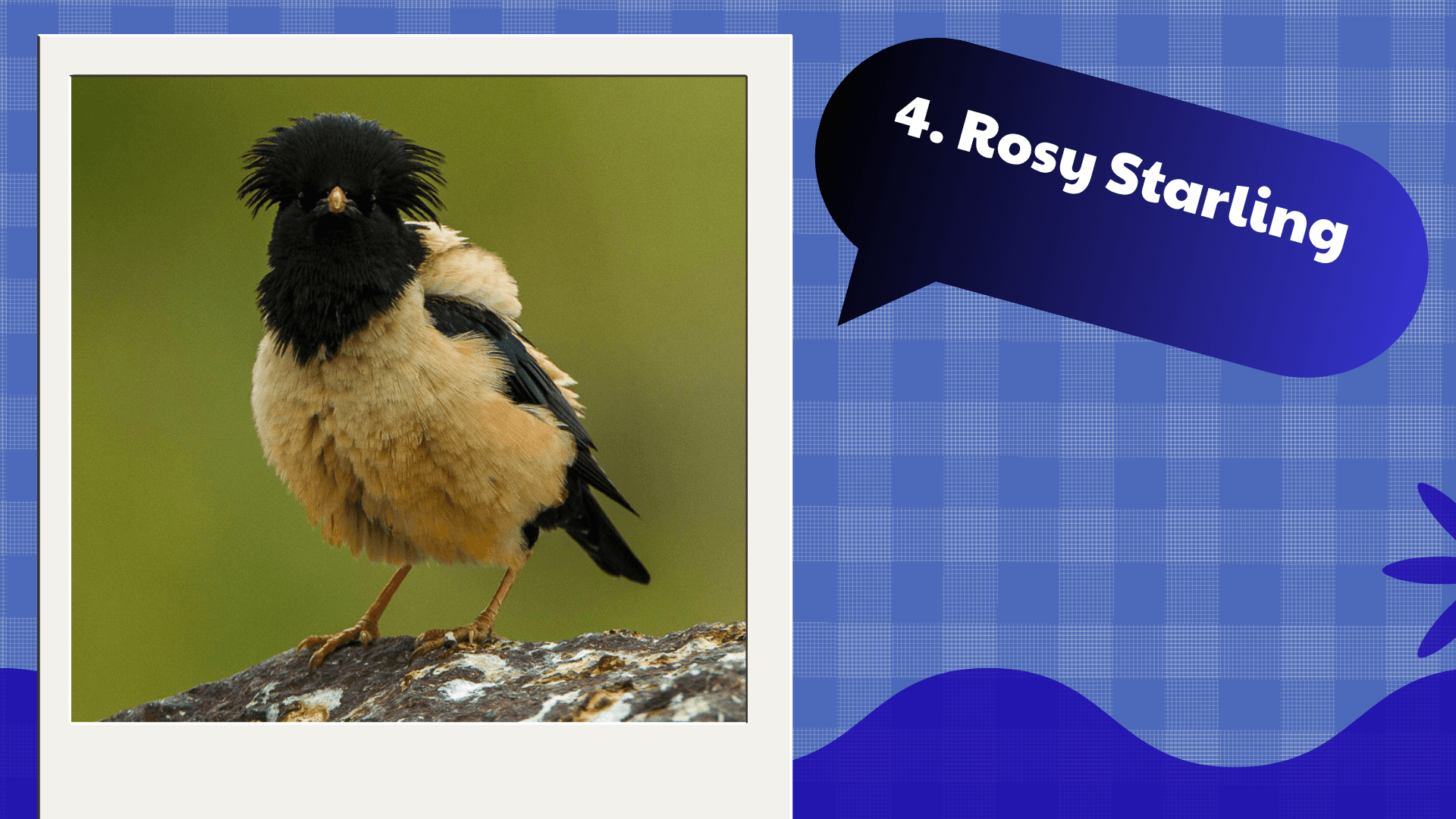
The Rosy Starling is one of the most visually striking types of Starling, known for its soft pink body contrasted with a glossy black head, wings, and tail.
This species breeds in Central Asia and migrates in large flocks to India and surrounding regions during the non-breeding season.
Rosy Starlings are highly social and often travel in large, tightly coordinated groups. Their migrations are among the most spectacular bird movements in Asia.
They feed mainly on insects, especially locusts and grasshoppers, making them beneficial for agriculture in some areas.
Their seasonal appearance and long-distance migration make them a favorite among birdwatchers and wildlife photographers.
5. Superb Starling
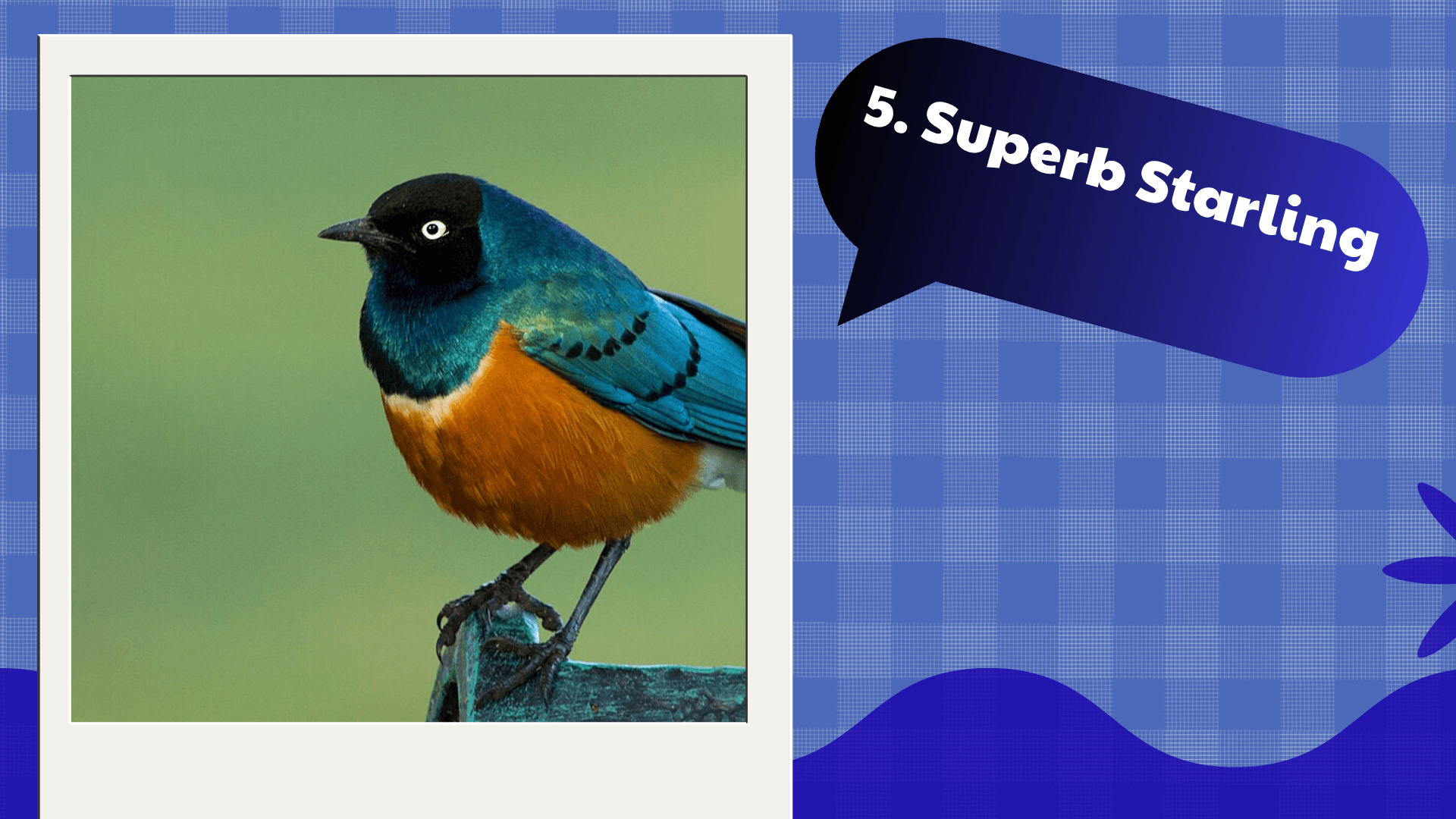
The Superb Starling is one of the most colorful types of Starling, found in East Africa. It features bright turquoise-blue upperparts, an orange belly, and a striking white breast band.
This species inhabits savannas, dry grasslands, and open woodlands, often near human settlements where food is readily available.
Superb Starlings are highly social and often seen in pairs or small groups. They are territorial during breeding season but may form larger flocks outside it.
Their diet includes insects, fruits, seeds, and occasionally small vertebrates. They are opportunistic feeders and adapt well to seasonal changes.
Their vibrant coloration and confident behavior make them one of the most admired birds in African wildlife.
These first five types of Starling demonstrate the incredible diversity within this bird family, ranging from highly adaptive urban species to brilliantly colored African savanna birds. In the next section, we will continue exploring additional starling species with equally fascinating traits and behaviors.
6. Golden-breasted Starling
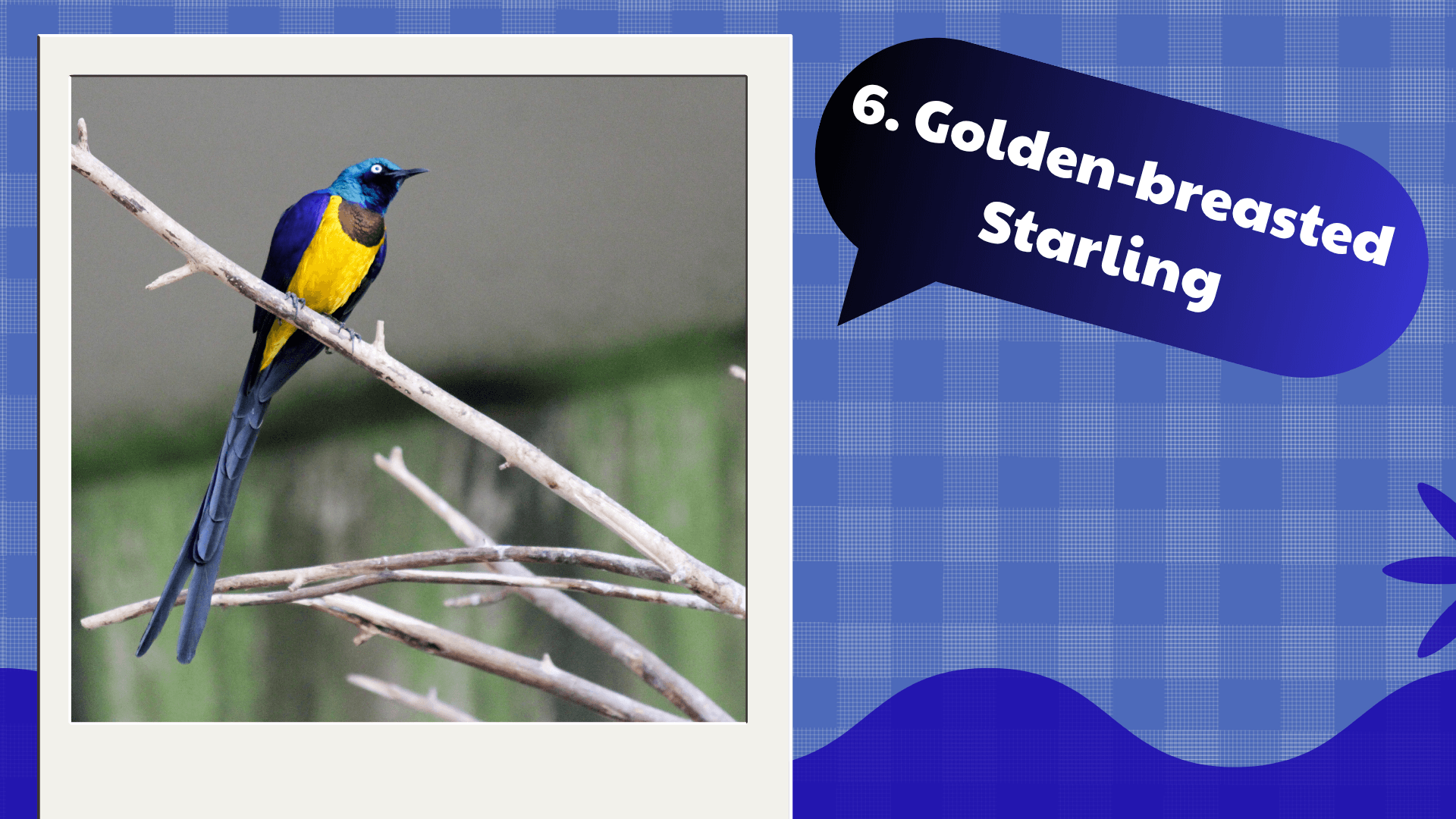
The Golden-breasted Starling is one of the most visually striking types of Starling, found in the dry savannas and open woodlands of East Africa. It is easily recognized by its shimmering turquoise-blue body contrasted with a vivid golden-orange chest.
This species prefers warm, arid environments where it can perch on shrubs, acacia trees, and open branches while scanning for insects. It is commonly seen in small groups or pairs rather than massive flocks.
Golden-breasted Starlings feed mainly on insects such as beetles, ants, and grasshoppers. They also consume fruits and small invertebrates when available. Their feeding behavior is often active and agile, with short flights between perches.
They are territorial birds during breeding season and will defend nesting areas against intruders. Nests are usually built in tree cavities or abandoned woodpecker holes.
Because of their vibrant coloration and calm behavior, they are considered one of the most beautiful African members among all types of Starling.
7. Cape Glossy Starling

The Cape Glossy Starling is a highly iridescent bird belonging to the diverse group of types of Starling native to southern Africa.
Its feathers shimmer with deep blue, green, and purple tones depending on lighting conditions. This metallic appearance helps it stand out among other starling species.
Cape Glossy Starlings are commonly found in savannas, farmlands, and suburban gardens. They are highly adaptable and often benefit from human-altered environments.
Their diet includes insects, fruits, seeds, and occasionally scraps from human activity. They are opportunistic feeders and can adjust quickly to seasonal food changes.
They are social birds and may gather in small flocks, especially when feeding or roosting. Their vocalizations are varied, including whistles and sharp calls used for communication.
8. Violet-backed Starling
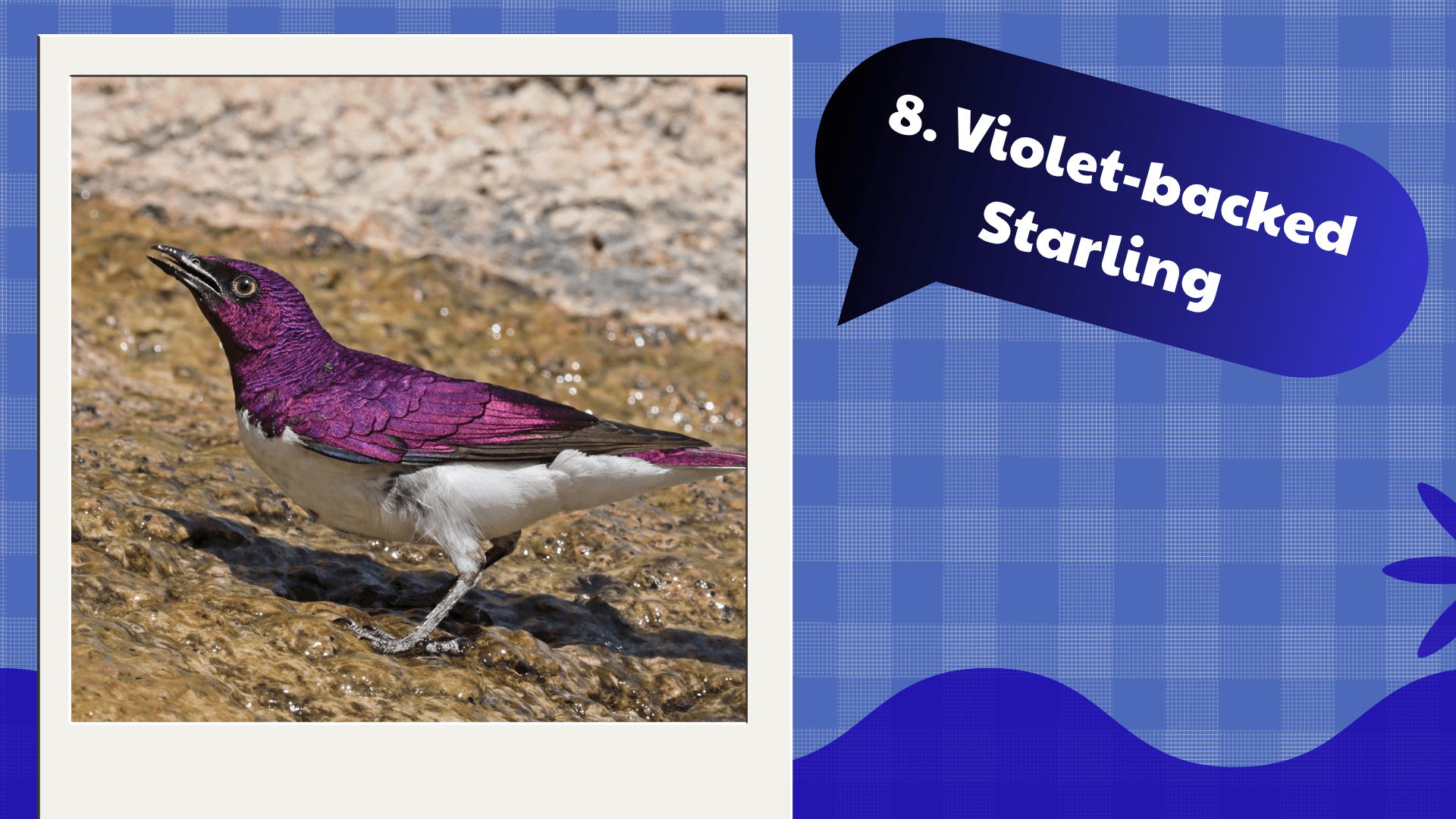
The Violet-backed Starling is one of the most elegant types of Starling, known for its sexual dimorphism. Males display a brilliant violet or purple back with a contrasting white underside, while females are more subdued with brownish plumage.
This species is widely distributed across sub-Saharan Africa, particularly in woodland and savanna habitats.
Violet-backed Starlings are typically solitary or found in pairs, unlike many highly social starling species. They prefer forest edges and lightly wooded areas where they can forage easily.
Their diet consists mainly of fruits and insects. They are especially important for seed dispersal in tropical ecosystems.
During breeding season, males perform displays to attract females, showcasing their vibrant plumage in sunlight.
9. Wattled Starling
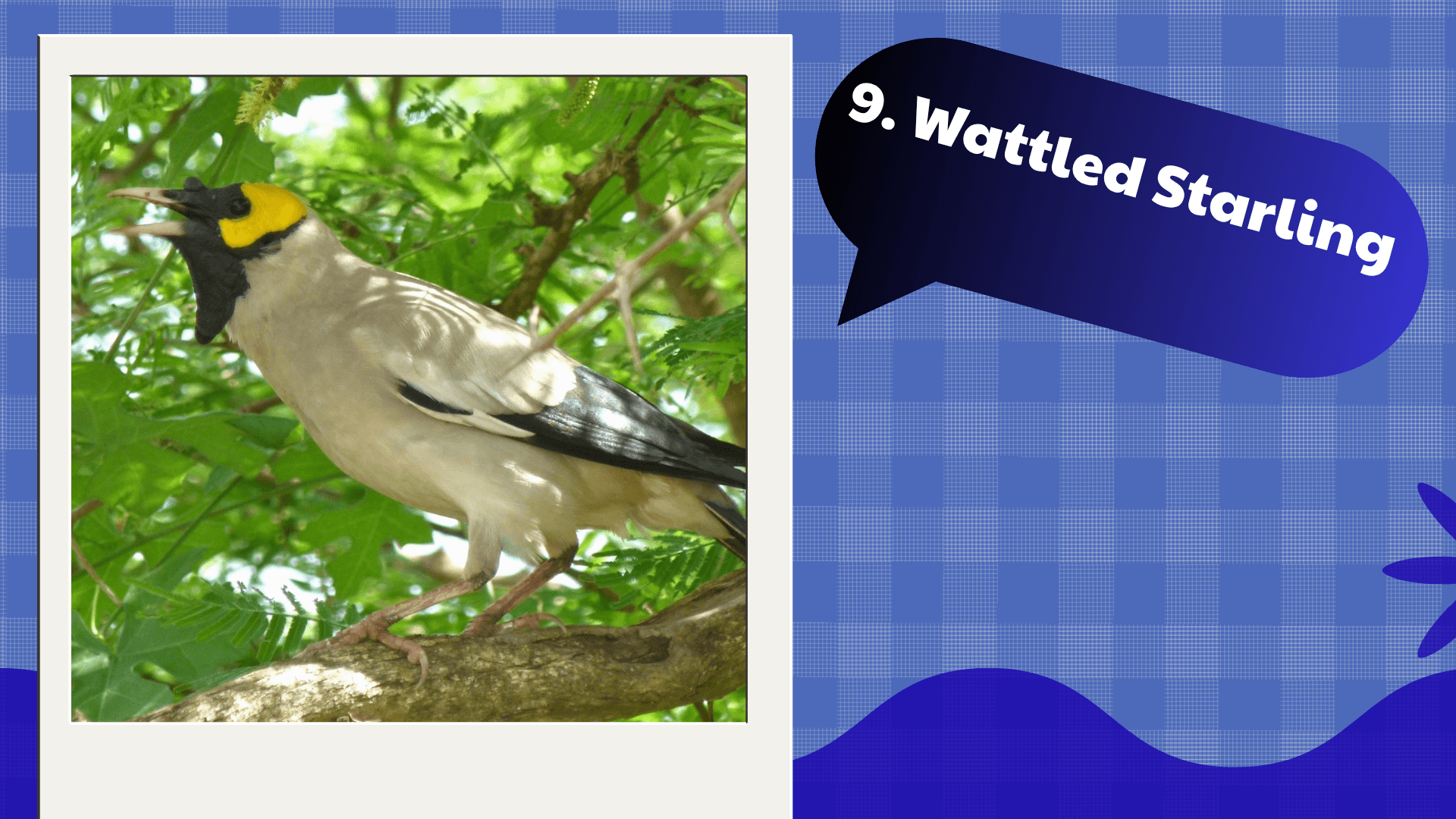
The Wattled Starling is one of the more unusual types of Starling, known for the fleshy wattles located near its eyes. These distinctive features become more prominent during the breeding season.
This species is found in eastern and southern Africa, often in grasslands, savannas, and open agricultural areas.
Wattled Starlings are highly social and often form large flocks, especially outside the breeding period. These flocks can be noisy and active, particularly during feeding times.
Their diet consists of insects, seeds, and grains. They are known to forage on the ground in groups, often following grazing animals to catch disturbed insects.
The wattles are believed to play a role in courtship displays and species recognition.
10. Red-winged Starling

The Red-winged Starling is a striking member of the types of Starling found across parts of southern and eastern Africa.
It has glossy black plumage with bright red or orange wing patches that become visible during flight, making it easy to identify.
This species inhabits rocky cliffs, savannas, and mountainous regions. It is often seen perched on rocks or buildings, scanning its surroundings.
Red-winged Starlings are omnivorous, feeding on insects, fruits, and small invertebrates. They are adaptable and can survive in both natural and semi-urban environments.
They are generally social and may form loose colonies, especially during nesting periods on cliffs or rocky outcrops.
11. Asian Glossy Starling

The Asian Glossy Starling is one of the most widespread types of Starling across South and Southeast Asia. It is known for its sleek, iridescent plumage that reflects shades of green, blue, and purple depending on sunlight exposure.
This species thrives in a variety of environments including forests, mangroves, agricultural land, and urban areas. Its adaptability allows it to coexist closely with human populations in many regions.
Asian Glossy Starlings are social birds and are often seen in small to medium-sized flocks. They communicate through sharp calls and soft whistles while feeding or roosting.
Their diet consists mainly of fruits, nectar, insects, and small invertebrates. They play an important role in pollination and seed dispersal in tropical ecosystems.
Because of their widespread distribution and adaptability, they are considered one of the most successful types of Starling in Asia.
12. Common Myna
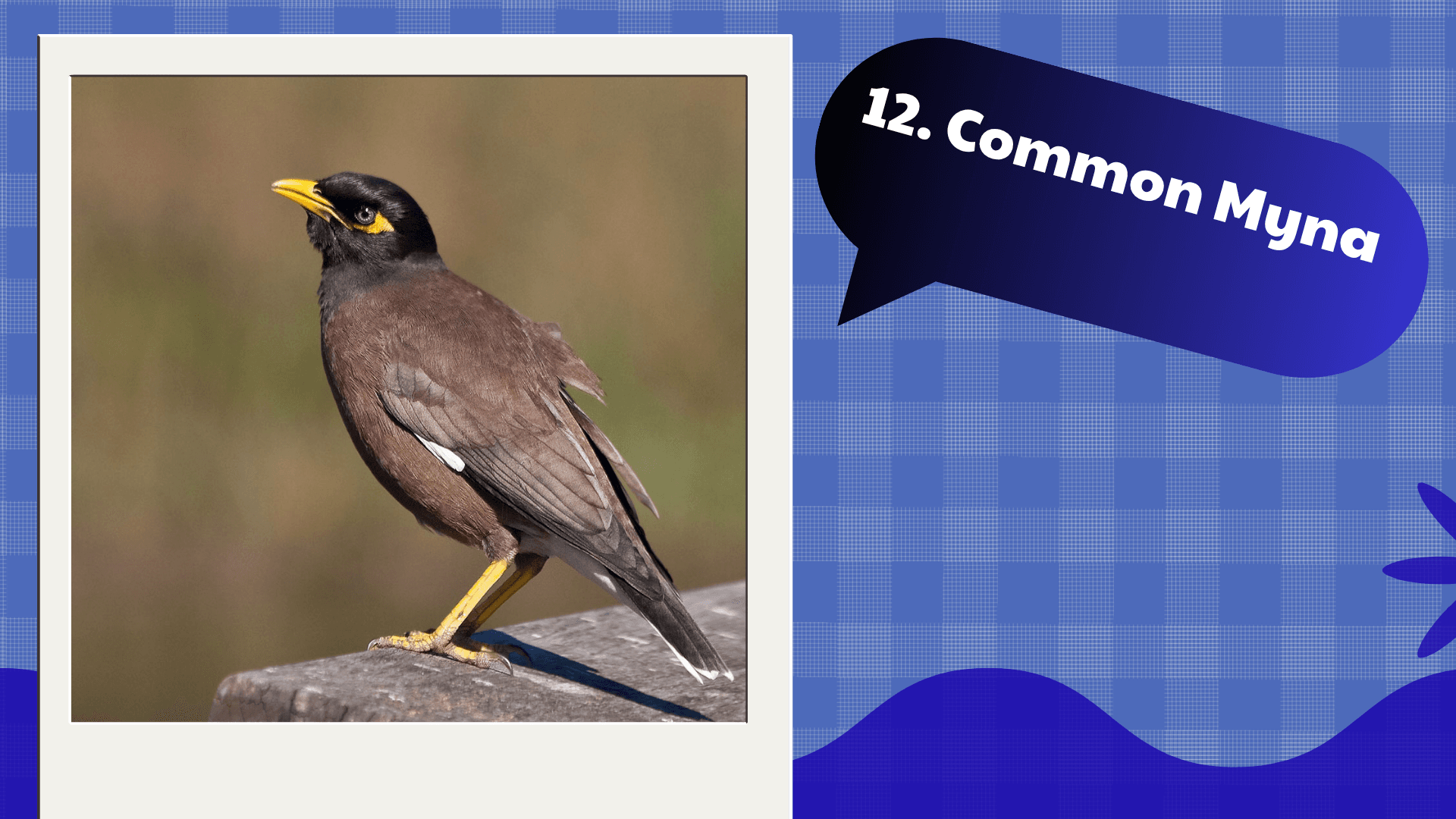
The Common Myna is one of the most familiar types of Starling, especially in urban areas across Asia and parts of the world where it has been introduced.
It has a brown body, black head, and distinctive yellow eye patches and beak. White wing patches are visible during flight, making identification easier.
Common Mynas are extremely adaptable and thrive in cities, farmlands, and open woodlands. They are often seen scavenging around human settlements.
Their diet is highly varied and includes insects, fruits, grains, food scraps, and even small vertebrates. This opportunistic feeding behavior contributes to their success in urban environments.
They are vocal birds with loud calls and can mimic human speech and environmental sounds, similar to other starling species.
13. Hill Myna
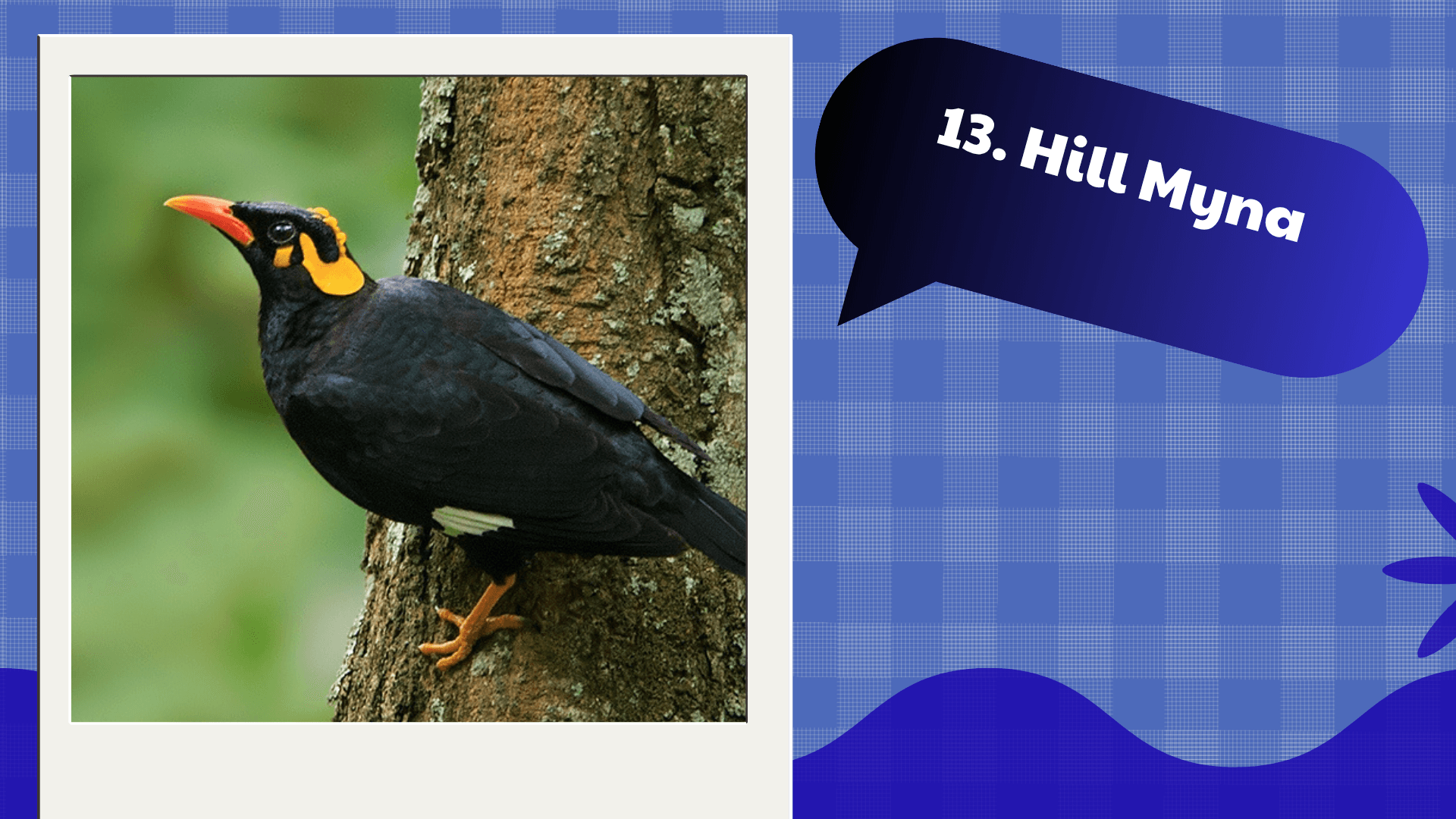
The Hill Myna is one of the most famous talking birds among all types of Starling. It is well known for its exceptional ability to mimic human speech with remarkable clarity.
This species is found in forested regions of South and Southeast Asia, particularly in India, Indonesia, and Malaysia.
Hill Mynas have glossy black plumage with striking yellow skin patches around the eyes and beak. Their appearance is simple but elegant compared to more colorful starlings.
They prefer dense forests and wooded hills where they nest in tree cavities. They are social birds and often travel in pairs or small groups.
Their diet includes fruits, insects, and nectar. They are important seed dispersers in tropical forests.
14. Bali Myna
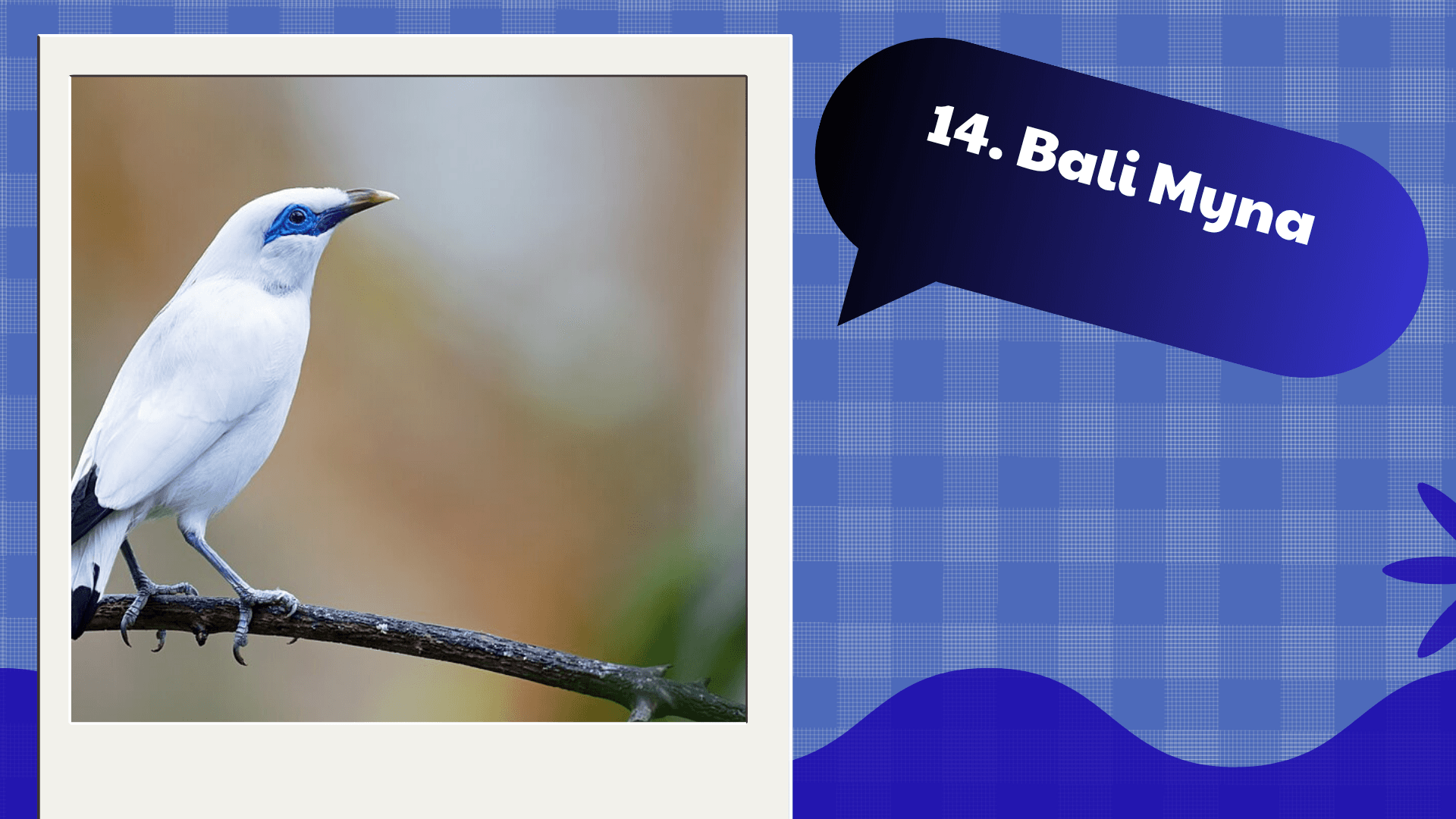
The Bali Myna is one of the rarest and most endangered types of Starling in the world. It is endemic to the island of Bali in Indonesia.
It is easily recognized by its pure white plumage, black wing tips, and bright blue facial skin around the eyes. Its striking appearance makes it highly sought after in the illegal wildlife trade.
Bali Mynas inhabit forested areas, especially in protected national parks and conservation zones. They are often seen in small flocks or pairs.
Their diet consists of fruits, insects, and small invertebrates. They play an important role in maintaining ecological balance within their limited habitat.
Due to habitat loss and poaching, the species is critically endangered, and conservation programs are essential for its survival.
15. Brahminy Starling
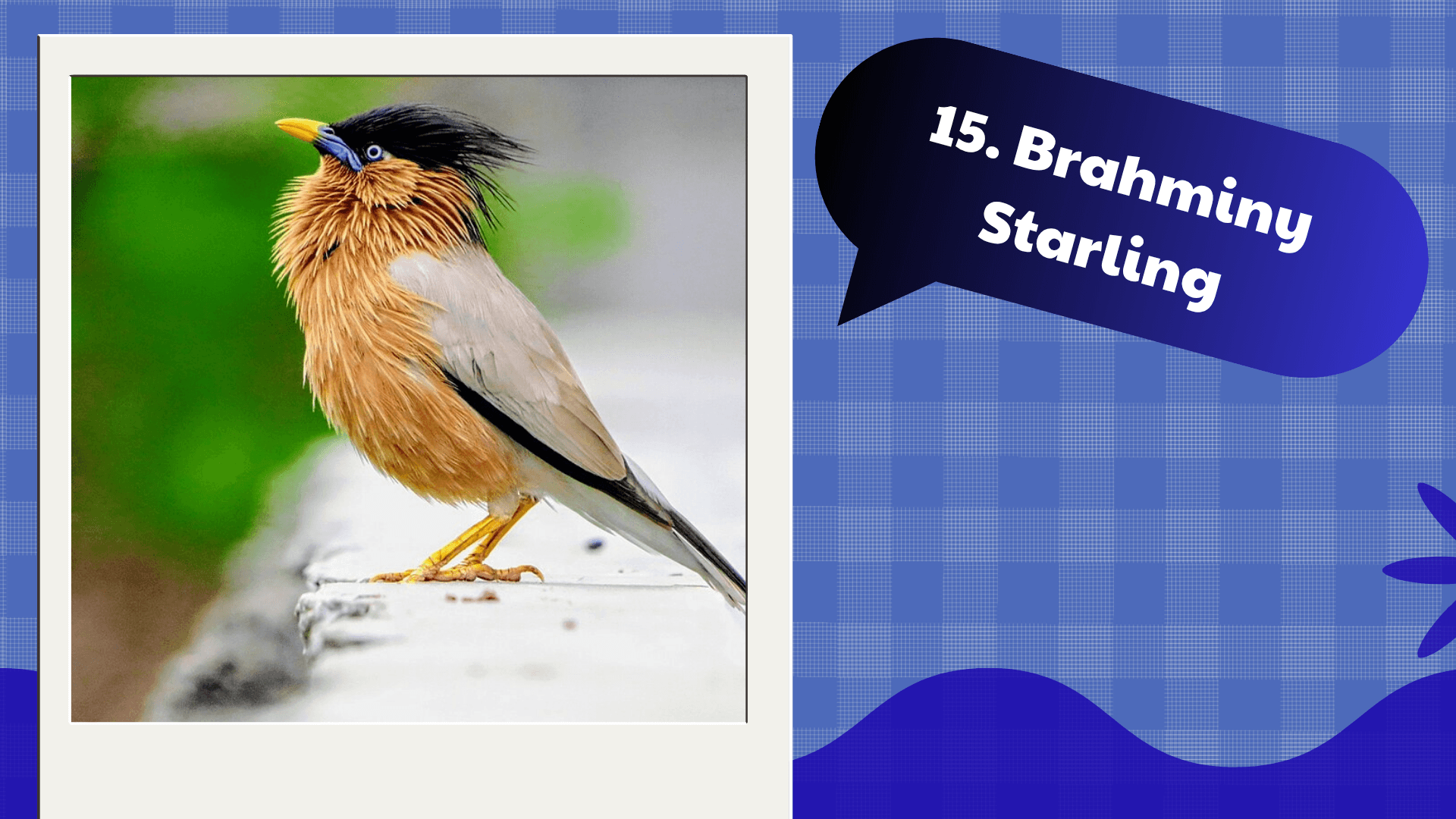
The Brahminy Starling is one of the most distinctive types of Starling found in the Indian subcontinent.
It has a striking black head, white body, and a yellow bill with a slight crest that gives it a unique appearance among starlings.
This species is commonly found in open woodlands, farmlands, and rural villages. It is highly adaptable and often lives close to human settlements.
Brahminy Starlings are social birds and may form small flocks while feeding. They are also known for their vocal calls and active behavior.
Their diet includes insects, grains, fruits, and small invertebrates. They are beneficial to agriculture due to their insect-eating habits.
16. Chestnut-tailed Starling
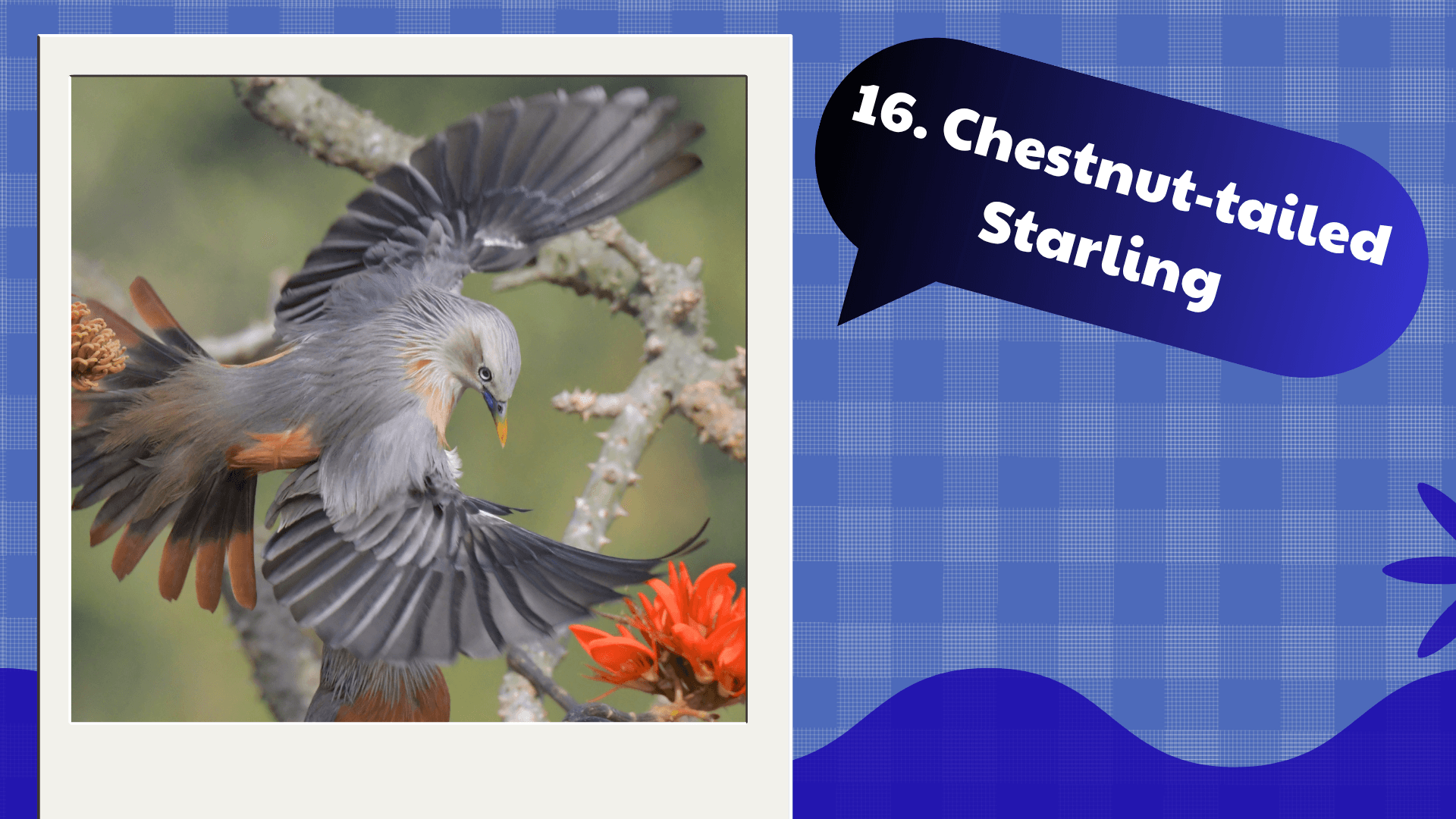
The Chestnut-tailed Starling is one of the visually attractive types of Starling, known for its glossy black body and rich chestnut-colored tail.
This species is found in South and Southeast Asia, including India, Bangladesh, and Thailand.
It inhabits open forests, farmlands, and wetlands, often forming small flocks outside the breeding season.
Their diet consists of insects, fruits, and grains. They are often seen foraging on the ground or in low vegetation.
Chestnut-tailed Starlings are highly vocal and use a variety of calls to communicate within flocks.
17. White-headed Starling
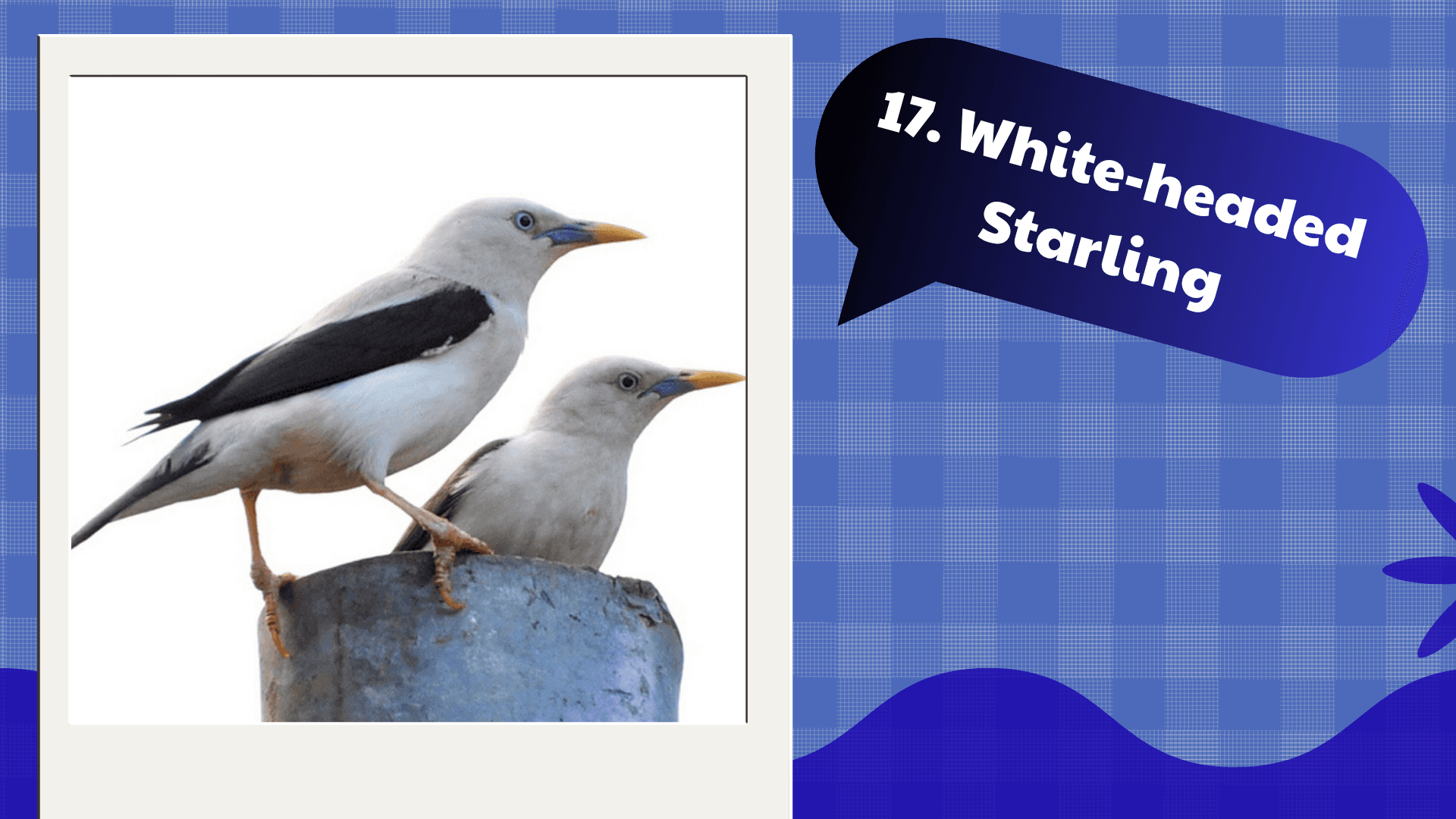
The White-headed Starling is one of the more visually striking types of Starling, recognized by its contrasting appearance: a pale or white head set against a darker body. This strong color separation makes it easy to identify even from a distance in the field.
This species is primarily found in parts of eastern Africa, where it inhabits savannas, woodland edges, and open dry landscapes. It tends to prefer areas with scattered trees rather than dense forest, as this allows better visibility for feeding and predator detection.
White-headed Starlings are moderately social birds. Outside the breeding season, they may form small flocks, but they are not as densely gregarious as European or glossy starling species. Their social structure is flexible depending on food availability and habitat conditions.
Their diet consists of insects, fruits, seeds, and occasionally small invertebrates. They often forage on the ground, hopping between patches of grass or open soil while searching for hidden prey. Like many starlings, they play an important ecological role in insect control and seed dispersal.
During the breeding season, pairs become more territorial. They nest in tree cavities or sheltered spaces, where they raise their young in relative safety. Their vocal communication includes short calls used for alarm, coordination, and pair bonding.
Although not as brightly colored as some African starlings, the White-headed Starling stands out due to its clean, high-contrast plumage pattern and its adaptability to semi-arid environments.
18. Malabar Starling
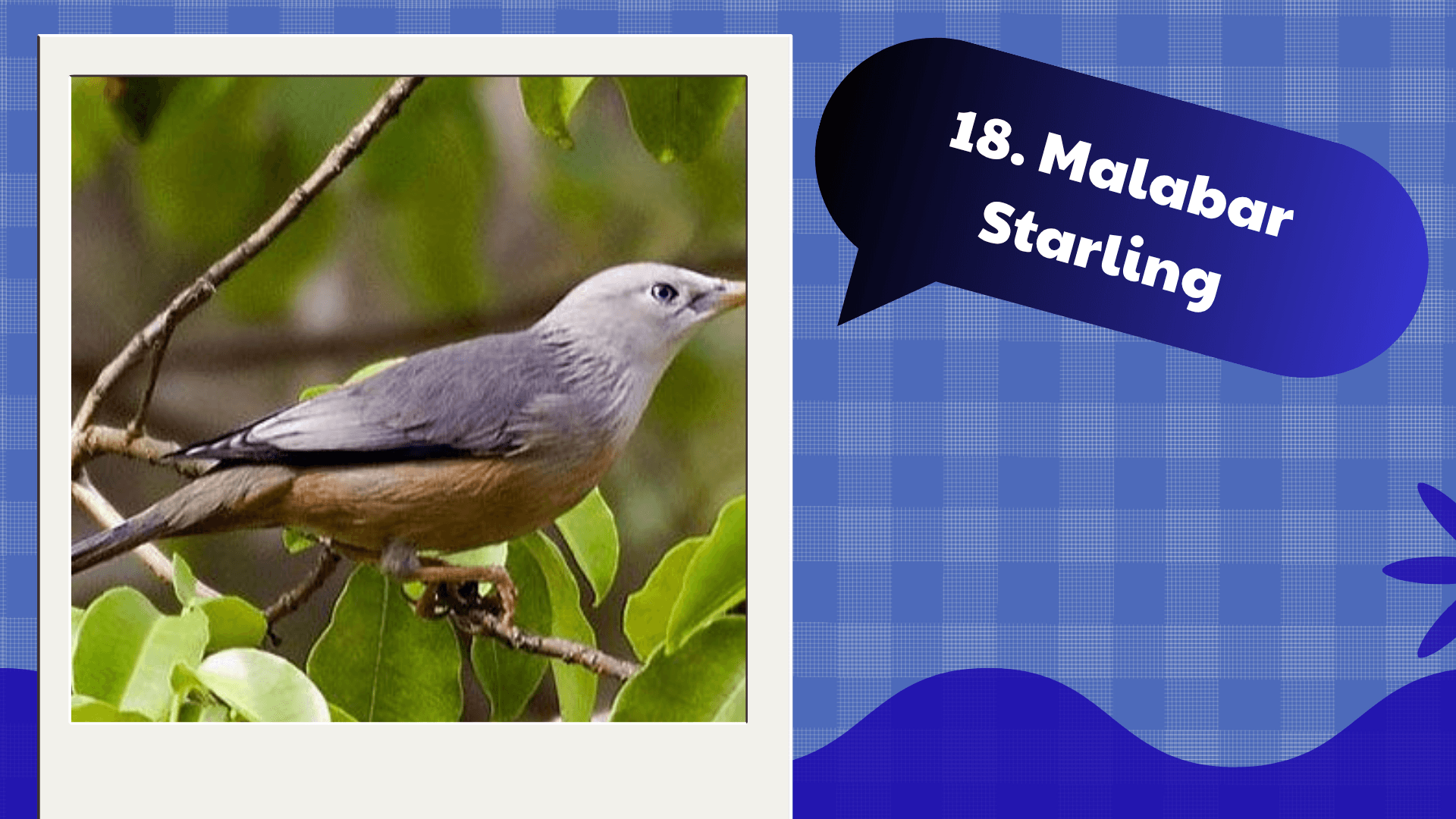
The Malabar Starling is one of the lesser-known but ecologically important types of Starling native to the southwestern region of India, particularly the Western Ghats.
This species has a glossy dark body with subtle iridescent tones that can appear greenish or bluish under sunlight. It is often confused with other glossy starlings but can be distinguished by its specific range and behavioral patterns.
Malabar Starlings are typically found in forested hills, plantations, and secondary woodlands. They prefer moist, tropical environments with abundant fruiting trees and insect populations.
They are social birds and are often observed in small groups, especially when feeding. Their movements are energetic, with frequent short flights between trees as they search for food.
Their diet includes fruits, berries, nectar, and insects. They are particularly important for forest ecosystems because they help disperse seeds across wide areas, supporting plant regeneration.
Due to habitat fragmentation in the Western Ghats, their populations are influenced by deforestation and land-use changes. However, they still remain relatively stable compared to more endangered starling species.
19. Purple Starling
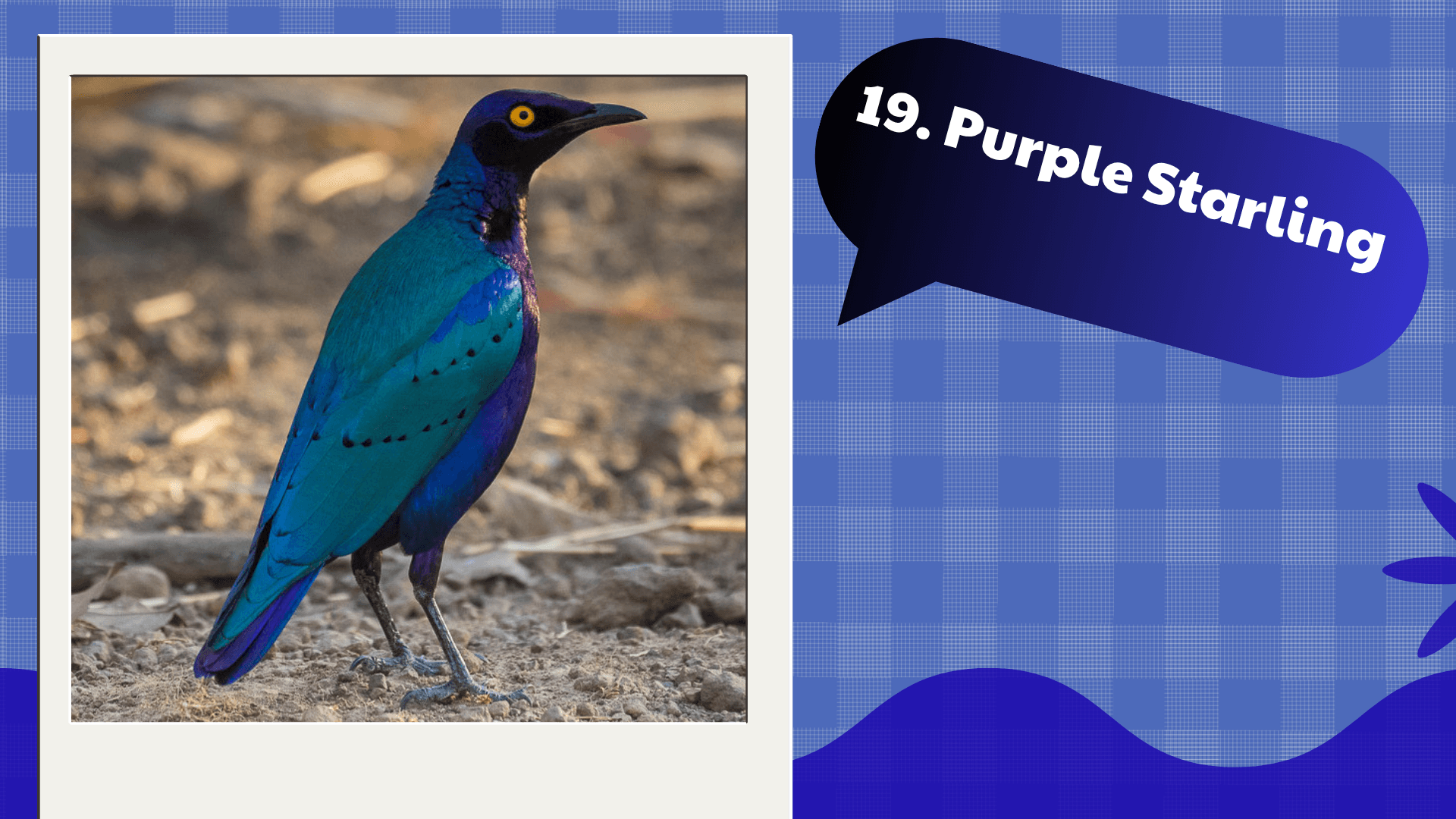
The Purple Starling is one of the most visually impressive types of Starling, known for its deep purple or violet sheen that covers much of its body depending on lighting conditions.
It is commonly found across parts of sub-Saharan Africa, particularly in savanna and woodland ecosystems. The shimmering plumage helps it stand out during flight and social displays.
Purple Starlings are highly social birds, often forming flocks that feed and travel together. These flocks may vary in size depending on season and resource availability.
Their diet is diverse, including insects, fruits, seeds, and occasionally small vertebrates. They are opportunistic feeders and adapt easily to changes in food supply.
During breeding season, males often display their glossy feathers to attract mates. Nesting typically occurs in tree cavities or sheltered structures where eggs and chicks are protected from predators.
This species plays an important ecological role in controlling insect populations and aiding in seed dispersal across African ecosystems.
20. Madagascar Starling
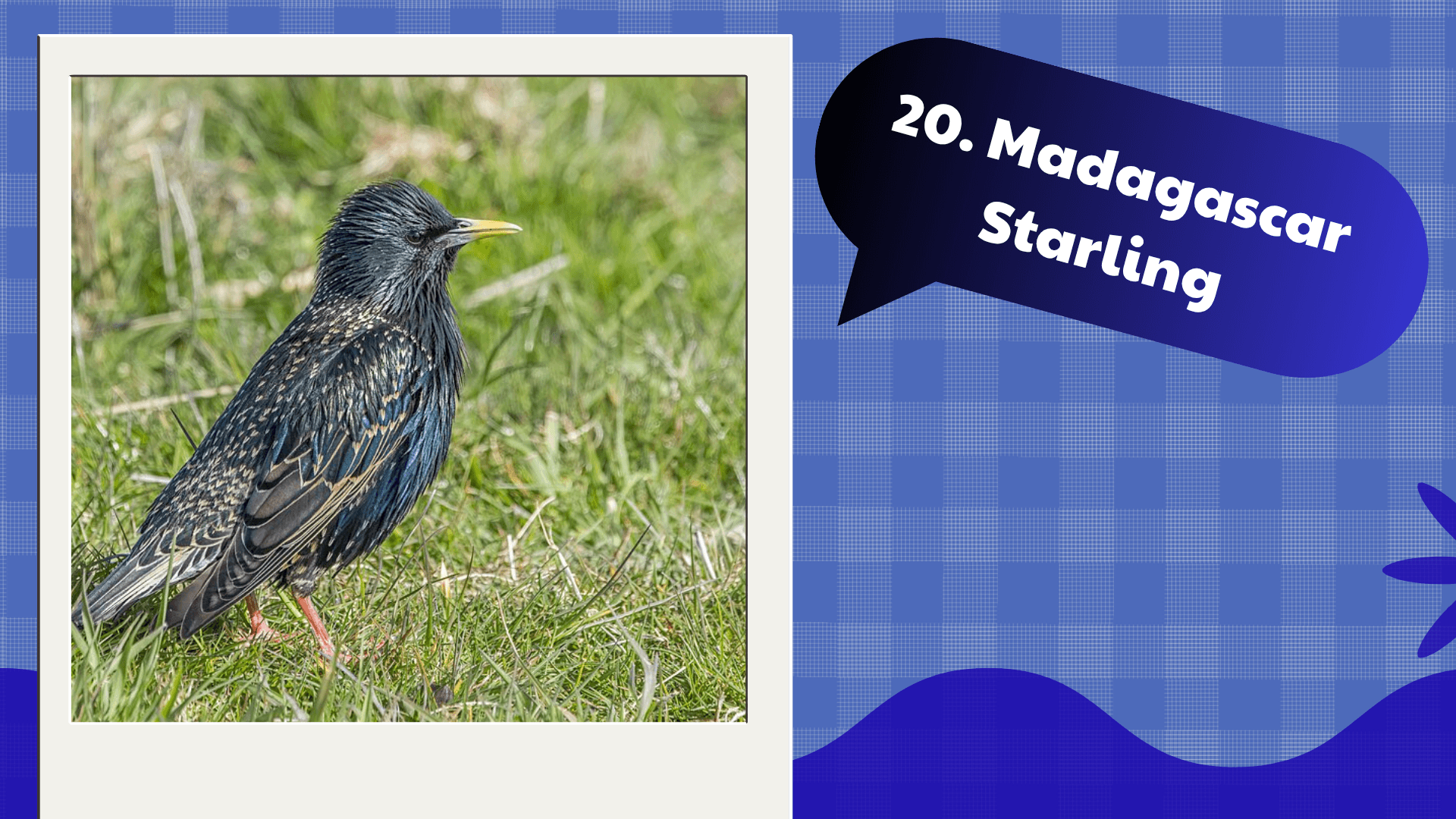
The Madagascar Starling is a unique island species among the types of Starling, found exclusively in Madagascar. Its isolated evolution has given it distinct traits compared to mainland species.
It typically has dark plumage with subtle metallic reflections, though its exact coloration can vary depending on lighting and habitat conditions.
This species inhabits forests, savannas, and forest edges across Madagascar. It is adaptable but still relies heavily on natural ecosystems for feeding and nesting.
Madagascar Starlings are usually seen in small groups or pairs. They are active foragers, moving through trees and shrubs in search of food throughout the day.
Their diet consists of fruits, insects, and small invertebrates. Like many island birds, they play a key role in maintaining ecological balance by dispersing seeds and controlling insect populations.
Because Madagascar is a biodiversity hotspot, this species is part of a fragile ecosystem where habitat loss could have significant long-term effects.
21. Abbott’s Starling
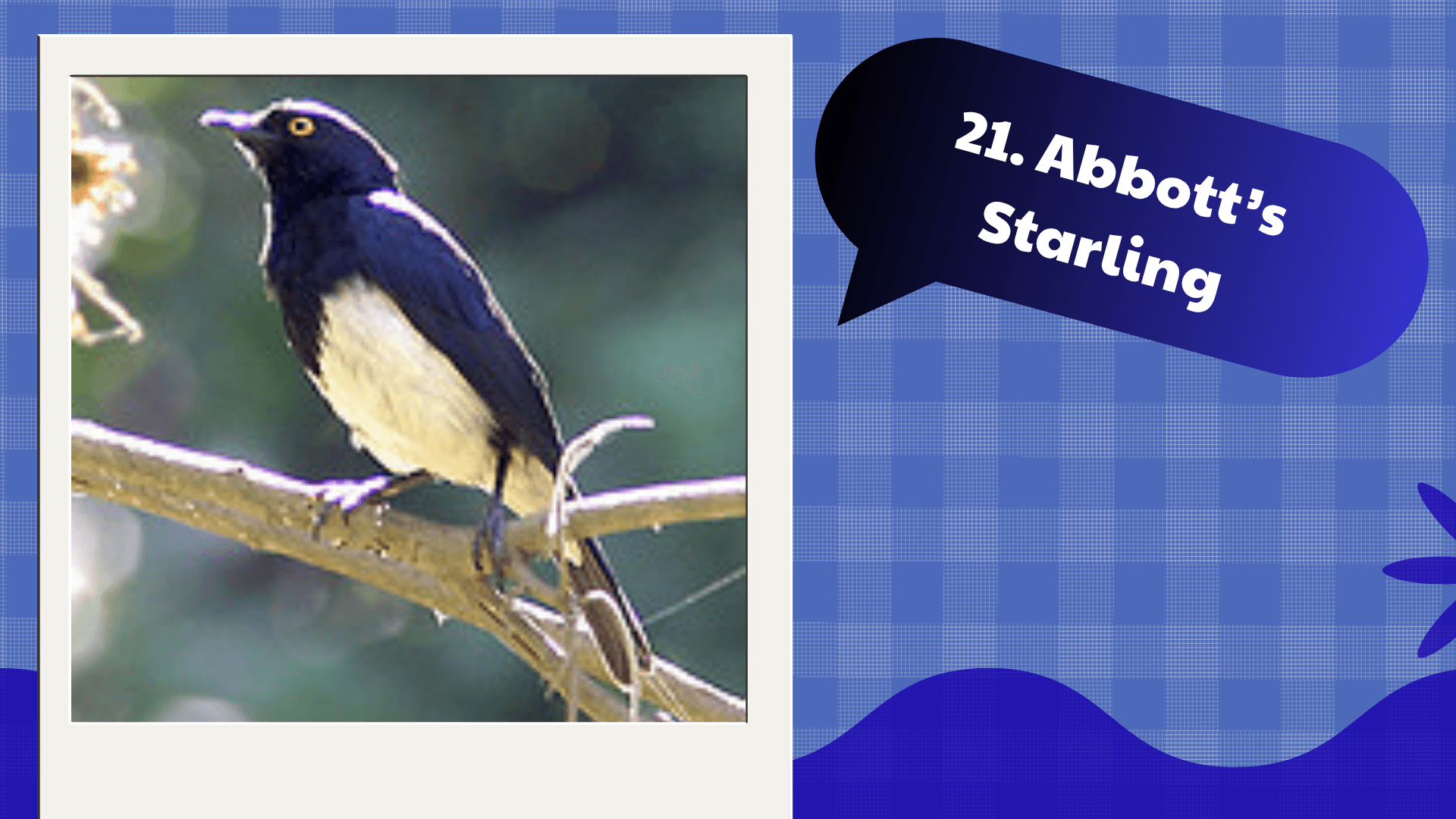
Abbott’s Starling is one of the more specialized and less commonly observed types of Starling, native to parts of East Africa.
It is known for its relatively dark plumage with subtle gloss and a more understated appearance compared to brightly colored African starlings.
This species prefers forested and woodland habitats, often at higher elevations. It is not as commonly seen in open savannas as other starling species.
Abbott’s Starlings are generally solitary or found in pairs rather than large flocks. This behavior makes them more elusive and harder to study in the wild.
Their diet includes fruits, insects, and small invertebrates. They forage quietly in forest canopies and understory layers.
Because of their limited range and specific habitat needs, they are considered an important indicator species for forest health in East Africa.
22. White-collared Starling
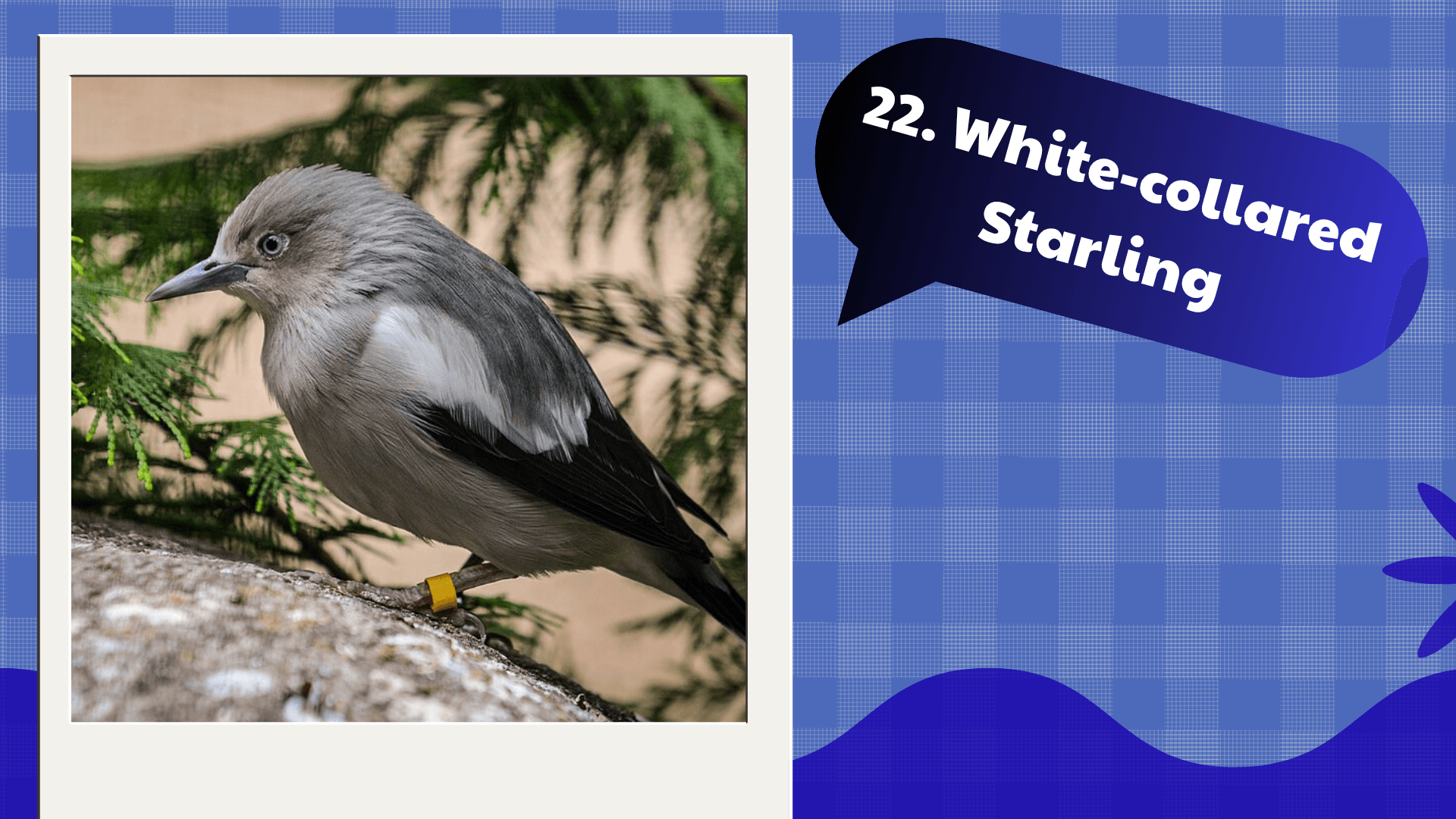
The White-collared Starling is one of the more visually balanced types of Starling, named for the distinct pale band or “collar” that contrasts with its otherwise dark and glossy plumage. This subtle marking makes it an elegant and easily recognizable species in its natural range.
This starling is typically found in parts of Southeast Asia, where it inhabits forest edges, open woodlands, and sometimes agricultural landscapes. It prefers areas with tall trees for nesting and open ground for foraging, allowing it to maintain both safety and feeding efficiency.
White-collared Starlings are moderately social. Outside the breeding season, they may form small flocks, but during nesting periods they become more territorial and pair-focused. Their communication includes soft whistles and sharper calls used for warning and coordination.
Their diet is highly adaptable and includes insects, fruits, nectar, and small invertebrates. This flexibility allows them to survive in both natural and semi-modified habitats. Like many starlings, they play a significant ecological role in seed dispersal and insect population control.
During nesting, they usually select tree cavities or sheltered natural hollows. Both parents participate in raising the chicks, showing cooperative breeding behavior common among starling species.
Although not as flamboyant as some African or Pacific starlings, the White-collared Starling is valued for its ecological importance and understated beauty.
23. Violet-hooded Starling
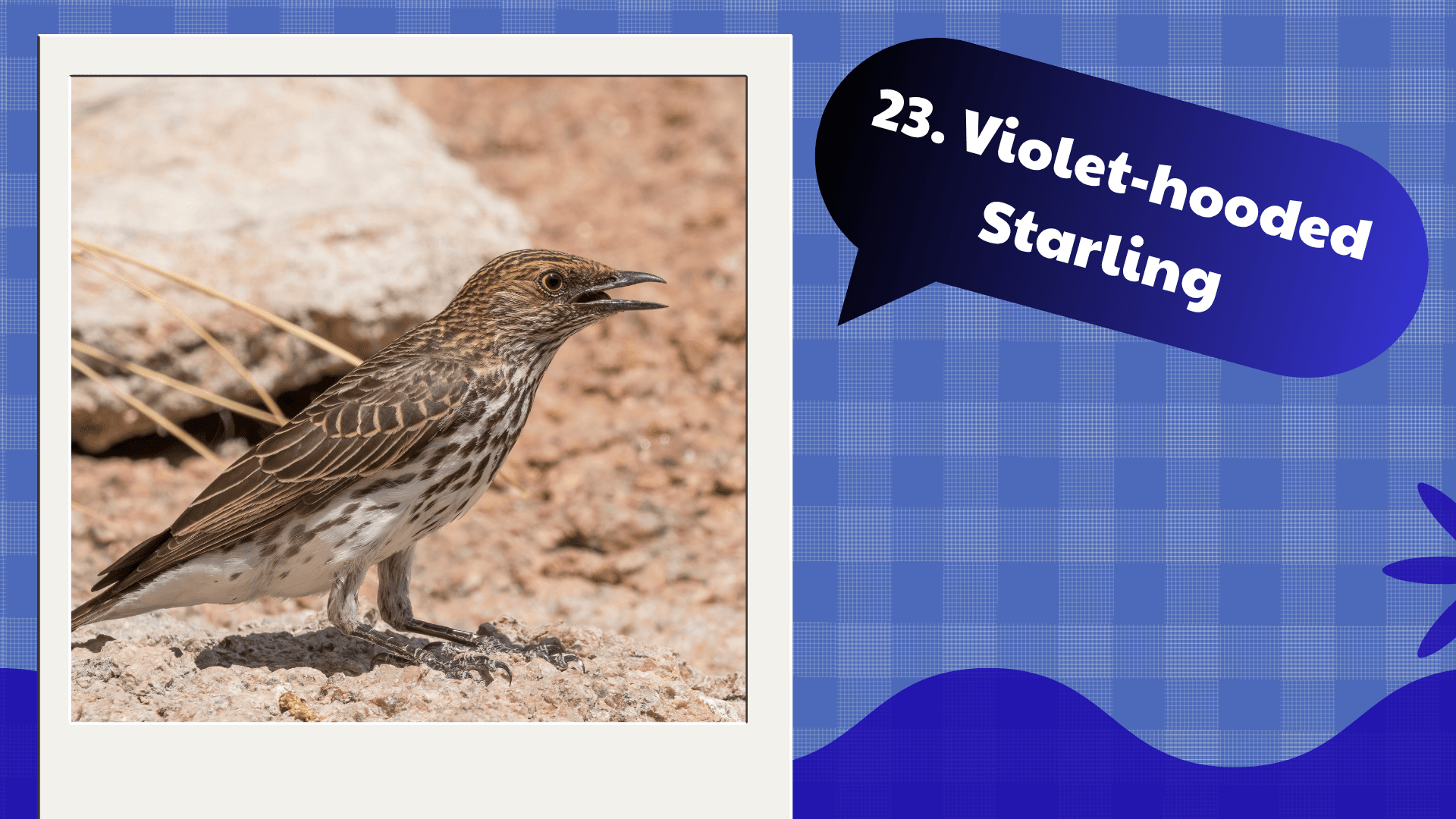
The Violet-hooded Starling is one of the most visually striking types of Starling, known for its deep violet or purplish “hood” that contrasts with its darker body plumage. This coloration makes it stand out dramatically in forest and woodland habitats.
It is native to parts of East Africa, where it inhabits savannas, open forests, and bushland regions. It prefers areas with scattered trees, which provide both perching sites and nesting opportunities.
This species is usually seen in small groups or pairs, although it may join larger flocks outside the breeding season. It is an active and alert bird, often perched in exposed positions while scanning for food or predators.
The Violet-hooded Starling feeds on insects, fruits, and small invertebrates. It often forages both on the ground and in trees, showing flexibility in hunting strategies. Its role in insect control makes it beneficial to local ecosystems.
During breeding, males use their glossy violet head feathers in visual displays to attract mates. Nests are typically built in tree cavities or sheltered branches, where chicks are raised in relative safety.
This species is admired not only for its color but also for its energetic behavior and ecological adaptability across changing environments.
24. Metallic Starling
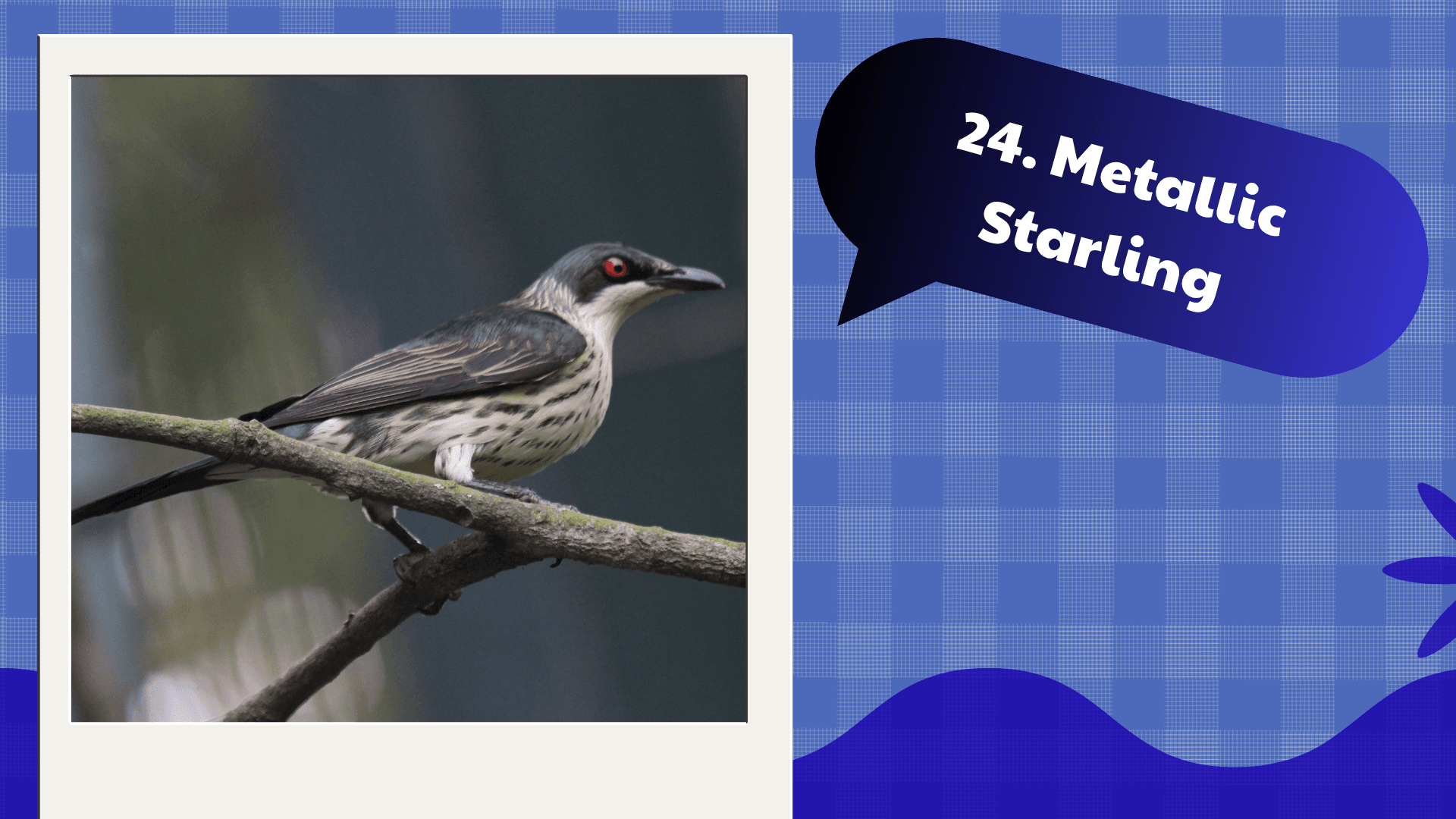
The Metallic Starling is one of the most fascinating types of Starling, famous for its shimmering dark plumage that reflects green, blue, and bronze tones depending on light conditions. It is especially known for its dramatic breeding colonies.
This species is native to New Guinea and nearby islands in the Pacific region. It inhabits tropical forests, forest edges, and coastal woodlands, often preferring areas near fruiting trees.
Metallic Starlings are highly social birds, especially during the breeding season when they gather in large colonies. These colonies can contain hundreds of nests built close together in tall trees, creating a visually impressive natural structure.
Their diet consists mainly of fruits, especially figs, as well as insects and small invertebrates. They play a crucial role in rainforest ecosystems by dispersing seeds over large distances.
One of their most remarkable behaviors is synchronized nesting and colony formation, where timing and social interaction are tightly coordinated. Outside breeding season, they form smaller foraging flocks.
Their glossy metallic feathers make them one of the most visually impressive starling species in the world.
25. Long-tailed Starling
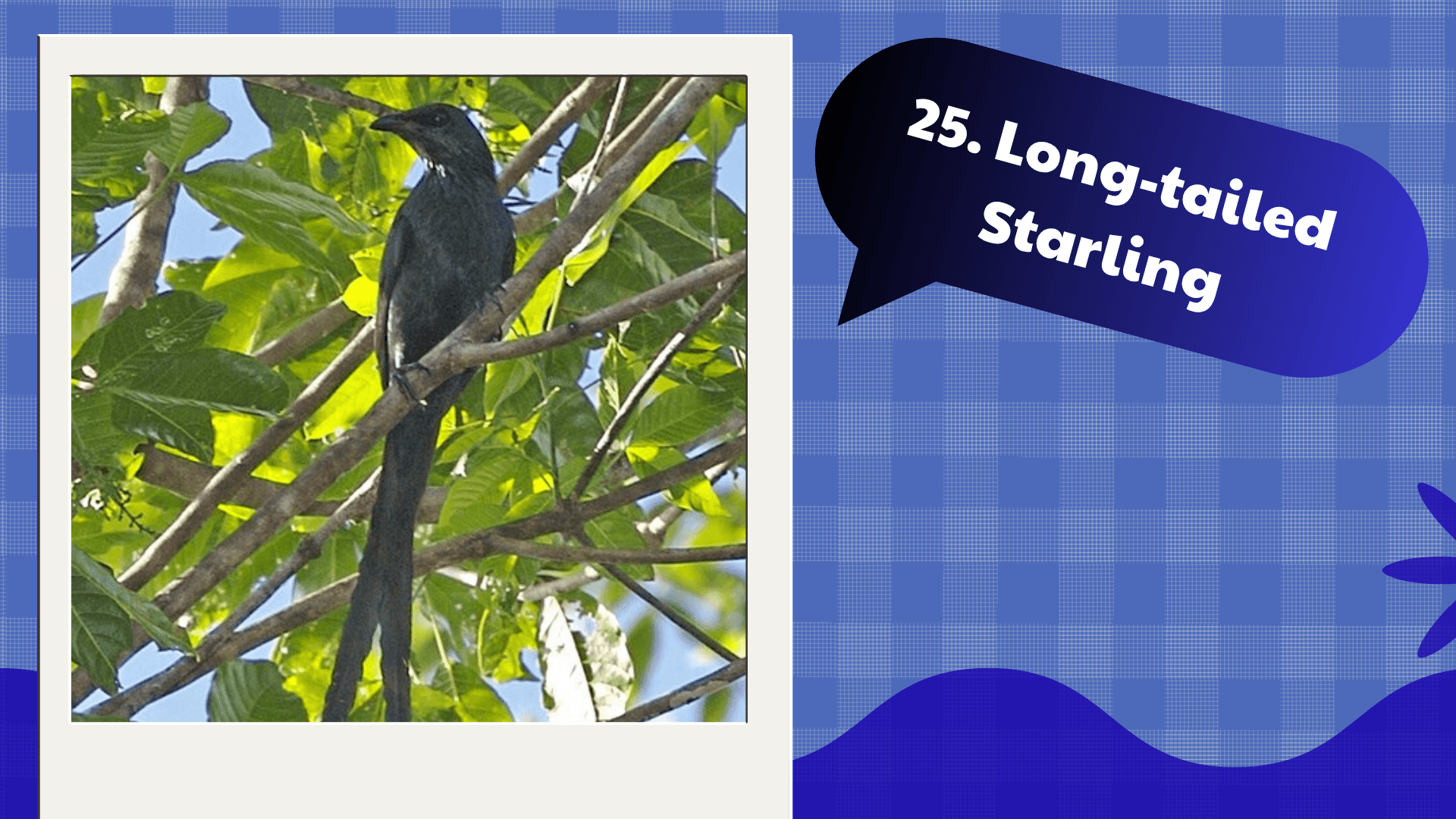
The Long-tailed Starling is a distinctive member of the types of Starling, easily identified by its elongated tail feathers, which give it a graceful and elegant flight appearance compared to other starlings.
This species is found in parts of Africa, where it inhabits savannas, open woodlands, and semi-arid regions. It prefers areas with scattered trees and open ground for feeding and movement.
Long-tailed Starlings are moderately social and may form small flocks, especially when feeding or migrating locally. Their behavior is alert and active, often involving short flights between perches.
Their diet includes insects, fruits, seeds, and occasionally small vertebrates. They are opportunistic feeders and adjust their diet depending on seasonal availability.
During breeding season, pairs become territorial and select nesting sites in tree cavities or sheltered locations. Both parents are involved in raising the young.
The long tail is not only visually distinctive but also helps with maneuverability during flight, especially when navigating open savanna environments.
26. White-eyed Starling

The White-eyed Starling is one of the more subtly distinctive types of Starling, named for its pale or whitish eye coloration that contrasts with its darker facial plumage.
It is found in parts of Africa, typically inhabiting savannas, dry woodlands, and bushy grasslands. It prefers open habitats where it can forage easily and detect predators from a distance.
This species is generally social and may form loose flocks, particularly outside the breeding season. These flocks move together while feeding on insects and fruits.
Its diet consists of insects, berries, seeds, and small invertebrates. It is an adaptable feeder that takes advantage of seasonal food availability.
White-eyed Starlings often nest in tree cavities or abandoned nests of other birds. Both males and females contribute to nest building and chick care.
The pale eye is a key identification feature, making it easier to distinguish from other similar starling species in the field.
27. Brown-winged Starling
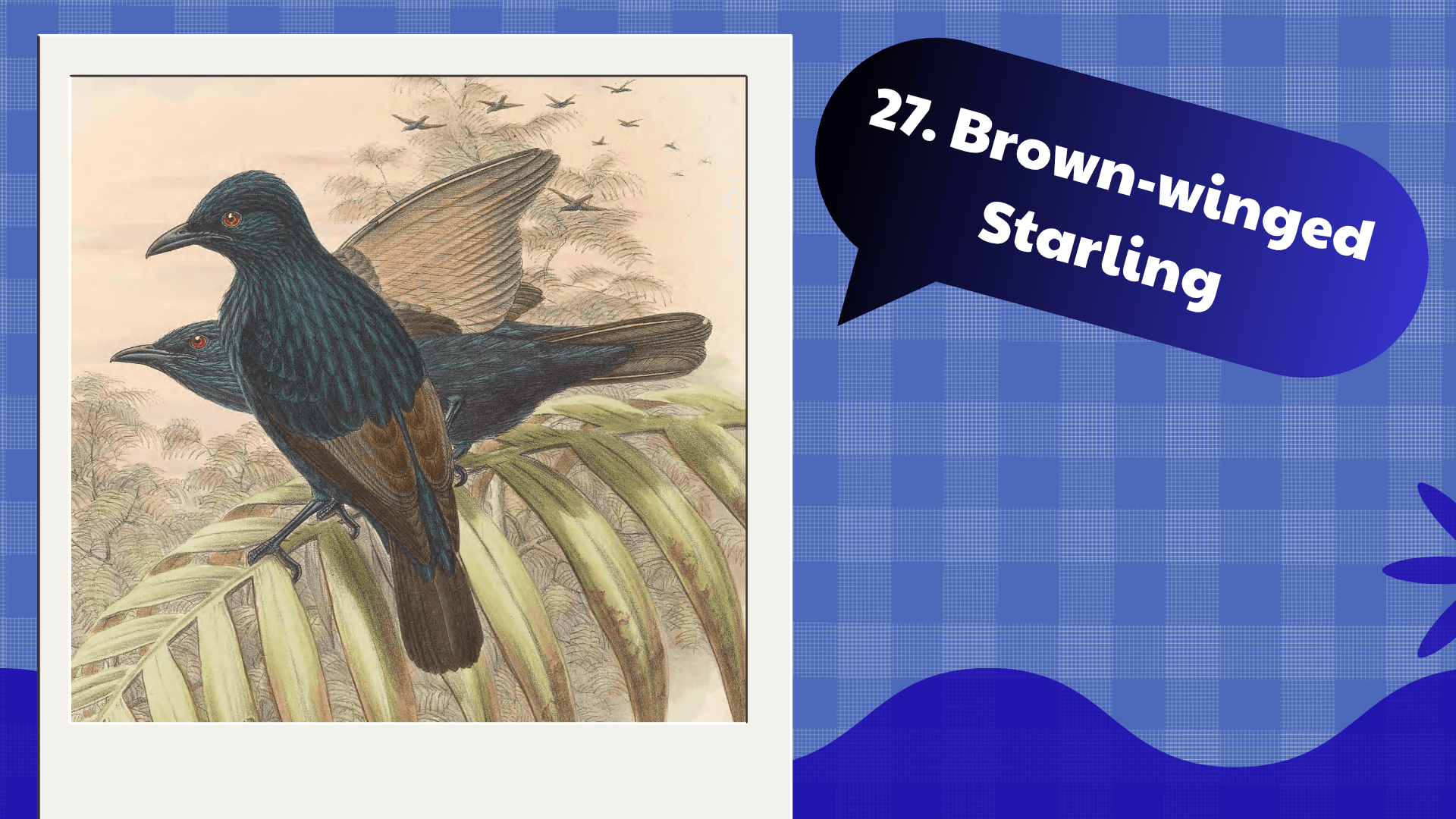
The Brown-winged Starling is one of the more subtly colored types of Starling, distinguished by its dark body plumage contrasted with warm brown tones on its wings. While it may not be as flashy as metallic or violet starling species, its understated appearance allows it to blend effectively into woodland and savanna environments.
This species is primarily found across parts of sub-Saharan Africa, especially in dry savannas, open woodlands, and scrubby grasslands. It tends to prefer habitats where scattered trees provide both nesting opportunities and elevated perches for scanning the surroundings.
Brown-winged Starlings are moderately social birds. They are often seen in pairs or small family groups, but outside the breeding season they may join loose flocks. These flocks are not as densely coordinated as those of European Starlings, but they still exhibit group cohesion when foraging or moving between feeding areas.
Their diet includes a mix of insects, fruits, seeds, and small invertebrates. They are opportunistic feeders and will adjust their diet depending on seasonal availability. During rainy seasons, insects become a primary food source, while fruits and seeds dominate during dry periods.
Behaviorally, they are alert and active birds, often hopping along branches or foraging on the ground. They use short, sharp calls for communication, especially when warning of predators or maintaining contact with group members.
Nesting typically occurs in tree cavities or sheltered natural holes. Both parents are involved in raising the chicks, ensuring a higher survival rate in challenging environments. Although not as widely studied as some other starling species, the Brown-winged Starling plays an important role in maintaining insect balance and contributing to seed dispersal in its ecosystem.
28. Makira Starling
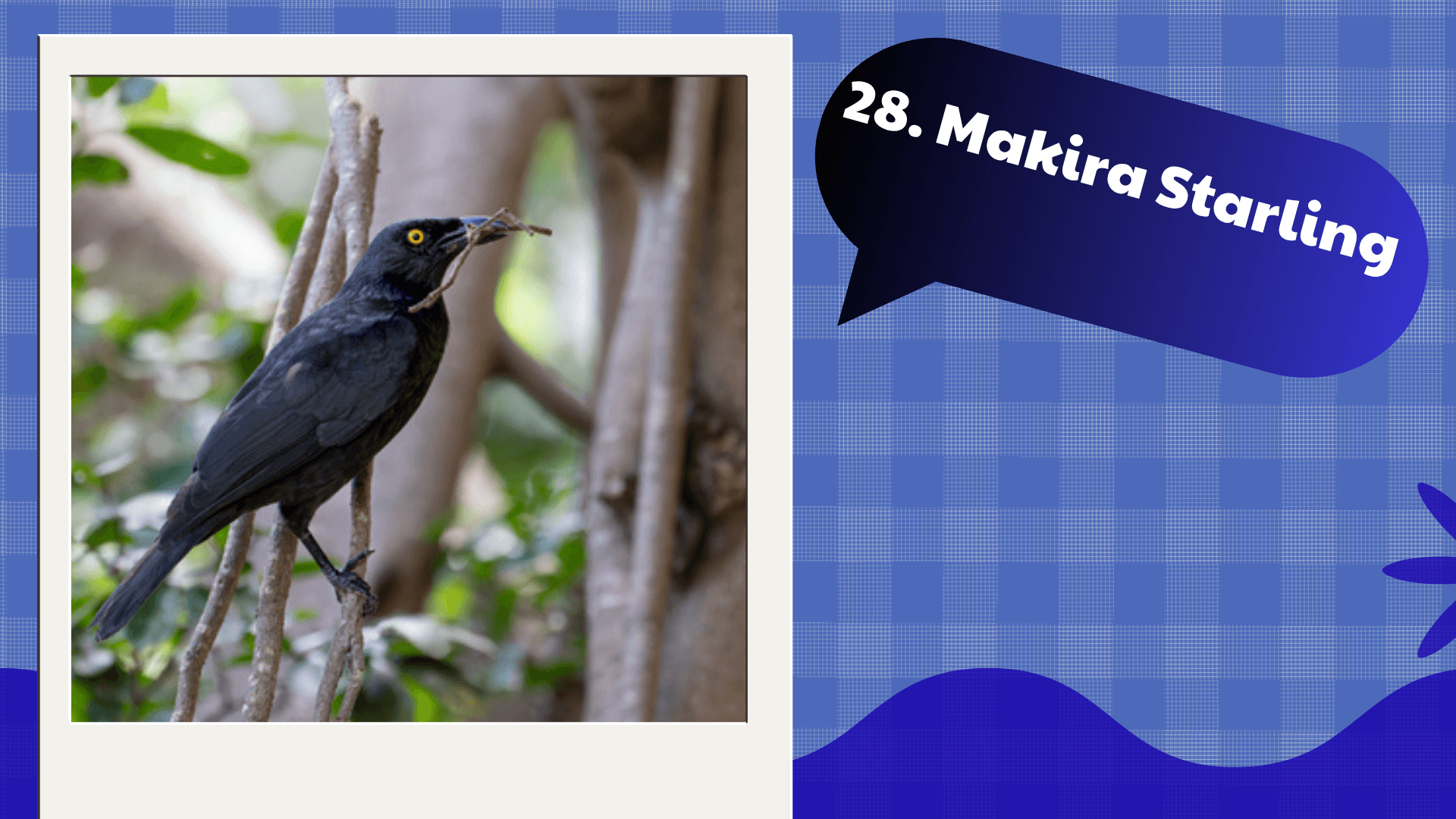
The Makira Starling is one of the rare and geographically restricted types of Starling, native to Makira Island in the Solomon Islands. As an island endemic species, it has evolved in isolation, resulting in unique behavioral and ecological traits.
This species typically has dark, glossy plumage with subtle iridescent highlights that may appear greenish or bluish in certain lighting conditions. Its relatively simple coloration helps it blend into the dense tropical forest environments where it lives.
Makira Starlings inhabit lowland tropical forests, forest edges, and occasionally secondary growth areas. They rely heavily on intact forest ecosystems for feeding and nesting, making them sensitive to habitat disturbance.
They are usually observed in small groups or pairs rather than large flocks. Their social structure is less complex than mainland starling species, likely due to island ecosystem limitations and reduced predator diversity.
Their diet consists primarily of fruits, insects, and small invertebrates. Fruit consumption plays a particularly important role in their ecology, as they help disperse seeds across the island, supporting forest regeneration.
Because Makira Island has a limited land area and unique biodiversity, the Makira Starling is considered an important species for ecological monitoring. Changes in its population can reflect broader environmental shifts in the island’s ecosystem.
29. Striated Starling

The Striated Starling is one of the more patterned types of Starling, named for the subtle streaks or striations that can be seen on its plumage. These fine markings give it a textured appearance compared to more uniformly colored starling species.
This species is found in parts of Southeast Asia and surrounding regions, inhabiting forests, open woodlands, and agricultural landscapes. It is adaptable and can survive in both natural and human-altered environments.
Striated Starlings are social birds and are often seen in small to medium-sized flocks. These groups move together while feeding and roosting, providing safety in numbers against predators.
Their diet is varied and includes insects, fruits, seeds, and nectar. They are particularly active foragers, frequently moving between trees and ground areas in search of food. Their feeding behavior contributes to both pest control and seed dispersal.
Vocal communication is an important part of their behavior. They use a combination of whistles, clicks, and short calls to maintain group cohesion and alert others to danger.
During breeding, they nest in tree cavities or sheltered locations. Both parents share responsibilities for incubation and chick feeding, which improves offspring survival rates in competitive environments.
30. Grosbeak Starling
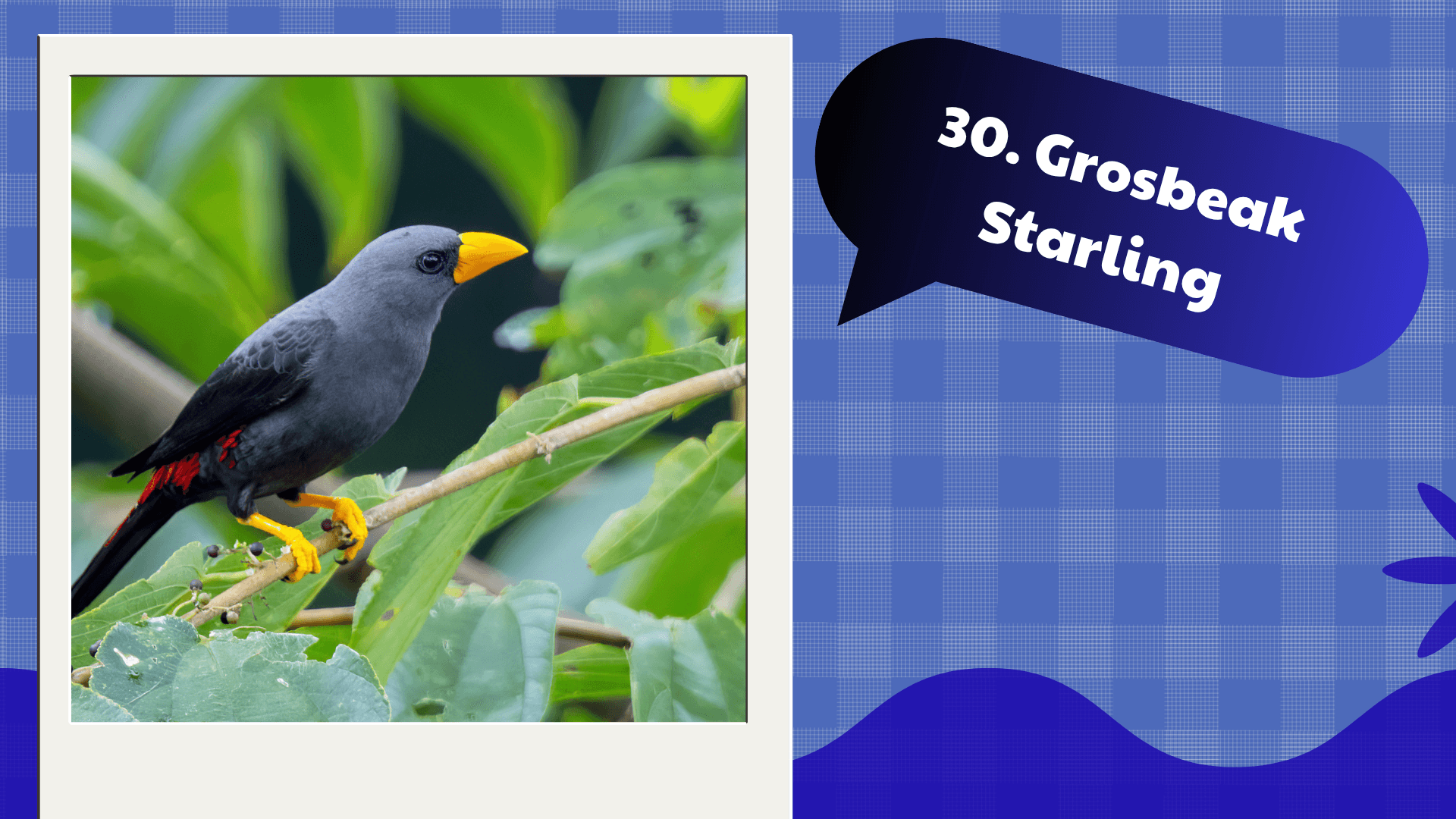
The Grosbeak Starling is one of the most distinctive types of Starling, primarily known for its thick, powerful beak, which sets it apart from many other slender-billed starling species.
It is found in parts of Asia, particularly in forested and woodland regions where it can access a variety of food sources. The strong beak allows it to handle harder food items that other starlings may not be able to process easily.
This species has relatively dark plumage, often with subtle gloss or sheen depending on light conditions. While not brightly colored, its robust build and unique bill shape make it easily recognizable.
Grosbeak Starlings are moderately social and may be seen in pairs or small flocks. They are less gregarious than species like the European Starling but still maintain social interactions, especially during feeding.
Their diet includes fruits, seeds, insects, and occasionally hard-shelled plant materials that require strong biting force. This dietary flexibility allows them to exploit food sources unavailable to other birds.
They nest in tree cavities or natural hollows, where they raise their young in relatively protected environments. Both parents participate in feeding and guarding the nest.
The combination of strong feeding adaptations and moderate social behavior makes the Grosbeak Starling an interesting evolutionary branch within the starling family.
Conclusion: The Global Story of Starlings
The types of Starling reveal one of the most diverse and adaptable bird families in the world. From the shimmering European Starling to the rare island species like the Makira Starling, each bird shows unique adaptations shaped by geography, climate, and food availability. Despite their differences in color, size, and habitat, all starlings share common traits such as intelligence, strong social behavior, and remarkable vocal abilities.
One of the most fascinating aspects of starlings is their ability to thrive in both wild ecosystems and human-altered environments. Many species have successfully adapted to cities, farmland, and urban parks, while others remain specialized to forests, savannas, or isolated islands. Their flexible diet—ranging from insects and fruits to grains and nectar—has helped them survive in changing conditions across continents.
Ecologically, starlings play an important role as seed dispersers and insect controllers. Their feeding habits help maintain balance in ecosystems, supporting plant regeneration and reducing pest populations. At the same time, their social structures, flocking behavior, and communication systems continue to attract scientific interest and birdwatcher admiration worldwide.
As habitats continue to change due to human activity and climate shifts, the future of many starling species will depend on their adaptability and conservation efforts. Studying these birds not only helps us understand biodiversity but also highlights the importance of protecting natural ecosystems.
Ultimately, the types of Starling remind us how evolution shapes life in extraordinary ways, raising an ongoing question: how many more hidden behaviors and adaptations are yet to be discovered within this remarkable bird family?
50+ FAQs About Types of Starling (Detailed Wildlife Guide)
1. What are starlings?
Starlings are medium-sized passerine birds belonging to the family Sturnidae. They are known for their glossy feathers, strong social behavior, and advanced vocal abilities, including mimicry of sounds from nature and human environments.
2. How many types of starling are there?
There are over 120 recognized starling species worldwide, but this number varies depending on classification systems and regional subspecies grouping. They are distributed across Europe, Asia, Africa, and parts of Oceania.
3. Where do starlings live?
Starlings inhabit a wide range of environments including forests, savannas, grasslands, wetlands, farmland, and urban cities. Their adaptability allows them to thrive in both natural and human-modified landscapes.
4. Are starlings migratory birds?
Some starling species migrate seasonally, especially those in temperate regions like Europe and Asia. However, many tropical species remain resident year-round in the same habitat.
5. What do starlings eat?
Starlings are omnivorous birds. Their diet includes insects, fruits, seeds, nectar, and occasionally small invertebrates. This varied diet helps them survive in different environments.
6. Why are starlings so noisy?
Starlings are highly social birds that use vocal communication to coordinate group behavior, warn of predators, and maintain social bonds. Their complex calls often create noisy flock environments.
7. Can starlings mimic human speech?
Yes, some starling species, especially Hill Mynas and Common Mynas, are excellent mimics and can reproduce human speech, mechanical sounds, and other environmental noises.
8. Why do starlings flock together?
Flocking provides protection from predators, improves foraging efficiency, and helps maintain social structure. Large flocks also create spectacular aerial patterns called murmurations.
9. What is a murmuration?
A murmuration is a large, synchronized flocking behavior where thousands of starlings fly in coordinated patterns. It helps confuse predators and improve group safety.
10. Are starlings intelligent birds?
Yes, starlings are considered highly intelligent. They can solve problems, recognize patterns, communicate complex information, and adapt quickly to new environments.
11. What habitats do starlings prefer?
Starlings are highly adaptable and live in forests, savannas, wetlands, farmland, and cities. Different species specialize in different environments depending on their ecological needs.
12. Are starlings invasive?
Some species, such as the European Starling, are considered invasive in regions where they were introduced, especially in North America, due to competition with native birds.
13. How do starlings reproduce?
Starlings typically breed in cavities such as tree holes, cliffs, or buildings. They lay eggs and both parents usually share responsibilities in feeding and protecting chicks.
14. How many eggs do starlings lay?
Most starling species lay between 3 to 6 eggs per breeding cycle, depending on species, climate, and food availability.
15. How long do starlings live?
In the wild, starlings typically live 2 to 5 years due to predation and environmental pressures, though some individuals can live longer in protected conditions.
16. Do starlings migrate in large groups?
Yes, many migratory starling species travel in large flocks, often forming dense groups that move together across long distances.
17. What predators eat starlings?
Starlings are preyed upon by hawks, falcons, owls, snakes, cats, and larger mammals. Their flocking behavior helps reduce predation risk.
18. Are starlings good for the environment?
Yes, starlings help control insect populations and assist in seed dispersal, which supports ecosystem health and plant regeneration.
19. Why do starlings shine in different colors?
Their iridescent feathers are caused by microscopic structures that reflect light differently, creating shimmering green, blue, purple, and bronze colors.
20. Can starlings survive in cities?
Yes, many starling species thrive in urban environments due to their adaptability, flexible diet, and ability to nest in buildings.
21. What is the most common starling species?
The European Starling is one of the most widespread and commonly seen starling species globally.
22. Are starlings aggressive?
Some species can be competitive, especially when defending nesting sites or food sources, but they are generally social rather than aggressive birds.
23. Do starlings build nests?
Yes, starlings build nests in cavities using grass, leaves, feathers, and other soft materials to create a safe environment for their eggs.
24. How do starlings communicate?
They use vocal calls, body movements, and flocking behavior to communicate warnings, food sources, and social interactions.
25. Are all starlings black?
No, while many appear dark or glossy, some species are brightly colored, such as the Superb Starling or Rosy Starling.
26. Why are starlings important?
They help maintain ecological balance by controlling insects, dispersing seeds, and serving as prey for larger predators.
27. Do starlings damage crops?
In some regions, large flocks can feed on crops, which may cause agricultural damage, especially during peak population periods.
28. How fast can starlings fly?
Starlings can fly at speeds of around 40–60 km/h depending on conditions and species.
29. Do starlings return to the same place?
Yes, many species return to the same nesting or roosting sites annually if conditions remain favorable.
30. What is the rarest starling?
The Bali Myna is one of the rarest starling species in the world and is critically endangered due to habitat loss and poaching.
31. Why do starlings gather at sunset?
They gather to roost safely in large groups, reducing predation risk and maintaining social bonds.
32. Can starlings recognize humans?
Yes, studies suggest starlings can recognize familiar humans, especially in environments where they interact regularly with people.
33. Do starlings drink water?
Yes, they drink water regularly, especially in hot climates, and often bathe to maintain feather condition.
34. How do starlings find food?
They use vision, memory, and social learning within flocks to locate food sources efficiently.
35. Are starlings territorial?
During breeding season, many species become territorial to protect nesting sites and food resources.
36. Do starlings have predators in cities?
Yes, urban predators include cats, hawks, and other birds of prey adapted to city environments.
37. Why are starlings so successful?
Their adaptability, intelligence, and flexible diet allow them to thrive in almost any environment.
38. Can starlings be kept as pets?
In many places, keeping wild starlings as pets is restricted or illegal due to conservation laws and ecological concerns.
39. How do starlings survive winter?
They form large flocks, migrate if necessary, and rely on diverse food sources to survive cold conditions.
40. Do starlings help farmers?
Yes, they consume large numbers of insects that can damage crops, making them beneficial in some agricultural contexts.
41. Are starlings related to crows?
No, starlings belong to a different family (Sturnidae), while crows belong to the Corvidae family.
42. What makes starlings unique?
Their combination of intelligence, vocal mimicry, social behavior, and adaptability makes them unique among birds.
43. Do starlings sleep in groups?
Yes, they roost in large communal groups for warmth and protection.
44. How do young starlings learn?
Young starlings learn from parents and flock members through observation and vocal imitation.
45. Do starlings migrate at night?
Some species migrate during the night to avoid predators and take advantage of cooler temperatures.
46. What role do starlings play in ecosystems?
They help control insect populations, disperse seeds, and serve as prey for larger animals.
47. Can starlings adapt quickly?
Yes, they are among the most adaptable bird species, capable of adjusting quickly to environmental changes.
48. Are starlings social lifelong?
Yes, they maintain social behavior throughout their lives, often forming strong flock associations.
49. Why are murmurations important?
They improve survival by confusing predators and strengthening group cohesion.
50. What is the biggest threat to starlings?
Habitat loss, pollution, and human control measures in invasive regions are major threats.
51. What is the key takeaway about starlings?
Starlings are intelligent, highly adaptable birds that play a vital role in ecosystems and demonstrate some of the most complex social behaviors in the bird world.