

If you’re searching for Types of Bugs Insects, you’re in the right place. Bugs and insects are some of the most diverse creatures on Earth, with millions of species living in forests, deserts, gardens, and even inside our homes. From helpful pollinators like bees to mysterious night fliers like moths, each insect plays a role in the ecosystem.
In simple terms, Bugs Insects are small animals with six legs, a hard outer body, and often wings. Some crawl, some jump, and many can fly. In this guide, you’ll discover 50 fascinating types of insects, how to identify them, and why they matter in the wild.
50 Types of Bugs Insects
1. Ant
Ants are among the most common insects on Earth. You can find them almost everywhere, from tropical rainforests to urban sidewalks. These tiny creatures live in large colonies that function like well-organized societies. Each ant has a role—workers gather food, soldiers protect the colony, and queens lay eggs.
Ants are easy to identify by their narrow waist, elbowed antennae, and strong jaws. They communicate using chemicals called pheromones, leaving invisible trails for others to follow. Some species can carry objects many times their own body weight.
In the wild, ants help break down organic material and improve soil quality. However, certain species can become pests when they invade homes or damage crops.
2. European Honey Bee
The European honey bee is one of the most important insects for humans. It plays a key role in pollination, helping plants produce fruits, vegetables, and seeds. Without bees, many ecosystems would struggle to survive.
These bees are golden-brown with black stripes and live in highly structured colonies. Inside the hive, each bee has a specific job. Worker bees collect nectar and pollen, while the queen focuses on reproduction.
Honey bees are known for producing honey and beeswax. Despite their gentle nature, they can sting if threatened. Their role in agriculture makes them one of the most valuable Bugs Insects on the planet.
3. Green Orchid Bee
The green orchid bee stands out due to its bright metallic green color. Found mainly in Central and South America, this bee is a strong flyer and an excellent pollinator.
Male orchid bees are known for collecting fragrances from flowers, which they use to attract mates. This unique behavior makes them important for the reproduction of many tropical plants.
Unlike honey bees, they do not always live in large colonies. Some species are solitary, building nests in small cavities or natural spaces.
4. Wasp
Wasps are often misunderstood insects. While they can be aggressive, they also play an important role in controlling pest populations. Many wasps hunt other insects, making them natural pest control agents.
They have slender bodies, narrow waists, and smooth skin, unlike the fuzzy appearance of bees. Wasps can sting multiple times, which is why they are often feared.
Some species build paper-like nests, while others live alone. Despite their reputation, wasps are essential for maintaining ecological balance.
5. Yellow Jacket
Yellow jackets are a type of wasp known for their bright yellow and black markings. They are highly aggressive, especially when defending their nests.
These insects are scavengers and hunters. They feed on sugary foods as well as other insects. This behavior often brings them into contact with humans, especially during outdoor activities.
Yellow jackets build nests underground or in hidden spaces. Their ability to sting repeatedly makes them one of the more dangerous Bugs Insects to encounter.
6. Butterfly
Butterflies are among the most beautiful insects in the world. Known for their colorful wings, they are symbols of transformation and growth.
They go through complete metamorphosis: egg, larva (caterpillar), pupa (chrysalis), and adult. Adult butterflies feed mainly on nectar, helping pollinate flowers.
Their wings are covered in tiny scales that create vibrant patterns. Butterflies are not just pretty—they are also important indicators of a healthy ecosystem.
7. Monarch Butterfly
The monarch butterfly is famous for its long migration journey. Every year, millions travel thousands of miles between North America and Mexico.
It has bright orange wings with black veins and white spots. Monarch caterpillars feed on milkweed, which makes them toxic to predators.
This species is a powerful example of survival and adaptation in the insect world. However, habitat loss has made them more vulnerable in recent years.
8. Moth
Moths are close relatives of butterflies but are usually active at night. They tend to have duller colors, although some species are surprisingly bright.
One key difference is their antennae—moths often have feathery or comb-like antennae, while butterflies have club-shaped ones.
Moths play an important role in pollination, especially for plants that bloom at night. They are also a key food source for bats and birds.
9. Atlas Moth
The atlas moth is one of the largest moths in the world. Its wingspan can reach up to 12 inches, making it truly impressive.
It has unique wing patterns that resemble snake heads, which help scare away predators. Despite its size, the atlas moth does not eat as an adult—it lives off energy stored from its caterpillar stage.
This giant insect is a perfect example of the diversity found within Bugs Insects.
10. Beetle
Beetles are the largest group of insects, with hundreds of thousands of species identified worldwide. They are known for their hard wing covers, called elytra, which protect their delicate flying wings.
Beetles come in many shapes, sizes, and colors. Some are beneficial, like those that eat pests, while others can damage crops.
From forests to deserts, beetles can survive in almost any environment. Their adaptability makes them one of the most successful insect groups on Earth.
11. Ladybug
Ladybugs, also known as ladybirds, are small, colorful beetles that are loved by gardeners around the world. Their bright red or orange bodies with black spots make them easy to recognize. Despite their cute appearance, ladybugs are powerful predators in the insect world.
They mainly feed on aphids, which are tiny pests that damage plants. A single ladybug can eat dozens of aphids in one day, making them extremely beneficial for agriculture and home gardens. Because of this, many farmers consider ladybugs natural pest control agents.
Ladybugs go through complete metamorphosis, starting as eggs, then larvae, pupae, and finally adults. Interestingly, the larvae look nothing like the adults—they resemble tiny black alligators with orange markings.
21. Leaf Insect
Leaf insects are some of the best masters of camouflage in the insect world. Their bodies look almost identical to real leaves, complete with veins, edges, and even slight color variations that mimic aging foliage. This incredible adaptation helps them stay hidden from predators in forests and tropical environments.
They are slow-moving herbivores, feeding mainly on fresh leaves at night. During the day, they remain still, blending perfectly into surrounding vegetation. Even their legs resemble leaf stems, making them extremely difficult to detect.
Female leaf insects are usually larger than males and more leaf-like in appearance. In some species, reproduction can occur without males through parthenogenesis, allowing populations to survive in isolated areas.
Among all Types of Bugs Insects, leaf insects are a perfect example of how evolution shapes survival strategies through disguise and patience.
22. Praying Mantis
The praying mantis is one of the most iconic predatory insects in the natural world. It is easily recognized by its triangular head, large compound eyes, and folded front legs that resemble a prayer position.
Despite its peaceful appearance, the mantis is a skilled hunter. It waits patiently for prey and strikes with lightning speed, capturing insects like flies, moths, and even small frogs or lizards in some cases.
Praying mantises rely heavily on vision. They can rotate their heads almost 180 degrees to scan their surroundings. This gives them a major advantage when hunting.
They are beneficial insects in agriculture because they help control pest populations naturally. However, they are also ambush predators, making them one of the most fascinating Bugs Insects in the wild.
23. Dragonfly
Dragonflies are powerful flying insects known for their incredible speed and agility. They have long, slender bodies and two pairs of strong, transparent wings that allow them to hover, dart, and even fly backward.
They are commonly found near lakes, rivers, and ponds because their larvae (nymphs) live in water. In fact, dragonflies spend most of their life underwater before becoming adults.
Dragonflies are expert hunters, feeding on mosquitoes, flies, and other small insects. Their success rate in catching prey is extremely high, making them one of the most efficient predators in the insect world.
With their ancient origins dating back over 300 million years, dragonflies are living fossils among Types of Bugs Insects.
24. Damselfly
Damselflies are close relatives of dragonflies but are generally smaller and more delicate in appearance. One of the easiest ways to distinguish them is by their wings, which fold together when resting, unlike dragonflies whose wings remain spread.
They are graceful fliers and are often seen near freshwater environments such as ponds and streams. Like dragonflies, their larvae are aquatic predators.
Damselflies feed on small flying insects and are important for controlling mosquito populations. Their slender bodies and bright colors make them visually striking.
Although less powerful than dragonflies, damselflies are still highly effective hunters and play a key role in balancing ecosystems.
25. Fly
Flies are one of the most widespread insects on Earth. They can be found in almost every environment, from cities to forests. The common housefly is the most familiar species to humans.
Flies have only one pair of wings, unlike many other insects. Their second pair of wings has evolved into small balancing organs called halteres, which help them fly with precision.
They are scavengers, often feeding on decaying organic matter. This makes them important decomposers in nature, although they can also spread bacteria when they come into contact with human food.
Despite their small size, flies are incredibly fast and agile, making them one of the most adaptable Bugs Insects in the world.
26. Fruit Fly
Fruit flies are tiny insects commonly found around ripening or fermenting fruits. They are especially attracted to sweet and sugary substances.
These flies have a very short life cycle, which makes them useful in scientific research, especially in genetics and biology studies.
Fruit flies reproduce quickly, laying eggs on soft, decaying fruit. The larvae feed on the fruit as they develop into adults.
Although they are considered pests in kitchens and food storage areas, fruit flies play a role in breaking down organic matter in nature.
27. Mosquito
Mosquitoes are small flying insects known for feeding on blood. Only female mosquitoes bite humans and animals, as they need protein to develop their eggs.
They are found in warm and humid environments, especially near stagnant water where they lay eggs. Mosquito larvae live in water before transforming into adults.
Mosquitoes are considered one of the most dangerous insects because they can transmit diseases such as malaria, dengue fever, and Zika virus.
Despite this, they are also part of the food chain, serving as food for fish, birds, and other insects.
28. Crane Fly
Crane flies are often mistaken for giant mosquitoes, but they do not bite humans. They have long legs and slender bodies, giving them a delicate appearance.
Adult crane flies usually do not feed or only consume nectar. Their main purpose is reproduction, as they live only for a short time.
The larvae live in soil or water and feed on decaying organic material, helping with decomposition in ecosystems.
Although they may look intimidating, crane flies are harmless and beneficial Bugs Insects in nature.
29. Horse Fly
Horse flies are large, fast-flying insects known for their painful bites. They are most active during warm daylight hours, especially near water sources and livestock.
Female horse flies feed on blood, which they need for egg development. Males, however, feed on nectar.
Their bites can be very irritating to animals and humans, making them a common pest in rural areas.
Despite this, horse flies are part of natural ecosystems and serve as food for birds and other predators.
30. Cicada
Cicadas are well-known for their loud, buzzing calls that fill the air during summer months. These sounds are produced by males to attract mates.
They have large eyes, transparent wings, and stout bodies. Cicadas spend most of their lives underground as nymphs, sometimes for years or even decades.
When they emerge, they transform into adults, mate, and die shortly after. This short adult life is one of the most unique life cycles among Bugs Insects.
Cicadas play an important ecological role by aerating soil and providing food for birds and mammals.
In many cultures, ladybugs are seen as symbols of good luck. Their presence often indicates a healthy ecosystem. Among all Types of Bugs Insects, they are one of the most helpful and harmless species.
12. Scarab Beetle
Scarab beetles are a fascinating group of insects known for their shiny, often metallic bodies. They have been important in human history, especially in ancient Egypt, where they symbolized rebirth and transformation.
These beetles are usually strong and robust, with oval-shaped bodies. Some species, like dung beetles, play a vital role in breaking down animal waste, helping recycle nutrients back into the soil.
Scarab beetles can be found in many environments, from forests to deserts. Some are active during the day, while others come out at night. Their ability to adapt to different habitats makes them highly successful insects.
Although some species can damage crops, many scarab beetles are beneficial to ecosystems. They contribute to soil health and help maintain natural balance in the wild.
13. Tiger Beetle
Tiger beetles are known for their speed and hunting skills. These insects are fast runners and skilled predators, often chasing down their prey in open areas like sandy paths or forest floors.
They have long legs, large eyes, and strong jaws. Their metallic colors—green, blue, or bronze—make them stand out among other Bugs Insects.
Tiger beetles rely on both speed and vision to hunt. They can run so quickly that they sometimes have to stop to refocus their eyes before continuing the chase.
These beetles are important for controlling insect populations. Their presence often indicates a healthy environment with minimal pollution.
14. Cockroach
Cockroaches are among the oldest insects on Earth, with a history dating back millions of years. They are known for their ability to survive in harsh conditions, including extreme environments.
These insects have flat bodies, long antennae, and fast-moving legs. They are mostly active at night and tend to hide in dark, warm places during the day.
While cockroaches play a role in breaking down organic matter in nature, they are often considered pests when they invade human homes. They can contaminate food and spread bacteria.
Despite their negative reputation, cockroaches are incredibly resilient and adaptable, making them one of the toughest Types of Bugs Insects in the world.
15. American Cockroach
The American cockroach is one of the largest common cockroach species. It is reddish-brown and can grow up to two inches long, making it easy to identify.
This species prefers warm, humid environments and is often found in basements, sewers, and kitchens. Like other cockroaches, it is nocturnal and moves quickly to avoid danger.
American cockroaches feed on a wide range of materials, including food scraps and organic waste. This behavior helps recycle nutrients in natural ecosystems but becomes problematic indoors.
Their strong survival skills make them difficult to eliminate once they establish a presence. They are a well-known example of how adaptable Bugs Insects can be.
16. Termite
Termites are small insects that live in large colonies and are often mistaken for ants. However, they belong to a different group and have distinct characteristics, such as straight antennae and thick waists.
They are best known for feeding on wood and other cellulose materials. In nature, termites play an essential role by breaking down dead trees and plant matter, helping recycle nutrients.
Inside homes, however, termites can cause serious structural damage. They often go unnoticed until significant harm has been done.
Termite colonies are highly organized, with workers, soldiers, and reproductive members. Their social structure is similar to that of ants and bees, making them one of the most complex insect societies.
17. Grasshopper
Grasshoppers are jumping insects commonly found in fields and grasslands. They are known for their powerful hind legs, which allow them to leap long distances.
These insects are usually green or brown, helping them blend into their surroundings. Grasshoppers feed mainly on plants, including grasses and crops.
They produce sound by rubbing their wings or legs together, a behavior called stridulation. This sound is often heard during warm summer days.
While grasshoppers are part of natural ecosystems, large populations can become destructive to agriculture. Despite this, they remain an important food source for many animals.
18. Cricket
Crickets are closely related to grasshoppers but are more active at night. They are famous for their chirping sound, which is produced by rubbing their wings together.
This sound is mainly used by males to attract females. The frequency of chirping can even be used to estimate temperature in some cases.
Crickets have long antennae and strong hind legs for jumping. They are found in a variety of habitats, including fields, forests, and even homes.
In some cultures, crickets are considered symbols of good luck. They also play a role in the food chain, serving as prey for birds, reptiles, and other animals.
19. Katydid
Katydids are green, leaf-like insects that are excellent at camouflage. Their bodies resemble leaves, allowing them to hide from predators in trees and shrubs.
They are mostly active at night and produce sounds similar to crickets. These sounds are used for communication and mating.
Katydids feed on leaves, flowers, and sometimes other small insects. Their diet and behavior make them important parts of forest ecosystems.
Because of their appearance and habits, katydids are often overlooked, but they are a fascinating example of adaptation among Bugs Insects.
20. Stick Insect
Stick insects, also known as walking sticks, are masters of disguise. Their long, thin bodies look almost identical to twigs or branches, helping them avoid predators.
These insects move slowly and often sway back and forth, mimicking the motion of plants in the wind. This behavior enhances their camouflage.
Stick insects are herbivores, feeding mainly on leaves. They are generally harmless and play a role in maintaining plant balance in their habitats.
Some species can even reproduce without mating, a process called parthenogenesis. This unique ability makes them one of the most interesting Types of Bugs Insects to study.
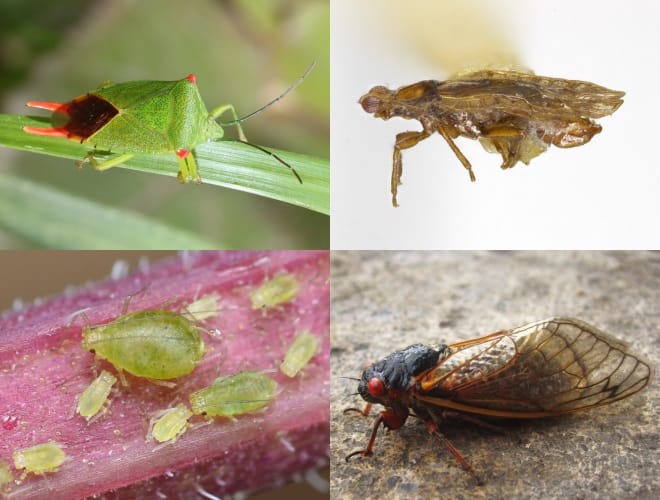
31. Periodical Cicada
Periodical cicadas are one of the most fascinating insects in the natural world due to their extremely long underground life cycle. Unlike regular cicadas, these species spend most of their lives hidden beneath the soil as nymphs, sometimes for 13 or even 17 years before emerging all at once.
When they finally surface, they appear in massive synchronized groups. This mass emergence is a survival strategy, overwhelming predators and ensuring that enough individuals survive to reproduce. The sound produced by male cicadas during this period can be incredibly loud, forming a constant natural chorus in forests and suburban areas.
Periodical cicadas have black bodies with red or orange eyes and delicate transparent wings. They do not bite or harm humans, but their sheer numbers can be overwhelming.
Among all Types of Bugs Insects, periodical cicadas stand out as one of the most unusual examples of long-term survival and synchronized life cycles in nature.
32. Aphid
Aphids are tiny, soft-bodied insects commonly found on plants, especially new shoots and leaves. They feed by sucking sap from plants, which can weaken crops and garden plants if populations grow too large.
Despite their small size, aphids reproduce extremely quickly. Some species can even give birth to live young without mating, allowing populations to expand rapidly under favorable conditions.
Aphids are often tended by ants, which protect them in exchange for a sugary substance called honeydew that aphids excrete.
Although they are considered pests in agriculture, aphids are an important food source for ladybugs and other beneficial insects, making them a key part of the ecosystem.
33. Leafhopper
Leafhoppers are small, agile insects known for their incredible jumping ability. They can leap many times their body length thanks to powerful hind legs.
These insects feed on plant sap, similar to aphids, and are often found on grasses, shrubs, and agricultural crops. Their feeding can sometimes cause damage to plants by spreading diseases.
Leafhoppers are usually green, yellow, or brown, helping them blend into vegetation and avoid predators.
They are also known for their ability to produce subtle vibrations as a form of communication, making them one of the more advanced communicators among Bugs Insects.
34. Thrips
Thrips are extremely small, slender insects that are often difficult to see without close inspection. Despite their size, they can cause significant damage to plants, especially flowers and crops.
They feed by puncturing plant cells and sucking out the contents, leaving behind silvery or discolored patches on leaves.
Thrips can reproduce rapidly in warm conditions, leading to large infestations in agricultural environments.
Although they are considered pests, thrips also serve as prey for many predatory insects, contributing to the balance of natural ecosystems.
35. Earwig
Earwigs are easily recognized by the pair of forceps-like pincers at the end of their abdomen. These pincers are used for defense, capturing prey, and mating rituals.
They are nocturnal insects that hide during the day in dark, damp places such as under rocks or bark. At night, they emerge to feed on plants, insects, and decaying matter.
Despite their intimidating appearance, earwigs are generally harmless to humans.
Earwigs play a mixed role in ecosystems—they can be both beneficial predators and occasional plant feeders, depending on the species and environment.
36. Silverfish
Silverfish are primitive, wingless insects known for their silvery-gray color and fish-like movement. They are fast runners and prefer dark, humid environments such as bathrooms, basements, and kitchens.
These insects feed on carbohydrates, including paper, glue, and even clothing fibers, which can make them household pests.
Silverfish have a very ancient evolutionary history, with minimal changes over millions of years, making them one of the oldest surviving insect groups.
Although they are often unwanted indoors, they play a role in breaking down organic material in natural ecosystems.
37. Mayfly
Mayflies are delicate aquatic insects known for their extremely short adult lifespan. Some species live only a few hours or days as adults, making them one of the shortest-lived insects in the world.
They spend most of their lives underwater as nymphs, feeding on algae and organic debris in rivers and streams.
When they emerge, mayflies form large swarms for mating before quickly completing their life cycle.
Mayflies are important indicators of water quality, as they are highly sensitive to pollution, making them valuable Bugs Insects for environmental monitoring.
38. Stonefly
Stoneflies are aquatic insects commonly found in clean, fast-flowing streams and rivers. Like mayflies, they spend most of their life in water as nymphs.
They are sensitive to pollution, so their presence often indicates a healthy freshwater ecosystem.
Stonefly nymphs feed on algae, plant material, and small organic particles, playing a role in nutrient cycling in aquatic environments.
Adult stoneflies are weak fliers and usually stay near water, where they reproduce and continue their life cycle.
39. Caddisfly
Caddisflies are small, moth-like insects that are closely associated with freshwater habitats. Their larvae are especially interesting because many species build protective cases using sand, twigs, or plant material.
These cases help them blend into their environment and protect them from predators while they develop underwater.
Adult caddisflies resemble small moths but are typically active near water sources. They are important food sources for fish and other aquatic animals.
Caddisflies are often used as indicators of water quality, making them valuable in ecological studies of Bugs Insects.
40. Lacewing
Lacewings are delicate insects known for their transparent, net-like wings and green or brown bodies. Their elegant appearance makes them easy to recognize in gardens and natural habitats.
They are beneficial predators, especially in their larval stage, where they feed on aphids, mites, and other small pests.
Adult lacewings often feed on nectar, pollen, or honeydew, contributing to pollination and plant health.
Because of their role in controlling pest populations, lacewings are highly valued in agriculture and natural pest management systems.
41. Antlion
Antlions are fascinating predatory insects best known for their unusual larval behavior. While adults resemble delicate dragonfly-like insects, it is their larvae that are truly remarkable. Antlion larvae create small, cone-shaped pits in sandy soil to trap unsuspecting prey.
When an ant or small insect falls into the pit, the antlion quickly grabs it using powerful jaws and drags it underground. This ambush strategy makes them highly effective predators despite their small size.
Adult antlions are weak flyers and are mostly nocturnal. They are often attracted to lights at night but do not actively hunt like their larvae.
Among all Types of Bugs Insects, antlions stand out as one of the most creative hunters, using environmental traps instead of speed or strength.
42. Dobsonfly
Dobsonflies are large aquatic insects known for their intimidating appearance. Males have long, curved mandibles that can look frightening but are generally harmless to humans.
Their larvae, called hellgrammites, live in streams and rivers where they are active predators feeding on other aquatic insects. This makes them important indicators of clean water systems.
Adult dobsonflies typically live only a few days to reproduce. They do not feed much during this stage, focusing instead on mating and egg-laying.
Despite their scary look, dobsonflies are an important part of freshwater ecosystems and help maintain ecological balance among Bugs Insects.
43. Scorpionfly
Scorpionflies are unique insects named for the male’s tail-like abdomen, which resembles a scorpion’s stinger. However, they are completely harmless to humans.
They are often found in moist environments such as forests and shaded areas. Scorpionflies feed on dead insects, plant material, and sometimes nectar.
Males use their specialized abdominal structure during mating rituals, which helps distinguish them from other insects.
Scorpionflies play an important role in decomposition and nutrient recycling, making them a valuable part of natural ecosystems.
44. Flea
Fleas are tiny, wingless insects known for their incredible jumping ability. They can leap many times their body length, allowing them to quickly move between hosts.
They are external parasites that feed on the blood of mammals and birds. This feeding behavior can cause irritation and discomfort in animals and humans.
Fleas are capable of spreading diseases, which makes them medically important insects despite their small size.
Their flattened bodies and strong legs make them highly adapted for moving through fur and feathers, making them one of the most resilient parasitic Bugs Insects.
45. Louse
Lice are tiny, wingless parasites that live on the bodies of mammals and birds. They feed on skin flakes, blood, or other bodily materials depending on the species.
Human lice are commonly found in hair or clothing and spread through close contact. They are known for causing itching and irritation.
Lice reproduce quickly, laying eggs called nits that attach firmly to hair strands or fabric fibers.
Although they are considered pests, lice are highly specialized insects adapted to survive only on specific hosts, making them unique among Bugs Insects.
46. Bed Bug
Bed bugs are small, flat insects that feed on human blood, usually at night while people are sleeping. They are reddish-brown in color and hide in mattresses, furniture, and cracks during the day.
These insects are highly resilient and can survive for long periods without feeding. This makes infestations difficult to eliminate once established.
Although bed bugs are not known to spread diseases, their bites can cause itching, discomfort, and stress.
Their ability to hide and adapt to human environments makes them one of the most persistent nuisance Bugs Insects in urban areas.
47. Stink Bug
Stink bugs are named for the unpleasant odor they release when threatened. This smell acts as a defense mechanism against predators.
They are typically shield-shaped and come in various shades of green or brown. Stink bugs feed on plants, fruits, and crops, sometimes causing agricultural damage.
During colder months, they often enter homes seeking warmth, which can make them a seasonal nuisance.
Despite their smell, stink bugs are part of natural ecosystems and serve as food for birds and other insects.
48. Assassin Bug
Assassin bugs are predatory insects known for their stealthy hunting behavior. They use a sharp, needle-like mouthpart to inject enzymes into their prey, liquefying their insides for consumption.
They are effective hunters of other insects and help control pest populations in natural environments.
Some species are beneficial, while others can bite humans if handled, causing painful reactions.
Their unique hunting strategy makes assassin bugs one of the more specialized and efficient predators among Bugs Insects.
49. Water Bug
Water bugs are large aquatic insects commonly found in ponds, lakes, and slow-moving streams. They are strong swimmers and skilled predators in water environments.
These insects feed on other aquatic organisms, including small fish, tadpoles, and insects.
Some species can deliver a painful bite if handled, earning them a fearsome reputation.
Despite this, water bugs play an important role in controlling aquatic populations and maintaining balance in freshwater ecosystems.
50. Glowworm
Glowworms are insects known for their ability to produce light through bioluminescence. This glowing effect is used to attract prey or mates, depending on the species.
They are often found in dark, damp environments such as caves, forests, or soil. The glowing light creates a beautiful natural display at night.
In some species, only the larvae or females produce light, while males remain winged and non-luminous.
Glowworms are one of the most magical examples of adaptation among Bugs Insects, combining survival with natural beauty.
Conclusion
The world of Types of Bugs Insects is incredibly diverse, ranging from tiny parasites like lice to glowing creatures like glowworms and powerful predators like assassin bugs. Each insect plays a unique role in maintaining ecological balance, whether through pollination, decomposition, predation, or serving as food for other animals.
Understanding these Bugs Insects helps us appreciate how complex and interconnected nature truly is. From forests and rivers to gardens and homes, insects are everywhere, quietly shaping the environment around us.
Which of these fascinating insects surprised you the most when learning about their role in nature?
50+ Frequently Asked Questions (FAQ) About Types of Bugs Insects
1. What are Types of Bugs Insects?
Types of Bugs Insects refer to different species of small invertebrate animals that have six legs, a segmented body, and often wings. They include beetles, ants, bees, flies, butterflies, and many more.
2. How many Types of Bugs Insects exist in the world?
Scientists estimate there are over 1 million described insect species, and possibly several million more still undiscovered in forests, oceans, and remote ecosystems.
3. What is the difference between bugs and insects?
All bugs are insects, but not all insects are true “bugs.” Scientifically, true bugs belong to the order Hemiptera, while insects include many more groups like beetles and butterflies.
4. Why are Bugs Insects important in nature?
Bugs insects play essential roles in pollination, decomposition, soil health, and food chains, helping maintain ecological balance.
5. Are all insects harmful?
No, most insects are harmless or beneficial. Only a small number are considered pests or disease carriers.
6. Which insects are beneficial to humans?
Bees, ladybugs, lacewings, and dragonflies are beneficial because they help with pollination and pest control.
7. What insects are considered pests?
Cockroaches, termites, bed bugs, and aphids are often considered pests due to their impact on homes and agriculture.
8. What is the largest insect in the world?
The Atlas moth and Goliath beetle are among the largest insects in terms of wingspan and body mass.
9. What is the smallest insect?
Some parasitic wasps are extremely small, measuring less than 0.2 millimeters in length.
10. How do insects breathe?
Insects breathe through a network of tiny tubes called tracheae that deliver oxygen directly to their tissues.
11. Do all insects have wings?
No, some insects like ants (workers), fleas, and lice are wingless.
12. Why do insects have exoskeletons?
The exoskeleton protects their body, prevents water loss, and provides structural support.
13. How long do insects live?
Insect lifespans vary from a few hours (mayflies) to several years (cicadas underground stage).
14. What is metamorphosis in insects?
Metamorphosis is the process of transformation from egg to larva, pupa, and adult stage.
15. Which insects undergo complete metamorphosis?
Butterflies, beetles, flies, and bees undergo complete metamorphosis.
16. What insects bite humans?
Mosquitoes, fleas, bed bugs, and some flies bite humans for blood or defense.
17. Why do mosquitoes bite?
Female mosquitoes bite to obtain protein from blood needed for egg development.
18. Are all ants harmful?
No, most ants are harmless and actually help improve soil and control pests.
19. How do ants communicate?
Ants use chemical signals called pheromones to communicate and organize colony behavior.
20. What do ladybugs eat?
Ladybugs mainly eat aphids and other small plant pests.
21. Why are dragonflies important?
Dragonflies help control mosquito populations and are indicators of clean water.
22. What do termites eat?
Termites eat wood and plant material containing cellulose.
23. Are termites dangerous?
Yes, they can damage wooden structures in buildings.
24. What do grasshoppers eat?
Grasshoppers mainly feed on grass, leaves, and crops.
25. Why do crickets make sound?
Male crickets chirp to attract females and communicate.
26. What is the role of beetles in nature?
Beetles help decompose organic matter and control pest populations.
27. Are cockroaches dangerous?
Cockroaches can spread bacteria and contaminate food in homes.
28. Why are butterflies important?
Butterflies are important pollinators and indicators of environmental health.
29. What do caterpillars become?
Caterpillars transform into butterflies or moths through metamorphosis.
30. Why do insects swarm?
Swarming is often related to mating, migration, or survival strategies.
31. What is camouflage in insects?
Camouflage helps insects blend into their environment to avoid predators.
32. Which insect is the fastest?
Tiger beetles are among the fastest running insects.
33. Can insects feel pain?
Insects respond to stimuli, but their experience of pain is different from humans.
34. Why are flies attracted to food?
Flies are attracted to sugars, decaying matter, and organic smells.
35. What is bioluminescence in insects?
Bioluminescence is the ability to produce light, seen in glowworms and fireflies.
36. Are bed bugs visible to the eye?
Yes, adult bed bugs are visible as small reddish-brown insects.
37. How do insects help agriculture?
They pollinate crops and control pest populations naturally.
38. What is a predator insect?
Predator insects hunt and feed on other insects, like mantises and dragonflies.
39. What is a parasite insect?
Parasite insects live on or inside hosts and feed on them, like lice and fleas.
40. Why do insects invade homes?
They often search for food, warmth, or shelter.
41. Can insects survive extreme environments?
Yes, many insects adapt to deserts, cold regions, and polluted areas.
42. What do aphids do to plants?
Aphids suck plant sap, which can weaken plant growth.
43. Are all beetles harmful?
No, many beetles are beneficial and help ecosystems.
44. Why do insects molt?
They shed their exoskeleton to grow larger.
45. What attracts insects?
Light, heat, food, and moisture attract many insects.
46. What insects live in water?
Dragonfly larvae, mayflies, and water bugs live in aquatic environments.
47. What is the role of wasps?
Wasps control pest populations and help pollination.
48. Why are some insects colorful?
Colors help with mating, warning predators, or camouflage.
49. Do insects sleep?
Insects do not sleep like humans but have rest periods of inactivity.
50. What is the most common insect in the world?
Ants are among the most widespread and numerous insects globally.
51. Why should we study Bugs Insects?
Studying Bugs Insects helps us understand ecosystems, protect agriculture, and preserve biodiversity.
Read more: