

When people search for types of Electric eel, they are usually surprised to learn that electric eels are not typical eels at all, but highly specialized knifefish from South America. These fascinating creatures belong to the genus Electrophorus and are famous for their ability to generate strong electric discharges used for hunting, communication, and self-defense. In modern taxonomy, scientists recognize several species and regional variations, making the study of electric eel diversity more complex than ever.
Electric eels live mainly in slow-moving rivers, floodplains, and swampy waters of the Amazon and Orinoco basins. They are air-breathing fish that surface regularly for oxygen and can produce electrical shocks strong enough to stun prey or deter predators. In this guide, we explore 15 types of Electric eel (including species and ecological populations) with detailed identification and behavior insights.
15 Types of Electric Eel
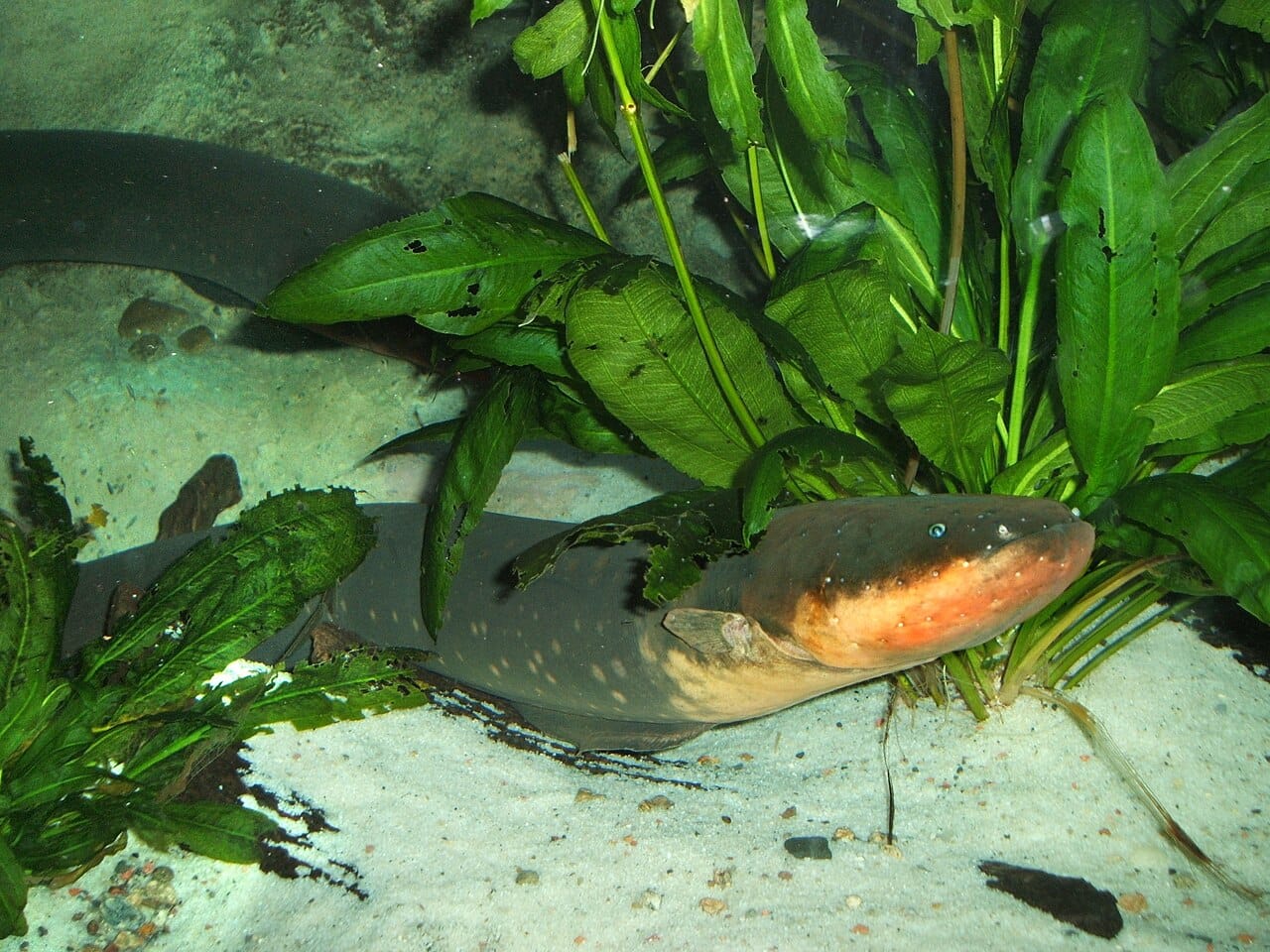
1. Electrophorus electricus (Common Electric Eel)
The Common Electric Eel is the most well-known member among all types of Electric eel and is often the species people imagine when thinking about electric shocks in nature. Found primarily in the Amazon and Orinoco river systems, this species can grow over 2 meters long and produce electrical discharges reaching hundreds of volts.
Its body is elongated and cylindrical, resembling a true eel, although it is actually more closely related to catfish and knifefish. The coloration is typically dark gray or brownish on top with a lighter underside, helping it blend into murky freshwater environments.
One of its most impressive adaptations is its specialized electric organs, which can generate both low-voltage pulses for navigation and high-voltage shocks for hunting prey such as fish and amphibians. These shocks are produced through thousands of electrocytes that act like biological batteries.
Ecologically, the Common Electric Eel plays an important role as a top predator in freshwater ecosystems. It helps regulate fish populations and maintains balance in aquatic food webs. Despite its fearsome reputation, it generally avoids humans unless provoked.
2. Electrophorus voltai (Volta’s Electric Eel)
Volta’s Electric Eel is one of the most powerful among all types of Electric eel, known for producing the highest recorded electric discharge in the animal kingdom—over 800 volts in some individuals. This species was only recently distinguished from others through genetic research.
It inhabits fast-flowing sections of the Amazon Basin, particularly in areas with clearer water compared to the murky habitats of other electric eels. This environmental difference is believed to have influenced its evolution toward producing stronger electric outputs.
Volta’s Electric Eel uses its electric power not only for hunting but also for stunning larger prey and deterring predators. Its hunting strategy often involves emitting high-voltage bursts that incapacitate fish instantly, making it one of the most efficient aquatic predators in its ecosystem.
Morphologically, it is similar to other electric eels but may show subtle differences in body proportions and electrical organ structure. Its discovery highlights how much biodiversity still exists in the Amazon region.
3. Electrophorus varii (Vari’s Electric Eel)
Vari’s Electric Eel represents one of the more recently recognized species among types of Electric eel. It is named after Brazilian ichthyologist Richard Vari and is commonly found in slower-moving, sediment-rich waters of the Amazon Basin.
This species tends to inhabit floodplains, swamps, and muddy river edges where oxygen levels are low. Like other electric eels, it is an obligate air breather, meaning it must surface regularly to survive. This adaptation allows it to thrive in environments where many other fish cannot.
Vari’s Electric Eel produces slightly weaker electric discharges compared to Volta’s species but still generates enough voltage to stun prey effectively. Its hunting behavior relies heavily on ambush tactics, often hiding in submerged vegetation or muddy banks before striking.
Its ecological role is crucial in controlling small fish populations and maintaining balance in slow-water ecosystems. Because it prefers quieter waters, it is less frequently encountered than other electric eel species, making it an important subject of ongoing scientific study.
4. Amazon Basin Electric Eel (Amazon Population Type)
The Amazon Basin Electric Eel represents one of the most widespread ecological groups among the types of Electric eel. It is found throughout the central and lower Amazon River system, where warm, oxygen-poor waters create ideal conditions for air-breathing fish like electric eels. This population is not a separate species but a regional form adapted to dense rainforest waterways.
These electric eels typically inhabit flooded forests, slow tributaries, and muddy riverbanks. Their environment is highly seasonal, with water levels rising dramatically during the rainy season. This forces them to move between submerged forest zones and deeper channels, showing strong adaptability in changing habitats.
Behaviorally, Amazon Basin Electric Eels rely heavily on ambush hunting. They hide among roots, submerged logs, and vegetation before delivering powerful electric shocks to nearby prey. Their diet mainly includes small fish, amphibians, and occasionally invertebrates.
This population plays an important ecological role by controlling fish populations in nutrient-rich floodplain ecosystems. Their presence also indicates healthy wetland dynamics in the Amazon Basin.
5. Orinoco River Electric Eel (Orinoco Population Type)
The Orinoco River Electric Eel is a distinct regional group among types of Electric eel found in the Orinoco River system of Venezuela and Colombia. This population lives in slower-moving waters compared to the main Amazon channel, often preferring swampy floodplains and oxbow lakes.
The Orinoco environment is rich in organic material, leading to low oxygen levels. Like all electric eels, this group is an obligate air-breather, surfacing regularly to gulp oxygen. This adaptation allows it to survive in habitats where many fish species cannot persist.
This population tends to exhibit slightly different hunting patterns compared to Amazon Basin groups. It often uses shorter bursts of electricity for quick strikes in dense vegetation areas where visibility is limited.
Ecologically, it contributes to controlling fish populations in stagnant waters and helps maintain balance in wetland ecosystems. Its presence is also an indicator of healthy freshwater swamp systems in the Orinoco Basin.
6. Rio Negro Electric Eel (Blackwater Adaptation Type)
The Rio Negro Electric Eel is one of the most fascinating ecological forms among types of Electric eel, adapted specifically to blackwater environments in the Amazon Basin. The Rio Negro is known for its dark, tea-colored water caused by high levels of organic acids from decaying plant material.
In this low-visibility environment, electric signaling becomes especially important. These electric eels rely heavily on electrolocation, using weak electric fields to navigate and detect prey in near-total darkness.
Their hunting strategy is highly efficient in these conditions. Instead of relying on vision, they use electrical pulses to sense movement and then deliver a strong shock to immobilize prey. This makes them one of the most specialized predators in blackwater ecosystems.
The Rio Negro Electric Eel also plays a key ecological role in nutrient cycling and population control of small fish species. Its adaptation to acidic waters demonstrates the remarkable flexibility of electric eel evolution.
7. Madeira River Electric Eel (Fast Current Adaptation Type)
The Madeira River Electric Eel represents a population adapted to faster-flowing sections of the Amazon Basin. Among the types of Electric eel, this group is notable for surviving in stronger currents compared to typical stagnant-water habitats.
Unlike other electric eel environments, the Madeira River has more dynamic water movement, requiring these eels to develop stronger anchoring behaviors. They often hide near submerged roots, rocky areas, or fallen trees to avoid being swept away.
Their electric discharges are used more strategically in this habitat, as prey must be captured quickly before currents carry them away. This results in highly efficient and rapid hunting strikes.
Ecologically, they help regulate fish populations in flowing river systems and contribute to maintaining balance in one of the Amazon’s most dynamic waterways.
8. Tocantins Electric Eel (Tocantins Basin Type)
The Tocantins Electric Eel is a distinctive regional population among the types of Electric eel, found in the Tocantins River basin in central Brazil. This river system is slightly more isolated compared to the main Amazon network, which has allowed local adaptations to develop over time.
This population typically inhabits slow-moving tributaries, floodplain lakes, and seasonal wetlands. Water levels in the Tocantins basin fluctuate significantly throughout the year, forcing these electric eels to adapt to both deep water and shallow, oxygen-poor environments.
Their hunting behavior is highly opportunistic. They often remain hidden in muddy substrates or submerged vegetation, using weak electric fields to detect prey before launching a sudden high-voltage attack. This strategy is especially effective in turbid waters where visibility is limited.
Ecologically, the Tocantins Electric Eel plays a crucial role in controlling small fish populations and maintaining balance in freshwater wetland ecosystems. Its presence is also an indicator of healthy river connectivity and floodplain dynamics.
9. Xingu Electric Eel (Clearwater Basin Type)
The Xingu Electric Eel is one of the more visually adapted groups among the types of Electric eel, inhabiting the Xingu River, a tributary of the Amazon known for its clearer, faster-flowing waters and rocky riverbeds.
Unlike many electric eels that prefer murky environments, this population has adapted to relatively clearer water conditions. This influences both its hunting behavior and sensory reliance, as visibility plays a slightly greater role alongside electric detection.
Xingu Electric Eels often use crevices between rocks and submerged structures as hiding spots. From these positions, they ambush passing prey with quick bursts of electricity. Their electric organs remain equally powerful, allowing them to stun fish even in more open water conditions.
This population is ecologically important in regulating fish diversity within fast-flowing Amazon tributaries. It demonstrates how electric eels can adapt to a wider range of freshwater habitats than previously believed.
10. Tapajós Electric Eel (Sediment-Rich River Type)
The Tapajós Electric Eel is found in the Tapajós River system, another major tributary of the Amazon. It is part of the broader group of types of Electric eel adapted to sediment-heavy and moderately fast-flowing waters.
The Tapajós River is known for its mix of clear and turbid zones, creating a diverse habitat mosaic. Electric eels in this region often move between sandy riverbeds, submerged logs, and flooded forest edges depending on seasonal changes.
This population relies heavily on electrolocation due to fluctuating water clarity. Their ability to detect prey through electric fields gives them a strong advantage in environments where visibility can change rapidly after rainfall or sediment disturbance.
Ecologically, they contribute to balancing fish populations in one of the Amazon’s most biodiverse river systems. Their adaptability makes them a key species for understanding freshwater predator dynamics in changing environments.
11. South Amazon Electric Eel (Southern Basin Distribution Type)
The South Amazon Electric Eel represents a distribution-based ecological form among the types of Electric eel, found in the southern regions of the Amazon Basin where waterways transition into more fragmented floodplain systems.
This region experiences strong seasonal shifts between dry and wet periods, creating isolated pools and temporary waterways. Electric eels here must survive periods of habitat fragmentation, often moving between connected water bodies during floods.
Their behavior reflects high adaptability. They are capable of surviving in low-oxygen environments and can tolerate temporary isolation in shrinking water bodies. This resilience ensures their survival even during extreme seasonal droughts.
They play an important ecological role in controlling fish populations in isolated aquatic habitats, helping maintain balance in temporary ecosystems that form during seasonal flooding cycles.
12. North Amazon Electric Eel (Northern Distribution Type)
The North Amazon Electric Eel is a regional population within the broader types of Electric eel complex, found in the northern reaches of the Amazon Basin. These waters include a mix of blackwater, whitewater, and clearwater systems, creating a highly diverse and dynamic environment.
This population is adapted to frequent environmental changes, especially seasonal flooding that expands river systems into vast forested floodplains. During high-water periods, these electric eels can move into newly submerged areas to hunt, while in dry seasons they retreat into deeper channels and isolated pools.
Their hunting strategy is highly flexible. In murky floodwaters, they rely heavily on electrolocation, while in clearer tributaries they may combine electrical sensing with movement detection. This adaptability makes them one of the most versatile electric eel populations in the Amazon.
Ecologically, they help maintain balance in northern Amazon fish communities by regulating small fish and amphibian populations across changing habitats.
13. Whitewater Floodplain Electric Eel (Sediment-Rich Habitat Type)
The Whitewater Floodplain Electric Eel is found in nutrient-rich, sediment-heavy waters known as whitewater rivers. These habitats are among the most productive ecosystems in the Amazon Basin and support a high density of aquatic life.
Among the types of Electric eel, this population is specially adapted to extremely low visibility conditions caused by suspended sediments. As a result, it depends almost entirely on electrical sensing to locate prey and navigate its environment.
These electric eels often inhabit flooded forests during rainy seasons, where they move among submerged roots and vegetation. Their ability to detect minute electrical signals gives them a strong advantage in complex, cluttered underwater landscapes.
They play a key ecological role in controlling fish populations in nutrient-rich floodplain systems, helping to maintain biodiversity balance in highly productive waters.
14. Blackwater Electric Eel (Acidic Water Adaptation Type)
The Blackwater Electric Eel is adapted to acidic, low-nutrient environments such as the Rio Negro and similar blackwater systems. These habitats are characterized by dark, tea-colored water caused by decaying plant material and low mineral content.
This is one of the most specialized groups within the types of Electric eel, relying heavily on electrolocation due to extremely limited visibility. Light penetration in these waters is minimal, making vision almost useless for hunting.
Blackwater Electric Eels are highly efficient predators in darkness. They use weak electric pulses to map their surroundings and then deliver powerful shocks to immobilize prey such as small fish and amphibians.
Their ecological importance lies in maintaining fish population balance in nutrient-poor ecosystems where food resources are limited and competition is high.
15. Deep Channel Electric Eel (Deep Water Habitat Type)
The Deep Channel Electric Eel represents one of the less frequently observed ecological forms among the types of Electric eel, inhabiting deeper river channels and submerged trenches within large Amazonian waterways.
These deeper zones provide stable water conditions and protection from surface disturbances such as seasonal flooding and temperature fluctuations. As a result, this population tends to be more stable in its habitat range.
In deeper water, electric sensing becomes even more important due to reduced light penetration. These electric eels rely on continuous low-voltage signaling to detect prey movements and navigate complex underwater terrain.
They play a subtle but important ecological role in deep river ecosystems by regulating fish populations that inhabit lower water columns, contributing to overall aquatic balance.
Conclusion
Exploring the types of Electric eel reveals just how complex and extraordinary these South American fish really are. What was once thought to be a single species is now understood as a diverse group of species and ecological populations within the genus Electrophorus. Each type has adapted to specific freshwater environments, from fast-flowing tributaries and sediment-rich floodplains to acidic blackwater rivers and deep channels.
Across all forms, electric eels share one remarkable trait: the ability to generate powerful bioelectric discharges. This adaptation is not only used for hunting prey but also for navigation in murky waters and communication with other eels. Their electric organs represent one of the most advanced biological “battery systems” in nature, making them a key subject of scientific research in physiology and bioelectricity.
Ecologically, electric eels play an important role as mid-to-top predators in freshwater ecosystems. They help regulate fish populations and maintain balance in complex river food webs. Their presence also reflects the health of aquatic environments across the Amazon and Orinoco basins.
Understanding the diversity of types of Electric eel gives us a deeper appreciation of how life adapts to extreme and changing environments. From hidden floodplain hunters to deep-channel specialists, each population demonstrates resilience, intelligence, and evolutionary innovation.
As scientific research continues to uncover new details about these electrifying predators, one final question remains: how many more undiscovered adaptations might still exist beneath the dark waters of the Amazon rainforest?
Frequently Asked Questions (FAQ) About Electric Eel
1. What is an electric eel?
An electric eel is a freshwater fish from the genus Electrophorus that can generate electric shocks for hunting and defense.
2. How many types of Electric eel are there?
There are 3 officially recognized species and several regional ecological populations within the Amazon and Orinoco basins.
3. What are the main types of Electric eel?
The main species are Electrophorus electricus, Electrophorus voltai, and Electrophorus varii.
4. Where do electric eels live?
They live in freshwater rivers, swamps, and floodplains in South America.
5. Are electric eels true eels?
No, they are actually knifefish, not true eels.
6. How strong is an electric eel shock?
Some species can produce shocks up to 800 volts.
7. Why do electric eels produce electricity?
They use electricity for hunting, defense, and communication.
8. Can electric eels kill humans?
They are not usually deadly, but strong shocks can be dangerous.
9. How do electric eels generate electricity?
They use specialized cells called electrocytes that act like biological batteries.
10. What do electric eels eat?
They eat fish, amphibians, and small aquatic animals.
11. Are electric eels dangerous?
Yes, they can deliver painful electric shocks when threatened.
12. How long do electric eels grow?
They can grow over 2 meters long.
13. Do electric eels breathe water?
No, they are air-breathing fish and must surface for oxygen.
14. Where are electric eels found in the wild?
Mainly in the Amazon and Orinoco river systems.
15. What is the habitat of electric eels?
They prefer slow-moving, muddy, or flooded waters.
16. Do electric eels live in groups?
No, they are mostly solitary animals.
17. How do electric eels hunt?
They use electric pulses to detect and stun prey.
18. Can electric eels see well?
Their vision is limited, so they rely on electricity more than eyesight.
19. Are electric eels aggressive?
They are not aggressive unless provoked or hunting.
20. How many volts can an electric eel produce?
Up to around 600–860 volts depending on species.
21. What eats electric eels?
Larger fish, birds, and caimans may prey on them.
22. Do electric eels have predators?
Yes, especially when young or vulnerable.
23. How do electric eels defend themselves?
They release strong electric shocks to deter threats.
24. Are electric eels endangered?
Most are not currently endangered, but habitat loss is a concern.
25. What is the largest electric eel species?
Electrophorus voltai is known for producing the strongest electric discharge.
26. Can electric eels survive out of water?
They can survive briefly if their skin remains moist.
27. How do electric eels reproduce?
They reproduce by laying eggs in aquatic environments.
28. Do electric eels migrate?
Some populations move seasonally with flood cycles.
29. What is an electrocyte?
It is a specialized cell that produces electricity in electric eels.
30. Can electric eels shock each other?
Yes, they can, especially during territorial disputes.
31. Do electric eels use electricity to communicate?
Yes, low-voltage signals are used for communication.
32. Are electric eels nocturnal?
They are often more active at night.
33. How fast can electric eels move?
They move slowly but can strike quickly.
34. Do electric eels have scales?
No, their skin is smooth and slimy.
35. What color are electric eels?
Usually dark gray, brown, or olive with lighter undersides.
36. How do electric eels navigate?
They use electrolocation to sense their environment.
37. Can electric eels shock through water?
Yes, their electricity travels through surrounding water.
38. Are electric eels fish or reptiles?
They are fish.
39. Do electric eels have bones?
Yes, they have a full internal skeleton.
40. How long do electric eels live?
They can live around 10–15 years in the wild.
41. Are electric eels used in science?
Yes, they are studied for bioelectricity research.
42. Can electric eel electricity power devices?
Scientists study their electricity for bio-inspired technology.
43. Do electric eels attack humans?
Only if threatened or handled improperly.
44. What is the difference between eel species?
Differences include habitat, voltage strength, and genetics.
45. How do baby electric eels survive?
They develop quickly and learn to hunt small prey.
46. Do electric eels have lungs?
No, but they breathe air using a specialized mouth cavity.
47. Can electric eels be kept in aquariums?
They are rarely kept due to size and danger.
48. What is the scientific name of electric eel?
Genus Electrophorus.
49. Why are electric eels important?
They help maintain ecological balance in freshwater systems.
50. How do electric eels avoid predators?
They use electric shocks and camouflage in muddy waters.
51. Can electric eels die from their own electricity?
No, they are naturally insulated from their own shocks.
52. What is the biggest threat to electric eels?
Habitat destruction and water pollution.
53. Why are electric eels studied by scientists?
Because their bioelectric system is unique in nature.
Read more: