

If you are curious about Types of Marsupials, you are exploring one of the most unique groups of mammals on Earth. Marsupials are animals that carry and nurse their babies in a pouch after birth. This special reproductive system makes them very different from placental mammals like cats or dogs. You can find marsupials mainly in Australia, New Guinea, and parts of the Americas. Some of the most famous examples include kangaroos, koalas, and wombats. In this guide, we will explore 30 fascinating marsupials, how to identify them, and what makes each species special in the wild. Whether you are a wildlife enthusiast or a beginner learner, this article will help you understand Marsupials in a simple, engaging way.
30 Types of Marsupials
1. Red Kangaroo
The Red Kangaroo is the largest marsupial in the world and a true symbol of Australia’s outback. Males can grow over 6 feet tall when standing upright and are known for their powerful hind legs, which allow them to jump long distances in a single bound. These kangaroos live in dry grasslands and deserts, where they survive on tough vegetation and can go long periods without water.
Red kangaroos are social animals and often form groups called mobs. Males are known for fighting during mating season, using their strong legs and tails for balance. Their iconic hopping movement is one of the most energy-efficient forms of travel in the animal kingdom.
2. Eastern Grey Kangaroo
The Eastern Grey Kangaroo is slightly smaller and lighter in color compared to the red kangaroo. It is commonly found in the eastern forests and grasslands of Australia. These kangaroos prefer cooler, wetter environments and are often seen grazing in open fields during the early morning or evening.
They are highly social and live in large groups that offer protection from predators. Their calm nature makes them one of the most frequently observed marsupials in the wild. Eastern Grey Kangaroos are also known for their soft grey fur and gentle behavior.
3. Western Grey Kangaroo
The Western Grey Kangaroo is similar in size to the eastern species but has darker fur and a slightly different facial structure. It is found in southern and western parts of Australia.
These kangaroos are adaptable and can survive in both forested areas and open plains. They are mostly active at night and spend the day resting in shaded areas. Western Grey Kangaroos are known for their strong social bonds and often groom each other as a form of communication.
4. Red-necked Wallaby
The Red-necked Wallaby is a medium-sized marsupial with a reddish tint on its shoulders and neck. It is commonly found in eastern Australia and Tasmania, living in forests and scrublands.
Unlike large kangaroos, wallabies are more agile in dense vegetation. They feed on grasses, leaves, and herbs. Their compact size allows them to move quickly through bushy environments while avoiding predators.
5. Swamp Wallaby
The Swamp Wallaby is a unique marsupial that prefers dense forests and swampy areas. It has dark fur with a distinctive yellow or orange tint on its chest and face.
This species is mostly solitary and is active during both day and night. Swamp Wallabies are known for their ability to feed on a wide variety of plants, including some that are toxic to other animals. This gives them a survival advantage in challenging environments.
6. Bennett’s Tree-kangaroo
Bennett’s Tree-kangaroo is one of the few kangaroo species adapted for life in trees. Found in the rainforests of northeastern Australia and Papua New Guinea, it has strong forelimbs and a long tail for balance.
Unlike ground kangaroos, tree-kangaroos move slowly and carefully among branches. They feed on leaves, fruits, and flowers. Their climbing ability makes them one of the most unusual Types of Marsupials in the animal kingdom.
7. Wallaroo
The Wallaroo is a medium-sized marsupial that bridges the size gap between kangaroos and wallabies. It is built with strong, muscular legs and a stocky body, making it well-suited for rocky terrains.
Wallaroos are generally solitary animals and prefer rugged landscapes where they can hide in caves and rocky shelters. Their thick fur helps them survive both hot and cold conditions.
8. Quokka
The Quokka is a small marsupial often called “the happiest animal in the world” due to its friendly facial expression. It is native to a few small islands off the coast of Western Australia.
Quokkas are herbivores and feed mainly on grasses and leaves. They are nocturnal and spend most of the day resting in shaded areas. Despite their friendly appearance, they are wild animals and should not be disturbed.
9. Koala
The Koala is one of the most iconic marsupials, famous for its sleepy lifestyle and love of eucalyptus leaves. It is found in the eucalyptus forests of eastern Australia.
Koalas spend most of their lives in trees and sleep up to 18–20 hours a day due to their low-energy diet. They have strong claws that help them climb and thick fur that protects them from weather conditions.
Despite being commonly called “koala bears,” they are not bears at all but true marsupials.
10. Common Wombat
The Common Wombat is a sturdy, burrowing marsupial found in southeastern Australia and Tasmania. It has a short, muscular body and strong claws designed for digging extensive tunnel systems underground.
Wombats are nocturnal herbivores that feed on grasses and roots. One of their unique features is their cube-shaped droppings, which help mark territory and prevent them from rolling away.
Their burrows provide shelter from predators and extreme weather, making them highly adapted to survival in the wild.
11. Northern Hairy-nosed Wombat
The Northern Hairy-nosed Wombat is one of the rarest marsupials in the world. It is larger than the common wombat and has a broader snout with fine whisker-like hairs, which help it sense its surroundings in dark underground burrows.
This species is critically endangered and now survives only in a small protected area in Australia. It is a nocturnal herbivore that feeds mainly on native grasses, and it can dig extensive tunnel systems that provide shelter from heat and predators.
Conservation programs are working hard to increase its population, making it one of the most important Types of Marsupials for wildlife protection efforts today.
12. Tasmanian Devil
The Tasmanian Devil is a powerful carnivorous marsupial found only on the island of Tasmania. It is famous for its strong jaws, loud screeches, and aggressive feeding behavior when competing for food.
Despite its fierce reputation, the Tasmanian Devil is a vital scavenger in its ecosystem. It helps clean up dead animals, preventing the spread of disease in the wild.
Sadly, this species has been heavily affected by a contagious facial tumor disease, making conservation efforts essential for its survival.
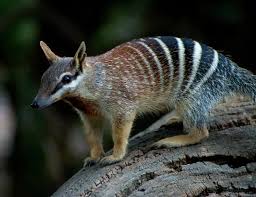
13. Numbat
The Numbat is a small, striped marsupial known for its specialized diet of termites. Unlike many other marsupials, it does not have a pouch; instead, females carry their young on their underside.
Numbats are active during the day, which is unusual for marsupials. They use their long, sticky tongue to extract termites from wood and soil.
Their striped pattern helps them blend into dry forests and eucalyptus woodlands, protecting them from predators.
14. Greater Bilby
The Greater Bilby is a nocturnal marsupial with large ears, a long snout, and a soft grey-blue coat. It is an expert digger and builds deep burrows to escape heat and predators.
Bilbies feed on insects, seeds, and bulbs, playing an important role in soil turnover and ecosystem health. Unlike rabbits, which they are sometimes compared to, bilbies are native to Australia.
Conservation efforts are ongoing because their population has declined due to habitat loss and introduced predators.
15. Bandicoot
Bandicoots are small, omnivorous marsupials found in Australia and nearby islands. They have a pointed snout and compact body, allowing them to dig efficiently for food.
These animals feed on insects, roots, and fungi, helping aerate the soil as they search for food. Bandicoots are mostly nocturnal and are often seen in gardens and bushland areas.
Their role in soil health makes them an important part of the ecosystem among Marsupials.
16. Pig-footed Bandicoot
The Pig-footed Bandicoot is an extinct marsupial that once lived in Australia. It was unique due to its unusual feet, which resembled those of a pig, allowing it to run quickly across open terrain.
It was omnivorous, feeding on plants and small insects. Sadly, it disappeared in the early 20th century due to habitat loss and predation by introduced species like cats and foxes.
Its extinction highlights the importance of protecting remaining marsupial species today.
17. Brushtail Possum
The Brushtail Possum is one of the most common marsupials in Australia. It has a thick, bushy tail used for balance while climbing trees and moving through urban areas.
These possums are highly adaptable and can live in forests, parks, and even cities. They are nocturnal and feed on leaves, fruits, and flowers.
Their ability to thrive in human environments makes them one of the most visible Types of Marsupials in Australia.
18. Ringtail Possum
The Ringtail Possum is a smaller, more delicate marsupial known for its curled, prehensile tail. This tail helps it grip branches while moving through trees.
It lives in forested areas and feeds on leaves, flowers, and fruit. Ringtail possums often build nests called dreys using leaves and twigs.
They are social animals and sometimes live in small family groups, especially during colder seasons.
19. Sugar Glider
The Sugar Glider is a small, nocturnal marsupial known for its ability to glide between trees using a membrane called a patagium.
It feeds on nectar, sap, insects, and fruits, making it highly adaptable. Sugar gliders are social animals and often live in groups in tree hollows.
Their gliding ability allows them to travel efficiently through forests while avoiding ground predators.
20. Feathertail Glider
The Feathertail Glider is the smallest gliding mammal in the world. It gets its name from its unique tail, which resembles a feather and helps stabilize its flight.
Despite its tiny size, it can glide between trees with impressive control. It feeds on nectar, pollen, and insects.
Feathertail gliders are nocturnal and spend most of their time in tree canopies, making them one of the most fascinating Types of Marsupials in Australia’s forests.
21. Flying Phalanger (Glider Group)
Flying phalangers are a group of gliding marsupials closely related to sugar gliders. They use a thin skin membrane between their limbs to glide smoothly from tree to tree, helping them move across forest canopies without touching the ground.
These nocturnal animals feed on nectar, sap, fruits, and small insects. Their large eyes help them navigate in the dark, while their bushy tails provide balance during flight.
Flying phalangers are excellent examples of arboreal adaptation among Types of Marsupials, allowing them to survive in dense rainforest environments.
22. Cuscus
Cuscuses are slow-moving, tree-dwelling marsupials found mainly in New Guinea and northern Australia. They have thick fur, round bodies, and strong prehensile tails that help them grip branches securely.
Unlike gliders, cuscuses do not jump long distances. Instead, they move carefully through trees, feeding on leaves, fruits, and flowers.
Their calm nature and nocturnal lifestyle make them difficult to spot in the wild, even though they are relatively common in tropical forests.
23. Virginia Opossum
The Virginia Opossum is the only marsupial found naturally in North America. It is highly adaptable and can live in forests, farmlands, and even urban areas.
This animal is famous for “playing dead” when threatened, a defense mechanism called thanatosis. It also has a strong immune system that helps it resist some snake venoms.
Virginia opossums are scavengers, feeding on insects, fruits, and carrion, making them important for cleaning ecosystems.
24. Water Opossum (Yapok)
The Water Opossum, also known as the yapok, is a semi-aquatic marsupial found in Central and South America. It is one of the few marsupials adapted to life in water.
It has webbed hind feet, which make it an excellent swimmer. Unlike most marsupials, males also have a pouch-like skin fold to protect their genitals while swimming.
Water opossums feed on fish, crustaceans, and aquatic insects, making them unique among Marsupials.
25. Mouse Opossum
Mouse opossums are small, agile marsupials found in Central and South America. They resemble rodents but are true marsupials with pouches for carrying their young.
They are nocturnal and highly active climbers, feeding on insects, fruits, and small vertebrates.
Their small size and fast movements help them avoid predators in dense forest environments.
26. Quoll
Quolls are carnivorous marsupials native to Australia and New Guinea. They are spotted, cat-like animals with sharp teeth and strong hunting instincts.
Quolls feed on insects, birds, small mammals, and reptiles. They are mostly nocturnal and use hollow logs or dens for shelter.
All quoll species face threats from habitat loss and introduced predators, making conservation efforts important for their survival.
27. Dunnart
Dunnarts are small, mouse-like marsupials found in Australia. Despite their size, they are active predators that feed on insects and small invertebrates.
They are nocturnal and live in a variety of habitats, including deserts and grasslands. Their fast movements help them catch prey efficiently.
Dunnarts play an important role in controlling insect populations in their ecosystems.
28. Marsupial Mole
Marsupial moles are highly specialized burrowing animals that live almost entirely underground in the sandy deserts of Australia.
They have no visible eyes and reduced hearing, relying instead on touch and vibration to navigate underground tunnels.
Their streamlined bodies allow them to “swim” through sand, making them one of the most unusual Types of Marsupials.
29. Monito del Monte
The Monito del Monte is a small, tree-dwelling marsupial found in South America. It is considered a living fossil because it is closely related to ancient marsupial lineages.
It lives in temperate rainforests and feeds on insects and fruits. It also builds nests using leaves and moss inside tree cavities.
This species is important for scientific research on marsupial evolution and biogeography.
30. Potoroo
Potoroo is a small marsupial that looks similar to a tiny kangaroo. It is found in southeastern Australia and prefers dense undergrowth and forest floors.
It feeds mainly on fungi, roots, and plant material, playing a key role in spreading fungal spores through the soil.
Potoroos are shy, nocturnal animals that rely on cover vegetation for protection from predators.
Conclusion
These final examples of Types of Marsupials highlight just how diverse and adaptive this group of animals truly is. From tree-dwelling cuscuses and gliding phalangers to burrowing marsupial moles and aquatic water opossums, marsupials have evolved to survive in nearly every type of environment. Each species plays a vital ecological role, contributing to forest health, soil balance, and biodiversity across continents. Understanding Marsupials not only helps us appreciate wildlife diversity but also reminds us how important conservation is for protecting these unique animals for future generations. Which of these marsupials surprised you the most in terms of adaptation and survival?
50+ Frequently Asked Questions (FAQ) About Types of Marsupials
1. What are Marsupials?
Marsupials are mammals that give birth to relatively undeveloped young, which continue growing inside a pouch on the mother’s body.
2. What are Types of Marsupials?
Types of Marsupials include kangaroos, koalas, wombats, possums, and many other species mainly found in Australia and the Americas.
3. Where do most marsupials live?
Most marsupials live in Australia, New Guinea, and nearby islands, with a few species in the Americas.
4. What makes marsupials different from other mammals?
Marsupials carry their babies in a pouch after birth, unlike placental mammals that develop young inside the womb for longer periods.
5. Are kangaroos marsupials?
Yes, kangaroos are one of the most well-known marsupials in the world.
6. Is a koala a bear?
No, a koala is not a bear. It is a marsupial.
7. What do marsupials eat?
Diet varies by species and can include grass, leaves, fruits, insects, and even small animals.
8. Are all marsupials from Australia?
No, while most are from Australia, some marsupials live in North and South America.
9. What is the largest marsupial?
The Red Kangaroo is the largest living marsupial.
10. What is the smallest marsupial?
Feathertail gliders and some mouse opossums are among the smallest marsupials.
11. Do all marsupials have pouches?
Most females have pouches, but not all species have a well-developed pouch.
12. Are marsupials dangerous?
Most marsupials are not dangerous to humans, although some can defend themselves if threatened.
13. What is a wombat?
A wombat is a burrowing marsupial native to Australia known for its strong digging ability.
14. Why do kangaroos hop?
Hopping is an energy-efficient way for kangaroos to travel long distances.
15. What is a wallaby?
A wallaby is a smaller relative of the kangaroo.
16. Do marsupials lay eggs?
No, marsupials give birth to live young.
17. How long do joeys stay in the pouch?
Depending on the species, joeys may stay in the pouch for several months.
18. What is a joey?
A joey is a baby marsupial.
19. Are opossums marsupials?
Yes, opossums are marsupials found mainly in the Americas.
20. What do koalas eat?
Koalas primarily eat eucalyptus leaves.
21. Why do koalas sleep so much?
Koalas sleep up to 20 hours a day because eucalyptus leaves are low in energy.
22. What is a sugar glider?
A sugar glider is a small marsupial that can glide between trees.
23. Can marsupials fly?
No, but some like sugar gliders can glide through the air.
24. What is a quokka?
A quokka is a small marsupial known for its friendly appearance.
25. Are marsupials endangered?
Some species are endangered due to habitat loss and predators.
26. What is a Tasmanian devil?
A Tasmanian devil is a carnivorous marsupial found in Tasmania.
27. Do marsupials live in groups?
Some species like kangaroos live in groups, while others are solitary.
28. What is a bandicoot?
A bandicoot is a small omnivorous marsupial.
29. What do marsupials use their tails for?
They use tails for balance, support, and movement.
30. Are marsupials intelligent?
Some marsupials show problem-solving and adaptive behaviors.
31. What is a possum?
A possum is a tree-dwelling marsupial found in Australia.
32. Do marsupials live in trees?
Yes, many species like koalas and possums live in trees.
33. What is a wombat’s burrow like?
Wombat burrows are complex tunnel systems underground.
34. What is a marsupial mole?
A marsupial mole is a blind burrowing marsupial living underground.
35. Why are marsupials important?
They help maintain ecosystem balance through grazing, pollination, and predation.
36. Do marsupials migrate?
Most marsupials do not migrate long distances.
37. What predators eat marsupials?
Predators include foxes, dingoes, birds of prey, and snakes.
38. Are marsupials nocturnal?
Many marsupials are nocturnal, especially possums and wombats.
39. What is a quoll?
A quoll is a carnivorous marsupial similar to a small wild cat.
40. What is a dunnart?
A dunnart is a tiny carnivorous marsupial that eats insects.
41. Do marsupials drink water?
Some species get moisture from food, while others drink water directly.
42. How long do marsupials live?
Life span varies from a few years to over a decade depending on the species.
43. What is a cuscus?
A cuscus is a tree-dwelling marsupial found in tropical forests.
44. Can marsupials swim?
Some species like the water opossum are excellent swimmers.
45. What is a monito del monte?
A monito del monte is a small South American marsupial considered a living fossil.
46. Are marsupials herbivores?
Some are herbivores, while others are omnivores or carnivores.
47. What is a bilby?
A bilby is a nocturnal digging marsupial with large ears.
48. Why are marsupials unique to Australia?
Australia’s long geographic isolation allowed marsupials to evolve separately.
49. Can marsupials be pets?
Most marsupials are wild animals and are not suitable as pets.
50. What threats do marsupials face?
Major threats include habitat loss, climate change, and invasive species.
51. Why should we protect marsupials?
Protecting marsupials helps preserve biodiversity and ecosystem stability worldwide.
Read more: