

When people search for Types of Ox, they are usually referring to a wide group of domesticated cattle breeds and wild relatives that have been used by humans for thousands of years. Oxen are strong, hoofed mammals traditionally trained for farming, transport, and heavy labor. They are not a single species but rather different cattle breeds selected for strength, endurance, and adaptability. In this guide, we explore 25 Types of Ox found around the world, each with unique physical traits, history, and uses. From powerful Asian working oxen to European beef and draft breeds, these animals play an important role in agriculture, culture, and wildlife biodiversity.
20 Types of Ox: Global Breeds and Identification Guide
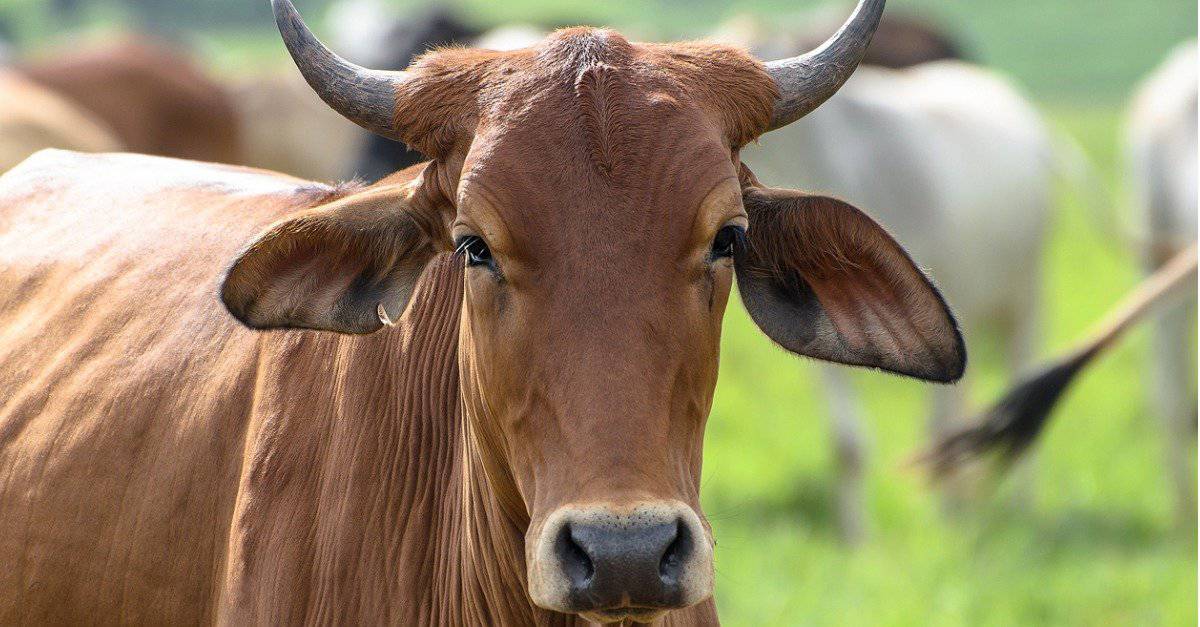
1. American Brahman Ox
The American Brahman Ox is one of the most heat-resistant ox breeds in the world. Originating from Indian cattle genetics, it was later developed in the United States for hot climates. This ox is easily recognized by its large hump over the shoulders, long drooping ears, and loose skin folds. These features help it regulate body temperature in extreme heat.
Brahman Oxen are highly valued for their strength and resilience. They are commonly used in beef production and crossbreeding programs because they pass on strong disease resistance and adaptability. Their calm temperament makes them easier to handle despite their large size.
2. American Milking Devon Ox
The American Milking Devon Ox is a rare heritage breed developed from early English cattle brought to North America. It is known for being a triple-purpose animal used for milk, meat, and draft work.
These oxen are medium-sized with red coats, strong muscles, and alert behavior. Farmers historically used them for plowing fields and pulling carts. Today, they are considered important for preserving traditional farming genetics.
3. Ayrshire Ox
The Ayrshire Ox originates from Scotland and is known for its hardiness in cold and wet environments. It has a red-and-white coat pattern and a strong but balanced body structure.
Ayrshire Oxen are mainly used for dairy production, but in traditional farming systems, they also served as working animals. Their adaptability to rough terrain made them valuable in hilly regions.
4. Brown Swiss Ox
The Brown Swiss Ox is one of the oldest cattle breeds in Europe, originating in the Swiss Alps. It is large, strong, and highly durable, making it suitable for both dairy and draft purposes.
This ox has a solid brown coat and a calm temperament. Farmers value it for its longevity, strong bones, and ability to work in mountainous regions with steep terrain and cold climates.
5. Chianina Ox
The Chianina Ox is one of the tallest and most powerful ox breeds in the world, originating from Italy. It has a white coat, long legs, and massive muscular structure.
Historically used as a draft animal in ancient Roman agriculture, Chianina Oxen are now mainly raised for beef production. Their size and strength make them one of the most impressive cattle breeds in existence.
6. Dutch Belted Ox
The Dutch Belted Ox is one of the most visually distinctive cattle types in the world. It originates from the Netherlands and is easily recognized by its striking black body with a wide white belt running across its midsection. This natural pattern is not just decorative—it is a result of selective breeding over centuries to maintain a uniform and highly recognizable livestock line. Within the broader category of Types of Ox, this breed stands out due to its elegant appearance and balanced physical structure.
In terms of physical characteristics, the Dutch Belted Ox is medium to large in size with a strong but refined frame. It does not possess the extreme bulk of beef breeds like Chianina, but instead offers a more balanced combination of strength, agility, and endurance. Historically, farmers in Europe valued this ox for both milk production and light agricultural work, making it a dual-purpose animal in traditional farming systems.
One of the most interesting aspects of this ox is its calm and manageable temperament. Farmers often describe it as easy to train compared to more aggressive or high-energy cattle breeds. This made it especially useful in small-scale farming environments where human-animal cooperation was essential for survival and productivity.
The Dutch Belted Ox also adapted well to cooler European climates. Its dense coat provides protection against cold weather, while its efficient metabolism allows it to maintain strength even in limited grazing conditions. In modern times, it is considered a rare heritage breed, with conservation programs working to preserve its genetic lineage.
From a wildlife and livestock perspective, the Dutch Belted Ox represents the intersection between human agricultural history and selective breeding. It is not a wild animal, but its traits reflect centuries of adaptation to human needs, making it an important part of global cattle diversity.
7. English Longhorn Ox
The English Longhorn Ox is a historic cattle breed that played a major role in British agriculture. It is famous for its long, curved horns that can extend outward in dramatic arcs, making it one of the most visually iconic Types of Ox in Europe. These horns are not just ornamental—they were originally bred to help the animals defend themselves in open grazing environments.
This ox has a sturdy body, deep chest, and strong legs built for endurance rather than speed. Its coat is typically reddish-brown with lighter markings, giving it a rustic and traditional appearance. Historically, English Longhorn Oxen were used for both meat production and heavy farm labor, especially before mechanized farming became widespread.
What makes this breed particularly interesting is its adaptability. It was able to thrive in the variable climates of England, from wet lowlands to colder upland regions. Farmers appreciated its ability to maintain body condition on relatively poor-quality pasture, making it a reliable source of agricultural strength.
Temperament-wise, the English Longhorn Ox is generally calm but can be strong-willed. Proper handling and early training are essential for managing its large size and powerful build. Despite this, it is known for being intelligent and responsive to human direction when properly raised.
Today, the English Longhorn is considered a heritage breed. It is no longer widely used as a working ox but is preserved for conservation grazing and cultural heritage programs. It plays an important role in maintaining biodiversity in managed landscapes.
8. Hariana Ox
The Hariana Ox originates from India and is one of the most important indigenous cattle breeds in South Asia. It is primarily used as a draft animal, meaning it is trained for pulling carts, plowing fields, and transporting goods. Within global Types of Ox, Hariana cattle are known for their efficiency and endurance in hot climates.
Physically, the Hariana Ox is lean, muscular, and built for long hours of continuous labor. It has a light gray to white coat, long legs, and a relatively narrow frame compared to heavier beef breeds. This streamlined body structure allows it to conserve energy while working in high temperatures.
One of the key strengths of the Hariana Ox is its heat tolerance. It is naturally adapted to survive in the intense heat of northern India, where temperatures can be extreme and water sources limited. Its metabolic system is highly efficient, allowing it to perform heavy agricultural tasks with minimal fatigue.
Farmers value the Hariana Ox not only for its physical strength but also for its reliability. It is known to be disciplined and responsive when trained properly. In rural agricultural communities, it remains a vital part of traditional farming systems.
In modern times, mechanization has reduced its usage in some areas, but it still plays an important role in regions where machines are not practical or affordable. Conservation efforts also aim to preserve its genetic traits for future agricultural resilience.
9. Holstein Friesian Ox
The Holstein Friesian Ox is one of the most widely recognized cattle types in the world, especially known for its black-and-white spotted coat. While it is primarily famous as a dairy breed, it is also used as an ox in some farming systems due to its size and strength.
This breed originates from the Netherlands and northern Germany, where it was selectively developed for high milk production. However, its large body frame and strong musculature also make it suitable for light draft work in traditional farming environments.
Holstein Friesian Oxen are typically large, with long legs and a deep chest. They are not as heavily built as specialized beef oxen, but they offer a balanced combination of productivity and physical capability.
One of the most notable traits of this breed is its high metabolic output. It requires significant nutrition to maintain health and productivity. In farming systems, it is usually kept in well-managed environments where feed quality is controlled.
Temperamentally, Holstein Friesians are generally calm and manageable, although they are more energetic than some heavier ox breeds. They respond well to structured training and are widely used in modern agricultural systems.
As part of global cattle diversity, this ox highlights the overlap between dairy production and draft utility in traditional farming history.
10. North Devon Ox
The North Devon Ox is one of the oldest native cattle breeds in England. It is known for its rich red coat, muscular body, and strong working ability. This breed has played a major role in British agriculture for centuries and remains an important part of livestock heritage.
Physically, the North Devon Ox is compact yet powerful, with well-developed muscles and a sturdy frame. Its structure makes it highly effective for pulling plows and carts across uneven farmland.
Historically, farmers valued this breed for its ability to work long hours without losing strength. It was especially important before tractors replaced animal labor in agriculture.
The North Devon Ox is also known for its adaptability to different climates and terrains. It performs well in both wet and dry environments, making it a versatile working animal.
In modern times, it is primarily maintained for conservation grazing and heritage farming. Its genetics remain valuable for preserving traditional cattle diversity.
11. Ongole Ox
The Ongole Ox is one of the most famous and historically important cattle breeds originating from India, particularly the Andhra Pradesh region. Within the global list of Types of Ox, Ongole cattle are widely respected for their strength, endurance, and ability to thrive in harsh tropical climates. This breed has also contributed significantly to the development of other cattle lines around the world, especially in the Americas and Australia.
Physically, the Ongole Ox is large, muscular, and well-proportioned. It typically has a white or light gray coat, thick neck, and strong shoulder structure. One of its most recognizable features is the prominent hump over the shoulders, which stores energy and supports heavy labor activities. Its horns are short to medium in length and curve slightly outward, adding to its powerful appearance.
What makes the Ongole Ox particularly valuable is its exceptional adaptability to hot and humid environments. It has evolved in South Asian climates where temperatures are high and water availability may be seasonal. Because of this, it has a highly efficient cooling system and strong resistance to heat stress compared to many European cattle breeds.
Farmers traditionally used Ongole Oxen for plowing fields, pulling carts, and transporting goods across long rural distances. Their calm temperament and steady working rhythm made them ideal for agricultural societies that depended heavily on animal labor. Even under difficult conditions, they can maintain consistent performance over long periods.
In modern times, Ongole genetics have been exported globally and used in crossbreeding programs to improve heat tolerance and disease resistance in other cattle populations. This makes the Ongole Ox not just a regional breed, but a globally influential one in livestock development.
From a wildlife and agricultural heritage perspective, the Ongole Ox represents resilience, adaptation, and long-term human-animal cooperation in tropical farming systems.
12. Shorthorn Ox
The Shorthorn Ox is a versatile cattle breed that originated in northeastern England and became one of the most widely distributed livestock breeds in the world. It is an important entry in the study of Types of Ox due to its dual-purpose use for both beef and draft work.
Shorthorn Oxen are medium to large in size with a well-balanced body structure. They typically have red, white, or roan coats, where the fur shows a mixed blend of red and white hairs. Their horns are relatively short compared to other traditional ox breeds, which is where the name “Shorthorn” comes from.
Historically, this breed was highly valued by farmers because it could serve multiple roles on a farm. It provided meat, milk, and working power, making it a highly efficient livestock investment in early agricultural societies. Its adaptability allowed it to spread from the United Kingdom to North America, Australia, and beyond.
One of the key strengths of the Shorthorn Ox is its calm and cooperative temperament. Farmers often describe it as easy to train, responsive to commands, and suitable for both experienced and beginner handlers. This made it especially useful in mixed farming environments where animals had to be managed closely.
In terms of physical ability, Shorthorn Oxen are strong enough for moderate draft work but are not as heavily built as specialized labor breeds like the Chianina or Hariana. Instead, they offer a balanced combination of strength and productivity.
Today, Shorthorn cattle are still present in many parts of the world, although modern agriculture has reduced their use as working oxen. They remain important for conservation breeding and sustainable livestock programs.
13. Water Buffalo Ox
The Water Buffalo Ox is one of the most important working animals in Asia and parts of Europe. Unlike typical cattle breeds, water buffalo belong to a different species (Bubalus bubalis), but they are commonly grouped among Types of Ox due to their strong draft capabilities and historical use in agriculture.
This animal is easily recognized by its massive curved horns, dark gray or black skin, and heavily built body. It is significantly stronger than many domestic cattle breeds and is especially adapted for working in wet and muddy environments such as rice fields.
Water Buffalo Oxen are essential in traditional rice farming systems across countries like Vietnam, India, Thailand, and the Philippines. Their broad hooves allow them to walk easily in flooded fields where tractors would struggle to operate effectively.
One of their most important adaptations is their ability to regulate body temperature in hot and humid environments. They often cool themselves by bathing in water or mud, which also protects their skin from insects and overheating.
In addition to agricultural work, water buffalo also provide milk, meat, and leather, making them a multifunctional livestock species. Their milk is particularly rich in fat content and is used in traditional dairy products in many cultures.
The Water Buffalo Ox represents a crucial link between human civilization and wetland agriculture, especially in regions where rice farming has been practiced for thousands of years.
14. Zebu Ox
The Zebu Ox is one of the most widespread cattle types in tropical regions, especially across South Asia, Africa, and parts of South America. It is a key member of global Types of Ox due to its adaptability, heat resistance, and importance in agricultural societies.
Zebu Oxen are easily identified by their distinctive shoulder hump, long drooping ears, and loose skin. These features help them survive in hot climates by improving heat dissipation and reducing body stress.
This breed is smaller and more agile compared to heavy European cattle breeds, but it is extremely durable and capable of long hours of physical labor. Farmers use Zebu Oxen for plowing, transportation, and farm work in tropical and semi-arid regions.
One of the most impressive traits of the Zebu Ox is its resistance to disease and parasites. This makes it especially valuable in regions where livestock health challenges are common due to climate conditions.
Zebu cattle have also been widely used in crossbreeding programs to improve heat tolerance in other breeds. This has made them one of the most influential cattle types in global livestock development.
Culturally, Zebu Oxen are deeply integrated into rural life in many countries, where they are considered symbols of strength, resilience, and agricultural tradition.
15. Angus Ox
The Angus Ox is derived from the well-known Aberdeen Angus cattle breed, originally developed in Scotland. It is one of the most important beef cattle breeds in the world and is frequently included in discussions of modern Types of Ox due to its strength and agricultural value.
Angus Oxen are typically solid black or red in color, with a smooth coat and naturally polled (hornless) head. Their compact, muscular build makes them highly efficient for meat production, but they also possess the strength needed for traditional draft work.
This breed is known for its high-quality meat, which is tender and well-marbled. Because of this, Angus cattle have become one of the most commercially important beef breeds globally, especially in North America and Australia.
In terms of temperament, Angus Oxen are generally calm, easy to manage, and highly adaptable to different farming systems. They perform well in both pasture-based and intensive agricultural environments.
Although not traditionally used as working oxen in the same way as older draft breeds, their physical strength allows them to be trained for labor in traditional or heritage farming systems.
The Angus Ox represents the evolution of cattle breeding from traditional draft animals to modern agricultural efficiency and meat production excellence.
16. Charolais Ox
The Charolais Ox is a powerful cattle breed originating from the Charolais region of France. It is widely recognized in global livestock systems and is often included in discussions of major Types of Ox due to its impressive muscular development and agricultural importance. This breed is primarily known for beef production, but its strength and size also make it capable of draft-related tasks in traditional farming systems.
Charolais Oxen are typically large, heavy-bodied animals with a distinctive creamy white or light cream coat. Their skin is loose and elastic, helping them regulate body temperature more efficiently. One of their most striking features is their deep chest and heavily muscled hindquarters, which contribute to their reputation as one of the strongest beef breeds in the world.
Historically, Charolais cattle were used in European farming for both meat and labor before mechanization replaced animal draft power. Farmers valued them for their ability to grow quickly and maintain strong physical condition even in less-than-ideal pasture conditions. Their size made them especially effective for heavy agricultural work such as pulling plows and carts.
Temperament-wise, Charolais Oxen are generally calm but powerful animals. They require experienced handling due to their size, but they are not typically aggressive. With proper training and management, they can be highly cooperative in farm environments.
In modern agriculture, the Charolais Ox is primarily raised for beef production. However, its genetic influence is widely used in crossbreeding programs to improve muscle development and growth rates in other cattle populations around the world.
This breed represents the transition from traditional draft oxen to modern beef-focused livestock while still retaining the physical traits of strength and endurance that define classic working cattle.
17. Limousin Ox
The Limousin Ox is another French cattle breed that has gained global recognition for its exceptional meat quality and strong physical structure. It originates from the Limousin region in central France and is an important entry among modern Types of Ox due to its balance of strength, efficiency, and adaptability.
This breed is medium to large in size, with a golden-red or light wheat-colored coat. It has a finely structured frame compared to heavier breeds like Charolais, but it is still very muscular, especially in the hindquarters and shoulders. This gives it excellent mobility and strength.
Historically, Limousin cattle were used in traditional farming systems for both meat and draft work. Their endurance allowed them to operate in hilly and rugged terrain where lighter but strong animals were needed for plowing and transport.
One of the key advantages of the Limousin Ox is its efficiency in converting feed into muscle. This makes it highly valuable in modern beef production systems where growth rate and meat quality are important economic factors.
Temperamentally, Limousin Oxen are generally calm but alert. They respond well to training, although they can be slightly more active than heavier draft breeds. Their intelligence and responsiveness make them adaptable to different farming conditions.
Today, Limousin genetics are widely used in crossbreeding programs to improve muscle yield and efficiency in other cattle populations across the world.
18. Simmental Ox
The Simmental Ox is one of the oldest and most versatile cattle breeds in Europe, originating from Switzerland. It is widely recognized among global Types of Ox for its dual-purpose use in both dairy and beef production, as well as its historical role in draft work.
Simmental Oxen are large, strong animals with a distinctive red-and-white or gold-and-white coat pattern. They have a balanced body structure with strong bones, broad chests, and well-developed muscles, making them suitable for a variety of agricultural tasks.
Historically, Simmental cattle were essential in Swiss farming systems, where they were used to pull plows, transport goods, and support dairy production in mountainous regions. Their adaptability to alpine environments made them especially valuable in Europe’s colder climates.
One of the most notable traits of Simmental Oxen is their rapid growth rate combined with strong physical endurance. They are efficient feed converters and maintain good body condition even under demanding working conditions.
Their temperament is generally calm, friendly, and cooperative, which makes them easy to train and manage in both traditional and modern farming systems.
Today, Simmental cattle are widely distributed across the world and are often used in crossbreeding programs to improve both milk and meat production traits in other breeds.
19. Galloway Ox
The Galloway Ox is a hardy cattle breed originating from Scotland, known for its thick double-layered coat and ability to survive in harsh weather conditions. It is an important example within Types of Ox adapted to cold climates and rugged landscapes.
This breed typically has a solid black coat, although brown and white variations also exist. One of its most distinctive features is its dense, weather-resistant hair coat, which protects it from wind, rain, and snow.
Galloway Oxen are medium-sized but very strong and compact. They were historically used for beef production and light draft work in Scottish farming systems, especially in hilly and coastal regions.
Their physical build allows them to conserve energy efficiently while maintaining strength and endurance. This makes them especially suitable for grazing in rough terrain where food resources may be limited.
Temperament-wise, Galloway Oxen are calm, quiet, and easy to manage. Their gentle nature makes them suitable for extensive grazing systems and conservation grazing projects.
Today, they are primarily used in sustainable agriculture and land management, where they help maintain grassland ecosystems and prevent overgrowth of vegetation.
20. Highland Ox
The Highland Ox is one of the most iconic cattle breeds in the world, originating from the Scottish Highlands. It is instantly recognizable due to its long, shaggy coat and large curved horns. This breed is a key representative of cold-adapted Types of Ox and is often associated with rugged natural landscapes.
Highland Oxen have a distinctive appearance, with long hair that can range in color from red and brown to black, yellow, and silver. This thick coat provides insulation against extreme cold, wind, and rain, allowing them to survive in harsh mountain environments.
Despite their dramatic appearance, Highland Oxen are known for their calm and gentle temperament. They are highly adaptable and can thrive in poor grazing conditions where other cattle breeds would struggle.
Historically, they were used for both meat and draft work in the Scottish Highlands. Their ability to navigate difficult terrain made them valuable working animals in remote rural areas.
Today, Highland cattle are primarily raised for beef and conservation grazing. They play an important role in maintaining natural landscapes and supporting biodiversity in managed ecosystems.
The Highland Ox stands as one of the most visually striking and environmentally adapted cattle breeds in the world.
21. Jersey Ox
The Jersey Ox originates from the island of Jersey in the English Channel and is best known as a high-quality dairy breed. However, it is also included among important Types of Ox because of its historical use in small-scale farm labor and its strong adaptability to human-managed environments. Compared to larger ox breeds, the Jersey Ox is smaller and more refined, but it remains highly efficient and valuable in agricultural systems.
Jersey Oxen typically have a light brown to fawn-colored coat with soft, fine hair. Their body structure is compact, with a relatively narrow frame and a delicate but functional bone structure. Despite their smaller size, they are surprisingly strong for their weight and capable of performing light draft work in traditional farming communities.
One of the most notable traits of the Jersey breed is its exceptional milk production quality. Jersey milk is rich in butterfat and protein, making it highly valued for dairy products such as butter, cheese, and cream. Because of this, the breed has been widely distributed across the world for dairy farming.
In terms of temperament, Jersey Oxen are generally calm, intelligent, and responsive. They are known for being easy to handle and adaptable to different climates, although they perform best in moderate environments rather than extreme heat or cold.
Historically, farmers used Jersey cattle for both dairy production and light agricultural work. While not a heavy-duty draft breed, its reliability and manageable size made it useful in small farms where versatility was essential.
Today, the Jersey Ox continues to be valued mainly for dairy production, but it remains an important part of livestock diversity and agricultural heritage worldwide.
22. Gelbvieh Ox
The Gelbvieh Ox is a German cattle breed known for its strength, fertility, and efficiency. It is an important entry among modern Types of Ox because of its balanced characteristics that combine beef production with strong physical capability.
Gelbvieh cattle typically have a golden to reddish coat and a solid, muscular frame. They are medium to large in size with strong legs and a broad chest, giving them the ability to perform both productive and physical tasks effectively.
Historically, Gelbvieh cattle were used in Germany for multiple purposes, including milk, meat, and draft work. Their versatility made them highly valuable in traditional farming systems where animals needed to serve more than one role.
One of the key strengths of the Gelbvieh Ox is its rapid growth rate combined with strong fertility and adaptability. It performs well in a variety of climates, including both temperate and semi-arid regions.
Temperament-wise, Gelbvieh Oxen are generally calm and easy to manage. Their stable behavior makes them suitable for both small farms and large-scale agricultural operations.
Today, Gelbvieh genetics are widely used in crossbreeding programs to improve beef quality and growth efficiency in other cattle populations.
23. Pinzgauer Ox
The Pinzgauer Ox is a traditional Austrian cattle breed originating from the alpine regions of the Pinzgau valley. It is a strong and versatile animal often included in discussions of European Types of Ox due to its historical role in mountain farming.
This breed is easily recognized by its reddish-brown coat with a distinctive white stripe running along its back and underbelly. It has a strong but balanced body structure, designed for working in mountainous terrain.
Pinzgauer Oxen were traditionally used for both dairy production and draft work. Their ability to pull loads across steep and rocky landscapes made them essential in alpine agriculture before modern machinery became common.
One of their most important traits is sure-footedness. They are highly stable on uneven ground, making them ideal for farming in mountainous environments where other cattle breeds might struggle.
Their temperament is calm, cooperative, and reliable, which makes them easy to train for agricultural tasks. They are also known for their longevity and endurance.
Today, the Pinzgauer Ox is preserved as a heritage breed and continues to be valued in sustainable farming and conservation grazing programs.
24. Wagyu Ox
The Wagyu Ox is one of the most famous cattle types in the world, originating from Japan. It is globally recognized for producing some of the highest-quality beef, making it a unique and valuable entry among modern Types of Ox.
Wagyu cattle are medium-sized animals with a black or red coat, a refined body structure, and a calm temperament. What makes them truly special is their genetic ability to produce highly marbled meat with exceptional tenderness and flavor.
Historically, Wagyu cattle were used as draft animals in Japanese agriculture, especially in rice farming regions. Their strength and endurance made them valuable working animals before they became primarily associated with beef production.
Wagyu Oxen are known for their docile and calm nature. They respond well to careful handling and are often raised in controlled environments where stress is minimized to improve meat quality.
Today, Wagyu beef is considered a luxury product worldwide, and the breed is carefully managed through selective breeding programs to maintain its unique genetic traits.
25. Hereford Ox
The Hereford Ox is one of the most widely recognized cattle breeds in the world, originating from Herefordshire in England. It is a major representative of global Types of Ox due to its adaptability, hardiness, and agricultural importance.
Hereford Oxen are easily identified by their red-brown bodies and white faces. They have a strong, muscular build with a deep chest and sturdy legs, making them well-suited for both beef production and traditional farm work.
This breed was historically used as a draft animal in farming systems before mechanization. Its calm temperament and strong endurance made it reliable for plowing fields and transporting goods.
Hereford cattle are highly adaptable to different climates, from cold temperate regions to warmer grazing lands. They are efficient feeders and maintain good body condition even on moderate-quality pasture.
Today, Hereford Oxen are primarily used in beef production and are widely distributed across North and South America, Australia, and Europe. They remain one of the most important cattle breeds in global agriculture.
Conclusion: Understanding the Diversity of Types of Ox
The world of Types of Ox is far more diverse than most people realize. From powerful Asian draft breeds like the Ongole and Zebu Ox to European heritage cattle such as the Highland, Hereford, and Shorthorn, each breed reflects centuries of adaptation to climate, geography, and human agricultural needs. Some oxen are built for extreme strength and heavy labor, while others excel in dairy production, meat quality, or environmental resilience.
What makes oxen truly fascinating is their shared history with humans. For thousands of years, they have helped shape agriculture, transport, and rural life across continents. Even in modern times, many breeds continue to play important roles in sustainable farming and conservation grazing.
Studying different Types of Ox not only highlights biological diversity but also shows how deeply animals and humans are connected through agriculture and survival. Which of these remarkable ox breeds do you find the most impressive?
50+ FAQs About Types of Ox (Detailed Answers)
1. What is an ox?
An ox is a trained bovine animal, usually a male cattle, used for work such as plowing fields, pulling carts, and carrying heavy loads. The term “ox” is not a separate species; it refers to cattle that have been trained for labor. Oxen are valued for their strength, endurance, and calm temperament, making them essential in traditional agriculture across many cultures.
2. What are the main Types of Ox in the world?
There are many Types of Ox, including Brahman, Hereford, Angus, Chianina, Zebu, Water Buffalo, and Highland cattle. These types differ based on geography, climate adaptation, body size, and purpose. Some are used mainly for farming work, while others are raised for meat or dairy production.
3. Are oxen a different species from cows?
No. Oxen are not a separate species. They are usually domestic cattle (Bos taurus or Bos indicus) that have been trained and castrated for work. The term “cow” refers generally to female cattle, while “ox” refers to working males.
4. What makes an animal an ox?
An animal becomes an ox when it is trained to perform draft work such as pulling plows, carts, or heavy loads. It is not defined by breed but by its function and training.
5. Why are oxen used in farming?
Oxen are used in farming because they are strong, reliable, and able to work long hours in difficult terrain. Before machines, they were the primary source of agricultural power in many parts of the world.
6. What are the strongest Types of Ox?
Some of the strongest Types of Ox include Chianina, Charolais, Simmental, and Water Buffalo. These breeds are known for their large muscle mass, endurance, and ability to pull heavy loads.
7. What is the difference between oxen and bulls?
A bull is an uncastrated male cattle used for breeding. An ox is usually a castrated male trained for work. Bulls are generally more aggressive, while oxen are calmer and easier to control.
8. Are oxen still used today?
Yes. In many rural and developing regions, oxen are still used for farming, transportation, and logging. They are especially important in areas where machinery is expensive or unsuitable.
9. Which Types of Ox are best for hot climates?
Zebu, Brahman, and Ongole oxen are highly adapted to hot climates. They have loose skin, sweat glands, and body structures that help regulate heat efficiently.
10. Which Types of Ox are best for cold climates?
Highland, Galloway, and Brown Swiss oxen are well adapted to cold environments. Their thick coats and strong metabolism help them survive harsh winter conditions.
11. What do oxen eat?
Oxen are herbivores and mainly eat grass, hay, grains, and plant material. Their diet depends on availability, but it is always plant-based to support their large body size and energy needs.
12. How long do oxen live?
Oxen typically live 15 to 20 years, although this can vary depending on breed, environment, and working conditions. Well-cared-for oxen may live longer in domestic settings.
13. Are oxen intelligent animals?
Yes. Oxen are intelligent and capable of learning commands, following routines, and responding to training. Their intelligence helps them perform complex agricultural tasks.
14. Can oxen be aggressive?
Oxen are generally calm, but they can become aggressive if threatened, stressed, or poorly trained. Proper handling reduces aggressive behavior significantly.
15. What is the largest Type of Ox?
The Chianina ox is one of the largest cattle breeds in the world, known for its tall height and massive muscular structure.
16. What is the smallest Type of Ox?
Smaller ox types include Jersey and some Zebu breeds, which are compact but still strong enough for light farm work.
17. Why do oxen have strong shoulders?
Oxen have strong shoulder muscles because they are used for pulling heavy loads. Their bodies are naturally adapted for draft work.
18. Do all oxen have horns?
Not all oxen have horns. Some breeds are naturally hornless (polled), while others have large curved or straight horns depending on genetics.
19. What is a Water Buffalo Ox used for?
Water Buffalo Oxen are mainly used in rice farming, especially in flooded fields. They are extremely strong and adapted to wet environments.
20. What is the role of oxen in history?
Oxen played a major role in ancient agriculture, helping humans develop farming systems, transport goods, and build early civilizations.
21. Are oxen the same as buffalo?
No. Buffalo and oxen are different species, although both are used as working animals in agriculture.
22. What is the calmest Type of Ox?
Breeds like Jersey, Simmental, and Hereford are known for calm temperaments and easy handling.
23. Why are oxen castrated?
Oxen are usually castrated to reduce aggression, making them easier to train and safer for farm work.
24. Can oxen run fast?
Oxen are not built for speed. They are slow but powerful animals designed for strength and endurance rather than quick movement.
25. What diseases affect oxen?
Common diseases include foot-and-mouth disease, parasites, and respiratory infections. Proper veterinary care is important for maintaining health.
26. How are oxen trained?
Oxen are trained using harnesses, voice commands, and gradual exposure to pulling tasks. Training can take months or years.
27. What is the lifespan of working oxen?
Working oxen may have slightly shorter lifespans due to physical labor, but good care can extend their working life significantly.
28. Do oxen feel pain while working?
Oxen can feel pain like all mammals. Proper equipment and humane handling are essential to prevent injury and stress.
29. Why are oxen important in developing countries?
They provide affordable agricultural power where machines are not accessible or affordable, supporting rural livelihoods.
30. What is the difference between beef cattle and oxen?
Beef cattle are raised for meat production, while oxen are trained specifically for work and labor tasks.
31. Are oxen social animals?
Yes. Oxen often form bonds with other cattle and can recognize handlers and familiar animals.
32. Can oxen swim?
Some oxen can swim short distances, but they are not naturally adapted for aquatic environments.
33. What is the most famous Type of Ox?
Hereford and Angus are among the most globally recognized ox-related cattle breeds.
34. Why do oxen walk slowly?
Oxen are heavy animals designed for endurance rather than speed, so they naturally move at a slow, steady pace.
35. Can oxen be pets?
While not common, some oxen can be gentle and familiar with humans, but they are primarily working animals due to their size.
36. What is the role of oxen in rice farming?
Oxen, especially Water Buffalo, help plow wet rice fields where machines cannot operate easily.
37. Are oxen endangered?
Most ox breeds are not endangered, but some traditional heritage breeds are at risk due to industrial farming.
38. What is the difference between ox and steer?
A steer is a castrated male cattle, while an ox is a steer trained for work.
39. Why are oxen strong?
Oxen have strong muscle development, especially in the neck and shoulders, due to selective breeding for labor.
40. What is a draft animal?
A draft animal is any animal used for pulling heavy loads or agricultural work, including oxen, horses, and donkeys.
41. Do oxen recognize humans?
Yes. Oxen can recognize familiar humans through voice, scent, and routine interaction.
42. What is the most expensive Type of Ox?
High-value breeds like Wagyu cattle can be extremely expensive due to meat quality and genetics.
43. Can oxen survive without humans?
Domestic oxen depend on humans for food and protection, but wild cattle relatives can survive independently.
44. Why are oxen used in logging?
Oxen are used in logging because they can pull heavy timber through forests without damaging soil as much as machines.
45. What is conservation grazing?
It is the use of cattle like Highland Oxen to maintain natural landscapes and biodiversity.
46. Are oxen used in festivals?
Yes. In some cultures, oxen participate in agricultural festivals and traditional ceremonies.
47. What is the most adaptable Type of Ox?
Zebu and Brahman cattle are among the most adaptable due to heat tolerance and disease resistance.
48. Why do oxen need harnesses?
Harnesses allow farmers to control and distribute pulling force safely during work.
49. Can oxen be crossbred?
Yes. Crossbreeding is common to improve strength, milk production, or heat tolerance.
50. What makes oxen important in wildlife studies?
They help researchers understand domestication, animal behavior, and human agricultural history.