

When people search for types of Saola, they are usually surprised to learn that the Saola is not a group of species but a single, extremely rare mammal scientifically known as Pseudoryx nghetinhensis. Discovered only in 1992 in the Annamite Mountains between Laos and Vietnam, the Saola is one of the most mysterious large mammals on Earth. Because sightings are extremely rare, scientists, conservationists, and local communities have developed multiple names and classification terms to describe it. These “types” are not biological subspecies but rather scientific, regional, and descriptive identifiers that help people understand its ecology, cultural significance, and conservation status.
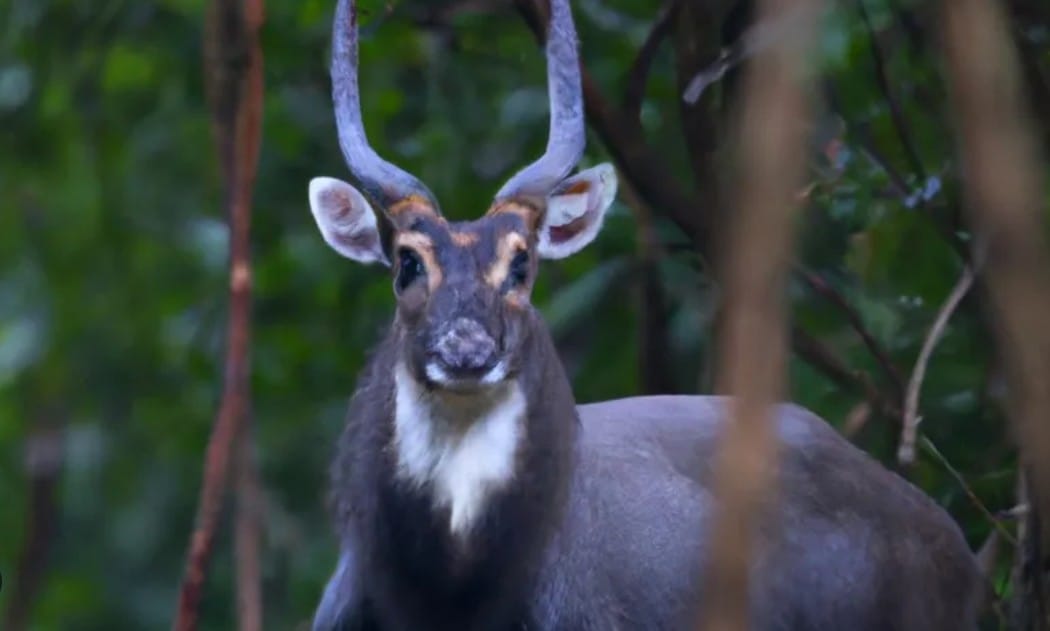
1. Saola – The Core Identity
The name “Saola” is the most widely accepted term used in global wildlife science. It was first documented after local villagers in Vietnam reported an unusual forest animal with long, straight horns. Unlike many wild bovids, the Saola has never been successfully observed in the wild for extended study, and no living specimen has survived in captivity. This makes it one of the least understood large mammals in the world.
The Saola lives deep in the Annamite mountain forests, a rugged and isolated region that spans Vietnam and Laos. These forests are dense, humid, and difficult for humans to access, which is one of the main reasons the species remained undiscovered for so long. Scientists believe the Saola is extremely shy and avoids human contact at almost all costs. Even camera trap evidence is extremely limited.
Physically, it resembles a mix between an antelope and a wild cattle species, but genetically it is unique enough to belong to its own genus. Its long, parallel horns and white facial markings make it distinct from any other known bovid. The rarity of sightings has led to its nickname “Asian unicorn,” symbolizing how little humanity knows about it.
2. Asian Unicorn – Myth and Reality
The nickname “Asian Unicorn” comes from both its rarity and its almost mythical presence in science. Unlike mythical unicorns, the Saola is real, but it is so rarely seen that it has become legendary among conservationists. This name also reflects the emotional impact of its discovery, which was one of the most significant zoological findings of the 20th century.
The Asian Unicorn label is often used in conservation campaigns to raise awareness about biodiversity loss in Southeast Asia. It highlights how fragile forest ecosystems are and how many species may still be undiscovered or close to extinction. The Saola is believed to be critically endangered, with population estimates extremely uncertain due to lack of data.
This name also plays an important role in public education, helping people connect emotionally with the species. Unlike technical scientific terms, “Asian Unicorn” makes the Saola easier to understand for global audiences, increasing conservation engagement.
3. Vu Quang Ox – Discovery-Based Identity
The term “Vu Quang Ox” comes from Vu Quang Nature Reserve in Vietnam, where the Saola was first identified by science in the early 1990s. This name reflects its geographical origin rather than biological classification. It is often used in early research papers and field reports.
This naming style is common in wildlife discovery history, where new species are often named after the location they were first found. In this case, Vu Quang represents one of the most biologically rich but least explored regions in Southeast Asia.
The “Ox” part of the name refers to its bovine body structure. However, the Saola is not a true ox species. Instead, it belongs to a unique lineage of forest-dwelling bovids that are still not fully understood by science.
4. Pseudoryx nghetinhensis – Scientific Classification
This is the official scientific name of the Saola. “Pseudoryx” means “false oryx,” referring to its horn shape resemblance to oryx species in Africa. “nghetinhensis” refers to the Nghe An and Ha Tinh provinces in Vietnam.
This classification confirms that the Saola is genetically unique and does not closely match any known existing bovine species. It is considered one of the most important zoological discoveries in modern times.
Because of its rarity, much of its behavior, diet, and reproduction remain unknown, making it a high-priority species for conservation biology research.
5. Annamite Mountain Habitat Classification
The Saola is restricted to the Annamite Mountains, a remote and biologically rich range between Laos and Vietnam. This habitat is one of the most isolated forest ecosystems in Southeast Asia, characterized by steep terrain, dense evergreen forests, and high rainfall.
Scientists classify Saola populations based on elevation zones within this mountain range. They are typically found in mid to high-altitude forests where human disturbance is minimal. These regions are difficult to access, which explains why the species remained undiscovered until the 1990s.
The Annamite habitat classification is important because it helps conservationists identify potential survival zones. If this habitat is damaged, the Saola has no alternative ecosystem to migrate to, making it extremely vulnerable to extinction.
6. Forest Edge Behavioral Pattern
One of the key behavioral classifications of the Saola is its tendency to remain within deep forest interiors and avoid open spaces. Unlike many bovids, it rarely ventures into grasslands or human-altered landscapes.
This behavior suggests extreme sensitivity to disturbance. Camera trap data shows that Saola activity is highest in dense canopy cover areas where human presence is nearly absent.
Understanding this behavioral “type” helps researchers determine why sightings are so rare and why conservation efforts must focus on protecting untouched forest corridors.
7. Herbivorous Browsing Diet Type
The Saola is classified as a browser, meaning it feeds primarily on leaves, young shoots, and soft vegetation rather than grazing on grass. This dietary classification is based on indirect evidence from field studies and habitat analysis.
Its browsing behavior allows it to survive in dense forests where grasses are limited. Scientists believe it feeds on a wide variety of understory plants, which contributes to forest regeneration by controlling plant growth patterns.
8. Solitary Forest Movement Type
Unlike many social bovids, the Saola is believed to be mostly solitary or found in very small groups, possibly pairs. This movement classification is based on limited tracking evidence and local hunter reports.
Solitary behavior reduces detection risk in dense forests and may be an evolutionary adaptation to avoid predators and human encounters. However, this also makes population monitoring extremely difficult.
9. Elusive Detection Classification (Camera Trap Rarity)
The Saola is classified as one of the least-detected large mammals in modern wildlife research. Even with extensive use of camera traps across Southeast Asia, confirmed sightings are extremely rare.
This “detection rarity type” highlights its extreme secrecy and possibly very low population density. It also suggests that Saola individuals may be widely spaced across fragmented forest habitats.
10. Critically Endangered Conservation Status Type
The most important classification of the Saola is its conservation status: Critically Endangered. This means it faces an extremely high risk of extinction in the wild.
Threats include habitat loss, illegal hunting, and snaring intended for other animals. Even if Saola is not the target, it is often accidentally caught in traps, which has significantly reduced its population.
Conservationists consider the Saola a flagship species—protecting it means protecting the entire Annamite forest ecosystem and hundreds of other species that share its habitat.
11. Genetic Uniqueness Classification
One of the most important scientific perspectives on the Saola is its genetic isolation. DNA studies show that it does not closely match any other known living bovid group, making it one of the most evolutionarily distinct mammals in Asia.
This genetic uniqueness classification is critical because it highlights the Saola as a “living evolutionary relic.” In simple terms, it represents a lineage that has no close modern relatives. This increases its conservation value significantly, as losing it would mean losing an entire branch of evolutionary history.
Scientists continue to search for genetic samples from field evidence such as hair, feces, and environmental DNA (eDNA), but full genetic mapping remains extremely limited due to the rarity of encounters.
12. Cryptic Species Behavior Type
The Saola is classified as a cryptic species, meaning it is extremely difficult to detect or observe in its natural environment. This classification is not about biology alone but behavior and survival strategy.
Cryptic behavior includes staying hidden in dense vegetation, avoiding open areas, and moving silently through forest layers. These adaptations help the Saola avoid predators and human hunters, but they also make scientific study extremely challenging.
Even advanced tracking technologies such as camera traps and motion sensors capture very few confirmed images, reinforcing its cryptic classification.
13. Fragmented Population Distribution Type
Another key classification is its fragmented population structure. Instead of being evenly spread across forests, Saola populations are believed to exist in small, isolated groups separated by geographic barriers.
This fragmentation is caused by habitat destruction, road construction, and human expansion in the Annamite region. As a result, individuals may rarely encounter each other, which could impact reproduction rates and long-term survival.
Conservation scientists focus heavily on mapping these fragmented zones to identify potential wildlife corridors that could reconnect populations.
14. High-Elevation Forest Specialist Type
The Saola is considered a high-elevation forest specialist, meaning it depends on specific altitude ranges within mountainous rainforest ecosystems. These environments are cooler, wetter, and more stable than lowland areas.
This specialization makes the Saola highly vulnerable to environmental change. If temperature shifts or deforestation alter these mountain ecosystems, the species has very limited ability to adapt or migrate.
This classification helps conservation planners prioritize protection of high-altitude forest zones in Laos and Vietnam.
15. Flagship Conservation Species Type
The final and most important classification is the Saola’s role as a flagship conservation species. This means it is used to represent and protect an entire ecosystem rather than just itself.
By focusing conservation efforts on the Saola, scientists indirectly protect hundreds of other species living in the same habitat, including rare birds, amphibians, and plants found in the Annamite Mountains.
Because of its rarity and symbolic importance, the Saola has become a global icon for biodiversity conservation in Southeast Asia. Protecting it is not just about saving one species—it is about preserving an entire ecological system.
Conclusion: Understanding the Saola Beyond “Types”
The Saola, scientifically known as :contentReference[oaicite:0]{index=0}, is one of the rarest and most mysterious large mammals on Earth. While many online searches mention “types of Saola,” the truth is that there is only a single known species. The different names and classifications used in wildlife studies—such as Asian Unicorn, Vu Quang Ox, or Annamite Forest Bovid—are not separate species, but rather scientific, regional, and descriptive labels created to better understand this elusive animal.
What makes the Saola so fascinating is not diversity within species, but its extreme rarity, hidden lifestyle, and highly specialized habitat in the Annamite Mountains of Vietnam and Laos. Every piece of information we have about it comes from indirect evidence, camera traps, and local knowledge rather than direct long-term observation. This makes the Saola a symbol of how much we still do not know about Earth’s biodiversity.
Ultimately, studying the “types of Saola” helps us realize a deeper truth: conservation is not just about cataloging species, but about protecting entire ecosystems before they disappear. The Saola represents both scientific mystery and urgent conservation need. Its survival depends entirely on preserving its forest home and reducing human threats such as habitat loss and illegal hunting.
As one of nature’s most elusive mammals, the Saola continues to challenge scientists and inspire conservation efforts worldwide. Will future research finally unlock the secrets of this “Asian unicorn” before it becomes a legend rather than a living species?
50+ FAQ About Saola (Detailed Answers)
1. What is a Saola?
The Saola (Pseudoryx nghetinhensis) is a critically endangered wild bovine discovered in 1992 in the Annamite Mountains of Vietnam and Laos. It is often called the “Asian unicorn” due to its extreme rarity and long, straight horns. Very little is known about its behavior because it is rarely seen in the wild.
2. Why is the Saola so rare?
The Saola is rare because it lives in remote, dense forests and exists in very low population numbers. Habitat loss, hunting snares, and human expansion have significantly reduced its survival chances. Its secretive nature also makes it extremely difficult to study.
3. Where does the Saola live?
The Saola is found only in the Annamite Mountain range between Laos and Vietnam. This region is dense, mountainous, and difficult for humans to access, which has helped the species remain hidden for so long.
4. What does a Saola look like?
The Saola has a dark brown coat, white facial markings, and two long, parallel horns. Its body resembles a mix between an antelope and a wild cattle species, although it belongs to its own unique genus.
5. What does Saola eat?
The Saola is believed to be a herbivore that feeds on leaves, shoots, and forest vegetation. Because it lives in dense forests, it likely browses selectively on plants found in the understory layer.
6. Is Saola dangerous to humans?
No, the Saola is not dangerous to humans. It is a shy and elusive herbivore that avoids contact with people and rarely, if ever, interacts directly with humans in the wild.
7. How many Saolas are left in the wild?
The exact number is unknown. Scientists believe the population is extremely small, possibly only a few dozen to a few hundred individuals, but there is no confirmed count due to lack of sightings.
8. Why is Saola called the Asian unicorn?
It is called the Asian unicorn because of its rarity and almost mythical status. Like a unicorn, it is rarely seen and remains mysterious, even to scientists.
9. When was Saola discovered?
The Saola was officially discovered in 1992 during a forest survey in Vietnam’s Vu Quang region. It was one of the most significant zoological discoveries of the 20th century.
10. Why is Saola hard to study?
It is difficult to study because it lives in remote forests, avoids humans, and exists in very low numbers. Even modern tracking methods like camera traps capture very few images.
11. Is Saola a deer or antelope?
No, the Saola is neither a deer nor a true antelope. It belongs to the Bovidae family but represents a unique evolutionary lineage with no close living relatives.
12. What are Saola horns used for?
The exact purpose of Saola horns is not fully understood, but they may be used for defense, dominance, or interaction between individuals, similar to other bovids.
13. Can Saola survive in captivity?
No Saola has ever survived in captivity. All attempts have failed, likely due to stress, diet requirements, and its extreme sensitivity to human presence.
14. What threatens Saola the most?
The biggest threats are snare traps set for other animals, habitat destruction, and forest fragmentation caused by human development.
15. Is Saola protected by law?
Yes, the Saola is legally protected in both Vietnam and Laos, and international conservation organizations are working to protect its habitat.
16. How does Saola behave?
It is believed to be solitary or found in very small groups. It is extremely shy, avoids open areas, and stays deep within forests.
17. Does Saola migrate?
There is no evidence that Saola migrates long distances. It likely stays within a limited forest range throughout its life.
18. What is Saola’s lifespan?
The lifespan is unknown in the wild, but related species of similar size can live 8–15 years depending on conditions.
19. What is Saola’s scientific name meaning?
Pseudoryx means “false oryx,” and nghetinhensis refers to the Nghe An and Ha Tinh provinces in Vietnam where it was first identified.
20. Why is Saola important for ecosystems?
As a herbivore, it likely helps maintain plant balance in forests and contributes to ecosystem stability in the Annamite region.
21. Why is Saola so important to scientists?
The Saola is important because it represents a completely unique evolutionary lineage within the Bovidae family. Studying it helps scientists understand how large mammals evolved in isolated forest ecosystems in Southeast Asia.
22. What makes Saola different from other bovids?
Unlike cattle, goats, or antelopes, the Saola has no close living relatives. Its horn structure, skull shape, and genetic profile make it one of the most distinct large mammals ever discovered.
23. How do researchers study Saola without seeing it?
Scientists use indirect methods such as camera traps, DNA from feces or hair, footprints, and local interviews to study Saola presence and behavior.
24. What is environmental DNA (eDNA) in Saola research?
eDNA refers to genetic material left in the environment, such as in water or soil. Scientists use it to detect Saola presence without physically seeing the animal.
25. Why are Saola camera trap images so rare?
Saola populations are extremely low, and they live in dense forests where camera coverage is limited. Their secretive behavior also reduces detection chances.
26. What time of day is Saola active?
Saola is believed to be mostly active during dawn and dusk (crepuscular behavior), although exact patterns remain uncertain due to limited observation.
27. Does Saola live alone or in groups?
It is thought to be mostly solitary or seen in very small groups, possibly pairs, especially during breeding periods.
28. How does Saola avoid predators?
Saola avoids predators by staying deep in dense forests, remaining silent, and avoiding open areas where it could be easily detected.
29. What predators threaten Saola?
Natural predators may include large carnivores like leopards or tigers, but the biggest threat today is humans through illegal hunting traps.
30. Why are snares dangerous for Saola?
Snare traps set for other wildlife often accidentally capture Saola, leading to injury or death. This is one of the main causes of its decline.
31. Can Saola be bred in captivity?
No successful captive breeding program has ever been achieved. Saola has not survived in captivity, making conservation in the wild essential.
32. What is Saola’s role in the ecosystem?
As a herbivore, Saola likely helps maintain vegetation balance in forest ecosystems by feeding on specific plant species.
33. How does habitat loss affect Saola?
Deforestation reduces available food, shelter, and breeding areas, making survival increasingly difficult for such a specialized species.
34. What countries protect Saola?
Both Vietnam and Laos have designated protected areas and conservation programs aimed at preserving Saola habitat.
35. Is Saola extinct?
No, Saola is not confirmed extinct. However, it is extremely rare and possibly nearing extinction in the wild.
36. When was Saola last seen?
Confirmed sightings are extremely rare, and most evidence comes from indirect sources such as camera traps and local reports.
37. Why is Saola called a “ghost animal”?
It is called a ghost animal because it is rarely seen, leaves very few traces, and remains almost invisible to modern science.
38. What is the biggest mystery about Saola?
The biggest mystery is how many individuals still exist and how they survive in such fragmented and disturbed habitats.
39. How do local people know about Saola?
Local villagers in Laos and Vietnam have long known about Saola through hunting encounters and traditional ecological knowledge.
40. Why was Saola only discovered recently?
Its remote habitat and secretive behavior prevented scientific discovery until modern biological surveys reached remote forest regions in the 1990s.
41. Is Saola related to cattle?
Yes, it belongs to the Bovidae family, but it is not closely related to domestic cattle. It represents a distinct evolutionary branch.
42. What is Saola’s conservation status?
Saola is classified as Critically Endangered on the IUCN Red List, meaning it faces an extremely high risk of extinction.
43. What organizations protect Saola?
International and local conservation groups work together in Vietnam and Laos to reduce snaring and protect forest habitats.
44. How does climate change affect Saola?
Climate change can alter forest structure, water availability, and plant diversity, indirectly impacting Saola survival.
45. Why is Saola called a flagship species?
It is a flagship species because protecting it also protects entire ecosystems and many other endangered species in the region.
46. What is the future of Saola conservation?
The future depends on habitat protection, anti-poaching enforcement, and continued scientific research using modern genetic tools.
47. Can Saola survive without human protection?
Given current threats, Saola survival in the wild is highly dependent on active human-led conservation efforts.
48. Why is Saola so hard to photograph?
Its extremely low population density and deep forest habitat make it one of the hardest mammals to photograph in the world.
49. What makes Saola unique in biology?
Its unique horn structure, genetic isolation, and mysterious behavior make it one of the most scientifically significant mammals ever discovered.
50. Could Saola still be undiscovered in other areas?
It is possible, but unlikely. Most evidence suggests its range is extremely limited to the Annamite Mountains.