

If you are searching for types of Snakehead, you are looking at one of the most fascinating groups of freshwater predatory fish in the world. Snakeheads belong to the genus Channa and are known for their elongated bodies, sharp teeth, and ability to breathe air. These traits allow them to survive in oxygen-poor waters where many other fish cannot live. Found mainly in Asia and parts of Africa, snakeheads vary widely in size, color, and behavior depending on species and habitat. In this guide, we explore 15 scientifically recognized and widely known snakehead types, explaining their identification features, natural habitats, and ecological behavior in a simple and wildlife-friendly way.
15 Types of Snakehead Fish: Complete Identification Guide
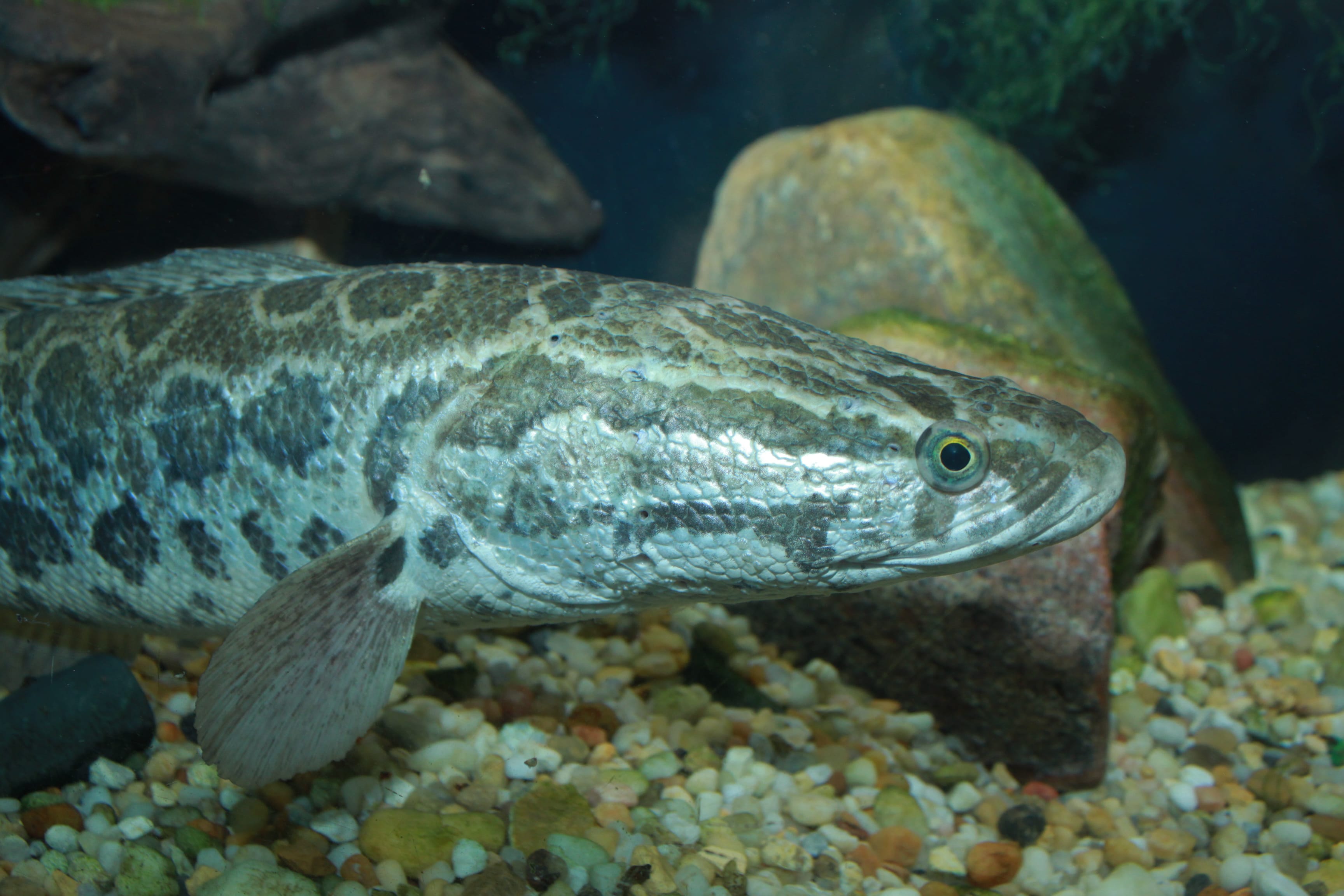
1. Northern Snakehead (Channa argus)
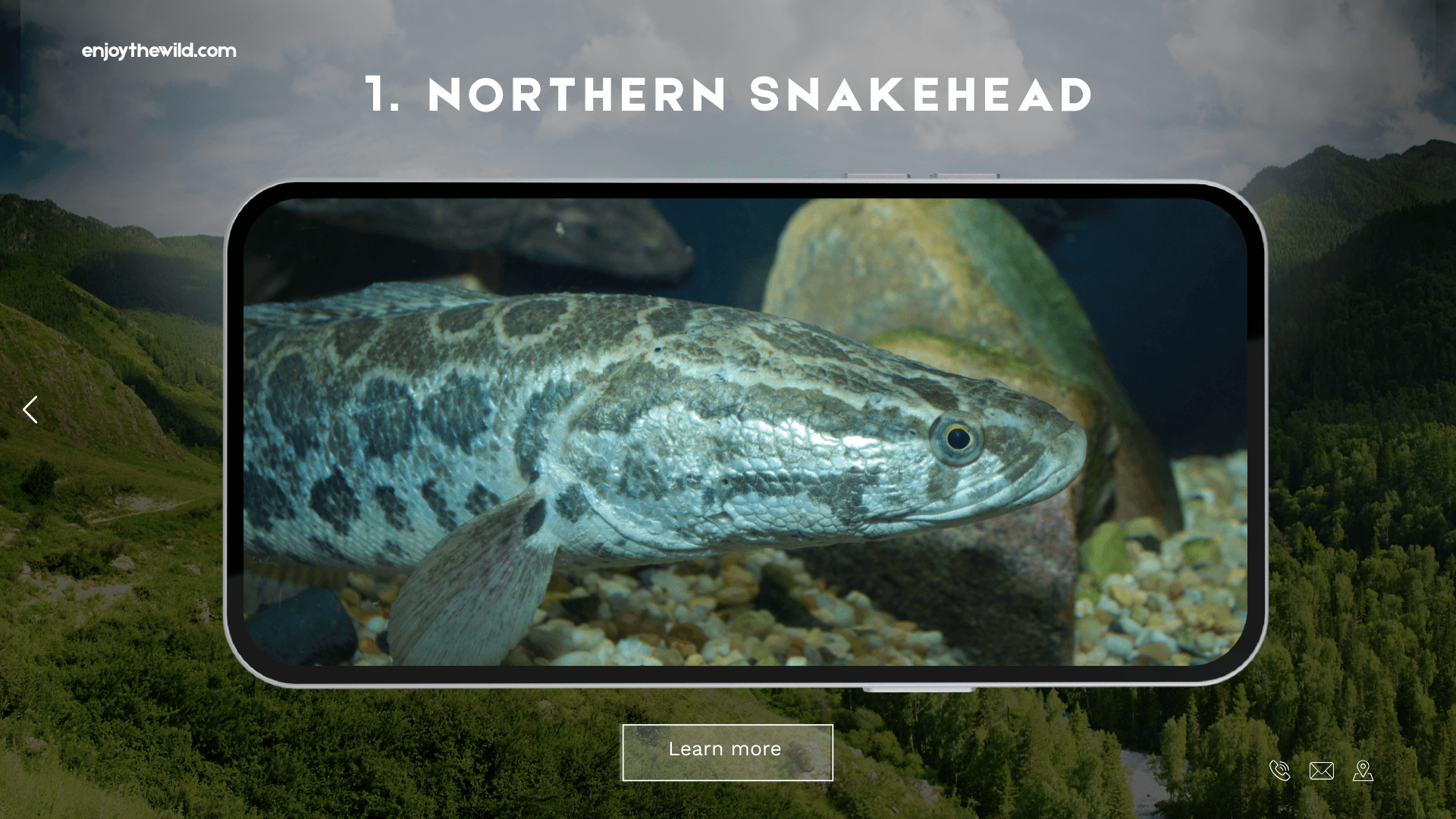
The Northern Snakehead is one of the most well-known species due to its invasive nature in some parts of the world. Native to China, Russia, and Korea, this fish has spread to several other regions through accidental and illegal introductions. It has a long, cylindrical body covered in dark brown or mottled patterns that help it blend into muddy waters and vegetation.
One of its most remarkable traits is its ability to breathe air using a specialized organ called the suprabranchial chamber. This allows it to survive in stagnant ponds, swamps, and even travel short distances on land when conditions are wet. It is a highly aggressive predator that feeds on fish, frogs, and small aquatic animals.
Ecologically, the Northern Snakehead is considered a threat in non-native ecosystems because it competes with native fish species and can disrupt food chains.
2. Giant Snakehead (Channa micropeltes)
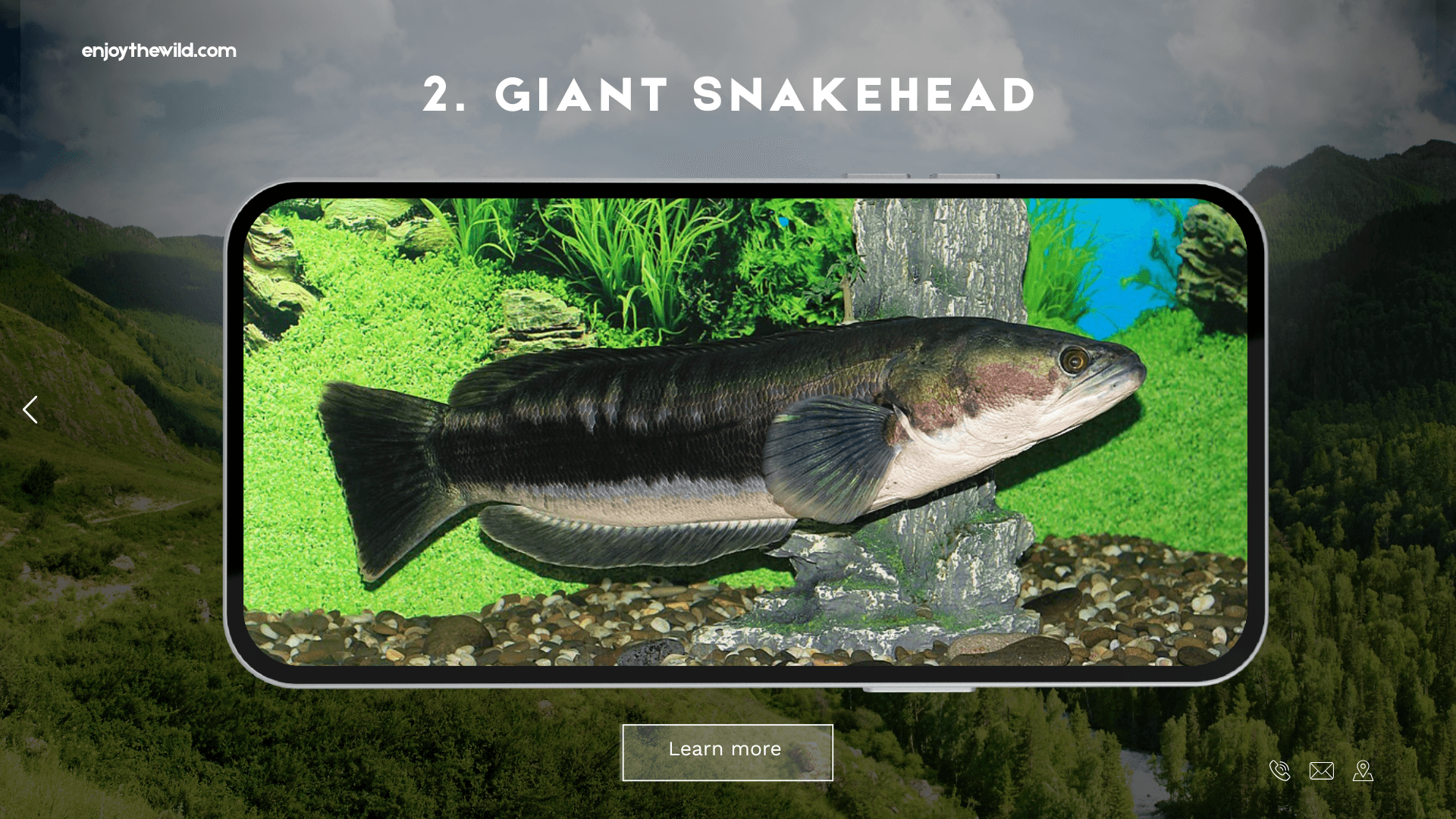
The Giant Snakehead is one of the largest members of the snakehead family and can grow over 1 meter in length. Found in Southeast Asia, especially in rivers and large lakes, it is a powerful apex predator in freshwater ecosystems.
Juvenile Giant Snakeheads have striking orange and black patterns, but adults turn darker with a more uniform appearance. This species is highly territorial and aggressive, especially during feeding or breeding periods.
Its diet includes fish, crustaceans, and even small mammals near water edges. Because of its size and strength, it plays an important role in controlling prey populations in its natural habitat.
3. Great Snakehead (Channa marulius)
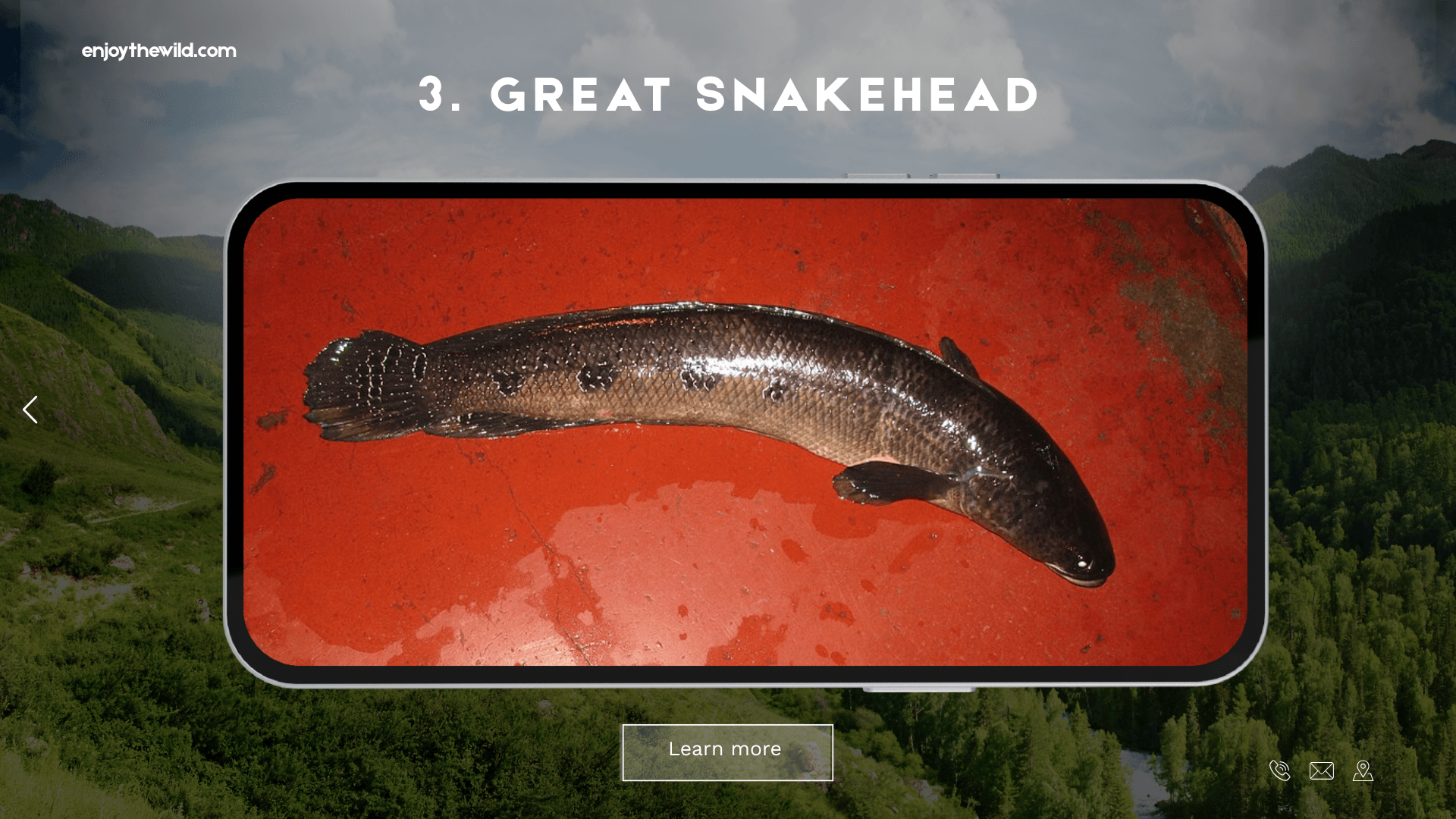
The Great Snakehead is a large predatory fish found across South Asia, including India, Pakistan, and surrounding regions. It prefers slow-moving rivers, lakes, and flooded wetlands.
This species has a long body with a pale brown to olive-green coloration and faint dark markings. It is an ambush predator, often staying motionless before striking prey with speed and precision.
The Great Snakehead is known for its resilience in low-oxygen environments and can survive in degraded water conditions where many fish cannot survive.
4. Forest Snakehead (Channa lucius)
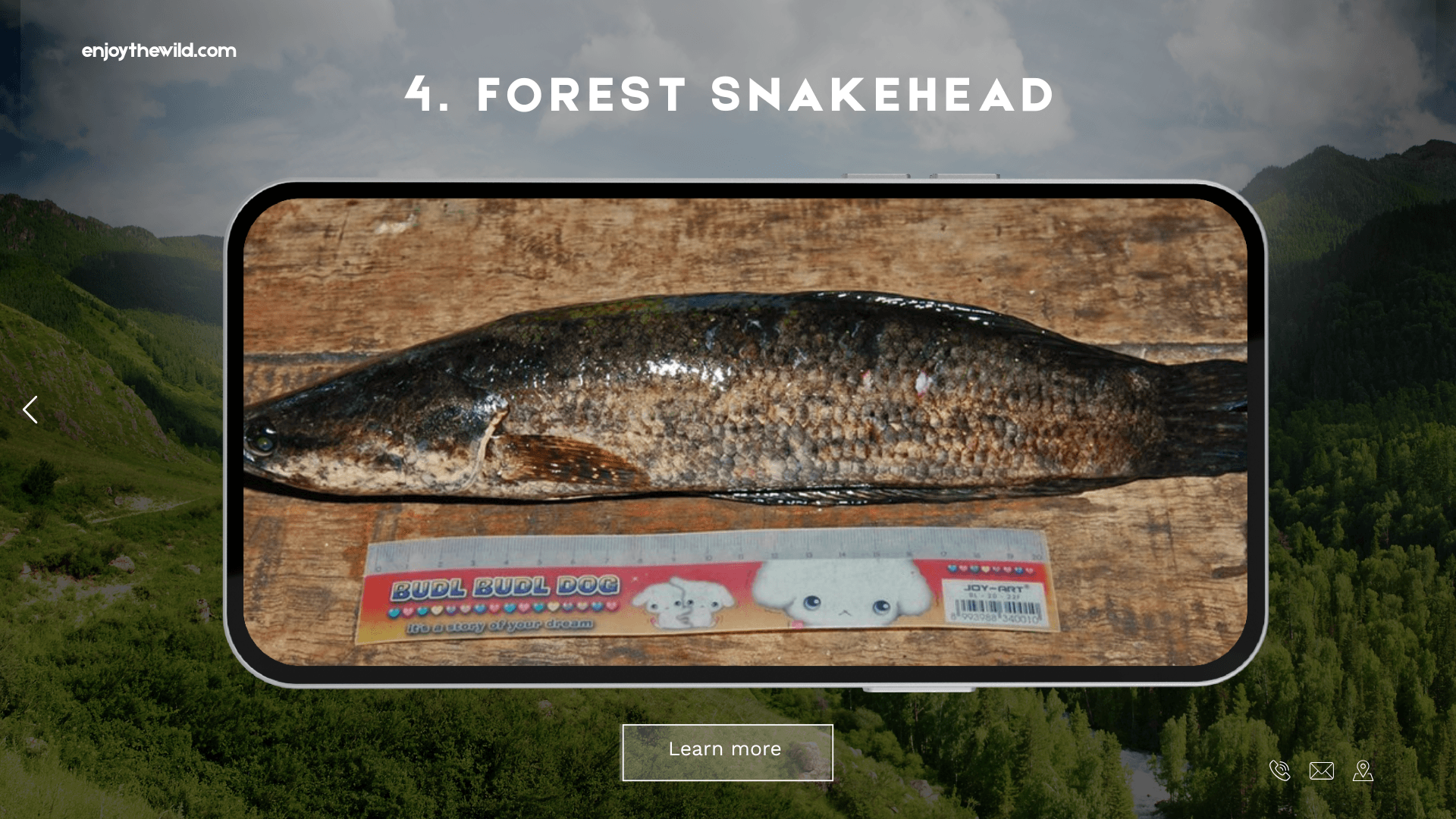
The Forest Snakehead is a smaller species typically found in forest streams and swampy wetlands across Southeast Asia. It has a slender body and attractive patterning that includes light stripes and speckled markings.
Unlike larger snakeheads, this species prefers shaded, slow-moving waters rich in vegetation. It is a stealthy predator that feeds on insects, small fish, and aquatic invertebrates.
Its camouflage allows it to blend perfectly into leaf litter and submerged roots, making it an efficient ambush hunter in forested environments.
5. Chevron Snakehead (Channa striata)
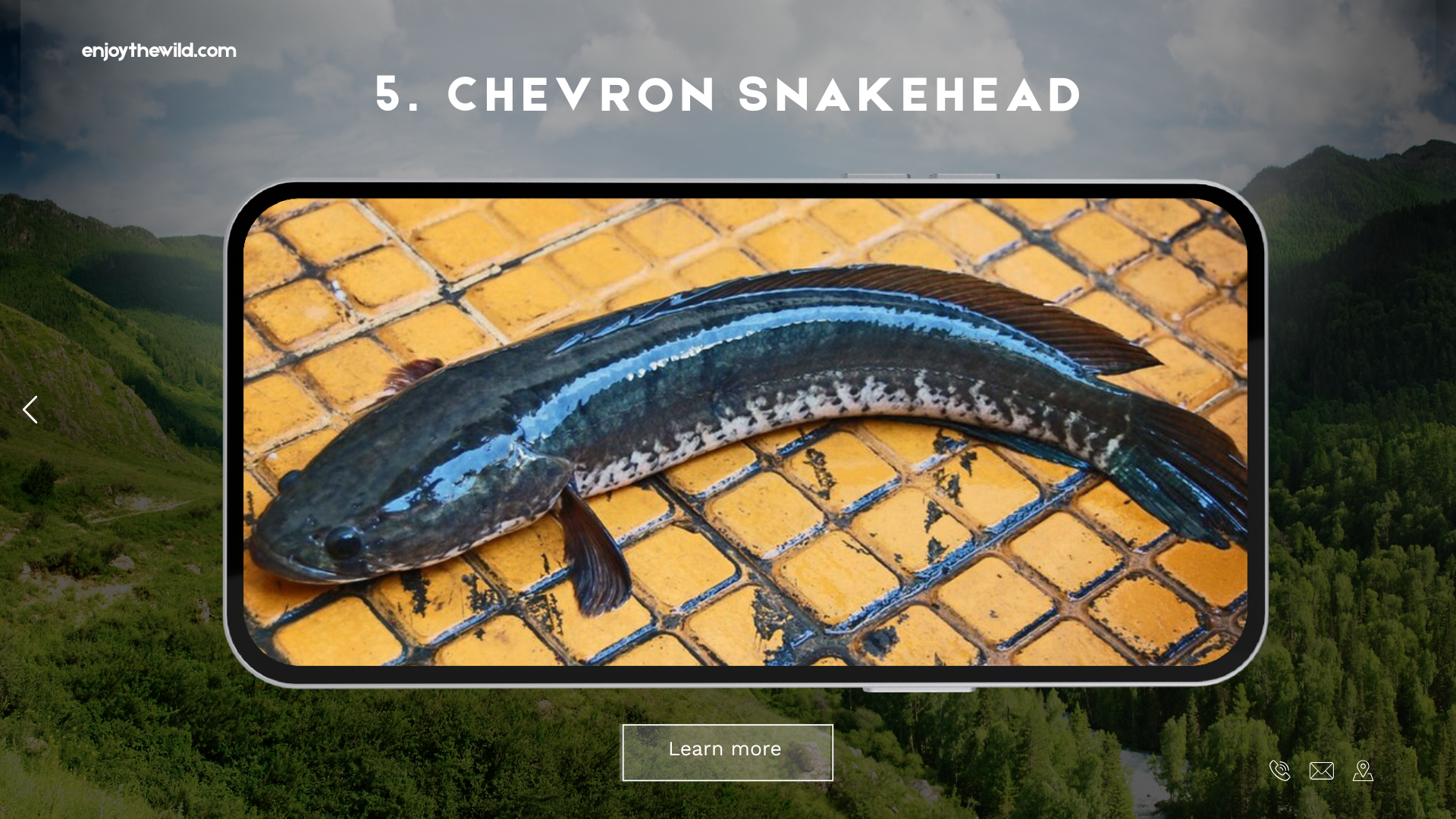
The Chevron Snakehead is one of the most widely distributed snakehead species in Asia. It is easily recognized by its dark chevron-shaped markings along its body.
This species is highly adaptable and can live in rivers, ponds, rice fields, and even seasonal wetlands. It is also capable of surviving drought conditions by burrowing into mud and breathing air.
As a predator, it feeds on fish, amphibians, and small aquatic organisms. It is also culturally significant in many Asian regions, where it is considered both a food source and a traditional medicinal fish.
The diversity of types of Snakehead shows how adaptable and resilient this group of fish truly is. From massive predators like the Giant Snakehead to stealthy forest dwellers like Channa lucius, each species plays a unique role in its ecosystem. In the next section, we will continue exploring more snakehead species and their fascinating survival strategies.
6. Splendid Snakehead (Channa splendida)
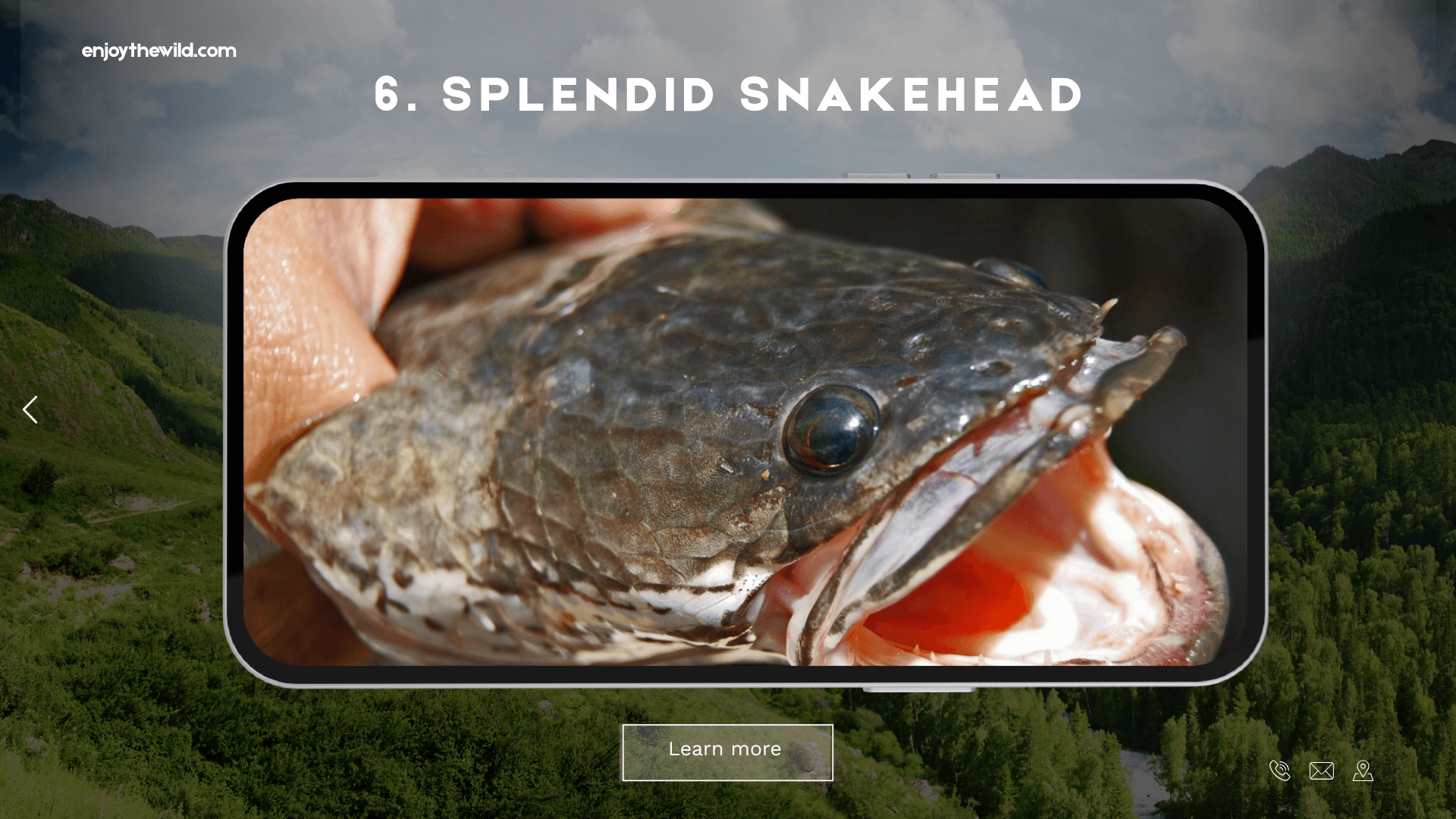
The Splendid Snakehead is one of the more visually striking members of the types of Snakehead, known for its vivid coloration and sleek body shape. Native to parts of Southeast Asia, especially Indonesia, this species is commonly found in slow-moving freshwater habitats such as swamps, floodplains, and vegetated ponds. Its name “splendid” reflects its attractive appearance, especially in juvenile stages where the body often displays bright orange or reddish tones combined with dark markings.
As it matures, the Splendid Snakehead becomes more subdued in color, shifting toward darker brown or olive tones that provide better camouflage in murky waters. Its body is elongated and muscular, designed for sudden bursts of speed when ambushing prey. Like all snakeheads, it possesses a specialized air-breathing organ, allowing it to survive in oxygen-poor or stagnant environments where other fish would struggle.
In terms of behavior, this species is a highly efficient ambush predator. It prefers to remain hidden among aquatic vegetation, submerged roots, or debris before striking small fish, insects, and crustaceans. Its hunting strategy relies on patience and explosive movement rather than long pursuit. This makes it particularly successful in environments with dense cover.
The Splendid Snakehead is also known for its adaptability. It can tolerate changes in water quality, seasonal flooding, and even temporary drought conditions by surviving in isolated pools. In some cases, it may survive short periods out of water if the environment remains humid.
Ecologically, this species plays an important role in controlling small fish and insect populations. However, in regions outside its native range, it could potentially become invasive due to its resilience and aggressive feeding behavior. Overall, Channa splendida represents a balance between beauty and predatory efficiency within the snakehead family.
7. Emperor Snakehead (Channa marulioides)
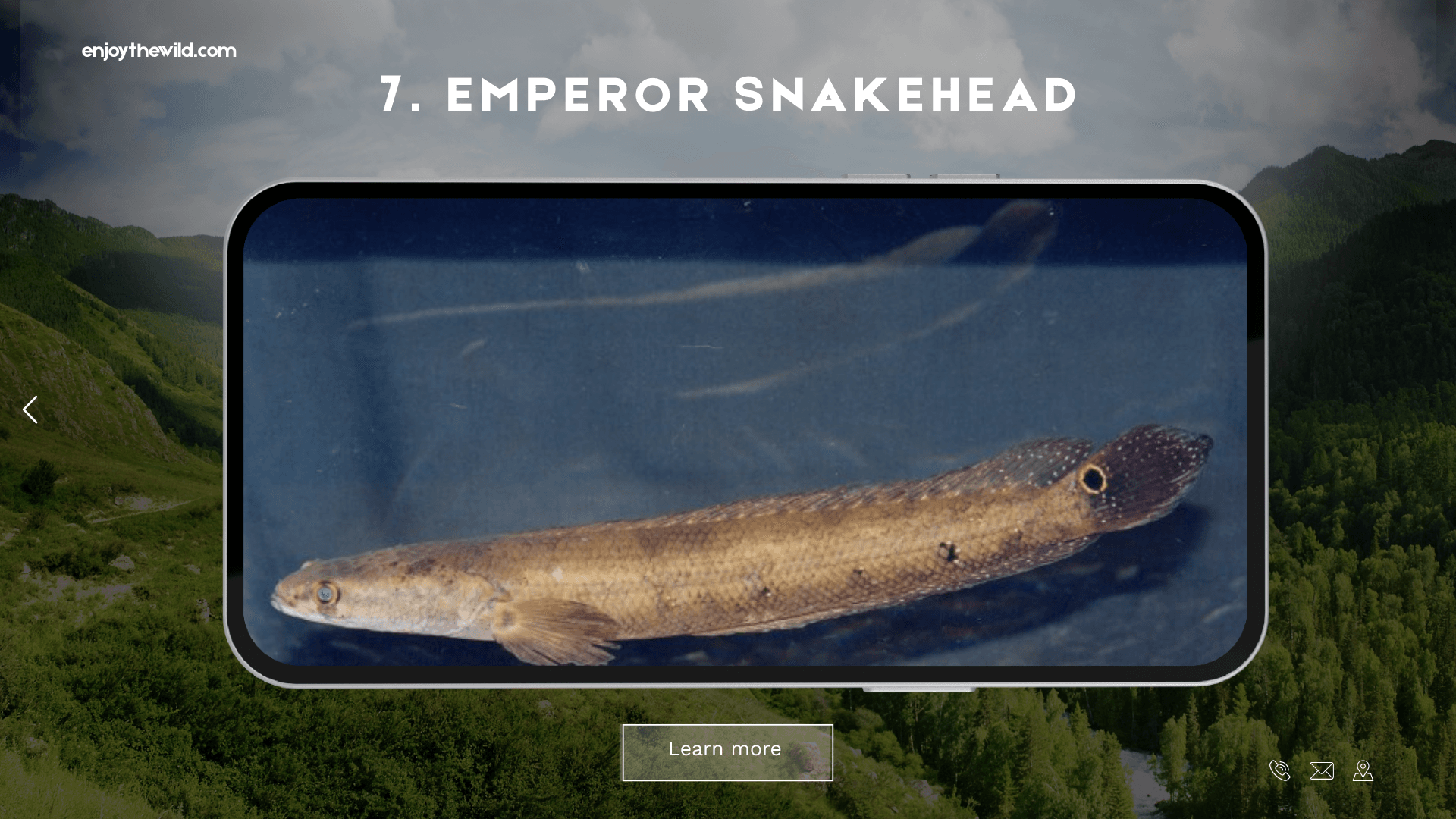
The Emperor Snakehead is one of the most impressive and visually dominant species among all types of Snakehead. Found in parts of Indonesia, Malaysia, and Thailand, this species inhabits large rivers, deep lakes, and slow-moving freshwater systems. It is named “Emperor” due to its majestic appearance and commanding presence in its habitat.
This species can grow relatively large compared to many other snakeheads, with a thick, powerful body built for predation. Its coloration is typically dark brown or black with golden or orange patterns along the flanks, especially in younger individuals. These markings fade slightly with age but still remain visible in many adults.
The Emperor Snakehead is a territorial and solitary predator. It often establishes a defined area within a river or lake and aggressively defends it from intruders. Its diet consists of fish, amphibians, and occasionally small aquatic mammals or birds near the water’s edge. It is an ambush hunter, relying on stealth and sudden acceleration to capture prey.
One of the most interesting adaptations of this species is its ability to breathe air. This allows it to survive in low-oxygen environments and gives it an advantage over many other freshwater fish. It can also endure temporary habitat changes, such as drought or flooding, by moving between water bodies when necessary.
In aquaculture and aquarium settings, the Emperor Snakehead is highly valued but requires experienced care due to its size and aggressive nature. In the wild, it plays a key role as a top predator in maintaining ecological balance within freshwater ecosystems.
8. Blotched Snakehead (Channa maculata)
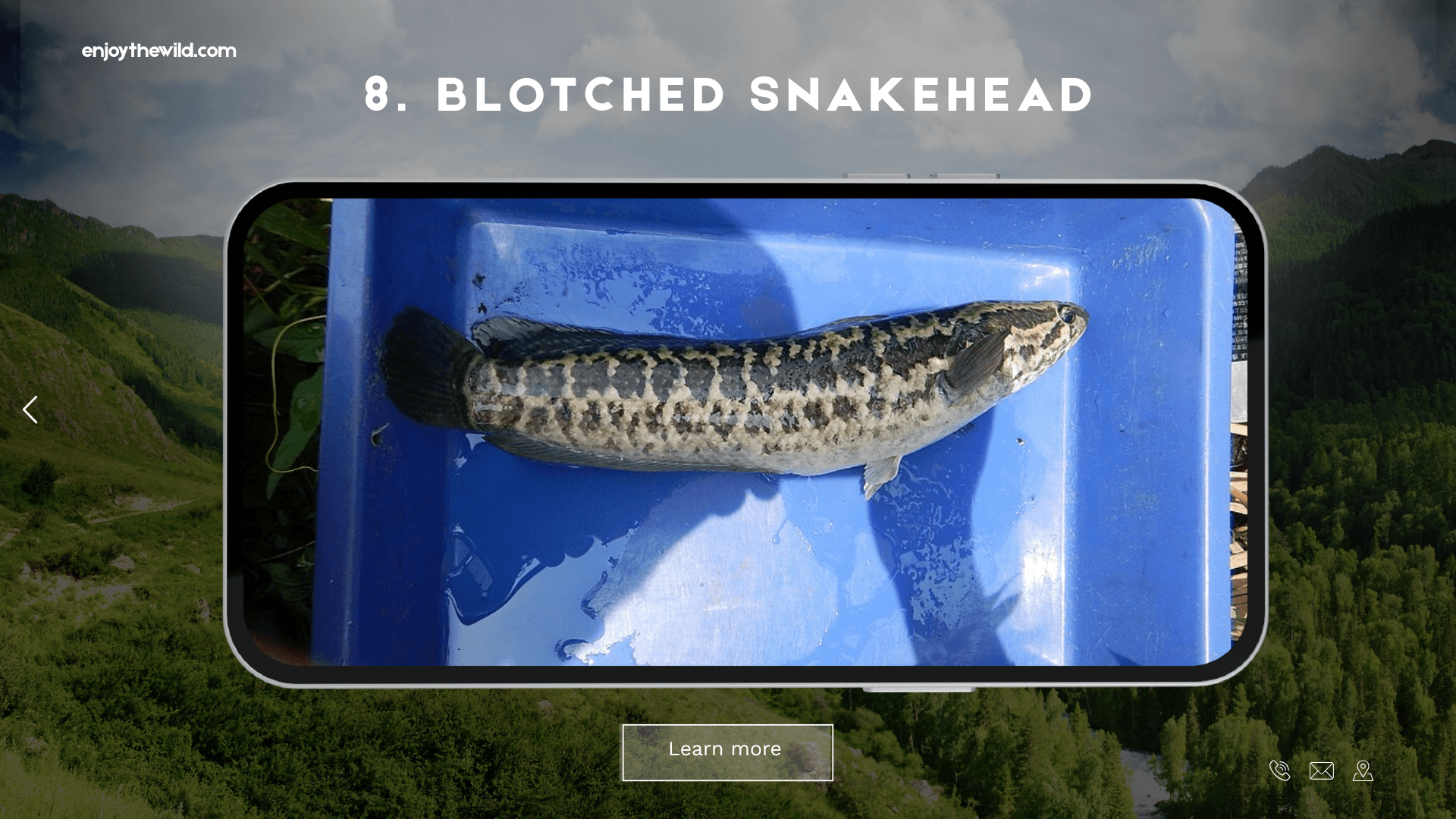
The Blotched Snakehead is a widely distributed species found across southern China, Taiwan, and parts of Southeast Asia. It is one of the most recognizable types of Snakehead due to its distinctive blotched or marbled pattern along its body, which provides excellent camouflage in muddy waters and dense aquatic vegetation.
This species has a moderately elongated body with a strong head structure and sharp teeth designed for grasping prey. Its coloration varies from light brown to dark olive, with irregular dark blotches scattered across its sides. These markings help it blend into riverbeds, ponds, and rice paddies where it commonly lives.
The Blotched Snakehead is highly adaptable and can survive in a wide range of freshwater environments, including stagnant ponds, slow rivers, and flooded agricultural fields. Like other snakeheads, it is capable of breathing air, which allows it to survive in oxygen-depleted waters and even travel short distances across moist land.
Its feeding behavior is aggressive and opportunistic. It primarily preys on fish, frogs, crustaceans, and aquatic insects. It is known for lying motionless among vegetation before striking with rapid speed. This ambush strategy makes it a highly efficient predator in shallow freshwater ecosystems.
In some regions, the Blotched Snakehead is considered both a valuable food fish and a potential invasive species due to its hardiness and adaptability. It is also an important species in traditional fishing communities.
Ecologically, this snakehead helps regulate populations of small aquatic animals, contributing to the balance of freshwater ecosystems. Its resilience and wide distribution make it one of the most successful snakehead species in Asia.
The diversity of types of Snakehead continues to show how evolution has shaped these fish into highly efficient predators. In the next section, we will explore more species, including dwarf and rare ornamental snakeheads, and their unique survival strategies.
9. Ocellated Snakehead (Channa pleurophthalma)
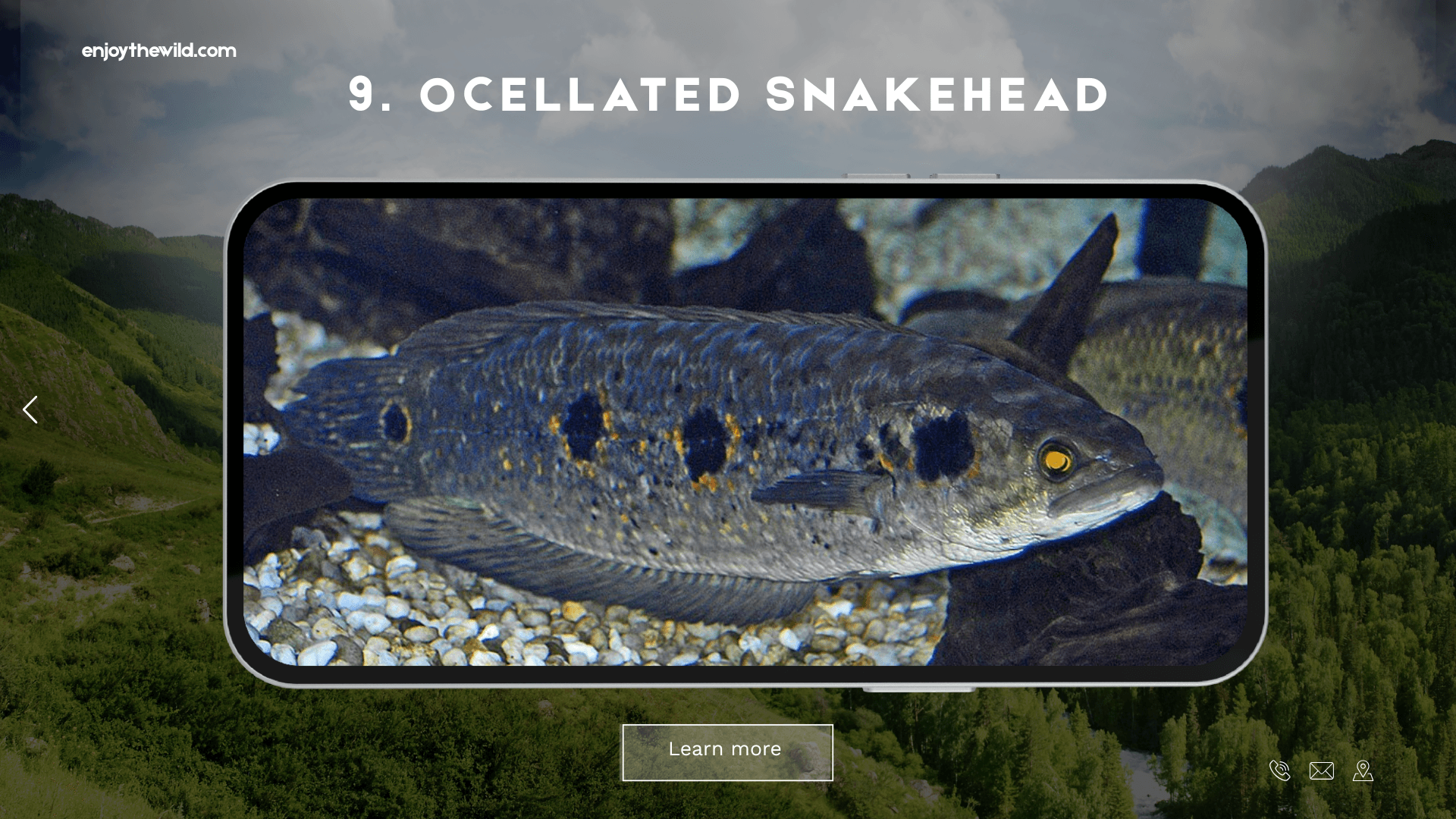
The Ocellated Snakehead is one of the most visually distinctive members among the types of Snakehead, easily recognized by the eye-like spots (ocelli) along its body. These markings are not just decorative—they play an important role in survival by confusing predators and helping the fish blend into dappled light conditions in its natural habitat. This species is native to Indonesia, especially in Sumatra and Borneo, where it inhabits slow-moving rivers, peat swamps, and forested blackwater systems.
Physically, this snakehead has a long, streamlined body with a silver to light brown base color. Along its flanks are several large dark circular spots that resemble eyes. This pattern helps break up its body outline in murky or shaded waters filled with roots, leaves, and floating debris. The fins are typically translucent with subtle orange or reddish edges in younger individuals.
Behaviorally, the Ocellated Snakehead is a stealth-based ambush predator. It prefers heavily vegetated waters where it can remain hidden for long periods. It feeds on small fish, aquatic insects, and crustaceans. Instead of chasing prey in open water, it waits patiently and uses rapid bursts of speed to strike when prey comes close enough.
One of its most important survival adaptations is air-breathing capability. In oxygen-poor swamp environments, this trait allows it to survive where many other fish cannot. It often surfaces to gulp air, making it highly resilient during dry seasons or in stagnant waters.
The Ocellated Snakehead is also known for its calm but territorial behavior. While not as aggressively territorial as larger snakehead species, it still defends feeding areas when necessary. Its ecological role is important in controlling small fish populations in swamp ecosystems, helping maintain balance in delicate wetland food chains.
10. Dwarf Snakehead (Channa gachua)
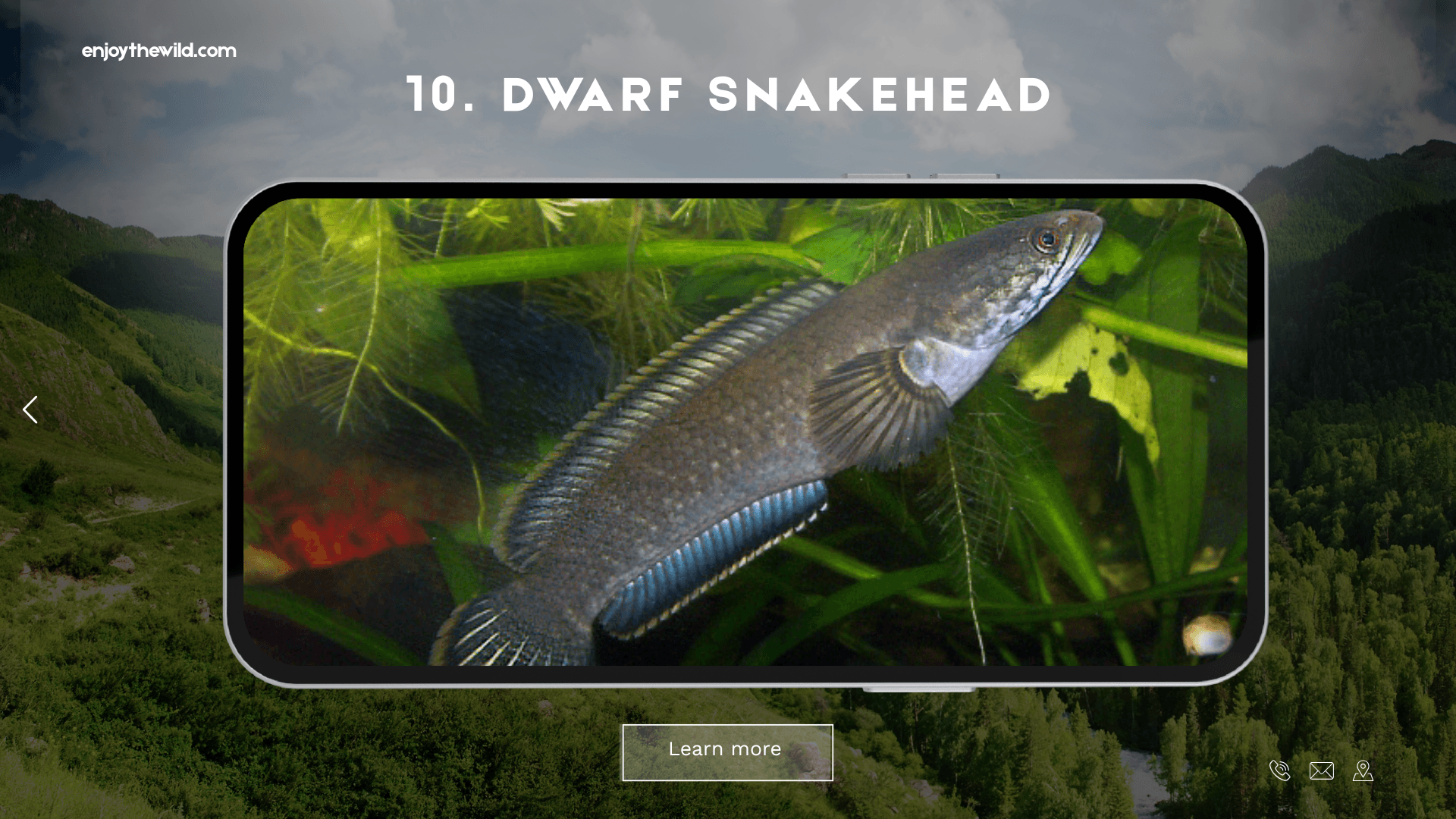
The Dwarf Snakehead is one of the smallest and most widespread species within the types of Snakehead, found across South and Southeast Asia. Despite its small size, it is a highly adaptable and fascinating predator. It inhabits streams, ponds, irrigation canals, and even small forest pools, showing incredible flexibility in habitat selection.
This species typically grows to a modest size compared to other snakeheads, but what it lacks in size, it makes up for in resilience and behavioral complexity. Its body is elongated and slightly compressed, with coloration ranging from grayish-brown to bluish tones depending on the population. Some individuals display faint stripes or speckling along the body.
One of the most remarkable traits of the Dwarf Snakehead is its parental care behavior. Unlike many fish species, it exhibits mouthbrooding, where one of the parents (often the male) carries eggs or fry in its mouth for protection. This significantly increases the survival rate of offspring in predator-rich environments.
In terms of diet, the Dwarf Snakehead feeds on small insects, larvae, tiny fish, and aquatic invertebrates. It is an opportunistic feeder and adapts its diet depending on what is available in its environment. Its hunting style is less aggressive compared to larger snakeheads, relying more on quick strikes and opportunistic feeding.
Another important feature is its air-breathing ability, which allows it to survive in low-oxygen water conditions. This gives it a strong advantage in stagnant ponds or seasonal water bodies that may dry out or become oxygen-depleted.
Ecologically, the Dwarf Snakehead plays a role in controlling insect and small fish populations, helping maintain balance in small freshwater ecosystems. It is also popular in the aquarium trade due to its manageable size and interesting behavior.
11. Orange-Spotted Snakehead (Channa aurantimaculata)
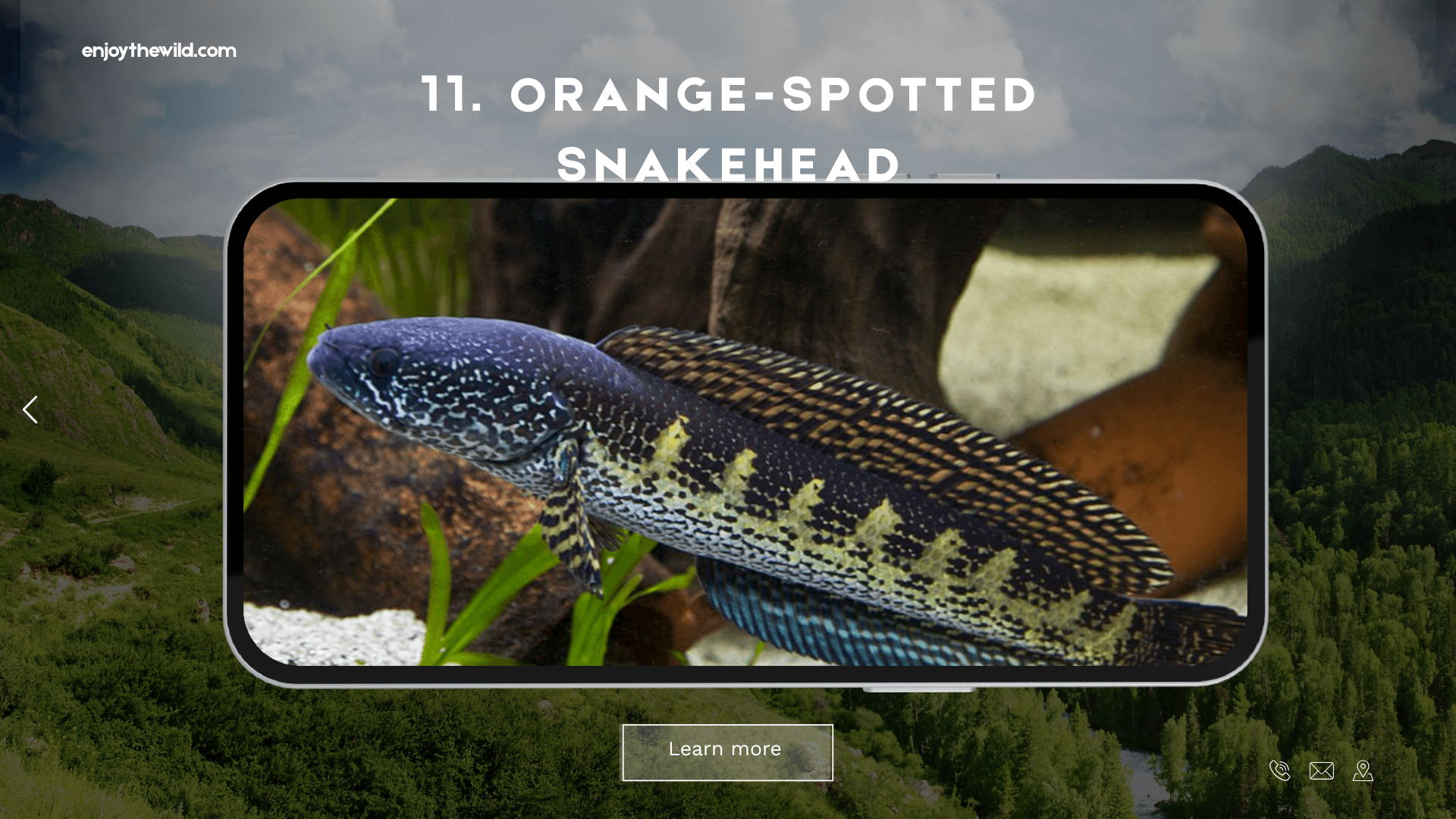
The Orange-Spotted Snakehead is one of the most strikingly colored species among all types of Snakehead. Native to northeastern India, particularly Assam, this species is highly valued for its unique appearance and strong predatory behavior. It is typically found in slow-moving rivers, floodplains, and seasonal wetlands.
This species is characterized by a dark brown or black body decorated with bright orange or yellow spots along its sides. These vivid markings make it one of the most visually appealing snakeheads, especially among aquarists. Its head is broad and slightly flattened, giving it a powerful predatory appearance.
Behaviorally, the Orange-Spotted Snakehead is highly territorial and can be aggressive, especially during feeding or breeding periods. It prefers hiding among submerged vegetation or roots before launching quick attacks on passing prey. Its diet includes fish, insects, and small aquatic organisms.
Like all snakeheads, it possesses an air-breathing organ that allows it to survive in oxygen-poor waters. This adaptation is particularly useful in floodplain habitats, where water conditions can change rapidly between seasons.
This species also shows strong seasonal behavior. During monsoon flooding, it may expand its territory into newly submerged areas, while in dry seasons, it retreats into deeper or more stable water bodies. This flexibility ensures survival in highly variable environments.
Ecologically, the Orange-Spotted Snakehead is an important mid-level predator that helps regulate populations of smaller aquatic animals. Its combination of beauty, aggression, and adaptability makes it one of the most fascinating members of the snakehead family.
The diversity of types of Snakehead continues to reveal how adaptable and evolutionarily successful this group of fish is. From the visually striking Ocellated Snakehead to the highly parental Dwarf Snakehead and the vividly patterned Orange-Spotted Snakehead, each species demonstrates unique survival strategies shaped by its environment. In the next section, we will explore even rarer and more powerful snakehead species.
12. Barca Snakehead (Channa barca)
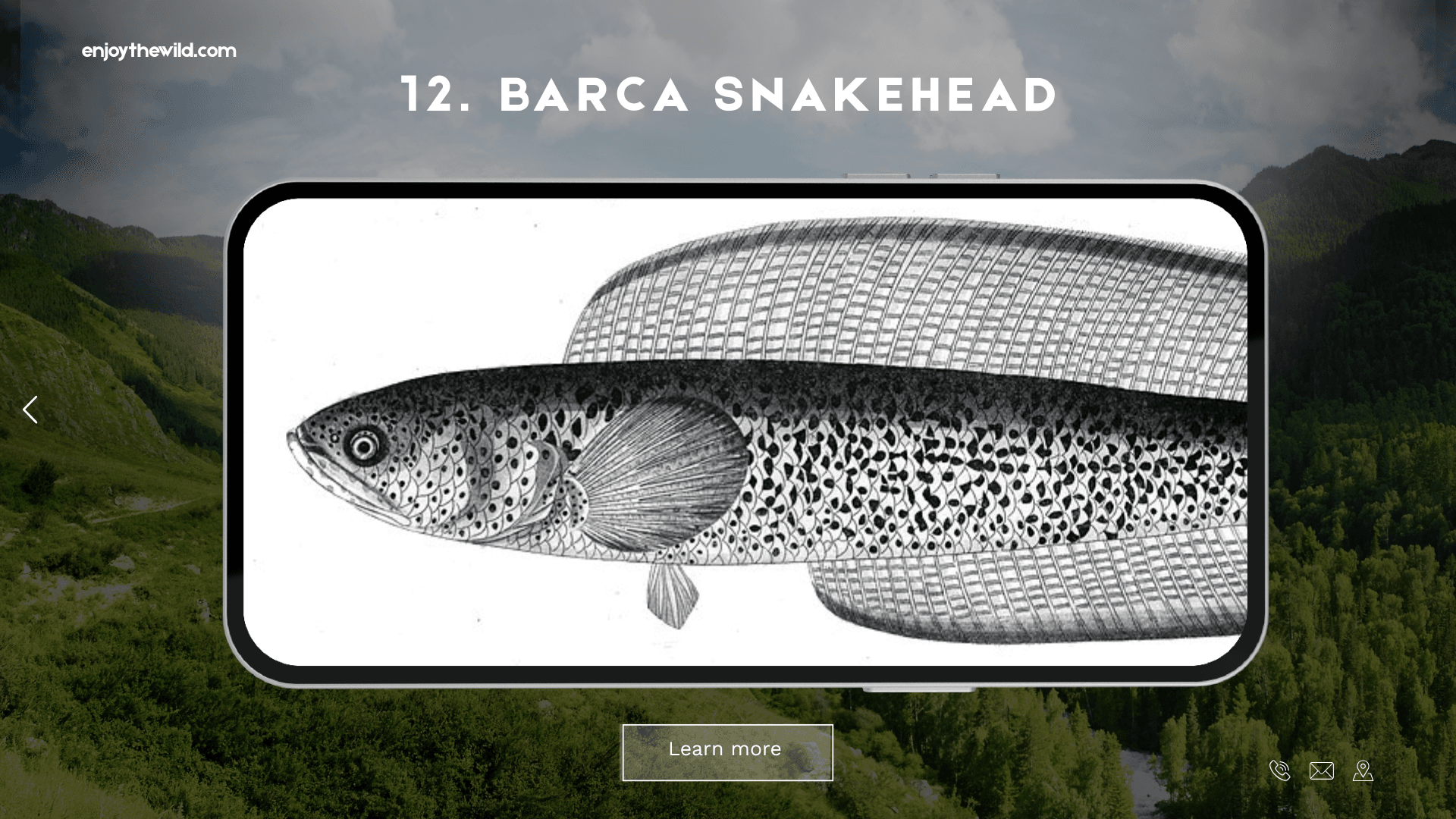
The Barca Snakehead is one of the rarest and most mysterious members among all types of Snakehead. Native to parts of northeastern India and Bangladesh, especially in slow-moving swamp systems and floodplain wetlands, this species is highly prized by scientists and aquarists due to its scarcity and impressive size potential. Unlike many common snakeheads, Channa barca is extremely localized and not widely distributed, making it a true specialty of its native ecosystem.
Physically, the Barca Snakehead has a thick, elongated body with a powerful head structure. Its coloration is typically dark brown or olive with subtle mottled patterns that help it blend into muddy, low-visibility waters. The body is muscular and designed for sudden bursts of predatory speed rather than long-distance swimming. One of its most distinctive traits is its broad head and slightly flattened profile, giving it a prehistoric, almost armored appearance.
Behaviorally, this species is highly ambush-oriented. It prefers dense aquatic vegetation, submerged logs, and swampy channels where it can remain hidden for extended periods. Once prey comes within range, it strikes rapidly with precision. Its diet consists mainly of fish, frogs, and occasionally small crustaceans found in freshwater wetlands.
The Barca Snakehead is also a strong air-breather, allowing it to survive in oxygen-poor swamp environments. During dry seasons, it can persist in shrinking water bodies where oxygen levels drop significantly. This resilience makes it a true survival specialist in unstable wetland ecosystems.
Due to its rarity and slow growth rate, conservation awareness is important for this species. Habitat loss and wetland drainage pose threats to its natural populations. In ecological terms, it serves as an apex predator in its niche, helping regulate prey populations in fragile swamp systems.
13. Malabar Snakehead (Channa diplogramma)
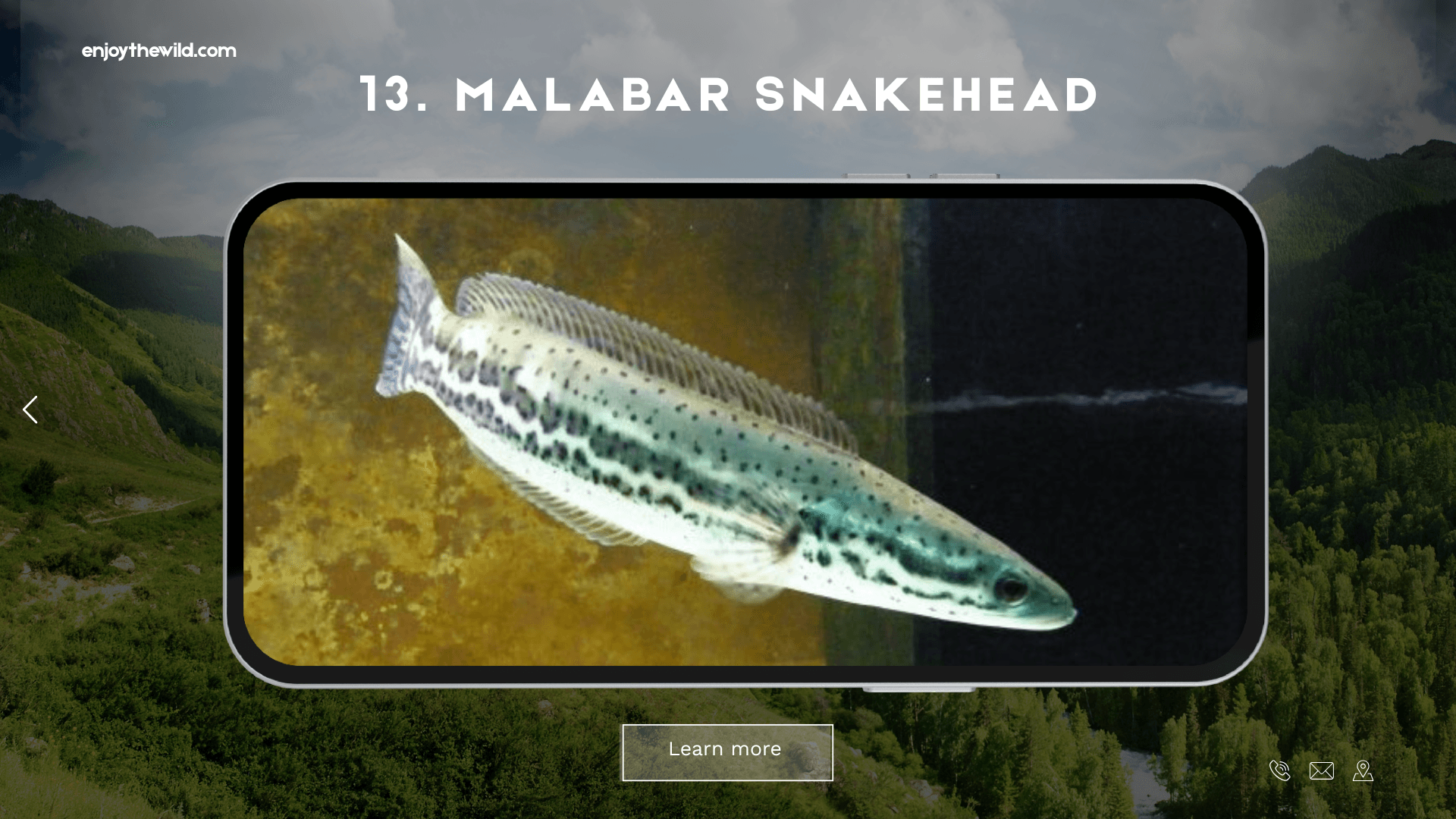
The Malabar Snakehead is a large and powerful species found in the rivers and freshwater systems of southwestern India, particularly the Western Ghats. It is one of the most impressive types of Snakehead due to its size, strength, and ecological importance in tropical freshwater ecosystems.
This species has a long, robust body with a coloration that ranges from dark brown to olive green. Juveniles may show faint striping or lighter markings that fade as they mature. Its muscular build allows it to dominate its habitat as a top freshwater predator.
The Malabar Snakehead prefers deep rivers, forest streams, and slow-flowing water bodies with dense vegetation. It is an opportunistic predator feeding on fish, amphibians, and aquatic invertebrates. In some cases, larger individuals may consume relatively big prey compared to other snakehead species.
One of its most important adaptations is its ability to survive in low-oxygen waters by breathing air. This allows it to thrive in seasonal rivers and floodplain environments where water conditions change drastically throughout the year.
Behaviorally, this species is solitary and highly territorial. It often occupies a specific section of river habitat and defends it aggressively from other predators. Its hunting strategy relies on stealth, patience, and explosive movement.
Ecologically, the Malabar Snakehead plays a crucial role in maintaining balance in freshwater ecosystems of the Western Ghats, one of the world’s biodiversity hotspots.
14. Black Snakehead (Channa melasoma)
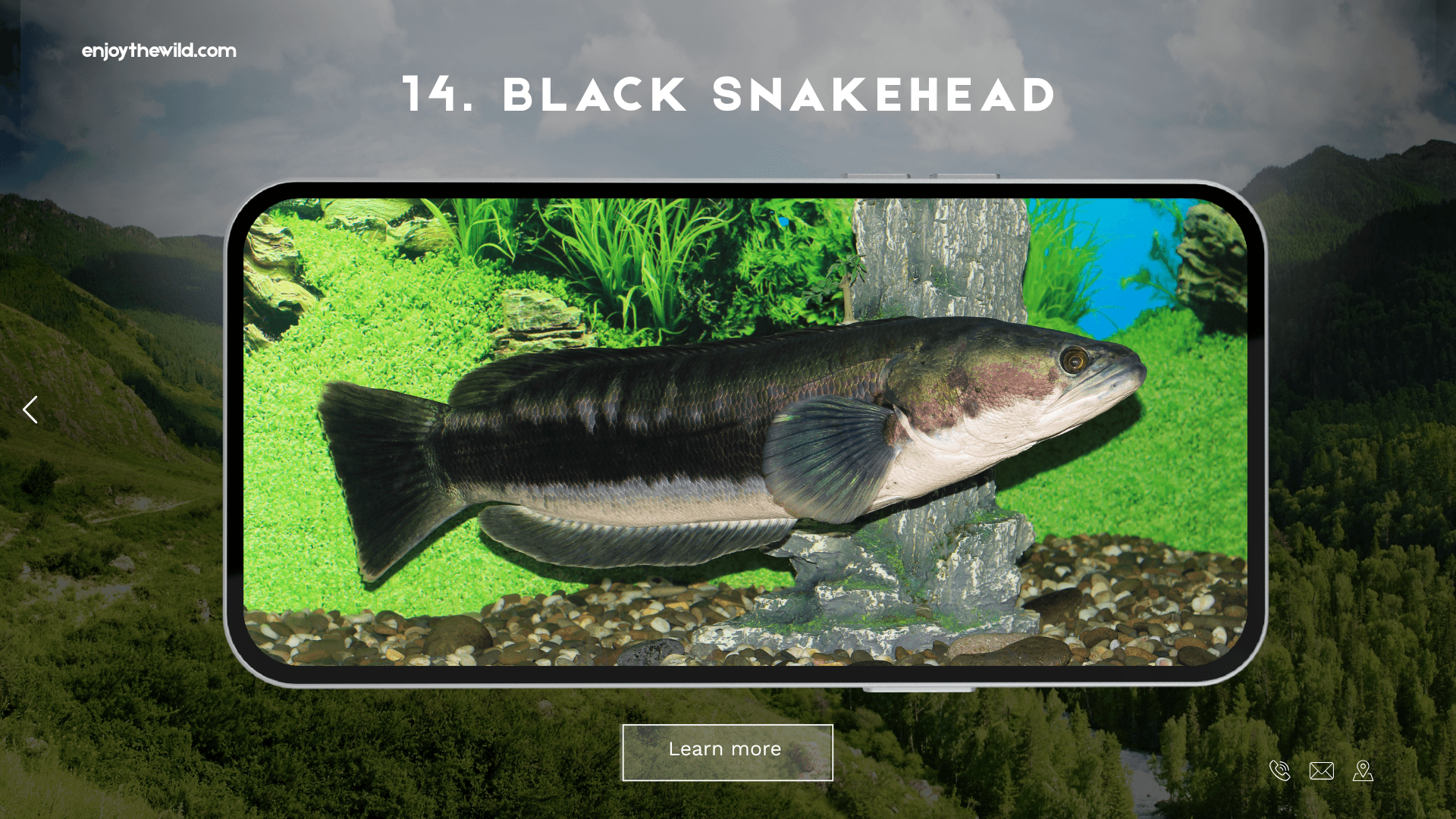
The Black Snakehead is a striking species found in Southeast Asia, particularly in Indonesia, Malaysia, and surrounding regions. Among the types of Snakehead, it stands out for its dark coloration and strong predatory behavior in swampy and lowland freshwater habitats.
As its name suggests, this species often has a dark black or deep brown body with minimal patterning. This coloration provides excellent camouflage in shaded, tannin-rich waters such as peat swamps and forest pools. Its streamlined body allows for efficient movement through dense aquatic vegetation.
The Black Snakehead is an ambush predator that feeds on fish, insects, and small aquatic animals. It is highly efficient at detecting movement in murky water and can strike with remarkable speed. Its hunting behavior is patient and calculated, often remaining motionless for long periods before attacking.
Like all snakeheads, it is capable of air-breathing, which makes it highly resistant to low-oxygen environments. This adaptation allows it to survive in stagnant or seasonal waters where oxygen levels fluctuate.
This species is generally solitary and territorial. It prefers secluded habitats where it can avoid competition and maximize hunting efficiency. Its role in the ecosystem is important for controlling populations of small fish and aquatic insects.
15. Peacock Snakehead (Channa pulchra)
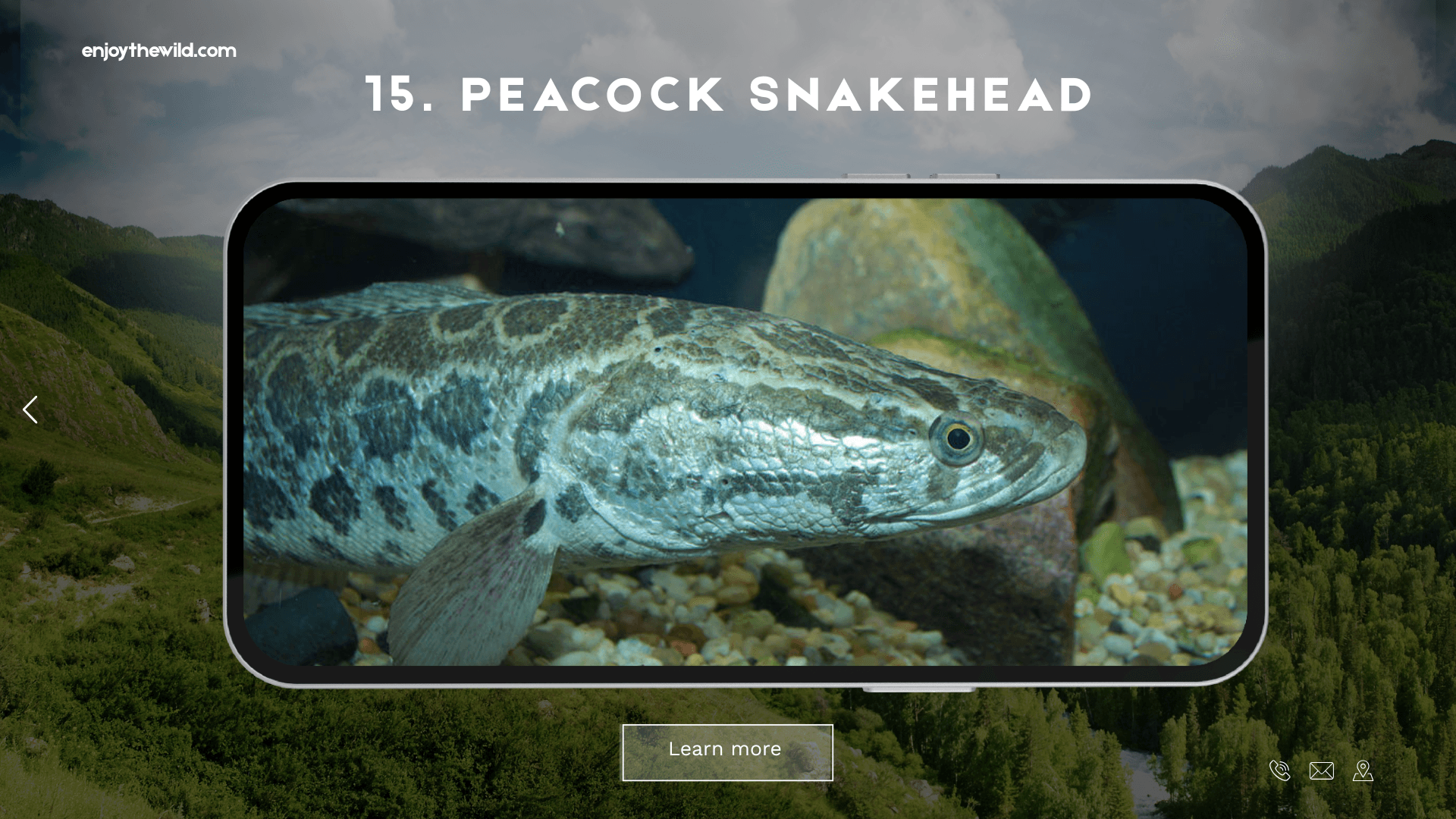
The Peacock Snakehead is one of the most beautifully colored species among all types of Snakehead. Native to Myanmar, it is highly sought after in the aquarium trade due to its vivid patterns and relatively smaller size compared to larger predatory snakeheads.
This species displays stunning coloration, often featuring blue, green, and orange hues along its body. The pattern resembles the vibrant appearance of a peacock, which is how it gets its common name. Its fins may also show bright accents, especially under good lighting conditions.
In the wild, the Peacock Snakehead inhabits slow-moving streams, forest pools, and shaded freshwater habitats. It prefers areas with plenty of cover such as submerged roots and leaf litter, where it can hide from both predators and prey.
It is an ambush predator that feeds on small fish, insects, and aquatic invertebrates. Despite its beauty, it is still a capable hunter with quick reflexes and strong territorial instincts.
This species also possesses air-breathing ability, allowing it to survive in oxygen-poor environments typical of forested water systems. It is relatively calm compared to larger snakeheads but still territorial in confined spaces.
Ecologically, it contributes to maintaining balance in small freshwater ecosystems by controlling insect and fish populations.
The diversity of types of Snakehead highlights just how evolution has shaped this group into one of the most adaptable freshwater predator families in the world. From rare giants like the Barca Snakehead to visually stunning species like the Peacock Snakehead, each plays a unique role in its ecosystem. In the final section, we will summarize their ecological importance and survival strategies.
Conclusion: Why Types of Snakehead Are So Important in Nature
The wide diversity of types of Snakehead shows just how successful this group of fish has become in adapting to freshwater ecosystems across Asia and beyond. From massive predators like the Giant Snakehead to beautifully patterned species like the Peacock Snakehead and rare specialists like the Barca Snakehead, each species plays a unique ecological role in its habitat.
What makes snakeheads especially fascinating is their combination of traits: air-breathing ability, strong predatory instincts, high adaptability, and resilience in low-oxygen environments. These features allow them to survive in swamps, rivers, lakes, rice fields, and even temporary water bodies that dry up seasonally. Very few fish groups demonstrate this level of ecological flexibility.
At the same time, snakeheads are not just successful predators—they are also important regulators of freshwater ecosystems. By controlling populations of smaller fish, insects, and amphibians, they help maintain balance in aquatic food chains. However, in non-native environments, some species can become invasive and disrupt local biodiversity, showing how powerful their adaptability can be.
Understanding the different types of snakehead helps us appreciate both their beauty and their ecological impact. Whether admired for their striking appearance, studied for their survival skills, or managed for conservation reasons, snakeheads remain one of the most intriguing freshwater fish groups in the world.
So, after exploring all these remarkable species, which types of Snakehead surprised you the most with their behavior and adaptation skills?
50+ FAQs About Types of Snakehead (Detailed Answers)
1. What are types of Snakehead fish?
The types of Snakehead refer to different species within the genus Channa, a group of freshwater predatory fish. These species vary in size, color, and habitat preference but share key traits such as elongated bodies, sharp teeth, and the ability to breathe air. They are found mainly in Asia and parts of Africa.
2. How many types of Snakehead exist?
There are over 50 recognized species of snakehead fish worldwide. However, only a portion of them are commonly studied or encountered in the wild or aquarium trade. New species are still being described as research continues.
3. Where do Snakehead fish live?
Snakeheads live in freshwater habitats such as rivers, swamps, lakes, rice fields, and floodplains. They prefer warm, slow-moving or stagnant water with plenty of vegetation for cover.
4. Why are Snakehead fish so unique?
They are unique because they can breathe air using a specialized organ, allowing them to survive in low-oxygen water and even move short distances on land under wet conditions.
5. Are all Snakehead fish aggressive?
Most snakehead species are predatory and territorial, especially larger ones. However, aggression levels vary depending on species, habitat, and food availability.
6. What do Snakehead fish eat?
They are carnivorous and eat fish, frogs, insects, crustaceans, and sometimes small mammals or birds near water edges. They are opportunistic feeders.
7. Are Snakehead fish dangerous to humans?
They are not considered dangerous to humans. While they are aggressive toward prey and other fish, attacks on people are extremely rare.
8. Which is the largest type of Snakehead?
The Giant Snakehead (Channa micropeltes) is one of the largest species and can exceed 1 meter in length.
9. Which is the smallest type of Snakehead?
The Dwarf Snakehead (Channa gachua) is among the smallest, typically reaching only modest sizes compared to other species.
10. Can Snakeheads survive out of water?
Yes, for short periods. Their air-breathing ability allows them to survive temporarily out of water if their bodies remain moist.
11. Are Snakeheads invasive species?
Some species, like the Northern Snakehead, are considered invasive outside their native range because they can outcompete local fish populations.
12. How do Snakeheads breathe air?
They use a specialized suprabranchial organ that allows them to extract oxygen directly from air, similar to primitive lung structures.
13. Do Snakeheads live in groups?
Most snakeheads are solitary or form small family groups, especially during breeding or juvenile care stages.
14. How fast do Snakeheads grow?
Growth rate varies by species and environment. Larger species grow quickly in nutrient-rich waters, while smaller species grow more slowly.
15. What is the habitat of Northern Snakehead?
It lives in rivers, ponds, and wetlands in East Asia and has also spread to parts of North America.
16. What is special about Giant Snakehead?
It is a powerful apex predator with aggressive hunting behavior and fast growth, making it one of the top freshwater predators in its ecosystem.
17. Are Snakeheads good aquarium fish?
Some smaller species can be kept in aquariums, but many require large tanks and experienced care due to their size and predatory behavior.
18. Why do Snakeheads have sharp teeth?
Their teeth help them grip slippery prey such as fish and amphibians, improving hunting efficiency.
19. Do Snakeheads migrate?
They do not migrate long distances but may move locally between water bodies during flooding or drought.
20. Can Snakeheads survive drought?
Yes. Many species can survive dry periods by burrowing into mud or moving to deeper water sources.
21. What is the Ocellated Snakehead?
It is a species with eye-like spots on its body that help confuse predators and camouflage it in murky water.
22. What is the Dwarf Snakehead known for?
It is known for its small size and unique parental care behavior, including mouthbrooding in some cases.
23. Are Snakeheads nocturnal?
Many species are more active at night or during low-light conditions, but activity patterns vary by habitat.
24. How do Snakeheads hunt?
They use ambush tactics, staying still before striking quickly at passing prey.
25. Do Snakeheads have predators?
Yes, large fish, birds, and reptiles may prey on juveniles, but adults have fewer natural predators.
26. What is the Peacock Snakehead?
It is a colorful species known for bright patterns and is popular in the aquarium trade.
27. Why are Snakeheads important in ecosystems?
They help control prey populations and maintain balance in freshwater food chains.
28. What is the Malabar Snakehead?
A large species found in India’s Western Ghats, known for its strength and territorial behavior.
29. Can Snakeheads survive polluted water?
They are highly tolerant of poor water conditions, including low oxygen and mild pollution.
30. Do Snakeheads care for their young?
Yes, some species protect eggs or mouthbrood fry, increasing survival rates.
31. What is the Black Snakehead?
A dark-colored species adapted to swampy, low-oxygen waters in Southeast Asia.
32. Are Snakeheads edible?
Yes, in many Asian countries they are considered food fish and are valued for their meat.
33. What is the Blotched Snakehead?
A species with blotchy markings that provide camouflage in muddy waters and vegetation.
34. How long do Snakeheads live?
Depending on species, they can live from 5 to over 15 years in favorable conditions.
35. What is the Emperor Snakehead?
A large, territorial species known for its strong body and golden markings.
36. Do Snakeheads jump?
Yes, some species can jump out of water, especially when hunting or escaping predators.
37. What is the Forest Snakehead?
A species adapted to shaded forest streams with excellent camouflage skills.
38. Why are Snakeheads called “snakehead”?
They are named for their elongated body and flattened head shape resembling a snake.
39. Are Snakeheads social fish?
They are mostly solitary except during breeding or juvenile stages.
40. Can Snakeheads be controlled in the wild?
Control is difficult due to their adaptability, reproductive success, and resilience.
41. What is the Orange-Spotted Snakehead?
A brightly patterned species native to India known for orange spots on a dark body.
42. Do Snakeheads need oxygen-rich water?
No. They can survive in low-oxygen water due to air-breathing ability.
43. What is the Barca Snakehead?
A rare and large species found in limited regions of South Asia, highly valued and studied.
44. How do Snakeheads affect ecosystems?
They regulate prey populations but can disrupt ecosystems if introduced outside native ranges.
45. Are Snakeheads fast swimmers?
Yes, they are fast over short distances, especially during ambush attacks.
46. What is the Splendid Snakehead?
A visually striking species known for its bright juvenile coloration and adaptability.
47. Can Snakeheads live in cold water?
Most prefer warm tropical waters and struggle in cold environments.
48. What is the Chevron Snakehead?
A widespread species known for its chevron-patterned markings and adaptability.
49. Why are Snakeheads studied by scientists?
They are studied for their survival adaptations, invasive potential, and evolutionary traits.
50. What makes Snakeheads successful predators?
Their air-breathing ability, adaptability, aggression, and ambush hunting strategy make them highly successful.
51. What is the biggest threat to Snakeheads?
Habitat destruction and overfishing in native regions can impact some populations, though many species remain stable.
52. Can Snakeheads walk on land?
They cannot truly walk, but some can move short distances over wet surfaces using body movements.
53. Are Snakeheads related to eels?
No, they are not closely related. Their similarity in shape is due to adaptation, not ancestry.
54. Why are Snakeheads controversial?
They are controversial because some species are invasive and can harm native fish populations.
55. What is the future of Snakehead populations?
Their future depends on habitat conservation and management of invasive populations, as they continue to adapt successfully in many regions.