

Donkeys are fascinating creatures with a rich history of domestication and survival in diverse environments. Across the globe, there are numerous types of donkey that vary in size, coat color, and behavior, adapted to everything from arid deserts to mountainous terrains. Understanding these types helps enthusiasts, farmers, and wildlife lovers appreciate the unique characteristics and ecological importance of donkeys. This guide introduces 30 distinct donkeys, exploring their physical traits, behaviors, habitats, and roles in human and natural ecosystems. By the end, you will have a comprehensive understanding of donkey types and why they remain valuable to both nature and people.
30 Types of Donkey
1. African Wild Ass (Equus africanus)
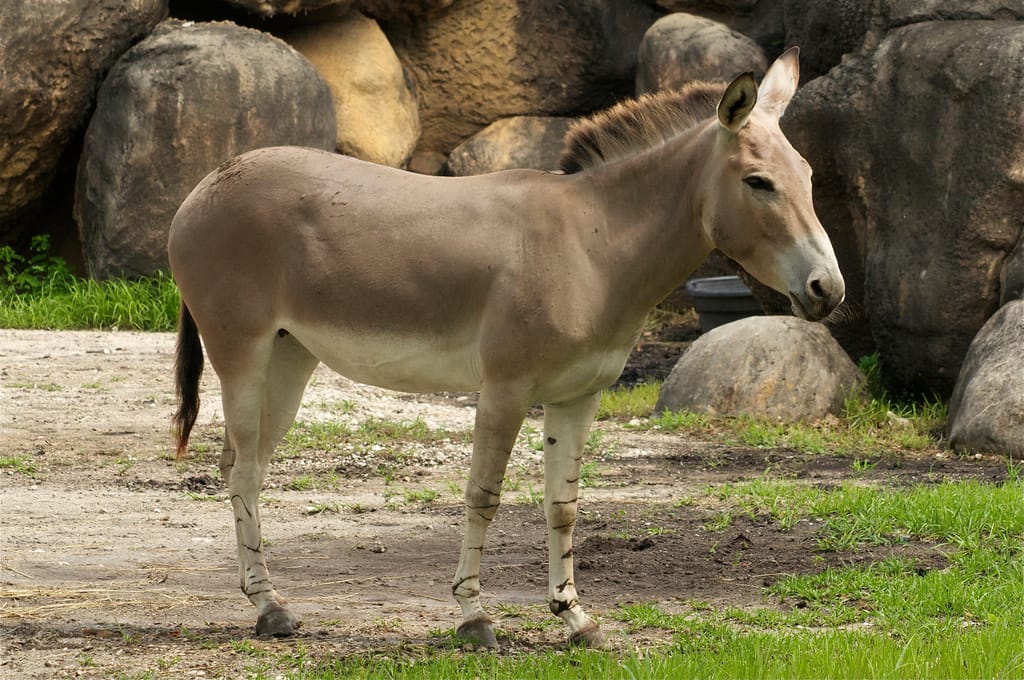
The African Wild Ass is considered the ancestor of most modern domestic donkeys. Native to northeastern Africa, particularly Eritrea, Ethiopia, and Somalia, it thrives in arid deserts and rocky terrains. African Wild Asses are characterized by a slender, muscular body, sandy-colored coat with a white belly, and distinctive black stripes on their legs and back. Adults weigh between 200–250 kilograms, with males slightly larger than females. They have strong, agile hooves adapted for desert walking and foraging.
These donkeys are herbivorous, feeding on sparse grasses, shrubs, and desert plants. They are primarily nocturnal, avoiding the harsh daytime heat. African Wild Asses live in small family groups led by a dominant male, with territorial behavior protecting their feeding grounds. They communicate through vocalizations such as brays, snorts, and screams. Conservation status is critically endangered due to habitat loss and hunting, making the African Wild Ass a key focus for wildlife preservation efforts.
Ecologically, African Wild Asses play an essential role by grazing on desert vegetation, preventing overgrowth, and supporting seed dispersal. Their presence also affects predator-prey dynamics, as they provide prey for lions, hyenas, and other large predators. Conservation programs emphasize habitat protection, breeding programs, and preventing hybridization with domestic donkeys. Understanding this species gives insight into the origins and evolution of modern donkeys.
2. Nubian Wild Ass (Equus africanus africanus)
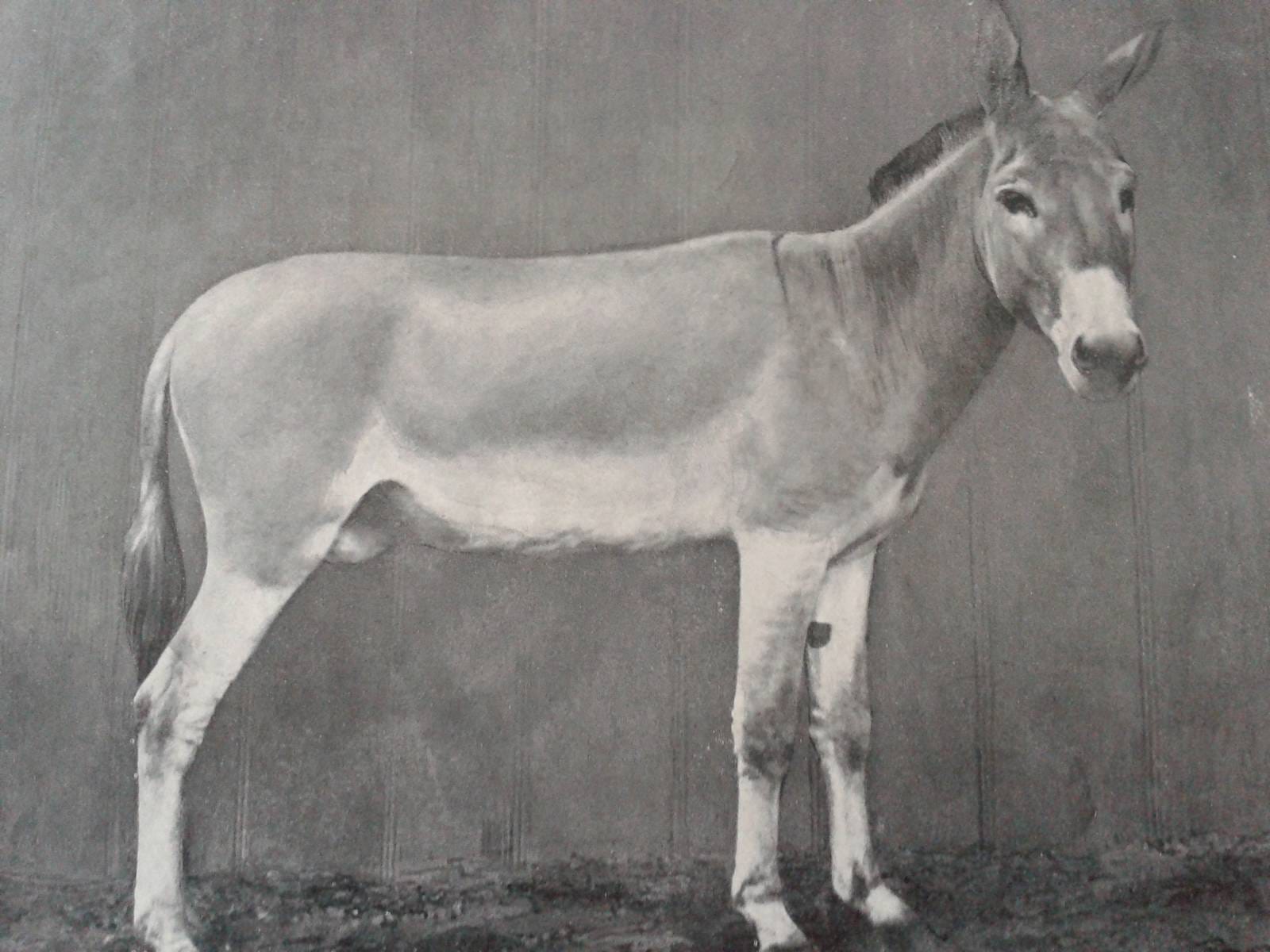
The Nubian Wild Ass is a subspecies of the African Wild Ass found in Sudan and Egypt. This donkey has a light gray to sandy coat with darker stripes on the legs and shoulder. Nubian Wild Asses are smaller and more slender compared to other wild asses, typically weighing 180–220 kilograms. Their long ears and strong hooves help them detect danger and navigate rocky desert landscapes.
They are grazers, feeding on grasses, herbs, and desert shrubs. Herds are small, usually consisting of 3–10 individuals. Males are territorial, defending their area from rivals and maintaining access to water sources. Nubian Wild Asses are known for their cautious behavior and excellent memory for water sources in arid environments. Breeding occurs seasonally, with one foal born after a gestation of 11–12 months. Young foals quickly learn foraging and survival skills from adults.
Conservation of Nubian Wild Asses is critical, as they are endangered. Efforts focus on habitat preservation, protection from poaching, and careful monitoring to prevent hybridization with domestic donkeys. The Nubian Wild Ass is a remarkable example of adaptation to extreme arid environments and offers insight into the resilience of desert-adapted donkeys.
3. Somali Wild Ass (Equus africanus somaliensis)
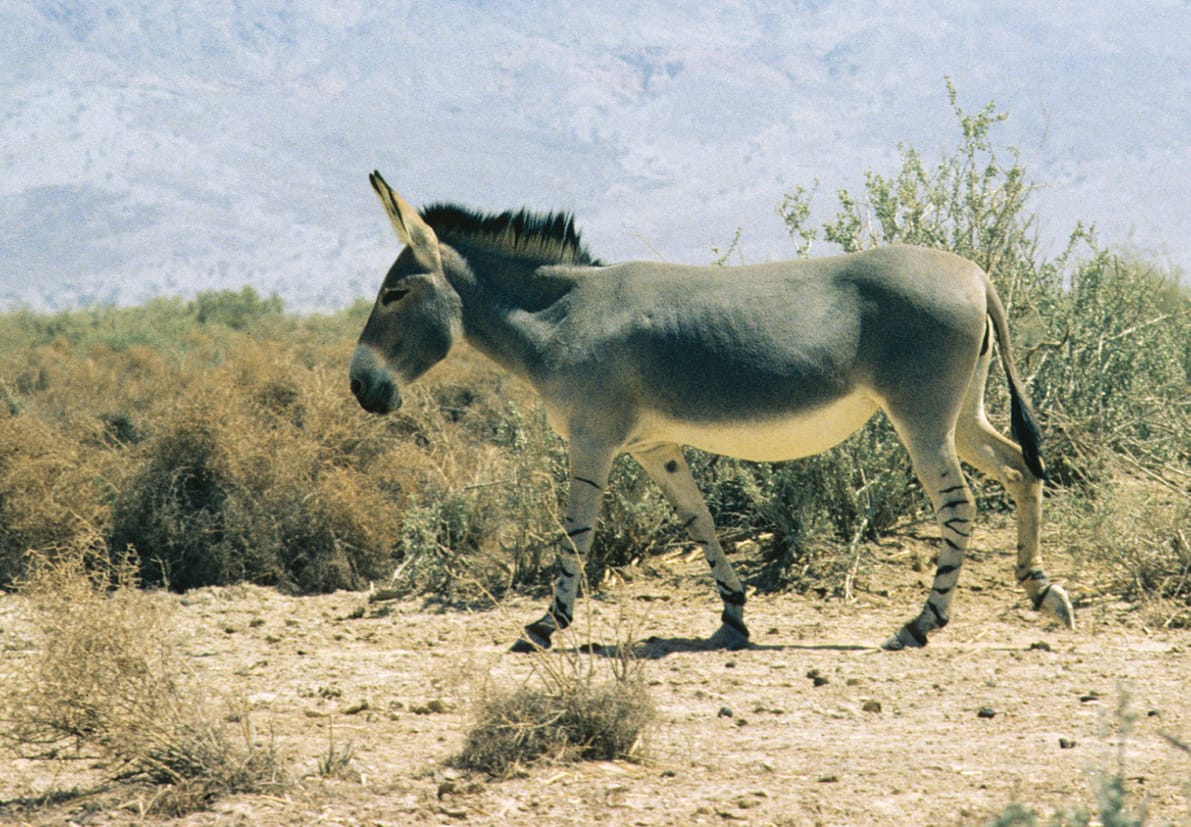
Somali Wild Asses are native to the Horn of Africa, particularly Somalia, Djibouti, and Ethiopia. Known for their striking leg stripes reminiscent of zebras, they are medium-sized, standing about 1.2–1.4 meters at the shoulder and weighing 180–230 kilograms. Their short, sandy-gray coat, large ears, and nimble hooves make them perfectly adapted to rocky, arid habitats. Somali Wild Asses are highly agile and can travel long distances to find water and forage.
These donkeys graze on desert grasses and browse on shrubs. Herds are small and typically led by a dominant male, who defends his territory and breeding rights. Somali Wild Asses communicate through brays, snorts, and body language. Reproduction occurs once a year, with foals growing quickly to withstand desert conditions. Predation from hyenas and large birds of prey is a natural threat, and adult donkeys are vigilant and cautious.
Ecologically, Somali Wild Asses prevent overgrowth of sparse vegetation, disperse seeds, and provide prey for native predators. Conservation efforts include establishing protected areas, breeding programs, and community education to prevent illegal hunting. This species highlights the delicate balance of desert ecosystems and the critical role donkeys play within them.
4. American Mammoth Jackstock
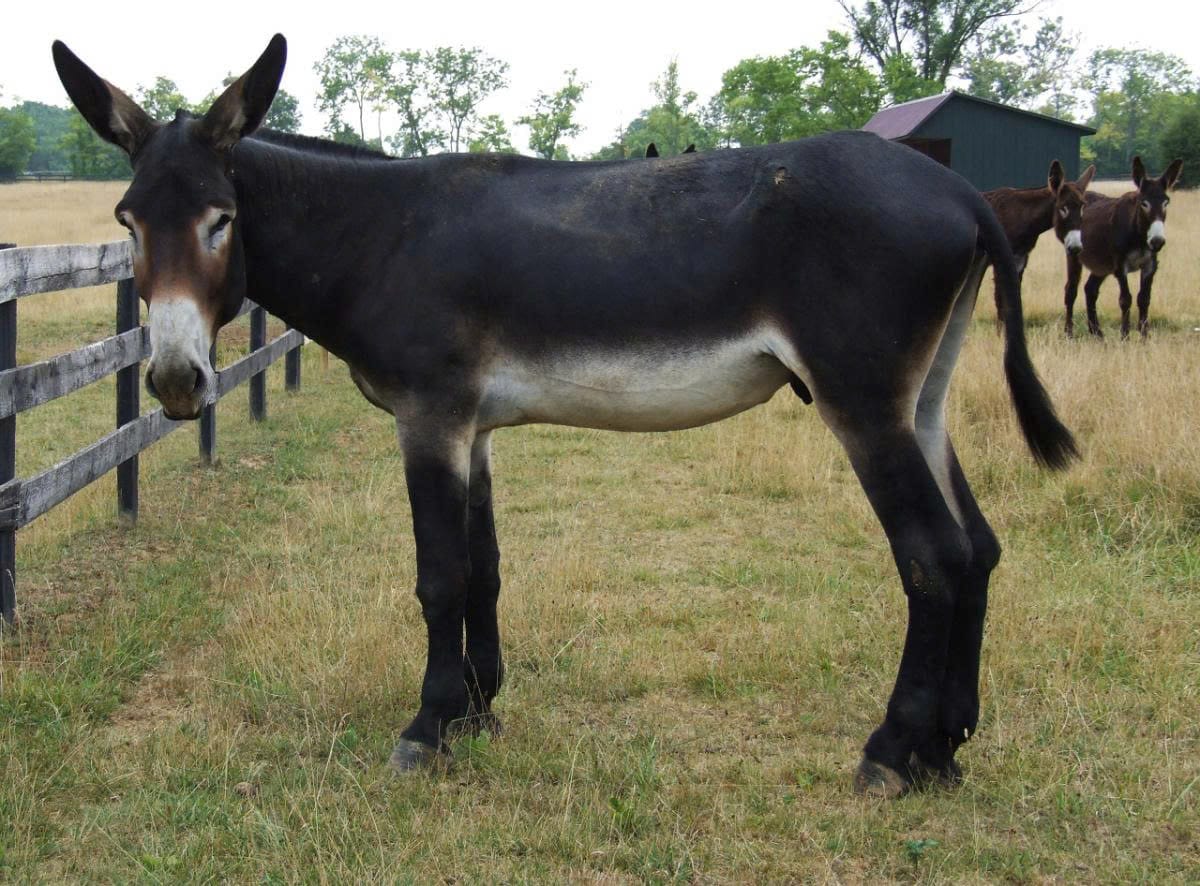
The American Mammoth Jackstock is a large, domestic breed developed in the United States for draft and farm work. Bred from imported European donkeys, this breed is known for its height, strength, and endurance. Adult males can weigh over 450 kilograms, with some individuals reaching up to 570 kilograms. Their coat varies from gray to brown, and some have dorsal stripes or cross markings. Long ears, strong hooves, and muscular build make them ideal for carrying heavy loads and plowing.
American Mammoth Jackstocks are herbivorous, thriving on hay, grasses, and supplemental grains. Socially, they are gentle and intelligent, forming strong bonds with humans and other livestock. Breeding is carefully managed to maintain size and health standards. Foals grow rapidly and inherit traits that make them strong work animals. These donkeys are docile, making them ideal for riding, driving, and farm tasks.
Ecologically, while domestic, American Mammoth Jackstocks can impact pasture ecosystems by grazing and soil compaction. They are an example of human-directed selection, showcasing how donkeys have adapted to fulfill agricultural and draft roles. Their care and breeding reflect centuries of selective domestication aimed at producing reliable, resilient working donkeys.
5. Andalusian Donkey (Iberian Donkey)
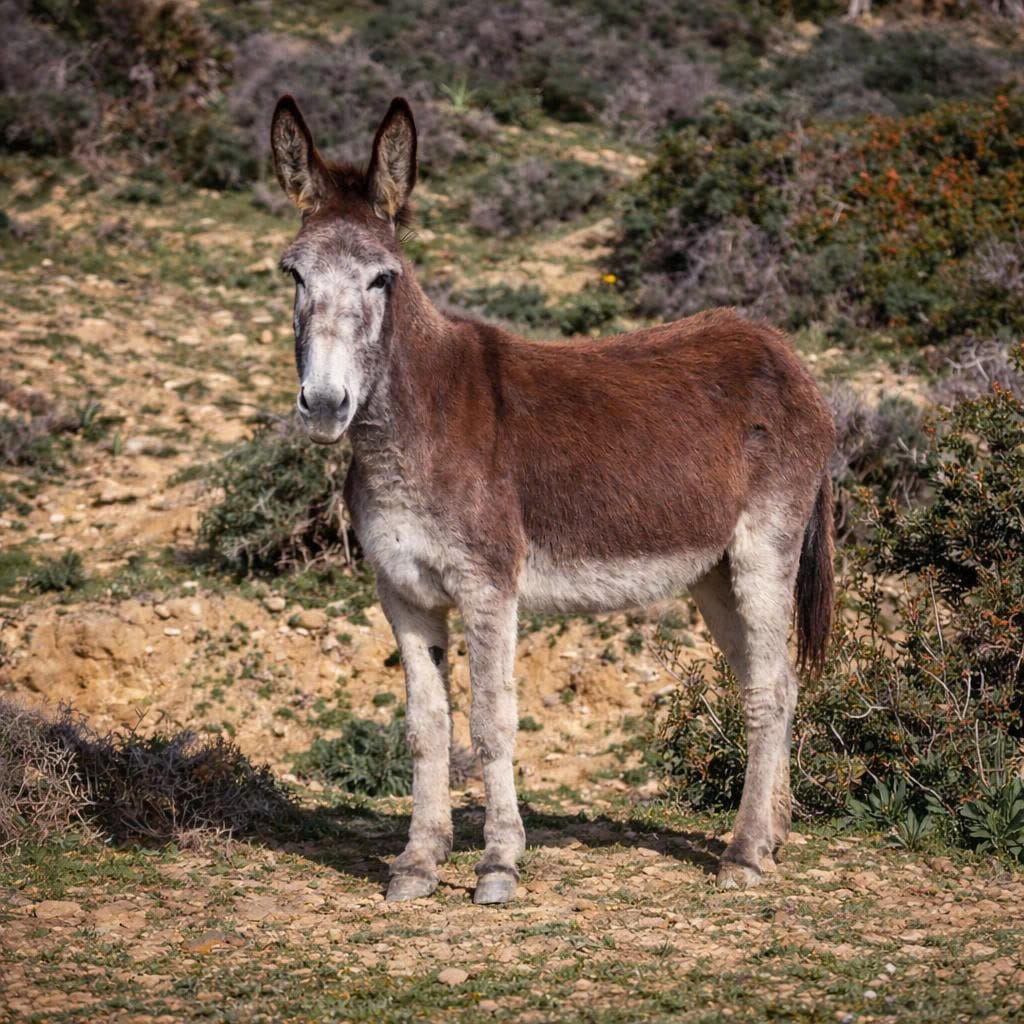
The Andalusian Donkey, also known as the Iberian Donkey, is a traditional breed from southern Spain. Medium to large in size, adults weigh between 250–450 kilograms. Their coats are typically gray, with some individuals showing darker shading on the dorsal stripe and legs. Andalusian donkeys have long, expressive ears, strong legs, and a calm temperament. Historically, they were used for transport, farm work, and breeding mules.
These donkeys graze on Mediterranean grasses, shrubs, and forage crops. Herds are usually small, with females leading social groups. Andalusian donkeys are known for their intelligence, endurance, and trainability. Breeding is seasonal, and foals are nurtured to grow quickly and develop strong hooves and musculature for work. Historically, Andalusian donkeys played a crucial role in agriculture, transportation, and mule production.
Ecologically, they are well-adapted to hilly and dry terrains, capable of grazing on sparse vegetation without overburdening local ecosystems. Conservation programs aim to protect this traditional Spanish breed from declining numbers and genetic dilution, maintaining their cultural and agricultural heritage. The Andalusian Donkey exemplifies the resilience and versatility of types of donkey adapted to regional climates and human needs.
6. Asinara Donkey
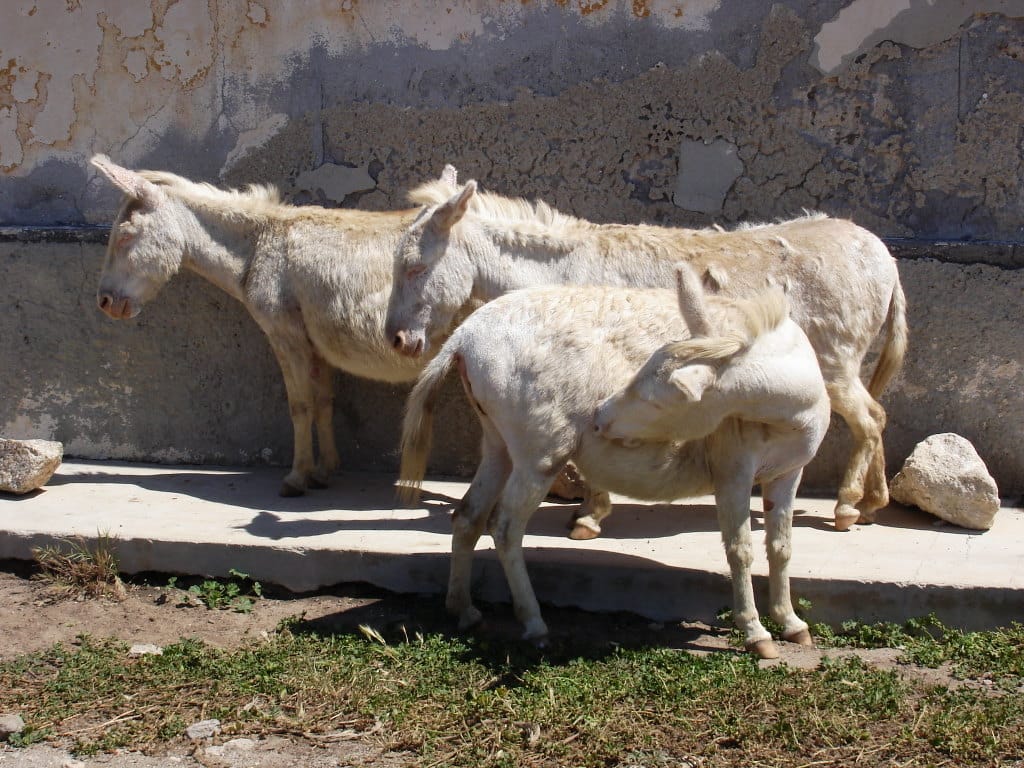
The Asinara Donkey is a rare, all-white breed native to the Italian island of Asinara in Sardinia. Adults typically weigh 250–350 kilograms and stand about 1.2–1.4 meters tall at the shoulder. Their striking white coat and pinkish skin make them instantly recognizable. Asinara Donkeys are known for their calm temperament, resilience, and adaptability to harsh, rocky island terrain.
These donkeys are herbivorous, grazing on grasses, shrubs, and herbs available on the island. Herds are small and matriarchal, with females leading and protecting foals. Reproduction is seasonal, and foals are born with short white fur that thickens over time. The Asinara Donkey has historically been used for agricultural labor and transport, though today they are largely protected as part of conservation programs. Their presence also supports local ecosystems by preventing overgrowth and maintaining plant diversity.
7. Baudet du Poitou (Poitou Donkey)
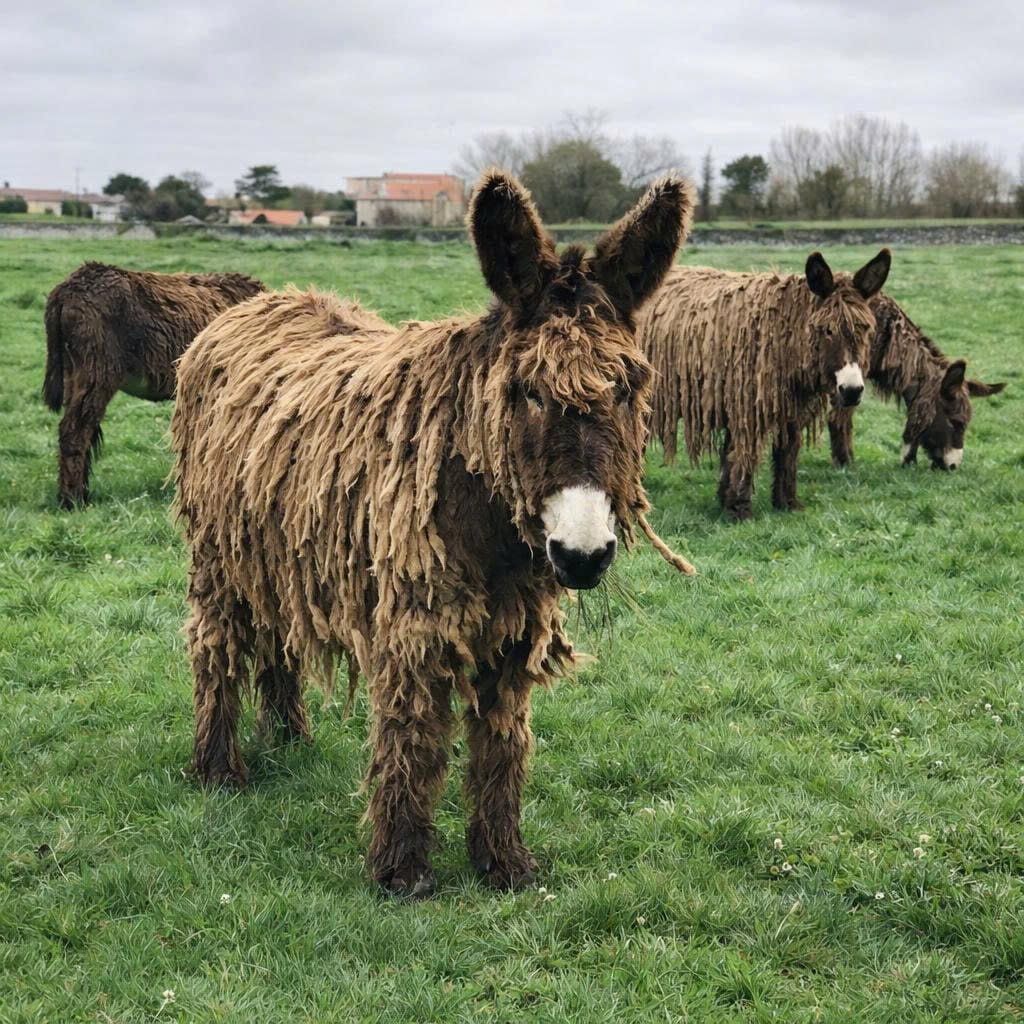
The Poitou Donkey is a large, historic French breed, famous for its shaggy coat and distinctive appearance. Adult males can weigh up to 450 kilograms. Their long, thick fur was originally suited to damp French climates, protecting them from cold and rain. Poitou Donkeys have long ears and a calm, gentle temperament, making them ideal for draft work and mule breeding.
These donkeys feed on grasses, hay, and supplemental forage. Socially, they live in small herds, forming strong bonds with other donkeys and humans. Breeding produces foals that inherit the breed’s robust size and long coat. Today, conservation efforts focus on maintaining genetic purity and promoting awareness, as Poitou Donkeys were once at risk of extinction. They exemplify how human management and natural adaptation shaped a unique donkey breed.
8. Catalan Donkey
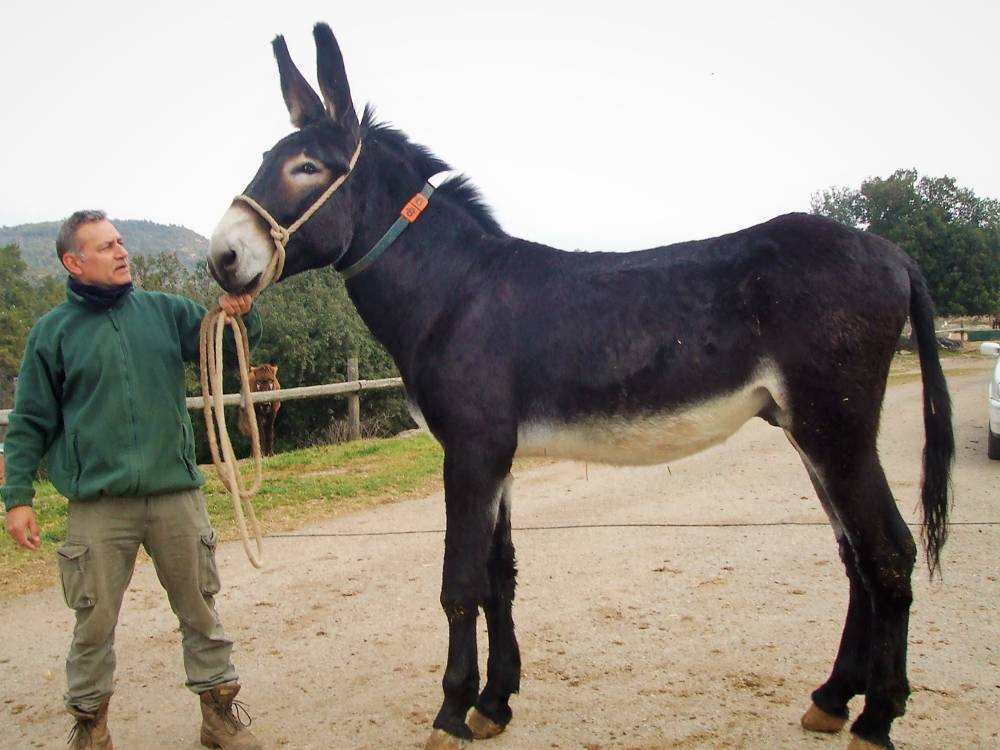
The Catalan Donkey originates from the Catalonia region of Spain and is considered one of the largest Iberian breeds. Adult males can reach 450 kilograms, while females are slightly smaller. They typically have a gray coat with darker shading on the dorsal stripe and legs, and their long ears and muscular build make them suitable for draft work and mule breeding.
These donkeys graze on Mediterranean pastures, consuming grasses, herbs, and shrubs. Herds are matriarchal, with strong social bonds that aid in protection and reproduction. Catalan Donkeys are known for their strength, endurance, and intelligence, thriving in hilly and dry terrains. Conservation programs aim to preserve this historic breed while maintaining traditional uses in agriculture and transport.
9. Cypriot Donkey (Cyprus Donkey)
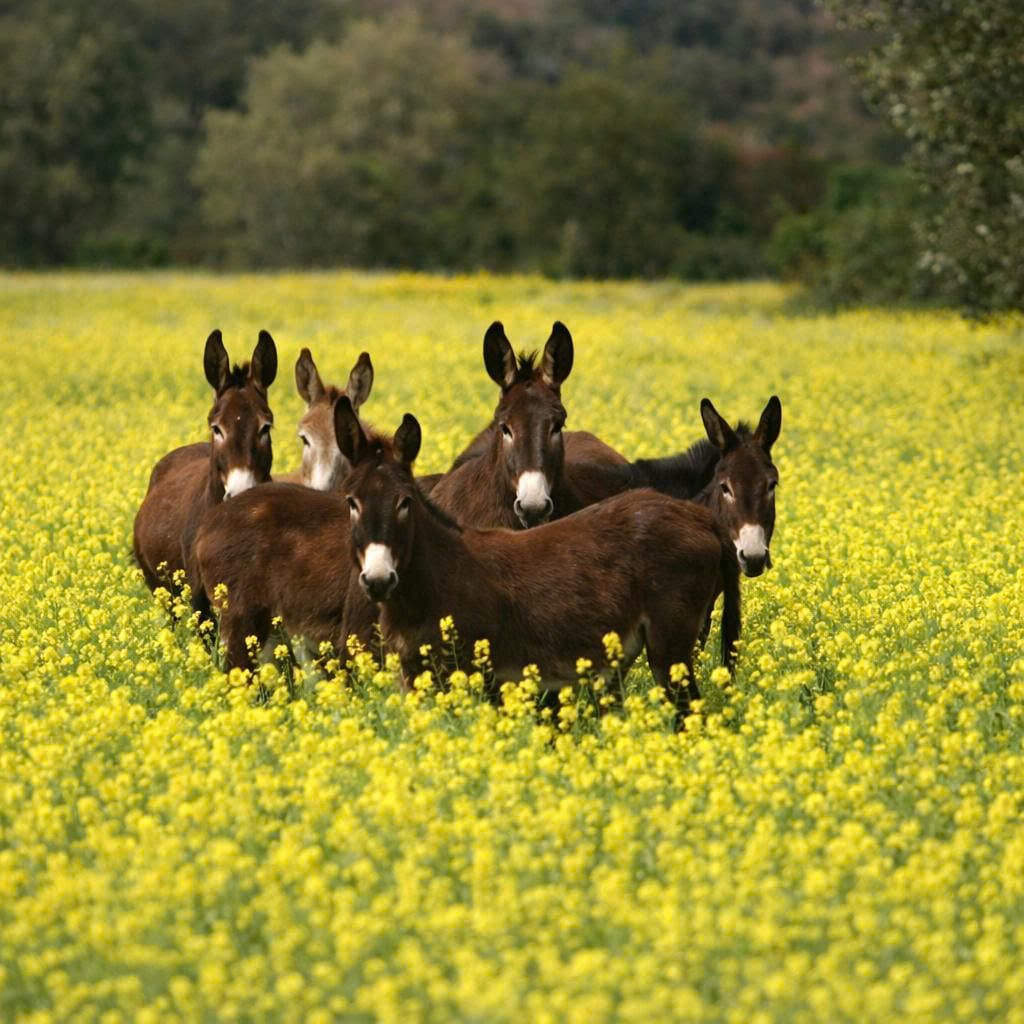
The Cypriot Donkey is native to the Mediterranean island of Cyprus. Typically gray or brown, these donkeys have a compact, muscular build, standing around 1.2 meters tall and weighing 200–300 kilograms. They are highly adaptable, able to forage on rocky and arid terrains while enduring the island’s hot summers and mild winters.
These donkeys live in small herds and are used for transport, agriculture, and occasionally tourism. Their diet includes grasses, shrubs, and cultivated fodder. Cypriot Donkeys are social and intelligent, displaying strong bonds with their herd and caretakers. Conservation efforts focus on maintaining the breed population, protecting against hybridization, and supporting sustainable farming practices where these donkeys are integral.
10. Majorcan Donkey
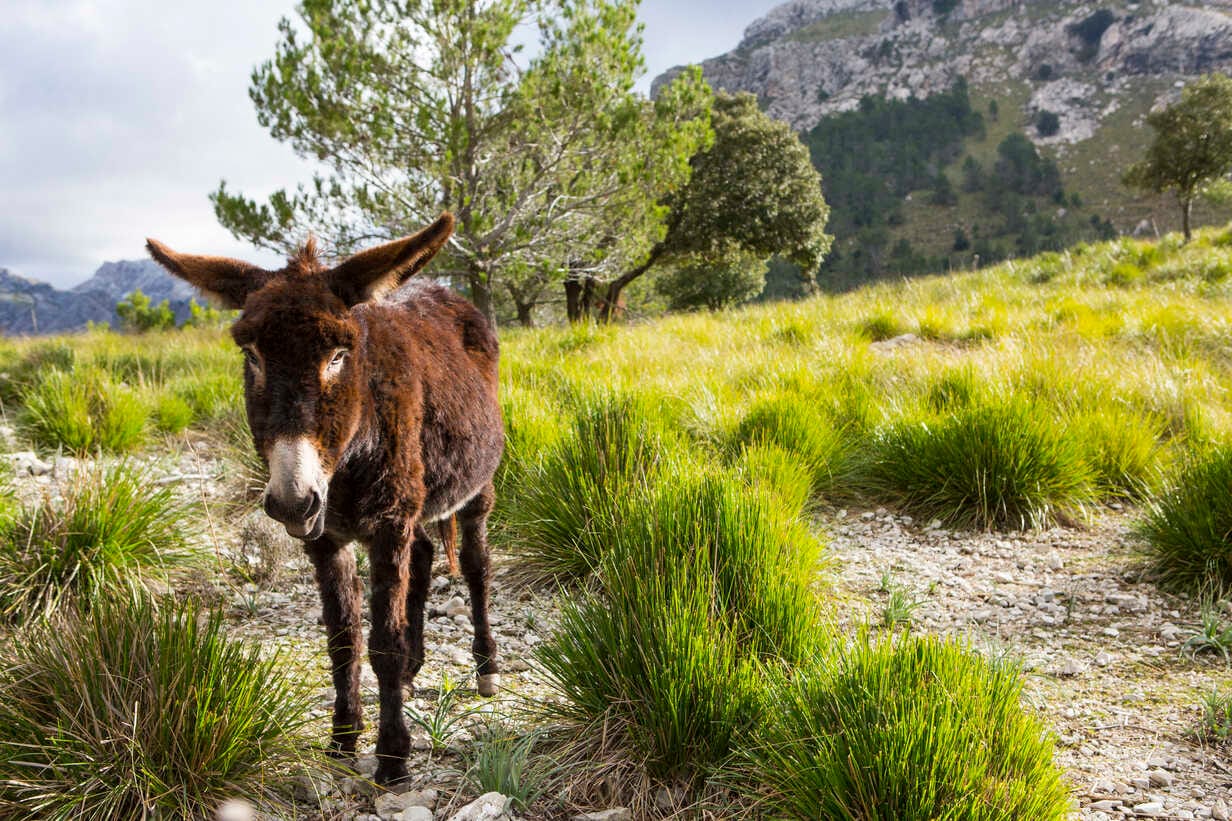
The Majorcan Donkey, also called the Balearic Donkey, is a medium-sized breed native to Majorca, Spain. Adults weigh 250–350 kilograms and have a gray or black coat with a characteristic dorsal stripe. Long ears, sturdy hooves, and muscular legs allow them to navigate mountainous terrains. Historically, they were used for agricultural labor, water transport, and mule breeding.
Majorcan Donkeys graze on island pastures, shrubs, and herbs. Herds are small and cooperative, led by dominant females. Breeding is seasonal, and foals mature quickly to work in traditional agricultural systems. Conservation programs protect this breed from declining populations, preserving its genetic integrity and cultural heritage. The Majorcan Donkey is a prime example of a breed shaped by island ecology and human utility.
11. Martina Franca Donkey
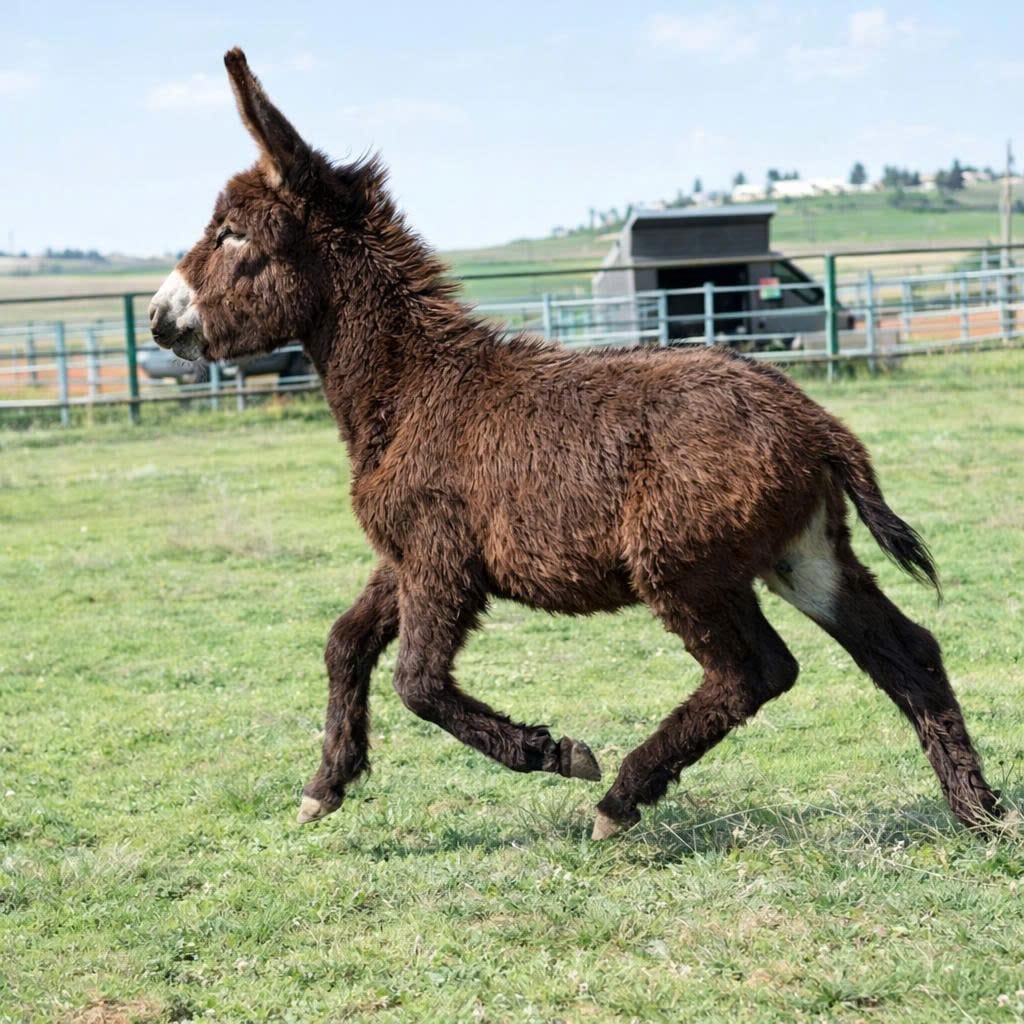
The Martina Franca Donkey is a large Italian breed originating from Puglia. Adults typically weigh 350–450 kilograms. They have a gray coat with darker points and a gentle, docile temperament. These donkeys were traditionally used for draft work, transport, and mule production. Their long ears and muscular body make them strong and versatile work animals.
Diet consists of grasses, hay, and supplements as needed. Herds are matriarchal and socially cohesive. Breeding focuses on preserving size, strength, and temperament traits. Today, conservation programs ensure the Martina Franca Donkey remains a thriving breed, highlighting the balance between human use and ecological adaptation.
12. Miniature Mediterranean Donkey
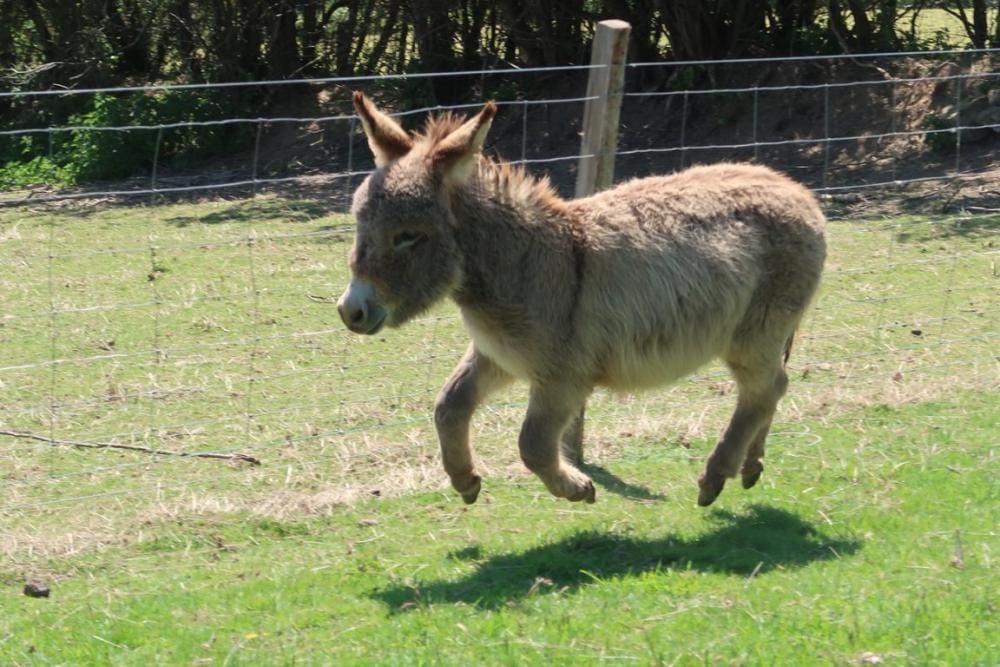
Miniature Mediterranean Donkeys are small breeds found throughout Mediterranean islands such as Sicily and Sardinia. Adults weigh 100–150 kilograms, standing about 90–110 cm at the shoulder. Their coats range from gray to brown, often with darker dorsal stripes. Despite their small size, they are hardy, intelligent, and highly social.
These donkeys graze on grasses, shrubs, and herbs, forming close-knit herds. They are used for companion purposes, light farm work, and tourism. Breeding emphasizes size, health, and temperament. Their diminutive stature makes them popular among families and donkey enthusiasts, while their natural hardiness ensures survival in varied Mediterranean environments.
13. Provence Donkey
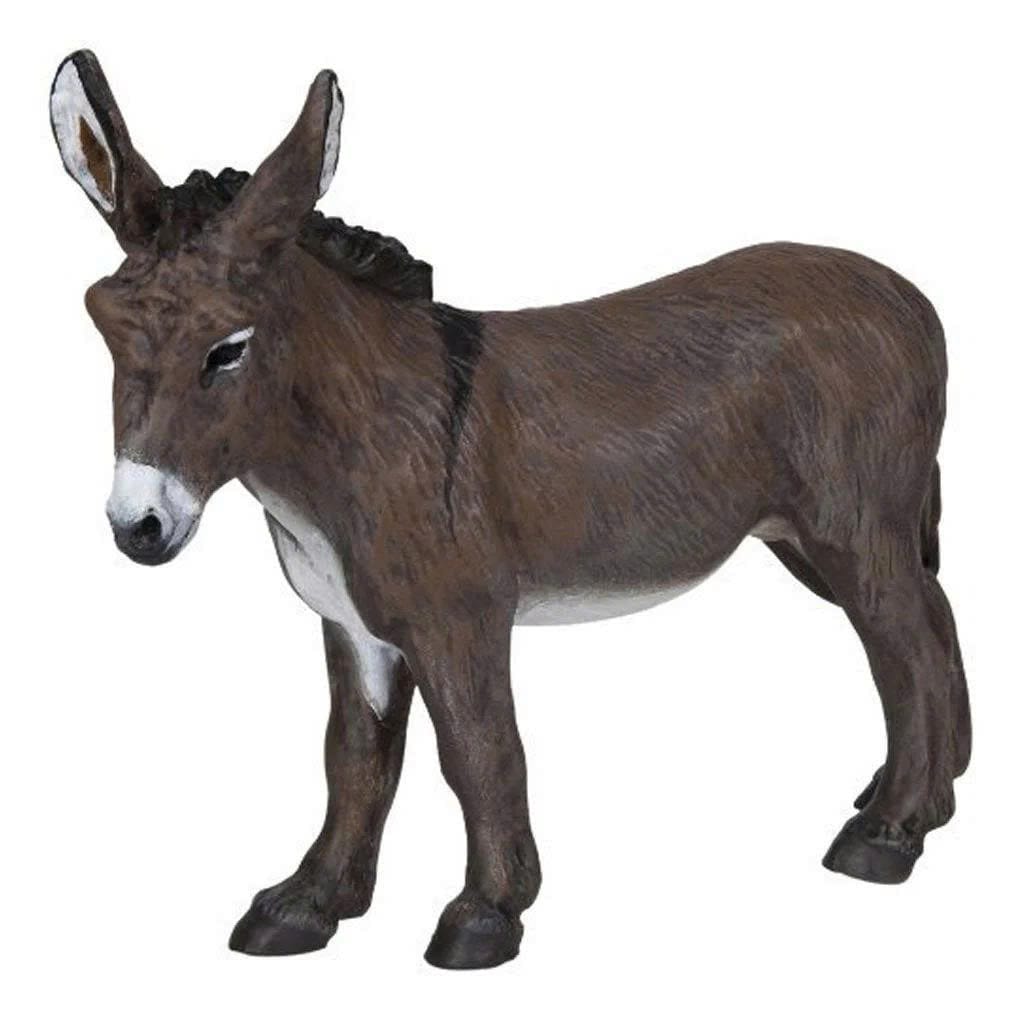
The Provence Donkey is a traditional French breed from the Provence region. Adults weigh 250–300 kilograms, with gray or silver coats, a dorsal stripe, and dark points on legs and muzzle. They are known for strength, intelligence, and calm temperament, historically used for transport, farm work, and mule breeding.
Diet includes grasses, hay, and herbs. Herds are cooperative, with strong social bonds. Foals mature under adult guidance, inheriting strength and social skills. Conservation programs protect population numbers and genetic purity. The Provence Donkey exemplifies how regional climates and human activity influence breed development, balancing functionality and adaptation.
14. Sardinian Donkey
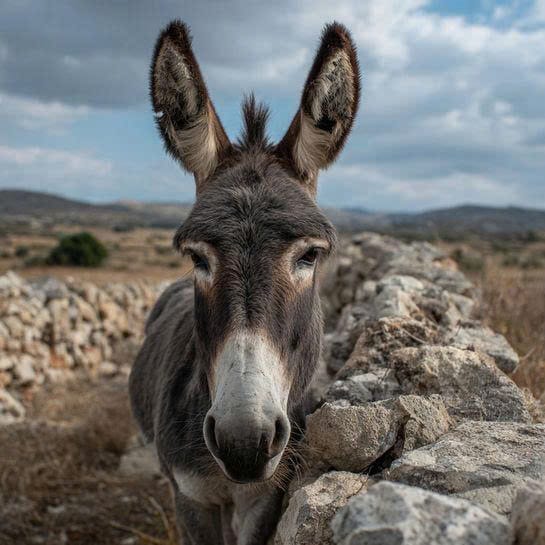
The Sardinian Donkey is native to Sardinia, Italy, and is small to medium-sized, weighing 150–250 kilograms. Typically gray or brown, it has long ears and a strong build. These donkeys were traditionally used for carrying loads, plowing fields, and producing mules.
They graze on Mediterranean vegetation, including grasses, shrubs, and herbs. Herds are small and matriarchal, ensuring social cohesion. Breeding emphasizes resilience, adaptability, and temperament. Conservation efforts aim to prevent population decline and preserve this regional heritage breed, maintaining both agricultural utility and biodiversity.
15. Zamorano‑Leonés Donkey
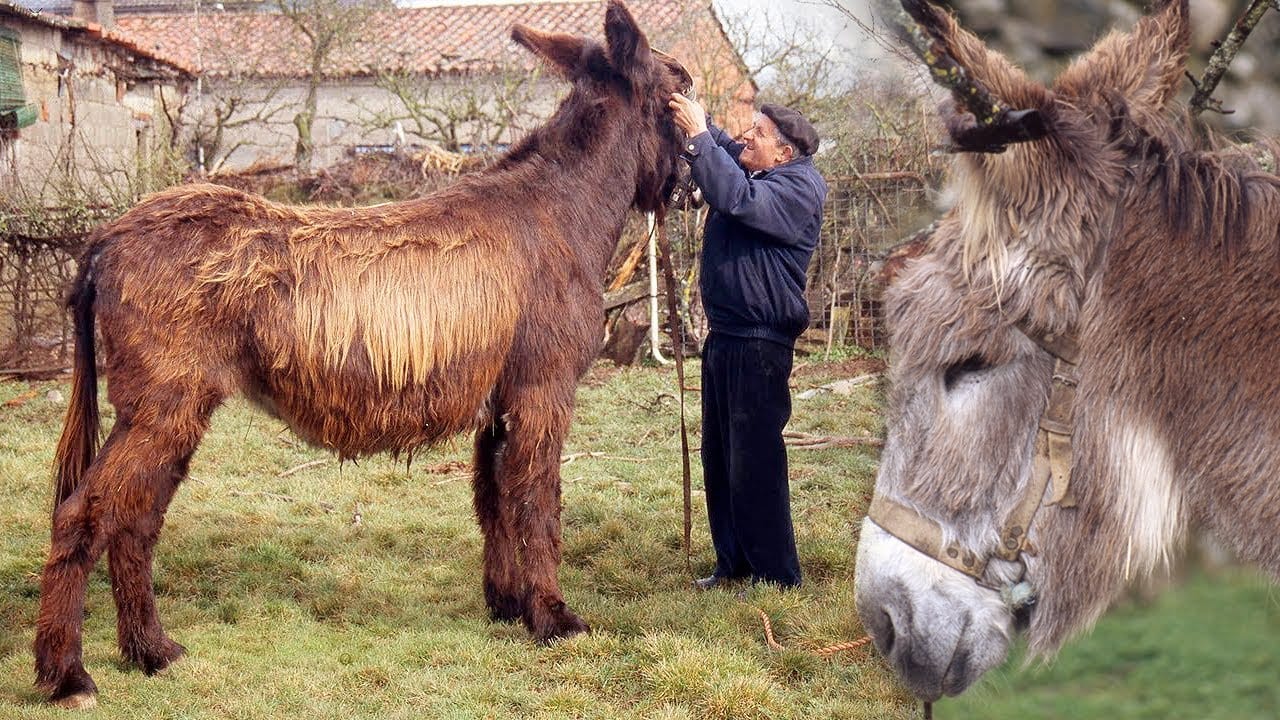
The Zamorano-Leonés Donkey is a large Spanish breed from Zamora and León provinces. Adults can weigh 400–450 kilograms, with a gray coat and darker points. Known for strength and endurance, these donkeys were historically used for draft work and mule breeding. They have long ears, muscular bodies, and strong hooves suited for rugged terrain.
They graze on pastures and shrubs, forming small, organized herds. Foals grow under the guidance of adults, inheriting strength and social skills. Conservation programs focus on maintaining genetic integrity and population size, preserving the breed’s historical and agricultural significance. The Zamorano-Leonés Donkey is a prime example of how selective breeding and environment shape robust working donkeys.
16. Abkhazskaya Donkey
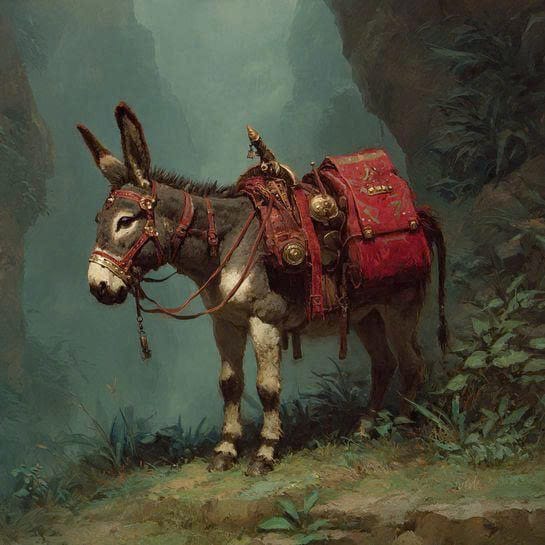
The Abkhazskaya Donkey is a rare and historic breed native to the Abkhazia region in the Caucasus. Known for its adaptability to mountainous terrain and cold climates, this donkey has a sturdy body, muscular legs, and a dense coat that provides insulation during harsh winters. Adults typically weigh 250–350 kilograms, with a height of 1.2–1.4 meters at the shoulder. Coat colors vary from gray to brown, often with a faint dorsal stripe and darker extremities. Its long ears and keen eyesight help it navigate rugged landscapes and detect potential predators.
Abkhazskaya Donkeys are primarily herbivorous, grazing on mountain grasses, herbs, shrubs, and occasionally tree leaves. Herds usually consist of 5–15 individuals, often led by a dominant female who guides foraging and ensures social cohesion. Social bonds are strong, and these donkeys communicate through braying, body postures, and occasional physical contact. They are highly intelligent and can remember water sources, safe resting areas, and familiar paths through steep valleys.
Reproduction occurs seasonally, with gestation lasting about 11–12 months. Foals are born with soft, thick coats that gradually change as they mature. Young donkeys learn foraging and survival behaviors by observing adults, which is critical in challenging mountainous environments. Humans historically used this breed for transporting goods, plowing fields, and breeding mules due to their strength and endurance. Today, conservation programs aim to preserve the breed’s genetics, protect wild habitats, and maintain traditional knowledge regarding care and breeding. The Abkhazskaya Donkey exemplifies the resilience and intelligence of donkeys adapted to extreme terrains.
17. Abyssinian Donkey
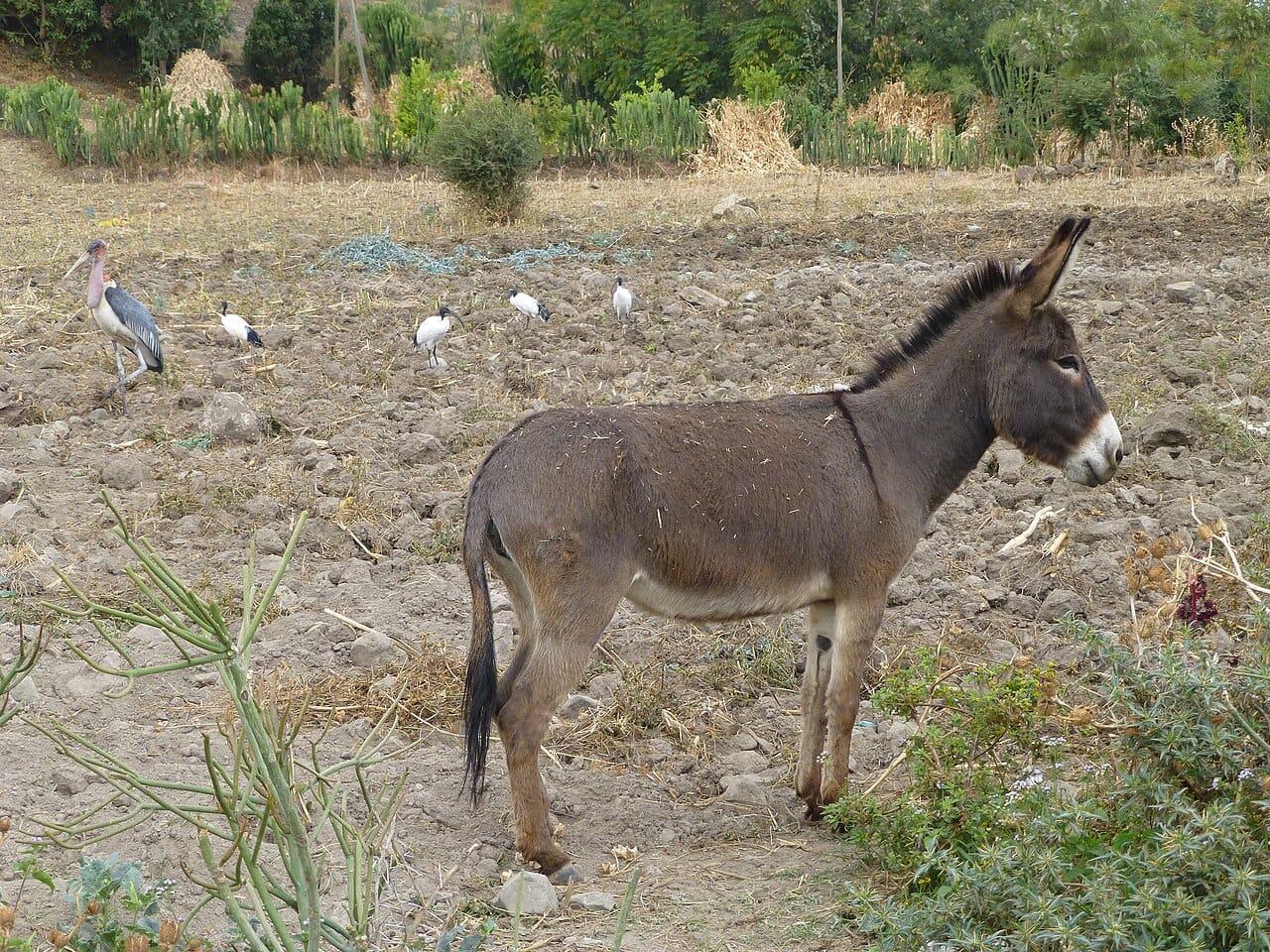
The Abyssinian Donkey originates from Ethiopia and is one of the oldest African domestic breeds. These donkeys are medium-sized, weighing 180–250 kilograms, with a height of approximately 1.2 meters at the shoulder. Their short, coarse coat ranges from gray to light brown, with darker markings along the back and legs. Abyssinian Donkeys have long, expressive ears, strong hooves, and a muscular build suitable for long-distance travel over rugged terrain.
Abyssinian Donkeys are herbivorous and feed on grasses, shrubs, and cultivated fodder. They are highly social, forming small herds of 5–10 individuals. Herds are led by dominant females, and males often establish territories to secure breeding rights. Communication occurs through vocalizations, body language, and ear movements. These donkeys are extremely resilient to drought and high temperatures, reflecting adaptation to Ethiopia’s arid and semi-arid climates.
Breeding is seasonal, with foals born after a gestation period of 11–12 months. Young donkeys learn critical survival behaviors such as foraging, predator avoidance, and navigation through observation and guidance from adults. Historically, Abyssinian Donkeys were used for transport, plowing, and carrying water in mountainous villages. Their adaptability, intelligence, and resilience make them valuable not only as working animals but also for cultural heritage. Conservation efforts focus on preventing population decline, maintaining genetic diversity, and promoting sustainable use within local communities.
18. Algerian Donkey
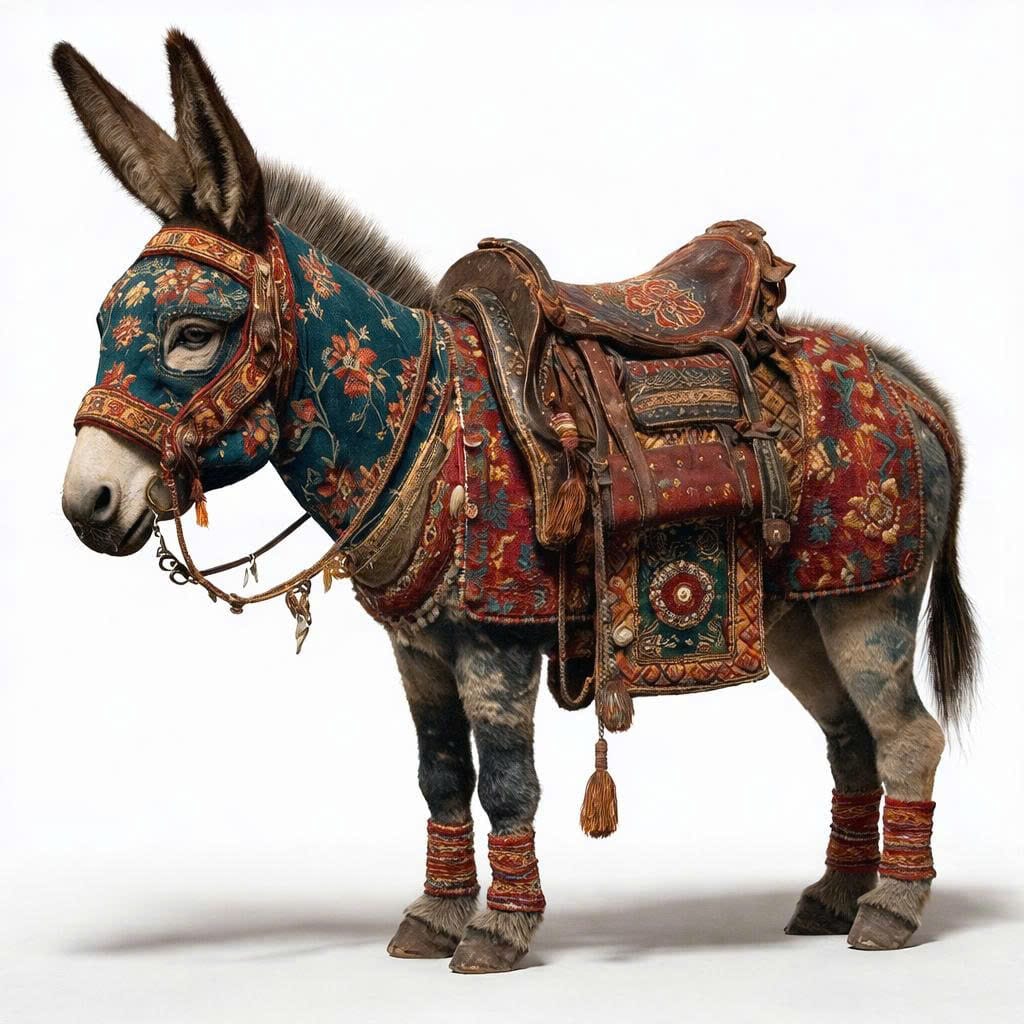
The Algerian Donkey is a medium to large-sized breed native to Algeria, North Africa. Adults weigh between 200–300 kilograms, standing about 1.2–1.3 meters at the shoulder. The coat is usually gray or brown, with darker shading along the dorsal stripe and legs. This breed has long, sensitive ears, muscular limbs, and strong hooves, all of which make it exceptionally suited for hot, dry climates and rocky terrain. Algerian Donkeys are known for their calm temperament, endurance, and ability to carry heavy loads over long distances.
Diet consists of desert grasses, shrubs, and cultivated forage. Herds are small and tightly knit, with strong social hierarchies. Communication involves braying, snorts, and visual signals such as ear and tail positioning. Reproduction occurs seasonally, with foals born after an 11–12 month gestation. Young donkeys are nurtured in the herd, learning foraging techniques and social behaviors critical for survival in arid environments.
Historically, Algerian Donkeys were vital for agriculture, transportation, and trade, particularly in rural communities. They were also used to transport goods through mountainous terrain. Ecologically, they contribute to maintaining sparse vegetation and dispersing seeds, which supports local biodiversity. Conservation efforts focus on preserving genetic diversity, preventing hybridization, and ensuring sustainable management of both wild and domestic populations. The Algerian Donkey illustrates the resilience and versatility of donkeys adapted to harsh North African ecosystems.
19. Anatolian Donkey
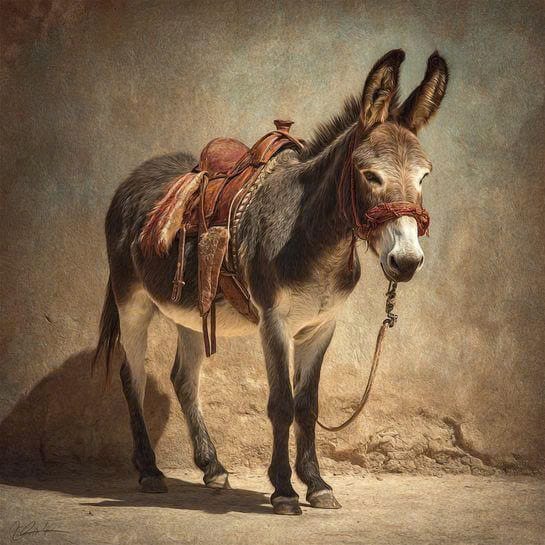
The Anatolian Donkey hails from central and eastern Turkey and is a staple in traditional farming communities. Adults weigh between 200–350 kilograms, standing around 1.2–1.4 meters at the shoulder. Their coat is usually gray, with darker dorsal stripes and leg markings. Long ears, muscular legs, and durable hooves make them perfectly adapted to mountainous and semi-arid Turkish landscapes.
Anatolian Donkeys are herbivorous, feeding on grasses, shrubs, and crop residues. Herds are small and socially cohesive, with females often leading and males patrolling territories. Communication includes vocalizations and visual signals. Reproduction is seasonal, and foals are nurtured by the herd to quickly acquire survival skills, including grazing efficiently and avoiding predators.
These donkeys have historically been used for transport, agricultural labor, and mule breeding. Ecologically, they support local ecosystems by grazing on sparse vegetation and preventing overgrowth. Conservation efforts include genetic monitoring, breeding programs, and protecting traditional grazing areas. Anatolian Donkeys exemplify the combination of natural adaptation and human use in maintaining hardy, resilient working animals.
20. Austro‑Hungarian Donkey
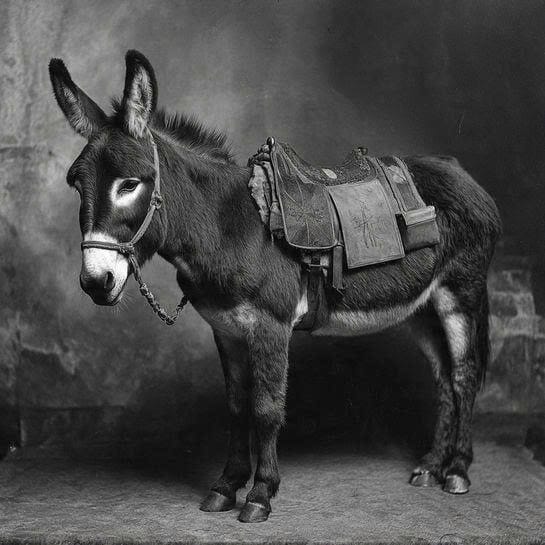
The Austro-Hungarian Donkey is a historical breed from Central Europe, traditionally used for agriculture, transport, and as a mule progenitor. Adults weigh 250–350 kilograms, with a height of 1.2–1.3 meters. Coat colors vary from gray to brown, often with a dark dorsal stripe. Muscular bodies, long ears, and strong hooves make this donkey ideal for hilly terrain and cold winters.
Diet includes grasses, hay, and herbs from pasturelands. Herds are cohesive and socially structured, often with a dominant female guiding foraging and movement. Communication is achieved through braying, body language, and ear movements. Breeding is seasonal, producing foals that mature quickly and inherit strength and resilience. Historically, these donkeys were critical to farming communities in Austria-Hungary, performing labor-intensive tasks while remaining low-maintenance.
Today, conservation programs protect the breed, emphasizing genetic diversity and sustainable management. Austro-Hungarian Donkeys reflect the historical interplay between humans and domesticated donkeys, highlighting adaptation to diverse European climates and terrains.
21. British White and Grey Donkey
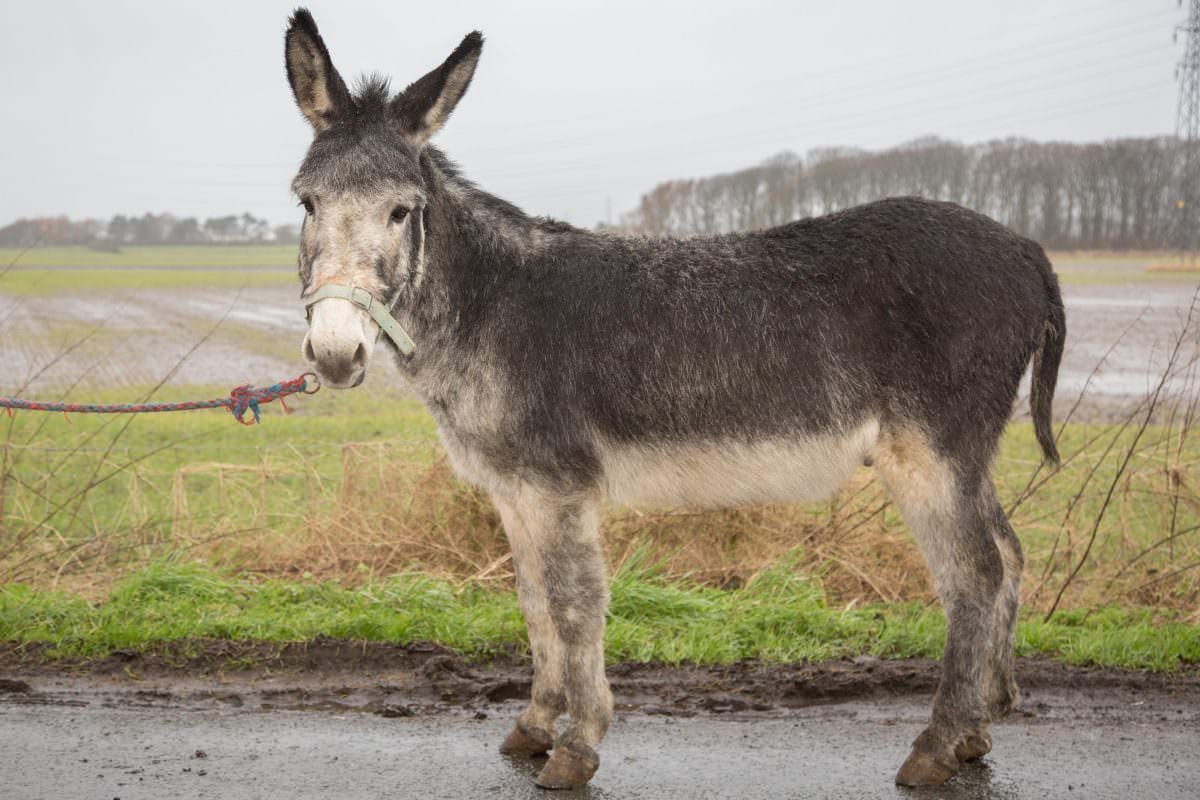
The British White and Grey Donkey is a traditional UK breed known for its calm temperament, intelligence, and hardiness. Adults weigh 200–300 kilograms, standing 1.2–1.3 meters tall. Coat colors range from light gray to white, sometimes with darker points on the legs and dorsal stripe. These donkeys have long, expressive ears, strong limbs, and sturdy hooves suitable for the damp and uneven British countryside.
Diet consists of grasses, hay, and herbs. Herds are social, with strong bonds maintained through grooming and group cohesion. Reproduction is seasonal, with foals developing quickly to handle farm work or light transport duties. These donkeys were historically used for carrying loads, agricultural labor, and riding. Conservation programs focus on preserving this heritage breed and preventing hybridization with other donkey types. They exemplify adaptability to temperate European climates and compatibility with humans.
22. English/Irish Donkey
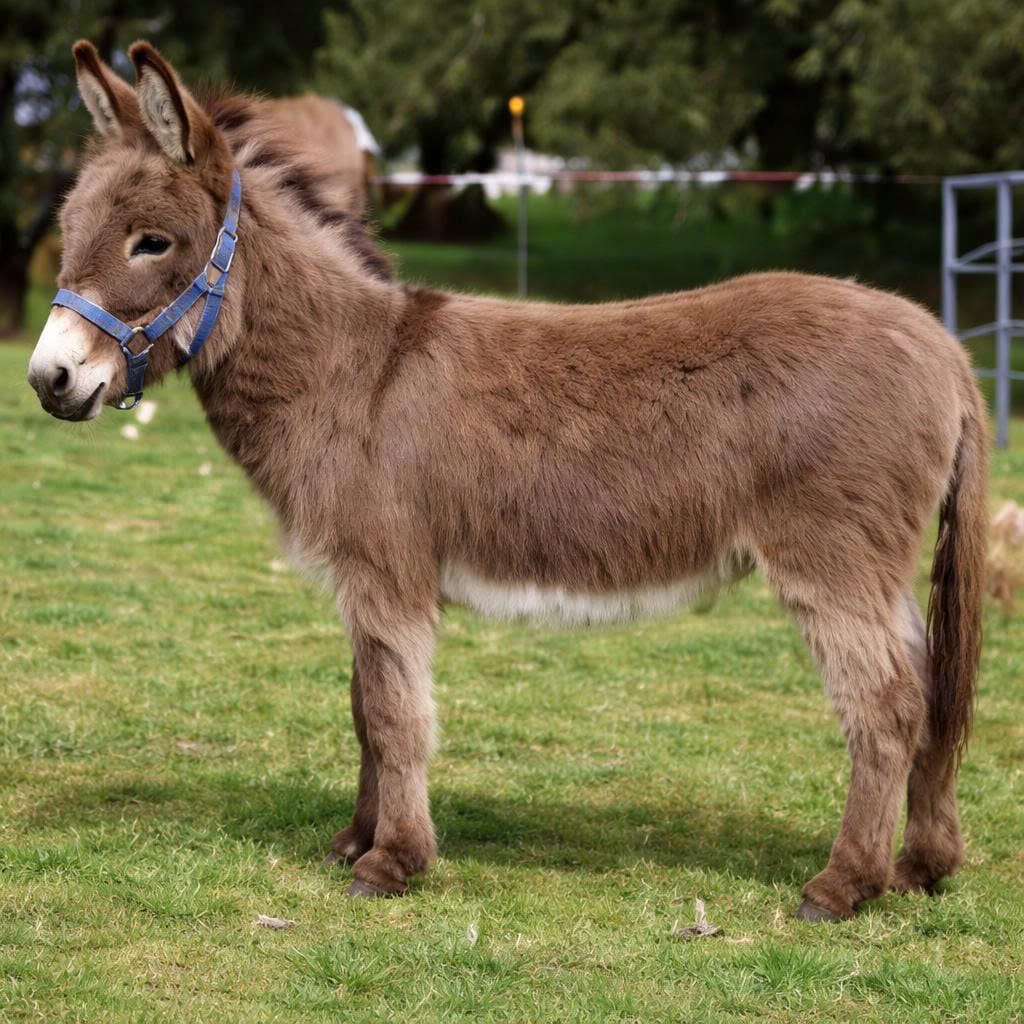
The English/Irish Donkey is a medium-sized breed native to the British Isles. Adults weigh 180–280 kilograms, standing about 1.2 meters at the shoulder. The coat is typically gray, brown, or black, with some exhibiting dorsal stripes. Long ears, strong hooves, and muscular legs allow them to navigate hilly landscapes and pastures. Known for their gentle temperament, these donkeys are intelligent, trainable, and social.
They graze on grasses, hay, and herbs. Herds are cohesive and matriarchal, with dominant females guiding group behavior. Communication is through braying and body signals. Foals mature under herd guidance, learning essential survival and social skills. Historically, English and Irish donkeys were used for farm work, transport, and mule production. Conservation programs aim to maintain purebred populations and protect this breed’s historical and agricultural value.
23. Large Standard Donkey
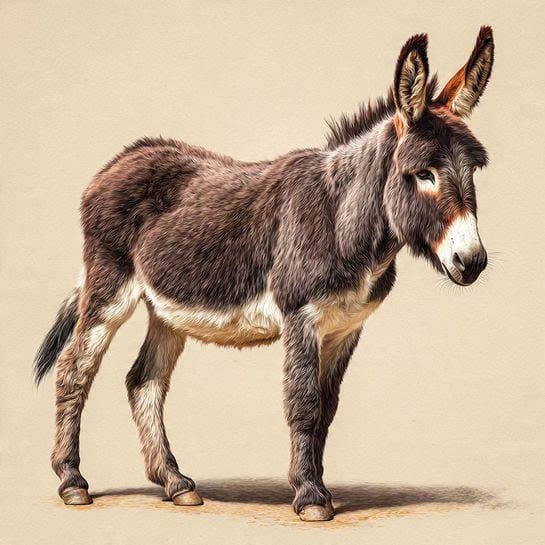
The Large Standard Donkey is a general domestic type characterized by height, strength, and endurance. Adults weigh 350–450 kilograms, with a height of 1.3–1.4 meters. Coat colors include gray, brown, and black, often with darker dorsal stripes. These donkeys are versatile, used for riding, driving, and farm labor. They have long ears, strong hooves, and muscular bodies, enabling them to perform demanding tasks while remaining hardy and low-maintenance.
Diet consists of pasture grasses, hay, and supplemental grains. Herds are social, forming strong bonds and maintaining clear hierarchies. Reproduction produces robust foals capable of working at a young age. Large Standard Donkeys are widely distributed due to their adaptability and usefulness in agriculture. Conservation focuses on maintaining health, strength, and purebred status to ensure continued utility.
24. Standard Donkey (Generic)
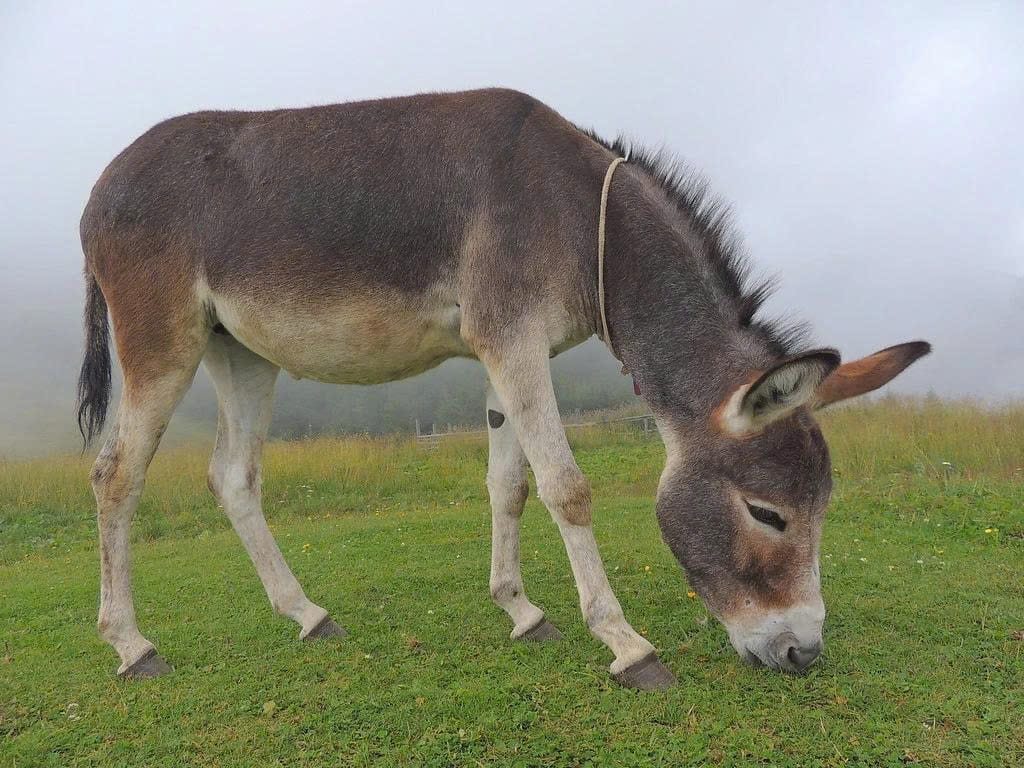
The Standard Donkey is a broad domestic type, common worldwide. Adults weigh 250–350 kilograms, with a height of 1.2–1.3 meters. Coat colors vary widely. Standard Donkeys are hardy, intelligent, and versatile, used for farm work, transport, and companionship. They possess long ears, sturdy hooves, and muscular builds suitable for multiple terrains and climates.
They feed on grasses, hay, and herbs. Herds are social, with females often leading groups. Foals develop quickly, learning grazing, social interaction, and basic survival skills. Standard Donkeys are crucial to smallholder farmers globally, representing the typical domestic donkey archetype. Conservation focuses on health management, genetic diversity, and sustainable use.
25. Thuringian Forest Donkey (Thüringer Waldesel)
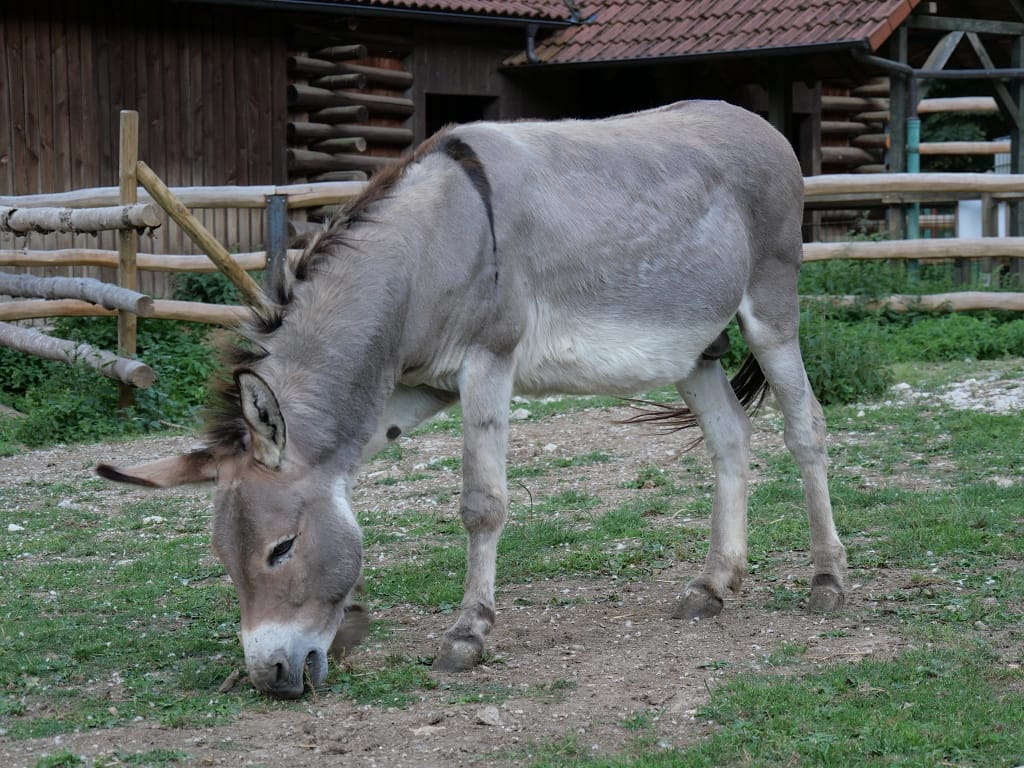
The Thuringian Forest Donkey, native to central Germany, is a medium-sized breed adapted to forested and mountainous terrain. Adults weigh 200–300 kilograms and stand 1.2–1.3 meters tall. Coat colors range from gray to brown, often with a darker dorsal stripe. Long ears and muscular legs make them ideal for carrying loads in hilly forests. Known for calm temperament and intelligence, they are highly trainable and social.
They feed on forest grasses, shrubs, and cultivated forage. Herds are small, social, and matriarchal. Foals mature under adult supervision, learning foraging and navigation skills. Historically, Thuringian Forest Donkeys were used in timber transport, agriculture, and mule breeding. Conservation programs focus on maintaining population numbers, preserving genetic diversity, and ensuring sustainable use in forestry and rural areas.
26. Balkan Donkey
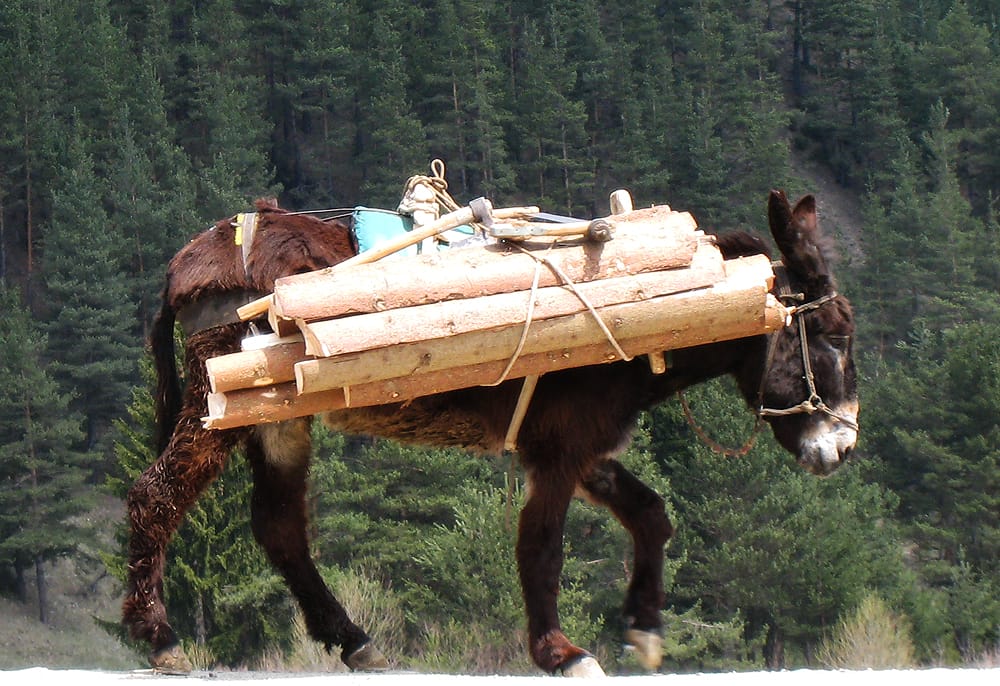
The Balkan Donkey is a hardy breed native to the mountainous regions of Southeast Europe, particularly across the Balkan Peninsula. Adult Balkan Donkeys typically weigh between 200–300 kilograms and stand about 1.2–1.3 meters at the shoulder. Their coat is generally gray or brown, sometimes with darker dorsal stripes and leg markings. This breed is well-adapted to rugged, rocky terrain and extreme weather conditions, including hot summers and cold winters. They have long ears, strong hooves, and a muscular build, making them excellent pack animals and reliable work donkeys in difficult landscapes.
Balkan Donkeys are herbivorous, grazing on wild grasses, shrubs, and cultivated fodder. Herds are small and socially structured, often matriarchal, with females leading and males patrolling territory. Communication involves braying, body language, and ear movements. These donkeys are highly intelligent and display excellent memory, which helps them navigate difficult terrain and locate water and food sources. Reproduction is seasonal, with foals born after a gestation period of 11–12 months. Young donkeys quickly learn grazing and social behaviors under the guidance of adults.
Historically, the Balkan Donkey has been indispensable for transportation, agricultural labor, and mule breeding in the region. Their strength, endurance, and adaptability have allowed local communities to transport goods through mountainous paths and maintain agricultural productivity. Today, conservation programs focus on protecting genetic diversity, maintaining small populations in rural villages, and preventing hybridization with other donkey types. The Balkan Donkey exemplifies resilience and adaptability in domesticated animals shaped by both human use and harsh natural environments.
27. Istrian Donkey
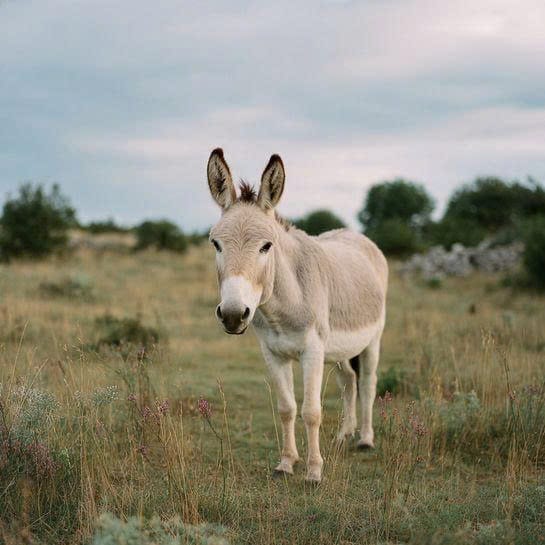
The Istrian Donkey hails from the Istrian Peninsula, spanning Croatia and Slovenia. It is a medium-sized breed, weighing 180–250 kilograms and standing 1.1–1.3 meters at the shoulder. Their coat ranges from gray to brown, with darker markings along the back, legs, and ears. Known for their sure-footedness and stamina, Istrian Donkeys are particularly suited to the hilly, rocky landscapes of the region. Their calm temperament and intelligence make them reliable for both agricultural work and transportation.
These donkeys are herbivorous, feeding on grasses, shrubs, and cultivated fodder. Herds are socially organized, with females often leading the group and males patrolling territories. Communication occurs through braying, subtle body language, and ear movements. Breeding is seasonal, and foals mature quickly, inheriting strong limbs, resilience, and social skills. Historically, the Istrian Donkey was used for plowing, carrying goods, and breeding mules, all while adapting to the challenging terrain and climate of the peninsula.
Today, Istrian Donkeys are part of conservation efforts to protect heritage breeds and maintain biodiversity in rural farming communities. They continue to serve as work animals, but also as cultural symbols of the region. The Istrian Donkey represents a balance between natural adaptation, human utility, and cultural significance, demonstrating how domesticated donkeys have shaped local agriculture and traditions.
28. Greek (Ellinikon) Donkey
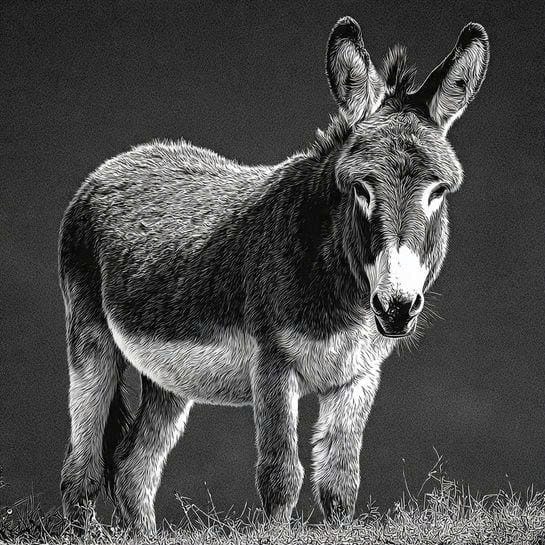
The Greek Donkey, also called the Ellinikon Donkey, is native to Greece and its islands. Adults weigh 180–250 kilograms and stand approximately 1.1–1.3 meters tall. Their coat is typically gray or brown, sometimes with a dorsal stripe and darker extremities. They have long, expressive ears and a muscular frame, enabling them to traverse mountainous regions and steep terrains common in Greece. Known for their endurance and intelligence, these donkeys are reliable pack animals and farm helpers.
Ellinikon Donkeys are herbivorous, feeding on wild grasses, herbs, and cultivated forage. Herds are small and social, usually led by a dominant female. Communication is achieved through braying, ear gestures, and body language. Breeding occurs seasonally, and foals learn essential survival and social skills from the herd. The Greek Donkey’s adaptability to Mediterranean climates allows it to endure hot summers and scarce water sources, making it essential for rural communities.
Historically, the Ellinikon Donkey was used for transporting goods, plowing fields, and producing mules. Conservation programs today focus on maintaining genetic purity, protecting populations from decline, and promoting sustainable use in agriculture. This breed exemplifies the integration of natural adaptation, human utility, and cultural heritage, highlighting the importance of donkeys in Mediterranean life.
29. Romanian Donkey (Romanian Ass)
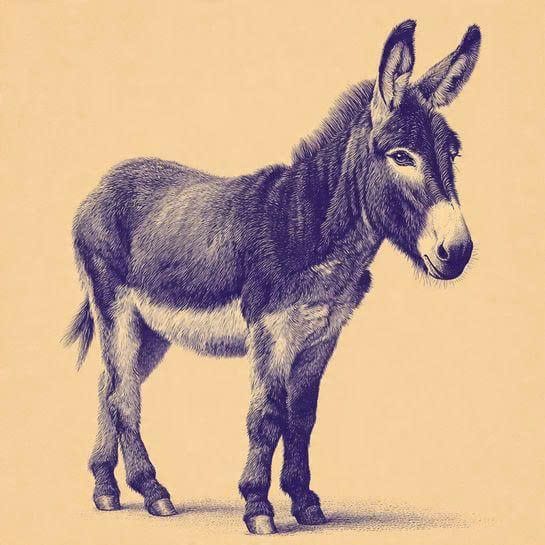
The Romanian Donkey, or Romanian Ass, is native to Romania and surrounding regions. Adults weigh 200–300 kilograms, with a shoulder height of approximately 1.2 meters. Coat colors range from gray to brown, often with darker markings along the dorsal stripe and legs. These donkeys are hardy, intelligent, and well-adapted to the temperate and mountainous terrains of Eastern Europe. Their calm and gentle temperament makes them suitable for work, breeding, and companionship.
Romanian Donkeys are herbivorous, grazing on pastures, grasses, and shrubs. Herds are socially cohesive, usually led by females with males maintaining territorial boundaries. Communication includes braying, body gestures, and ear signals. Breeding is seasonal, producing foals that inherit strength, resilience, and social behavior from the herd. Historically, Romanian Donkeys were used for plowing, transportation, and mule breeding, playing a vital role in rural economies and agriculture.
Conservation programs aim to preserve this breed’s genetic diversity, support sustainable farming practices, and prevent hybridization. Romanian Donkeys are a testament to the adaptability of domesticated donkeys in temperate climates and their enduring significance to human communities.
30. Domestic Balkan Ass (Domaci Balkanski Magarac)
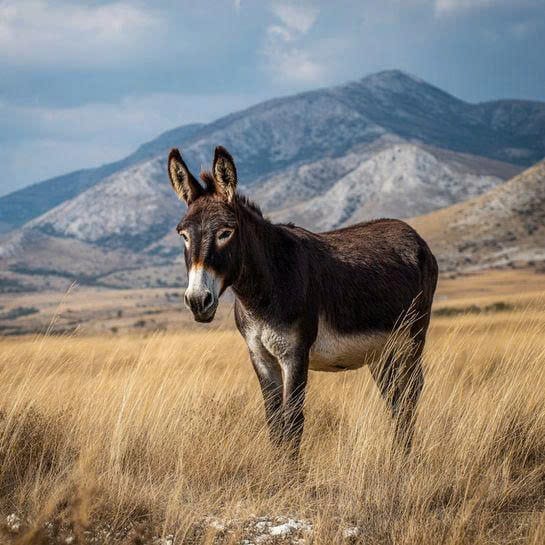
The Domestic Balkan Ass, known locally as Domaci Balkanski Magarac, is a traditional breed found throughout Serbia, Montenegro, and neighboring Balkan countries. Adults typically weigh 200–300 kilograms and stand around 1.2–1.3 meters tall. Their coat ranges from gray to brown, with darker dorsal stripes and leg markings. This donkey is known for its strength, endurance, and calm, cooperative temperament, making it ideal for transportation, agricultural work, and mule breeding in rugged Balkan terrain.
These donkeys are herbivorous, grazing on natural pastures, shrubs, and cultivated fodder. Herds are small, socially organized, and usually matriarchal. Communication occurs through brays, gestures, and ear positioning. Breeding occurs seasonally, and foals quickly learn survival skills, including grazing, navigation, and herd behavior. Historically, the Domestic Balkan Ass was essential for local communities, helping transport goods, plow fields, and breed mules. Their adaptability to mountainous terrain and varied climates has ensured their survival over centuries.
Today, conservation programs focus on protecting the breed from population decline, preserving genetic purity, and promoting awareness of its cultural and agricultural importance. The Domestic Balkan Ass demonstrates the resilience, intelligence, and versatility of donkeys as working animals and highlights the rich heritage of Balkan domesticated livestock.
Conclusion
Donkeys are among the most adaptable and resilient domesticated animals in the world, with a remarkable diversity of breeds across continents. From the rugged mountains of the Balkans to the arid deserts of Africa, the 30 types of donkey reviewed in this guide demonstrate incredible variations in size, coat color, behavior, and ecological adaptation. Whether it’s the all-white Asinara Donkey of Italy, the mighty American Mammoth Jackstock, or the hardy Abkhazskaya Donkey of the Caucasus, each breed has evolved to thrive in its unique environment while serving human communities for centuries.
Understanding these types of donkey is not just about identifying physical traits; it’s about appreciating their ecological roles, social behaviors, and historical importance in agriculture, transportation, and cultural heritage. From small Mediterranean donkeys like the Miniature Mediterranean Donkey to large draft breeds like the Zamorano-Leonés, each donkey has contributed to human livelihoods and biodiversity conservation in meaningful ways. Many breeds are now the focus of dedicated conservation efforts to preserve their genetics and ensure future generations can benefit from their resilience and versatility.
Exploring these 30 donkeys reveals not only their individual uniqueness but also their shared qualities: intelligence, endurance, social cohesion, and adaptability. By learning about and supporting these animals, we honor their role in human history and their ongoing contribution to ecosystems worldwide. Whether for educational purposes, farming, or cultural appreciation, these donkeys exemplify the incredible diversity and significance of one of humanity’s most enduring animal companions.
Frequently Asked Questions (FAQs) about Types of Donkey
1. What are the main types of donkey?
The main types of donkey include wild donkeys like the African Wild Ass and domestic breeds such as the American Mammoth Jackstock, Catalan Donkey, and Miniature Mediterranean Donkey. Each breed differs in size, coat color, behavior, and adaptability.
2. How many types of donkey are there in the world?
There are over 30 recognized donkey breeds worldwide, ranging from small Mediterranean types to large draft breeds like the Zamorano-Leonés and American Mammoth Jackstock.
3. What is the difference between wild and domestic donkeys?
Wild donkeys, like the African Wild Ass, live independently in natural habitats and avoid human contact. Domestic donkeys are bred and managed by humans for work, companionship, or breeding purposes.
4. How big can a donkey get?
Donkey size varies by breed. Small breeds, like the Miniature Mediterranean Donkey, weigh around 100–150 kilograms, while large breeds like the American Mammoth Jackstock or Zamorano-Leonés can weigh 450–570 kilograms.
5. What do donkeys eat?
Donkeys are herbivores. They mainly feed on grasses, shrubs, herbs, and sometimes crop leftovers or hay. Their digestive system is adapted to process fibrous, low-quality forage efficiently.
6. How long do donkeys live?
Donkeys typically live 25–30 years, though some well-cared-for domestic breeds can live over 35 years. Wild donkeys may have shorter lifespans due to predation and harsh environments.
7. What is the African Wild Ass?
The African Wild Ass is the ancestor of most modern domestic donkeys. Native to northeastern Africa, it is critically endangered and adapted to arid, desert habitats.
8. Are all donkeys gray?
No. Donkey coat colors vary widely. Common colors include gray, brown, black, white, and sometimes spotted or striped patterns depending on the breed.
9. What is the smallest type of donkey?
The Miniature Mediterranean Donkey is among the smallest breeds, weighing 100–150 kilograms and standing around 90–110 cm tall at the shoulder.
10. What is the largest type of donkey?
The American Mammoth Jackstock is one of the largest donkey breeds, often weighing over 450 kilograms, with some individuals reaching 570 kilograms.
11. Are donkeys social animals?
Yes, donkeys are social and often live in herds. They communicate through braying, body language, and ear movements. Social hierarchies are usually matriarchal, with dominant females guiding the herd.
12. How do donkeys communicate?
Donkeys communicate using vocalizations like brays, snorts, and screams, along with body language such as ear positioning, tail movement, and facial expressions.
13. Can donkeys survive in deserts?
Yes, some breeds like the African Wild Ass and Somali Wild Ass are adapted to desert conditions. They can find water, forage sparse vegetation, and endure extreme heat.
14. Do donkeys make good working animals?
Yes. Many donkey breeds, especially larger ones like the Zamorano-Leonés or Catalan Donkey, are used for plowing, carrying loads, transportation, and mule breeding due to their strength and endurance.
15. What is the lifespan of a wild donkey?
Wild donkeys typically live 15–20 years, depending on habitat, predation, and food availability.
16. How do donkey foals grow?
Donkey foals are nurtured by the herd. They learn foraging, social behavior, and navigation skills from adults. Growth is faster in domestic breeds due to better nutrition.
17. What are the ecological roles of donkeys?
Donkeys help maintain vegetation by grazing, disperse seeds, prevent overgrowth in pastures, and serve as prey for natural predators in the wild.
18. Which donkeys are used for mule breeding?
Large and strong breeds like the American Mammoth Jackstock, Catalan Donkey, and Poitou Donkey are commonly used to produce mules due to their size and endurance.
19. Are white donkeys common?
White donkeys are rare. The Asinara Donkey of Italy is a notable all-white breed with pinkish skin and pale eyes, highly adapted to its island habitat.
20. How do donkeys adapt to mountains?
Mountain breeds like the Balkan Donkey and Thuringian Forest Donkey have strong hooves, muscular legs, and sure-footedness, allowing them to navigate rocky, steep terrain safely.
21. Do donkeys require a lot of water?
Donkeys are highly efficient at conserving water. Desert-adapted breeds can survive long periods without drinking, relying on moisture from plants.
22. What is the temperament of donkeys?
Donkeys are intelligent, calm, and cautious. They are social, protective of their herd, and often form strong bonds with humans.
23. How are donkeys bred?
Most donkey breeds are seasonal breeders. Gestation lasts about 11–12 months, and foals are weaned gradually while learning foraging and social behaviors.
24. Can donkeys live with horses?
Yes, donkeys can live with horses. They are social and can form bonds, though donkeys may assert dominance in mixed herds.
25. Are donkeys endangered?
Some wild donkey species, like the African Wild Ass and Somali Wild Ass, are critically endangered. Domestic breeds are generally safe but require conservation to maintain genetic diversity.
26. What is the difference between a donkey and a mule?
A mule is the hybrid offspring of a male donkey (jack) and a female horse (mare). Donkeys are a separate species with their own breeds and genetic characteristics.
27. What is the Zamorano-Leonés Donkey?
The Zamorano-Leonés Donkey is a large Spanish breed known for its strength, endurance, and ability to work in mountainous regions. It is used for draft work and mule breeding.
28. Which donkey breeds are found in the Mediterranean?
Common Mediterranean breeds include the Miniature Mediterranean Donkey, Majorcan Donkey, Sardinian Donkey, and Cypriot Donkey, all adapted to warm, arid climates.
29. What is a heritage donkey breed?
Heritage donkey breeds are traditional, historic breeds preserved for their unique genetic traits, adaptation to local climates, and cultural significance, such as the Poitou Donkey or Thuringian Forest Donkey.
30. How do donkeys help humans?
Donkeys provide transportation, draft work, mule breeding, companionship, and ecological services like grazing management and seed dispersal. They are valuable livestock worldwide.
31. Do donkeys bray?
Yes, donkeys bray to communicate. Braying can indicate hunger, danger, or social interaction within the herd.
32. Are donkeys intelligent?
Donkeys are highly intelligent, able to learn complex tasks, navigate terrain, remember water sources, and form social bonds with humans and other animals.
33. Can donkeys survive cold climates?
Yes, breeds like the Thuringian Forest Donkey and Abkhazskaya Donkey have thick coats and adaptations for cold winters in mountainous regions.
34. Which donkey breed is from Spain?
Spain is home to breeds like the Catalan Donkey, Zamorano-Leonés Donkey, and Majorcan Donkey, each adapted to local climates and terrain.
35. How many donkeys are there in the world?
There are estimated millions of domestic donkeys globally, with dozens of recognized breeds. Wild donkey populations are much smaller and often endangered.
36. Can donkeys live alone?
Donkeys are social animals and generally do not thrive alone. They prefer the company of other donkeys or compatible livestock.
37. How fast can a donkey run?
Donkeys can run at speeds of up to 40 km/h (25 mph) for short distances, especially when startled or threatened.
38. What is the Catalan Donkey known for?
The Catalan Donkey is a large, strong Spanish breed used historically for draft work and mule breeding, known for its endurance and intelligence.
39. How do donkeys reproduce?
Donkeys reproduce seasonally, with gestation lasting around 11–12 months. Foals are nurtured by the herd and quickly learn foraging and social behaviors.
40. Do donkeys eat meat?
No, donkeys are strictly herbivorous and eat grasses, shrubs, herbs, and occasionally cultivated fodder.
41. What is the Istrian Donkey?
The Istrian Donkey is a small-to-medium breed from the Istrian Peninsula, adapted to rocky, hilly terrain, and used historically for agriculture and transportation.
42. What is the difference between a donkey and a horse?
Donkeys are smaller, have longer ears, coarser hair, and different social and behavioral traits. They are more resilient to harsh environments and require less food and water than horses.
43. Can donkeys interbreed with horses?
Yes, when a male donkey (jack) breeds with a female horse (mare), the offspring is a mule. Mules are sterile but highly valued for strength and endurance.
44. Are donkeys loud?
Donkeys can be loud, especially when braying to communicate over long distances, signal danger, or call to other herd members.
45. What is the Miniature Mediterranean Donkey?
A small donkey breed from Mediterranean islands, weighing 100–150 kilograms and used for companionship, light work, and tourism purposes.
46. Do donkeys need shelter?
Yes, donkeys need shelter to protect from extreme weather, such as heat, cold, or rain, even though some breeds are highly resilient to harsh conditions.
47. Can donkeys swim?
Donkeys can swim if necessary, but they usually avoid deep water. Some breeds may be more reluctant than others depending on temperament.
48. Are donkeys endangered?
Wild donkey species like the African Wild Ass and Somali Wild Ass are critically endangered. Many domestic breeds are stable but require conservation to maintain genetic diversity.
49. Which donkey is from Africa?
Wild African donkeys include the African Wild Ass and Somali Wild Ass, native to northeastern Africa and the Horn of Africa, adapted to arid and desert habitats.
50. What is the Thuringian Forest Donkey?
A medium-sized German breed adapted to forested and mountainous terrain, used historically for transport, forestry work, and mule breeding. Known for its intelligence and calm temperament.
51. How can I identify different types of donkey?
Identification depends on size, coat color, markings, ear length, build, and region of origin. Breeds also differ in temperament and historical usage, which helps distinguish them.
52. Why are donkeys important for humans?
Donkeys provide transport, labor, breeding for mules, companionship, and ecological services such as grazing management. They have supported agriculture and rural economies for centuries.
Read more: 30 Types of Hornbills (Pictures And Identification)