

There are many fascinating Types of Rats found around the world, ranging from wild forest rodents to intelligent domesticated pets. Rats are highly adaptable mammals known for their problem-solving skills, social behavior, and ability to survive in different environments. Some species live in cities and sewers, while others inhabit forests, rice fields, deserts, and tropical islands. Understanding different types of rats helps wildlife enthusiasts identify species by size, color, habitat, tail shape, and behavior. In this guide, you’ll discover some of the most interesting rat species and pet varieties, including the Brown Rat, Black Rat, Gambian Pouched Rat, and many more. Whether you love wildlife biology or simply want to learn more about rodents, these rats reveal an amazing level of diversity in nature.
35 Types of Rats: Identification Guide and Wildlife Overview
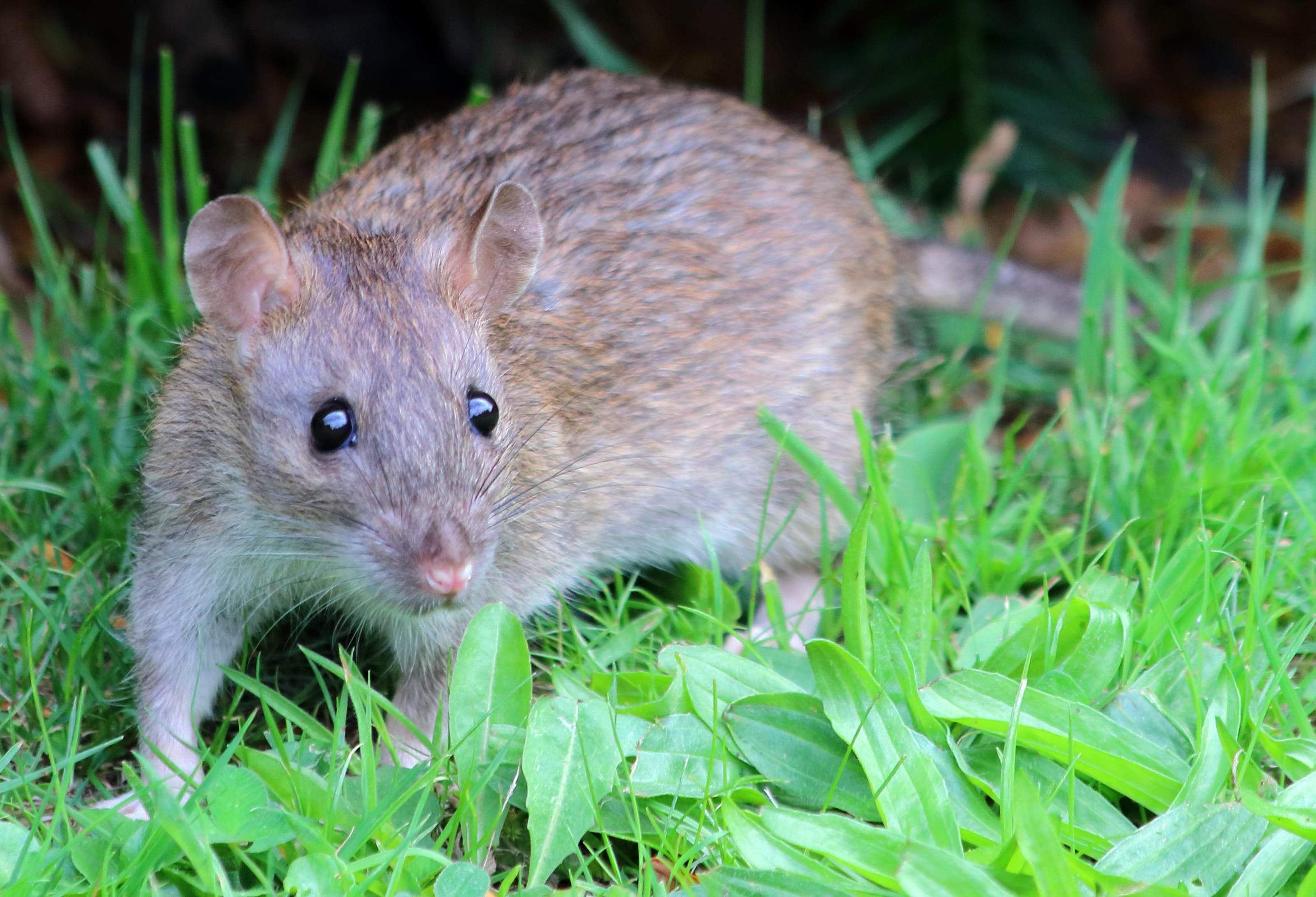
Rats belong mainly to the genus Rattus, although several other rodents are commonly called rats because of their appearance and behavior. They are found on nearly every continent and play important ecological roles as scavengers, seed dispersers, prey animals, and adaptable survivors.
1. Brown Rat
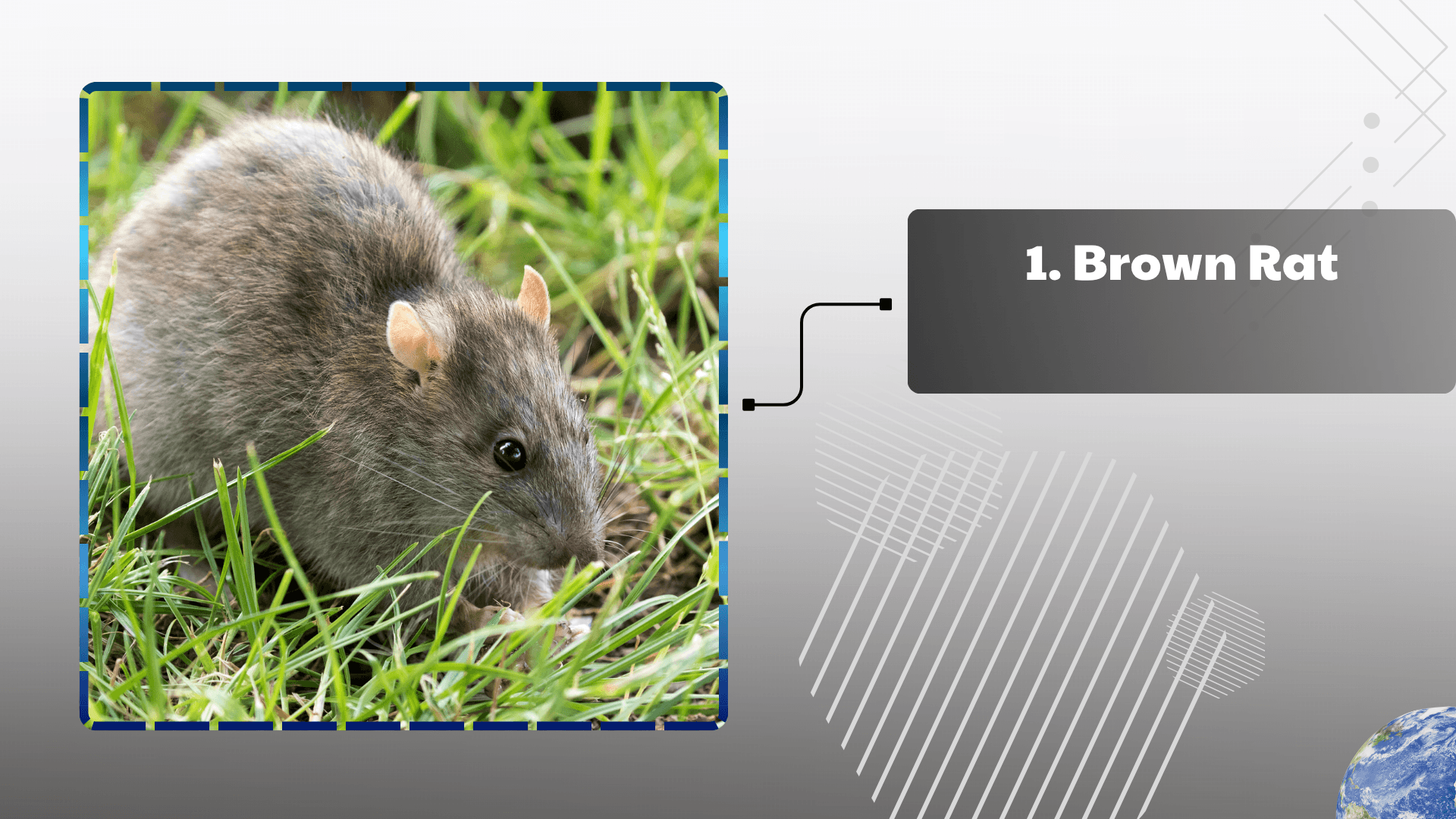
The Brown Rat, also called the Norway Rat, is one of the most widespread and recognizable rat species in the world. It is heavily associated with urban environments, sewers, warehouses, farms, and cities, although it originally evolved in parts of Asia before spreading globally through trade and human movement.
Brown Rats are large, muscular rodents with coarse brown or gray fur, small ears, blunt noses, and thick tails shorter than their body length. Adults can reach impressive sizes compared to many other rat species, making them dominant in areas where food is abundant.
One reason the Brown Rat is so successful is its incredible adaptability. It can survive in cold climates, urban infrastructure, forests, and agricultural regions. These rats are highly intelligent and capable of learning routes, avoiding traps, and locating reliable food sources. Their memory and problem-solving ability are among the strongest of any rodent species.
In the wild, Brown Rats are omnivores. They eat grains, seeds, insects, fruits, garbage, meat scraps, and almost anything edible they encounter. This flexible diet allows them to thrive nearly everywhere humans live.
Despite their negative reputation, Brown Rats are socially complex animals. They communicate through scent marking, vocalizations, and body posture. Colonies often develop structured hierarchies where dominant rats control access to food and shelter.
Brown Rats also play an important scientific role. Many laboratory rats used in medical research are descendants of this species because of their intelligence and adaptability to captivity.
Although they can spread disease in crowded environments, Brown Rats remain one of the most evolutionarily successful mammals on Earth.
2. Black Rat
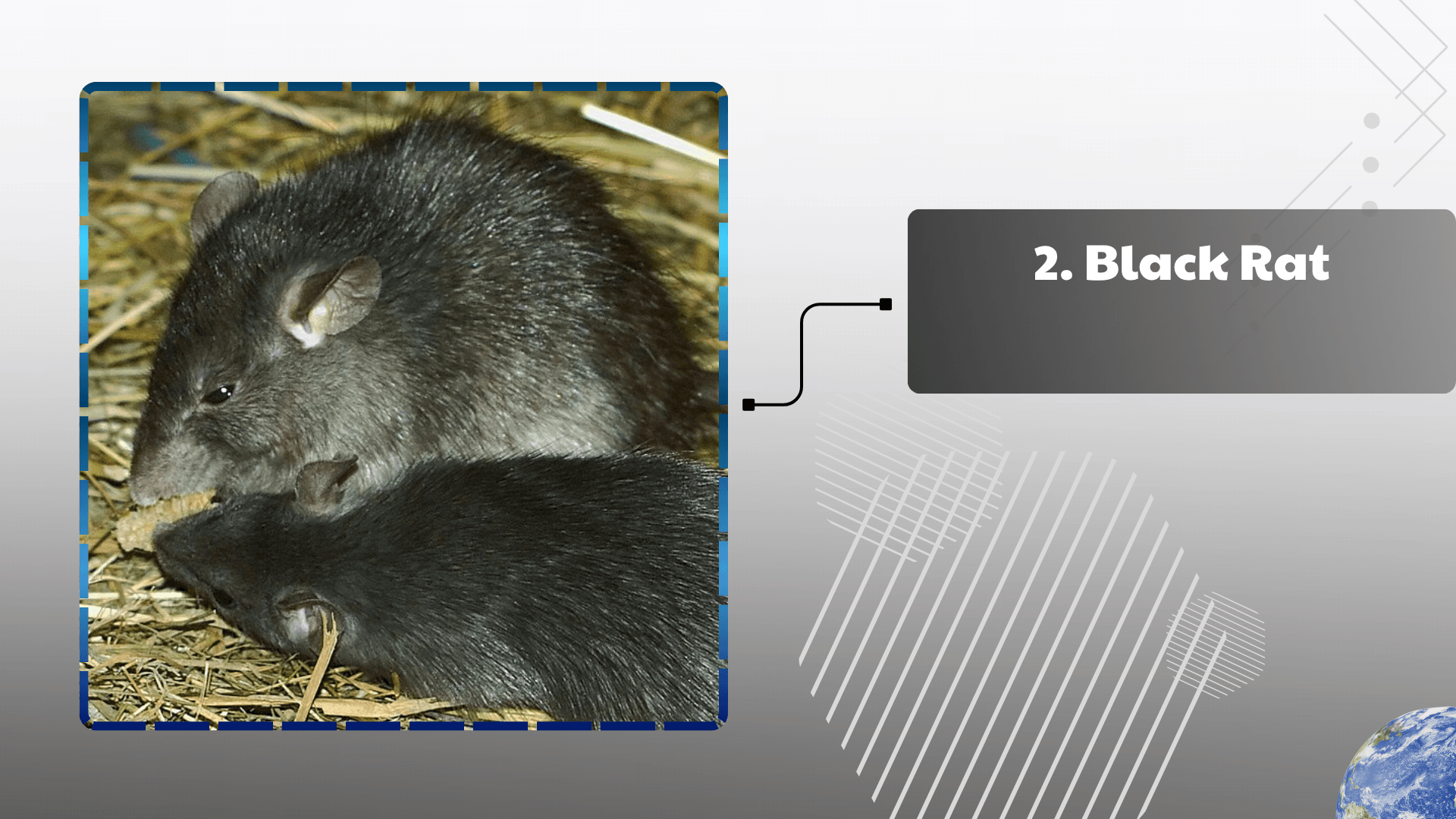
The Black Rat, also known as the Roof Rat or Ship Rat, is another globally distributed rat species with a long historical connection to humans. Unlike the heavier Brown Rat, the Black Rat is slimmer, lighter, and more agile, making it an excellent climber.
Black Rats usually have dark gray or black fur, large ears, pointed noses, and long tails that often exceed their body length. These physical traits help distinguish them from Brown Rats.
This species prefers elevated habitats such as rooftops, attics, barns, trees, and shipping structures. Their climbing ability allows them to escape predators and access food unavailable to ground-dwelling rats.
Historically, Black Rats became infamous during the spread of the Black Death in medieval Europe because fleas associated with rats helped spread plague bacteria. However, modern sanitation has reduced this risk in many regions.
Black Rats are highly cautious and intelligent. They avoid unfamiliar objects and learn quickly from dangerous experiences. This survival instinct makes pest control difficult in urban environments.
Their diet includes fruits, nuts, grains, seeds, insects, and human food waste. In tropical environments, they can also damage crops and threaten native bird populations by raiding nests.
Although commonly viewed negatively, Black Rats are remarkable survivors with exceptional climbing skills and strong environmental adaptability.
3. Roof Rat
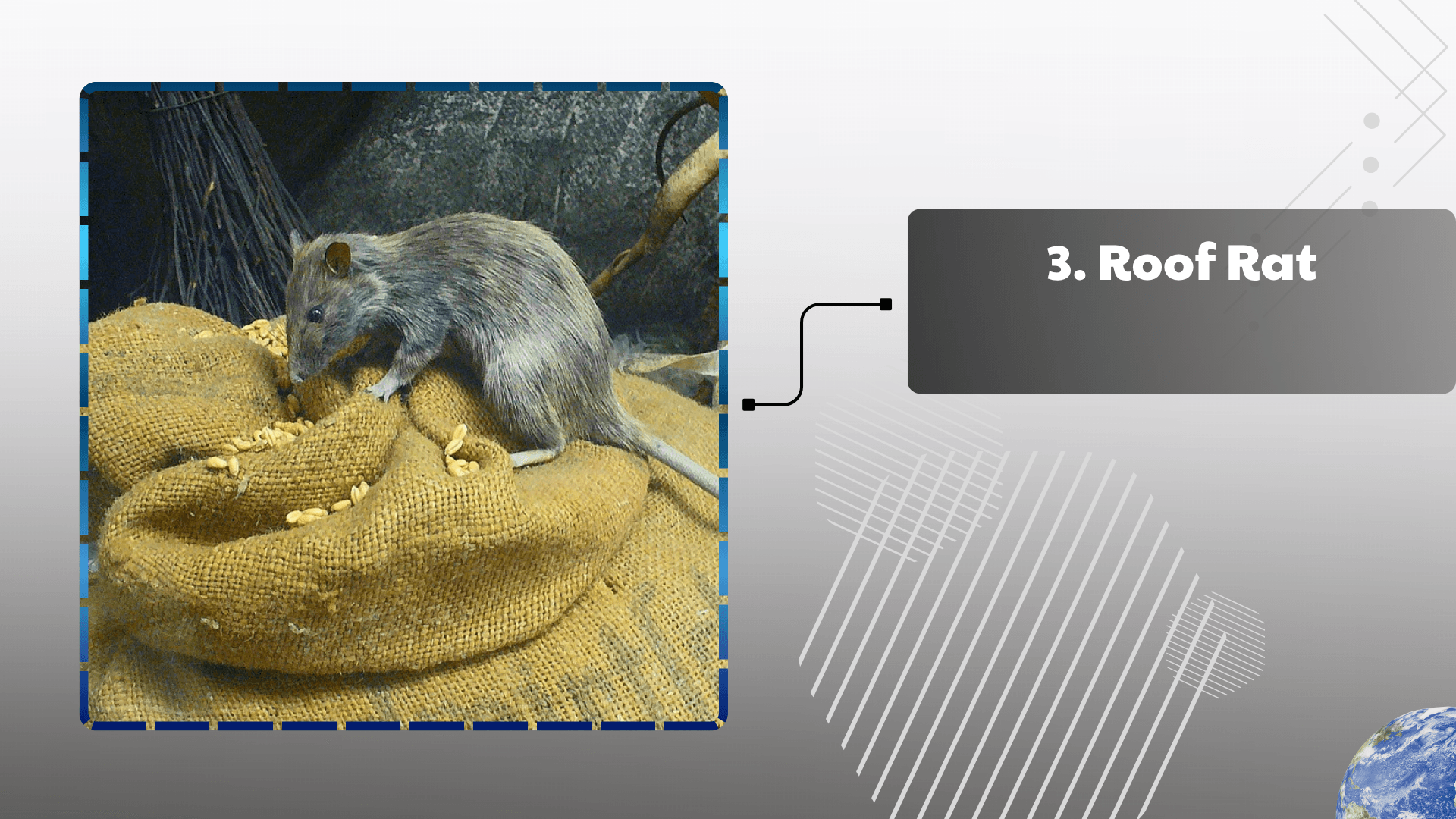
The Roof Rat is closely related to the Black Rat and is often considered the same species in many classifications. However, the name “Roof Rat” specifically highlights its habitat preference for elevated structures and upper building levels.
Roof Rats are common in warm climates where they inhabit attics, ceilings, trees, warehouses, and dense vegetation. Their slender bodies and lightweight frame allow them to move quickly through narrow spaces.
Unlike Brown Rats, which prefer burrows and underground tunnels, Roof Rats spend much of their time above ground. They frequently travel along utility wires, branches, and rooftops while searching for food.
These rats are nocturnal and extremely cautious. They rely heavily on memory to navigate their environment and establish regular travel routes between nests and feeding locations.
Roof Rats are omnivorous but prefer fruits, seeds, nuts, and grains. In orchards and tropical farms, they can become major agricultural pests.
Their nesting behavior often involves shredded insulation, leaves, paper, or fabric hidden in elevated spaces. Females reproduce rapidly when food conditions are favorable.
Although considered pests in cities, Roof Rats are fascinating examples of rodent adaptation and survival intelligence.
4. Norway Rat
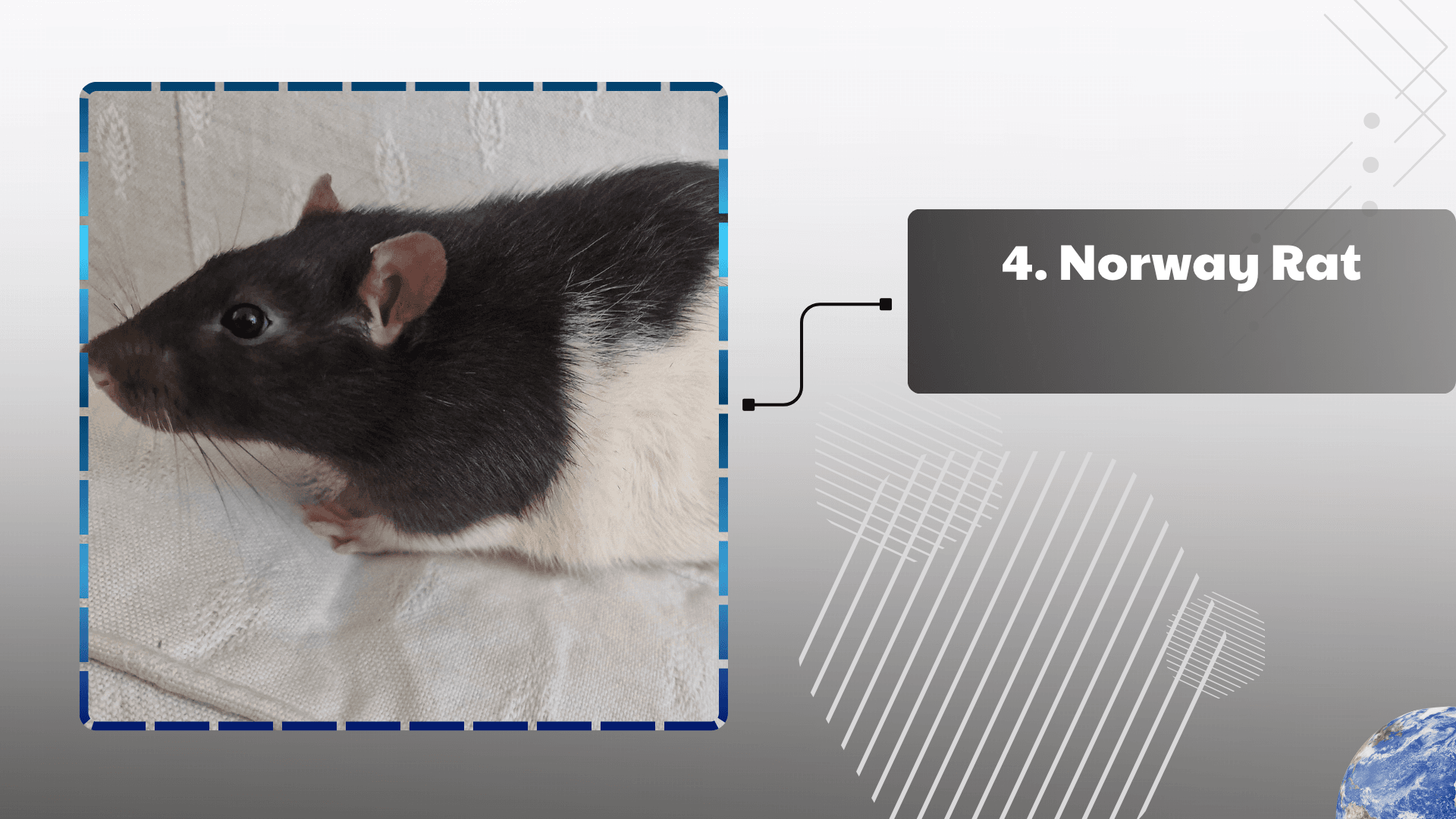
The Norway Rat is another common name for the Brown Rat, but many wildlife guides still list it separately because of its global importance in urban ecosystems and scientific studies.
Norway Rats are powerful burrowers that create underground tunnel systems beneath buildings, riverbanks, and garbage sites. These tunnel networks may contain food storage chambers, nesting areas, and escape routes.
This species thrives in human-dominated landscapes because it benefits from waste production and stable shelter opportunities. Urban infrastructure provides warmth, food, and protection from predators.
Norway Rats are highly social animals. They recognize colony members through scent and use ultrasonic communication that humans cannot hear. Young rats also learn behaviors from older individuals, demonstrating social intelligence.
Their reproduction rate is extremely high. Under ideal conditions, populations can increase rapidly, making them one of the most successful invasive mammals worldwide.
Despite their reputation, Norway Rats are surprisingly clean animals that groom frequently. In laboratory environments, they display emotional behavior, curiosity, and advanced learning abilities.
Today, the Norway Rat remains one of the most studied mammals in biological and medical science.
5. Sewer Rat
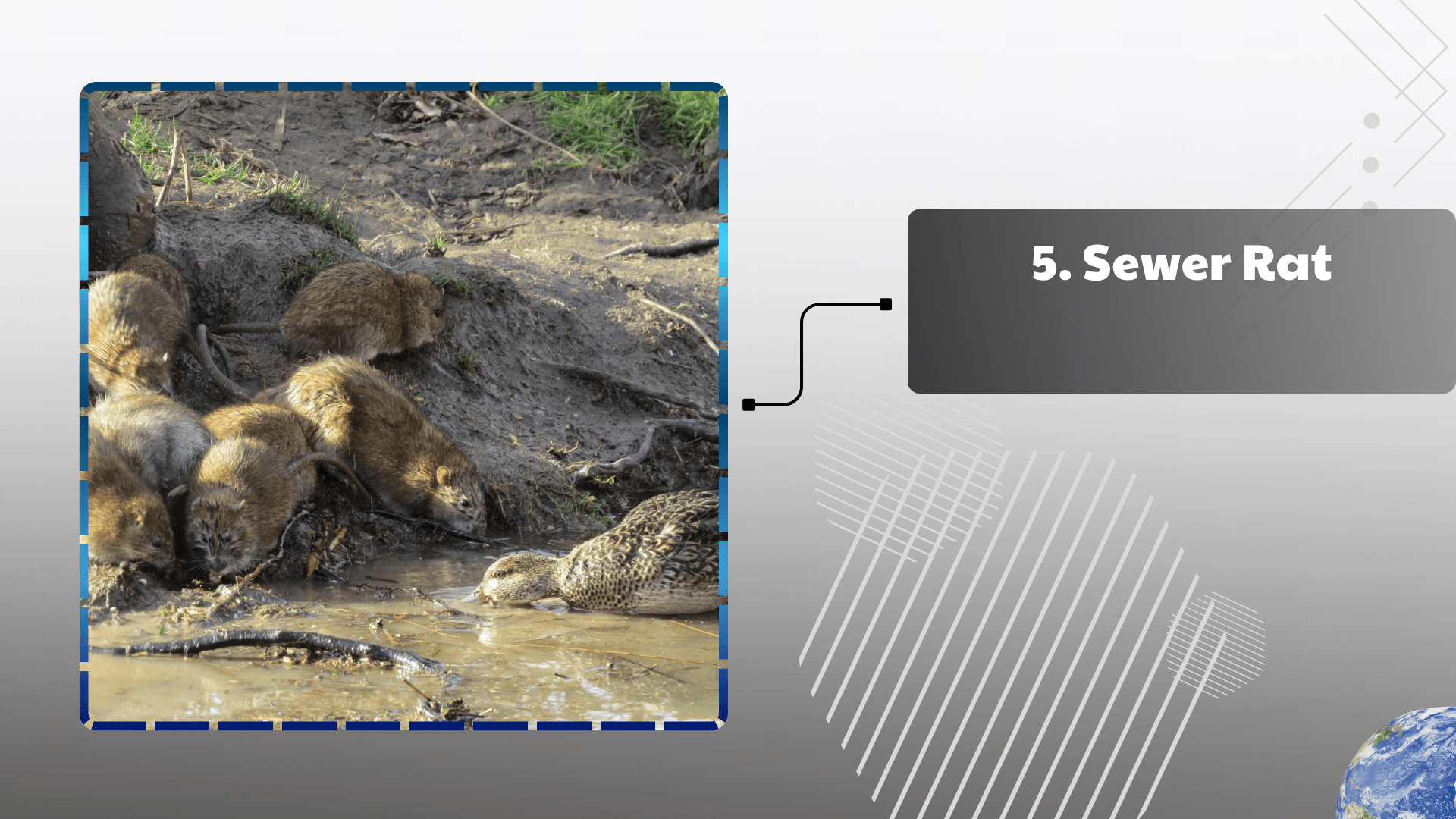
The term “Sewer Rat” usually refers to Brown Rats living in underground sewage systems. These rats are highly adapted to dark, wet, and confined urban environments.
Sewer Rats survive in difficult conditions by relying on strong swimming ability, excellent navigation skills, and highly flexible diets. They can move through narrow pipes and flooded tunnels with surprising speed.
Urban sewer systems provide stable temperatures and constant food waste, making them ideal habitats for rat colonies. These environments also protect rats from many predators.
Sewer Rats are mostly active at night when human activity decreases. They emerge from underground systems to forage for food near garbage containers, restaurants, and residential neighborhoods.
Although heavily associated with disease in public perception, rats themselves are not naturally “dirty.” Problems arise mainly in overcrowded conditions where sanitation is poor.
Scientists continue studying urban rat populations because they reveal how wildlife adapts to modern human environments. Sewer Rats demonstrate extraordinary resilience and survival intelligence.
Even though many people fear them, these rats remain one of the most successful urban mammals ever to evolve alongside humans.
6. Ship Rat
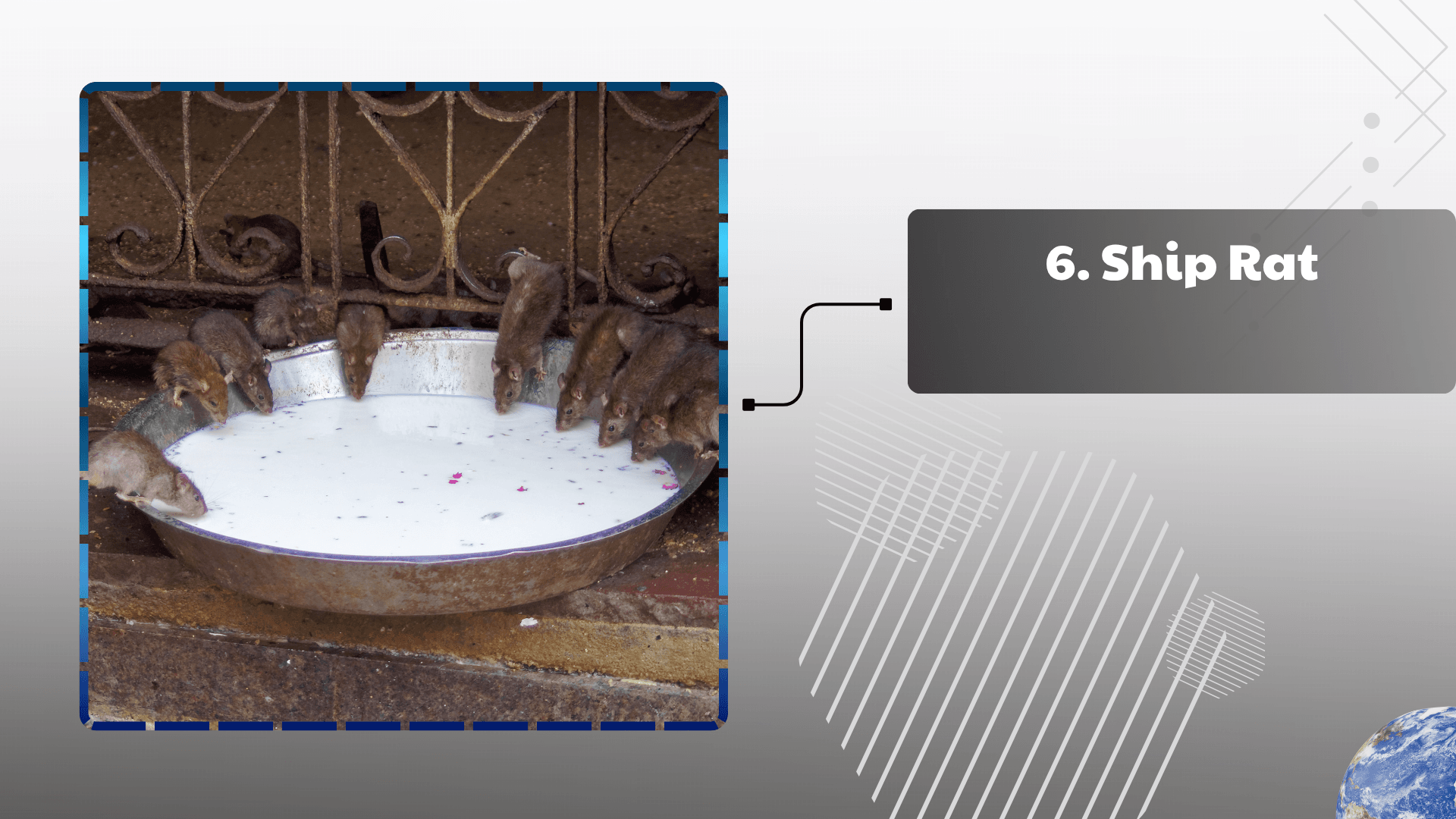
The Ship Rat is another well-known name for the Black Rat, especially in historical and maritime contexts. This species earned its nickname because it traveled across the world aboard trading ships, cargo vessels, and merchant fleets for centuries. As sailors moved goods between continents, Ship Rats spread into ports, islands, and coastal cities, becoming one of the most widely distributed rodents on Earth.
Ship Rats are slender rodents with smooth dark fur, large ears, pointed faces, and long tails. Their lightweight bodies make them excellent climbers, allowing them to move easily through ropes, beams, trees, and ship structures. This climbing skill helped them survive long ocean journeys because they could access stored grain and hidden food supplies.
Unlike the heavier Norway Rat, Ship Rats prefer elevated nesting sites. On ships, they often nested in ceilings, storage compartments, and upper deck areas where predators were less likely to reach them. In modern cities, they still prefer rooftops, attics, barns, and tall vegetation.
Ship Rats are opportunistic omnivores. They feed on grains, fruits, seeds, insects, eggs, and food scraps. On islands, they can become serious ecological threats because they prey on native bird eggs and small reptiles that evolved without mammalian predators.
Historically, Ship Rats played a major role in human history because they contributed to the spread of fleas linked to plague outbreaks. However, scientists now understand that poor sanitation and flea populations were the primary factors behind disease transmission.
Despite their negative reputation, Ship Rats are highly intelligent animals capable of solving problems, remembering routes, and adapting to difficult environments. Their global spread demonstrates how effectively rodents can evolve alongside human civilization.
7. Ricefield Rat
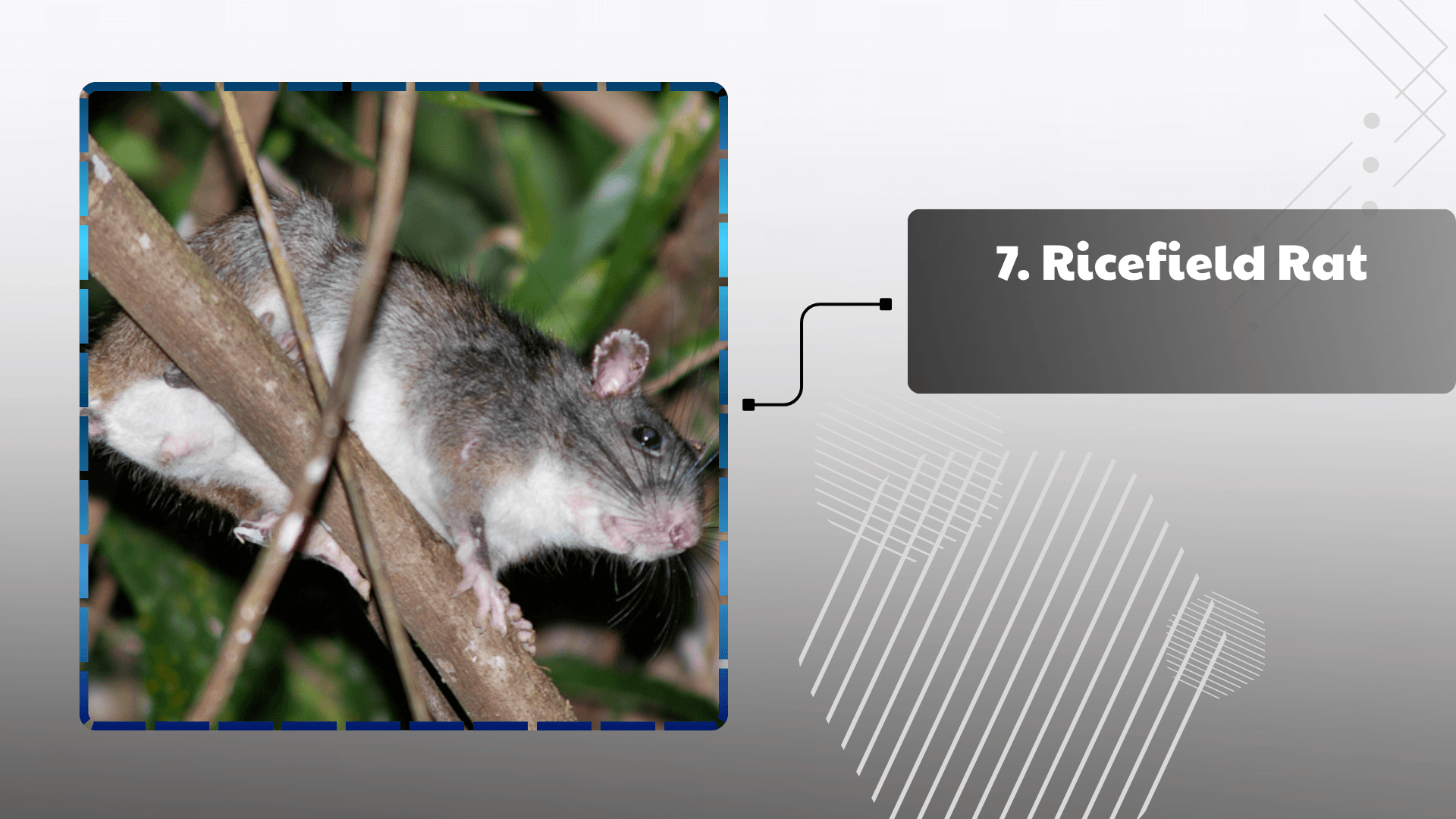
The Ricefield Rat is commonly found across agricultural regions of Asia where rice farming dominates the landscape. This species thrives in wet fields, irrigation systems, and grain-producing areas where food is abundant year-round.
Ricefield Rats usually have brown or gray fur with medium-sized bodies and long tails. Their appearance may seem ordinary compared to more exotic rodents, but they are extremely important in agricultural ecosystems.
These rats are excellent swimmers and can move efficiently through flooded rice paddies. They build burrows along field edges and irrigation banks where they remain hidden during the day before emerging to feed at night.
Their diet mainly consists of rice grains, seeds, shoots, and crops, which is why they are often considered agricultural pests. Large populations can damage harvests significantly, creating economic challenges for farmers.
However, Ricefield Rats also serve ecological functions. They are prey animals for snakes, owls, monitor lizards, and wild cats. Their presence helps support predator populations in rural ecosystems.
Interestingly, in some Southeast Asian communities, Ricefield Rats are hunted as a food source. In areas where pesticides are limited, these rats are considered cleaner and safer to eat compared to urban rodents.
The Ricefield Rat represents the close relationship between rodents, agriculture, and human civilization throughout Asian history.
8. Australian Swamp Rat
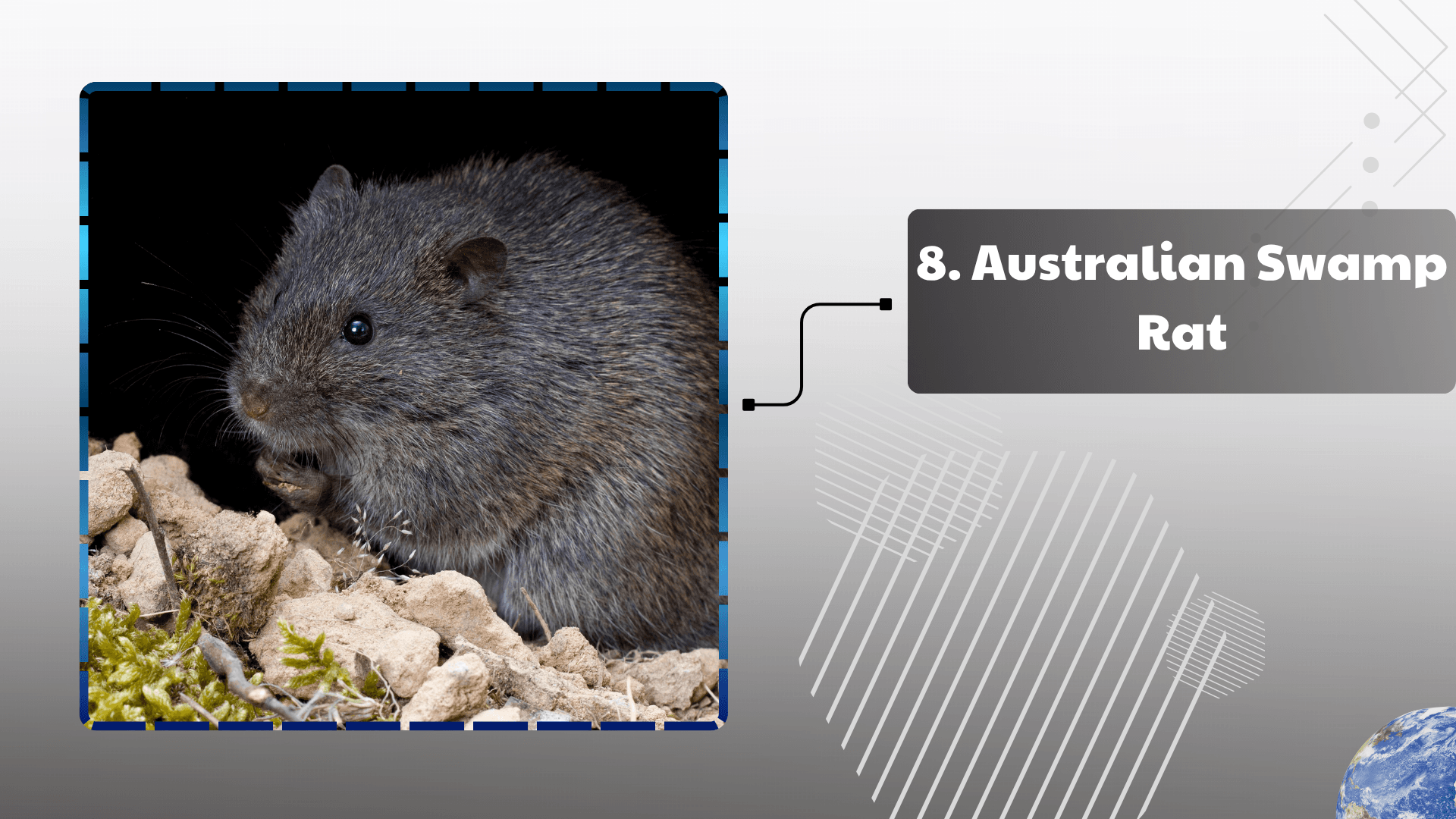
The Australian Swamp Rat is a fascinating rodent native to coastal wetlands, swamps, and moist grasslands across Australia. Unlike urban rats associated with cities and sewers, this species is strongly connected to natural ecosystems.
Swamp Rats are compact rodents with dark brown fur, rounded ears, and thick bodies designed for dense vegetation habitats. Their tails are relatively short compared to many climbing rat species.
These rats prefer environments with heavy ground cover where they can hide from predators and forage safely. Wetlands provide food, nesting material, and moisture essential for survival.
Their diet includes grasses, seeds, roots, fungi, and insects. Unlike highly aggressive urban rats, Swamp Rats are generally shy and avoid human contact whenever possible.
One remarkable feature of the Australian Swamp Rat is its role in wetland ecology. By feeding on vegetation and dispersing seeds, it contributes to plant regeneration and ecological balance.
Swamp Rats are also important prey animals for snakes, birds of prey, and carnivorous marsupials. Their presence supports food chains within Australian wetland habitats.
Because they are sensitive to habitat destruction, Swamp Rats can serve as indicators of wetland ecosystem health. Protecting their environment helps conserve many other species sharing the same habitat.
9. Hoffmann’s Sulawesi Rat
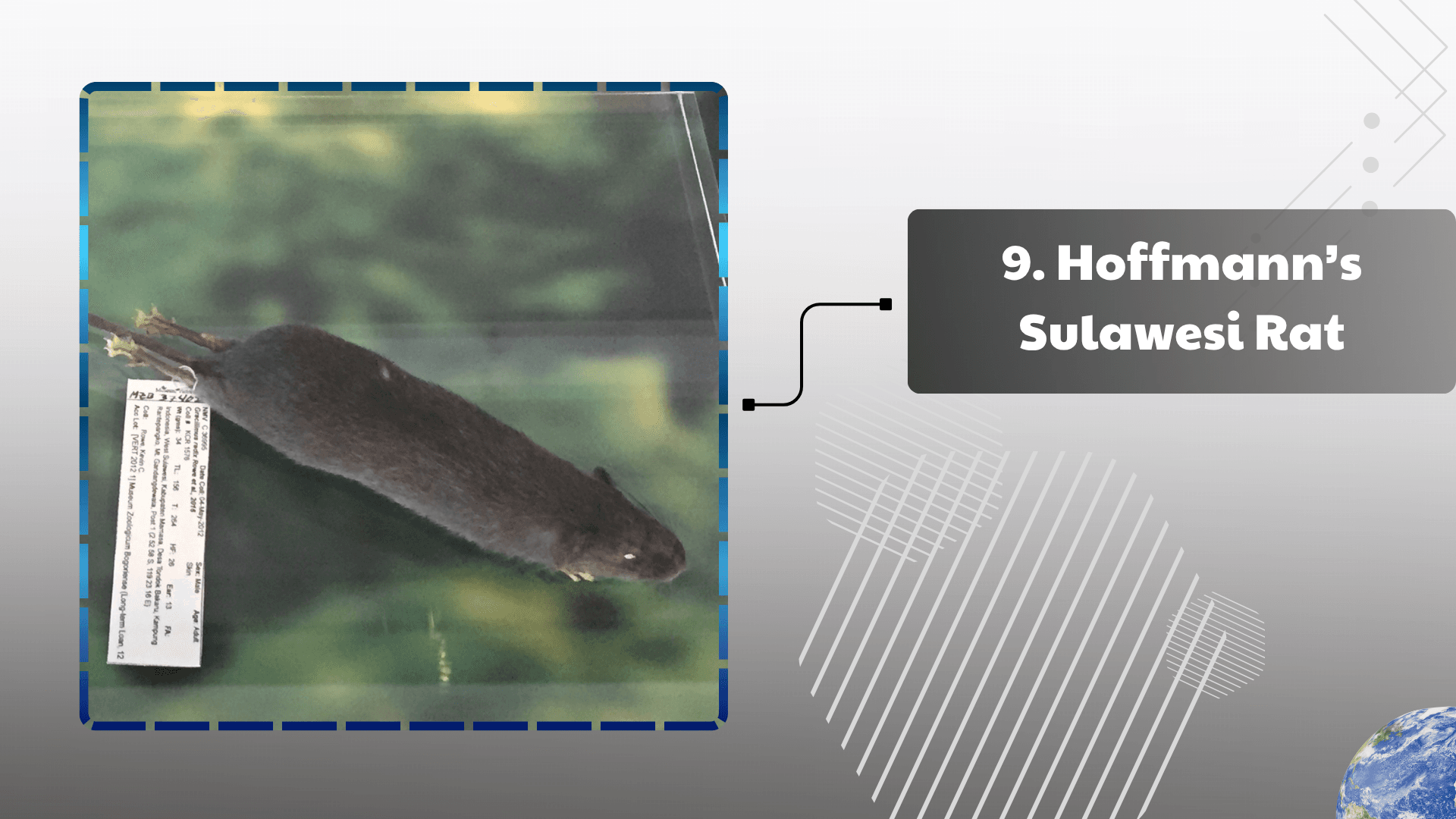
Hoffmann’s Sulawesi Rat is an unusual tropical rodent found only on the Indonesian island of Sulawesi. This species lives in dense rainforest ecosystems filled with unique wildlife found nowhere else on Earth.
Unlike common city rats, Hoffmann’s Sulawesi Rat has evolved in relative isolation. It possesses a strong body, coarse fur, and adaptations suited for humid forest environments.
These rats spend much of their time on the forest floor searching for fruits, seeds, insects, fungi, and fallen vegetation. Their behavior is less dependent on human environments than urban rat species.
Sulawesi is famous for its high biodiversity, and many rodent species there evolved independently over thousands of years. Hoffmann’s Sulawesi Rat is part of this remarkable evolutionary story.
Researchers continue studying Sulawesi rodents because they provide important clues about island evolution and ecological adaptation. Geographic isolation often leads to unusual physical traits and behaviors.
Deforestation remains the greatest threat to this species. As rainforests disappear due to agriculture and logging, isolated rodents lose critical habitat and food resources.
Hoffmann’s Sulawesi Rat reminds wildlife enthusiasts that not all rats are urban pests—many are specialized forest mammals playing valuable ecological roles.
10. Osgood’s Vietnamese Rat
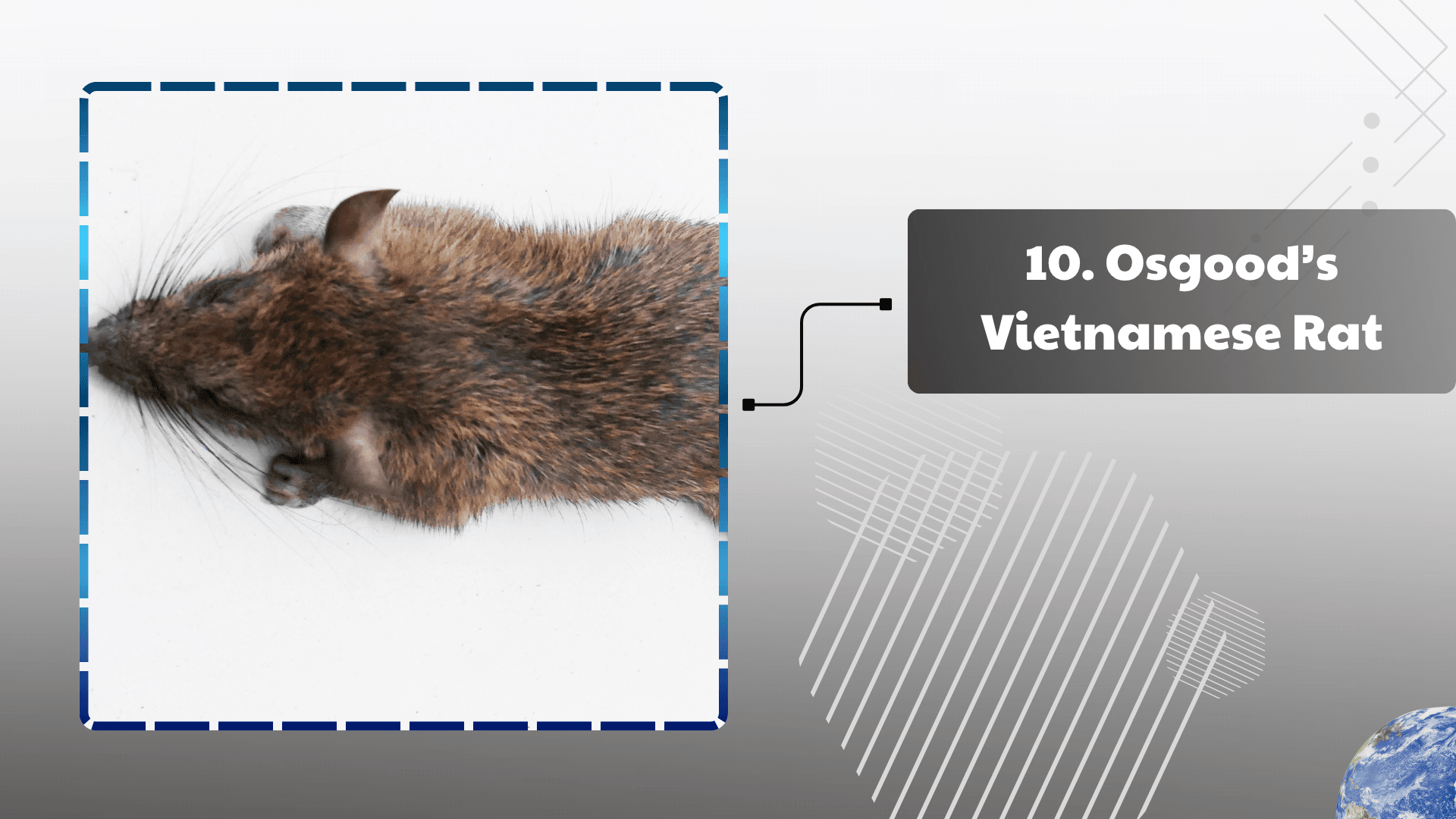
Osgood’s Vietnamese Rat is a lesser-known forest rodent native to Southeast Asia, especially Vietnam. It inhabits tropical forests where thick vegetation and humid conditions create ideal shelter and feeding opportunities.
This species typically has soft brown fur, a slender body, and a long tail that helps maintain balance while moving through branches and uneven terrain. Its appearance resembles many wild forest rats, but it belongs to a specialized ecological niche.
Osgood’s Vietnamese Rat feeds on seeds, fruits, insects, and plant material found within the forest understory. Its feeding behavior contributes to seed dispersal and nutrient cycling within tropical ecosystems.
Unlike city rats, this species avoids urban environments and depends heavily on intact forest habitats. Logging, agriculture, and habitat fragmentation pose significant threats to its survival.
Very little is known about its reproduction or social behavior because tropical forest rodents are difficult to observe in the wild. Scientists rely on field surveys and ecological monitoring to understand these elusive mammals.
Forest rats like Osgood’s Vietnamese Rat demonstrate how rodent diversity extends far beyond sewers and cities. Many rat species are essential parts of healthy ecosystems and help maintain biodiversity.
As researchers continue exploring Southeast Asian forests, species like this reveal the hidden complexity of rodent evolution and wildlife adaptation.
11. Sulawesi White-tailed Rat
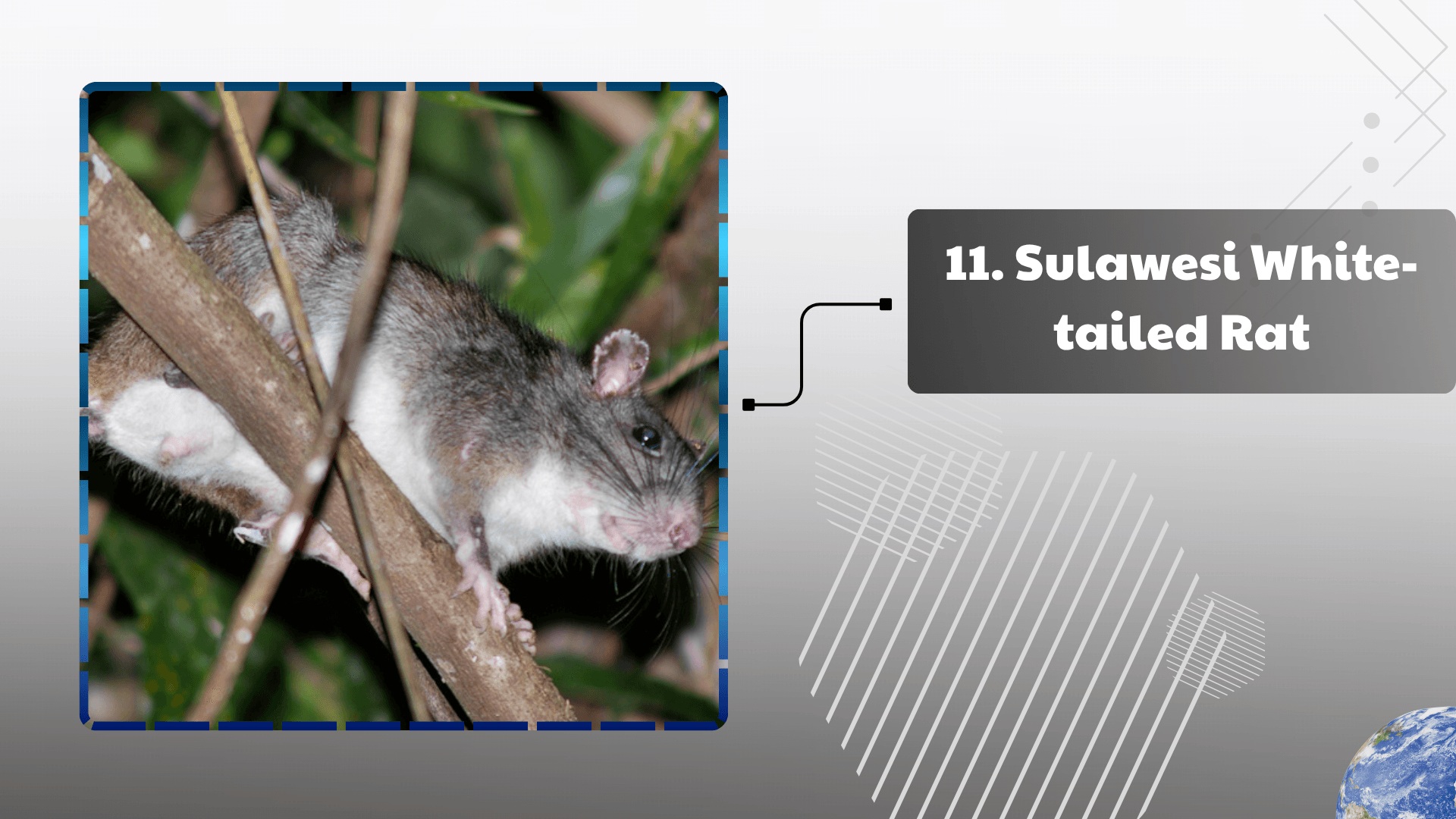
The Sulawesi White-tailed Rat is one of the most unusual rodents found on the Indonesian island of Sulawesi. This rare species is known for its distinctive pale tail tip, dense fur, and strong adaptation to tropical rainforest ecosystems. Unlike common urban rats, this species spends its life in isolated forest habitats far away from human settlements.
The Sulawesi White-tailed Rat has evolved in an environment filled with unique wildlife found nowhere else on Earth. Sulawesi itself is considered a biodiversity hotspot, meaning many animals there developed separately from mainland species for thousands of years.
These rats are primarily ground-dwelling mammals that forage through forest litter in search of seeds, fruits, insects, fungi, and fallen vegetation. Their role in seed dispersal helps maintain forest regeneration and ecological balance.
One of the most interesting characteristics of this rat is its adaptability to dense jungle terrain. It can move efficiently through thick undergrowth while avoiding predators such as snakes, owls, and wild cats.
Scientists still know relatively little about this species because rainforest rodents are difficult to monitor. Most information comes from field surveys, trapping studies, and ecological observations.
Habitat destruction remains the greatest danger to the Sulawesi White-tailed Rat. Logging and agricultural expansion continue reducing the forest ecosystems it depends on for survival.
This species is a reminder that many rats are not urban pests but highly specialized wildlife adapted to fragile natural environments.
12. Yapen Rat
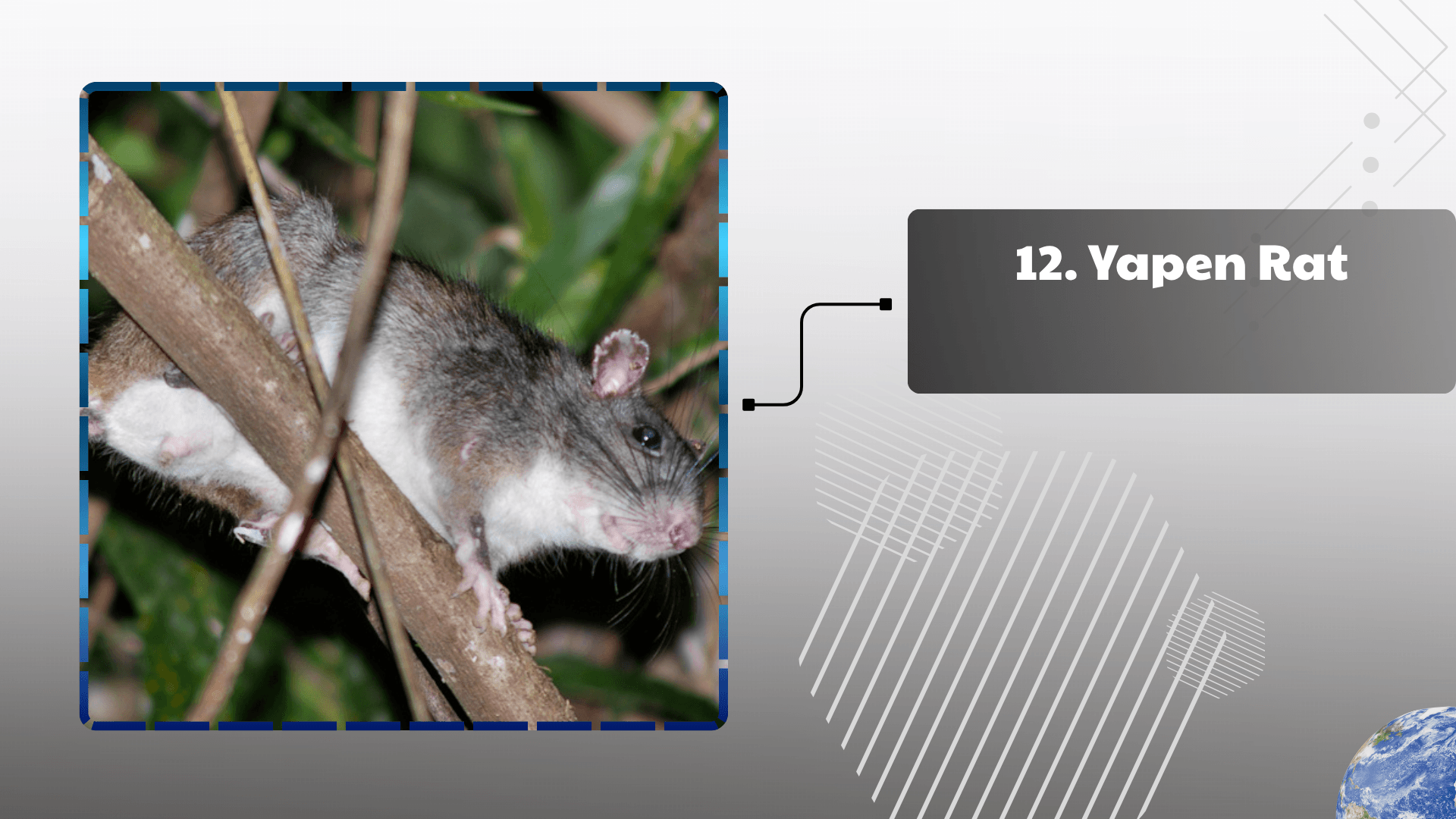
The Yapen Rat is a rare island rodent native to Yapen Island in Indonesia. Because island ecosystems are geographically isolated, species like the Yapen Rat often evolve unique physical traits and behaviors that differ from mainland rodents.
This rat generally has soft brown or gray fur, a long tail, and sensitive whiskers used for navigating dense vegetation and nighttime environments. Like many tropical rodents, it is mostly nocturnal and avoids daytime predators.
Yapen Rats inhabit tropical forests where they feed on seeds, fruits, nuts, insects, and plant material. Their diet helps recycle nutrients and spread seeds throughout the ecosystem.
Island rodents face unique ecological pressures because they often evolve without many predators. However, introduced animals such as cats, snakes, and invasive rats can severely threaten native island species.
Researchers studying island biodiversity are especially interested in rodents like the Yapen Rat because they provide insight into evolution, adaptation, and ecological specialization.
The future of this species depends heavily on habitat protection. Deforestation and invasive predators can quickly destabilize small island ecosystems and endanger native wildlife populations.
Although little known internationally, the Yapen Rat plays an important ecological role within its island forest habitat.
13. Glacier Rat
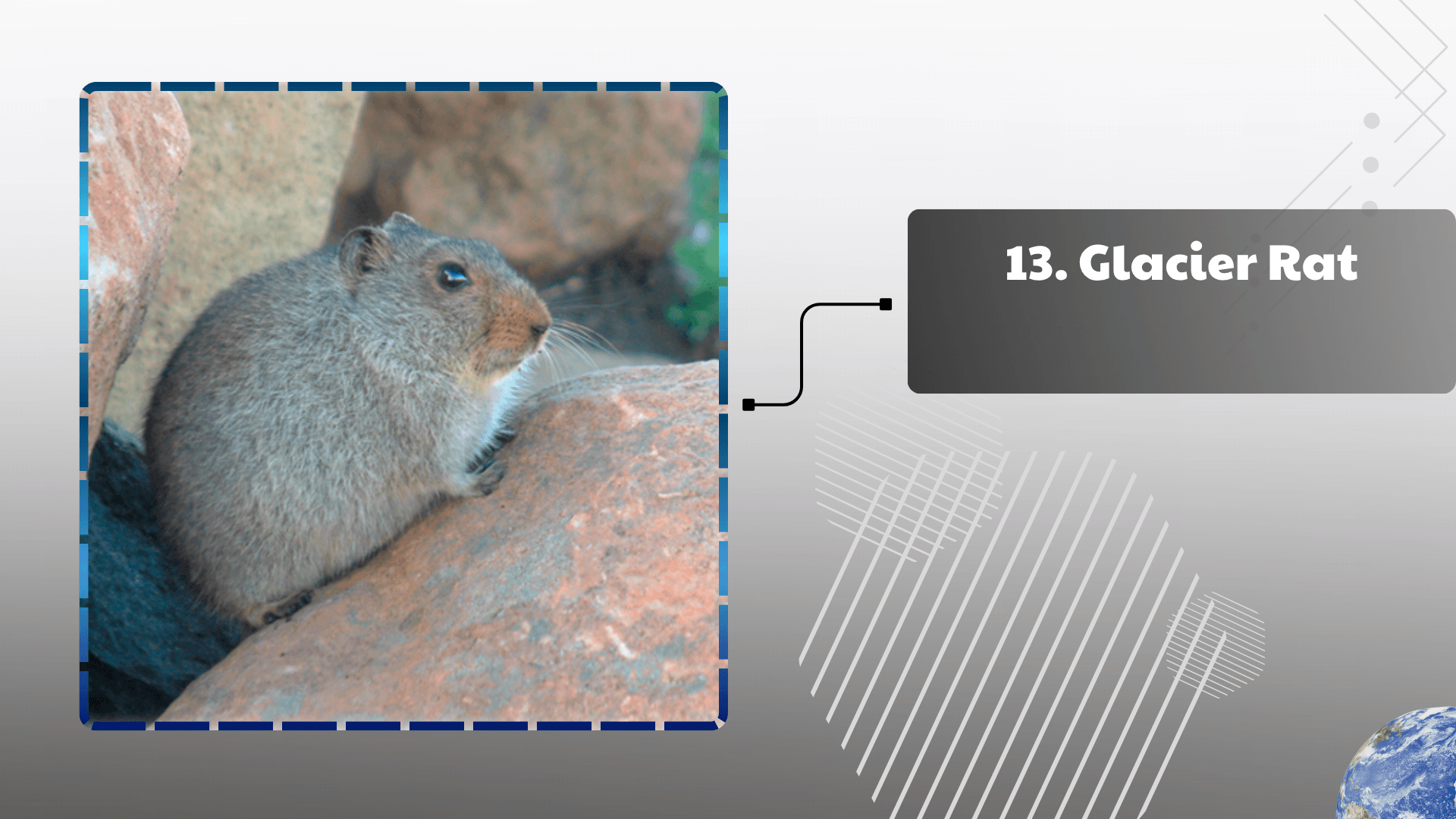
The Glacier Rat is a remarkable rodent adapted to cold mountain and alpine environments. Unlike tropical rat species, this rat survives in harsh climates with low temperatures, rocky terrain, and limited vegetation.
Glacier Rats typically have thick insulating fur that protects them against freezing conditions. Their compact bodies help conserve heat, while strong claws allow them to move through rocky environments and dig protective shelters.
These rats feed on roots, seeds, grasses, mosses, and small insects available in alpine habitats. Because food resources are limited, they must forage efficiently and store energy whenever possible.
One fascinating feature of Glacier Rats is their ability to survive in ecosystems where many mammals struggle. They often build nests inside rock crevices or underground burrows that provide protection from snow, predators, and strong winds.
Predators such as hawks, foxes, and mountain snakes hunt Glacier Rats, making alertness and camouflage essential survival tools.
Climate change poses a major threat to alpine rodent species. Rising temperatures can alter vegetation patterns, reduce snow cover, and disrupt ecological balance in mountain habitats.
The Glacier Rat demonstrates how adaptable rodents can become when evolving in extreme environments far from cities and tropical forests.
14. Sahyadris Forest Rat
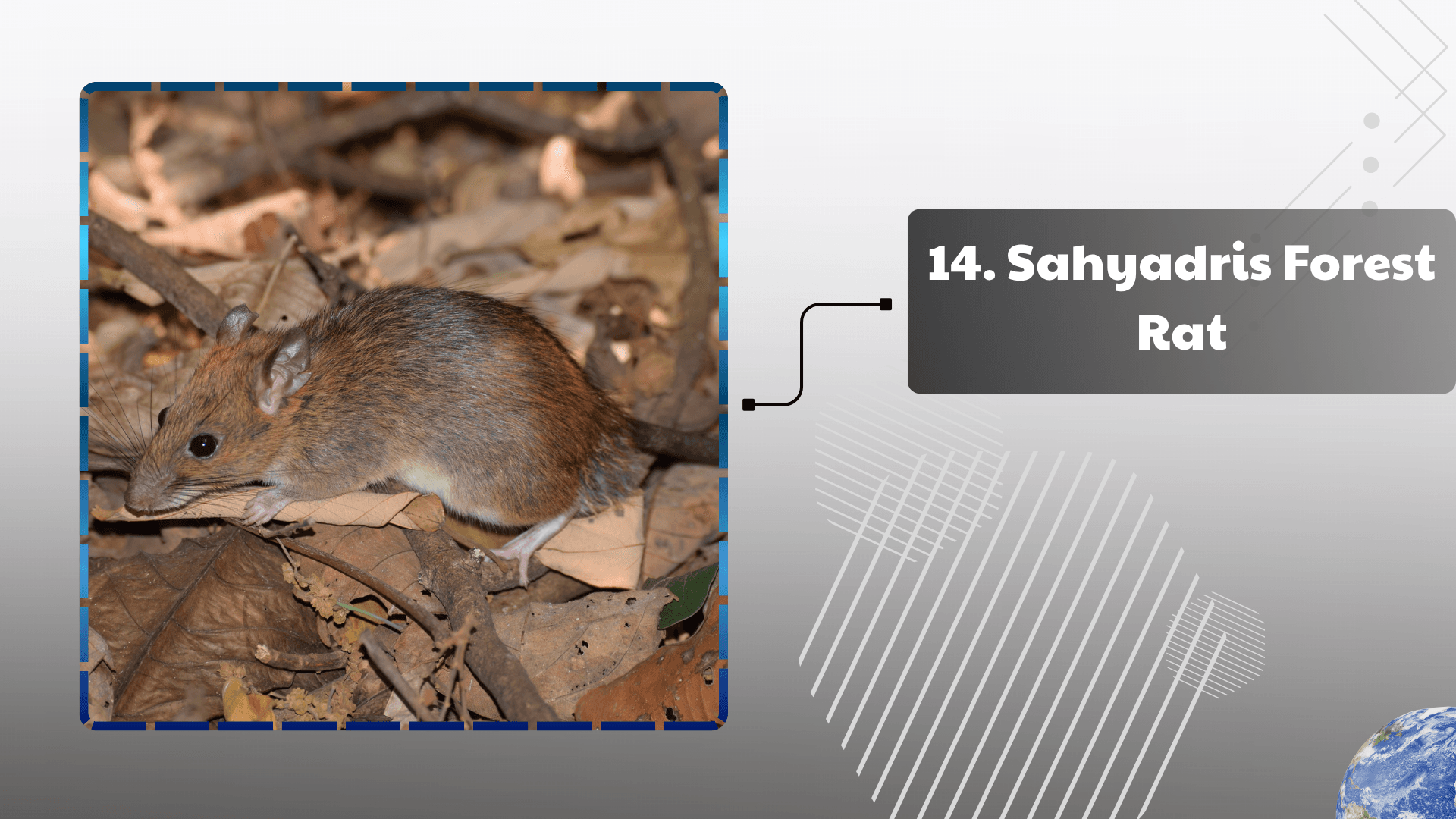
The Sahyadris Forest Rat is a wild rodent native to the Western Ghats region of India, an area famous for its rich biodiversity and dense tropical forests. This species is highly adapted to humid woodland environments where vegetation cover is thick and food resources are seasonal.
Sahyadris Forest Rats usually possess dark fur, long tails, and strong climbing abilities that help them navigate trees and forest undergrowth. They are mostly nocturnal and avoid direct contact with humans.
Their diet includes fruits, seeds, leaves, fungi, and insects found in the forest ecosystem. Like many forest rodents, they contribute to seed dispersal and nutrient cycling, helping maintain plant diversity.
The Western Ghats are considered one of the world’s most important ecological hotspots, meaning species living there often exist nowhere else. As a result, the Sahyadris Forest Rat is valuable for biodiversity conservation studies.
Deforestation, road construction, and agricultural expansion threaten the natural habitats of many Indian forest rodents. Habitat fragmentation can isolate populations and reduce genetic diversity over time.
Scientists continue studying rodents in the Western Ghats because they reveal important patterns of evolution and ecological adaptation in tropical Asia.
The Sahyadris Forest Rat highlights the incredible diversity hidden within India’s rainforest ecosystems.
15. Sula Archipelago Rat
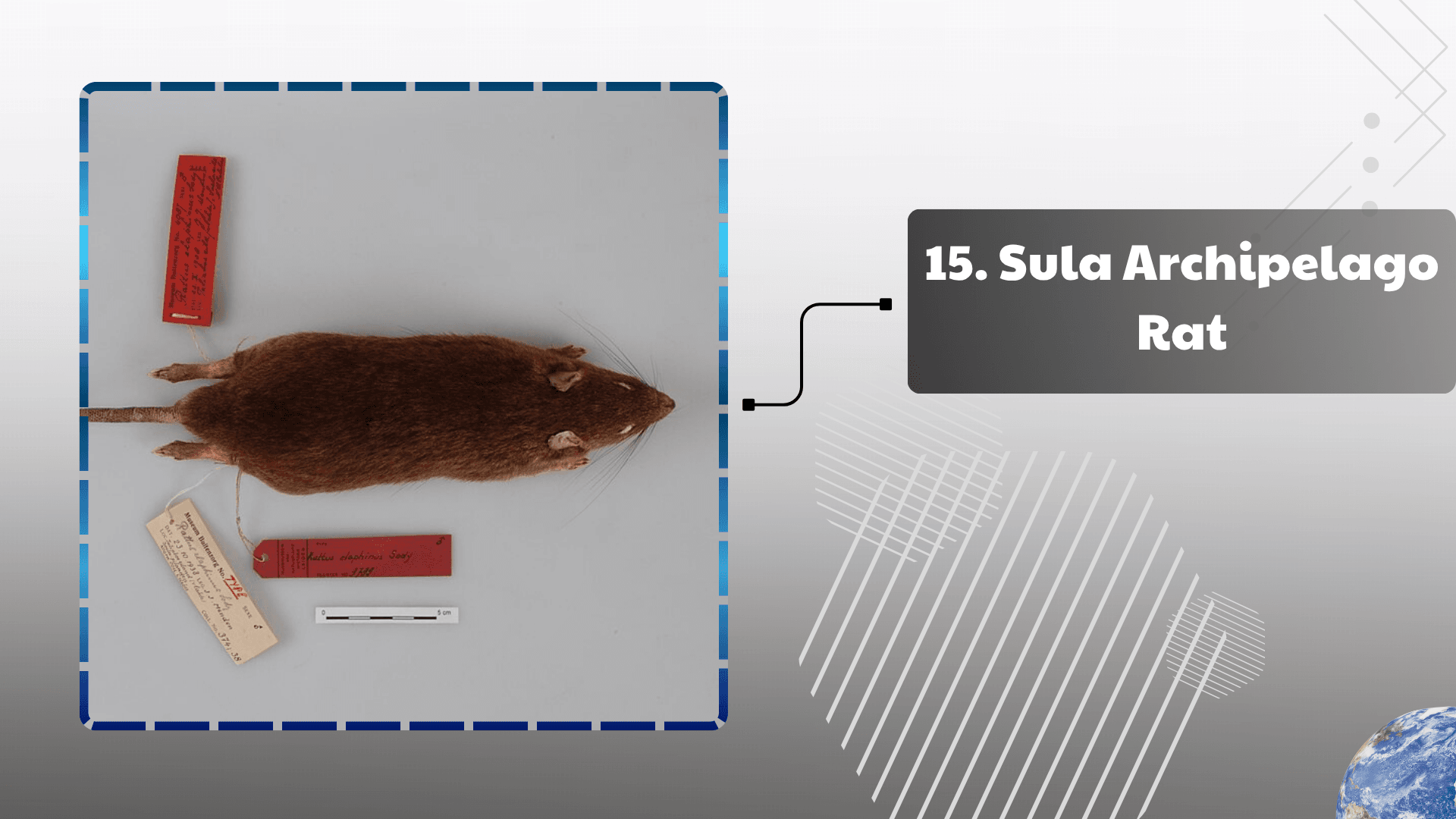
The Sula Archipelago Rat is another island species found in Indonesia’s remote Sula Islands. Like many island rodents, this species evolved in relative isolation, leading to specialized physical and behavioral adaptations.
It generally has soft dark fur, large whiskers, and a flexible tail useful for balance and movement through forest habitats. The rat spends much of its time searching for seeds, fruits, insects, and vegetation on the forest floor.
Island ecosystems are extremely sensitive to environmental changes. Even small habitat disturbances can significantly affect native rodent populations. Introduced predators such as domestic cats and invasive rat species are especially dangerous.
The Sula Archipelago Rat plays an important ecological role by dispersing seeds and serving as prey for native predators. Without rodents, many island ecosystems would lose important links in their food chains.
Researchers studying island mammals often focus on rodents because they evolve rapidly under isolated conditions. These adaptations provide valuable information about evolutionary biology and species diversification.
Conservation efforts in island habitats are essential because isolated wildlife populations are often highly vulnerable to extinction.
The Sula Archipelago Rat is yet another example of how the word “rat” describes an incredibly wide range of animals living in dramatically different ecosystems around the world.
16. Spiny Seram Island Rat
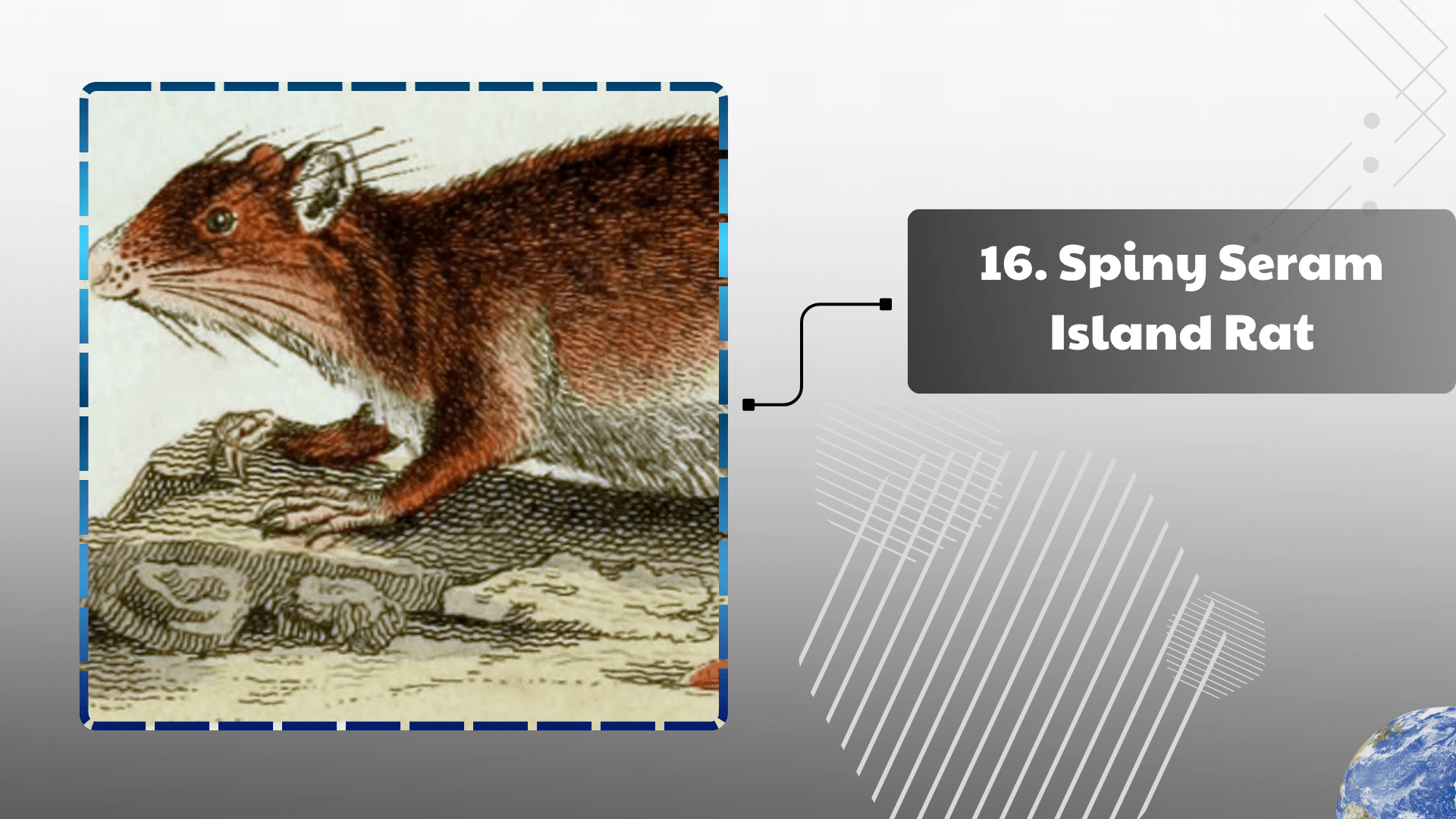
The Spiny Seram Island Rat is a rare tropical rodent native to Seram Island in Indonesia. This species is especially interesting because of its coarse, spiny-looking fur, which gives it extra protection against predators and harsh forest conditions. Unlike the smooth-coated rats commonly seen in cities, this rat has evolved physical adaptations specifically suited for survival in dense island rainforests.
Seram Island is part of the Maluku Islands, a region known for unique biodiversity and isolated ecosystems. Animals living there often evolve independently for thousands of years, leading to species found nowhere else in the world.
The Spiny Seram Island Rat spends most of its life in humid forest environments where it searches for seeds, fruits, roots, insects, and fallen plant material. It is mostly nocturnal, meaning it becomes active during the night when temperatures are cooler and predators are less active.
Its sharp whiskers and sensitive hearing help it navigate dark forest floors filled with leaves, roots, and branches. Like many wild rats, it relies heavily on smell and touch rather than vision alone.
The spiny fur may also help discourage predators such as snakes, owls, and small carnivorous mammals. While not true quills like those of a porcupine, the stiff hair provides some defensive advantage.
Deforestation remains the biggest threat to this species. Logging and agricultural expansion continue reducing natural forest habitat across many Indonesian islands.
Scientists study island rodents like the Spiny Seram Island Rat because they provide important insight into evolution, adaptation, and biodiversity conservation.
17. Hoogerwerf’s Sumatran Rat
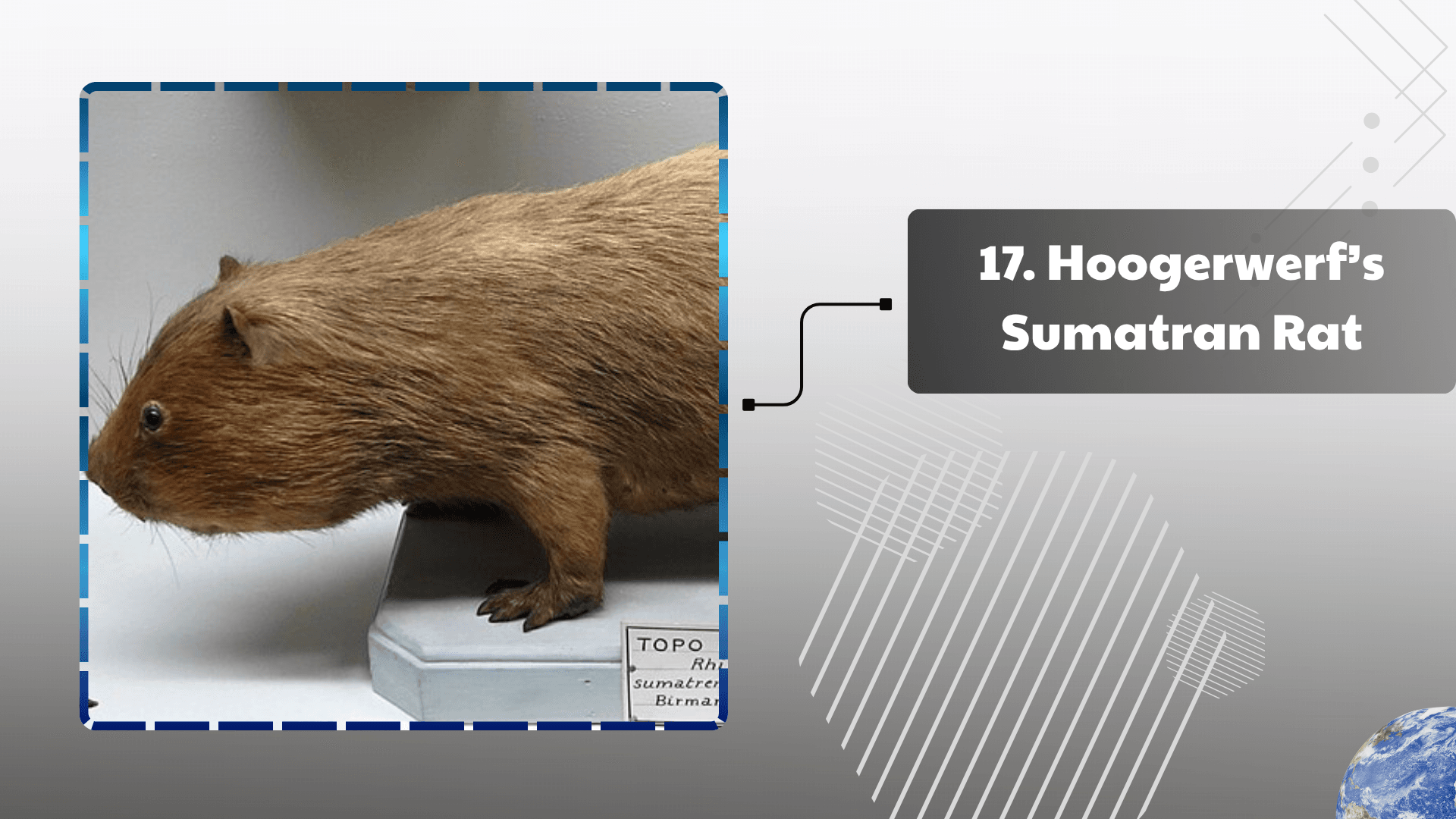
Hoogerwerf’s Sumatran Rat is a forest-dwelling rodent native to Sumatra, one of the largest islands in Indonesia. This species is rarely discussed outside scientific wildlife studies, yet it represents an important part of Southeast Asia’s rainforest biodiversity.
The rat typically has dark brown fur, a slender body, and a long tail adapted for climbing and balancing through dense vegetation. Its appearance helps it blend into the forest floor and avoid predators.
Like many rainforest rodents, this species plays a major ecological role in seed dispersal and nutrient recycling. By feeding on fruits and seeds, it helps spread plant species throughout the forest ecosystem.
Hoogerwerf’s Sumatran Rat is believed to spend time both on the ground and in low vegetation. This flexible movement pattern allows it to access different food sources while escaping predators.
Rainforests in Sumatra face severe pressure from logging, palm oil plantations, mining, and human development. Habitat fragmentation isolates rodent populations and reduces biodiversity across the region.
Scientists continue documenting species like this because many tropical rodents remain poorly studied. Some may even become endangered before researchers fully understand their ecological importance.
The existence of Hoogerwerf’s Sumatran Rat reminds wildlife enthusiasts that tropical forests contain countless hidden mammals still largely unknown to the wider world.
18. Zelebor’s Nicobar Rat
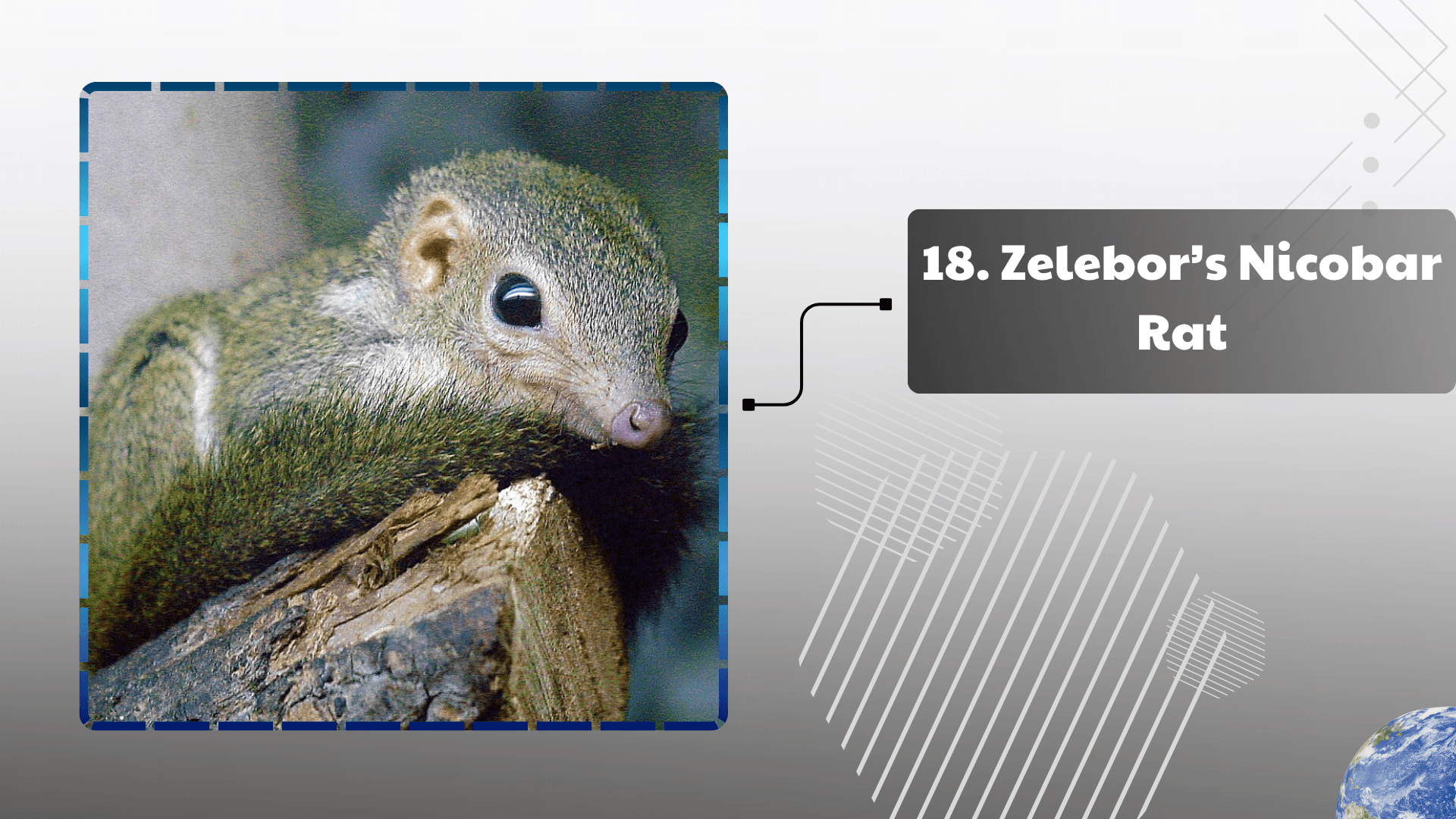
Zelebor’s Nicobar Rat is an island rodent associated with the Nicobar Islands in the Indian Ocean. Island rodents often evolve unique survival strategies because they live in isolated ecosystems with limited predators and food resources.
This species generally has dark fur, large ears, and a body shape suited for humid tropical conditions. Its tail helps with balance while climbing branches or moving across uneven terrain.
The Nicobar Islands are biologically important because they contain many endemic species—animals found nowhere else on Earth. Rodents living there contribute to ecological balance through seed dispersal and nutrient cycling.
Zelebor’s Nicobar Rat feeds on fruits, seeds, nuts, insects, and plant material found within tropical forests. It likely uses hidden burrows or dense vegetation for shelter during the day.
One major challenge facing island rodents is vulnerability to invasive species. Introduced predators such as cats and invasive rats can quickly reduce native populations.
Natural disasters such as tsunamis and severe storms also threaten small island ecosystems by destroying habitat and food sources.
Researchers studying island biodiversity consider rodents like Zelebor’s Nicobar Rat important because they help explain how species evolve in isolated environments over long periods of time.
19. African Giant Pouched Rat
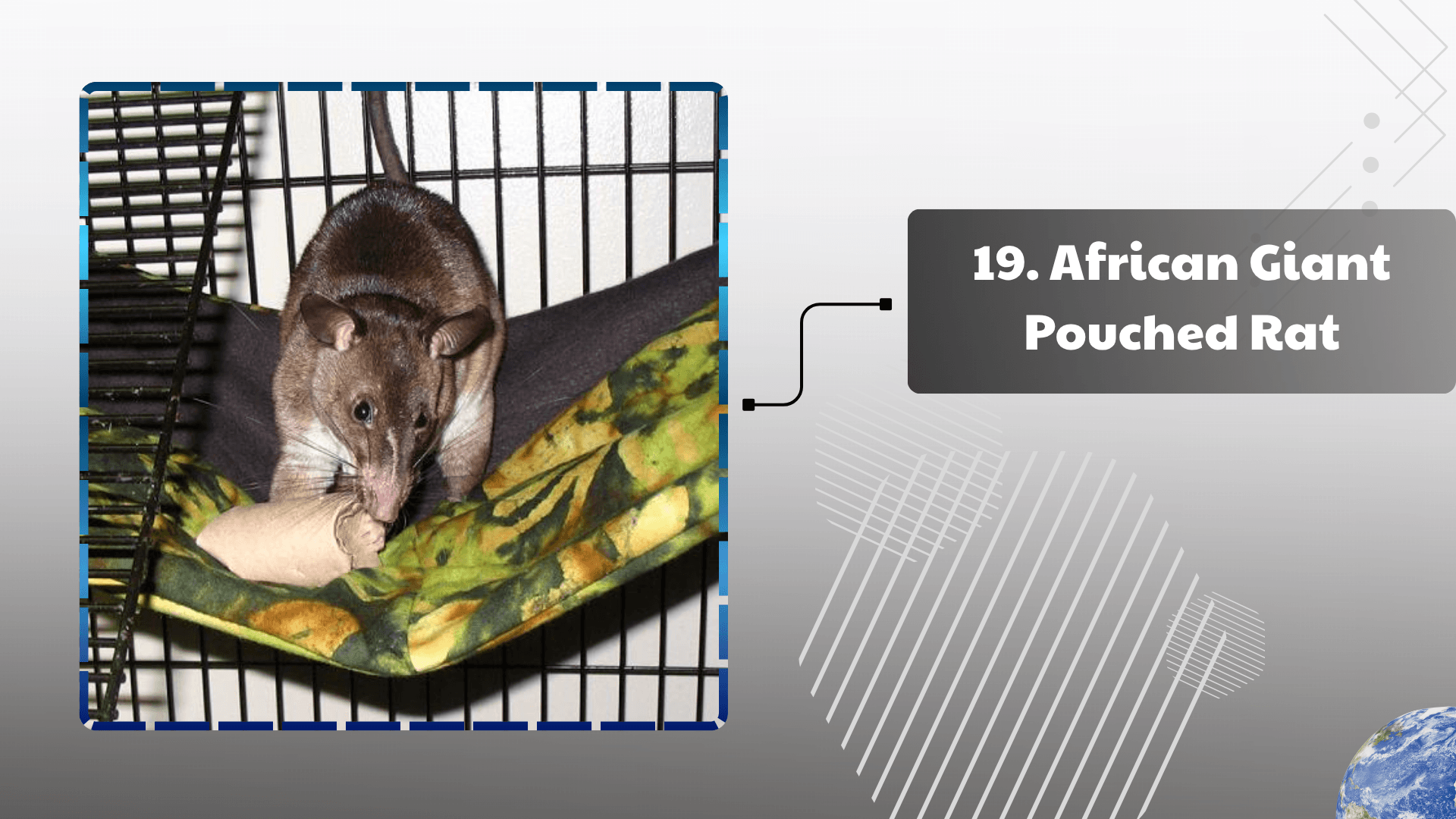
The African Giant Pouched Rat is one of the largest and most intelligent rat species in the world. Native to sub-Saharan Africa, this remarkable rodent is famous not only for its size but also for its exceptional sense of smell and trainability.
Unlike common urban rats, African Giant Pouched Rats have cheek pouches used to carry food. Adults can grow much larger than ordinary rats, with long bodies, powerful legs, and coarse brown fur.
These rats inhabit grasslands, forests, and savannas where they feed on fruits, seeds, nuts, insects, and roots. They are excellent diggers and often create complex burrow systems underground.
One of the most fascinating aspects of this species is its use in humanitarian work. Specially trained African Giant Pouched Rats are used to detect landmines and even identify tuberculosis in medical samples. Their sense of smell is so accurate that they can locate explosives more safely and cheaply than many machines.
These rats are highly intelligent and capable of learning complex tasks through positive reinforcement training. Their calm temperament also makes them easier to work with compared to some smaller rodent species.
Although large, they are generally shy animals that avoid humans in the wild. Predators include snakes, birds of prey, and wild carnivorous mammals.
The African Giant Pouched Rat demonstrates that rats are far more intelligent and useful than many people realize.
20. Gambian Pouched Rat
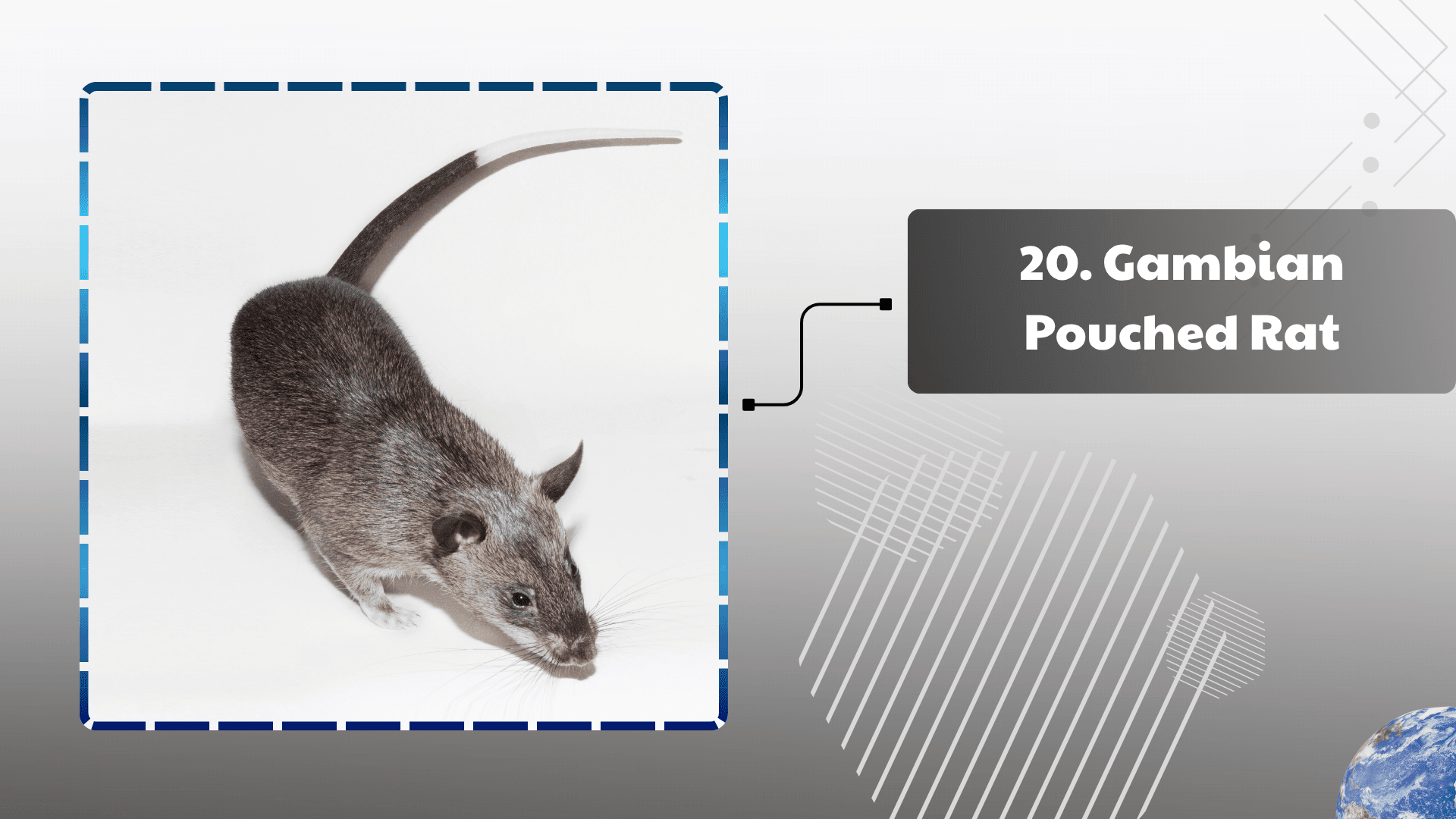
The Gambian Pouched Rat is closely related to the African Giant Pouched Rat and is widely recognized for its intelligence, strength, and advanced scent detection abilities. Native to Africa, this species has gained international attention due to scientific research and specialized training programs.
These rats are large rodents with gray-brown fur, long tails, and expandable cheek pouches used for carrying food. Their strong sense of smell allows them to locate buried materials with incredible precision.
In the wild, Gambian Pouched Rats inhabit forests, grasslands, and rocky areas. They are omnivorous and consume fruits, seeds, insects, roots, and small invertebrates.
One of the most remarkable facts about this species is its role in landmine detection. Organizations train these rats to identify explosives in former war zones. Because they are lightweight, they can walk across minefields without triggering explosions.
They are also used in medical research programs to help detect tuberculosis samples faster than traditional laboratory methods in some regions.
Despite their usefulness, Gambian Pouched Rats can become invasive if introduced outside their native habitat. In some areas, escaped populations have caused ecological concerns by competing with local wildlife.
Still, these intelligent rodents continue changing public perception about rats by demonstrating advanced learning ability, trainability, and valuable contributions to human society.
21. Kangaroo Rat
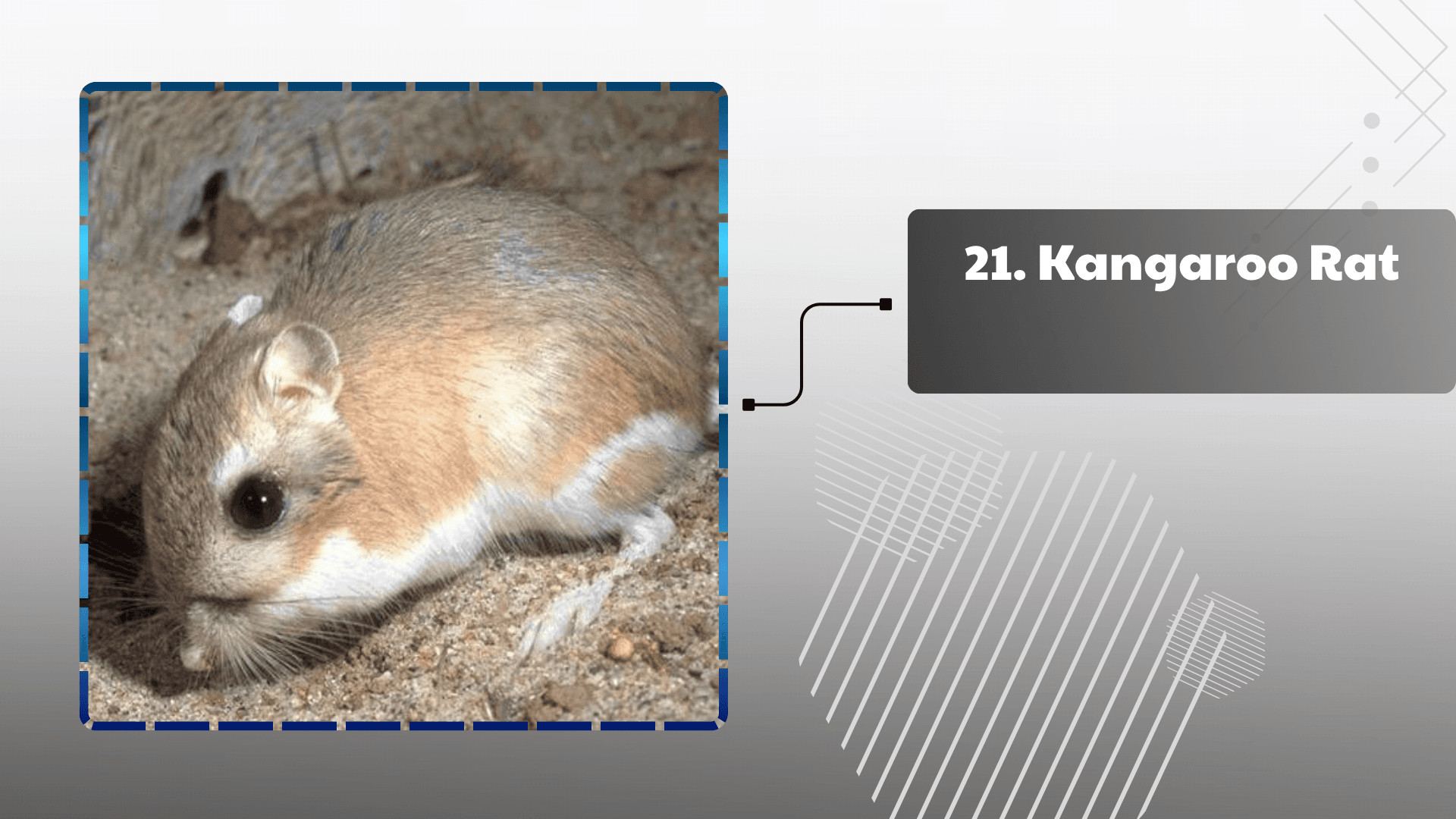
The Kangaroo Rat is one of the most unusual rodents in North America. Although it is not a “true rat” in the scientific genus Rattus, it is commonly included among different types of rats because of its body structure and rodent characteristics. This desert specialist is famous for its long hind legs, hopping movement, and extraordinary ability to survive without drinking water.
Kangaroo Rats are found mainly in dry deserts and arid grasslands across the western United States and parts of Mexico. Their large back legs allow them to leap across sandy terrain similarly to a kangaroo, which is how they earned their name.
These rodents usually have soft tan or brown fur, large eyes, and long tails used for balance during jumping. Their physical appearance is perfectly suited for desert survival.
One of the most remarkable adaptations of the Kangaroo Rat is water conservation. Instead of drinking water directly, it obtains moisture from seeds and plants. Its kidneys are extremely efficient at retaining water, allowing it to survive in harsh desert climates.
Kangaroo Rats are mostly nocturnal. During the daytime, they stay inside cool underground burrows that protect them from heat and predators. At night, they emerge to collect seeds and vegetation.
Predators such as snakes, owls, foxes, and coyotes hunt Kangaroo Rats. To survive, these rodents rely on fast reflexes, powerful jumps, and excellent hearing.
Kangaroo Rats play an important ecological role by dispersing seeds and helping maintain desert plant diversity. Their survival strategies make them one of the most fascinating desert rodents in the world.
22. Blind Mole Rat
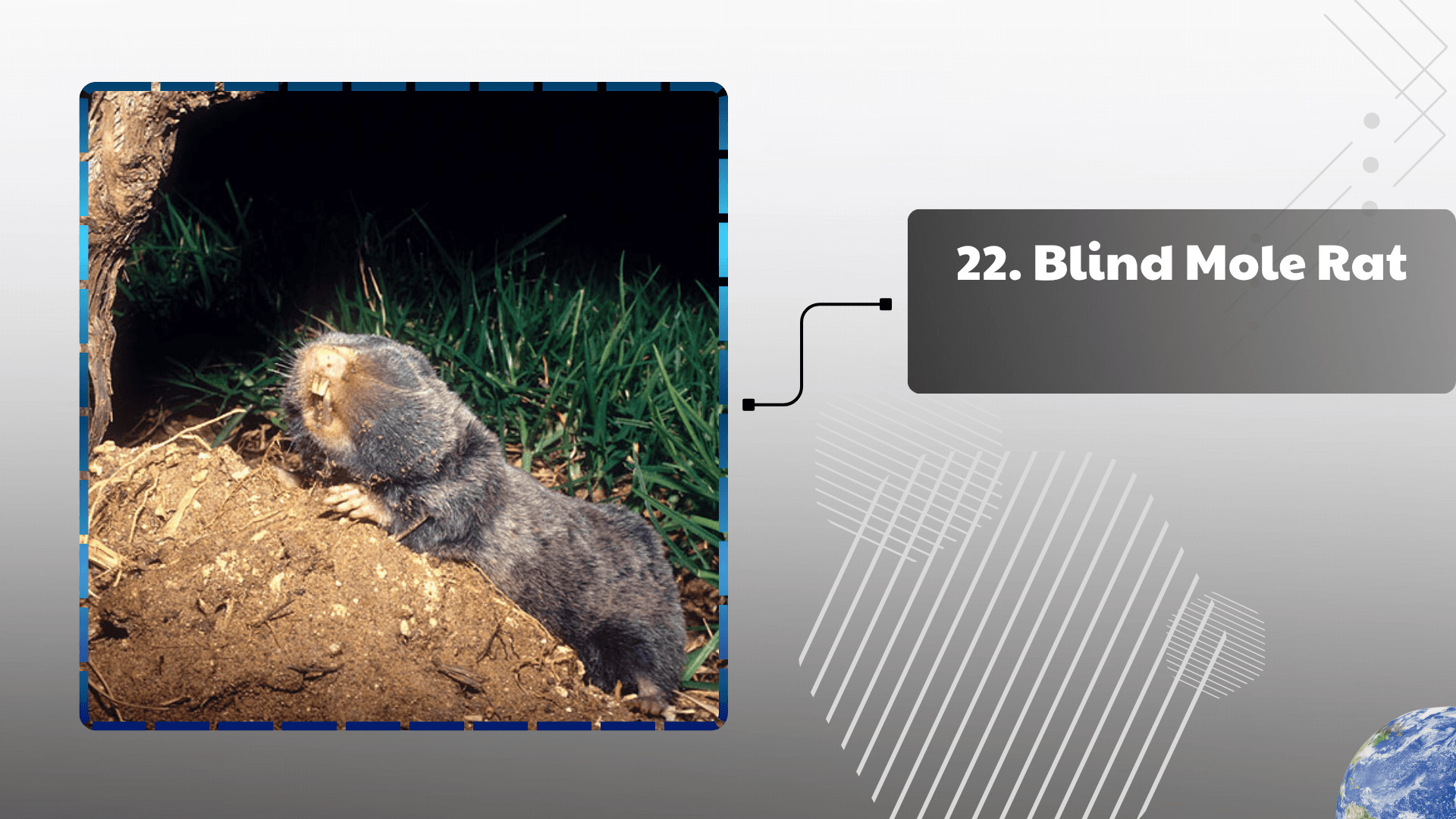
The Blind Mole Rat is a highly specialized underground rodent found in parts of Europe, the Middle East, and Asia. Unlike common surface-dwelling rats, this species spends nearly its entire life below ground.
Blind Mole Rats have cylindrical bodies, short limbs, powerful digging claws, and almost invisible eyes hidden beneath skin and fur. Since they live in complete darkness underground, vision is not important for survival.
Instead of relying on sight, Blind Mole Rats depend on touch, vibration, and smell to navigate underground tunnel systems. Their strong front teeth are used for digging through soil and roots.
These rodents feed mainly on roots, bulbs, and underground plant material. Their tunnels may extend for long distances and include nesting chambers, storage areas, and escape routes.
Scientists are especially interested in Blind Mole Rats because of their unusual biology. Some studies suggest they possess remarkable resistance to cancer and low-oxygen environments, making them important for medical research.
Blind Mole Rats are generally solitary and territorial animals. Each individual maintains its own tunnel system and rarely tolerates intruders.
Although they may damage crops in agricultural areas, Blind Mole Rats are impressive examples of extreme evolutionary adaptation to underground living.
23. Fancy Rat

The Fancy Rat is the most common domesticated pet rat in the world. Descended mainly from the Brown Rat, Fancy Rats have been selectively bred for friendliness, intelligence, and a wide variety of coat colors and patterns.
Unlike wild urban rats, Fancy Rats are known for their social personalities and strong bonds with humans. Many owners compare them to tiny dogs because they can learn tricks, recognize names, and interact affectionately with people.
Fancy Rats come in many colors including white, black, gray, brown, blue, and mixed patterns. Breeders have also developed different ear types, fur textures, and tail variations.
These rats are highly intelligent animals capable of solving puzzles and learning routines quickly. They enjoy exploring, climbing, and playing with enrichment toys.
Fancy Rats are social creatures and generally thrive best when kept with other rats. In groups, they groom each other, sleep together, and communicate through vocal sounds and body language.
Their diet usually includes specially formulated rat food along with fruits, vegetables, grains, and occasional protein sources. Responsible care requires clean housing, exercise, and mental stimulation.
Over the years, Fancy Rats have helped improve public understanding of rats by showing how gentle, affectionate, and intelligent these animals can be.
24. Rex Rat
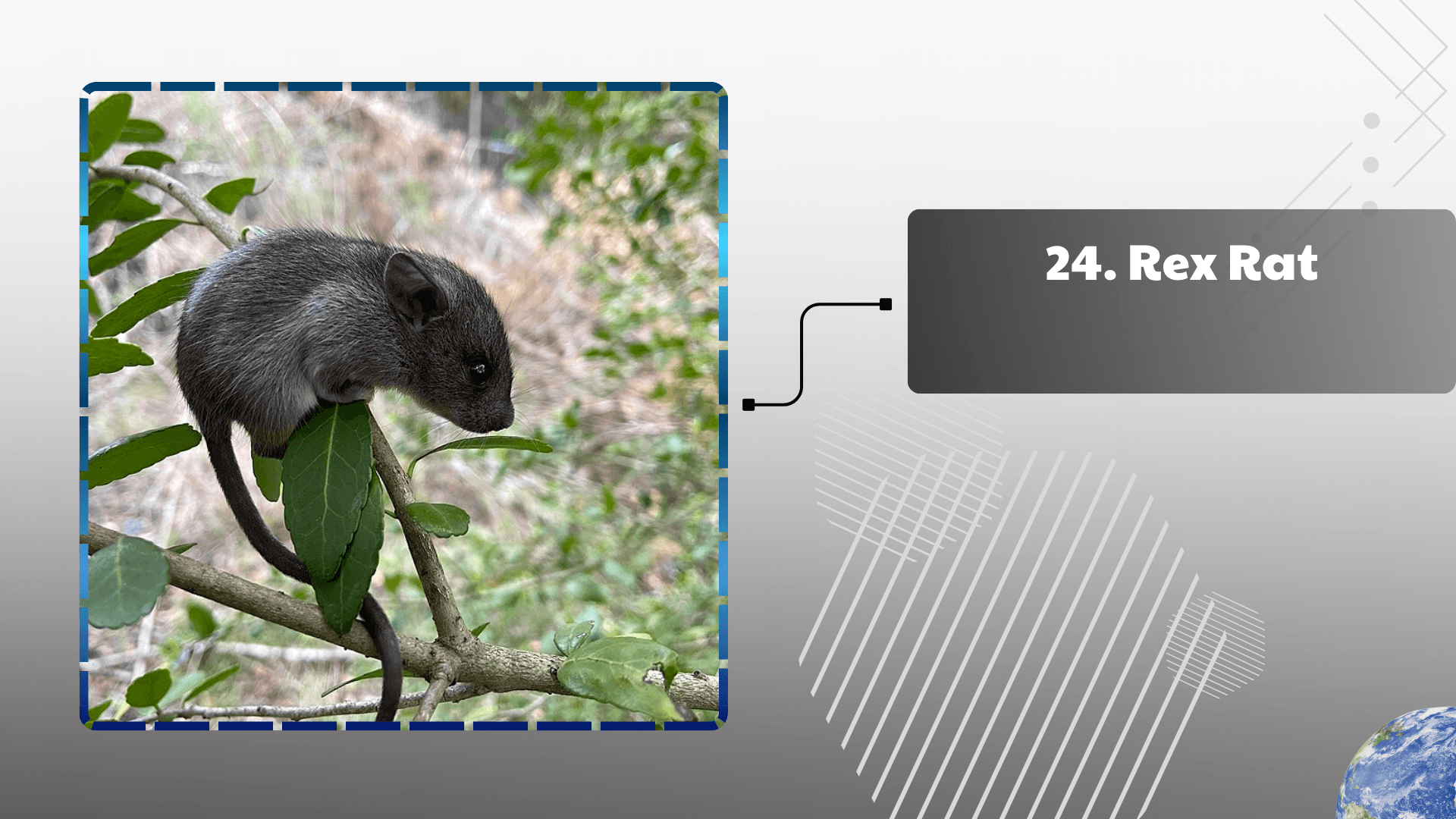
The Rex Rat is a unique domesticated rat variety famous for its curly fur and wavy whiskers. This unusual appearance results from a genetic trait affecting hair texture.
Rex Rats can appear in many coat colors and patterns, but their curly fur immediately distinguishes them from standard smooth-coated rats. Some individuals have dense plush coats, while others display looser curls.
Like other Fancy Rat varieties, Rex Rats are highly social and intelligent. They enjoy human interaction and can form strong bonds with their owners.
Their playful personalities make them popular pets among rodent enthusiasts. Rex Rats enjoy climbing, exploring tunnels, solving puzzles, and interacting with enrichment toys.
The curly whiskers of a Rex Rat are not just decorative—they still function as important sensory tools used for navigation and environmental awareness.
These rats require the same general care as other pet rats, including social companionship, proper nutrition, and spacious cages with opportunities for exercise.
Because of their unusual appearance and friendly temperament, Rex Rats remain one of the most recognizable domesticated rat varieties in the pet world.
25. Dumbo Rat

The Dumbo Rat is one of the most popular pet rat varieties due to its distinctive large, low-set ears that resemble the famous Disney elephant character Dumbo.
Unlike standard rats with ears positioned higher on the head, Dumbo Rats have ears placed lower and farther apart, giving them a rounded and especially cute facial appearance.
These rats can appear in many different coat colors and fur textures, including smooth, rex, satin, and hairless varieties. Despite their different appearance, they belong to the same species as ordinary Fancy Rats.
Dumbo Rats are widely loved for their calm, gentle personalities. Many owners describe them as affectionate, curious, and highly trainable.
Like other domesticated rats, Dumbo Rats are extremely intelligent. They can recognize routines, respond to names, and learn tricks through positive reinforcement.
Social interaction is very important for Dumbo Rats. They generally thrive when housed with companions and provided with regular human attention.
Their popularity has helped improve the reputation of pet rats worldwide by showing that rats can be loving, clean, and emotionally intelligent animals rather than simply urban pests.
26. Satin Rat
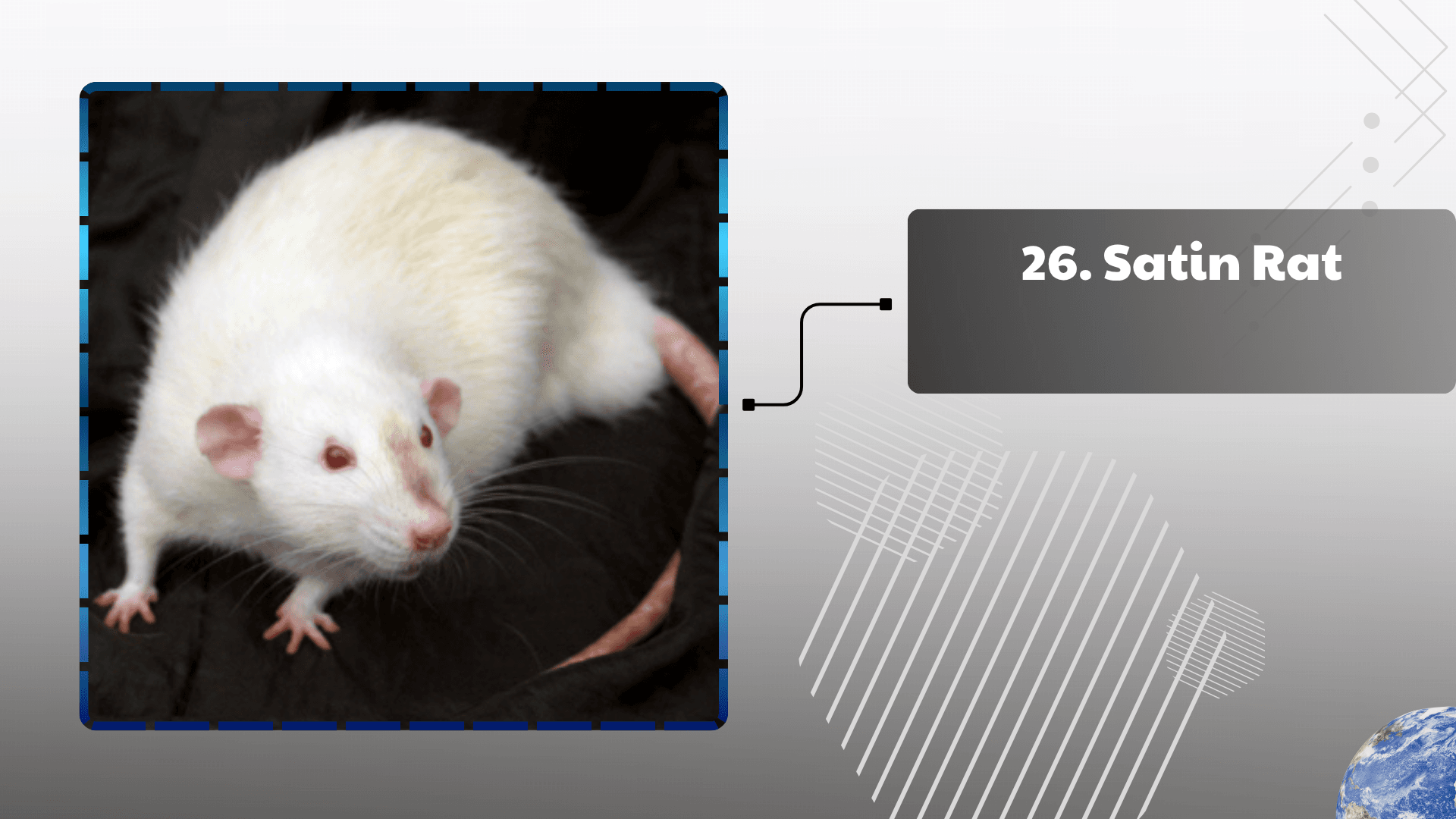
The Satin Rat is a beautiful domesticated rat variety recognized for its glossy, silky coat that reflects light with a shiny appearance. This unique fur texture is caused by a recessive genetic trait that changes the structure of individual hairs, making the coat appear smoother and more luminous than standard rat fur.
Satin Rats can come in many different colors and patterns, including black, white, gray, chocolate, blue, and mixed varieties. Their striking appearance makes them especially popular among rat enthusiasts and breeders.
Beyond their appearance, Satin Rats share the same intelligence and social behavior found in other Fancy Rat varieties. They are curious animals that enjoy exploring their environment, climbing structures, and interacting with people.
These rats are highly social and often form close bonds with both humans and other rats. They communicate through body language, grooming behavior, and soft vocalizations.
Satin Rats require regular care and enrichment. Spacious cages, chew toys, climbing platforms, and healthy diets are all important for maintaining their physical and mental health.
Their glossy coats require no special grooming beyond normal cleaning habits because rats naturally groom themselves frequently throughout the day.
The Satin Rat is a perfect example of how selective breeding transformed ordinary rats into admired companion animals with unique appearances and gentle personalities.
27. Hairless Rat
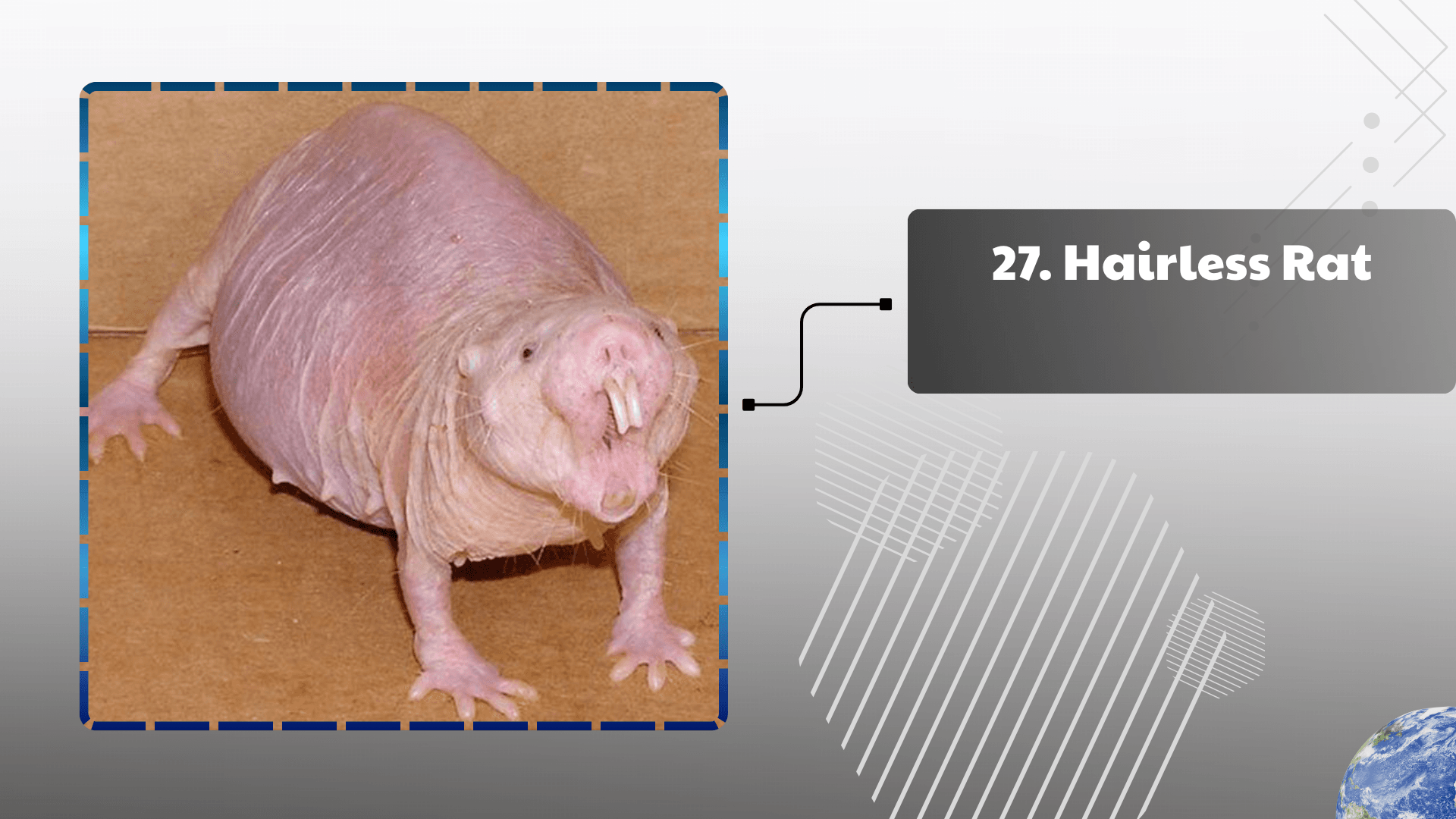
The Hairless Rat is one of the most unusual domesticated rat varieties due to its nearly complete lack of fur. Instead of thick coats, these rats have exposed pink, gray, or spotted skin with only small patches of hair in some individuals.
Hairless Rats were developed through selective breeding and are especially valued in scientific research and among experienced pet owners interested in unique rodents.
Without insulating fur, Hairless Rats are more sensitive to temperature changes than standard rats. They require warm environments and soft bedding to stay comfortable and healthy.
Despite their unusual appearance, Hairless Rats behave much like other Fancy Rats. They are intelligent, social, playful, and capable of forming strong emotional bonds with humans.
These rats enjoy climbing, exploring, and interacting with toys and cage enrichment. Because their skin is exposed, owners must ensure cages remain clean to reduce irritation and scratches.
Hairless Rats often have faster metabolisms than furry rats because their bodies lose heat more easily. As a result, they may eat more food to maintain energy and body temperature.
Although some people find them unusual-looking, many rat enthusiasts appreciate Hairless Rats for their affectionate personalities and fascinating genetics.
28. Tailless Rat
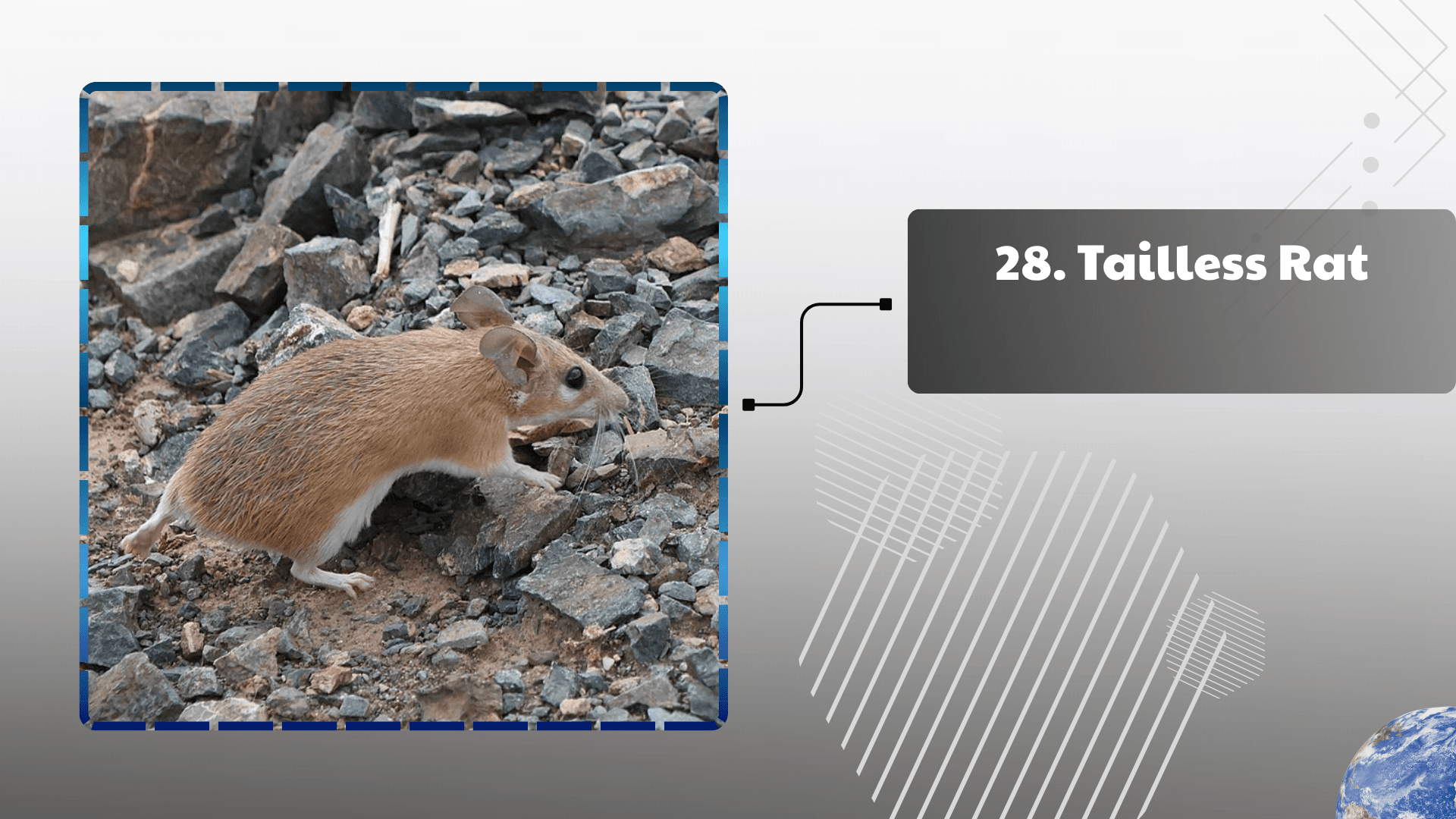
The Tailless Rat, sometimes called a Manx Rat, is a rare domesticated rat variety born without a tail or with only a very short tail. This unusual condition results from genetic mutations affecting spinal development.
Unlike ordinary rats that use their tails for balance, temperature regulation, and communication, Tailless Rats must adapt their movement and posture without this important body part.
These rats often develop stronger balance skills using their legs and body position. However, because the mutation affects the spine, responsible breeding is important to reduce health complications.
Tailless Rats come in many coat colors and fur textures similar to other Fancy Rat varieties. Their personalities are generally friendly, social, and curious.
Like all pet rats, they require companionship, mental stimulation, and opportunities for exercise. Many owners provide climbing toys, tunnels, and safe play areas to keep them active.
Although less common than Dumbo or Rex Rats, Tailless Rats attract attention because of their distinctive appearance and unusual movement patterns.
Their existence highlights how selective breeding has created a wide range of domesticated rat forms beyond the appearance of wild urban rats.
29. Bristle Coat Rat
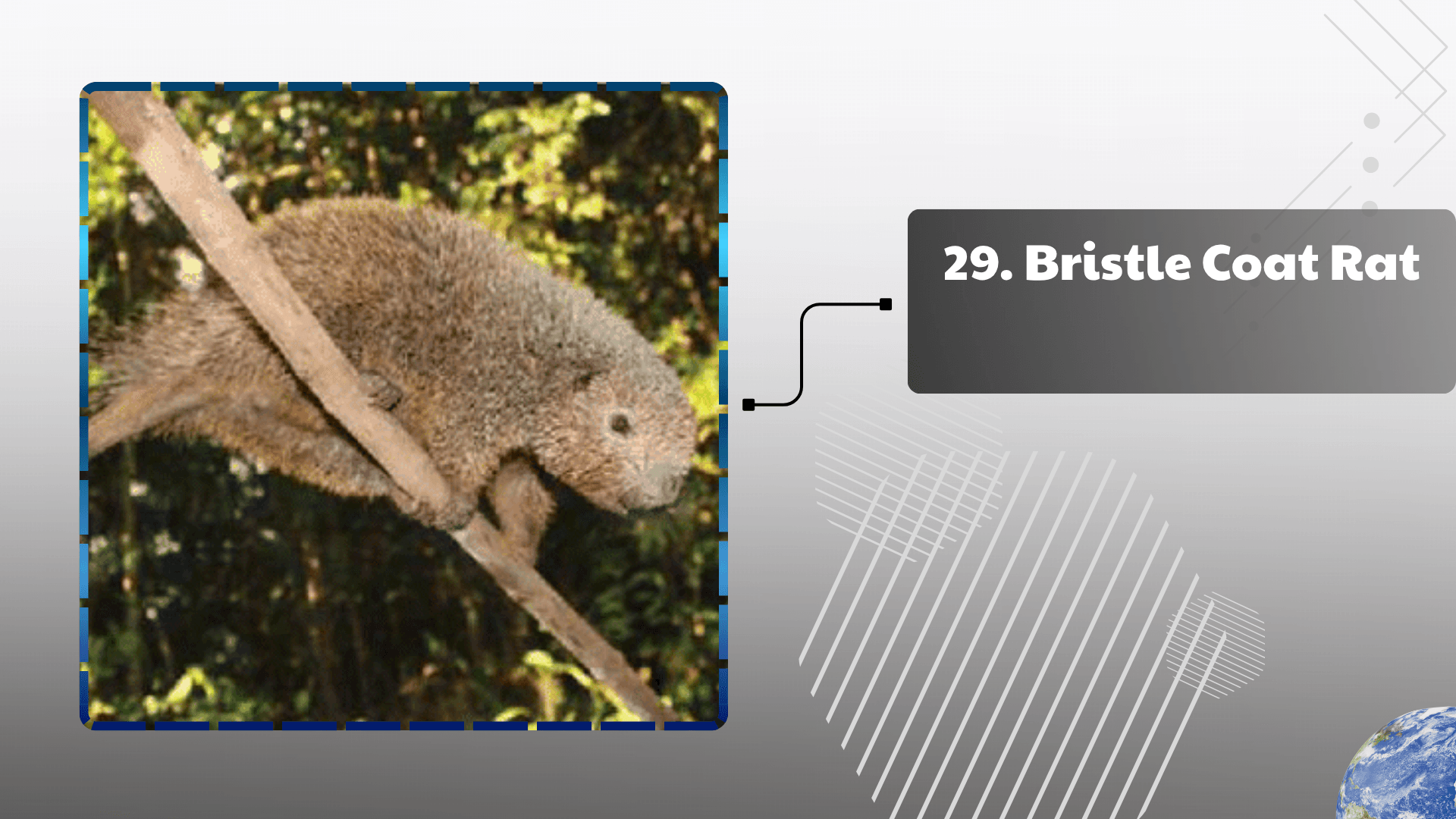
The Bristle Coat Rat is a domesticated variety known for its coarse, rough-textured fur. Unlike smooth-coated rats, these animals have stiff guard hairs that create a rugged and slightly spiky appearance.
This coat texture results from genetic variations affecting hair growth and structure. Some Bristle Coat Rats appear almost wiry, while others display only mildly rough fur.
Despite their tougher appearance, Bristle Coat Rats are gentle and social pets similar to other Fancy Rat varieties. They enjoy interaction with humans and often become highly affectionate companions.
These rats are intelligent problem-solvers capable of learning tricks, exploring mazes, and recognizing familiar routines. Their playful behavior makes them entertaining pets for rodent enthusiasts.
Bristle Coat Rats require balanced diets, clean cages, and opportunities for exercise. Like all rats, they benefit from mental stimulation and social interaction.
Their unusual fur texture has made them increasingly popular among breeders seeking visually unique rat varieties.
The Bristle Coat Rat demonstrates the impressive diversity that selective breeding has created within domesticated rat populations.
30. Standard Rat

The Standard Rat is the classic domesticated Fancy Rat variety with smooth fur, normal ear placement, and a long tail. It closely resembles the natural appearance of the Brown Rat while possessing the calm temperament developed through domestication.
Standard Rats are widely considered ideal beginner pets because they are friendly, intelligent, and relatively easy to care for compared to some exotic rodents.
These rats come in many coat colors and patterns but maintain the traditional body shape associated with ordinary rats. Their smooth fur is easy to maintain because rats groom themselves regularly.
Standard Rats are extremely social animals that enjoy companionship and human interaction. Many can recognize their owners, respond to names, and learn tricks through positive reinforcement.
Their intelligence is one of their most impressive traits. Rats can solve puzzles, memorize routes, and display emotional behaviors such as curiosity, excitement, and affection.
In captivity, Standard Rats require spacious cages with climbing structures, hiding spots, chew toys, and opportunities for daily exercise outside the cage.
Because of their adaptability and friendly personalities, Standard Rats remain one of the most popular pet rodents worldwide and continue helping improve public perception of rats as intelligent companion animals.
31. Pack Rat
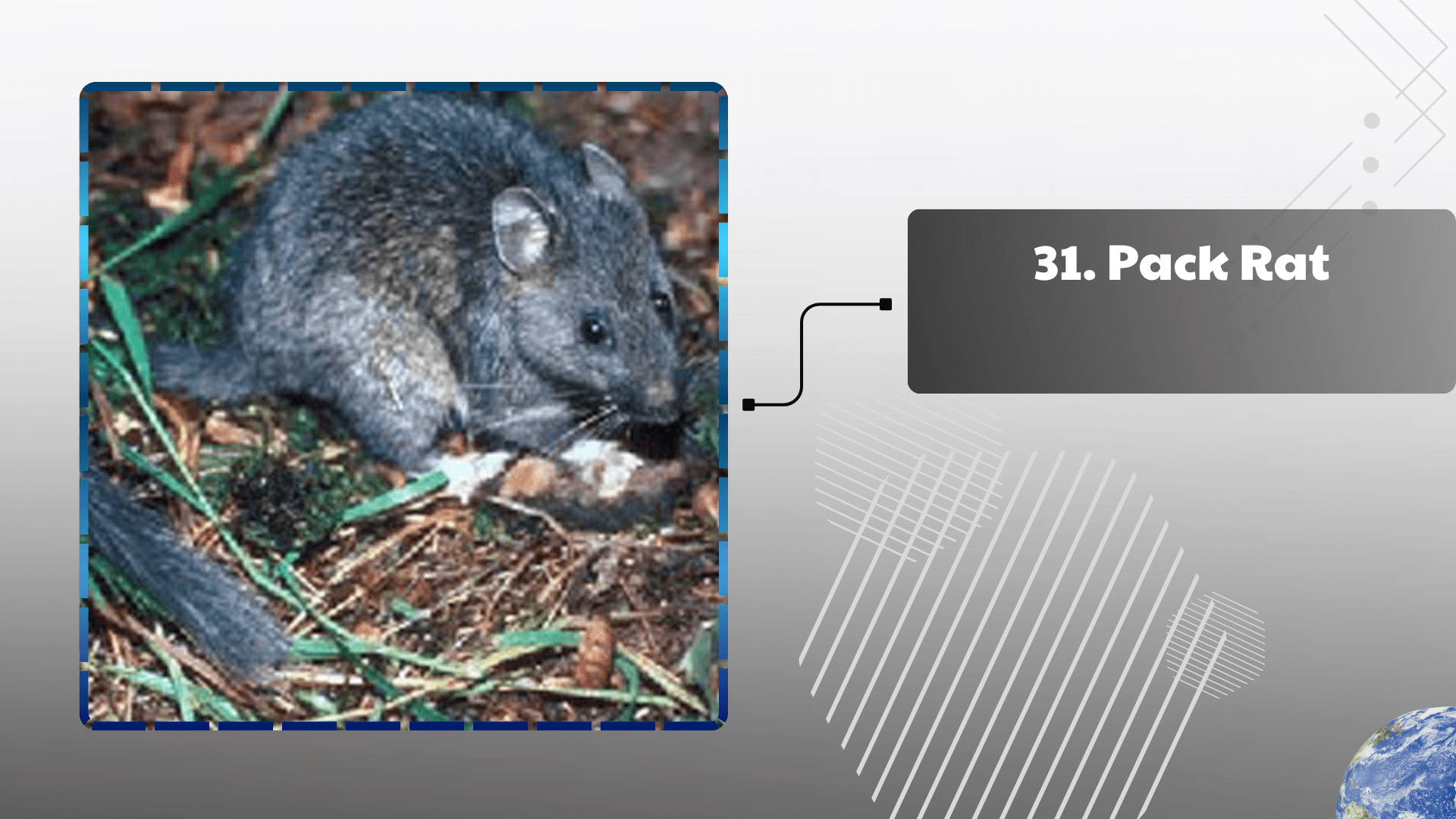
The Pack Rat is one of the most fascinating rodents in North America. Also known as the Woodrat in some regions, this species is famous for collecting shiny and unusual objects. Pack Rats often gather bones, shells, coins, stones, plant pieces, and even human-made items, carrying them back to their nests. This curious behavior earned them the nickname “trade rats” because they sometimes drop one object while stealing another.
Pack Rats are found mainly in deserts, forests, rocky canyons, and dry grasslands throughout the western United States and Mexico. Their appearance varies depending on species, but most have large ears, soft fur, long whiskers, and furry tails.
Unlike urban rats, Pack Rats build large nests called middens. These nests are constructed from sticks, leaves, cactus pieces, and collected objects. Over time, middens can become surprisingly large and may survive for thousands of years in dry climates.
Scientists value ancient Pack Rat middens because they preserve environmental information such as seeds, bones, and plant fragments. Researchers use these preserved materials to study climate history and ecological changes over long periods.
Pack Rats are mostly nocturnal and feed on seeds, fruits, nuts, leaves, cactus, and insects. They are important seed dispersers and help maintain desert and woodland ecosystems.
Predators such as snakes, owls, foxes, and coyotes hunt Pack Rats, making their nests essential for protection and survival.
Their unusual collecting behavior and ecological importance make Pack Rats one of the most interesting rodent species in North America.
32. Woodrat
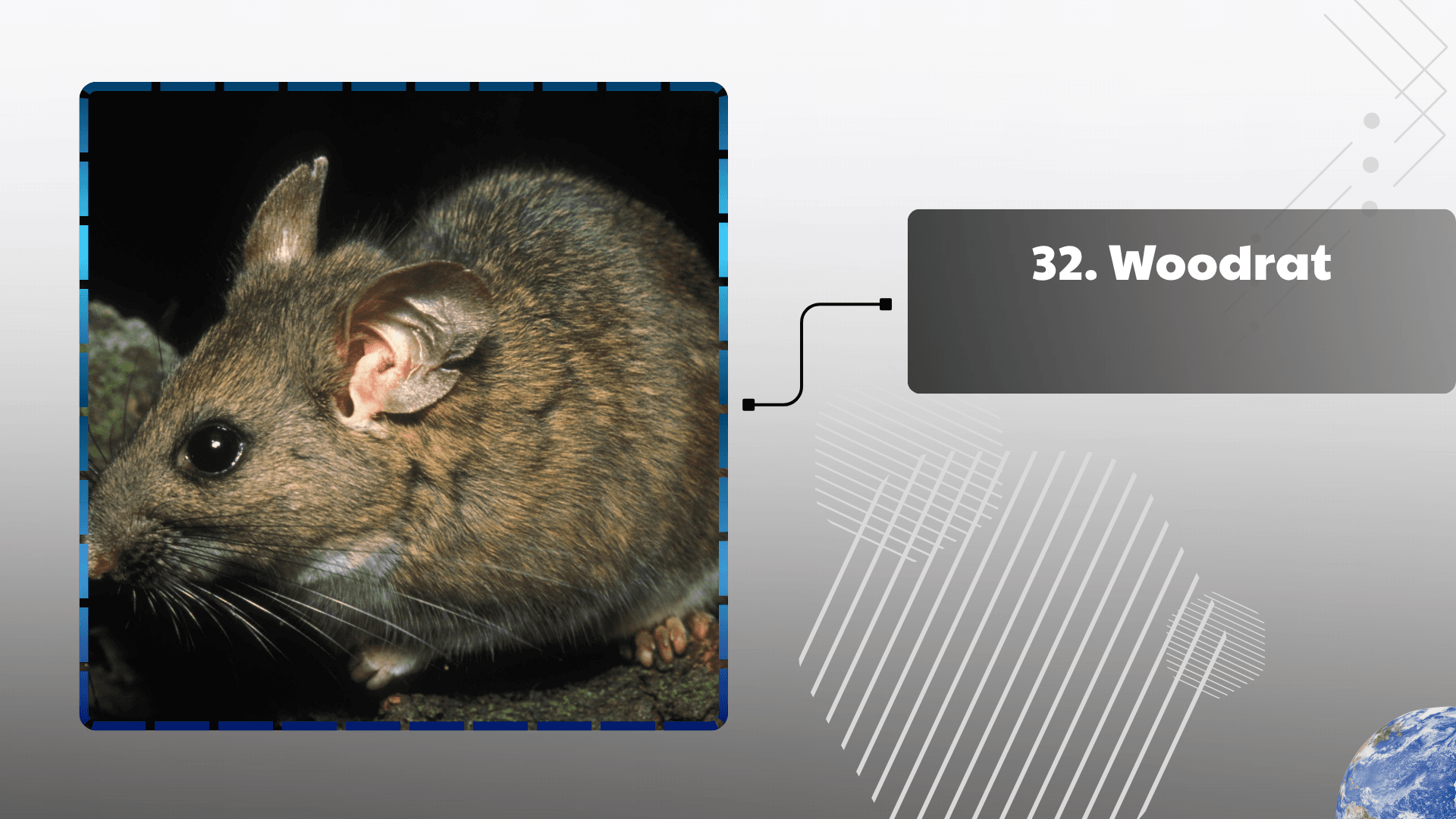
The Woodrat is closely related to the Pack Rat and is often considered the same group of rodents under the genus Neotoma. These rats are widely distributed across forests, deserts, shrublands, and rocky habitats in North America.
Woodrats are medium-sized rodents with large eyes, rounded ears, and furry tails. Compared to city rats, they generally appear softer and more adapted to natural environments.
One of the defining features of Woodrats is their nest-building behavior. They create complex shelters from sticks, bark, leaves, grasses, and other natural materials. These nests provide insulation, protection from predators, and storage areas for food.
Woodrats are herbivores and feed mainly on leaves, bark, seeds, fruits, fungi, and plant shoots. Some species are capable of eating toxic desert plants thanks to specialized digestive systems.
Because Woodrats gather and store plant material, they influence vegetation growth and nutrient movement within ecosystems. Their nests also create shelter opportunities for insects and small animals.
Woodrats are highly adaptable and can survive in cold mountains, dry deserts, and temperate forests depending on the species.
These rodents are excellent examples of how “rats” can occupy important ecological roles in completely natural habitats far from human cities.
33. Cotton Rat
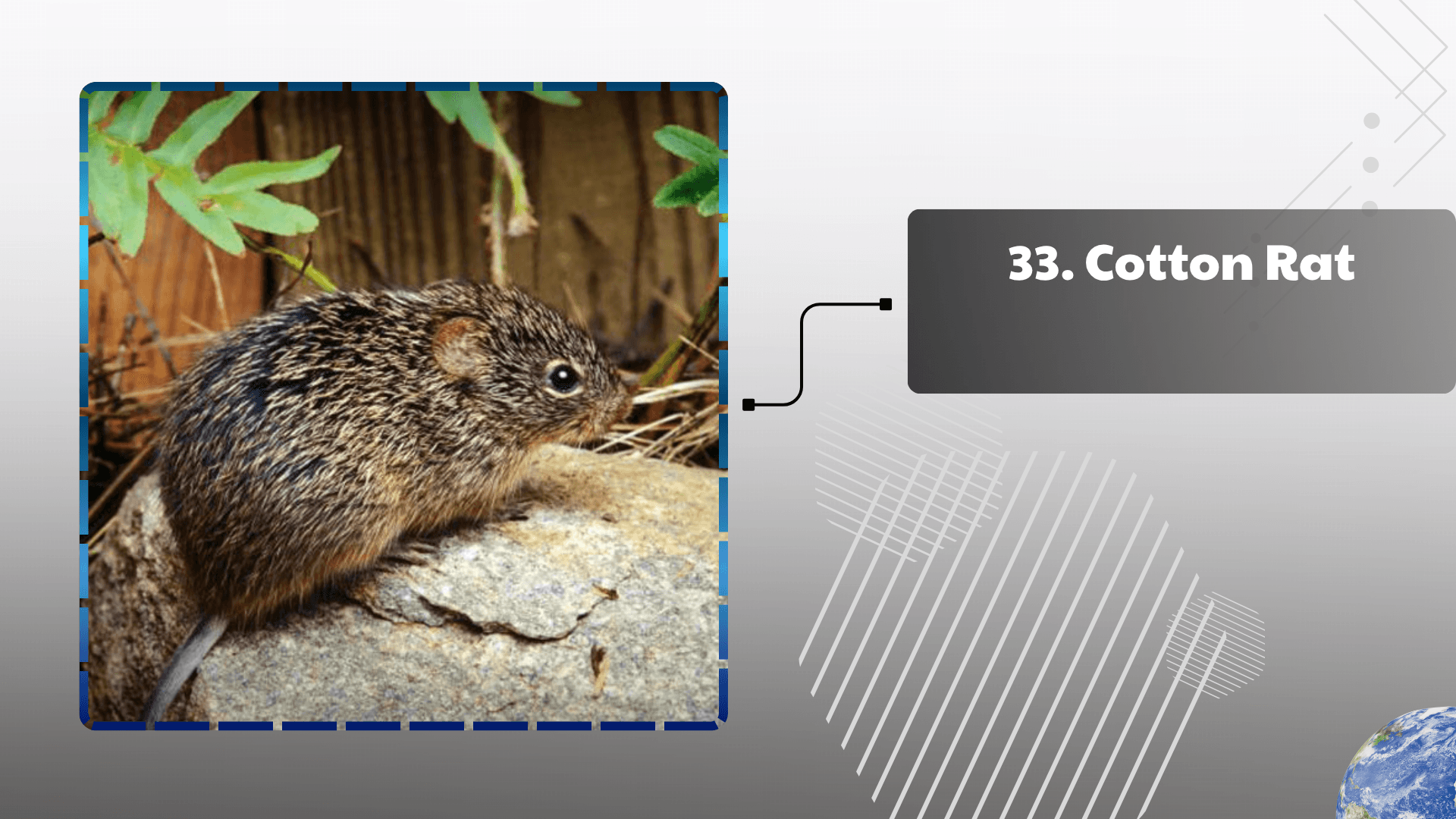
The Cotton Rat is a wild rodent commonly found in grassy fields, wetlands, agricultural areas, and overgrown habitats throughout the Americas. Unlike climbing rats such as Roof Rats, Cotton Rats spend most of their lives close to the ground in dense vegetation.
Cotton Rats usually have coarse brown or gray fur, short ears, and thick bodies. Their name comes from their frequent presence in cotton-growing regions and grassy farmland habitats.
These rodents are active both day and night depending on food availability and predator pressure. They create runways through tall grass and build nests hidden beneath vegetation.
Cotton Rats feed on grasses, seeds, crops, roots, and insects. In agricultural regions, they can damage crops and stored grain, although they also serve as prey for many predators.
Owls, hawks, snakes, foxes, and wild cats all depend on small rodents like Cotton Rats as food sources. Their high reproductive rate helps support predator populations across many ecosystems.
Scientists also use Cotton Rats in medical and ecological research because they are useful for studying disease transmission and population dynamics.
Although less famous than urban rats, Cotton Rats remain ecologically important mammals within grassland and agricultural ecosystems.
34. Bush Rat
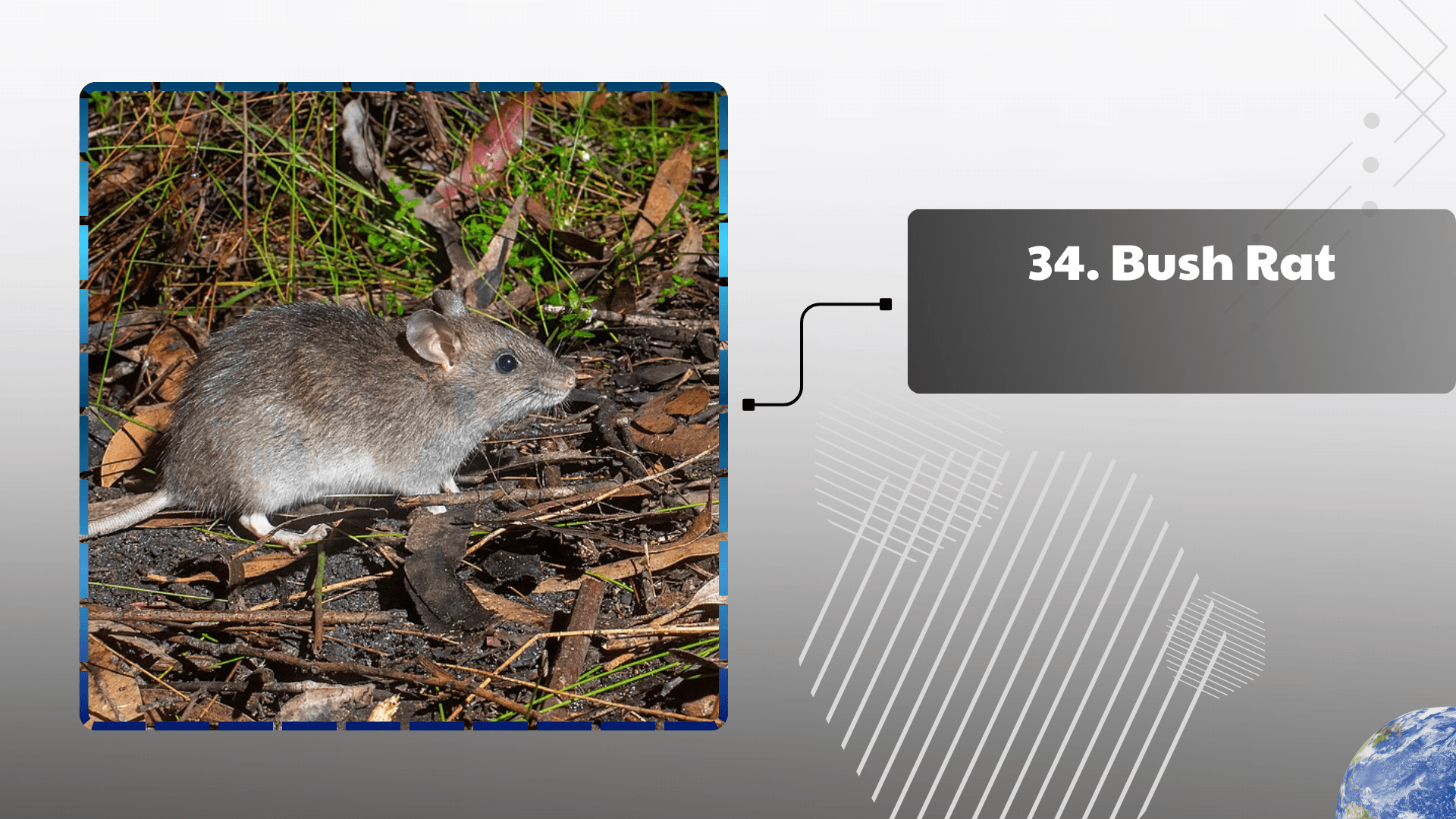
The Bush Rat is a native Australian rodent found in forests, shrublands, grasslands, and coastal vegetation. Unlike invasive city rats introduced by humans, the Bush Rat evolved naturally within Australian ecosystems.
Bush Rats are small to medium-sized rodents with dark fur, rounded ears, and long tails. They are shy animals that avoid open spaces and prefer dense vegetation for cover.
These rats are mostly nocturnal and forage for seeds, fruits, fungi, insects, and small plant materials. Their diet changes seasonally depending on food availability.
Bush Rats play important ecological roles as seed dispersers and prey animals. Many Australian predators, including owls, snakes, quolls, and foxes, rely on native rodents as food sources.
Unlike invasive rats associated with cities, Bush Rats are considered important parts of healthy Australian ecosystems. However, habitat destruction and introduced predators threaten some local populations.
Conservation programs in Australia often focus on protecting native rodents because they contribute significantly to biodiversity and ecological balance.
The Bush Rat highlights the difference between native wildlife rodents and invasive urban rat populations introduced through global trade.
35. Polynesian Rat
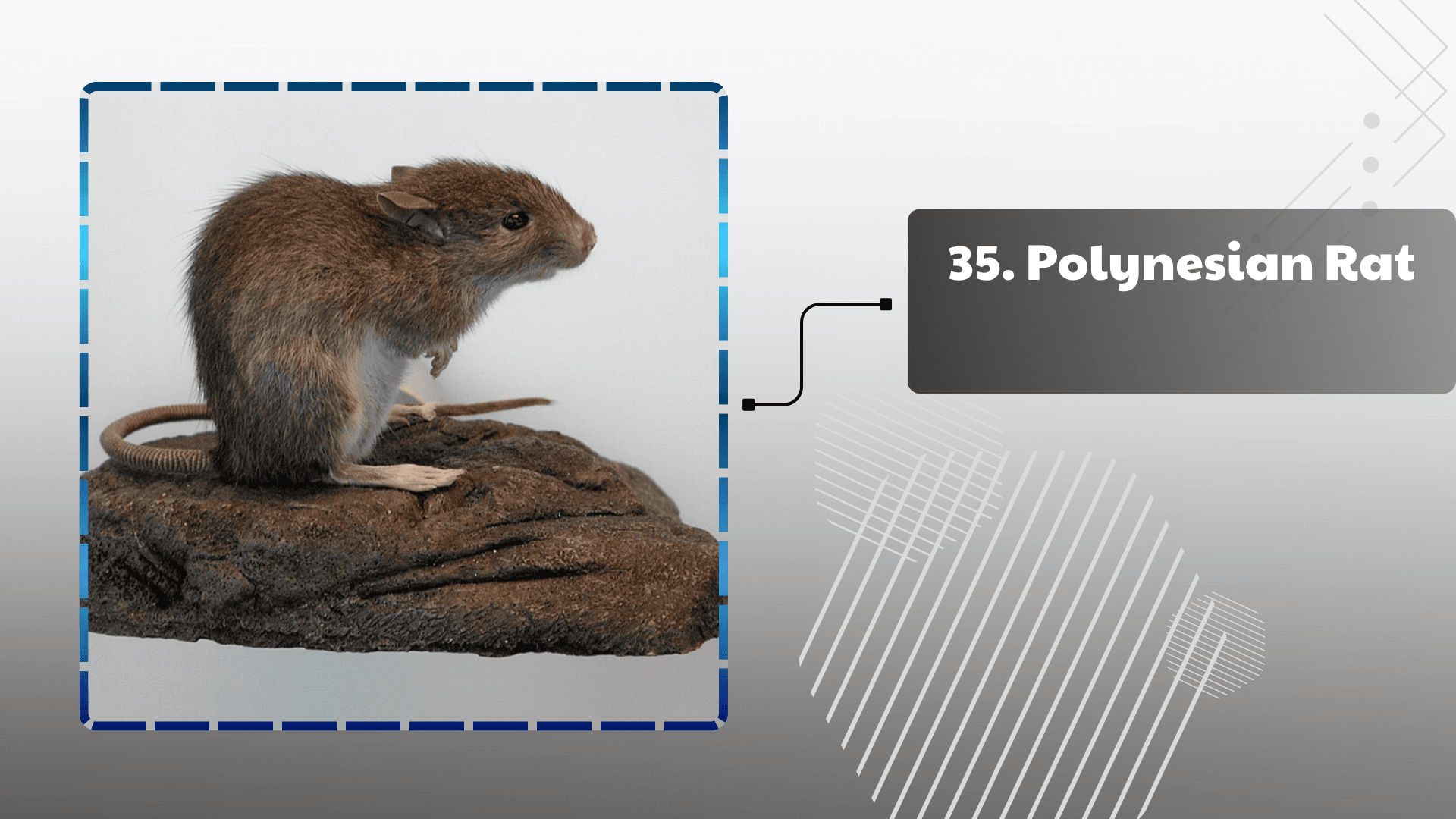
The Polynesian Rat is one of the oldest human-associated rat species in the Pacific region. Ancient Polynesian voyagers transported these rats across islands thousands of years ago during ocean migrations.
Smaller than the Brown Rat and Black Rat, the Polynesian Rat has brown fur, pointed features, and a relatively slender body. It adapted well to island ecosystems across the Pacific Ocean.
These rats feed on seeds, fruits, insects, eggs, and plant material. On some islands, they significantly affected native bird populations by preying on eggs and chicks.
The spread of Polynesian Rats provides valuable information about ancient human migration routes. Archaeologists sometimes use rat remains to trace historical settlement patterns across Pacific islands.
Polynesian Rats are highly adaptable and capable of surviving in forests, coastal habitats, villages, and agricultural areas. Their ability to reproduce quickly helped them spread successfully across remote islands.
However, introduced predators and habitat changes have reduced their populations in some regions where larger invasive rats now dominate.
The Polynesian Rat represents an important link between wildlife biology, island ecology, and human exploration history across the Pacific world.
Conclusion: Understanding the Amazing Diversity of Types of Rats
The world of Types of Rats is far more diverse and fascinating than many people realize. From urban survivors like the Brown Rat and Black Rat to rare tropical forest species and intelligent domesticated Fancy Rats, rodents have adapted to nearly every environment on Earth. Some rats help ecosystems by spreading seeds and supporting predators, while others assist humans through scientific research, medical detection, and even landmine discovery.
Although rats are sometimes misunderstood because of their association with cities and disease, many species are intelligent, social, and ecologically valuable animals. Their ability to survive in deserts, forests, wetlands, mountains, islands, and urban areas demonstrates incredible evolutionary adaptability.
Learning about different Types of Rats also helps wildlife enthusiasts appreciate the hidden diversity within the rodent world. Whether wild or domesticated, these animals continue to surprise scientists with their intelligence, resilience, and ecological importance. Which of these incredible rat species did you find the most interesting?
50+ FAQ About Types of Rats (Detailed Answers)
1. What are rats?
Rats are medium-sized rodents belonging mainly to the genus Rattus. They are intelligent, adaptable mammals found across nearly every continent on Earth. Rats live in forests, cities, deserts, farms, wetlands, mountains, and even tropical islands. Some species are wild animals, while others are domesticated pets kept by humans.
2. How many types of rats are there?
There are more than 60 scientifically recognized species in the genus Rattus, along with many other rodents commonly called rats because of their appearance. These include urban rats, forest rats, island rats, desert rats, and domesticated pet varieties.
3. What are the most common types of rats?
The most common types include the Brown Rat, Black Rat, Roof Rat, Norway Rat, Fancy Rat, and Gambian Pouched Rat. These species are widely known because of their relationship with humans, either as pests, pets, or research animals.
4. What is the difference between a mouse and a rat?
Rats are generally larger, heavier, and more intelligent than mice. They have thicker tails, larger heads, and stronger bodies. Rats also tend to be more cautious and capable of advanced problem-solving behavior.
5. Are rats intelligent animals?
Yes. Rats are considered among the most intelligent rodents in the world. They can solve puzzles, learn routines, remember paths, recognize humans, and even show emotional responses such as excitement, fear, and affection.
6. Why are rats successful survivors?
Rats survive successfully because they reproduce quickly, adapt to many environments, eat varied diets, and learn from experience. Their intelligence and flexibility allow them to thrive in both wild and urban habitats.
7. What do rats eat?
Most rats are omnivores. They eat grains, seeds, fruits, vegetables, insects, eggs, roots, garbage, meat scraps, and many other food sources depending on habitat availability.
8. Where do rats live?
Rats can live in cities, forests, grasslands, wetlands, deserts, agricultural areas, mountains, and islands. Different species prefer different habitats based on food availability and predator pressure.
9. What is the largest rat species?
The African Giant Pouched Rat is one of the largest rat species. It can grow much larger than common city rats and is known for its intelligence and powerful sense of smell.
10. Are rats dangerous?
Most rats avoid humans and are not naturally aggressive. However, wild rats may carry diseases in unsanitary environments, especially where food waste and overcrowding occur.
11. Why do rats live near humans?
Human settlements provide rats with food, water, warmth, and shelter. Cities and farms create ideal survival conditions for highly adaptable rodents.
12. What is a Fancy Rat?
A Fancy Rat is a domesticated pet rat bred from the Brown Rat. Fancy Rats are friendly, social, intelligent, and available in many colors and coat types.
13. Can rats recognize humans?
Yes. Domesticated rats can recognize their owners by smell, voice, and routine. Many rats respond when called and form strong social bonds with humans.
14. Do rats have emotions?
Studies suggest rats can experience emotional states such as curiosity, fear, excitement, stress, and affection. They also display social empathy toward other rats.
15. Why are rats used in scientific research?
Rats are intelligent, adaptable, and biologically similar to humans in many ways. Scientists use them to study medicine, psychology, behavior, and disease.
16. Are rats clean animals?
Yes. Rats groom themselves frequently and are naturally clean animals. Poor sanitation problems are usually related to overcrowded environments rather than the animals themselves.
17. How long do rats live?
Wild rats typically live 1–3 years depending on predators and environment. Domesticated rats may live 2–4 years with proper care.
18. Do rats make good pets?
Yes. Pet rats are intelligent, affectionate, playful, and social. Many owners describe them as one of the best small companion animals.
19. What is the smartest type of rat?
Domesticated Fancy Rats and African Giant Pouched Rats are often considered among the smartest rat varieties due to advanced learning abilities and trainability.
20. What predators hunt rats?
Owls, hawks, snakes, foxes, cats, coyotes, wild dogs, and other carnivores commonly prey on rats in natural ecosystems.
21. Why do rats have long tails?
Rat tails help with balance, communication, climbing, and body temperature regulation. They are important survival tools in many environments.
22. Can rats swim?
Yes. Many rat species are excellent swimmers. Brown Rats especially can swim through sewers, rivers, and flooded environments.
23. What is a Roof Rat?
A Roof Rat is a climbing rat species that prefers elevated habitats such as rooftops, attics, trees, and upper building structures.
24. What is a Norway Rat?
The Norway Rat is another name for the Brown Rat, one of the most widespread urban rat species in the world.
25. Why are rats active at night?
Most rats are nocturnal because nighttime offers cooler temperatures and protection from predators and human activity.
26. Can rats jump high?
Yes. Rats can jump surprisingly high and far relative to their body size. Kangaroo Rats are especially famous for powerful jumping ability.
27. What is a Kangaroo Rat?
A Kangaroo Rat is a desert rodent known for hopping like a kangaroo and surviving without directly drinking water.
28. Are all rats pests?
No. Many rat species live naturally in forests, wetlands, mountains, and islands where they play important ecological roles.
29. Why are island rats important?
Island rats help scientists study evolution, adaptation, and biodiversity because isolated ecosystems often produce unique species.
30. What is a Gambian Pouched Rat?
It is a large African rat species trained to detect landmines and tuberculosis because of its excellent sense of smell.
31. Can rats learn tricks?
Yes. Rats can learn obstacle courses, commands, puzzle solving, and even fetch objects using positive reinforcement.
32. Do rats communicate with each other?
Rats communicate through scent, vocalizations, whisker movement, posture, and ultrasonic sounds humans usually cannot hear.
33. What colors can pet rats be?
Pet rats come in black, white, gray, brown, blue, beige, chocolate, and many mixed color patterns.
34. What is a Hairless Rat?
A Hairless Rat is a domesticated variety with little or no fur caused by genetic mutations affecting coat development.
35. What is a Dumbo Rat?
A Dumbo Rat is a pet rat variety with large low-set ears that create a rounded facial appearance.
36. Are rats social animals?
Yes. Rats naturally live in groups and form strong social relationships with both other rats and humans.
37. Can rats survive in deserts?
Yes. Species like Kangaroo Rats have evolved specialized kidneys and behaviors allowing survival in dry desert climates.
38. What role do rats play in ecosystems?
Rats spread seeds, recycle nutrients, aerate soil, and provide food for predators within many ecosystems.
39. Are rats endangered?
Some island and forest rat species are endangered due to habitat destruction, invasive predators, and climate change.
40. What is a Pack Rat?
A Pack Rat is a North American rodent famous for collecting and storing unusual objects in its nest.
41. Why do Pack Rats collect objects?
Scientists believe object collecting may relate to curiosity, nest building, or territorial behavior.
42. Do rats have good memory?
Yes. Rats can remember routes, dangers, food sources, and learned behaviors for long periods.
43. Can rats climb walls?
Many rats are excellent climbers and can scale rough walls, trees, pipes, and wires using claws and balance.
44. What is the rarest rat species?
Several island and forest rats are extremely rare due to habitat loss and limited geographic ranges.
45. Why are rats important in science?
Rats contribute to medical discoveries involving psychology, neuroscience, genetics, disease treatment, and behavior research.
46. Do rats hibernate?
Most rats do not hibernate, but some reduce activity during cold weather to conserve energy.
47. Can rats feel fear?
Yes. Rats respond strongly to danger and can learn to avoid risky situations through experience.
48. Why do rats chew constantly?
Rat teeth grow continuously throughout life, so chewing helps wear them down and maintain proper length.
49. Are rats invasive species?
Some rats become invasive when introduced outside native habitats, especially on islands where they threaten local wildlife.
50. What is the friendliest pet rat?
Fancy Rats, Dumbo Rats, and Rex Rats are often considered especially friendly and affectionate toward humans.
51. Can rats solve puzzles?
Yes. Rats are capable of solving complex puzzles, navigating mazes, and learning through observation and repetition.
52. Why do wildlife experts study rats?
Rats help scientists understand evolution, intelligence, adaptation, disease ecology, and ecosystem dynamics.
53. What is the most adaptable rat species?
The Brown Rat is considered one of the most adaptable mammals due to its ability to survive in almost any environment.
54. Are wild rats different from pet rats?
Yes. Wild rats are usually more cautious and survival-focused, while domesticated rats are bred for calmer personalities and human interaction.
55. Why are rats misunderstood animals?
Rats are often associated only with disease and urban pests, but many species are intelligent, social, ecologically important, and even helpful to humans through research and conservation work.