

The types of Civet found across Asia and Africa are among the most fascinating small carnivorous mammals in the wild. Civets belong to the family Viverridae and are known for their long bodies, pointed faces, spotted or striped fur, and nocturnal lifestyles. Although they resemble cats, civets are more closely related to mongooses and genets. Different types of Civet inhabit rainforests, grasslands, mountain forests, and tropical jungles where they play important ecological roles as seed dispersers and predators of insects and small animals. In this guide, we explore 15 types of Civet, including their identification features, habitats, diets, and unique behaviors. Whether you are a wildlife enthusiast or simply curious about rare mammals, learning about civets reveals how adaptable and important these secretive animals are in natural ecosystems.
1. Asian Palm Civet
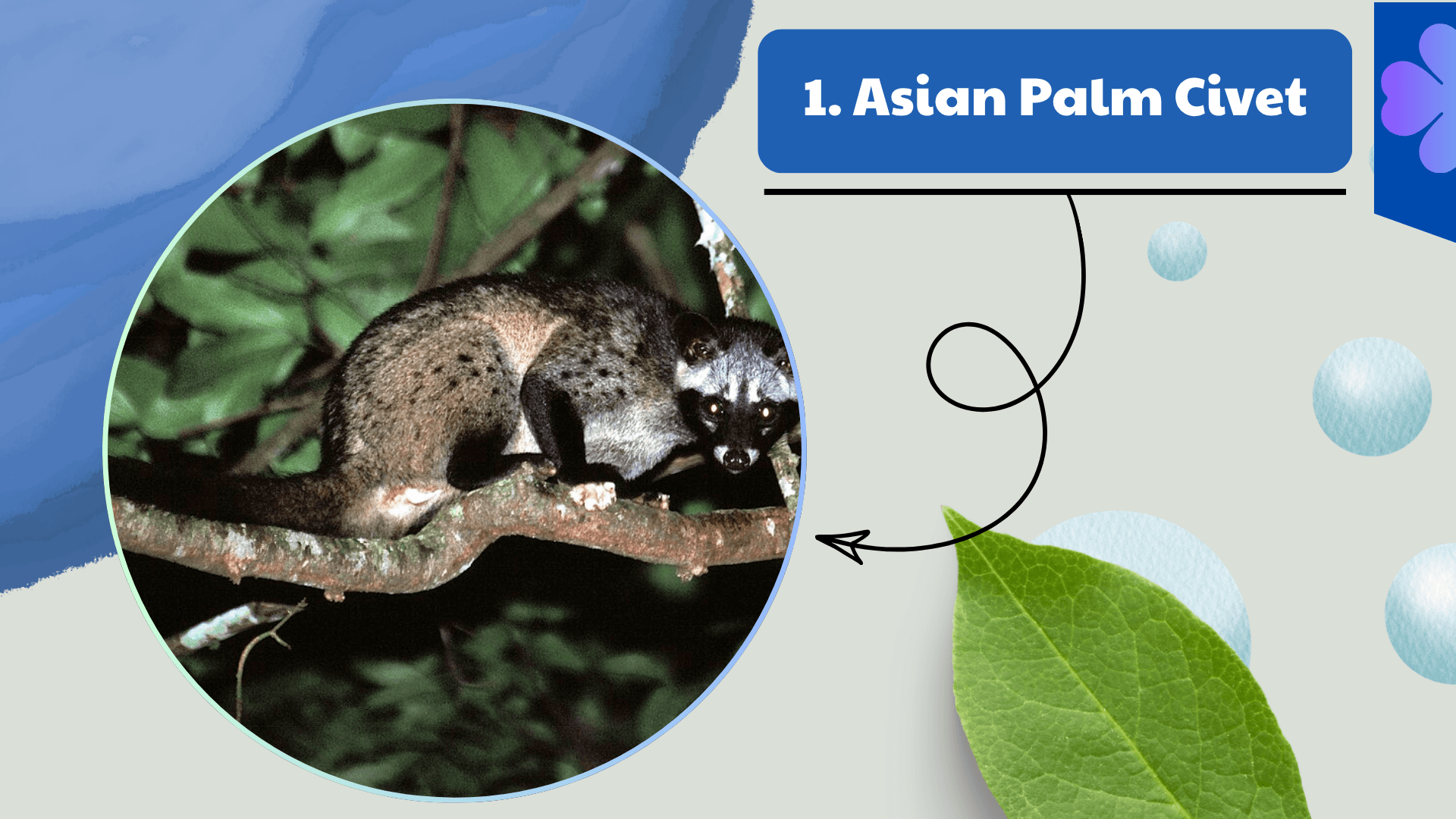
The Asian Palm Civet is one of the most widely recognized types of Civet and is found throughout South and Southeast Asia. This species is famous for its role in producing kopi luwak coffee, although it is far more important ecologically as a forest-dwelling omnivore.
Asian Palm Civets have slender bodies, coarse gray or brown fur, dark facial markings, and long tails that help with balance while climbing trees. They are highly agile and spend much of their time moving through forest canopies at night.
This species inhabits tropical rainforests, plantations, bamboo forests, mangroves, and even urban edges where fruiting trees are available. Asian Palm Civets are highly adaptable and can survive in disturbed habitats better than many other civet species.
Their diet includes fruits, berries, insects, birds, eggs, rodents, and small reptiles. Because they consume large amounts of fruit, they play a major role in seed dispersal throughout tropical forests.
Asian Palm Civets are solitary and nocturnal. During the day, they rest in hollow trees, dense vegetation, or abandoned animal shelters. At night, they travel long distances searching for food.
Despite their adaptability, habitat destruction and wildlife trade threaten populations in several regions. Illegal capture for exotic pet markets and unethical coffee farming practices also impact wild civets.
The Asian Palm Civet remains one of the most fascinating types of Civet because of its intelligence, climbing ability, and ecological importance in tropical ecosystems.
2. African Civet
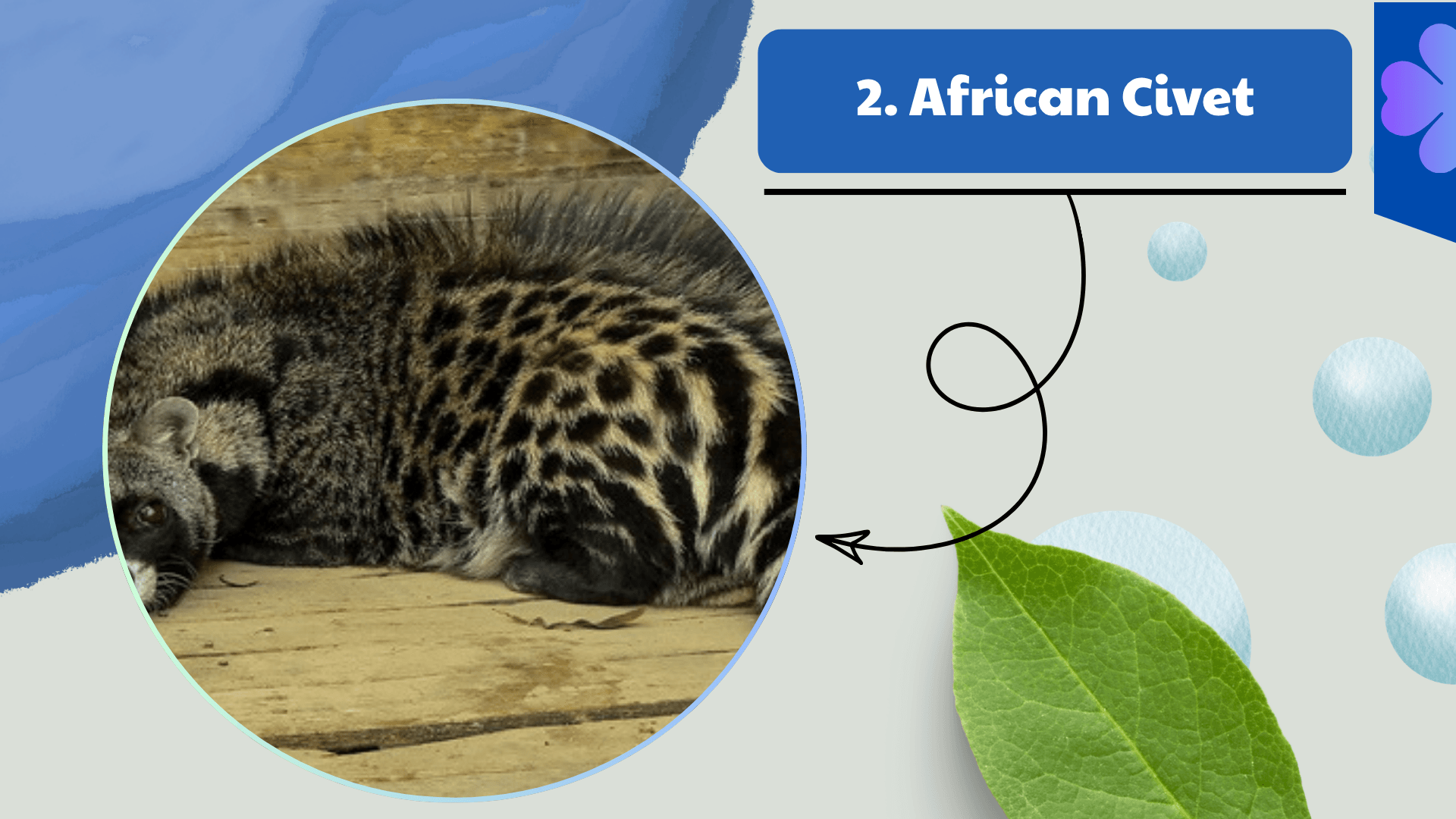
The African Civet is one of the largest and most striking types of Civet found across sub-Saharan Africa. It is easily recognized by its black-and-white spotted fur, bushy tail, and raccoon-like facial mask.
African Civets inhabit forests, savannas, wetlands, grasslands, and woodland habitats. They are highly adaptable mammals capable of surviving in both dense forests and open landscapes.
This species is primarily nocturnal and solitary. During the night, it patrols large territories searching for food. African Civets are opportunistic omnivores that eat insects, rodents, birds, reptiles, frogs, fruits, and carrion.
One unique feature of the African Civet is its strong scent glands located near the tail. These glands produce civet musk, historically used in perfumes. Fortunately, synthetic alternatives have reduced the demand for natural civet musk in recent years.
African Civets are strong climbers but spend more time on the ground compared to tree-dwelling civet species. Their spotted fur provides excellent camouflage in moonlit grasslands and forest shadows.
Although still relatively widespread, African Civets face threats from habitat loss, hunting, and road mortality in some regions.
Because of its unusual appearance and secretive behavior, the African Civet remains one of the most iconic types of Civet in African wildlife ecosystems.
3. Small Indian Civet
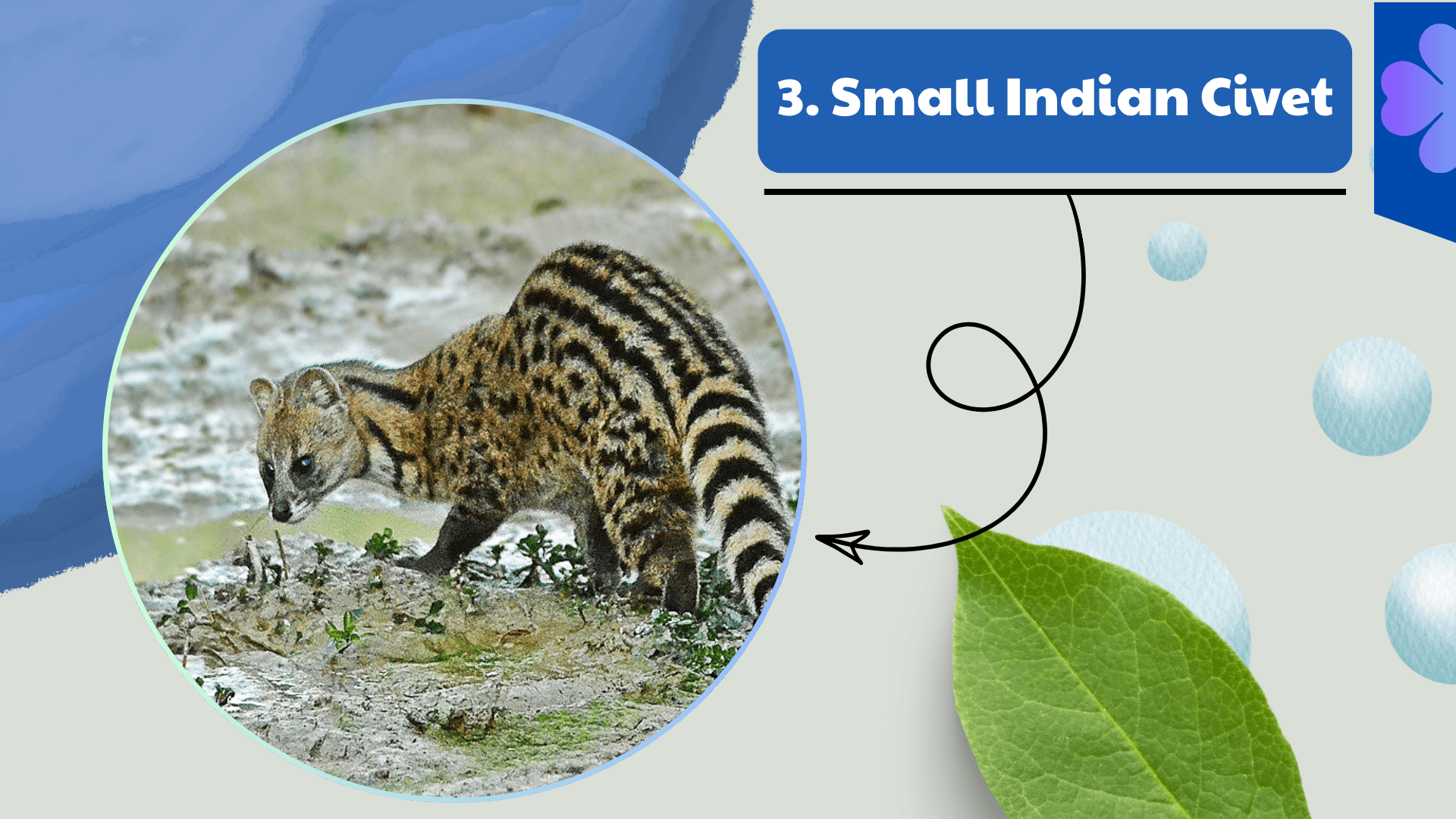
The Small Indian Civet is a slender and highly adaptable member of the types of Civet found across India, Sri Lanka, Nepal, Southeast Asia, and parts of southern China.
This species has a long body, pointed muzzle, striped neck markings, and dark spots running along the sides. Its tail is ringed with black and gray bands that help distinguish it from related civets.
Small Indian Civets inhabit forests, grasslands, agricultural lands, scrublands, and village edges. They adapt surprisingly well to human-modified environments.
Their diet includes rodents, insects, frogs, birds, eggs, fruits, and reptiles. They are skilled hunters and use sharp senses of smell and hearing to locate prey in darkness.
Like most civets, the Small Indian Civet is nocturnal. It spends daylight hours hiding in burrows, hollow logs, dense bushes, or abandoned structures.
This species communicates using scent markings produced by specialized glands. These scent signals help establish territory boundaries and reproductive status.
The Small Indian Civet is one of the most successful types of Civet due to its flexibility, intelligence, and ability to survive in changing environments.
4. Large Indian Civet
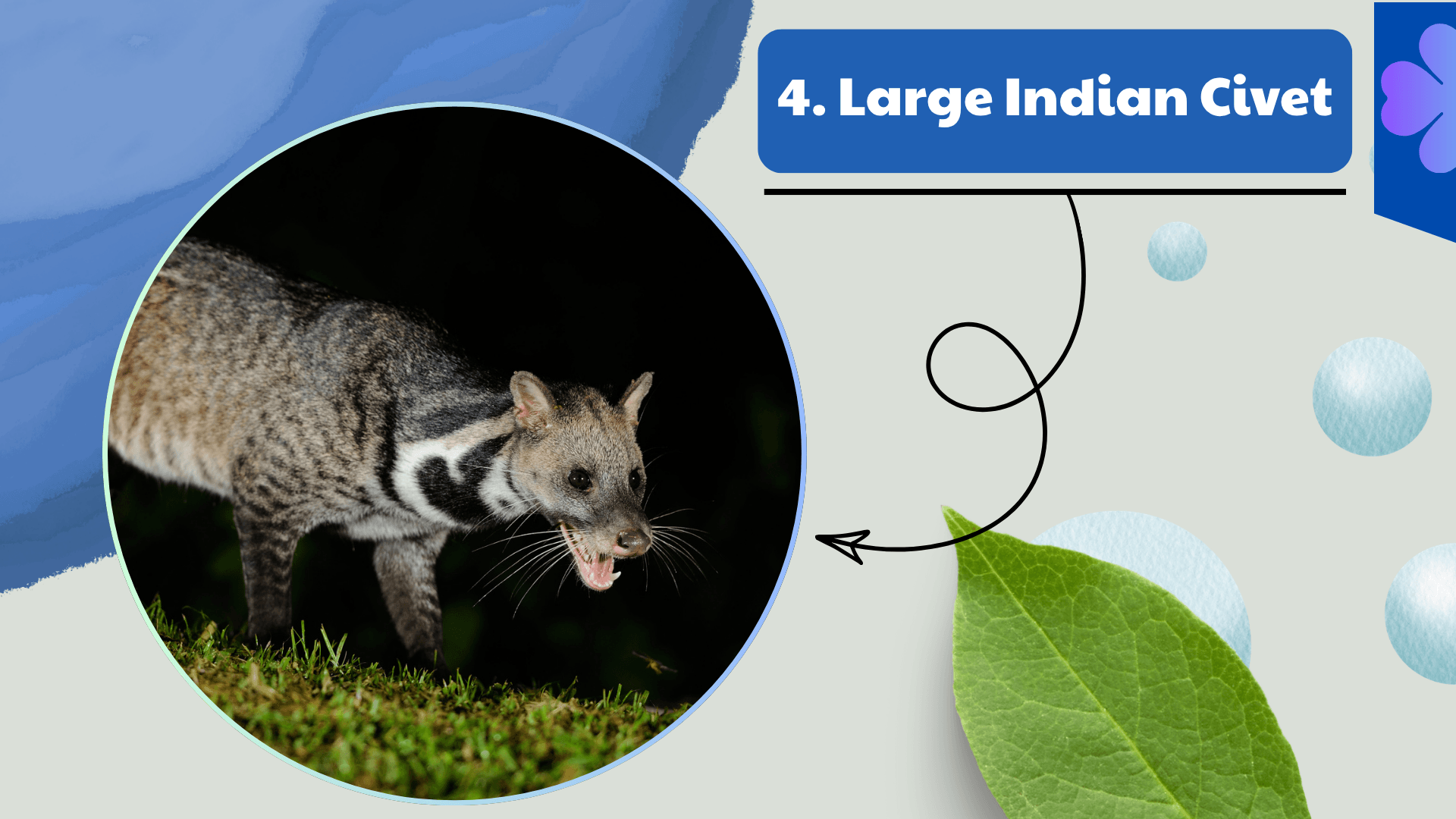
The Large Indian Civet is one of the rarest and least understood types of Civet in Asia. It was once widespread across India and Southeast Asia but has declined significantly due to habitat destruction and hunting.
This species is larger and heavier than the Small Indian Civet and has coarse fur with dark spots, stripes, and a thick bushy tail. Its elongated body allows it to move efficiently through dense vegetation.
Large Indian Civets prefer forests, river valleys, and dense woodland habitats where food and cover remain abundant. They are excellent climbers but also spend considerable time foraging on the ground.
Their diet includes small mammals, birds, reptiles, amphibians, insects, fruits, and carrion. This flexible diet helps them survive in diverse habitats.
Because the species is nocturnal and elusive, sightings are rare even in protected forests. Much of its behavior remains poorly studied by scientists.
Habitat fragmentation, deforestation, and illegal hunting are major threats to the Large Indian Civet. Conservation programs are important for protecting remaining populations.
Among the various types of Civet, the Large Indian Civet represents one of the most mysterious and conservation-dependent species in Asia.
5. Malabar Large-spotted Civet
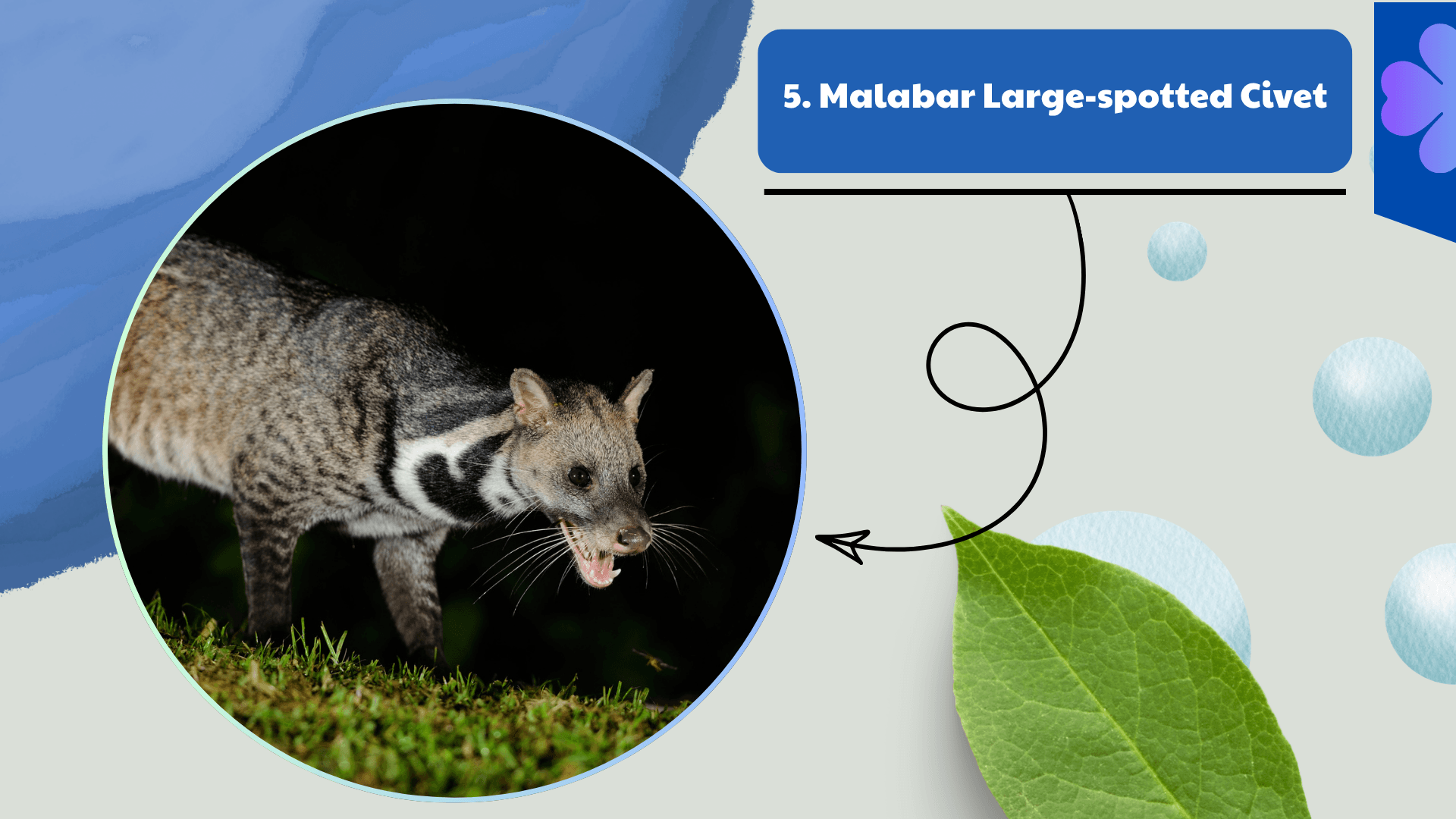
The Malabar Large-spotted Civet is one of the rarest types of Civet in the world and is native to the Western Ghats region of India.
This critically endangered species has a large body, dark brown or black fur, and prominent white or pale spots across the sides and back. It also has a thick tail and a pointed muzzle typical of civets.
The Malabar Large-spotted Civet once inhabited dense tropical forests and coastal woodlands, but massive habitat loss has pushed it close to extinction.
Very little is known about its natural behavior because confirmed sightings are extremely rare. Scientists believe it is nocturnal and omnivorous like related civet species.
Its diet likely includes rodents, birds, insects, reptiles, fruits, and small vertebrates. Dense forest cover is essential for its survival.
Conservationists consider the Malabar Large-spotted Civet one of India’s most endangered mammals. Habitat protection and scientific research are urgently needed to prevent extinction.
This elusive animal highlights the vulnerability of many forest-dependent types of Civet facing rapid environmental change and habitat destruction worldwide.
These first five types of Civet reveal the incredible diversity of civet species across Africa and Asia. Some are highly adaptable and widespread, while others are critically endangered and rarely seen in the wild. In the next section, we will continue exploring more unique civet species, including tree-dwelling rainforest specialists and unusual nocturnal hunters.
6. Masked Palm Civet
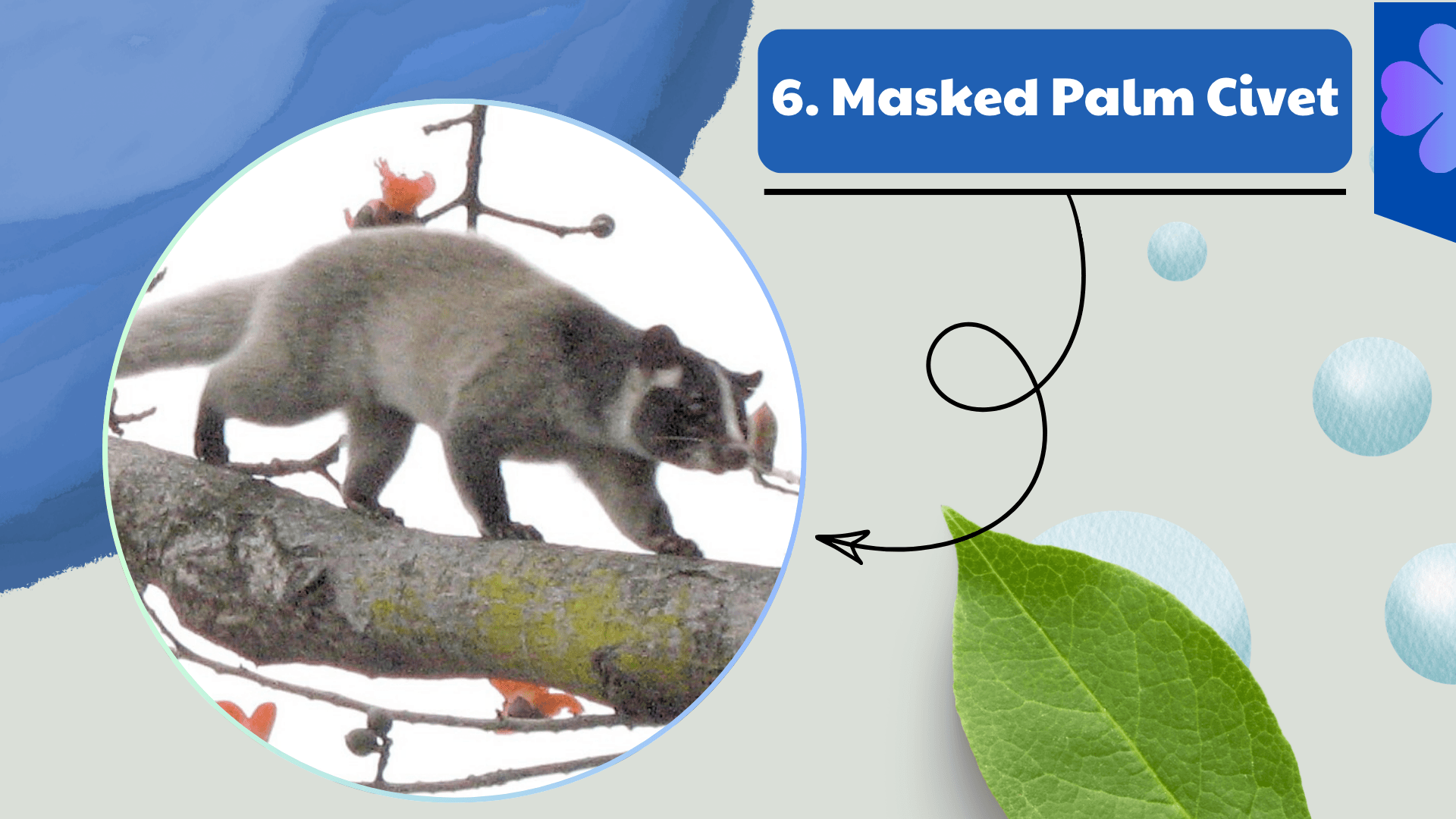
The Masked Palm Civet is one of the most adaptable types of Civet found across South and Southeast Asia. It gets its name from the dark “mask-like” markings on its face, which contrast with its lighter gray or brownish body fur.
This species is highly versatile and can live in tropical rainforests, secondary forests, plantations, rural gardens, and even suburban areas. Its ability to tolerate human presence makes it one of the more commonly encountered civets in some regions.
Masked Palm Civets are nocturnal and solitary. At night, they travel across trees and the ground in search of food. Their diet is highly varied, including fruits, insects, small mammals, birds, eggs, and carrion.
Because they consume large quantities of fruit, they play an important ecological role as seed dispersers in tropical forests. This helps maintain forest regeneration and biodiversity.
The species communicates through scent marking and vocal sounds, especially during mating periods. It uses tree hollows, dense vegetation, or abandoned structures as daytime resting sites.
Despite their adaptability, habitat destruction and hunting pressure in some regions still affect local populations.
The Masked Palm Civet is one of the most well-known types of Civet due to its wide distribution and ability to survive in changing environments.
7. Binturong (Bearcat)
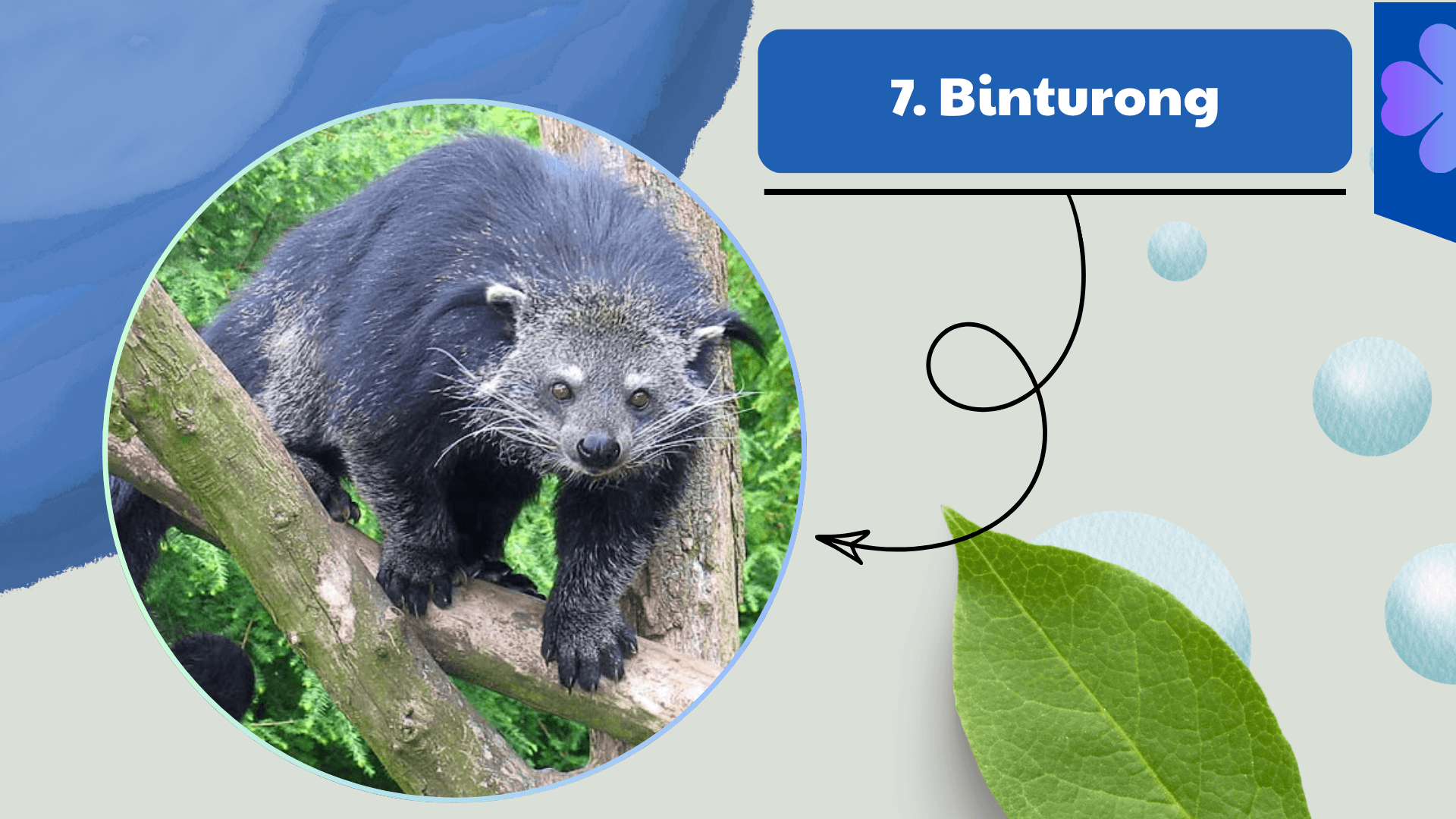
The Binturong, also known as the “bearcat,” is one of the most unique-looking types of Civet. Despite its nickname, it is not a bear or a cat but a large civet species native to Southeast Asian rainforests.
It has a long, heavy body, coarse black fur, and a thick prehensile tail that acts like a fifth limb. This tail allows the Binturong to grip branches and move easily through the forest canopy.
Binturongs are mostly nocturnal and spend much of their time in trees. They move slowly compared to other civets but are excellent climbers.
Their diet consists mainly of fruit, especially figs, but they also eat small animals, birds, fish, and insects when available.
One of the most interesting traits of the Binturong is its scent, which resembles buttered popcorn. This odor comes from natural compounds in its urine and is used for communication and territory marking.
Binturongs are important seed dispersers in tropical forests, helping maintain healthy ecosystems by spreading fruit seeds over large distances.
Deforestation and wildlife trade are major threats to this species, making conservation efforts critical in many regions.
8. Otter Civet
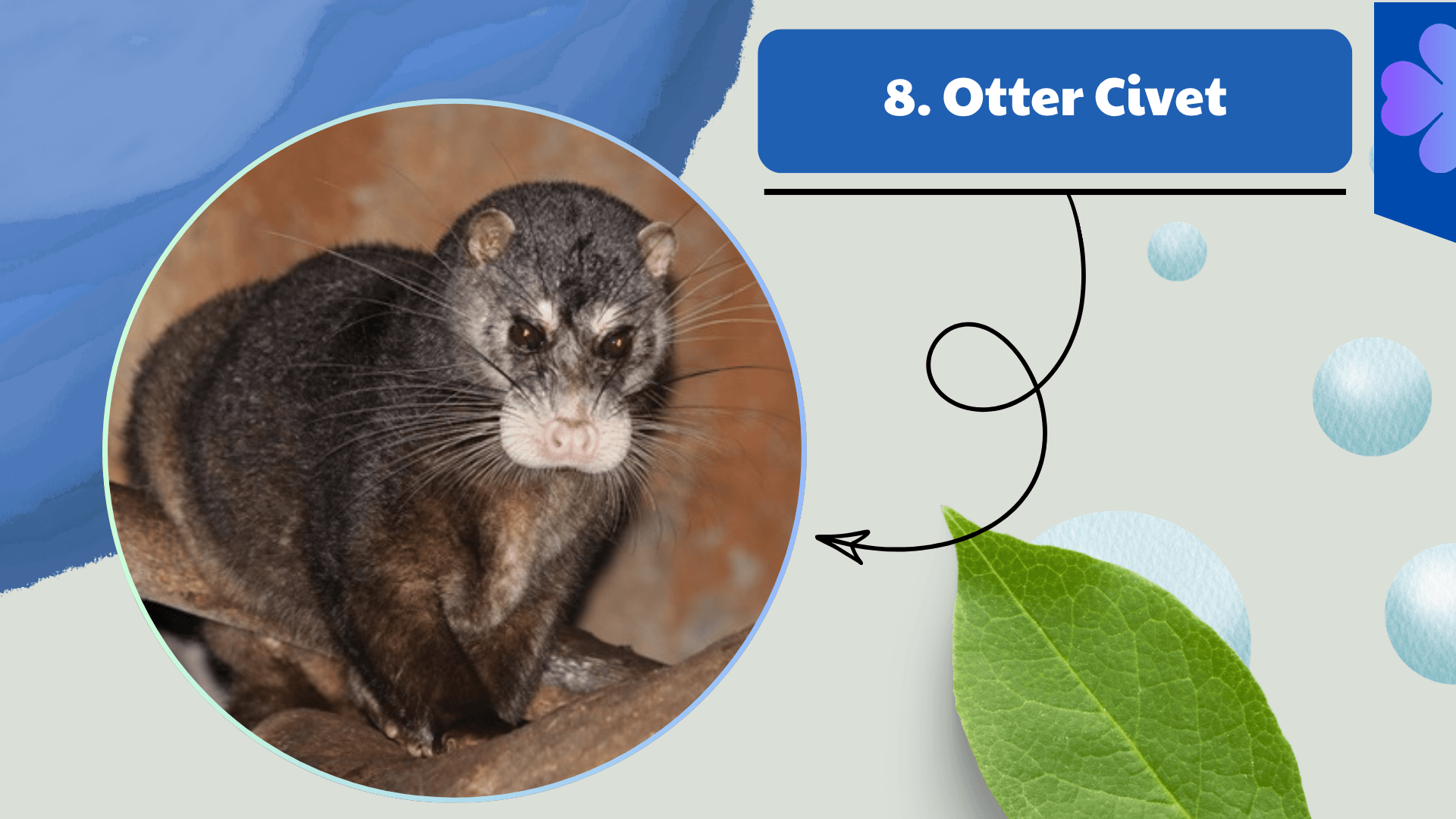
The Otter Civet is one of the rarest and most specialized types of Civet, found in lowland rainforests of Borneo and nearby regions. It is named for its semi-aquatic lifestyle, which resembles that of otters.
This species has a sleek, elongated body, short legs, and dense fur that helps it navigate wet environments. Unlike most civets, it is strongly associated with rivers, swamps, and flooded forest areas.
Otter Civets are nocturnal and elusive, making them extremely difficult to observe in the wild. Much of their behavior remains poorly understood by scientists.
Their diet likely includes fish, crustaceans, amphibians, insects, and small aquatic animals, along with occasional fruit and vegetation.
Because they depend heavily on pristine freshwater habitats, they are highly vulnerable to deforestation, pollution, and river disruption.
The Otter Civet is considered one of the most mysterious types of Civet due to its rarity and secretive nature in dense rainforest ecosystems.
9. Hose’s Civet
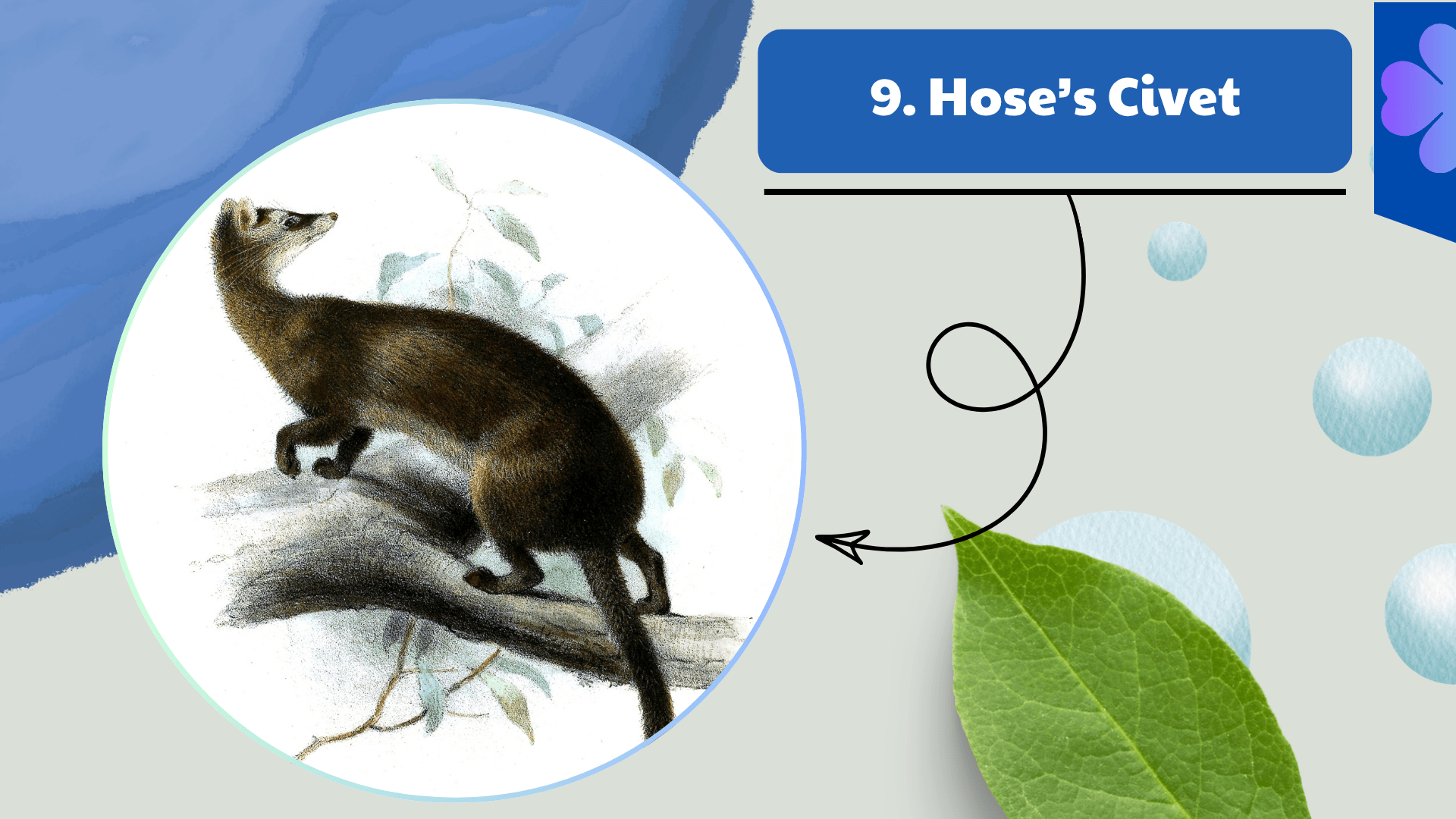
Hose’s Civet is a rare and little-studied member of the types of Civet native to Borneo. It is one of the least frequently observed carnivores in Southeast Asia.
This species has dark brown fur, a slender body, and a relatively short tail compared to other civets. Its appearance is subtle, helping it blend into dense forest environments.
Hose’s Civet is believed to be strictly nocturnal and primarily arboreal, meaning it spends most of its time in trees.
Its diet is not fully documented, but scientists believe it feeds on fruits, insects, small vertebrates, and possibly eggs.
Due to its rarity, almost nothing is known about its reproductive behavior or population size in the wild.
Habitat loss in Borneo’s rainforests is the main threat to this species, along with limited scientific data making conservation difficult.
Hose’s Civet remains one of the most enigmatic types of Civet, highlighting how much biodiversity still remains undiscovered in tropical forests.
10. Owston’s Palm Civet
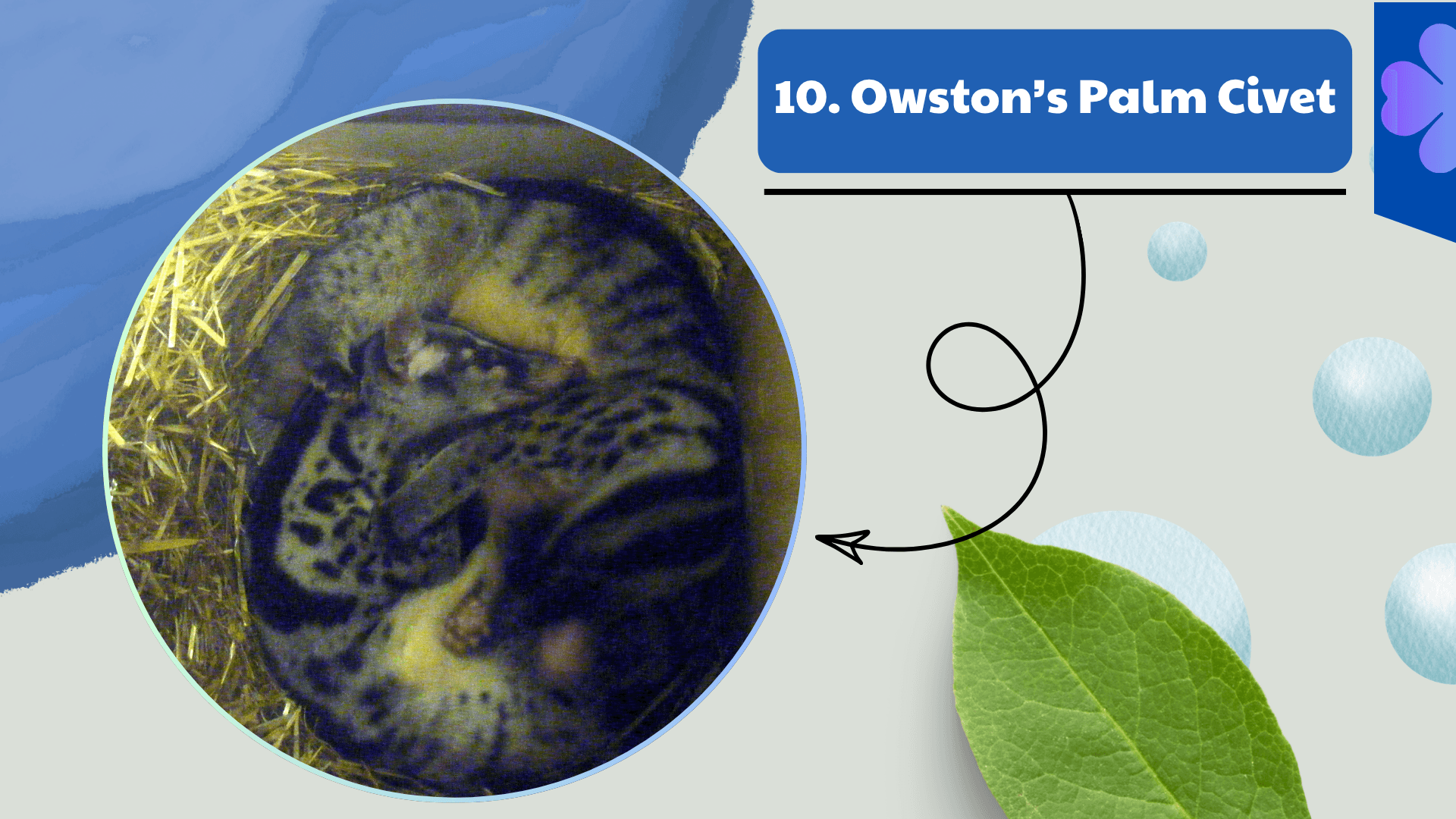
Owston’s Palm Civet is a rare and endangered species of types of Civet found in northern Vietnam, Laos, and parts of southern China.
It has a golden-brown body with distinctive dark markings on its face and a long bushy tail. Its appearance makes it one of the more visually striking civet species in Asia.
This species inhabits evergreen forests, montane regions, and dense tropical woodlands. It is highly dependent on intact forest ecosystems.
Owston’s Palm Civet is nocturnal and solitary. It feeds mainly on fruits, insects, small vertebrates, and other forest resources.
Because of its limited range and habitat destruction, it is considered vulnerable to extinction. Conservation programs and protected areas are essential for its survival.
This civet also plays an important ecological role in seed dispersal, helping maintain healthy forest regeneration.
Owston’s Palm Civet is one of the most conservation-significant types of Civet due to its restricted distribution and declining population.
These second five types of Civet highlight how diverse civet species can be—from tree-dwelling fruit specialists like the Binturong to rare rainforest dwellers like Hose’s Civet. In the next section, we will continue exploring the remaining civet species and conclude this complete wildlife guide.
11. Sunda Stink Badger
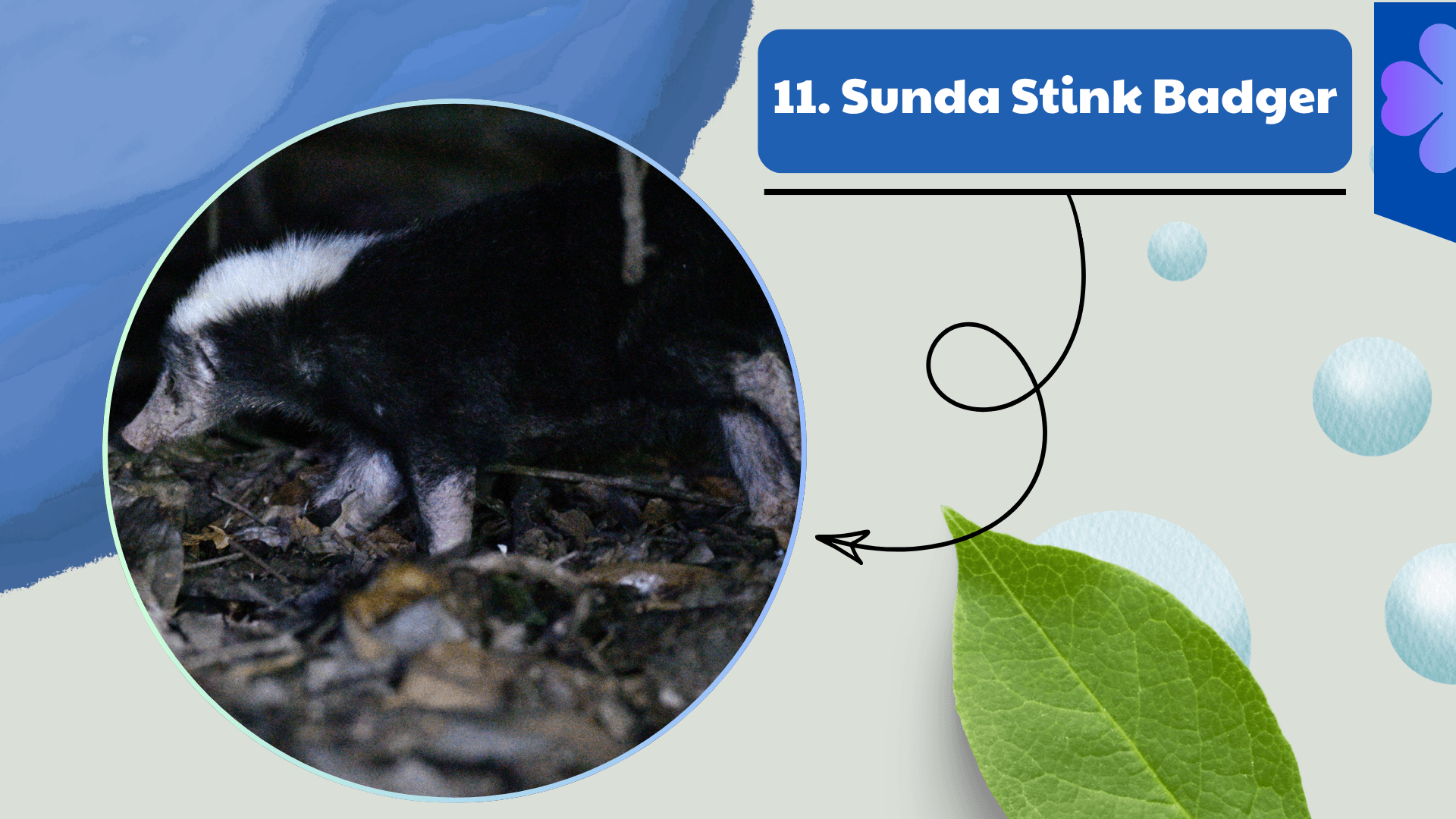
The Sunda Stink Badger is one of the most unusual members often included among broader discussions of types of Civet, although it is now classified closer to skunks in modern taxonomy. It is native to parts of Indonesia, including Sumatra and Borneo.
This small mammal has a compact body, dark fur, and a short tail. Its most famous feature is its powerful scent glands, which it uses as a defense mechanism when threatened. The spray is strong and unpleasant, similar to that of skunks.
Sunda Stink Badgers are nocturnal and primarily ground-dwelling. They live in forests, grasslands, and agricultural edges, often digging for food in soft soil.
Their diet includes insects, worms, small vertebrates, fruit, and carrion. They are opportunistic feeders, meaning they eat whatever food is easiest to find.
Although not a true civet, it is often grouped with civet-like mammals due to similar ecological roles and appearance in older wildlife classifications.
Habitat loss and human expansion can impact local populations, but they remain relatively widespread in suitable environments.
12. Common Palm Civet
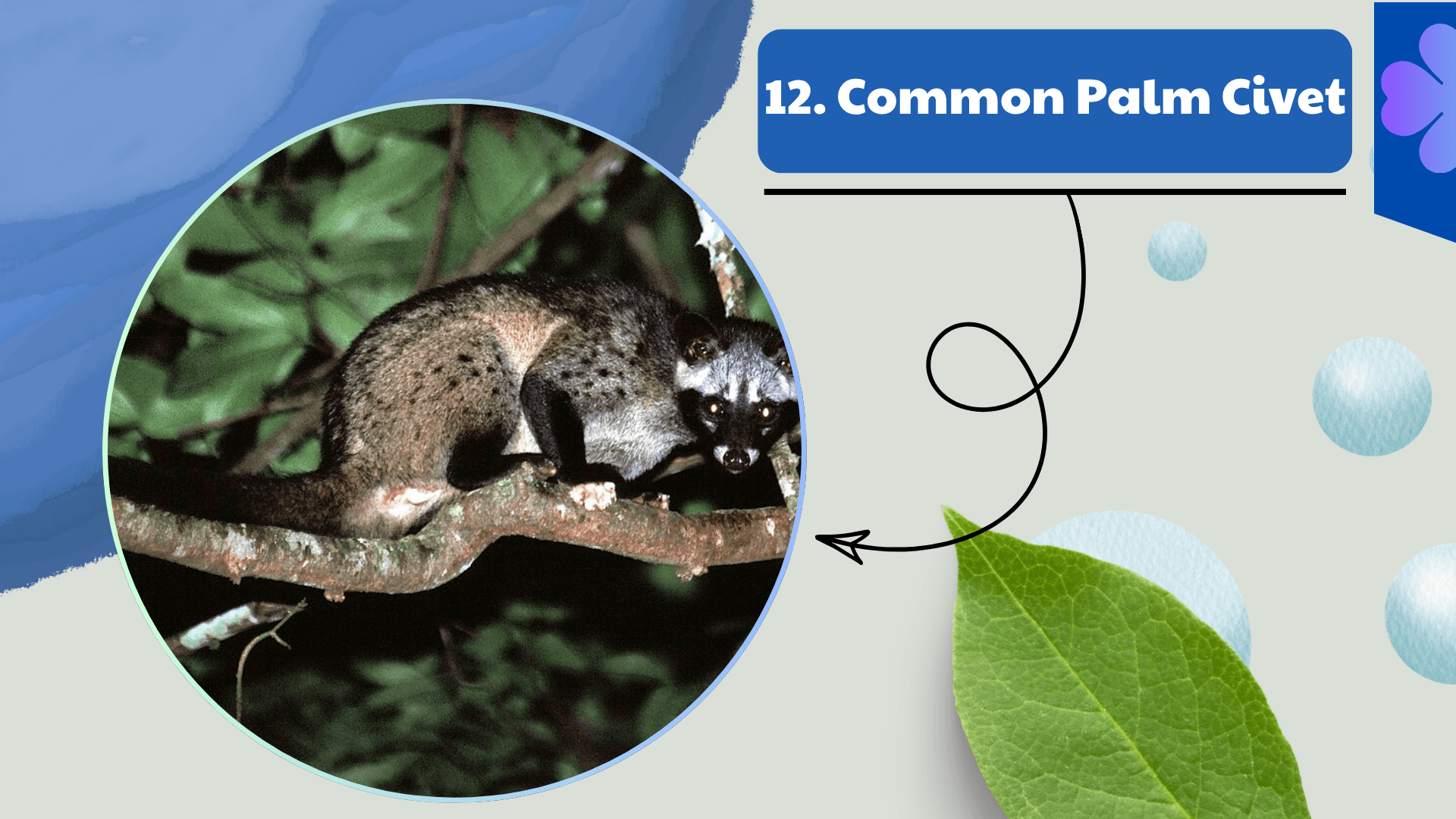
The Common Palm Civet is one of the widely recognized types of Civet in Southeast Asia. It is closely related to the Asian Palm Civet and shares many similar traits.
This species has a grayish-brown body, darker facial markings, and a long tail used for balance while climbing trees. It is highly agile and spends much of its time in forest canopies.
Common Palm Civets are nocturnal and solitary. They are highly adaptable and can survive in forests, plantations, and areas near human settlements.
Their diet consists of fruits, berries, insects, small mammals, birds, and eggs. They play an important ecological role as seed dispersers in tropical ecosystems.
They rest during the day in tree hollows or dense vegetation and become active at night when foraging for food.
Despite their adaptability, deforestation and hunting can affect local populations in some regions.
13. Brown Palm Civet
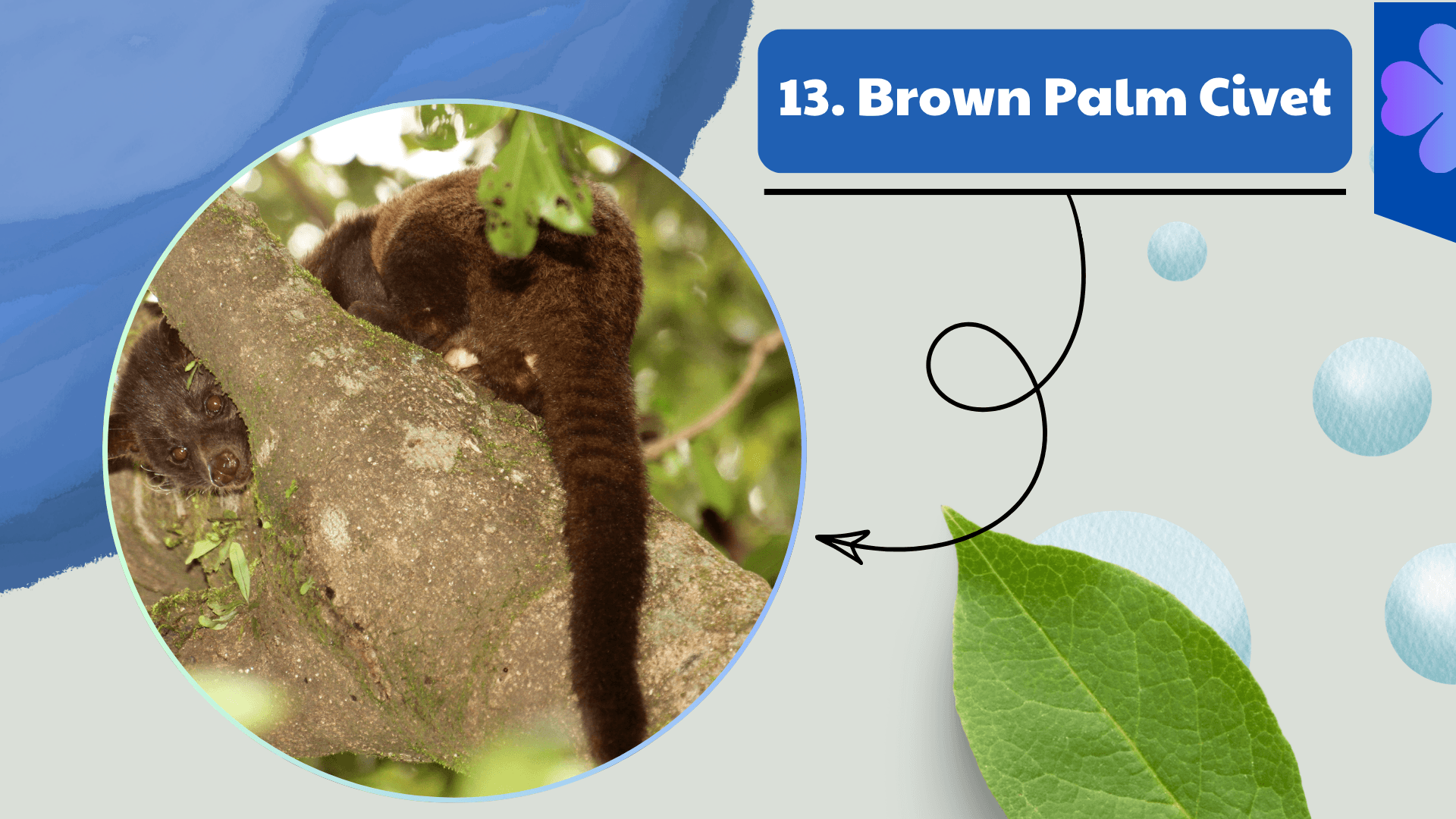
The Brown Palm Civet is one of the lesser-known types of Civet found in parts of Southeast Asia. It is named for its rich brown fur and arboreal lifestyle.
This species prefers dense tropical forests where it can move easily through trees in search of food and shelter.
Brown Palm Civets are nocturnal and secretive. They are rarely seen by humans due to their quiet behavior and forest-dwelling habits.
Their diet includes fruits, insects, small vertebrates, and occasionally bird eggs. Like other palm civets, they help spread seeds throughout the forest.
Because of limited research, much of their behavior remains poorly documented, making them one of the more mysterious civet species.
14. Large-Spotted Civet
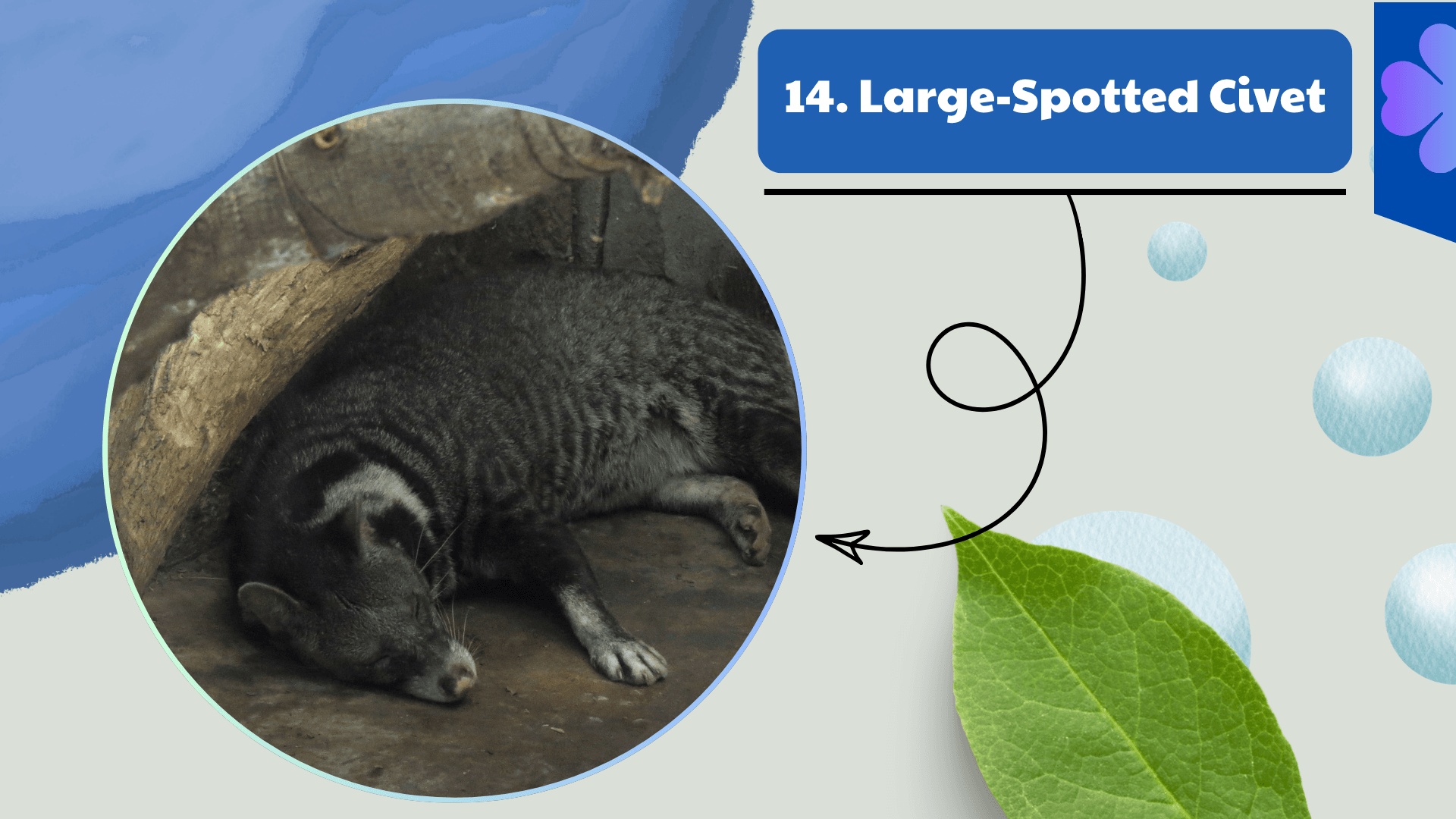
The Large-Spotted Civet is one of the visually distinctive types of Civet, known for its bold spotting pattern across its body. It is found in parts of Southeast Asia, particularly in forested regions.
This species has a slender body, long tail, and dark fur covered in lighter spots, which provide excellent camouflage in dappled forest light.
Large-Spotted Civets are nocturnal and primarily terrestrial, although they can climb trees when necessary.
Their diet includes small mammals, birds, insects, reptiles, and fruits. They are opportunistic hunters and scavengers.
They are generally solitary animals and rely on scent marking to define territory and communicate with others.
Habitat destruction and hunting pressure have contributed to population declines in some regions.
15. Congo Clawless Otter Civet
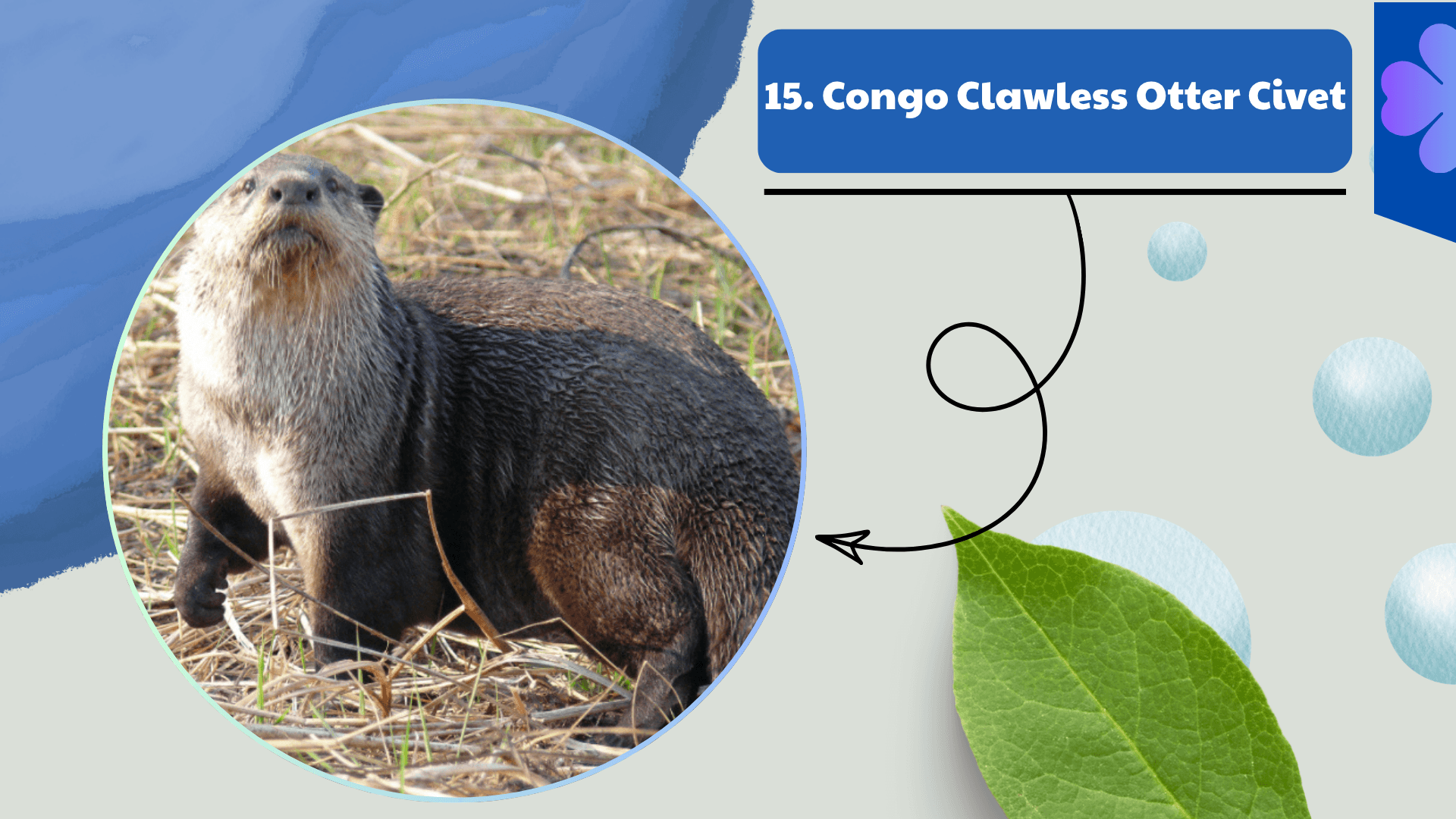
The Congo Clawless Otter Civet is one of the rarest and least understood types of Civet, native to Central Africa. Despite its name, it is not a true otter but a civet-like carnivore adapted to wet environments.
This species has a long, slender body, reduced claws, and semi-aquatic habits, allowing it to move easily in swampy and riverine habitats.
It inhabits dense tropical forests, wetlands, and river systems where it hunts for food both on land and in shallow water.
Its diet likely includes fish, amphibians, crustaceans, insects, and small vertebrates, although detailed studies are limited due to its rarity.
The Congo Clawless Otter Civet is extremely elusive, and very few confirmed sightings exist in the wild. This makes it one of the most mysterious carnivores in Africa.
Habitat destruction and human encroachment pose serious threats to its survival, but data is still insufficient for accurate population assessments.
Conclusion: Understanding the Types of Civet
The wide diversity of types of Civet demonstrates how adaptable and ecologically important these small carnivorous mammals are across Africa and Asia. From tree-dwelling fruit eaters like the Palm Civets to rare forest specialists like Hose’s Civet and wetland-adapted species like the Otter Civet, each plays a unique role in maintaining ecosystem balance.
Civets contribute to seed dispersal, pest control, and natural forest regeneration. However, many species face increasing threats from deforestation, habitat fragmentation, and illegal wildlife trade.
Protecting civet habitats is essential not only for their survival but also for the health of tropical ecosystems worldwide. As we continue to learn more about these secretive animals, one important question remains: how many more unknown civet species might still be hiding in the world’s remaining wild forests?
50+ FAQs About Types of Civet (Complete Wildlife Guide)
1. What is a civet?
A civet is a small to medium-sized carnivorous mammal belonging to the family Viverridae. Civets are known for their long bodies, pointed faces, and often spotted or striped fur. They are mostly nocturnal and play important ecological roles in forests and grasslands.
2. How many types of Civet are there?
There are around 15 major recognized types of Civet commonly discussed in wildlife literature, though taxonomic classifications can vary. Some civets also have subspecies or regional variations.
3. Where do civets live?
Civets live in Africa and Asia, primarily in tropical forests, rainforests, grasslands, wetlands, and even agricultural areas. Their adaptability allows them to survive in both wild and human-modified environments.
4. Are civets cats?
No, civets are not cats. Although they resemble cats in appearance, civets belong to a different family called Viverridae. Cats belong to the Felidae family.
5. What do civets eat?
Civets are omnivores. They eat fruits, insects, rodents, birds, eggs, reptiles, frogs, and sometimes carrion. Their diet varies depending on habitat and availability of food.
6. Are civets nocturnal?
Yes, most civet species are nocturnal. They are active at night when they hunt and forage for food, and they rest during the day in trees, burrows, or dense vegetation.
7. Why are civets important to ecosystems?
Civets help control insect and rodent populations and also disperse seeds through their fruit-eating habits. This makes them important for forest regeneration and biodiversity.
8. Do civets climb trees?
Yes, many civet species are excellent climbers. They use trees for resting, feeding, and avoiding predators. Some species are highly arboreal, spending most of their time in the canopy.
9. Are civets dangerous to humans?
Civets are generally shy and avoid humans. They are not considered dangerous, although they may bite or scratch if threatened or cornered.
10. What is the largest type of civet?
The African Civet is one of the largest civet species, known for its robust body, spotted coat, and strong scent glands.
11. What is the smallest civet species?
Small Indian Civet and related species are among the smaller civets, with slender bodies and lighter weight compared to larger forest civets.
12. Why do civets have scent glands?
Civets use scent glands to mark territory, communicate with other civets, and attract mates. The secretions are very strong and play a key role in their social behavior.
13. What is civet musk?
Civet musk is a strong-smelling secretion produced by some civet species. It was historically used in perfumes, but synthetic alternatives are now more common.
14. Are civets endangered?
Some civet species are stable, while others are endangered or vulnerable due to habitat loss, deforestation, and hunting pressure.
15. What threats do civets face?
Main threats include deforestation, habitat fragmentation, illegal wildlife trade, road accidents, and human encroachment into natural habitats.
16. Do civets carry diseases?
Like many wild mammals, civets can carry pathogens. However, disease transmission risk depends on human interaction and handling of wild animals.
17. Are civets related to mongooses?
Yes, civets are closely related to mongooses and genets. All belong to the order Carnivora but different families within it.
18. Can civets be kept as pets?
Wild civets are not suitable pets. In many countries, keeping them is illegal or highly regulated due to wildlife protection laws.
19. How long do civets live?
Civets typically live between 10 and 20 years depending on species, environment, and threats from predators or human activity.
20. How do civets communicate?
Civets communicate through scent marking, vocalizations, body language, and territorial behaviors, especially during mating seasons.
21. Do civets live alone?
Yes, most civets are solitary animals. They only come together during mating or when raising young.
22. How do civets hunt?
Civets hunt using stealth, sharp senses, and quick movements. They rely on smell and hearing to locate prey in the dark.
23. What is the Asian Palm Civet known for?
The Asian Palm Civet is known for eating coffee cherries, which are later processed into kopi luwak coffee, though this practice raises ethical concerns.
24. Are civets good climbers?
Yes, many civets are excellent climbers with strong claws and flexible bodies that allow them to move through trees easily.
25. Do civets eat fruit?
Yes, many civets are omnivores and eat a large amount of fruit, making them important seed dispersers in forests.
26. Why are civets called “night animals”?
Civets are called nocturnal animals because they are most active at night, when they hunt and forage for food.
27. Do civets have predators?
Yes, civets can be preyed upon by large cats, birds of prey, snakes, and humans in some regions.
28. What is unique about the Binturong?
The Binturong has a prehensile tail and a unique popcorn-like scent. It is one of the largest civet-like animals.
29. Are civets important for coffee production?
Yes, Asian Palm Civets are involved in kopi luwak production, but ethical farming and conservation concerns are widely discussed.
30. What habitats do civets prefer?
Civets prefer forests, jungles, wetlands, and sometimes farmland edges where food and shelter are available.
31. Can civets adapt to cities?
Some species adapt to urban environments, especially where fruit trees and food waste are available.
32. Do civets make noise?
Yes, civets produce hissing, growling, and chirping sounds, especially during mating or when threatened.
33. How fast can civets move?
Civets are agile and can run quickly in short bursts, especially when escaping predators or chasing prey.
34. Why are civets hard to study?
Civets are nocturnal, shy, and live in dense forests, making them difficult to observe in the wild.
35. What is the rarest civet species?
Some species like Hose’s Civet and Owston’s Palm Civet are among the rarest and least studied civets.
36. Do civets help forests grow?
Yes, by spreading seeds through their feces, civets help regenerate forests and maintain biodiversity.
37. Are civets solitary or social?
Most civets are solitary, but they may interact during breeding seasons or in areas with abundant food.
38. How do civets protect themselves?
Civets use scent marking, hiding, climbing trees, and sometimes releasing strong odors to deter predators.
39. What is special about spotted civets?
Spotted civets use their markings for camouflage in forests, helping them blend into dappled light environments.
40. Do civets hibernate?
No, civets do not hibernate. They remain active year-round, especially in tropical climates.
41. How do civets raise their young?
Female civets give birth in hidden dens and care for their young until they are independent.
42. What is the role of civets in food chains?
Civets act as both predators and prey, making them important mid-level species in ecosystems.
43. Do civets have good eyesight?
Yes, civets have excellent night vision, helping them navigate and hunt in low-light conditions.
44. Can civets swim?
Some civets can swim if necessary, especially species living near rivers and wetlands.
45. Why are civets hunted?
Civets are sometimes hunted for meat, fur, or musk glands, though many species are now protected.
46. Are civets intelligent animals?
Yes, civets show problem-solving skills, adaptability, and strong memory when foraging for food.
47. What is the conservation status of civets?
It varies by species. Some are stable, while others are threatened due to habitat destruction.
48. How do civets find food at night?
They use strong senses of smell and hearing to detect prey in complete darkness.
49. Are civets active year-round?
Yes, civets do not hibernate and remain active throughout the year in most habitats.
50. Why are types of Civet important to study?
Studying types of Civet helps scientists understand biodiversity, forest health, and ecosystem balance.
51. What is the main takeaway about civets?
Civets are adaptable, intelligent, and ecologically important mammals that play a vital role in maintaining healthy ecosystems across Asia and Africa.