

The types of Bee-eater refer to a colorful and highly diverse group of birds belonging to the family Meropidae. These birds are best known for their vibrant plumage, graceful flight, and unique feeding behavior, especially their habit of catching bees, wasps, and flying insects mid-air. Found across Africa, Asia, Europe, and Australia, bee-eaters thrive in warm climates where open landscapes make hunting easier. This guide explores 30 different types of Bee-eater, highlighting their appearance, habitat, behavior, and identification features in a simple, beginner-friendly way. Whether you are a birdwatcher or wildlife enthusiast, understanding these species helps you appreciate their ecological importance and stunning diversity in the wild.
1. European Bee-eater
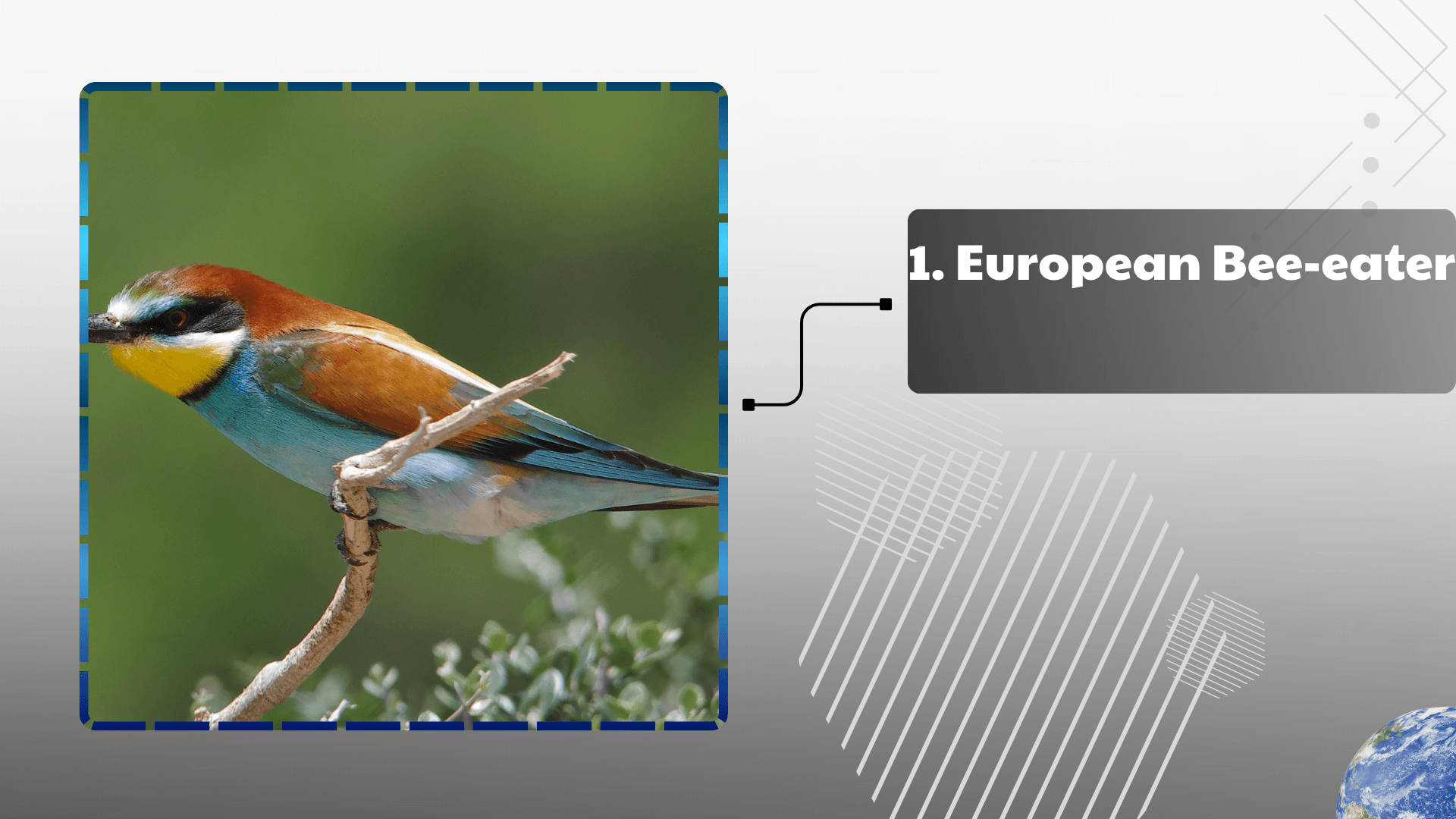
The European Bee-eater is one of the most well-known types of Bee-eater, famous for its striking mix of green, yellow, blue, and chestnut colors. It is widely distributed across southern Europe, parts of North Africa, and western Asia.
This species prefers open countryside, riverbanks, and sandy cliffs where it digs nesting tunnels. European Bee-eaters are highly social birds, often seen in colonies that can number in the hundreds during breeding season.
Their diet consists mainly of bees, wasps, dragonflies, and other flying insects. Before eating bees, they skillfully remove the sting by repeatedly hitting the insect against a hard surface.
2. Little Bee-eater
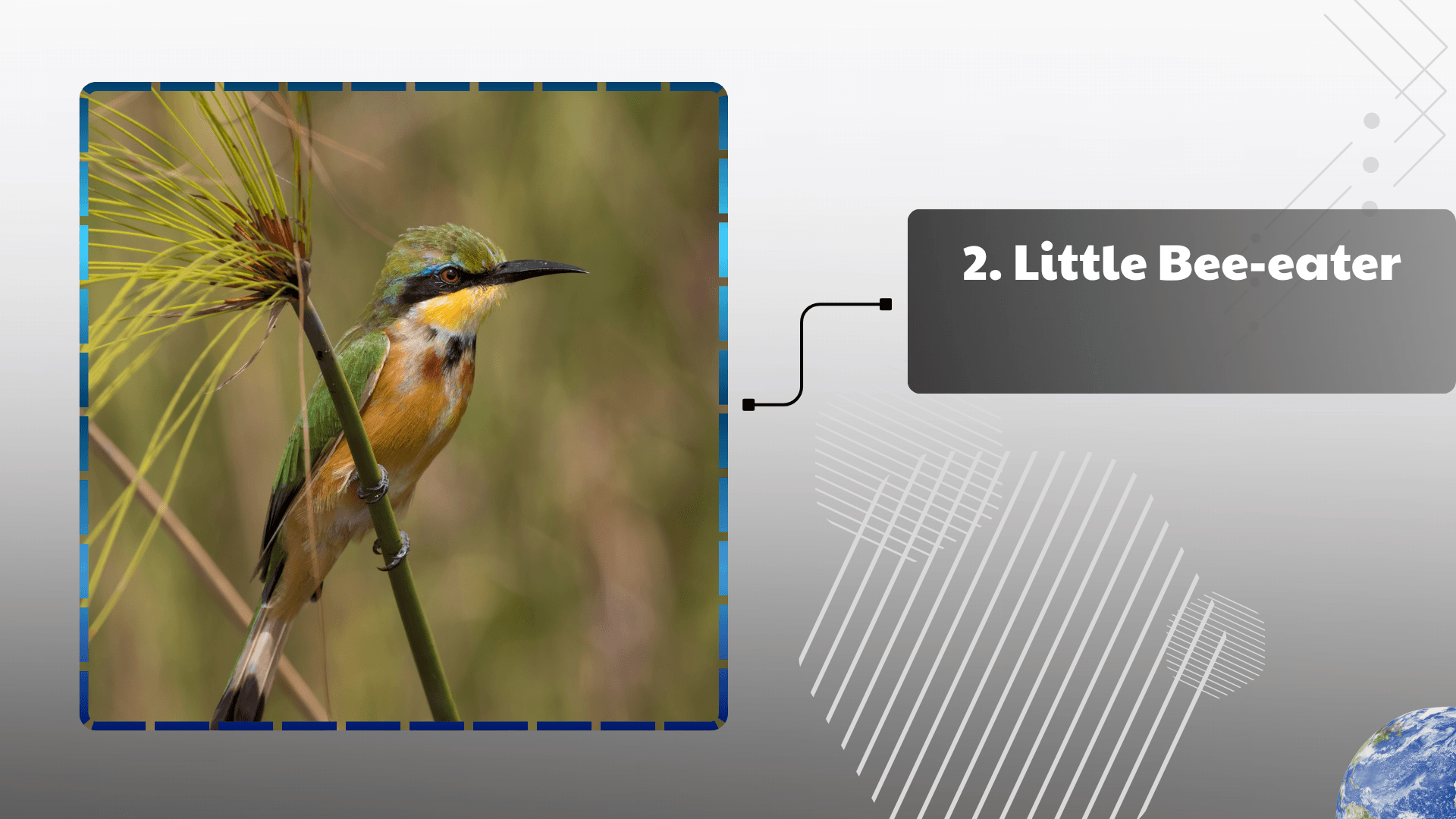
The Little Bee-eater is one of the smallest types of Bee-eater, commonly found across sub-Saharan Africa. Despite its small size, it is extremely active and agile in flight.
This species has bright green plumage with a yellow throat and a distinct black eye stripe. It prefers savannas, river edges, and lightly wooded areas.
Little Bee-eaters often perch on thin branches or wires while scanning for flying insects. They are highly territorial and may defend feeding spots aggressively against other birds.
3. Blue-tailed Bee-eater
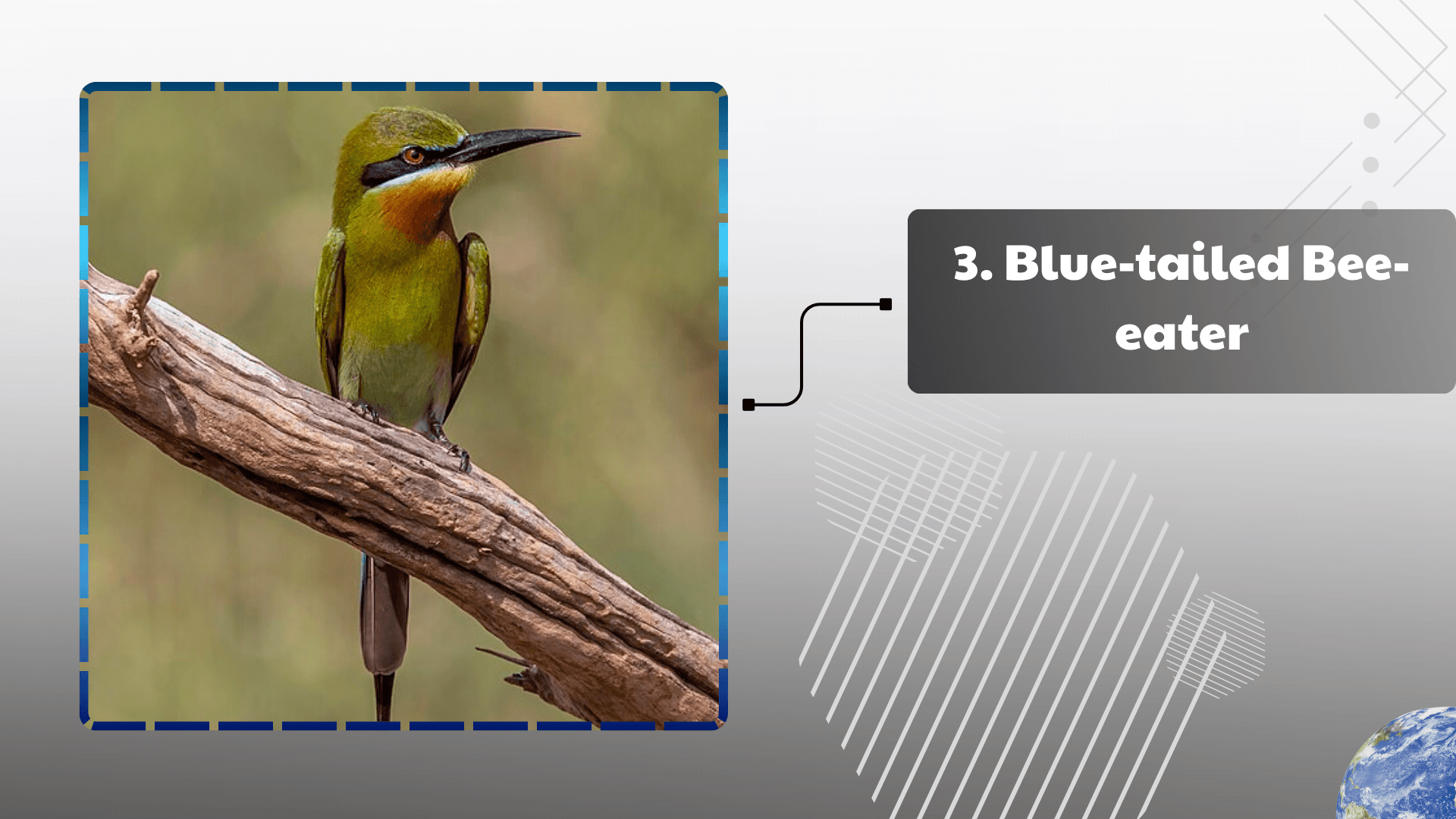
The Blue-tailed Bee-eater is a vibrant species found in South and Southeast Asia. It is easily recognized among the types of Bee-eater due to its rich green body and deep blue tail feathers.
This bird thrives in open woodlands, agricultural fields, and riverbanks. It is often seen perched in groups, especially during migration periods.
Blue-tailed Bee-eaters are highly skilled aerial hunters, catching insects mid-flight with precision. They also play an important ecological role in controlling insect populations.
4. Chestnut-headed Bee-eater
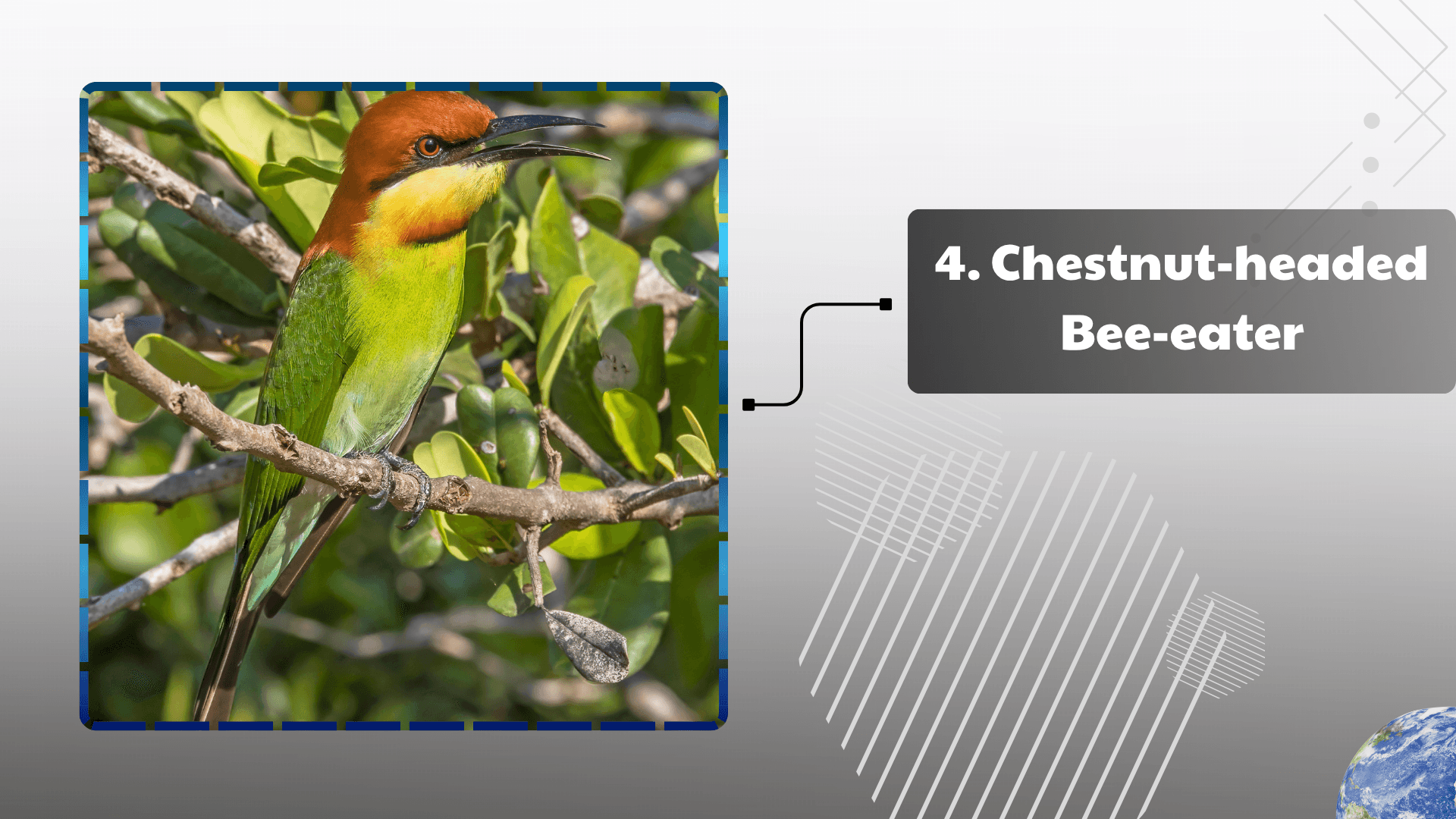
The Chestnut-headed Bee-eater is one of the most visually striking types of Bee-eater, known for its rich chestnut-colored head and bright green body.
It is commonly found in the Indian subcontinent and Southeast Asia, favoring riverbanks, wetlands, and open forest edges.
This species is highly social and often forms large breeding colonies. Its diet consists mainly of bees, butterflies, dragonflies, and other flying insects.
It is especially admired by bird photographers due to its vivid coloration and graceful flight patterns.
5. White-throated Bee-eater
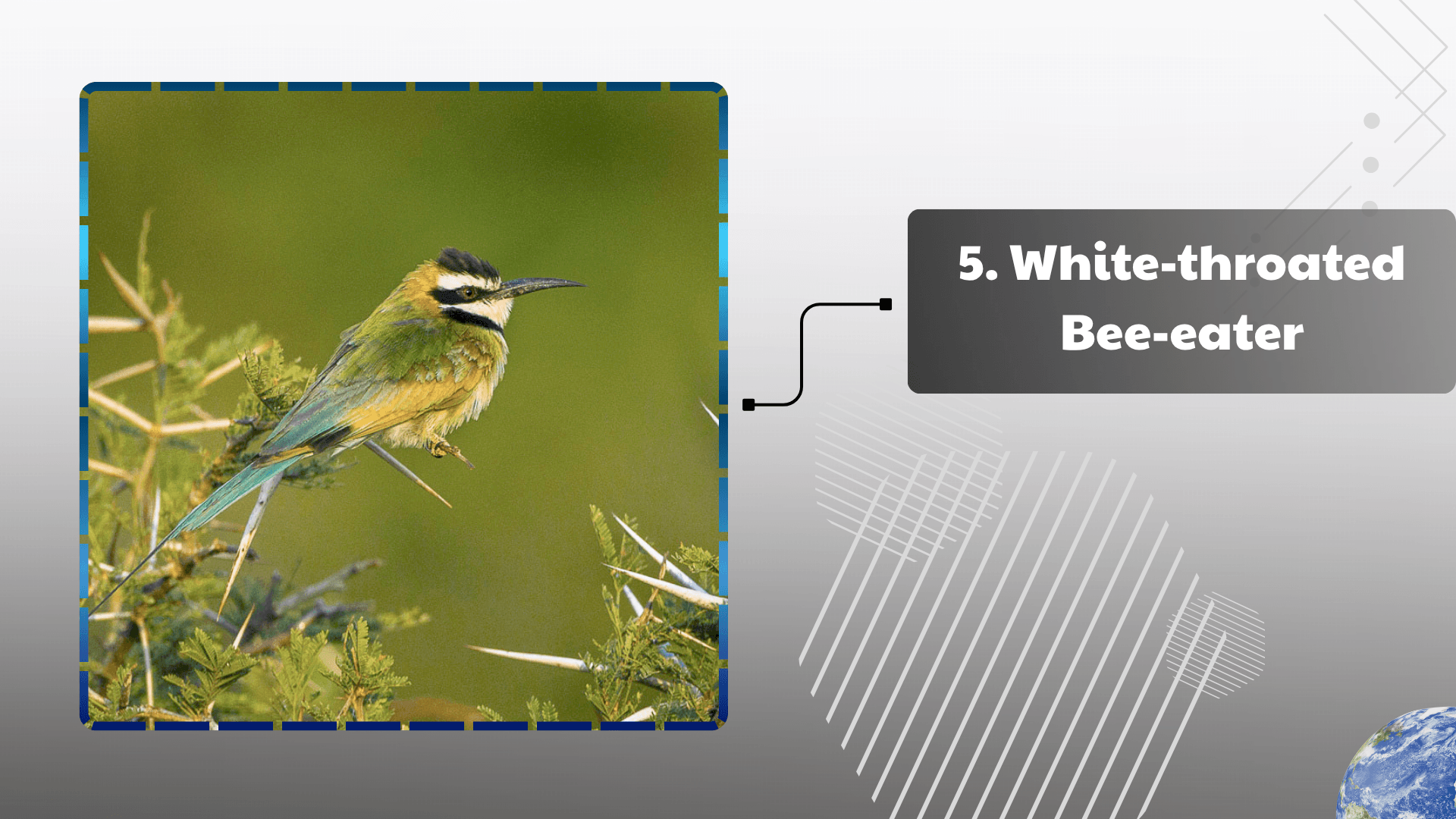
The White-throated Bee-eater is a beautiful African species and one of the most elegant types of Bee-eater. It features a green body, chestnut wings, and a distinctive white throat patch.
It is commonly found in savannas, woodland edges, and near water bodies across central and eastern Africa.
This species is highly social and often nests in colonies dug into sandy riverbanks. It is known for cooperative behavior, where groups may help protect nesting areas from predators.
White-throated Bee-eaters are skilled aerial hunters, relying on sharp vision and fast flight to capture insects in mid-air.
This first section of types of Bee-eater highlights some of the most colorful and widely distributed species across Africa and Asia. In the next section, we will continue exploring more fascinating bee-eaters, including rare regional species and uniquely adapted hunters from different ecosystems.
6. Blue-cheeked Bee-eater
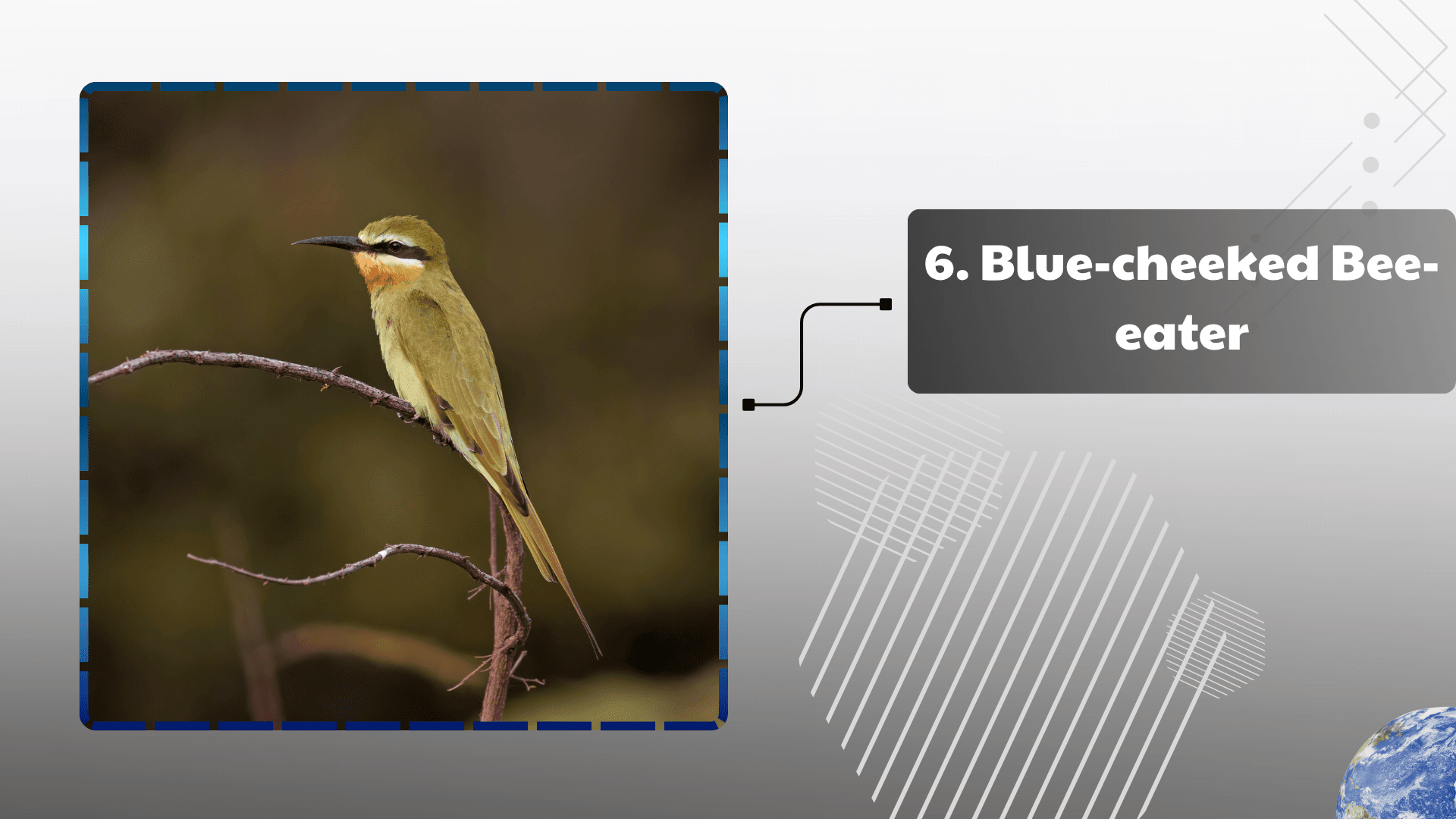
The Blue-cheeked Bee-eater is one of the most recognizable types of Bee-eater, found across parts of Africa, the Middle East, and western Asia. It is famous for its vivid green body and distinct turquoise-blue cheek patch.
This species prefers open habitats such as dry savannas, semi-deserts, and river valleys. It is highly migratory in many regions, moving seasonally in response to insect abundance.
Blue-cheeked Bee-eaters are strong aerial hunters, often catching bees, wasps, and dragonflies mid-flight. They are also known for their social behavior, frequently forming loose colonies during breeding season.
7. Rainbow Bee-eater
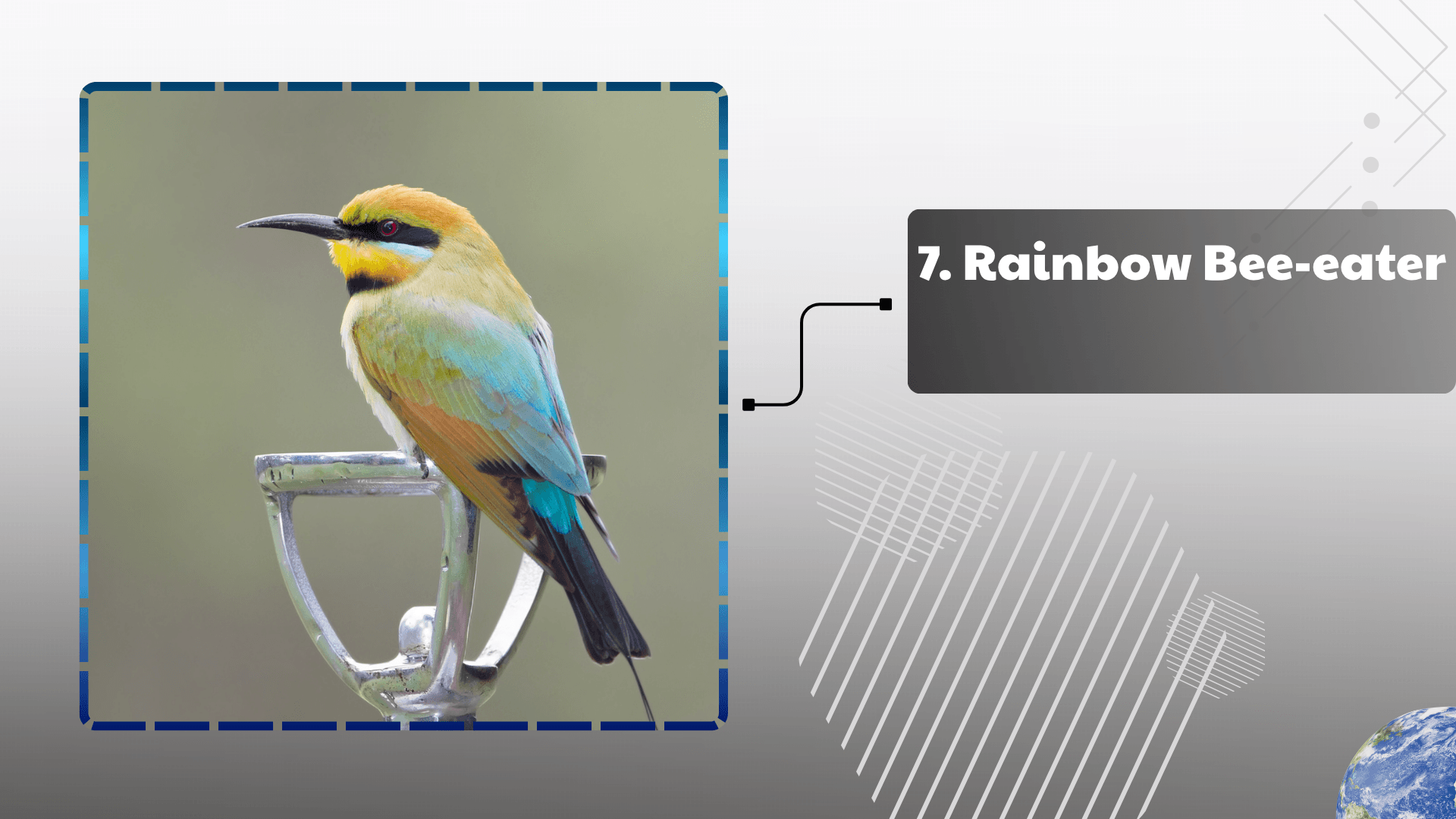
The Rainbow Bee-eater is one of the most colorful types of Bee-eater, native mainly to Australia and parts of southern Asia. Its feathers display a stunning combination of green, blue, orange, and yellow tones.
This bird is highly adaptable and can be found in forests, woodlands, farmlands, and even suburban areas. It often nests in sandy banks or soft soil, digging long tunnel nests.
Rainbow Bee-eaters are highly efficient hunters and use agile flight patterns to capture flying insects. They are especially active during warm daylight hours.
8. Swallow-tailed Bee-eater
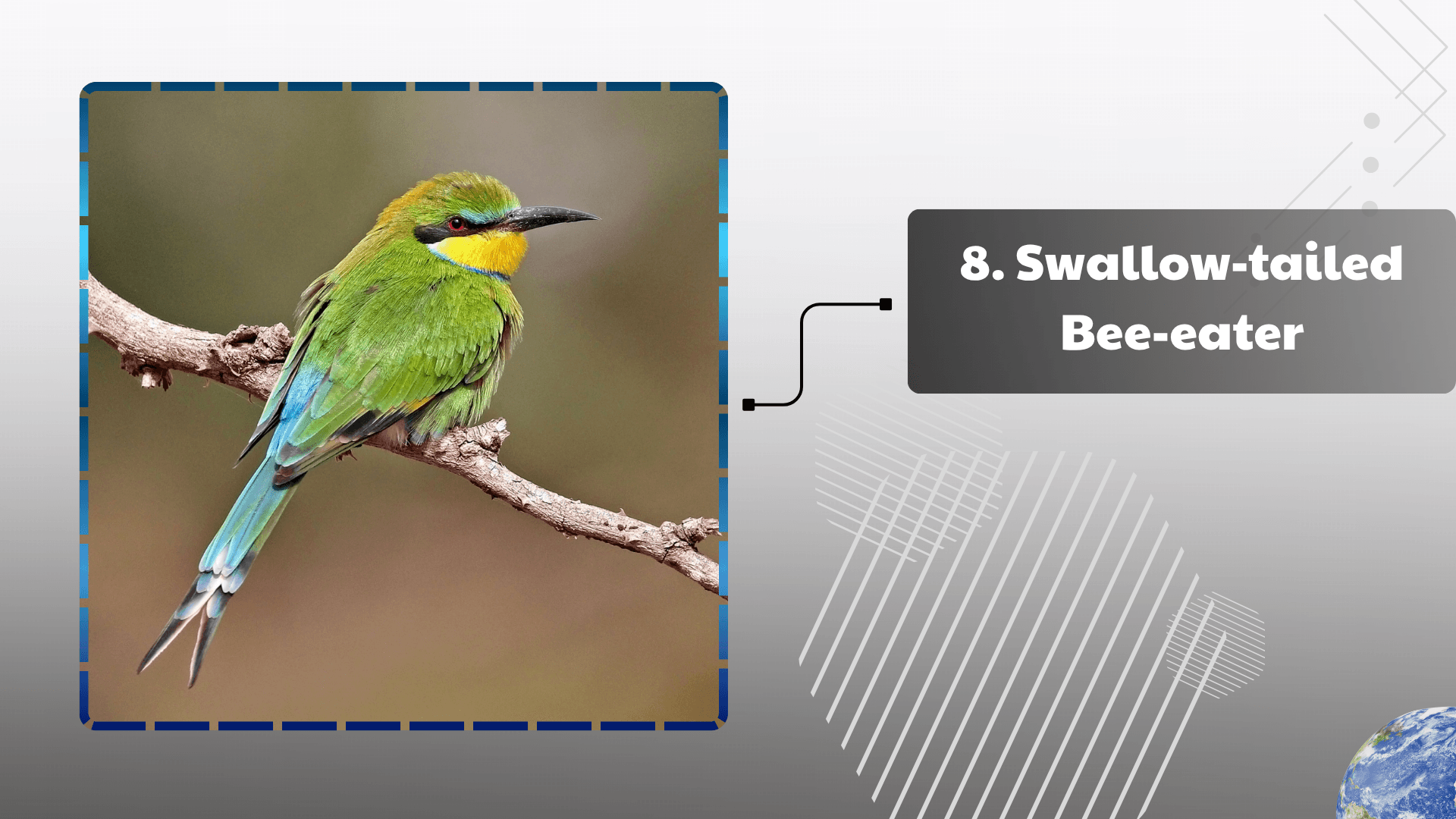
The Swallow-tailed Bee-eater is a striking species among the types of Bee-eater, easily identified by its long, deeply forked tail resembling that of a swallow.
It is found in parts of Africa, especially in savanna and woodland regions. This species prefers open landscapes where it can easily spot flying insects.
Swallow-tailed Bee-eaters are highly social birds, often seen in groups perched on trees or wires. They are skilled hunters and play a key role in controlling insect populations in their habitats.
9. Blue-headed Bee-eater
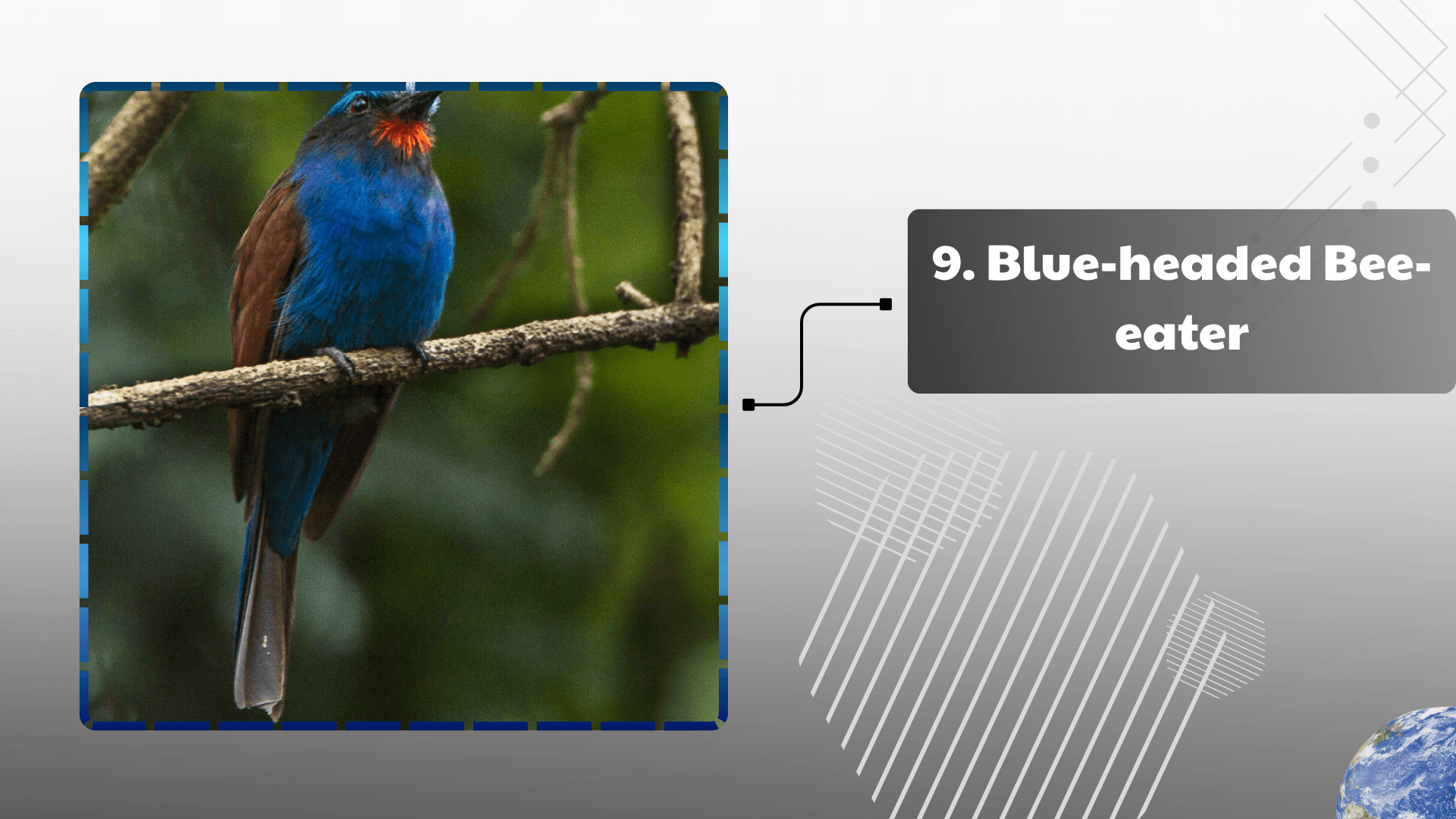
The Blue-headed Bee-eater is one of the more regionally specialized types of Bee-eater, found mainly in parts of Southeast Asia.
It is distinguished by its bright blue head and green body, creating a strong visual contrast that makes it easy to identify in the wild.
This species prefers forest edges, riverbanks, and open clearings. It is a solitary or loosely social bird compared to more colonial bee-eater species.
Its diet consists primarily of flying insects, which it catches using quick and precise aerial strikes.
10. Black Bee-eater
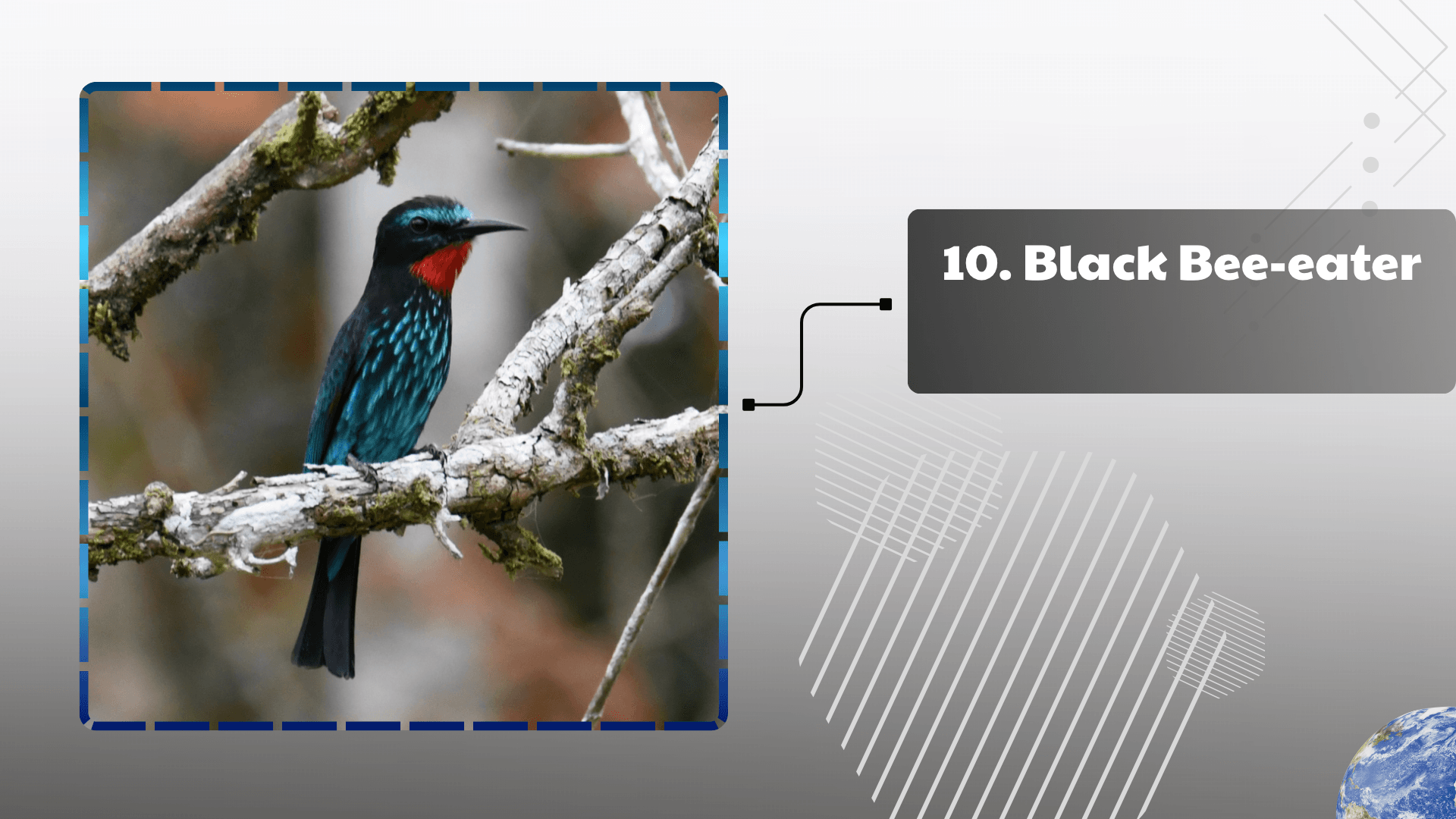
The Black Bee-eater is one of the most unique-looking types of Bee-eater, known for its mostly dark plumage with subtle glossy tones. Unlike many colorful relatives, it has a more subdued appearance.
This species is found in parts of West and Central Africa, often inhabiting forest edges and lightly wooded areas.
Despite its darker coloration, it shares the same hunting behavior as other bee-eaters, feeding on bees, wasps, and flying insects in mid-air.
Black Bee-eaters are less social than many other species, often seen alone or in small family groups.
This second section of the types of Bee-eater guide highlights species with diverse colors, behaviors, and habitats across Africa, Asia, and Australia. In the next section, we will continue exploring more rare and region-specific bee-eaters, including specialized forest and desert-adapted species.
11. Asian Green Bee-eater
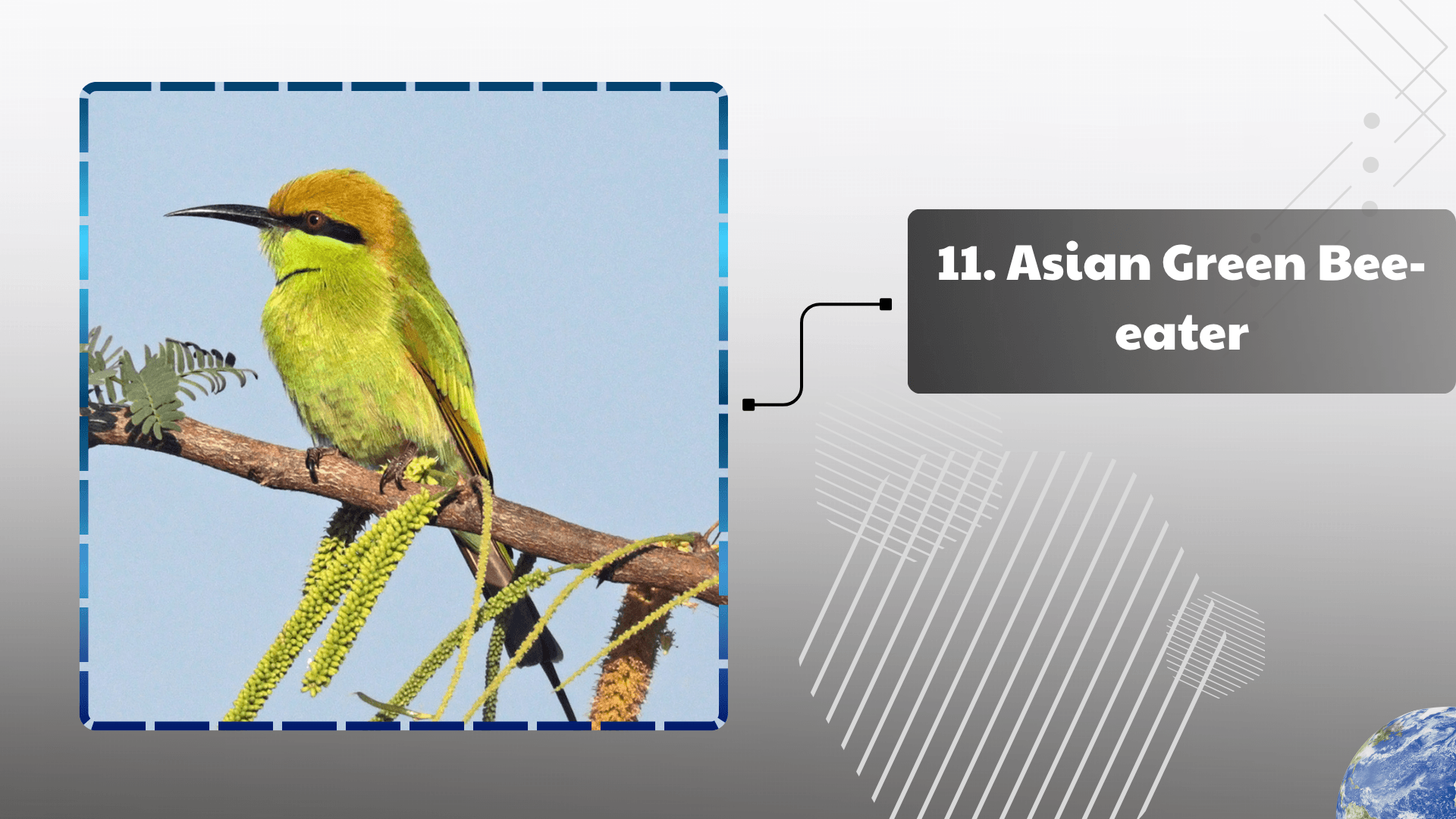
The Asian Green Bee-eater is one of the most widespread types of Bee-eater across South Asia and the Middle East. It is easily recognized by its slim body, bright green plumage, and long central tail streamers.
This species thrives in open habitats such as farmland, deserts, scrublands, and village outskirts. It is often seen perched on wires or branches scanning for flying insects.
Asian Green Bee-eaters are highly agile hunters, capturing bees, wasps, and small flying insects mid-air with remarkable precision. They are also known for their cooperative behavior during breeding season.
12. African Green Bee-eater
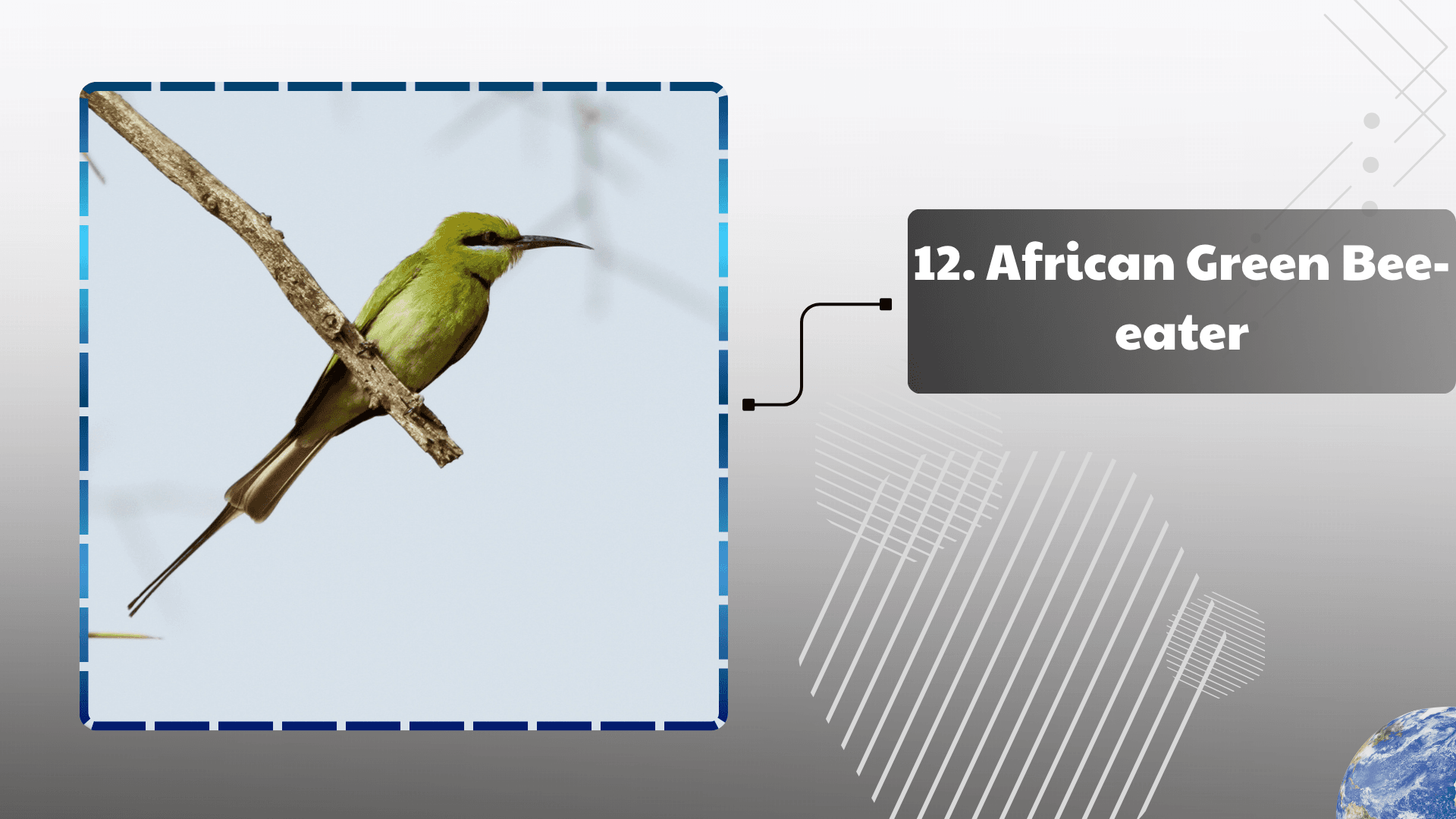
The African Green Bee-eater is one of the most common types of Bee-eater in sub-Saharan Africa. It closely resembles its Asian counterpart but is adapted to African savanna ecosystems.
It prefers dry grasslands, open woodland edges, and semi-arid regions where insect activity is high. This species is often seen in small groups or pairs.
African Green Bee-eaters are highly territorial and will defend feeding perches aggressively. Their diet mainly consists of flying insects, especially bees and wasps.
13. Arabian Green Bee-eater
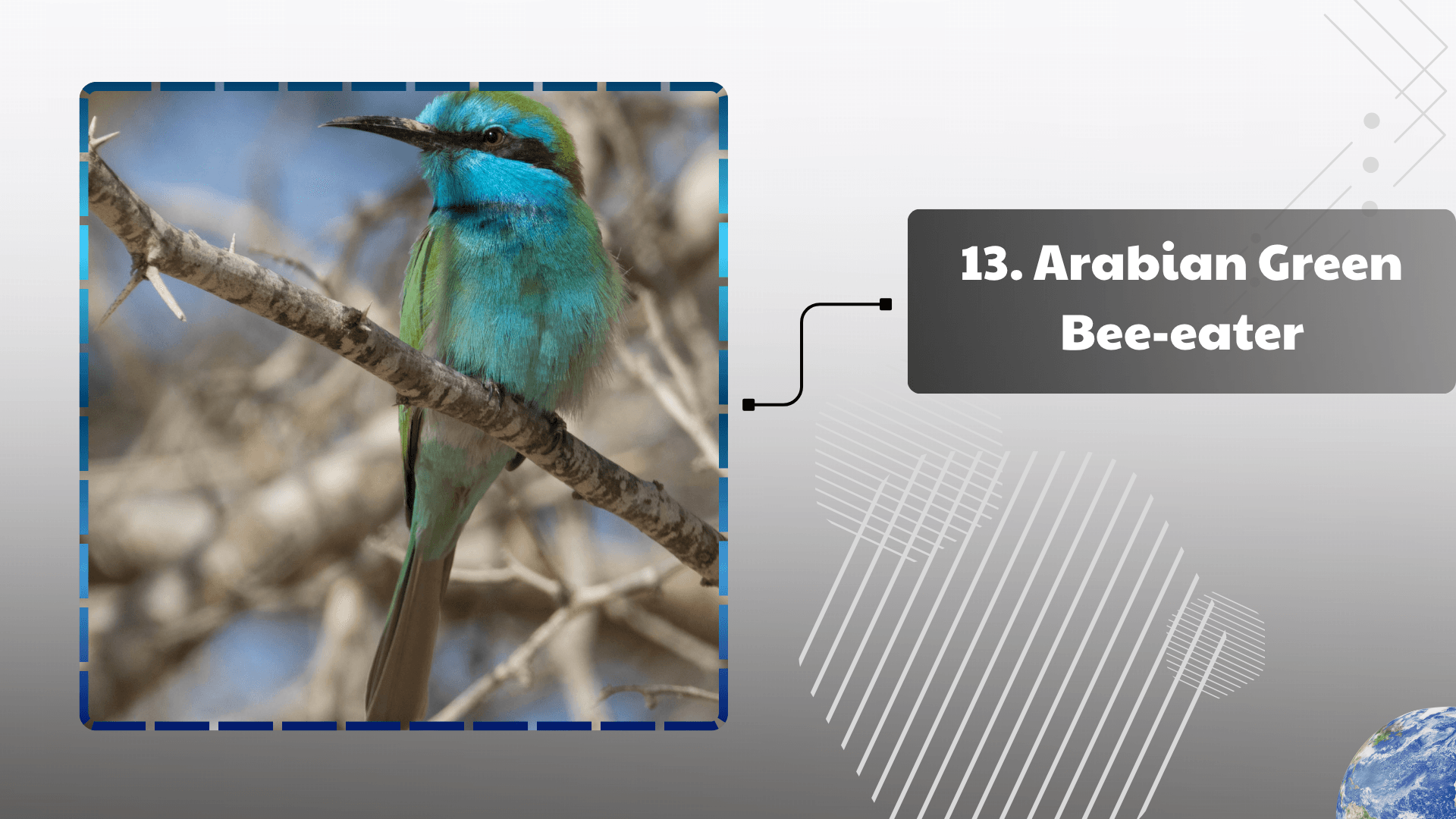
The Arabian Green Bee-eater is a desert-adapted member of the types of Bee-eater, found across the Arabian Peninsula and surrounding dry regions.
It is slightly paler than other green bee-eaters, an adaptation that helps it blend into sandy desert environments.
This species is highly resilient and can survive in extreme heat conditions. It is often seen near oases, wadis, and desert scrub areas where insects are available.
14. Red-throated Bee-eater
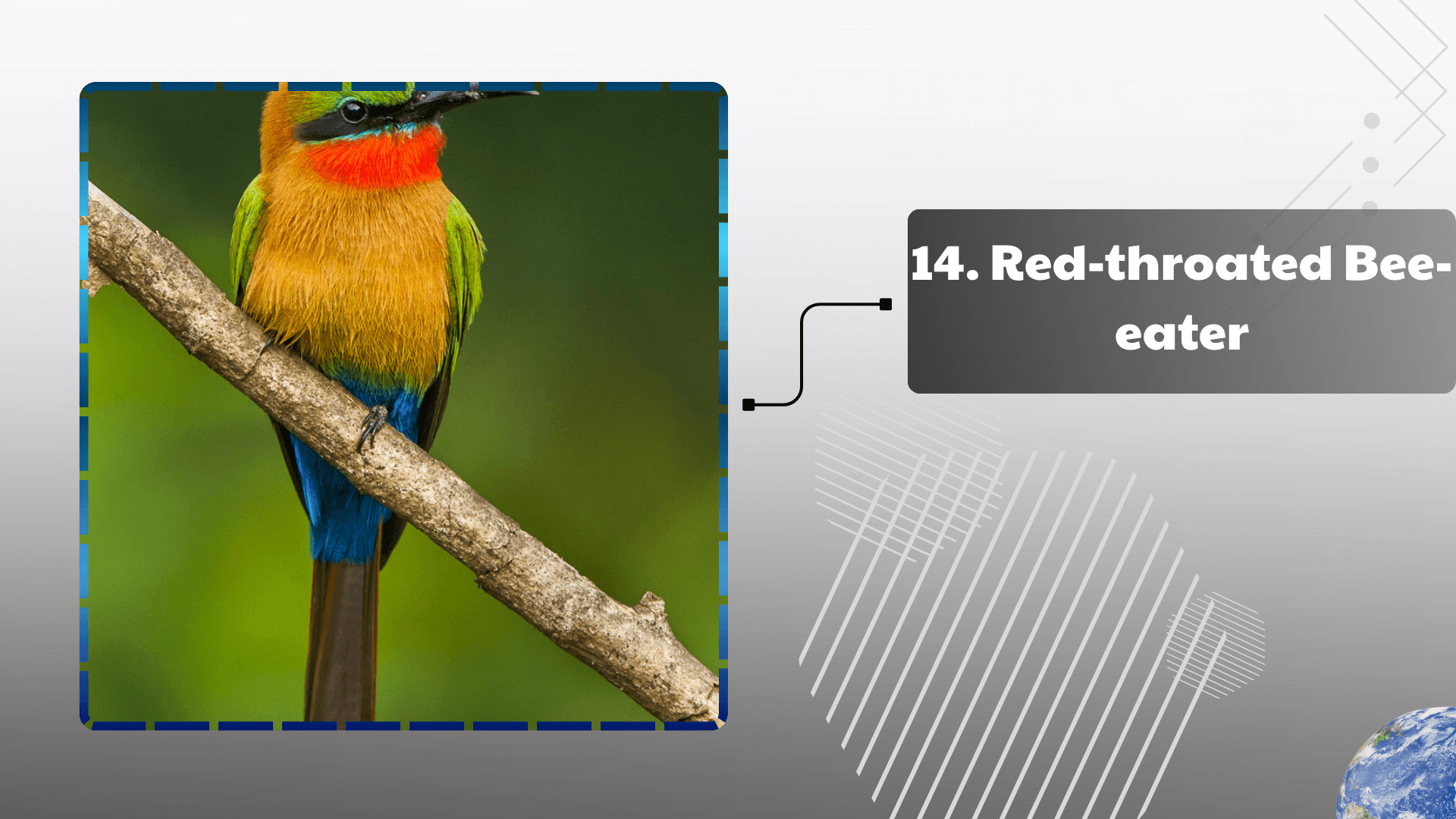
The Red-throated Bee-eater is a visually striking species among the types of Bee-eater, known for its bright red throat patch contrasting with green and blue body feathers.
It is found in parts of Africa, especially in savanna and woodland regions near water sources.
This bird is highly social and often forms breeding colonies along sandy riverbanks. It is an efficient aerial predator that feeds mainly on flying insects.
15. White-fronted Bee-eater
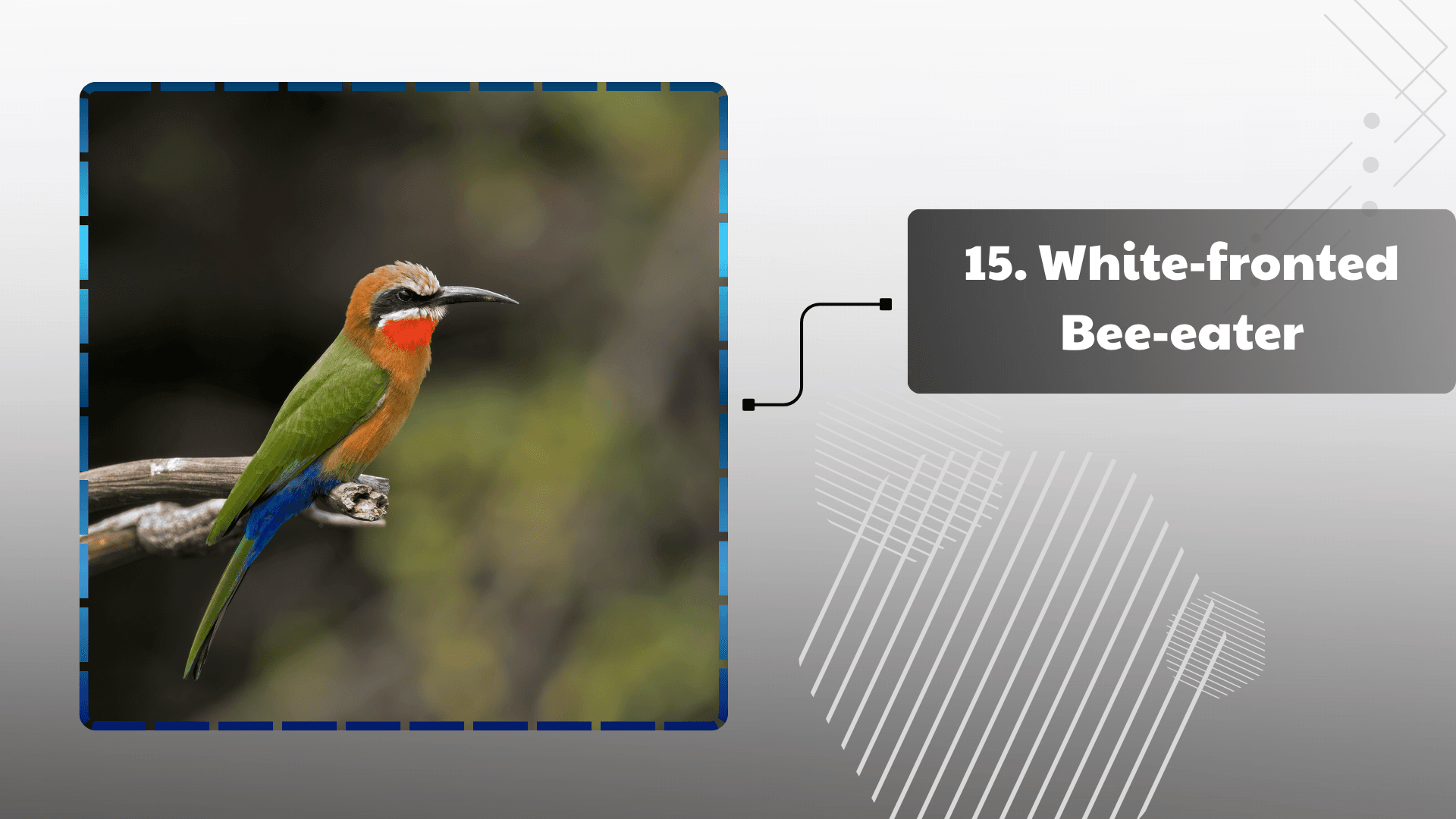
The White-fronted Bee-eater is a beautifully patterned African species and one of the more elegant types of Bee-eater.
It features a green body with a distinct white forehead and blue facial markings. It is commonly found in open savannas and woodland edges.
This species is highly social and often nests in colonies. It is known for synchronized flight behavior and cooperative colony defense against predators.
This third section of the types of Bee-eater guide highlights adaptable species found across Asia, Africa, and the Middle East, showing how bee-eaters thrive in both deserts and grasslands. In the next section, we will continue with more specialized species, including forest dwellers and island-adapted bee-eaters.
16. Blue-breasted Bee-eater
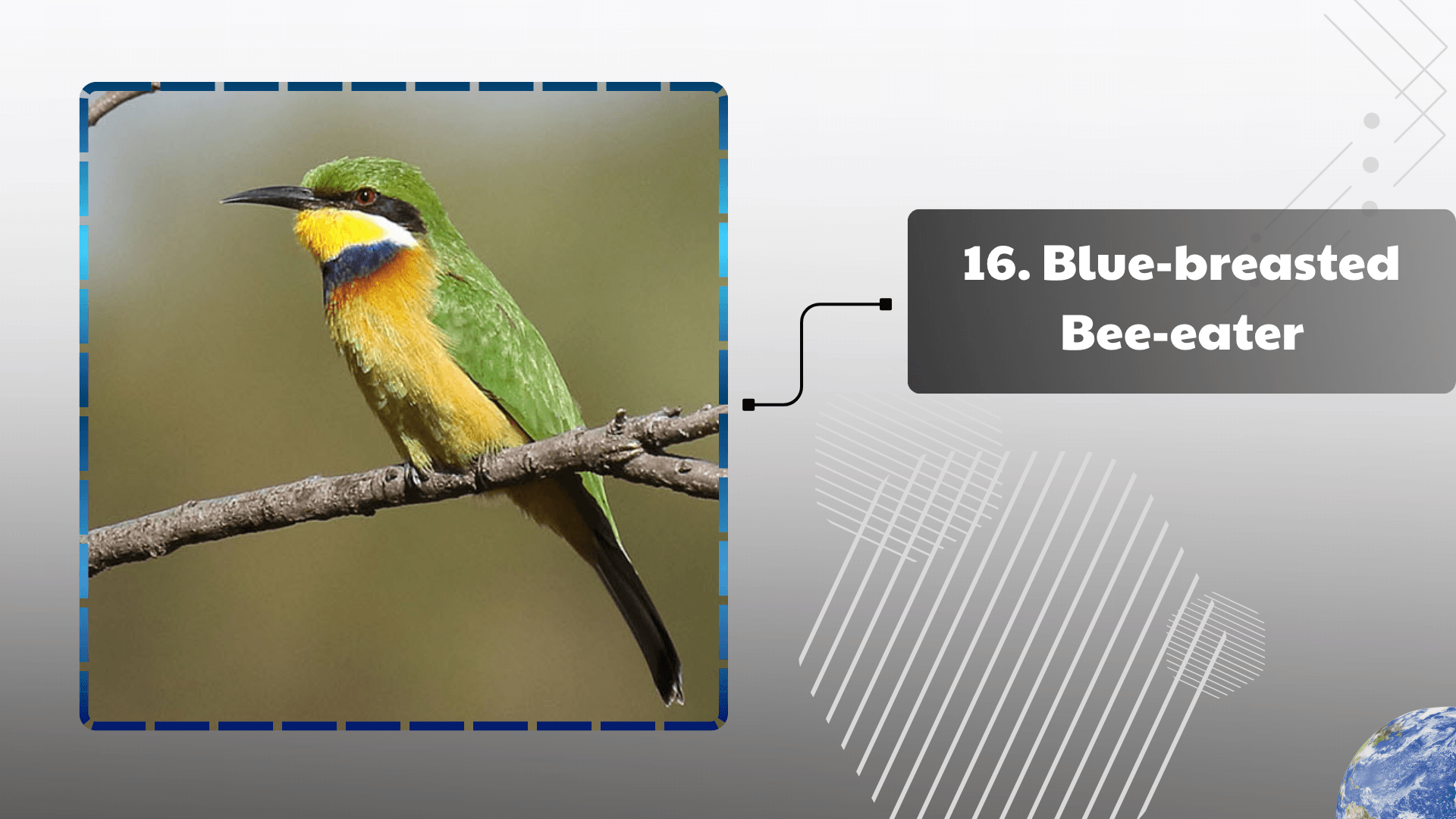
The Blue-breasted Bee-eater is one of the most elegant types of Bee-eater, found mainly in parts of Central and West Africa. It is known for its rich green body and vivid blue chest band that makes it easy to identify in the wild.
This species prefers forest edges, open woodlands, and riverine habitats where flying insects are abundant. It is often seen perched quietly before launching into fast aerial hunts.
Blue-breasted Bee-eaters are typically solitary or found in small family groups, making them less colonial than other bee-eater species.
17. Cinnamon-chested Bee-eater
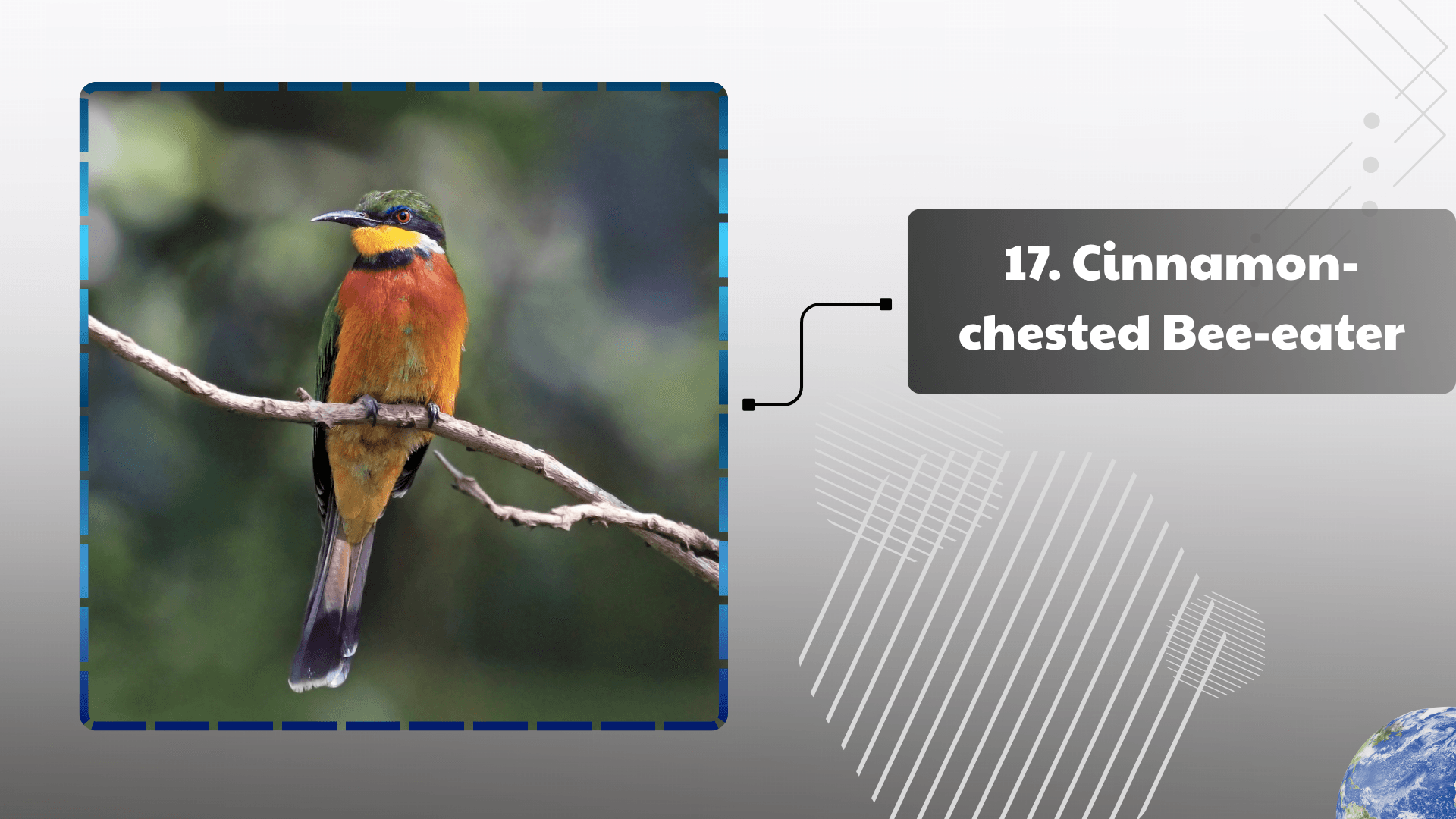
The Cinnamon-chested Bee-eater is a striking member of the types of Bee-eater, recognized by its warm cinnamon-colored chest contrasting with green and blue tones.
It is mainly distributed across parts of East Africa, including woodland and savanna regions. This species prefers open landscapes where it can easily spot flying insects.
It is an agile hunter, capturing bees, wasps, and dragonflies mid-air. It often perches on exposed branches or shrubs while scanning for prey.
18. Black-headed Bee-eater
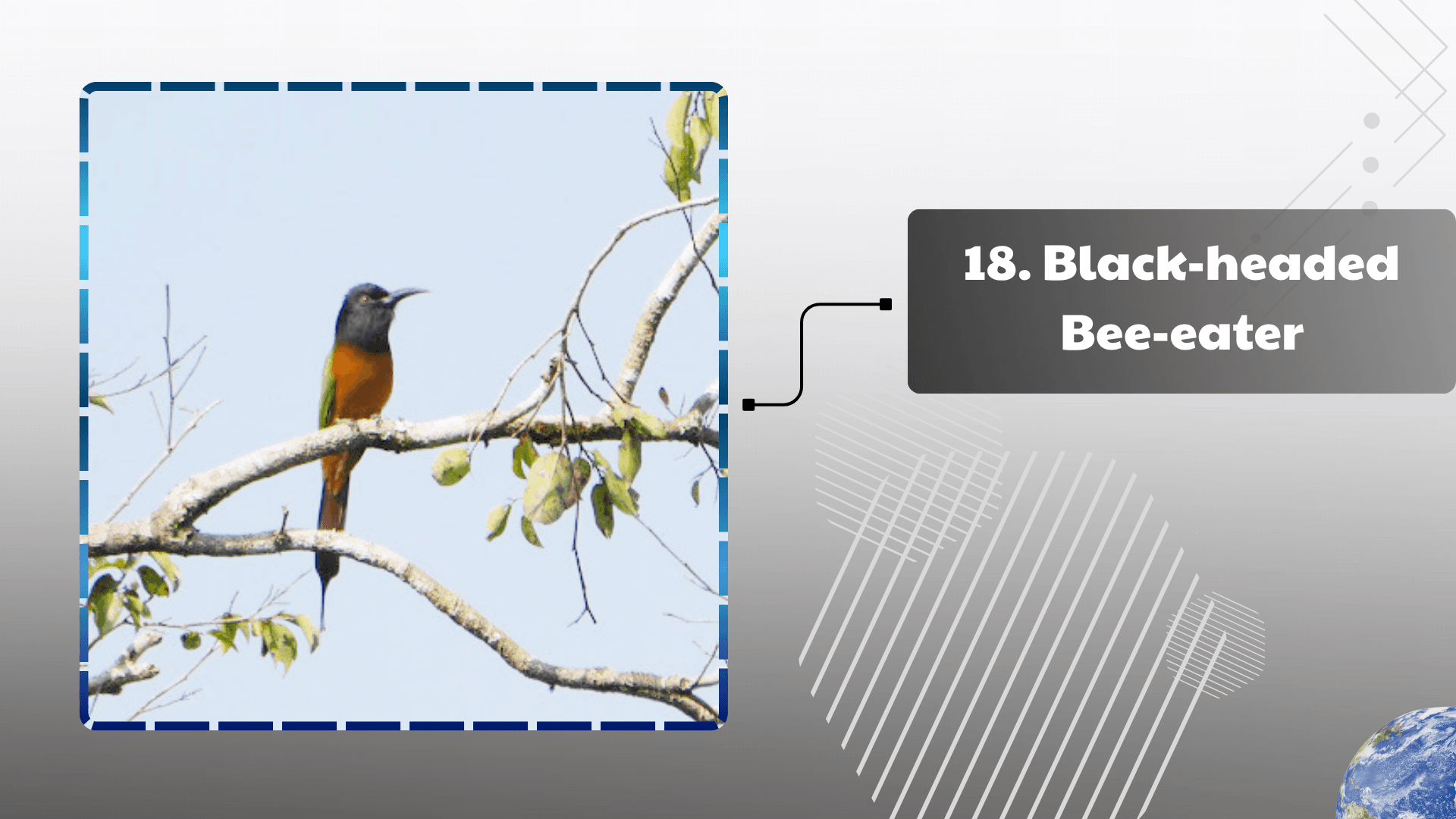
The Black-headed Bee-eater is one of the more distinctive types of Bee-eater, found in parts of Africa, especially in savanna and woodland ecosystems.
It has a deep black head, green body, and subtle chest markings that make it easy to recognize. It is a highly active bird, often seen in pairs or small groups.
This species nests in sandy banks and is known for its strong territorial behavior during breeding seasons.
19. Somali Bee-eater
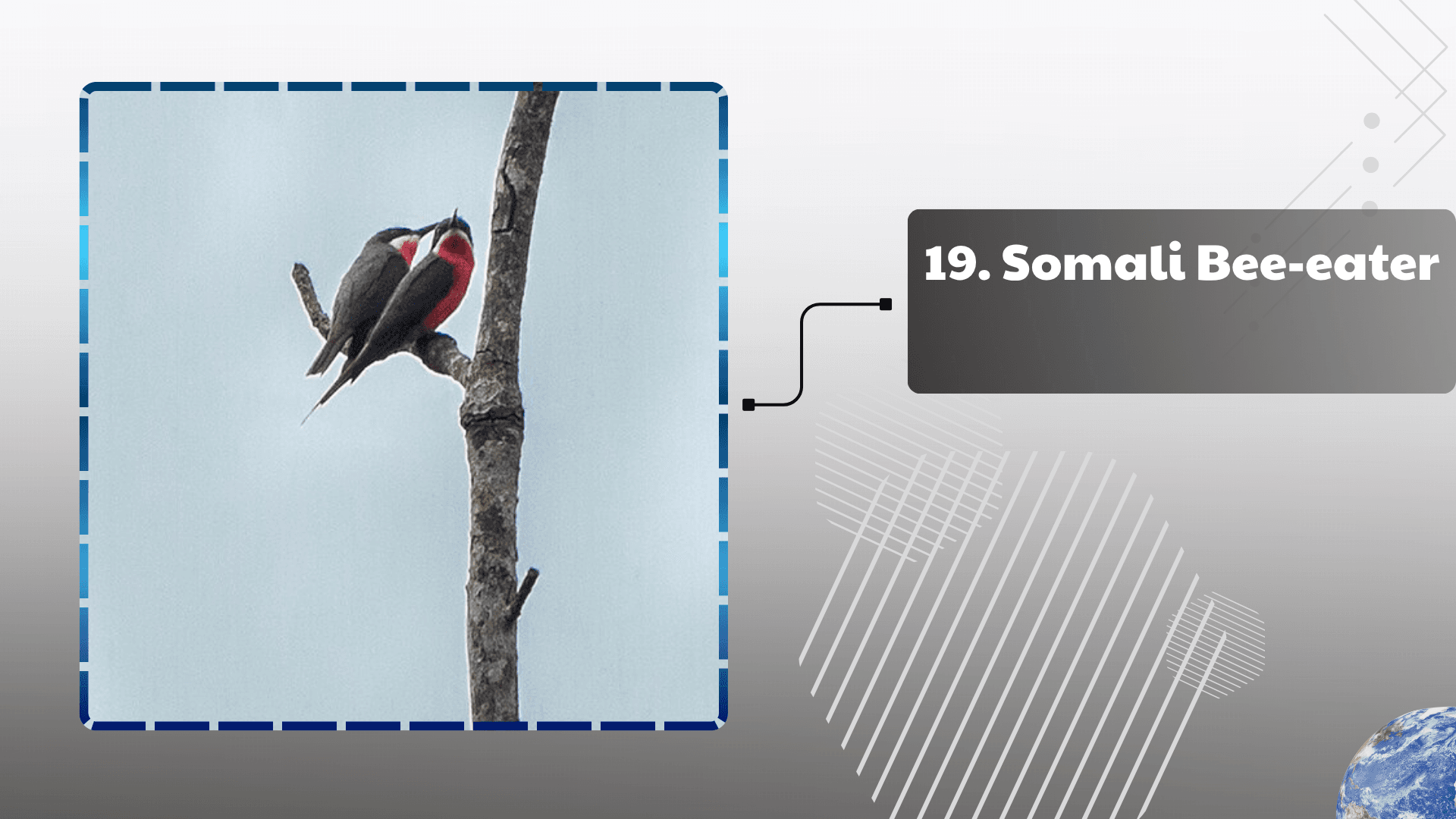
The Somali Bee-eater is a rare and regionally specialized member of the types of Bee-eater, found primarily in the Horn of Africa.
It inhabits dry savannas, semi-desert areas, and open scrublands where insect availability fluctuates seasonally.
This species is adapted to arid environments and often relies on seasonal rains that trigger insect population booms.
It is less studied compared to other bee-eaters due to its remote and harsh habitat range.
20. Böhm’s Bee-eater
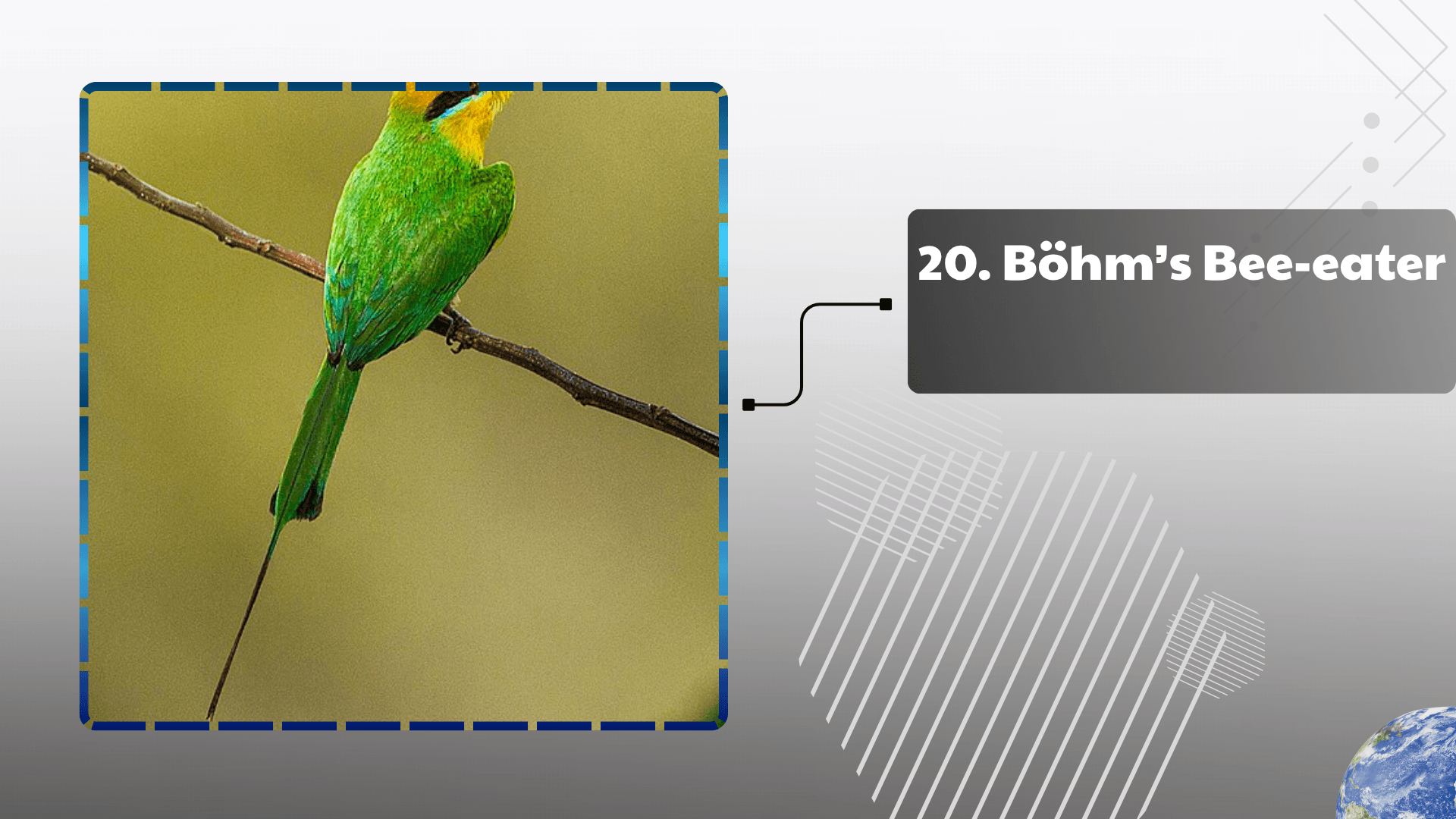
Böhm’s Bee-eater is a beautiful forest-edge species among the types of Bee-eater, found in Central Africa. It is known for its rich coloration and distinctive facial markings.
This bird prefers woodland edges, riverbanks, and open forest clearings. It is often seen perched on exposed branches above dense vegetation.
Böhm’s Bee-eaters are social during breeding season and may form small colonies in suitable nesting sites.
This fourth section of the types of Bee-eater guide highlights species adapted to forests, savannas, and arid environments across Africa. In the final section, we will explore remaining specialized bee-eaters, including island species, migratory forms, and rare regional variants.
21. Madagascar Bee-eater
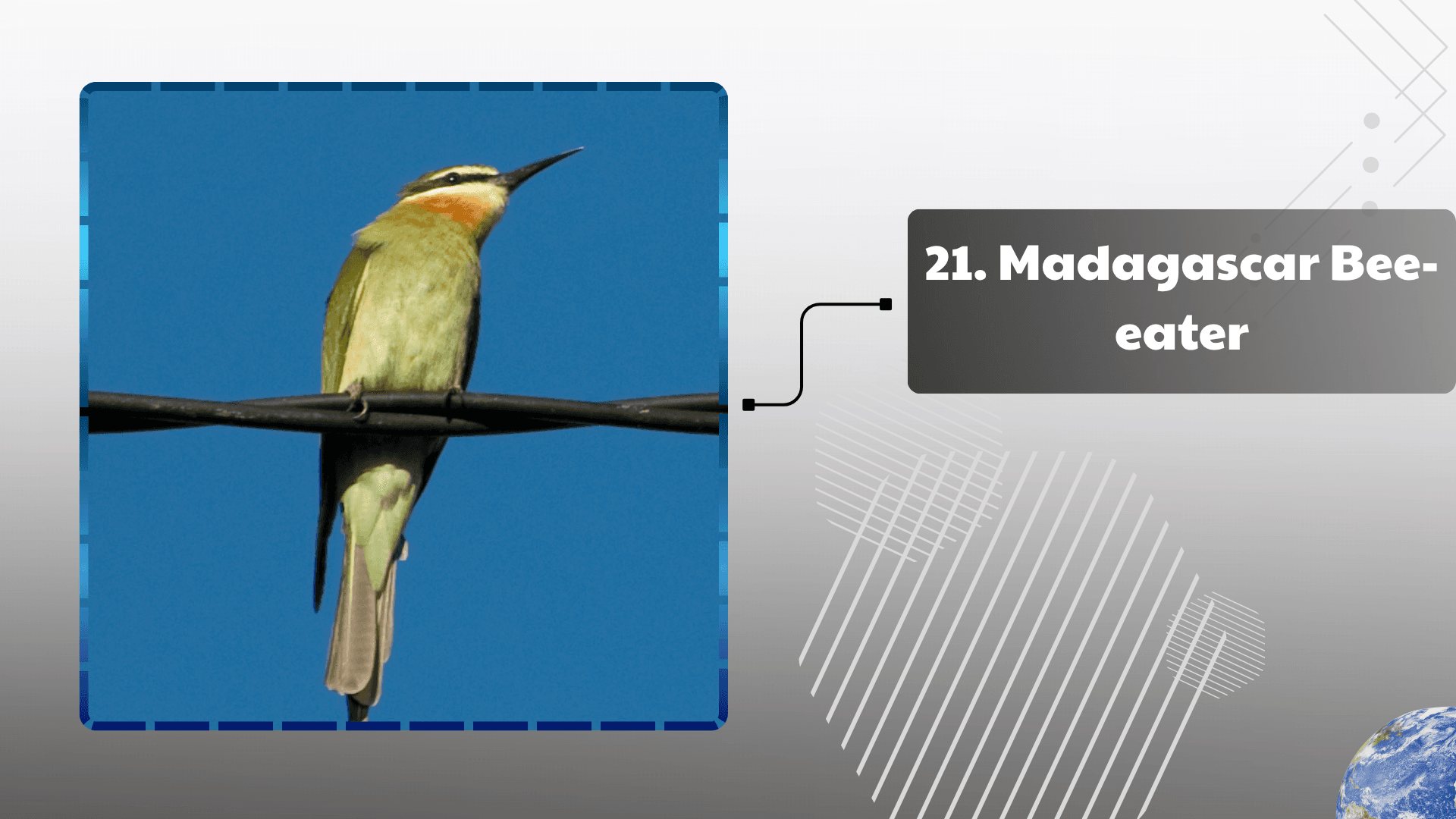
The Madagascar Bee-eater is one of the most geographically isolated types of Bee-eater, found only on the island of Madagascar. This isolation has allowed it to develop unique behavioral and ecological traits compared to mainland species.
It inhabits dry forests, savanna edges, and open woodland areas where flying insects are abundant. The bird is highly active during warm daylight hours, when insect activity peaks.
Madagascar Bee-eaters are typically seen in pairs or small groups, often perching on exposed branches while scanning for prey. Their feeding style is fast, precise, and highly energy-efficient.
22. Blue-moustached Bee-eater
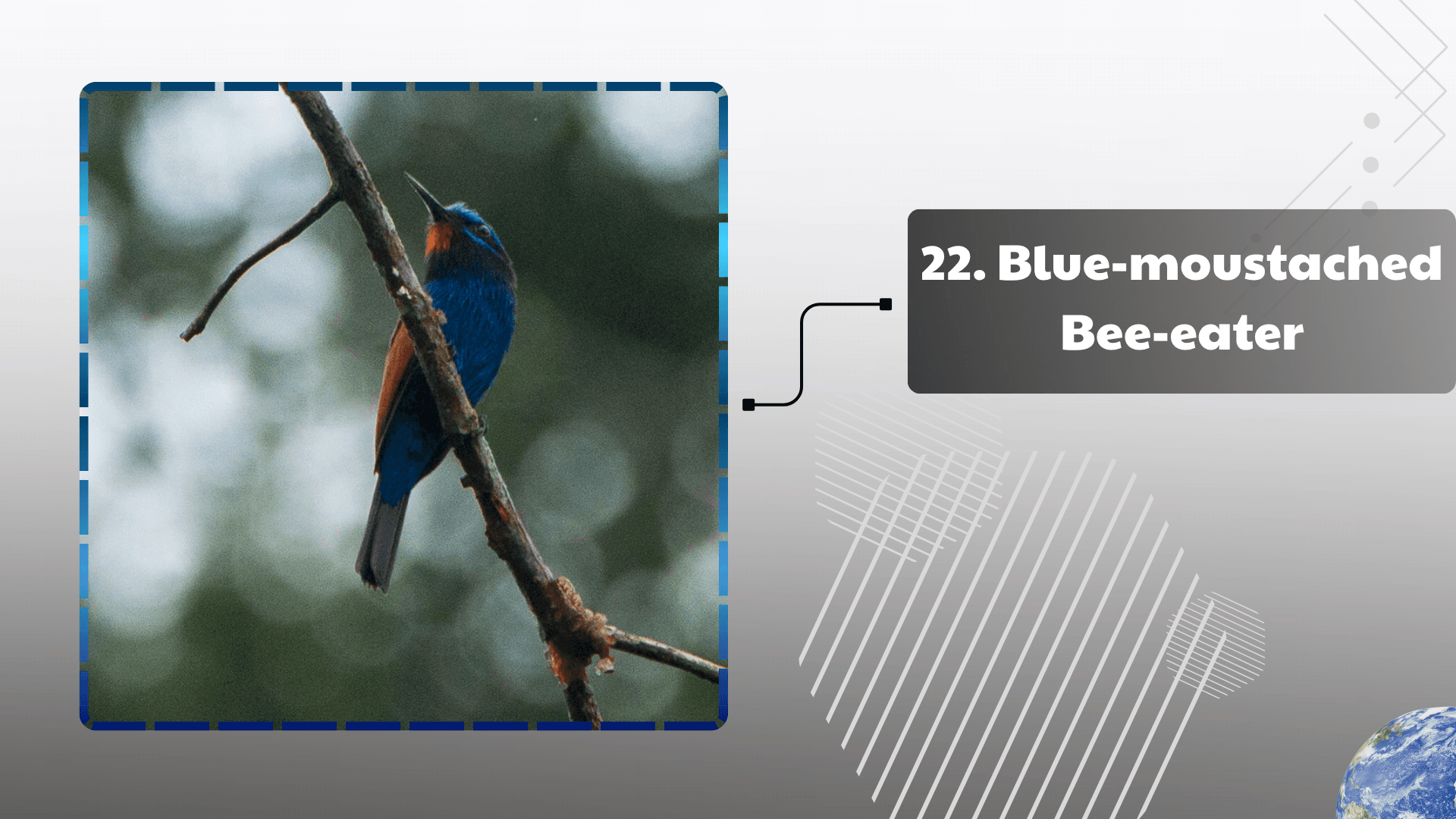
The Blue-moustached Bee-eater is one of the most visually unique types of Bee-eater, named for its striking blue facial markings resembling a moustache.
This species is found in parts of Southeast Asia, especially in forested and semi-open landscapes. It prefers areas near rivers where insect populations are high.
It is a skilled aerial hunter, feeding mainly on bees, wasps, and flying beetles. Its colorful facial pattern plays a role in species recognition during breeding season.
23. Rosy Bee-eater
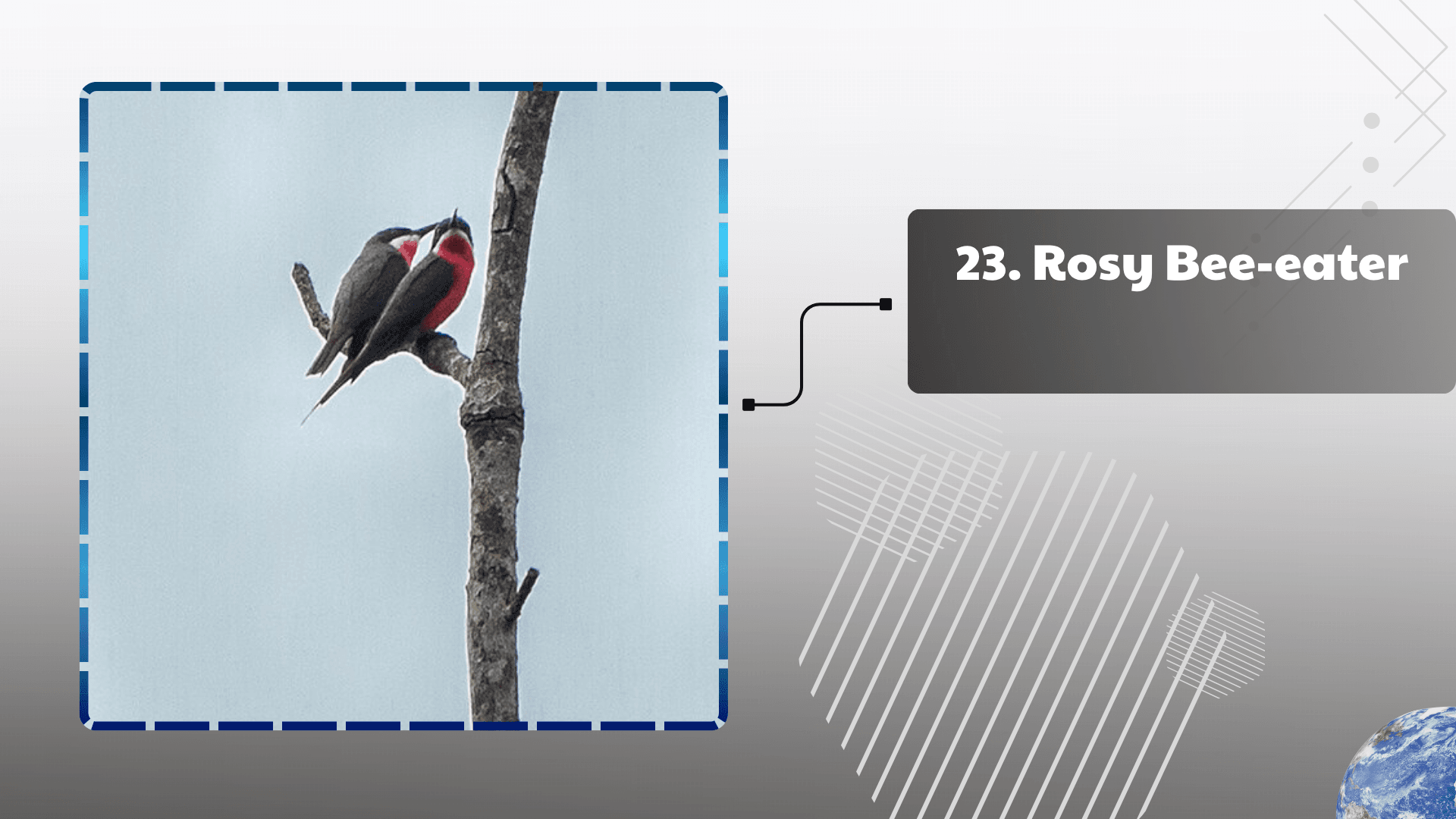
The Rosy Bee-eater is a rare and delicate member of the types of Bee-eater, known for its soft pinkish or rosy-toned plumage combined with green and blue accents.
It is typically found in parts of Africa, especially in woodland and savanna transition zones. Its subtle coloration helps it blend into sunlit habitats.
Rosy Bee-eaters are less social than many other species and are often observed in pairs rather than large colonies.
24. Northern Carmine Bee-eater
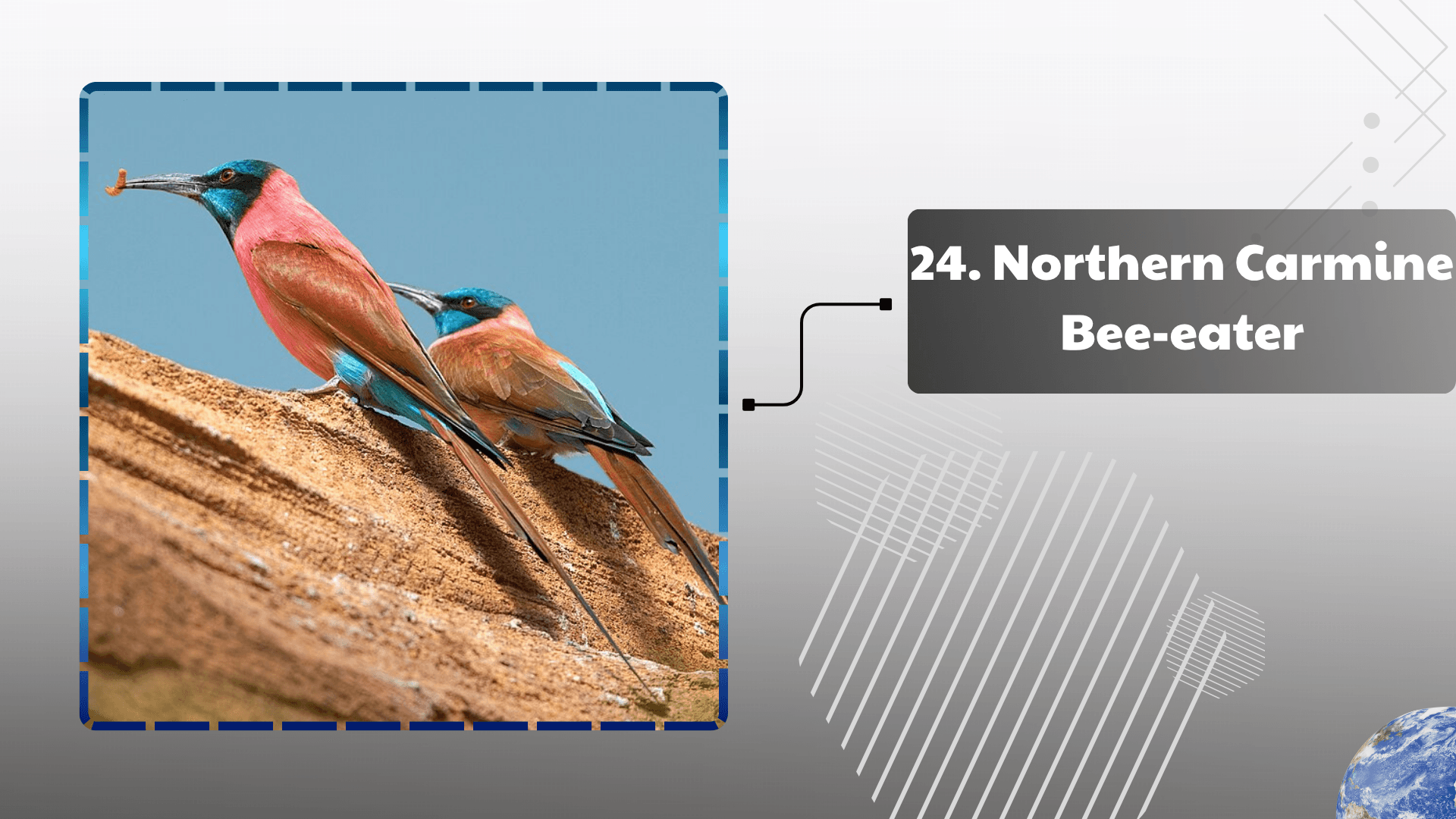
The Northern Carmine Bee-eater is one of the most spectacular types of Bee-eater, famous for its vivid crimson-red body and blue undertones.
It is widely distributed across northern and central Africa, especially in open savannas and river valleys.
This species often forms large colonies and is known for cooperative breeding behavior, where multiple individuals help protect nesting sites.
It is also highly visible due to its bright coloration and active aerial hunting style.
25. Southern Carmine Bee-eater
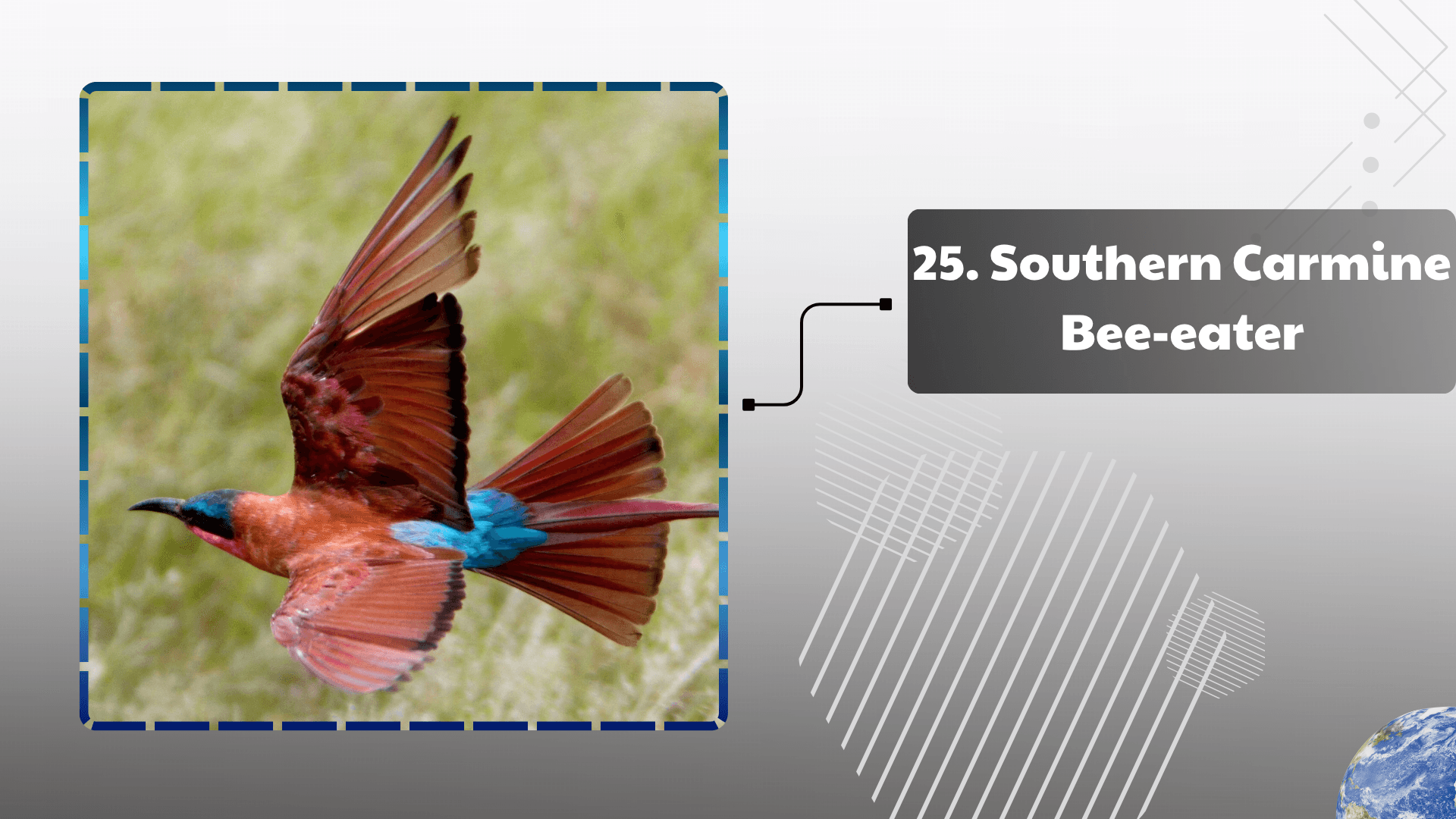
The Southern Carmine Bee-eater is closely related to its northern counterpart and is another striking member of the types of Bee-eater.
It is found in southern Africa, particularly near rivers, floodplains, and open savannas. Its vivid red plumage makes it one of the most visually iconic bee-eaters.
This species is highly social, nesting in large colonies along sandy riverbanks. It is also known for synchronized group flying displays during breeding season.
26. Olive Bee-eater
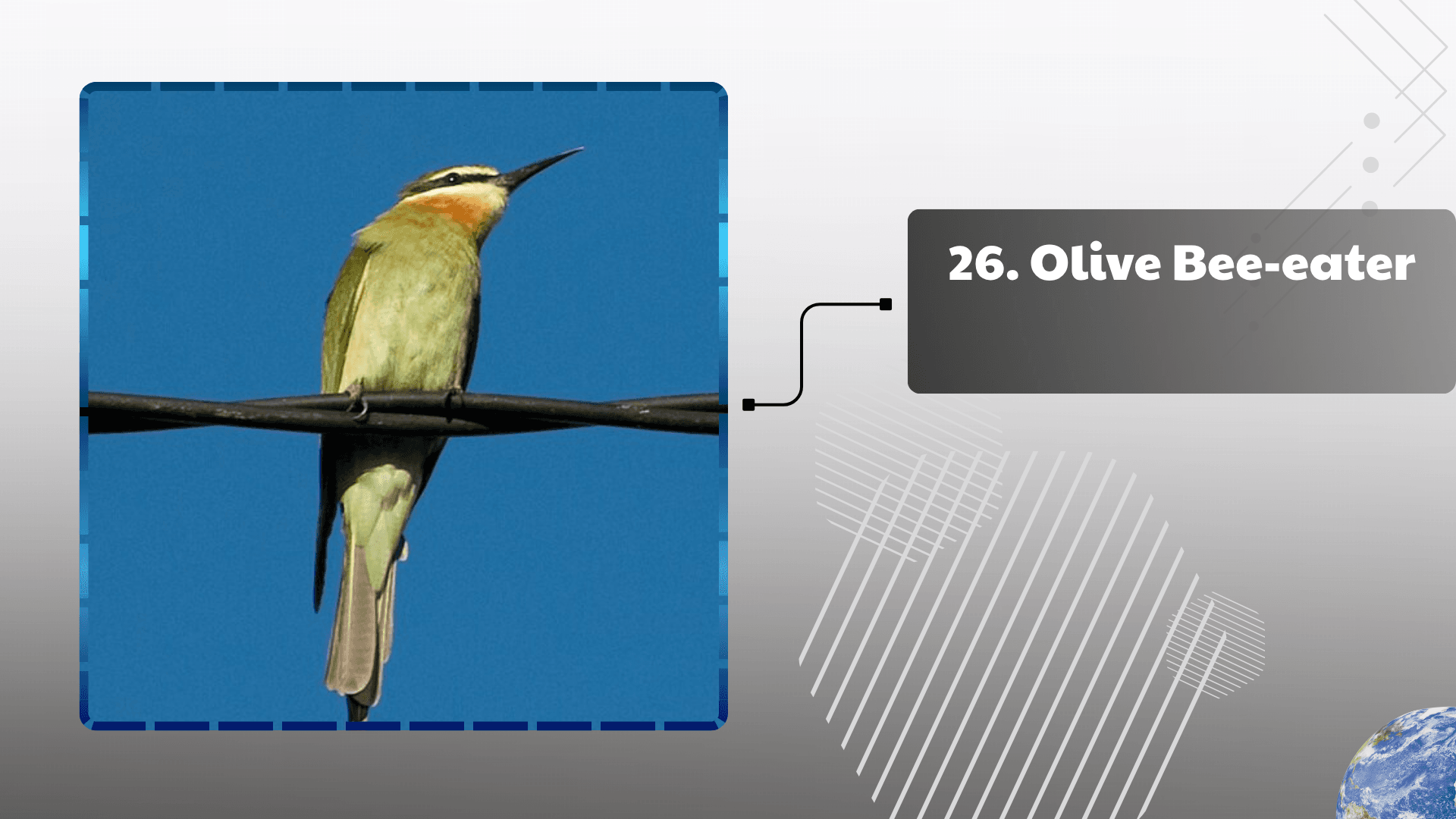
The Olive Bee-eater is a less colorful but ecologically important member of the types of Bee-eater, found in parts of Africa and Asia.
Its olive-green plumage provides excellent camouflage in wooded and semi-open habitats. It prefers forest edges and lightly wooded savannas.
This species is typically seen alone or in small groups and is less colonial compared to other bee-eaters.
27. Blue-throated Bee-eater
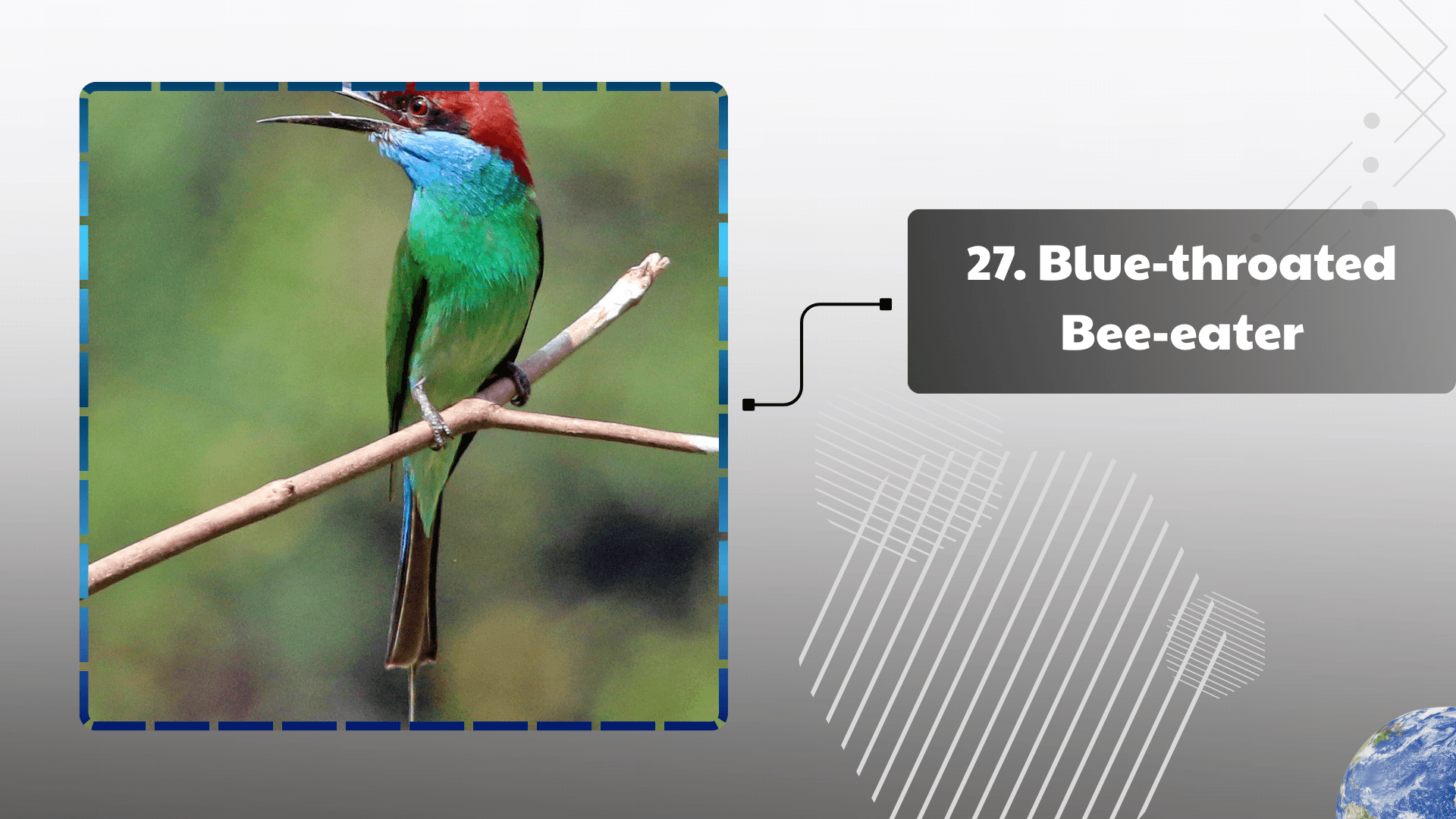
The Blue-throated Bee-eater is a striking Southeast Asian species and one of the most elegant types of Bee-eater.
It is characterized by its bright blue throat patch and green body, making it easy to identify in forested and riverine environments.
This species is highly social during breeding season and often forms loose colonies in suitable nesting areas.
28. Black-bearded Bee-eater
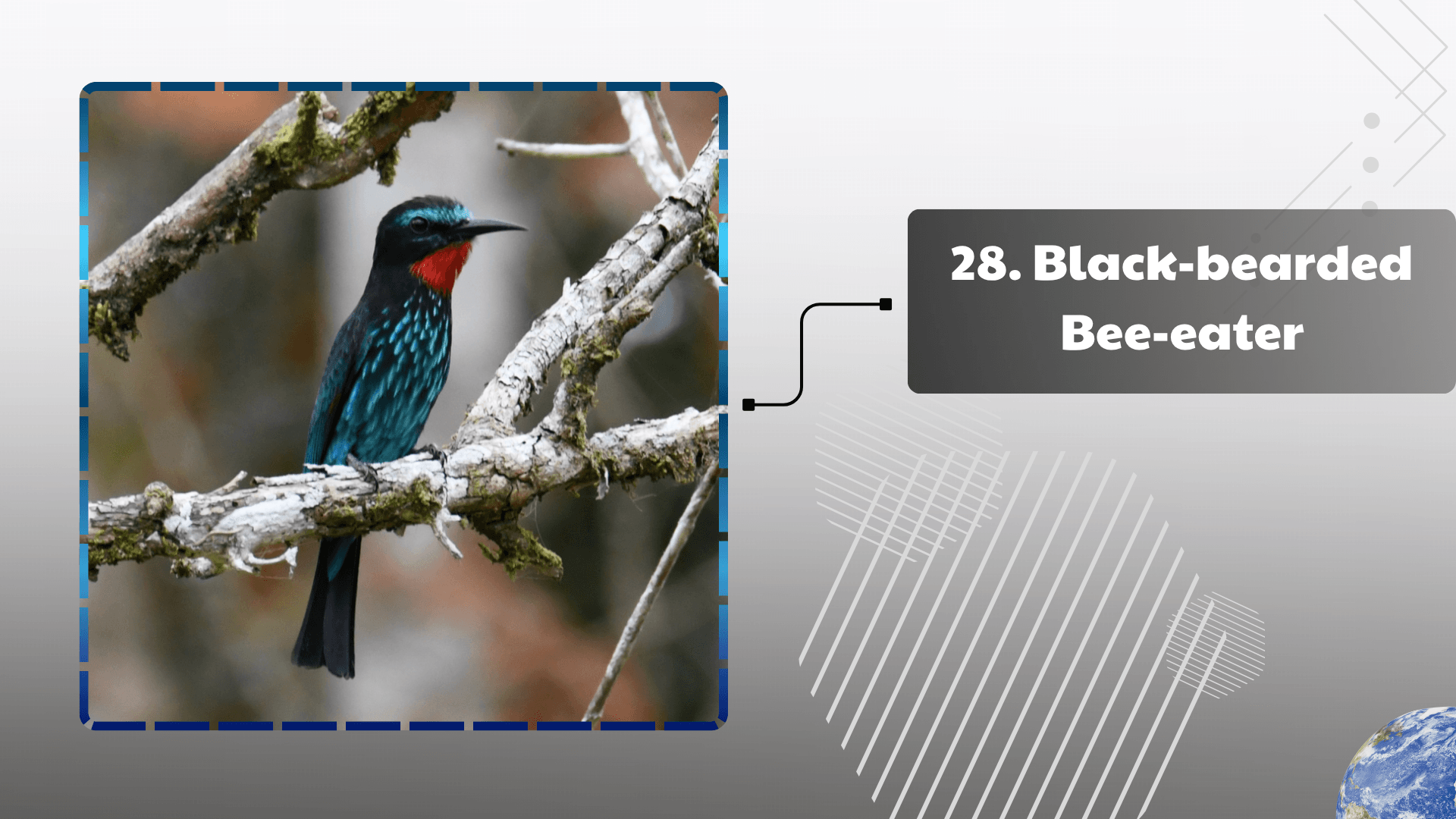
The Black-bearded Bee-eater is one of the most unusual types of Bee-eater, named for its dark facial markings resembling a beard.
It is found in parts of Africa, especially in savanna and woodland regions. This species prefers open areas where it can easily hunt flying insects.
It is a strong aerial predator and often uses elevated perches to spot prey before launching quick hunting flights.
29. Red-bearded Bee-eater
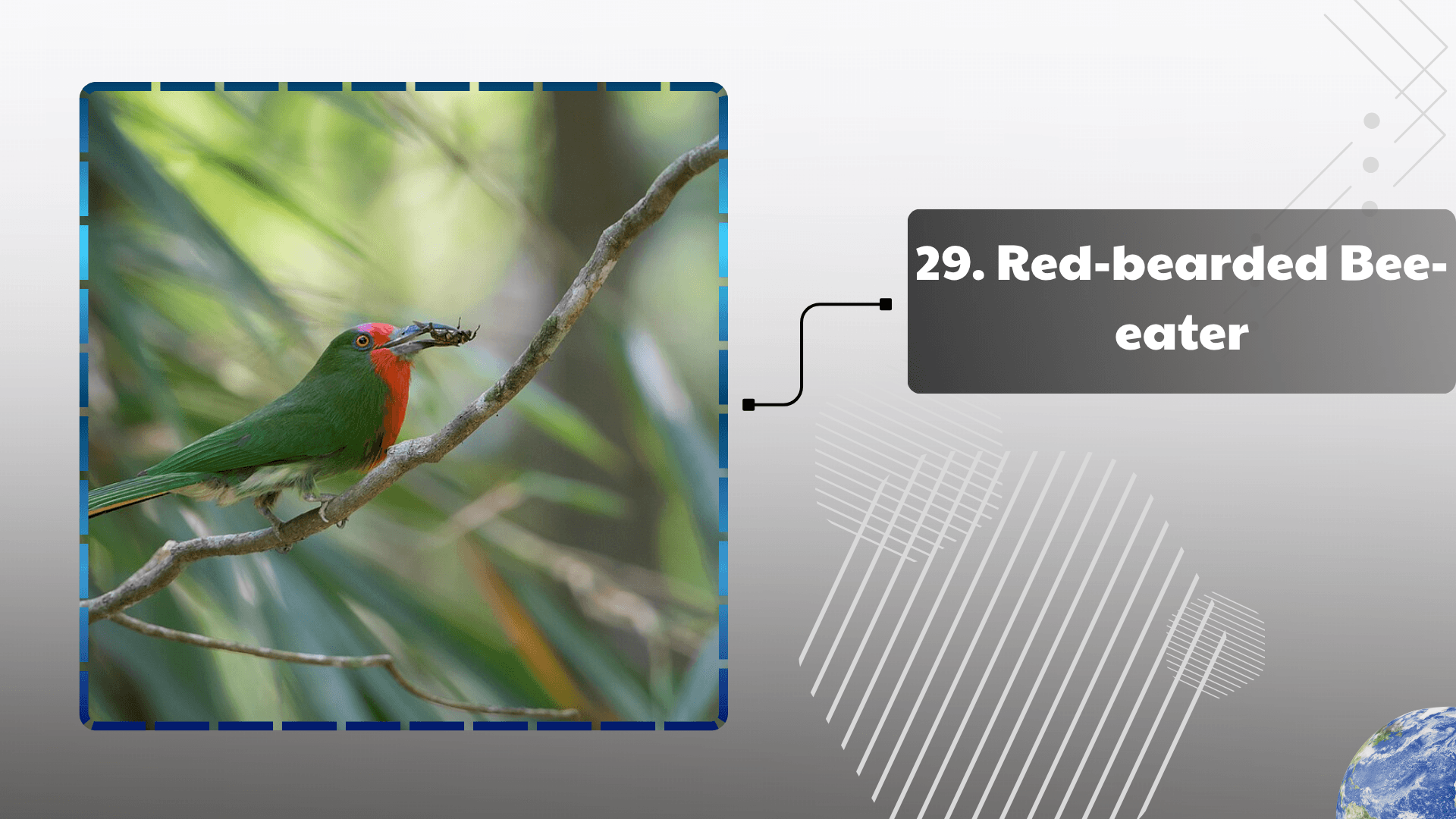
The Red-bearded Bee-eater is a visually dramatic species among the types of Bee-eater, known for its bright red facial markings.
It is found in limited regions of Africa and is often associated with forest edges and riverine habitats.
This species is relatively rare and is usually seen in small groups or pairs rather than large colonies.
30. Purple-bearded Bee-eater
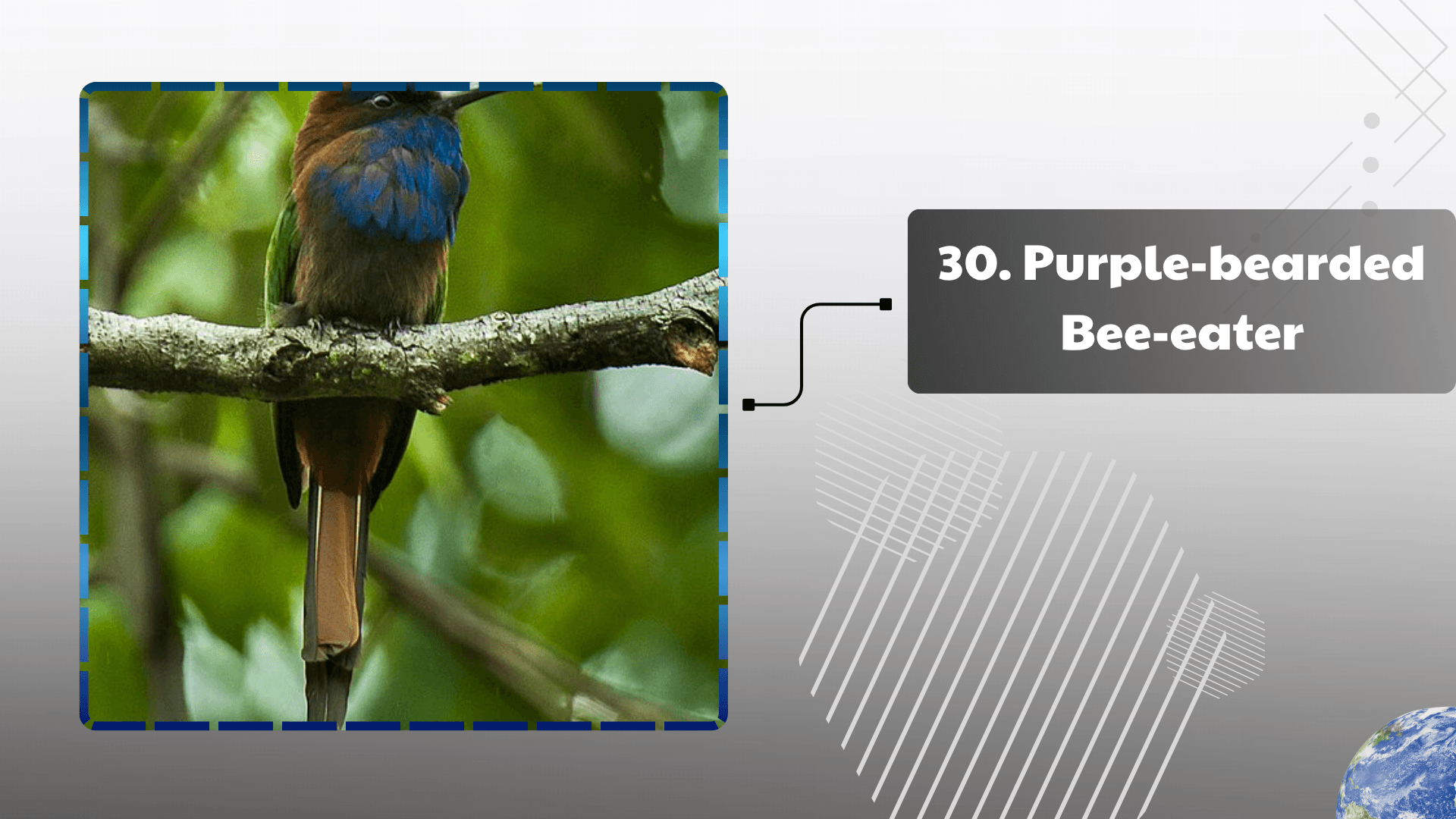
The Purple-bearded Bee-eater is one of the rarest and most striking types of Bee-eater, featuring deep purple facial markings that distinguish it from all other species.
It inhabits tropical forest edges and river systems where insect diversity is high.
Due to its rarity, it is less commonly observed in the wild, making it a prized sighting for birdwatchers and researchers.
Conclusion: Understanding the Types of Bee-eater
The full range of types of Bee-eater shows an extraordinary diversity of color, behavior, and habitat adaptation across Africa, Asia, Europe, and Australia. From brightly colored forest dwellers to desert-adapted specialists and highly social colonial breeders, bee-eaters represent one of the most visually stunning bird families in the world.
Each species plays an important ecological role by controlling insect populations and maintaining balance in their ecosystems. Their unique hunting skills, vibrant plumage, and complex social behaviors make them a favorite among birdwatchers and wildlife enthusiasts.
As habitats continue to change, understanding and protecting these species becomes increasingly important. Could the future of insect control in natural ecosystems depend on the survival of bee-eaters?
50+ FAQs About Bee-eaters (Types, Behavior, Habitat & Identification)
1. What are bee-eaters?
Bee-eaters are a family of brightly colored birds belonging to the Meropidae family. They are known for catching flying insects—especially bees, wasps, and dragonflies—in mid-air. Most species live in warm climates across Africa, Asia, Europe, and Australia. Their slender bodies, long pointed wings, and curved bills make them highly efficient aerial hunters. Despite their name, bee-eaters do not rely only on bees; they consume a wide variety of flying insects depending on availability.
2. How many types of Bee-eater are there?
There are around 30 recognized species of bee-eaters globally, though taxonomy can vary slightly depending on scientific classification updates. These include species from Africa, Asia, Europe, Australia, and island regions like Madagascar. Each species has adapted to its local environment, resulting in differences in color, size, and behavior.
3. Where do bee-eaters live?
Bee-eaters are found in warm and tropical regions around the world. Africa has the highest diversity, followed by Asia and parts of Europe and Australia. They prefer open habitats such as savannas, grasslands, riverbanks, deserts, and forest edges where flying insects are abundant.
4. What do bee-eaters eat?
Bee-eaters primarily eat flying insects such as bees, wasps, hornets, dragonflies, butterflies, and beetles. They catch prey mid-air using fast and precise flight techniques. Before eating bees or wasps, they often remove the sting by hitting the insect against a hard surface.
5. Are bee-eaters dangerous to humans?
No, bee-eaters are completely harmless to humans. They do not attack people and are shy around large animals. Their diet focuses entirely on insects, making them beneficial to humans by helping control pest populations.
6. Why are they called bee-eaters?
They are called bee-eaters because bees are one of their common prey items. However, they do not specialize only in bees. The name reflects their feeding behavior rather than a strict dietary limitation.
7. How do bee-eaters catch insects?
Bee-eaters use fast, agile flight to capture insects in mid-air. They spot prey from perches, launch quickly, and grab insects using their pointed beaks. Their excellent eyesight helps them detect movement from a distance.
8. Do bee-eaters eat only bees?
No, bee-eaters eat a wide range of flying insects. While bees are common prey, they also consume dragonflies, wasps, butterflies, moths, and beetles. Their diet depends on what is available in their environment.
9. How do bee-eaters avoid being stung by bees?
Before eating bees or wasps, bee-eaters remove the stinger by repeatedly hitting the insect against a hard surface such as a branch. This ensures they can safely consume their prey without injury.
10. Where do bee-eaters build nests?
Most bee-eaters dig tunnels in sandy banks, river cliffs, or soft soil. These tunnels can be up to several meters long and end in a nesting chamber where eggs are laid and chicks are raised.
11. Are bee-eaters social birds?
Yes, many bee-eater species are highly social. They often live in colonies that can include dozens or even hundreds of birds. However, some species are more solitary or prefer small family groups.
12. Do bee-eaters migrate?
Some bee-eater species are migratory, especially those in Europe and Asia. They move seasonally to follow insect populations and warmer climates. Other species remain resident in tropical regions year-round.
13. What is the lifespan of a bee-eater?
Bee-eaters typically live between 5 and 10 years in the wild, although some individuals may live longer under favorable conditions with low predation and stable food sources.
14. What predators do bee-eaters have?
Their predators include birds of prey like hawks and falcons, snakes that raid nests, and mammals that dig into nesting colonies. Eggs and chicks are especially vulnerable to predation.
15. Why are bee-eaters so colorful?
Their bright colors help with species recognition, mating displays, and possibly camouflage in sunlit environments. The vivid plumage is also a result of evolutionary selection for mating success.
16. Do male and female bee-eaters look different?
In most species, males and females look very similar, making it difficult to distinguish between them. Some subtle differences may exist in size or coloration, but they are generally not strongly sexually dimorphic.
17. How fast can bee-eaters fly?
Bee-eaters are fast and agile flyers, capable of rapid directional changes while hunting. Their flight speed varies but is optimized for catching insects in mid-air rather than long-distance speed.
18. Do bee-eaters live in forests?
Some species live near forest edges, but most prefer open habitats like grasslands, savannas, and riverbanks where flying insects are easier to spot and catch.
19. What is the most colorful bee-eater?
Species like the Rainbow Bee-eater and European Bee-eater are among the most colorful, displaying vibrant combinations of green, blue, yellow, and red feathers.
20. How do bee-eaters communicate?
They communicate using chirping calls, body posture, and flight displays. Colony members often use vocal signals to coordinate movement and warn of predators.
21. Are bee-eaters endangered?
Most bee-eater species are not currently endangered, but some populations face habitat loss, pesticide exposure, and climate-related threats that may impact long-term survival.
22. Why are bee-eaters important for ecosystems?
They help control insect populations, including agricultural pests. This makes them important for maintaining ecological balance and supporting natural pest control systems.
23. Do bee-eaters reuse nests?
Some species may reuse nesting sites, especially if conditions remain stable. However, many dig new tunnels each breeding season to avoid parasites and predators.
24. How many eggs do bee-eaters lay?
Bee-eaters typically lay between 2 to 7 eggs per clutch, depending on the species. Both parents usually share responsibility for incubation and feeding chicks.
25. How long do bee-eater chicks stay in the nest?
Chicks remain in nesting tunnels for several weeks before fledging. Parents continue feeding them even after they leave the nest until they become independent.
26. Can bee-eaters live in cities?
Some adaptable species can live near rural towns or farmland, but they generally avoid heavily urbanized areas due to lack of suitable nesting and feeding habitats.
27. What is a colony of bee-eaters?
A colony is a group of bee-eaters nesting together in close proximity, often in sandy banks. Colonies can provide protection against predators through collective defense.
28. Do bee-eaters drink water?
Yes, they drink water but usually obtain moisture from insects they consume. When drinking, they may skim water surfaces during flight.
29. How do bee-eaters rest?
They rest on branches, wires, or exposed perches, often sitting still while scanning for insects. They are most active during daylight hours.
30. Are bee-eaters intelligent birds?
Yes, they show strong problem-solving skills related to hunting, nest building, and social coordination within colonies.
31. Why do bee-eaters sit on wires?
Wires and branches provide excellent vantage points for spotting flying insects and launching hunting flights efficiently.
32. Do bee-eaters mate for life?
Many bee-eater species form seasonal monogamous pairs, but they do not always mate for life. Pair bonds usually last for a breeding season.
33. How do bee-eaters protect their nests?
They defend nesting colonies by group behavior, vocal warnings, and sometimes physically attacking intruders.
34. Can bee-eaters recognize humans?
They may become habituated to human presence in non-threatening environments but do not recognize individuals in a personal way.
35. What is the smallest bee-eater?
The Little Bee-eater is the smallest known species, found in Africa and known for its compact size and bright green coloration.
36. What is the largest bee-eater?
Species like the European Bee-eater are among the larger members of the family, though differences are not extreme across species.
37. Do bee-eaters help farmers?
Yes, they help reduce pest insect populations, which can benefit agriculture by naturally controlling harmful insects.
38. How do bee-eaters survive winter?
Migratory species move to warmer regions, while tropical species remain active year-round where food is available.
39. Are bee-eaters noisy?
They are moderately vocal, especially in colonies, but their calls are not considered loud or disruptive compared to other birds.
40. Do bee-eaters fight each other?
They may show territorial behavior, especially during breeding season, but serious fights are rare and usually involve display rather than injury.
41. Can bee-eaters fly long distances?
Yes, especially migratory species that travel between continents or across large regions following seasonal insect patterns.
42. Why do bee-eaters migrate in groups?
Group migration helps improve navigation, reduce predation risk, and increase survival during long journeys.
43. Do bee-eaters use tools?
There is no evidence they use tools, but they do use environmental surfaces like branches to process prey.
44. What time of day are bee-eaters most active?
They are most active during daylight, especially in the morning and late afternoon when insect activity is high.
45. Do bee-eaters bathe in water?
Yes, they occasionally bathe in shallow water or use rain to clean their feathers.
46. How do bee-eaters find food?
They rely on excellent vision to spot flying insects and often use elevated perches to scan hunting areas.
47. Can bee-eaters survive climate change?
Some adaptable species may survive, but climate change can disrupt insect populations and nesting habitats, posing risks to many species.
48. What makes bee-eaters unique among birds?
Their combination of bright colors, aerial hunting skills, and social colony nesting behavior makes them highly distinctive.
49. Are bee-eaters easy to observe in the wild?
Yes, in many regions they are relatively easy to spot in open habitats, especially during breeding season.
50. Why should we protect bee-eaters?
They are important insect controllers and indicators of ecosystem health. Protecting them also helps preserve biodiversity and natural balance.
51. What is the biggest threat to bee-eaters today?
Habitat loss, pesticide use, and climate change are the primary threats affecting bee-eater populations worldwide.