

The world’s types of colorful fish range from tiny tetras with glowing stripes to reef fish covered in electric blue, yellow, orange, red, green, and violet. Color may help a fish attract mates, recognize its own species, warn rivals, hide among coral, confuse predators, or communicate social status. This guide features 80 freshwater and saltwater species, with identification clues and realistic care considerations.
What Are the Main Types of Colorful Fish?
Colorful fish can be grouped into freshwater community fish, cichlids, livebearers, rainbowfish, killifish, reef fish, angelfish, butterflyfish, tangs, wrasses, gobies, and other marine ornamentals. Bright appearance does not automatically mean easy care. Tank size, water chemistry, diet, aggression, schooling needs, reef compatibility, and captive-bred availability matter before choosing a species.
Quick Comparison of Popular Colorful Fish
| Fish | Scientific name | Water type | Beginner note |
|---|---|---|---|
| Mandarinfish | Synchiropus splendidus | Marine | Research compatibility and adult size |
| Psychedelic Mandarinfish | Synchiropus picturatus | Marine | Research compatibility and adult size |
| Ocellaris Clownfish | Amphiprion ocellaris | Marine | Research compatibility and adult size |
| Percula Clownfish | Amphiprion percula | Marine | Research compatibility and adult size |
| Maroon Clownfish | Amphiprion biaculeatus | Marine | Research compatibility and adult size |
| Royal Gramma | Gramma loreto | Marine | Research compatibility and adult size |
| Flame Angelfish | Centropyge loricula | Marine | Research compatibility and adult size |
| Coral Beauty Angelfish | Centropyge bispinosa | Marine | Research compatibility and adult size |
| Emperor Angelfish | Pomacanthus imperator | Marine | Research compatibility and adult size |
| Queen Angelfish | Holacanthus ciliaris | Marine | Research compatibility and adult size |
| Regal Angelfish | Pygoplites diacanthus | Marine | Research compatibility and adult size |
| Blue Tang | Paracanthurus hepatus | Marine | Research compatibility and adult size |
| Yellow Tang | Zebrasoma flavescens | Marine | Research compatibility and adult size |
| Purple Tang | Zebrasoma xanthurum | Marine | Research compatibility and adult size |
| Powder Blue Tang | Acanthurus leucosternon | Marine | Research compatibility and adult size |
| Achilles Tang | Acanthurus achilles | Marine | Research compatibility and adult size |
How Are Colorful Fish Classified?
“Colorful fish” is a visual category, not a scientific classification. The species below belong to many unrelated families. Their colors come from pigments, reflective cells, microscopic structures, diet, hormones, genetics, and the way light passes through water. Domestic varieties may have colors not commonly seen in wild populations.
1. Mandarinfish
The Mandarinfish (Synchiropus splendidus) is a marine fish valued for strong color contrast and a recognizable silhouette. Healthy coloration should be accompanied by clear eyes, intact fins, steady breathing, and normal feeding behavior.

Before adding this species, research adult size, social needs, water parameters, and diet. Color alone is a poor stocking guide: some brilliant fish need groups, some defend territories, and some have specialized feeding requirements.
2. Psychedelic Mandarinfish
Psychedelic Mandarinfish, scientifically known as Synchiropus picturatus, is one of the more visually distinctive marine fishes. Pattern is often as important as hue; stripes, fin margins, spots, iridescence, and changes between juvenile and adult stages can all help with identification.
Stable water quality supports better long-term color than supplements or extreme lighting. Provide species-appropriate food, shelter, swimming room, and compatible tankmates.
3. Ocellaris Clownfish
The Ocellaris Clownfish (Amphiprion ocellaris) brings vivid color to a marine setting, but its care should be planned around behavior rather than decoration. A small juvenile may eventually become territorial, require a school, or outgrow a modest aquarium.
Look for naturally proportioned fish with undamaged scales and fins. Avoid specimens that appear dyed, injected, or unnaturally colored through harmful treatments.
4. Percula Clownfish
Percula Clownfish is the common name used for Amphiprion percula. This marine species is admired for color that may shift with age, sex, dominance, breeding condition, background, and lighting. Juveniles and adults can therefore look very different.
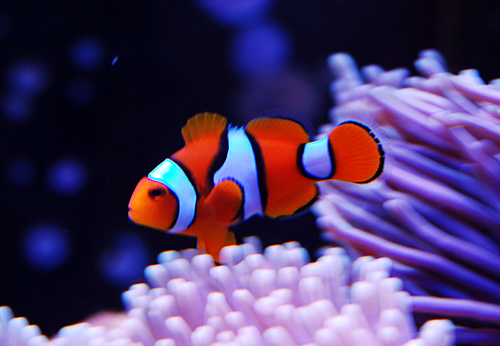
Compatibility research is essential. Match temperature, hardness or salinity, current, feeding style, and temperament so every fish can feed normally and retreat from conflict.
5. Maroon Clownfish
The Maroon Clownfish (Amphiprion biaculeatus) is a marine fish valued for strong color contrast and a recognizable silhouette. Healthy coloration should be accompanied by clear eyes, intact fins, steady breathing, and normal feeding behavior.
Before adding this species, research adult size, social needs, water parameters, and diet. Color alone is a poor stocking guide: some brilliant fish need groups, some defend territories, and some have specialized feeding requirements.
6. Royal Gramma
Royal Gramma, scientifically known as Gramma loreto, is one of the more visually distinctive marine fishes. Pattern is often as important as hue; stripes, fin margins, spots, iridescence, and changes between juvenile and adult stages can all help with identification.
Stable water quality supports better long-term color than supplements or extreme lighting. Provide species-appropriate food, shelter, swimming room, and compatible tankmates.
7. Flame Angelfish
The Flame Angelfish (Centropyge loricula) brings vivid color to a marine setting, but its care should be planned around behavior rather than decoration. A small juvenile may eventually become territorial, require a school, or outgrow a modest aquarium.
Look for naturally proportioned fish with undamaged scales and fins. Avoid specimens that appear dyed, injected, or unnaturally colored through harmful treatments.
8. Coral Beauty Angelfish
Coral Beauty Angelfish is the common name used for Centropyge bispinosa. This marine species is admired for color that may shift with age, sex, dominance, breeding condition, background, and lighting. Juveniles and adults can therefore look very different.
Compatibility research is essential. Match temperature, hardness or salinity, current, feeding style, and temperament so every fish can feed normally and retreat from conflict.
9. Emperor Angelfish
The Emperor Angelfish (Pomacanthus imperator) is a marine fish valued for strong color contrast and a recognizable silhouette. Healthy coloration should be accompanied by clear eyes, intact fins, steady breathing, and normal feeding behavior.
Before adding this species, research adult size, social needs, water parameters, and diet. Color alone is a poor stocking guide: some brilliant fish need groups, some defend territories, and some have specialized feeding requirements.
10. Queen Angelfish
Queen Angelfish, scientifically known as Holacanthus ciliaris, is one of the more visually distinctive marine fishes. Pattern is often as important as hue; stripes, fin margins, spots, iridescence, and changes between juvenile and adult stages can all help with identification.
Stable water quality supports better long-term color than supplements or extreme lighting. Provide species-appropriate food, shelter, swimming room, and compatible tankmates.
11. Regal Angelfish
The Regal Angelfish (Pygoplites diacanthus) brings vivid color to a marine setting, but its care should be planned around behavior rather than decoration. A small juvenile may eventually become territorial, require a school, or outgrow a modest aquarium.
Look for naturally proportioned fish with undamaged scales and fins. Avoid specimens that appear dyed, injected, or unnaturally colored through harmful treatments.
12. Blue Tang
Blue Tang is the common name used for Paracanthurus hepatus. This marine species is admired for color that may shift with age, sex, dominance, breeding condition, background, and lighting. Juveniles and adults can therefore look very different.
Compatibility research is essential. Match temperature, hardness or salinity, current, feeding style, and temperament so every fish can feed normally and retreat from conflict.
13. Yellow Tang
The Yellow Tang (Zebrasoma flavescens) is a marine fish valued for strong color contrast and a recognizable silhouette. Healthy coloration should be accompanied by clear eyes, intact fins, steady breathing, and normal feeding behavior.
Before adding this species, research adult size, social needs, water parameters, and diet. Color alone is a poor stocking guide: some brilliant fish need groups, some defend territories, and some have specialized feeding requirements.
14. Purple Tang
Purple Tang, scientifically known as Zebrasoma xanthurum, is one of the more visually distinctive marine fishes. Pattern is often as important as hue; stripes, fin margins, spots, iridescence, and changes between juvenile and adult stages can all help with identification.

Stable water quality supports better long-term color than supplements or extreme lighting. Provide species-appropriate food, shelter, swimming room, and compatible tankmates.
15. Powder Blue Tang
The Powder Blue Tang (Acanthurus leucosternon) brings vivid color to a marine setting, but its care should be planned around behavior rather than decoration. A small juvenile may eventually become territorial, require a school, or outgrow a modest aquarium.
Look for naturally proportioned fish with undamaged scales and fins. Avoid specimens that appear dyed, injected, or unnaturally colored through harmful treatments.
16. Achilles Tang
Achilles Tang is the common name used for Acanthurus achilles. This marine species is admired for color that may shift with age, sex, dominance, breeding condition, background, and lighting. Juveniles and adults can therefore look very different.
Compatibility research is essential. Match temperature, hardness or salinity, current, feeding style, and temperament so every fish can feed normally and retreat from conflict.
17. Copperband Butterflyfish
The Copperband Butterflyfish (Chelmon rostratus) is a marine fish valued for strong color contrast and a recognizable silhouette. Healthy coloration should be accompanied by clear eyes, intact fins, steady breathing, and normal feeding behavior.
Before adding this species, research adult size, social needs, water parameters, and diet. Color alone is a poor stocking guide: some brilliant fish need groups, some defend territories, and some have specialized feeding requirements.
18. Raccoon Butterflyfish
Raccoon Butterflyfish, scientifically known as Chaetodon lunula, is one of the more visually distinctive marine fishes. Pattern is often as important as hue; stripes, fin margins, spots, iridescence, and changes between juvenile and adult stages can all help with identification.

Stable water quality supports better long-term color than supplements or extreme lighting. Provide species-appropriate food, shelter, swimming room, and compatible tankmates.
19. Threadfin Butterflyfish
The Threadfin Butterflyfish (Chaetodon auriga) brings vivid color to a marine setting, but its care should be planned around behavior rather than decoration. A small juvenile may eventually become territorial, require a school, or outgrow a modest aquarium.
Look for naturally proportioned fish with undamaged scales and fins. Avoid specimens that appear dyed, injected, or unnaturally colored through harmful treatments.
20. Moorish Idol
Moorish Idol is the common name used for Zanclus cornutus. This marine species is admired for color that may shift with age, sex, dominance, breeding condition, background, and lighting. Juveniles and adults can therefore look very different.
Compatibility research is essential. Match temperature, hardness or salinity, current, feeding style, and temperament so every fish can feed normally and retreat from conflict.
21. Clown Triggerfish
The Clown Triggerfish (Balistoides conspicillum) is a marine fish valued for strong color contrast and a recognizable silhouette. Healthy coloration should be accompanied by clear eyes, intact fins, steady breathing, and normal feeding behavior.

Before adding this species, research adult size, social needs, water parameters, and diet. Color alone is a poor stocking guide: some brilliant fish need groups, some defend territories, and some have specialized feeding requirements.
22. Picasso Triggerfish
Picasso Triggerfish, scientifically known as Rhinecanthus aculeatus, is one of the more visually distinctive marine fishes. Pattern is often as important as hue; stripes, fin margins, spots, iridescence, and changes between juvenile and adult stages can all help with identification.
Stable water quality supports better long-term color than supplements or extreme lighting. Provide species-appropriate food, shelter, swimming room, and compatible tankmates.
23. Blue-Green Chromis
The Blue-Green Chromis (Chromis viridis) brings vivid color to a marine setting, but its care should be planned around behavior rather than decoration. A small juvenile may eventually become territorial, require a school, or outgrow a modest aquarium.
Look for naturally proportioned fish with undamaged scales and fins. Avoid specimens that appear dyed, injected, or unnaturally colored through harmful treatments.
24. Firefish
Firefish is the common name used for Nemateleotris magnifica. This marine species is admired for color that may shift with age, sex, dominance, breeding condition, background, and lighting. Juveniles and adults can therefore look very different.
Compatibility research is essential. Match temperature, hardness or salinity, current, feeding style, and temperament so every fish can feed normally and retreat from conflict.
25. Purple Firefish
The Purple Firefish (Nemateleotris decora) is a marine fish valued for strong color contrast and a recognizable silhouette. Healthy coloration should be accompanied by clear eyes, intact fins, steady breathing, and normal feeding behavior.
Before adding this species, research adult size, social needs, water parameters, and diet. Color alone is a poor stocking guide: some brilliant fish need groups, some defend territories, and some have specialized feeding requirements.
26. Orchid Dottyback
Orchid Dottyback, scientifically known as Pseudochromis fridmani, is one of the more visually distinctive marine fishes. Pattern is often as important as hue; stripes, fin margins, spots, iridescence, and changes between juvenile and adult stages can all help with identification.
Stable water quality supports better long-term color than supplements or extreme lighting. Provide species-appropriate food, shelter, swimming room, and compatible tankmates.
27. Banggai Cardinalfish
The Banggai Cardinalfish (Pterapogon kauderni) brings vivid color to a marine setting, but its care should be planned around behavior rather than decoration. A small juvenile may eventually become territorial, require a school, or outgrow a modest aquarium.
Look for naturally proportioned fish with undamaged scales and fins. Avoid specimens that appear dyed, injected, or unnaturally colored through harmful treatments.
28. Pajama Cardinalfish
Pajama Cardinalfish is the common name used for Sphaeramia nematoptera. This marine species is admired for color that may shift with age, sex, dominance, breeding condition, background, and lighting. Juveniles and adults can therefore look very different.

Compatibility research is essential. Match temperature, hardness or salinity, current, feeding style, and temperament so every fish can feed normally and retreat from conflict.
29. Yellow Clown Goby
The Yellow Clown Goby (Gobiodon okinawae) is a marine fish valued for strong color contrast and a recognizable silhouette. Healthy coloration should be accompanied by clear eyes, intact fins, steady breathing, and normal feeding behavior.
Before adding this species, research adult size, social needs, water parameters, and diet. Color alone is a poor stocking guide: some brilliant fish need groups, some defend territories, and some have specialized feeding requirements.
30. Neon Goby
Neon Goby, scientifically known as Elacatinus oceanops, is one of the more visually distinctive marine fishes. Pattern is often as important as hue; stripes, fin margins, spots, iridescence, and changes between juvenile and adult stages can all help with identification.
Stable water quality supports better long-term color than supplements or extreme lighting. Provide species-appropriate food, shelter, swimming room, and compatible tankmates.
31. Longnose Hawkfish
The Longnose Hawkfish (Oxycirrhites typus) brings vivid color to a marine setting, but its care should be planned around behavior rather than decoration. A small juvenile may eventually become territorial, require a school, or outgrow a modest aquarium.
Look for naturally proportioned fish with undamaged scales and fins. Avoid specimens that appear dyed, injected, or unnaturally colored through harmful treatments.
32. Six-Line Wrasse
Six-Line Wrasse is the common name used for Pseudocheilinus hexataenia. This marine species is admired for color that may shift with age, sex, dominance, breeding condition, background, and lighting. Juveniles and adults can therefore look very different.
Compatibility research is essential. Match temperature, hardness or salinity, current, feeding style, and temperament so every fish can feed normally and retreat from conflict.
33. Bluestreak Cleaner Wrasse
The Bluestreak Cleaner Wrasse (Labroides dimidiatus) is a marine fish valued for strong color contrast and a recognizable silhouette. Healthy coloration should be accompanied by clear eyes, intact fins, steady breathing, and normal feeding behavior.
Before adding this species, research adult size, social needs, water parameters, and diet. Color alone is a poor stocking guide: some brilliant fish need groups, some defend territories, and some have specialized feeding requirements.
34. Lyretail Anthias
Lyretail Anthias, scientifically known as Pseudanthias squamipinnis, is one of the more visually distinctive marine fishes. Pattern is often as important as hue; stripes, fin margins, spots, iridescence, and changes between juvenile and adult stages can all help with identification.
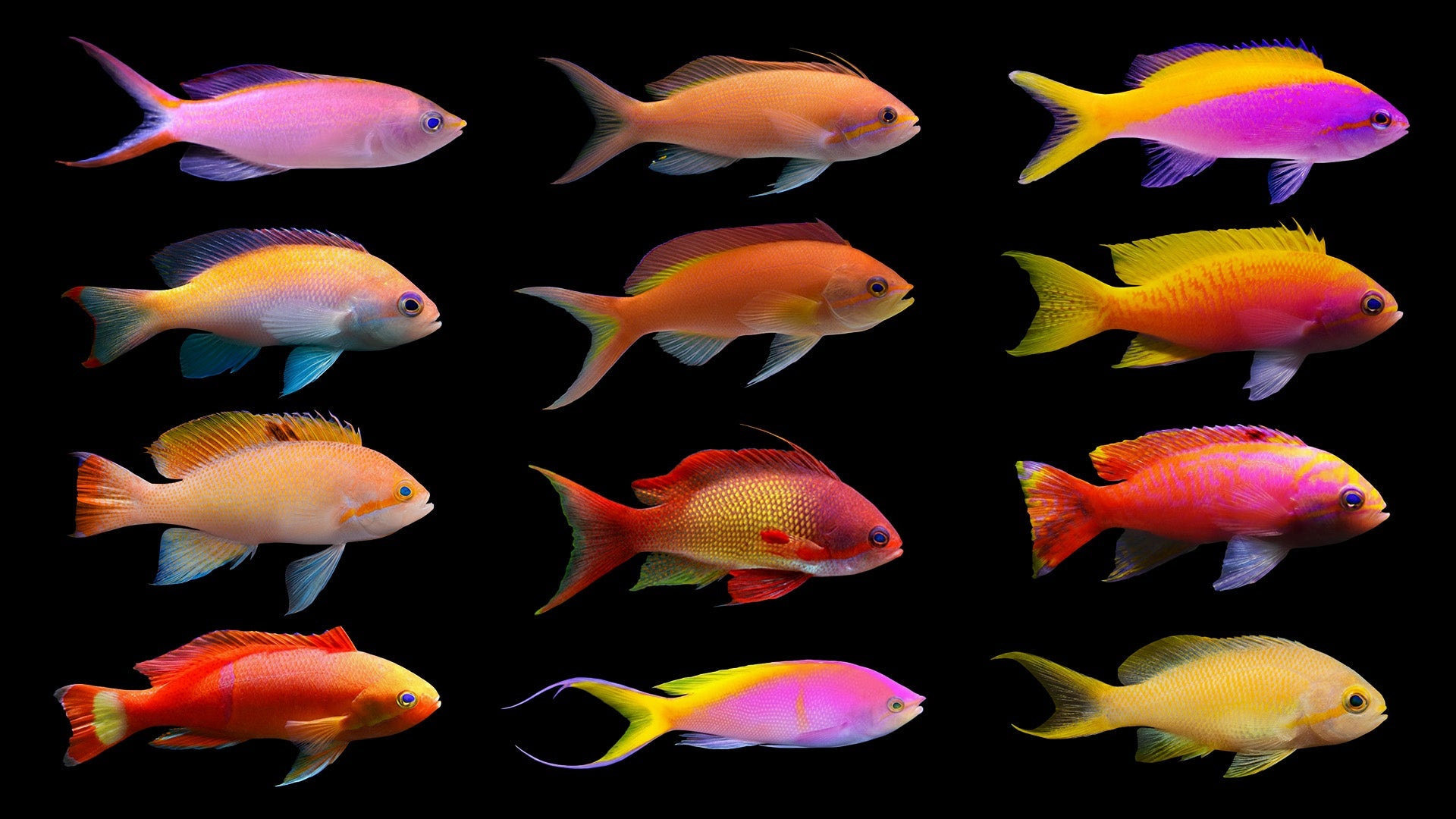
Stable water quality supports better long-term color than supplements or extreme lighting. Provide species-appropriate food, shelter, swimming room, and compatible tankmates.
35. Bartlett’s Anthias
The Bartlett’s Anthias (Pseudanthias bartlettorum) brings vivid color to a marine setting, but its care should be planned around behavior rather than decoration. A small juvenile may eventually become territorial, require a school, or outgrow a modest aquarium.
Look for naturally proportioned fish with undamaged scales and fins. Avoid specimens that appear dyed, injected, or unnaturally colored through harmful treatments.
36. Azure Damselfish
Azure Damselfish is the common name used for Chrysiptera hemicyanea. This marine species is admired for color that may shift with age, sex, dominance, breeding condition, background, and lighting. Juveniles and adults can therefore look very different.
Compatibility research is essential. Match temperature, hardness or salinity, current, feeding style, and temperament so every fish can feed normally and retreat from conflict.
37. Yellowtail Blue Damselfish
The Yellowtail Blue Damselfish (Chrysiptera parasema) is a marine fish valued for strong color contrast and a recognizable silhouette. Healthy coloration should be accompanied by clear eyes, intact fins, steady breathing, and normal feeding behavior.
Before adding this species, research adult size, social needs, water parameters, and diet. Color alone is a poor stocking guide: some brilliant fish need groups, some defend territories, and some have specialized feeding requirements.
38. Foxface Rabbitfish
Foxface Rabbitfish, scientifically known as Siganus vulpinus, is one of the more visually distinctive marine fishes. Pattern is often as important as hue; stripes, fin margins, spots, iridescence, and changes between juvenile and adult stages can all help with identification.
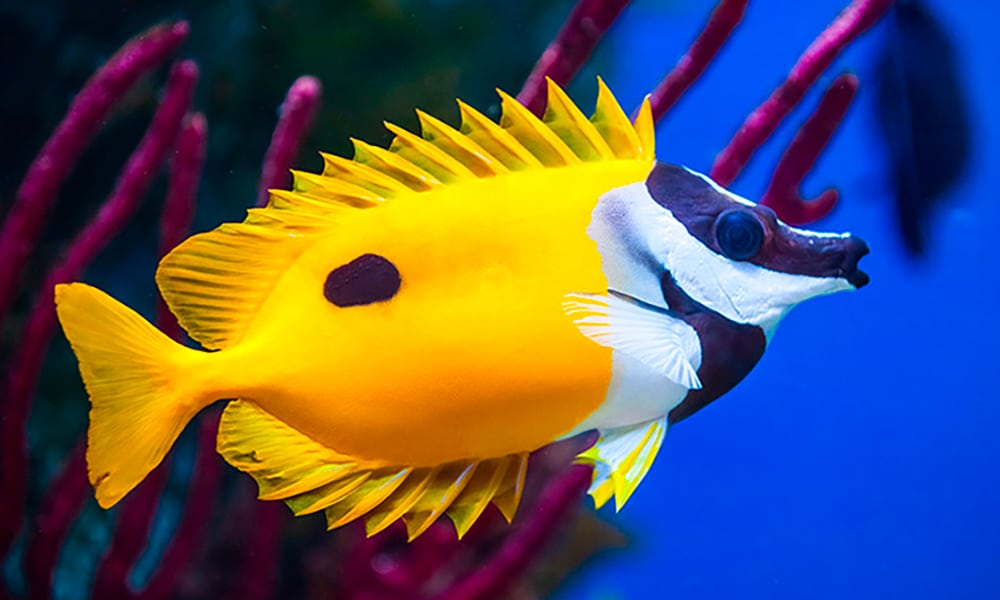
Stable water quality supports better long-term color than supplements or extreme lighting. Provide species-appropriate food, shelter, swimming room, and compatible tankmates.
39. Harlequin Tuskfish
The Harlequin Tuskfish (Choerodon fasciatus) brings vivid color to a marine setting, but its care should be planned around behavior rather than decoration. A small juvenile may eventually become territorial, require a school, or outgrow a modest aquarium.
Look for naturally proportioned fish with undamaged scales and fins. Avoid specimens that appear dyed, injected, or unnaturally colored through harmful treatments.
40. Flame Hawkfish
Flame Hawkfish is the common name used for Neocirrhites armatus. This marine species is admired for color that may shift with age, sex, dominance, breeding condition, background, and lighting. Juveniles and adults can therefore look very different.
Compatibility research is essential. Match temperature, hardness or salinity, current, feeding style, and temperament so every fish can feed normally and retreat from conflict.
41. Betta
The Betta (Betta splendens) is a freshwater fish valued for strong color contrast and a recognizable silhouette. Healthy coloration should be accompanied by clear eyes, intact fins, steady breathing, and normal feeding behavior.
Before adding this species, research adult size, social needs, water parameters, and diet. Color alone is a poor stocking guide: some brilliant fish need groups, some defend territories, and some have specialized feeding requirements.
42. Guppy
Guppy, scientifically known as Poecilia reticulata, is one of the more visually distinctive freshwater fishes. Pattern is often as important as hue; stripes, fin margins, spots, iridescence, and changes between juvenile and adult stages can all help with identification.
Stable water quality supports better long-term color than supplements or extreme lighting. Provide species-appropriate food, shelter, swimming room, and compatible tankmates.
43. Endler’s Livebearer
The Endler’s Livebearer (Poecilia wingei) brings vivid color to a freshwater setting, but its care should be planned around behavior rather than decoration. A small juvenile may eventually become territorial, require a school, or outgrow a modest aquarium.

Look for naturally proportioned fish with undamaged scales and fins. Avoid specimens that appear dyed, injected, or unnaturally colored through harmful treatments.
44. Discus
Discus is the common name used for Symphysodon species. This freshwater species is admired for color that may shift with age, sex, dominance, breeding condition, background, and lighting. Juveniles and adults can therefore look very different.
Compatibility research is essential. Match temperature, hardness or salinity, current, feeding style, and temperament so every fish can feed normally and retreat from conflict.
45. Cardinal Tetra
The Cardinal Tetra (Paracheirodon axelrodi) is a freshwater fish valued for strong color contrast and a recognizable silhouette. Healthy coloration should be accompanied by clear eyes, intact fins, steady breathing, and normal feeding behavior.
Before adding this species, research adult size, social needs, water parameters, and diet. Color alone is a poor stocking guide: some brilliant fish need groups, some defend territories, and some have specialized feeding requirements.
46. Neon Tetra
Neon Tetra, scientifically known as Paracheirodon innesi, is one of the more visually distinctive freshwater fishes. Pattern is often as important as hue; stripes, fin margins, spots, iridescence, and changes between juvenile and adult stages can all help with identification.
Stable water quality supports better long-term color than supplements or extreme lighting. Provide species-appropriate food, shelter, swimming room, and compatible tankmates.
47. Ember Tetra
The Ember Tetra (Hyphessobrycon amandae) brings vivid color to a freshwater setting, but its care should be planned around behavior rather than decoration. A small juvenile may eventually become territorial, require a school, or outgrow a modest aquarium.
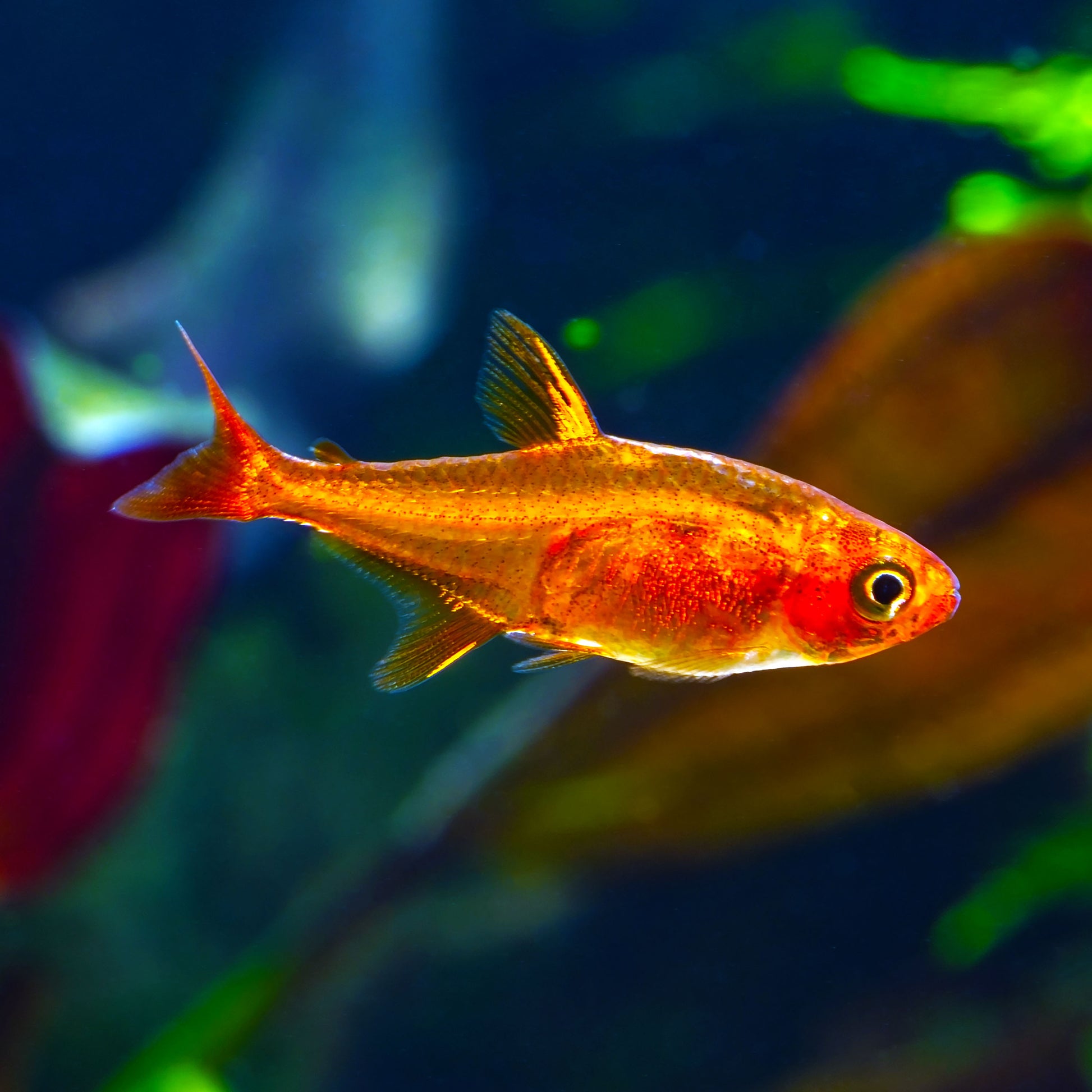
Look for naturally proportioned fish with undamaged scales and fins. Avoid specimens that appear dyed, injected, or unnaturally colored through harmful treatments.
48. Congo Tetra
Congo Tetra is the common name used for Phenacogrammus interruptus. This freshwater species is admired for color that may shift with age, sex, dominance, breeding condition, background, and lighting. Juveniles and adults can therefore look very different.
Compatibility research is essential. Match temperature, hardness or salinity, current, feeding style, and temperament so every fish can feed normally and retreat from conflict.
49. Rummy-Nose Tetra
The Rummy-Nose Tetra (Hemigrammus bleheri) is a freshwater fish valued for strong color contrast and a recognizable silhouette. Healthy coloration should be accompanied by clear eyes, intact fins, steady breathing, and normal feeding behavior.
Before adding this species, research adult size, social needs, water parameters, and diet. Color alone is a poor stocking guide: some brilliant fish need groups, some defend territories, and some have specialized feeding requirements.
50. Cherry Barb
Cherry Barb, scientifically known as Pethia titteya, is one of the more visually distinctive freshwater fishes. Pattern is often as important as hue; stripes, fin margins, spots, iridescence, and changes between juvenile and adult stages can all help with identification.
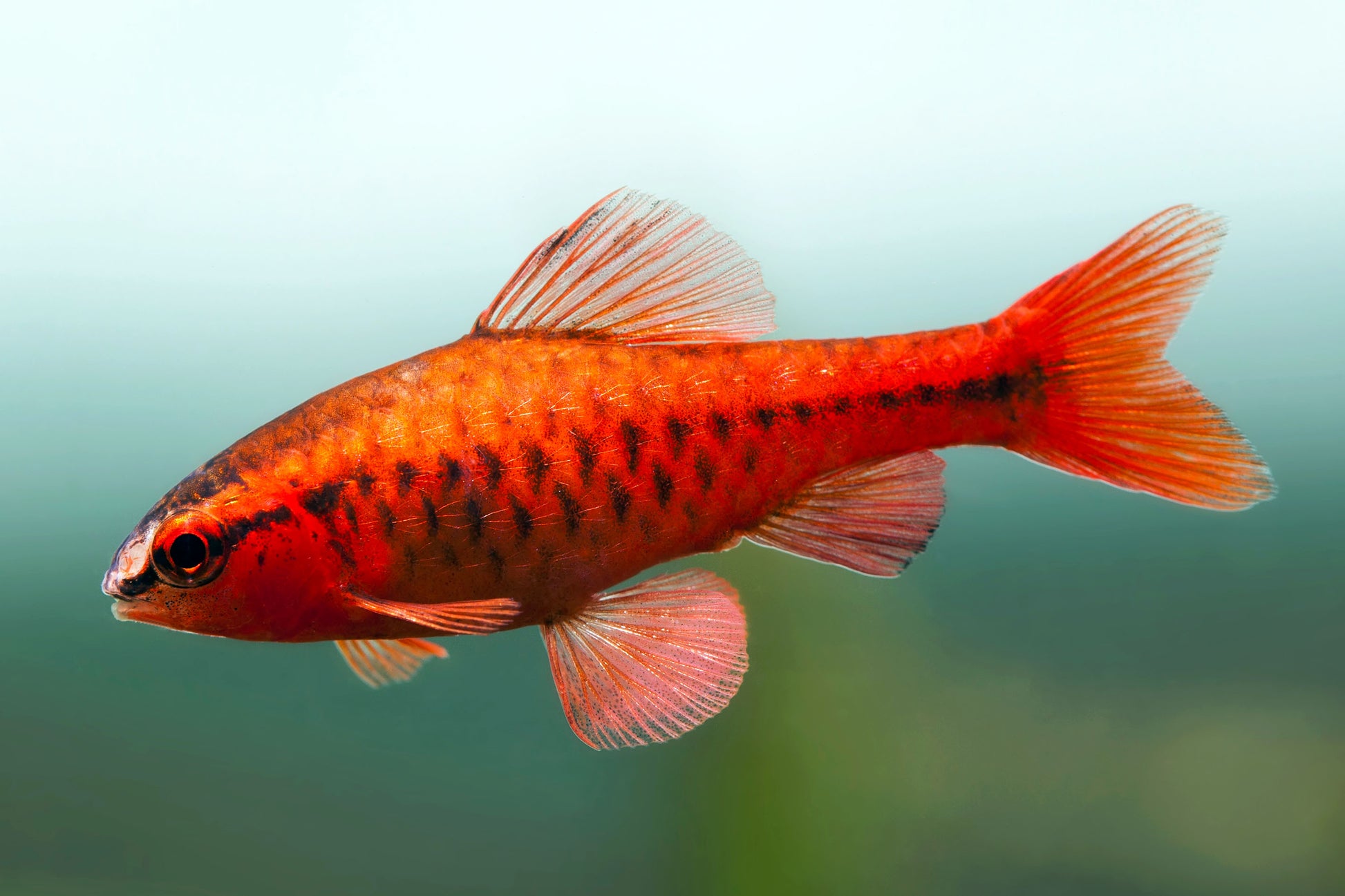
Stable water quality supports better long-term color than supplements or extreme lighting. Provide species-appropriate food, shelter, swimming room, and compatible tankmates.
51. Odessa Barb
The Odessa Barb (Pethia padamya) brings vivid color to a freshwater setting, but its care should be planned around behavior rather than decoration. A small juvenile may eventually become territorial, require a school, or outgrow a modest aquarium.
Look for naturally proportioned fish with undamaged scales and fins. Avoid specimens that appear dyed, injected, or unnaturally colored through harmful treatments.
52. Denison Barb
Denison Barb is the common name used for Sahyadria denisonii. This freshwater species is admired for color that may shift with age, sex, dominance, breeding condition, background, and lighting. Juveniles and adults can therefore look very different.

Compatibility research is essential. Match temperature, hardness or salinity, current, feeding style, and temperament so every fish can feed normally and retreat from conflict.
53. Celestial Pearl Danio
The Celestial Pearl Danio (Danio margaritatus) is a freshwater fish valued for strong color contrast and a recognizable silhouette. Healthy coloration should be accompanied by clear eyes, intact fins, steady breathing, and normal feeding behavior.
Before adding this species, research adult size, social needs, water parameters, and diet. Color alone is a poor stocking guide: some brilliant fish need groups, some defend territories, and some have specialized feeding requirements.
54. Harlequin Rasbora
Harlequin Rasbora, scientifically known as Trigonostigma heteromorpha, is one of the more visually distinctive freshwater fishes. Pattern is often as important as hue; stripes, fin margins, spots, iridescence, and changes between juvenile and adult stages can all help with identification.
Stable water quality supports better long-term color than supplements or extreme lighting. Provide species-appropriate food, shelter, swimming room, and compatible tankmates.
55. Chili Rasbora
The Chili Rasbora (Boraras brigittae) brings vivid color to a freshwater setting, but its care should be planned around behavior rather than decoration. A small juvenile may eventually become territorial, require a school, or outgrow a modest aquarium.
Look for naturally proportioned fish with undamaged scales and fins. Avoid specimens that appear dyed, injected, or unnaturally colored through harmful treatments.
56. Dwarf Gourami
Dwarf Gourami is the common name used for Trichogaster lalius. This freshwater species is admired for color that may shift with age, sex, dominance, breeding condition, background, and lighting. Juveniles and adults can therefore look very different.

Compatibility research is essential. Match temperature, hardness or salinity, current, feeding style, and temperament so every fish can feed normally and retreat from conflict.
57. Honey Gourami
The Honey Gourami (Trichogaster chuna) is a freshwater fish valued for strong color contrast and a recognizable silhouette. Healthy coloration should be accompanied by clear eyes, intact fins, steady breathing, and normal feeding behavior.
Before adding this species, research adult size, social needs, water parameters, and diet. Color alone is a poor stocking guide: some brilliant fish need groups, some defend territories, and some have specialized feeding requirements.
58. Pearl Gourami
Pearl Gourami, scientifically known as Trichopodus leerii, is one of the more visually distinctive freshwater fishes. Pattern is often as important as hue; stripes, fin margins, spots, iridescence, and changes between juvenile and adult stages can all help with identification.
Stable water quality supports better long-term color than supplements or extreme lighting. Provide species-appropriate food, shelter, swimming room, and compatible tankmates.
59. Boesemani Rainbowfish
The Boesemani Rainbowfish (Melanotaenia boesemani) brings vivid color to a freshwater setting, but its care should be planned around behavior rather than decoration. A small juvenile may eventually become territorial, require a school, or outgrow a modest aquarium.
Look for naturally proportioned fish with undamaged scales and fins. Avoid specimens that appear dyed, injected, or unnaturally colored through harmful treatments.
60. Turquoise Rainbowfish
Turquoise Rainbowfish is the common name used for Melanotaenia lacustris. This freshwater species is admired for color that may shift with age, sex, dominance, breeding condition, background, and lighting. Juveniles and adults can therefore look very different.
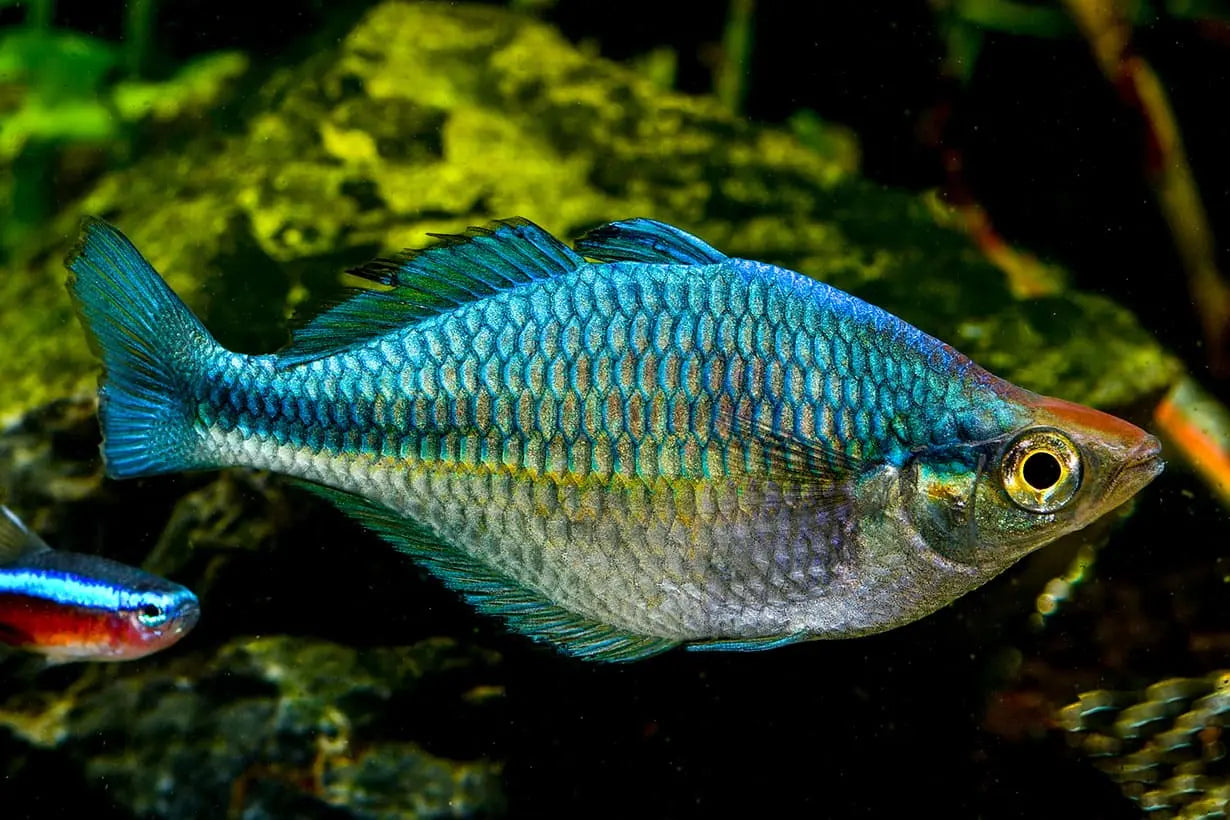
Compatibility research is essential. Match temperature, hardness or salinity, current, feeding style, and temperament so every fish can feed normally and retreat from conflict.
61. Red Rainbowfish
The Red Rainbowfish (Glossolepis incisus) is a freshwater fish valued for strong color contrast and a recognizable silhouette. Healthy coloration should be accompanied by clear eyes, intact fins, steady breathing, and normal feeding behavior.
Before adding this species, research adult size, social needs, water parameters, and diet. Color alone is a poor stocking guide: some brilliant fish need groups, some defend territories, and some have specialized feeding requirements.
62. Threadfin Rainbowfish
Threadfin Rainbowfish, scientifically known as Iriatherina werneri, is one of the more visually distinctive freshwater fishes. Pattern is often as important as hue; stripes, fin margins, spots, iridescence, and changes between juvenile and adult stages can all help with identification.
Stable water quality supports better long-term color than supplements or extreme lighting. Provide species-appropriate food, shelter, swimming room, and compatible tankmates.
63. German Blue Ram
The German Blue Ram (Mikrogeophagus ramirezi) brings vivid color to a freshwater setting, but its care should be planned around behavior rather than decoration. A small juvenile may eventually become territorial, require a school, or outgrow a modest aquarium.

Look for naturally proportioned fish with undamaged scales and fins. Avoid specimens that appear dyed, injected, or unnaturally colored through harmful treatments.
64. Bolivian Ram
Bolivian Ram is the common name used for Mikrogeophagus altispinosus. This freshwater species is admired for color that may shift with age, sex, dominance, breeding condition, background, and lighting. Juveniles and adults can therefore look very different.
Compatibility research is essential. Match temperature, hardness or salinity, current, feeding style, and temperament so every fish can feed normally and retreat from conflict.
65. Electric Blue Acara
The Electric Blue Acara (Andinoacara pulcher) is a freshwater fish valued for strong color contrast and a recognizable silhouette. Healthy coloration should be accompanied by clear eyes, intact fins, steady breathing, and normal feeding behavior.
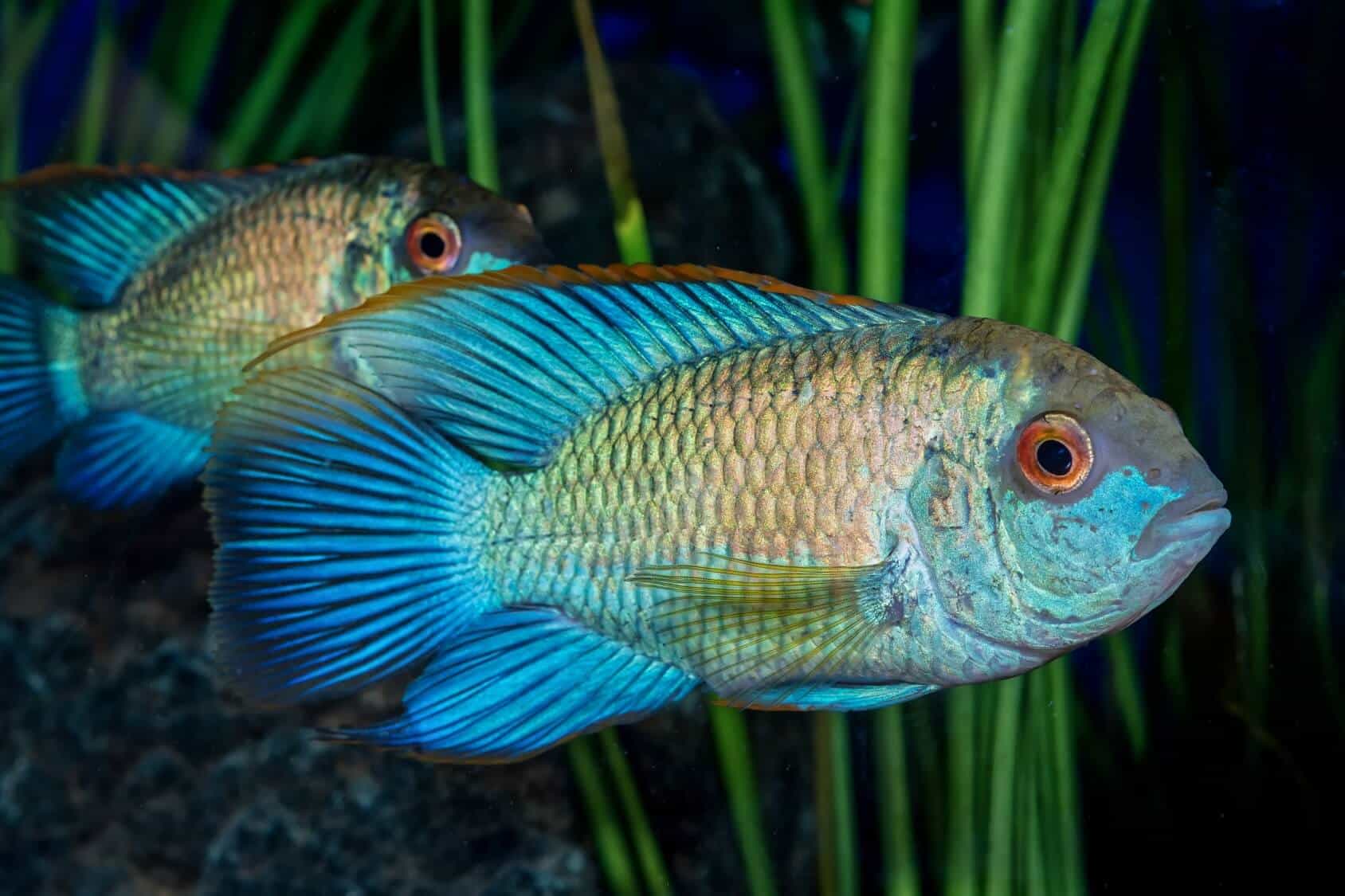
Before adding this species, research adult size, social needs, water parameters, and diet. Color alone is a poor stocking guide: some brilliant fish need groups, some defend territories, and some have specialized feeding requirements.
66. Cockatoo Dwarf Cichlid
Cockatoo Dwarf Cichlid, scientifically known as Apistogramma cacatuoides, is one of the more visually distinctive freshwater fishes. Pattern is often as important as hue; stripes, fin margins, spots, iridescence, and changes between juvenile and adult stages can all help with identification.
Stable water quality supports better long-term color than supplements or extreme lighting. Provide species-appropriate food, shelter, swimming room, and compatible tankmates.
67. Agassiz’s Dwarf Cichlid
The Agassiz’s Dwarf Cichlid (Apistogramma agassizii) brings vivid color to a freshwater setting, but its care should be planned around behavior rather than decoration. A small juvenile may eventually become territorial, require a school, or outgrow a modest aquarium.
Look for naturally proportioned fish with undamaged scales and fins. Avoid specimens that appear dyed, injected, or unnaturally colored through harmful treatments.
68. Kribensis
Kribensis is the common name used for Pelvicachromis pulcher. This freshwater species is admired for color that may shift with age, sex, dominance, breeding condition, background, and lighting. Juveniles and adults can therefore look very different.
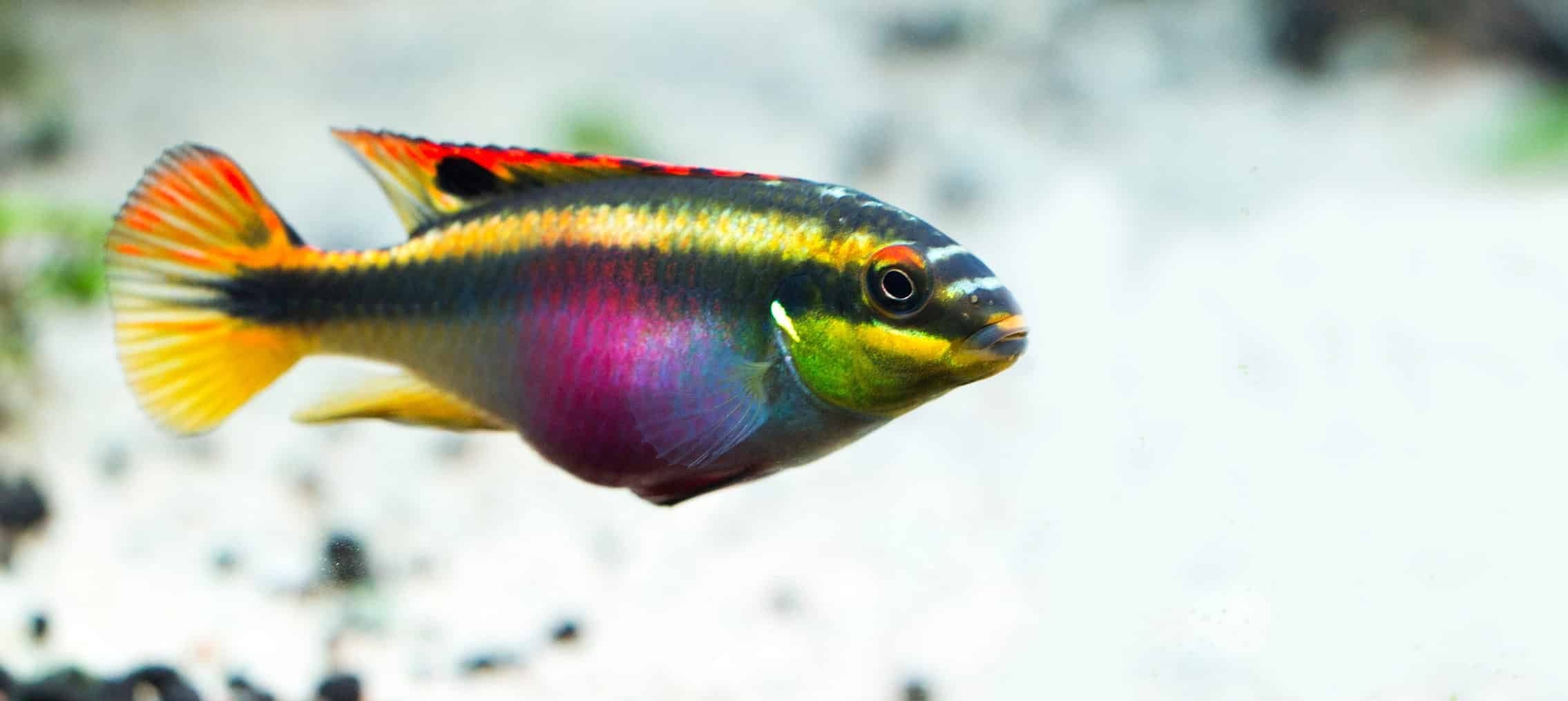
Compatibility research is essential. Match temperature, hardness or salinity, current, feeding style, and temperament so every fish can feed normally and retreat from conflict.
69. Jewel Cichlid
The Jewel Cichlid (Hemichromis bimaculatus) is a freshwater fish valued for strong color contrast and a recognizable silhouette. Healthy coloration should be accompanied by clear eyes, intact fins, steady breathing, and normal feeding behavior.
Before adding this species, research adult size, social needs, water parameters, and diet. Color alone is a poor stocking guide: some brilliant fish need groups, some defend territories, and some have specialized feeding requirements.
70. Electric Yellow Cichlid
Electric Yellow Cichlid, scientifically known as Labidochromis caeruleus, is one of the more visually distinctive freshwater fishes. Pattern is often as important as hue; stripes, fin margins, spots, iridescence, and changes between juvenile and adult stages can all help with identification.
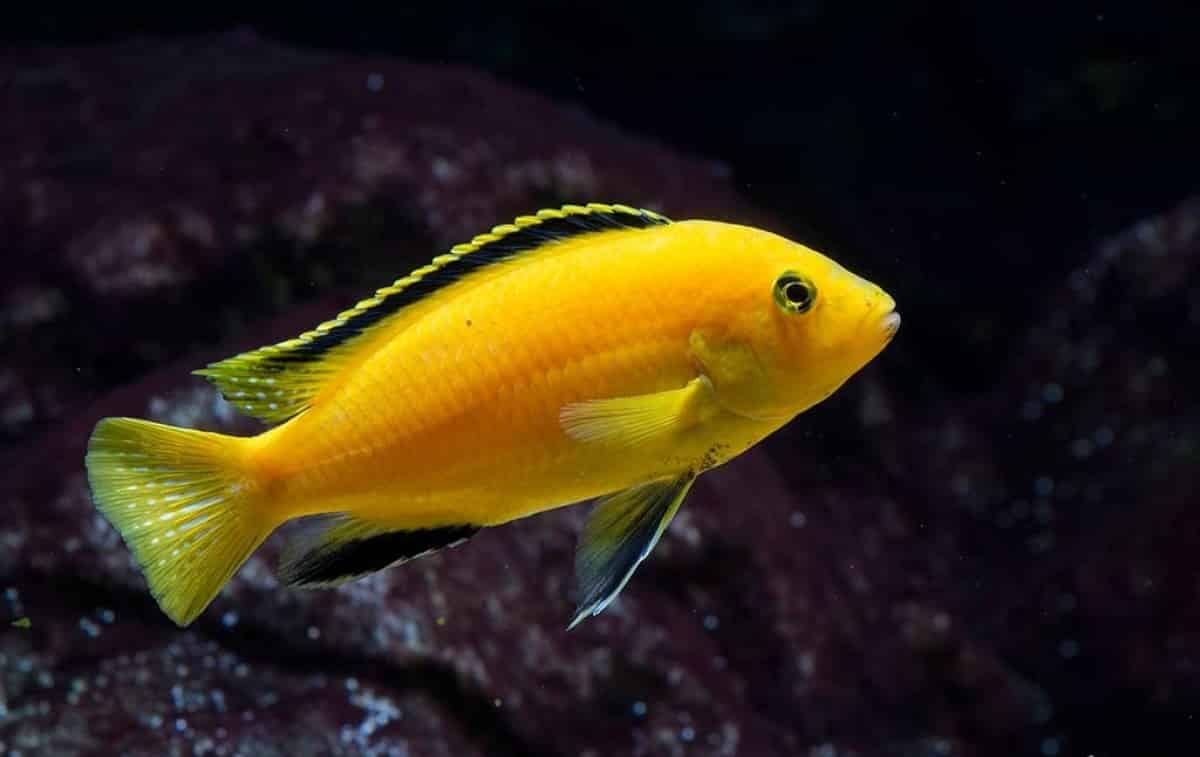
Stable water quality supports better long-term color than supplements or extreme lighting. Provide species-appropriate food, shelter, swimming room, and compatible tankmates.
71. Peacock Cichlid
The Peacock Cichlid (Aulonocara stuartgranti) brings vivid color to a freshwater setting, but its care should be planned around behavior rather than decoration. A small juvenile may eventually become territorial, require a school, or outgrow a modest aquarium.
Look for naturally proportioned fish with undamaged scales and fins. Avoid specimens that appear dyed, injected, or unnaturally colored through harmful treatments.
72. Freshwater Angelfish
Freshwater Angelfish is the common name used for Pterophyllum scalare. This freshwater species is admired for color that may shift with age, sex, dominance, breeding condition, background, and lighting. Juveniles and adults can therefore look very different.
Compatibility research is essential. Match temperature, hardness or salinity, current, feeding style, and temperament so every fish can feed normally and retreat from conflict.
73. Platy
The Platy (Xiphophorus maculatus) is a freshwater fish valued for strong color contrast and a recognizable silhouette. Healthy coloration should be accompanied by clear eyes, intact fins, steady breathing, and normal feeding behavior.
Before adding this species, research adult size, social needs, water parameters, and diet. Color alone is a poor stocking guide: some brilliant fish need groups, some defend territories, and some have specialized feeding requirements.
74. Swordtail
Swordtail, scientifically known as Xiphophorus hellerii, is one of the more visually distinctive freshwater fishes. Pattern is often as important as hue; stripes, fin margins, spots, iridescence, and changes between juvenile and adult stages can all help with identification.
Stable water quality supports better long-term color than supplements or extreme lighting. Provide species-appropriate food, shelter, swimming room, and compatible tankmates.
75. Sailfin Molly
The Sailfin Molly (Poecilia latipinna) brings vivid color to a freshwater setting, but its care should be planned around behavior rather than decoration. A small juvenile may eventually become territorial, require a school, or outgrow a modest aquarium.
Look for naturally proportioned fish with undamaged scales and fins. Avoid specimens that appear dyed, injected, or unnaturally colored through harmful treatments.
76. Clown Killifish
Clown Killifish is the common name used for Epiplatys annulatus. This freshwater species is admired for color that may shift with age, sex, dominance, breeding condition, background, and lighting. Juveniles and adults can therefore look very different.
Compatibility research is essential. Match temperature, hardness or salinity, current, feeding style, and temperament so every fish can feed normally and retreat from conflict.
77. Gardneri Killifish
The Gardneri Killifish (Fundulopanchax gardneri) is a freshwater fish valued for strong color contrast and a recognizable silhouette. Healthy coloration should be accompanied by clear eyes, intact fins, steady breathing, and normal feeding behavior.

Before adding this species, research adult size, social needs, water parameters, and diet. Color alone is a poor stocking guide: some brilliant fish need groups, some defend territories, and some have specialized feeding requirements.
78. Golden Wonder Killifish
Golden Wonder Killifish, scientifically known as Aplocheilus lineatus, is one of the more visually distinctive freshwater fishes. Pattern is often as important as hue; stripes, fin margins, spots, iridescence, and changes between juvenile and adult stages can all help with identification.
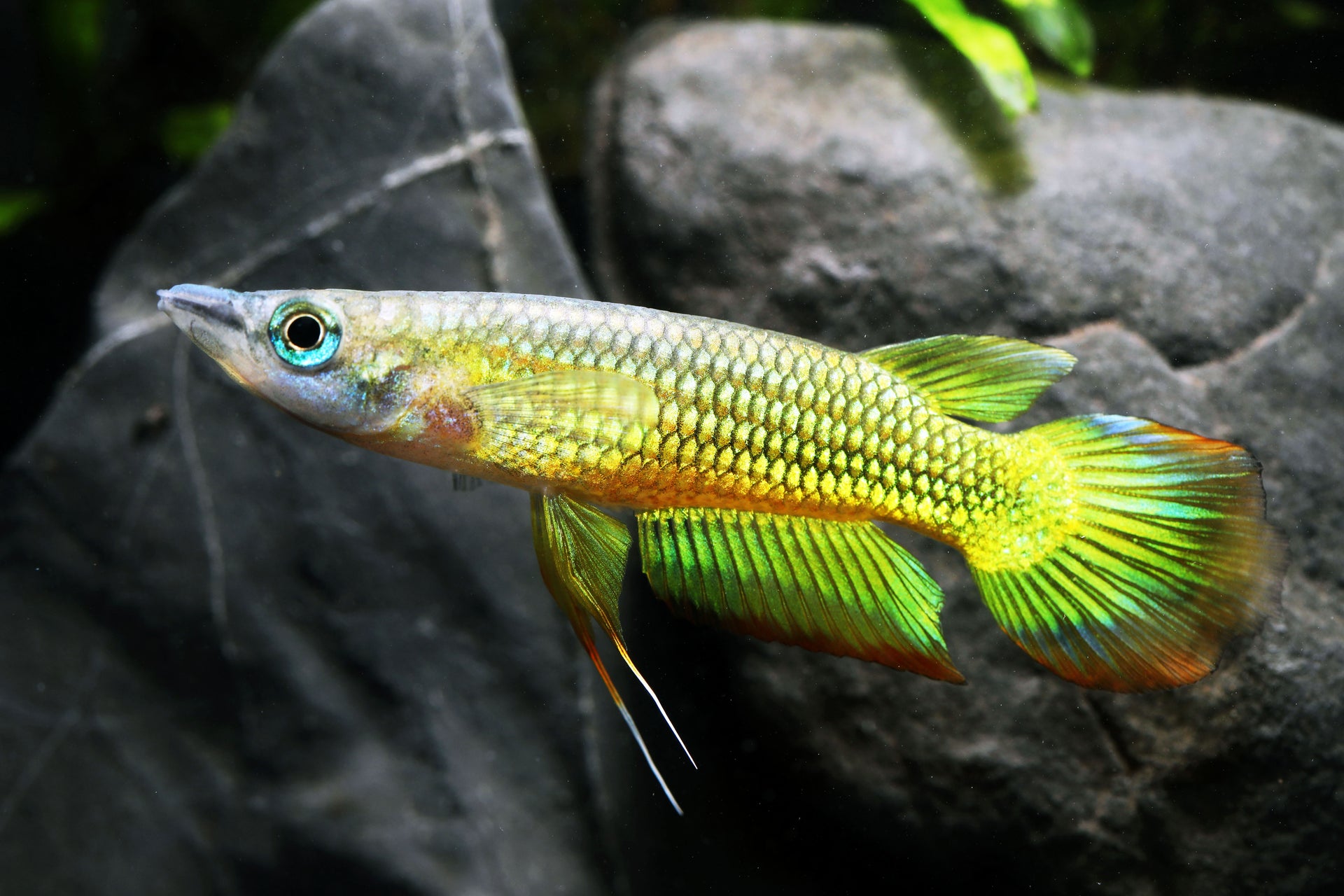
Stable water quality supports better long-term color than supplements or extreme lighting. Provide species-appropriate food, shelter, swimming room, and compatible tankmates.
79. Rosy Barb
The Rosy Barb (Pethia conchonius) brings vivid color to a freshwater setting, but its care should be planned around behavior rather than decoration. A small juvenile may eventually become territorial, require a school, or outgrow a modest aquarium.
Look for naturally proportioned fish with undamaged scales and fins. Avoid specimens that appear dyed, injected, or unnaturally colored through harmful treatments.
80. White Cloud Mountain Minnow
White Cloud Mountain Minnow is the common name used for Tanichthys albonubes. This freshwater species is admired for color that may shift with age, sex, dominance, breeding condition, background, and lighting. Juveniles and adults can therefore look very different.

Compatibility research is essential. Match temperature, hardness or salinity, current, feeding style, and temperament so every fish can feed normally and retreat from conflict.
Where Do Colorful Fish Live?
Colorful freshwater species occur in rainforest rivers, clear streams, floodplains, lakes, peat swamps, rocky rift lakes, and seasonal pools. Marine species occupy coral reefs, lagoons, rubble slopes, rocky coastlines, seagrass beds, and reef drop-offs. The same colors can serve different purposes depending on habitat and available light.
How to Identify Different Types of Colorful Fish
- Base color: Note whether the body is primarily blue, red, yellow, silver, black, orange, or transparent.
- Pattern: Identify stripes, bars, saddles, spots, eye bands, tail markings, and fin edges.
- Body shape: Disc-shaped, torpedo-shaped, elongated, or deep-bodied forms narrow the possibilities.
- Fin shape: Ventral filaments, lyre tails, swords, rounded fins, and tall dorsal fins can be diagnostic.
- Water type: Know whether the fish came from freshwater, brackish water, or seawater.
- Life stage: Reef angelfish, wrasses, cichlids, and others may change dramatically with age.
- Wild or domestic: Captive-bred strains may have colors and fins not found in wild fish.
Aquarium Care Notes
- Choose fish by adult size and behavior, not store size.
- Match temperature, pH, hardness, salinity, and current to the species.
- Keep schooling fish in an appropriate group.
- Use quarantine to reduce disease introduction.
- Feed a varied diet suited to the species.
- Provide cover without eliminating swimming space.
- Avoid mixing slow feeders with aggressive competitors.
- Use lighting that supports animals, plants, and corals without overheating the system.
Naturally Colorful Fish Versus Artificially Colored Fish
Many fish are naturally bright, and selective breeding can intensify inherited colors. Artificial coloring through injection, dyeing, or damaging treatments is different and raises serious welfare concerns. A fish with unnatural patches, needle-like marks, fading dye, or impossible color placement should be avoided.
Safety, Sustainability, and Conservation Notes
Some colorful species are over-collected, habitat-limited, difficult to breed, or sold before buyers understand adult needs. Prefer captive-bred fish where practical, verify legal origin, and avoid species that cannot be supported by the planned aquarium. Never release unwanted fish into rivers, ponds, drains, or coastal water.
Fun Facts About Colorful Fish
- Iridescent colors can be structural rather than pigment-based.
- Some fish become brighter during courtship or territorial displays.
- Juvenile marine angelfish often look unlike adults.
- Schooling can make striped fish appear like one moving signal.
- Deep water filters out red light, changing how colors appear.
- Domestic guppies and bettas have hundreds of color forms.
- Cleaner fish use conspicuous patterns to advertise their service.
- Warning colors may signal spines, venom, bad taste, or defense.
- Stress often causes color loss or darkening.
- Good water quality helps preserve natural coloration.
Final Thoughts on Types of Colorful Fish
The best types of colorful fish are not simply the brightest animals in a store. They are species whose adult size, diet, temperament, water needs, and social behavior match the aquarium or observation setting. Learn the scientific name, choose ethically sourced fish, and design the habitat around welfare; healthy color will follow.
Frequently Asked Questions
1. What is the most colorful fish?
There is no objective winner. Mandarinfish, reef angelfish, butterflyfish, rainbowfish, discus, bettas, and African cichlids are strong candidates.
2. What is the most colorful freshwater fish?
Discus, bettas, guppies, rainbowfish, German blue rams, peacock cichlids, and killifish are among the most colorful.
3. What is the most colorful saltwater fish?
Mandarinfish, emperor angelfish, queen angelfish, royal gramma, clown triggerfish, and many wrasses are especially vivid.
4. Are colorful fish harder to care for?
Not because of color itself. Difficulty depends on adult size, diet, aggression, water chemistry, and disease sensitivity.
5. What colorful fish are good for beginners?
Platies, some guppies, hardy rasboras, white clouds, and selected captive-bred clownfish can suit informed beginners.
6. Can colorful fish live together?
Only when temperature, chemistry, size, temperament, feeding behavior, and social requirements are compatible.
7. Why do fish have bright colors?
Colors may attract mates, signal identity, warn rivals, provide camouflage, advertise cleaning, or confuse predators.
8. Do fish see color?
Many fish have well-developed color vision, although sensitivity differs by species and habitat.
9. Why does my fish lose color?
Stress, poor water quality, disease, unsuitable diet, bullying, darkness, age, and normal nighttime change can be causes.
10. Can food improve fish color?
A balanced diet supports natural coloration, but food cannot safely transform a fish beyond its genetics.
11. Are color-enhancing foods safe?
Reputable foods can be safe, but they should not replace a balanced diet or hide poor care.
12. What are artificially dyed fish?
They are fish altered through dyes, injections, or other treatments that can cause stress and injury.
13. How can I recognize a dyed fish?
Look for unnatural patches, repeated color blocks, needle marks, fading pigment, or colors that ignore normal scale patterns.
14. Are fluorescent fish the same as dyed fish?
No. In genetically fluorescent lines, inherited color is produced by the fish’s cells.
15. Do aquarium lights change fish color?
Yes. Spectrum, intensity, background, and camera settings can make colors look stronger or weaker.
16. Which colorful fish stay small?
Chili rasboras, ember tetras, clown killifish, neon gobies, yellow clown gobies, and some dwarf cichlids remain small.
17. Which colorful fish need large tanks?
Tangs, large angelfish, discus groups, Denison barbs, rainbowfish, triggerfish, and larger cichlids need substantial space.
18. Are bettas community fish?
Some can work in carefully planned communities, but males can be territorial and should not be automatically mixed.
19. Are guppies easy colorful fish?
They can be beginner-friendly but still need cycled water, suitable hardness, disease prevention, and reproduction control.
20. Why do male fish look brighter?
Sexual selection often favors brighter males, but the pattern differs among species.
21. Do juvenile fish have adult colors?
Not always. Many reef fish and cichlids change pattern and color as they mature.
22. What colorful fish are peaceful?
Cardinal tetras, many rasboras, selected rainbowfish, some gouramis, and Banggai cardinalfish can be peaceful.
23. What colorful fish are aggressive?
Triggerfish, territorial damselfish, some cichlids, dottybacks, and certain wrasses can be aggressive.
24. Can freshwater and saltwater fish share a tank?
No. Their salinity and physiological needs are fundamentally different.
25. Are colorful fish safe for planted tanks?
Many are, but some dig, uproot plants, eat leaves, or need unsuitable water conditions.
26. Are colorful marine fish reef safe?
It depends on species. Some eat corals, clams, shrimp, worms, or other invertebrates.
27. What is iridescence?
It is color that changes with viewing angle because microscopic structures reflect and interfere with light.
28. Why do fish darken at night?
Many change pigment distribution while resting. This can be normal.
29. How should I photograph colorful fish accurately?
Use neutral white balance, avoid extreme saturation, clean the glass, and photograph under normal lighting.
30. Should I buy wild-caught colorful fish?
Choose only legally and responsibly sourced fish. Captive-bred alternatives often adapt better.
31. Can colorful fish become invasive?
Yes. Released aquarium fish can establish populations, spread disease, and harm native ecosystems.
32. What background suits colorful fish?
A dark or natural background often improves contrast, but stress and species behavior matter too.
33. Do colorful fish need brighter lights?
Not necessarily. Excessive light can stress fish and promote algae.
34. What should I check before buying?
Confirm scientific name, adult size, water needs, diet, temperament, group size, compatibility, and source.
35. How many colorful fish can I keep?
Stocking depends on adult biomass, behavior, filtration, oxygen, swimming space, and maintenance capacity.