

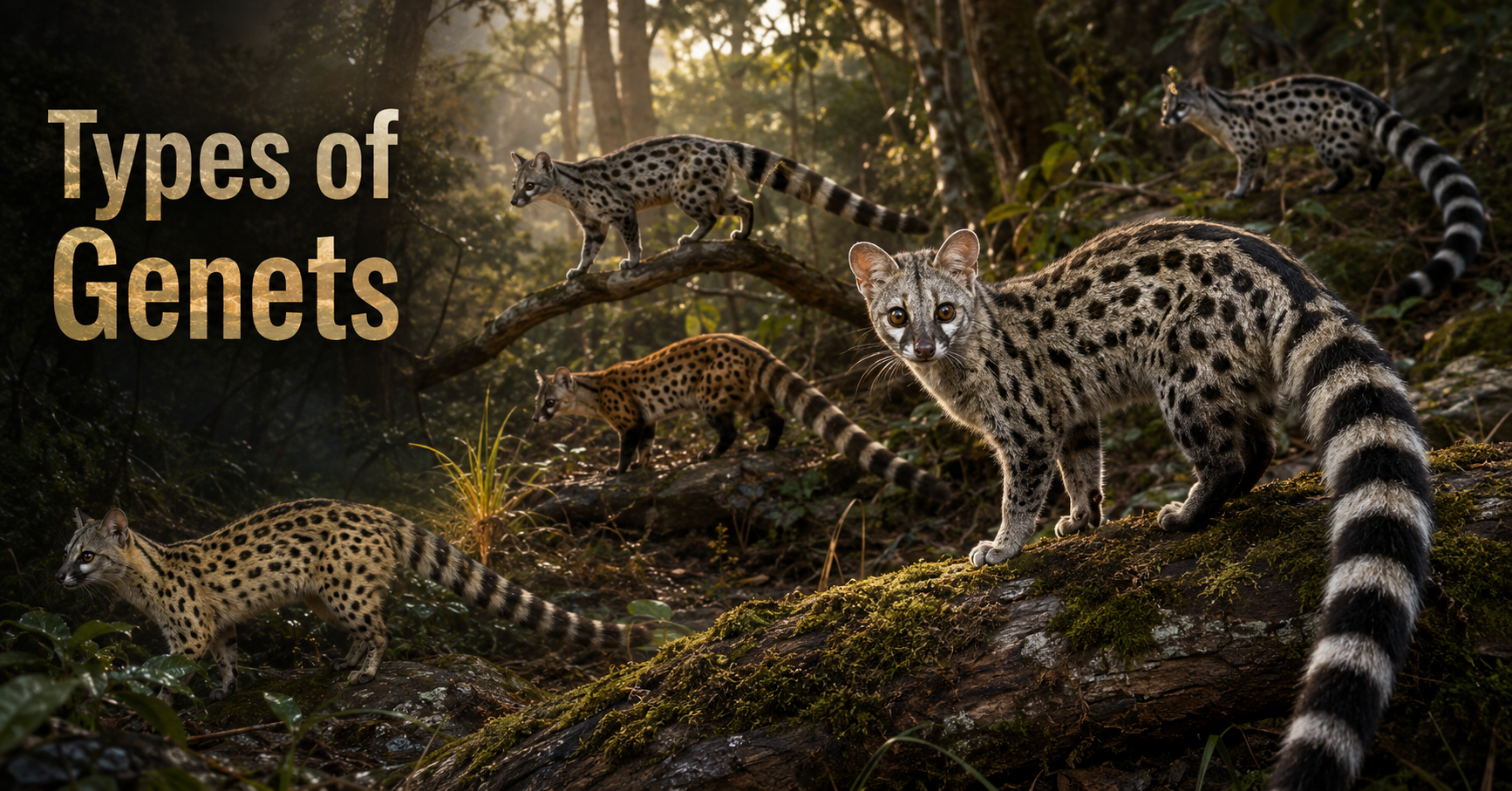
There are 15 currently recognized types of genets in the genus Genetta. These sleek, mostly nocturnal carnivores live across Africa, while the common genet also occurs in parts of southwestern Europe and the Arabian Peninsula. Although genets look a little like long-bodied, spotted cats, they belong to the civet family, Viverridae, rather than the cat family.
This guide covers every currently recognized genet species, including its scientific name, appearance, range, habitat, behavior, and the features most useful for field identification. It also explains why older sources may give a different species count or use scientific names that have since changed.
What Are the Main Types of Genets?
The 15 recognized species range from the widespread common genet to poorly known forest specialists such as the king genet and Bourlon’s genet. They can be grouped informally by appearance and habitat into small-spotted genets, large-spotted genets, rainforest genets, and the highly specialized aquatic genet. Coat pattern alone is not always enough for a reliable identification, so location, habitat, tail rings, dorsal stripe, body proportions, and current range maps should also be considered.
| No. | Common name | Scientific name | Typical region | Useful clue |
|---|---|---|---|---|
| 1 | Abyssinian genet | Genetta abyssinica | Horn of Africa | Pale coat and elongated spots |
| 2 | Angolan genet | Genetta angolensis | South-central Africa | Dark legs and bold spotting |
| 3 | Bourlon’s genet | Genetta bourloni | Upper Guinean forests | Large, dark blotches |
| 4 | Crested genet | Genetta cristata | Nigeria and Cameroon | Noticeable dorsal crest |
| 5 | Feline genet | Genetta felina | Southern Africa | Small spots and pale background |
| 6 | Rusty-spotted genet | Genetta fieldiana | Broad sub-Saharan range | Large rusty or dark spots |
| 7 | Common genet | Genetta genetta | Africa, Arabia, southwest Europe | Small spots and sharply ringed tail |
| 8 | Johnston’s genet | Genetta johnstoni | Upper Guinean forests | Shorter, thickly furred tail |
| 9 | Pardine genet | Genetta pardina | West Africa | Large spots and robust build |
| 10 | Aquatic genet | Genetta piscivora | Congo Basin | Unspotted reddish coat |
| 11 | King genet | Genetta poensis | West and Central African forests | Very rare, dark forest form |
| 12 | Servaline genet | Genetta servalina | Central and East African forests | Many small, closely set spots |
| 13 | Hausa genet | Genetta thierryi | West African savannas | Pale coat and small reddish spots |
| 14 | Cape genet | Genetta tigrina | Southern Africa | Large dark spots and long ringed tail |
| 15 | Giant genet | Genetta victoriae | Central African forests | Large body and bold blotches |
1. Abyssinian Genet
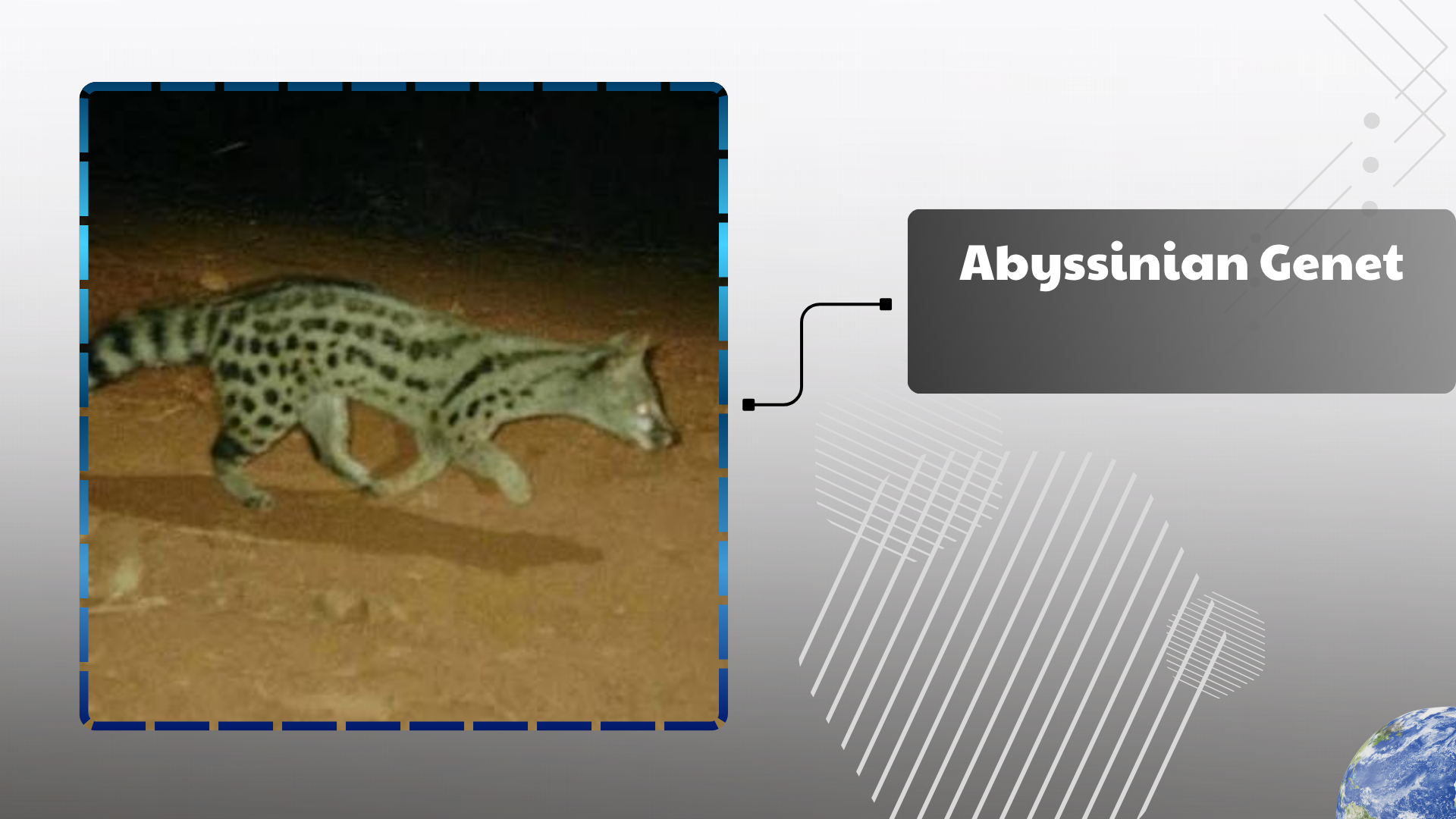
The Abyssinian genet, Genetta abyssinica, is a little-known species associated with the Horn of Africa. Records come from countries including Ethiopia, Eritrea, Djibouti, Somalia, and Sudan, but its distribution is patchy and it is rarely observed. It occupies dry woodland, scrub, rocky country, and higher-elevation landscapes rather than the humid rainforest habitat preferred by several other genets.
This species generally has a pale gray, sandy, or yellowish background coat. Its dark spots may look narrow or stretched, and the dorsal line is visible but not always as heavy as in some small-spotted genets. Dark and pale rings mark the long tail. These colors can make the animal difficult to see against dry soil and rock, especially under weak light.
Like other genets, it is believed to forage mainly at night for rodents, insects, birds, reptiles, and other small prey. Because verified observations are limited, field identification should combine photographs with the exact location and habitat. A pale genet in the Horn of Africa should not automatically be assigned to this species; common genets overlap parts of the region and can vary considerably in color.
2. Angolan Genet
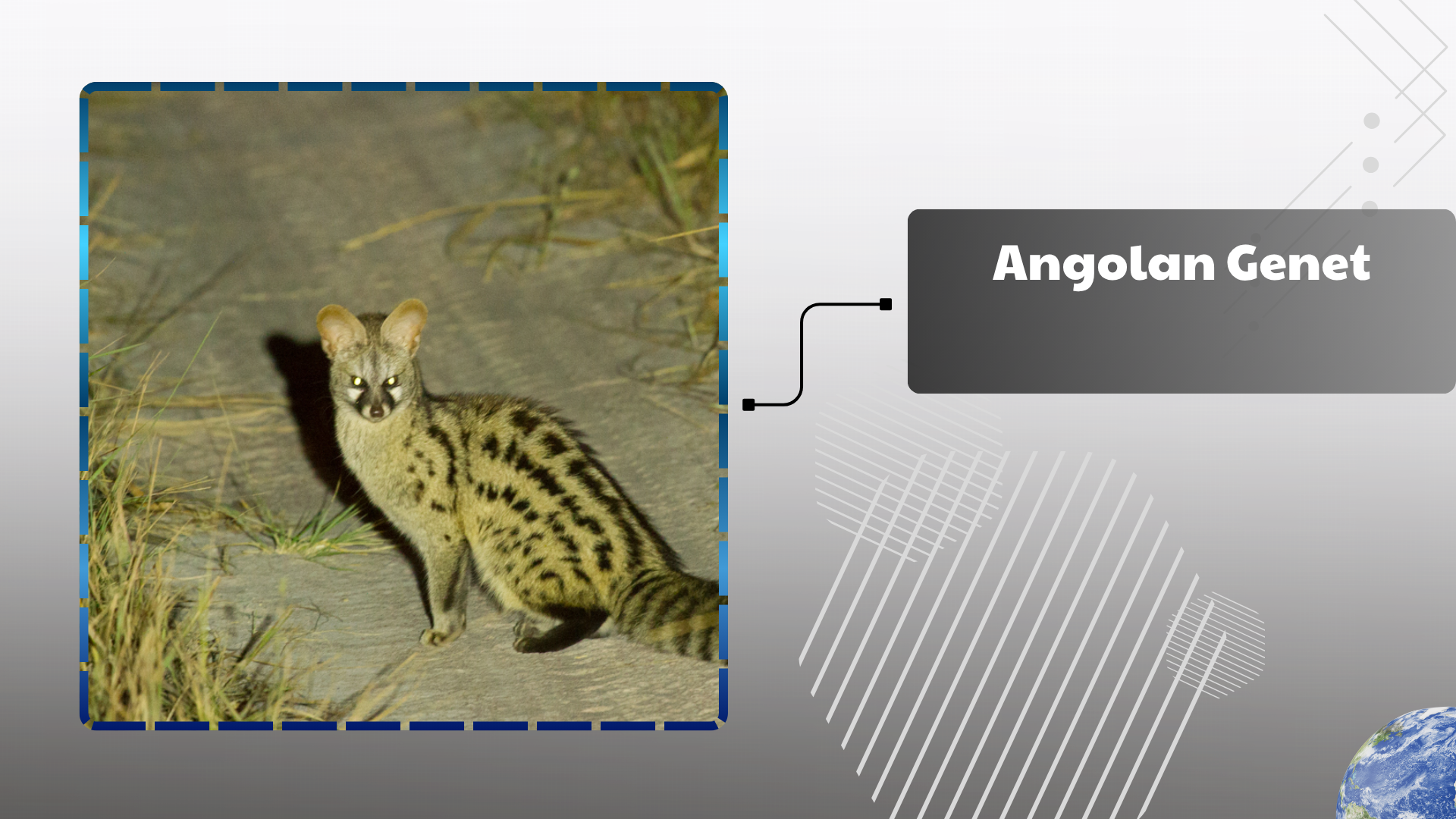
The Angolan genet, Genetta angolensis, is also called the miombo genet because it is strongly associated with miombo woodland. It occurs in south-central Africa, including Angola, Zambia, Malawi, and Mozambique, with records from neighboring areas. This dry, seasonally deciduous woodland is very different from the dense lowland forests occupied by many West African genets.
Its coat is grayish to reddish gray with conspicuous dark spots arranged in lines along the sides. The limbs are dark, the dorsal stripe is distinct, and the tail carries alternating dark and pale rings. The overall pattern can resemble a large-spotted genet, making geographic range and woodland type important identification clues.
Angolan genets are nocturnal and generally solitary. They hunt on the ground and climb well, taking small mammals, arthropods, birds, eggs, reptiles, and other available foods. Travelers are most likely to notice one crossing a quiet track after dark or in a camera-trap image. Spotlighting should be done responsibly: avoid chasing the animal, blocking its route, or holding a bright beam on its eyes.
3. Bourlon’s Genet
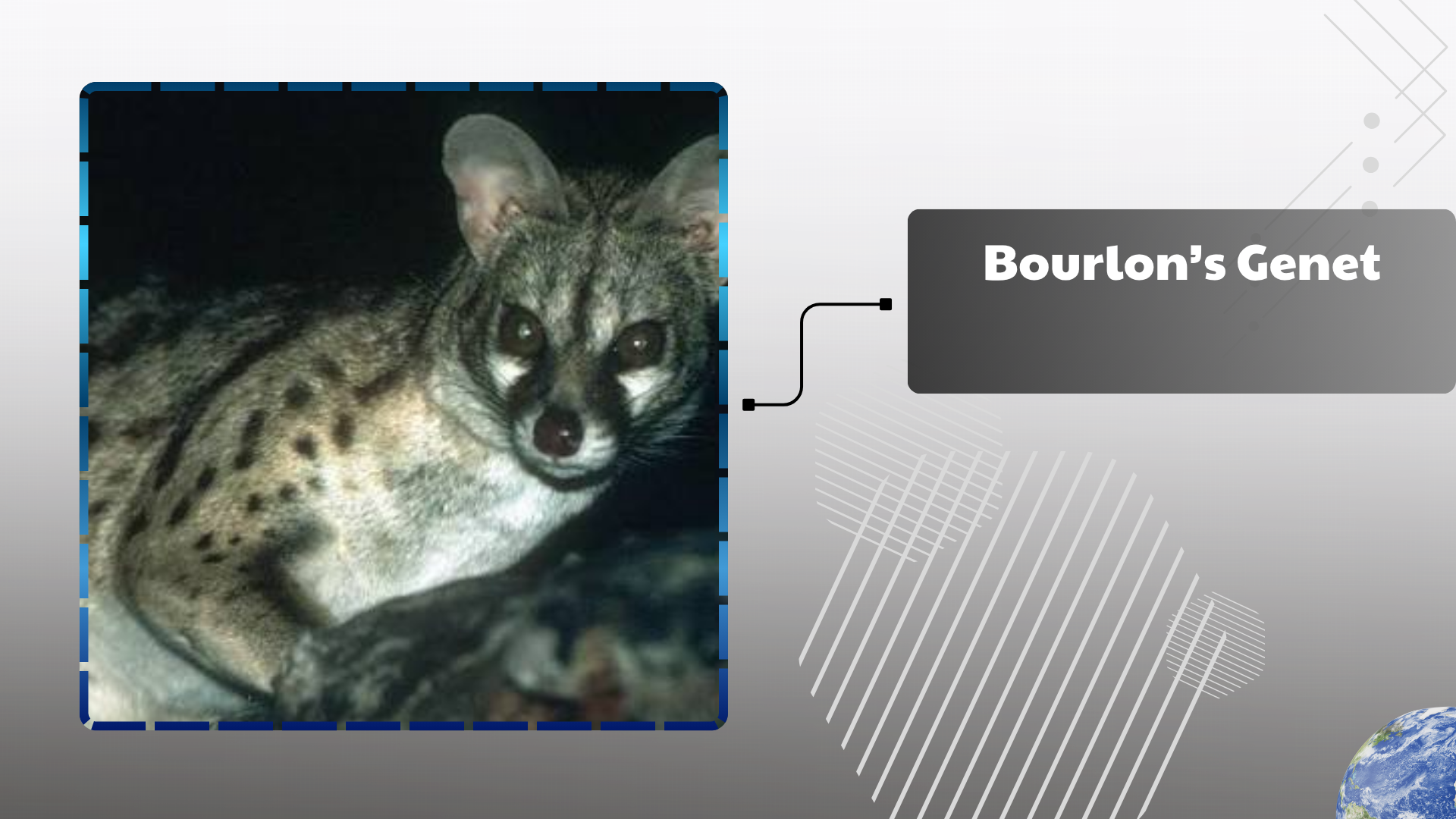
Bourlon’s genet, Genetta bourloni, is a rare forest genet of West Africa. It is associated with the Upper Guinean forest region, particularly areas in and around Guinea, Liberia, Côte d’Ivoire, and Ghana. The species was formally described in the early 2000s after researchers reassessed museum specimens previously placed with other large-spotted forest genets.
It has a yellowish to gray-brown coat marked with large, dark, irregular spots or blotches. The feet and lower legs are dark, while the tail shows a limited number of broad pale rings separated by darker sections. Its pattern may be confused with Johnston’s genet, the pardine genet, or the king genet when an image is dim or incomplete.
Very little direct ecological information is available. It is considered a nocturnal forest carnivore and probably eats a varied diet of small vertebrates and invertebrates, much like related genets. Habitat loss and fragmentation are important concerns because its known range lies within a heavily altered biodiversity hotspot. A claimed sighting should include the date, coordinates, habitat description, multiple images, and ideally review by a regional mammal specialist.
4. Crested Genet
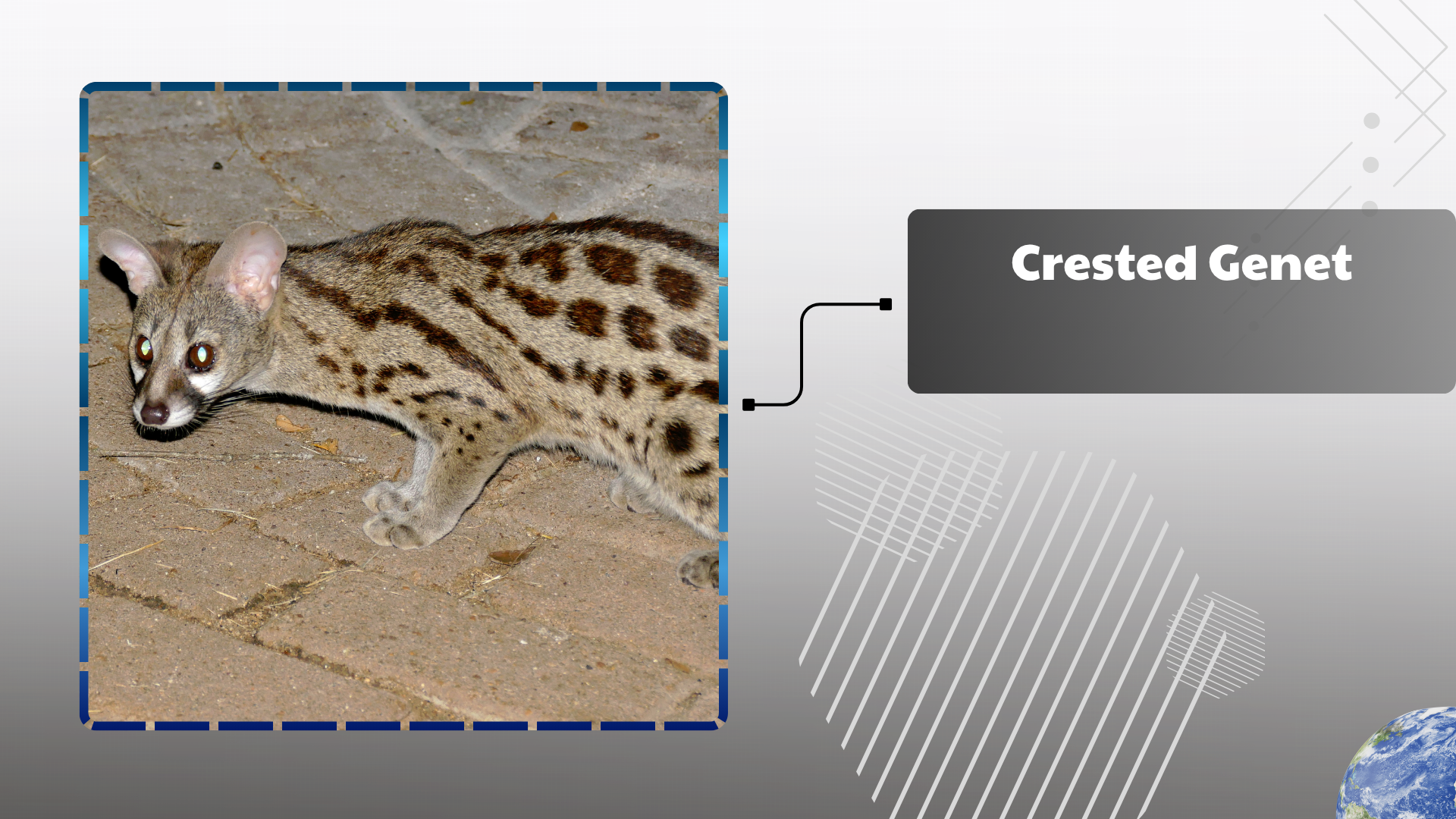
The crested genet, Genetta cristata, is a large-spotted forest species found mainly in southeastern Nigeria and western Cameroon. It lives in lowland rainforest, swamp forest, secondary growth, and forest-farm mosaics. Its restricted range overlaps an area experiencing considerable habitat conversion, which makes accurate records especially useful to conservation work.
The species is named for the erectile strip of longer hair running along its back. It has large, irregular spots, dark legs, a boldly patterned tail, and a fairly robust build. However, a raised dorsal crest is not always visible in a relaxed animal or a single camera-trap frame. Large-spotted genets can also raise their dorsal hair when alarmed, so the crest should not be used as the only identification feature.
Crested genets forage at night and use both the ground and trees. Their diet is thought to include rodents, insects, reptiles, birds, and fruit when available. Distinguishing this species from the rusty-spotted genet requires attention to location, pattern, and morphology. In the field, record the complete flank, tail, legs, and back rather than relying on a face-only photograph.
5. Feline Genet
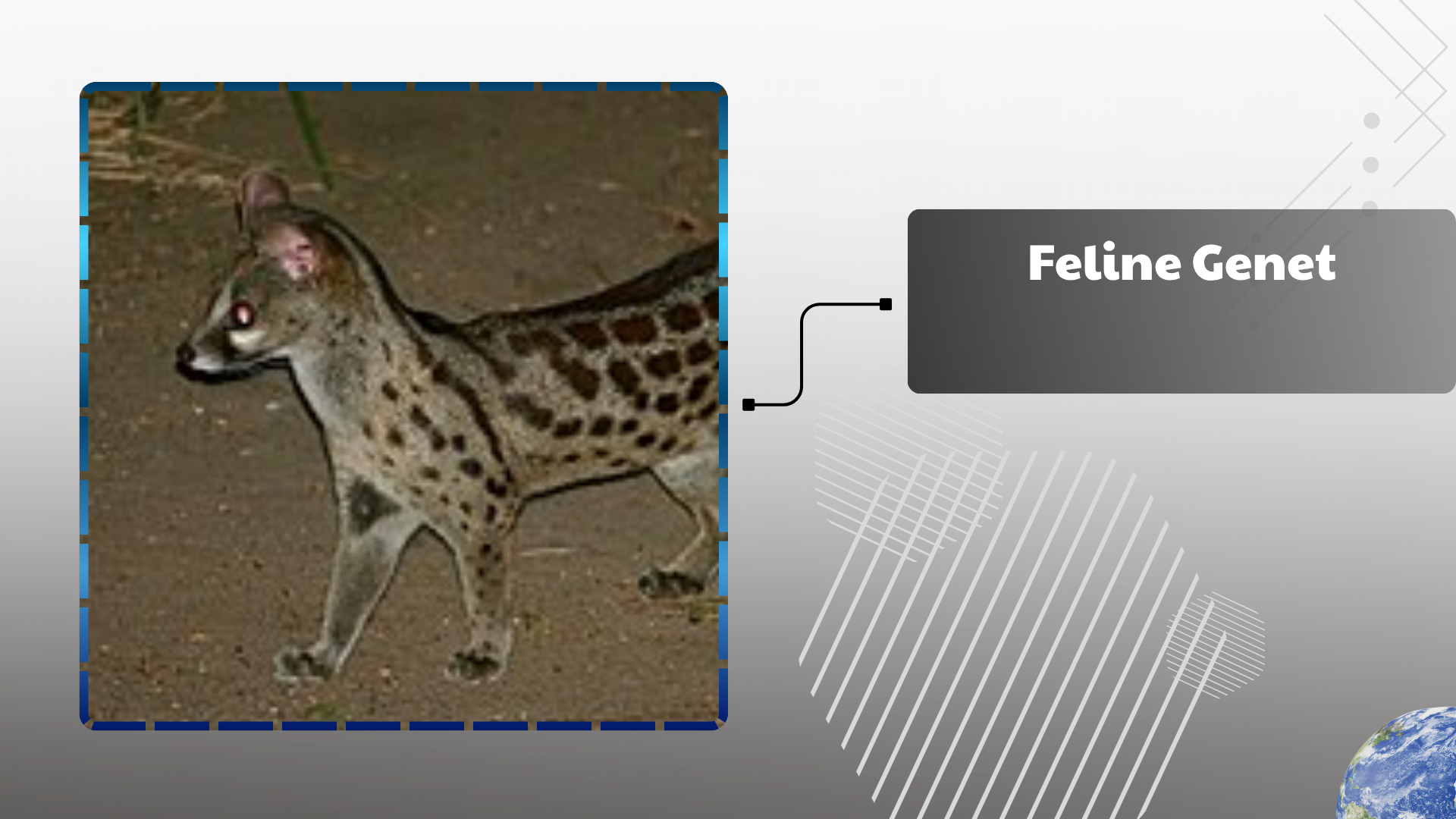
The feline genet, Genetta felina, is the South African small-spotted genet. It was long treated as part of the common genet, but modern mammal classifications recognize it as a separate species. Its range centers on southern Africa, especially South Africa, Namibia, and Lesotho, with uncertain or peripheral records farther north.
This is a slender genet with a pale gray to sandy coat, numerous small dark spots, a strong black dorsal stripe, and a long tail with contrasting rings. The tip of the tail is usually dark. In dry landscapes, its pale background color is a useful first clue, but lighting can strongly alter how gray or yellow the coat appears in a photograph.
Feline genets use shrubland, grassland, rocky country, farms, and semi-arid environments. They are agile, nocturnal hunters of rodents, insects, small reptiles, and birds, but may also take fruit and other opportunistic foods. In southern Africa, observers should separate this small-spotted form from the larger, more boldly marked Cape genet. Body pattern, habitat, and location are more reliable together than any one feature.
6. Rusty-Spotted Genet
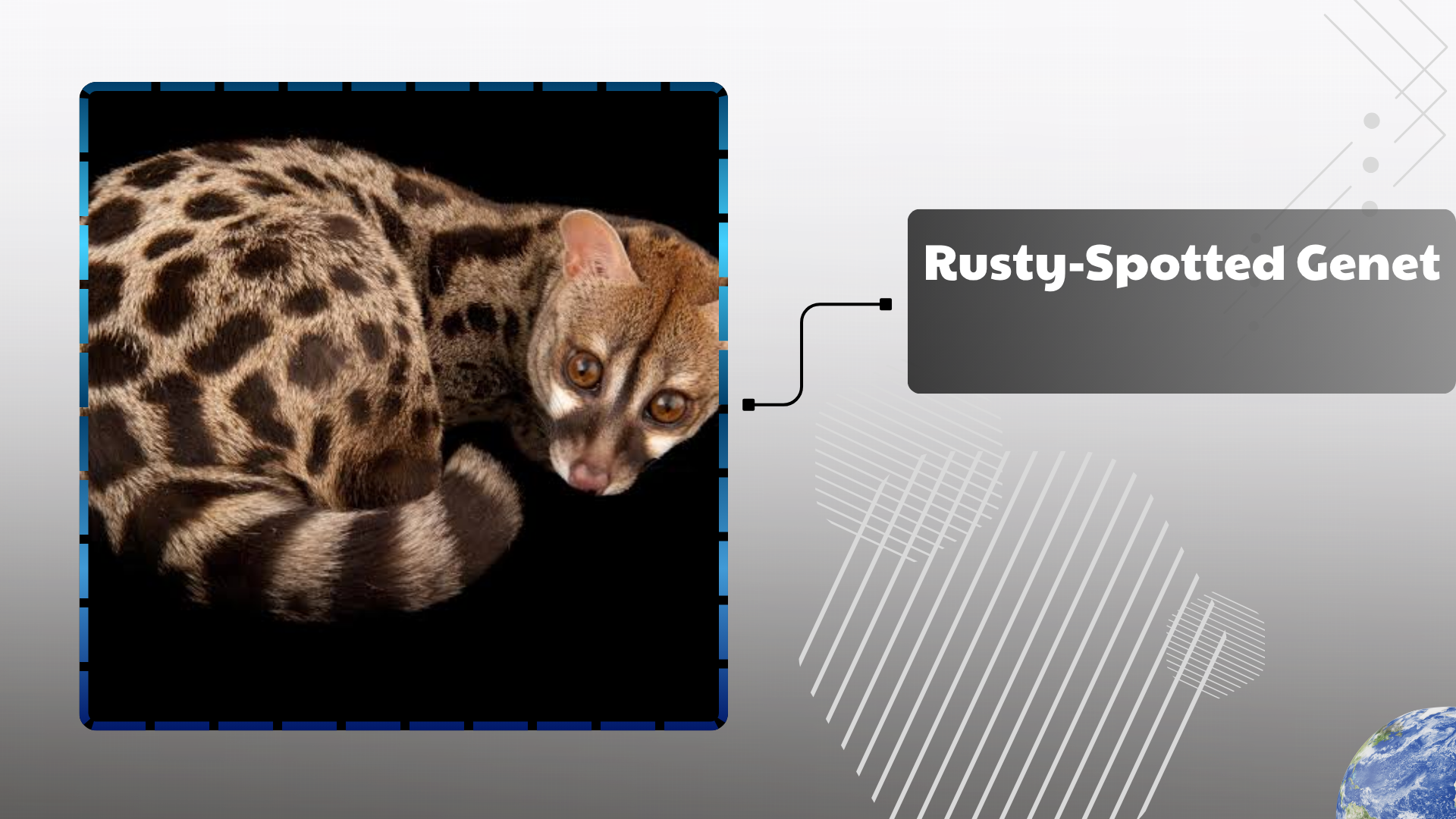
The rusty-spotted genet, Genetta fieldiana, is the species widely called the large-spotted or blotched genet in older guides. Many sources still use Genetta maculata, but the current scientific name is G. fieldiana because the older species name was preoccupied under zoological naming rules. This taxonomic update is one reason genet lists on different websites may not match.
It has large brown, reddish, or nearly black spots on a yellowish-gray background. A dark line follows the spine, the legs are often heavily marked, and the tail has broad rings that may be less sharply contrasting than those of a common genet. Color and spot size vary across its very broad sub-Saharan distribution.
This adaptable species occurs in woodland, savanna, forest edges, agricultural mosaics, and other habitats with adequate cover. It is a capable climber but frequently hunts on the ground. Its broad diet includes rodents, insects, birds, reptiles, amphibians, eggs, and fruit. When identifying it, first exclude locally occurring forest specialists and check whether the photo shows genuinely large blotches rather than small spots enlarged by blur.
7. Common Genet
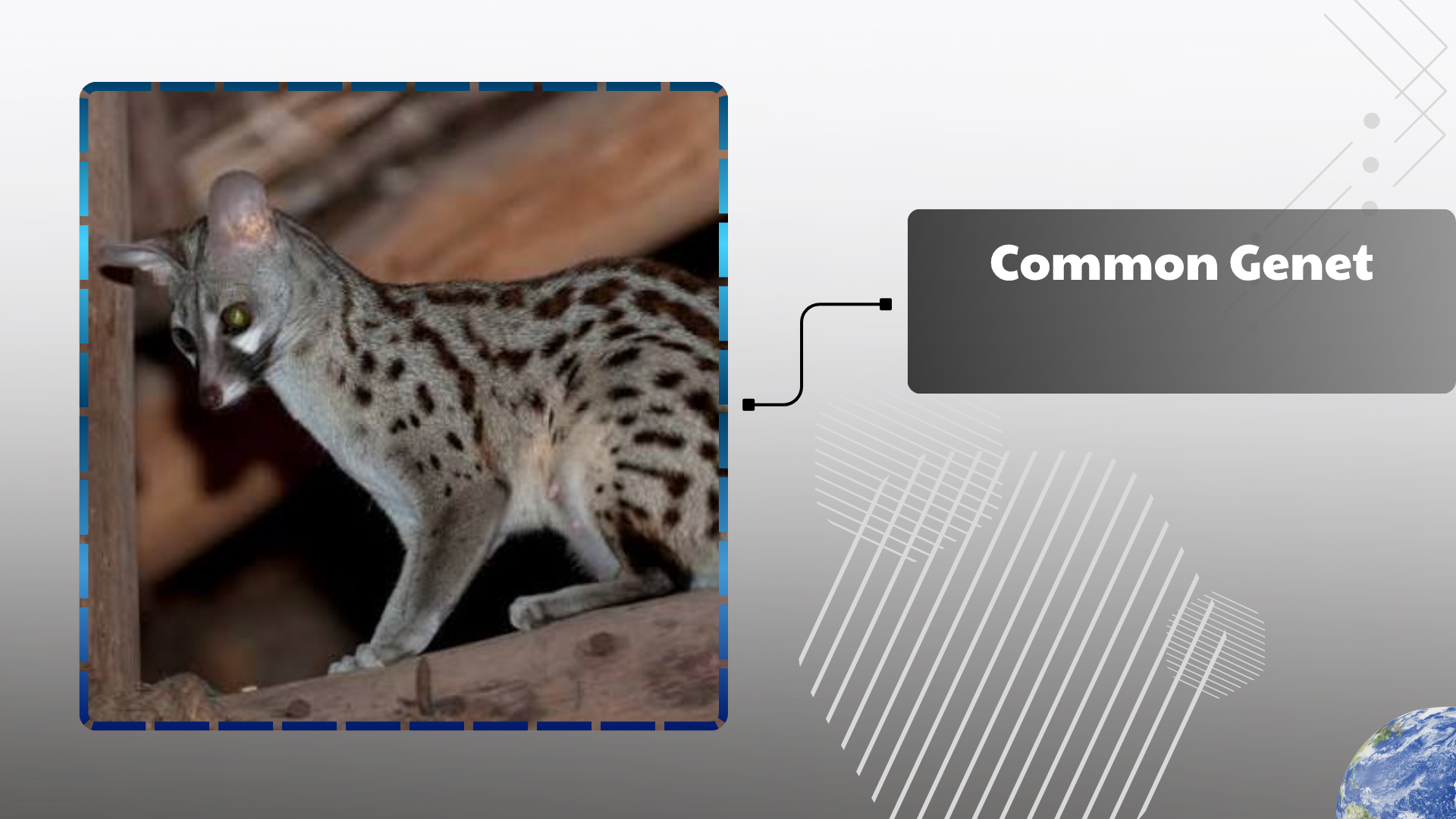
The common genet, Genetta genetta, has the widest and most familiar distribution of any genet. It occurs across large parts of Africa, on the Arabian Peninsula, and in southwestern Europe, where established populations live in Portugal, Spain, and parts of France. Historical introductions are thought to explain its European presence.
A typical common genet has a pale gray or buff coat covered with small black spots, a continuous dark dorsal stripe, a pointed muzzle, large ears, and a very long tail with crisp black and pale rings. It is often called the common small-spotted genet. Individuals vary, so photographs of the entire body are more useful than close-ups of one patch of fur.
The species occupies woodland, scrub, rocky hills, farmland, Mediterranean vegetation, and areas near people when shelter and prey are available. It is mainly nocturnal and usually solitary. Rodents form an important part of its diet, supplemented by birds, reptiles, amphibians, insects, fruit, and carrion. Common genets rest in dense vegetation, rock crevices, hollow trees, or quiet structures and can move with remarkable balance along branches and walls.
8. Johnston’s Genet
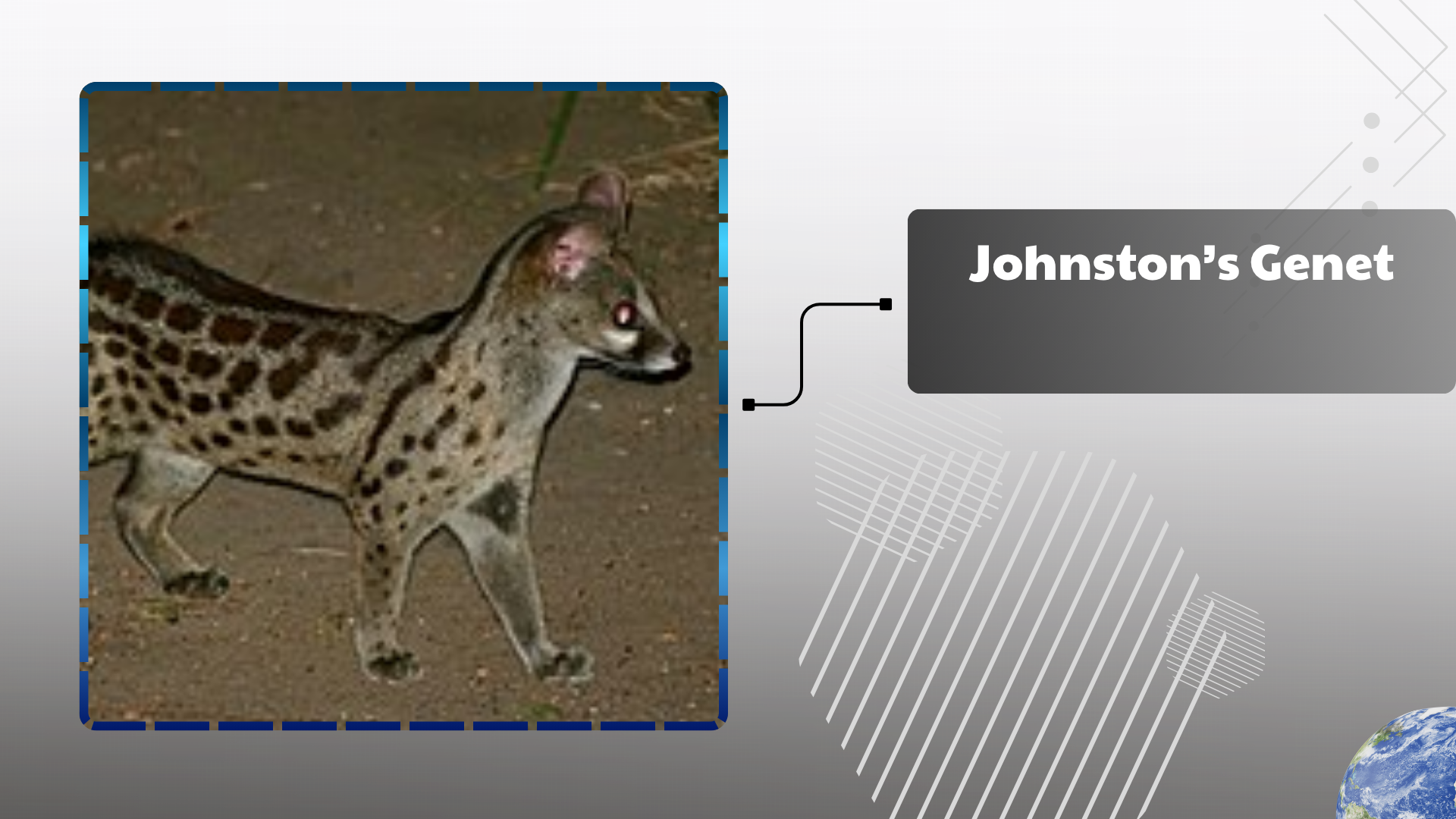
Johnston’s genet, Genetta johnstoni, is a poorly known species of the Upper Guinean forests of West Africa. Confirmed records are associated with countries such as Liberia, Côte d’Ivoire, Guinea, and Ghana. It depends primarily on humid forest landscapes, although it may also occur in suitable secondary habitat near intact forest.
The coat is yellowish or ocher with dark, irregular spots. The legs are dark and the tail tends to look thickly furred, with broad rings that may be less numerous or distinct than those of open-country small-spotted species. It resembles Bourlon’s genet and other West African forest forms, so confident identification from a poor night photograph is difficult.
Johnston’s genet is nocturnal, secretive, and seldom seen directly. Its diet has not been documented as thoroughly as that of the common genet, but it is expected to take small mammals, insects, and other forest prey. Because forest clearance can isolate populations, verified camera-trap records have real scientific value. Observers should retain original, uncropped images and avoid publishing the precise location of a sensitive record without consulting local conservationists.
9. Pardine Genet
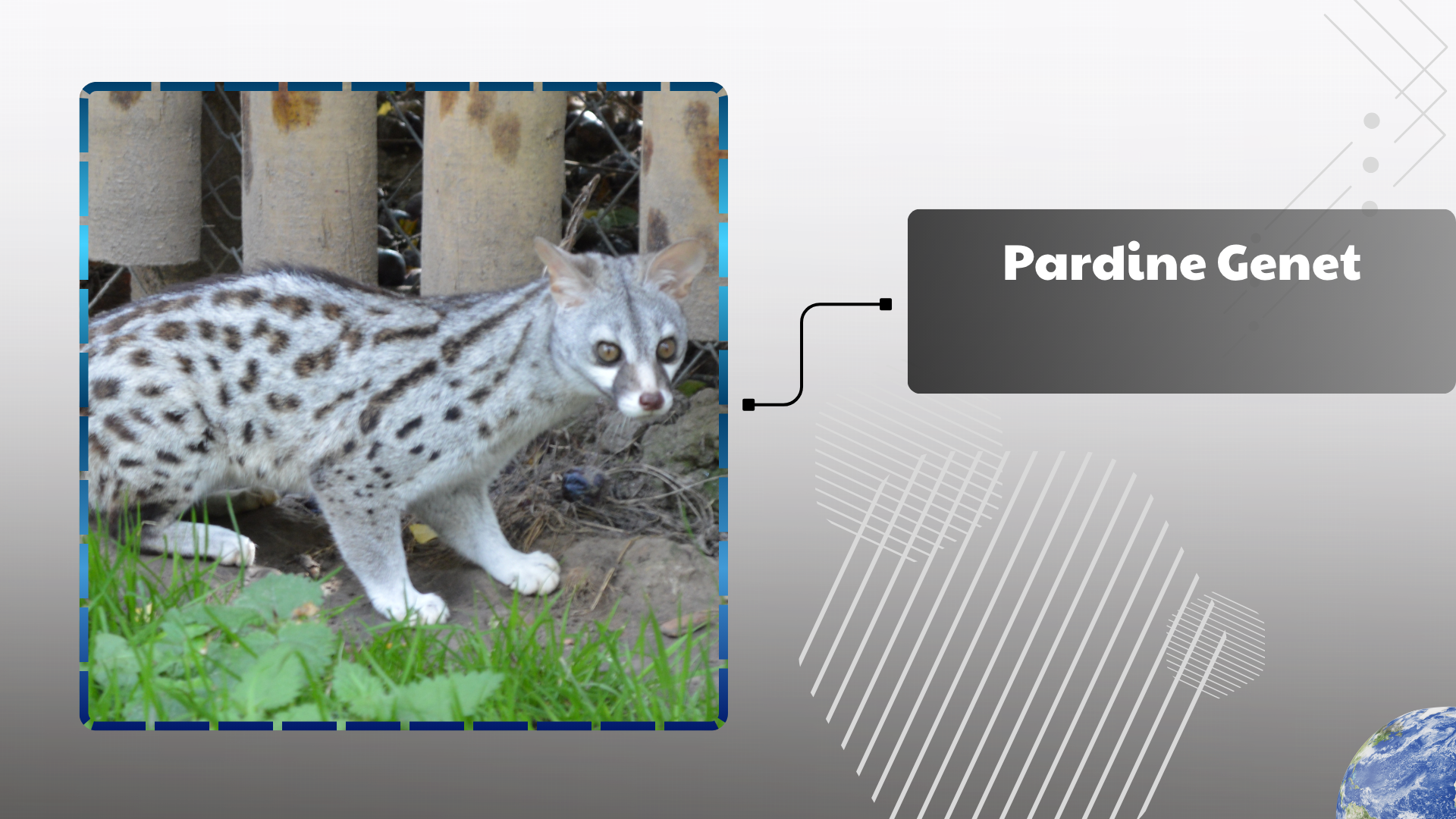
The pardine genet, Genetta pardina, is a large-spotted genet native to West Africa. Its range extends through a mixture of forest, woodland, savanna, and agricultural landscapes from Senegal eastward into the region around Ghana and neighboring countries. Older references may treat some populations differently, reflecting the long-running difficulty of classifying spotted genets from this region.
It is a relatively robust genet with a yellowish-gray coat and large, well-defined dark spots. The dorsal stripe is strong, the legs are often dark, and the ringed tail is long and full. Pattern varies geographically and may overlap visually with the rusty-spotted genet or rare forest species.
Pardine genets hunt mostly at night. They take rodents, insects, birds, reptiles, and other small animals and may consume fruit. Their ability to use altered habitat can bring them near farms and villages, where poultry conflict is possible. Secure poultry at night rather than trapping or poisoning wildlife. For identification, use regional distribution, flank pattern, tail banding, and habitat together, and treat records near uncertain range boundaries cautiously.
10. Aquatic Genet
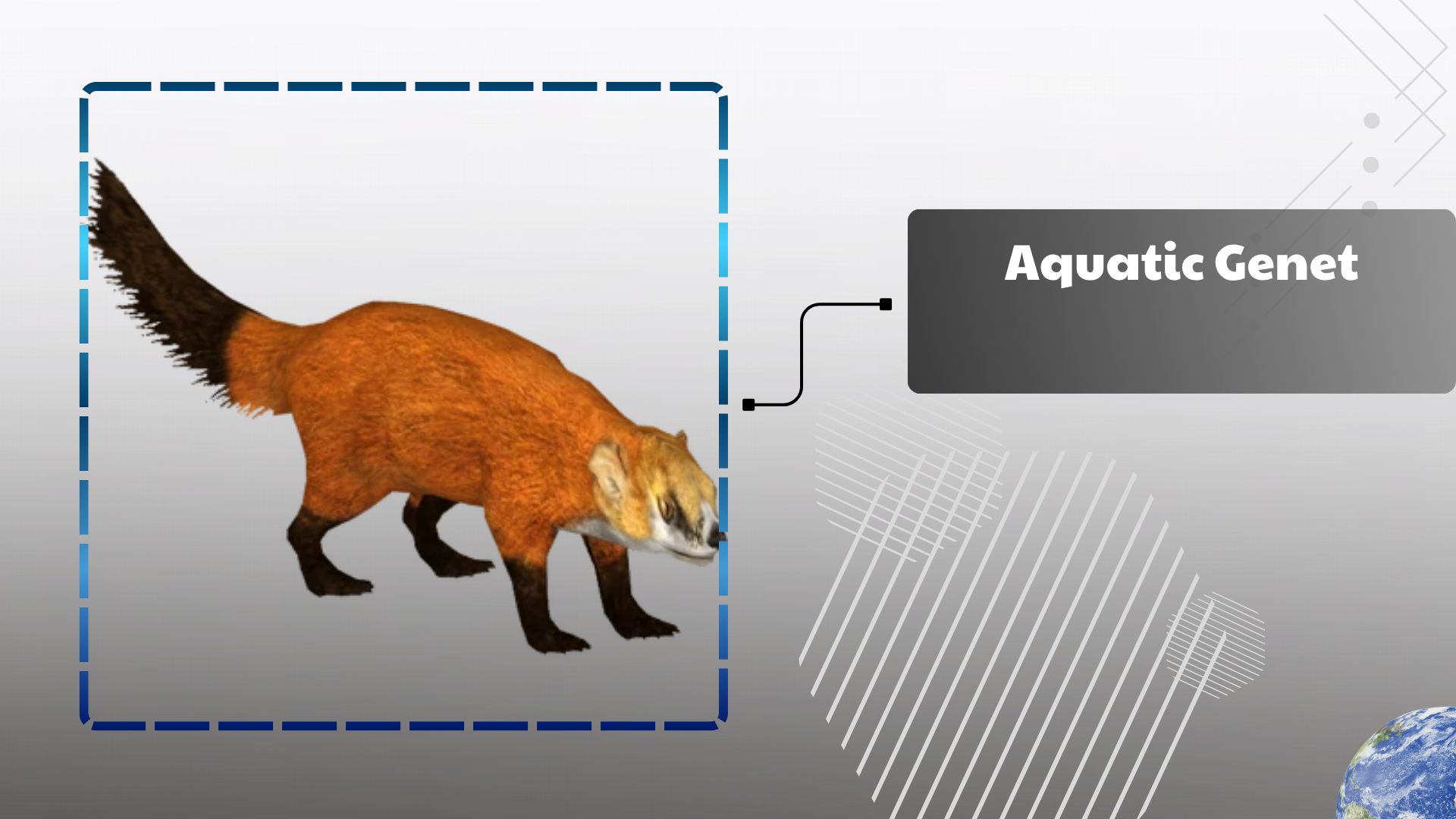
The aquatic genet, Genetta piscivora, is the most visually unusual member of the genus. It lives in the Congo Basin and is closely associated with rainforest streams and other freshwater habitats. Despite its common name and fish-eating reputation, direct observations are scarce, and some aspects of its feeding ecology remain less certain than popular accounts suggest.
Unlike the familiar spotted genets, it has a mostly uniform reddish-brown to chestnut coat, a darker tail, and pale markings around the eyes and muzzle. The feet are adapted for movement along wet stream margins, but the animal is not a civet-like version of an otter. Its unspotted body is the clearest visual distinction from every other Genetta species.
Aquatic genets are nocturnal and difficult to study in dense forest. Available evidence indicates that aquatic prey, including fish and crustaceans, forms part of the diet, alongside other small animals. Clean, connected streams and intact riparian forest are essential features of its habitat. It should never be lured, handled, or disturbed for photographs; remote cameras placed with appropriate permits are a safer research tool.
11. King Genet
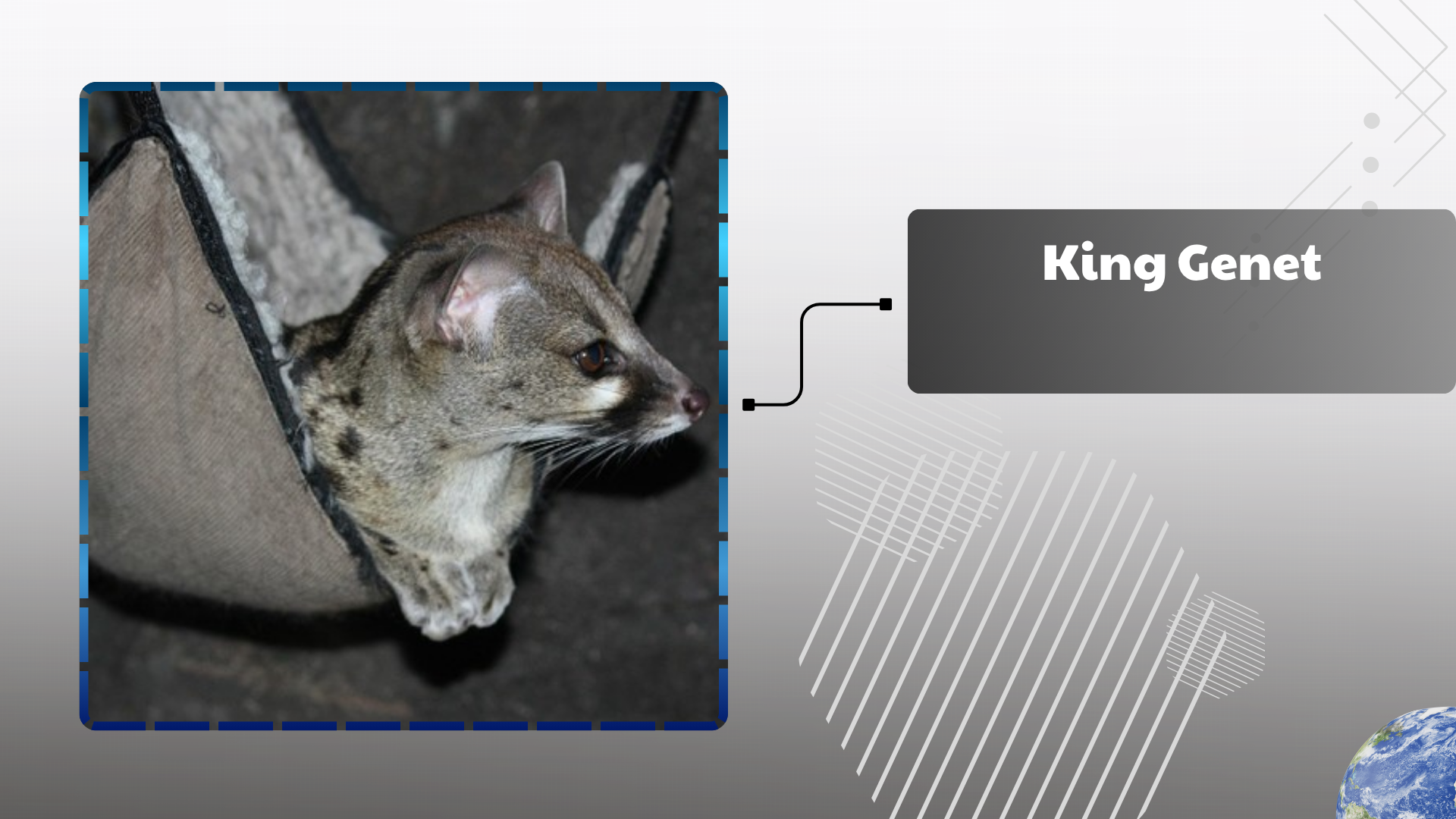
The king genet, Genetta poensis, is one of the least-known genets. Historical specimens and records link it to the forest zone of West and Central Africa, including Bioko and parts of the mainland. Long gaps between reliable records have made its present distribution, ecology, and population status difficult to determine.
Descriptions indicate a pale yellowish or gray coat with dark, somewhat angular or elongated spots, dark underparts and limbs, and a thick tail with relatively few broad rings. These traits overlap with other forest genets, and old museum skins may look different from living animals because color can fade or change during preservation.
The king genet is presumed to be nocturnal and forest-dependent, feeding on small vertebrates and invertebrates. However, it is important to separate documented facts from inference. A possible modern record would require expert review and comparison with similar species, not just a match to a single online picture. Protection of remaining lowland forest benefits this species even where its exact local presence has not yet been confirmed.
12. Servaline Genet
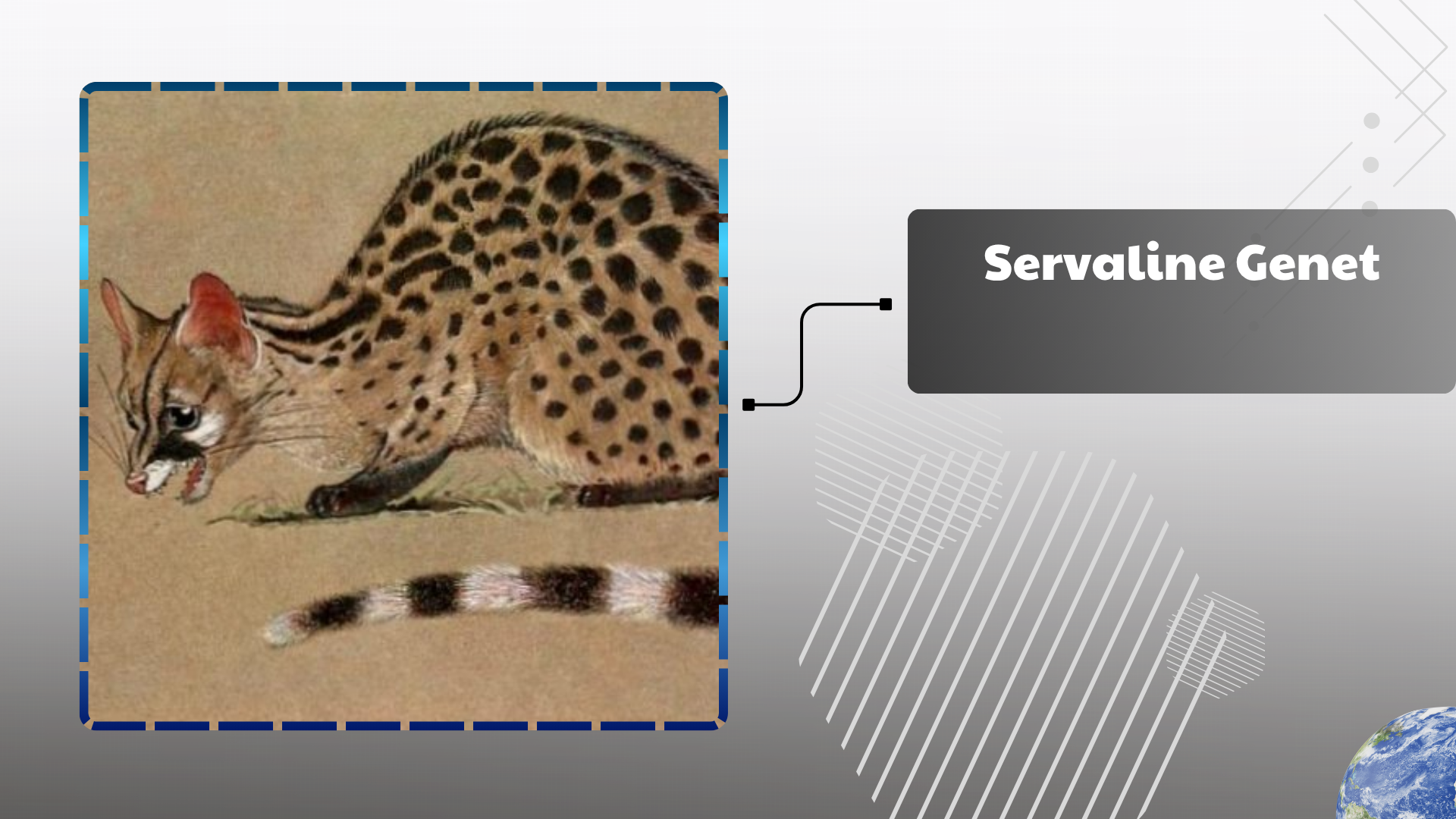
The servaline genet, Genetta servalina, is a graceful forest species found across parts of Central and East Africa. It inhabits lowland and montane forests, with geographically isolated populations documented in several highland areas. Its name refers to the resemblance of its fine spotting to that of a serval, although the two animals are not closely related.
Its warm buff to yellowish coat carries many small, closely spaced black spots. The dorsal stripe is relatively narrow, the legs are spotted rather than uniformly dark, and the tail bears numerous narrow rings. This dense, fine pattern often separates it from the larger blotches of the giant, pardine, or rusty-spotted genets.
Servaline genets are nocturnal, agile, and strongly associated with forest cover. They feed on rodents, insects, birds, reptiles, and other small prey, moving both on the ground and through low vegetation. Range is a vital identification clue because superficially similar genets may occur nearby. In mountain forests, elevation and exact locality should be recorded along with images.
13. Hausa Genet
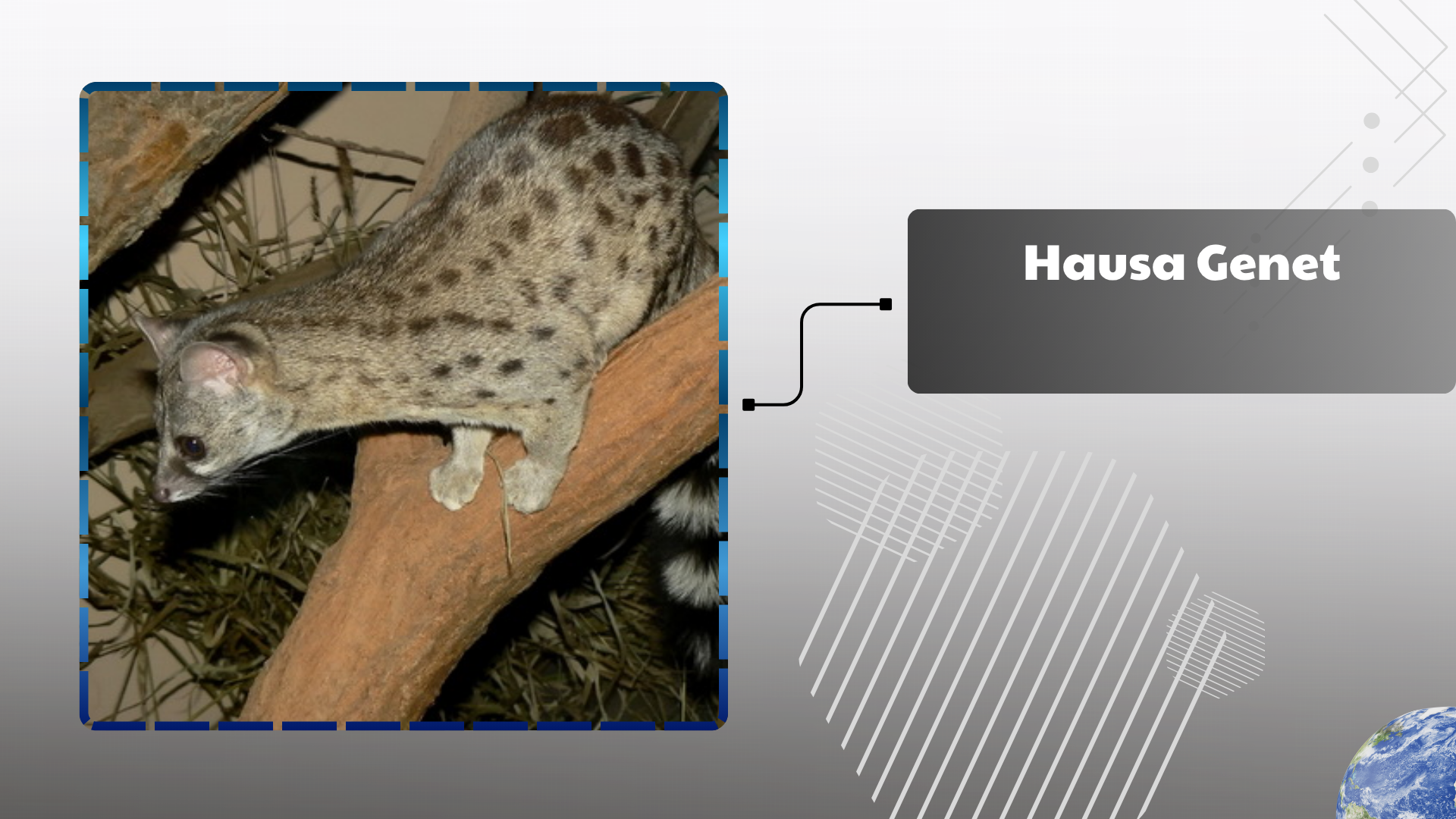
The Hausa genet, Genetta thierryi, is a small, lightly built species of West African savannas and open woodlands. Its distribution stretches across parts of the Sahelian and Sudanian zones, where dry grassland, bush, cultivated land, and woodland form a shifting habitat mosaic.
The coat is generally pale yellowish, beige, or gray with small reddish-brown to dark spots. Its dorsal line may be narrow, and the long tail is ringed. The muted pattern suits dry terrain but can be hard to distinguish from a common genet in distant camera-trap images. Location, habitat, spot size, and the strength of the dorsal stripe should all be checked.
The Hausa genet hunts at night for rodents, insects, reptiles, birds, and other small prey. It may tolerate some human-modified environments if vegetation and food remain available. Fire, intensive land conversion, and removal of cover can still reduce local habitat quality. The common name refers to the region associated with the Hausa people; it should not be interpreted as evidence that the animal occurs only in one country or cultural area.
14. Cape Genet
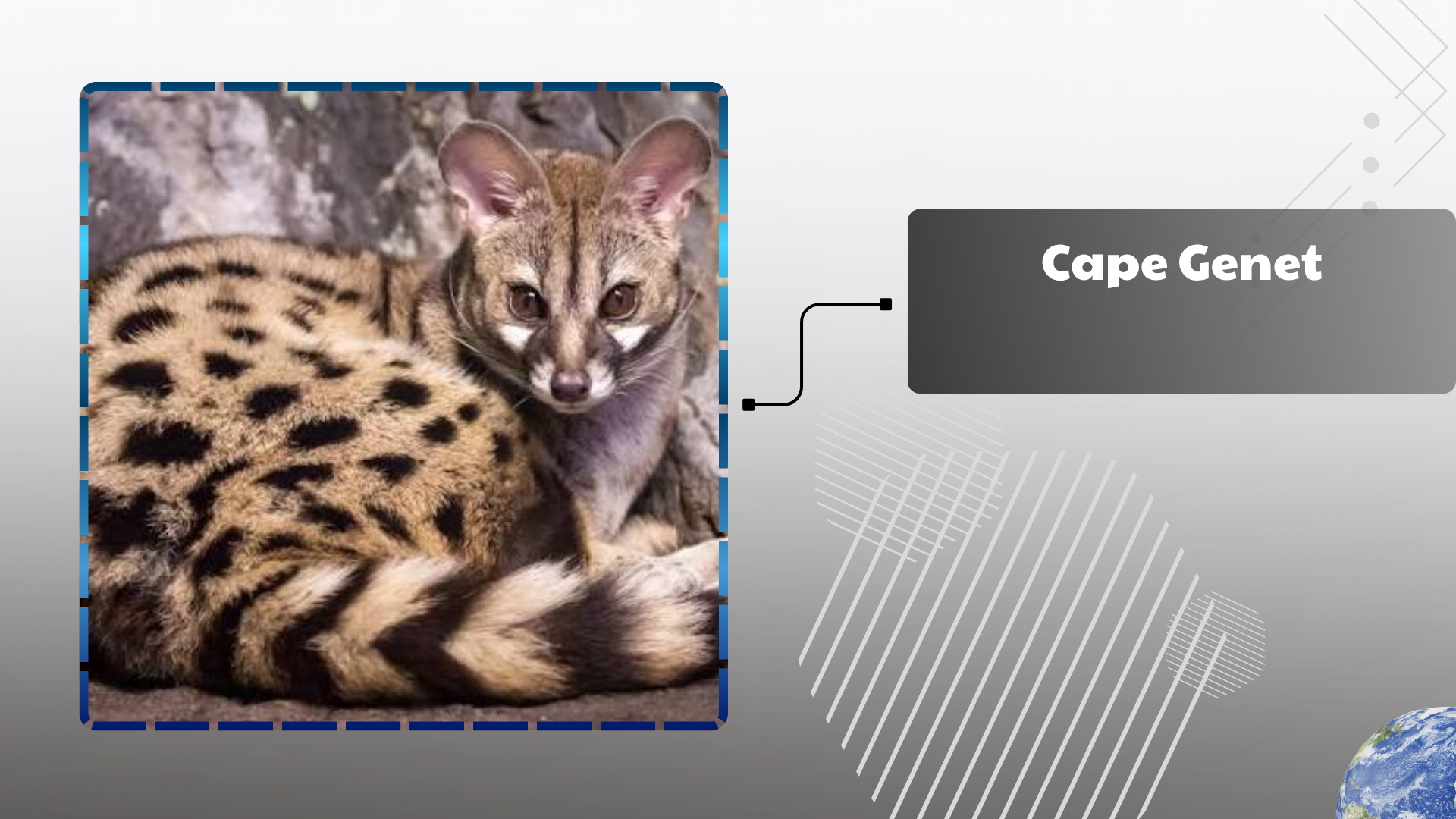
The Cape genet, Genetta tigrina, is a large-spotted species native to southern Africa, particularly South Africa. It occupies forest, fynbos, thicket, woodland, riverine vegetation, farmland, and suburban edges where cover persists. It is sometimes called the South African large-spotted genet.
The animal has a grayish or yellowish coat marked with large black or dark brown spots, a dark dorsal line, and a long, clearly ringed tail. It is larger and more boldly patterned than the feline genet, although judging size without a known reference can be misleading. The Cape genet also tends to favor moister, better-covered habitat than the pale small-spotted form, but local overlap is possible.
Cape genets are accomplished climbers and opportunistic feeders. Their diet includes rodents, insects, birds, reptiles, amphibians, fruit, and other available foods. They may enter roofs or outbuildings, but exclusion is safer than capture: close access points only after confirming that no animal or dependent young remains inside. Never handle a cornered genet, as any wild carnivore may bite in self-defense.
15. Giant Genet
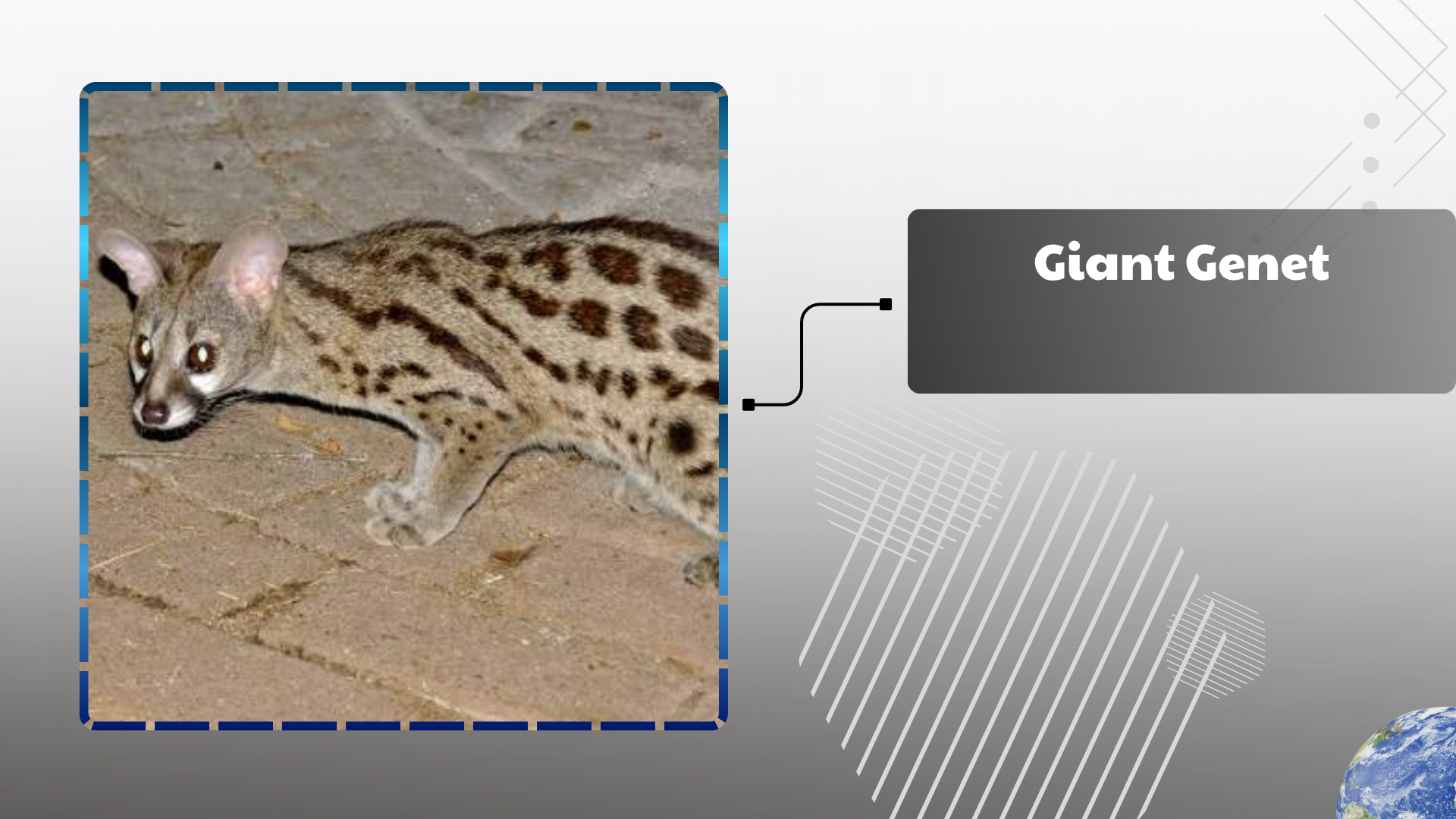
The giant genet, Genetta victoriae, is one of the largest members of the genus. It occurs in the rainforests of Central Africa, especially around the northeastern and central Congo Basin. The scientific name refers to the Lake Victoria region in a historical sense, but the species is primarily associated with humid forest farther west.
It has an elongated but robust body, a yellowish to gray coat, large dark spots that may merge into irregular blotches, dark limbs, and a thick ringed tail. Size, heavy spotting, and forest location help distinguish it, though an image without scale can still be confused with another large-spotted species.
Like other genets, the giant genet is mostly nocturnal and solitary. It searches the forest floor and vegetation for small mammals, insects, birds, reptiles, and other prey. It can occur in secondary forest, but continued forest connectivity remains important. Camera traps offer the best chance of recording it without disturbance. For scientific identification, images of both flanks and the full tail are particularly valuable.
How Are These Types of Genets Classified?
True genets belong to the genus Genetta, within the subfamily Genettinae and family Viverridae. Viverridae also contains civets and related small carnivores. Genets are part of the cat-like branch of the order Carnivora, called Feliformia, but they are not cats and do not belong to Felidae.
Species boundaries within Genetta have changed as researchers have compared skulls, coat patterns, geographic ranges, and genetic evidence. Current mammal taxonomy recognizes 15 species. Older lists may count approximately 14 or 17 because they split, combine, or rename certain populations differently. Two especially important updates are recognition of G. felina apart from G. genetta and use of G. fieldiana for the animal long called G. maculata.
Where Do Genets Live?
Genets are primarily African mammals. Together, the 15 species occupy habitats ranging from Mediterranean scrub and semi-desert to miombo woodland, savanna, montane forest, and lowland rainforest. Species diversity is particularly high in the forest and woodland zones of sub-Saharan Africa.
The common genet is the major exception to an Africa-only description. It also occurs naturally on the Arabian Peninsula and has established populations in southwestern Europe. At a local level, genets need secure resting cover and enough prey. Dense shrubs, hollow trees, rocky crevices, streamside vegetation, and quiet structures can all provide shelter, depending on the species.
How to Identify Different Types of Genets
- Start with location: eliminate species that are not known from the country or region.
- Check habitat: rainforest, dry savanna, miombo woodland, mountain forest, and Mediterranean scrub support different candidates.
- Compare spot size: some species have fine rows of small spots, while others carry large irregular blotches.
- Study the tail: note the number, width, and contrast of pale and dark rings, plus the color of the tip.
- Look at the dorsal stripe: record its width and whether longer hair forms a visible crest.
- Examine the legs: they may be spotted, partly dark, or almost uniformly dark.
- Assess proportions carefully: body size, ear size, and tail thickness help only when the image provides scale.
- Do not trust color alone: flash, infrared cameras, dust, age, and wet fur can all change apparent color.
- Keep original files: uncropped photographs preserve time, location, and extra anatomical details.
- Seek expert review: rare forest genets often cannot be confirmed from one blurred image.
Outdoor Tips for Finding and Observing Genets
- Search quietly after dusk along forest roads, woodland edges, rocky paths, and stream corridors where access is legal.
- Use a red or low-intensity light and limit the time any beam remains on an animal.
- Drive slowly at night and never pursue a genet with a vehicle.
- Listen for movement and scan branches as well as the ground; genets are excellent climbers.
- Use camera traps only with landowner permission and any permits required by local law.
- Never bait a genet with live prey or food that could change its behavior.
- Record date, coordinates, elevation, habitat, and the direction in which the animal traveled.
Safety, Sustainability, and Conservation Notes
Observe genets from a distance. They normally avoid people, but a trapped or cornered animal can defend itself. Do not touch, feed, capture, or attempt to keep a wild genet. Wildlife possession laws vary, and genets have complex behavioral and welfare needs that make them unsuitable pets for most homes.
The greatest long-term pressures are habitat loss, forest fragmentation, road mortality, indiscriminate trapping, and conflict around poultry. Secure coops, remove accessible food waste, and seal building entry points only after animals have left. Avoid poison and unselective traps, which can kill genets and many non-target species. Rare forest specialists benefit from connected native habitat, clean waterways, responsible road use, and well-managed protected areas.
Fun Facts About Genets
- Genets are viverrids, not members of the cat family.
- Their long tails help them balance while climbing.
- Most genet species are active mainly at night.
- The aquatic genet is the only recognized species with a largely unspotted body.
- The common genet occurs on three continents: Africa, Asia, and Europe.
- Genets can raise the hair along their backs when alarmed.
- Many species eat both animal prey and occasional plant foods such as fruit.
- Scent marking is an important form of communication.
- Forest genets are often documented more effectively by camera traps than by direct surveys.
- Taxonomic revisions can change a species count without any new animal evolving overnight.
Final Thoughts on Types of Genets
The 15 recognized types of genets show how one carnivore lineage adapted to dry scrub, savanna, woodland, rainforest, mountains, and even streamside hunting. The common genet is widespread and relatively familiar, while species such as Bourlon’s, Johnston’s, king, and aquatic genets remain difficult to study. For reliable identification, combine coat pattern with range, habitat, tail markings, and body proportions, and treat uncertain records honestly. Careful observation and habitat protection will help researchers and nature enthusiasts learn more about these elegant nocturnal mammals.
Frequently Asked Questions
1. How many types of genets are there?
Current mammal taxonomy recognizes 15 living species in the genus Genetta. Older references may list a different number because species boundaries and scientific names have changed.
2. What is a genet?
A genet is a slender, long-tailed carnivorous mammal in the civet family, Viverridae. Most species have spotted coats and ringed tails.
3. Are genets cats?
No. Genets are cat-like carnivores within Feliformia, but true cats belong to the separate family Felidae.
4. Where are genets found?
They are primarily found in Africa. The common genet also occurs on the Arabian Peninsula and in southwestern Europe.
5. Which genet has the widest range?
The common genet has the broadest geographic distribution, spanning much of Africa and extending into Arabia and Europe.
6. Which genet is the rarest?
There is no simple answer because several species are poorly surveyed. The king genet, Bourlon’s genet, Johnston’s genet, and aquatic genet are among the most difficult to document.
7. Why do some sources say there are 17 genet species?
They may follow an older or alternative classification that recognizes additional splits or names. A species count should always be tied to a named taxonomic authority and date.
8. What happened to Genetta maculata?
The widespread large-spotted genet is now listed as Genetta fieldiana in current mammal taxonomy because the name maculata was preoccupied under zoological nomenclature.
9. What do genets eat?
Most eat rodents, insects, birds, reptiles, amphibians, eggs, and other small prey. Some also consume fruit, carrion, or other seasonally available foods.
10. Are genets nocturnal?
Yes, most genet activity occurs at night, although an individual may occasionally move during daylight.
11. Can genets climb trees?
Yes. Their flexible bodies, agile feet, and long balancing tails make them skilled climbers, though they also forage extensively on the ground.
12. Do genets swim?
Genets can cross water when necessary. The aquatic genet is particularly associated with forest streams, but it should not be described as an otter-like specialist without qualification.
13. What is the difference between a genet and a civet?
Both are viverrids, but genets belong to Genetta and usually have slimmer bodies and longer ringed tails. The word civet is used for several other genera with different builds and markings.
14. What is the difference between a genet and a mongoose?
They belong to different families. Genets are viverrids, while mongooses are herpestids, although both are feliform carnivores.
15. How can I tell a small-spotted genet from a large-spotted genet?
Compare the size and arrangement of flank spots, the dorsal stripe, tail rings, body build, habitat, and location. Do not rely on spot size alone.
16. Which species is the South African small-spotted genet?
The current scientific name is Genetta felina, also called the feline genet. Older guides may place it within the common genet.
17. Which species is the South African large-spotted genet?
The Cape genet, Genetta tigrina, is the large-spotted species commonly encountered in parts of South Africa.
18. Are genets dangerous to people?
Genets generally avoid people. Any wild animal may bite or scratch if captured, injured, or cornered, so it should be given space.
19. Can genets be kept as pets?
Wild genets are not suitable household pets for most people. Their nocturnal behavior, scent marking, diet, space needs, and legal status create serious welfare and management challenges.
20. Do genets attack poultry?
They may take small poultry when a coop is accessible. Strong mesh, secure doors, covered runs, and nighttime confinement prevent conflict more effectively than lethal control.
21. What should I do if a genet enters my roof?
Identify its entry point, wait until it leaves, confirm that no young remain, and then seal access. A local wildlife professional can help when breeding animals or difficult structures are involved.
22. How long is a genet’s tail?
In many species, the tail is close to the length of the head and body. Exact measurements vary among species, sex, and individual.
23. Why do genets have ringed tails?
Tail pattern may aid visual signaling or camouflage, while the tail itself is especially important for balance. The precise function of the rings has not been fully demonstrated for every species.
24. Do all genets have spots?
Almost all recognized species have conspicuous spots or blotches. The aquatic genet is the striking exception, with a largely uniform reddish-brown body.
25. How do genets communicate?
They use scent marks, body postures, and vocal sounds. Chemical communication is especially useful for solitary animals active in darkness.
26. Are genets endangered?
Conservation status varies by species. Several widespread genets remain common, while restricted forest species face greater uncertainty or pressure from habitat loss.
27. What predators hunt genets?
Depending on region, genets may be taken by large owls, pythons, leopards, jackals, and other larger predators. Humans and road traffic also cause mortality.
28. How can I photograph a genet responsibly?
Keep your distance, use low-intensity lighting, avoid flash at close range, never chase the animal, and do not bait it. Preserve the original image data for later identification.
29. What details should accompany a genet sighting?
Record date, exact location, elevation, habitat, behavior, apparent size, and photographs showing the flanks, legs, back, and full tail.
30. Can one photograph identify every genet species?
No. Several large-spotted forest genets look very similar, and some records need multiple images, measurements, genetic data, or expert assessment.
31. What is the best place to see a genet?
Protected areas with nighttime wildlife drives offer good opportunities, but the best region depends on the species. Common, Cape, and rusty-spotted genets are more likely to be encountered than rare forest specialists.
32. Why are camera traps useful for genet research?
They record shy nocturnal animals with little disturbance and can document time, habitat use, and repeated presence. Correct placement and legal permission are essential.
33. Do genets live alone?
Adults are usually described as solitary outside mating and parental care, although home ranges may overlap and individuals communicate through scent.
34. Are baby genets born with spots?
Young genets develop the characteristic species pattern early. They remain dependent on their mother until they can travel and hunt effectively.
35. How can people help conserve genets?
Protect native habitat, keep waterways clean, drive carefully at night, secure poultry without poison, support responsible protected areas, and report reliable sightings to appropriate research groups.