

The name batfish is used for two very different groups of marine fish. Divers and aquarists often mean the tall, disk-shaped reef fishes in the genus Platax, while biologists also use batfish for the bottom-walking anglerfishes in the family Ogcocephalidae. This guide brings both meanings together, covering 80 types of batfish with practical notes on appearance, habitat, behavior, identification, and aquarium relevance.
What Are the Main Types of Batfish?
The main types are Platax reef batfishes and walking or deep-sea batfishes. Platax species are tall, laterally compressed swimmers found around Indo-Pacific reefs, lagoons, mangroves, and wrecks. Walking batfishes are flattened anglerfish that rest or “walk” on the seafloor with limb-like fins, often in deep tropical and subtropical water.
| Group | Typical Body Shape | Main Habitat | Aquarium Relevance |
|---|---|---|---|
| Platax batfishes | Tall, round or diamond-shaped, strongly compressed | Indo-Pacific reefs, lagoons, bays, wrecks | Only for very large, mature marine systems |
| Ogcocephalid batfishes | Flat, round or triangular, armored, bottom-walking | Continental shelves and slopes; many are deep-sea species | Mostly unsuitable or unavailable for home aquariums |
1. Humpback Batfish
Humpback Batfish (Platax batavianus) is identified by a strongly arched juvenile profile and zebra-like bands. It occurs in Indo-West Pacific reefs, where it is associated with juveniles shelter around reef structure; adults move over deeper reef and open substrates. Unlike the bottom-walking batfishes, this species is a tall-bodied reef fish that swims normally in open water. It is an opportunistic omnivore that may take algae, small invertebrates, and other available foods. It grows large, needs excellent marine filtration and swimming room, and should not be treated as a beginner reef-tank fish.
2. Golden Spadefish
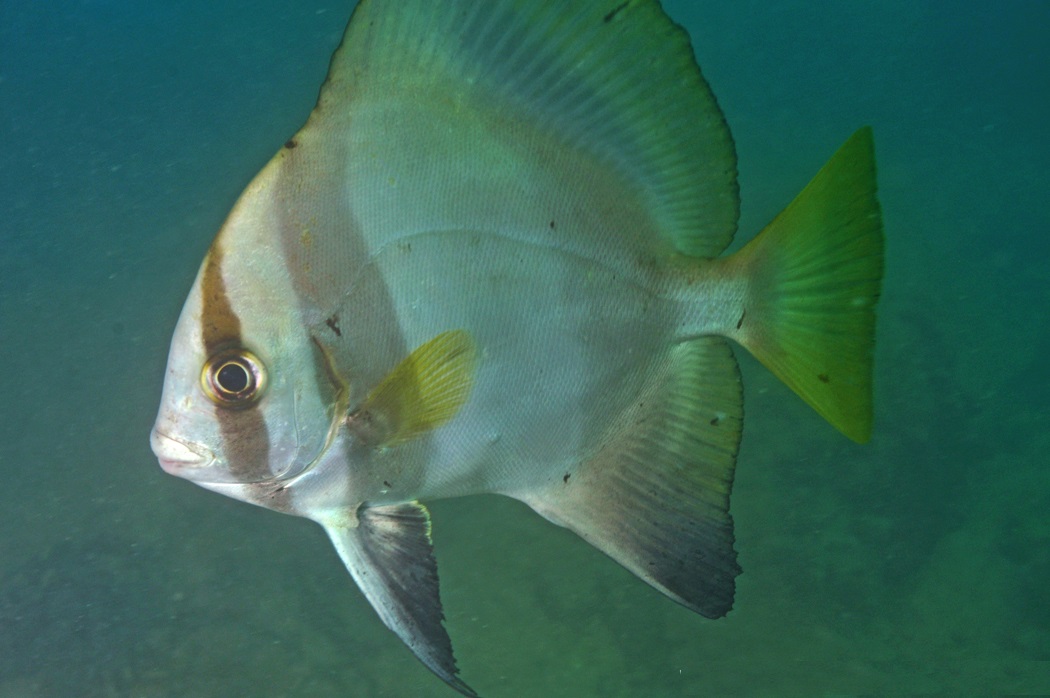
Golden Spadefish (Platax boersii) is identified by a silvery-gold body with a high, compressed shape. It occurs in Indo-West Pacific coastal waters, where it is associated with reefs, bays, and sheltered coastal areas. Juveniles and adults can look so different that beginners may mistake them for separate species. It is an opportunistic omnivore that may take algae, small invertebrates, and other available foods. It grows large, needs excellent marine filtration and swimming room, and should not be treated as a beginner reef-tank fish.

3. Orbicular Batfish
Orbicular Batfish (Platax orbicularis) is identified by an almost circular body and tall dorsal and anal fins. It occurs in Indo-Pacific, where it is associated with mangroves and lagoons as juveniles, then channels, wrecks, and outer reefs. Its laterally compressed body lets it turn precisely around reef structure, wrecks, and sheltered coastal habitat. It is an opportunistic omnivore that may take algae, small invertebrates, and other available foods. It grows large, needs excellent marine filtration and swimming room, and should not be treated as a beginner reef-tank fish.
4. Dusky Batfish
Dusky Batfish (Platax pinnatus) is identified by a black juvenile body edged in vivid orange-red. It occurs in western Pacific, where it is associated with protected juvenile habitat followed by reef-associated adult habitat. This is the batfish group most likely to appear in public aquariums and advanced marine-fish collections. It is an opportunistic omnivore that may take algae, small invertebrates, and other available foods. It grows large, needs excellent marine filtration and swimming room, and should not be treated as a beginner reef-tank fish.
5. Longfin Batfish
Longfin Batfish (Platax teira) is identified by very tall juvenile fins and a dark blotch behind the pectoral region. It occurs in Indo-West Pacific, where it is associated with bays, lagoons, wrecks, floating debris, and seaward reefs. Unlike the bottom-walking batfishes, this species is a tall-bodied reef fish that swims normally in open water. It is an opportunistic omnivore that may take algae, small invertebrates, and other available foods. It grows large, needs excellent marine filtration and swimming room, and should not be treated as a beginner reef-tank fish.

6. Coelophrys arca
Coelophrys arca (Coelophrys arca) is identified by a compact, box-like head and reduced walking fins. It occurs in western Pacific, where it is associated with deep water on or above the continental slope. Its lure is a modified fin structure kept near the snout and used at close range rather than for fast pursuit. Like other walking batfishes, it is expected to take small crustaceans, worms, mollusks, and fishes that come within reach. It is not a normal home-aquarium species; most records come from research collections, trawls, submersibles, or specialized public aquariums.
7. Bradbury’s Batfish
Bradbury’s Batfish (Coelophrys bradburyae) is identified by a tiny, soft-bodied deep-sea form. It occurs in western Pacific, where it is associated with deep slope habitat. The body is armored with tubercles or bucklers that provide camouflage and protection on the seafloor. Like other walking batfishes, it is expected to take small crustaceans, worms, mollusks, and fishes that come within reach. It is not a normal home-aquarium species; most records come from research collections, trawls, submersibles, or specialized public aquariums.
8. Shorttail Batfish
Shorttail Batfish (Coelophrys brevicaudata) is identified by a notably short tail behind the rounded body. It occurs in eastern Indian Ocean and western Pacific, where it is associated with deep ocean slope. Because it is a slow, bottom-associated predator, shape and skin texture are often more useful for identification than bright color. Like other walking batfishes, it is expected to take small crustaceans, worms, mollusks, and fishes that come within reach. It is not a normal home-aquarium species; most records come from research collections, trawls, submersibles, or specialized public aquariums.
9. Short-footed Batfish
Short-footed Batfish (Coelophrys brevipes) is identified by small pelvic fins and a compact body. It occurs in western Pacific, where it is associated with deep water. It belongs to the anglerfish family Ogcocephalidae and moves mainly by using stout pectoral and pelvic fins against the bottom. Like other walking batfishes, it is expected to take small crustaceans, worms, mollusks, and fishes that come within reach. It is not a normal home-aquarium species; most records come from research collections, trawls, submersibles, or specialized public aquariums.
10. Small-footed Batfish
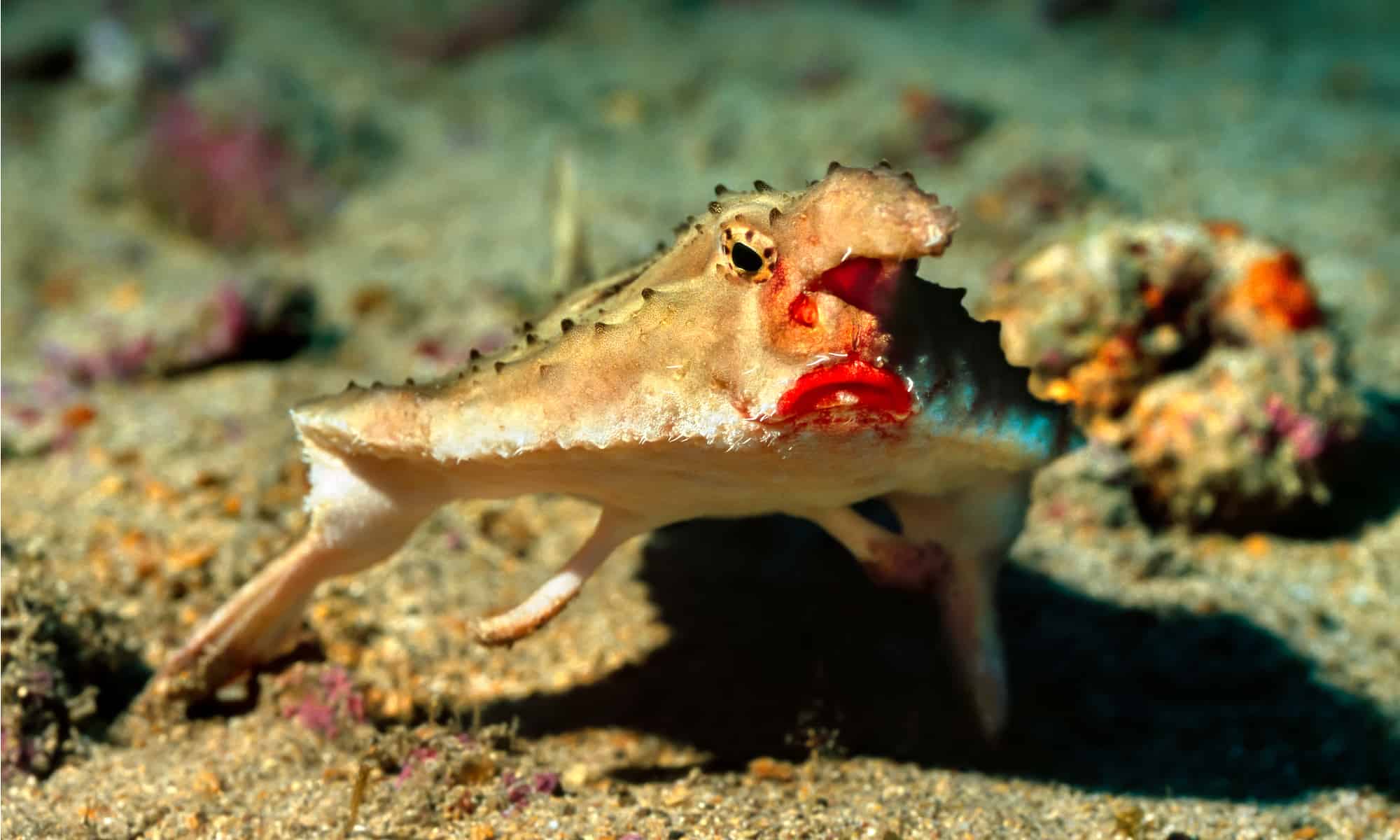
Small-footed Batfish (Coelophrys micropus) is identified by a small body with reduced limb-like fins. It occurs in Indo-West Pacific, where it is associated with deep bathyal water. Its lure is a modified fin structure kept near the snout and used at close range rather than for fast pursuit. Like other walking batfishes, it is expected to take small crustaceans, worms, mollusks, and fishes that come within reach. It is not a normal home-aquarium species; most records come from research collections, trawls, submersibles, or specialized public aquariums.
11. Soft Batfish
Soft Batfish (Coelophrys mollis) is identified by soft contours and a less heavily armored appearance. It occurs in western Pacific, where it is associated with deep slope waters. The body is armored with tubercles or bucklers that provide camouflage and protection on the seafloor. Like other walking batfishes, it is expected to take small crustaceans, worms, mollusks, and fishes that come within reach. It is not a normal home-aquarium species; most records come from research collections, trawls, submersibles, or specialized public aquariums.
12. Oblong Batfish
Oblong Batfish (Coelophrys oblonga) is identified by an elongated rather than round body outline. It occurs in western Pacific, where it is associated with deep benthic or benthopelagic habitat. Because it is a slow, bottom-associated predator, shape and skin texture are often more useful for identification than bright color. Like other walking batfishes, it is expected to take small crustaceans, worms, mollusks, and fishes that come within reach. It is not a normal home-aquarium species; most records come from research collections, trawls, submersibles, or specialized public aquariums.

13. Ringed Deep-sea Batfish
Ringed Deep-sea Batfish (Dibranchus accinctus) is identified by a flattened disc with spiny tubercles. It occurs in eastern Pacific, where it is associated with deep continental-slope bottom. It belongs to the anglerfish family Ogcocephalidae and moves mainly by using stout pectoral and pelvic fins against the bottom. Like other walking batfishes, it is expected to take small crustaceans, worms, mollusks, and fishes that come within reach. It is not a normal home-aquarium species; most records come from research collections, trawls, submersibles, or specialized public aquariums.
14. Atlantic Batfish
Atlantic Batfish (Dibranchus atlanticus) is identified by an oval flattened disc and stout bottom-walking fins. It occurs in Atlantic Ocean, where it is associated with upper to middle continental slope. Its lure is a modified fin structure kept near the snout and used at close range rather than for fast pursuit. Like other walking batfishes, it is expected to take small crustaceans, worms, mollusks, and fishes that come within reach. It is not a normal home-aquarium species; most records come from research collections, trawls, submersibles, or specialized public aquariums.
15. Slender Deep-sea Batfish
Slender Deep-sea Batfish (Dibranchus cracens) is identified by a comparatively slender disc and tail. It occurs in eastern Pacific, where it is associated with deep seafloor. The body is armored with tubercles or bucklers that provide camouflage and protection on the seafloor. Like other walking batfishes, it is expected to take small crustaceans, worms, mollusks, and fishes that come within reach. It is not a normal home-aquarium species; most records come from research collections, trawls, submersibles, or specialized public aquariums.
16. Discordant Batfish
Discordant Batfish (Dibranchus discors) is identified by a distinctive combination of disc shape and body spines. It occurs in eastern Pacific, where it is associated with deep benthic habitat. Because it is a slow, bottom-associated predator, shape and skin texture are often more useful for identification than bright color. Like other walking batfishes, it is expected to take small crustaceans, worms, mollusks, and fishes that come within reach. It is not a normal home-aquarium species; most records come from research collections, trawls, submersibles, or specialized public aquariums.
17. Hedgehog Batfish
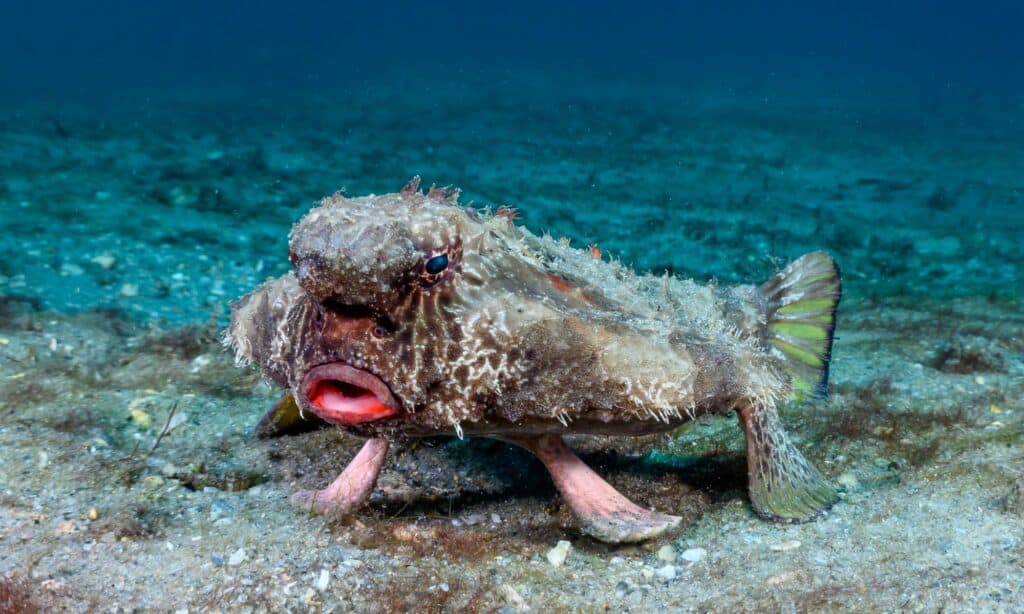
Hedgehog Batfish (Dibranchus erinaceus) is identified by prominent thorn-like tubercles. It occurs in Pacific Ocean, where it is associated with deep continental slope. It belongs to the anglerfish family Ogcocephalidae and moves mainly by using stout pectoral and pelvic fins against the bottom. Like other walking batfishes, it is expected to take small crustaceans, worms, mollusks, and fishes that come within reach. It is not a normal home-aquarium species; most records come from research collections, trawls, submersibles, or specialized public aquariums.
18. Spiny Deep-sea Batfish
Spiny Deep-sea Batfish (Dibranchus hystrix) is identified by dense, sharp-looking body tubercles. It occurs in Indo-Pacific, where it is associated with deep water over soft bottom. Its lure is a modified fin structure kept near the snout and used at close range rather than for fast pursuit. Like other walking batfishes, it is expected to take small crustaceans, worms, mollusks, and fishes that come within reach. It is not a normal home-aquarium species; most records come from research collections, trawls, submersibles, or specialized public aquariums.
19. Japanese Seabat
Japanese Seabat (Dibranchus japonicus) is identified by a broad disc and heavily textured skin. It occurs in northwestern Pacific, where it is associated with deep waters near Japan. The body is armored with tubercles or bucklers that provide camouflage and protection on the seafloor. Like other walking batfishes, it is expected to take small crustaceans, worms, mollusks, and fishes that come within reach. It is not a normal home-aquarium species; most records come from research collections, trawls, submersibles, or specialized public aquariums.
20. Nosed Deep-sea Batfish
Nosed Deep-sea Batfish (Dibranchus nasutus) is identified by an extended snout above the small mouth. It occurs in Indian Ocean, where it is associated with deep slope habitat. Because it is a slow, bottom-associated predator, shape and skin texture are often more useful for identification than bright color. Like other walking batfishes, it is expected to take small crustaceans, worms, mollusks, and fishes that come within reach. It is not a normal home-aquarium species; most records come from research collections, trawls, submersibles, or specialized public aquariums.
21. Bare-throat Batfish
Bare-throat Batfish (Dibranchus nudivomer) is identified by reduced scaling around the throat region. It occurs in Pacific Ocean, where it is associated with deep seafloor. It belongs to the anglerfish family Ogcocephalidae and moves mainly by using stout pectoral and pelvic fins against the bottom. Like other walking batfishes, it is expected to take small crustaceans, worms, mollusks, and fishes that come within reach. It is not a normal home-aquarium species; most records come from research collections, trawls, submersibles, or specialized public aquariums.
22. Sparse-spined Batfish
Sparse-spined Batfish (Dibranchus sparsus) is identified by more widely spaced tubercles than close relatives. It occurs in eastern Pacific, where it is associated with deep bottom habitat. Its lure is a modified fin structure kept near the snout and used at close range rather than for fast pursuit. Like other walking batfishes, it is expected to take small crustaceans, worms, mollusks, and fishes that come within reach. It is not a normal home-aquarium species; most records come from research collections, trawls, submersibles, or specialized public aquariums.
23. Spiny Batfish
Spiny Batfish (Dibranchus spinosus) is identified by strong body spines and an armored texture. It occurs in Pacific Ocean, where it is associated with deep continental slope. The body is armored with tubercles or bucklers that provide camouflage and protection on the seafloor. Like other walking batfishes, it is expected to take small crustaceans, worms, mollusks, and fishes that come within reach. It is not a normal home-aquarium species; most records come from research collections, trawls, submersibles, or specialized public aquariums.

24. Sponge Batfish
Sponge Batfish (Dibranchus spongiosa) is identified by a rough, sponge-like body surface. It occurs in eastern Pacific, where it is associated with deep benthic habitat. Because it is a slow, bottom-associated predator, shape and skin texture are often more useful for identification than bright color. Like other walking batfishes, it is expected to take small crustaceans, worms, mollusks, and fishes that come within reach. It is not a normal home-aquarium species; most records come from research collections, trawls, submersibles, or specialized public aquariums.
25. Tremendous Batfish
Tremendous Batfish (Dibranchus tremendus) is identified by a relatively large body for the genus. It occurs in central Atlantic, where it is associated with deep water below many other Atlantic batfishes. It belongs to the anglerfish family Ogcocephalidae and moves mainly by using stout pectoral and pelvic fins against the bottom. Like other walking batfishes, it is expected to take small crustaceans, worms, mollusks, and fishes that come within reach. It is not a normal home-aquarium species; most records come from research collections, trawls, submersibles, or specialized public aquariums.
26. Velvety Batfish
Velvety Batfish (Dibranchus velutinus) is identified by fine skin texture between the body tubercles. It occurs in eastern Pacific, where it is associated with deep seafloor. Its lure is a modified fin structure kept near the snout and used at close range rather than for fast pursuit. Like other walking batfishes, it is expected to take small crustaceans, worms, mollusks, and fishes that come within reach. It is not a normal home-aquarium species; most records come from research collections, trawls, submersibles, or specialized public aquariums.
27. Pink Shortnose Seabat
Pink Shortnose Seabat (Halicmetus drypus) is identified by a pinkish body and very short snout. It occurs in Indo-West Pacific, where it is associated with deep shelf and upper slope. The body is armored with tubercles or bucklers that provide camouflage and protection on the seafloor. Like other walking batfishes, it is expected to take small crustaceans, worms, mollusks, and fishes that come within reach. It is not a normal home-aquarium species; most records come from research collections, trawls, submersibles, or specialized public aquariums.
28. Granular Shortnose Seabat
Granular Shortnose Seabat (Halicmetus granulosus) is identified by granular tubercles across the flattened disc. It occurs in western Pacific, where it is associated with deep bottom habitat. Because it is a slow, bottom-associated predator, shape and skin texture are often more useful for identification than bright color. Like other walking batfishes, it is expected to take small crustaceans, worms, mollusks, and fishes that come within reach. It is not a normal home-aquarium species; most records come from research collections, trawls, submersibles, or specialized public aquariums.
29. Black Shortnose Seabat
Black Shortnose Seabat (Halicmetus niger) is identified by dark coloration and a squared, flattened head. It occurs in western Pacific, where it is associated with deep slope waters. It belongs to the anglerfish family Ogcocephalidae and moves mainly by using stout pectoral and pelvic fins against the bottom. Like other walking batfishes, it is expected to take small crustaceans, worms, mollusks, and fishes that come within reach. It is not a normal home-aquarium species; most records come from research collections, trawls, submersibles, or specialized public aquariums.
30. Marbled Shortnose Seabat
Marbled Shortnose Seabat (Halicmetus marmoratus) is identified by mottled markings over a flattened disc. It occurs in Indo-West Pacific, where it is associated with deep benthic habitat. Its lure is a modified fin structure kept near the snout and used at close range rather than for fast pursuit. Like other walking batfishes, it is expected to take small crustaceans, worms, mollusks, and fishes that come within reach. It is not a normal home-aquarium species; most records come from research collections, trawls, submersibles, or specialized public aquariums.
31. Odysseus Shortnose Seabat
Odysseus Shortnose Seabat (Halicmetus odysseus) is identified by a compact short-snouted profile. It occurs in western Pacific, where it is associated with deep slope habitat. The body is armored with tubercles or bucklers that provide camouflage and protection on the seafloor. Like other walking batfishes, it is expected to take small crustaceans, worms, mollusks, and fishes that come within reach. It is not a normal home-aquarium species; most records come from research collections, trawls, submersibles, or specialized public aquariums.
32. Reticulated Shortnose Seabat
Reticulated Shortnose Seabat (Halicmetus reticulatus) is identified by net-like markings and fine tubercles. It occurs in western Pacific, where it is associated with deep continental slope. Because it is a slow, bottom-associated predator, shape and skin texture are often more useful for identification than bright color. Like other walking batfishes, it is expected to take small crustaceans, worms, mollusks, and fishes that come within reach. It is not a normal home-aquarium species; most records come from research collections, trawls, submersibles, or specialized public aquariums.
33. Red Shortnose Seabat
Red Shortnose Seabat (Halicmetus ruber) is identified by reddish coloration and a broad front edge. It occurs in Indian Ocean, where it is associated with deep shelf and slope. It belongs to the anglerfish family Ogcocephalidae and moves mainly by using stout pectoral and pelvic fins against the bottom. Like other walking batfishes, it is expected to take small crustaceans, worms, mollusks, and fishes that come within reach. It is not a normal home-aquarium species; most records come from research collections, trawls, submersibles, or specialized public aquariums.
34. West Australian Shortnose Seabat
West Australian Shortnose Seabat (Halicmetus westraliensis) is identified by a broad flattened head and regional western Australian range. It occurs in eastern Indian Ocean, where it is associated with deep bottom waters off Western Australia. Its lure is a modified fin structure kept near the snout and used at close range rather than for fast pursuit. Like other walking batfishes, it is expected to take small crustaceans, worms, mollusks, and fishes that come within reach. It is not a normal home-aquarium species; most records come from research collections, trawls, submersibles, or specialized public aquariums.
35. Spiny Seabat
Spiny Seabat (Halieutaea brevicauda) is identified by a short tail and conspicuous armored tubercles. It occurs in western Pacific, where it is associated with continental shelf and slope. The body is armored with tubercles or bucklers that provide camouflage and protection on the seafloor. Like other walking batfishes, it is expected to take small crustaceans, worms, mollusks, and fishes that come within reach. It is not a normal home-aquarium species; most records come from research collections, trawls, submersibles, or specialized public aquariums.
36. Scarlet Seabat
Scarlet Seabat (Halieutaea coccinea) is identified by bright red to scarlet coloration. It occurs in Indo-West Pacific, where it is associated with deep soft-bottom habitat. Because it is a slow, bottom-associated predator, shape and skin texture are often more useful for identification than bright color. Like other walking batfishes, it is expected to take small crustaceans, worms, mollusks, and fishes that come within reach. It is not a normal home-aquarium species; most records come from research collections, trawls, submersibles, or specialized public aquariums.
37. Camel-backed Seabat
Camel-backed Seabat (Halieutaea dromedaria) is identified by a raised central body contour. It occurs in western Pacific, where it is associated with deep slope waters. It belongs to the anglerfish family Ogcocephalidae and moves mainly by using stout pectoral and pelvic fins against the bottom. Like other walking batfishes, it is expected to take small crustaceans, worms, mollusks, and fishes that come within reach. It is not a normal home-aquarium species; most records come from research collections, trawls, submersibles, or specialized public aquariums.
38. Circular Seabat
Circular Seabat (Halieutaea fitzsimonsi) is identified by a broad circular disc. It occurs in western Indian Ocean, where it is associated with deep benthic habitat. Its lure is a modified fin structure kept near the snout and used at close range rather than for fast pursuit. Like other walking batfishes, it is expected to take small crustaceans, worms, mollusks, and fishes that come within reach. It is not a normal home-aquarium species; most records come from research collections, trawls, submersibles, or specialized public aquariums.
39. Smoky Seabat
Smoky Seabat (Halieutaea fumosa) is identified by dusky, smoky coloration. It occurs in Indo-West Pacific, where it is associated with deep shelf and slope. The body is armored with tubercles or bucklers that provide camouflage and protection on the seafloor. Like other walking batfishes, it is expected to take small crustaceans, worms, mollusks, and fishes that come within reach. It is not a normal home-aquarium species; most records come from research collections, trawls, submersibles, or specialized public aquariums.
40. Hairy Seabat
Hairy Seabat (Halieutaea hancocki) is identified by fine, hair-like spines on the body surface. It occurs in eastern Pacific, where it is associated with deep benthic habitat. Because it is a slow, bottom-associated predator, shape and skin texture are often more useful for identification than bright color. Like other walking batfishes, it is expected to take small crustaceans, worms, mollusks, and fishes that come within reach. It is not a normal home-aquarium species; most records come from research collections, trawls, submersibles, or specialized public aquariums.
41. Indian Handfish
Indian Handfish (Halieutaea indica) is identified by a rounded disc and sturdy limb-like fins. It occurs in Indian Ocean, where it is associated with deep soft-bottom habitat. It belongs to the anglerfish family Ogcocephalidae and moves mainly by using stout pectoral and pelvic fins against the bottom. Like other walking batfishes, it is expected to take small crustaceans, worms, mollusks, and fishes that come within reach. It is not a normal home-aquarium species; most records come from research collections, trawls, submersibles, or specialized public aquariums.
42. African Circular Seabat
African Circular Seabat (Halieutaea liogaster) is identified by a round disc and smoother underside. It occurs in southeastern Atlantic and western Indian Ocean, where it is associated with deep slope water. Its lure is a modified fin structure kept near the snout and used at close range rather than for fast pursuit. Like other walking batfishes, it is expected to take small crustaceans, worms, mollusks, and fishes that come within reach. It is not a normal home-aquarium species; most records come from research collections, trawls, submersibles, or specialized public aquariums.
43. Black Seabat
Black Seabat (Halieutaea nigra) is identified by very dark coloration. It occurs in Indian Ocean, where it is associated with deep seafloor. The body is armored with tubercles or bucklers that provide camouflage and protection on the seafloor. Like other walking batfishes, it is expected to take small crustaceans, worms, mollusks, and fishes that come within reach. It is not a normal home-aquarium species; most records come from research collections, trawls, submersibles, or specialized public aquariums.
44. Reticulate Batfish
Reticulate Batfish (Halieutaea retifera) is identified by a netted color pattern. It occurs in Pacific Ocean, where it is associated with deep continental slope. Because it is a slow, bottom-associated predator, shape and skin texture are often more useful for identification than bright color. Like other walking batfishes, it is expected to take small crustaceans, worms, mollusks, and fishes that come within reach. It is not a normal home-aquarium species; most records come from research collections, trawls, submersibles, or specialized public aquariums.
45. Starry Seabat
Starry Seabat (Halieutaea stellata) is identified by star-like spots and a broad disc. It occurs in Indo-West Pacific, where it is associated with shelf and slope habitat. It belongs to the anglerfish family Ogcocephalidae and moves mainly by using stout pectoral and pelvic fins against the bottom. Like other walking batfishes, it is expected to take small crustaceans, worms, mollusks, and fishes that come within reach. It is not a normal home-aquarium species; most records come from research collections, trawls, submersibles, or specialized public aquariums.

46. Rough-skin Seabat
Rough-skin Seabat (Halieutaea xenoderma) is identified by unusually textured skin and body armoring. It occurs in western Pacific, where it is associated with deep benthic habitat. Its lure is a modified fin structure kept near the snout and used at close range rather than for fast pursuit. Like other walking batfishes, it is expected to take small crustaceans, worms, mollusks, and fishes that come within reach. It is not a normal home-aquarium species; most records come from research collections, trawls, submersibles, or specialized public aquariums.
47. Pancake Batfish
Pancake Batfish (Halieutichthys aculeatus) is identified by a very flat, round pancake-like body. It occurs in western Atlantic, where it is associated with sandy and muddy shelf bottoms. The body is armored with tubercles or bucklers that provide camouflage and protection on the seafloor. Like other walking batfishes, it is expected to take small crustaceans, worms, mollusks, and fishes that come within reach. It is not a normal home-aquarium species; most records come from research collections, trawls, submersibles, or specialized public aquariums.
48. Spiny Batfish
Spiny Batfish (Halieutichthys bispinosus) is identified by two notable spine features and a flattened body. It occurs in Gulf of Mexico, where it is associated with continental-shelf bottom. Because it is a slow, bottom-associated predator, shape and skin texture are often more useful for identification than bright color. Like other walking batfishes, it is expected to take small crustaceans, worms, mollusks, and fishes that come within reach. It is not a normal home-aquarium species; most records come from research collections, trawls, submersibles, or specialized public aquariums.
49. Caribbean Batfish
Caribbean Batfish (Halieutichthys caribbaeus) is identified by a rounded disc adapted to bottom walking. It occurs in Caribbean and western Atlantic, where it is associated with shallow to moderate-depth soft bottom. It belongs to the anglerfish family Ogcocephalidae and moves mainly by using stout pectoral and pelvic fins against the bottom. Like other walking batfishes, it is expected to take small crustaceans, worms, mollusks, and fishes that come within reach. It is not a normal home-aquarium species; most records come from research collections, trawls, submersibles, or specialized public aquariums.
50. Louisiana Pancake Batfish
Louisiana Pancake Batfish (Halieutichthys intermedius) is identified by a small pancake-shaped body with regional traits. It occurs in northern Gulf of Mexico, where it is associated with continental-shelf seafloor. Its lure is a modified fin structure kept near the snout and used at close range rather than for fast pursuit. Like other walking batfishes, it is expected to take small crustaceans, worms, mollusks, and fishes that come within reach. It is not a normal home-aquarium species; most records come from research collections, trawls, submersibles, or specialized public aquariums.
51. Andriashev’s Deep-sea Batfish
Andriashev’s Deep-sea Batfish (Halieutopsis andriashevi) is identified by a small deep-water disc with a specialized lure. It occurs in Indo-Pacific, where it is associated with deep continental slope. The body is armored with tubercles or bucklers that provide camouflage and protection on the seafloor. Like other walking batfishes, it is expected to take small crustaceans, worms, mollusks, and fishes that come within reach. It is not a normal home-aquarium species; most records come from research collections, trawls, submersibles, or specialized public aquariums.
52. Broad-snout Deep-sea Batfish
Broad-snout Deep-sea Batfish (Halieutopsis bathyoreos) is identified by a wide snout and compact disc. It occurs in Indo-Pacific, where it is associated with deep seafloor. Because it is a slow, bottom-associated predator, shape and skin texture are often more useful for identification than bright color. Like other walking batfishes, it is expected to take small crustaceans, worms, mollusks, and fishes that come within reach. It is not a normal home-aquarium species; most records come from research collections, trawls, submersibles, or specialized public aquariums.
53. Spiny Deep-sea Batfish
Spiny Deep-sea Batfish (Halieutopsis echinoderma) is identified by prominent spines over the body surface. It occurs in western Pacific, where it is associated with deep benthic habitat. It belongs to the anglerfish family Ogcocephalidae and moves mainly by using stout pectoral and pelvic fins against the bottom. Like other walking batfishes, it is expected to take small crustaceans, worms, mollusks, and fishes that come within reach. It is not a normal home-aquarium species; most records come from research collections, trawls, submersibles, or specialized public aquariums.
54. Galathea Deep-sea Batfish
Galathea Deep-sea Batfish (Halieutopsis galatea) is identified by a small, armored body known from deep expeditions. It occurs in Indo-Pacific, where it is associated with deep slope water. Its lure is a modified fin structure kept near the snout and used at close range rather than for fast pursuit. Like other walking batfishes, it is expected to take small crustaceans, worms, mollusks, and fishes that come within reach. It is not a normal home-aquarium species; most records come from research collections, trawls, submersibles, or specialized public aquariums.

55. Ingers’ Deep-sea Batfish
Ingers’ Deep-sea Batfish (Halieutopsis ingerorum) is identified by a compact disc and fine tubercles. It occurs in Indo-Pacific, where it is associated with deep benthic habitat. The body is armored with tubercles or bucklers that provide camouflage and protection on the seafloor. Like other walking batfishes, it is expected to take small crustaceans, worms, mollusks, and fishes that come within reach. It is not a normal home-aquarium species; most records come from research collections, trawls, submersibles, or specialized public aquariums.
56. Kawai’s Deep-sea Batfish
Kawai’s Deep-sea Batfish (Halieutopsis kawaii) is identified by a distinctive snout and body-spine pattern. It occurs in western Pacific, where it is associated with deep slope habitat. Because it is a slow, bottom-associated predator, shape and skin texture are often more useful for identification than bright color. Like other walking batfishes, it is expected to take small crustaceans, worms, mollusks, and fishes that come within reach. It is not a normal home-aquarium species; most records come from research collections, trawls, submersibles, or specialized public aquariums.
57. Margaret’s Deep-sea Batfish
Margaret’s Deep-sea Batfish (Halieutopsis margaretae) is identified by a small triangular-to-rounded disc. It occurs in northwestern Pacific, where it is associated with deep seafloor. It belongs to the anglerfish family Ogcocephalidae and moves mainly by using stout pectoral and pelvic fins against the bottom. Like other walking batfishes, it is expected to take small crustaceans, worms, mollusks, and fishes that come within reach. It is not a normal home-aquarium species; most records come from research collections, trawls, submersibles, or specialized public aquariums.
58. Murray’s Deep-sea Batfish
Murray’s Deep-sea Batfish (Halieutopsis murrayi) is identified by a compact deep-water form. It occurs in western Pacific, where it is associated with deep continental slope. Its lure is a modified fin structure kept near the snout and used at close range rather than for fast pursuit. Like other walking batfishes, it is expected to take small crustaceans, worms, mollusks, and fishes that come within reach. It is not a normal home-aquarium species; most records come from research collections, trawls, submersibles, or specialized public aquariums.
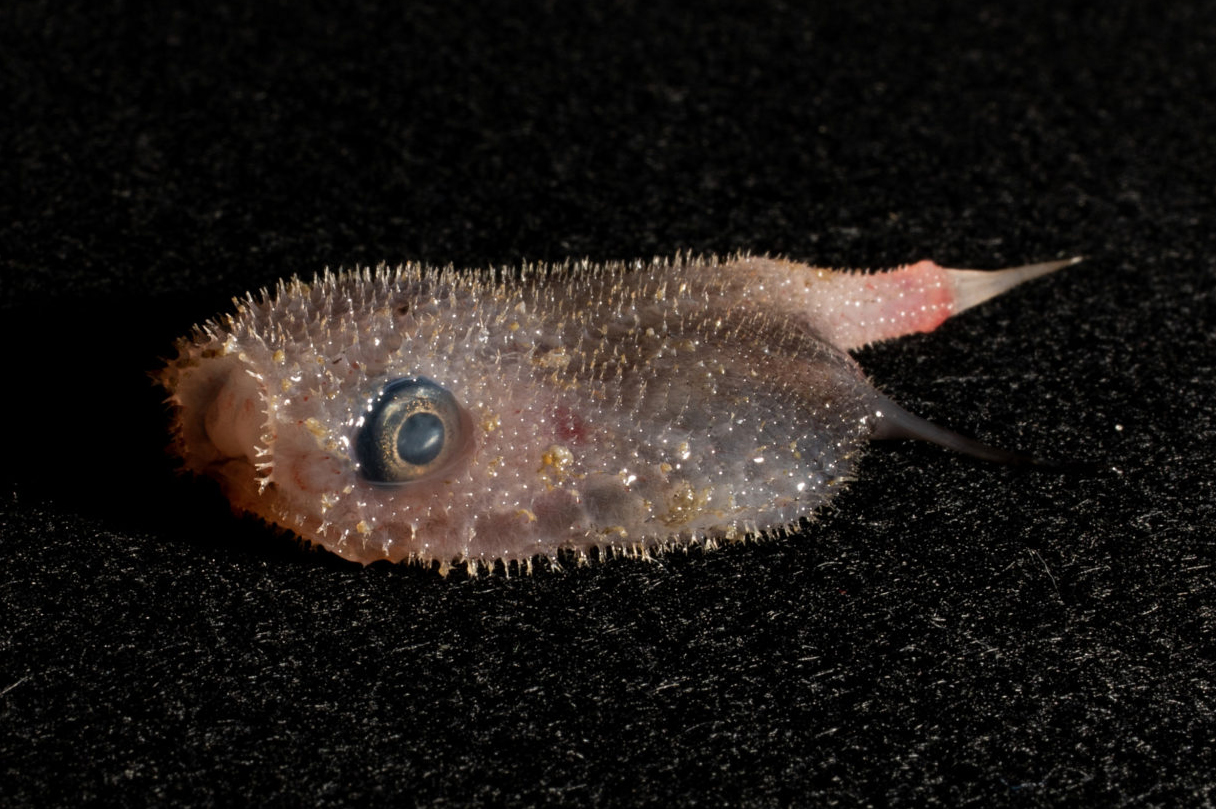
59. Big-nosed Deep-sea Batfish
Big-nosed Deep-sea Batfish (Halieutopsis nasuta) is identified by a conspicuously projecting snout. It occurs in Indian Ocean, where it is associated with deep benthic habitat. The body is armored with tubercles or bucklers that provide camouflage and protection on the seafloor. Like other walking batfishes, it is expected to take small crustaceans, worms, mollusks, and fishes that come within reach. It is not a normal home-aquarium species; most records come from research collections, trawls, submersibles, or specialized public aquariums.
60. Naked-belly Deep-sea Batfish
Naked-belly Deep-sea Batfish (Halieutopsis nudiventer) is identified by reduced scaling on the belly. It occurs in Indo-West Pacific, where it is associated with deep seafloor. Because it is a slow, bottom-associated predator, shape and skin texture are often more useful for identification than bright color. Like other walking batfishes, it is expected to take small crustaceans, worms, mollusks, and fishes that come within reach. It is not a normal home-aquarium species; most records come from research collections, trawls, submersibles, or specialized public aquariums.
61. Oblong Deep-sea Batfish
Oblong Deep-sea Batfish (Halieutopsis oblonga) is identified by a longer, narrower disc than many relatives. It occurs in western Pacific, where it is associated with deep slope water. It belongs to the anglerfish family Ogcocephalidae and moves mainly by using stout pectoral and pelvic fins against the bottom. Like other walking batfishes, it is expected to take small crustaceans, worms, mollusks, and fishes that come within reach. It is not a normal home-aquarium species; most records come from research collections, trawls, submersibles, or specialized public aquariums.
62. Okamura’s Deep-sea Batfish
Okamura’s Deep-sea Batfish (Halieutopsis okamurai) is identified by a small armored disc with regional diagnostic traits. It occurs in northwestern Pacific, where it is associated with deep benthic habitat. Its lure is a modified fin structure kept near the snout and used at close range rather than for fast pursuit. Like other walking batfishes, it is expected to take small crustaceans, worms, mollusks, and fishes that come within reach. It is not a normal home-aquarium species; most records come from research collections, trawls, submersibles, or specialized public aquariums.
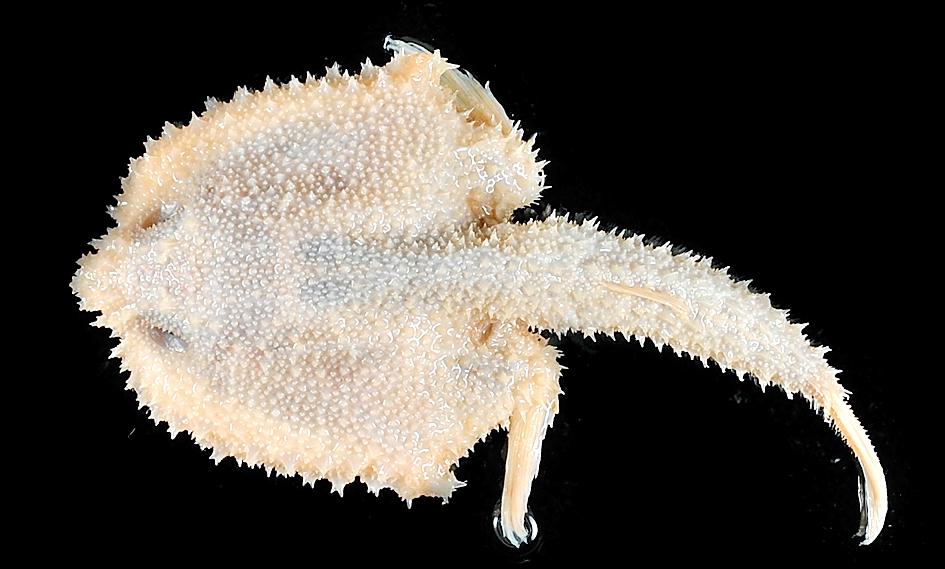
63. Fluffy-esca Deep-sea Batfish
Fluffy-esca Deep-sea Batfish (Halieutopsis simula) is identified by a fringed or fluffy-looking lure. It occurs in western Pacific, where it is associated with deep continental slope. The body is armored with tubercles or bucklers that provide camouflage and protection on the seafloor. Like other walking batfishes, it is expected to take small crustaceans, worms, mollusks, and fishes that come within reach. It is not a normal home-aquarium species; most records come from research collections, trawls, submersibles, or specialized public aquariums.
64. Starry Deep-sea Batfish
Starry Deep-sea Batfish (Halieutopsis stellifera) is identified by star-like tubercles and markings. It occurs in western Pacific, where it is associated with deep seafloor. Because it is a slow, bottom-associated predator, shape and skin texture are often more useful for identification than bright color. Like other walking batfishes, it is expected to take small crustaceans, worms, mollusks, and fishes that come within reach. It is not a normal home-aquarium species; most records come from research collections, trawls, submersibles, or specialized public aquariums.
65. Taiwan Deep-sea Batfish
Taiwan Deep-sea Batfish (Halieutopsis taiwanea) is identified by a localized form described from waters near Taiwan. It occurs in northwestern Pacific, where it is associated with deep slope habitat. It belongs to the anglerfish family Ogcocephalidae and moves mainly by using stout pectoral and pelvic fins against the bottom. Like other walking batfishes, it is expected to take small crustaceans, worms, mollusks, and fishes that come within reach. It is not a normal home-aquarium species; most records come from research collections, trawls, submersibles, or specialized public aquariums.
66. Truncate-snout Deep-sea Batfish
Truncate-snout Deep-sea Batfish (Halieutopsis tumifrons) is identified by a blunt, shortened snout. It occurs in eastern Pacific, where it is associated with deep benthic habitat. Its lure is a modified fin structure kept near the snout and used at close range rather than for fast pursuit. Like other walking batfishes, it is expected to take small crustaceans, worms, mollusks, and fishes that come within reach. It is not a normal home-aquarium species; most records come from research collections, trawls, submersibles, or specialized public aquariums.
67. Ring Triangular Batfish
Ring Triangular Batfish (Malthopsis annulifera) is identified by ring-like markings on a triangular body. It occurs in northwestern Pacific, where it is associated with deep shelf and slope. The body is armored with tubercles or bucklers that provide camouflage and protection on the seafloor. Like other walking batfishes, it is expected to take small crustaceans, worms, mollusks, and fishes that come within reach. It is not a normal home-aquarium species; most records come from research collections, trawls, submersibles, or specialized public aquariums.
68. Apine Triangular Batfish
Apine Triangular Batfish (Malthopsis apis) is identified by a tiny triangular disc with species-specific spines. It occurs in western Pacific, where it is associated with deep benthic habitat. Because it is a slow, bottom-associated predator, shape and skin texture are often more useful for identification than bright color. Like other walking batfishes, it is expected to take small crustaceans, worms, mollusks, and fishes that come within reach. It is not a normal home-aquarium species; most records come from research collections, trawls, submersibles, or specialized public aquariums.
69. Short-horn Triangular Batfish
Short-horn Triangular Batfish (Malthopsis arrietty) is identified by a short horn-like rostrum. It occurs in Pacific Ocean, where it is associated with deep bottom habitat. It belongs to the anglerfish family Ogcocephalidae and moves mainly by using stout pectoral and pelvic fins against the bottom. Like other walking batfishes, it is expected to take small crustaceans, worms, mollusks, and fishes that come within reach. It is not a normal home-aquarium species; most records come from research collections, trawls, submersibles, or specialized public aquariums.
70. Roughspine Batfish
Roughspine Batfish (Malthopsis asperata) is identified by coarse, rough body spines. It occurs in southwestern Pacific, where it is associated with deep continental slope. Its lure is a modified fin structure kept near the snout and used at close range rather than for fast pursuit. Like other walking batfishes, it is expected to take small crustaceans, worms, mollusks, and fishes that come within reach. It is not a normal home-aquarium species; most records come from research collections, trawls, submersibles, or specialized public aquariums.
71. Southern African Triangular Batfish
Southern African Triangular Batfish (Malthopsis austrafricana) is identified by a triangular disc and southern African range. It occurs in western Indian Ocean, where it is associated with deep slope water. The body is armored with tubercles or bucklers that provide camouflage and protection on the seafloor. Like other walking batfishes, it is expected to take small crustaceans, worms, mollusks, and fishes that come within reach. It is not a normal home-aquarium species; most records come from research collections, trawls, submersibles, or specialized public aquariums.
72. Bradbury’s Triangular Batfish
Bradbury’s Triangular Batfish (Malthopsis bradburyae) is identified by a small triangular body with diagnostic tubercles. It occurs in western Indian Ocean, where it is associated with deep benthic habitat. Because it is a slow, bottom-associated predator, shape and skin texture are often more useful for identification than bright color. Like other walking batfishes, it is expected to take small crustaceans, worms, mollusks, and fishes that come within reach. It is not a normal home-aquarium species; most records come from research collections, trawls, submersibles, or specialized public aquariums.
73. Flatscale Triangular Batfish
Flatscale Triangular Batfish (Malthopsis bulla) is identified by flatter scales and a triangular outline. It occurs in Australia and nearby western Pacific, where it is associated with deep shelf and slope. It belongs to the anglerfish family Ogcocephalidae and moves mainly by using stout pectoral and pelvic fins against the bottom. Like other walking batfishes, it is expected to take small crustaceans, worms, mollusks, and fishes that come within reach. It is not a normal home-aquarium species; most records come from research collections, trawls, submersibles, or specialized public aquariums.
74. Taiwanese Triangular Batfish
Taiwanese Triangular Batfish (Malthopsis formosa) is identified by a compact triangular body from waters near Taiwan. It occurs in northwestern Pacific, where it is associated with deep bottom habitat. Its lure is a modified fin structure kept near the snout and used at close range rather than for fast pursuit. Like other walking batfishes, it is expected to take small crustaceans, worms, mollusks, and fishes that come within reach. It is not a normal home-aquarium species; most records come from research collections, trawls, submersibles, or specialized public aquariums.
75. Giant Triangular Batfish
Giant Triangular Batfish (Malthopsis gigas) is identified by a comparatively large body within Malthopsis. It occurs in western Pacific, where it is associated with deep continental slope. The body is armored with tubercles or bucklers that provide camouflage and protection on the seafloor. Like other walking batfishes, it is expected to take small crustaceans, worms, mollusks, and fishes that come within reach. It is not a normal home-aquarium species; most records come from research collections, trawls, submersibles, or specialized public aquariums.
76. Atlantic Triangular Batfish
Atlantic Triangular Batfish (Malthopsis gnoma) is identified by a triangular body and Atlantic distribution. It occurs in western Atlantic, where it is associated with deep benthic habitat. Because it is a slow, bottom-associated predator, shape and skin texture are often more useful for identification than bright color. Like other walking batfishes, it is expected to take small crustaceans, worms, mollusks, and fishes that come within reach. It is not a normal home-aquarium species; most records come from research collections, trawls, submersibles, or specialized public aquariums.
77. Jordan’s Triangular Batfish
Jordan’s Triangular Batfish (Malthopsis jordani) is identified by a pointed rostrum and triangular disc. It occurs in central Pacific, where it is associated with deep seafloor. It belongs to the anglerfish family Ogcocephalidae and moves mainly by using stout pectoral and pelvic fins against the bottom. Like other walking batfishes, it is expected to take small crustaceans, worms, mollusks, and fishes that come within reach. It is not a normal home-aquarium species; most records come from research collections, trawls, submersibles, or specialized public aquariums.

78. Kobayashi’s Triangular Batfish
Kobayashi’s Triangular Batfish (Malthopsis kobayashii) is identified by a slender triangular profile. It occurs in northwestern Pacific, where it is associated with deep slope habitat. Its lure is a modified fin structure kept near the snout and used at close range rather than for fast pursuit. Like other walking batfishes, it is expected to take small crustaceans, worms, mollusks, and fishes that come within reach. It is not a normal home-aquarium species; most records come from research collections, trawls, submersibles, or specialized public aquariums.
79. Yellow Triangular Batfish
Yellow Triangular Batfish (Malthopsis lutea) is identified by yellowish tones and a long nose. It occurs in Indian Ocean, where it is associated with deep shelf and slope. The body is armored with tubercles or bucklers that provide camouflage and protection on the seafloor. Like other walking batfishes, it is expected to take small crustaceans, worms, mollusks, and fishes that come within reach. It is not a normal home-aquarium species; most records come from research collections, trawls, submersibles, or specialized public aquariums.
80. McGrouther’s Triangular Batfish
McGrouther’s Triangular Batfish (Malthopsis mcgroutheri) is identified by a small triangular body with distinctive scale placement. It occurs in Australian waters, where it is associated with deep benthic habitat. Because it is a slow, bottom-associated predator, shape and skin texture are often more useful for identification than bright color. Like other walking batfishes, it is expected to take small crustaceans, worms, mollusks, and fishes that come within reach. It is not a normal home-aquarium species; most records come from research collections, trawls, submersibles, or specialized public aquariums.
How Are These Types of Batfish Classified?
Platax batfishes belong to the family Ephippidae, a group that also includes spadefishes and related forms. The walking batfishes belong to Ogcocephalidae within the anglerfish order Lophiiformes. Ogcocephalids are divided into genera such as Ogcocephalus, Halieutichthys, Malthopsis, Halieutopsis, and Dibranchus. These genera differ in disc shape, snout structure, scales, spines, fin proportions, depth, and geographic range.
Where Do Batfish Live?
Platax batfishes live mainly in warm Indo-Pacific seas. Young fish may use mangroves, sheltered lagoons, floating debris, and shallow reefs, while adults often move to outer reefs, channels, wrecks, bays, and open coastal water. Walking batfishes occur in tropical and subtropical oceans around the world. Some western Atlantic species live on relatively shallow shelves, but many Indo-Pacific species occupy continental slopes hundreds or even thousands of meters deep.
How to Identify Different Types of Batfish
- Check whether the fish is tall and free-swimming or flat and bottom-walking.
- Look at the outline: circular, triangular, box-like, or strongly hump-backed.
- Note the snout or rostrum, especially in longnose and shortnose walking batfishes.
- Compare skin texture, including tubercles, bucklers, prickles, and hair-like spines.
- Observe juvenile color patterns because Platax juveniles can change dramatically as they mature.
- Use habitat and depth as identification clues; reef Platax and deep-slope seabats rarely overlap.
- Do not rely on the word “batfish” alone because common names are applied to unrelated families.
Aquarium Care Notes
Platax batfishes require expert-level marine care. They grow rapidly, need large swimming areas, strong biological filtration, stable salinity, and a varied diet. Some may nip sessile invertebrates, so they are not automatically reef-safe. Walking batfishes have specialized feeding behavior, often refuse standard aquarium foods, and may require live prey, dim conditions, and species-specific substrates. They should be left to professional institutions unless their exact needs and legal source are fully documented.
Safety, Sustainability, and Conservation Notes
Observe wild batfish without touching, chasing, or lifting them from the bottom. Their unusual shape makes them vulnerable to careless handling and accidental bycatch. Buy marine fish only from legal, traceable suppliers, and never release an aquarium fish into local water. For rare deep-sea species, scientific collection data are especially important because many are known from relatively few specimens.
Fun Facts About Batfish
- Platax juveniles can look dramatically different from adults.
- Dusky batfish juveniles are black with a bright orange-red edge.
- Many walking batfishes use their fins like legs.
- Walking batfishes are related to anglerfish.
- Their lure is called an esca.
- Some species have a round pancake-like body.
- Others have a triangular body and spear-like snout.
- Many deep-sea species are only a few inches long.
- Batfishes often rely on camouflage rather than speed.
- The common name batfish refers to more than one fish family.
Final Thoughts on Types of Batfish
The 80 types of batfish in this guide show why common names must be interpreted carefully. Platax batfishes are graceful reef swimmers, while ogcocephalid batfishes are armored bottom-walking anglerfish. Learning body shape, snout design, habitat, depth, and juvenile coloration makes identification far more reliable and encourages responsible observation of these remarkable marine fishes.
Frequently Asked Questions
1. What is a batfish?
Batfish is a common name used for tall reef fishes in the genus Platax and for flattened bottom-walking anglerfishes in the family Ogcocephalidae.
2. How many types of batfish are there?
There are five recognized living Platax species and more than 80 species in the walking-batfish family Ogcocephalidae, depending on the taxonomic source and revision date.
3. Are Platax batfish and walking batfish related?
They are both ray-finned marine fishes, but they belong to different families and have very different body plans, behavior, and habitats.
4. Which batfish has red lips?
The red-lipped batfish, Ogcocephalus darwini, is associated with the Galápagos region and is famous for its bright lip color.
5. Which batfish looks like a pancake?
Species in Halieutichthys, especially the pancake batfish, have extremely flattened, rounded bodies.
6. Can batfish walk?
Walking batfishes push against the seafloor with modified pectoral and pelvic fins. The movement is more like stepping or shuffling than true walking.
7. Can Platax batfish walk?
No. Platax batfishes are normal free-swimming reef fishes and do not use their fins to walk on the bottom.
8. Where are orbicular batfish found?
Orbicular batfish occur widely in the Indo-Pacific, with juveniles often using mangroves and lagoons and adults moving into deeper channels and reefs.
9. Are batfish good aquarium pets?
Most are not suitable for ordinary home aquariums. Platax grow large, while walking batfishes have highly specialized feeding and habitat needs.
10. How large do Platax batfish grow?
Depending on species, adults may reach roughly 40 to 70 centimeters in total length and become much taller than their juvenile aquarium size suggests.
11. What do walking batfish eat?
They take small bottom animals such as crustaceans, worms, mollusks, and fishes, often using a lure to bring prey close.
12. What do Platax batfish eat?
Platax species are opportunistic omnivores that may consume algae, planktonic material, small invertebrates, and other available food.
13. Are batfish poisonous?
Batfishes are not generally known as venomous fishes, but wild animals should never be handled unnecessarily because spines and rough body armor can cause injury.
14. Why are juvenile batfish so different from adults?
Juvenile colors and fin shapes can provide camouflage in mangroves, floating debris, reef crevices, or among drifting leaves before the fish moves into adult habitat.
15. What is the easiest batfish to recognize?
The red-lipped batfish, dusky batfish juvenile, orbicular batfish, and longfin batfish have especially memorable features.
16. What is an esca?
The esca is the fleshy lure at the end of a modified fin ray used by anglerfishes, including walking batfishes.
17. Do batfish live in freshwater?
The species covered here are marine. They live in saltwater reef, shelf, slope, or deep-sea habitats.
18. Do batfish live in the deep sea?
Many ogcocephalid batfishes live on deep continental slopes, although some western Atlantic species occur in shallower water.
19. Are batfish fast swimmers?
Platax can swim effectively, but walking batfishes are generally slow and awkward swimmers adapted for life on the bottom.
20. Why are walking batfish flat?
A flattened body provides stability on soft seafloor habitat and supports a sit-and-wait feeding strategy.
21. What colors can batfish be?
Depending on species and life stage, batfish may be silver, black, orange-edged, red, pink, brown, mottled, spotted, or nearly colorless in deep water.
22. Are batfish reef-safe?
Platax may eat or nip some invertebrates, so they should not automatically be considered reef-safe.
23. Can batfish change color?
Juvenile-to-adult color changes are dramatic in some Platax species. Short-term color shifts may also occur with stress or background.
24. How can divers identify a longfin batfish?
Look for a tall compressed body, extended fins in younger fish, dark bars, and a characteristic dark patch near the pectoral region.
25. What is the difference between batfish and spadefish?
The names overlap in Ephippidae. Platax are often called batfish, while related genera are commonly called spadefish; regional naming varies.
26. Do batfish form schools?
Adult Platax may form groups or schools around reefs and wrecks. Many walking batfishes are solitary bottom dwellers.
27. Are batfish endangered?
Conservation status varies by species, and many deep-sea species remain poorly studied. Habitat damage, bycatch, and untraceable collection can still be concerns.
28. How should a photographed batfish be handled?
The safest method is not to handle it. Photograph it in place without blocking escape routes or disturbing the bottom.
29. Can batfish be eaten?
Some Platax are caught in local fisheries, but walking batfishes are generally too small and uncommon to be important food fish.
30. Why are common names confusing for batfish?
The same common name is used for unrelated reef and anglerfish groups, and many deep-sea species have no widely standardized English name.
31. What is the smallest batfish?
Several deep-sea genera contain species only a few centimeters long; exact comparisons change as new specimens and taxonomic revisions are published.
32. What is the largest batfish?
Among Platax, longfin batfish can reach a large adult size. Walking batfishes are usually much smaller, though some reach around several tens of centimeters.
33. Can children keep a batfish in a small aquarium?
No. Batfish are not small-tank pets, and their adult size or specialized feeding requirements make them inappropriate for a child’s starter aquarium.
34. Why do batfish have body spines?
Tubercles and bucklers provide armor, break up the body outline, and may help protect slow-moving fish from predators.
35. What should beginners remember about types of batfish?
First decide which meaning is intended: a Platax reef batfish or an ogcocephalid walking batfish. Then use body shape, habitat, and behavior to narrow the identification.